


ARPANET was the U.S. Defense Department-funded research network that proved distant computers could exchange data in packets instead of holding one dedicated circuit open. In simple terms, ARPANET was the bridge between isolated mainframes and the internet we use now. We think of it less as “the internet itself” and more as the working prototype that showed shared networking could actually function at scale. If you want the quick answer, ARPANET was an early packet-switched network built for research, resource sharing, and experimentation.
What ARPANET Was as an Early Packet-Switched Network
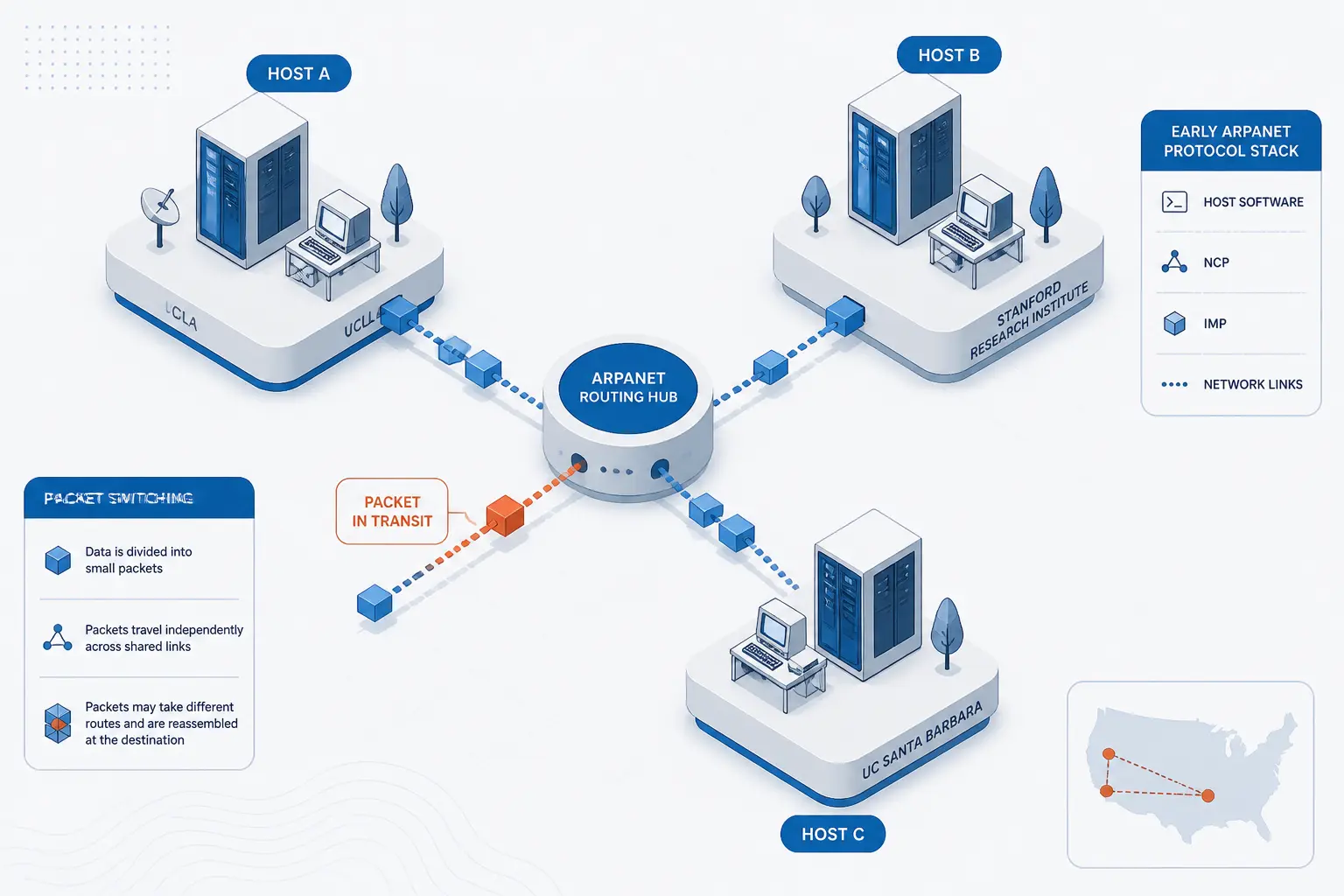
ARPANET was an early packet-switched network that connected computers at different institutions through a common communications system. It is treated as a precursor to the internet because it proved the core ideas of routed packets, shared protocols, and cross-institution access before the broader internet took shape. The key distinction is simple. ARPANET was one network, while the internet became a network of networks.
FURTHER READING: |
| 1. What Is a VPN Tunnel? How It Works, Types, and Uses |
| 2. What Are Subnet Masks and How Do They Shape IPv4? |
| 3. How the Internet Works From Cables to Websites |
What the Name Stands For
ARPANET stood for the Advanced Research Projects Agency Network. The name mattered because the sponsor was ARPA, the agency later renamed DARPA, and the project lived inside a defense-funded research world rather than a consumer telecom business. A later 1992 RFC history still spells out the full name while describing the original network’s administration and later retirement.
Why It Is Treated as a Precursor to the Internet
It is treated as a precursor to the internet because it showed that many different computers could share one packet-switched system and later transition toward internetworking protocols. We should be precise here. ARPANET was not the whole modern internet. It was the successful earlier network that fed directly into the ideas, standards, and operating habits that the internet inherited.
Why the Network Was Built
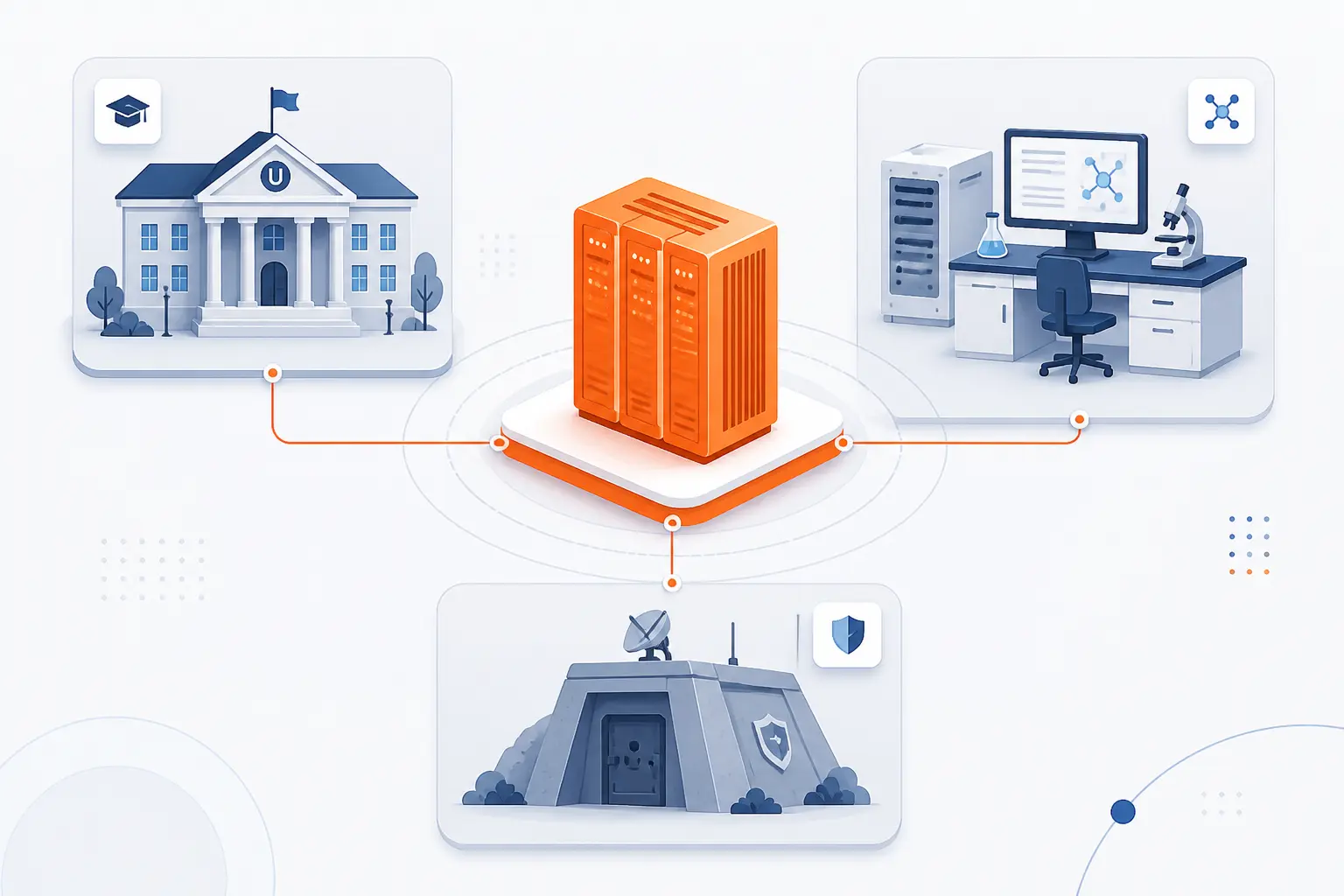
The network was built to let researchers share scarce computing resources and to test better ways of keeping communications working across distance. Defense funding shaped the setting, but day-to-day use quickly centered on collaboration between universities, labs, and contractors. That combination explains why ARPANET feels both military and academic in origin. In our view, calling it only a Cold War project misses half the story, and calling it only a university network misses the other half.
ARPA, Later DARPA, Funded and Directed the Effort
ARPA, later renamed DARPA, paid for the work and directed the program through its Information Processing Techniques Office. The agency itself was established on February 7, 1958, and it became the funding home for the networking effort that followed a few years later. An official agency note makes that institutional line very clear.
Resource Sharing Drove the Early Use Case
Resource sharing was the earliest practical use case. Expensive machines, specialized software, and research tools sat in different places, so networking promised access without moving people or duplicating hardware everywhere. Bob Taylor later put it plainly, saying the system was built so ARPA-supported researchers could share common interests without geographical limits.
Cold War Resilience Influenced the Design
Cold War resilience influenced the design because defense planners and researchers were already thinking hard about communications that could survive failures and reroute traffic. That does not mean the network was built only as a nuclear-war switchboard. It means ideas about survivability, distributed paths, and avoiding single points of failure were in the air when packet switching matured. We find that nuance important, especially since Paul Baran’s earlier distributed communications work at RAND framed packet switching around survivable command links in a military setting, as summarized in a RAND retrospective.
Licklider, Taylor, Roberts, and BBN Moved It Forward
Licklider supplied the vision, Taylor unlocked the project, Roberts organized the plan, and BBN built the crucial switching machines. Licklider’s IPTO agenda pushed interactive computing and networked information, Taylor turned frustration with disconnected terminals into a funded networking push, Roberts translated the idea into an engineering program, and BBN won the 1968 contract to build the IMPs that made the design practical.
How the System Worked
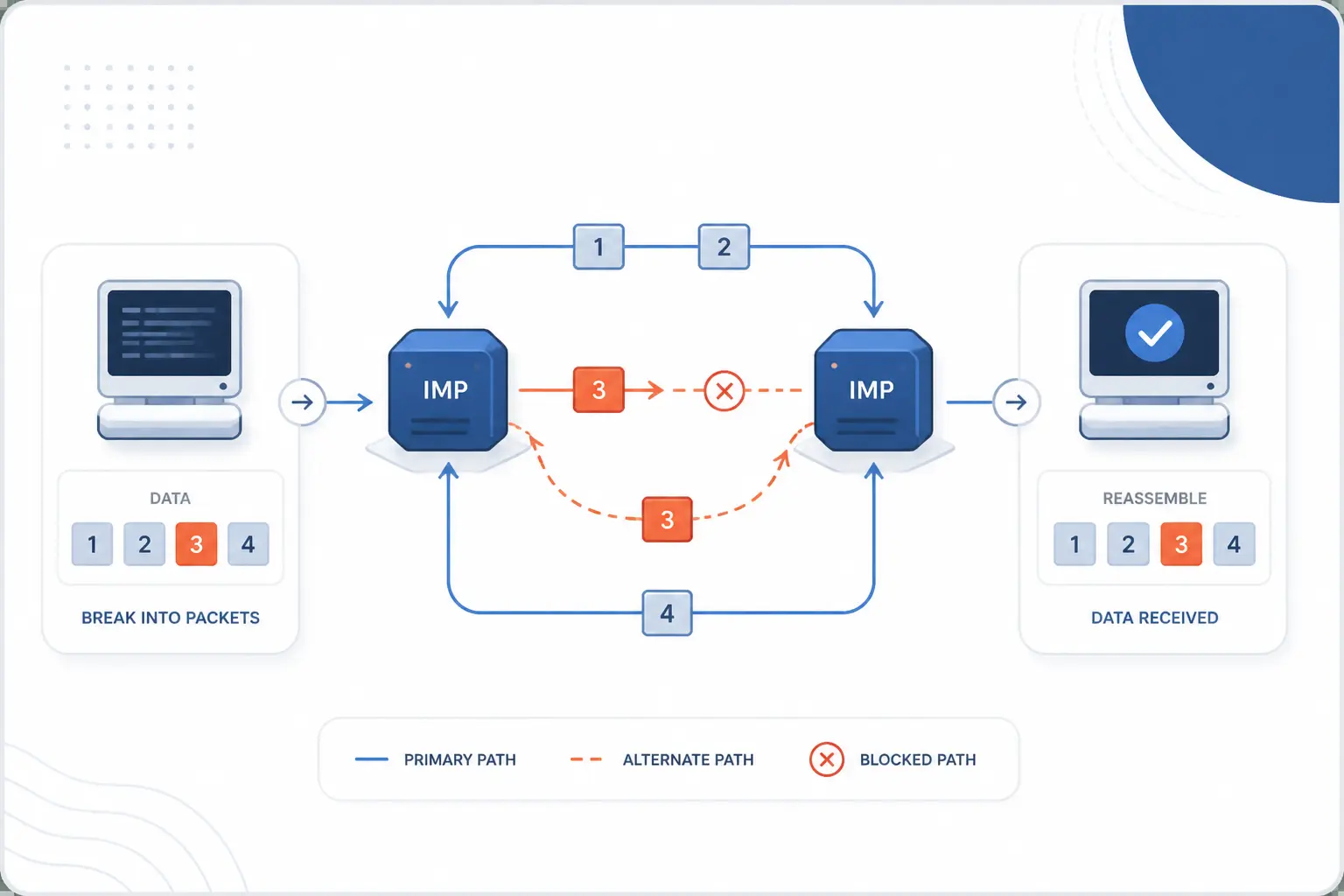
The system worked by breaking data into packets, sending those packets through IMPs, and relying on host protocols to manage conversations between computers. That design avoided the waste of a fixed telephone-style circuit and let the network keep moving data even when parts failed. Before TCP/IP became standard, the early hosts used NCP to organize host-to-host communication. The result was experimental, but it was real and usable.
Packet Switching Broke Messages Into Small Units
Packet switching broke messages into small units that could travel separately and be reassembled at the destination. This mattered because a busy or failed path did not have to stop the whole communication. A concise museum overview explains the core idea well, packets could take different routes, and blocked paths could be bypassed or retried.
IMPs Passed Traffic Between Host Computers
IMPs passed traffic between host computers and acted like the network’s dedicated switching layer. Early RFCs described network software as living partly in the IMPs and partly in the hosts, which is a good reminder that ARPANET separated forwarding from the end machines very early. We usually tell beginners to picture an IMP as an ancestor of the router, though not a modern router in the strict sense, and RFC 1 shows that shared responsibility clearly.
NCP Supported Early Networking Before TCP/IP
NCP supported early networking before TCP/IP took over. In practical terms, NCP gave the early network a common way to open connections and run services, but it was designed for one network environment, not for internetworking across many different networks. That limitation is exactly why the later shift mattered.
From the 1969 Activation to the End of the Network
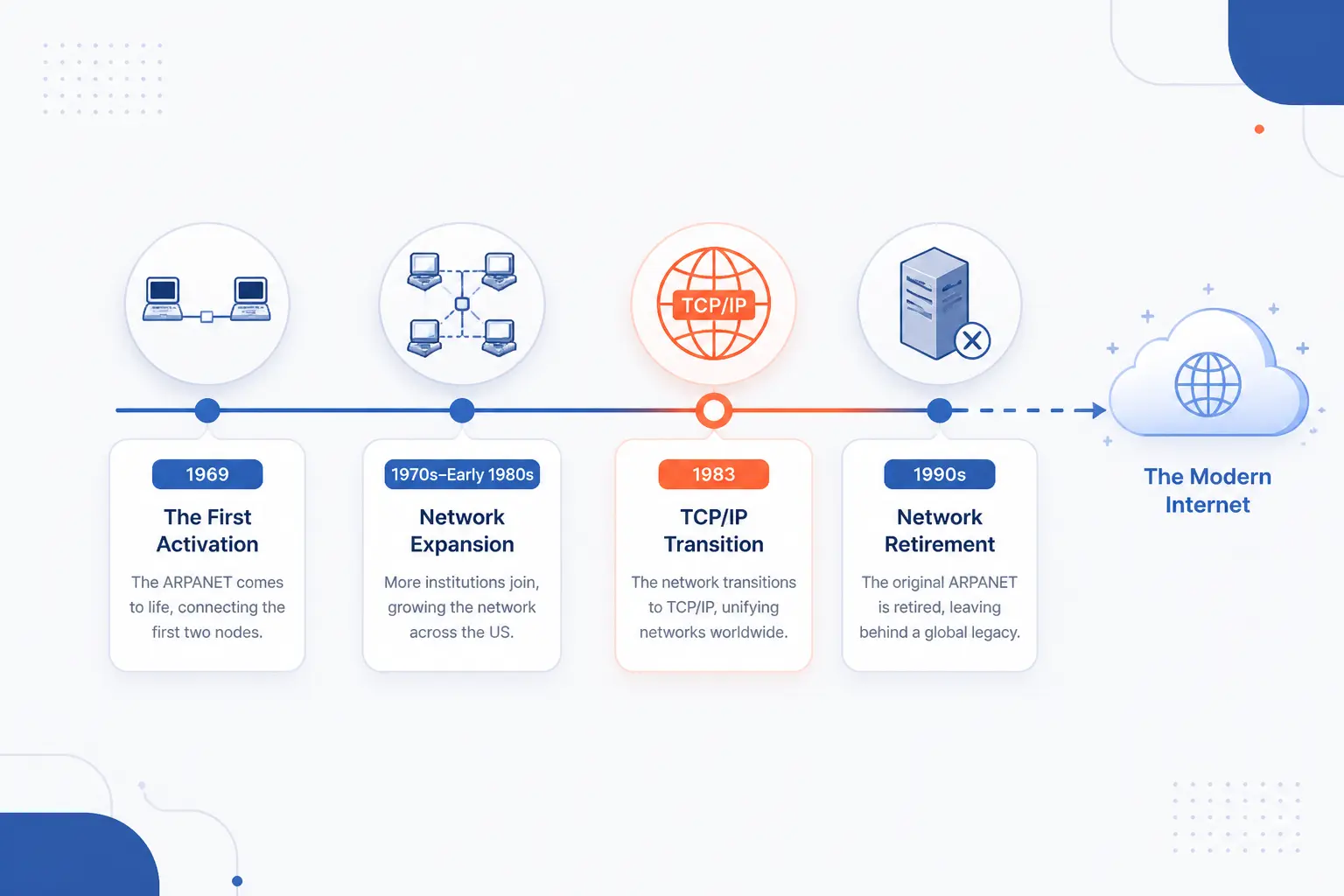
From 1969 to 1990, ARPANET moved from a four-node experiment to a mature research network and then gave way to the internet era. The big milestones are straightforward. The first nodes came online in 1969, growth accelerated through the 1970s, the TCP/IP transition centered on January 1, 1983, and the network was laid to rest in 1990. A later RFC history records that end point plainly.
The First Four Nodes Went Live in 1969
The first four nodes were UCLA, the Stanford Research Institute, UC Santa Barbara, and the University of Utah. Those sites were live by the end of 1969, with UCLA and SRI first, followed by Santa Barbara and Utah. A detailed 1960s chronology tracks the selection of the sites and the roles their teams played.
A Partial Login Became the First Famous Message
A partial login became the first famous message because the team tried to send “LOGIN” and got only “LO” through before the receiving system crashed. Charley Kline transmitted from UCLA to Bill Duvall at SRI on October 29, 1969, and the full login succeeded after the glitch was fixed. We love this story because it feels so modern, a landmark launch followed immediately by a crash report, and the original log page preserves the moment.
Growth in the 1970s Added Universities, Labs, and New Applications
Growth in the 1970s added universities, labs, and new applications, turning a research experiment into a working community. By 1972 the network had 37 nodes, and the expanding user base pushed email, file transfer, and remote access from nice ideas into routine practice. That is when the story stops being only about infrastructure and starts becoming a story about habits.
The TCP/IP Cutover and 1990 Shutdown Marked the Transition to the Internet Era
The TCP/IP cutover marked the moment ARPANET stopped being just one packet-switched network and became part of a broader internetworking future. In the transition plan, host organizations were told to begin IP/TCP work by January 1, 1982, with the goal of a complete switch by January 1, 1983.
The 1990 shutdown marked the other side of that transition. A later RFC history says the original network was laid to rest in 1990 after the internet had already grown beyond a one-network model.
How It Shaped the Internet That Followed
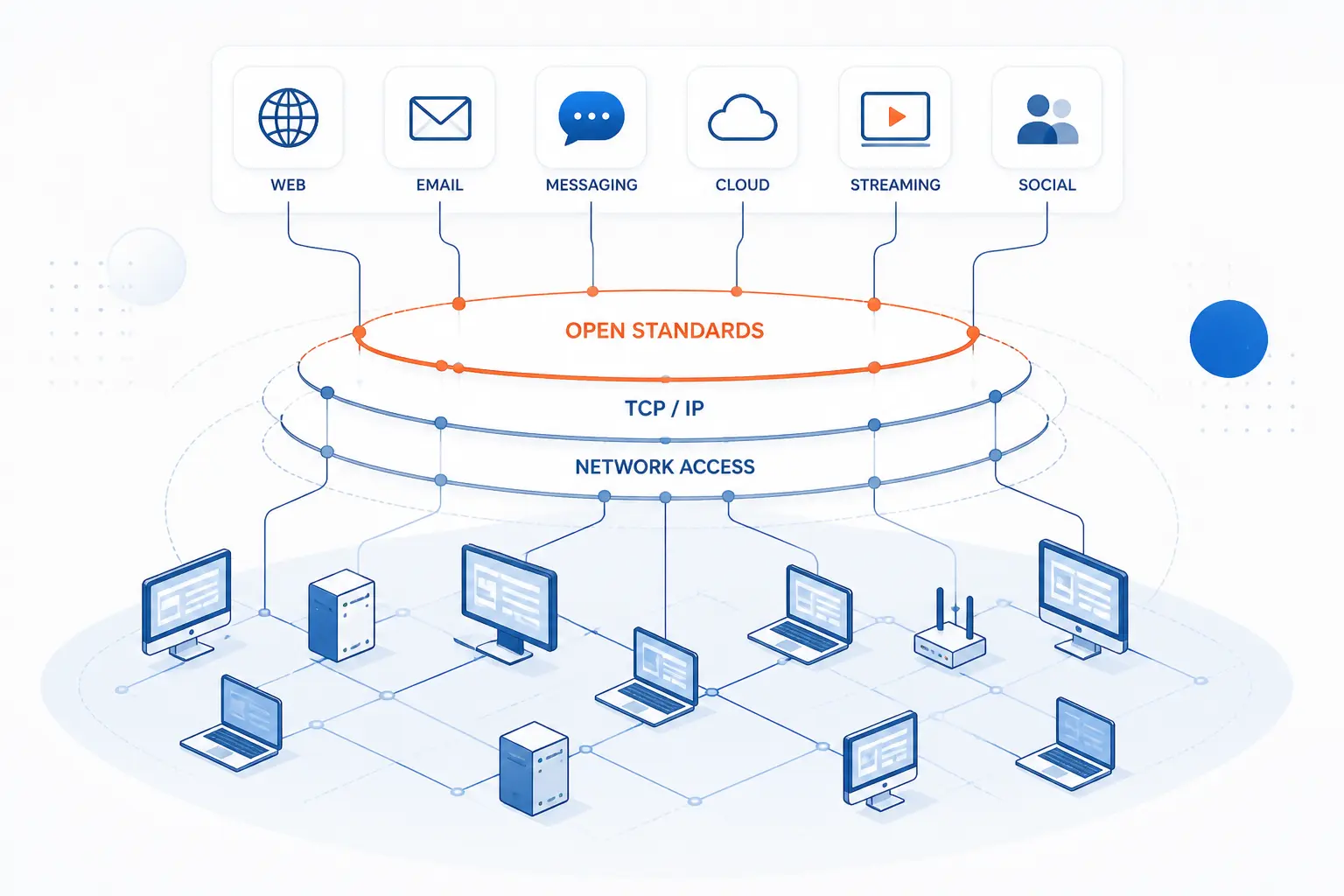
ARPANET shaped the later internet by normalizing shared computing, nurturing core online services, and proving that open protocol work could spread across institutions. We still live inside those habits. Engineers publish standards, networks interconnect through common protocols, and applications matter as much as the links underneath them. In our view, that cultural legacy is as important as the technical one.
It Normalized Shared Computing Across Institutions
It normalized shared computing across institutions by making remote access to people, programs, and machines feel ordinary. Researchers no longer had to treat each big computer as an isolated island. DARPA’s own history describes the project as sharing digital resources among geographically separated computers, which is still the basic mental model behind much of modern cloud computing.
It Advanced Email, File Transfer, and Remote Login
It advanced email, file transfer, and remote login by forcing the community to define how these services should work across different hosts. Telnet received a formal network-wide specification in 1972, FTP was specified to move files efficiently and reliably between hosts, and mail evolved from FTP-based commands toward its own richer protocol in 1973. If we want one lesson here, it is that useful applications are what make infrastructure stick, and a 1973 mail specification captures how quickly the community was already thinking beyond bare transport.
Its Internetworking Model Became a Base for the Modern Internet
Its internetworking model became a base for the modern internet because the community outgrew a single-network protocol and moved toward standards that could join many networks together. That step changed the goal from connecting hosts on one research net to connecting different packet networks under one common architecture. The shift is visible in the transition from NCP to TCP/IP and in later federal histories that describe how those protocols enabled a broader internet beyond the original network.
Frequently Asked Questions About ARPANET
The short answers are these. ARPANET was an early internet precursor, it does not still operate, DARPA funded and steered the effort rather than inventing every part alone, and no single person can honestly claim sole authorship. The details are worth knowing because internet history gets simplified fast.
Is ARPANET the First Internet?
No. ARPANET was an earlier packet-switched network, not the full modern internet. We think the cleanest way to say it is that it was the most influential direct ancestor, because the later internet joined multiple networks through TCP/IP rather than remaining one standalone network.
Does ARPANET Still Exist?
No. The original network was shut down in 1990. Its ideas, protocols, and operating culture survived, but the network itself did not.
Did DARPA Invent the Internet?
Partly, but not alone. DARPA, and earlier ARPA, funded and organized crucial work, yet the internet emerged from many researchers and institutions, including universities, BBN, SRI, and later NSF-backed expansion. When people ask this question, we usually answer that DARPA was the catalytic sponsor, not the sole inventor.
Who Invented ARPANET?
No single person invented ARPANET. J. C. R. Licklider supplied early vision, Bob Taylor pushed the project forward, Larry Roberts led the program design, BBN built the IMPs, and teams at UCLA, SRI, UC Santa Barbara, and Utah made the early network work.
How 1Byte Supports Modern Internet Infrastructure
At 1Byte, we support modern internet infrastructure at a much later layer than the pioneers of ARPANET did. Still, the practical goal feels familiar to us, make services reachable, trustworthy, and adaptable as sites grow. We focus here on the services most directly connected to that job: domain registration, SSL certificates, WordPress hosting, shared hosting, cloud hosting, and cloud servers. We are also an AWS Partner, which matters when projects need a clearer path from simple hosting to broader cloud architecture.
| Service area | Best fit | Practical tie to the topic |
|---|---|---|
| Domain registration and SSL certificates | Sites that need identity and trust | They give services a stable name and protected browser connections |
| WordPress hosting and shared hosting | Everyday websites and content publishing | They package shared computing resources in a simple, usable form |
| Cloud hosting and cloud servers | Projects that need more flexibility or control | They push closer to the distributed model that packet-switched networking made possible |
Registering Domains and Securing Websites With SSL Certificates
Registering domains and adding SSL certificates handle the two basics users notice first, where a site lives and whether a browser trusts it. A domain gives people a stable name instead of an IP address, and SSL certificates protect traffic in transit so logins, forms, and other page requests are not sent in plain text. From our side at 1Byte, this is the modern, everyday version of making networked services discoverable and trustworthy.
Running WordPress and Shared Hosting for Everyday Sites
Running WordPress hosting and shared hosting is the practical choice when the goal is to publish a normal site without building infrastructure from scratch. We see this as the descendant of the old resource-sharing mindset, many users want dependable access to computing resources, but they do not want to administer every layer themselves. For blogs, company sites, portfolios, and documentation hubs, this is often the cleanest starting point.
Scaling Projects With Cloud Hosting and Cloud Servers
Scaling projects with cloud hosting and cloud servers makes sense when traffic, workloads, or deployment needs become less predictable. Cloud hosting fits teams that want a more flexible platform, while cloud servers suit projects that need more direct control over the server environment. Because 1Byte is an AWS Partner, we can speak to the same architectural direction ARPANET helped inspire, connected systems built to move beyond one fixed machine and one fixed location.






Conclusion
ARPANET was the early packet-switched research network that proved distant computers could share data, applications, and standards well enough to become something bigger. Its lasting importance is not nostalgia. It showed that common protocols beat isolated systems, that useful applications drive adoption, and that networking becomes transformative when institutions agree to interoperate.
That is still a live lesson for anyone building online today. Whether we are registering a domain, launching a WordPress site, or planning cloud servers, we are still asking versions of the same old question, how should separate systems communicate reliably? If this history changed how you see the modern internet, the next good step is to look at your own stack and ask which parts are still acting like isolated islands.