

- The Nofollow Tag Tells Search Engines Not to Pass Link Equity
- How Nofollow Appears in Code
- Why Nofollow Still Matters
- When Nofollow Is Not the Only Rel Value to Consider
- Common Cases for Using Nofollow
- Where Nofollow Backfires or Falls Short
- Nofollow vs Noindex and Other Page Controls
- Frequently Asked Questions
- How 1Byte Supports SEO-Friendly Website Management
- Conclusion
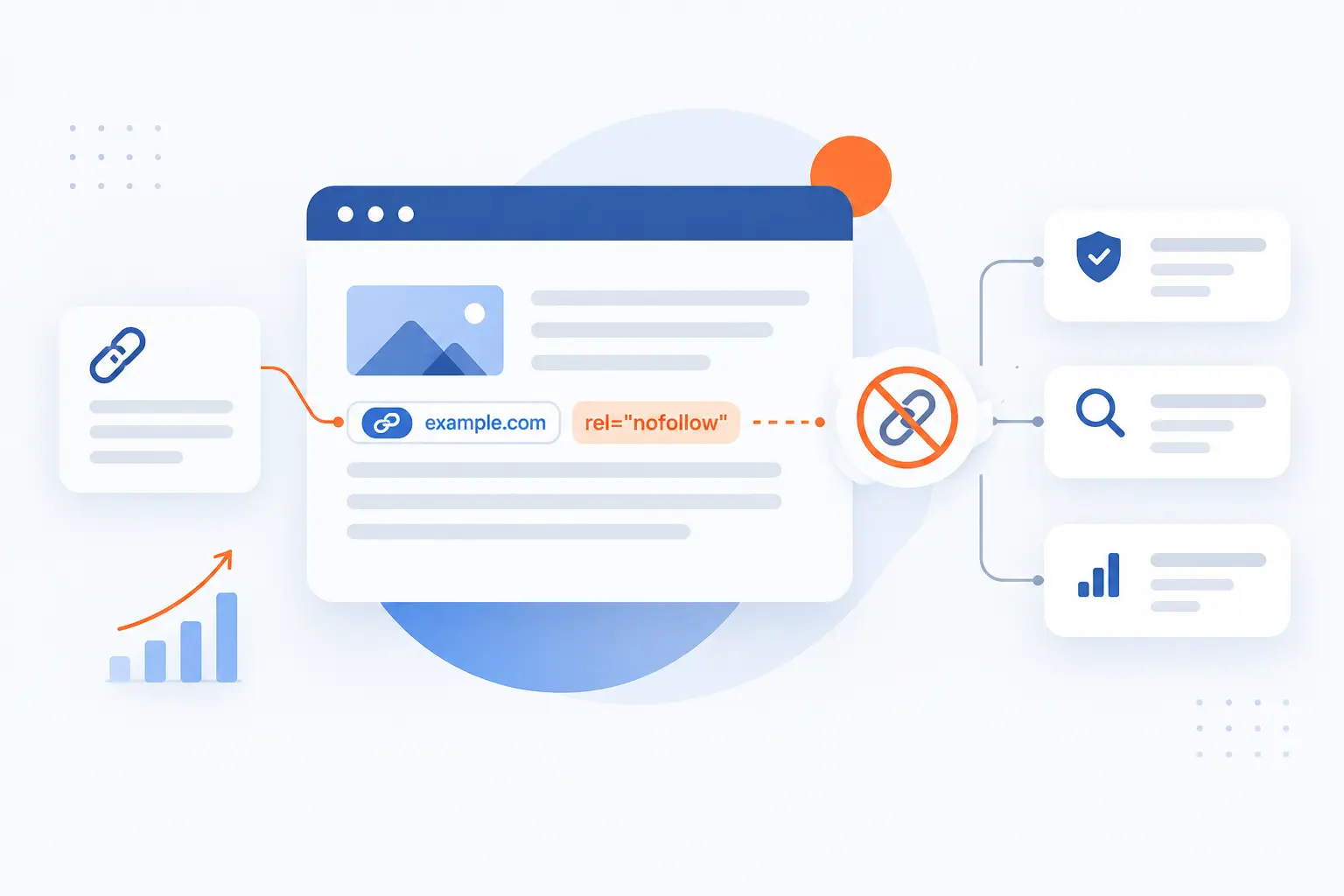
The nofollow tag is a link instruction that tells search engines, “Do not treat this link as a normal endorsement.” In SEO, it usually appears as rel="nofollow" on an HTML link. Its main purpose is to reduce or avoid passing ranking credit, often called link equity, from one page to another. We use it when a link is paid, untrusted, user-submitted, or included for reference without endorsement. Used well, the nofollow tag keeps a site’s outbound linking honest without hiding useful links from readers.
We care about this because links are still part of how search engines understand the web. A normal editorial link says, in effect, “we recommend this page.” A nofollowed link says, “we are showing this page, but we do not want our site’s reputation to stand behind it.” That small distinction can protect a website from messy SEO signals, especially on blogs, marketplaces, forums, affiliate pages, and high-traffic WordPress sites.
The Nofollow Tag Tells Search Engines Not to Pass Link Equity
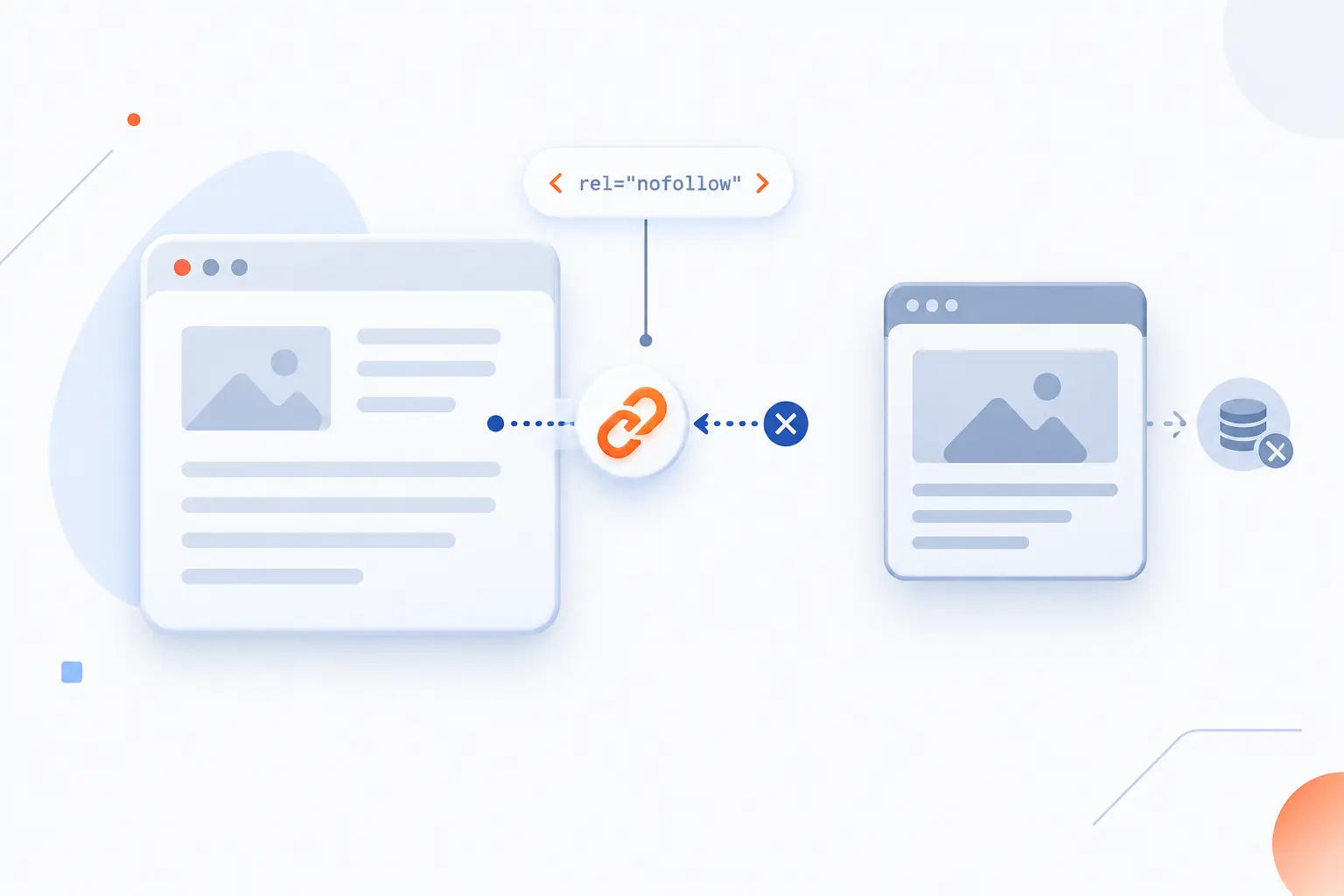
The nofollow tag tells search engines not to pass normal ranking credit through a specific link. It does not remove the link from the page, and it does not stop users from clicking it. It simply changes how search engines are asked to treat the relationship between the linking page and the destination page. Google describes nofollow as appropriate when a site owner does not want to imply endorsement or pass ranking credit through a link in its official guidance.
The key phrase is “asked to treat.” Years ago, many SEOs thought of nofollow as a hard wall. That view is too rigid now. Google’s 2019 update explained that nofollow, sponsored, and ugc may be treated as hints for search purposes rather than absolute commands. We read that as a practical reminder: nofollow is a signal, not a magic invisibility cloak.
Here is the everyday SEO meaning. If we publish a guide and link to an official documentation page because it genuinely helps readers, we usually leave that link followed. If we link to a paid partner, a coupon landing page, or a site we do not fully trust, we qualify the link. The reader still gets the path, but we are clearer with search engines about why that path exists.
That matters for trust. Search engines use links to discover pages and understand reputation. If every sponsored, affiliate, and user-submitted link looks like a normal editorial recommendation, the site sends muddy signals. The nofollow tag is one small way to keep editorial choice separate from advertising, community activity, and caution.
FURTHER READING: |
| 1. What Is Website Crawling and How Search Bots Work |
| 2. Benefits of Internal Linking and How to Use Them Well |
| 3. How to Fix Keyword Cannibalization Step by Step |
How Nofollow Appears in Code
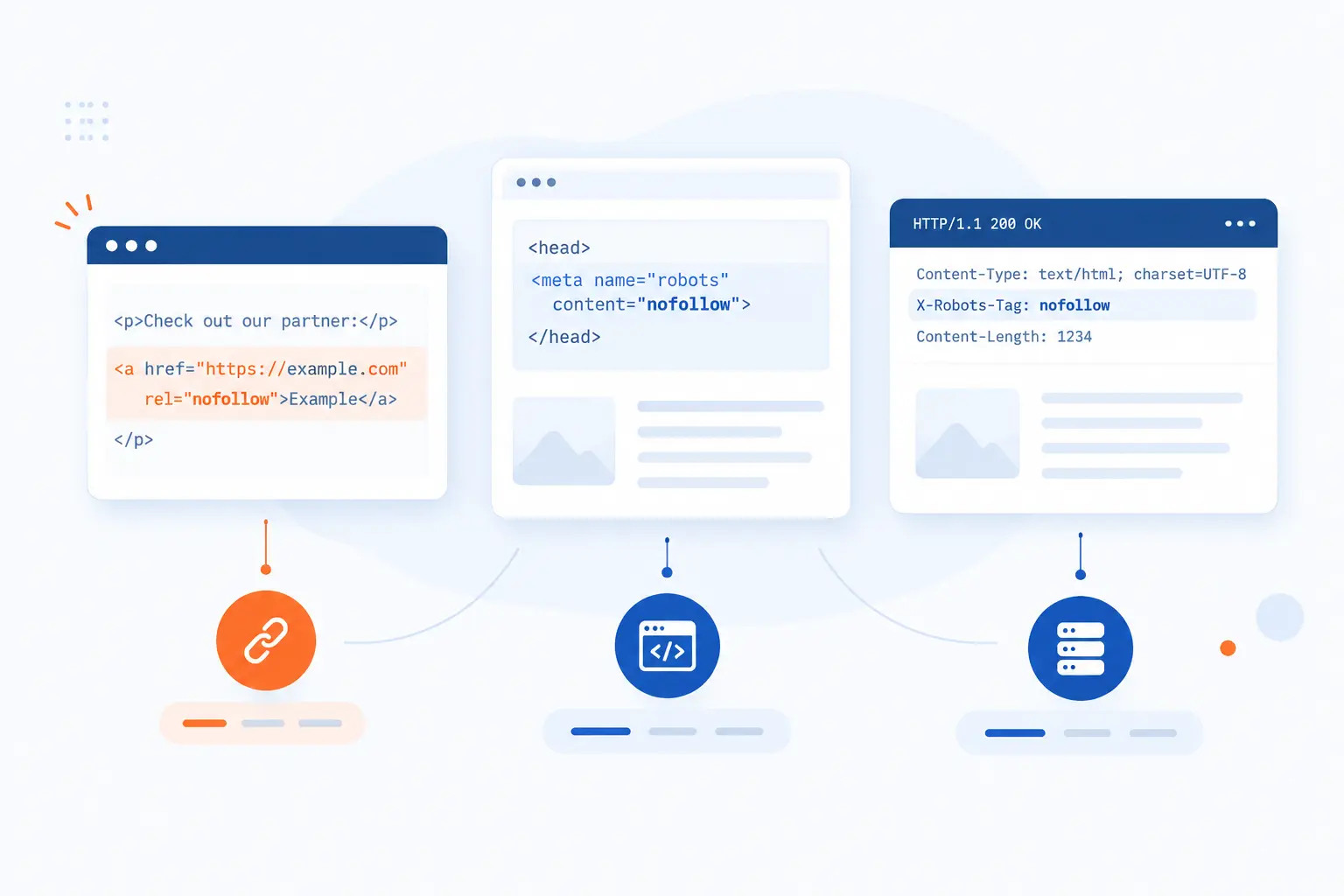
Nofollow appears either on a single link, in a page-level robots meta tag, or in an HTTP header. The single-link version is the most common SEO use because it targets one destination without affecting the rest of the page. Page-level and header-level versions are broader controls that affect links across the whole document. We prefer the narrowest control that solves the problem because broad rules are easier to forget and harder to debug.
| Placement | Best fit | Typical scope |
|---|---|---|
| Individual link HTML | Paid, untrusted, or user-submitted links | One link |
| Meta robots tag | A whole HTML page needs link-following control | All links on one page |
| X-Robots-Tag header | Non-HTML files or server-level rules | One URL or a group of files |
Individual Link HTML
Individual link HTML is the standard way to nofollow one specific link while leaving the rest of the page alone. The code looks like this:
<a href="https://example.com" rel="nofollow">Example site</a>This is the version most publishers, bloggers, and developers mean when they talk about a nofollow tag. The href still points to the destination. The rel attribute describes the relationship between your page and that destination.
Use this when the reason applies to one link, not the whole page. For example, a review article might have ten editorial citations and one affiliate button. The citations can remain normal links. The affiliate button should be qualified because money changes the nature of that link.
Page-Wide Meta Robots
A page-wide meta robots nofollow tells compliant crawlers not to follow links on the entire HTML page. It appears in the document’s <head> section, like this:
<meta name="robots" content="nofollow">This is rarely the right choice for normal blog posts or service pages. It is broad by design. If you add it casually, you may block search engines from following helpful internal links, category links, product links, or citation links from that page.
Google documents nofollow as one of several robots directives for page-level crawler and indexing behavior in its crawler controls. We treat this as a technical switch, not an editorial habit. If a page contains mixed link types, qualify individual links instead.
X-Robots-Tag in the HTTP Header
The X-Robots-Tag header applies robots directives through the server response instead of the HTML source. It can look like this:
X-Robots-Tag: nofollowThis approach is useful when you need crawler instructions for files that do not have HTML <head> sections. PDFs, images, downloadable files, and generated assets are common examples. It can also be applied at server level for URL patterns, though that power cuts both ways.
We are cautious with header rules because they are easy to miss during a content audit. A marketer may inspect a page’s HTML and see no robots tag, while the server still sends a header directive. When rankings, crawling, or indexing look strange, headers should be part of the checklist.
Why Nofollow Still Matters
Nofollow still matters because it helps separate editorial recommendations from links created for payment, caution, or user activity. It is not the blunt SEO weapon some people once imagined. Still, it remains a practical signal for link qualification. We see it as hygiene: small, boring, and very useful when applied consistently.
Link Equity Control
Link equity control is the main SEO reason to use nofollow on links you do not want to endorse. A followed link can be interpreted as a normal vote of confidence. A nofollowed link says the destination may be useful to readers, but you do not want it treated as your editorial recommendation.
This is especially important for paid placements. Google’s policies state that buying and selling links for advertising or sponsorship is allowed when the links are properly qualified with values such as rel="nofollow" or rel="sponsored" in the policy section. That distinction matters. Advertising is normal. Disguising paid links as editorial endorsements is where the trouble starts.
Our viewpoint is simple: if a link exists because money, perks, or business pressure changed the decision, qualify it. That does not make the content bad. It makes the relationship clearer.
Referral Traffic and Brand Visibility
A nofollowed link can still send real visitors and brand awareness. Search engines may reduce or ignore the ranking credit, but users can click the link as usual. That is why we do not dismiss nofollow backlinks as worthless. They can still put a business in front of the right audience.
Think about a startup mentioned in a large community thread, a software directory, or a respected news comment section. The link may be qualified. Still, curious readers can visit, compare, bookmark, subscribe, or buy. SEO value is broader than PageRank alone.
This is where beginners often get trapped. They ask, “Is the link followed?” before asking, “Will the right people see it?” We would rather have a nofollowed mention in a relevant, trusted place than a followed link from a strange site built only to sell rankings.
A More Natural Backlink Profile
A natural backlink profile usually contains a mix of followed, nofollowed, sponsored, user-generated, branded, and citation-style links. Real websites earn attention in messy ways. They get mentioned in articles, directories, forums, social profiles, reviews, documentation, and partner pages. Expecting every backlink to be followed is not realistic.
That does not mean nofollow links directly raise rankings in a neat, measurable way. We should not pretend they do. It means a real brand’s link graph rarely looks perfect. A profile made only of keyword-rich followed links can look suspicious because normal attention does not behave that cleanly.
For us, nofollow is part of a broader trust pattern. The best SEO work still comes from useful pages, clear site architecture, honest citations, strong hosting, and content people would choose even without ranking incentives.
When Nofollow Is Not the Only Rel Value to Consider
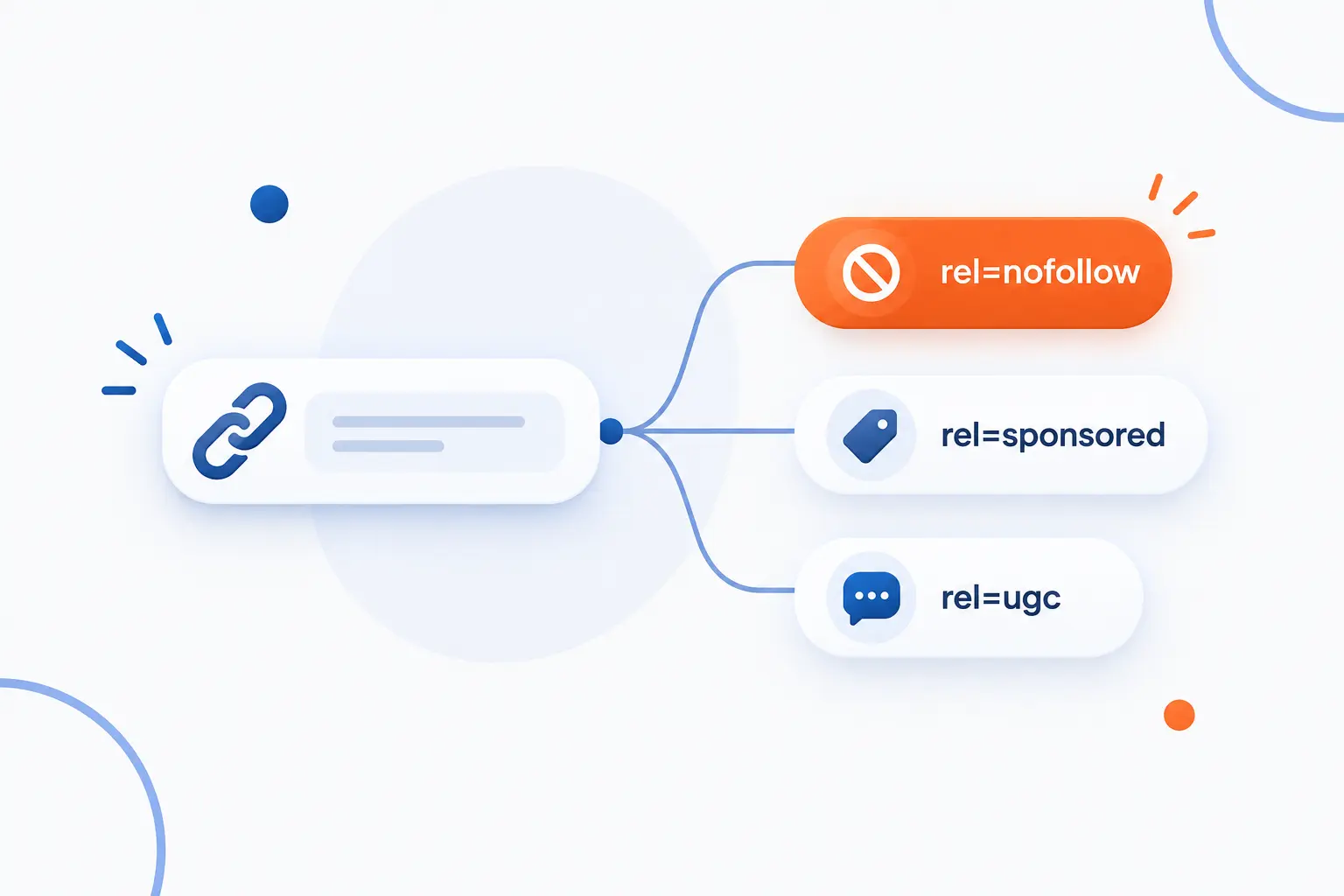
Nofollow is not the only value you can place in the rel attribute. For modern SEO, sponsored and ugc are often more specific choices. The best value depends on why the link exists. We use nofollow when we do not want to endorse a page and no more specific value fits.
| Rel value | Use it for | Practical note |
|---|---|---|
nofollow | Untrusted or non-endorsed links | General-purpose qualification |
sponsored | Ads, sponsorships, affiliate links, paid placements | Most specific paid-link signal |
ugc | Comments, forum posts, community submissions | Best for user-created links |
| Combined values | Links with more than one relationship | Example: rel="ugc nofollow" |
Sponsored Links
Sponsored links should use rel="sponsored", with nofollow still acceptable in many paid-link cases. A sponsored link is any link created because of advertising, payment, sponsorship, affiliate commission, gifted placement, or a similar commercial arrangement. The issue is not whether the destination is high quality. The issue is whether the link exists because compensation influenced placement.
Affiliate links are the example we see most often. If a hosting review, software comparison, or product roundup earns commission from a link, that link should be qualified. Readers can still click it. Search engines get a clearer signal about the commercial relationship.
We like sponsored because it is more specific than nofollow. Specific signals make audits easier. When we see rel="sponsored", we immediately know why the link was marked.
User-Generated Content Links
User-generated content links should use rel="ugc", often with nofollow added for extra caution. UGC links are created by users rather than the site’s editorial team. Comments, forums, profile bios, guestbook posts, marketplace messages, and community answers all fit this pattern.
This matters because user areas attract spam. Even a well-run site can receive irrelevant comments that link to gambling pages, copied stores, low-quality directories, or malware. The UGC value tells search engines that the site owner did not make the same editorial choice as they would in a polished article.
WordPress provides a real-world example. Its developer resources note that wp_rel_ugc() adds rel="nofollow ugc" to links in content, and the change was introduced in version 5.3. That is a sensible default for comment-heavy sites.
Combining Rel Values on One Link
You can combine rel values on one link when more than one relationship applies. For example, rel="ugc nofollow" can describe a user-submitted link that you also do not want to endorse. A paid community post might use rel="sponsored ugc" if both conditions are true.
The order usually does not matter. What matters is clarity. Each value should describe a real reason, not a superstition copied from an old checklist.
We avoid stacking values just to look “extra safe.” If a link is a normal editorial citation, it does not need a pile of qualifiers. If a link is paid, use sponsored. If it is user-submitted, use ugc. If it is untrusted and no better value applies, use nofollow.
Common Cases for Using Nofollow
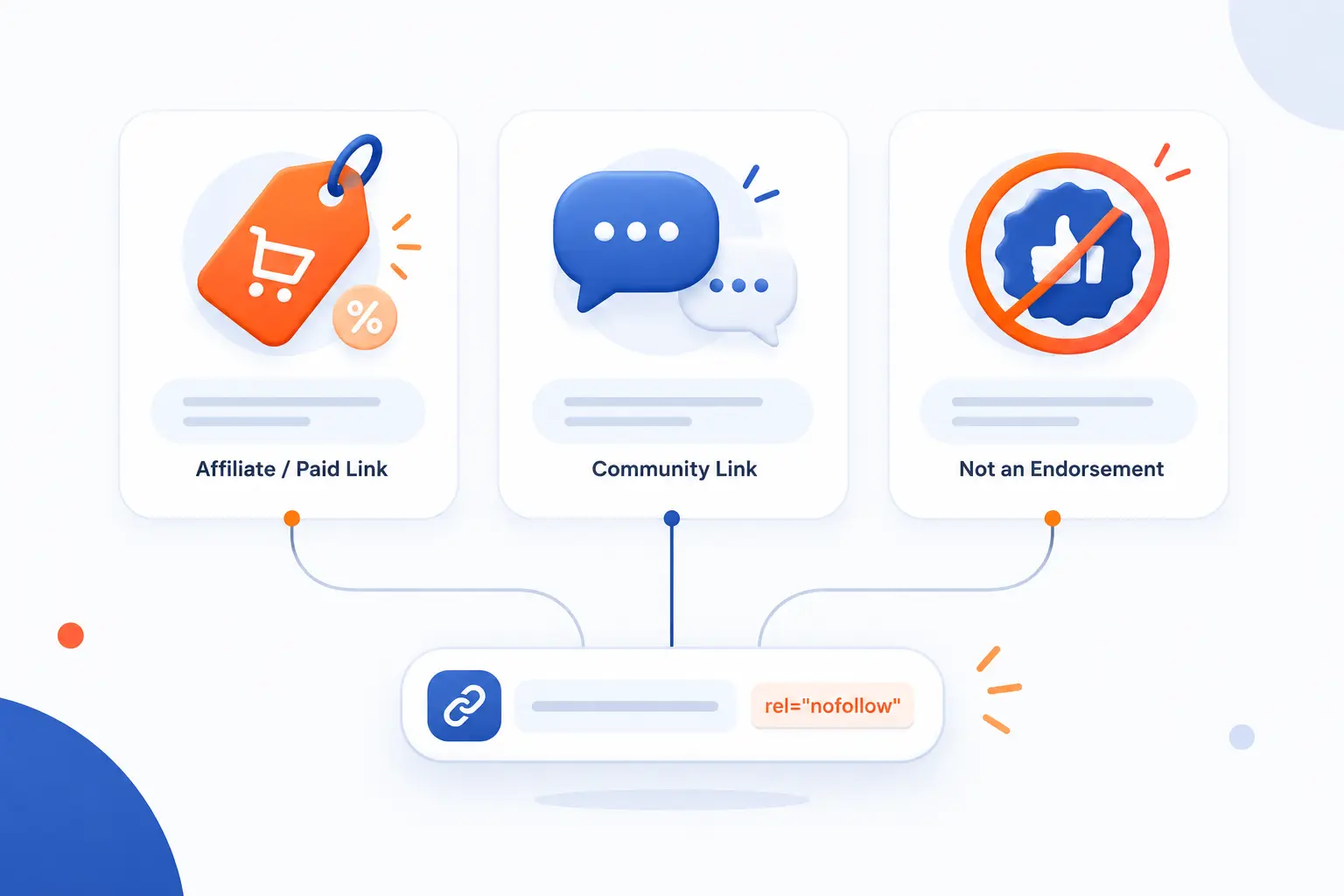
The most common cases for using nofollow are paid links, community links, and links to pages you do not want to endorse. These are practical, everyday situations. The nofollow tag should solve a real trust or policy problem. It should not be sprayed across a site because someone once said external links “leak SEO.”
| Case | Recommended value | Why it helps |
|---|---|---|
| Affiliate button | sponsored or nofollow | Marks commercial influence |
| Blog comment link | ugc nofollow | Separates user activity from editorial choice |
| Untrusted reference | nofollow | Avoids endorsement while keeping context |
Paid Sponsored and Affiliate Links
Paid, sponsored, and affiliate links should be qualified because compensation changes the meaning of the link. If a link earns commission, supports an ad deal, or appears because of a sponsorship, it should not look like a purely editorial vote. That is true even when the linked product is good.
For example, a web hosting comparison may link to several providers. If the links are affiliate links, qualify them. The article can still be useful, honest, and well researched. The rel value simply tells search engines that the link has a commercial layer.
This is one of those places where discipline beats cleverness. Trying to hide paid relationships for ranking gain is short-term thinking. Search policies, manual reviewers, and algorithmic systems are built to detect patterns that do not look organic.
User Comments Forums and Other Community Content
User comments, forums, and other community content should usually qualify outbound links with ugc, often paired with nofollow. The reason is control. You did not personally choose every link that appears in a public comment thread or user profile.
That does not mean every community link is bad. A helpful user may share an excellent resource. Still, the site owner needs a default that handles abuse at scale. Moderation helps, but it is never perfect.
Our practical rule is this: if users can publish links without the same editorial review as an article, mark those links as user-generated. If trust is low, add nofollow too. That gives you a safer default without shutting down discussion.
Pages You Do Not Want to Endorse
Use nofollow when you need to reference a page without endorsing it. This comes up in security articles, fraud reports, criticism, legal commentary, and technical debugging. Sometimes the link is useful evidence, but you do not want to pass trust to the destination.
For example, a cybersecurity blog might discuss a phishing page as part of an awareness post. Linking to the example may help readers understand the threat. A nofollow tag makes it clear that the link is a citation, not a recommendation.
We also use this logic for uncertain sources. If a page is relevant but we are not fully comfortable vouching for it, nofollow is a reasonable compromise. It keeps the article transparent without pretending the source deserves editorial trust.
Where Nofollow Backfires or Falls Short
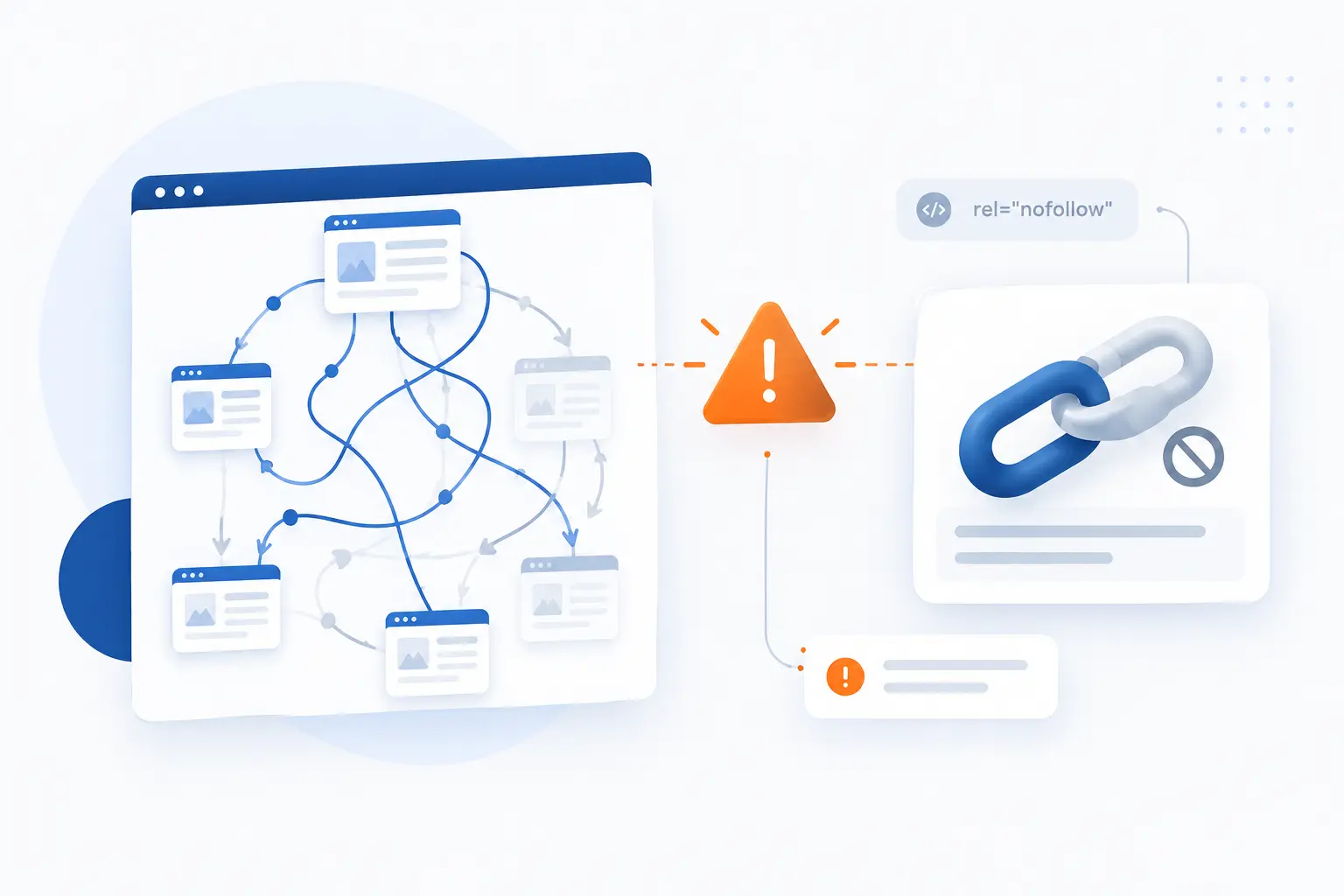
Nofollow backfires when it is used as a blanket shortcut instead of a precise signal. It can weaken internal discovery, make editorial links look unnatural, and create false confidence about crawl control. The nofollow tag is useful, but it is not a substitute for site architecture, robots rules, indexing strategy, or editorial judgment. We see the worst results when people use it because they are afraid of all outbound links.
Most Internal Links
Most internal links should not use nofollow because they help search engines understand your own site structure. Internal links point crawlers and users toward important pages. They also show relationships between topics, categories, products, services, and supporting resources.
If you nofollow internal links to “save” authority, you may make useful pages harder to discover. That is especially risky on large sites with deep content. Search engines need paths through the site, and internal links are the map.
There are exceptions. Login links, cart links, filtered search URLs, or low-value utility paths may need different handling. But nofollow is rarely the best first tool for those cases. Robots.txt, canonical tags, parameter handling, noindex, or better navigation may be more appropriate depending on the issue.
Blanket Rules for Every External Link
Blanket nofollow rules for every external link can make a site look stingy and less editorially useful. A good article should cite helpful sources. If every outside reference is treated as non-endorsed, search engines receive a less clear picture of what you actually trust.
There is also a reader-experience issue. We believe good publishing means showing your work. If we reference a standard, a study, a product document, or an official policy, linking normally is part of being useful. Nofollow should not become a wall around your site.
Use it where the relationship demands it. Leave genuine editorial citations alone. The web works better when useful pages point to other useful pages.
PageRank Sculpting
PageRank sculpting with nofollow is an outdated tactic that tries to control internal authority flow by nofollowing selected links. The idea sounds neat on a whiteboard. In practice, it often creates more problems than it solves. Search engines have evolved, and crude link blocking is not a smart substitute for clear architecture.
A better approach is to decide which pages deserve prominence. Put them in navigation where appropriate. Link to them from relevant articles. Consolidate thin pages. Improve crawl paths. Make the site easier to understand instead of trying to dam up link equity with little tags.
We are blunt about this because we have seen the mess. Sites that obsess over sculpting often ignore the bigger wins: better category structure, cleaner URLs, fewer duplicate pages, and stronger content hubs.
Nofollow vs Noindex and Other Page Controls
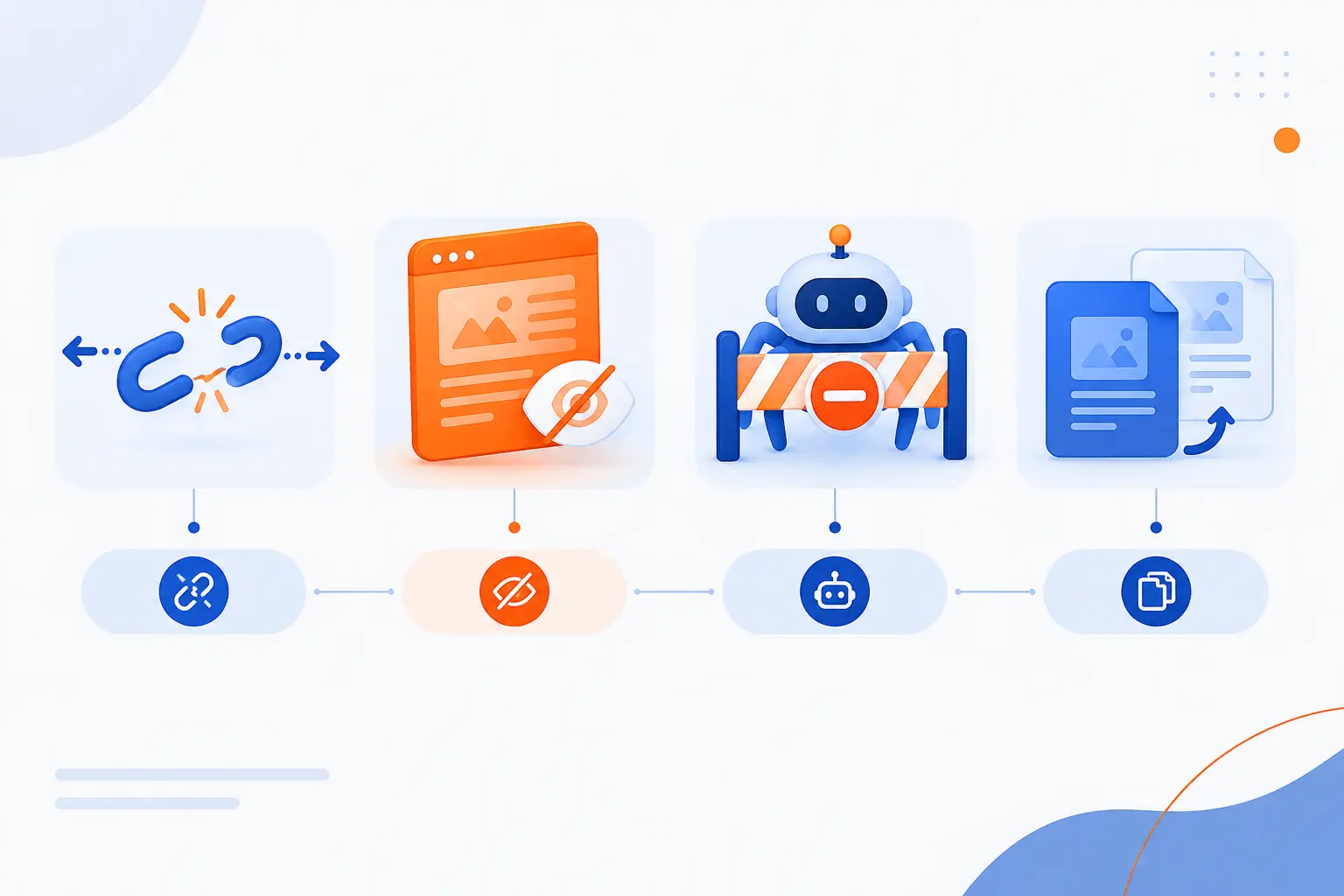
Nofollow and noindex solve different problems. Nofollow concerns link treatment, while noindex concerns whether a page should appear in search results. Robots.txt concerns crawling access, and canonical tags suggest the preferred version among similar pages. Mixing these up is one of the fastest ways to create SEO confusion.
| Control | Main job | Common mistake |
|---|---|---|
nofollow | Qualifies links | Using it as a crawl block |
noindex | Keeps a page out of results | Blocking crawl before engines see it |
robots.txt | Limits crawler access | Expecting it to remove indexed URLs alone |
canonical | Signals preferred duplicate or similar page | Using it to hide unrelated pages |
Why Nofollow Is Not a Guaranteed Crawl Block
Nofollow is not a guaranteed crawl block because search engines may discover the same URL from other places. A nofollowed link on your page does not erase the destination from the web. The URL might appear in a sitemap, another website, browser data, redirects, internal links, or external citations.
Also, modern search engines may treat nofollow as a hint in some contexts. That means it should not be used when your real goal is to prevent access or indexing. It is a link qualification signal, not a security tool.
If a URL must not be accessed, use authentication or server controls. If it should not appear in search results, use noindex correctly. If crawlers should not fetch a section, consider robots.txt with care. Pick the tool that matches the job.
When Noindex Is the Better Fit
Noindex is the better fit when the page itself should not appear in search results. That includes thin internal search pages, staging pages that accidentally went public, thank-you pages, duplicate utility pages, and certain filtered URLs. The directive addresses the page’s index status, not the links on it.
For noindex to work, search engines generally need to access the page and see the directive. If robots.txt blocks the crawler first, the crawler may never see the noindex instruction. That is a classic technical SEO trap.
We like to ask one simple question: “Is the problem the page or the link?” If the page should stay out of search, think noindex. If the link should not imply endorsement, think nofollow, sponsored, or ugc.
Why Duplicate Robots Directives Create Risk
Duplicate robots directives create risk because teams may send conflicting instructions from HTML, headers, CMS settings, plugins, and server rules. One system may say index, follow. Another may send noindex or nofollow. Debugging that conflict can waste hours, especially when the directive is hidden in an HTTP header.
This happens often on CMS-driven sites. An SEO plugin, theme setting, CDN rule, and server configuration can all touch crawler instructions. Nobody intends to create a conflict. The stack just grows, and the rules drift apart.
Our practical advice is to keep one source of truth whenever possible. Document where robots rules live. Test important templates after plugin changes, theme updates, migrations, and CDN configuration changes. A small audit can prevent a large visibility problem.
Frequently Asked Questions
The most useful way to understand nofollow is to connect it to everyday decisions: whether to endorse a link, whether a link is paid, and whether users created it. Beginners often ask about “dofollow,” checking link status, and which backlinks matter most. The short answer is that nofollow is one part of link quality, not the whole story. Relevance, trust, placement, and intent still matter more than labels alone.
What Is a No-Follow Hyperlink?
A no-follow hyperlink is a clickable link that includes a relationship value asking search engines not to treat it as a normal endorsement. In code, it usually appears as <a href="https://example.com" rel="nofollow">. Users can still click it, but search engines receive a different signal about ranking credit.
How Do You Check Dofollow and Nofollow Links?
You can check dofollow and nofollow links by inspecting the page’s HTML and looking for the rel attribute on the link. If a link has rel="nofollow", it is nofollowed. If it has no qualifying rel value, SEO tools often call it “dofollow,” though dofollow is not a standard HTML value.
How Do Dofollow and Nofollow Backlinks Differ for SEO?
Dofollow backlinks are normal links that may pass ranking signals, while nofollow backlinks ask search engines not to treat them as normal endorsements. A followed link from a trusted, relevant page is usually more valuable for rankings. A nofollow backlink can still help with referral traffic, visibility, discovery, and brand trust.
What Type of Links Are Best for SEO?
The best links for SEO are relevant editorial links from trustworthy pages that choose to cite your content naturally. They should make sense for readers first. Paid, user-generated, and untrusted links can still have business value, but they should be qualified with the right rel value.
How 1Byte Supports SEO-Friendly Website Management
1Byte supports SEO-friendly website management by helping site owners keep the technical foundation clear, secure, and easier to maintain. The nofollow tag lives in content and code, but it depends on a wider environment: domains, SSL certificates, CMS setup, hosting, and server control. We do not see SEO as a plugin button. We see it as the result of clean publishing habits running on dependable web infrastructure.
| 1Byte service | SEO connection | Practical use |
|---|---|---|
| Domain registration and SSL certificates | Trust and secure access | Keep the public site consistent and protected |
| WordPress hosting and shared hosting | CMS-based content management | Manage posts, links, comments, and plugins |
| Cloud hosting and cloud servers | Server-level control | Handle headers, redirects, and larger SEO projects |
Secure Site Foundations With Domain Registration and SSL Certificates
Secure site foundations start with a consistent domain and a valid SSL certificate. If a site has confusing domain variants, expired certificates, or mixed HTTP and HTTPS versions, link signals become harder to manage. Before worrying about nofollow rules, we want the basic address of the site to be stable.
Domain registration gives a business its public home. SSL certificates help browsers and users access that home over HTTPS. Together, they support a cleaner environment for internal links, canonical URLs, redirects, and search engine discovery.
Our view is practical. A nofollow tag can clarify one link, but a messy domain setup can confuse thousands of URLs. Start with the foundation, then tune the details.
Simplify Link Management With WordPress Hosting and Shared Hosting
WordPress hosting and shared hosting can make link management easier for small teams that publish often. Many sites using the nofollow tag are blogs, business sites, review sites, or community-driven WordPress projects. In those environments, editors need a simple way to manage links without touching server configuration every week.
WordPress can handle posts, pages, menus, comments, and plugins from one familiar dashboard. That matters because rel values often get added during editing. A writer may mark an affiliate link as sponsored. A site owner may review comment links. A developer may inspect templates for unwanted page-wide directives.
Shared hosting can suit simpler sites that do not need custom server architecture. The SEO principle stays the same: keep link rules understandable. If every editor knows when to use nofollow, sponsored, or ugc, the site is much less likely to drift into messy linking habits.
Scale SEO Projects With Cloud Hosting and Cloud Servers
Cloud hosting and cloud servers are useful when SEO projects need more control over configuration, traffic patterns, and server-level rules. Larger sites may need to manage redirects, headers, staging environments, crawl behavior, and template changes with more precision. That is where infrastructure choices start to affect technical SEO work.
For example, an SEO team may need to check whether an X-Robots-Tag header is being sent by the server. They may also need to separate staging pages from production pages or manage URL behavior across applications. Those tasks sit closer to hosting and server configuration than to ordinary content editing.
1Byte is an AWS Partner, and we connect that cloud background to practical site management. For SEO, the point is not buzzwords. The point is having the right environment for the size and complexity of the website you are running.






Conclusion
The nofollow tag is a small piece of code with a clear job: it tells search engines that a link should not be treated like a normal endorsement. Use it for untrusted references, paid links when sponsored is not used, and cases where you need to link without passing full editorial confidence. For user-generated content, use ugc. For paid placements, use sponsored. When more than one relationship applies, combine values carefully.
The biggest mistake is treating nofollow as a universal SEO shield. It does not guarantee crawl blocking, it does not replace noindex, and it should not be sprayed across every external link. Good SEO is still built on helpful content, clean architecture, honest citations, secure hosting, and consistent technical controls.
Our advice is simple: audit your most important templates, affiliate links, comment areas, and external citations. Ask why each qualified link is marked that way. If the reason is clear, keep it. If the reason is fear or old folklore, clean it up and let your links tell the truth.