

- What Is a Content Delivery Network?
- Why Is a Content Delivery Network Important?
- How Does a Content Delivery Network Work?
- What Can a Content Delivery Network Deliver?
- What Types of Content Delivery Networks Exist?
- What Is a Content Delivery Network Used for?
- How a Content Delivery Network Compares With Web Hosting and Cloud Computing
- How Do You Choose and Implement a Content Delivery Network?
- FAQ
- How 1Byte Supports Customers With Web Hosting and Cloud Services
- Conclusion: When a Content Delivery Network Makes Sense for Your Site
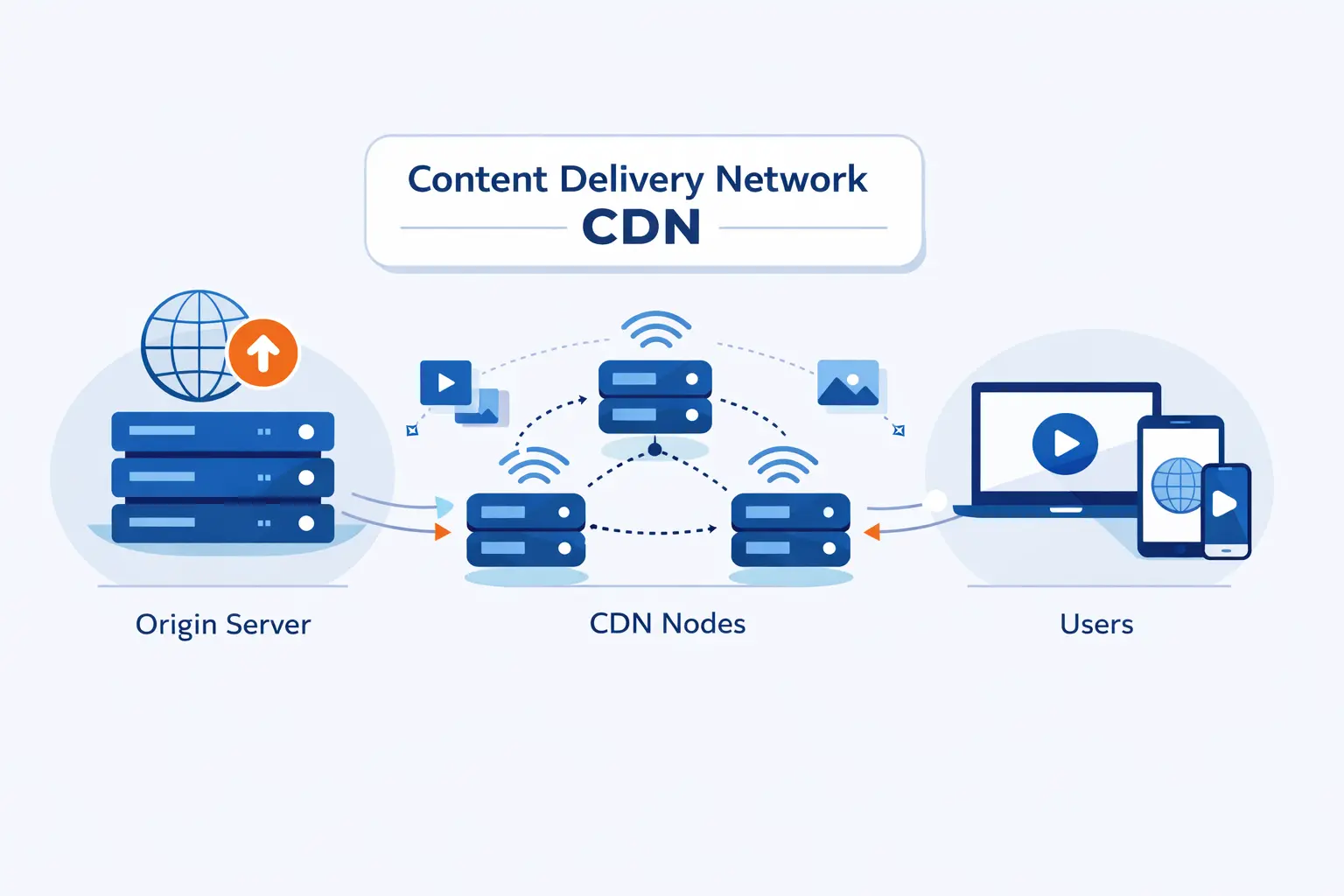
When people ask what is a content delivery network, we usually start with the simplest picture first. A CDN is a delivery layer that keeps content closer to visitors, so pages, images, scripts, and video arrive faster than they would from one faraway server.
At 1Byte, we see CDNs as practical infrastructure, not tech theater. They sit between users and the origin, absorb repeated requests, and help websites stay quick and available when traffic gets noisy.
What Is a Content Delivery Network?
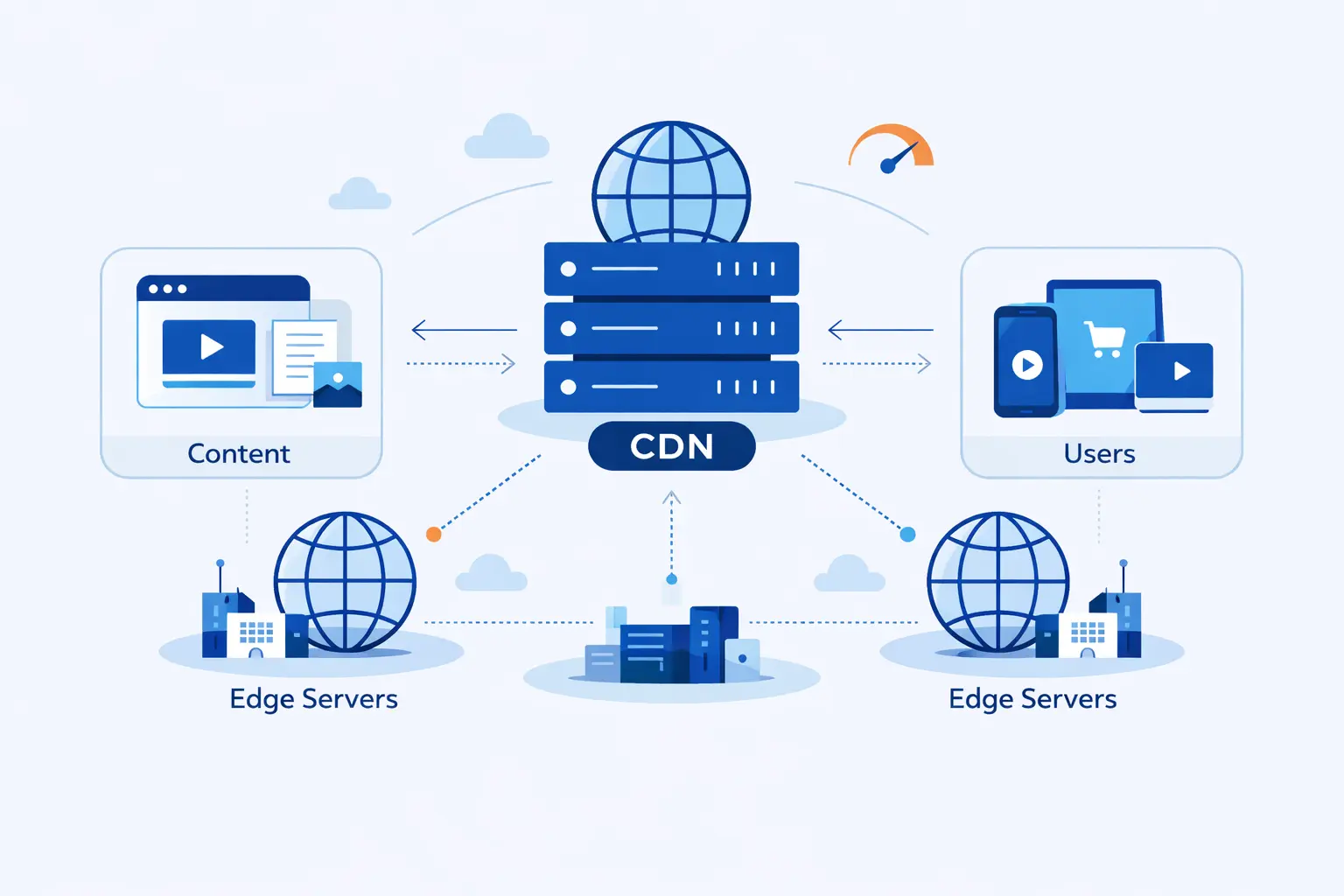
A content delivery network matters most when we explain it in plain terms. Before we get into routing and caching, it helps to see where the CDN sits and why distance changes speed so much.
1. A Simple Definition of a CDN
A CDN is a geographically distributed network of servers that stores or fetches content on behalf of your site. Instead of every visitor talking straight to one origin server, many requests are handled by nearby edge servers first.
2. How a CDN Reduces Latency by Bringing Content Closer to Users
Latency is the waiting time between a request and a response. When content travels a shorter path, visitors wait less. That is why a nearby edge server usually feels faster than an origin on another coast or another continent.
3. How a CDN Fits Between Users and the Origin Server
In most setups, the CDN acts like a reverse proxy in front of your site. Requests hit the CDN first, and the CDN either serves a cached copy or forwards the request to the origin and then returns the answer to the visitor.
Why Is a Content Delivery Network Important?
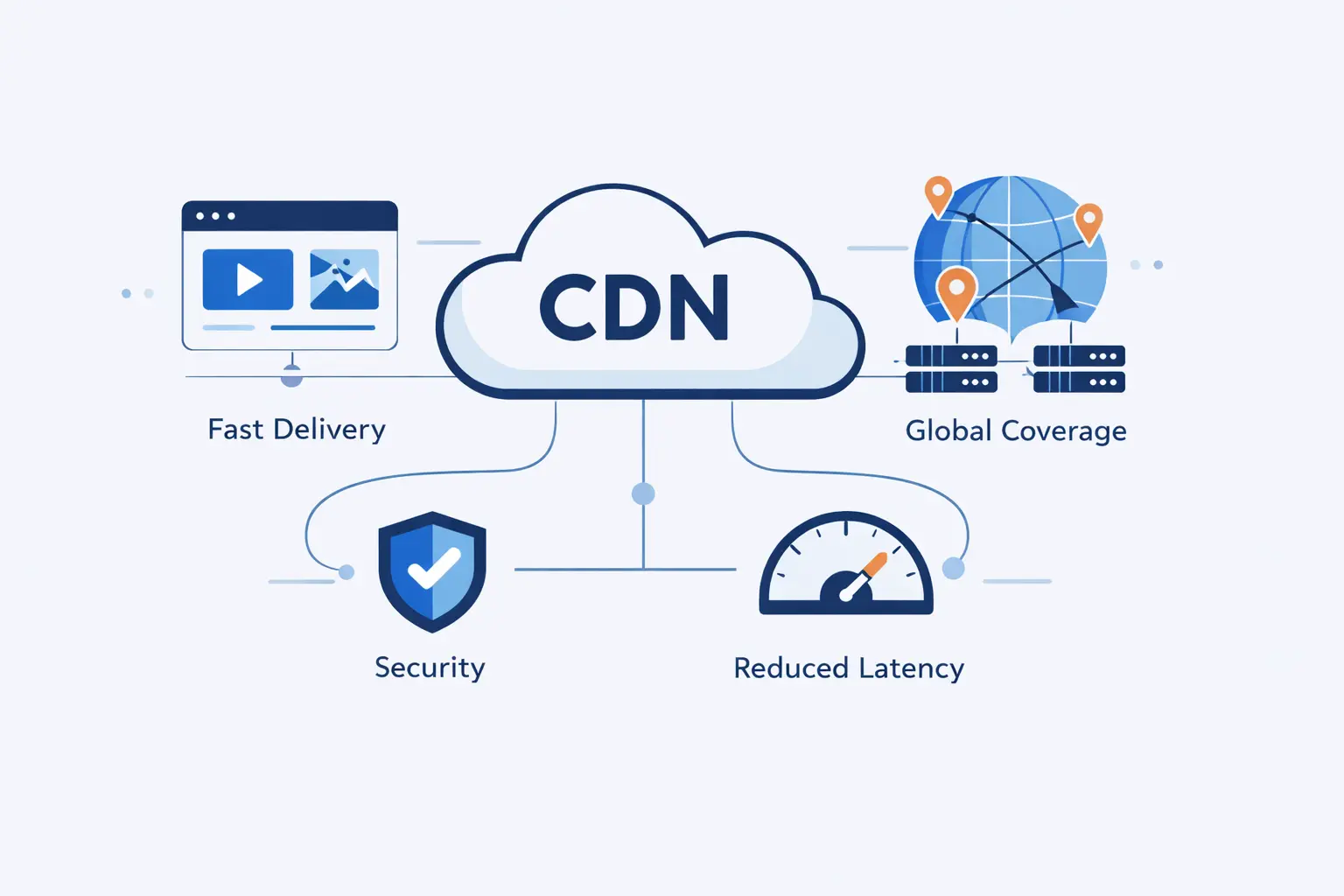
From our side at 1Byte, CDN demand sits inside a broader edge shift. IDC expects edge computing spending to reach $450 billion by 2029, which tells us businesses keep pushing computing and delivery closer to users.
1. Faster Load Times and Lower Latency
The first benefit is still the biggest one. Faster delivery improves the first impression of a site, reduces waiting on heavy assets, and helps global audiences feel less of the penalty created by physical distance.
2. Higher Availability During Traffic Spikes and Outages
A CDN spreads demand across many edge locations instead of forcing one origin to carry everything. That distribution helps during traffic spikes, hardware failures, and sudden bursts caused by promotions, launches, or attacks.
3. Lower Bandwidth Costs and Less Load on the Origin
Every cached response served from the edge is one less request your origin must process. That offload reduces repeated data transfer, lowers origin bandwidth usage, and often delays the need for bigger origin infrastructure.
4. Better Security, User Experience, and SEO Rankings
Speed and stability affect how people judge a site, and they also influence search performance. Google explicitly recommends good Core Web Vitals because they reflect real loading speed, responsiveness, and visual stability.
How Does a Content Delivery Network Work?
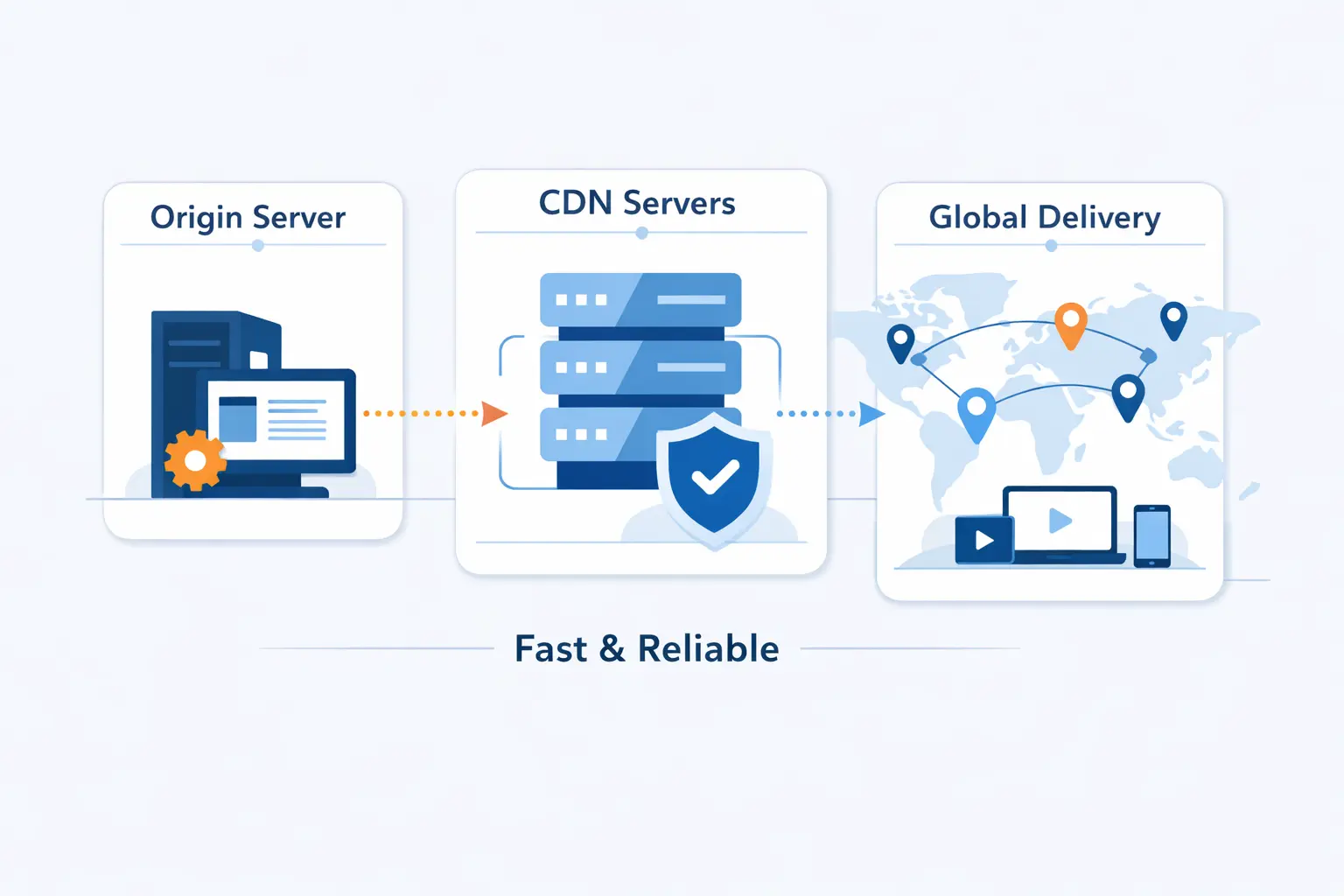
This is the part many guides rush through, and we think that is a mistake. A CDN is not magic. It is a set of network decisions about where requests go, what gets cached, and how failures are handled.
1. Origin Servers, Edge Servers, and Points of Presence
Your origin server holds the original files and application logic. Edge servers sit in points of presence, often called PoPs, and deliver cached content or proxy traffic on the origin’s behalf.
2. DNS Routing, Caching, and Cached Responses
DNS or proxy configuration directs visitors toward the CDN. When the edge already has the file, that is a cache hit. When it does not, the edge fetches the content from the origin, stores it according to cache rules, and serves later visitors faster.
3. Dynamic Acceleration, Edge Logic, and Request Optimization
Not every request can be cached safely. Login state, search results, carts, and dashboards often stay dynamic. Even then, CDNs can still help by reusing connections, optimizing routes, terminating TLS near the user, and running small pieces of code at the edge.
4. Load Balancing, Failover, and Anycast Routing
Modern CDNs also improve resilience. With anycast, the same IP can be announced from many locations, so traffic is routed into the provider’s network from a nearby entry point. If one path or server fails, traffic can move to another healthy destination.
What Can a Content Delivery Network Deliver?
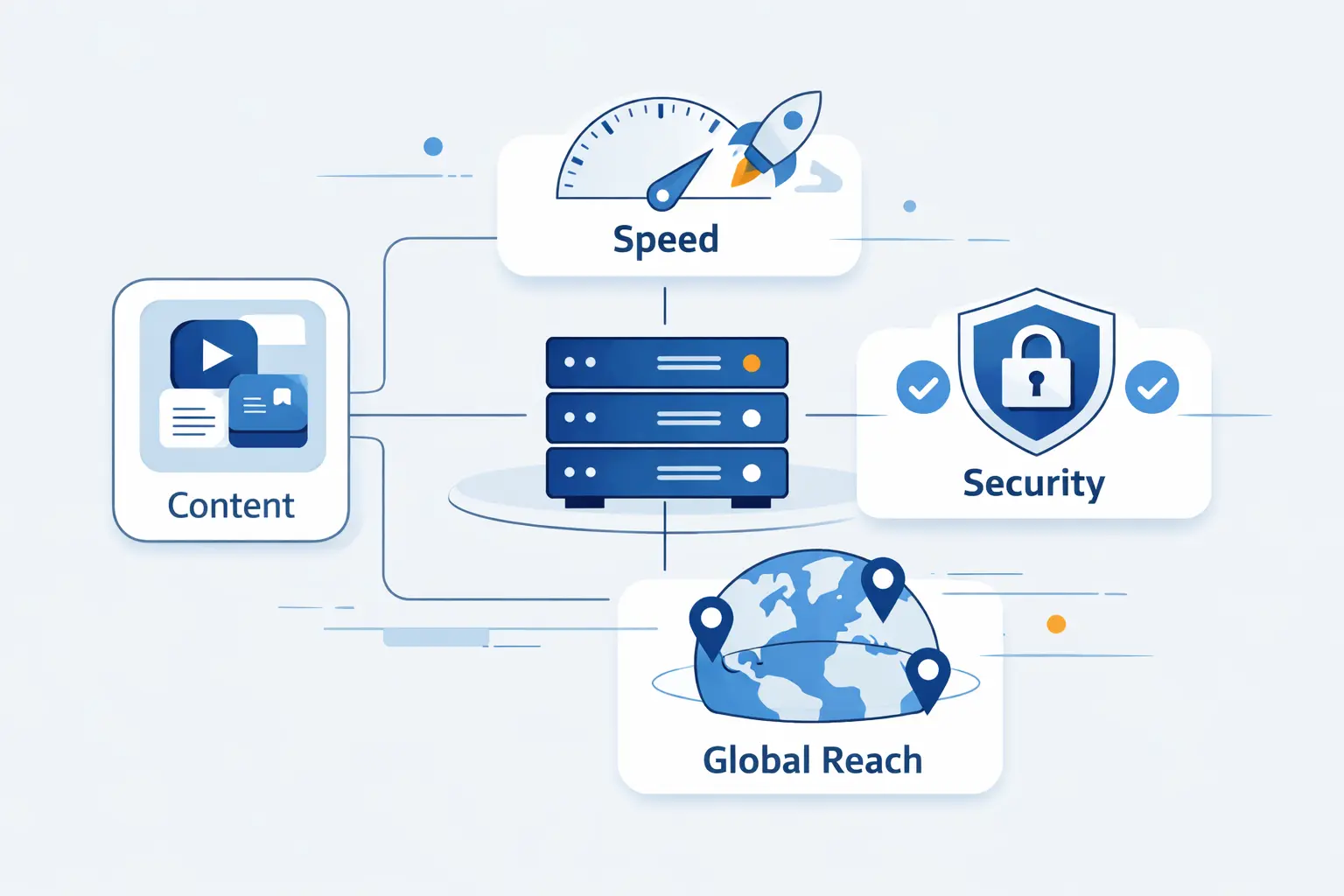
Many beginners assume a CDN is only for images. We think that undersells it. A well-configured CDN can help with much more than static page furniture.
1. Static Assets Such as Images, Scripts, and Stylesheets
Static assets are the classic CDN use case. Images, JavaScript files, stylesheets, fonts, and downloadable files change less often and are ideal candidates for long-lived caching at the edge.
2. Dynamic Content Such as Feeds, Login Status, and Chat
Dynamic content is harder, but not off-limits. CDNs can optimize these requests with smart routing, connection reuse, selective caching, and edge logic, even when the final response still comes from the origin.
3. Streaming Media, Software Downloads, APIs, and Mobile App Content
CDNs are also a good fit for app and game updates. Unity documents that its managed delivery service can push content worldwide without app reinstalls, which is exactly the kind of problem edge delivery solves well.
What Types of Content Delivery Networks Exist?
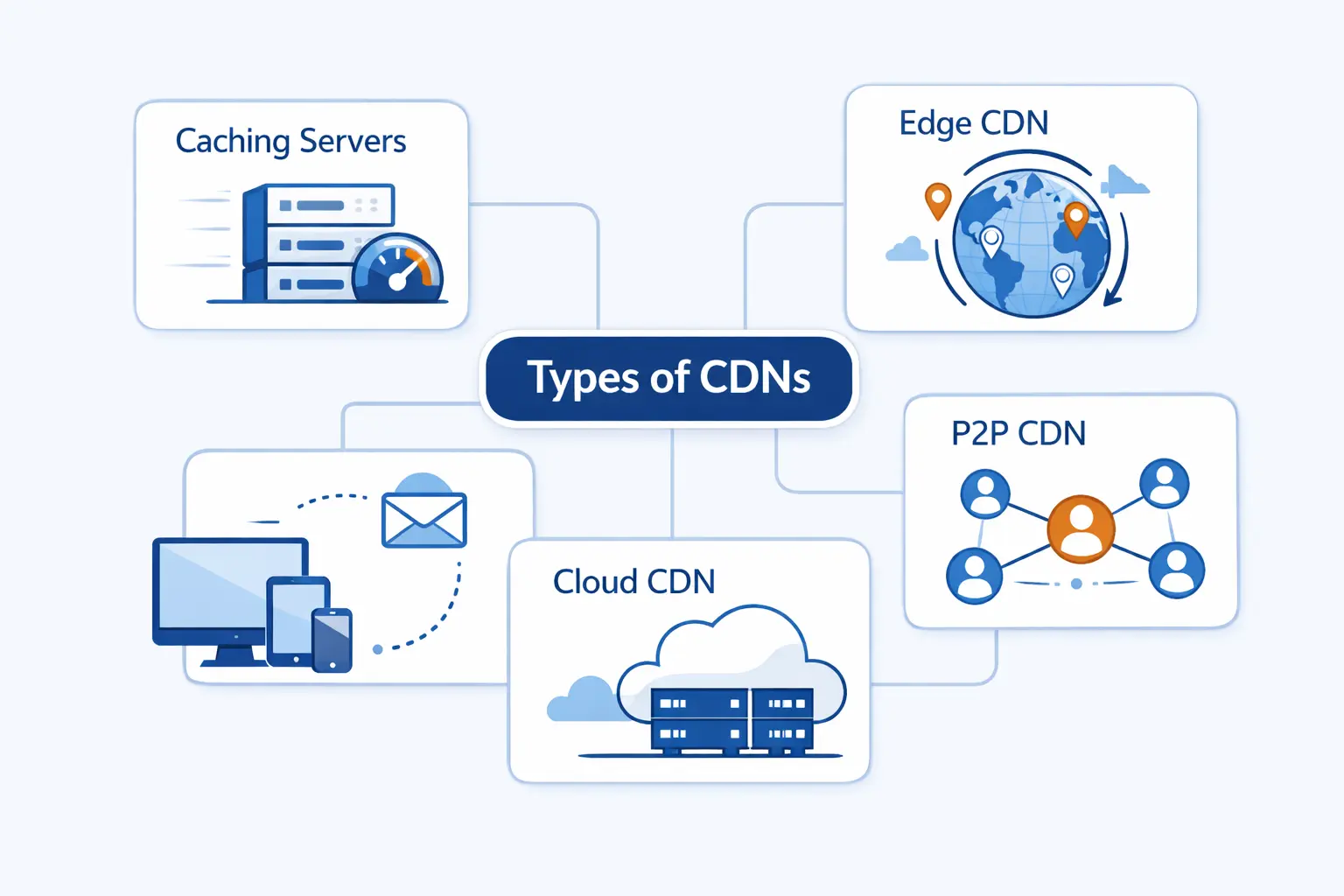
Not every CDN is built the same way. The model you choose affects control, maintenance effort, cache behavior, and how well the setup fits your application.
1. Push CDNs
In a push CDN, content is uploaded or preloaded to edge storage ahead of demand. We usually see this approach make sense for large files, scheduled releases, or assets that must already be in place before a traffic wave starts.
2. Pull CDNs
In a pull CDN, the edge fetches content from the origin only when users ask for it. That is simpler to manage for many websites because the CDN learns what to cache from real traffic instead of from a manual upload process.
3. Peer-to-Peer and Private CDNs
Some organizations use private or specialized models instead of a shared public CDN. Netflix is the clearest real-world example. Its Open Connect program localizes traffic through ISP partnerships and embedded appliances.
4. Multi-CDN Strategies
A multi-CDN strategy uses more than one provider at the same time. We usually recommend it only when the business case is strong, such as strict uptime goals, regional performance gaps, or the need to shift traffic away from one provider during an incident.
What Is a Content Delivery Network Used for?
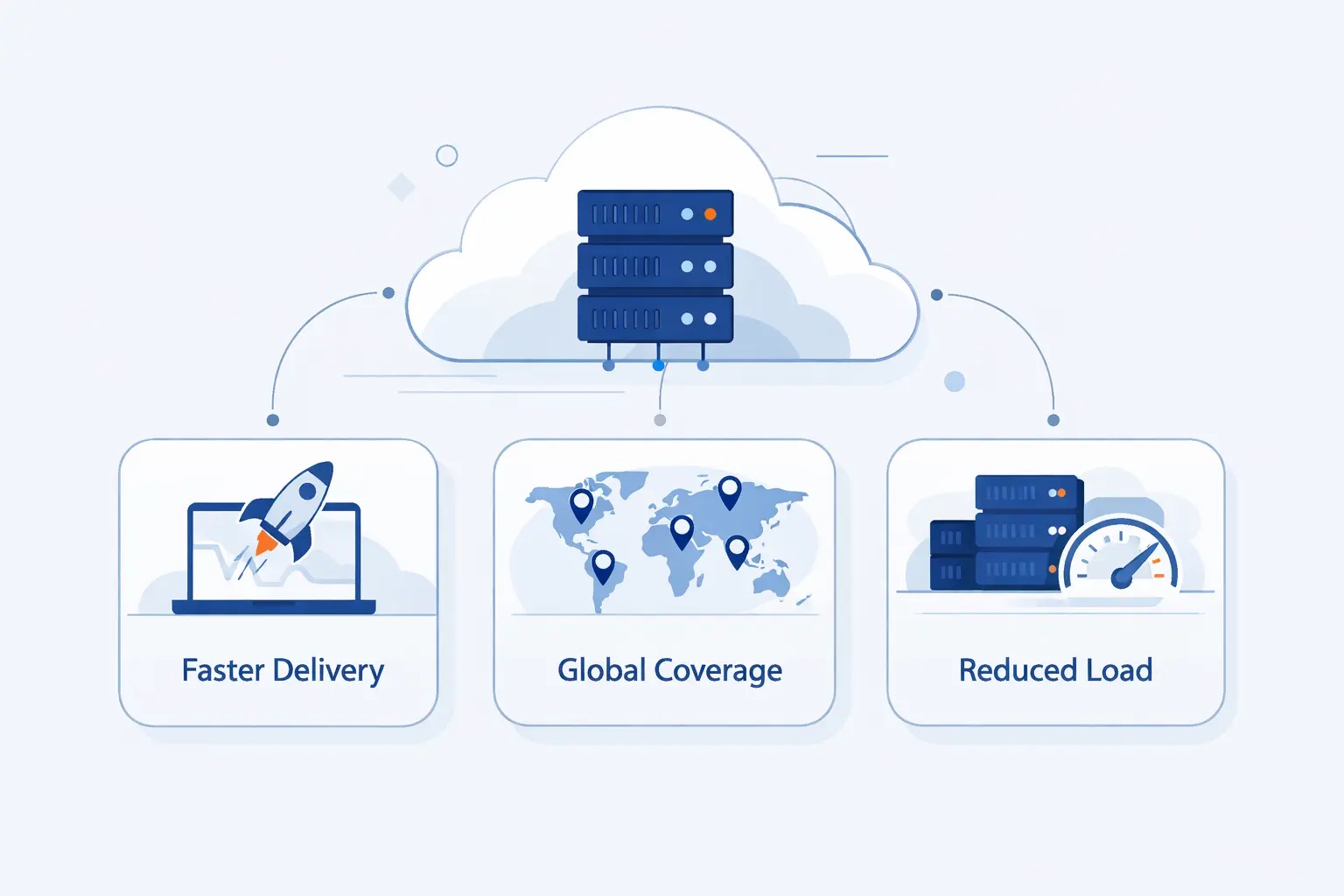
If we strip away the jargon, a CDN is used anywhere repeated delivery matters. The more often users request the same assets, the more value edge caching and optimized routing can create.
1. Ecommerce, SaaS, and Content-Rich Websites
Online stores and SaaS dashboards live or die on responsiveness. One ecommerce example is SHOPYY, which said page load times in Los Angeles became 94% faster after moving onto Cloudflare’s global network.
2. Live Streaming, Video on Demand, and Global Media Delivery
Media delivery is where CDN design becomes very visible to users. Streaming works better when video segments, manifests, and related assets are localized. Netflix describes its model as highly localized delivery through Open Connect and direct ISP relationships.
3. Online Gaming, Mobile Apps, Social Platforms, and APIs
Games and software launch windows are brutal tests for delivery systems. In one AWS case study, PatchKit from Upsoft said it accelerated content publishing by more than 50 percent after moving its distribution service onto Amazon CloudFront.
How a Content Delivery Network Compares With Web Hosting and Cloud Computing
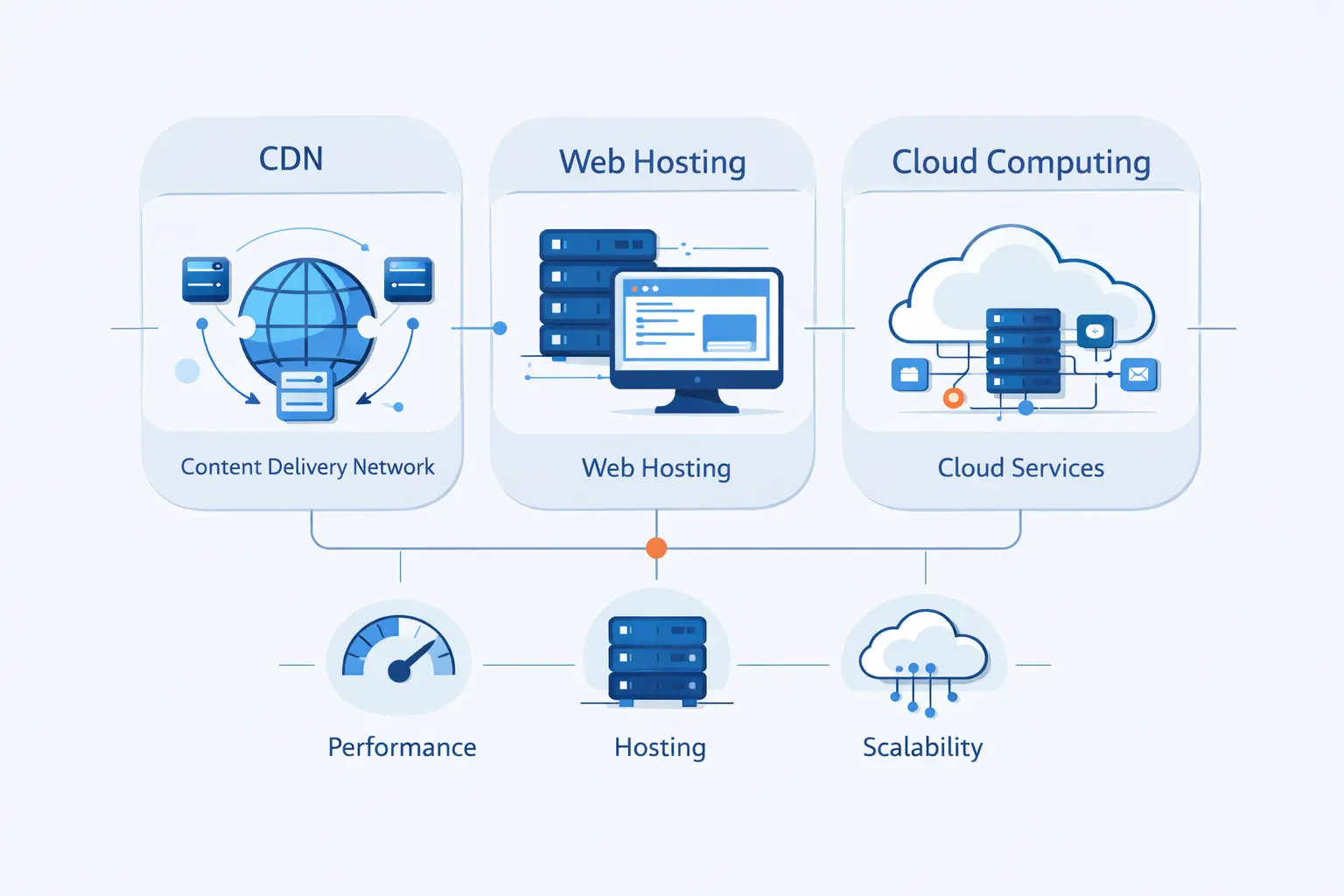
We often see these terms blended together, which causes bad buying decisions. A CDN, web hosting, and cloud computing can work together, but they do different jobs.
1. CDN Versus Web Hosting
Web hosting stores your site or app and runs the origin environment. A CDN does not replace that origin. Instead, it makes hosted content easier and faster to reach by caching and proxying requests closer to visitors.
2. CDN Versus Cloud Computing
Cloud computing provides compute, storage, databases, and application services on demand. A CDN focuses on delivery. In short, cloud platforms run workloads, while CDNs optimize how content and responses move toward users.
3. Using a CDN Alongside Hosting and Cloud Services
Most production systems use all three layers together. We like this arrangement because it is clean. The origin lives on hosting or cloud infrastructure, and the CDN sits in front to cache files, protect the origin, and shorten the delivery path.
How Do You Choose and Implement a Content Delivery Network?
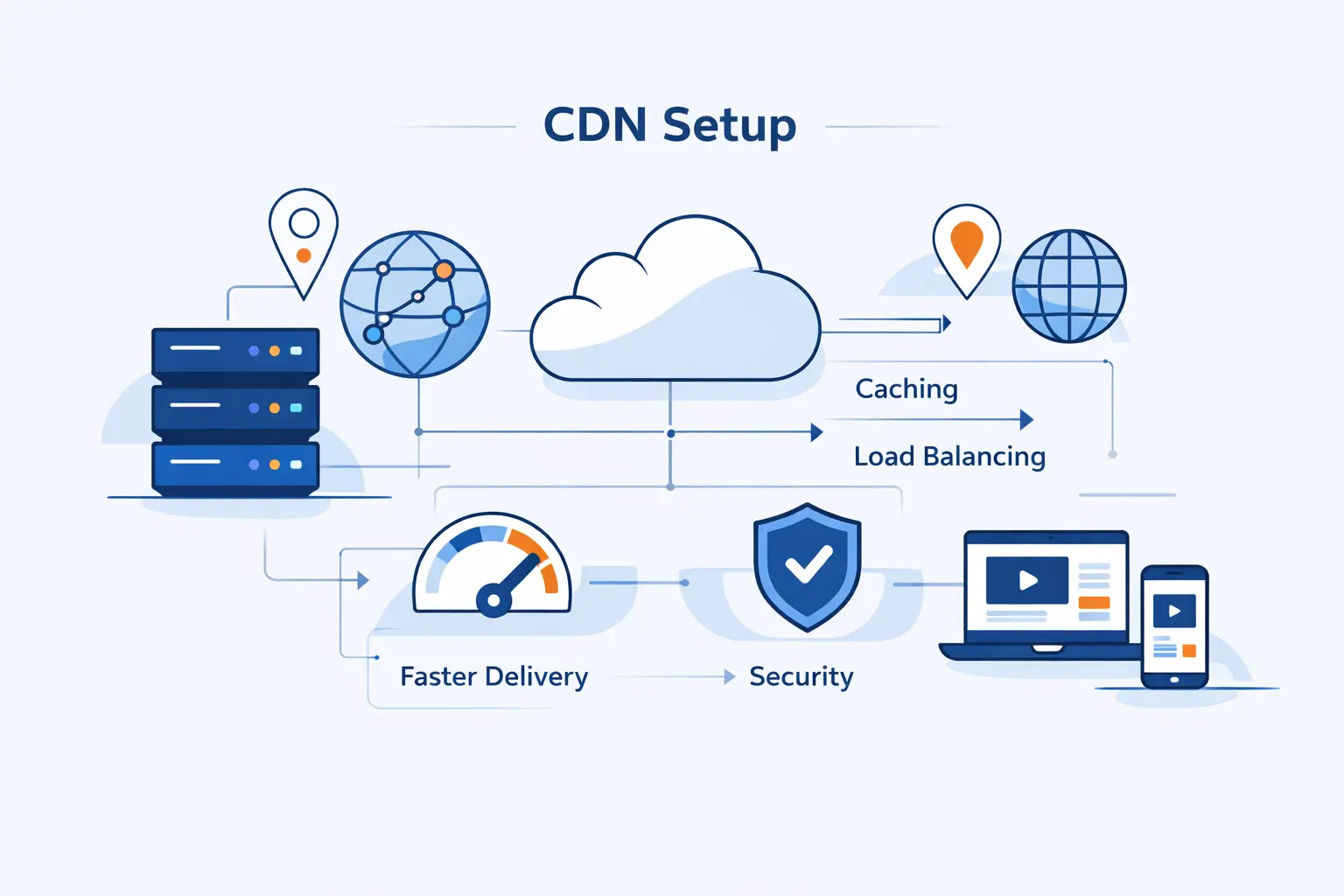
Choosing a CDN is less about brand names and more about fit. We think the best decisions come from matching traffic patterns, geography, content type, and operational skill to the provider’s strengths.
1. Network Footprint, Points of Presence, and User Geography
Start with your audience map. Where are your users, really? A giant global footprint sounds nice, but what matters is strong coverage where your traffic lives and good paths between edge locations and your origin.
2. Pricing Models, Service Levels, and Provider Support
Pricing can be trickier than it looks. Besides bandwidth, providers may charge on requests, CPU time for edge code, storage, transformations, logs, routing features, or security add-ons. That is why we always tell customers to read the billing dimensions before they compare sticker prices.
3. Configuration, Caching Strategy, and DNS Integration
A mediocre CDN can perform well with good cache rules, and a great CDN can perform badly with poor ones. Cache-Control headers, TTL choices, purge workflows, versioned assets, and correct DNS or proxy setup usually decide whether the rollout feels smooth or frustrating.
4. Security, Analytics, Monitoring, and Privacy Considerations
We would never pick a CDN on speed alone. You also want TLS support, DDoS handling, origin protection, request logs, traffic analytics, and a clear view of where data is processed and retained. Those details matter when performance and compliance meet in the same room.
FAQ

Below are the short answers we hear most often from beginners. We have kept them direct, because this topic gets clearer when we stop overcomplicating it.
1. What Does a Content Delivery Network Do?
A CDN speeds up delivery by serving content from edge locations closer to visitors. It can also reduce origin load, improve availability, and add security controls in front of the origin server.
2. What Is an Example of Content Delivery Through a CDN?
A good example is streaming video. Netflix describes Open Connect as a highly localized system that delivers video through ISP relationships and nearby appliances instead of sending every stream from one central source.
3. What Is the Difference Between a VPN and a CDN?
A VPN tunnels traffic from a user or device through an intermediary for privacy or network access. A CDN is a reverse-proxy delivery layer for websites and apps. One protects or reroutes user traffic, while the other accelerates and caches published content.
4. How Do Content Delivery Networks Make Money?
Most CDNs make money through combinations of transfer, requests, edge compute, storage, load balancing, security products, logs, and premium support. In other words, they charge for the delivery platform and for the extra services wrapped around it.
5. Can a CDN Deliver Dynamic Content?
Yes. Dynamic content is harder to cache, but CDNs can still improve it through route optimization, connection reuse, TLS termination, and edge logic. Some responses may also be cached selectively when the application allows it.
6. Is a CDN Only Useful for Large Global Websites?
No. We think that is one of the most expensive myths in hosting. Even a smaller site can benefit if it serves heavy media, has users in different regions, depends on good uptime, or wants to reduce origin strain.
7. Does a CDN Help With SEO?
Yes, usually in an indirect but meaningful way. A CDN can improve page speed, stability, and uptime, which supports user experience and makes it easier to achieve the performance signals Google recommends.
How 1Byte Supports Customers With Web Hosting and Cloud Services
At 1Byte, we do not treat a CDN as an isolated checkbox. We see it as part of a broader stack that starts with domains and SSL, extends through hosting, and often reaches cloud infrastructure and application delivery design.
1. Domain Registration and SSL Certificates
We support the basics that make delivery possible in the first place, including domain registration and SSL certificates. In practice, that means customers can set up a secure origin and clean DNS foundation before they place a CDN or proxy layer in front of it.
2. WordPress Hosting, Shared Hosting, and Cloud Hosting
We offer WordPress hosting, shared hosting, and cloud hosting, so customers can choose the level of control that matches their project. Our WordPress and cloud hosting pages emphasize managed setup, backups, SSL support, and origin environments that can work well with a CDN in front.
3. Cloud Servers From an AWS Partner
We also operate as an AWS Consulting Partner, and our AWS partner page lists Advanced Tier Services and the AWS Solution Provider Program. From our perspective, that matters because CDN choices are strongest when the origin, DNS, security model, and cloud architecture are planned together.






Conclusion: When a Content Delivery Network Makes Sense for Your Site
A content delivery network makes sense when your site serves repeatable assets, reaches users across distance, or needs better protection from spikes and outages. It becomes especially valuable for ecommerce, media, APIs, software delivery, and applications where delays are obvious to users.
Our view at 1Byte is simple. If visitors are waiting, if your origin is carrying too much repeated traffic, or if uptime matters to revenue, a CDN deserves serious consideration. Start with your static assets, measure the results, and then expand into smarter edge behavior where it actually pays off.