


- How These Dedicated Gaming Server Picks Were Judged
- Top 10 Dedicated Gaming Server Providers
- 5 More Dedicated Gaming Server Options Worth Considering
- How to Match a Dedicated Gaming Server to Your Game
- When to Rent vs Build a Dedicated Gaming Server
- Operational Features That Save Time After Launch
- Network and Security Signals Worth Checking Before You Buy
- Dedicated Gaming Server FAQ
- Conclusion
If you are shopping for a dedicated gaming server, the short answer is this: true bare metal control starts with OVHcloud, PingPerfect’s dedicated line, Scaleway, and ReliableSite, while faster managed setup is stronger at GPORTAL, BisectHosting, Nodecraft, Hostinger, and Apex. We built this list for readers who want to stop comparing tabs and start narrowing choices. Some picks here are full dedicated machines, while others are managed game-hosting platforms or VPS plans that many buyers still compare in the same search. That mix matters, because the right choice depends less on hype and more on whether you want raw control, fast launch, or the easiest path to a stable community server.
How These Dedicated Gaming Server Picks Were Judged
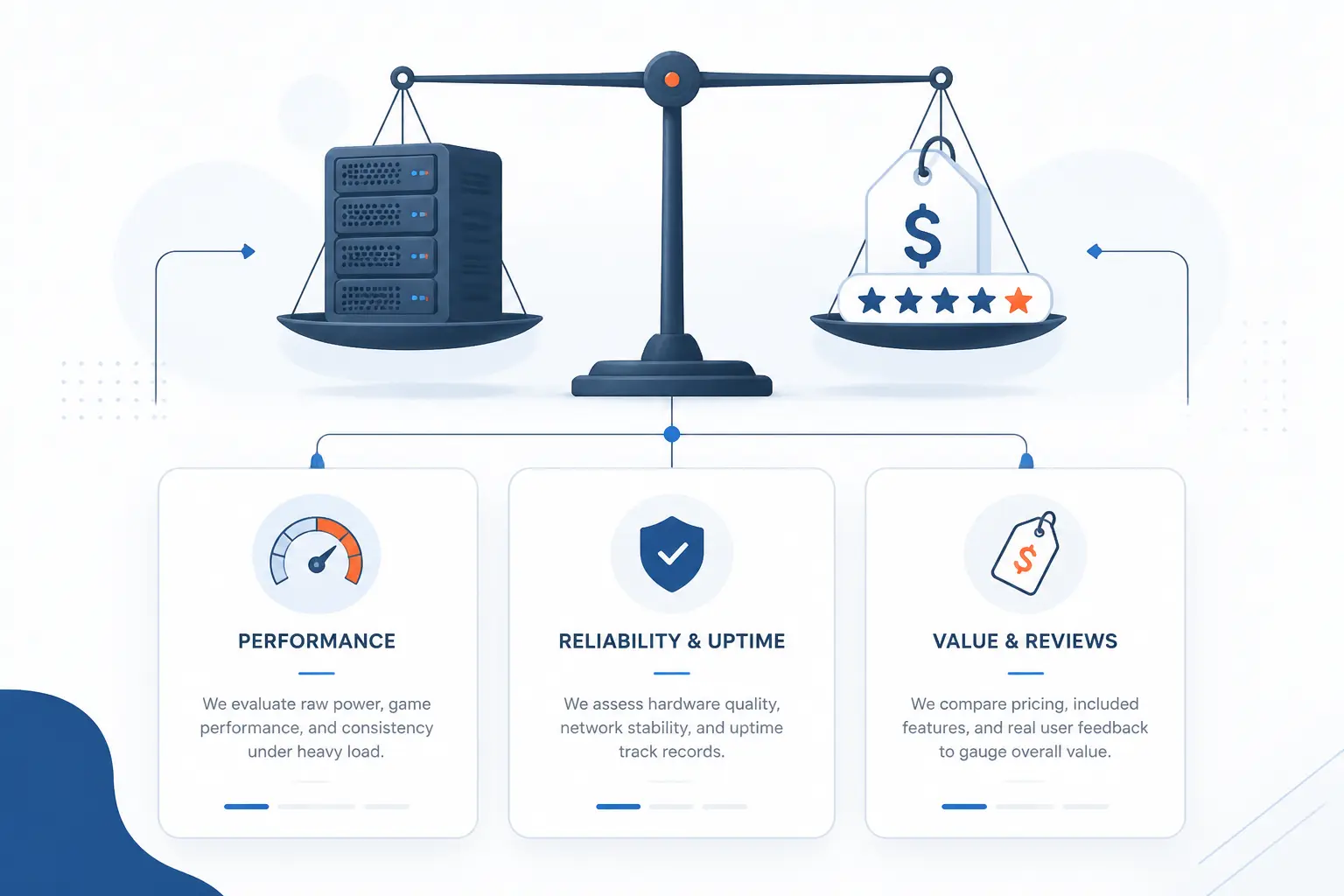
Our ranking is meant to help you shortlist the right kind of host first, then the right provider. We looked at where each option sits on the control-versus-convenience spectrum, how clearly it prices the service, and whether the public review footprint matches the promises on the sales pages. That is why bare metal specialists and managed game hosts both appear here, but they do not all solve the same problem equally well.
FURTHER READING: |
| 1. 15 Best Linux Dedicated Server Options Compared |
| 2. 15 Best Cloud Server for Game Hosting in 2026 |
| 3. 15 Best Free Website Hosting Options in 2026 |
Quick Comparison of the Dedicated Gaming Server Options
| Provider | Best For | Management Style | Starting Price | Score |
|---|---|---|---|---|
| OVHcloud Dedicated Game Servers | High-control bare metal for serious communities | Self-managed dedicated server | $179/month | 4.8 |
| 1Byte | Cheap self-managed cloud setups and mixed hosting needs | General cloud hosting and cloud servers | $8.99/month | 2.9 |
| GPORTAL Game Server Hosting | Fast launch across many games | Managed game hosting | $4.61 per 30 days | 4.6 |
| Hostinger Game Server Hosting | VPS flexibility with cleaner onboarding | Managed VPS with root access | $6.99/month | 4.5 |
| Shockbyte | Minecraft-first hosting on a budget | Managed game hosting | $2.79/month first term | 4.2 |
| BisectHosting | Modded Minecraft and multi-game switching | Managed game hosting | $5.99/month | 4.7 |
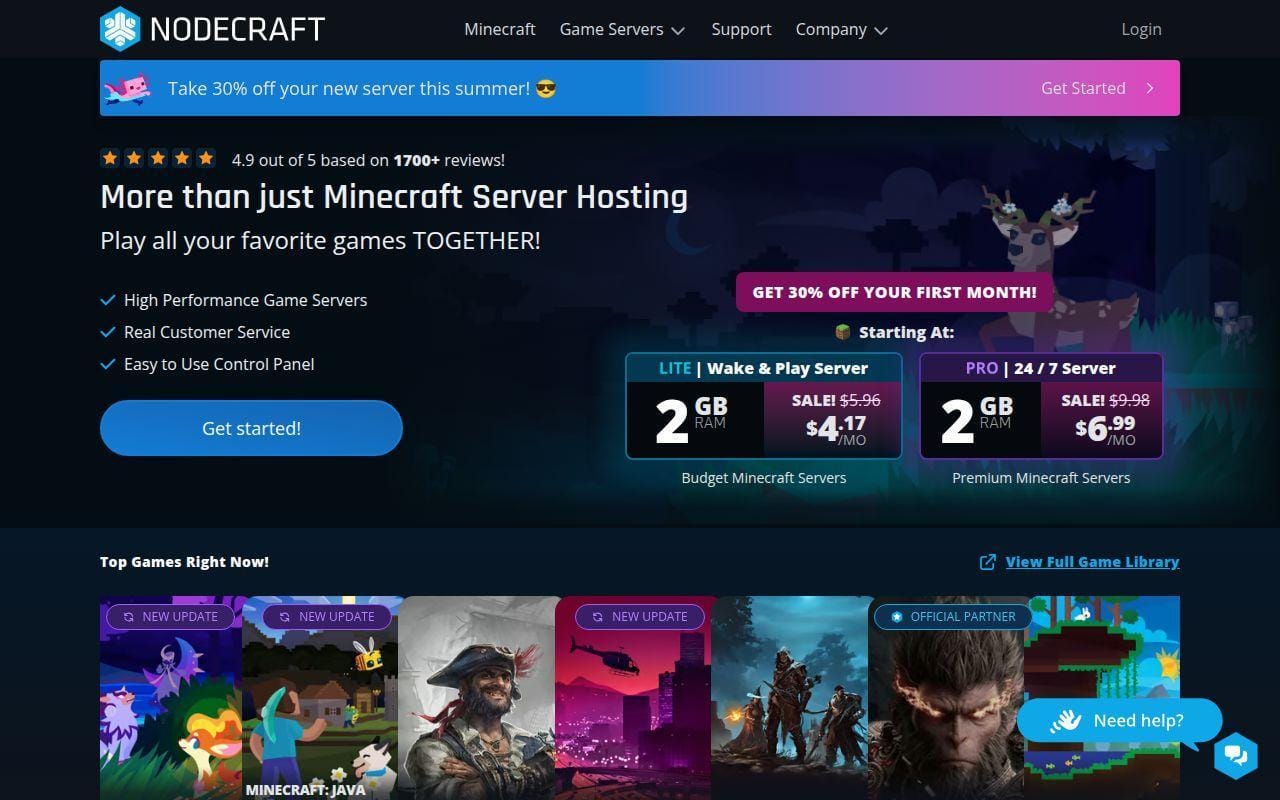
| Nodecraft | Flexible small servers with smart game switching | Managed game hosting | $4.17/month first term | 4.6 |
| PingPerfect | Dedicated rentals plus broad game support | Dedicated and managed game hosting | $237.99/month | 4.5 |
| ScalaCube | Cheap Minecraft hosting with lots of included extras | Managed game hosting and VPS-style control | $2/month | 4.1 |
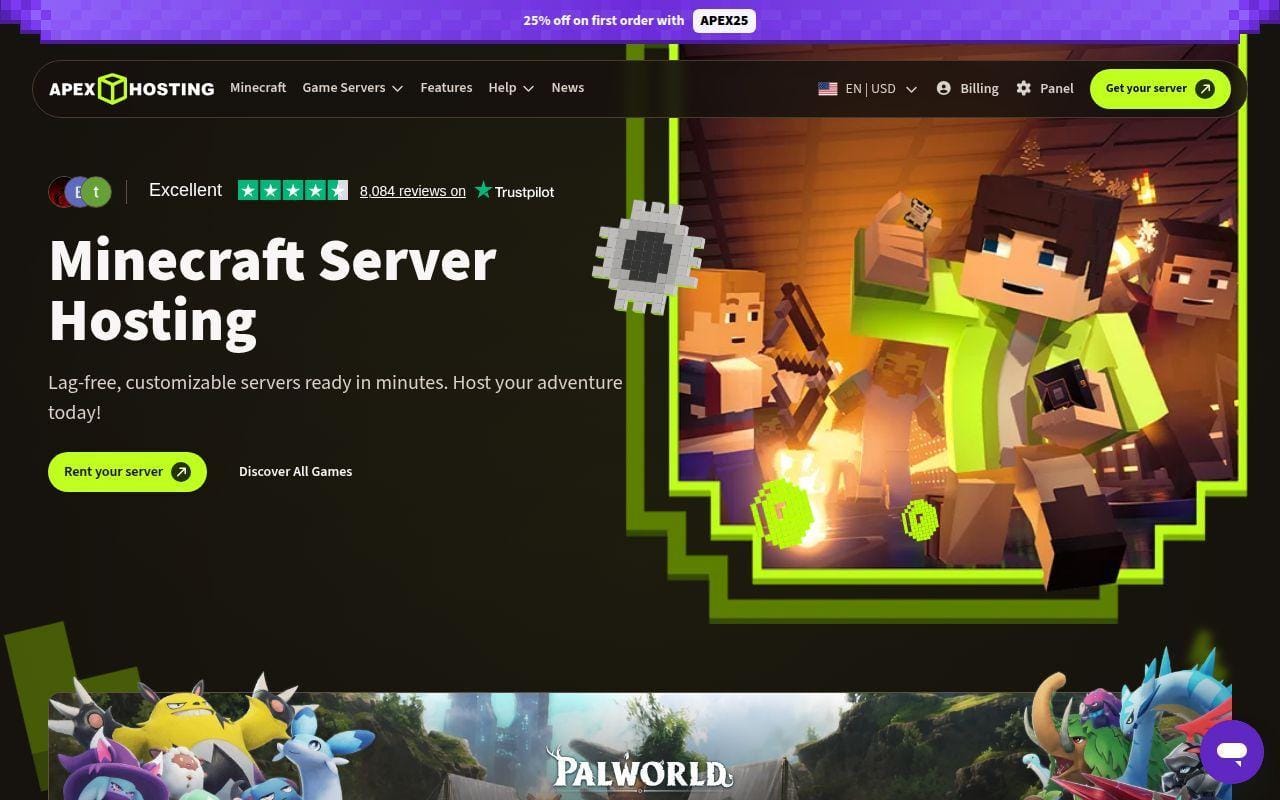
| Apex Hosting | Polished Minecraft hosting with strong support | Managed game hosting | $11.24/month first term | 4.4 |
How We Researched and Ranked Each Provider
We scored the top 10 against the same practical criteria, because readers comparing these providers usually care more about fit than about marketing language.
- Performance headroom: we looked at whether the official pages expose real CPU, RAM, storage, bandwidth, or slot details that make the service credible for persistent multiplayer use.
- Control and flexibility: we checked for root access, operating system choice, control panels, mod support, game switching, and whether you are renting a full machine or a managed slice of one.
- Operational usability: we favored providers that clearly show setup flow, backups, consoles, file access, automation, or documented admin steps instead of hand-waving around them.
- Price clarity: we rewarded pages that publish understandable plan names, starting prices, and what is included, while marking down offers that stay vague or depend heavily on hidden customization.
- Public review signal: we treated third-party ratings as a sanity check, not the final verdict, and paid attention to repeated themes like support quality, lag, uptime complaints, or confusing billing.
The final scores are our editorial judgment from this research. They are not copies of Trustpilot or any other public rating.
Top 10 Dedicated Gaming Server Providers
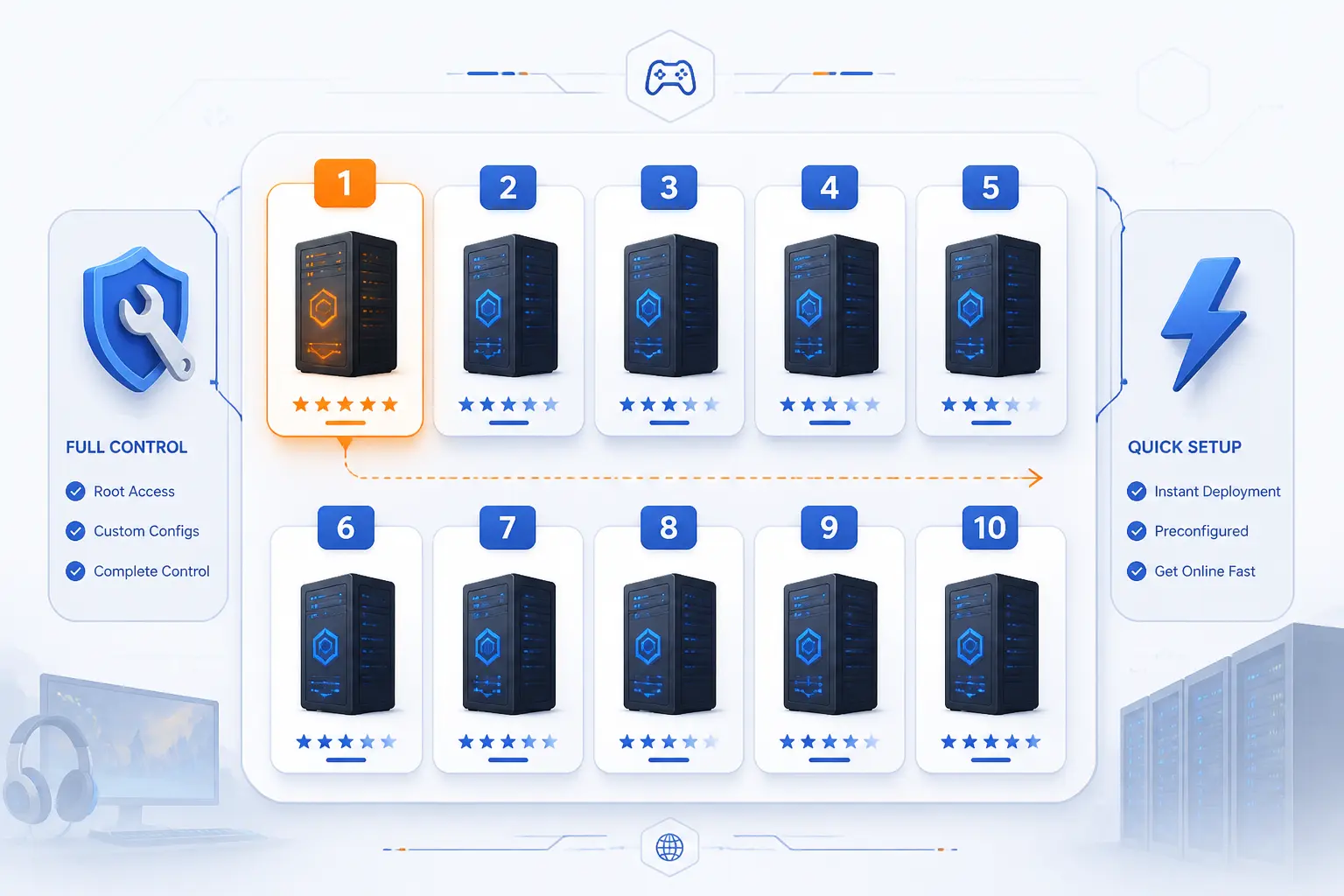
These 10 picks cover the main buyer paths we see most often. If you want a true dedicated gaming server with hardware-level control, the leaders are OVHcloud and PingPerfect’s dedicated range, with Scaleway and ReliableSite worth a look just below the top tier. If you mainly want quick deployment, mod support, and less maintenance work, GPORTAL, Hostinger, BisectHosting, Nodecraft, and Apex are usually the better shortlist.
1. OVHcloud Dedicated Game Servers
- Category: Bare metal game servers
- Best for: Admins who want real hardware control
- Ease of use: Moderate for experienced server owners
- Pricing: Starts at $179/month
- Standout feature: Anti-DDoS Game on dedicated hardware
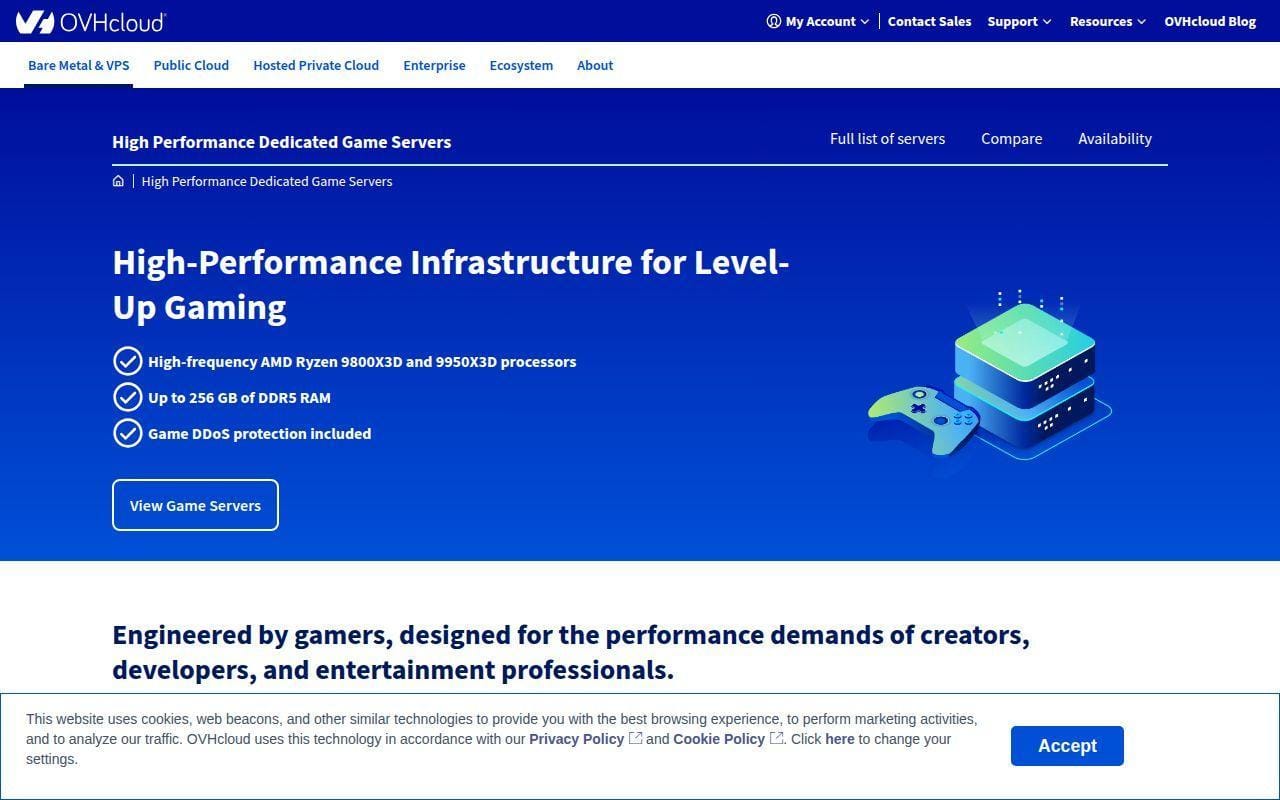
OVHcloud sits at the top of this list because it is one of the clearest true dedicated options for gaming, not just a branded slice of shared hosting. The product pages show real bare metal specs, explicit bandwidth, OS installation flow, and IPMI console access, which is exactly what experienced admins want to see. For communities that care more about raw control than hand-holding, this is the benchmark pick. It is not the easiest service here, but it is one of the most honest about what you are actually renting.
How OVHcloud Dedicated Game Servers works
The workflow is refreshingly direct. OVHcloud says you choose your configuration in the customer portal, install the operating system, and deploy the game you want. The same product family also exposes IPMI console access through the OVHcloud Control Panel or API, which matters when a game update, OS issue, or firewall mistake locks you out of the usual remote path. In other words, this behaves like a real server rental first and a gaming product second.
The current US game range is built around Ryzen chips, NVMe storage, and 1 Gbps public bandwidth. The page also highlights Anti-DDoS Game, which is a real differentiator for public-facing communities. We also like that OVHcloud does not oversell the model. You are expected to know what to do with a dedicated machine once it is provisioned.
Who is OVHcloud Dedicated Game Servers for?
This is for readers running Rust, ARK, FiveM, heavily modded Minecraft, or multi-instance game setups where CPU choice and hardware isolation matter. It also makes sense for clans, community operators, and resellers who need control over OS, files, and deployment tooling.
If you want a click-and-play game host with one-click modpacks, hand-held setup, and beginner-friendly controls, look elsewhere. OVHcloud gives you the keys, not the training wheels.
OVHcloud Dedicated Game Servers pricing
- Game-1: $179/month, AMD Ryzen 7 9800X3D, 64 GB to 256 GB RAM, 2 x 960 GB SSD NVMe Soft RAID, 1 Gbps public bandwidth.
- Game-2: $230/month, AMD Ryzen 9 9950X3D, 64 GB to 256 GB RAM, 2 x 960 GB SSD NVMe Soft RAID, 1 Gbps public bandwidth.
We pulled those figures from the current US server catalog.
Pros and cons
Pros
- Real bare metal offerings with named CPUs, not vague “high performance” wording.
- Anti-DDoS Game is included in the game range.
- IPMI console access is available through the control panel or API.
- Both visible game models start with 64 GB RAM, which is more serious than most consumer game hosts offer.
Cons
- Entry pricing is much higher than managed game hosts.
- The product assumes you can install and administer the environment yourself.
- Public bandwidth is 1 Gbps on the current listed game models, which is fine for most communities but not unusually generous at this price.
OVHcloud Dedicated Game Servers rating and reviews
- Trustpilot: rated 3.9/5 across 298 reviews.
For readers who want the closest thing in this list to “rent the machine and build your own stack,” OVHcloud is the strongest starting point. It is not the friendliest option here, but it is one of the most capable.
2. 1Byte
- Category: Cloud hosting and web hosting provider
- Best for: Cheap self-managed cloud experiments and mixed hosting needs
- Ease of use: Moderate if you already know server admin basics
- Pricing: Cloud servers start at $8.99/month
- Standout feature: Broad low-cost hosting lineup plus AWS Partner status
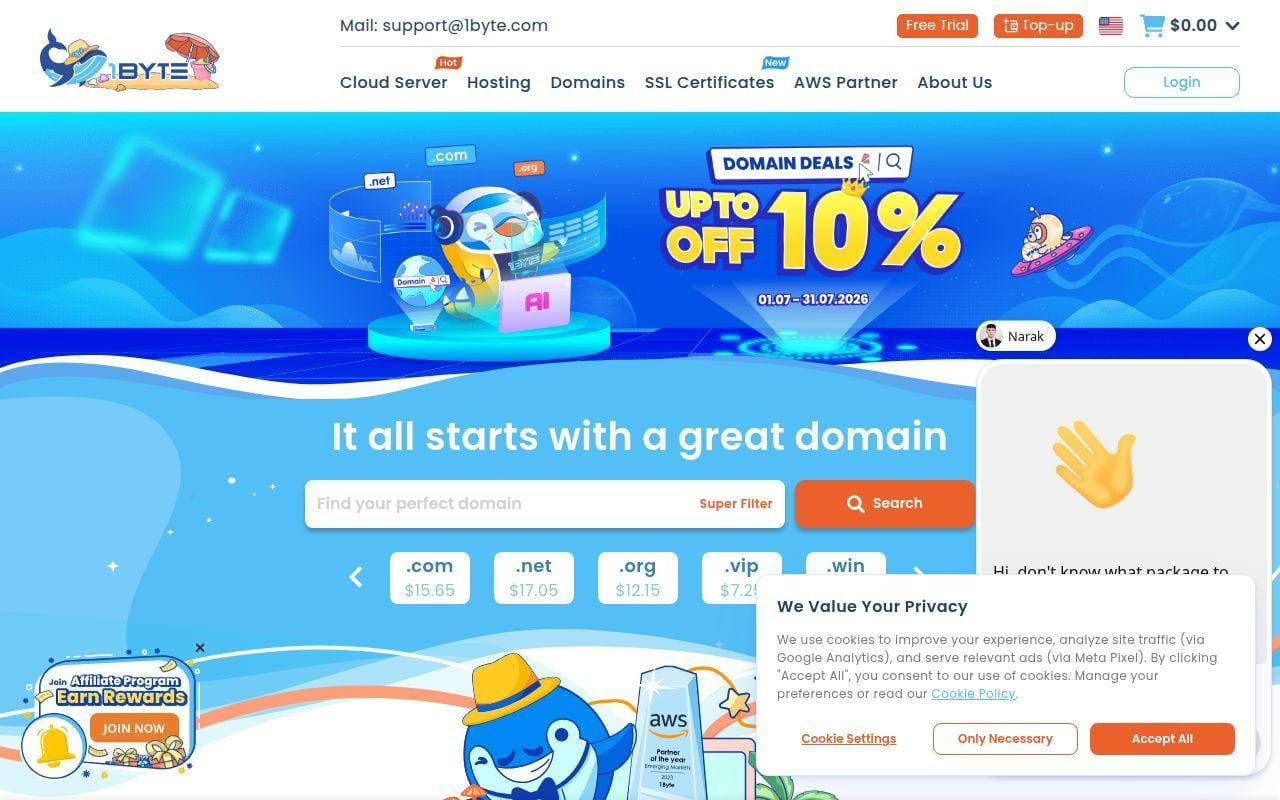
1Byte is the outlier in this roundup, and we think it is best treated that way. The official site presents it as a cloud computing and web hosting provider with cloud servers, cloud hosting, shared hosting, WordPress hosting, domains, SSL, and AWS Partner services. That means it can be useful for readers who want a cheap general server and are comfortable installing the game stack themselves. It does not look like a gaming specialist, and that limits how high we can rank it for this keyword.
What 1Byte does
The homepage pushes a menu of general-purpose hosting products rather than game-specific templates. On the cloud server side, 1Byte says pricing starts at $8.99 per month and highlights instant server initialization, a proactive web-based tool, and gigabit bandwidth. On the cloud hosting side, the platform page lists CloudLinux, aaPanel, browser-based terminal access, LNMP or LAMP or OpenLiteSpeed, full FTP access, one-click migration, and one-click deployment.
That is enough for a technically comfortable buyer to spin up a private Minecraft world, a small test FiveM box, or a game-related web stack. It is not enough to make this a plug-and-play dedicated gaming server choice. There is no public game catalog, no slot-based sizing tool, and no hardware page that tells you which CPU to expect for a demanding live server.
Who is 1Byte for?
We would look at 1Byte if the goal is a low-cost self-managed environment, especially when a reader also wants domain, SSL, or general web hosting under one roof. It is also one of the few names in this list that may appeal to small businesses already thinking about broader hosting needs, not just one game instance.
Readers running a public community server, hunting for game-ready DDoS claims, or wanting preinstalled game panels should skip it. This is a general host that could be adapted to game hosting, not a game host that happens to sell other services.
1Byte pricing
- Cloud Server: starts at $8.99/month, positioned as an elastic cloud option with instant server initialization and gigabit bandwidth.
- Cloud Hosting: starts at $9.99/month, pitched with cloud hosting flexibility and upgrade paths.
- WordPress Hosting: starts at $6.99/month, aimed at managed WordPress use cases.
- Shared Hosting: starts at $2.49/month, positioned as the low-cost entry tier.
- SSL Certificates: start at $7.79/year, offered as a separate security add-on.
The site shows those figures directly on the linked homepage, so we are not adding a second internal link here.
Pros and cons
Pros
- Very low visible starting prices compared with most names in this list.
- The site clearly shows cloud servers, cloud hosting, shared hosting, WordPress hosting, domains, and SSL in one lineup.
- The cloud hosting page lists aaPanel, browser terminal access, one-click deployment, and full FTP access.
- 1Byte is an AWS Partner, which adds credibility for broader cloud work.
Cons
- No dedicated gaming server product page or game-specific control panel is visible.
- No public CPU-based hardware catalog for gaming workloads is shown on the main sales pages we reviewed.
- The cloud server FAQ says bandwidth is shared, which makes this a weaker fit for higher-stakes public game hosting.
- No clearly matched independent review profile was available for the 1byte.com domain.
1Byte rating and reviews
We did not find a public review listing that clearly matches the 1byte.com domain, so we are not attaching an independent score here.
1Byte can make sense for tinkerers who want a cheap general server and do not need game-specific hand-holding. For most readers searching this topic, though, the dedicated and gaming-focused providers below are a better fit.
3. GPORTAL Game Server Hosting
- Category: Managed game server hosting
- Best for: Fast deployment across many supported games
- Ease of use: Easy
- Pricing: Minecraft plans start at $4.61 per 30 days
- Standout feature: Prepaid model with game switching and broad title support
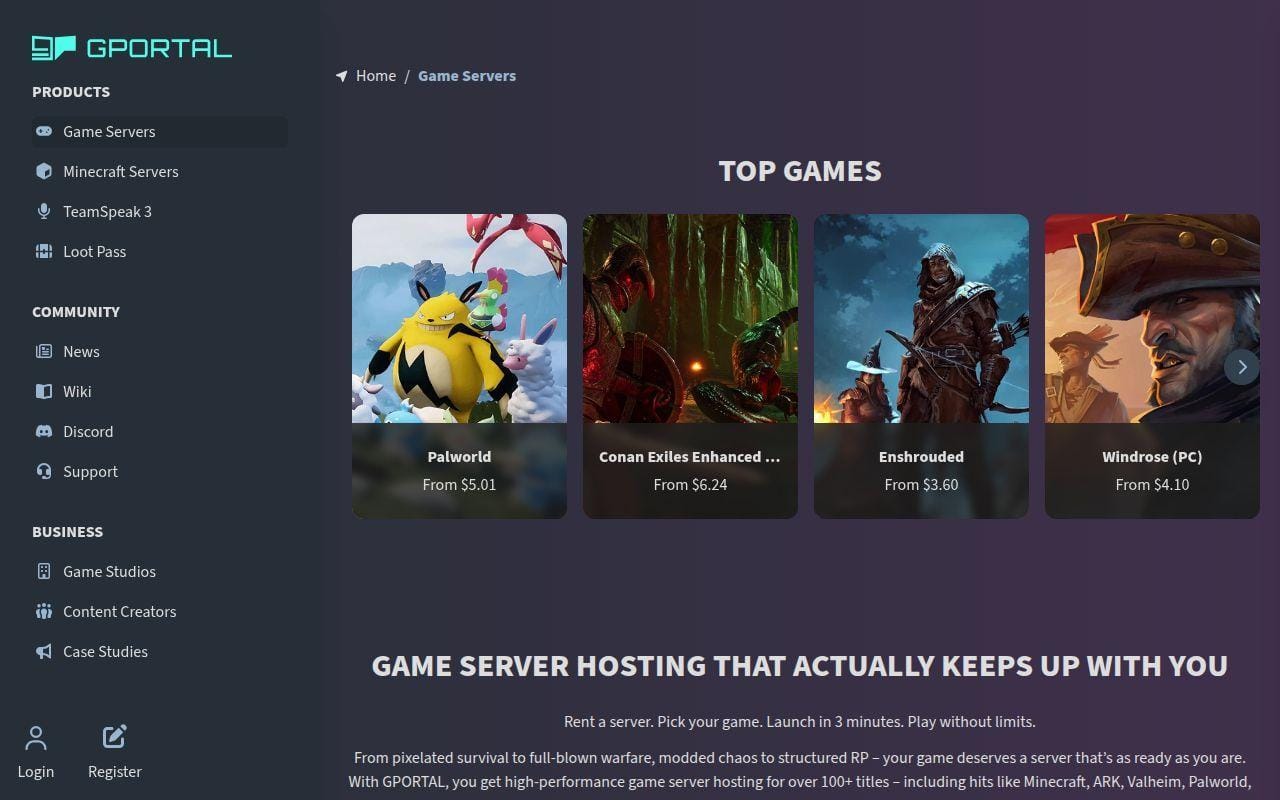
GPORTAL earns its spot because it does the convenience side of game hosting very well. The official site promises launch in 3 minutes, support for 100-plus titles, and a prepaid model that avoids the subscription creep many readers dislike. This is not where we would go for bare metal purism. It is where we would go when the priority is getting the server online quickly, then changing games later without rebuilding everything from scratch.
How GPORTAL Game Server Hosting works
The workflow is simple by design. GPORTAL says you rent a server, pick your game, launch in 3 minutes, and go. On its Minecraft page, the setup revolves around selecting RAM and location rather than a wall of hardware jargon, and the same page highlights more than 250 preinstalled modpacks. GPORTAL also says Minecraft hosting is not limited by player slots on the billing side. You pay for performance and let the server capacity set the practical limit.
We also like the Gamecloud angle. On other game pages, GPORTAL says you can switch your slots between supported games. That is a useful middle ground for admins who want flexibility but do not want to maintain a raw Linux or Windows server from scratch. The Bedrock page also shows live console access, availability in under 3 minutes, and 50 GB of backup space for savegames and configs.
Who is GPORTAL Game Server Hosting for?
This is a strong fit for friend groups, creators, and smaller community operators who want a polished control experience without renting an entire machine. It also works well for readers who hop between titles like Minecraft, FiveM, ARK, Palworld, and Valheim.
If your goal is root-level control, custom operating system management, or squeezing every drop of value out of a big public server, a true dedicated provider will make more sense.
GPORTAL Game Server Hosting pricing
- 2 GB RAM plan: $4.61 per 30 days, unlimited slots, Minecraft Java hosting, location choice shown during order.
- 4 GB RAM plan: $10.08 per 30 days, unlimited slots, marked as a top seller, Minecraft Java hosting.
- 6 GB RAM plan: $12.81 per 30 days, unlimited slots, more headroom for heavier worlds and modpacks.
Those plan figures come from the current Minecraft plan page.
Pros and cons
Pros
- Supports 100-plus titles with a very fast launch flow.
- Minecraft page lists 250-plus preinstalled modpacks.
- Prepaid billing is refreshingly clear and avoids long-term lock-in.
- Some pages show useful operational details such as live console and backup space.
Cons
- Not a true dedicated machine rental.
- Hardware transparency is lighter than what bare metal shoppers usually want.
- Pricing varies sharply by game, duration, and promotions, so comparisons can take a minute.
GPORTAL Game Server Hosting rating and reviews
- Trustpilot: rated 4.6/5 across 2,952 reviews.
If you want the least friction between “I have an idea” and “the server is live,” GPORTAL is one of the best options in this roundup. It trades some hardware-level control for speed and convenience, and for plenty of buyers that is the right trade.
4. Hostinger Game Server Hosting
- Category: VPS-based game server hosting
- Best for: Readers who want root access without a steep setup barrier
- Ease of use: Easy to moderate
- Pricing: Starts at $6.99/month on the current promo term
- Standout feature: Root access plus one-click game setup on a mainstream VPS platform
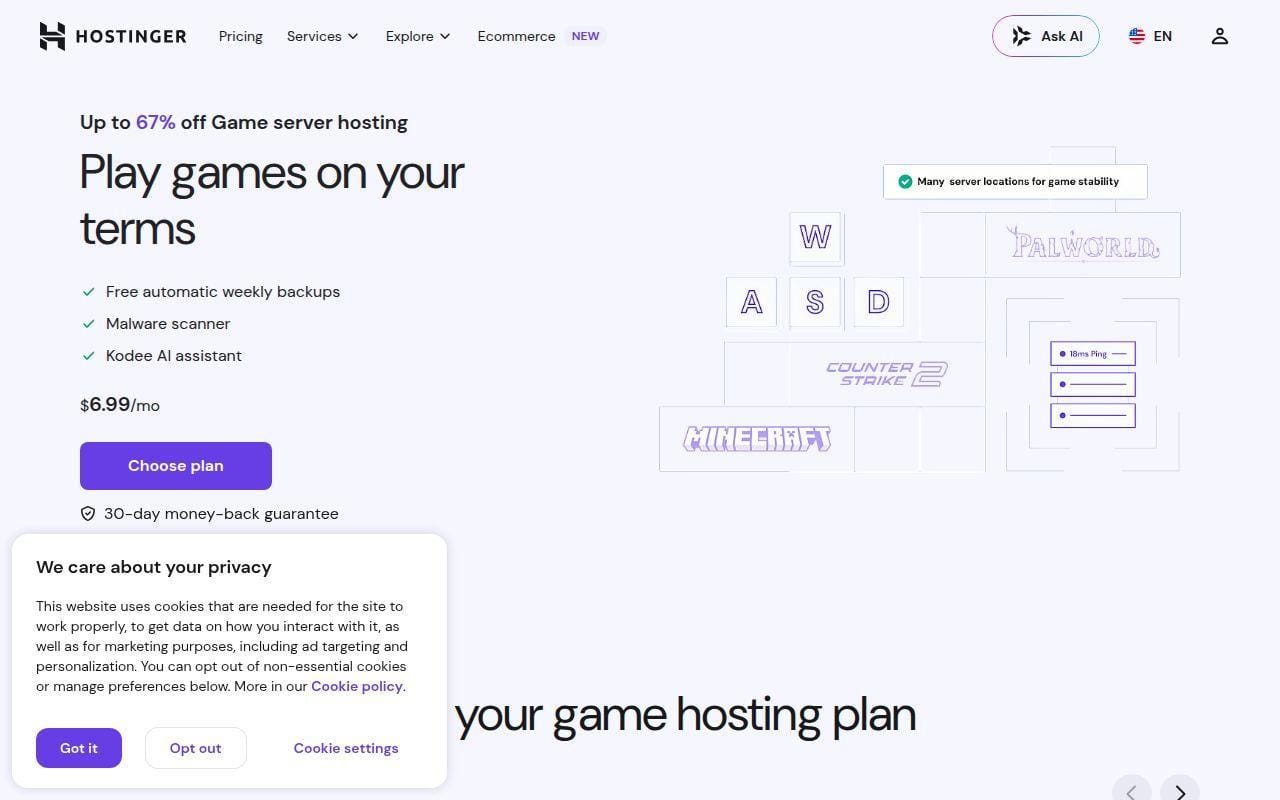
Hostinger is the practical middle lane between raw dedicated hosting and beginner game panels. The official page clearly positions these as game-ready VPS plans with full root access, one-click installation, automatic backups, AMD EPYC processors, and support for 100-plus games. That combination makes it one of the easiest ways to get more control than a typical managed host without jumping straight to a full bare metal box. For many small and mid-size communities, that balance is hard to beat.
How Hostinger Game Server Hosting works
You pick one of the Game Panel plans, deploy the server, and use the panel to install and manage the game. Hostinger says each plan includes mod support, DDoS protection, full root access, one-click installation, free weekly backups, data centers worldwide, and the ability to host multiple games. The page also emphasizes that you can switch games anytime and upgrade plans from billing without downtime.
That is a strong workflow for buyers who want to tinker but do not want to build everything from a raw OS image. Hostinger also adds snapshots and automatic backups for recovery, plus an AI assistant and a large help library. We would not confuse that with a turnkey managed admin service, but it is friendlier than most self-managed VPS products.
Who is Hostinger Game Server Hosting for?
Hostinger is a good match for readers running private servers, modded friend-group servers, or growing community worlds that need root access and cleaner scaling than a typical game-only host offers. It is also a sensible pick for people already familiar with general VPS hosting.
If you want hardware isolation at the bare metal level, or if you never want to touch root-level settings, other providers are better fits.
Hostinger Game Server Hosting pricing
- Game Panel 1: $6.99/month on the 24-month term, 1 vCPU core, 4 GB RAM, 50 GB NVMe disk space, 4 TB bandwidth.
- Game Panel 2: $9.49/month on the 24-month term, 2 vCPU cores, 8 GB RAM, 100 GB NVMe disk space, 8 TB bandwidth.
- Game Panel 4: $13.99/month on the 24-month term, 4 vCPU cores, 16 GB RAM, 200 GB NVMe disk space, 16 TB bandwidth.
- Game Panel 8: $27.99/month on the 24-month term, 4 vCPU cores, 16 GB RAM, 200 GB NVMe disk space, 16 TB bandwidth.
Pros and cons
Pros
- Full root access plus one-click installation is a very good combination.
- The page clearly lists backups, DDoS protection, AMD EPYC CPUs, and worldwide data centers.
- Supports 100-plus games and lets you switch between them.
- Good fit for buyers moving up from shared game hosts.
Cons
- The headline prices depend on a long introductory term and renew higher.
- This is still a VPS product, not a dedicated physical server.
- The Game Panel naming is less intuitive than simple CPU or RAM tiers.
Hostinger Game Server Hosting rating and reviews
- Trustpilot: rated 4.7/5 across 70,333 reviews.
Hostinger is one of the easiest recommendations for readers who want more control than a standard game host but are not ready for bare metal. It is not the most hardcore option here, but it is one of the most balanced.
5. Shockbyte
- Category: Managed game hosting
- Best for: Budget-minded Minecraft server owners
- Ease of use: Easy
- Pricing: Starts at $2.79/month for the first month
- Standout feature: Deep Minecraft tier ladder with instant modpack support
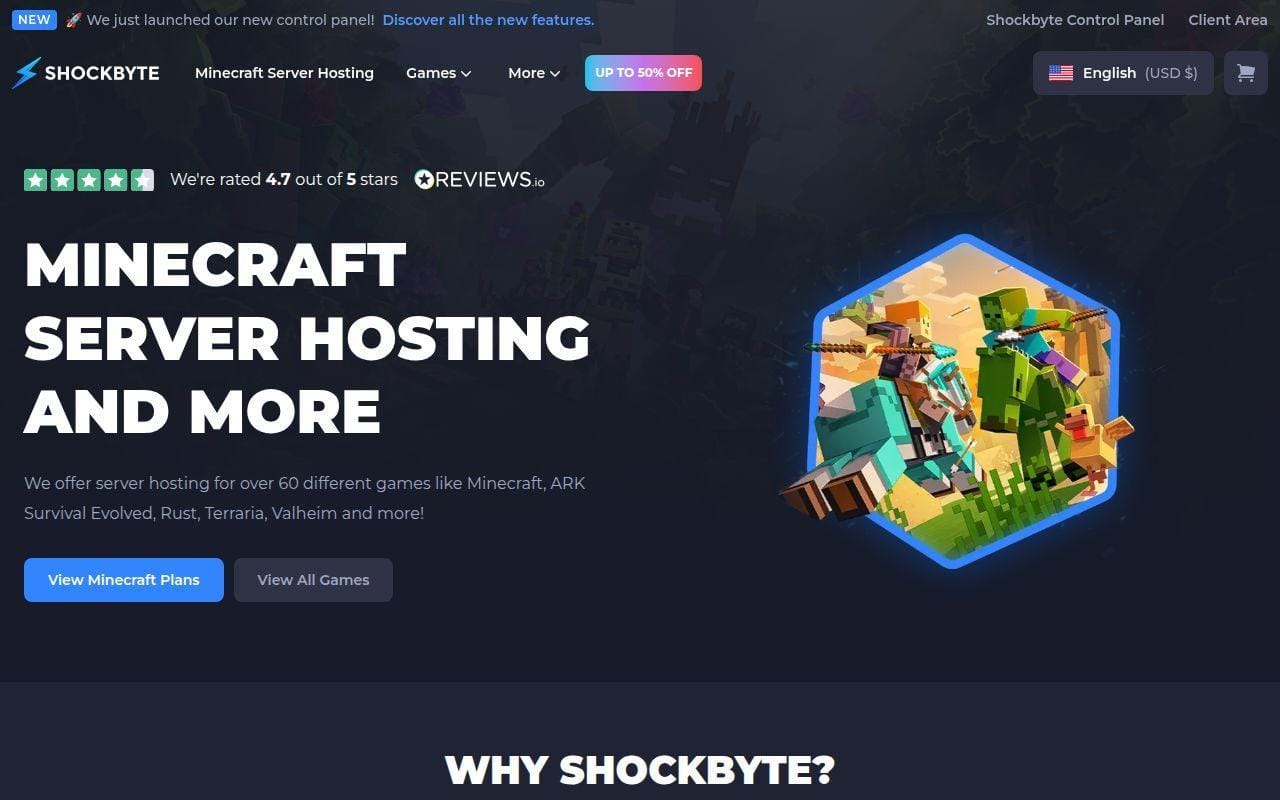
Shockbyte remains one of the most recognizable names for Minecraft hosting, and the official sales pages still make a strong budget case. The pricing page is blunt about RAM tiers, promo pricing, and what each plan is built for. It also lists the operational basics buyers care about, such as instant setup, DDoS protection, a 99.9% uptime SLA, 24/7 support, and instant modpack or plugin installation. That keeps Shockbyte firmly relevant for smaller Minecraft communities, even if it is not the most premium platform here.
How Shockbyte works
The setup flow is simple. The help article says you go to the Minecraft hosting plans page, choose a plan, and add it to cart. On the sales page, Shockbyte organizes plans by RAM tiers with names like Dirt, Sand, Cobblestone, and Iron. It also says the plans support both Java and Bedrock server types, with one-click installation for everything from Paper and CraftBukkit to Forge and Vanilla.
That structure is easy for beginners to follow. It is also still very Minecraft-centered, which is good if Minecraft is your whole world and less useful if you want one service to bounce between lots of titles.
Who is Shockbyte for?
Shockbyte fits private Minecraft worlds, modded servers on a budget, and readers who want an established host with straightforward sizing. The RAM ladder is broad enough to start small and grow.
If you need bare metal, multi-game flexibility, or the most polished public reputation in this list, we would keep shopping.
Shockbyte pricing
- Dirt: $2.79/month for the first month, 1 GB RAM, instant setup, DDoS protection, 24/7 support.
- Sand: $5.59/month for the first month, 2 GB RAM, Java and Bedrock support, instant modpack and plugin installer.
- Cobblestone: $8.39/month for the first month, 3 GB RAM, positioned as the most popular option, automatic version support.
- Iron: $11.19/month for the first month, 4 GB RAM, more headroom for basic modpacks and small communities.
Those plan details come from the current Minecraft plans page.
Pros and cons
Pros
- Very clear Minecraft plan ladder from 1 GB upward.
- The page lists 99.9% uptime under its SLA and DDoS protection.
- One-click support for many Minecraft server types is a real convenience win.
- Lower entry cost than most top picks here.
Cons
- Promo pricing is more attractive than the long-term recurring bill.
- The product and brand are much stronger for Minecraft than for broader dedicated hosting.
- Recent reviewers still mention lag and troubleshooting friction often enough that we would not call it the safest premium pick.
Shockbyte rating and reviews
- Trustpilot: rated 3.8/5 across 10,206 reviews.
Shockbyte is still easy to shortlist when price matters and Minecraft is the main event. We just would not confuse low entry pricing with the strongest all-around hosting experience in this roundup.
6. BisectHosting
- Category: Managed game hosting
- Best for: Modded Minecraft and easy multi-game expansion
- Ease of use: Easy
- Pricing: Starts at $5.99/month
- Standout feature: BisectOne game switching with strong Minecraft depth
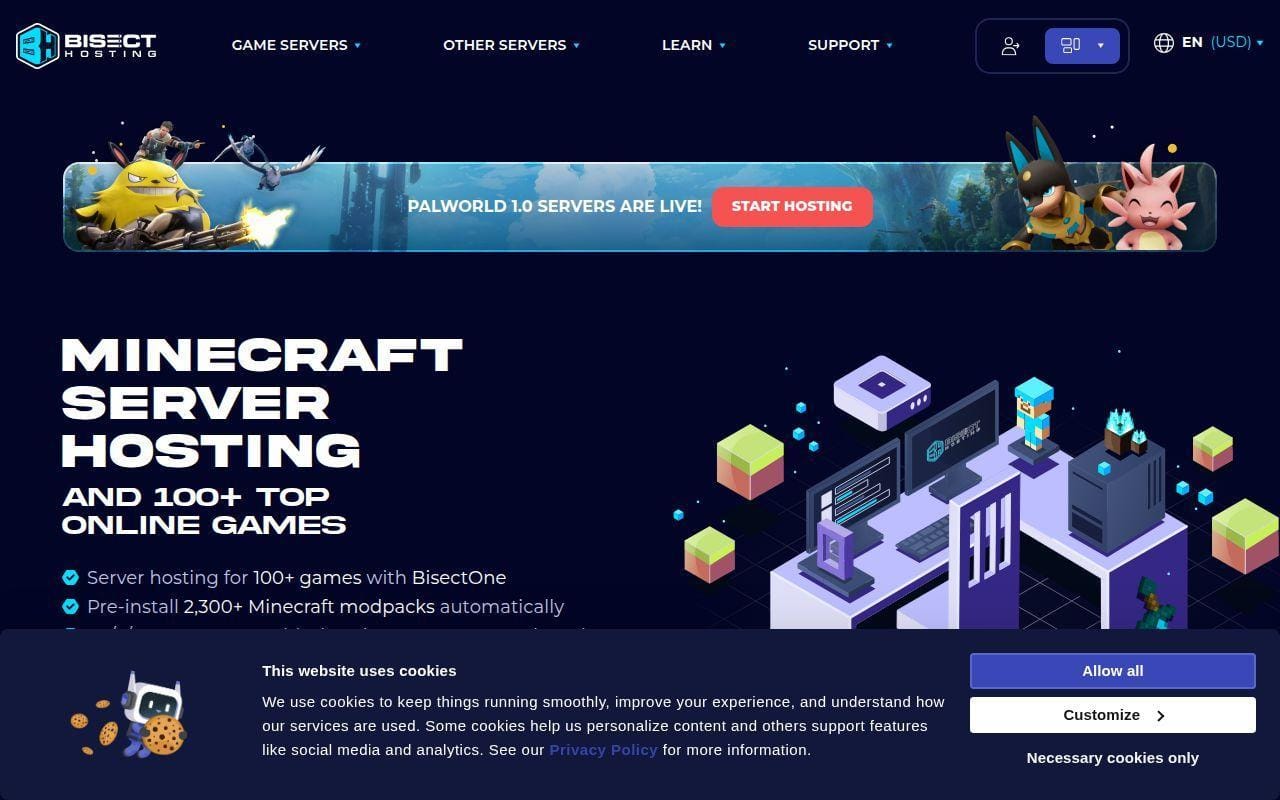
BisectHosting is one of the strongest gaming-first hosts we researched, especially if Minecraft is central to the plan but not the only game you may run later. The official site makes three things clear right away: server hosting for 100-plus games, automatic access to 2,300-plus Minecraft modpacks, and 21 worldwide locations. That is a strong mix of depth and flexibility. It feels built for server owners who want convenience today without boxing themselves in tomorrow.
How BisectHosting works
BisectHosting’s own beginner guide walks through the order flow clearly. You choose the Minecraft server plan, or a custom package, pick preinstall and player count, confirm location, select billing cycle, add any extras, and then access the Starbase panel from the email after purchase. That is one of the better documented onboarding flows in this list.
BisectOne is the key idea. The company positions it as an all-in-one plan that lets you switch between a large list of supported games. On the main Minecraft page, BisectHosting also promises location swaps free of charge, a customized gaming control panel, and support responses in about 15 minutes. We cannot verify that support pace directly, but we can say the claim is unusually specific.
Who is BisectHosting for?
BisectHosting is a great match for modded Minecraft, growing friend-group servers, and readers who may want to start with Minecraft and later spin the same account into other games. It is also appealing for buyers who care about geography because the site makes its location count very visible.
Readers chasing full bare metal control, dedicated IP as a default, or a pure unmanaged server experience should look elsewhere.
BisectHosting pricing
- 2 GB: $5.99/month, recommended for 3 players, supports 31 other games, great for vanilla servers.
- 3 GB: $8.99/month, recommended for 4 players, supports 40 other games, good small-step upgrade path.
- 4 GB: $11.99/month, recommended for 6 players, monthly plan, full mod support on the platform.
We took those plan numbers from the current Minecraft plans page.
Pros and cons
Pros
- 100-plus games and 2,300-plus Minecraft modpacks is a very strong content catalog.
- 21 worldwide locations are clearly published.
- The Starbase panel and order flow are documented better than many rivals.
- Public review volume is excellent.
Cons
- Still a managed game host, not a hardware-level dedicated rental.
- Some DNS guidance notes that budget Minecraft servers may not include a dedicated IP by default.
- Extra capability such as more backup slots and RAM boosting can depend on add-ons like BisectBoost.
BisectHosting rating and reviews
- Trustpilot: rated 4.7/5 across 26,314 reviews.
BisectHosting is one of the safest convenience-first choices in this list. It is especially hard to ignore if Minecraft mods are driving the buying decision.
7. Nodecraft
- Category: Managed game hosting
- Best for: Flexible smaller servers and easy game switching
- Ease of use: Easy
- Pricing: Starts at $4.17/month for the first month
- Standout feature: Save & Swap plus a clever budget hibernation model
Nodecraft stands out because it thinks harder than most rivals about how smaller servers are actually used. The headline feature is Save & Swap, which lets you change games without treating each new title as a brand-new purchase. Just as important, the pricing page splits the product into Budget and Premium server types. That is smart product design. It lets casual groups pay less when they do not need a machine awake 24/7, while still offering always-on plans for serious worlds.
How Nodecraft works
The homepage breaks the flow into three steps: select games, choose a plan, and get in-game. The pricing page then makes the tradeoffs clear. Budget Game Servers are “online when you are,” shut down when unused, and wake back up through a share link. Premium Game Servers are 24/7, always online, include a static IP address, and let you set automated tasks.
We also like the feature comparison. The same page shows integrated file management, SFTP access, automatic cloud backups, DNS hostnames, and manual cloud backups. Manual cloud backups and automated tasks are where the split really matters. Budget plans do not get everything premium plans do, and Nodecraft is pretty transparent about that.
Who is Nodecraft for?
Nodecraft is excellent for friend groups, rotating game nights, and admins who like the idea of one subscription doing more than one job over time. It is especially appealing when a server is busy only at certain hours and you do not want to pay for constant uptime at every stage.
If you need a classic dedicated gaming server with full OS control or guaranteed always-on service at the cheapest possible rate, this is not really that product.
Nodecraft pricing
- Budget 2 GB: $4.17 for the first month, then $5.96/month, shuts down when unused, Wake & Play resume, automatic cloud backups.
- Budget 3 GB: $6.26 for the first month, then $8.94/month, same budget model, DNS hostname, web-based file manager.
- Premium 2 GB: $6.99 for the first month, then $9.98/month, 24/7 uptime, static IP address, automated tasks.
- Premium 4 GB: $13.99 for the first month, then $19.98/month, always online, automated tasks, manual cloud backups.
We pulled those figures from the current pricing page.
Pros and cons
Pros
- Save & Swap is still one of the best flexibility features in this market.
- The Budget versus Premium split is easy to understand and often cost-efficient.
- Manual cloud backups are included with premium plans at no extra fee.
- Public review sentiment is very strong.
Cons
- Not a true dedicated hardware rental.
- Always-on service and static IP are reserved for premium plans.
- Budget hibernation is smart, but it is the wrong model for worlds that must stay live around the clock.
Nodecraft rating and reviews
- Trustpilot: rated 4.9/5 across 1,764 reviews.
Nodecraft is one of the easiest providers to recommend for smaller, flexible communities. It is not the rawest option here, but it is one of the most thoughtfully packaged.
8. PingPerfect

- Category: Dedicated and managed game hosting
- Best for: Buyers who want a real dedicated rental but still like game-hosting conveniences
- Ease of use: Moderate
- Pricing: Dedicated servers start at $237.99/month
- Standout feature: Dedicated server line alongside broad game panel support
PingPerfect is one of the few brands in this roundup that meaningfully spans both sides of the market. It sells shared-style managed game hosting, but it also publishes a real dedicated server page with explicit network, OS, DDoS, and control panel details. That makes it more relevant to this keyword than many household game-hosting names. It is not as polished in public reputation as the best managed hosts, but the product mix is strong.
How PingPerfect works
On the game-hosting side, PingPerfect says you choose your location, pick a plan, and get credentials in under 10 minutes. The platform page highlights game switching, free web hosting, nightly offsite backups at 4 AM server time, DDoS mitigation, and 200-plus supported games. It also lists 21 worldwide locations in one summary section, while the deeper location breakdown shows 20 current locations. That inconsistency is worth noting.
On the dedicated side, PingPerfect frames the product as a private fully remote server for one admin. The dedicated page spells out Linux as free, Windows as a paid add-on, a 10 Gbps network port, 10 TB outbound bandwidth, 12 TB DDoS network capacity, and an optional paid game panel that requires Windows. That is the kind of detail dedicated shoppers need.
Who is PingPerfect for?
We like PingPerfect for readers who want one provider that can start with managed game hosting and graduate to a true dedicated machine later. It also makes sense for admins who care about location testing and game-panel convenience but still want a serious hardware path.
If you want the strongest public review signal or the simplest pricing story, better options exist.
PingPerfect pricing
- Entry-level dedicated server: from $237.99/month, 10 TB outbound bandwidth, 1 IP address, Linux free or Windows for $15, optional game panel for $25.37/month.
- PP-DS-Ryzen-7950X: from $368/month, AMD Ryzen 9 7950X, 128 to 192 GB DDR5, 1 TB NVMe SSD, 10 Gbps network port.
- Custom specification dedicated servers: custom pricing, built for buyers who need something outside the listed catalog.
Those figures come from the dedicated server page.
Pros and cons
Pros
- One of the few picks here with a plainly published dedicated server offering.
- Dedicated page lists real network, OS, DDoS, and panel details.
- Managed pages include backups, game switching, and broad title support.
- The location tester is a practical touch.
Cons
- Review sentiment is decent, not top-tier.
- The site shows inconsistent location counts in different sections.
- The optional game panel on dedicated servers adds cost and requires Windows.
PingPerfect rating and reviews
- Trustpilot: rated 4.3/5 across 1,036 reviews.
PingPerfect makes the shortlist when you want a foot in both worlds. It is not the cheapest path, but it is one of the more relevant names here for readers who truly mean dedicated.
9. ScalaCube
- Category: Managed game hosting
- Best for: Cheap Minecraft hosting with lots of bundled extras
- Ease of use: Easy
- Pricing: Starts at $2/month
- Standout feature: Unlimited slots and multiple servers on one setup
ScalaCube is attractive because the official pages promise a lot at a very low entry price. The site pushes unlimited slots, multiple servers, DDoS protection, plugin and modpack support, backup systems, full file access, a free domain, and free MySQL on its Minecraft hosting page. That is a big bundle for the money. The tradeoff is that the marketing is louder than the underlying hardware detail, so we would treat it as a value-first managed host, not a premium dedicated specialist.
How ScalaCube works
The general model is control-panel-first. ScalaCube says you can run an unlimited number of game servers with an unlimited number of slots on one VPS server through its control panel. The Minecraft page adds full FTP access, Linux Ubuntu hosting, custom JAR support, BungeeCord support, and one-click installation of more than 3,298 unique modpacks.
That combination is genuinely useful for Minecraft-heavy buyers who want room to experiment. We also like that the page says you can scale from 10 players to 300-plus and upgrade without downtime or contracts. Still, we would prefer more direct hardware disclosure if we were sizing for a demanding public server.
Who is ScalaCube for?
ScalaCube is a sensible pick for price-sensitive Minecraft buyers, modpack experimentation, and admins who want lots of included extras without paying Apex or bare metal money. It is also attractive for small groups that value full file access and easy panel control.
If you want a clean enterprise-style dedicated server catalog with CPU-first sizing, this is not that.
ScalaCube pricing
- Minecraft hosting: starts at $2/month, instant setup, unlimited slots, multiple servers, DDoS protection.
- Minecraft Bedrock basic plan: starts at $5/month, up to 30 players, one-click installation, unlimited storage space, support via email or live chat.
- First invoice promotion: 50% off the first payment on the main Minecraft hosting page, with no setup fees and no contracts stated there.
We pulled those details from the current Minecraft hosting page.
Pros and cons
Pros
- Very low visible entry price.
- Strong included feature bundle with full file access, backups, free domain, and free MySQL.
- The site explicitly supports modpacks, plugins, and custom JAR workflows.
- Unlimited-slot messaging will appeal to many Minecraft buyers.
Cons
- Hardware specifics are less transparent than on the stronger dedicated picks.
- Marketing claims are aggressive and sometimes louder than the practical details.
- Recent public reviews still show recurring complaints about support and billing friction.
ScalaCube rating and reviews
- Trustpilot: rated 4.5/5 across 4,770 reviews.
ScalaCube is easy to shortlist if low entry price and Minecraft-focused extras are the priority. We just would not mistake it for the most transparent or most dedicated-centric choice in this field.
10. Apex Hosting
- Category: Managed game hosting
- Best for: Polished Minecraft hosting with premium support options
- Ease of use: Easy
- Pricing: Starts at $11.24/month for the first term
- Standout feature: Strong support reputation with an EX performance tier
Apex Hosting closes the top 10 because it is polished, focused, and still very relevant for buyers who mainly care about Minecraft quality. The official pages emphasize instant online setup, automated backups, unlimited slots, advanced DDoS protection, full FTP access, and 24/7 support. Apex also separates its higher-end EX Series from standard plans, which is useful because many hosts blur that performance jump into fuzzy marketing. Here, at least, you can see where the premium tier starts.
How Apex Hosting works
The sales page is designed around fast setup. You choose a RAM tier, launch the server, and manage it through the control panel. Apex says you can switch between games any time, use full FTP file access, rely on automated backups and updates, and share the server through a free sub-domain. The service also advertises support for modpacks and quick setup on premium hardware.
The EX Series is what makes Apex more interesting for bigger communities. The page describes it as a higher-performance option with four dedicated vCores on Ryzen hardware, NVMe storage, premium support, and a free dedicated IP. That is still not the same as renting your own bare metal box, but it is a meaningful step up from basic managed hosting.
Who is Apex Hosting for?
Apex is a strong pick for Minecraft-focused buyers who want a slick managed experience and are willing to pay above budget-host territory for it. It also makes sense for admins who expect to need help and do not want to fight a clunky panel.
If you want a broad multi-game control platform or raw OS-level freedom, Apex is too specialized.
Apex Hosting pricing
- 4 GB RAM: $11.24 first month, then $14.99/month, basic servers and some modpacks, instant online deployment.
- 6 GB RAM: $16.87 first month, then $22.49/month, more room for small modded communities, automatic backups and updates.
- 8 GB RAM: $20.99 first month, then $27.99/month, positioned for advanced servers and all modpacks.
- EX Series 16 GB RAM: $53.99 first month, then $71.99/month, four dedicated vCores, free dedicated IP, NVMe storage, premium support.
Those plan numbers come from the current Minecraft hosting page.
Pros and cons
Pros
- The page clearly includes automated backups, full FTP access, and 24/7 support.
- EX Series is a meaningful premium tier, not just a vague badge.
- Advanced DDoS protection is stated up to 300 Gbps.
- Good public review footprint for a gaming specialist.
Cons
- First-term pricing is much friendlier than recurring pricing.
- The service is very Minecraft-centered compared with broader multi-game hosts.
- EX pricing climbs fast once you move into the higher-performance range.
Apex Hosting rating and reviews
- Trustpilot: rated 4.7/5 across 8,084 reviews.
Apex is not the cheapest pick here, and it is not the most flexible across every game. For managed Minecraft hosting with a cleaner premium lane, though, it is still one of the better names to shortlist.
5 More Dedicated Gaming Server Options Worth Considering
The next five are not throwaways. They simply fit narrower buying cases or publish less complete information on the main landing pages we reviewed. If the top 10 did not quite match your budget, preferred support style, or hardware philosophy, these are the names we would check next.
11. Host Havoc
- Category: Managed game hosting and dedicated servers
- Best for: Support-heavy communities and game-specific tools
- Ease of use: Easy
- Pricing: Game hosting from $0.30/slot and $3.75/GB RAM
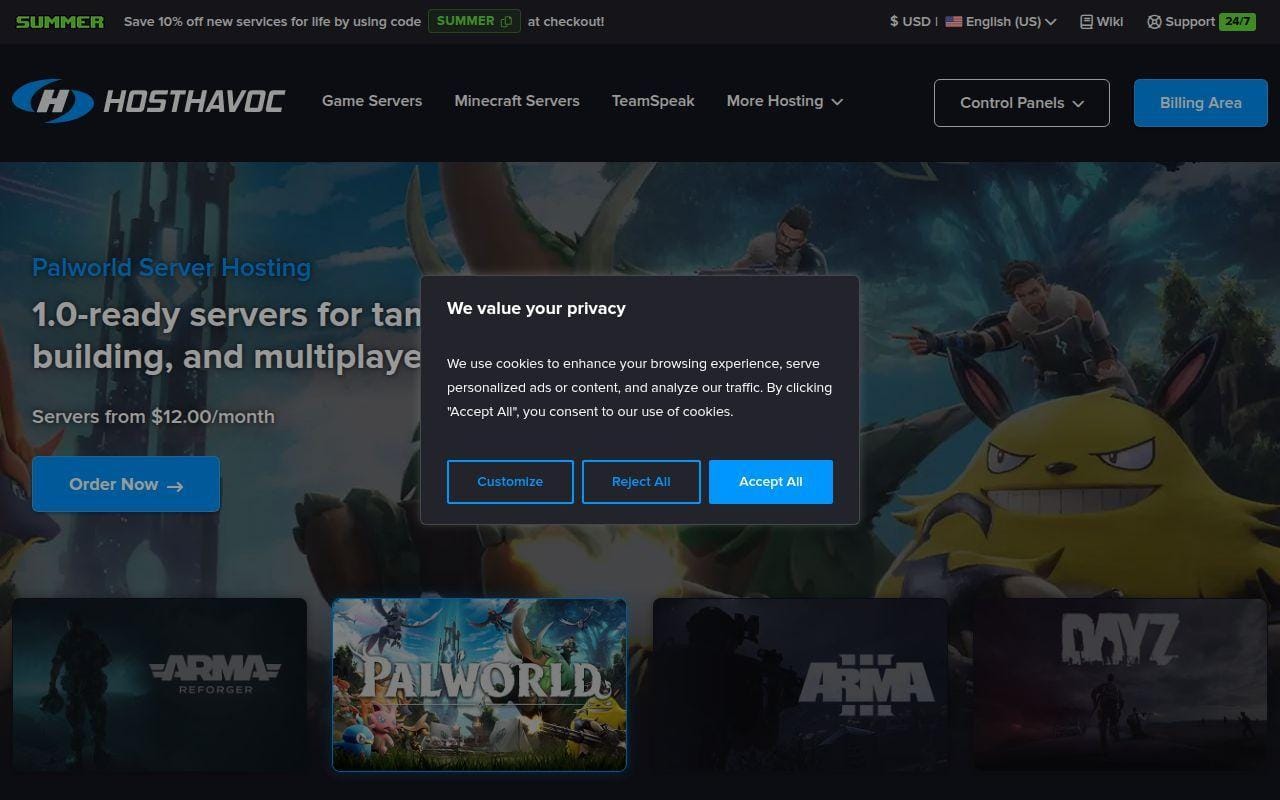
Host Havoc is easy to respect because the official pages focus on practical operating details instead of vague promises. The games catalog says its services include game-specific custom tools and features that are maintained alongside game and mod updates. That matters more than it sounds. A host that actually keeps up with mod and game changes saves admins real time after launch.
We also like the network and protection language here. The homepage says DDoS protection is standard across all hosting services, and it publishes some concrete figures around protection scope and mitigation speed. That is a strong signal for buyers running public-facing communities.
The pricing model is game-dependent rather than one-size-fits-all. In the catalog we reviewed, ARK started at $0.30 per slot, 7 Days to Die at $0.50 per slot, and Minecraft at $3.75 per GB of RAM. On the infrastructure side, the homepage also advertises dedicated servers with AMD Ryzen processors, NVMe SSD storage, and unmetered bandwidth.
Where Host Havoc falls a little short of the top 10 is that it feels more like a very solid operator than a category-defining product story. That is not always a bad thing. Plenty of buyers would rather have stable support than flashy marketing.
Who is Host Havoc for?
Host Havoc is a good fit for admins who want a mature support setup, lots of supported games, and clear security messaging. We would keep it especially close if public uptime and responsive support matter more to you than getting the absolute lowest intro price.
12. GTXGaming
- Category: Managed game hosting, VPS, and dedicated servers
- Best for: Buyers who want an old-school specialist with broad game coverage
- Ease of use: Easy to moderate
- Pricing: Dedicated categories include 7950X, 9900X, and 9950X lines
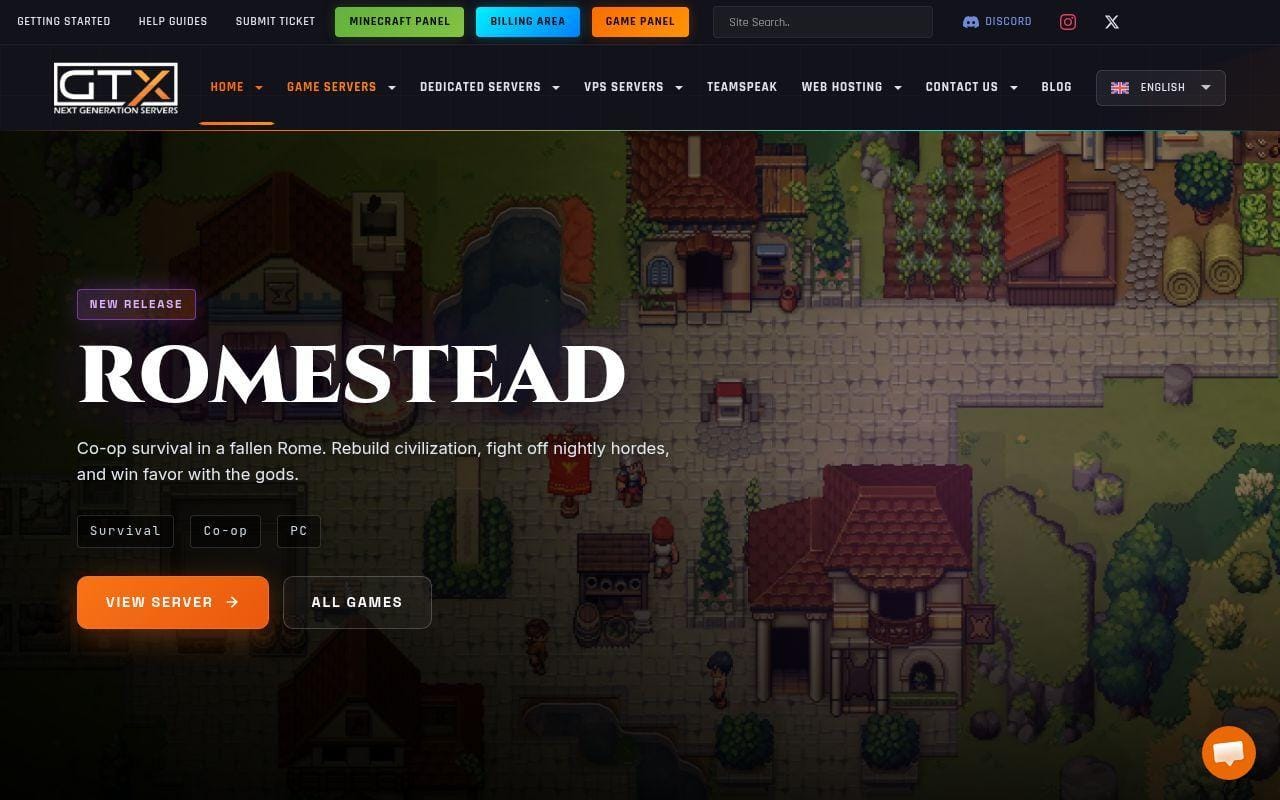
GTXGaming’s main advantage is breadth backed by longevity. The homepage says it supports 200-plus games, averages 60-second setup time, and brings 21-plus years of hosting experience. That is a serious tenure claim in this niche, and the product menu reflects it. Game servers, dedicated servers, and VPS servers are all separated into distinct lanes, which is useful for buyers who know they may need to move up later.
The network page copy is also stronger than average. GTXGaming says it uses multiple 10 Gbps fibers with gaming-tuned routing, publishes a long location list across the USA, Europe, Canada, Australia, Singapore, Sweden, Finland, and Brazil, and includes enterprise DDoS protection plus daily offsite backups. Those are the kinds of operational details that matter after the sale.
What keeps GTXGaming out of the top tier is price clarity. The homepage does not expose a neat universal starting price the way the best convenience-first hosts do. Instead, it pushes you into game-specific or hardware-family paths such as 7950X, 9900X, and 9950X dedicated servers. That is not a deal breaker, but it adds friction for first-time buyers.
Still, for readers who want a specialist rather than a general web host dabbling in gaming, GTXGaming remains a credible option.
Who is GTXGaming for?
GTXGaming suits experienced community owners who care about game coverage, global locations, and backup plus DDoS basics. It is less ideal for shoppers who want the simplest price comparison on the first page.
13. Scaleway Game Dedicated Servers
- Category: Bare metal dedicated servers
- Best for: European-leaning buyers who want real dedicated hardware at lower entry pricing
- Ease of use: Moderate
- Pricing: Starts at €39.99/month on the game page
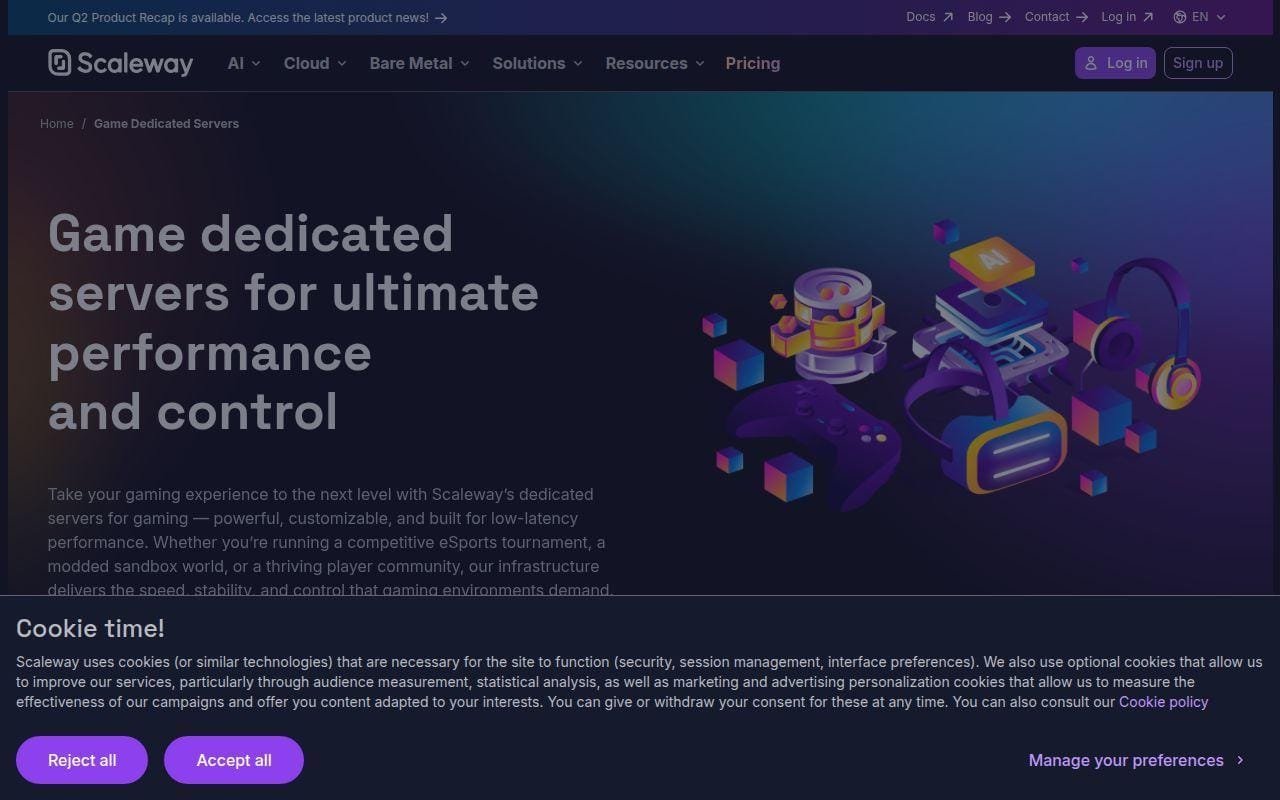
Scaleway belongs on the shortlist when you mean dedicated in the literal sense. The game-dedicated page pushes bare metal performance, full control, Linux or Windows choice, and built-in DDoS protection. That is a much better fit for custom server operators than most of the consumer game-hosting brands in this article.
The current visible starting points are compelling. START-9-M is listed at €39.99 per month with an AMD Ryzen 5 PRO 3600, 32 GB RAM, 2 x 1 TB NVMe, and up to 1 Gbps. Pro-6-M is listed at €59.99 per month with an Intel Xeon E3-1240v6, 64 GB RAM, 3 x 1 TB SSD, and up to 1 Gbps. For buyers comfortable administering their own stack, those specs are serious value on paper.
The catch is public sentiment. Scaleway’s Trustpilot profile is much weaker than most names in this roundup, which makes this more of a price-and-control play than a comfort pick. We would shortlist it, but cautiously.
If you want bare metal without immediately jumping to OVHcloud pricing, Scaleway is worth comparing side by side.
Who is Scaleway Game Dedicated Servers for?
Scaleway is for buyers who want a real machine, do not mind self-management, and are attracted by lower visible entry pricing than some premium bare metal rivals. It is not the pick we would hand to a beginner who wants reassurance and hand-holding.
14. ReliableSite Game Servers
- Category: Unmanaged dedicated hosting
- Best for: Operators who want network-heavy dedicated hosting and can self-manage
- Ease of use: Moderate to advanced
- Pricing: Standard game servers include 1 Gbps unmetered bandwidth, with upgrades up to 10 Gbps
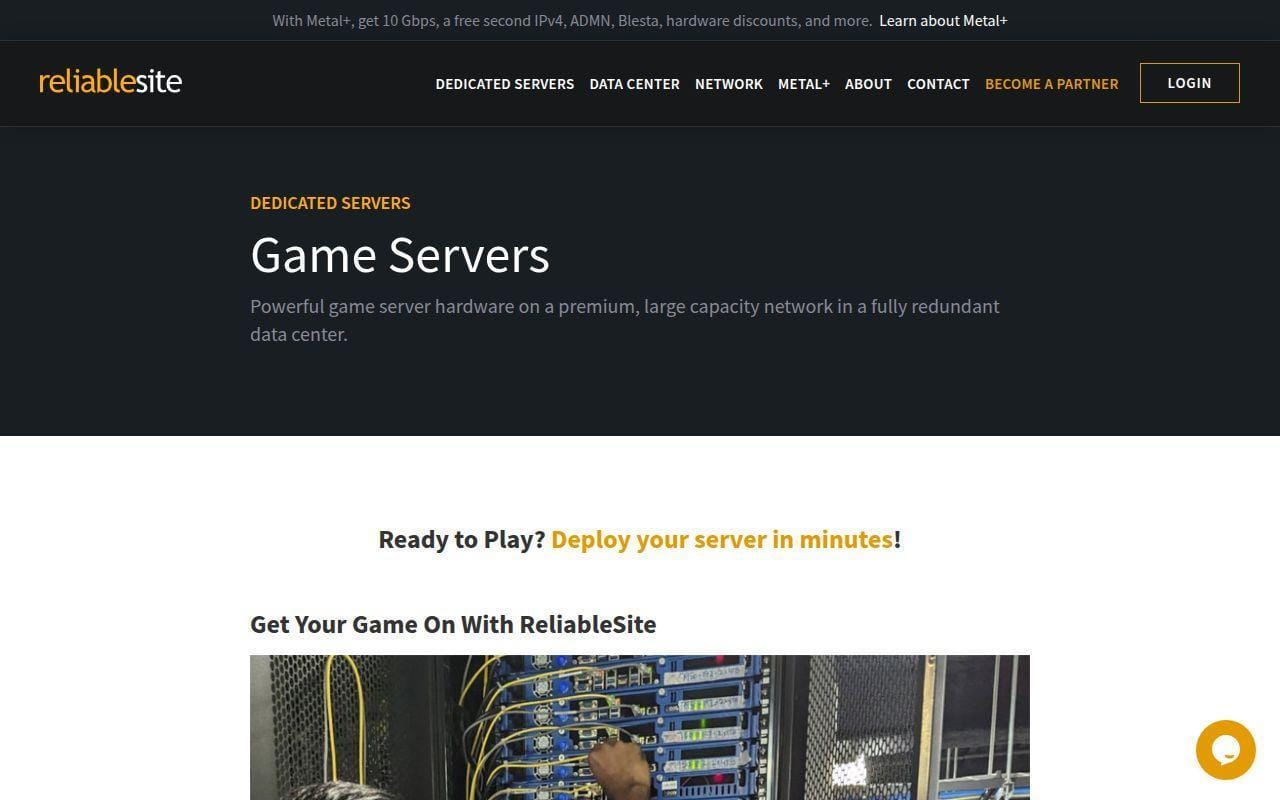
ReliableSite is one of the more infrastructure-minded names in this roundup. The gaming page is explicit that the service is unmanaged, with full administrative and root privileges, and that hardware and network are not shared with other customers. That is exactly the kind of language serious buyers want when they are shopping beyond casual managed hosting.
The network details are stronger than average too. ReliableSite says every server comes with 1 Gbps of unmetered bandwidth as standard, with upgrades available up to 10 Gbps. It also advertises 0% packet loss SLA language, multiple 40 Gbps uplinks per switch, 100% unshared dedicated ports, and three US locations on the gaming page we reviewed.
This is not a beginner product. The same page says Linux and Windows operating systems can be installed, either by ReliableSite or directly by the customer through KVM over IP with virtual media. That is a big plus for experienced admins and a clear warning sign for everyone else.
ReliableSite is interesting because it looks more like an infrastructure provider with gaming use cases than a traditional game host. For some readers, that is exactly the right angle.
Who is ReliableSite Game Servers for?
ReliableSite fits advanced admins, clans, and custom operators who care about unmetered bandwidth, KVM access, and unmanaged freedom. It is the wrong pick for readers who want mods installed for them or a game-specific panel doing most of the lifting.
15. TechMikeNY Gaming Servers
- Category: Refurbished server hardware seller
- Best for: Buyers who want to own the hardware instead of renting it
- Ease of use: Advanced
- Pricing: Example builds range from sub-$200 chassis to full configured systems above $1,700
TechMikeNY is not a rental host at all, and that is precisely why it makes this “worth considering” tier. The gaming page is about building and owning a dedicated gaming machine, not leasing one. For some readers, especially those running long-term private communities or home lab setups, ownership is a smarter financial move than monthly rental.
The site frames gaming hardware choice around CPU performance, RAM, storage, and low-latency networking, which is the right lens. The broader store also shows real examples rather than abstract promises. One configured Dell PowerEdge R640 listing showed 32 GB RAM, 2 TB of storage, Windows Server, and iDRAC9 remote management at $1,723.95, while lower-cost chassis examples in the catalog fell far below that.
The downside is obvious. Buying hardware means you own the maintenance, power, bandwidth, spares, and setup burden. There is no managed game panel here unless you install and support one yourself. Still, for readers weighing rent versus build, this is one of the few names in the article that genuinely addresses the build side.
We would not send most beginners here first. We would send experienced tinkerers here when monthly rental fatigue starts to set in.
Who is TechMikeNY Gaming Servers for?
TechMikeNY is for buyers who want refurbished enterprise hardware, remote management features, and long-term ownership. If you want a server online tonight with support tickets and a billing portal, stay with the rental providers above.
How to Match a Dedicated Gaming Server to Your Game
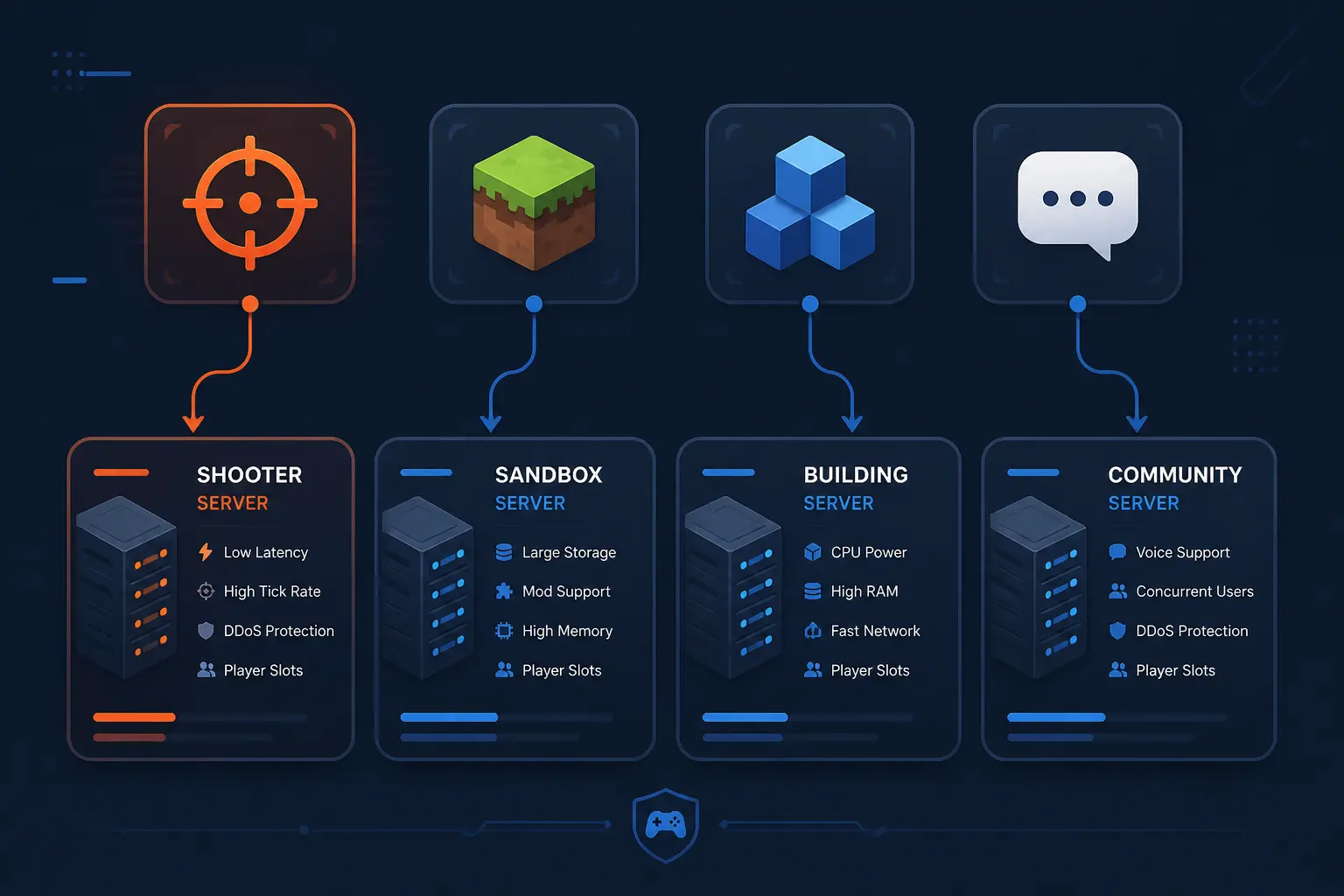
The right server depends on the game loop more than the marketing category. Fast shooters, sandbox survival games, heavily modded Minecraft, and RP servers all stress hardware differently. Start by matching the game’s behavior to the server profile you need, then pick the provider that delivers that profile with the least friction.
Choose Around Player Count, Tick Rate, and World Size
Player count is the first number buyers look at, but it is rarely the whole story. A quiet 20-player server and a busy 20-player server can behave very differently once automation, AI entities, chunk loading, and plugins pile up. That is why we tell readers to size around concurrency and world activity, not just the most flattering slot number on a pricing card.
Modded Minecraft is a good example. Apex’s modpack notes describe All The Mods 10 as packing around 400 to 500 mods into one server environment. That kind of workload changes the conversation fast. Suddenly, CPU behavior, RAM headroom, and storage speed matter more than the entry plan price.
Large persistent maps also push storage and backup needs up. Survival and sandbox worlds grow over time, and heavily explored maps rarely get smaller. If you expect the community to stick, buy some breathing room on day one.
Different Games Favor Different CPU, RAM, and Storage Profiles
Not every game wants the same machine. CPU-heavy titles tend to reward higher clock speed and stronger single-core behavior, while persistent sandbox worlds and modded servers usually punish weak RAM and slow storage. That is why bare metal catalogs that publish the actual CPU model are easier to trust than pages that simply say “high performance.”
We also think ownership-minded buyers should read some operator notes before deciding whether to rent or buy. The big takeaway is simple: smooth gameplay comes from balanced hardware, not from overspending on one part and starving the rest.
As a rule of thumb, modded Minecraft and big survival worlds want faster storage and plenty of RAM, while competitive shooters punish latency and CPU inconsistency first. Match the hardware profile to the game, or you end up paying twice.
Linux and Windows Support Different Management Workflows
Linux usually gives you the cheaper and more flexible route, while Windows is often the easier answer for certain game stacks and admin habits. The catch is not performance alone. It is workflow. Do you want to work from a panel and shell, or from a GUI and Windows-native tools?
OVHcloud’s setup checklist is a useful reminder that dedicated hosting begins with operating system choice and basic remote management, not with the game itself. If you are comfortable in Linux, you usually gain more flexibility and lower licensing friction.
Scaleway’s management docs make the same point from another angle. Dedicated hosting is a server administration problem first. Pick the operating system your team can actually maintain at 2 AM after a bad update, not the one that sounds cooler in a forum thread.
When to Rent vs Build a Dedicated Gaming Server
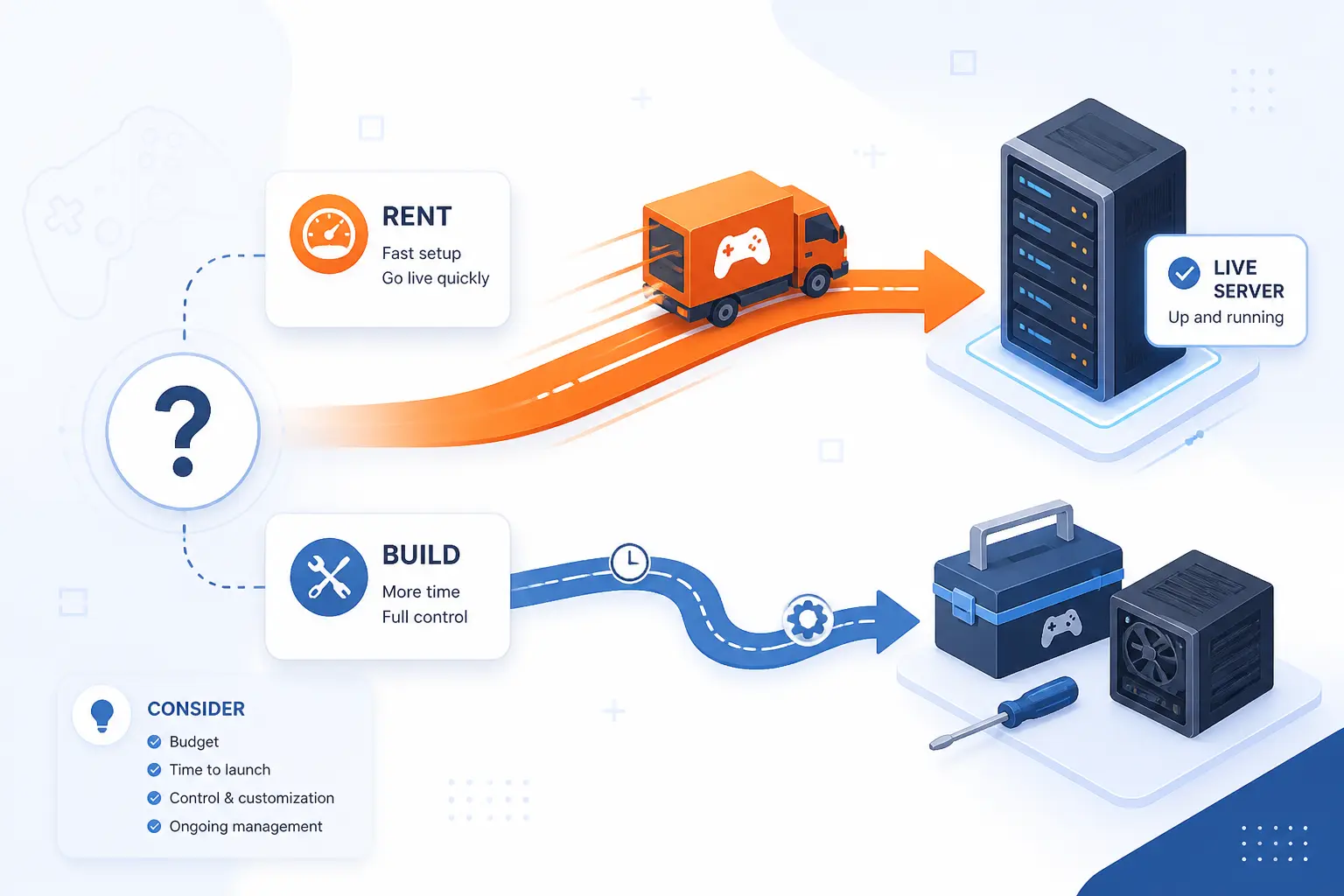
For most readers, renting wins on speed and reduced maintenance. Building wins only when you know the workload, can support the hardware yourself, and expect the server to live long enough for ownership to pay off. This decision is less about ideology and more about who is going to handle updates, failures, and recovery after launch.
Hosted Servers Reduce Maintenance, Security, and Update Work
Renting is usually the saner move if your goal is to get players online fast. Managed hosts reduce panel setup, network headaches, and at least some of the backup and restore burden. You are paying for convenience, but also for fewer surprises.
Apex’s panel walkthrough shows why this model is attractive. You buy the plan, log into the panel, and manage the server from there. That is much easier than assembling an OS, panel, firewall, backups, and remote access stack yourself.
Hosted service is also the easier choice when staffing is thin. If nobody on the team enjoys patching or recovery work, that is not a small detail. That is the whole decision.
Self Hosting Can Lower Long Term Costs if You Size Hardware Well
Owning hardware can be cheaper over time, but only if the box is sized correctly and has a stable home with reliable connectivity. The savings vanish fast if you underbuy CPU, forget power costs, or end up replacing parts in a panic.
Browsing current used-system examples makes the tradeoff concrete. A configured enterprise server can cost less than months of premium hosting, but then you become the hosting company for your own community. Some readers will love that. Most will not.
We usually recommend ownership only when the server is part hobby, part infrastructure project. If you just want to play with friends, rent it and move on.
Refurbished Hardware Can Make Ownership More Affordable
Refurbished gear is the most practical path into ownership because it lowers the up-front bill without forcing you into consumer desktop parts that were never meant to run 24/7 workloads. That is especially useful for home lab owners, private communities, and tinkerers who want iDRAC or similar remote management features.
A quick look at budget chassis examples shows just how low the entry point can go for bare server hardware. Of course, a cheap chassis is not a complete build. You still need CPUs, RAM, storage, and probably a plan for noise and power draw.
If ownership sounds appealing, refurbished enterprise hardware is the first place we would look. Just be honest about the work that comes with it.
Operational Features That Save Time After Launch
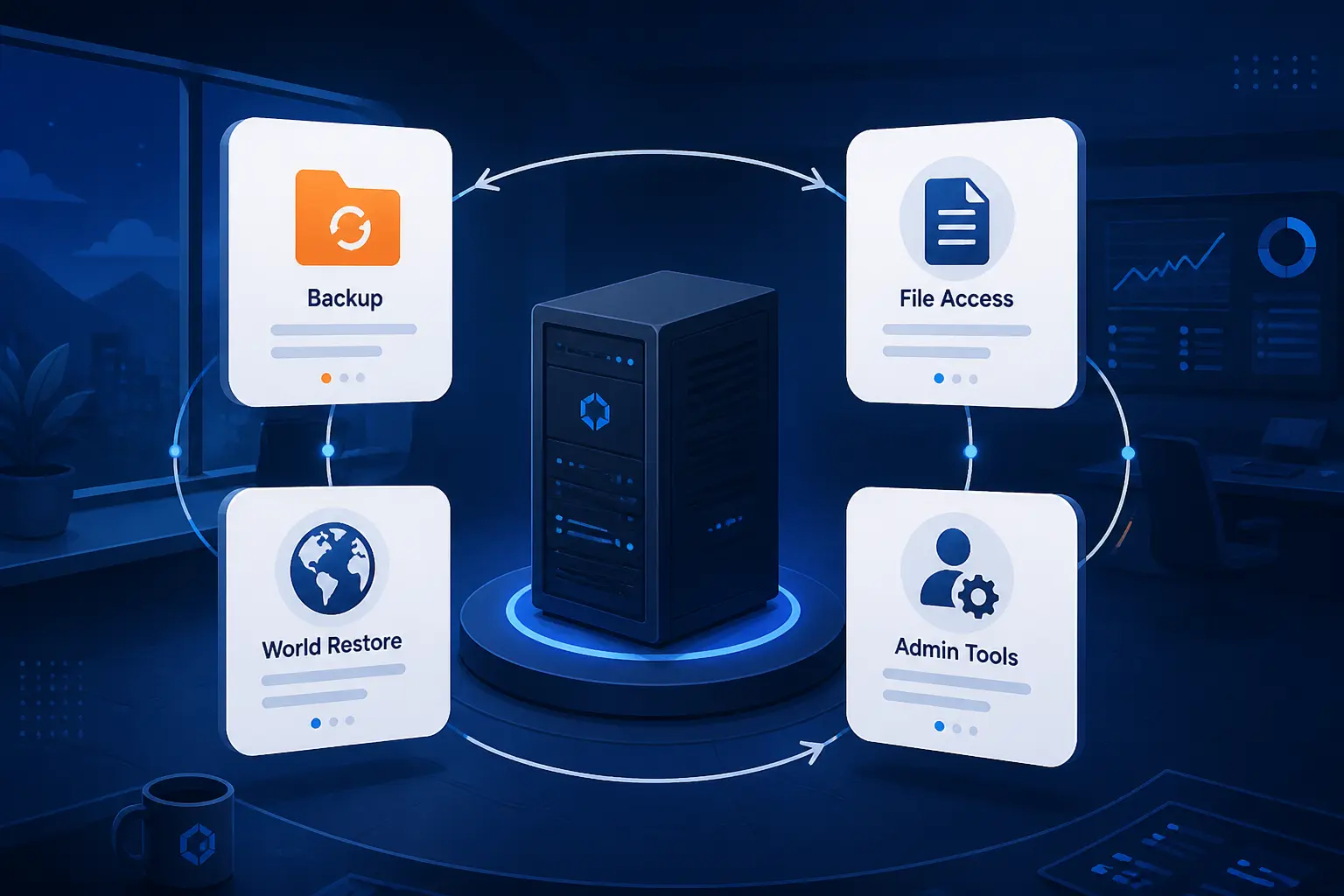
The launch day sales pitch is only half the story. After a server goes live, the time sink usually shifts to backups, file access, game changes, world recovery, and day-to-day admin work. Operational features are where a hosting bill either starts paying for itself or starts feeling annoying.
Control Panels, Web Interfaces, and Root Access Change the Experience
Control style changes the whole job. A strong panel is not just “nice to have.” It decides how fast you can restart, edit configs, read logs, swap versions, or recover from a bad mod push. For beginners, that can be the difference between a fun weekend project and a very long support thread.
BisectHosting’s panel walkthrough is a good example of why documentation matters. When a host can show the order flow, panel access, and early admin steps cleanly, it usually means the product is built for real server owners, not just for ad clicks.
Root access is the other half of the equation. It gives you more freedom, but it also hands you more responsibility. Buyers should choose the amount of freedom they will actually use.
Game Switching, Virtualization, and Multi Server Layouts Add Flexibility
One of the best ways to save money is to avoid buying a separate service for every experiment. Providers that let you swap games or run multiple layouts on one account can stretch a budget much further, especially for smaller communities that rotate between titles.
BisectHosting’s upgrade notes are useful here because they show how backup slots, instance slots, and RAM boosting affect real admin flexibility. Those are not glamorous features, but they are the ones that keep a server setup adaptable instead of brittle.
If you know your group game-hops often, prioritize switching and multi-instance tools over the absolute cheapest entry plan. That is where the long-term value usually hides.
Backups, FTP Access, and Databases Make Recovery Easier
Backups are easy to ignore until the first corrupted save or broken plugin update. Once that happens, the backup policy becomes the most important line on the plan page. Nightly backups, offsite copies, and easy restore paths are worth real money.
Database and file access matter too. Modded servers, web maps, community tools, and cross-service integrations often lean on MySQL, FTP, SFTP, or a browser file manager. If those are missing, even simple admin jobs can turn clumsy.
We would rather buy one step more server than one step less backup. That is not flashy advice, but it is the kind that saves entire worlds.
Network and Security Signals Worth Checking Before You Buy
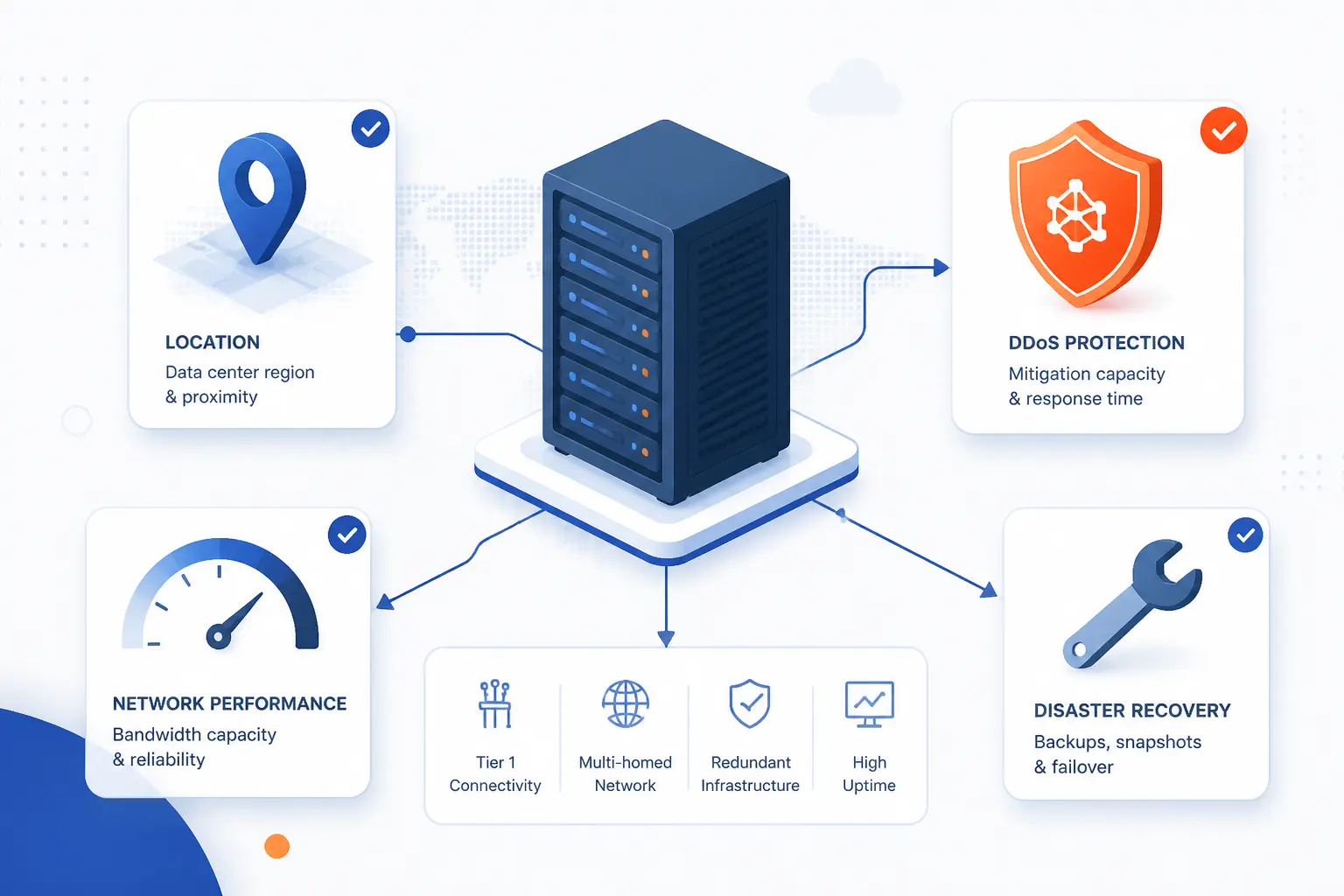
Most providers promise low latency and strong uptime. The better ones prove it with location detail, bandwidth clarity, DDoS language, and specific admin tooling. Before you buy, check whether the host explains how the network works and what recovery tools you actually get when something goes sideways.
Game Focused DDoS Protection Beats Generic Filtering
DDoS protection on a game server is not the same as generic website filtering. Public communities get targeted differently, and gaming traffic patterns can confuse systems that were tuned mainly for business hosting.
That is why we rate gaming-specific mitigation claims higher than a simple “protected” badge. Providers that mention gaming-tuned filtering, real-time mitigation, or named game-focused protection at least show they understand the workload. We still would not buy on that line alone, but it is a worthwhile signal.
If your server will be public, treat DDoS language as a core buying factor, not a side note. This is one of the few features that only matters when you really need it, and by then it matters a lot.
Region Choice, Bandwidth, and Peering Affect Real World Latency
Latency is about geography, routing, and consistency, not just a nearby pin on a map. A provider with more regions and better peering usually gives you a better chance of keeping mixed-location groups happy.
This is also where “dedicated” can mean different things in practice. A managed host with excellent regional placement may outperform a poorly chosen bare metal server an ocean away. That is why location choice should be part of the first cut, not the final fine print.
When in doubt, choose the server closest to the largest concentration of active players. It sounds obvious, but it still solves more problems than any clever tuning trick.
Uptime Promises Mean More When Monitoring and Remote Access Are Included
An uptime promise is only useful if the surrounding tooling helps you react when things break. Console access, remote management, file visibility, and recovery options make SLA language much more meaningful in the real world.
Scaleway’s service note is a good example of the kind of detail buyers should watch for. It explicitly says you are responsible for your backups and redundancy planning, which is blunt but helpful. We prefer that honesty over a vague uptime slogan every time.
In short, do not just ask “What is the uptime number?” Ask what you can actually do when the server misbehaves at the worst possible moment.
Dedicated Gaming Server FAQ
Most buyers ask the same handful of questions once they narrow the field. Here are the short, practical answers.
What Is a Dedicated Gaming Server Best For?
A dedicated gaming server is best for communities that need consistent performance, admin control, and reliable uptime. It shines when you want custom mods, persistent worlds, private rules, or multiple server processes without fighting a shared environment. The bigger and more public the community gets, the more that control matters.
Is a Dedicated Gaming Server Better Than Hosting at Home?
Yes, for most public or always-on communities, renting is better than hosting at home. You get better connectivity, cleaner uptime, easier remote access, and less risk of home power or ISP issues taking the whole server down. Home hosting only starts to win when you enjoy maintaining hardware and know the long-term workload is stable.
How Much CPU and RAM Do Most Game Servers Need?
Most small private servers do fine with modest specs, but modded or heavily populated servers can jump in requirements quickly. Fast CPU behavior usually matters first, then enough RAM to absorb mods, larger worlds, and peak concurrency. If you expect a long-lived world, buy headroom instead of sizing for the happiest-case average.
Should You Choose Linux or Windows for a Dedicated Gaming Server?
Choose Linux if you want lower overhead, more flexibility, and are comfortable managing a server from a shell or panel. Choose Windows if the game stack or your admin habits depend on Windows-native tools and workflows. The right answer is the platform you can support confidently after a bad update, not the platform with the loudest fans online.
Can One Dedicated Gaming Server Run Multiple Games?
Yes, one dedicated server can run multiple games if the hardware has enough CPU, RAM, and storage for the combined load. Some providers make this easier with game switching or instance management features, while raw bare metal gives you full freedom to build the layout yourself. Just remember that “can run” and “can run well under load” are two different things.
What Features Matter Most for Modded or Large Community Servers?
For modded or large community servers, the most important features are strong CPU performance, plenty of RAM, fast NVMe or SSD storage, reliable backups, and good DDoS protection. After that, root access or a capable panel becomes the tie-breaker because someone will eventually need to fix files, restore a world, or tune performance. If mods are central to the project, documentation and file access matter far more than a flashy homepage.







Conclusion
If we had to boil this list down to the shortest possible advice, it would look like this: pick OVHcloud or PingPerfect when you truly want a dedicated gaming server, pick GPORTAL, BisectHosting, Nodecraft, or Apex when you mainly want easier management, and treat 1Byte or TechMikeNY as specialty options for self-managed cloud tinkering or outright ownership. That is the real fork in the road.
Our last nudge is simple. Decide first whether you want raw control or lower admin effort, then compare only the providers that fit that lane. If you already know your game, player count, and how much setup work you are willing to handle, which two names from this list make your shortlist?