

- Why Ecommerce Business Ideas Continue to Attract New Sellers
- What Makes Ecommerce Business Ideas Successful
- How to Choose the Right Ecommerce Business Idea
- Low Cost Ecommerce Business Ideas for Beginners
- High Margin Digital Ecommerce Business Ideas
- Product Based Ecommerce Business Ideas in High Demand
- Tech Forward Ecommerce Business Ideas
- Recurring Revenue, Personalization, and Resale Ecommerce Business Ideas
- Understanding Ecommerce Types and Business Models
- How Much Different Ecommerce Business Models Cost to Start
- Common Challenges New Ecommerce Businesses Must Solve
- How to Launch an Ecommerce Business on a Budget
- What Successful Ecommerce Brands Can Teach New Sellers
- FAQ
- How 1Byte Helps Ecommerce Businesses Launch and Scale
- Final Thoughts on Choosing Ecommerce Business Ideas That Fit Your Goals
At 1Byte, we believe the best ecommerce business ideas are usually less flashy than people expect. They start with a narrow customer problem, a product people can understand in seconds, and a store that feels trustworthy from the first click.
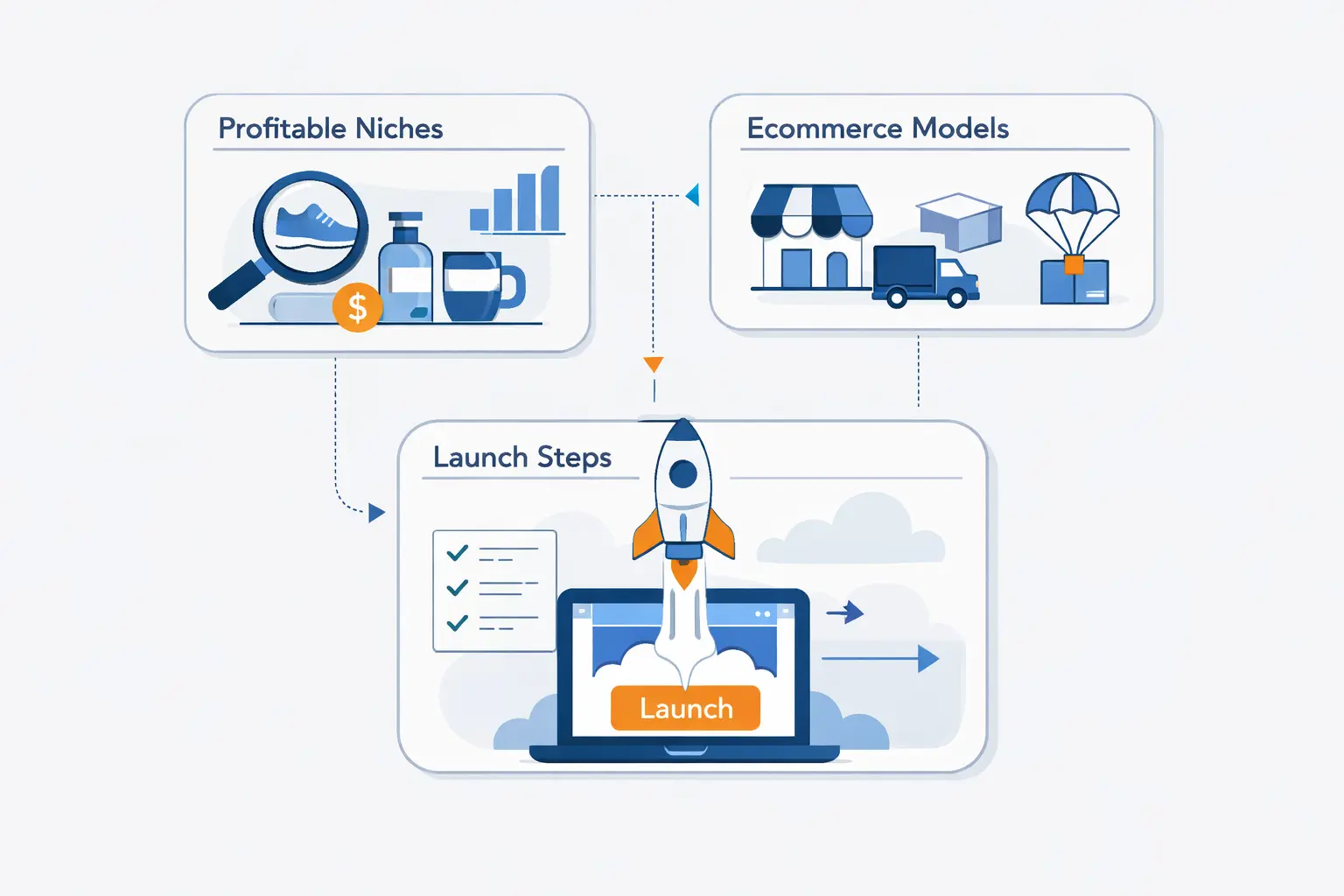
We have seen beginners overthink branding, tech, and ad budgets while skipping the hard part, which is choosing an offer people actually want. This guide is our practical take on profitable niches, business models, and launch steps that make sense for real people with real limits.
Why Ecommerce Business Ideas Continue to Attract New Sellers

The market is still large enough to reward focused operators. In the United States, online retail reached $326.7 billion in Q1 2026, which tells us new sellers are entering a channel with real demand, not a passing trend.
FURTHER READING: |
| 1. How Much Does It Cost to Start an LLC? |
| 2. How to Start an LLC: A Step-by-Step Guide for New Business Owners |
| 3. Passive Income Ideas That Match Your Budget, Skills, and Goals |
1. Low Cost Entry, Flexible Work, and Global Reach
Compared with a physical shop, ecommerce lets us test ideas with less cash and less risk. We can start nights and weekends, sell across time zones, and change direction fast. That flexibility is a big reason new sellers keep showing up.
2. Inventory Light Options for Products, Services, and Digital Offers
Many beginners do not need a garage full of stock. Print on demand, downloadable products, consulting packages, and preorder models let us sell with lighter inventory. That lowers the cost of mistakes, which matters more than most people admit.
3. Social Commerce, Mobile Shopping, and New Customer Behaviors
Phones now shape how people discover and buy. Adobe reported that 56.4% of online transactions happened on smartphones during the 2025 holiday season, so we treat short-form content, fast pages, and simple checkout as table stakes.
What Makes Ecommerce Business Ideas Successful

We think good ideas fail less from lack of creativity and more from lack of clarity. A store wins when shoppers quickly understand what it sells, why it is different, and why they should trust the seller.
1. Clear Product Positioning and a Strong Unique Selling Point
We would rather sell one well-defined product line than a messy catalog. Clear positioning means naming the customer, the problem, and the reason your offer is the better fit. If your store could be mistaken for ten others, the idea is still too loose.
2. Personalization, Email Marketing, and Repeat Purchase Strategy
Retention is where weak stores fall apart. McKinsey found that 71% of consumers expect personalized interactions, which is why we like welcome emails, reorder reminders, product bundles, and offers based on what a customer already bought.
3. Data, Analytics, and Multichannel Growth Planning
We want numbers early, even for small stores. Track traffic sources, conversion rate, average order value, refund rate, and repeat purchase behavior. That data shows whether the problem is product demand, pricing, messaging, or the checkout experience.
How to Choose the Right Ecommerce Business Idea

Choosing well is half the battle. We would not start with the trendiest niche. We would start with the idea we can explain, operate, and improve without burning out in the first three months.
1. Start by Mapping Interests, Skills, and Available Time
We like to begin with an honest inventory of skills. Can we write useful content, shoot product photos, manage suppliers, or answer customer questions well? A strong idea fits the time and energy we actually have, not the time we wish we had.
2. Validate Demand via Trends, Keywords, Reviews, and Competitor Research
Before building anything fancy, we would study search demand, customer reviews, and competing offers. Reviews are gold. They show what buyers love, what annoys them, and where a new seller can carve out a sharper offer.
3. Check Profit Margins, Logistics, and Resource Requirements
Some ideas look exciting until the math shows up. We ask simple questions. Can the product survive shipping? Will returns be painful? Does the gross margin leave room for ads, packaging, and support? If not, the idea may still be interesting, but it is not a business yet.
4. Avoid High Risk Categories and Heavy Compliance Burdens
We would be careful with ingestibles, baby products, medical claims, and anything that invites safety disputes. Those categories can work, but beginners often underestimate labeling, insurance, testing, and customer support risk. Sometimes the smart move is boring. That is fine.
Low Cost Ecommerce Business Ideas for Beginners

For first-time sellers, we prefer models that keep fixed costs low and let us learn from real customers fast. The goal is not to look big on day one. The goal is to find proof that people will buy.
1. Print on Demand Products and Custom Merchandise
Print on demand is still one of the cleanest entry points. We can test niche shirts, mugs, posters, tote bags, or notebooks without buying inventory upfront. It works best when the audience is specific, such as teachers, hikers, dog owners, or local sports fans.
2. Dropshipping Stores for Coffee, Books, and Niche Wellness Products
Dropshipping works when the catalog is tightly curated. We like add-ons and accessories more than fragile or highly regulated products. Coffee gear, reading lights, bookmarks, yoga props, and desk wellness items are easier starting points than supplements or anything with bold health claims.
3. Affiliate Marketing and Content Driven Online Selling
This is a good fit when we are better at explaining products than making them. A niche site, newsletter, or video channel can earn from product recommendations while teaching us what the audience actually wants. Later, we can add our own products once the traffic is real.
4. Marketplace Selling and Hybrid Store Setups
We often like a hybrid approach. Start on a marketplace to learn what sells, then build an independent store once we know the winning products and customer language. That reduces guesswork and gives us room to own the brand over time.
High Margin Digital Ecommerce Business Ideas

Digital offers can be appealing because they remove many shipping headaches. We still need quality and support, of course, but the margins can be attractive when the product solves a clear problem and can be delivered instantly.
1. Online Courses, Ebooks, Templates, Planners, and Educational Materials
We like digital education when the topic is narrow and useful. Budget spreadsheets, lesson plans, exam prep packs, meal planners, and design templates sell better than vague “masterclasses.” People buy outcomes, not ambition.
2. Stock Photography, Digital Art, and Creative Assets
Creative assets work well when they target a buyer with a repeat need. Think brand kits for freelancers, mockups for Etsy sellers, stock photo packs for realtors, or icons for app designers. The tighter the use case, the easier the sale.
3. DIY Wedding Stationery and Custom Design Products
Wedding buyers want style, speed, and customization. Editable invitation suites, signage templates, seating charts, and printable welcome boards can do well because they solve a deadline problem. We especially like niches where buyers need matching sets, not single files.
4. Freelancing, Coaching, and Service Packages Sold Online
Services are ecommerce too when the buying flow is clear. Website audits, copywriting packages, bookkeeping setup, resume reviews, and coaching sessions can be sold through product pages with fixed scope. That makes the offer easier to buy and easier to fulfill.
Product Based Ecommerce Business Ideas in High Demand

Physical product niches still offer plenty of room, but we think demand matters less than differentiation. A crowded category is not a deal breaker if we can serve a sharper use case, aesthetic, or customer identity.
1. Sustainable Products, Ethical Fashion, and Organic Alternatives
Buyers in this space care about materials, sourcing, and proof. We would not enter with vague green language. We would choose one honest angle, such as refillable household goods, low-waste kitchen items, or apparel with transparent production details.
2. Health and Wellness, Home Fitness, and Sleep Products
We like wellness ideas that solve a daily problem without making risky claims. Resistance bands, posture tools, foam rollers, blue-light blocking accessories, pillow covers, and bedtime organizers are practical examples. The strongest offers are easy to understand and easy to use.
3. Private Label Beauty, Organic Personal Care, and Beauty Tech
Beauty can be a strong niche because repeat purchases are common. Still, we would start small and take compliance seriously. Good positioning might focus on a skin type, a routine step, or a clear ingredient preference rather than trying to be everything at once.
4. Pet Products, Personalized Pet Goods, and Pet Subscription Ideas
Pet buyers are emotional buyers, and that opens room for thoughtful branding. Custom pet portraits, breed-specific accessories, enrichment toys, travel gear, and treat bundles can work well. If we entered this niche, we would lead with identity and routine, not just product specs.
5. Handmade Goods, DIY Craft Kits, and Local Artisanal Products
Handmade products stand out when the story matches the quality. We like craft kits, candles, ceramics, stitched goods, and locally made food gifts when the seller can show process and care. People often pay more when the product feels personal, not mass-produced.
6. Niche Food and Beverage Ideas Including Specialty Coffee
Food and beverage can be strong when the brand has a point of view. Specialty coffee, hot sauce sets, baking mixes, and regional snacks do best when they are tied to taste, ritual, or gifting. We would keep fulfillment simple and shelf life in mind from the start.
7. Kids Educational Toys, Refurbished Toys, and Family Niches
Parents buy with a mix of care, urgency, and caution. Educational toy bundles, quiet-time kits, travel activity packs, and refurbished toys can appeal when safety and condition are clearly explained. In family niches, trust is not a bonus. It is the sale.
Tech Forward Ecommerce Business Ideas

Tech-focused stores can be profitable, but only if we keep the offer understandable. We would rather sell a useful device with clear setup help than a pile of gadgets that confuse customers and overwhelm support.
1. Smart Home Devices and Refurbished Smart Home Products
Smart plugs, sensors, lighting kits, and refurbished home devices can sell well when the store explains compatibility and setup clearly. We think this niche works best with educational content. Buyers want fewer surprises and fewer returns.
2. Remote Work Tools and Home Office Essentials
Remote work is no longer a novelty. We still see room in ergonomic accessories, cable management, laptop stands, desk lighting, acoustic panels, and webcam gear. A good store here sells a better work setup, not just scattered office items.
3. Digital Health Monitoring and AI Powered Services
There is demand for habit tracking, journaling tools, symptom logs, and smart reminders, especially when paired with simple devices or guided programs. We would stay careful here. Support tools are one thing. Anything that drifts into diagnosis needs much more caution.
4. Gaming Accessories, VR and AR Products, and 3D Printed Accessories
Gaming buyers love niche gear. Controller stands, cable clips, desk mounts, headset holders, and 3D printed organizers can work because the audience is easy to identify and often eager to customize. We like categories where design flair and utility meet in the middle.
Recurring Revenue, Personalization, and Resale Ecommerce Business Ideas

If we had to choose between a one-off sale and a repeatable relationship, we would choose the relationship every time. Recurring revenue, personalization, and resale can create steadier cash flow and stronger customer loyalty.
1. Niche Subscription Boxes for Beauty, Food, Pets, and Crafts
Subscription boxes work when curation is the product. Monthly snack themes, pet treat assortments, craft projects, and beauty discovery kits can keep customers engaged if each box feels purposeful. We would avoid stuffing boxes with filler just to hit a margin target.
2. Personalized Gifts and Products That Command Premium Pricing
Customization is one of the clearest ways to escape price wars. Engraved keepsakes, name-based wall art, custom recipe books, pet memorial gifts, and monogrammed home goods often command better margins because the product feels hard to compare.
3. Fashion Reselling, Online Thrift Stores, and Luxury Resale
Resale businesses can start lean if we know how to source and photograph well. The winning edge is trust. Clear grading, clean listings, authentic brand details, and fast replies matter more than a huge catalog. In resale, confusion kills conversion.
4. Community First Brands and Creator Commerce Opportunities
Some of the best ecommerce ideas start as communities. A creator, coach, hobby group, or local scene can turn into a store once people already trust the voice behind it. We like this path because the audience often exists before the product does.
Understanding Ecommerce Types and Business Models

Many beginners mix up ecommerce types with ecommerce models. We keep them separate. The type describes who is buying and selling. The model describes how the store makes and delivers the sale.
1. B2C, B2B, C2C, and Other Ecommerce Types
B2C means business to consumer. B2B means business to business. C2C covers peer-to-peer selling on marketplaces. There is also C2B, where individuals sell services or influence to brands. We think beginners should pick one primary type and keep the message tight.
2. Direct to Consumer, Private Label, and Marketplace Selling
Direct to consumer gives us more control over the brand and customer data. Private label can improve margins if we validate demand first. Marketplace selling offers built-in traffic but less control. None is perfect. Each trades freedom for speed in different ways.
3. Print on Demand, Dropshipping, Affiliate, and Crowdfunding Models
These models reduce upfront risk in different ways. Print on demand removes inventory. Dropshipping removes storage. Affiliate selling removes fulfillment. Crowdfunding tests demand before full production. We like them as learning tools, especially for new founders.
4. Subscription, Freemium, and Cause Based Brand Approaches
Subscription works well for replenishment or curation. Freemium fits digital products, where a free tool or sample leads to paid upgrades. Cause-based branding can resonate too, but only when it is specific and credible. Shoppers can spot empty moral packaging from a mile away.
How Much Different Ecommerce Business Models Cost to Start

Startup cost depends more on the model than the niche. We would not ask, “How much does ecommerce cost?” We would ask, “How much does this exact version of ecommerce cost to test well?”
1. Basic Setup Costs for Domains, Platforms, and Branding
In our view, a simple beginner setup can often start in the low hundreds if we use a template, a paid domain, and a basic visual identity. A more polished branded store with premium apps, custom design, and better product media can move into the low thousands fast.
2. Product and Fulfillment Costs by Business Model
Digital products cost the least to fulfill. Print on demand and dropshipping usually need sample orders and careful testing. Private label needs more cash because we are paying for inventory, packaging, and often minimum order quantities. That is where many budgets crack.
3. Marketing Costs for SEO, Social Media, and Paid Ads
SEO is time-heavy before it becomes cash-efficient. Social content costs more energy than money. Paid ads can teach us quickly, but they burn cash just as quickly if the offer is weak. We prefer small ad tests after the product page and checkout are ready.
4. Ongoing Costs for Fees, Shipping, and Growth
Do not forget the slow leaks. Payment processing, app subscriptions, packaging, returns, discounts, and customer service add up every month. A store can look healthy on gross sales and still feel thin once the boring costs are included.
Common Challenges New Ecommerce Businesses Must Solve

Most new stores do not fail because the founder lacks ambition. They fail because a few everyday problems pile up at once. Traffic is thin, checkout leaks sales, trust is weak, and operations get messy.
1. Traffic Growth via SEO, Paid Ads, Social Media, and Influencers
Traffic is the first wall many stores hit. We would not depend on one channel alone. Search, social posts, short videos, email capture, creators, and small paid campaigns work better together than in isolation. The trick is consistent messaging, not channel hopping.
2. Cart Recovery via Better Checkout and Email Follow Up
Checkout friction is expensive. Baymard tracks a global average cart abandonment rate of 70.19%, so we treat short forms, clear shipping costs, guest checkout, and reminder emails as profit work, not polish work.
3. Trust Building via Reviews, Support, and Clear Return Policies
New stores must borrow trust from details. Honest product photos, fast replies, simple returns, real reviews, and visible policies reduce hesitation. We think a plain, credible store beats a flashy one that feels evasive.
4. Managing Shipping, Delivery Options, and Customer Experience
Shipping can make or break a first purchase. We like clear delivery windows, realistic promises, and order updates that reduce anxiety. Customers often forgive a delay. They do not forgive feeling ignored.
How to Launch an Ecommerce Business on a Budget

When funds are tight, discipline matters more than excitement. We would rather launch a smaller store with a cleaner message than spend months building a giant catalog nobody asked for.
1. Write a Simple Plan and Define Your Target Customer
We would write one page, not fifty. Who is the buyer, what problem are we solving, what will we sell first, how will we get traffic, and what does success look like in the first ninety days? If we cannot answer that simply, the idea is not ready.
2. Pick a Business Model That Fits Your Budget and Skill Set
Beginners often choose the model that sounds glamorous. We would choose the model we can operate well. Strong writing may point us toward digital products or affiliate content. Design skills may favor print on demand. Sourcing experience may favor private label or resale.
3. Create a Brand, Choose a Platform, and Organize Product Categories
A good beginner brand is clear, not fancy. We want a name people can remember, a store platform we can manage without panic, and product categories that make sense at a glance. Confused navigation is an early tax on every sale.
4. Set Up Payments, Shipping, and a Professional Store Experience
Customers notice the basics first. We would set up secure payments, mobile-friendly pages, simple shipping rules, and a clean product layout before worrying about advanced features. A professional feel usually comes from removing clutter, not adding more tools.
5. Early Marketing via SEO, Social Media, and Email
We like early marketing that compounds. Helpful product pages, beginner blog posts, short product demos, and email capture can start building traffic before paid campaigns. The aim is to give every visitor a reason to come back.
6. Launch a Small MVP, Gather Feedback, and Improve Before Scaling
We would launch with a minimum viable catalog and learn from real behavior. Which pages get attention? Which products get added to cart? Which questions keep showing up? That feedback should shape the next step, not our ego.
7. Handle Legal Basics and Product Requirements Early
Even a small store needs the boring foundation. Business structure, taxes, terms, privacy, returns, and product-specific requirements should be handled early. We are not fans of panic-driven cleanup after the first order arrives.
What Successful Ecommerce Brands Can Teach New Sellers

We like examples because they keep strategy honest. Big brands do not offer copy-and-paste blueprints, but they do show what happens when a business commits hard to a growth engine and builds its operations around it.
1. Temu Lessons on Scale, Speed, and Pricing
Temu teaches a blunt lesson about attention. PDD Holdings said Temu was serving consumers across major markets by the end of 2025, and that kind of reach shows how fast aggressive pricing and broad assortment can pull shoppers in. Our view is simple, though. Price can buy clicks, but trust and operations decide whether a marketplace stays healthy.
2. Gymshark Lessons on Community and Influencer Marketing
Gymshark shows what happens when identity leads the brand. The company says it has over 18 million followers across social platforms, and we see that as proof that community can become a real distribution engine when the audience feels seen, not just sold to.
3. LTK Lessons on Content, Authority, and Creator Commerce
LTK is a useful reminder that content itself can become a shopping layer. Its newsroom describes a community of 40M+ shoppers, which tells us creator-led product discovery is now a serious commerce channel, not a side experiment. For new sellers, the lesson is to earn attention by helping people choose.
FAQ

These are the questions we hear most often when someone is choosing among ecommerce business ideas and trying to keep risk under control.
1. Which Ecommerce Business Is Most Profitable?
In our view, digital products, service packages, and strong private label brands can be very profitable because margins are usually better. Still, the “most profitable” model depends on repeat purchases, customer acquisition cost, and how much support the product needs after the sale.
2. What Are the 7 Types of Ecommerce?
There is no single universal list, but a practical seven-part view is B2C, B2B, C2C, C2B, D2C, marketplace commerce, and subscription commerce. We find that framing helpful because it covers both trading relationships and how the sale is structured.
3. What Are the Best Ecommerce Businesses to Start?
For beginners, we usually like print on demand, digital downloads, curated marketplace stores, resale, and fixed-scope services sold online. They are easier to test, easier to explain, and less likely to trap us in inventory we cannot move.
4. What Is the Best Ecommerce Business to Start With $5000?
If we had that budget, we would strongly consider a focused private label test, a niche subscription concept, or a content-plus-store model with enough room for samples, branding, and early marketing. We would avoid spreading that budget across too many products.
5. Can You Start an Ecommerce Business Without Inventory?
Yes. Print on demand, dropshipping, affiliate selling, digital goods, and service packages all let us start without holding traditional inventory. The trade-off is that we still need to manage quality, delivery expectations, and customer support carefully.
6. How Much Does It Cost to Start Ecommerce?
It can be a few hundred dollars for a very lean test or several thousand for a branded store with inventory and marketing. We think the better question is how much it costs to test one idea properly, because that keeps spending tied to learning.
7. How Do You Choose the Right Ecommerce Business Idea?
We would match the idea to our skills, time, budget, and tolerance for operational hassle. Then we would validate demand, check margins, and choose the simplest version worth testing. The right idea is usually the one we can launch and improve, not admire forever.
How 1Byte Helps Ecommerce Businesses Launch and Scale

At 1Byte, we see ecommerce as both a business model and an infrastructure problem. A good idea still needs secure launch basics, stable hosting, and room to grow when traffic, products, and customer expectations increase.
1. Domain Registration and SSL Certificates for Secure Store Launches
We help stores start with the basics that matter. A clean domain name makes the brand easier to remember, and SSL helps customers feel safe when they browse and pay. For a new store, those details are small on paper and huge in practice.
2. WordPress Hosting and Shared Hosting for Faster Store Builds
For sellers who want a practical starting point, we like hosting options that keep setup simple and costs predictable. WordPress hosting and shared hosting can be a smart fit for content-led stores, lean catalogs, and early-stage ecommerce experiments.
3. Cloud Hosting, Cloud Servers, and AWS Partner Support for Scaling
As a store grows, traffic spikes, larger catalogs, and heavier plugins can start to strain basic environments. That is where cloud hosting, cloud servers, and AWS partner support become useful. We think scaling should feel planned, not like an emergency repair job.


Final Thoughts on Choosing Ecommerce Business Ideas That Fit Your Goals
The best ecommerce business ideas are not always the hottest trends. They are the ideas that fit our skills, our budget, and the kind of work we are willing to do consistently. A narrow niche with clear demand can beat a broad store with vague ambition every day of the week.
At 1Byte, our honest view is this: start smaller than your ego wants, learn faster than your competitors expect, and build trust before you chase scale. If we do that, ecommerce stops feeling like a gamble and starts looking a lot more like a business.