

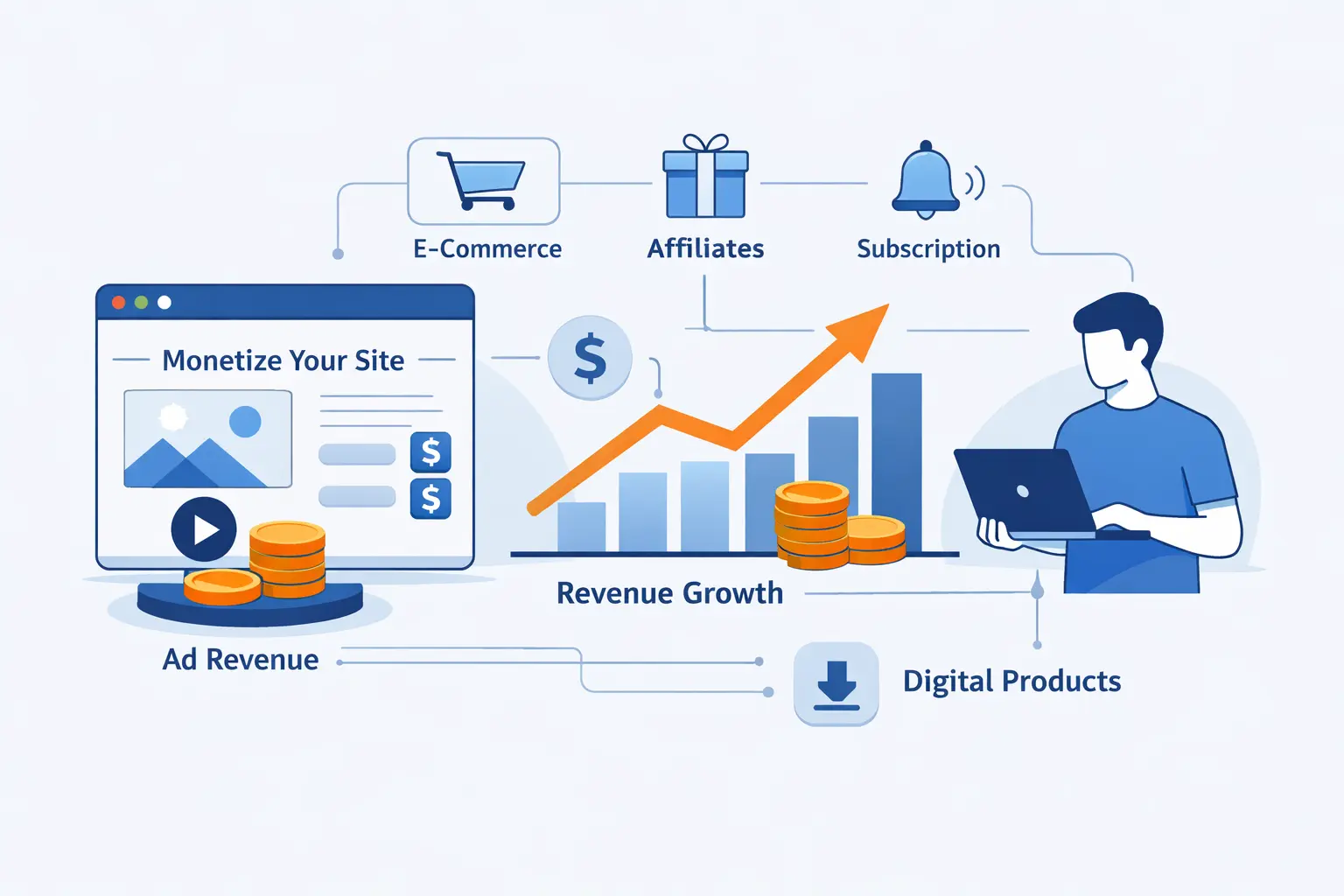
- How to Monetize a Website Starts With SEO, Content, and Goals
- Choose the Right Monetization Model for Your Site
- Meet the Legal and Technical Requirements for Monetization
- How to Monetize a Website Through Advertising
- How to Monetize a Website With Affiliate Marketing
- How to Monetize a Website With Memberships and Premium Content
- How to Monetize a Website With Products, Services, and Expertise
- Build Revenue Through Sponsored Content and Brand Partnerships
- Add Donations, Lead Generation, and Email Monetization
- Explore Advanced and Long-Term Monetization Opportunities
- Measure and Optimize Revenue Performance
- FAQ
- How 1Byte Supports Website Monetization Growth
- Conclusion: Choose a Website Monetization Plan That Fits Your Audience
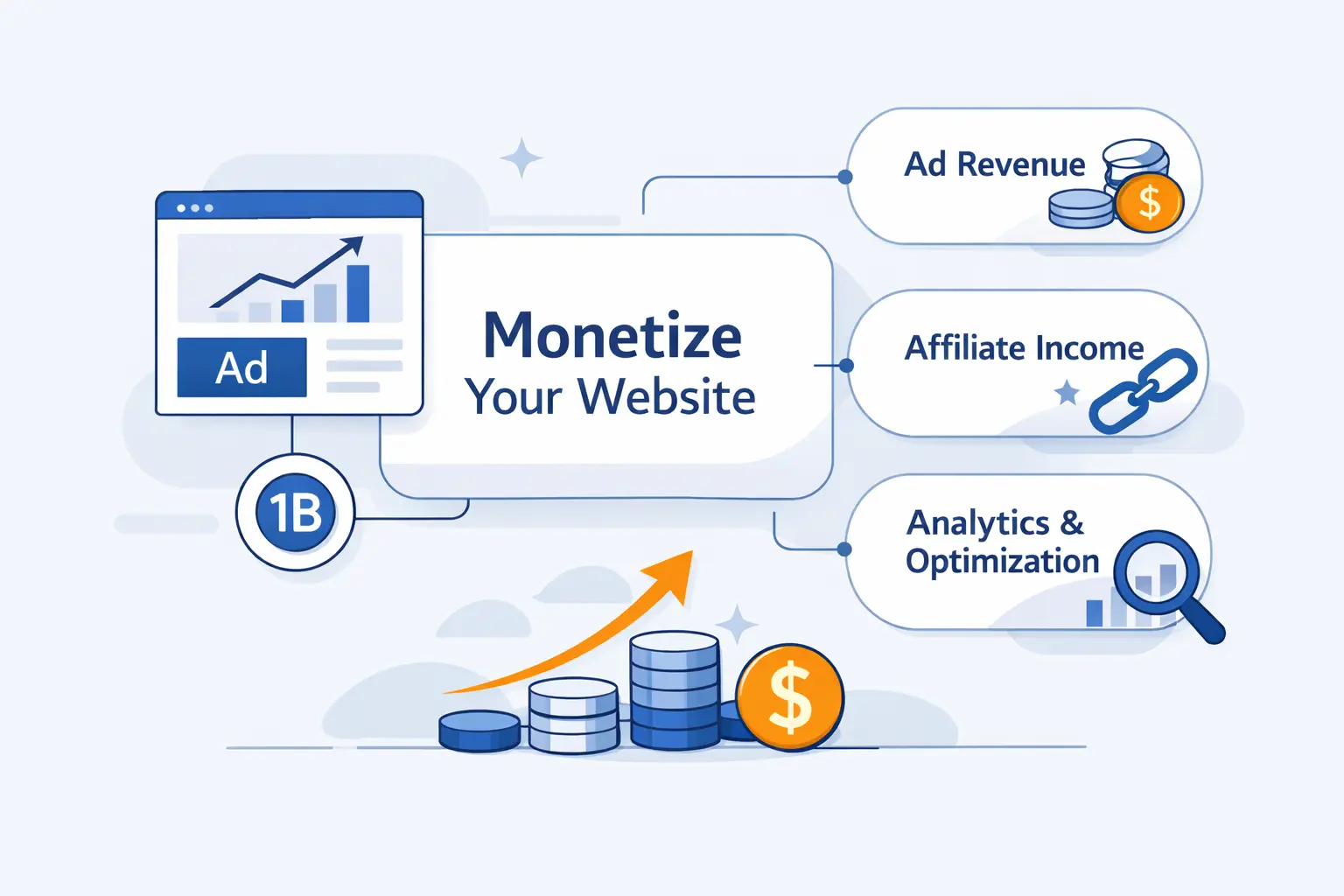
At 1Byte, we think learning how to monetize a website starts with a hard truth. Revenue comes from fit, trust, and repeatable systems, not from stuffing ads into every empty space. The opportunity is still large. U.S. internet advertising revenue reached $258.6 billion in 2024, which tells us the market is real and still expanding.
But large markets also attract noise. A small site with strong buyer intent can beat a larger site with weak traffic. We would rather help a focused site earn from the right visitors than chase vanity pageviews that never pay.
How to Monetize a Website Starts With SEO, Content, and Goals
Every durable revenue model sits on top of three basics. You need a clear topic, useful content, and goals you can measure. If any one of those is missing, monetization turns messy fast.
1. Choose a Niche and Research Keywords With Monetization Potential
We start with a niche that solves an expensive, recurring, or urgent problem. That is where buyer intent lives. A keyword like “best invoicing software for contractors” is usually worth more than a broad phrase with no action behind it. Map keywords to products, services, affiliate offers, or memberships before you publish.
2. Prioritize Audience Intent and Traffic Quality
Traffic quality beats raw traffic volume. A thousand visitors who want answers now can outperform ten thousand casual readers. We separate pages by intent, research, compare, buy, or contact, then match each page to the right revenue path. That keeps monetization from feeling forced.
3. Build Search Traffic Through Helpful Content and Regular Updates
We keep SEO simple. Publish pages that answer the full question, update them when facts or tools change, and remove thin content. We like people-first guidance because it pushes publishers to help readers before chasing rankings. That is usually the difference between traffic that bounces and traffic that buys.
4. Set Revenue Goals, Choose Payment Methods, and Define Success Metrics
We set revenue goals early. For one site, that may mean newsletter signups. For another, it may mean booked calls, product sales, or revenue per session. We also choose payment methods upfront, such as cards, digital wallets, invoices, or subscriptions, so the checkout experience fits the business. Clear metrics keep the site honest.
Choose the Right Monetization Model for Your Site
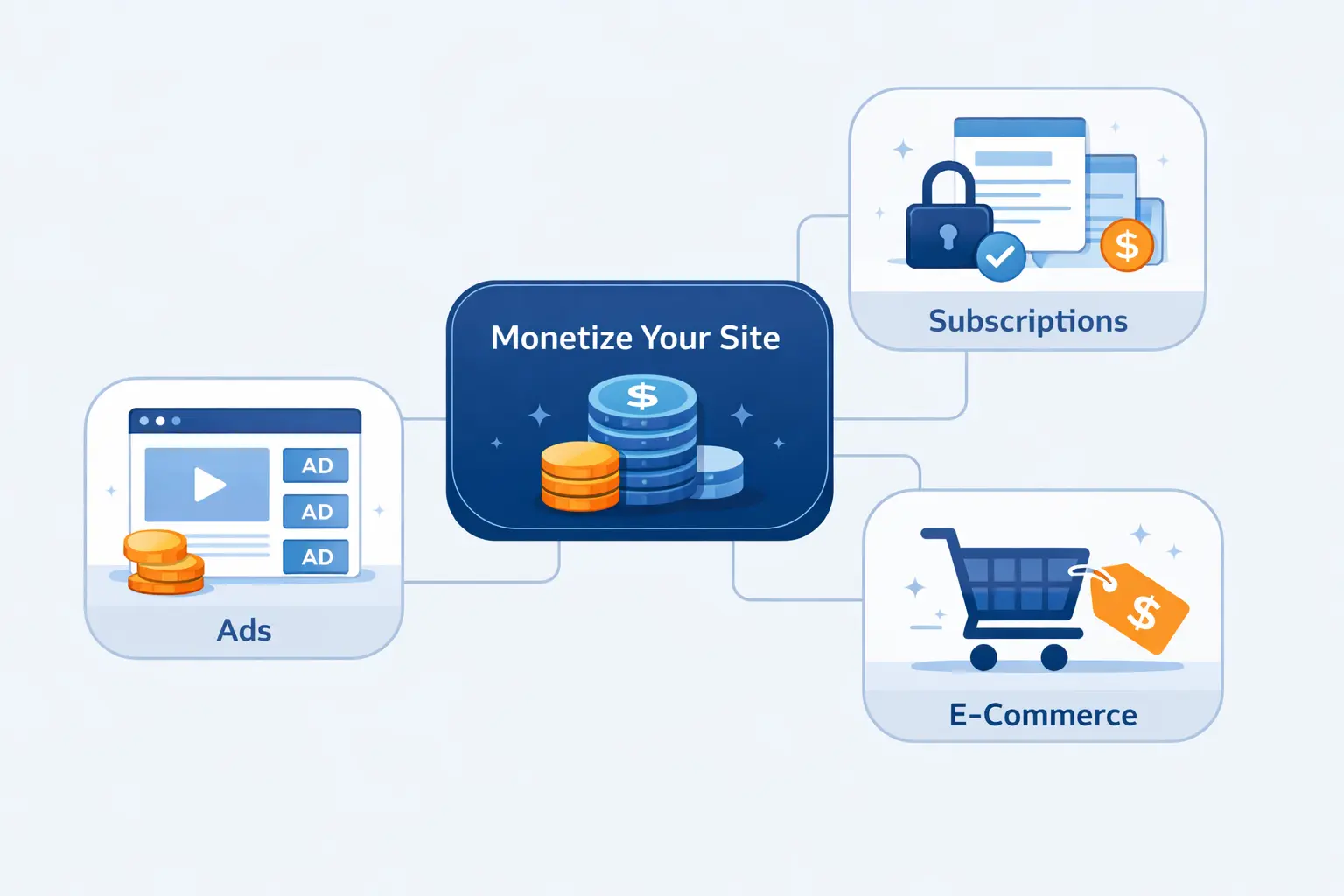
Once the foundation is in place, we pick a model that matches the audience. This is where many site owners go wrong. They copy another site’s revenue mix without asking why it works there.
1. Match Revenue Streams to Traffic, Content Type, and User Intent
Broad informational traffic often fits display ads. Comparison content usually fits affiliate links. Deep expertise can support products, consulting, or paid communities. We match the revenue stream to the user’s next logical step, not to whatever sounds most passive.
2. Pick the Best Path for Publishers, Ecommerce Sites, and Service Businesses
Publishers usually start with ads, affiliate content, and sponsorships. Ecommerce sites should push product margins, repeat orders, and upsells first. Service businesses often earn the most from consultations, proposals, and retainers. The site type matters because user intent changes everything.
3. Balance Passive Income, Active Income, and Long-Term Scalability
Passive income sounds attractive, but it often pays less per visitor. Active income, like consulting, takes time but can fund the site early. Long-term plays like memberships and products take longer to build, yet they create more control. We like a ladder approach. Quick cash flow now, owned revenue later.
4. Start With a Small Monetization Mix Before Expanding
We advise starting with one primary stream and one secondary stream. For example, pair affiliate content with email capture, or service pages with a paid template library. A small mix is easier to test. It also shows you what your audience will actually tolerate.
Meet the Legal and Technical Requirements for Monetization
Monetization gets fragile when the technical and legal pieces are loose. If your site looks untrustworthy, loads slowly, or hides commercial intent, readers notice fast. Payment providers and ad networks do too.
1. Use a Custom Domain, Reliable Hosting, and Secure Payments
We would not monetize a serious site on a random subdomain if we could avoid it. A custom domain, stable hosting, SSL, and secure payments tell visitors they are dealing with a real business. From our side as a hosting provider, we have seen shaky infrastructure hurt both conversion and trust.
2. Follow FTC Disclosures, Platform Policies, and Ethical Standards
We urge site owners to read the disclosure guide before adding affiliate links, sponsored posts, or product endorsements. Disclosures need to be clear, close to the claim, and easy to understand. If money, gifts, or free access changed your opinion, say so in plain English.
3. Keep Revenue Tactics Aligned With Site Quality and Trust
Shortcuts usually backfire. Hidden ads, misleading buttons, fake scarcity, and recycled reviews may lift revenue for a minute, then crush trust later. We would rather earn a little less now than train readers to distrust every commercial message on the page.
How to Monetize a Website Through Advertising
Advertising still works, especially for sites with broad reach and steady content output. But ads are not free money. They trade some attention and speed for revenue, so placement discipline matters.
1. Start With Google AdSense and Contextual Ads
For beginners, AdSense is often the easiest first step. Its system uses contextual targeting to match ads to page themes, which makes setup simpler than selling inventory yourself. We still tell publishers to start small, measure how pages feel on mobile, and add units only when the page remains readable.
2. Compare CPC, CPM, CPA, and Direct Advertising
CPC pays when visitors click. CPM pays for impressions. CPA pays after an action, like a sale or form fill. Direct advertising skips the network and lets you sell placements yourself. We prefer direct deals only after traffic and audience fit are easy to explain with real data.
3. Use Sponsored Products, Display Ads, and Post-Transaction Offers
Display banners are only one option. Some sites add sponsored product widgets, native placements, or post-transaction offers after a user buys or signs up. Those can work well when they extend the user journey. They fail when they interrupt it.
4. Build a Media Kit and Sell Ad Space Strategically
A media kit does not need to be fancy. It needs to show who your audience is, what formats you sell, what performance you can prove, and what brands should expect. A clean PDF or page with sample placements, demographics, and base rates is enough to start conversations.
5. Protect Page Speed, Mobile Performance, and User Experience
We treat page speed as a revenue issue, not a design issue. Heavy scripts, too many units, and jumpy layouts reduce depth, clicks, and return visits. If ads make the site annoying, users tell you with their behavior long before they tell you with words.
How to Monetize a Website With Affiliate Marketing
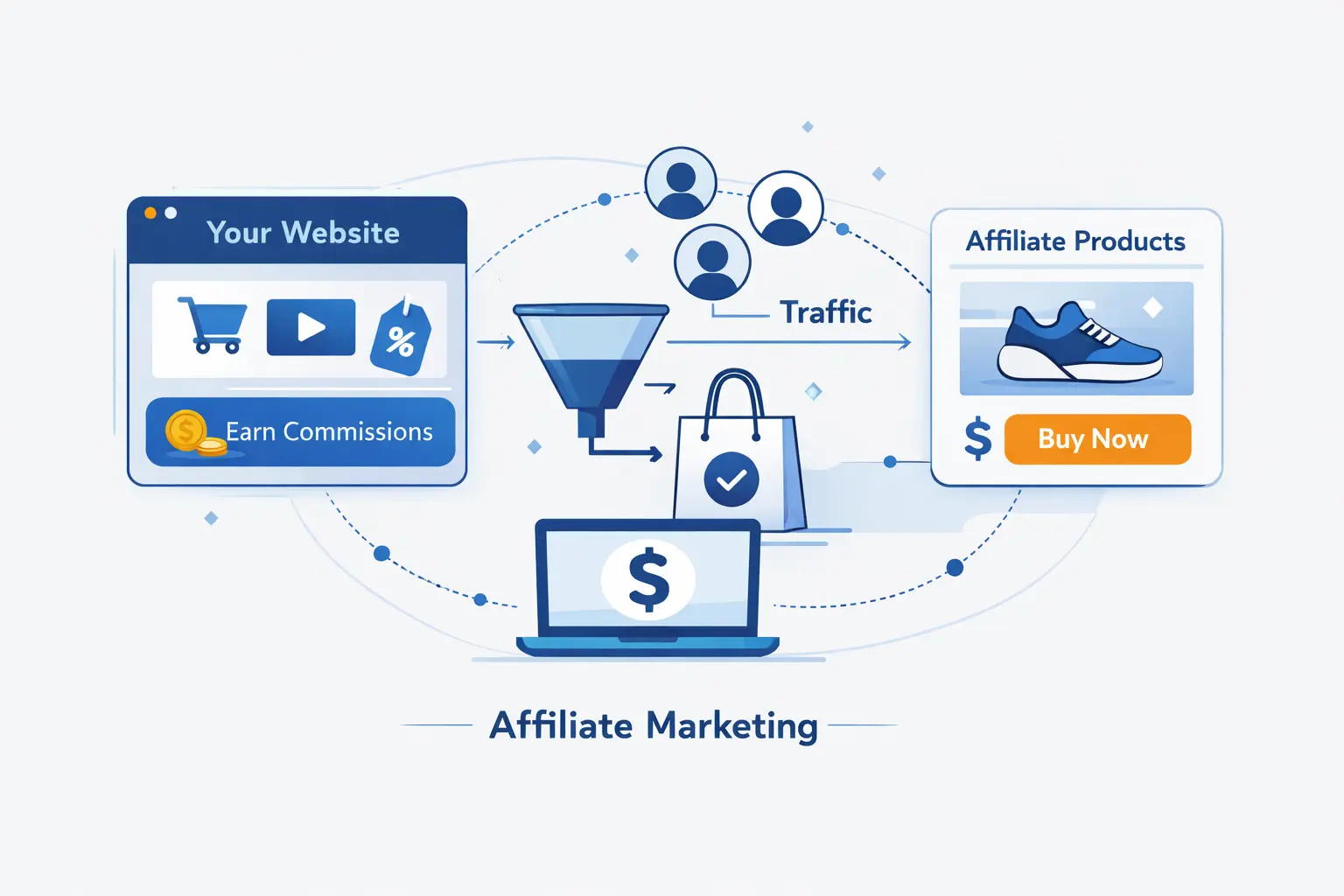
Affiliate marketing works best when your content helps people decide, not just discover. We like it because it can fit both small and midsize sites. Still, it only works when the recommendation feels earned.
1. Join Direct Programs and Affiliate Networks
We usually start with direct brand programs for software, hosting, finance, or niche tools. Networks can widen access, but direct deals often give better support and cleaner attribution. Amazon Associates is a common entry point, and the operating agreement is a good reminder that payout rules and compliance matter as much as conversion rates.
2. Publish Reviews, Comparisons, and Buying Guides
Reviews, comparisons, and buying guides convert because they meet readers close to a decision. We structure them around use cases, tradeoffs, pricing, and who should skip the product. That last part matters. Honest negatives make the positive recommendation stronger.
3. Integrate Affiliate Links Naturally Into Helpful Content
We place affiliate links where they solve the next step. That may be in a comparison table, a recommended tools section, or the exact moment a product is mentioned. We avoid stuffing links into every paragraph. Too many links make the article feel like a sales floor.
4. Follow Disclosure Rules and Protect Reader Trust
Affiliate disclosure should be visible before trust is asked for, not hidden in the footer. We prefer a short note near the top and another cue near the links when needed. Readers rarely mind affiliate monetization. They mind feeling tricked.
How to Monetize a Website With Memberships and Premium Content
Memberships and premium content are strong options when readers return for your judgment, access, or community. They are weaker when the free version already answers everything. The gap between free and paid has to feel useful, not artificial.
1. Build Membership Areas, Paywalls, and Tiered Plans
We design memberships around access, depth, or convenience. That can mean member forums, premium research, private tools, archived templates, or tiered support. Simple tiers often work best. When pricing gets too clever, people delay the decision.
2. Offer Premium Newsletters, Early Access, and Members-Only Benefits
Premium newsletters and early access work when your audience trusts your curation. A publisher like The New York Times shows what bundling can do, reporting 13.08 million subscribers across its products in first-quarter 2026. The lesson is not scale. It is that one subscription can feel stronger when it solves several recurring needs.
3. Mix Free Content and Paid Content to Grow Loyalty
We like a free-to-paid ladder. Free content brings discovery and proof. Paid content adds speed, depth, tools, access, or interaction. If paid only hides basics, people churn. If paid makes progress easier, they stay.
How to Monetize a Website With Products, Services, and Expertise
We often see the best margins when site owners sell something they control. That takes more work upfront, but it also gives you pricing power and a stronger brand. In the first quarter of 2026, U.S. retail e-commerce accounted for 16.9% of total sales. To us, that is another sign that buyers are comfortable completing online purchases when the offer is clear.
1. Sell Merchandise, Digital Products, and Ebooks
Merchandise can work for community brands, but digital products are usually the easier starting point. Ebooks, templates, calculators, checklists, swipe files, and paid downloads carry high margins and low delivery cost. We would rather sell one sharp digital tool than a vague bundle of files nobody asked for.
2. Launch Courses, Webinars, and Downloadable Resources
Courses and webinars sell best when the outcome is narrow and concrete. “Learn bookkeeping for freelance designers” is easier to buy than a giant course about business growth. Add worksheets, recordings, or office hours if they directly reduce confusion. Extra volume is not the same as extra value.
3. Offer Consulting, Coaching, and Service Packages
Consulting and coaching are strong fits for experts with a clear point of view. The site should explain the problem you solve, your process, who you help, and what happens next. Even a small site can earn well here because one qualified client can outweigh a month of ad revenue.
4. Create a Service Page That Converts Visitors Into Clients
A good service page answers six questions fast. What do you do, who is it for, what results matter, what is included, why trust you, and how do I start? We also like adding proof, a simple process, and a plain call to action. Clarity closes more work than clever copy.
Build Revenue Through Sponsored Content and Brand Partnerships
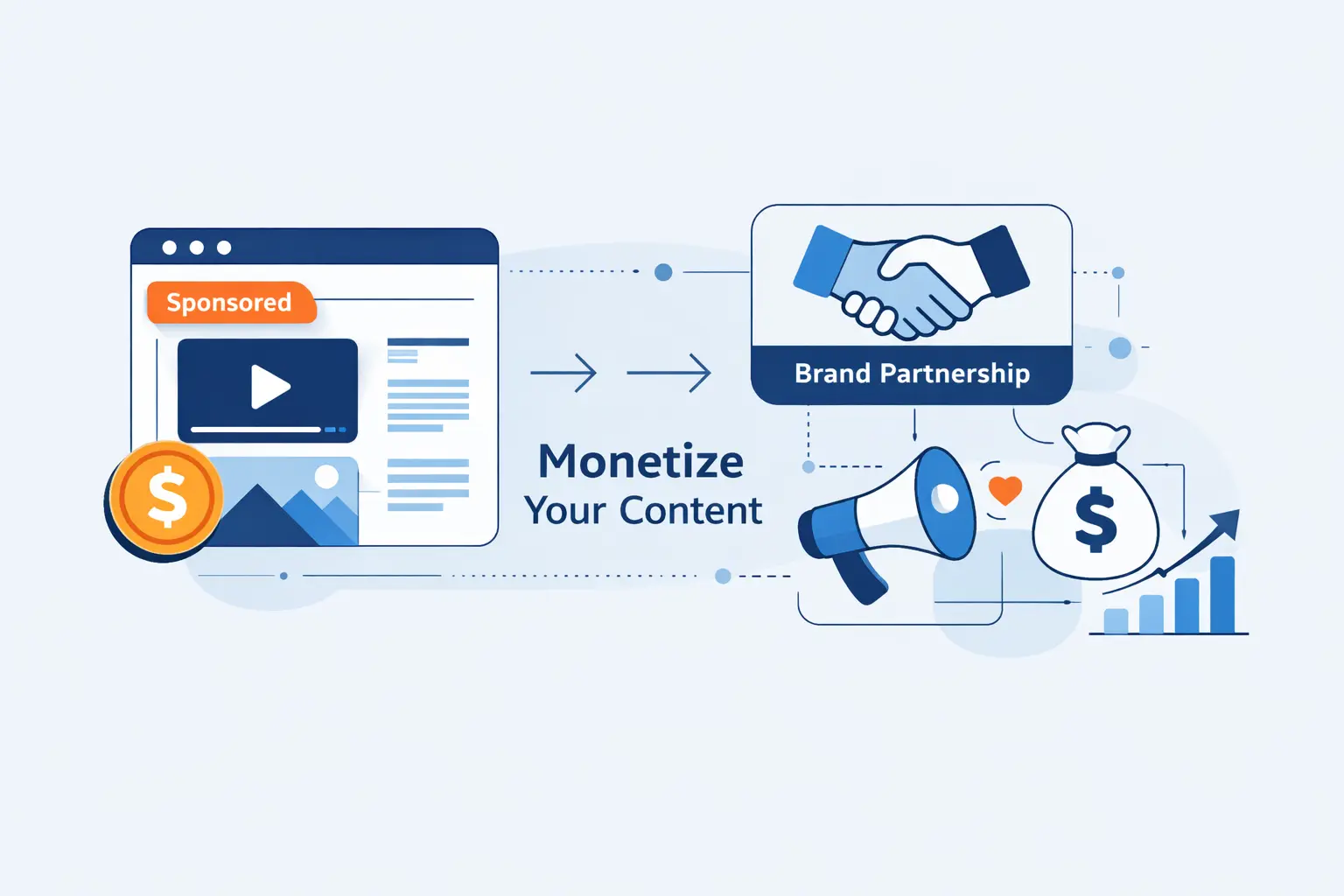
Sponsored content and brand partnerships can be excellent revenue streams, but only when the audience fit is obvious. If the brand does not belong on your site, readers feel the mismatch right away.
1. Accept Sponsored Posts That Match Audience Needs
We accept sponsored posts only when the topic already overlaps with audience needs. A finance audience may welcome a bookkeeping tool review. The same audience will not thank you for a random skincare campaign. Relevance does half the conversion work before the copy even starts.
2. Explore Sponsored Articles and Editorial Partnerships Carefully
Editorial partnerships need firmer boundaries than one-off sponsored posts. We keep control over claims, tone, and publication standards, and we say no when a brand wants script approval that weakens honesty. Partnership money is helpful, but audience trust is the asset being spent.
3. Keep Sponsored Content Relevant, Transparent, and High-Quality
We label sponsored content clearly and keep the quality at the same standard as any other page. Thin sponsored pages hurt the whole site, not just the campaign. In our view, sponsored content should still teach, compare, explain, or solve a problem. Otherwise it is just expensive clutter.
Add Donations, Lead Generation, and Email Monetization
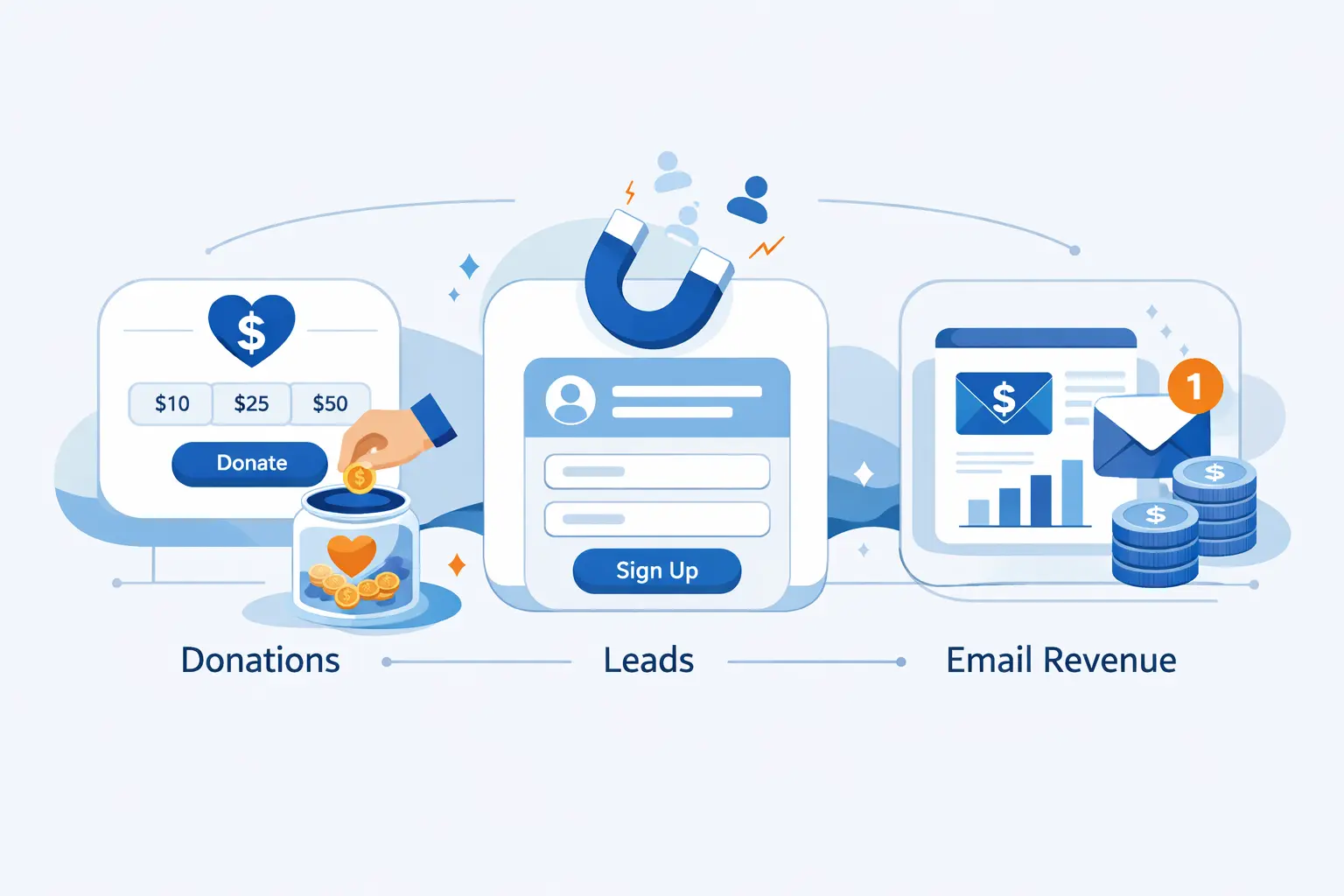
Some websites make more sense as trust engines than storefronts. That is where donations, leads, and email monetization can shine. Each model works when the next action is simple and believable.
1. Ask for Donations From Loyal Readers
Donations work best when readers feel ownership in the mission. That is common with independent media, open-source projects, community resources, and research-heavy sites. The ask should explain what support funds. A vague plea rarely moves anyone.
2. Simplify Checkout, Payments, and Donation Flows
Checkout friction kills intent. We keep forms short, reduce the number of required fields, and offer payment methods people already trust. Mobile matters even more here. If the donation or payment flow feels awkward on a phone, completion drops fast.
3. Use Lead Generation and Email Monetization for High-Intent Traffic
Lead generation is often the best choice for local and B2B sites. One booked demo, quote request, or strategy call can be worth more than a month of display revenue. Email monetization extends that value with newsletter sponsorships, affiliate recommendations, launches, and nurture sequences that keep warm leads moving.
Explore Advanced and Long-Term Monetization Opportunities
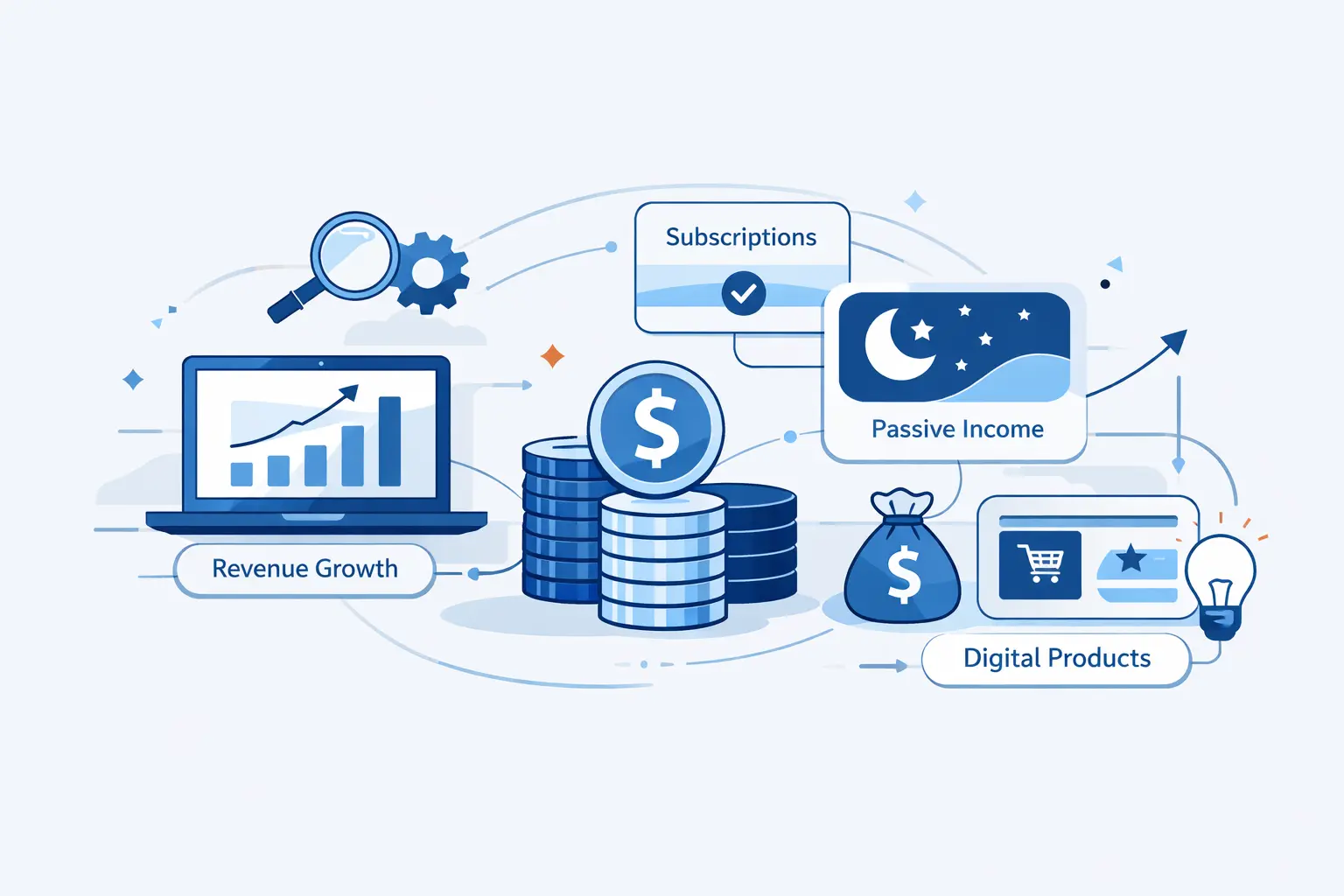
Once the core model works, we look for longer-tail opportunities. These are not beginner moves, but they can turn a site into a more valuable asset over time.
1. Start Dropshipping If You Do Not Want to Manage Inventory
Dropshipping can suit founders who want product revenue without handling inventory. The tradeoff is thinner margins and less control over shipping, packaging, and returns. We only recommend it when supplier quality is tested and support expectations are spelled out on the site.
2. Flip Websites as Digital Real Estate
Website flipping works when revenue, traffic, and operations are documented well enough for a buyer to trust them. Think of it as digital real estate with bookkeeping. Clean analytics, stable channels, repeatable content systems, and diversified revenue usually raise buyer confidence.
3. Combine Multiple Revenue Streams for Stability
We like mixed monetization because it smooths shocks. If ad rates dip, affiliate or service revenue can carry the site. If one partner program closes, memberships or products stay in your control. Stability matters more than squeezing every dollar from one channel.
Measure and Optimize Revenue Performance
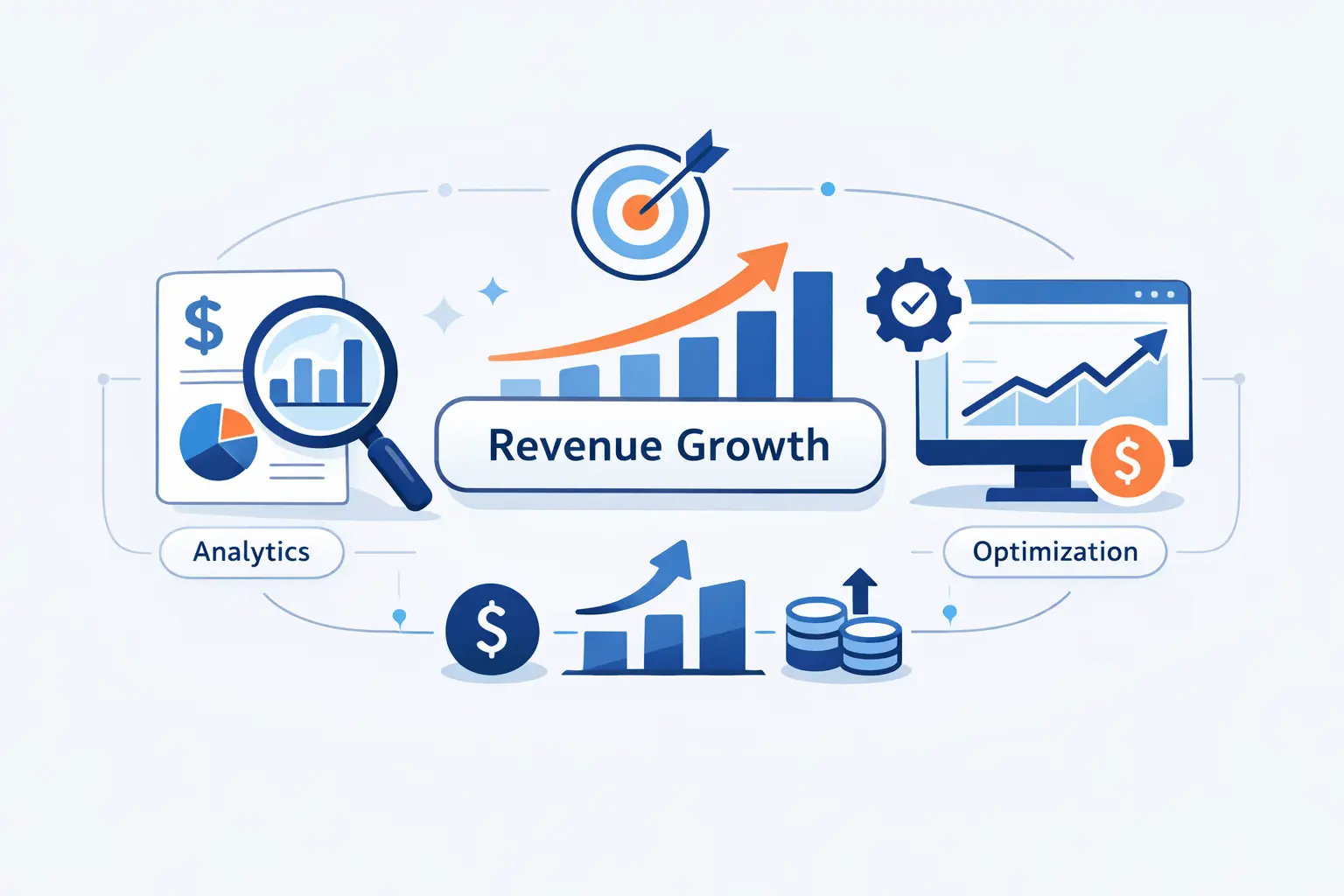
We do not judge monetization by gross revenue alone. We judge it by efficiency, resilience, and whether the audience keeps coming back. That is why measurement has to go deeper than pageviews.
1. Track RPM, eCPM, Fill Rate, and Revenue per Session
RPM tells you how much revenue you earn per thousand pageviews. eCPM frames revenue per thousand ad impressions. Fill rate shows how many ad requests actually become served ads. Revenue per session is often our favorite because it connects money to the whole visit, not just one page. Together, these metrics show whether demand, inventory, and user behavior are working together.
2. Monitor CTR, Conversion Rate, and Viewability
CTR measures whether users act. Conversion rate measures whether the action finishes. Viewability tells you whether an ad or offer had a real chance to be seen. We look at all three because a high click rate with poor conversion usually means the page promise and the landing page are out of sync.
3. Use Analytics and A/B Testing to Improve Results
A/B testing works best when you change one thing at a time. Test button copy, offer placement, article structure, comparison tables, or signup prompts. Then wait for enough data. We have seen more money come from a better call to action than from adding another monetization channel.
4. Watch Bounce Rate, Ad Latency, and Retention Signals
Bounce rate, ad latency, scroll depth, returning sessions, and subscriber retention help you spot hidden damage. If revenue rises while loyalty falls, the model may be eating the site. That is a bad trade. We want monetization to compound trust, not tax it.
FAQ
The basics are simple, but the details change by site type. Here are the questions we hear most often from publishers, store owners, and service businesses.
1. How Do I Monetize My Website?
Start by matching the business model to user intent. Informational sites often use ads, affiliates, or memberships. Service sites usually sell calls, proposals, or retainers. Ecommerce sites sell products, bundles, and upsells. We recommend building one strong path first, then adding a second once the data is clear.
2. How Much Does a Website Make per 1,000 Views?
There is no fixed rate. Geography, niche, traffic source, and user intent change the outcome more than pageview count alone. A broad content site may earn modest display revenue, while high-intent software, finance, or service traffic can be worth much more through leads, products, or affiliate sales.
3. How Much Traffic Do You Need to Monetize a Website?
Enough to prove intent, not necessarily enough to go viral. A consultant can monetize with relatively little traffic if the visitors are well matched. An ad-supported site usually needs more volume because each visit is worth less.
4. Can a Free Website Be Monetized?
Sometimes, yes, but we see it as a weak foundation. Free builders often limit tracking, payment control, design freedom, or ad policies. If you are serious about revenue, move to a custom domain and hosting you control as soon as the idea shows promise.
5. How Long Does It Take to Monetize a Website?
Usually longer than beginners hope. A site with existing demand, a strong offer, and clear SEO can earn early. Most sites take months of publishing, testing, and trust-building before revenue feels steady. We tell clients to treat the first phase as proof, not as a payday.
6. What Is the Best Monetization Mix for Long-Term Revenue?
Our favorite mix is one owned stream and one scalable stream. That could mean products plus SEO, services plus email, or memberships plus affiliate content. The exact blend changes, but the principle stays the same. Own part of the revenue and diversify the rest.
How 1Byte Supports Website Monetization Growth
At 1Byte, we see infrastructure as part of monetization, not a separate problem. Slow pages, certificate warnings, and weak uptime quietly undermine revenue. A good strategy needs a dependable base.
1. Build Trust Through Domain Registration and SSL Certificates
We help site owners build trust from the first impression. Domain registration, SSL Certificates, and clean DNS setup reduce friction before a visitor reads a word. That matters for ads, affiliate clicks, and checkouts alike. If the browser or payment flow looks uncertain, monetization suffers.
2. Launch Faster on WordPress Hosting and Shared Hosting
For early-stage projects, we like keeping the stack simple. WordPress Hosting and Shared Hosting can be enough when the site is content-led, the plugin list is controlled, and growth is still forming. The goal is fast launch, steady updates, backups, and room to test offers without overspending.
3. Scale Revenue on Cloud Hosting, Cloud Servers, and AWS Partner Support
When revenue grows, infrastructure needs change. We help teams move to Cloud Hosting or Cloud Servers when traffic spikes, databases need breathing room, or workloads split across services. And when a project needs deeper architecture planning, our AWS Partner Support helps map migrations, capacity, and recovery with fewer surprises.




Conclusion: Choose a Website Monetization Plan That Fits Your Audience
There is no single answer to how to monetize a website. The best plan depends on what the visitor came for, what you can deliver better than others, and how much control you want over revenue. We would start with clarity, add one monetization path that fits, and expand only after the numbers prove it.
If we leave you with one principle, it is this. Trust compounds faster than tricks. Useful content, honest offers, clean infrastructure, and patient testing usually win. Build the site readers want to return to, and revenue has a much better chance of following.