

- AI IoT Combines Artificial Intelligence With IoT Devices
- How AI and IoT Divide the Work
- How AIoT Systems Are Built
- Why Organizations Use AIoT
- Common AIoT Use Cases Across Industries
- Challenges That Shape AIoT Projects
- Where AIoT Is Heading Next
- FAQ About AI IoT
- How 1Byte Supports AIoT Websites and Platforms
- Conclusion
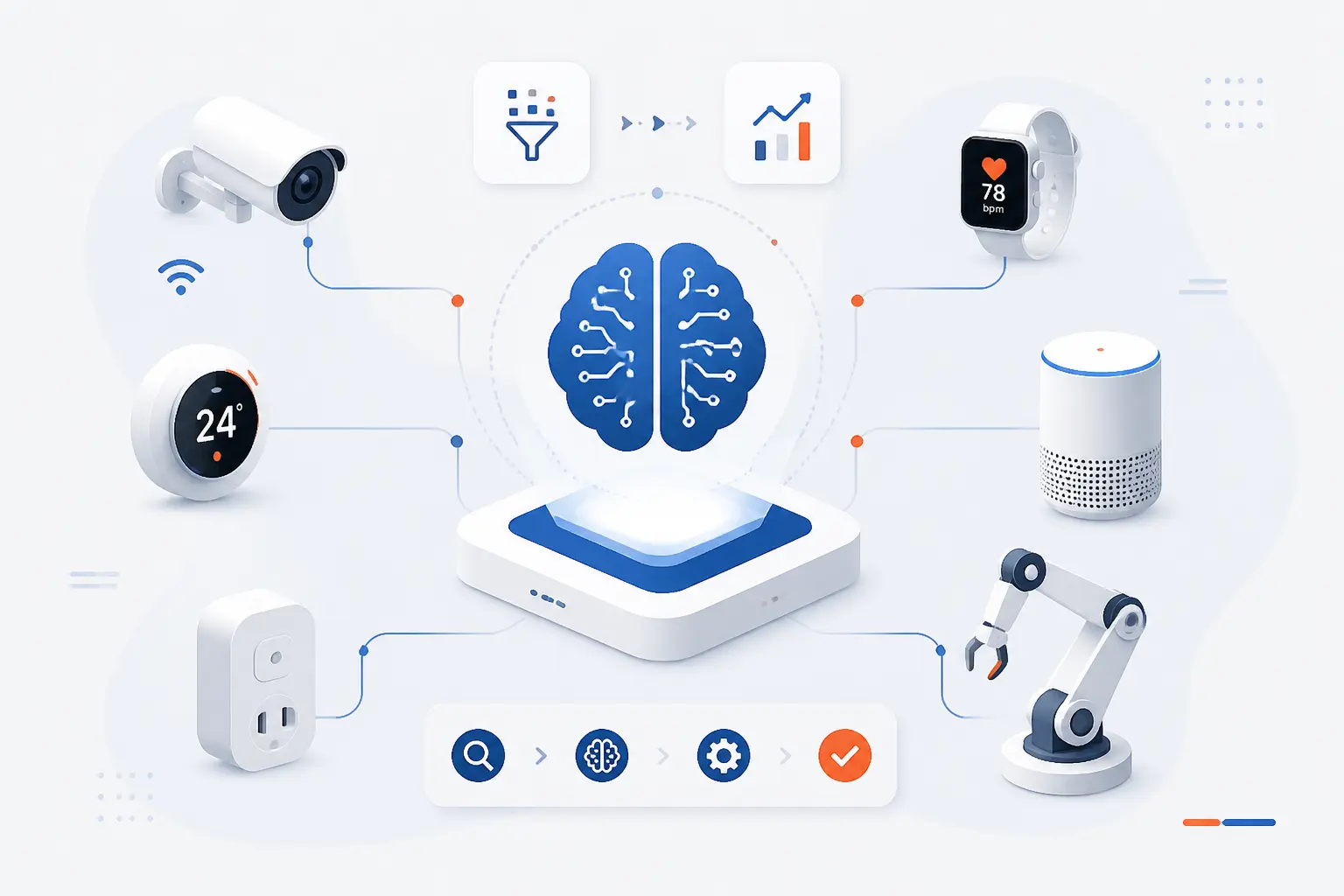
At 1Byte, we define AI IoT as the combination of connected devices and artificial intelligence so machines can sense the world, interpret what they see, and act on it. The IoT side gathers data from sensors, cameras, meters, wearables, and machines. The AI side turns that data into predictions, classifications, alerts, or automatic decisions. Put together, AI IoT helps devices do more than report facts. It helps them respond.
That is why the idea matters. A plain connected sensor can tell us a freezer is warming up. An AI-enabled system can spot that the pattern looks abnormal, estimate the likely cause, and trigger a service ticket before inventory is lost. We usually call this mix AIoT, but the meaning is the same. It is connected hardware plus software that learns from data and acts on it.
AI IoT Combines Artificial Intelligence With IoT Devices
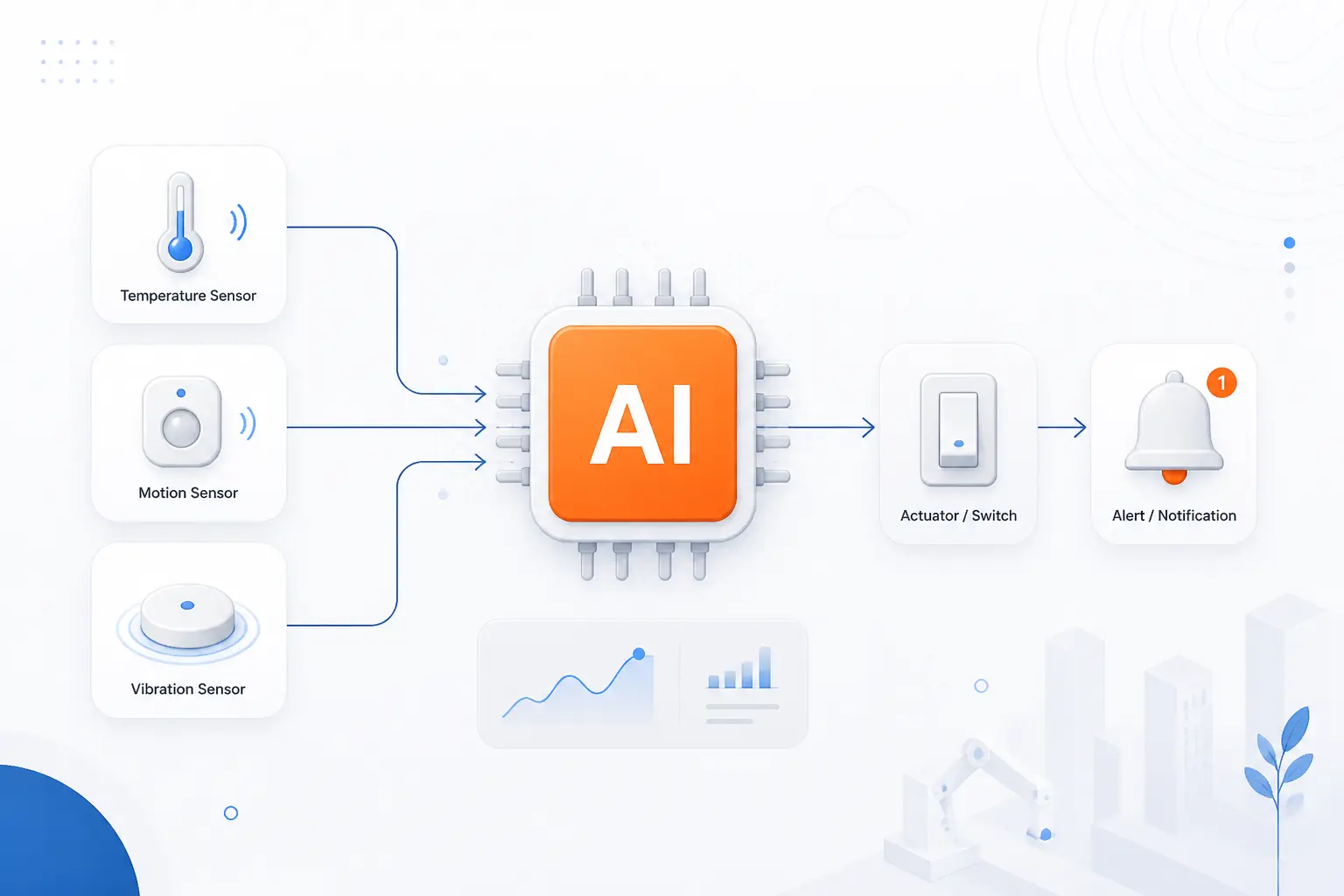
AI IoT combines internet-connected devices with AI models so data can turn into useful action without constant human review. In simple terms, IoT gives the system eyes and ears, while AI gives it judgment. A basic IoT setup might collect temperature, motion, location, or vibration. AI IoT goes further by deciding whether those readings signal a problem, a pattern, or the next best move. We think of it as the moment connected devices stop being passive reporters and start becoming active assistants.
How AI and IoT Divide the Work
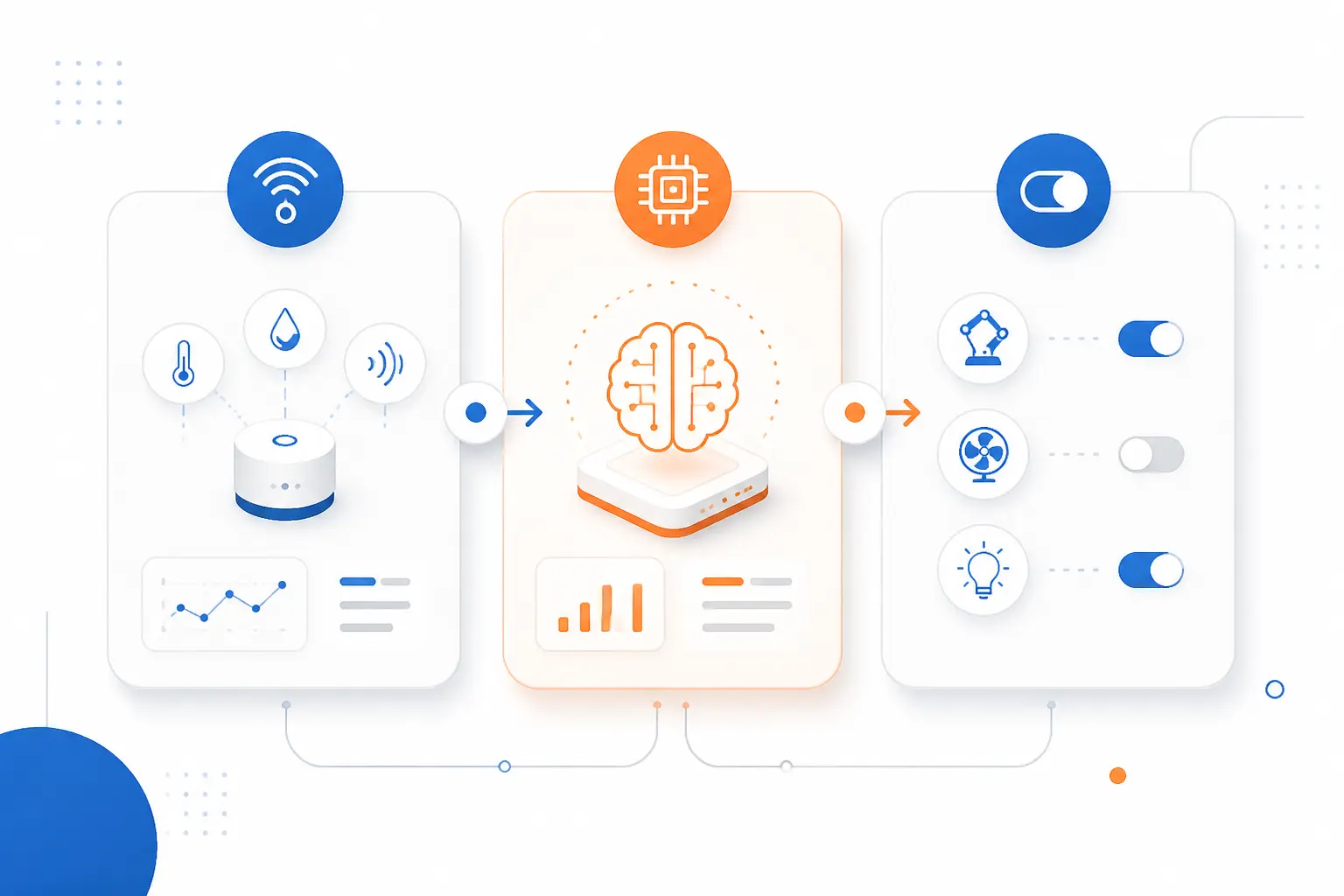
IoT and AI do different jobs inside the same system. IoT captures and moves data, while AI interprets that data and helps choose an action. That split matters because great models are useless with bad signals, and great sensors are underused when nobody analyzes what they produce. When we explain AIoT to beginners, we usually reduce it to three verbs: sense, think, act.
Connected Devices Capture Sensor Data
Connected devices do the observing. They measure things like temperature, pressure, motion, light, sound, location, heart rate, or machine vibration, then send those readings to a nearby gateway or a cloud service. We like NIST’s framing that IoT is built on sensing, computing, communication, and actuation because it reminds us that data collection is only one part of the loop.
AI Analyzes Data in Real Time
AI does the interpretation. It looks for anomalies, classifies images or sounds, predicts what may happen next, or ranks which alert deserves attention first. Sometimes that happens every second, such as in a camera feed. In other cases, it happens every hour or every night, such as forecasting demand or comparing machine performance across shifts. The key idea is simple: AI finds meaning in streams that would overwhelm manual review.
Systems Make Decisions and Trigger Actions
The system becomes useful when it turns analysis into action. That action might be an alert to a technician, a change to a thermostat setpoint, a slower motor speed, a fraud check, or a request for human approval. Some actions stay fully automated because the risk is low. Others should keep a human in the loop because the consequences are high. We think good AIoT design is less about flashy automation and more about choosing the right action for the right risk.
How AIoT Systems Are Built
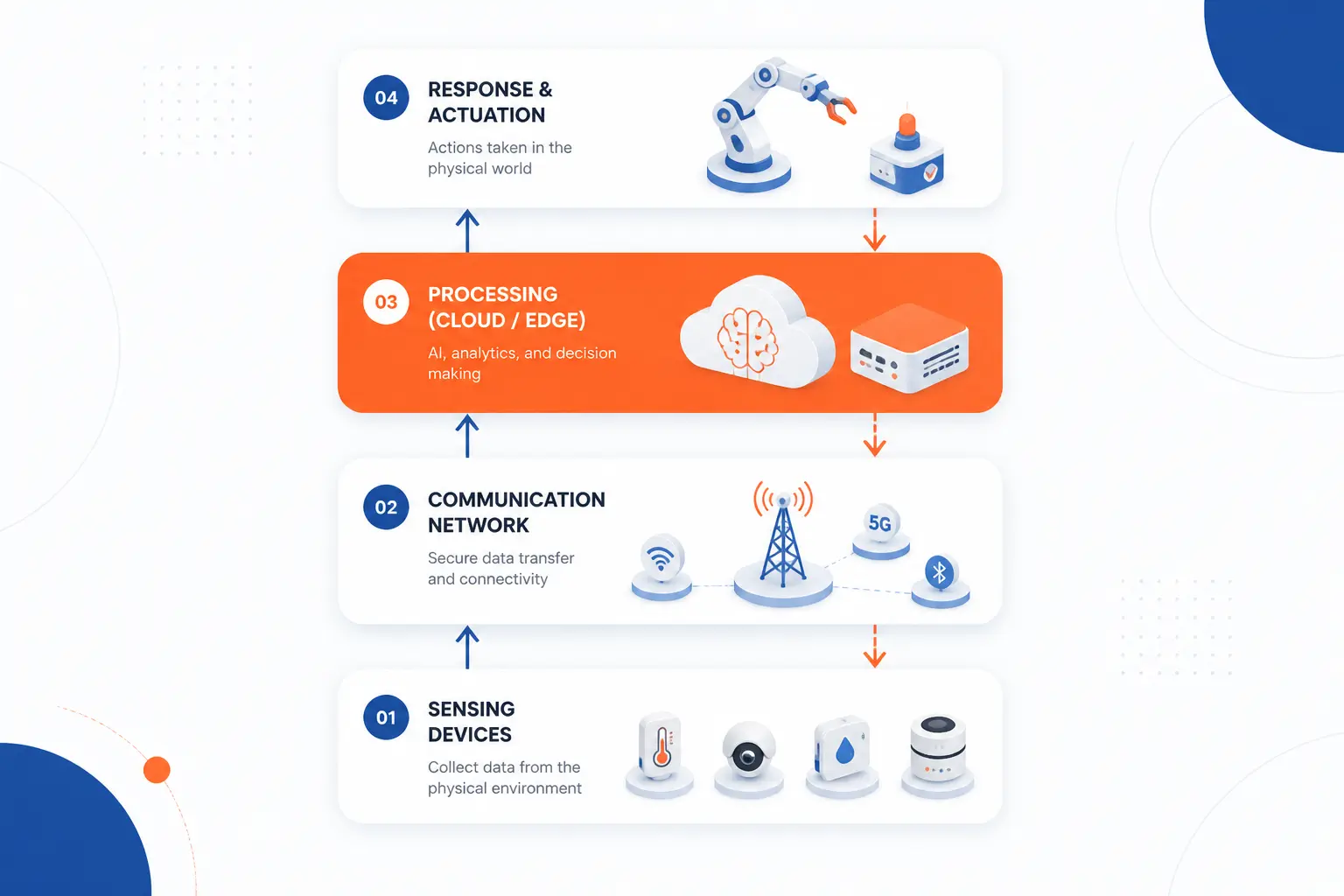
AIoT systems are usually built in layers that handle sensing, communication, processing, and response. The layers can live in one product or across many products, but the pattern stays familiar. Devices gather signals, networks move them, and software running in the cloud or at the edge makes sense of them. If readers remember one thing here, it should be this: AIoT is a pipeline, not a single gadget.
| Layer | Main job | Typical components |
|---|---|---|
| Device and sensor | Capture physical signals | Sensors, cameras, wearables, meters |
| Connectivity | Move data and commands | Gateways, Wi-Fi, cellular, LPWAN |
| Cloud processing | Store, analyze, train, visualize | Data platforms, dashboards, model training |
| Edge processing | Respond locally with low delay | Gateways, industrial PCs, embedded accelerators |
Device and Sensor Layer
The device and sensor layer is where reality enters the system. This layer includes the physical things that detect conditions, tag events, or receive commands. Sensor choice matters more than many teams expect. A shaky camera, a badly placed thermometer, or a vibration sensor with the wrong sampling rate will poison the rest of the pipeline. If the inputs are weak, the intelligence on top becomes guesswork.
Connectivity Layer
The connectivity layer moves data to wherever it can be processed and sends decisions back to the device. In practice, this means protocols, gateways, brokers, and network links that can survive low bandwidth, patchy coverage, or power limits. Some environments rely on Wi-Fi or Ethernet. Others use Bluetooth, Zigbee, LoRaWAN, NB-IoT, or cellular links. We have found that many AIoT failures are really connectivity design failures wearing an AI label.
Cloud-Based Processing
Cloud-based processing handles the heavy lifting. It is the best place for large-scale storage, cross-site analytics, dashboarding, long-term trends, and model training that needs more compute than a device can provide. Microsoft’s cloud-connected pattern is a useful reference because it shows how geographically distributed devices send data upstream for analysis, visualization, and management. In other words, the cloud is where isolated readings become fleet-wide insight.
Edge-Based Processing
Edge-based processing keeps analysis close to the device. That matters when latency, bandwidth, privacy, or resilience make a cloud round trip too slow or too risky. AWS documents how teams can run inference on locally generated data with cloud-trained models, which captures the tradeoff well. We usually see edge inference win when a camera, robot, vehicle, or industrial line must react now and sync later.
Why Organizations Use AIoT
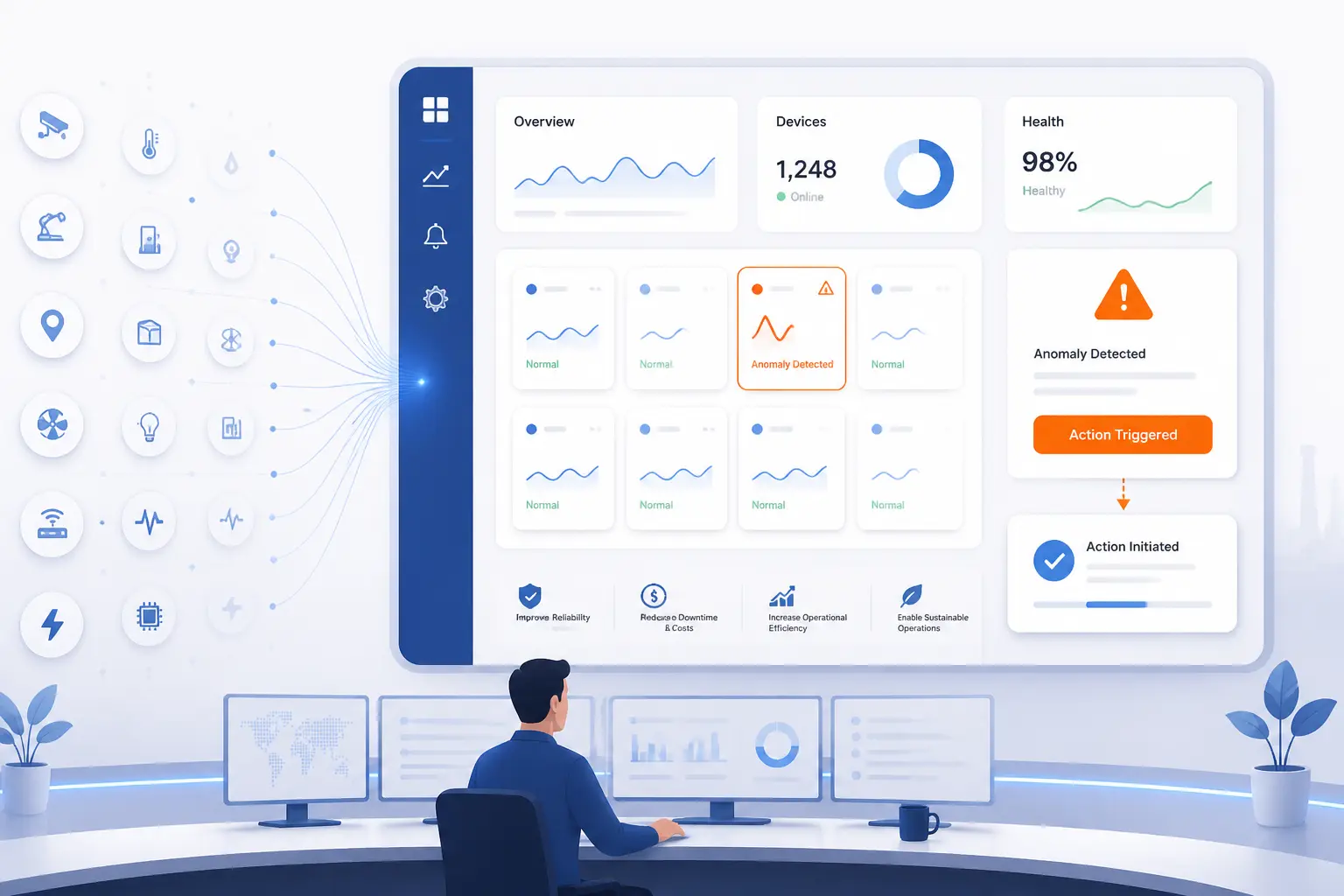
Organizations use AIoT because raw device data is rarely the end goal. They want earlier warnings, better pattern detection, faster decisions, and fewer manual checks. AIoT helps when data arrives too fast, from too many places, or in forms that simple rules cannot handle well. The technology earns its keep when it turns constant monitoring into better operations.
Enhanced Data Processing and Pattern Detection
AIoT is valuable because it can detect patterns that humans and basic thresholds often miss. A normal rule can catch “temperature above 80.” A model can notice that temperature, humidity, door openings, and compressor behavior together look unusual even before a threshold is crossed. That shift is important. Many real problems show up as patterns first and obvious failures second.
Operational Efficiency and Predictive Maintenance
AIoT improves operations when it predicts issues before they become outages. Instead of servicing equipment on a fixed calendar or waiting for failure, teams can monitor condition and intervene when the data shows wear, drift, or abnormal behavior. That changes maintenance from reactive to evidence-based. We are especially fond of this use case because it is practical, measurable, and easier to justify than vague promises about “transformation.”
Safer, Faster, and More Personalized Decisions
AIoT supports better decisions when time matters or context varies by person, place, or machine. A hospital can prioritize which patient needs a closer look first. A smart building can adjust settings based on real occupancy instead of fixed schedules. A fleet platform can route attention to the vehicle that is behaving oddly, not just the one that checked in last. The real win is not automation for its own sake. It is better judgment at machine speed.
Common AIoT Use Cases Across Industries
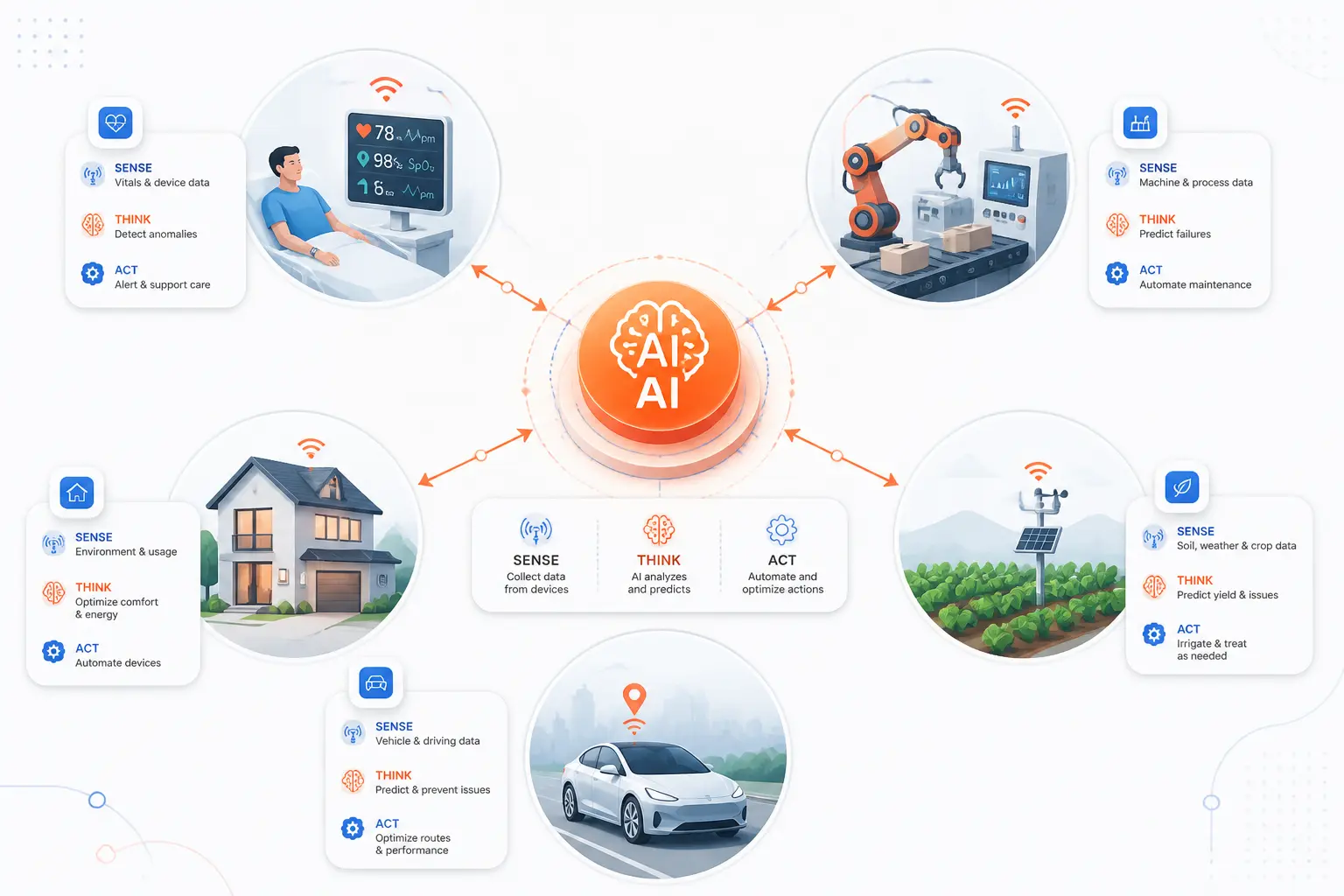
AIoT is already common across industries because many operations share the same pattern: collect signals, interpret them quickly, and respond before the moment passes. Healthcare uses it to watch patients between manual checks. Industry uses it to monitor machines and quality. Homes, buildings, farms, stores, and transport networks use it to adapt to behavior, demand, and changing conditions.
Healthcare and Remote Monitoring
Healthcare uses AIoT to watch patients continuously and surface changes that clinicians should not miss. Houston Methodist describes using a wearable BioButton that captures 1,440 sets of vital sign measurements per day, which is exactly the kind of stream AI can triage better than a clipboard workflow. We see the value here very clearly. Continuous sensing is only half the story. The other half is deciding which changes matter now.
Manufacturing and Industrial Automation
Manufacturing uses AIoT to monitor assets, detect anomalies, and improve process control. Sensors on motors, pumps, conveyors, and CNC equipment can feed models that spot drift long before a visible breakdown. Vision systems can also inspect products in motion and flag likely defects faster than manual sampling. In our view, this is where AIoT feels least theoretical because every delayed decision has a direct cost in scrap, downtime, or safety risk.
Smart Homes, Buildings, and Cities
Smart homes and buildings use AIoT to adapt environments to people instead of forcing people to adapt to fixed schedules. Google’s Nest Learning Thermostat is a familiar example because it learns what temperatures you like at different times of day and builds a schedule from that behavior. The same idea scales up in commercial buildings and city systems, where occupancy, weather, traffic, and equipment data can influence lighting, HVAC, access control, and signal timing.
Agriculture, Retail, and Transportation
Agriculture, retail, and transportation use AIoT when sensor data has to drive a physical response in the field, the store, or the vehicle. John Deere’s See & Spray is a sharp example because camera vision and machine learning distinguish crops from weeds so spray is applied only where it is needed. That same pattern shows up elsewhere. Refrigeration systems can watch temperatures and compressor behavior, while fleets can combine location, engine, and driver data to trigger alerts or maintenance checks at the right moment.
Challenges That Shape AIoT Projects
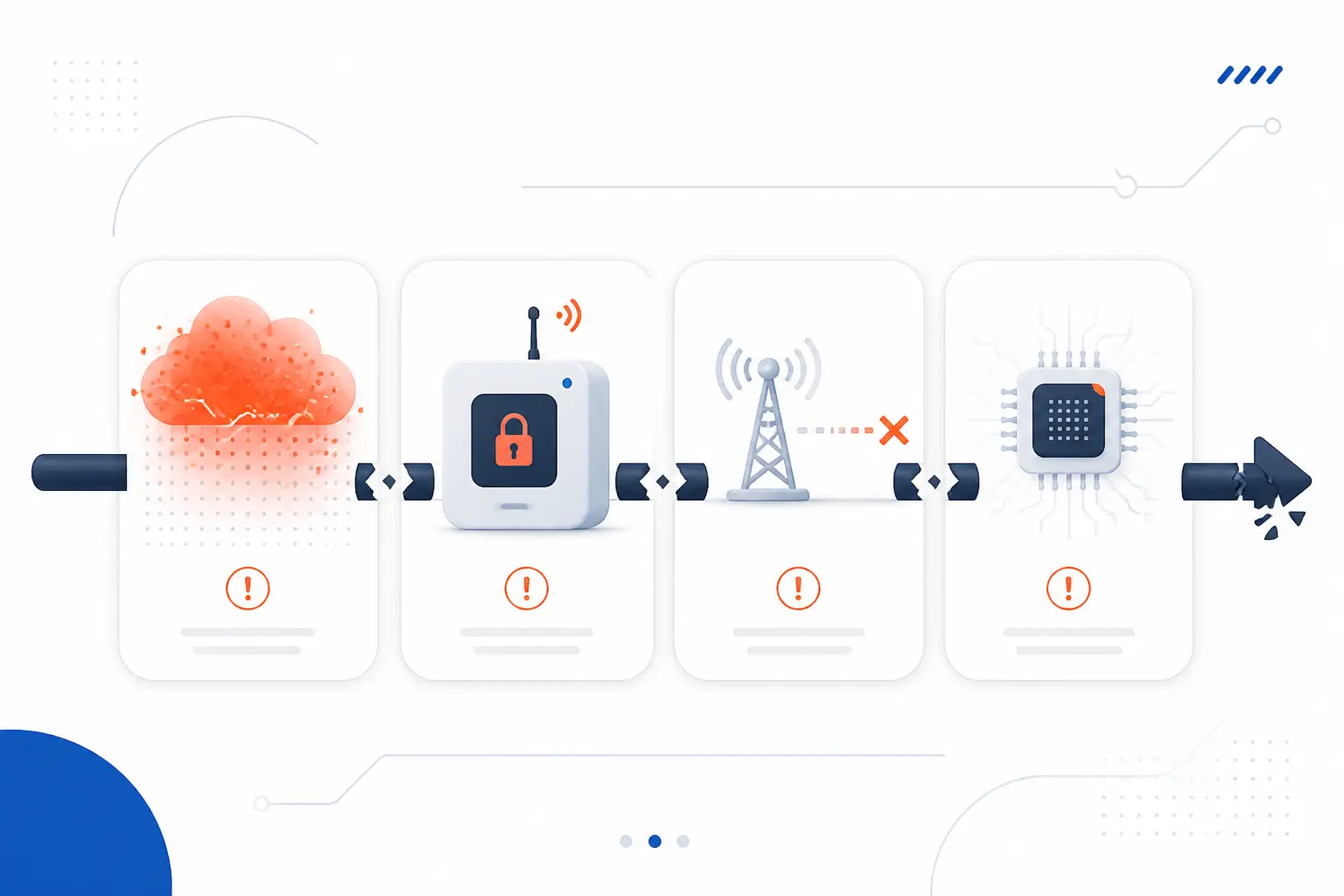
AIoT projects are shaped as much by constraints as by models. Data can be noisy, devices can be insecure, networks can be inconsistent, and hardware can be too small for ambitious ideas. Good teams plan for those limits early. Bad teams discover them after a pilot looks great in the lab and falls apart in the field.
Data Quality, Management, and Governance
Data quality is the first hard problem in AIoT. Sensors drift, timestamps misalign, labels are incomplete, and context goes missing when nobody records maintenance events, weather changes, or firmware updates. Governance matters because teams need to know where data came from, who can use it, and how long it should be kept. We have seen many “AI problems” that were really naming, timing, and data ownership problems.
Security, Privacy, and Responsible AI
Security and responsible AI must be designed in from the start. NIST’s framework on trustworthy and responsible AI use is helpful here because it frames AI risk as something organizations need to govern, map, measure, and manage across the full lifecycle. That is especially important when models influence health, safety, access, or surveillance.
On the device side, the security basics are not optional. ETSI’s consumer IoT standard lays out baseline provisions such as secure updates, software integrity, protection of personal data, resilience, and input validation. We would add one blunt opinion of our own: if a team cannot patch devices safely and consistently, it is not ready for AI at scale.
Interoperability, Cost, and Power Constraints
Interoperability, cost, and power constraints decide what is actually feasible. Real deployments mix old equipment, different vendors, and uneven protocols, so integration work can swallow more time than modeling. Battery-powered devices also force hard choices about sampling frequency, wireless use, and model size. That is why the best AIoT design is often modest and disciplined, not maximalist.
Where AIoT Is Heading Next
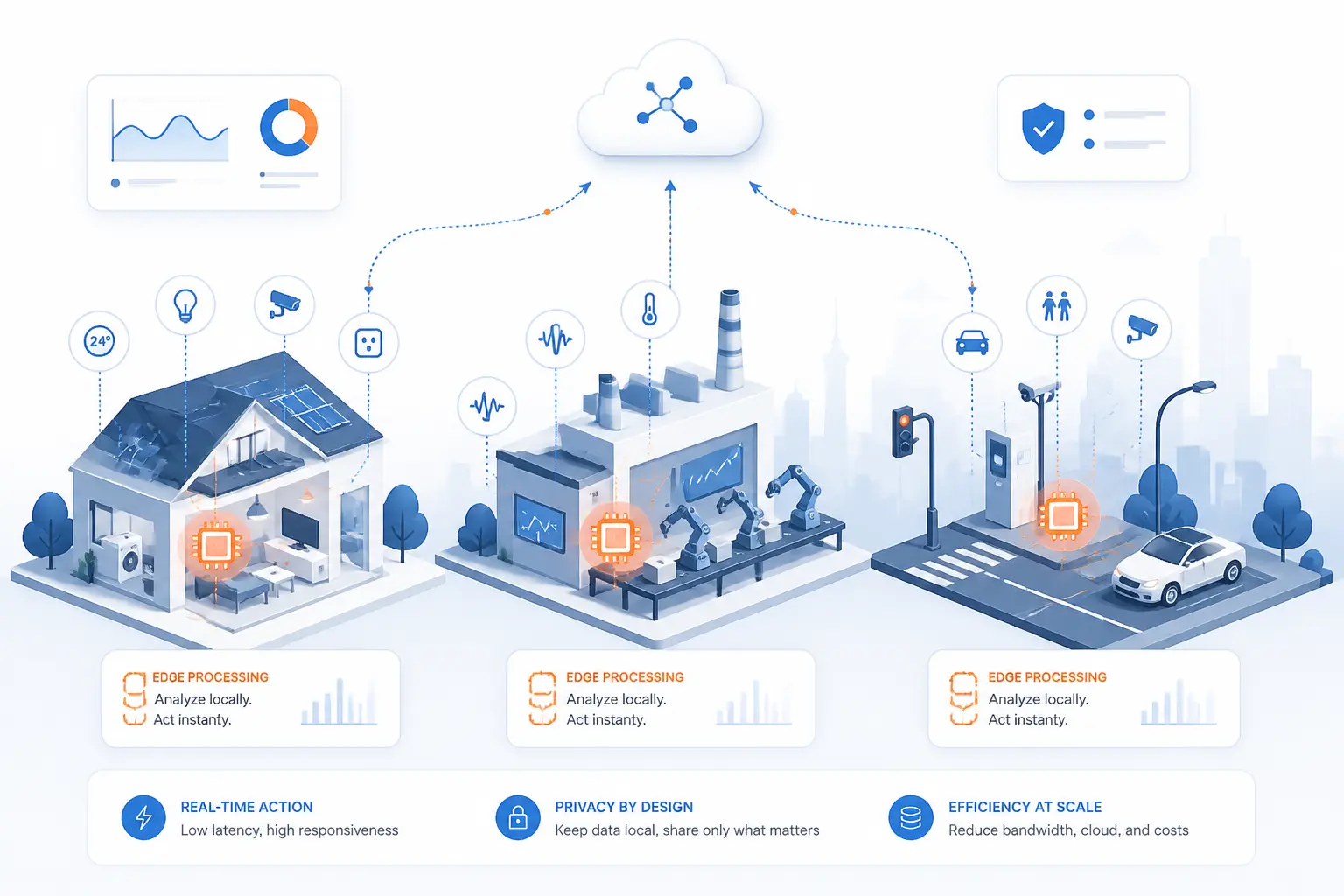
AIoT is heading toward more local intelligence, better wireless performance, and tighter links to energy and infrastructure management. We expect fewer systems that dump everything into the cloud and more systems that decide what must be processed locally. We also expect networks and buildings to become smarter participants, not just passive pipes or passive spaces. The future is less about adding “AI” stickers to devices and more about placing intelligence where it changes outcomes.
Edge AI for Faster Responses
Edge AI is becoming the default when delay matters. Smaller models, better accelerators, and improved software runtimes let cameras, gateways, and embedded devices filter data before it ever reaches the cloud. That reduces noise, bandwidth use, and response time. We think this shift will define serious AIoT systems more than any single new device category.
5G and Better Connectivity
5G matters because it supports more device types with more predictable behavior. A GSMA industry report highlights how industrial deployments can use 1 millisecond radio latency in ultra-reliable low-latency modes for critical control, while also supporting dense sensor environments through other service profiles. That does not make 5G mandatory for every project. It does make it more compelling for robotics, vision, mobility, and time-sensitive infrastructure.
Sustainability and Smarter Infrastructure
Sustainability is becoming a practical AIoT driver, especially in buildings and infrastructure. An IEA annex on smart buildings argues that access to data is core to AI applications and that cloud-connected analysis can widen the range of useful building signals. We agree. If a building, pump, or lighting system can see demand, weather, occupancy, and equipment condition together, it can waste less and respond more intelligently.
FAQ About AI IoT
The short answers are straightforward. IoT is the connected device layer, AI does not replace it, AIoT adds learning to plain telemetry, and common examples are devices people already use or see every day. Here is the quick version we would give a client who wants clarity before jargon.
What Is the IoT in AI?
The IoT in AI is the network of connected physical devices that collect data from the real world. Those devices can include sensors, cameras, meters, wearables, vehicles, appliances, and machines. AI needs that stream when the goal is to understand physical conditions or trigger physical actions.
Will IoT Be Replaced by AI?
No, IoT will not be replaced by AI. AI depends on IoT whenever the system needs real sensor data, device control, or both. In most real deployments, AI and IoT are complementary. One gathers facts from the world, and the other helps interpret those facts.
How Is AIoT Different From Plain IoT?
AIoT differs from plain IoT because it adds learning and decision-making to connected devices. Plain IoT usually focuses on sensing, transmitting, storing, and visualizing data. AIoT adds models that can classify, predict, detect anomalies, recommend actions, or automate responses. That is the difference between a dashboard that reports a problem and a system that helps prevent one.
What Are Five Examples of IoT Devices?
Five common examples of IoT devices are smart thermostats, security cameras, smartwatches, vehicle trackers, and industrial vibration sensors. Each one collects data and sends it somewhere useful. Once AI is added, those same devices can do more than log events. They can start recognizing patterns and reacting to them.
How 1Byte Supports AIoT Websites and Platforms
At 1Byte, we support the web layer around AIoT with practical building blocks, not mystery. That means domains for public-facing properties, SSL certificates for secure sessions, hosting for content and portals, and cloud infrastructure for dashboards or application logic. We are also an AWS Partner, which matters when an AIoT project needs cloud-aligned thinking around its website, control panel, or customer-facing platform. In our experience, many AIoT initiatives stall not on the device side, but on the boring-yet-critical web layer that users actually touch.
| Service | Best for | Practical AIoT fit |
|---|---|---|
| Domain registration + SSL certificates | Public trust and secure access | Portals, onboarding pages, documentation sites |
| WordPress hosting + shared hosting | Content and lightweight web properties | Knowledge bases, update pages, partner or customer portals |
| Cloud hosting + cloud servers | Custom applications and dashboards | Admin panels, APIs, analytics views, control interfaces |
Register Domains and Add SSL Certificates for Secure AIoT Sites
Domain registration and SSL certificates give an AIoT site a stable identity and secure browser access. That matters for customer dashboards, device onboarding pages, admin panels, status sites, and documentation hubs where people sign in or submit information. We see this as table stakes. If users cannot trust the address they are visiting or the connection they are using, the rest of the platform starts on the wrong foot.
Use WordPress Hosting and Shared Hosting for Content and Portals
WordPress hosting and shared hosting are a sensible fit for the content layer around AIoT. Teams often need a public site, a product knowledge base, setup guides, policy pages, changelogs, or a simple customer portal before they need anything exotic. We like this approach when the job is communication, publishing, and routine account-facing content. It keeps the web presence clear while the device and data systems do their own heavier work elsewhere.
Run Dashboards on Cloud Hosting and Cloud Servers
Cloud hosting and cloud servers are the better fit when an AIoT project needs custom dashboards, application logic, APIs, or admin tools. This is where teams usually place the interface for live status views, alert review, reporting, or platform controls that sit above the device fleet. As an AWS Partner, we naturally think about this layer in cloud terms. If your project already has data flowing, the next practical question is often where the users, operators, and developers will actually meet that data.






Conclusion
AI IoT is simply the meeting point between connected devices and AI-driven decision-making. Devices collect signals from the physical world, models interpret those signals, and software or hardware responds. When it is done well, the result is not just “smarter tech.” It is a system that notices what matters sooner and reacts in a more useful way.
We would keep the takeaway plain. If your devices already collect data, the next question is whether that data only reports the past or helps shape the next action. That is the line between plain IoT and AIoT. So where in your business are devices already watching, but not yet learning?