

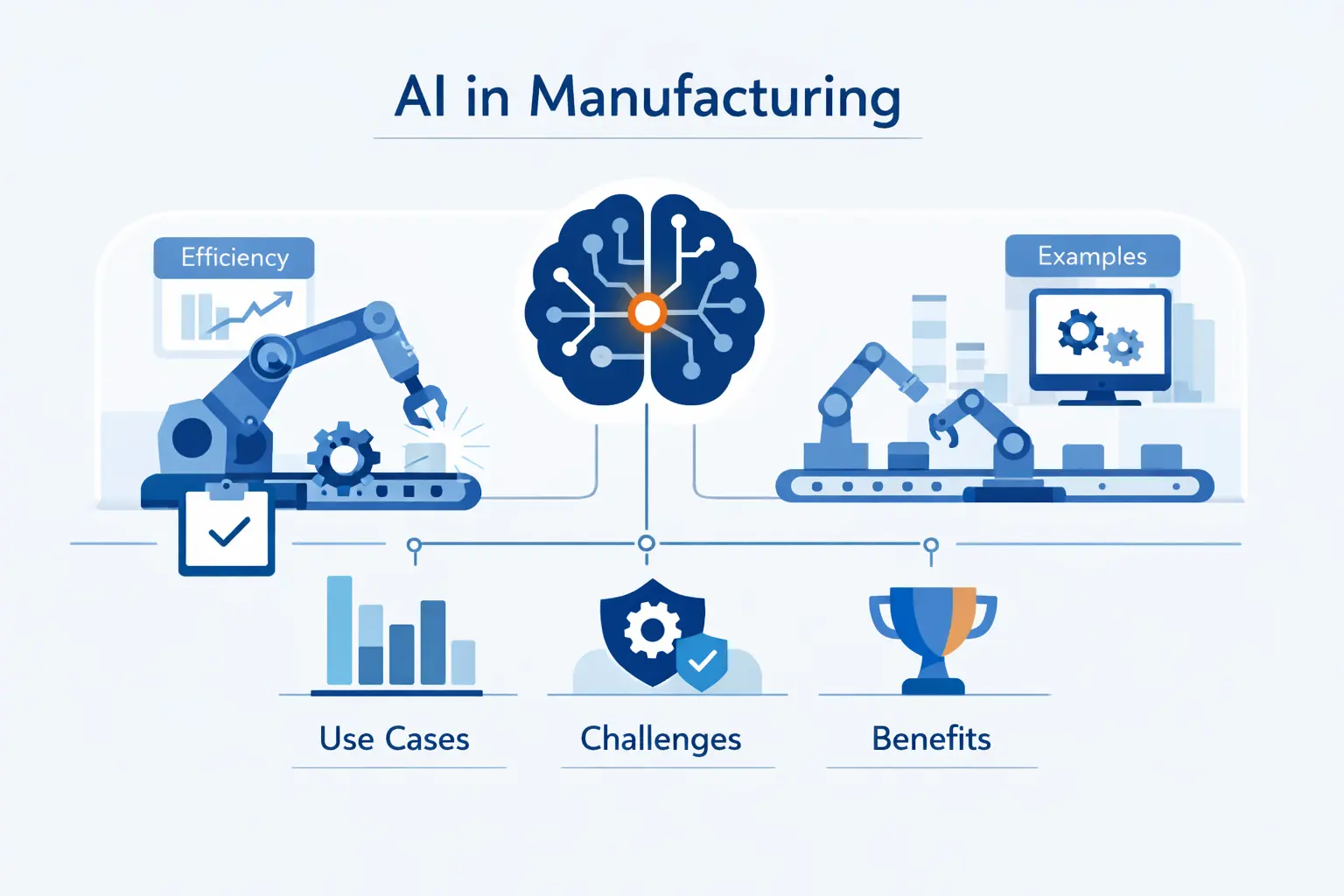
- What AI in Manufacturing Means
- Why AI Matters for Modern Manufacturing
- Core Use Cases on the Shop Floor
- How AI Improves Planning and Operations in Manufacturing
- How Generative AI Expands Manufacturing Workflows
- Real-World Examples of AI in Manufacturing
- Benefits of AI in Manufacturing
- Challenges of AI in Manufacturing
- What Manufacturers Need Before Scaling AI
- How to Implement AI in Manufacturing Successfully
- Emerging Trends Shaping the Future of AI in Manufacturing
- FAQ About AI in Manufacturing
- How 1Byte Supports the Digital Foundations of AI in Manufacturing
- Conclusion: Turning AI in Manufacturing Into Measurable Value
At 1Byte, we see ai in manufacturing as one of the clearest signs that industrial software has grown up. This is no longer a lab experiment for a few giant firms. It is becoming a practical way to cut downtime, improve quality, and help people make better calls on the factory floor.
The market has moved beyond pure curiosity. Deloitte’s latest smart manufacturing survey found 29% of respondents already use AI and machine learning at the facility or network level, which tells us manufacturers are now asking where value appears first, not whether the technology matters.
What AI in Manufacturing Means
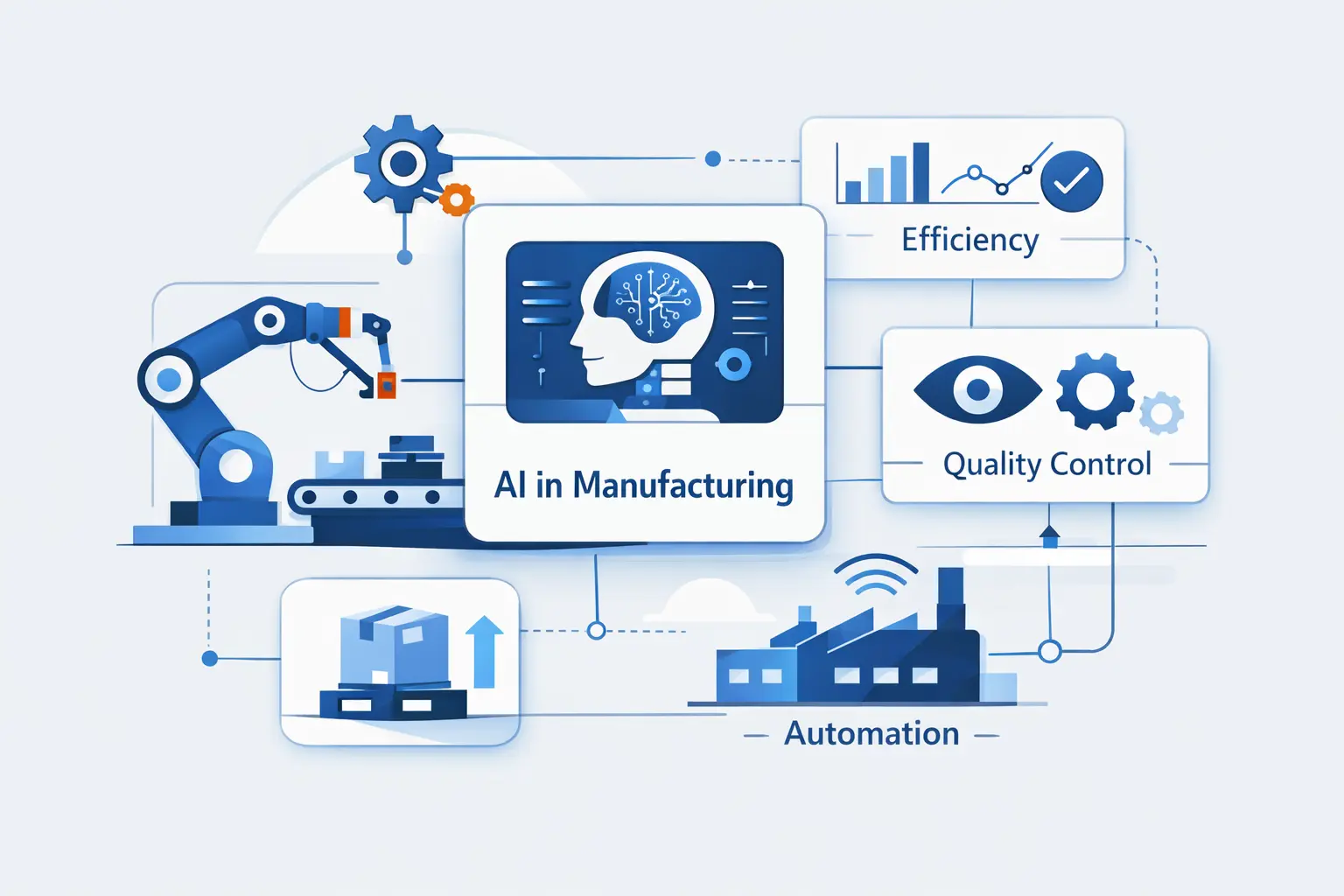
When we talk about AI in manufacturing, we mean software systems that learn from industrial data and help people or machines act on it. The goal is not magic. The goal is better output, fewer surprises, and tighter control over processes that used to depend on guesswork or slow manual review.
FURTHER READING: |
| 1. GenAI vs AI: What Is the Difference Between AI and Generative AI |
| 2. How AI Is Changing Data Analysis in 2026 |
| 3. Artificial Intelligence Examples in Business You Should Know |
1. AI in Manufacturing and the Rise of Smart Factories
A smart factory uses connected machines, software, sensors, and people in one working loop. AI adds judgment to that loop. It can spot patterns in scrap, predict equipment issues, or route work based on changing conditions. We think that is the real shift. Factories are moving from being merely automated to being observant and adaptive.
2. Why Data, IIoT, and Real-Time Analytics Matter
AI is only as useful as the data feeding it. In manufacturing, that usually means machine signals, camera feeds, maintenance logs, quality records, and ERP data. IIoT makes those signals available, and real-time analytics makes them useful before the moment passes. If data arrives late, dirty, or disconnected, even a strong model will give weak advice.
3. Main AI Technologies Used in Manufacturing
The common tools are not exotic. Manufacturers usually start with machine learning, anomaly detection, computer vision, forecasting models, and rule-based automation. Generative AI now joins that list for document search, work instructions, design support, and knowledge retrieval. The best programs combine several of these tools around one narrow problem instead of chasing a moonshot.
Why AI Matters for Modern Manufacturing
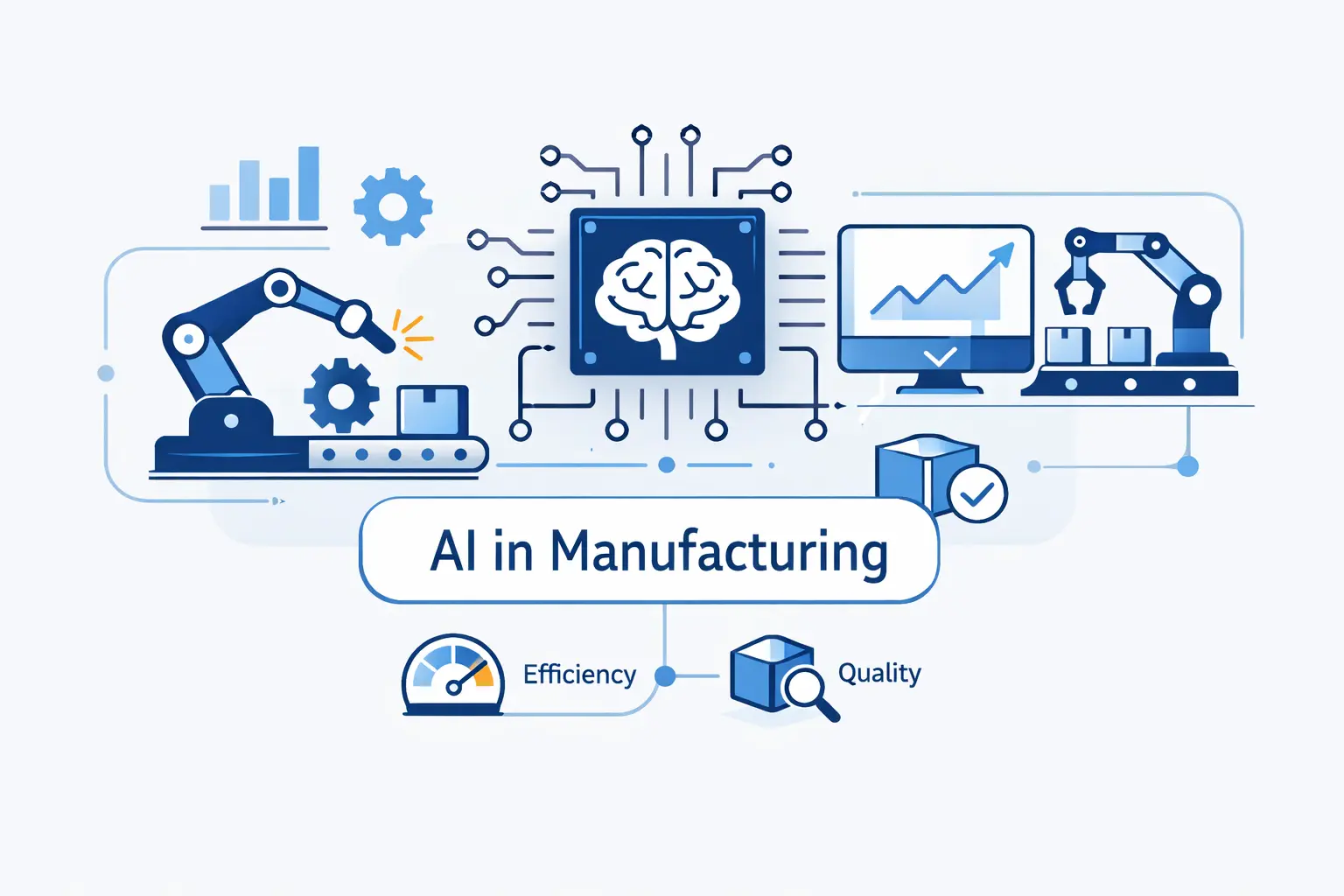
Manufacturing has always been a game of inches. A few more defects, a few extra minutes of downtime, or one bad planning decision can hit margins fast. That is why AI matters. It helps firms improve many small decisions that add up across the day.
1. Higher Productivity, Efficiency, and Operational Excellence
AI helps teams reduce waste in routine operations. It can suggest better machine settings, shorten inspection time, or flag a bottleneck before a shift loses pace. We like to say AI earns trust in factories the old-fashioned way. It proves itself in throughput, rework, and uptime, one line at a time.
2. Better Quality, Safety, and Decision-Making
Quality and safety are where AI often wins early support. Vision systems can inspect parts more consistently than the human eye in repetitive tasks. Risk models can surface unsafe conditions sooner. Supervisors also get faster context, which matters when a production call cannot wait for tomorrow’s report.
3. Greater Flexibility, Sustainability, and Competitive Advantage
Markets change. Product mixes change. Labor availability changes. AI gives manufacturers a better shot at adjusting without tearing up the whole operation. It also helps them use energy, water, and materials with more discipline. In our view, the long-term advantage is not just automation. It is the ability to react well when the plan breaks.
Core Use Cases on the Shop Floor
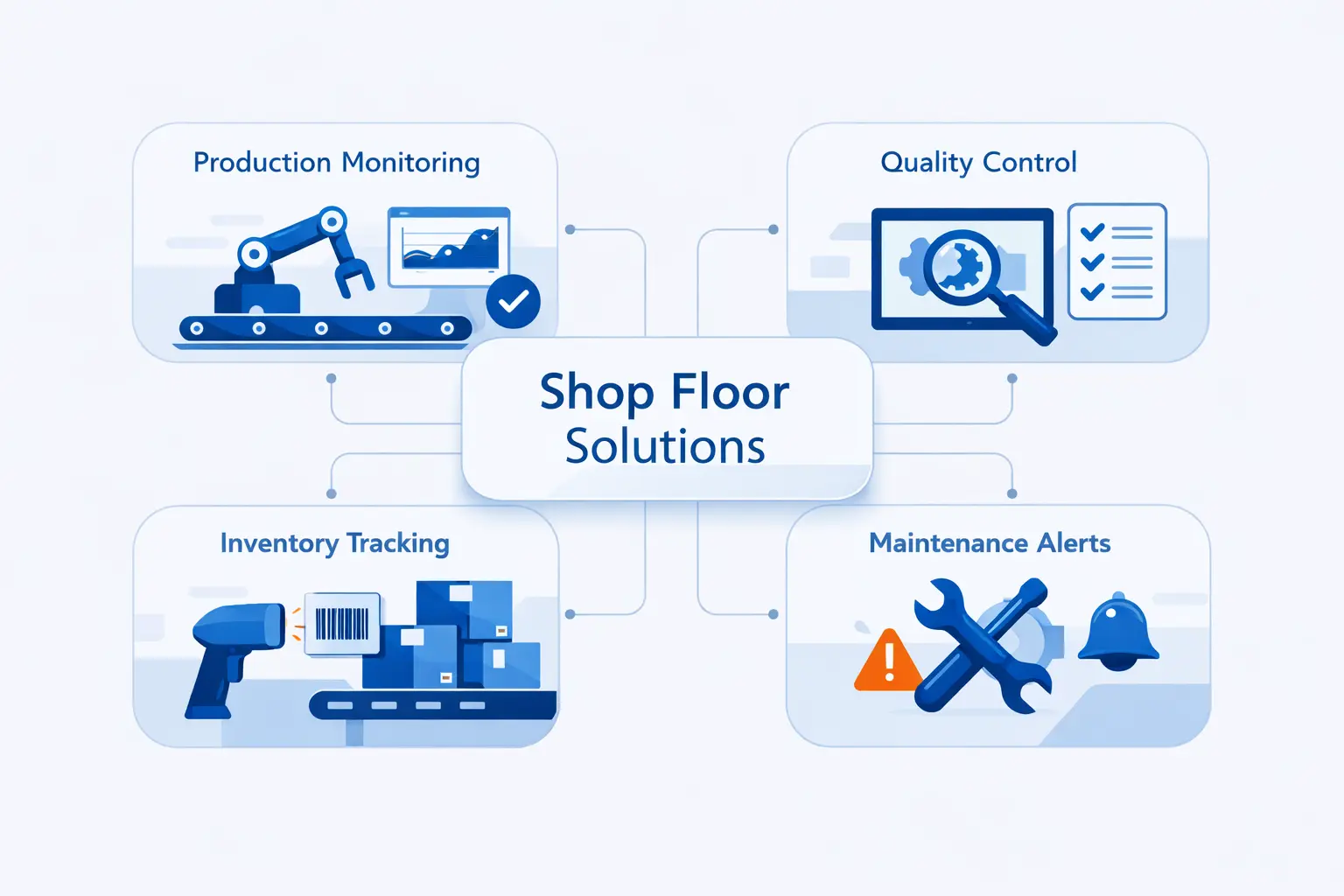
Most successful AI programs on the shop floor start with visible pain points. The good news is that factories have many of them, and many are measurable. That makes the return easier to test and easier to defend.
1. Predictive Maintenance and Digital Twins
Predictive maintenance uses signals like vibration, temperature, load, and maintenance history to estimate when a machine may fail or drift out of spec. Digital twins take that a step further by modeling the asset or process in software. Together, they help teams schedule service before breakdowns force expensive stops.
2. Quality Control, Computer Vision, and Visual Inspection
Computer vision is a natural fit for manufacturing because many quality issues are visual. Cameras can detect missing parts, scratches, poor welds, label errors, or packaging defects. The real value is consistency. AI does not get tired on the third shift, and it can check more items than a manual team usually can.
3. Intelligent Automation, Cobots, and Robotics
Robots already handle repetitive tasks. AI helps them respond to variation. That matters in mixed production environments where part orientation, timing, or handoff conditions change. Cobots also benefit because they can work alongside people with better sensing and simpler task support. We see the best results when robotics engineers and line operators solve the workflow together.
How AI Improves Planning and Operations in Manufacturing
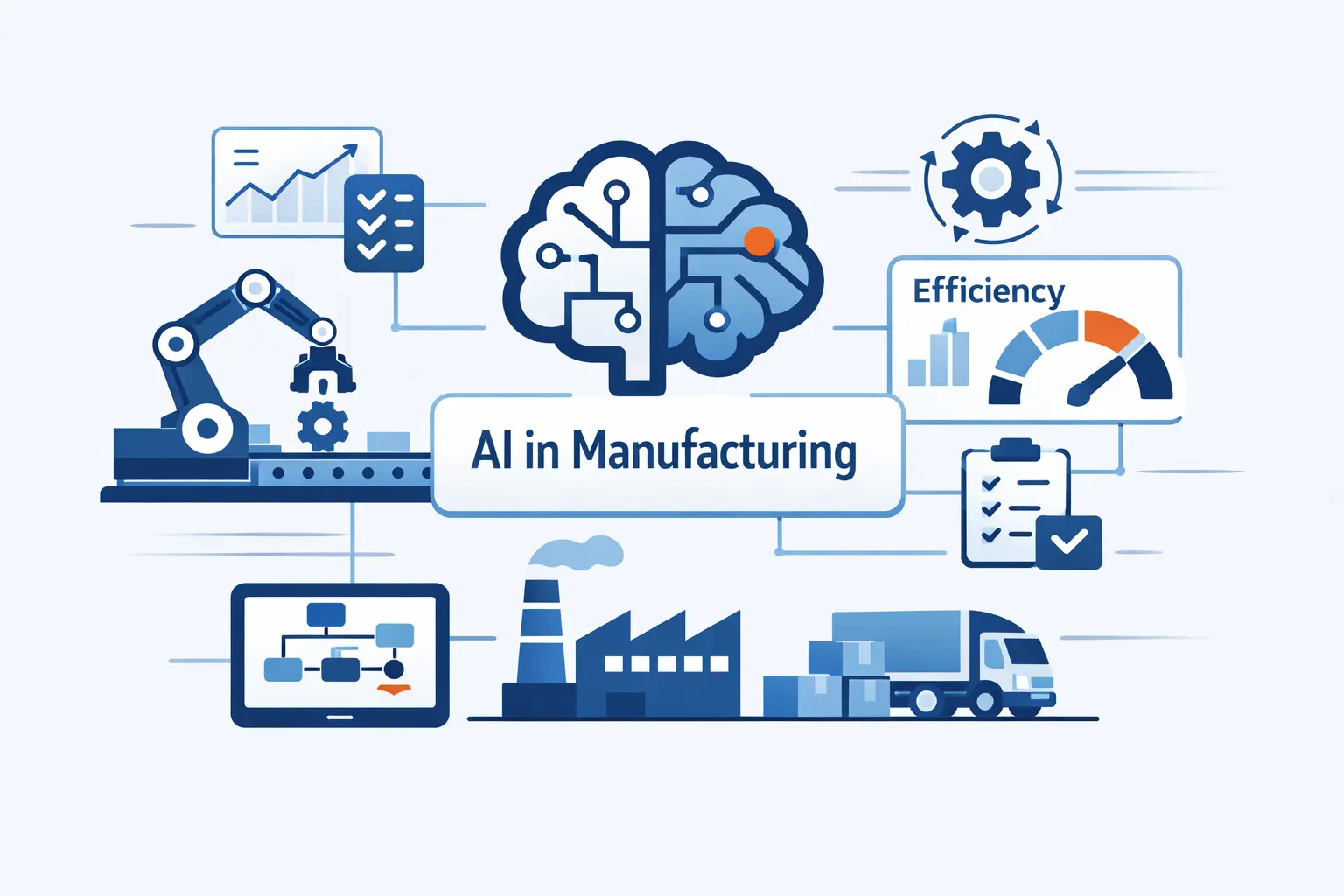
AI does not stop at the machine. Some of its strongest gains show up one layer above the line, where planners, schedulers, and plant managers make choices that ripple into cost, service, and output.
1. Supply Chain Optimization, Demand Forecasting, and Inventory Management
Forecasting has always been messy because demand, supplier reliability, and lead times move at the same time. AI can improve planning by learning from more variables than a manual spreadsheet usually can handle. That helps manufacturers reduce stockouts, trim excess inventory, and adjust schedules with less panic when disruptions hit.
2. Data-Driven Process Optimization and Energy Management
Manufacturing processes generate more clues than most teams can review by hand. AI can compare cycle conditions, defect outcomes, and energy use across runs, then surface the settings that perform best. This is where small gains start stacking. Lower scrap, steadier output, and better energy discipline often come from many tiny corrections, not one grand fix.
3. Workforce Management, AI Training, and Safety Support
Factories still run on people, not dashboards. AI can help with shift planning, training support, skill matching, and safety prompts, but it should not be used as a blunt instrument. We believe teams adopt AI faster when it explains the next action clearly and respects operator judgment instead of trying to replace it outright.
How Generative AI Expands Manufacturing Workflows
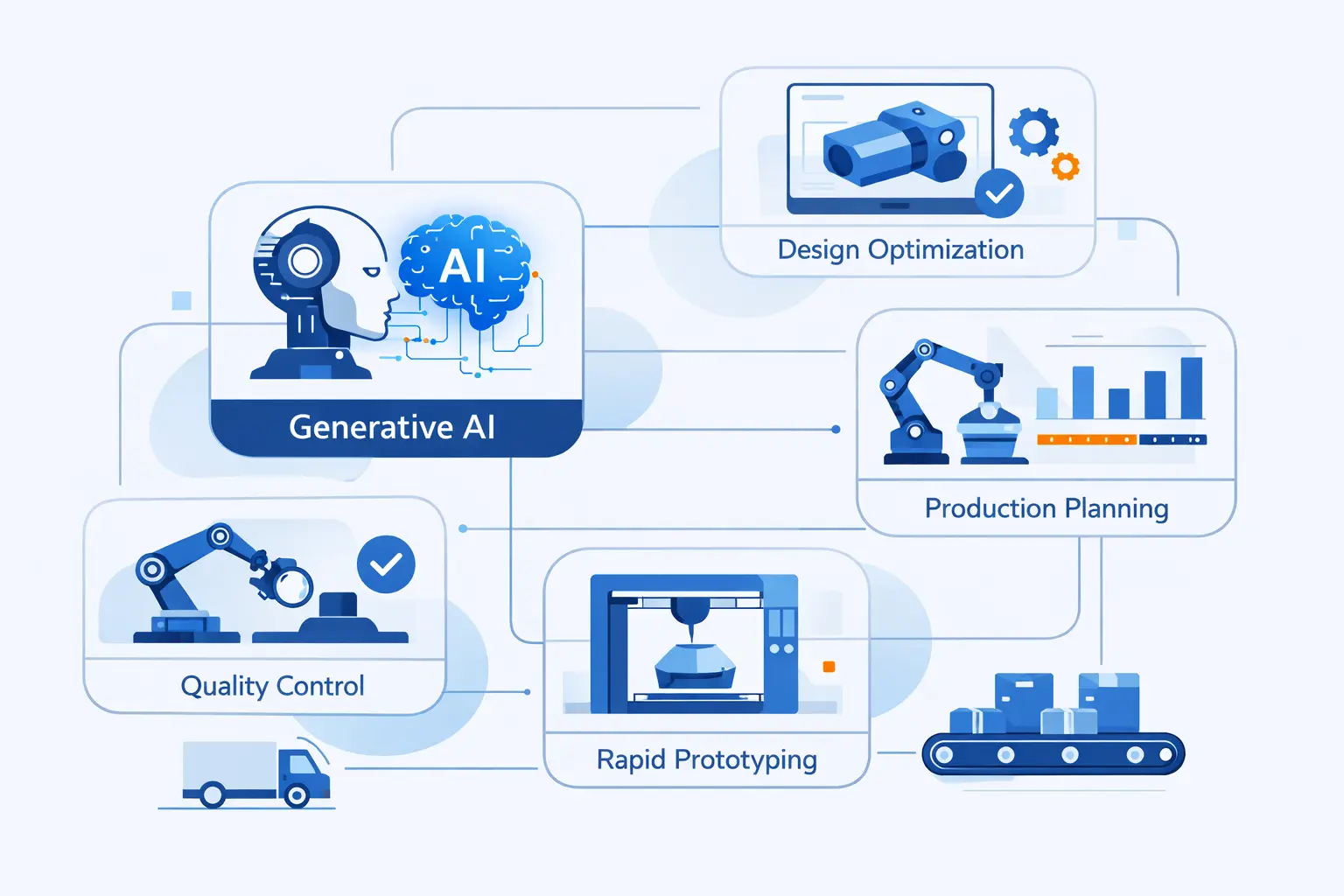
Generative AI is different from classic predictive models. Instead of only classifying or forecasting, it can create text, summarize records, answer questions, and help staff work through design or documentation tasks. In manufacturing, that opens useful doors far beyond chatbots.
1. Generative Design, Rapid Prototyping, and Product Customization
Generative design tools let engineers test more options faster, especially when they must balance weight, cost, performance, manufacturability, and material use. IDC expects 70% of OEMs to rely on generative design technologies by early 2027. We think that direction makes sense because design choices lock in downstream cost long before production starts.
2. Document Search, Summarization, and Technical Knowledge Access
Many factories sit on years of maintenance notes, SOPs, change records, engineering files, and training documents. Generative AI can turn that pile into something searchable and usable. A technician can ask for the last fix on a recurring alarm and get a focused answer instead of digging through folders for half an hour.
3. Product Search, Work Instructions, and Support Workflows
Generative AI also helps with routine support work. It can draft work instructions, answer product questions, summarize shift issues, and guide staff to the right part or procedure. The best use is grounded use. We advise clients to pair it with approved data sources, role-based access, and human review for anything that affects safety or compliance.
Real-World Examples of AI in Manufacturing
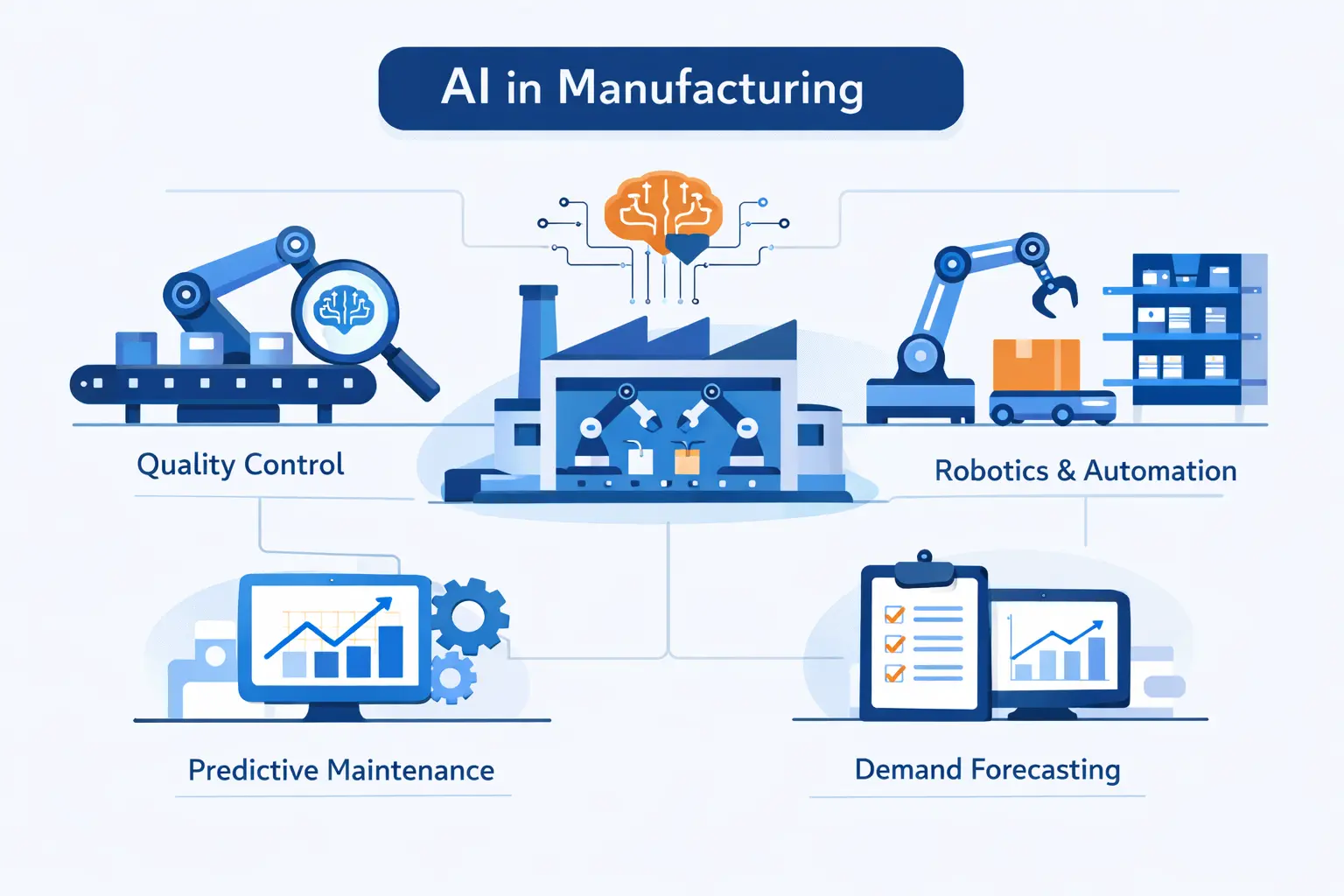
Examples matter because they separate theory from factory reality. We prefer official company material here. It is imperfect, of course, but it usually shows where leaders believe the technology is delivering practical value.
1. BMW and AI-Driven Quality Control
BMW describes an end-to-end digitalised and automated process in its Regensburg paint shop for inspecting, processing, and marking painted vehicle surfaces. That is a strong example of AI used where precision and repeatability matter. In our view, quality control is one of the best entry points because the business case is easy to see.
2. Ford and AI-Enabled Assembly Line Automation
Ford Otosan’s Plant of the Future shows how AI, digital twin simulations, and end-to-end management can support assembly operations while also tying into sustainability goals. That is the kind of layered use we expect to see more often. AI becomes more valuable when it supports planning, production, and energy decisions together.
3. Rolls-Royce and Digital Twins for Predictive Maintenance
Rolls-Royce presents Digital Twin technology as part of its IntelligentEngine approach to model operating conditions and improve maintenance decisions. The lesson for manufacturers is simple. A digital twin is not just a fancy visual model. It is useful when it helps people test scenarios, reduce risk, and plan service with more confidence.
4. GE and AI for Sustainability and Resource Efficiency
GE Vernova says combining operational and sustainability data can help industrial sites manage resources and climate metrics with the same seriousness they apply to output and profitability. We like this example because it reflects a broader truth. In manufacturing, sustainability only sticks when it is tied to daily operating decisions.
Benefits of AI in Manufacturing
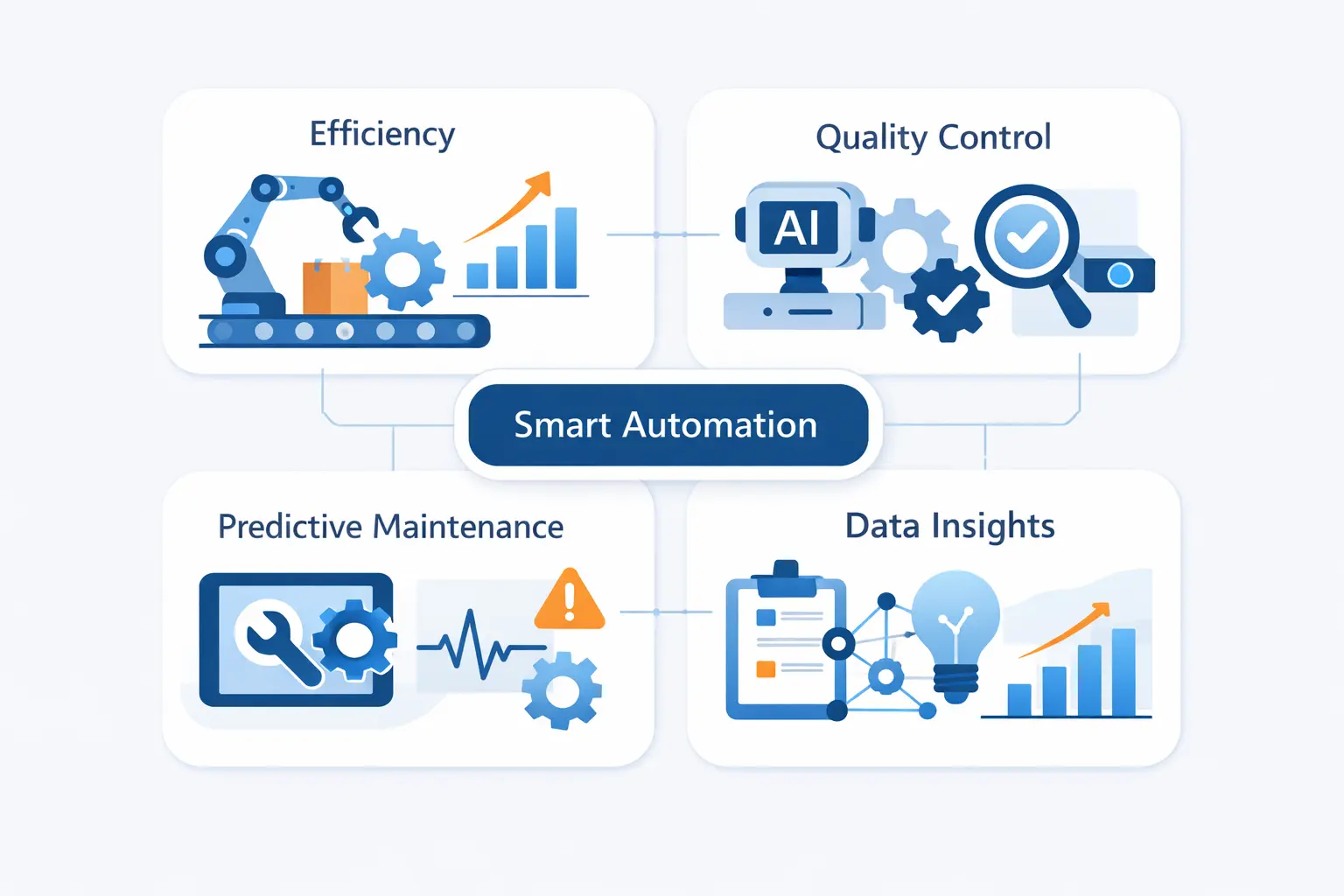
The benefits are real, but they are not evenly distributed. AI creates the biggest gains when the process is measurable, the data is trustworthy, and the team can act on the result. Without those pieces, the promise stays theoretical.
1. Lower Costs, Less Downtime, and Better Resource Use
Better predictions mean fewer emergency stops. Better inspection means less scrap and rework. Better process tuning means materials and utilities are used with more care. This is usually where the first savings appear. The plant spends less time reacting and more time running to plan.
2. Faster Decisions, Better Products, and Stronger Output
AI shortens the distance between signal and action. Teams can move from “something feels off” to “this machine, this part, this likely cause” much faster. That leads to better products because issues are caught earlier, and it leads to stronger output because the line does not drift for hours before someone spots the pattern.
3. Safer Workplaces, Easier Compliance, and More Sustainable Operations
Safety and compliance improve when systems make the right information easier to see at the right time. AI can help flag unsafe behavior, missing steps, or process deviations before they become incidents. It can also support traceability and reporting, which matters in regulated industries where proof is just as important as performance.
Challenges of AI in Manufacturing
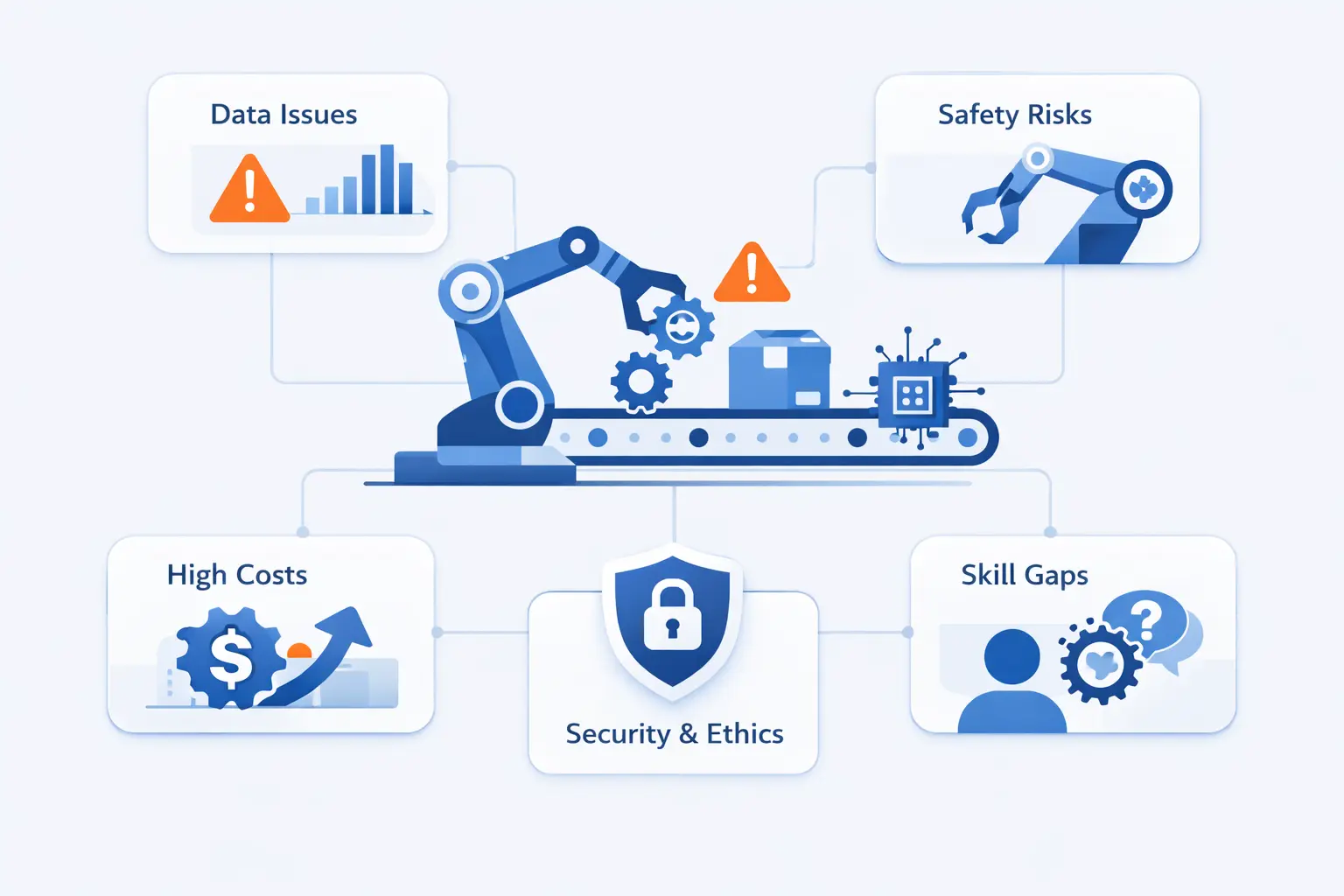
Here is the rub. Manufacturing is full of edge cases, legacy systems, and operational constraints. That means AI projects can fail for plain old industrial reasons, even when the model itself looks impressive in a demo.
1. Data Quality, Infrastructure, and Standardization Gaps
Many plants still struggle with siloed data, missing context, poor tagging, and inconsistent machine interfaces. One line may capture high-quality signals while another logs almost nothing useful. AI cannot smooth over that gap on its own. If the data foundation is shaky, the result will be shaky too.
2. Skills Shortages, Change Management, and Adoption Risks
People issues derail plenty of projects. A model may work, but operators may not trust it. Engineers may not have time to retrain workflows. Managers may expect instant returns from a process that needs iteration. We have learned that adoption improves when teams are involved early and when the first use case solves a problem they already care about.
3. Security, Privacy, Compliance, and Responsible AI
Connected factories increase the attack surface, and AI can add new governance questions around model drift, data access, and auditability. For that reason, we recommend treating security and governance as core design work from day one, with a practical reference point such as NIST’s risk management framework for trustworthy AI and controlled deployment.
What Manufacturers Need Before Scaling AI
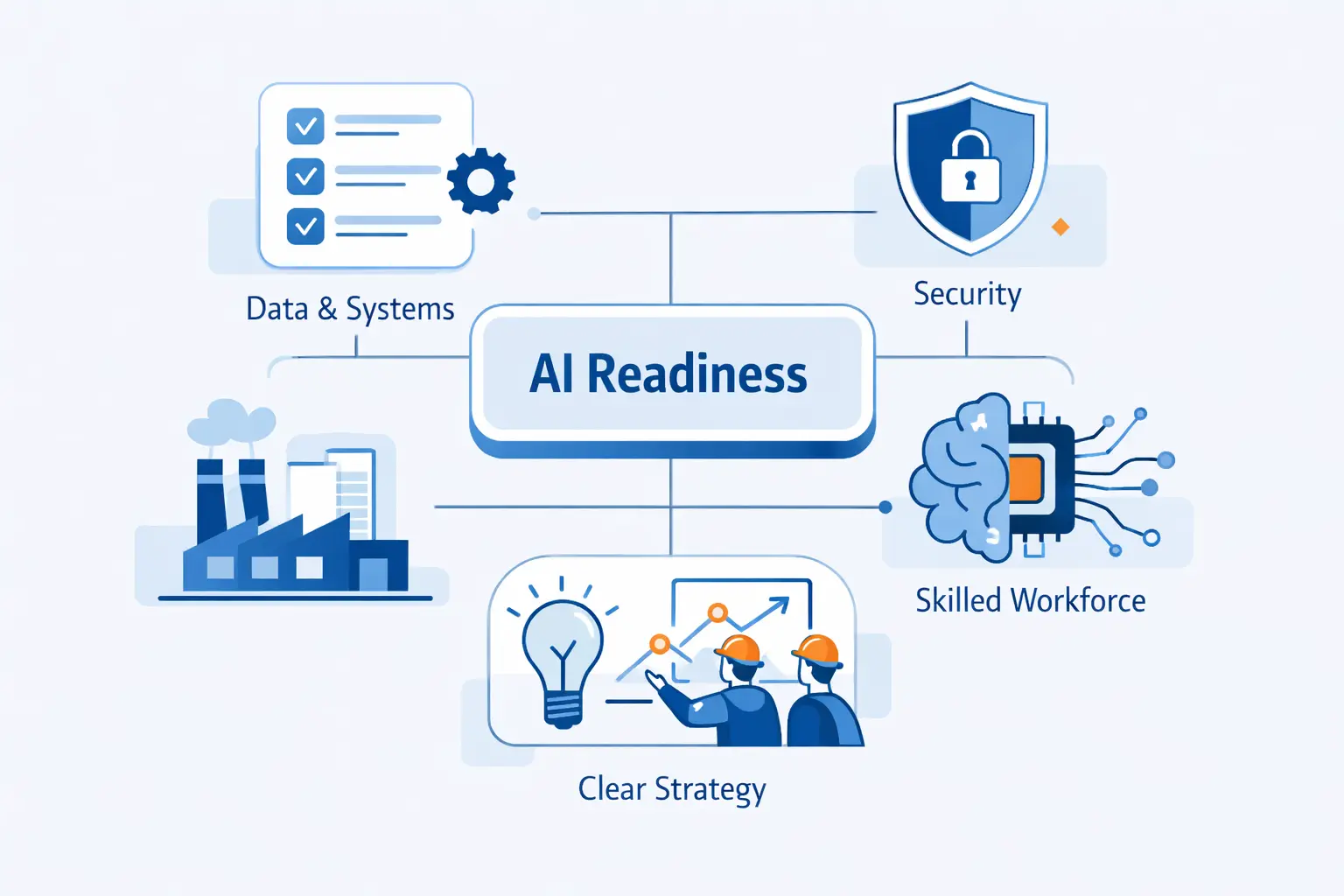
Scaling AI takes more than one good pilot. It requires plumbing, integration, and operating discipline. In our experience, this is where serious programs separate themselves from flashy experiments.
1. Reliable Data Pipelines From Sensors, Cameras, and Connected Systems
Manufacturers need a repeatable way to collect, clean, label, and move data from the edge to the applications that use it. That includes time stamps, machine context, and retention rules. If teams cannot trust where the data came from, they will not trust the output either.
2. Integration With ERP, Legacy Systems, and Existing Workflows
Most plants do not start from scratch. They already have ERP, MES, SCADA, historian tools, CMMS platforms, spreadsheets, and manual workarounds. AI has to fit that reality. A model that sits outside the workflow may be technically clever, but it will gather dust if it does not connect to how the plant actually runs.
3. Compute, Connectivity, and Energy Capacity for AI Initiatives
Some use cases can run at the edge. Others need cloud infrastructure, stronger storage, or hybrid setups. Camera-heavy inspection and simulation workloads can demand serious compute and networking. We advise manufacturers to plan infrastructure early, because performance problems have a nasty habit of showing up right when a pilot starts to matter.
How to Implement AI in Manufacturing Successfully
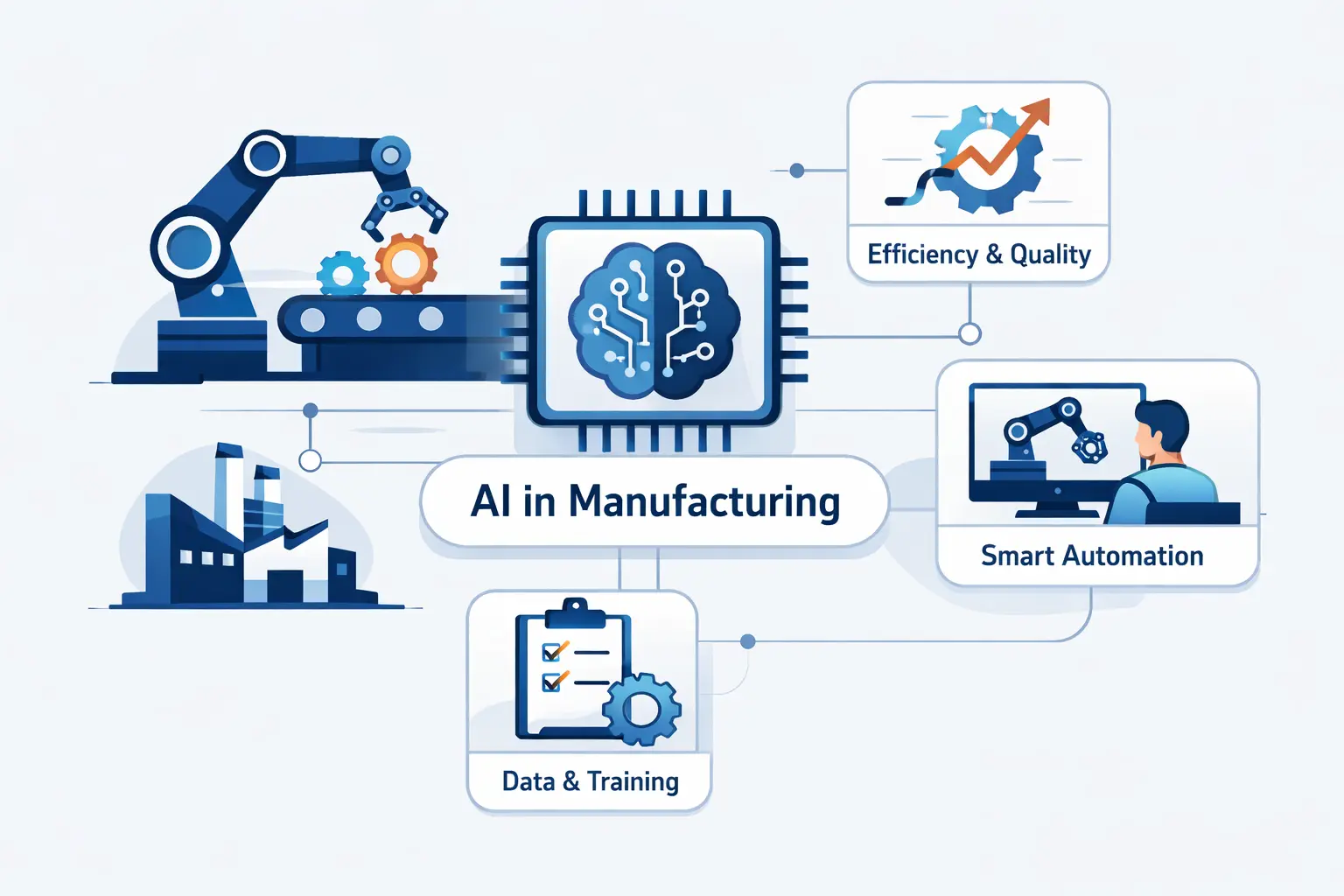
Implementation is where ambition meets shop-floor reality. The best projects start small, stay measurable, and avoid trying to fix the whole enterprise in one pass. That may sound cautious, but it is how momentum gets built.
1. Start With High-Value Use Cases and Clear Business Goals
Choose a use case with pain, data, and a clear owner. Unplanned downtime, visual inspection, and process drift are common starting points. Set a business target before choosing the tool. If the team cannot say what success looks like, the project will wander.
2. Align AI With Lean, Six Sigma, and Daily Operations
AI should support operational discipline, not replace it. Lean and Six Sigma already teach teams to define waste, variation, and root causes. AI can sharpen that work by finding patterns faster, but it still needs the same process ownership and standard work that good operations rely on.
3. Train Teams, Choose Trusted Providers, and Measure Results
Factories need training for operators, engineers, managers, and IT teams, not just data specialists. They also need providers who understand uptime, security, and integration, not just model accuracy. Measure results in business terms such as downtime avoided, scrap reduced, changeover time improved, or decision speed gained.
Emerging Trends Shaping the Future of AI in Manufacturing
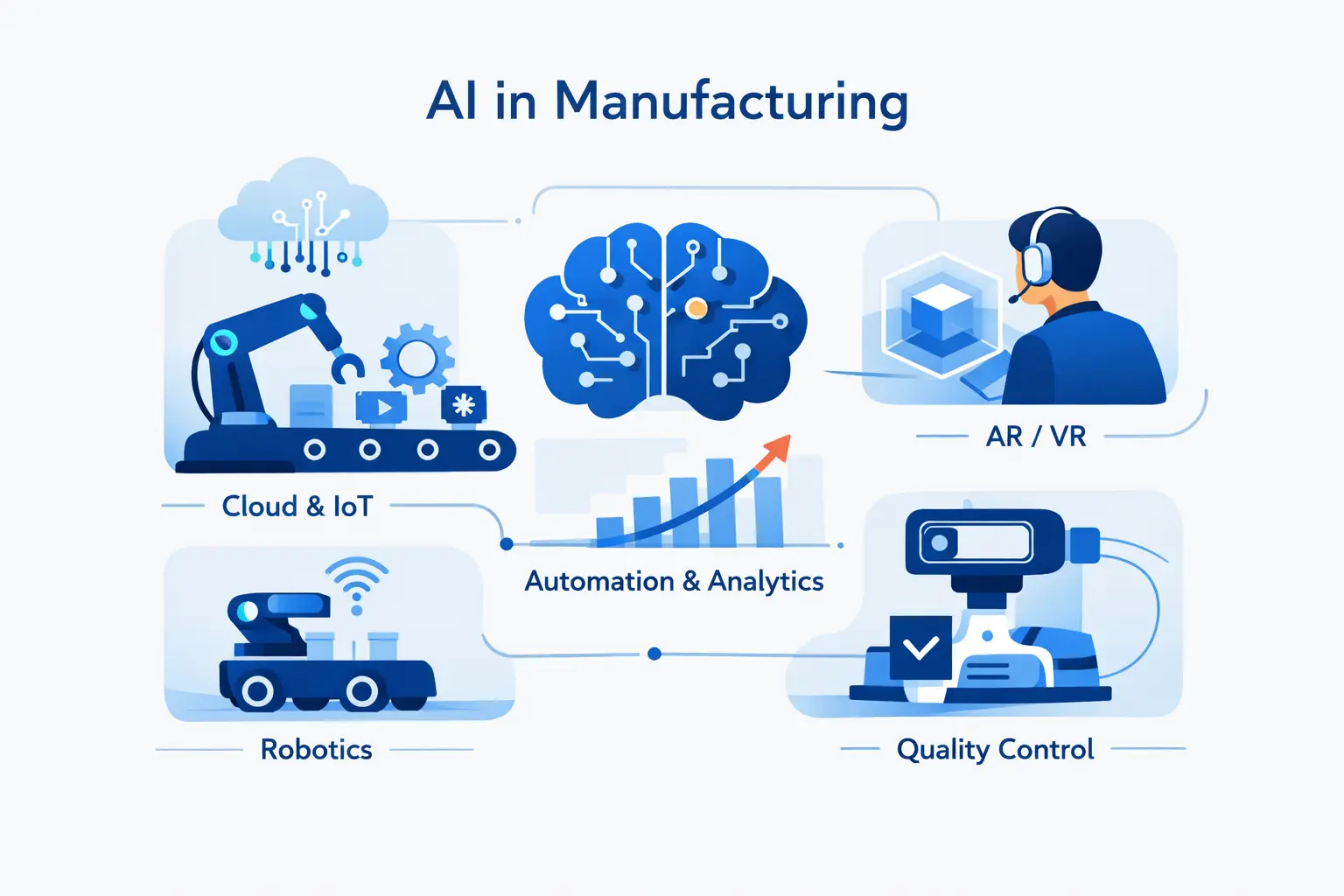
The next wave of AI in manufacturing will feel less like a standalone system and more like a built-in layer across tools, machines, and workflows. We expect the winners to be firms that make AI ordinary, not theatrical.
1. Conversational AI and AI Copilots for Wider Adoption
Copilots can make industrial systems easier to use because workers ask questions in normal language instead of hunting through menus. That lowers friction for maintenance, training, and troubleshooting. Of course, the trick is grounding those answers in approved plant data. Otherwise, the smooth interface becomes a smooth way to spread errors.
2. Edge Computing, AR, and VR for Real-Time Decisions
Edge computing keeps response times short for inspection, machine monitoring, and control-adjacent tasks. AR and VR can then present instructions, overlays, or remote support where work happens. Put together, these tools help staff act faster without constantly walking back to a terminal or waiting on a specialist.
3. Digital Twins, Factory in a Box, and More Adaptive Production
We expect digital twins to grow from isolated asset models into broader plant and supply simulations. Portable production setups and modular lines will also gain attention because manufacturers want faster deployment and more resilient capacity. AI supports both by helping firms tune output, compare scenarios, and adapt without rebuilding everything from scratch.
FAQ About AI in Manufacturing
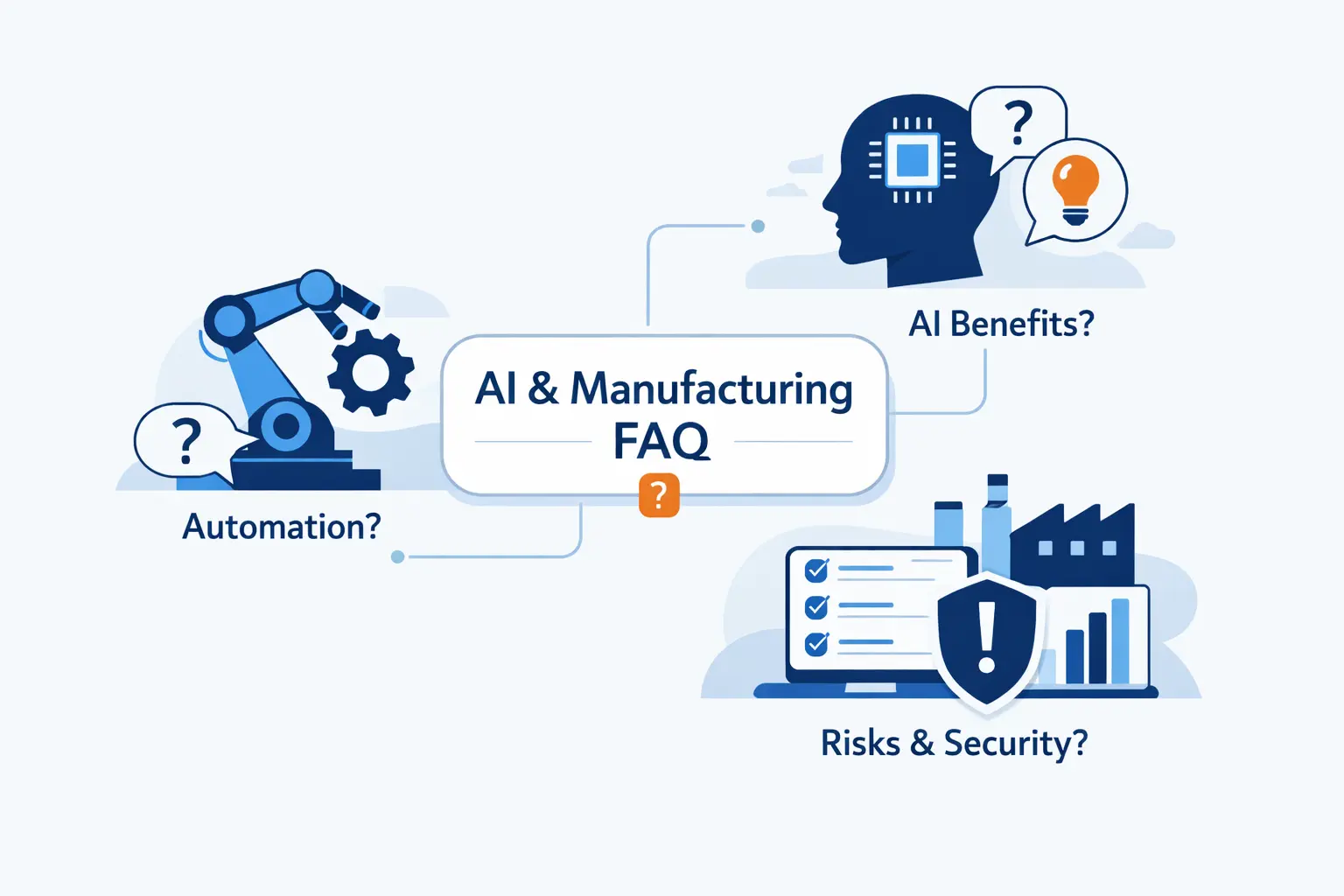
We hear many of the same questions from teams exploring their first serious AI project. Here are the short answers we would give at the start of a planning session.
1. How Is AI Used in the Manufacturing Industry?
It is used for predictive maintenance, visual inspection, process optimization, forecasting, robotics support, document search, and scheduling. The common thread is simple. AI helps teams spot patterns and act faster on them.
2. What Are the Main Benefits of AI in Manufacturing?
The main benefits are lower downtime, better quality, faster decisions, less waste, and more consistent operations. Some firms also see gains in safety, traceability, and energy performance.
3. What Are the Biggest Challenges of AI in Manufacturing?
The biggest challenges are poor data quality, weak integration, limited in-house skills, security concerns, and low user trust. Many projects stumble because the workflow around the model is not ready.
4. How Can Manufacturers Start Using AI?
Start with one painful, measurable problem. Pick a use case with available data and a business owner. Run a focused pilot, measure results, and only then expand.
5. Why Do AI Projects in Manufacturing Struggle to Scale?
They often scale poorly because the pilot worked in a controlled setting but not in messy plant reality. Data varies by site, systems are inconsistent, and teams are not aligned on process changes.
6. What Is Generative AI in Manufacturing?
Generative AI creates or summarizes content rather than only predicting outcomes. In manufacturing, that includes design support, document search, work instructions, shift summaries, and knowledge access.
7. What Is a Digital Twin in Manufacturing?
A digital twin is a software representation of a machine, asset, line, or process. It uses real or historical data to simulate behavior, test changes, and support maintenance or production decisions.
How 1Byte Supports the Digital Foundations of AI in Manufacturing
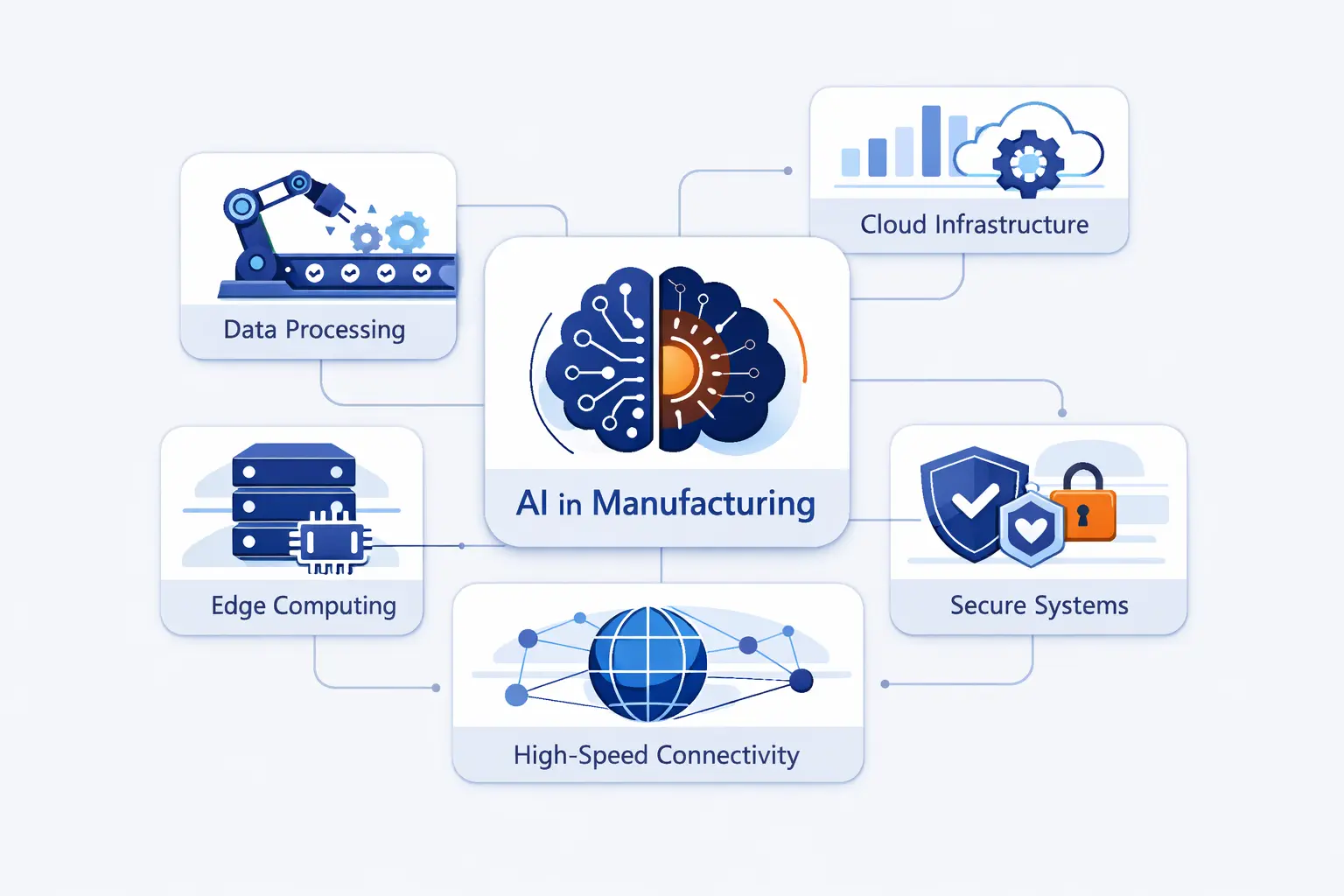
At 1Byte, we do not pretend that hosting alone delivers factory intelligence. What we do know is this. AI programs need dependable digital foundations, and weak infrastructure can sink a promising project before the model even has a chance to prove itself.
1. Cloud Hosting, Cloud Servers, and AWS Partner Support for Scalable AI Workloads
We help teams build the compute layer that supports analytics, applications, dashboards, and connected platforms around industrial AI. That includes cloud hosting, cloud servers, and AWS partner support for workloads that need reliable uptime, flexible capacity, and room to grow from pilot to broader deployment.
2. Domain Registration and SSL Certificates for Secure Connected Platforms
Manufacturers often need customer portals, supplier interfaces, device dashboards, or internal web tools tied to connected operations. We support those foundations with domain registration and SSL certificates so teams can establish trusted endpoints and safer communication for the systems wrapped around AI-driven workflows.
3. WordPress Hosting and Shared Hosting for Knowledge Bases, Portals, and Support Content
Not every part of an AI program is a model. Many projects need searchable knowledge bases, training portals, documentation hubs, and support content that staff can actually use. Our WordPress hosting and shared hosting options fit those needs well, especially when a manufacturer wants a practical web layer without overcomplicating the stack.







Conclusion: Turning AI in Manufacturing Into Measurable Value
AI in manufacturing works best when it is treated as an operations tool, not a branding exercise. The factories that get value are usually the ones that start with real pain, clean up the data path, involve the people doing the work, and measure outcomes with cold eyes.
At 1Byte, we believe the opportunity is large, but the path should stay grounded. Start where the signal is strong. Build the digital foundation properly. Earn trust on one process, then the next. That is how ai in manufacturing stops being a talking point and becomes measurable value.