

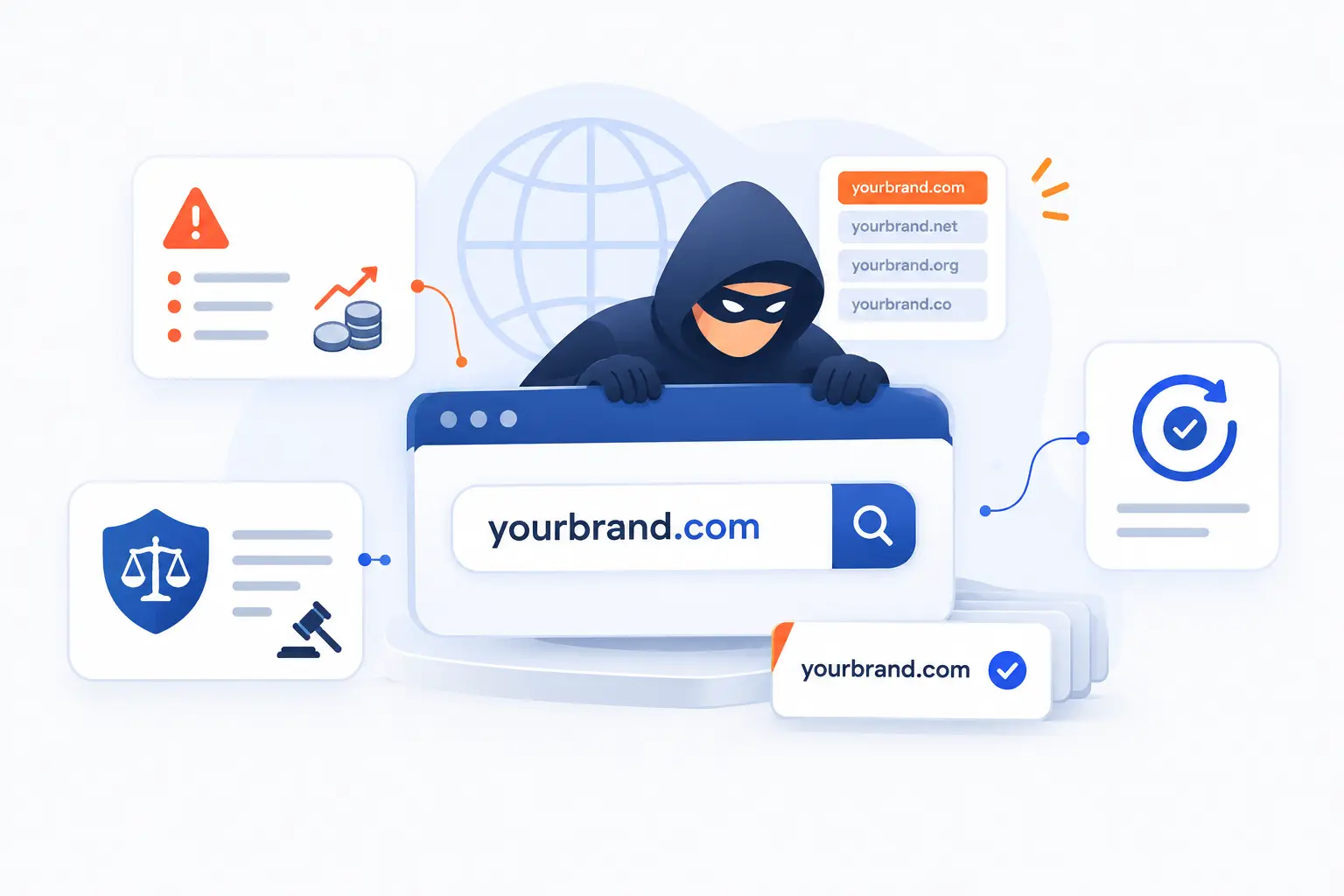
- Domain Squatting Is Bad-Faith Use of a Brand-Linked Domain
- How Squatters Profit From Confusion and Trust
- Common Forms of Cybersquatting
- Is Domain Squatting Illegal
- How to Spot and Reduce Domain Squatting Risk
- What to Do if a Squatter Already Has the Domain
- FAQ
- How 1Byte Supports Domain Protection and Hosting
- Conclusion
Domain squatting is the bad-faith registration, purchase, or use of a domain name that is tied to someone else’s brand, trademark, product, or personal name. The squatter usually wants money, traffic, clicks, or trust they did not earn. We at 1Byte see it as one of those web problems that looks small until a customer lands on the wrong page, enters credentials, or emails the wrong “finance team.” The heart of the issue is intent: owning a domain is normal, but exploiting another party’s identity is where the trouble begins.
This guide explains domain squatting quickly and correctly. We will cover how squatters make money, the common forms it takes, when it becomes illegal, and how a business can reduce risk before a bad actor gets comfortable. We will also explain recovery paths, from evidence collection to dispute proceedings and court. If you own a brand, launch sites for clients, or manage company infrastructure, this is basic digital hygiene.
Domain Squatting Is Bad-Faith Use of a Brand-Linked Domain
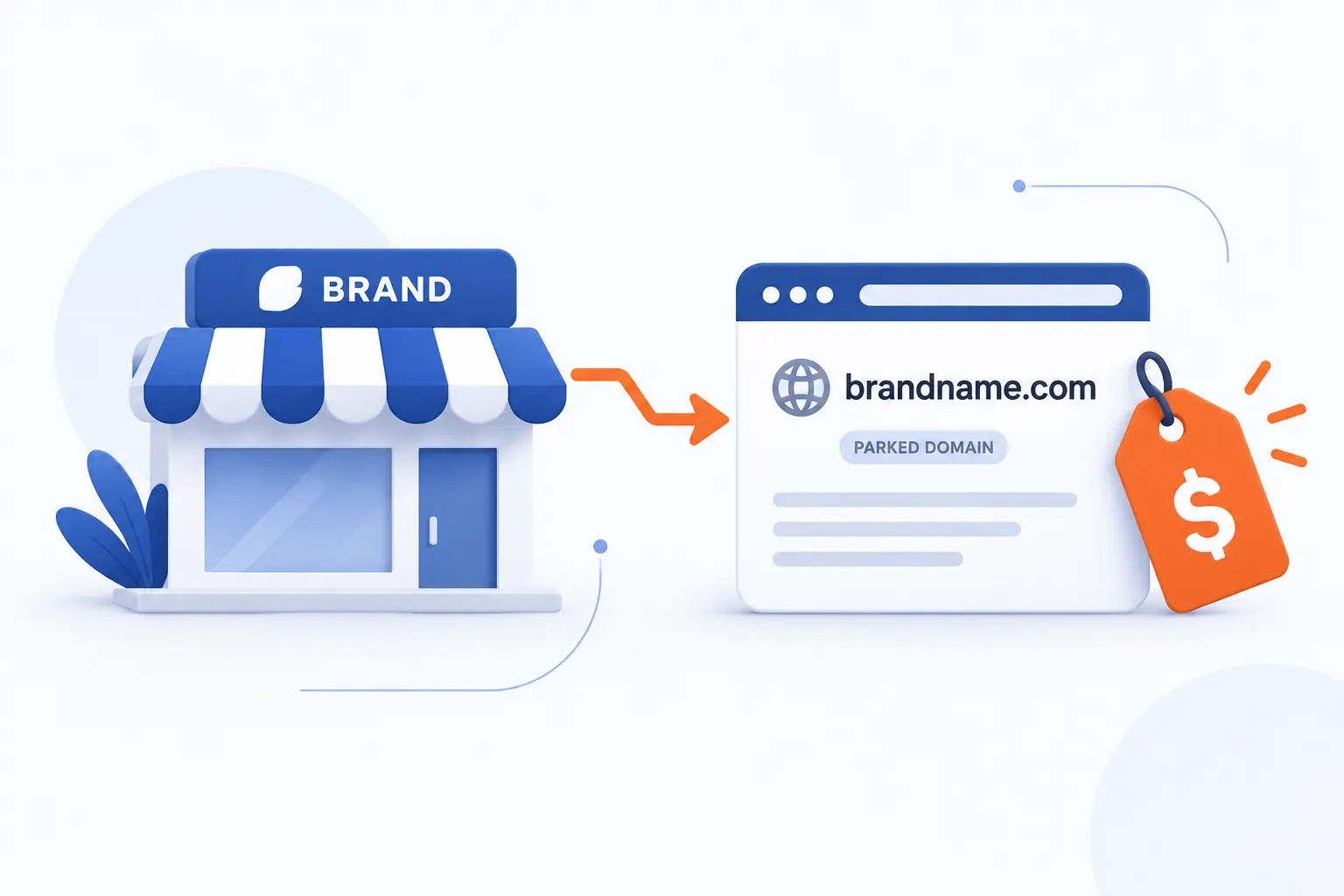
Domain squatting is registering or using a web address connected to another person’s brand, trademark, business name, product name, or identity in bad faith. The classic case is someone registering a brand-matching domain and trying to sell it back for far more than normal registration costs. It can also mean parking the domain with ads, redirecting visitors, impersonating a company, or using the name in scams. The legal and practical question is not only “Who registered it first?” but “Why was it registered, and how is it being used?”
We should separate this from legitimate domain investing. Buying a generic word or short phrase for resale can be lawful if it does not target a specific trademark owner. “Bluebottle.example” may be a fair speculative name in one context and a trademark problem in another. The difference often rests on evidence: the name chosen, the registrant’s behavior, the content shown, the timing, and whether the registrant appears to be trading on someone else’s reputation.
The risk has grown because domains are cheap, fast to register, and easy to pair with hosting, email, ads, or redirects. WIPO reported over 6,200 domain name cases in 2025, its highest annual caseload at the time. That does not mean every dispute is clear-cut. It does show that brand-linked web addresses are no longer a side issue. They are part of security, marketing, legal, and customer trust.
How Squatters Profit From Confusion and Trust
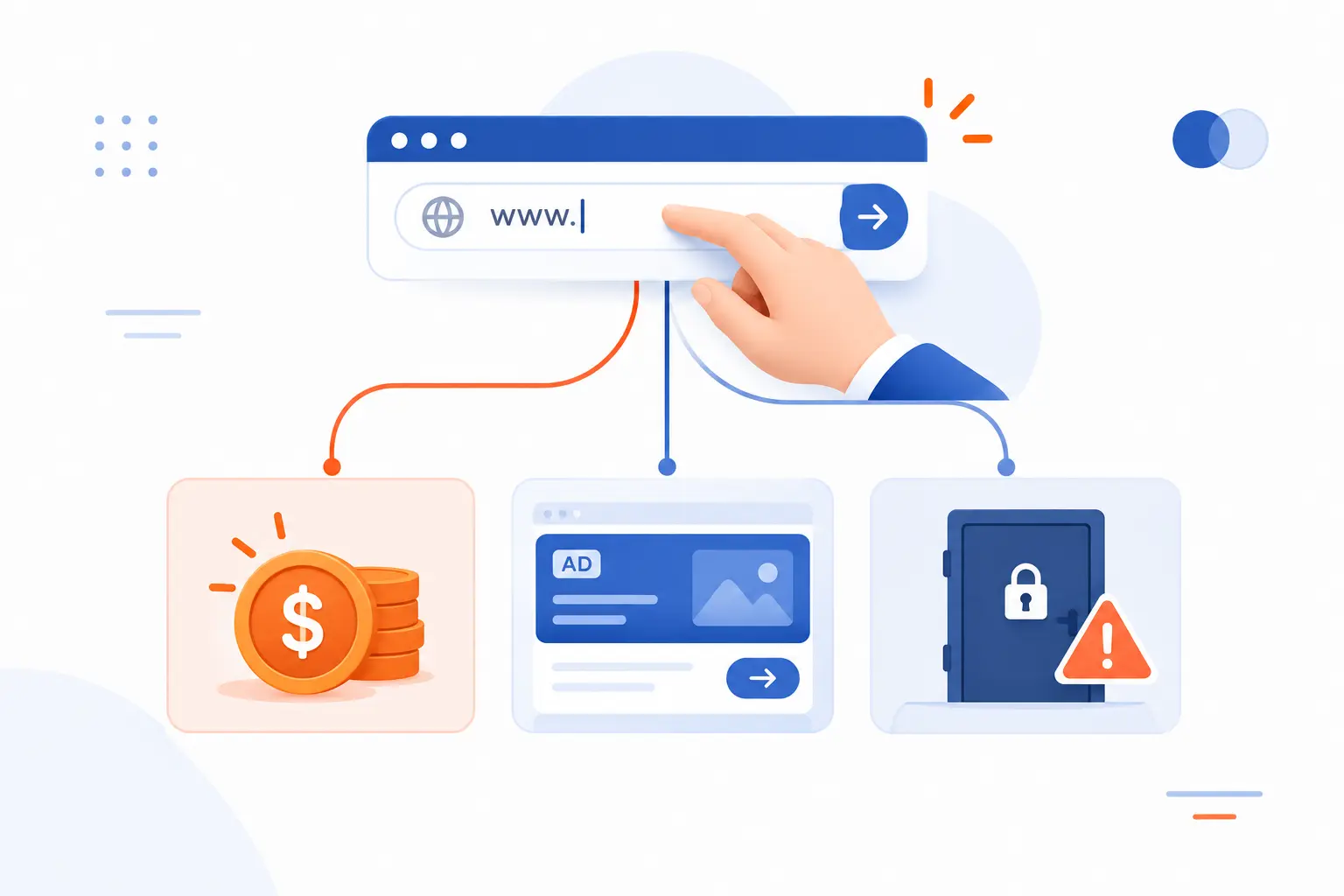
Squatters profit by turning a familiar name into money, traffic, or access. They rely on the fact that people type quickly, trust known brands, and often do not inspect URLs closely. The business model may be simple resale, quiet ad revenue, or outright fraud. From our hosting perspective, the danger is that a single confusing domain can sit outside your main infrastructure while still damaging your reputation.
| Profit method | What the squatter wants | Main risk to the brand |
|---|---|---|
| Inflated resale | A payout from the brand owner | Higher recovery cost |
| Ads and redirects | Visitor clicks or affiliate revenue | Lost traffic and customer confusion |
| Impersonation | Credentials, payments, or malware installs | Fraud, data loss, and trust damage |
Reselling the Domain at an Inflated Price
The simplest profit model is to register a brand-linked domain and demand a large resale price. This is the pattern most people picture when they hear domain squatting. A squatter may buy a company’s missing country-code extension, a new generic extension, or a product name before launch. Then they wait for the brand owner to feel pressure.
That pressure can be real. Marketing teams may want a clean launch. Executives may want the “obvious” domain. Customers may already be typing it. Still, paying quickly can create bad incentives if the registration clearly targets your mark. Under ICANN’s dispute policy, evidence that a domain was acquired mainly for sale to the trademark owner can support bad-faith findings under the policy test.
Our view is practical: do not let pride make the bill bigger, but do not reward a bad actor without thinking. Sometimes a quiet purchase is cheaper than a dispute. Sometimes it invites the same person to register the next variant.
Capturing Traffic With Ads, Affiliate Links, and Redirects
Many squatters earn from accidental visitors through parked pages, pay-per-click ads, affiliate offers, or redirects. This works because a misspelled or look-alike address can still receive visitors who meant to reach the real brand. If a parked page shows competitor ads, the squatter may profit from confusion. If it redirects to a marketplace, fake store, or lead form, the damage gets worse.
These pages often look harmless at first glance. A blank page, “domain for sale” notice, or ad feed may not feel urgent. Yet the page can change overnight. We have learned to treat dormant brand-like domains as unstable assets in someone else’s hands. If the registrant controls the domain, they can add email records, redirect traffic, or publish a fake login page later.
Brand Impersonation for Phishing, Malware, and Employee Fraud
The highest-risk form uses a look-alike domain to impersonate a trusted organization. Attackers may send invoices, password-reset messages, job offers, shipping notices, or executive requests from an address that looks almost right. The website may copy logos and colors. The email may pass casual inspection, especially on mobile.
Real-world enforcement shows how domain abuse connects to cybercrime. Microsoft described a legal action that helped it take control of 99 websites used in hacking operations. That example matters because the domains were not valuable because of beauty or length. They were valuable because they could borrow trust.
For businesses, the lesson is direct. Protecting a domain portfolio is not only a branding chore. It is part of phishing defense, mail security, vendor risk, and customer safety.
Common Forms of Cybersquatting
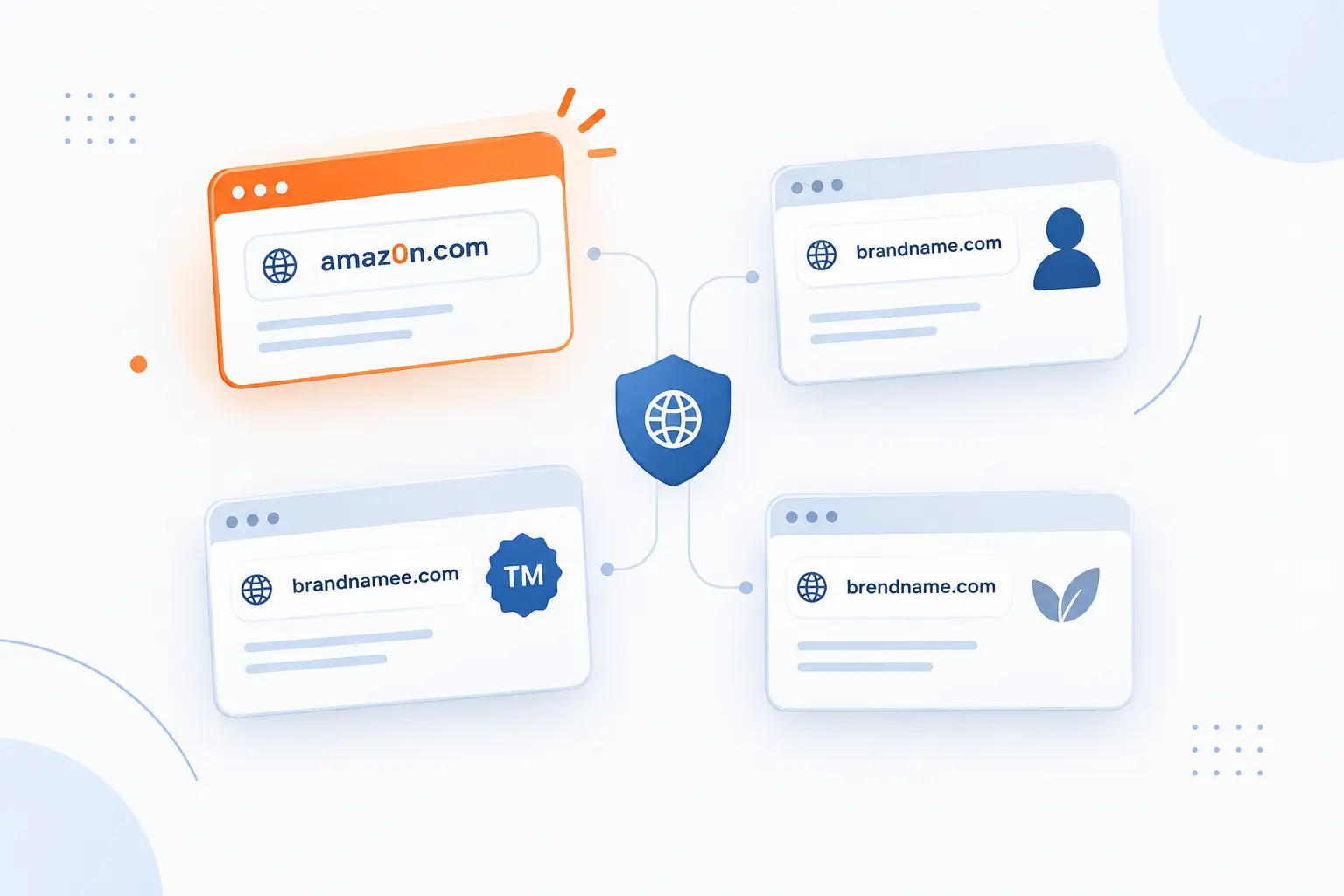
Cybersquatting appears in several repeatable patterns, and each pattern abuses a different kind of confusion. Some target typos, some target personal names, some target trademarks, and some target visual similarity. A few are legally gray because criticism, generic words, and fair use can be legitimate. We prefer to classify the pattern first, then judge intent from evidence.
| Form | How it works | What to check first |
|---|---|---|
| Typos and misspellings | Uses common typing mistakes | Traffic capture, ads, phishing pages |
| Personal names | Targets an individual or public figure | Identity rights and bad-faith use |
| Trademark targeting | Copies or closely resembles a protected mark | Trademark rights and registrant intent |
| Visual tricks | Uses look-alike characters or word combinations | User confusion and security risk |
| Reverse claims | Uses legal pressure to take a lawful domain | Registrant’s legitimate rights |
Typosquatting and Misspelled Domains
Typosquatting uses misspelled or mistyped versions of a real domain to catch users who make small errors. Examples include missing letters, doubled letters, swapped characters, extra hyphens, or similar endings. A user who types quickly may not notice the difference before the page loads.
This form is especially dangerous for banks, SaaS platforms, webmail services, healthcare portals, and e-commerce brands. People arrive with intent already in their head. They are ready to log in, pay, download, or contact support. That makes the wrong domain unusually persuasive.
A healthy response is not to register every possible typo on earth. That is a rabbit hole. Instead, register the obvious high-risk variants, watch traffic patterns, and monitor for newly registered names that include your brand.
Name Jacking and Personal Identity Abuse
Name jacking targets a person’s name rather than a company brand. The victim may be a founder, artist, executive, politician, creator, or professional whose name carries search value. A bad actor can register the name to sell it, post damaging content, redirect fans, or impersonate the person.
U.S. law recognizes that personal names can be abused in domain registrations. The federal text discusses protections for personal names used as second-level domains when another person registers them for financial gain or reputational harm under the statutory language. Still, personal-name disputes can be tricky. A shared surname, fan site, criticism site, or legitimate business name may change the analysis.
We advise founders and public-facing leaders to register their core name early. It is cheaper to hold a clean identity domain than to recover it after it ranks in search.
Trademark-Focused Registrations and Generic Word Plays
Trademark-focused registrations target words, logos, or phrases that identify the source of goods or services. A trademark is not merely a favorite word. It signals origin in commerce, and the USPTO explains that a protected mark can be a word, phrase, design, or combination that identifies and distinguishes goods or services through source identification.
Generic-word cases are harder. A company may own rights in a word for a particular category, while someone else may use the same word in its ordinary meaning. For example, a domain based on “apple” can mean fruit, technology, education, music, or a family business, depending on use. Context matters.
This is why we dislike blanket claims like “They own the trademark, so they own every domain.” That is too crude. The stronger question is whether the domain was registered and used to target the trademark owner’s goodwill.
Combo-Squatting, Homographs, and Gripe Sites
Combo-squatting adds extra words to a brand, while homograph attacks use characters that look like trusted letters. A domain like “brand-support,” “brand-login,” or a visually deceptive version of a company name can feel official. That is the attacker’s whole point. The more urgent the action on the page, the more suspicious we become.
Gripe sites are different. A criticism site may use a brand name to identify the subject of commentary. Courts and panels often look at whether the site creates confusion, seeks commercial gain, or clearly communicates criticism. In the Lamparello v. Falwell dispute, the Fourth Circuit found that the criticized site did not create the sort of confusion tied to bad-faith profit in a Fourth Circuit ruling.
That distinction is healthy. Trademark law should stop deception. It should not become a tool to erase fair criticism.
Reverse Cybersquatting
Reverse cybersquatting happens when a trademark owner overreaches and tries to take a domain from someone with legitimate rights. This can occur when a company wants a domain already owned by a person, older business, critic, or generic-word investor. The complainant may frame the matter as brand protection. The facts may tell a more complicated story.
The long-running Nissan-related litigation is a useful reminder. Nissan Computer used a name tied to its business, and the automaker’s dispute over the address became a major example of how domain conflicts are not always simple brand theft. In one court record, the dispute involved claims including trademark infringement and domain name piracy, while the court denied early emergency relief in the litigation record.
Reverse claims waste money and can backfire. Before accusing someone, check their timeline, business use, name rights, and whether your trademark rights actually cover the disputed use.
Is Domain Squatting Illegal
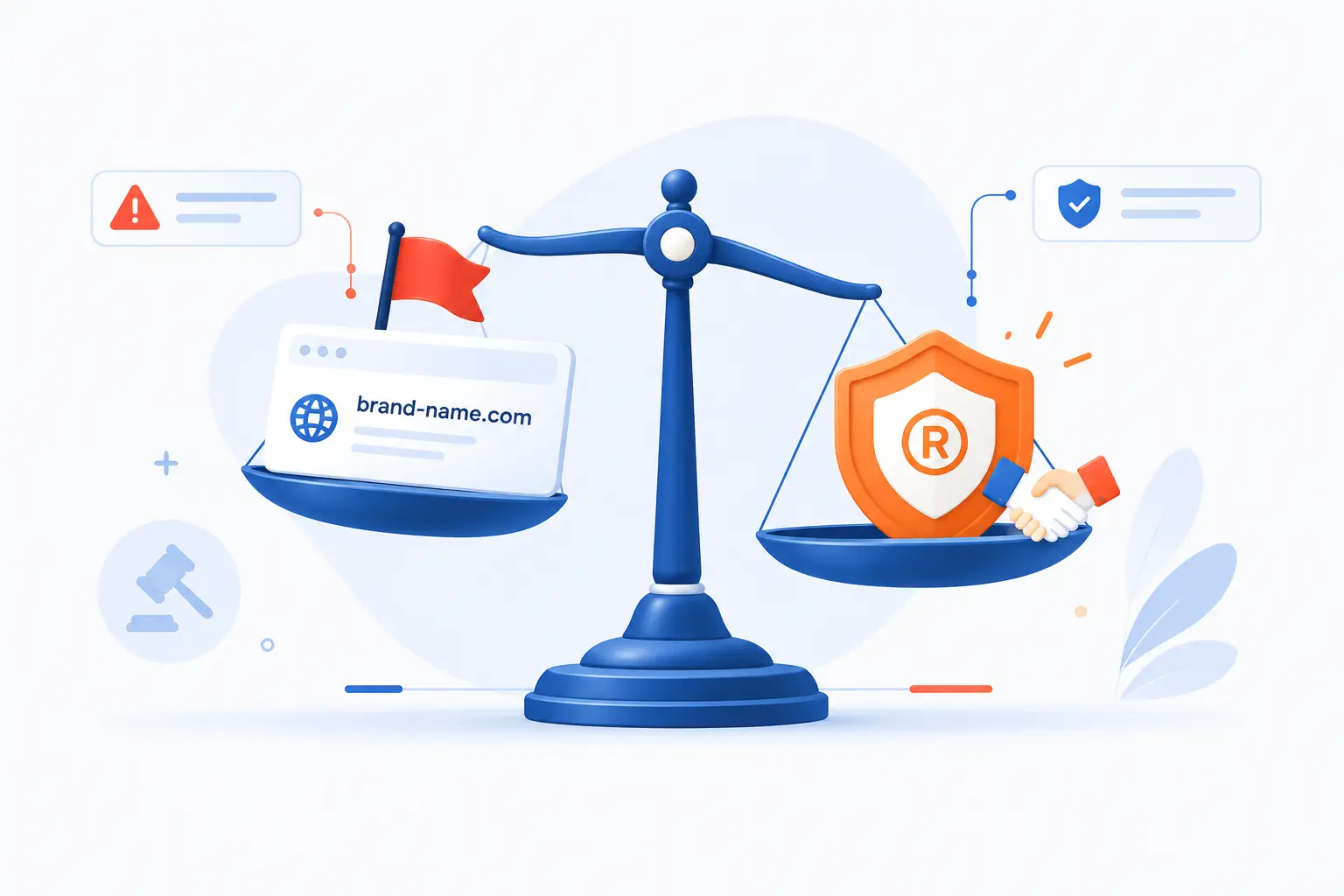
Yes, domain squatting can be illegal when it involves bad-faith registration, trafficking, or use of a domain tied to another party’s protected mark. No, every similar domain is not automatically illegal. Trademark rights, legitimate interests, fair use, timing, and intent all matter. If the dispute is serious, involve a qualified trademark attorney because the wrong first move can weaken your position.
Why Trademarks and Bad Faith Matter
Trademark rights and bad faith are the core legal filters in most domain disputes. A complainant usually needs to show that the disputed name is confusingly similar to a protected mark, that the registrant lacks legitimate rights, and that bad-faith behavior exists. Evidence can include resale demands, misleading content, false contact data, patterns of similar registrations, phishing, or competitor disruption.
Under the U.S. Anticybersquatting Consumer Protection Act, liability can arise when someone has a bad-faith intent to profit and registers, traffics in, or uses a name that is identical or confusingly similar to a distinctive mark. The same federal section lists factors courts may consider, including fair use, prior legitimate use, intent to divert consumers, and offers to sell for financial gain. In other words, the law is evidence-driven.
We like this approach because it leaves room for honest use. It targets predatory behavior rather than punishing every collision between words.
When a Similar Domain May Still Be Legitimate
A similar domain may be legitimate when the registrant has its own rights, uses a generic meaning, runs a fair criticism site, or was commonly known by the name. Timing can also matter. If someone registered a domain before your brand existed, your case may be much harder. A later trademark does not magically rewrite the past.
Legitimate interests can include a bona fide business, a person’s legal name, a noncommercial project, or a domain used in its ordinary dictionary sense. The ICANN policy recognizes examples such as use before notice of a dispute, being commonly known by the domain, and legitimate noncommercial or fair use. That does not give anyone a free pass to mislead customers. It does remind us that similarity alone is not enough.
Our practical test is simple: would an average visitor think this is you, endorsed by you, or built to profit from you? If the answer is likely yes, take it seriously.
ACPA, UDRP, and Rapid Domain Dispute Options
ACPA, UDRP, and URS are the main paths businesses consider when a bad-faith domain appears. ACPA is U.S. federal litigation and can provide court-ordered remedies. UDRP is an administrative process used for many trademark-based domain disputes. URS is a faster suspension-focused option for clear-cut cases in supported new generic extensions.
The UDRP requires the complainant to prove confusing similarity, no rights or legitimate interests, and bad-faith registration and use. It can lead to cancellation or transfer, not damages. URS is narrower and intended for obvious cases, with ICANN describing it as a lower-cost, faster path for clear-cut infringement through the suspension process.
Litigation may make sense for fraud, damages, repeated offenders, or urgent injunctions. Administrative proceedings may be more efficient for a clean transfer case. The best route depends on evidence, jurisdiction, budget, urgency, and whether you need money damages or only control of the name.
How to Spot and Reduce Domain Squatting Risk
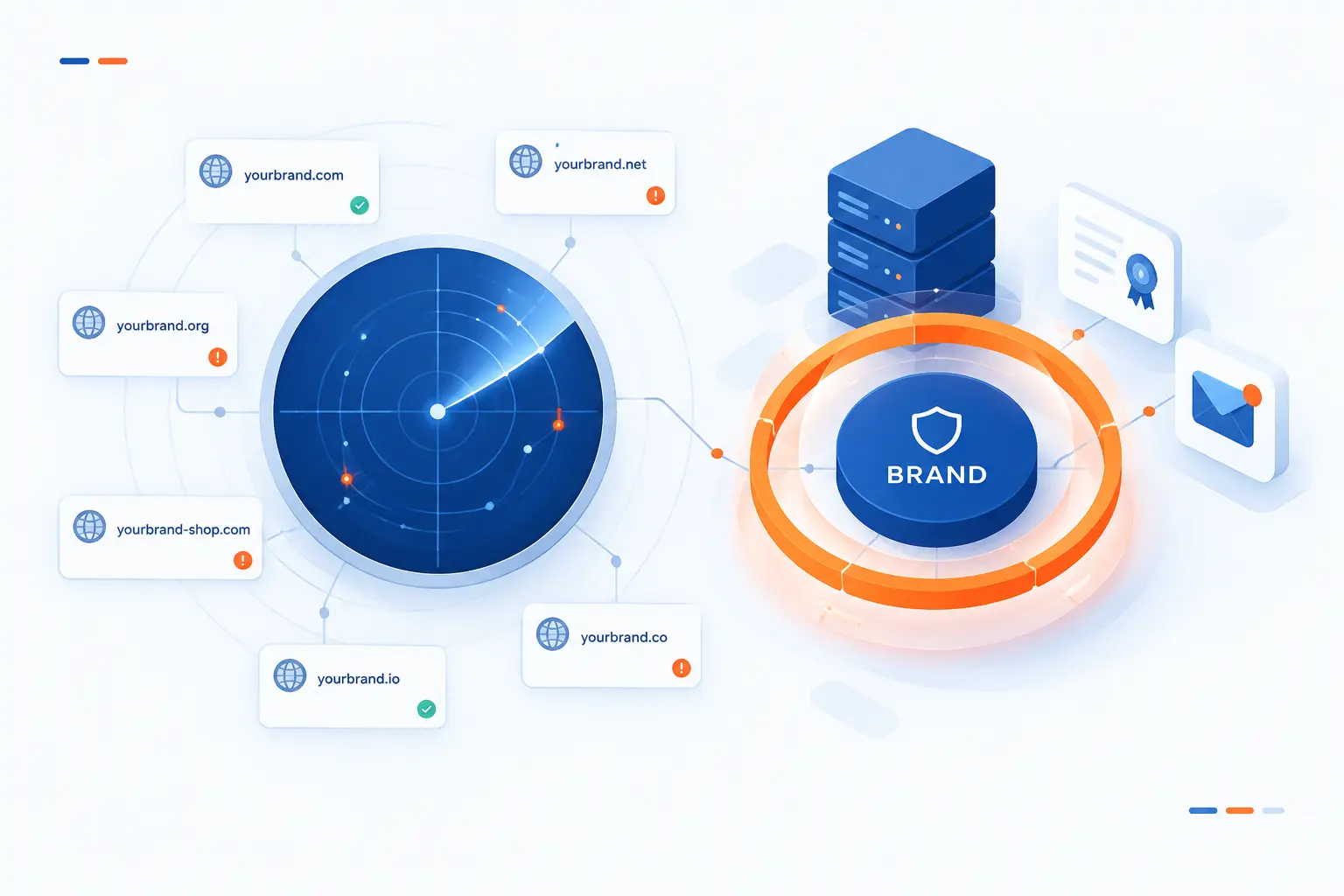
You reduce domain squatting risk by registering the most important names early, monitoring for look-alikes, and securing the DNS, certificate, mail, and hosting signals around your brand. You will never buy every variation. That is not the goal. The goal is to protect the names that customers, employees, search engines, and attackers are most likely to care about.
Register Core Names, TLDs, and Common Variants Early
Register your core brand domains before launch, before announcements, and before product pages go public. Start with the primary name, main country markets, common spelling variants, and key product names. If your brand has a hyphenated version, plural version, or common abbreviation, evaluate those too.
Be selective. Buying hundreds of weak variants can become expensive and messy. Focus on the variants that could receive customer traffic or enable fraud. We usually care most about names that could host a login page, collect payments, impersonate support, or confuse email recipients.
This is also where launch secrecy matters. If a new product name appears in a public roadmap before the domain is registered, you have given opportunists a head start.
Use Auto-Renewals, Alerts, and Domain Monitoring
Use auto-renewal and renewal alerts so your own domains do not expire into someone else’s hands. Expired domains are painful because the loss is self-inflicted. A lapsed domain may be picked up by investors, competitors, or attackers. If it once handled email or customer logins, the risk is bigger than a missing website.
Monitoring should cover new registrations, DNS changes, certificate logs, and search results for brand-like strings. ICANN’s lookup tool can help check current registration data through RDAP queries. Privacy redaction may limit what you see, but registrar, status, dates, and nameservers still provide useful clues.
We also recommend a simple ownership inventory. Know who controls each domain, which registrar account holds it, which email receives renewal notices, and which team approves changes.
Review DNS, Certificates, Mail, and Hosting Clues
DNS, SSL certificates, mail records, and hosting behavior can reveal whether a suspicious domain is parked, active, or preparing for abuse. Nameservers can show whether the domain sits on a parking service, a hosting platform, or custom infrastructure. MX records may indicate email capability. A valid certificate may mean a web page is live or ready to go live.
None of these clues proves bad faith by itself. A parked page may be harmless. A domain with no website may still be configured for email abuse. A certificate may be automatically issued without a visible site. The pattern matters.
When we investigate, we like screenshots, DNS snapshots, mail-header examples, certificate details, registrar data, and archive captures. Collect them early because pages change. A bad actor can clean up a site after receiving notice.
What to Do if a Squatter Already Has the Domain
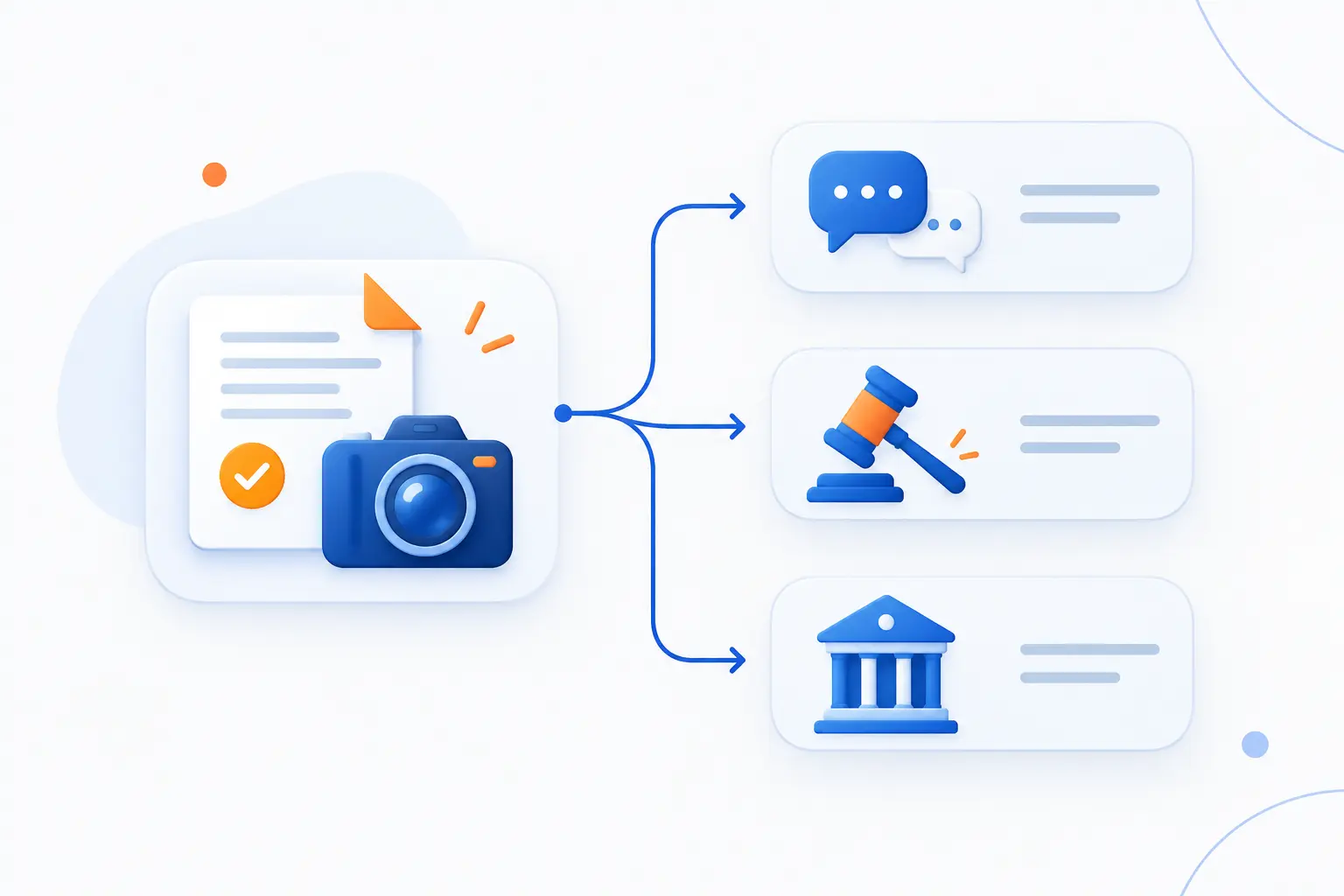
If a squatter already has the domain, preserve evidence before making contact, then choose negotiation, notice, arbitration, or court based on risk and proof. Do not rush in angry. A careless email can reveal urgency, increase the asking price, or create evidence that hurts your case. Treat the issue as both a brand matter and an incident-response matter.
- Capture evidence of the domain, website, DNS, mail setup, ads, redirects, and sale offers.
- Identify the registrar, registrant clues, hosting provider, and any connected domains.
- Assess trademark rights, business urgency, fraud risk, and customer exposure.
- Choose negotiation, legal notice, UDRP or URS, or court action.
- After recovery, lock renewal, DNS, SSL, and mail controls so the problem does not repeat.
Preserve Evidence and Identify the Registrant
Preserve evidence first because the domain’s content can change after the squatter notices attention. Take dated screenshots of the web page, sale listing, ads, redirect chain, contact forms, and any copied branding. Save DNS records, registrar data, certificate details, and email headers if messages were sent. If malware or phishing is involved, isolate samples safely rather than clicking around on a production machine.
Then identify what can be identified. RDAP may show redacted contact details, but it can still reveal registrar, status, creation date, nameservers, and sometimes organization data. Check whether the same registrant controls related domains. Patterns matter in disputes.
We strongly prefer calm evidence over speculation. “This looks like us” is weaker than “This page used our logo, displayed our login prompt, and redirected users after credential entry.”
Decide Whether to Negotiate, Send Notice, or Escalate
Choose negotiation, notice, or escalation based on harm, urgency, cost, and the strength of your claim. If the domain is inactive and priced reasonably, a brokered purchase may be faster than a fight. If it hosts phishing, malware, fake invoices, or copied branding, escalation is usually wiser. If the legal position is uncertain, get advice before making threats.
A cease-and-desist letter can work when the registrant is careless, reachable, or risk-averse. It can also backfire by raising the price or causing evidence cleanup. In fraud cases, provider abuse reports may be necessary alongside legal action. Registrars and hosts often respond faster to clear abuse evidence than to vague brand complaints.
Our view is that speed matters, but sequence matters more. Preserve first, assess second, contact third.
Pursue Transfer Through Arbitration or Court
Pursue transfer through a domain dispute proceeding or court when negotiation is unsafe, unreasonable, or unsuccessful. UDRP is often the practical route when you need the domain transferred and can prove the required elements. URS may help suspend an obvious abusive domain, but it is not the same as getting long-term ownership. Court may be appropriate for repeated abuse, damages, injunctions, fraud, or complex facts.
Work with counsel to prepare the record. Strong filings usually explain trademark rights, confusing similarity, lack of legitimate interest, and bad-faith evidence with exhibits. Weak filings lean on outrage. Panels and courts need proof, not vibes.
Once you recover the domain, do not let it sit unmanaged. Add it to your registrar account, turn on renewals, configure DNS intentionally, and decide whether to redirect it, park it safely, or use it for a campaign.
FAQ
These short answers cover the questions we hear most from site owners, founders, and IT teams. Domain squatting sits at the intersection of branding, security, and law. The practical answer often depends on evidence. When money, fraud, or legal rights are involved, get professional advice before acting.
How Does Domain Squatting Connect to Cybercrime
Domain squatting connects to cybercrime when a confusing domain is used to trick people into trusting a fake site or email. Attackers may use look-alike names for phishing, malware downloads, invoice fraud, fake support portals, or credential theft. The domain gives the scam a familiar wrapper.
What Does Trademark Squatting Mean
Trademark squatting means registering or using a domain that targets another party’s protected mark in bad faith. The registrant may hope to sell it, divert traffic, display ads, or impersonate the brand. The strength of a claim depends on trademark rights, similarity, legitimate interests, and bad-faith evidence.
What Is Reverse Cybersquatting
Reverse cybersquatting is an overreaching attempt to take a domain from someone who has legitimate rights or good-faith use. It often happens when a trademark owner wants a valuable domain that predates its brand or uses a generic meaning. A serious brand owner should avoid this because it can damage credibility.
Can You Get a Squatted Domain Back
Yes, you can often get a squatted domain back if you can prove the domain targets your rights in bad faith. Options include negotiation, registrar or host abuse reports, UDRP, URS, and court action. The faster you preserve evidence, the stronger your recovery position usually becomes.
How 1Byte Supports Domain Protection and Hosting
1Byte supports domain protection by helping customers connect domain ownership, certificates, hosting, and cloud infrastructure into a cleaner operational setup. We do not pretend domain protection is only legal work. It is also careful registration, controlled renewal, correct DNS, valid SSL, secure hosting, and consistent naming. As an AWS Partner, we also understand how domain decisions connect to cloud infrastructure planning.
| 1Byte service | How it connects to domain protection | Practical use |
|---|---|---|
| Domain registration | Secures names before others register them | Register core brand names and variants |
| SSL certificates | Helps users identify encrypted official sites | Protect live websites and customer flows |
| WordPress hosting and shared hosting | Gives smaller sites a clear official home | Host business, campaign, and content sites |
| Cloud hosting and cloud servers | Supports larger or more controlled deployments | Run applications tied to protected domains |
Domain Registration and SSL Certificates
Domain registration is the first defensive move because no one can squat a name you already control. We encourage customers to register the core brand name, important extensions, and obvious variants before public launch. Once registered, those names should be tied to responsible renewal ownership. Losing a domain through neglect is one of the most avoidable web mistakes.
SSL certificates support trust after the right domain is under control. They do not prove a company is honest by themselves, since attackers can also obtain certificates. Still, customers expect official sites to use HTTPS. A real brand on an unsecured page invites doubt.
WordPress Hosting and Shared Hosting
WordPress hosting and shared hosting give official websites a stable place to live under the correct domain. That matters because abandoned pages, inconsistent redirects, and half-finished campaign domains create confusion. If users see one official domain in search, email, receipts, and support materials, they are less likely to trust a copycat.
For small businesses, the discipline is simple. Put the real site on the real domain. Redirect unused variants carefully. Keep contact pages, checkout pages, and login links consistent. The boring version is often the safest version.
Cloud Hosting and Cloud Servers
Cloud hosting and cloud servers help when a business needs more control over applications, DNS planning, and deployment structure. A brand may run a main site, customer portal, API, help center, and regional pages. Each one should use naming that customers can understand and security teams can monitor. Random domain sprawl creates blind spots.
As an AWS Partner, 1Byte can connect domain planning with cloud infrastructure decisions without turning the domain portfolio into chaos. The practical aim is clear ownership: know which domain points where, which service hosts it, and which team is responsible for renewals and changes.


Conclusion
Domain squatting is bad-faith use of a brand-linked domain, and the damage can range from annoying resale demands to serious phishing and fraud. The best defense is early registration, disciplined renewal, monitoring, and clear control over DNS, SSL, mail, and hosting. The best recovery starts with evidence, not anger.
We see domain names as trust infrastructure. They are the front door, the email identity, the login path, and the customer’s first clue that they are in the right place. If a suspicious domain is already out there, document it, assess the risk, and choose the route that fits the facts. If you are still planning a launch, start with the cheaper move: secure the names before someone else turns them into a problem.