

- How We Compared These Free Website Hosting Options
- Top 10 Free Website Hosting Picks
- Five More Free Website Hosting Options Worth Considering
- How to Match Free Website Hosting to Your Project
- Choose the Right Publishing Workflow
- Common Tradeoffs With Free Website Hosting
- When to Upgrade From Free Website Hosting
- FAQ About Free Website Hosting
- Conclusion
Free website hosting can be genuinely useful, but only if you pick the right kind of free. Some options are simple builders that trade flexibility for speed. Others give you a more traditional hosting stack, and a few are really developer platforms with generous free tiers rather than classic shared hosting. In this roundup, we narrowed the field to the services that make the most sense for real projects, so you can shortlist the right fit without spending your afternoon comparing fifteen signup flows.
How We Compared These Free Website Hosting Options
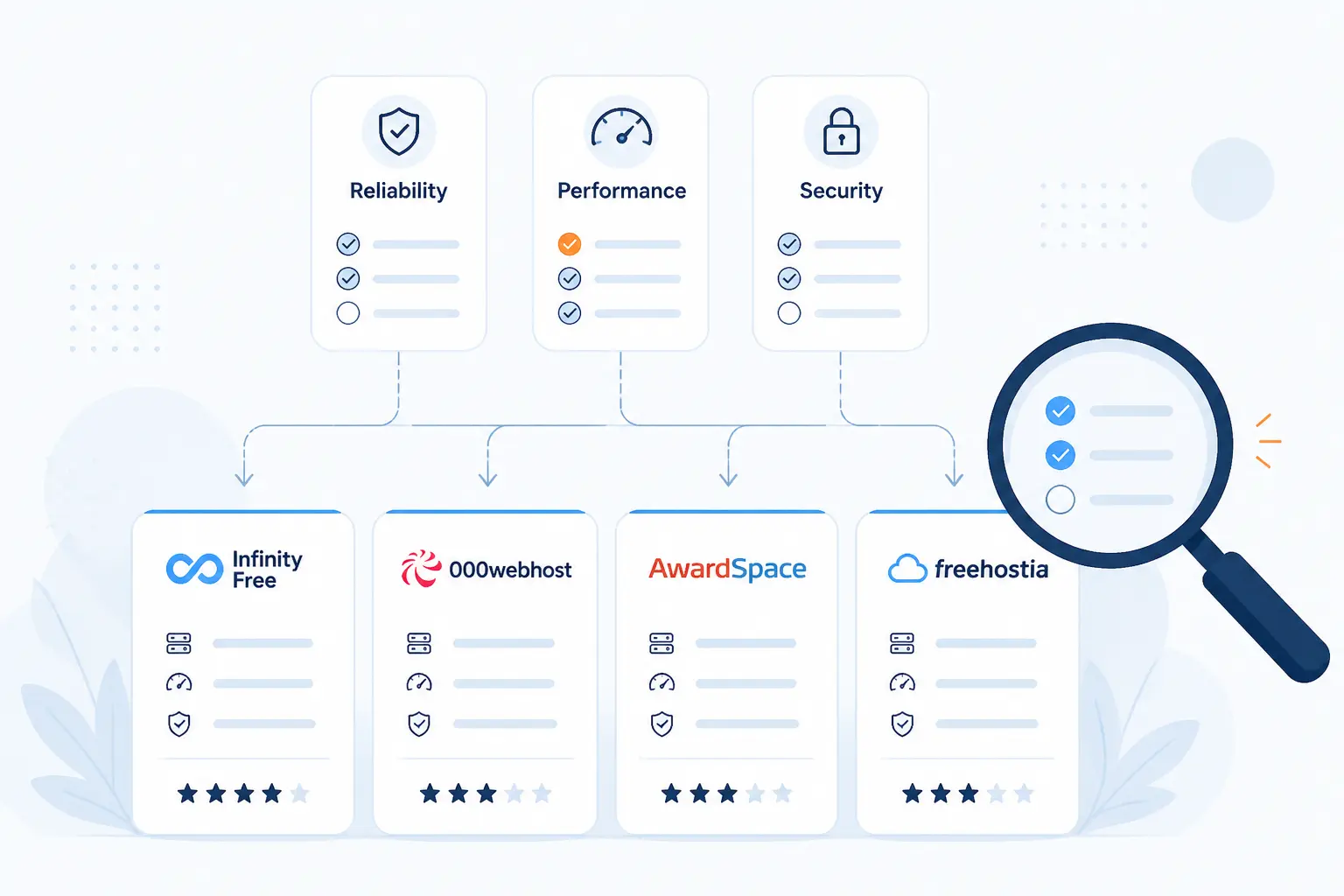
The short answer is this: we favored options that actually let beginners publish something real, while still giving developers and testers enough control to do useful work. That meant looking past marketing labels and checking what each provider really includes, what the free limits look like, how upgrades are handled, and whether independent reviewers describe a service as dependable or frustrating.
Quick Comparison of the Best Free Website Hosting Picks
| Name | Best For | Publishing Workflow | Custom Domain | Main Catch | Score |
|---|---|---|---|---|---|
| InfinityFree | PHP and MySQL practice sites | Control panel, file manager, one-click apps | Yes | Support is forum-led | 4.8 |
| Wix | Beginners who want design help | All-in-one builder | Paid plans | Branding stays on the free site | 4.7 |
| Freehostia | Small CMS experiments | Custom control panel with installer | Yes | Very tight free resource limits | 4.3 |
| AwardSpace | Learners who want support access | Custom panel, file manager, one-click CMS | Yes | Free bandwidth cap is modest | 4.4 |
| Wasmer | Modern app and edge deployments | Repo import and CI/CD | Yes | Not a classic shared host | 4.5 |
| Static.app | Static sites and quick client pages | Drag-and-drop upload | Paid plans | Free plan is tiny | 4.4 |
| FreeHosting.com | Ad-free sites on your own domain | cPanel and installer | Yes | No free subdomains | 4.1 |
| Google Cloud | Developers shipping apps or containers | Cloud services and CLI deploys | Yes | Setup is overkill for beginners | 4.3 |
| CloudAccess.net | Managed WordPress or Joomla learners | Managed CMS hosting | Paid plans | Free path is demo-style, not broad hosting | 3.9 |
| Weebly | Simple small-business starter sites | Builder with Square integrations | Paid plans | Free plan is basic and platform-led | 4.0 |
How We Researched and Evaluated Each Option
We scored the top picks on the same editorial yardstick instead of copying third-party ratings. Here is what mattered most in our ranking.
- Capability fit: can the service realistically support the kind of project most readers mean when they search for a no-cost hosting option.
- Free-plan usefulness: we looked at whether the no-cost tier is enough to publish a working site, not just a teaser that forces an upgrade fast.
- Ease of publishing: we compared how quickly someone can move from signup to a live site through builders, control panels, installers, or repo-based deploys.
- Upgrade honesty: we gave credit to services that clearly explain plan boundaries, add-ons, and what changes when you move beyond the free tier.
- Trust signals: we weighed official documentation against public review pages to spot recurring praise and recurring pain points.
That mix tends to separate free tools that are actually useful from the ones that only look generous on a landing page.
Top 10 Free Website Hosting Picks
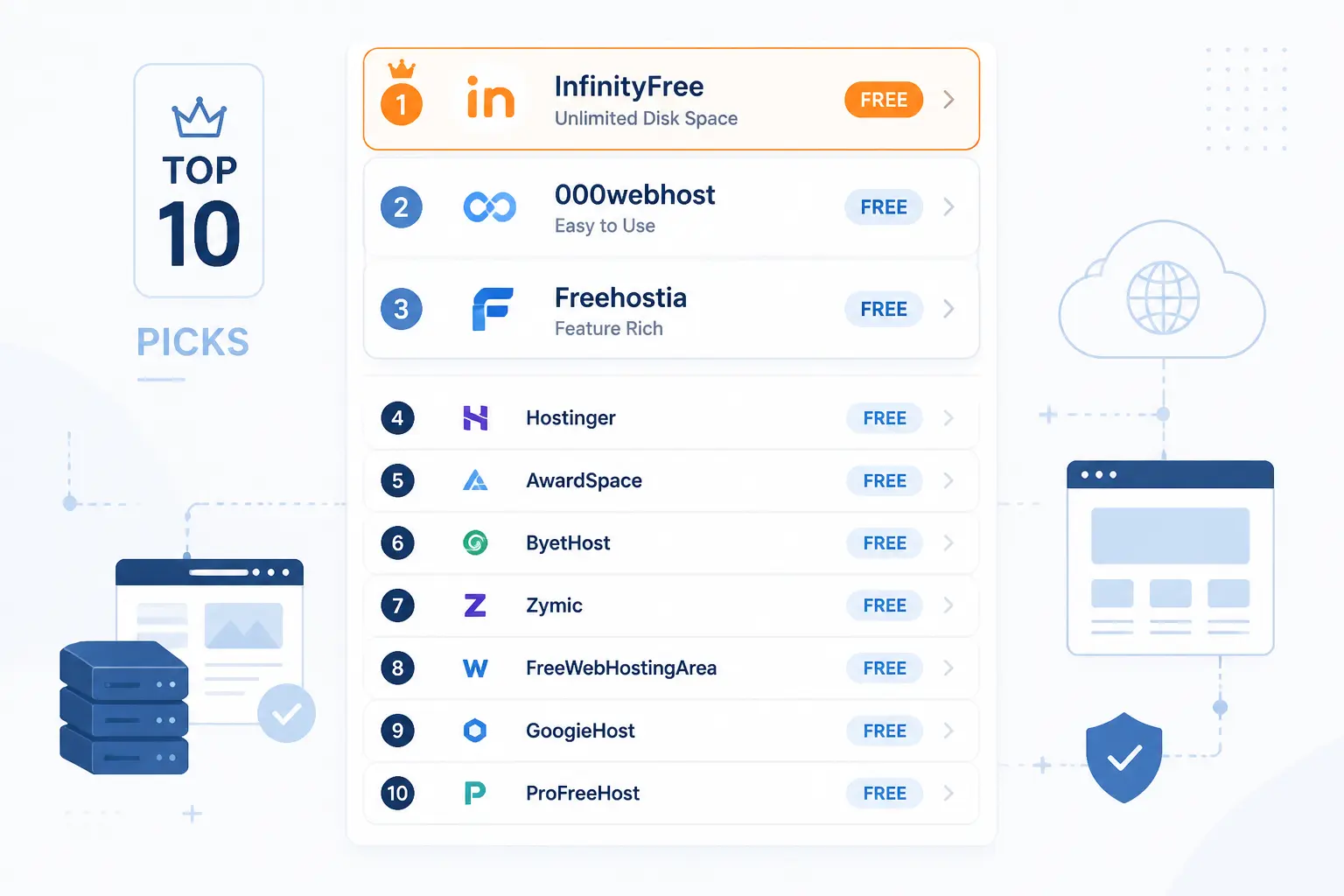
If you want the short version, InfinityFree, Wix, and AwardSpace are the easiest places to start for most readers, but they solve different problems. InfinityFree is the strongest old-school free host in this list, Wix is the easiest builder-led option, and the developer-oriented platforms work best when you already know the workflow you want.
1. InfinityFree
- Category: Traditional free web hosting
- Best for: PHP, MySQL, WordPress, and student projects
- Ease of use: Moderate
- Pricing: Free plan with separate premium alternatives
- Standout feature: Large free database allowance for a no-cost host
For readers who want free website hosting that still feels like real hosting, InfinityFree is the clearest first stop in this list. The official site lays out the right mix of practical features for beginners and tinkerers, including PHP, MySQL, FTP, a file manager, Softaculous, SSL, and support for your own domain. That matters because many free hosts either strip out the basics or hide them behind paid add-ons. InfinityFree does not look fancy, but on paper it is one of the more complete free stacks we found.
The main reason it sits at the top is simple. It gives you room to learn how hosting actually works without immediately pushing you into a site-builder box. If your goal is to practice with WordPress, upload a small PHP site, host a portfolio on your own domain, or stage ideas before paying for anything, InfinityFree covers more ground than most no-cost rivals.
How InfinityFree works
The workflow is refreshingly straightforward. InfinityFree says you sign up with an email address, create an account with a free subdomain or your own domain, and then build the site by uploading files, installing WordPress, or using the included Site.pro builder. The feature list on its homepage is unusually clear for a free host. It includes PHP 8.3, MySQL 8.0 or MariaDB 11.4, free SSL certificates, full .htaccess support, a browser file manager, FTP access, and the Softaculous Apps Installer.
That combination makes it a practical learning platform. You are not just dragging blocks around. You can publish a hand-coded site, spin up WordPress with the installer, or work with databases and config files in a way that looks much closer to standard shared hosting. InfinityFree also highlights that you can bring your own domain or choose from free subdomains across more than two dozen extensions, which makes it flexible for hobby sites and class projects.
Who is InfinityFree for?
InfinityFree fits students, hobbyists, nonprofit side projects, and anyone who wants a real hosting stack without paying on day one. It also makes sense for WordPress learners who want one-click setup instead of a blank VPS.
We would point business-critical sites elsewhere. The platform is generous, but its support model leans on a knowledge base and community forum rather than the kind of direct help most businesses expect.
InfinityFree pricing
- Free Hosting: Free forever with disk space, unmetered-style transfer language on the site, PHP and MySQL support, free SSL, and support for your own domain.
Pros and cons
Pros
- Supports modern PHP plus MySQL or MariaDB, which is still uncommon on free plans.
- Softaculous is included, so WordPress and other apps are easier to install than on bare-bones hosts.
- No ads are placed on your published site according to the official feature page.
- Trustpilot reviewers often praise the value and ad-free setup, while also calling out the surprising feature depth for no cost.
Cons
- Support is community-led, not the kind of direct ticket support many beginners hope for.
- Trustpilot reviewers also mention account suspensions and resource-limit enforcement as a recurring frustration.
- The interface feels more functional than polished.
InfinityFree rating and reviews
- Trustpilot: rated 3.8/5 across 1,188 reviews.
InfinityFree is the pick we would start with if you want free website hosting that teaches you something useful about hosting itself. If you would rather skip control panels and publish through a visual builder, the next option is the cleaner fit.
2. Wix
- Category: Website builder with hosting included
- Best for: Beginners, portfolios, small business starter sites
- Ease of use: Easy
- Pricing: Free start, paid plans for custom domains and more features
- Standout feature: Strong design tooling with business add-ons built in
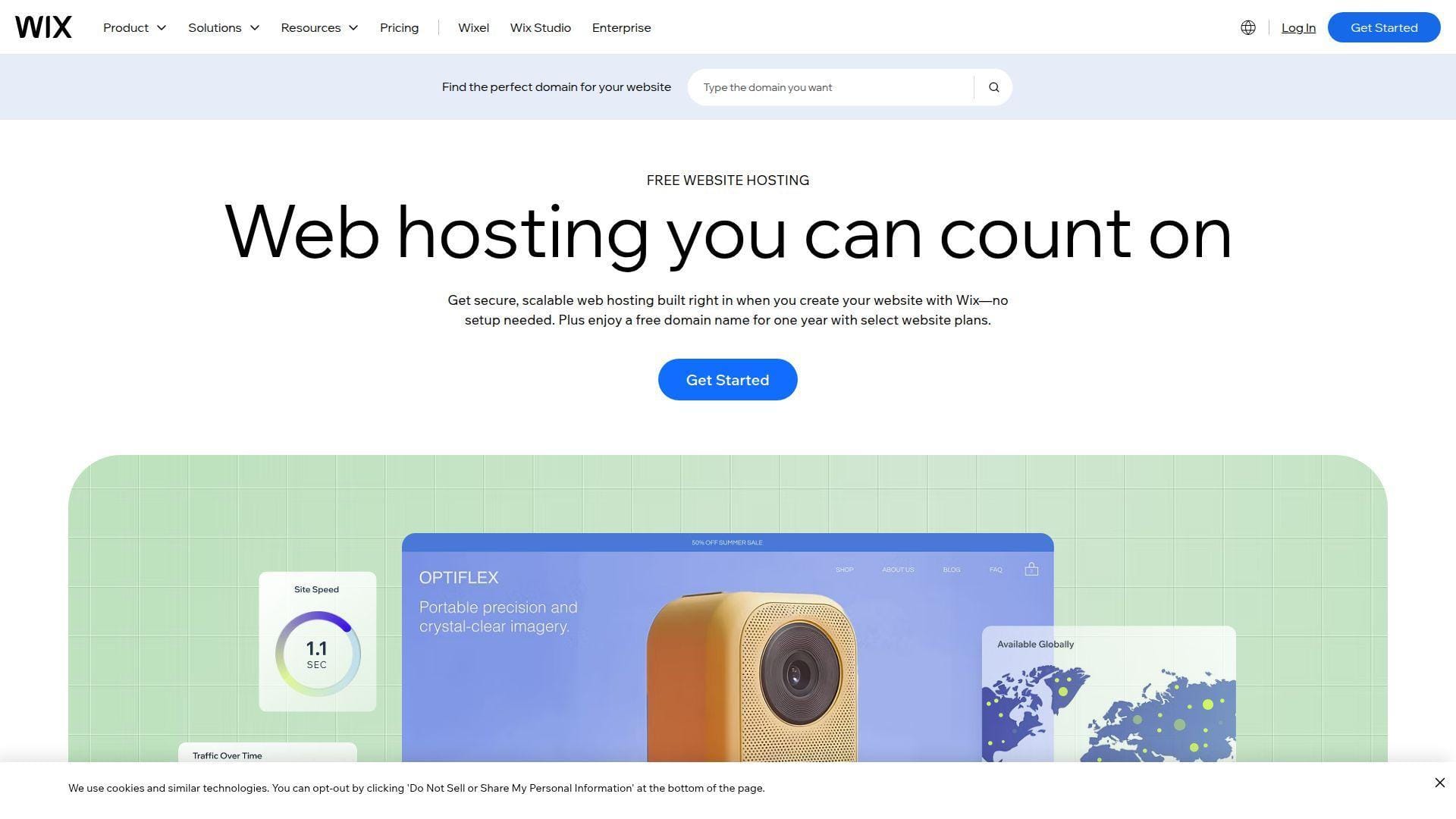
If you care more about getting a polished site online than learning hosting internals, Wix is one of the safest choices on the board. Its free hosting offer is part of the larger Wix builder platform, so the point is not server access or PHP tinkering. The point is to get a professional-looking website live quickly with templates, AI tools, design controls, and built-in business features.
That makes Wix a very different animal from InfinityFree. You give up some low-level control, but you get a smoother path from blank page to live site. For freelancers, local businesses, creators, and first-time site owners, that trade can be well worth it.
How Wix works
Wix frames the process in five steps on its official plan page. You can create a site from a prompt or start from a free template, customize the design with the drag-and-drop editor, add business tools such as eCommerce or scheduling, register or connect a domain, and then use built-in marketing and SEO features to grow the site. The broader platform pages also emphasize multi-cloud hosting, AI creation tools, and a large template library.
In practice, this means hosting is bundled into the builder rather than exposed as a separate cPanel-style product. That is excellent for readers who want everything in one dashboard. It is less appealing if you want to upload arbitrary PHP apps or manage a conventional LAMP stack. Wix does let you build freely and publish on a Wix-branded address, but the custom-domain and branding-removal step lives on premium plans.
Who is Wix for?
Wix is for people who want a website, not a hosting hobby. It works especially well for brochure sites, personal brands, small service businesses, restaurants, and portfolios that need strong design tools and an easy editor.
If you want raw hosting access, your own stack, or a place to test PHP or MySQL apps, you should skip Wix and choose a more traditional host or a developer platform.
Wix pricing
- Free: Start at no cost with a Wix-branded site, built-in hosting, templates, and builder tools.
- Light: $17.77 per month on the displayed annual rate with a free domain for a year, storage, multi-cloud hosting, light marketing tools, and collaborator access.
- Core: $29.77 per month on the displayed annual rate with more storage, payment acceptance, basic eCommerce, scheduling, and a bigger collaborator allowance.
- Business: $39.77 per month on the displayed annual rate with higher storage, standard eCommerce, standard marketing, payments, and more collaborators.
- Business Elite: $159.77 per month on the displayed annual rate with unlimited storage, advanced eCommerce, advanced marketing, a developer platform layer, and a much larger collaborator cap.
For the full breakdown, see the current plan grid.
Pros and cons
Pros
- Very approachable publishing flow for non-technical users.
- Builder, hosting, templates, SEO tools, and business features live in one product.
- The official plans include round-the-clock customer care across paid tiers.
- G2 reviewers consistently praise the design flexibility and breadth of features.
Cons
- The free plan keeps Wix branding and a Wix subdomain.
- G2 reviewers also mention that the interface can feel complex once you move beyond the basics.
- It is not the right environment for custom PHP applications.
Wix rating and reviews
- G2: rated 4.2/5 across 1,872 reviews.
Wix earns its spot by making website publishing easy for ordinary users. If you need free hosting with a real control panel instead of a site builder, the next few entries are a better match.
3. Freehostia
- Category: Traditional hosting service
- Best for: Very small CMS tests and lightweight personal sites
- Ease of use: Moderate
- Pricing: Free entry plan plus paid cloud hosting
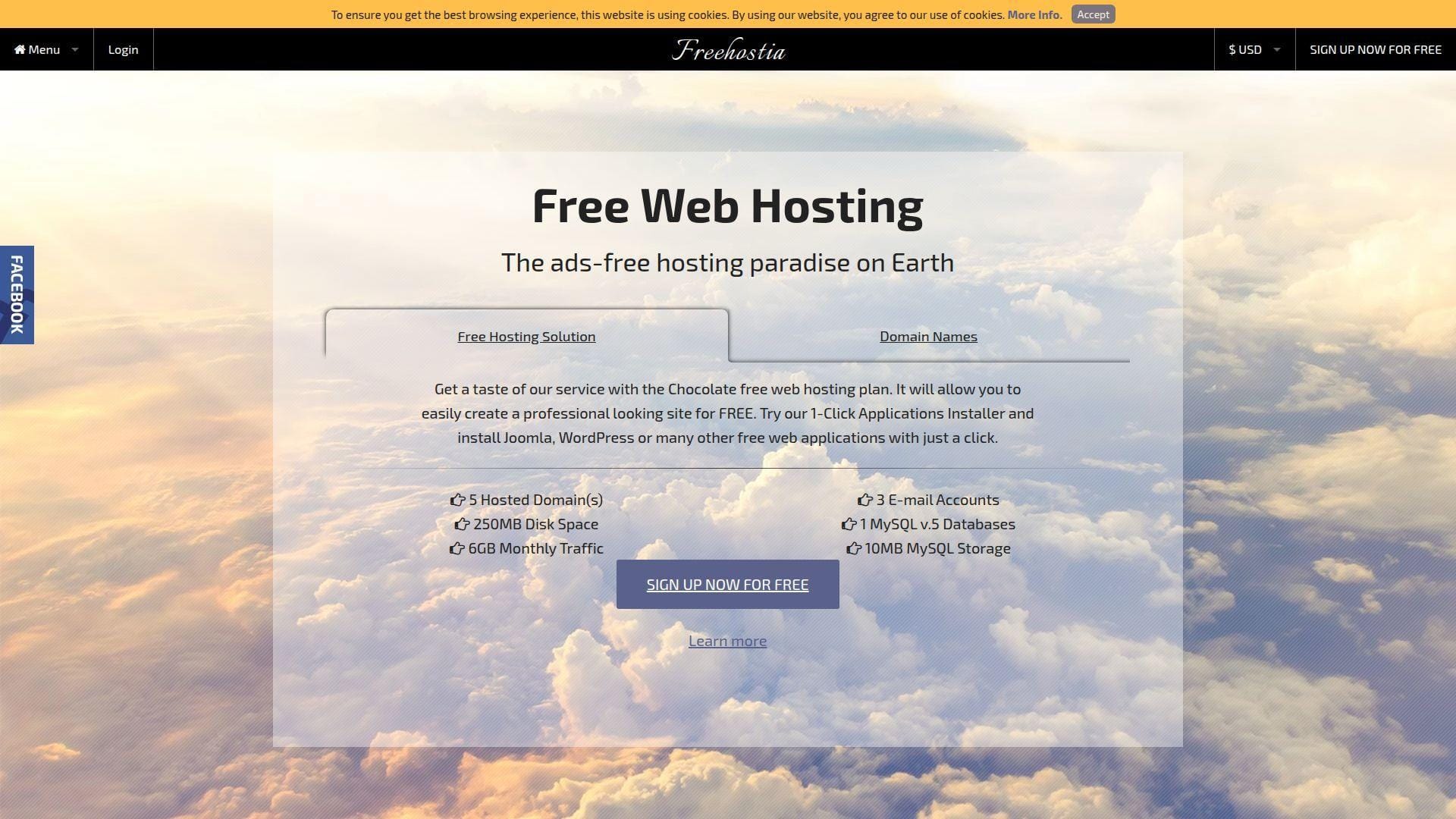
Freehostia stands out because it approaches free hosting like a trimmed-down version of paid shared hosting, not a throwaway demo. The service centers its no-cost Chocolate plan and pairs it with a one-click installer, email accounts, and support resources that are more formal than what many free hosts provide.
That said, the limits are real. This is a decent place to test a tiny WordPress or Joomla install, but it is not the place we would choose for a content-heavy site or anything that might grow quickly.
How Freehostia works
Freehostia pitches the Chocolate plan as a way to create a professional-looking site for free and try its one-click applications installer. On the homepage, the free package includes hosted domains, a small storage pool, monthly traffic, email accounts, one MySQL database, and a slim database storage cap. The platform also points to its clustered hosting architecture and in-house installer for more than fifty web apps.
In practical terms, the workflow is old-school hosting. You sign up, point a domain or add one, use the panel, and install software such as WordPress or Joomla if you want a CMS route. That makes it useful for learning and testing, especially if you want the site to feel more like standard hosting than a walled-garden builder.
Who is Freehostia for?
Freehostia is for readers who want a tiny but proper hosting environment for experiments, classwork, or a very small brochure site. It also suits people who like the idea of several hosted domains on the free plan.
If you expect meaningful storage, heavier media use, or lots of traffic, you should look elsewhere quickly.
Freehostia pricing
- Chocolate: Free with hosted domains, email accounts, monthly traffic, one MySQL database, and installer access.
- Watercircle Plan: from $4.95 per month according to the main navigation for its paid cloud-hosting range.
- Lovebeat Plan: from $7.95 per month in the paid cloud-hosting lineup.
- Wildhoney Plan: from $10.95 per month in the paid cloud-hosting lineup.
- Supernatural Plan: from $19.95 per month in the paid cloud-hosting lineup.
Pros and cons
Pros
- The free plan supports real CMS testing, not just static files.
- Email accounts are included, which is less common at this price point.
- The service positions support, FAQ material, and a ticket system more prominently than many free hosts.
Cons
- The storage and database caps are tight enough to feel cramped almost immediately.
- Trustpilot sentiment is mixed, with positive long-term comments sitting beside complaints about suspensions and support handling.
- The product naming feels dated, which may not matter technically but can make comparison shopping harder.
Freehostia rating and reviews
- Trustpilot: rated 2.9/5 across 15 reviews.
Freehostia makes sense when you know the project will stay small. If you like the same old-school hosting feel but want a bit more breathing room and a more modern support pitch, AwardSpace is the stronger next look.
4. AwardSpace
- Category: Traditional hosting service
- Best for: Learners and small sites that still want support access
- Ease of use: Moderate
- Pricing: Free hosting with paid shared-hosting upgrades
- Standout feature: Free plan with support availability and one-click CMS flow
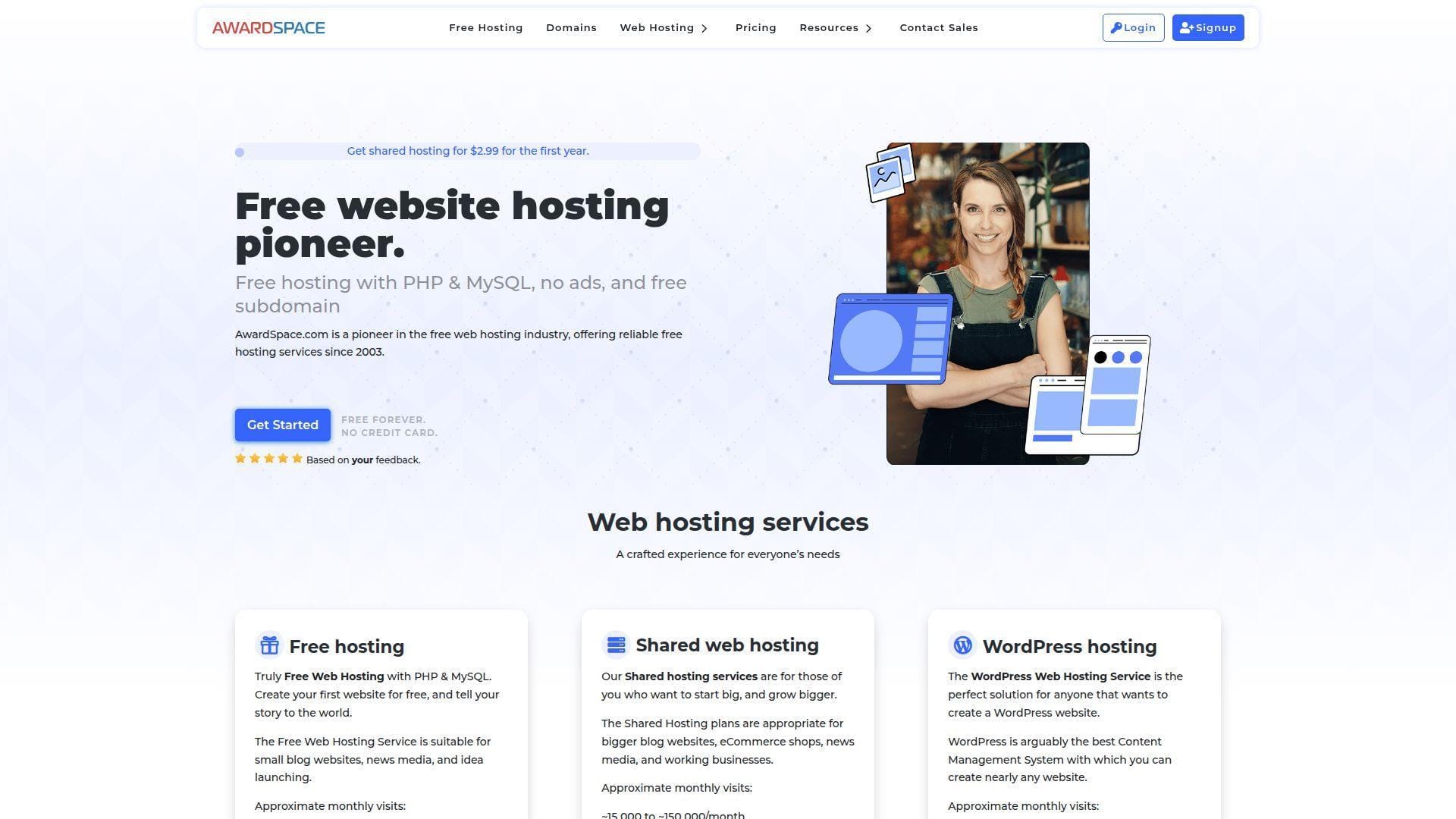
AwardSpace gets a high spot because it tries to make free hosting feel less disposable. The company positions itself as a long-running free-hosting provider, offers a custom control panel, includes one-click CMS installation, and explicitly says support is available even on the free service. That last part is why many readers will find it appealing.
We do not think it beats InfinityFree on sheer free-plan generosity, but it is arguably easier to recommend to someone who values guidance and a cleaner onboarding story. It is also one of the better fits for beginners who want to test WordPress or Joomla without jumping straight into a paid plan.
How AwardSpace works
The free-hosting page lays out a simple three-step path. You sign up for a free account, choose a CMS, and install it with AwardSpace’s Zacky Installer. The same page highlights a web-based file manager, one-click CMS setup, a site builder, firewall protection, spam and virus protection, a custom dashboard, and traffic-usage visibility inside its control panel.
AwardSpace also says the free plan can host one domain plus free subdomains, and the service presents itself as suitable for small blogs, news-style sites, and idea launches. That framing feels about right. It is not positioned as serious business infrastructure, but it is more than enough for experimentation, learning, and basic publishing.
Who is AwardSpace for?
AwardSpace is for beginners who want free website hosting with a familiar workflow, but who still care about having support and guided setup. It is also good for early personal sites and small nonprofit or project pages.
If your priority is a large free resource pool, you will probably prefer InfinityFree. If your priority is a pure drag-and-drop editor, Wix or Weebly will feel simpler.
AwardSpace pricing
- Free Hosting: Free forever with ad-free hosting, one-click CMS installation, file management, support access, and room for a domain plus free subdomains.
- Basic: $0.25 per month on the displayed annual rate with unlimited disk, unlimited traffic, domain hosting, database support, and support.
- Web Pro Plus: $7.57 per month on the displayed annual rate with unlimited disk, unlimited traffic, more hosted domains, a free domain for life, and support.
- Max Pack Plus: $9.83 per month on the displayed annual rate with unlimited disk, unlimited traffic, broader domain hosting, and support.
You can compare the shared tiers in the current plan lineup.
Pros and cons
Pros
- Support is promoted even for the free plan, which is unusual in this category.
- One-click CMS setup lowers the barrier for WordPress and Joomla learners.
- The custom panel is built around hosting tasks rather than general site-builder abstractions.
- The service is explicit about being ad-free on the free tier.
Cons
- The free traffic and site limits are still modest compared with the most generous traditional hosts.
- Trustpilot feedback is sharply mixed, especially around performance expectations and account issues.
- The custom panel helps beginners, but readers who want standard cPanel everywhere may need an adjustment period.
AwardSpace rating and reviews
- Trustpilot: rated 2.5/5 across 47 reviews.
AwardSpace is a practical middle ground between bare-bones free hosts and builder-led platforms. If your project is more modern, app-like, or developer-driven, Wasmer is a much more interesting path.
5. Wasmer
- Category: Developer platform and edge hosting service
- Best for: Modern web apps, repo-based deploys, and edge delivery
- Ease of use: Moderate for developers, harder for beginners
- Pricing: Free Hobby tier plus paid team plans
- Standout feature: Repo import with CI/CD on a free edge-focused platform
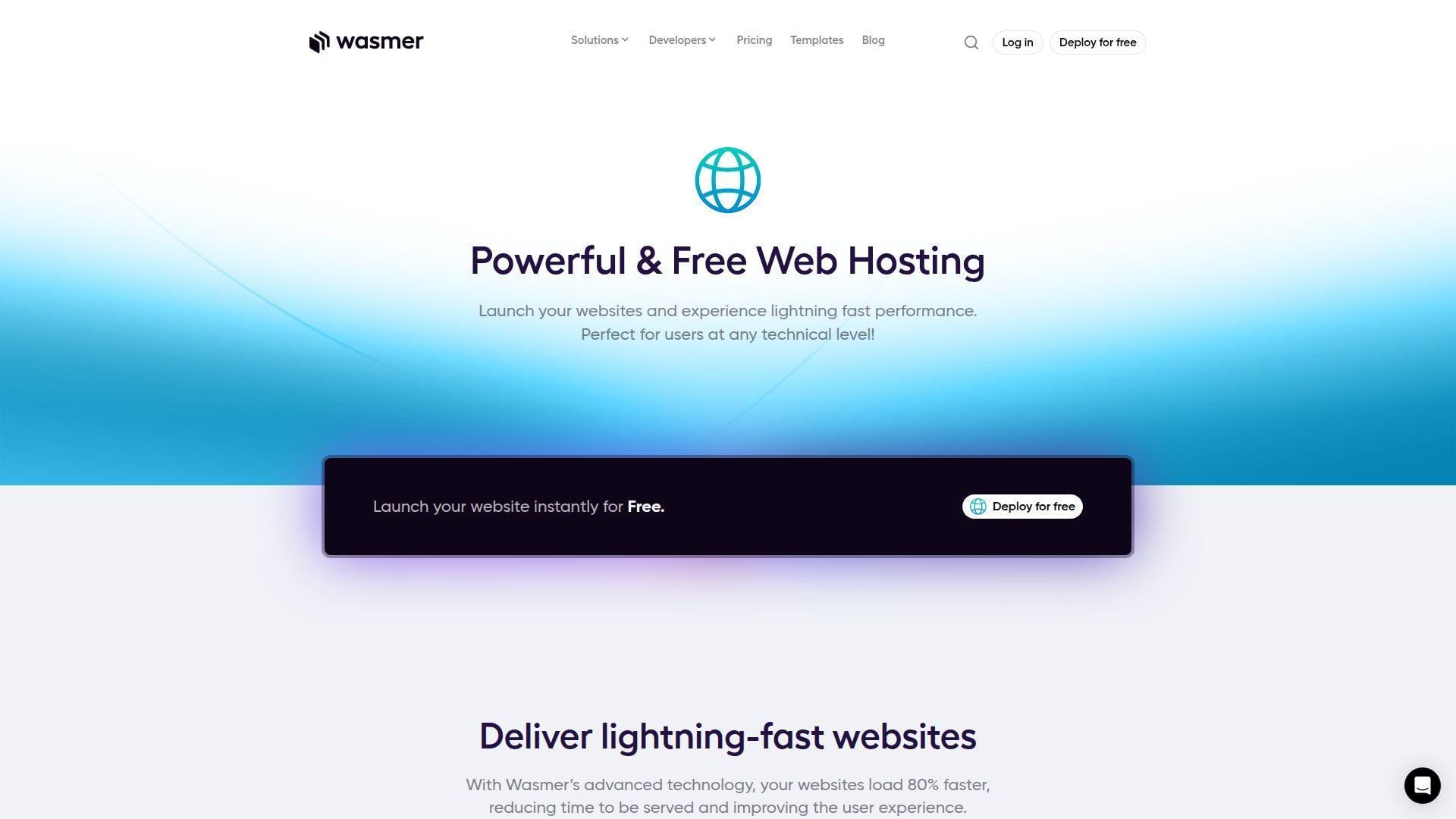
Wasmer is one of the most interesting entries here because it is not pretending to be classic shared hosting. It is a modern deployment platform that happens to offer a free web-hosting route, which means it can be far more capable for app-style projects than a traditional no-cost host. If your idea of free website hosting includes repo imports, CI/CD, edge delivery, and custom domains, Wasmer deserves a serious look.
That does not make it the universal answer. Beginners who want a simple blog or a visual builder will probably find it needlessly technical. Developers, on the other hand, may find it much closer to how they already work.
How Wasmer works
The pricing and product pages show a Git-style workflow. Wasmer lets you import a repository, use automatic CI/CD, and deploy web applications onto its edge network. The platform compares the Hobby tier against Pro and Enterprise rather than against old-school hosting packages, which tells you a lot about its audience. On the free plan, Wasmer includes one seat, automatic CI/CD, bandwidth, compute hours, a CDN, and support for custom domains.
The full feature table goes deeper. It lists app limits, request allowances, storage, database availability per app, build minutes, execution priority, SSL support, and the jump from a web-only application type on Hobby to broader application support on higher plans. In other words, Wasmer behaves more like a low-friction app platform than a bargain shared host.
Who is Wasmer for?
Wasmer is for developers, technical founders, and teams shipping small web apps, static front ends, or edge-friendly services. It is also attractive if you want a modern deployment flow instead of a file manager and FTP.
We would not send a first-time site owner here unless they specifically wanted to learn deployment workflows. For a plain brochure site, it is more tool than you need.
Wasmer pricing
- Hobby: Free forever with one seat, repo import, automatic CI/CD, bandwidth, compute hours, edge CDN access, app slots, and community support.
- Pro: $10 per month with team collaboration, priority execution, more bandwidth, more compute time, SFTP and SSH access, and email or chat support.
- Enterprise & Subhosting: Custom pricing with unlimited users, subhosting, dedicated locations, an SLA, compliance options, and advanced support.
For the detailed limits and overage rules, check the live plan comparison.
Pros and cons
Pros
- The free tier is built around real developer workflows, not a toy environment.
- Automatic CI/CD and custom domains are strong inclusions for a no-cost plan.
- The feature matrix is unusually transparent about requests, storage, compute, and overages.
Cons
- Not beginner-friendly if you expect a builder or cPanel-like setup.
- The free plan is for low-traffic projects, so success can push you into usage-based decisions quickly.
- We did not find a meaningful public review footprint for this hosting offering on the major review pages we checked, so outside sentiment is still thin.
Wasmer rating and reviews
Wasmer’s hosting offering does not yet have a strong third-party review footprint on the major software and business review sites we checked, so we would treat this one as a documentation-led decision rather than a crowd-rated one.
Wasmer is a smart pick if you think like a developer first. If you want static hosting with almost no setup and a friendlier upload flow, Static.app is the more direct option.
6. Static.app
- Category: Static hosting service
- Best for: Landing pages, portfolios, PDFs, and small static sites
- Ease of use: Easy
- Pricing: Free tier with low-cost paid plans
- Standout feature: Very fast drag-and-drop publishing
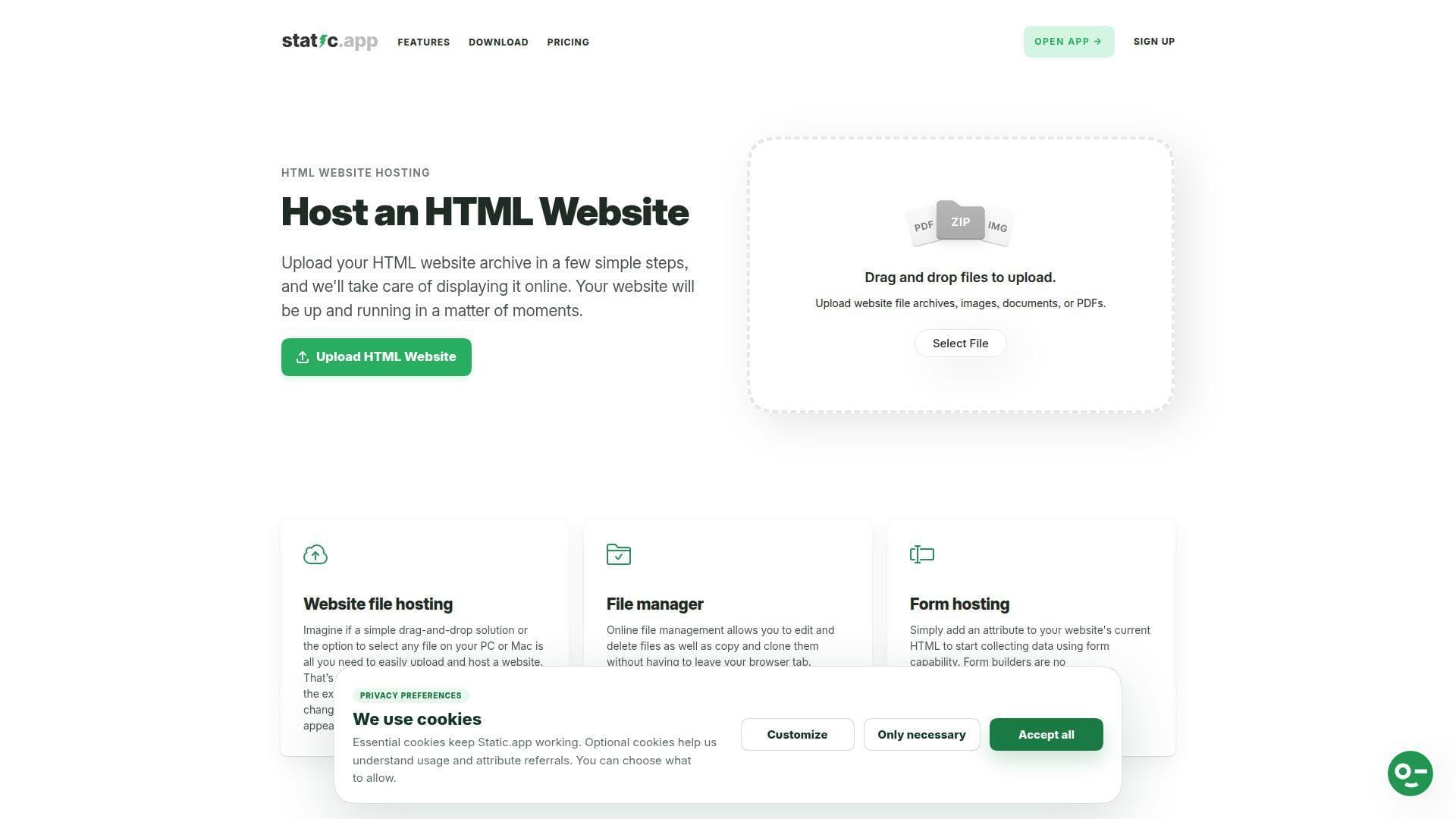
Static.app is the cleanest pick here if your site is truly static and you want speed over complexity. Its pitch is simple on purpose. Upload an archive or HTML file, get a live site fast, and skip the control-panel clutter that comes with traditional hosting. For landing pages, portfolios, event pages, downloadable files, and lightweight client deliverables, that approach makes a lot of sense.
The reason it does not rank higher is just as straightforward. Its free plan is tiny. If your project needs dynamic code, databases, or more serious storage room, you will outgrow it fast.
How Static.app works
The official pages center a drag-and-drop workflow. You upload your project archive, choose a free subdomain on the free plan, and publish immediately. The paid plans add custom domains, analytics, forms, integrations, workspaces, and larger storage pools. Static.app also publishes practical details many rivals bury, including file-size limits and what kind of support free users actually get.
That level of clarity is useful. The free plan supports one website, a very small storage allowance, SSL, QR codes, and a seven-day trial language around the app experience. Paid tiers unlock more sites and broader management features, which makes the service more appealing for freelancers or small agencies handling several microsites.
Who is Static.app for?
Static.app is for people who already have static files and want a dead-simple place to host them. Designers, marketers, freelancers, and teachers can all get value from that.
If you need WordPress, PHP, MySQL, or a more conventional hosting stack, this is the wrong tool. It does one job well, and that job is static publishing.
Static.app pricing
- Free: $0 with one website, storage, a free subdomain, SSL, QR codes, and desktop-app access.
- Starter: $5 per month with more websites, more storage, custom domains, analytics, forms, integrations, and workspaces.
- Medium: $10 per month with a larger site allowance, more storage, the same core paid features, and one team seat.
- Large: $15 per month with many more sites, much more storage, the same feature set, and multiple team seats.
Static.app also spells out add-ons and support levels in its plan details.
Pros and cons
Pros
- One of the easiest upload-and-publish flows in this roundup.
- Clear feature separation between free and paid plans.
- Good fit for small client pages because paid tiers add workspaces and team seats.
- Trustpilot reviewers often praise responsiveness from support and the platform’s simplicity.
Cons
- The free storage ceiling is tiny by normal website standards.
- The platform is static-first, so dynamic projects need another host entirely.
- Trustpilot sentiment is positive overall, but the review volume is still fairly small.
Static.app rating and reviews
- Trustpilot: rated 3.7/5 across 21 reviews.
Static.app is a strong specialist pick, not a one-size-fits-all host. If you want a more traditional ad-free host and already own a domain, FreeHosting.com is the next stop.
7. FreeHosting.com
- Category: Traditional hosting service
- Best for: Ad-free hosting on your own registered domain
- Ease of use: Moderate
- Pricing: Free plan with paid hosting and one-time add-ons
- Standout feature: cPanel-style workflow without forced onsite ads
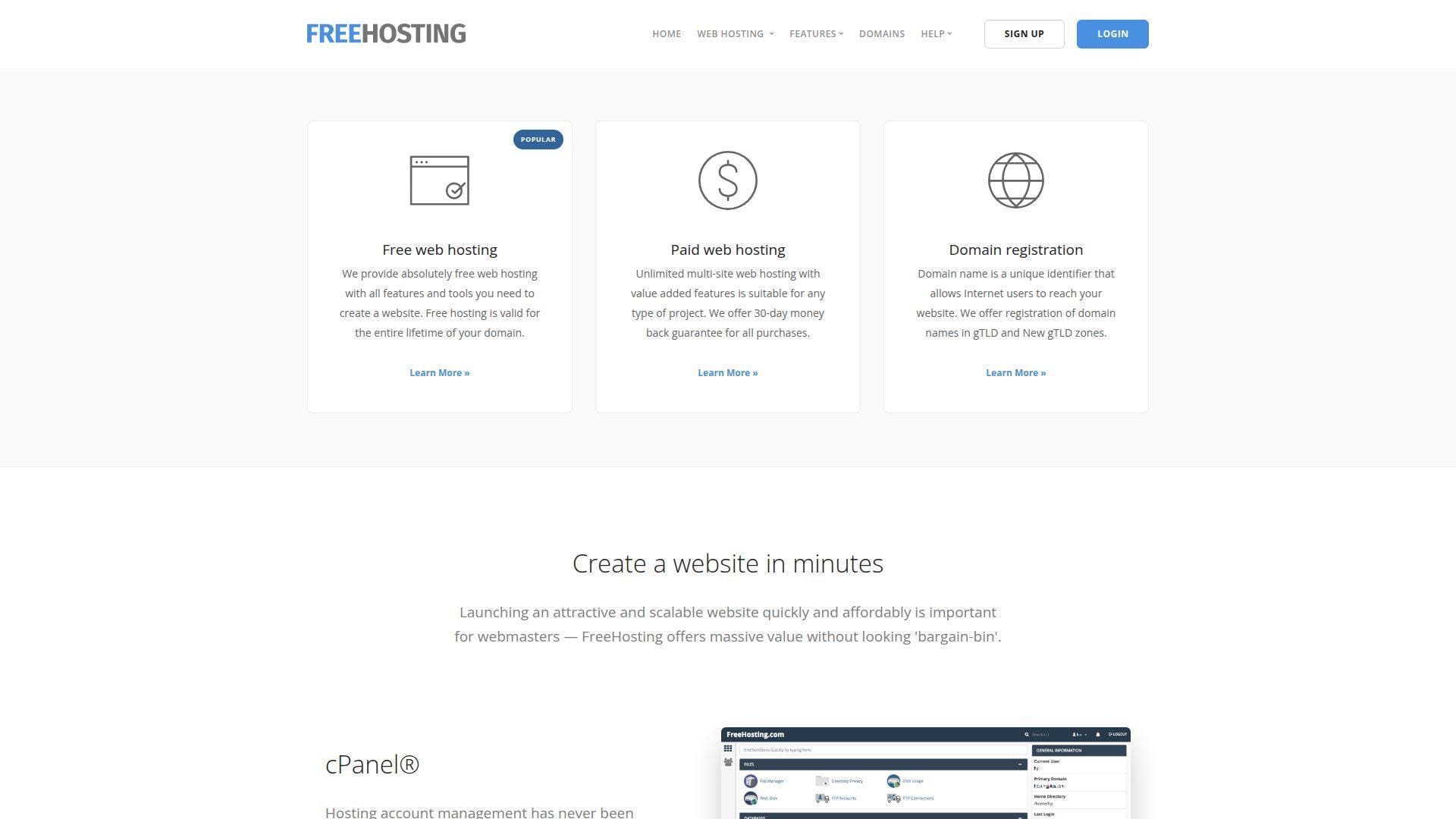
FreeHosting.com is appealing for a very specific reason. It gives you an ad-free free hosting plan built around your own domain, which instantly makes it feel more serious than some free hosts that live on throwaway subdomains. It also includes familiar tools such as cPanel, a site builder, an apps installer, email, and MySQL.
The catch is equally important. FreeHosting.com does not offer free subdomain hosting, and several useful features on the free plan are disabled or sold as upgrades. That makes the offer more constrained than the homepage pitch first suggests.
How FreeHosting.com works
The official free-hosting package page says the service is designed for lightweight sites, including blogs, forums, and projects built with the included site builder. The workflow is classic shared hosting. You bring your own registered domain, point it to the service, and then build via the control panel, app installer, or file manager. FreeHosting.com is also upfront about what it does not offer on the free plan, including free subdomain hosting and PHP mail by default.
One detail we appreciate is the add-on model. Instead of forcing a full plan jump for every missing feature, FreeHosting.com sells one-time upgrades such as SSL or mail support for free accounts. That can be convenient for a narrow use case, though it also means “free” may not stay entirely free if you want a more complete setup.
Who is FreeHosting.com for?
FreeHosting.com is for hobby site owners who already have a domain and want a conventional hosting environment without ads on the published site. It also works for lightweight WordPress-style experiments if your needs stay small.
If you need a free subdomain, or if you dislike piecemeal add-ons, it will probably feel restrictive.
FreeHosting.com pricing
- Free Hosting: Free with storage, unmetered bandwidth language, one hosted site, one email account, one MySQL database, cPanel access, and installer tools.
- Paid Hosting: $7.99 per month with much more storage, unlimited hosted sites, unlimited email, unlimited MySQL, SSL, premium servers, and included add-ons.
- SSL add-on for free accounts: one-time charge that enables HTTPS support and includes a certificate.
- PHP mail add-on for free accounts: one-time charge that enables mail sending for scripts.
Feature specifics for the free package and paid upgrade are laid out on the package details page.
Pros and cons
Pros
- No forced site ads on the free plan.
- Uses a familiar hosting workflow for people who want more than a site builder.
- Lets you keep a free account and purchase only a couple of missing features if that suits your project.
Cons
- You need your own registered domain to use the free plan.
- Some useful features are disabled unless you buy an upgrade or move to paid hosting.
- Trustpilot feedback is notably weak, especially around billing and support complaints.
FreeHosting.com rating and reviews
- Trustpilot: rated 1.8/5 across 41 reviews.
FreeHosting.com remains interesting because the setup is practical and ad-free, but the public review profile keeps it lower in our ranking. If you are a developer and want a free option with far more technical headroom, Google Cloud is the better jump.
8. Google Cloud
- Category: Cloud platform
- Best for: Developers, startups, APIs, and app-style deployments
- Ease of use: Hard for beginners
- Pricing: Free program plus pay-as-you-go services
- Standout feature: Flexible paths for static sites, containers, and full apps
Google Cloud belongs in a free website hosting list only if we are honest about what it is. This is not beginner shared hosting. It is a large cloud platform with multiple ways to host sites and applications, some of which have generous free usage. If you want to deploy a static site, a containerized app, or an API-backed service on infrastructure that can grow with you, Google Cloud is one of the most capable options here.
The tradeoff is complexity. Most casual users do not need this much power. Developers, though, may prefer it because the free path can start small without forcing a migration later.
How Google Cloud works
Google Cloud’s hosting-options documentation points readers toward different services depending on workload. For HTTP services and backend apps, it recommends Cloud Run. For container-based services, it also points to Cloud Run. For more traditional VM-style control, it positions Compute Engine. Separate documentation also explains how to host a static website on App Engine and then map your own domain after deployment.
That means the workflow depends on the project. You might deploy source or a container to Cloud Run, publish a simple static site through App Engine, or use other Google services around the app. It is far more flexible than a typical free host, but it expects you to choose the right product rather than giving you one obvious hosting panel.
Who is Google Cloud for?
Google Cloud is for developers, technical teams, and learners who want to build on a real cloud platform from day one. It also suits prototypes that may become production applications later.
If you want a drag-and-drop website or a one-click WordPress starter, this is overkill and the learning curve will feel steep.
Google Cloud pricing
- Free Program: includes trial credit plus ongoing free usage across many products, including web-hosting-relevant services.
- Cloud Run: pay as you go with an always-free allowance before usage billing starts.
- App Engine Standard: free-tier resources are available before standard usage charges apply.
- Other services: billing depends on the product you choose, the region, and what storage, database, build, or network services sit around the site.
Google lays out the free program on its free-tier overview.
Pros and cons
Pros
- More scalable and future-proof than conventional free hosts.
- Supports multiple hosting styles, from static sites to containerized services.
- You can keep the same broader ecosystem if the project grows into a paid app.
- Independent enterprise reviewers rate the platform highly overall.
Cons
- Too complex for many beginners.
- Costs can become harder to predict once you combine several services.
- You need to understand product choice, billing, and deployment flow before jumping in.
Google Cloud rating and reviews
- Gartner Peer Insights: rated 4.7/5 across 2,023 ratings.
Google Cloud is not the easiest route, but it is one of the strongest “start free and keep growing” options for technical users. If you want managed CMS hosting instead of cloud services, CloudAccess.net is more specialized.
9. CloudAccess.net
- Category: Managed hosting service
- Best for: WordPress and Joomla users who value support
- Ease of use: Moderate
- Pricing: Low-cost managed hosting with a free-launch angle for CMS learners
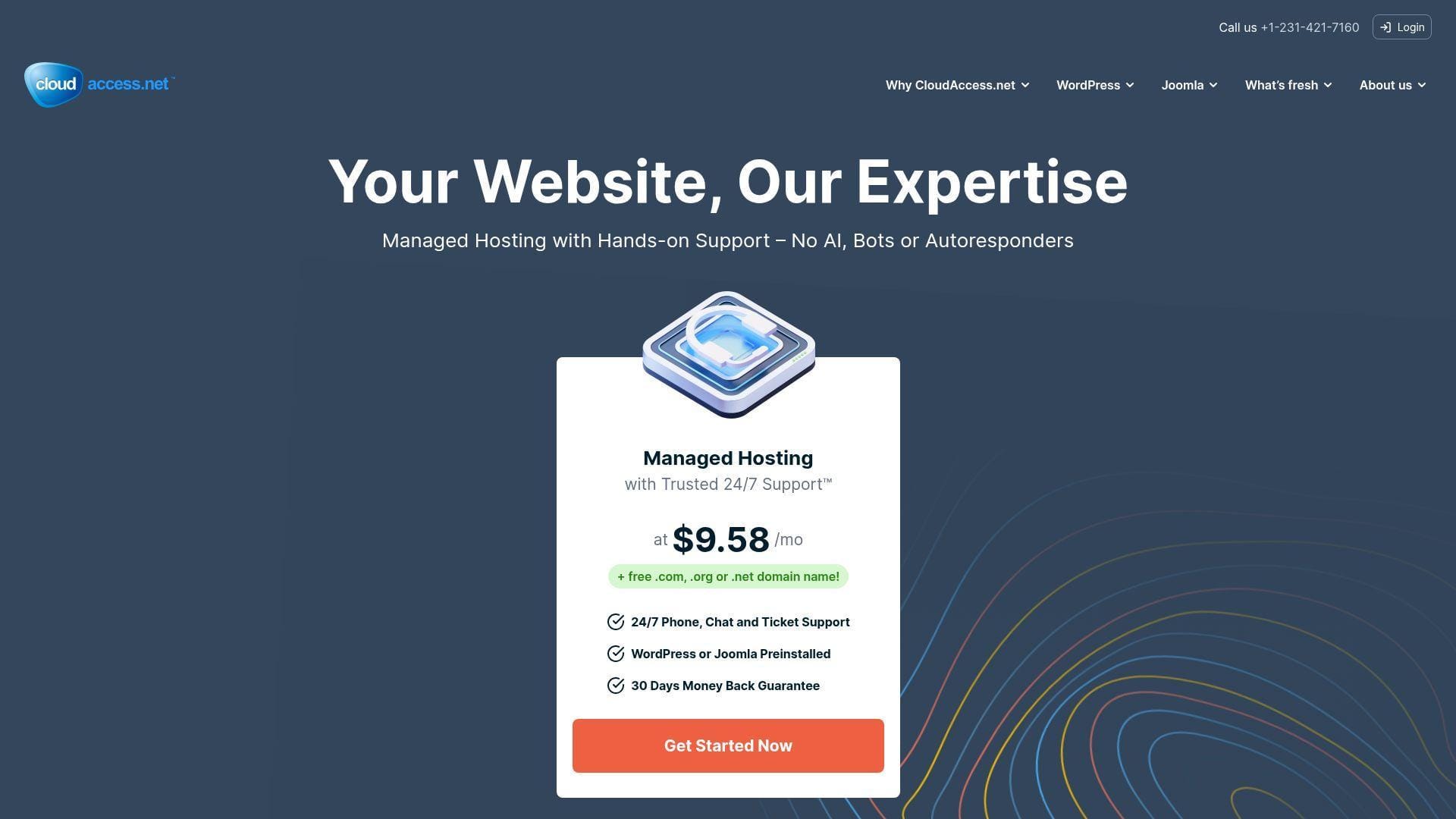
CloudAccess.net is the most specialized host in the top ten. Rather than trying to be everything to everyone, it focuses on managed WordPress and Joomla hosting with a support-heavy pitch. The official homepage leans hard into trusted support, preinstalled CMS setups, free migrations, training, SSL, and CDN access.
That focus is useful if you already know you want WordPress or Joomla. It is less compelling if you want a general-purpose free host for arbitrary projects. In that sense, CloudAccess.net is narrower than the options ranked above it, but it is also clearer about the niche it serves.
How CloudAccess.net works
The homepage frames the core offer as managed hosting with phone, chat, and ticket support, plus WordPress or Joomla preinstalled. It also highlights its Cloud Control Panel, Smart Updater, free migrations, training resources, free SSL, and a free CDN. The navigation specifically points to launching a free WordPress site or a free Joomla site, which signals that the company uses free entry points as a path into its managed environment.
That means the user experience is less about building from scratch on raw hosting and more about starting inside a managed CMS lane. If you want a CMS-first setup with support, that is attractive. If you want to host random files, custom stacks, or several side experiments, it is not the broadest free option here.
Who is CloudAccess.net for?
CloudAccess.net fits Joomla users especially well, and it also works for WordPress learners who care more about guidance than raw hosting breadth. It is a reasonable choice for agencies or site owners who want managed support around familiar CMS software.
Anyone looking for a wide-open, truly general free hosting environment should probably look elsewhere.
CloudAccess.net pricing
- Managed Hosting: $9.58 per month on the homepage with a free domain offer, preinstalled WordPress or Joomla, support access, and a money-back guarantee.
- Free CMS launch path: the homepage also promotes separate launch options for free WordPress and free Joomla sites, though the main paid managed plan is the clearest published offer.
Pros and cons
Pros
- Clear specialty in WordPress and Joomla rather than vague “host anything” messaging.
- Preinstalled CMS setup reduces friction for beginners in those ecosystems.
- Support is a central part of the product pitch, not an afterthought.
Cons
- Narrower use case than more general free hosts.
- The clearest public pricing is on the paid managed plan, so the free angle feels more funnel-like than the top-ranked free hosts.
- Review volume is small, which limits how much confidence we can pull from public sentiment alone.
CloudAccess.net rating and reviews
- G2: rated 4.3/5 across 10 reviews.
CloudAccess.net is a niche pick, but it is a sensible one if your CMS choice is already made. For a simpler builder-led route with broad brand recognition, Weebly closes out the top ten.
10. Weebly
- Category: Website builder with hosting included
- Best for: Simple websites and small stores inside the Square ecosystem
- Ease of use: Easy
- Pricing: Free plan plus paid website-builder plans
- Standout feature: Straightforward builder with commerce ties to Square
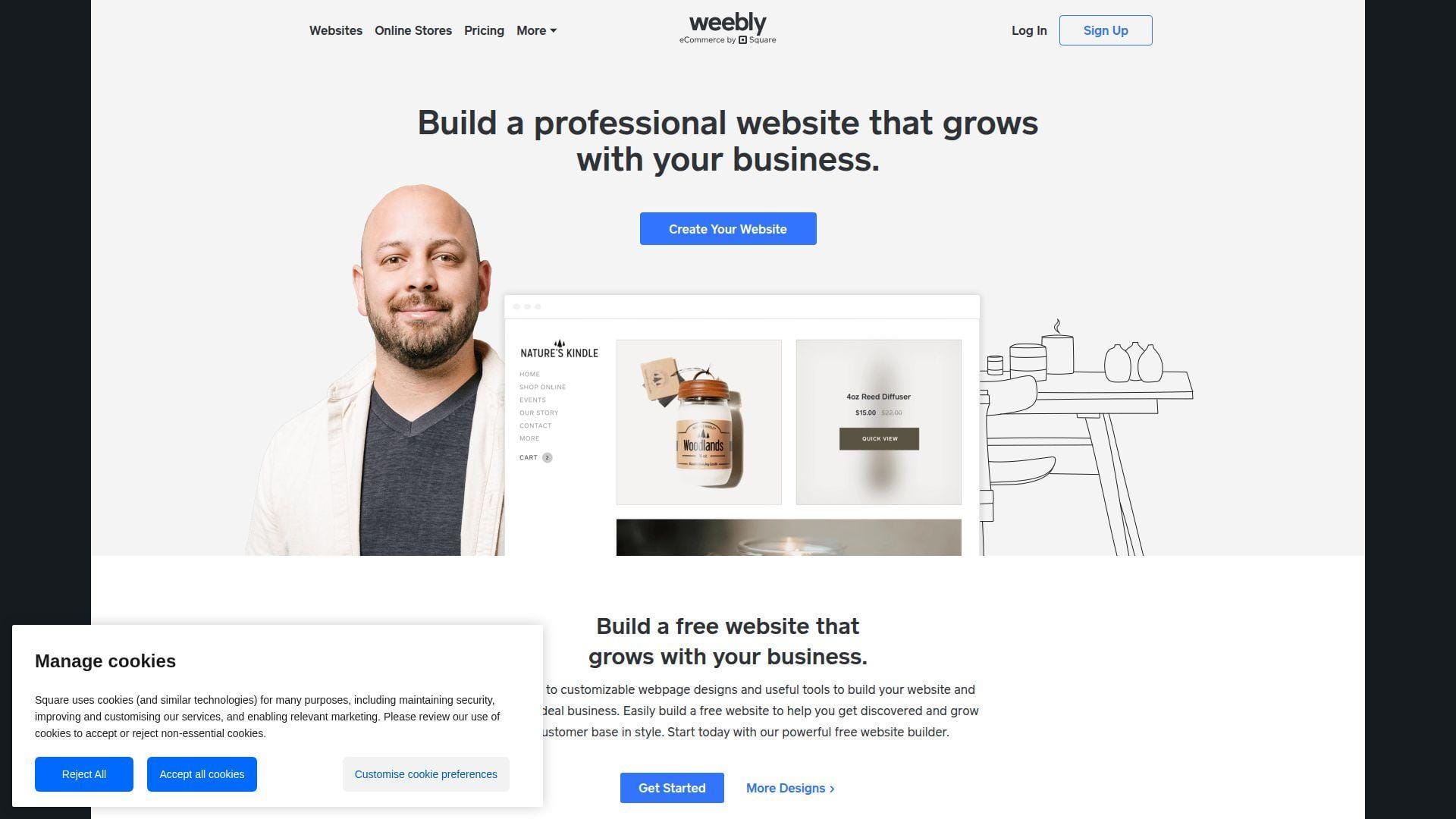
Weebly remains a useful pick for readers who want a simple builder and do not need the broader design depth of Wix. The official site emphasizes a powerful free website builder, customizable page designs, guided setup, and selling tools tied into Square. That combination makes it appealing for small businesses, side hustles, and starter stores that want publishing and payments under one roof.
We rank it below Wix because the overall product feels a bit narrower and less ambitious, but there is still a lot to like if you prefer a simpler builder experience and you already use Square.
How Weebly works
Weebly’s official pages frame the workflow around guided setup. You create a site, choose a design, customize it, and then use the platform’s website, commerce, and marketing tools as needed. The product messaging breaks that into getting started, getting online, getting selling, and getting growing. The site also stresses that Weebly is part of the Square product suite, which is the key to understanding where it fits now.
Hosting is bundled into the builder, so you are not managing a typical hosting account. The free hosting page further notes that hosting becomes available with Connect plans and above for custom-domain use, while paid plans remove ads and add more professional site features.
Who is Weebly for?
Weebly is for readers who want a straightforward site builder, a small online store, or a basic business site with lighter setup demands. It is especially sensible if the Square tie-in matters to your workflow.
If you want deep customization, raw hosting access, or a faster-moving developer platform, there are better picks above it.
Weebly pricing
- Free: $0 per month for basic use with builder access and a starter publishing path.
- Personal: $13 per month billed annually or a higher month-to-month rate, focused on connecting a custom domain.
- Professional: $15 per month billed annually or a higher month-to-month rate, aimed at more customization and a stronger professional presentation.
- Performance: $32 per month billed annually or a higher month-to-month rate, adding growth and operations features.
Plan details are summarized in the current pricing grid.
Pros and cons
Pros
- Easy builder-led setup for non-technical users.
- Useful fit for simple sites and small commerce projects.
- Square integration gives it a clearer commerce story than many small builders.
Cons
- The free plan is basic and not the best route for custom-domain publishing.
- Less flexible than developer-focused platforms or conventional hosts.
- The product direction feels steadier than cutting-edge, which some users will read as simplicity and others as stagnation.
Weebly rating and reviews
- Capterra: rated 4.3/5 across 1,827 reviews.
Weebly is still a sensible beginner option when simple beats flashy. If none of the top ten lands quite right, the next five are worth a look for more technical or more narrowly defined needs.
Five More Free Website Hosting Options Worth Considering
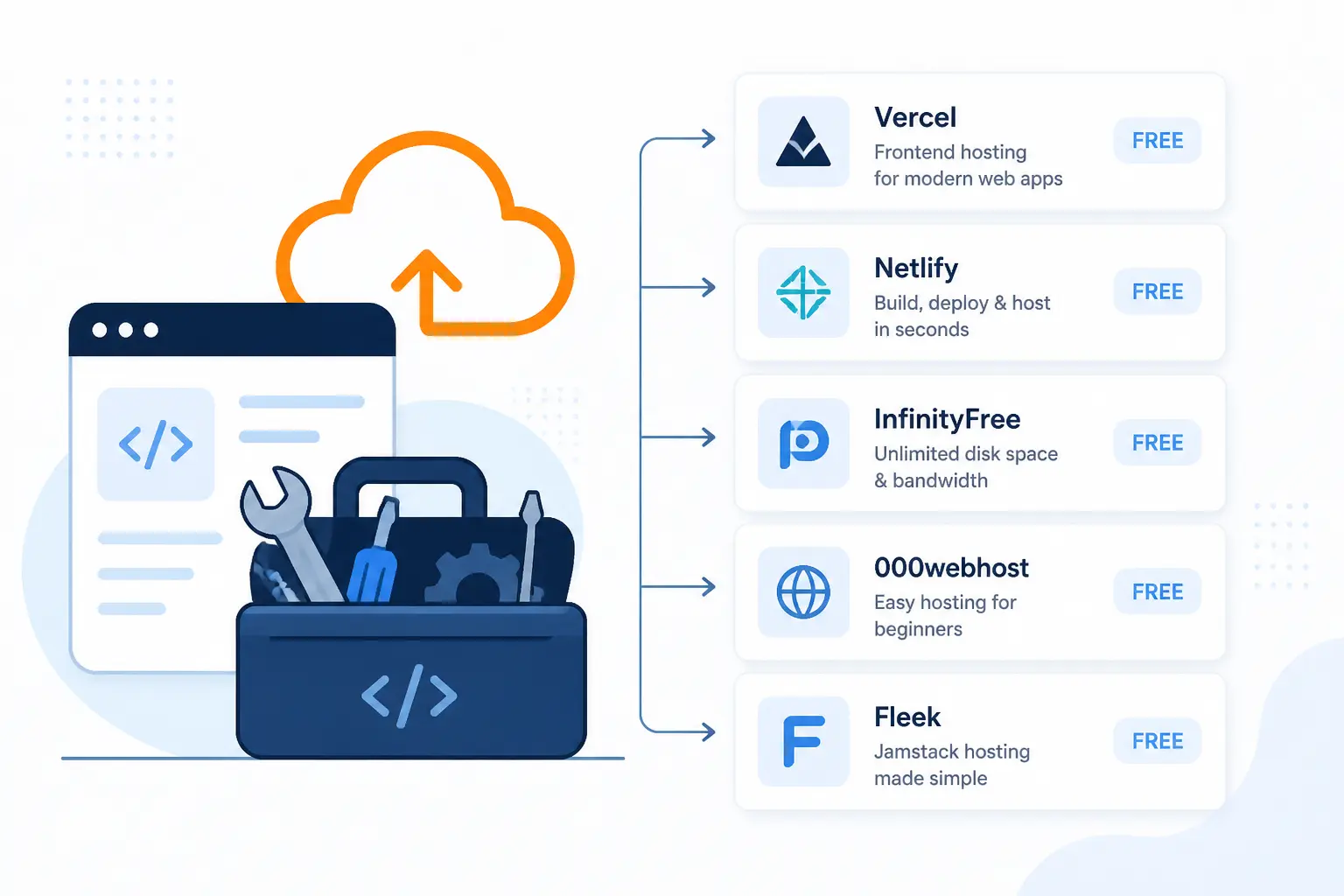
These five did not make our top tier, but each one has a clear use case. Some are better for developers than general site owners. Others are handy because they solve one publishing problem exceptionally well.
11. Amazon Web Services
- Category: Cloud platform
- Best for: Developers and AWS-native projects
- Ease of use: Hard
- Pricing: Free tier and credit-based entry, then usage-based billing
AWS is worth considering when your “website” is really the front end of a broader application stack. The official AWS Amplify pricing information explains that new customers can receive free-tier credits and that Amplify itself has a free path before standard usage charges kick in. That is compelling if you expect to use other AWS services later.
The problem is not capability. The problem is fit. AWS asks more of the user than a normal free website hosting search usually implies. Even its friendlier front-end paths, such as Amplify, make more sense for repo-based applications and technical teams than for a first-time site owner choosing a simple home on the web.
Still, AWS can be a smart shortlist addition for developers who already know their way around IAM, billing, and service boundaries. If your project might evolve into a bigger app, starting in AWS can save migration pain later. If you just need a quick brochure site, this is probably too much engine for the car.
Who is Amazon Web Services for?
AWS is for developers and startups that want free entry into a larger cloud ecosystem. Everyone else should usually pick a simpler host first.
12. x10hosting
- Category: Traditional hosting service
- Best for: Readers who want another classic free-hosting option
- Ease of use: Moderate
- Pricing: Free plan with paid hosting upsell
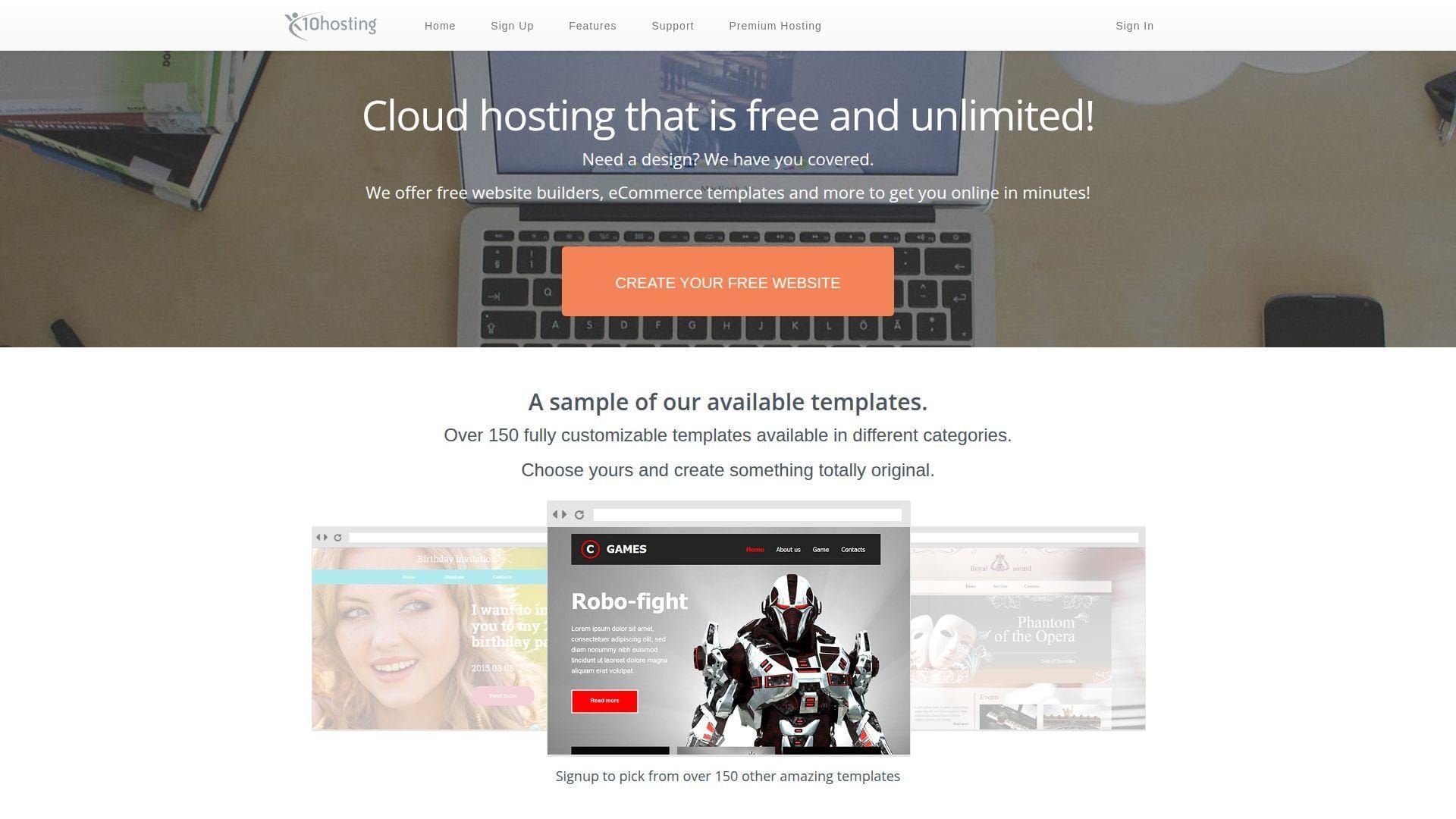
x10hosting is one of the older names people still bring up in free-hosting conversations, and that alone makes it worth a glance. Its homepage positions the service plainly as free web hosting for the masses. That old-school positioning will appeal to readers who want something closer to conventional hosting than a builder product.
What keeps it out of the top ten is the lack of clarity compared with the stronger picks above. On the pages we reviewed, the overall value proposition is broader than the specifics. When a free host is not especially explicit about free-plan boundaries, we tend to rank it more cautiously because that is usually where frustration starts.
Even so, x10hosting can still make the shortlist for readers who want another classic shared-hosting style option and are comfortable doing a little more digging before signing up. We would just compare it side by side with InfinityFree and AwardSpace before committing.
Who is x10hosting for?
x10hosting suits readers who want a traditional free-hosting feel and do not mind a bit of ambiguity while comparing features. If you want the clearest documentation-first choice, stronger entries sit higher in this list.
13. GitHub Pages
- Category: Static hosting service
- Best for: Docs, developer portfolios, and project sites
- Ease of use: Easy for Git users, harder for everyone else
- Pricing: Free
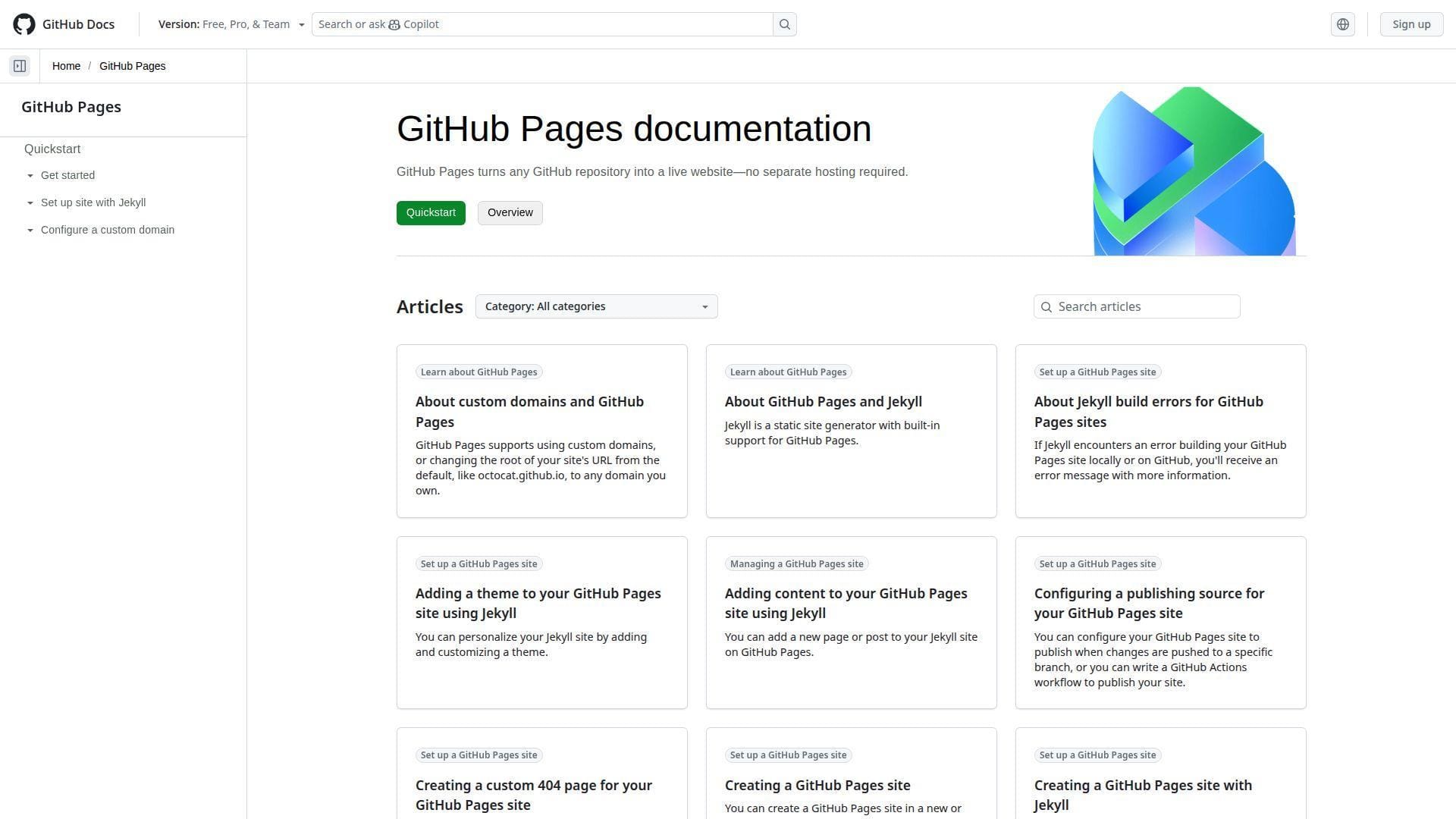
GitHub Pages is one of the best free options in the world for the right type of site. The official product page says it hosts websites directly from your GitHub repository and sums the workflow up neatly: edit, push, and your changes go live. That is simple, dependable, and beautifully aligned with version-controlled projects.
The reason it sits in the second tier is not quality. It is scope. GitHub Pages is great for static sites, documentation, resumes, portfolios, and project microsites. It is not meant to replace a traditional PHP host, a managed CMS environment, or a more flexible cloud platform for dynamic applications.
If you already use GitHub, this can be the easiest option in the entire list. If Git still feels foreign, the learning curve can make other static hosts feel much friendlier. That is really the dividing line.
Who is GitHub Pages for?
GitHub Pages is for developers, students, and technical creators who want version-controlled static publishing. If you need databases or server-side code, skip it.
14. tiiny.host
- Category: Simple file and static hosting service
- Best for: One-off pages and effortless sharing
- Ease of use: Very easy
- Pricing: Free entry with paid upgrades
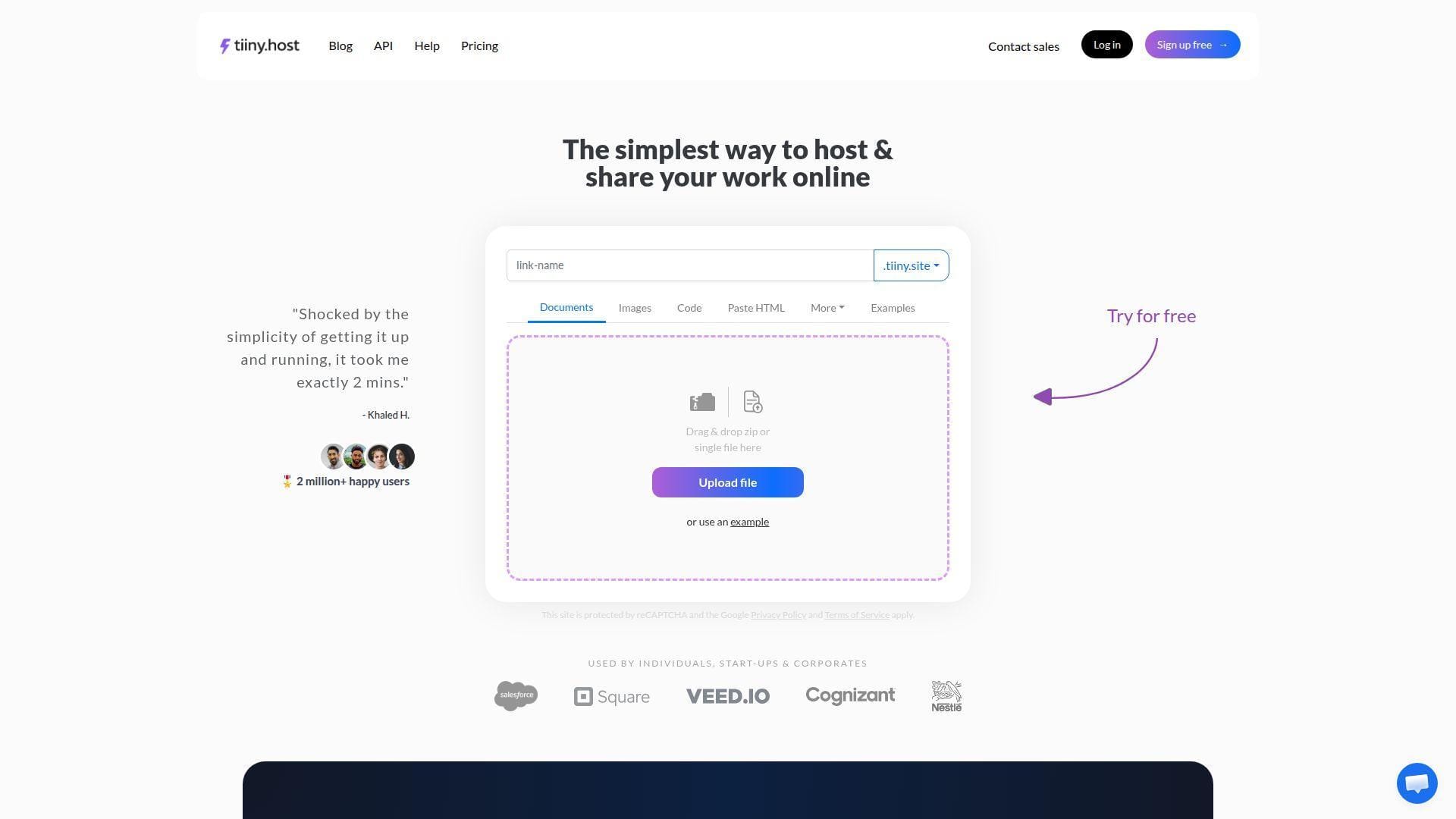
tiiny.host is built around a single promise: share your work online with as little friction as possible. That pitch is refreshing because it does not pretend to be full hosting infrastructure. It is about publishing quickly, especially when you have a static site, prototype, or file you want accessible on the web now, not after a half-hour setup.
That simplicity is also why it did not push into the top ten. The stronger general picks give you more room to grow, more conventional site workflows, or deeper developer features. tiiny.host is sharper than those products for ultra-fast sharing, but narrower once you look past that first use case.
If speed of publishing is the whole point, it is a very reasonable shortlist candidate. If long-term site management matters more, you will probably want something with more structure.
Who is tiiny.host for?
tiiny.host works best for people who need a fast public URL for a static page or small project. It is less appealing for anyone planning a larger site with evolving requirements.
15. Netlify
- Category: Developer platform for web projects
- Best for: Jamstack sites, front ends, and automated deploys
- Ease of use: Moderate
- Pricing: Free starter path with paid team features
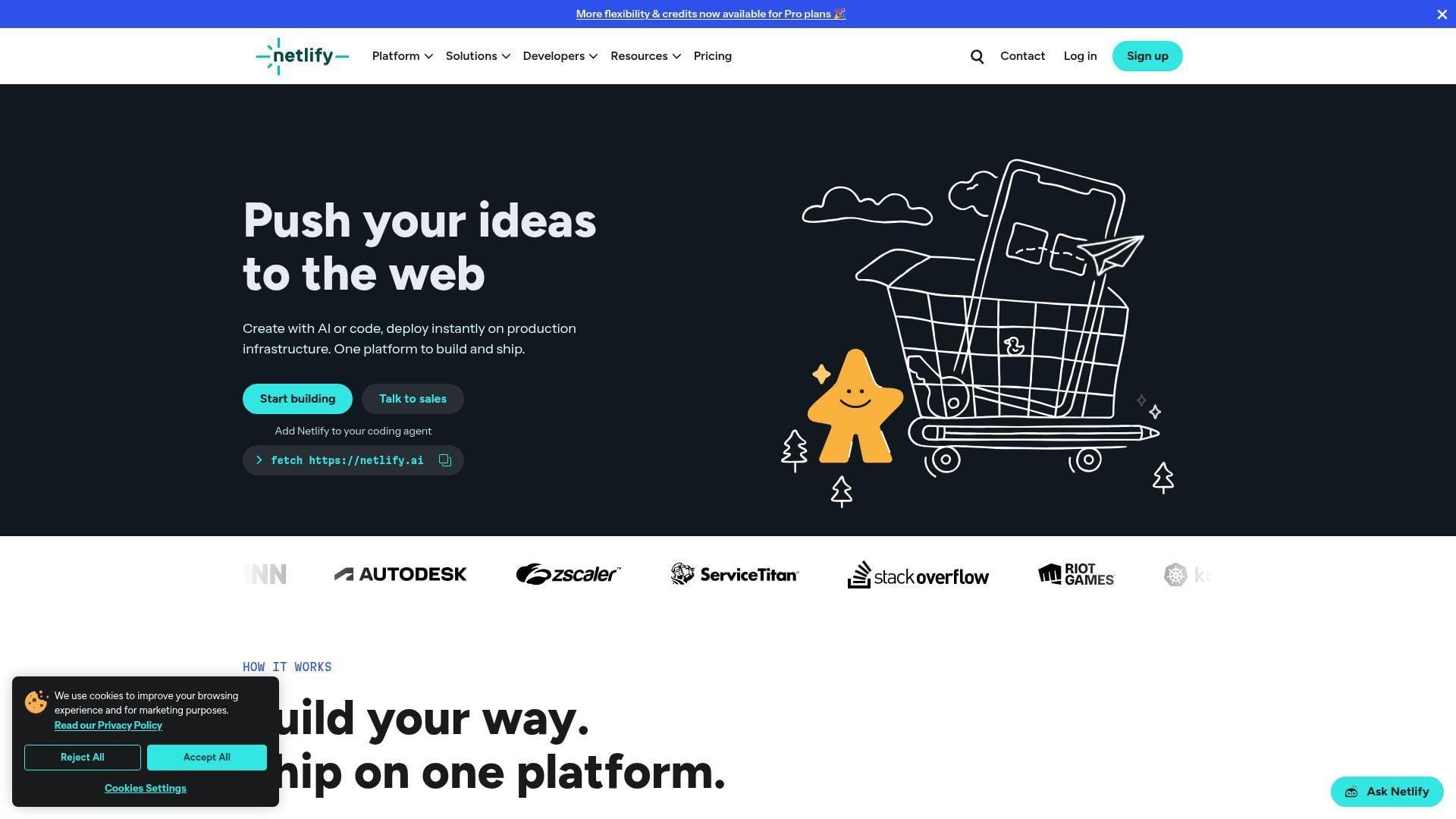
Netlify remains one of the most recognizable names in modern front-end hosting, and it deserves consideration whenever your project is static-first or framework-driven. The official site positions it as a place to push ideas to the web, which is fair shorthand for its deployment-first model and developer-friendly workflow.
Compared with Static.app, Netlify offers a more developer-centric path. Compared with GitHub Pages, it is usually friendlier for full front-end workflows and site operations. Compared with Wasmer, it feels less edge-platform specific and more squarely in the modern web-deployment lane.
Why not rank it higher? Because this article is about free website hosting in the broad sense, not just front-end deployment for developers. For technical teams, Netlify could easily rank above some traditional hosts. For average beginners, it is simply not as obvious a fit as Wix or Weebly.
Who is Netlify for?
Netlify is for developers and technical marketers shipping modern front ends with automated deploys. If you want shared hosting with cPanel or one-click CMS installs, it is the wrong category.
How to Match Free Website Hosting to Your Project
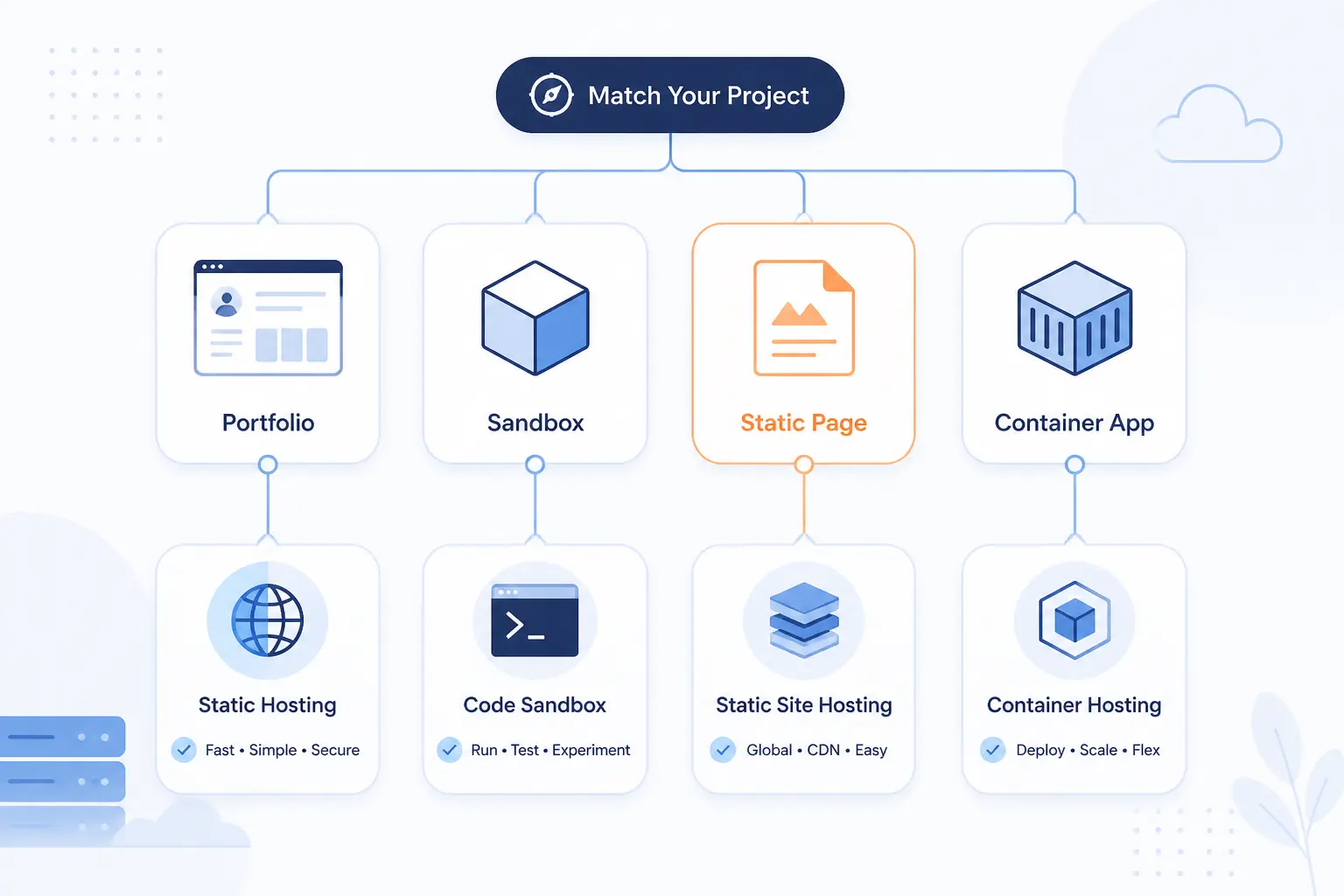
The best pick depends less on price than on project shape. A static portfolio, a WordPress sandbox, a PHP practice site, and a containerized app all need different things, even when the budget is exactly zero.
Static Sites Portfolios and Temporary Pages
For static sites, the biggest question is not power. It is publishing workflow. If you want the easiest path possible, Static.app and tiiny.host are the simplest options in this roundup. If you prefer a version-controlled workflow and already live on GitHub, GitHub Pages is hard to beat.
There is also a cloud route if you want more flexibility later. Google’s documentation on hosting a static site on App Engine shows that you can publish a basic HTML, CSS, and JavaScript site there and later map your own domain. That is a more technical path, but it can make sense if the project might outgrow static hosting later.
WordPress Learning Staging and CMS Testing
If your main goal is to learn WordPress, test themes, or stage a simple CMS site, traditional hosts still make the most sense. InfinityFree, AwardSpace, and Freehostia all support one-click CMS installation or a conventional app-hosting flow. CloudAccess.net becomes more attractive when you specifically want a managed WordPress or Joomla lane with help nearby.
AwardSpace is especially approachable because it walks users through signup, CMS choice, and installation with its own installer flow. InfinityFree is the better value pick when you want broader free hosting features. Freehostia works if the site will stay tiny and you understand the limits up front.
PHP and MySQL Projects on a Real Hosting Stack
For PHP and MySQL practice, old-fashioned hosting still wins on clarity. InfinityFree, AwardSpace, and FreeHosting.com all give you something close to the environment many beginners expect when they hear “web hosting,” including file management, databases, and app installers.
That matters because builder-led platforms do not really teach the same lessons. If you want to work with config files, directories, databases, and installers, choose a host that actually exposes those pieces. FreeHosting.com is useful when your own domain is non-negotiable, but InfinityFree and AwardSpace are usually easier first recommendations.
Developer Platforms for Apps APIs and Edge Deployments
Once the project starts looking like an app instead of a website, the best free path changes fast. Google Cloud’s application hosting guide points readers to different services based on workload, with Cloud Run covering both HTTP services and containerized applications. That is the right mindset for modern app deployment.
Wasmer is the more specialized edge-friendly choice in this roundup. Google Cloud is the broader ecosystem choice. Netlify is the clean front-end option. If you need a plain brochure site, those tools are overkill. If you need APIs, containers, or app-style scaling, they are often the smartest free starting points.
Choose the Right Publishing Workflow
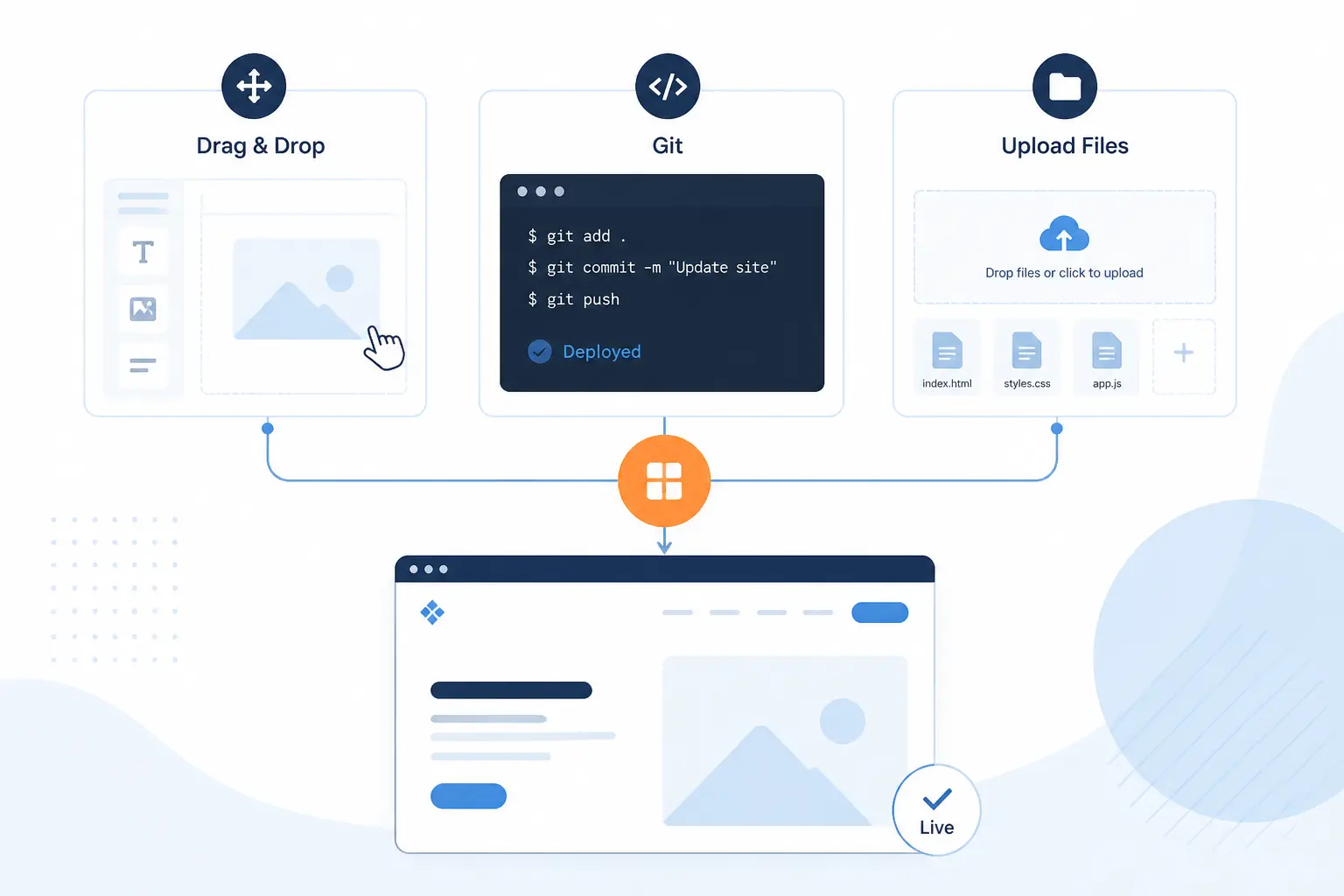
Readers often compare hosting providers when they are really comparing publishing styles. Picking the right workflow first makes the shortlist much easier to build.
All in One Site Builders
Wix and Weebly are the best examples of the builder route. You get design tools, hosting, templates, and business features inside one dashboard. That is great for speed and far less great for portability or low-level control.
Choose this route if your priority is getting a polished site live without learning hosting internals. Leave it if you need server-side flexibility, custom stacks, or a conventional hosting environment.
Drag and Drop Static Hosting
Static.app and tiiny.host are built for people who already have files and just want them online. That is the main reason these tools feel so fast. You are not making platform decisions at every step. You are publishing a finished thing.
This route works especially well for landing pages, portfolios, PDF resources, and fast client previews. It is not the right choice for dynamic sites that depend on databases or server logic.
Git Based Deployments and CI Pipelines
If your site already lives in a repository, it makes sense to keep publishing tied to Git. Wasmer, Netlify, and GitHub Pages all fit that pattern, though they serve different audiences. Wasmer leans toward apps and edge workloads, Netlify toward modern front ends, and GitHub Pages toward straightforward static project publishing.
Google Cloud’s Cloud Run service page also underlines that source-based or container-based deployments are part of the expected workflow there. That is powerful, but it is a different mental model from logging into a control panel and clicking Install.
Control Panels and One Click CMS Installers
InfinityFree, AwardSpace, Freehostia, and FreeHosting.com still appeal because the workflow is familiar. Sign up, add a domain or subdomain, open a panel, install WordPress or upload files, and manage the site from there. For many beginners, that remains the most intuitive bridge between no-code site builders and full cloud platforms.
If you specifically want to learn how shared hosting works, this is still the best category to start with. It teaches practical concepts without the complexity of a cloud console.
Common Tradeoffs With Free Website Hosting
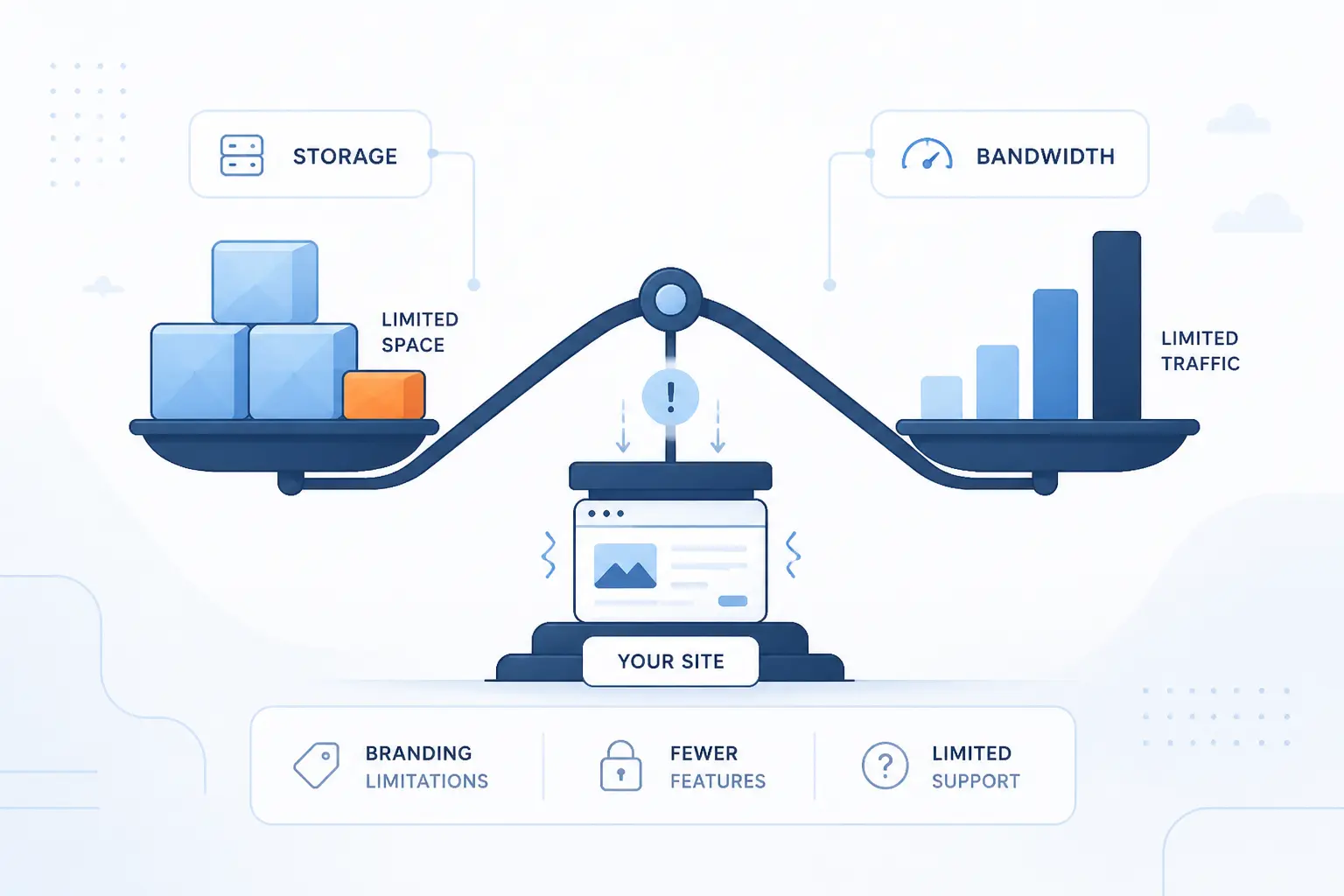
Free website hosting is never totally free of tradeoffs. The real question is whether the catch lines up with your project or quietly blocks it.
Storage Bandwidth and File Size Limits
This is where free plans separate themselves very quickly. Static hosts often cap storage aggressively because they are optimized for small pages and assets. Traditional free hosts may give you more room, but still limit database size, email, or traffic. Developer platforms may feel generous until you move past requests, build minutes, or compute allowances.
The lesson is simple. A small static portfolio and a media-heavy CMS site are not remotely the same hosting job. Treat plan limits as product fit, not as a side detail.
Subdomains Custom Domains and Platform Branding
Builder-led free plans usually come with branded subdomains and visible platform branding. Wix and Weebly follow that pattern. FreeHosting.com goes the other way and requires your own registered domain, which is more professional but less convenient for true zero-cost starts.
That difference matters more than many readers expect. If you are building a personal learning project, a free subdomain may be fine. If you are sending a link to clients, employers, or customers, the domain setup changes how serious the site looks.
Support Backups Email and SSL Differences
Support quality varies a lot. AwardSpace and CloudAccess.net make support a core selling point. InfinityFree leans more on forums and documentation. FreeHosting.com splits some capabilities between the free plan and paid or one-time upgrades. On the developer side, the free tier is often self-serve first and support-led second.
Even business continuity features can vary more than people assume. Some services include SSL early, some tie better support to paid tiers, and some make backup behavior a clear paid advantage. Read that section carefully before you publish anything you would hate to rebuild.
Account Renewal Policies and Overage Risk
The obvious risk with classic free hosts is account inactivity or strict resource enforcement. The less obvious risk with cloud and deployment platforms is overage billing when a “free” project starts using paid resources behind the scenes.
Google’s free program page is a good reminder that free usage on cloud platforms is product-specific, not magical. On some services, that is still a great deal. You just need to know whether you are in a forever-free lane or a free-until-you-scale lane.
When to Upgrade From Free Website Hosting

Free hosting is excellent for learning, testing, and small projects. The moment the site starts affecting revenue, reputation, or team workflow, paid hosting usually stops being optional and starts being sensible.
Traffic Growth and Better Performance
Upgrade when your free plan starts shaping your site decisions. That might mean compressing every image aggressively, avoiding plugins, or worrying about surprise spikes more than the content itself. Free infrastructure is great for proving a concept. It is not always great for supporting success.
Cloud and developer platforms can delay this moment better than classic free hosts, but they bring their own complexity. Either way, traffic is the first big signal that the free plan has done its job.
Business Features for Ecommerce Forms and Analytics
If you need polished forms, serious analytics, custom email flows, or stronger commerce tools, paid tiers usually become the right move. That is especially true on builders, where the jump from free to paid often unlocks the features that make the site feel professional instead of provisional.
It is also worth watching for platform maturity. Weebly’s support notice on its international wind-down changes is a reminder that platform decisions affect longevity as well as features.
More Control Over Domains Databases and Security
Custom domains, cleaner DNS handling, deeper database access, stronger backups, and clearer security controls are all common reasons to upgrade. They are not glamorous reasons, but they are the ones that matter once a site moves beyond experimentation.
If you are asking whether the site has become too important for a free plan, that question usually answers itself.
FAQ About Free Website Hosting
These are the questions we see most often when readers are trying to decide whether a free plan is a real option or just a detour.
Is Wix Really Free Hosting?
Yes, Wix does offer a real free way to publish a site. The catch is that the free route uses Wix branding and a Wix subdomain, so it is best for testing, learning, and personal projects rather than a polished business presence. If you want a custom domain and fewer platform constraints, you move into paid plans.
Can I Host a Site for Free?
Yes, you can host a site for free. The best route depends on whether the site is static, builder-led, or based on a CMS or app stack. Just be clear-eyed about the limits, because free plans often trade control, scale, or support for that zero-dollar entry point.
Is a GoDaddy Website Free?
No, a GoDaddy website is not generally a true free-hosting pick in the same sense as the services in this list. GoDaddy tends to center trials, paid plans, or products that quickly move into paid territory. If your goal is ongoing no-cost publishing, there are stronger options above.
Is Free Web Hosting Worth It?
Yes, free web hosting is worth it for learning, prototypes, class projects, internal staging, and small personal sites. It is usually not worth it for revenue-driving business sites, larger content projects, or anything that needs dependable support and room to grow. The trick is matching the free plan to the real importance of the project.
Can I Use My Own Domain With Free Website Hosting?
Yes, many free hosts let you use your own domain. InfinityFree, AwardSpace, and FreeHosting.com all support that approach, though FreeHosting.com requires it rather than making it optional. Builder-led platforms often reserve custom-domain connection for paid plans, so check that detail before choosing one.
What Is the Catch With Free Website Hosting?
The catch is usually one of four things: tight limits, platform branding, weaker support, or a forced upgrade path once the site becomes useful. On cloud platforms, the catch can also be complexity or pay-as-you-go billing once you leave free allowances. None of that is automatically bad, but it should shape your choice from the start.







Conclusion
Our shortlist comes down to a few clear paths. Choose InfinityFree if you want the best all-around traditional free website hosting option, Wix if you want the easiest builder-led route, AwardSpace if support matters, Static.app or GitHub Pages if the project is static, and Google Cloud or Wasmer if you are really deploying an app rather than a simple website.
The next step is to ask one blunt question: do you want to learn hosting, or do you just want a site online by tonight? Your answer will narrow the field fast.