

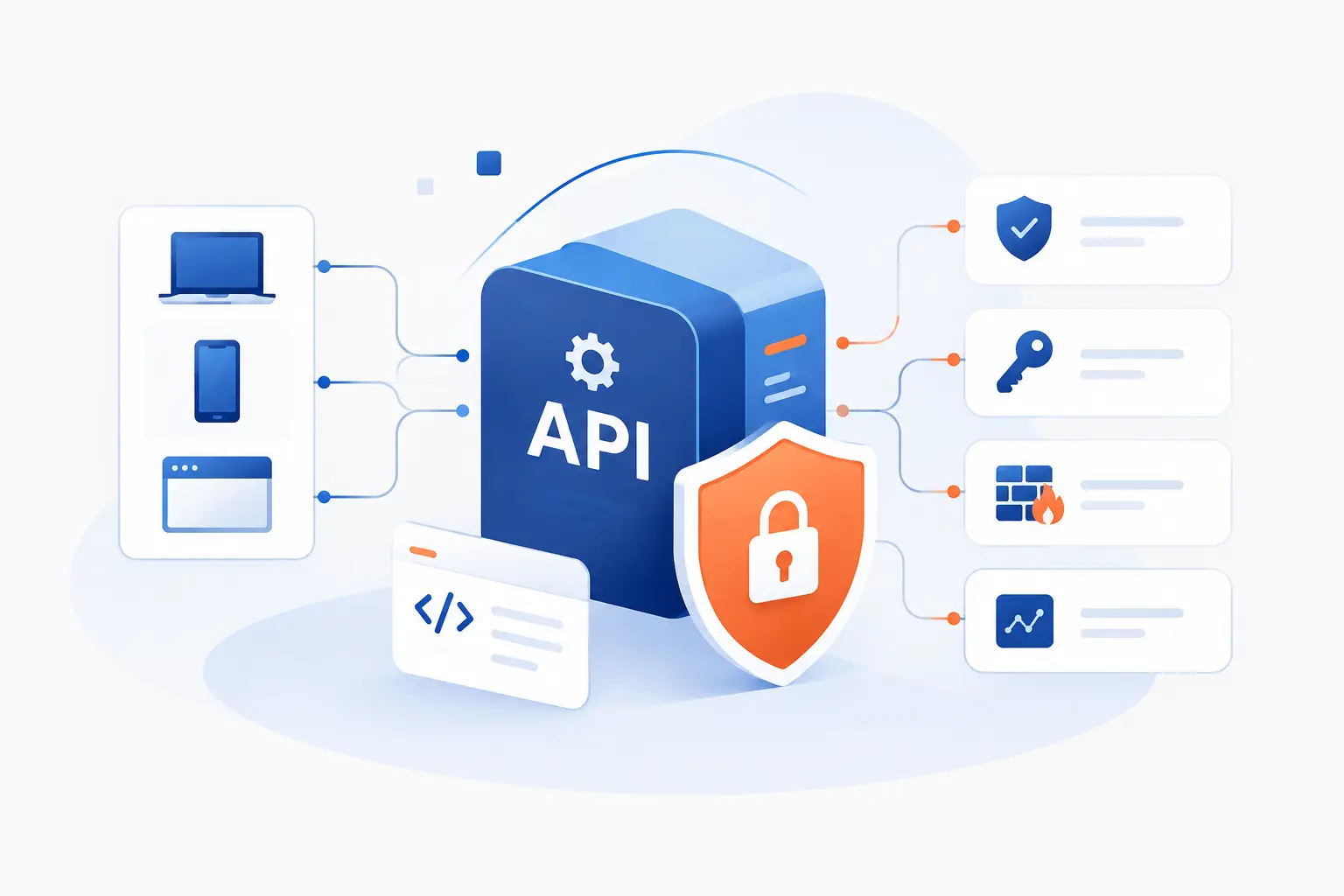
- API Security Is the Practice of Protecting APIs From Unauthorized Access and Abuse
- Why API Security Matters More Than Ever
- How API Security Works in Practice
- The Most Common API Vulnerabilities and Attacks
- Lifecycle Practices That Keep APIs Safer
- How Security Changes Across API Styles
- Where API Protection Fits Alongside Other Security Layers
- FAQ
- How 1Byte Supports Safer API Deployments
- Conclusion
API security is the practice of protecting application programming interfaces from unauthorized access, data leaks, abuse, and attacks. An API is a doorway between software systems, so api security makes sure only the right users, apps, and services can use that doorway in the right way. It covers identity checks, permissions, encryption, validation, rate limits, monitoring, and safe design. We think of it as the discipline that keeps useful connections from becoming dangerous openings.
At 1Byte, we see APIs as the quiet plumbing behind websites, mobile apps, payment flows, dashboards, cloud services, and automation. That plumbing must be easy for trusted systems to use and hard for attackers to exploit. The goal is not to make APIs slow or painful. The goal is to make every request prove who it is, what it is allowed to do, and whether it behaves like normal traffic.
API Security Is the Practice of Protecting APIs From Unauthorized Access and Abuse
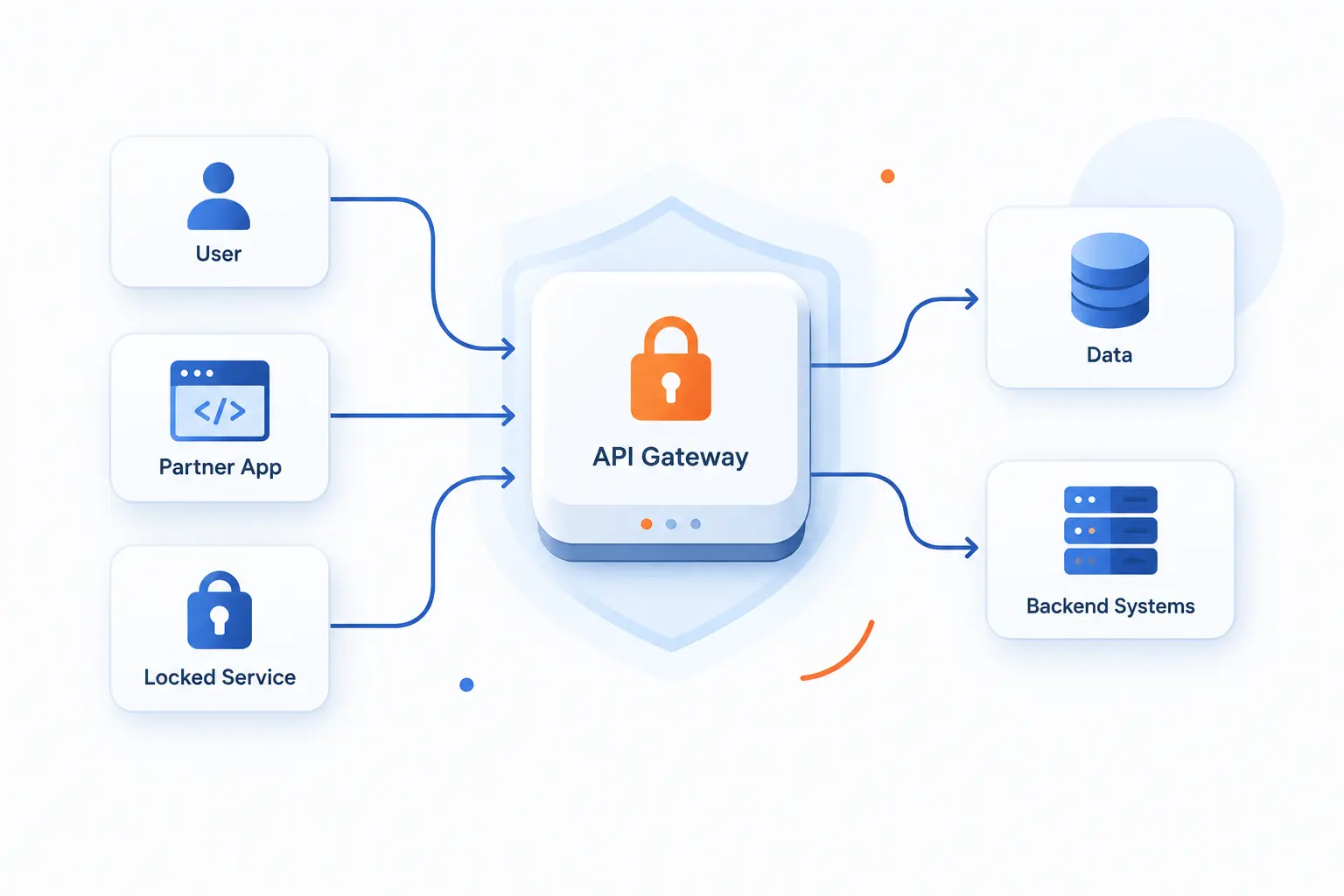
API security means applying technical and operational controls so APIs expose only the right data and actions to the right callers. It protects the request path, the response data, the credentials, the business rules, and the systems behind the endpoint. A safe API does not merely ask, “Is this caller logged in?” It also asks, “Can this caller perform this action on this object, at this time, with this input?”
That distinction matters. Many API failures happen after authentication succeeds. A customer may be logged in, yet still must not read another customer’s invoice by changing an ID in the URL. A partner app may be trusted, yet still should not call an admin-only function. Good api security turns those rules into repeatable checks.
We also prefer to view APIs as products with risk attached. They need owners, documentation, versioning, testing, monitoring, and retirement plans. If nobody owns an endpoint, nobody will notice when it starts leaking data or accepting strange traffic.
FURTHER READING: |
| 1. What Are Web Application Firewalls and How They Work |
| 2. What Is Network Security and How It Protects Data |
| 3. What Is a Firewall and How Does It Protect Networks |
Why API Security Matters More Than Ever
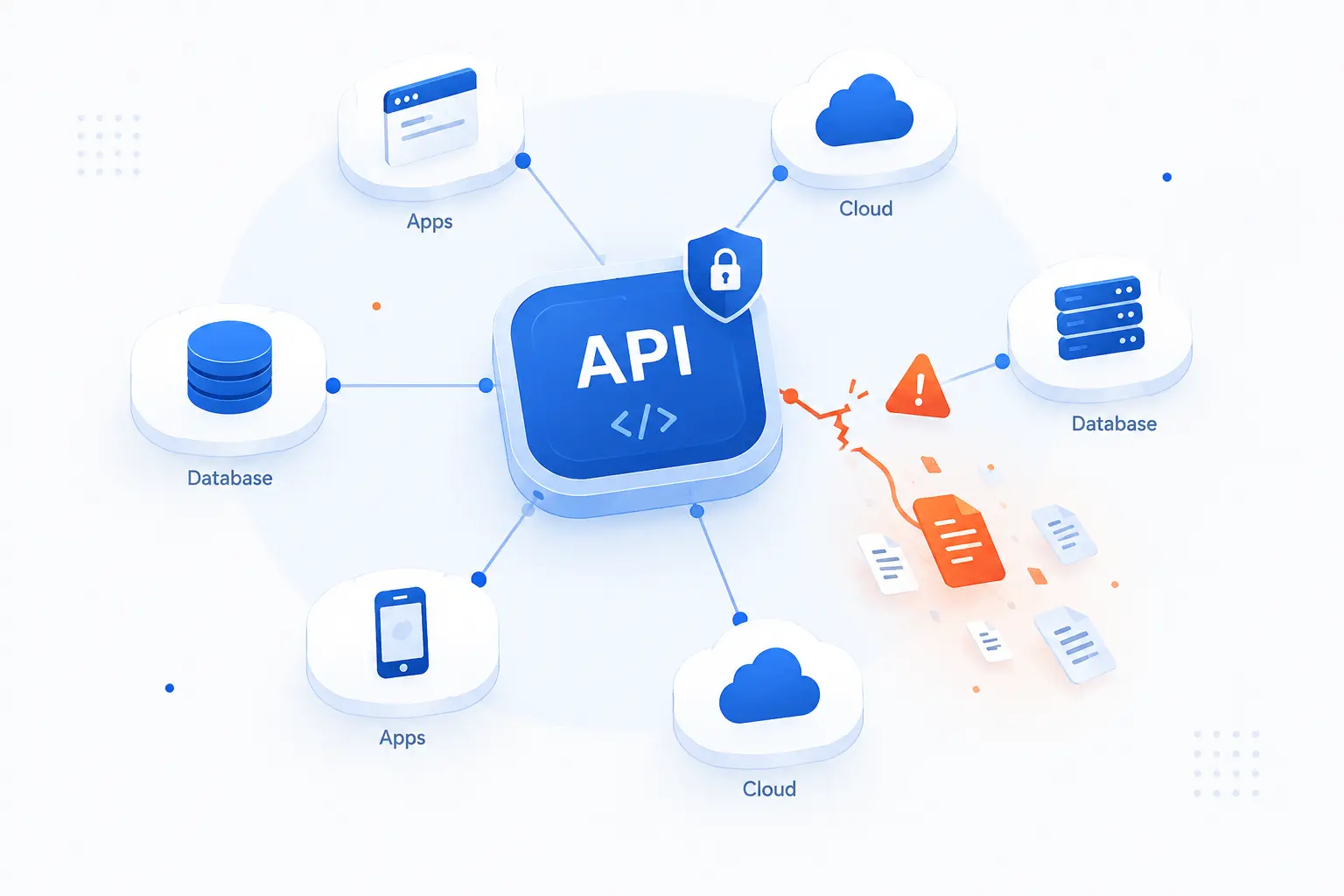
API security matters because APIs now carry core business data and actions across apps, clouds, vendors, and internal services. When an API fails, the damage can be immediate: customer records leak, accounts are abused, systems slow down, or a business process is manipulated. The risk grows because modern software depends on many small connections instead of one closed application. In our view, the API layer is now one of the first places serious defenders should look.
APIs Expand the Attack Surface Across Apps, Services, and Clouds
Every exposed API endpoint is another path into an application, so more endpoints mean more places to defend. A single web product may have public mobile endpoints, partner endpoints, internal admin endpoints, webhook receivers, and service-to-service calls. Each one can carry different data and trust assumptions.
This is why inventory matters so much. If a team deploys endpoints through several cloud accounts or old staging systems, the official documentation may be incomplete. Attackers do not care whether an endpoint is on the roadmap. They care whether it responds.
The pressure is visible in industry surveys too. Salt Security reported that 37% of surveyed organizations experienced an incident involving production interfaces in the prior year. We would not treat that as a universal rate for every company, but it is a useful warning sign.
Weak APIs Can Expose Sensitive Data and Core Business Logic
A weak API can expose data, trigger actions, or reveal business rules that should stay private. The danger is not limited to passwords or credit card numbers. Names, emails, order history, location, account status, loyalty points, subscription plans, and internal object IDs can all be valuable.
Business logic is just as sensitive. An attacker may exploit an API to apply a discount twice, skip a workflow step, enumerate customer accounts, or approve an action out of order. These bugs are often hard for generic scanners to understand because they depend on how the business works.
A real example makes the point. In a 2023 filing, T-Mobile said a bad actor obtained customer data through a single interface without authorization. That is the kind of incident that turns an endpoint from an engineering detail into a boardroom issue.
Incidents Can Lead to Downtime, Fraud, Compliance Issues, and Trust Loss
API incidents can disrupt service, create fraud paths, trigger regulatory exposure, and erode customer trust. A denial-of-service attack may overload a backend. A broken authorization check may disclose records. A weak token policy may let stolen credentials keep working.
Compliance risk also grows when APIs process personal data. Privacy laws and contractual obligations often care less about where the leak happened and more about whether the organization protected the data. If an API returns too much information, keeps old versions alive, or lacks audit logs, investigation becomes harder.
Trust is the hardest part to repair. Customers rarely ask whether a breach came from a database, a web form, or an API. They remember that the service failed to protect them.
How API Security Works in Practice
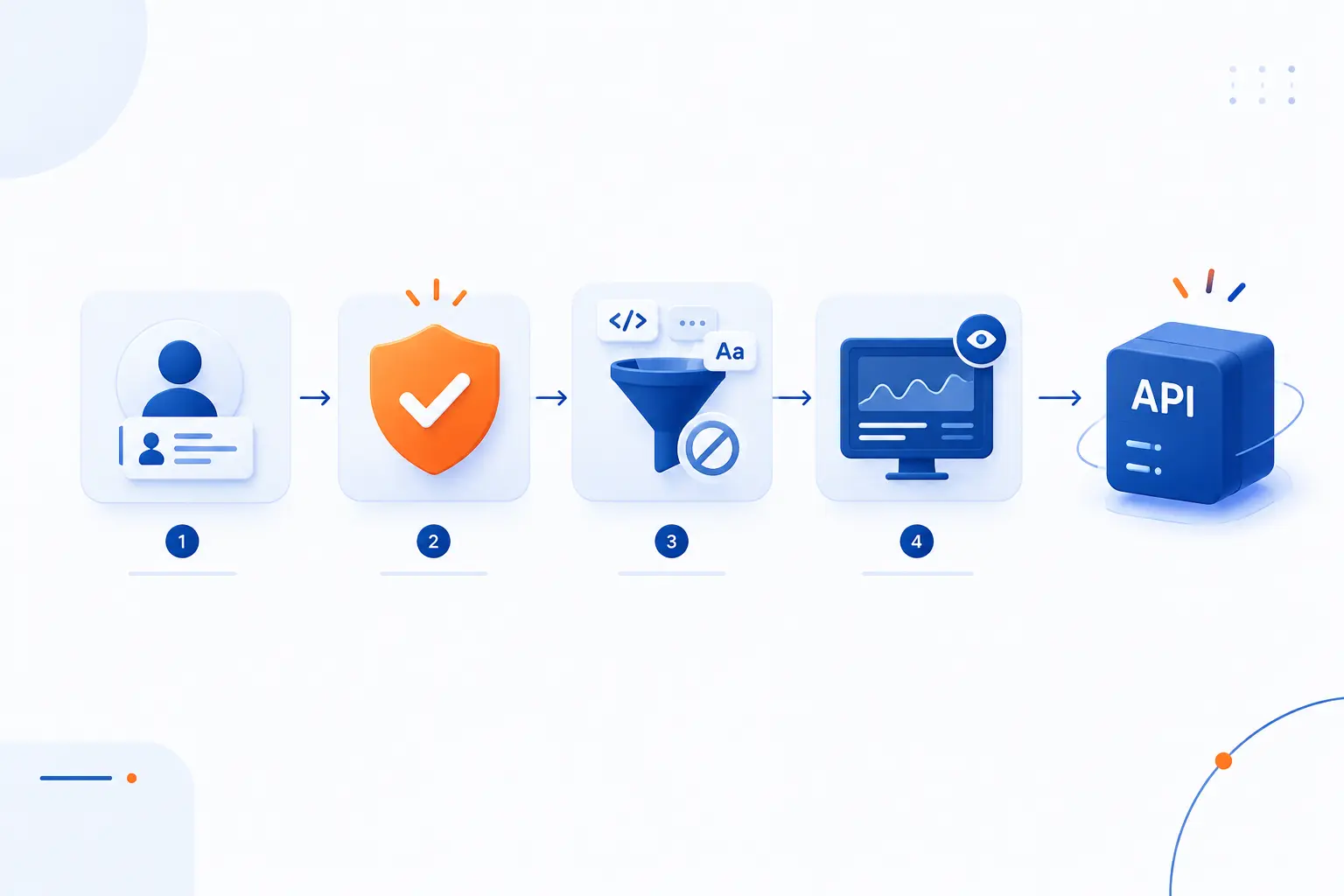
API security works by combining identity, permission checks, protected transport, safe input handling, traffic controls, and continuous visibility. No single control is enough. Authentication without authorization is weak. Encryption without validation still accepts malicious input. Logging without response playbooks only creates unread records.
The practical pattern is simple: verify the caller, check the action, protect the data, reject bad input, limit abuse, and watch what happens. We like this layered approach because APIs fail in layers too. A small mistake at one layer should not become a total compromise.
Authentication and Authorization Set Who Can Access What
Authentication proves the caller’s identity, while authorization decides what that caller may do. In API work, mixing those two ideas is a classic mistake. A valid token does not automatically mean a user can access every object, field, or operation.
Common authentication methods include OAuth 2.0, OpenID Connect, mutual TLS, signed requests, API keys, and session-based approaches. The right choice depends on whether the caller is a user, a machine, a partner system, or an internal service.
Authorization should be checked on every sensitive operation. That includes object-level checks, function-level checks, and field-level checks. If a request asks for invoice 123, the API must confirm that this caller can see invoice 123, not just that the caller has an account.
Encryption and Secret Management Protect Data and Credentials
Encryption protects data in transit, while secret management protects the credentials that allow systems to connect. HTTPS with modern TLS should be the baseline for external APIs. Internal traffic also deserves protection when services cross networks, accounts, clusters, or cloud boundaries.
Secrets include API keys, signing keys, database passwords, private keys, and tokens. They should not live in source code, public repositories, chat logs, or container images. We have seen too many incidents start with a “temporary” key that became permanent by accident.
Rotation matters as well. A secret that cannot be rotated safely becomes a future outage waiting to happen. Teams should know how to revoke, replace, and audit credentials before there is an emergency.
Input and Schema Validation Block Malicious Requests
Input validation blocks requests that do not match the API’s expected shape, type, length, and business rules. An API should not accept fields it does not need, values outside allowed ranges, or nested objects that were never intended for public use.
Schema validation is especially useful because it makes the contract explicit. If the contract says a quantity is an integer between two bounds, the API can reject anything else before business logic runs. That cuts down on injection attempts, accidental misuse, and weird edge cases.
Validation should happen near the boundary, but not only there. Backends should still protect themselves. A gateway can catch common bad input, while application code enforces rules that depend on the user, object, or workflow state.
Rate Limits, Gateways, and Traffic Controls Reduce Abuse
Rate limits and traffic controls reduce the damage from brute force, scraping, enumeration, and resource exhaustion. They do not replace authorization, but they make abuse more expensive and easier to spot. A login endpoint, search endpoint, password reset endpoint, and export endpoint all need different limits.
API gateways can centralize common controls. They often handle routing, authentication integration, request size limits, quotas, throttling, and policy enforcement. That central point is useful, but it should not become a place where teams assume all risk has disappeared.
Good controls reflect business context. A payment callback and a public product search endpoint should not share the same thresholds. Limits should consider user identity, token type, IP reputation, endpoint sensitivity, and backend cost.
Logging, Monitoring, and Detection Help Teams Spot Attacks Early
Logging and monitoring help teams detect suspicious API behavior before it becomes a major incident. Useful logs show who called what, when, from where, with which status code, and against which object or tenant. Sensitive values should be masked or omitted.
Detection should look for behavior, not only known signatures. Examples include repeated ID changes, unusual error rates, spikes in export requests, token reuse from odd locations, or a sudden jump in expensive queries. Those patterns often reveal abuse that a simple vulnerability scan misses.
We also believe alerts should be tied to response steps. If an alert fires, the team should know whether to revoke a token, block a client, reduce a quota, disable an endpoint, or contact the owner.
The Most Common API Vulnerabilities and Attacks
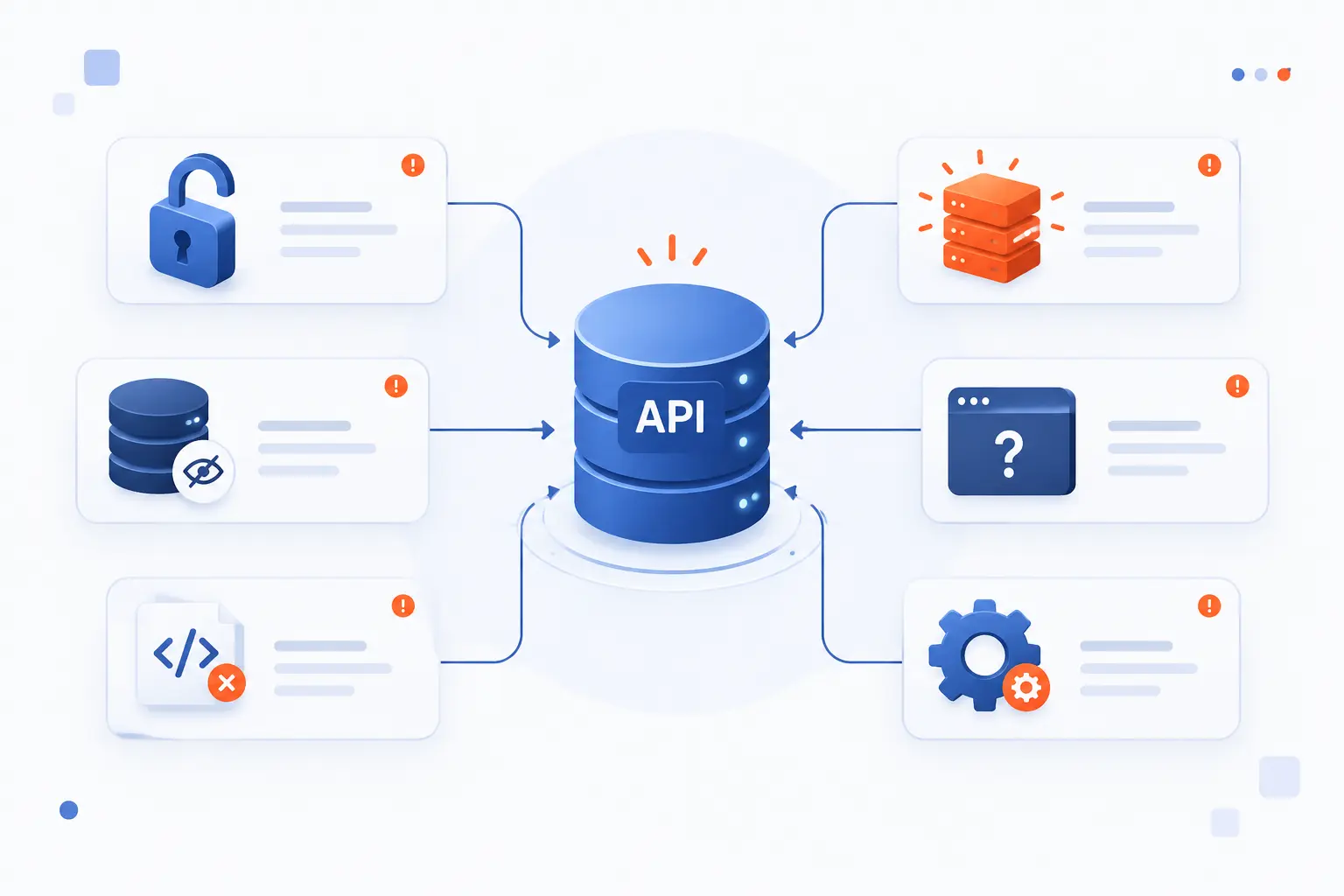
The most common API vulnerabilities involve broken access control, weak authentication, excessive data exposure, unsafe input handling, resource abuse, unknown endpoints, and misconfiguration. These are practical failures, not abstract theory. They happen when APIs trust the client too much, expose more than needed, or continue running after ownership fades.
OWASP’s 2023 risk list is a useful reference because it groups API failures around real attack patterns. We would not treat any list as complete, but this one captures the mistakes we repeatedly see in production conversations.
Broken Object and Function Level Access Controls
Broken object and function level controls let callers access records or actions they should not reach. Object-level flaws often appear when an attacker changes an ID in a URL or request body. Function-level flaws happen when a normal user can call an admin or partner-only operation.
The fix is not hiding IDs. Hidden IDs can leak, and guessed IDs are not the only problem. The fix is to verify authorization on the server for the specific object and action.
A good test is blunt: if user A requests user B’s resource, what stops it? If the answer is “the frontend never shows that button,” the API is not protected enough.
Broken Authentication and Weak Token Handling
Broken authentication lets attackers impersonate users, services, or trusted clients. Weak passwords, missing multi-factor authentication for sensitive admin flows, long-lived tokens, poor session invalidation, and token leakage all increase risk.
OAuth-based systems need careful configuration. The IETF’s January 2025 best current practice recommends newer protections for token replay prevention and discourages weaker patterns that survived from earlier deployments.
We pay special attention to token lifetime and storage. Short-lived access tokens, refresh token rotation, least-privilege scopes, and sender-constrained tokens can reduce the blast radius if credentials leak.
Excessive Data Exposure and Sensitive Property Leaks
Excessive data exposure happens when an API returns more fields than the caller actually needs. This often starts as developer convenience. The backend returns a full user object, and the frontend displays only a few fields.
The problem is that attackers read the full response, not the screen. Hidden fields, internal flags, role names, identity document values, or debugging data may be visible in the payload. Mobile apps are especially risky because users can inspect traffic outside the app interface.
The safer habit is to design responses for each use case. Return the minimum fields needed, filter by permission, and review response bodies as carefully as request bodies.
Injection, SSRF, and Mass Assignment Risks
Injection, server-side request forgery, and mass assignment happen when APIs pass unsafe input into powerful backend actions. Injection can target databases, command lines, search engines, template engines, or directory queries. SSRF can make a server fetch internal URLs that an attacker cannot reach directly.
Mass assignment is more subtle. It happens when an API accepts a user-supplied object and automatically maps fields into an internal model. If the caller adds “isAdmin” or “accountBalance,” unsafe code may process it.
Defenses include allowlists, parameterized queries, output encoding where needed, safe URL fetch rules, and explicit field mapping. We prefer code that says exactly which fields are accepted.
Resource Exhaustion, Brute Force, and Denial-of-Service
Resource exhaustion attacks force an API or backend dependency to spend too much CPU, memory, database time, or network bandwidth. A request does not need to be huge to be expensive. It may trigger a complex search, large export, nested query, or repeated login check.
Brute force attacks are common on login, reset, coupon, gift card, and verification endpoints. Enumeration attacks try many IDs or emails to discover valid accounts. Denial-of-service attacks may flood one endpoint or exploit one costly operation.
Practical defenses include request size limits, quotas, progressive delays, account lockout policies, caching where safe, queue controls, and circuit breakers. The goal is to protect both users and backend systems.
Shadow APIs, Misconfiguration, and Unsafe Legacy Versions
Shadow APIs are undocumented or forgotten endpoints that still respond to traffic. They may come from old mobile versions, temporary admin tools, staging environments, vendor integrations, or abandoned experiments. Because they are outside normal review, they often miss newer controls.
Misconfiguration can be just as harmful. A debug mode may expose stack traces. A permissive CORS policy may allow risky browser calls. An old endpoint may skip a newer authorization middleware.
Legacy versions need special attention. If version 1 still accepts weak tokens or returns old fields, version 2 cannot fully fix the risk. Retirement is a security task, not only a product task.
Lifecycle Practices That Keep APIs Safer
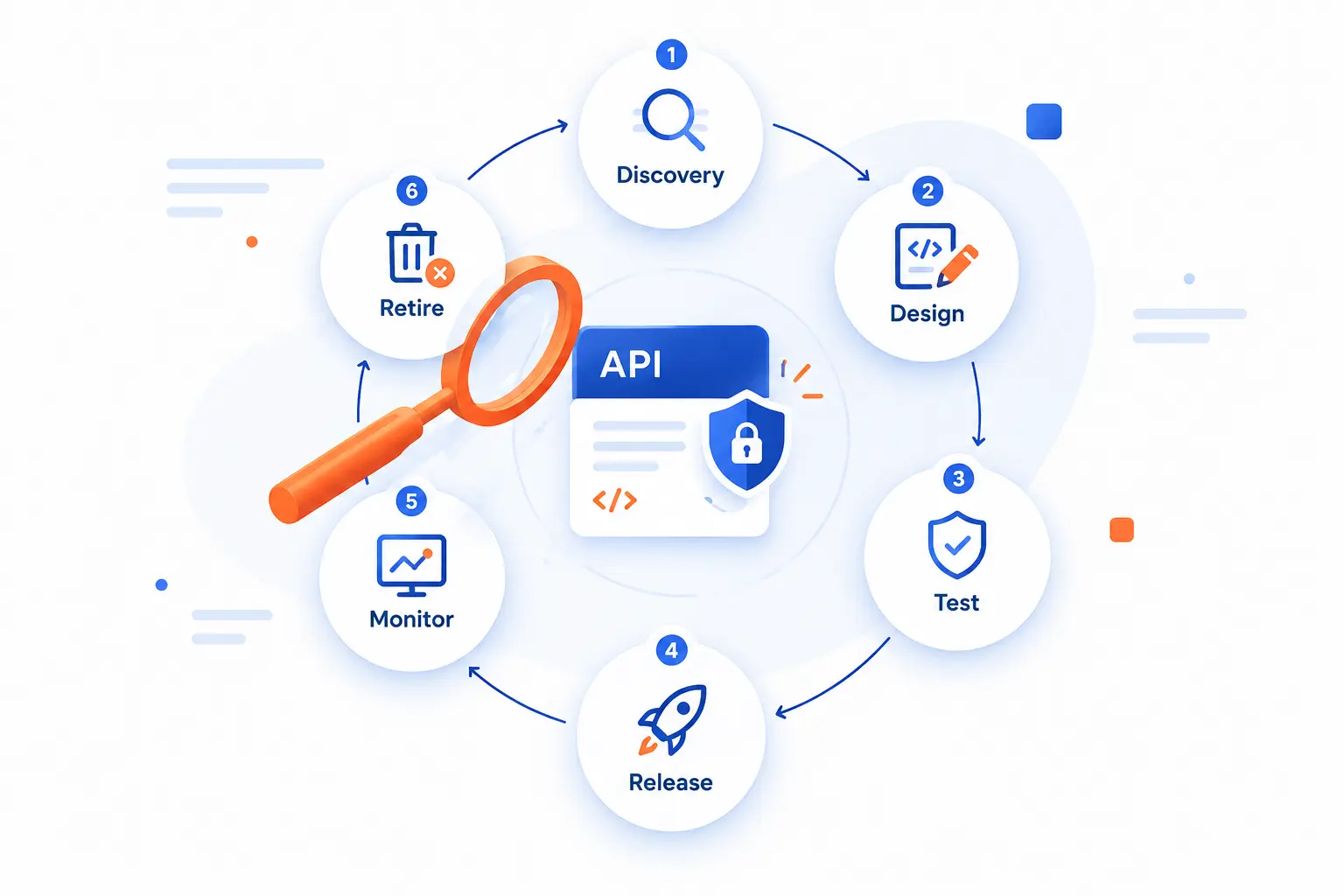
API security improves when it is built into the whole lifecycle: discovery, design, documentation, testing, release, monitoring, and retirement. A one-time review before launch is better than nothing, but it misses drift. APIs change as products change. Safe teams create habits that catch new risk before attackers do.
Discovery and Inventory Prevent Unknown Endpoints From Slipping Through
Discovery and inventory make sure teams know which APIs exist, who owns them, and what data they expose. Without an inventory, even strong policies become guesses. You cannot protect an endpoint nobody remembers.
A useful inventory records the base URL, environment, owner, authentication method, data classification, consumers, version, and last review date. Runtime discovery can compare real traffic against documentation. That comparison often exposes forgotten routes.
We like to ask a simple question during reviews: “If this endpoint behaved strangely at 2 a.m., who would get the alert?” If nobody knows, ownership is missing.
Secure Design, Documentation, and Clear Scopes Reduce Mistakes Early
Secure design reduces API risk before code is written. Teams should define the caller types, data model, permission rules, error behavior, rate limits, and abuse cases early. This is cheaper than rewriting authorization after release.
Documentation should describe more than paths and parameters. It should explain scopes, roles, object ownership, response fields, and failure cases. OpenAPI descriptions can define authentication schemes and per-operation rules, which helps reviewers and tools see what each route expects.
Clear scopes are especially helpful. A token that can read invoices should not also update billing settings unless that is truly required.
Testing Throughout CI/CD and Production Finds Gaps Faster
Testing across CI/CD and production catches API issues at different stages. Static checks can find hardcoded secrets and unsafe code patterns. Dynamic tests can probe running endpoints. Contract tests can verify that responses match the documented schema.
CI/CD should include checks for authentication bypass, missing authorization, unexpected fields, weak CORS settings, and oversized request handling. Production testing adds another layer because real traffic reveals routes and behaviors that test environments miss.
We do not trust only green builds. A pipeline proves what it tests. Runtime monitoring proves what actually happens after deployment.
Penetration Testing and Threat Modeling Catch What Automation Misses
Penetration testing and threat modeling catch business logic flaws that automated tools often miss. A scanner can find missing headers. It may not understand that a refund should be impossible after shipment or that a reseller should only access assigned customers.
Threat modeling asks how the API could be abused before attackers ask the same question. Who benefits from changing this field? What happens if a user repeats this step? Can a partner enumerate IDs? Does one tenant ever see another tenant’s data?
Penetration tests should use realistic roles and data. Testing only as an anonymous visitor misses the dangerous middle ground where authenticated users abuse valid features.
Versioning and Safe Decommissioning Shrink Long-Term Risk
Versioning and safe decommissioning reduce the risk of old endpoints lingering forever. New versions should not simply add controls while old versions remain exposed. That creates a split reality where attackers choose the weaker path.
A retirement plan should include consumer notification, usage tracking, cutoff dates, redirects where appropriate, and final shutdown. It should also remove credentials, routes, documentation, firewall exceptions, test data, and monitoring rules tied to the old version.
We see decommissioning as a discipline of cleaning up promises. Every live endpoint is a promise to maintain and defend it.
How Security Changes Across API Styles
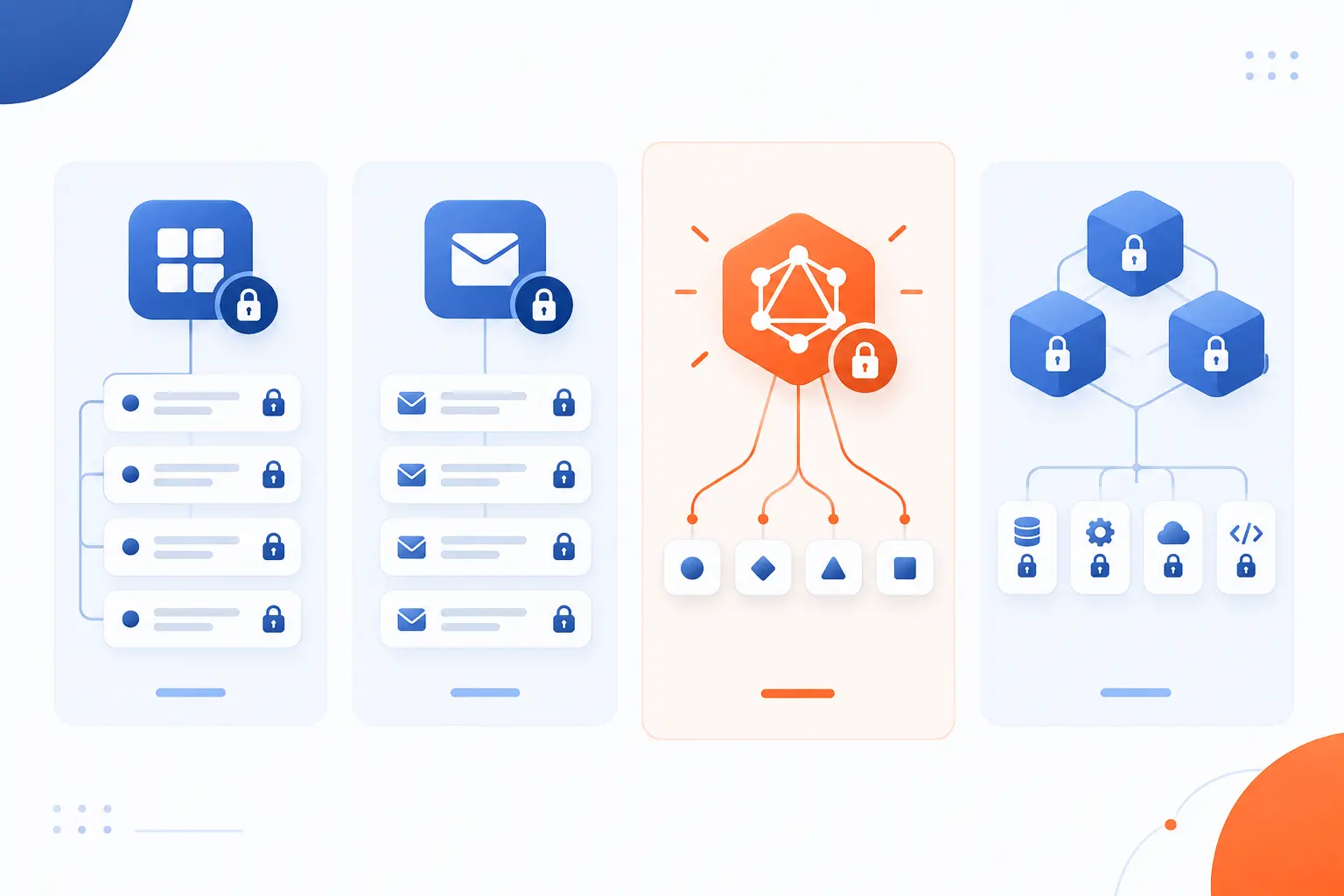
API security changes across styles because REST, SOAP, GraphQL, and service-to-service APIs expose different shapes of risk. REST usually focuses on endpoints, methods, objects, and tokens. SOAP adds message-level concerns. GraphQL concentrates many actions behind one endpoint, which changes how limits and authorization work. Microservices require strong identity between services, not just at the public edge.
| Style | Main risk pattern | Practical control focus |
|---|---|---|
| REST | Object and method misuse | Per-route and per-object authorization |
| SOAP | Complex messages and legacy integrations | Message validation and strict policy |
| GraphQL | Overly broad or expensive queries | Field checks, depth limits, and cost controls |
| Microservices | Implicit internal trust | Service identity and least privilege |
REST and SOAP Need Strong Endpoint and Message Controls
REST and SOAP need strict controls around who can call each operation and what each request may contain. REST APIs commonly expose resources through predictable paths, methods, and IDs. That makes object-level authorization and method restrictions essential.
SOAP often appears in enterprise and legacy integrations. Its messages may be more structured, but that does not remove risk. Teams still need schema validation, authentication, authorization, replay protection, and safe parsing.
For both styles, avoid trusting the client. The server must enforce permissions, validate input, and filter output. A pretty client interface is not a control.
GraphQL Needs Query Depth, Complexity, and Field-Level Access Checks
GraphQL needs controls that account for flexible queries, not just request counts. A single GraphQL endpoint may expose many object types and relationships. That is powerful for clients, but it can hide expensive or sensitive access paths.
GraphQL.org recommends practical demand controls such as depth and complexity controls to reduce abusive or costly operations. Field-level authorization also matters because different fields on the same type may have different sensitivity.
We would not protect GraphQL only at the gateway. The resolver layer must still check access, because that is where the server knows which object and field are being requested.
Microservices and Service-to-Service APIs Need Zero-Trust Controls
Microservices need identity and authorization between services because internal traffic is not automatically safe. Once an attacker reaches one service, weak internal trust can let them move laterally. The old idea of a trusted private network is too thin for modern cloud systems.
NIST describes zero trust as a model where access decisions are explicit and continually evaluated, and its SP 800-207 publication is a good foundation for this thinking. In API terms, that means service identity, mutual authentication, least privilege, and policy checks close to the workload.
Service-to-service controls should also include short-lived credentials, workload identity, network segmentation, and logs that show which service called which endpoint. Internal does not mean invisible.
Where API Protection Fits Alongside Other Security Layers
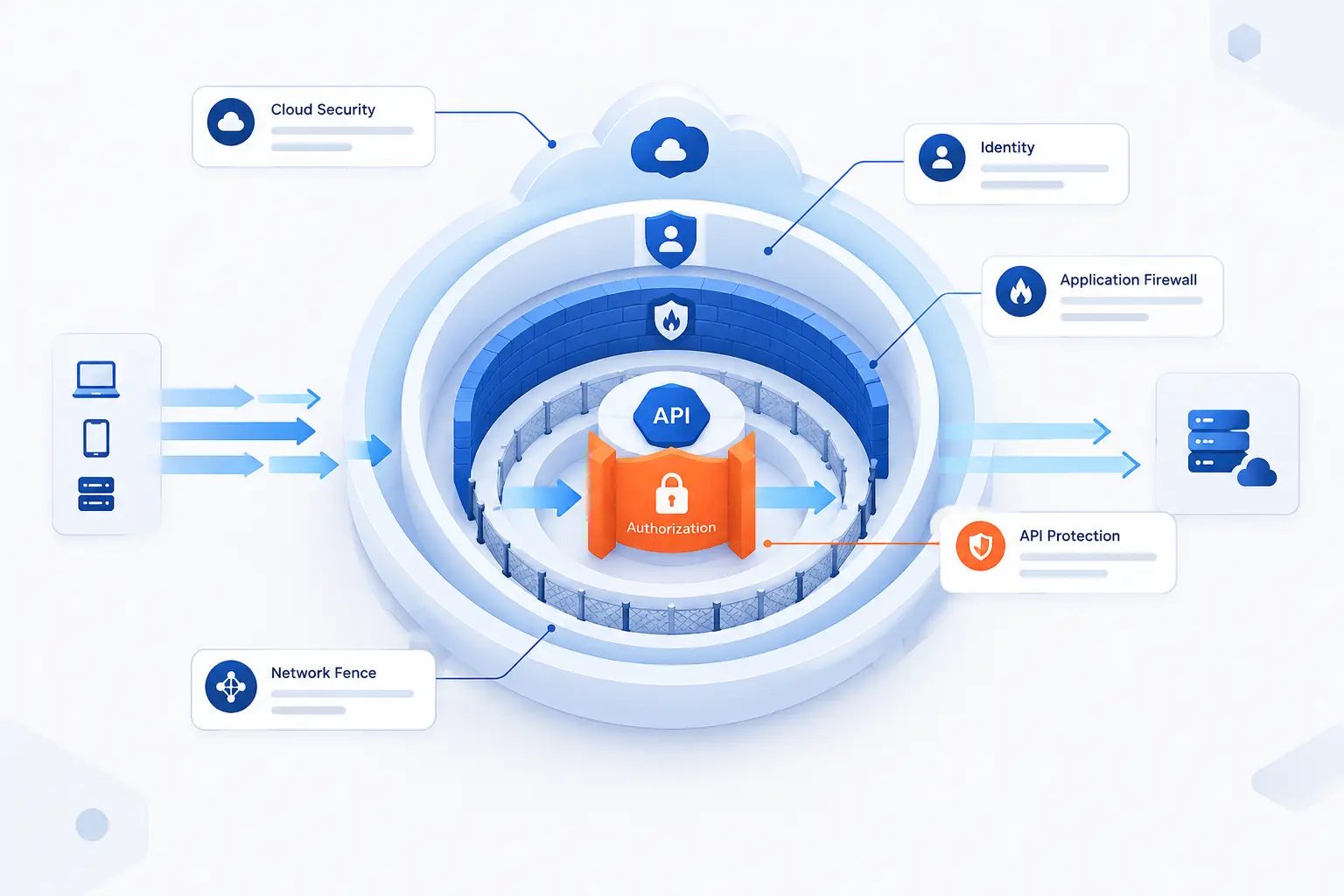
API protection fits beside application security, cloud security, identity management, network controls, and monitoring. It does not replace them, and they do not replace it. A web application firewall may block common attacks, but it may not know whether user A can view invoice B. A secure cloud network may reduce exposure, but an authorized caller can still abuse broken business logic.
Application Security and API Security Overlap but Are Not the Same
Application security and API security overlap because APIs are part of applications, but API work has its own failure patterns. Traditional app security often looks at pages, forms, sessions, and code. API security focuses heavily on endpoints, machine callers, tokens, object access, schemas, and automated abuse.
The overlap is useful. Secure coding, dependency management, secret handling, and threat modeling all apply. Still, APIs need extra attention because they are designed for software-to-software use.
We see the difference during testing. A web form may prevent a user from editing a field, but the API behind it may still accept that field if called directly.
WAFs and API Gateways Help but Do Not Cover Every API Risk
WAFs and gateways help with common controls, but they do not understand every business rule. They can block known attack patterns, enforce TLS, route traffic, apply quotas, and check tokens. That is valuable.
They may not know that a doctor should access only assigned patients or that a warehouse user should not approve refunds. Those rules belong in application and authorization logic. If the backend fails open, the gateway cannot always save it.
We like gateways as part of the stack, not as the whole stack. Defense should exist at the edge, in the service, in the data layer, and in the monitoring system.
Testing Tools Need Runtime Visibility, Not Just Periodic Scans
Testing tools need runtime visibility because periodic scans miss drift, shadow endpoints, and behavior under real traffic. A quarterly test can be clean, then a new route can ship the next day. That is how exposure grows quietly.
Runtime visibility helps teams see actual callers, payload patterns, error spikes, unusual sequences, and undocumented endpoints. It also helps prioritize fixes. A critical flaw on an exposed endpoint with heavy traffic deserves faster action than a low-risk issue in a retired environment.
Industry breach data supports a broader point: attackers keep finding weak entry points faster than many teams fix them. Verizon’s 2026 report highlighted vulnerability exploitation at 31% of confirmed breaches, which reinforces the need to shorten the gap between discovery and remediation.
FAQ
This FAQ gives quick answers to the two questions beginners ask most often about API security. The short version is simple: you check an API by testing both technical controls and business rules, and you should never trust an API by default. We believe healthy skepticism is a strength here. Trust should be earned by design, evidence, and monitoring.
How Do You Check if an API Is Secure
You check if an API is secure by reviewing its authentication, authorization, input validation, encryption, rate limits, logging, and exposed data. Test with different roles, invalid tokens, changed object IDs, unexpected fields, large requests, and repeated calls. Also compare live endpoints with documentation, because unknown routes often carry the most risk.
Is an API Trustworthy by Default
No, an API is not trustworthy by default. It becomes trustworthy only after its identity checks, permission rules, data handling, and monitoring have been designed and tested. Even internal APIs need controls, because attackers and mistakes can move inside a network.
How 1Byte Supports Safer API Deployments
1Byte supports safer API deployments by providing hosting and connection services that give teams a practical foundation for exposed applications. We provide domain registration, SSL certificates, WordPress hosting, shared hosting, cloud hosting, and cloud servers, and 1Byte is an AWS Partner. Those services do not replace secure code, but they help teams start from a cleaner operating base. In our view, api security works best when the application, hosting environment, and connection layer are planned together.
| 1Byte service | How it relates to APIs | Practical security angle |
|---|---|---|
| Domain registration and SSL certificates | Public identity and encrypted connections | Help users and systems connect to the intended host |
| WordPress hosting and shared hosting | Website and plugin-driven endpoints | Support careful setup for common web workloads |
| Cloud hosting and cloud servers | Custom applications and backend services | Give teams room to place controls around API workloads |
Domain Registration and SSL Certificates for Trusted Connections
Domain registration and SSL certificates help API consumers reach the right service over encrypted connections. A clear domain reduces confusion for users, apps, and partners. SSL certificates protect traffic in transit and help browsers and clients verify the server they are contacting.
This is foundational, not magical. TLS does not prove that your authorization logic is correct. It does make sure credentials and data are not sent in clear text across the network, which is a non-negotiable starting point for public APIs.
When we help customers think through API exposure, we start with simple questions. Which hostnames are public? Which certificates protect them? Which environments should never be reachable from the open internet?
WordPress Hosting and Shared Hosting With a Security-First Setup
WordPress hosting and shared hosting can support safer API-adjacent workloads when teams configure applications carefully. WordPress sites often expose REST endpoints through core features, plugins, themes, forms, and integrations. That makes updates, permissions, and plugin discipline important.
Shared environments also need clear boundaries in how applications store credentials and connect to external services. API keys should not be left inside public files or theme code. Admin accounts should use strong authentication habits.
We do not pretend hosting alone fixes insecure plugins or custom code. What we can do is keep the hosting conversation tied to practical risk: fewer exposed secrets, cleaner configurations, and careful handling of public entry points.
Cloud Hosting and Cloud Servers for Scalable Protected APIs
Cloud hosting and cloud servers give teams more control over how they deploy and protect custom APIs. They can separate public entry points from private services, place applications behind gateways, run logging agents, and design environments around the workload’s sensitivity. This matters when APIs move beyond a simple website integration.
As an AWS Partner, 1Byte can connect cloud planning with the hosting choices customers already need. The practical question is always the same: where should the API run, how should it be exposed, and which controls must sit around it?
We encourage teams to decide those controls before launch. Retrofitting network boundaries, keys, logs, and rate limits after traffic arrives is harder than building them into the deployment plan.







Conclusion
API security is the discipline of making useful software connections safe. It protects identities, permissions, data, requests, responses, traffic patterns, and the systems behind each endpoint. The strongest programs treat APIs as living products, with owners, documentation, monitoring, tests, and retirement plans.
If we had to reduce the whole topic to one habit, it would be this: never let an API trust a request just because it looks normal. Verify the caller. Check the object. Validate the input. Limit abuse. Log what matters. Then review the endpoint again when the product changes.
For your next step, pick one production API and trace a single sensitive request from client to database and back. Can you prove who called it, what they were allowed to do, what data they received, and where the event was logged?