

- How We Compared the Hottest AI Startups
- Top 10 Hottest AI Startups Right Now
- 5 More AI Startups Worth Watching
- What the Hottest AI Startups Reveal About AI Demand
- How To Separate AI Hype From Real Buyer Value
- Why Regulation Matters When Comparing AI Startups
- Why Responsible AI Still Belongs in Any Shortlist
- FAQ
- Conclusion
The hottest AI startups are not all chasing the same prize, and that is exactly why buyers need a shortlist instead of a hype reel. Some are selling foundation models, some are building enterprise work layers on top of those models, and some are going deep into one industry like legal, search, customer service, video, or healthcare. We put this list together to help readers compare what these companies actually sell, how they package it, and where each one looks strongest right now. If you want a faster path to a sensible shortlist, start with the top ten and match them to your use case before you get swept up by valuation headlines.
How We Compared the Hottest AI Startups
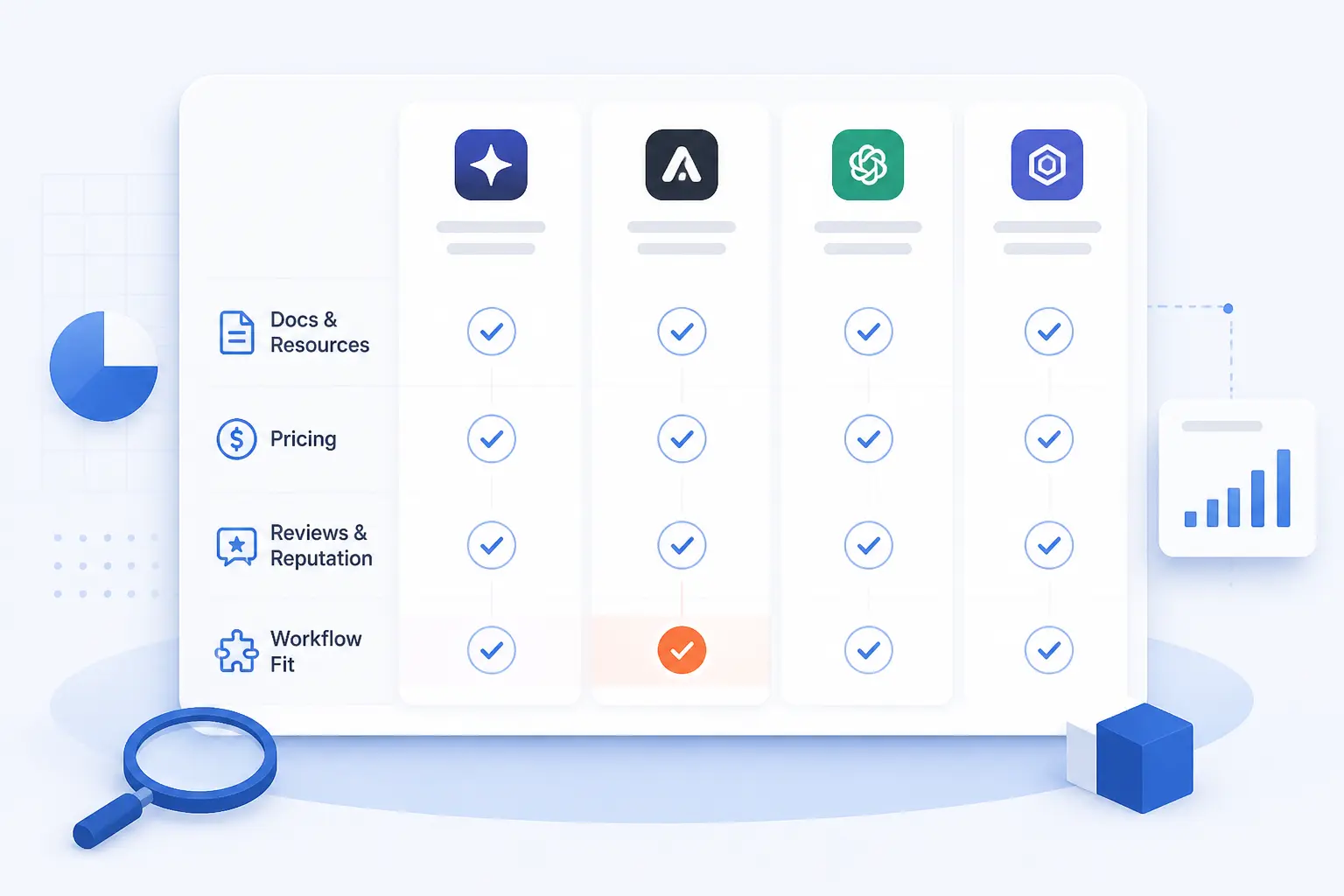
Most buyers do not need the loudest startup. They need the one that fits their workflow, risk tolerance, and budget path. We built this roundup around that practical lens, so the early question was not “Who raised the most?” but “Who looks most credible and useful when you read the product pages, documentation, pricing, and review signals side by side?”
FURTHER READING: |
| 1. 15 Best PHP Editors for Real World Development |
| 2. 15 Best Online Payment Methods for Faster Checkout |
| 3. 15 Restaurant Ordering System Picks Worth Using |
Quick Comparison of the Hottest AI Startups
| Startup | Best For | Buying Motion | Pricing Model | Score |
|---|---|---|---|---|
| OpenAI | Broad enterprise AI adoption | Self-serve plus enterprise sales | Seats plus token-based API | 4.9 |
| Anthropic | Safety-minded enterprise knowledge work | Self-serve plus enterprise sales | Seats plus API | 4.8 |
| Perplexity | Cited research and answer-first search | Self-serve plus enterprise sales | Freemium and per-seat enterprise | 4.7 |
| Mistral | European model access and flexible deployment | Self-serve plus enterprise sales | Freemium, team seats, and API usage | 4.6 |
| Harvey | Legal and professional services workflows | Enterprise sales | Custom contracts | 4.5 |
| Glean | Enterprise search and internal knowledge access | Enterprise sales | Custom contracts | 4.5 |
| Cognition | AI software engineering assistance | Self-serve plus enterprise sales | Freemium, usage, and enterprise | 4.4 |
| Runway | AI video creation for creators and teams | Self-serve | Credit-based subscriptions | 4.3 |
| Sierra | Enterprise customer service agents | Enterprise sales | Outcome-based contracts | 4.3 |
| Cohere | Secure enterprise AI and retrieval-heavy use cases | Enterprise sales plus developer self-serve | Custom platform plus usage-based infrastructure | 4.2 |
How We Researched and Evaluated This List
We scored these startups as buyers would, not as investors would. That means product clarity, buying clarity, and real-world fit mattered more to us than headline buzz alone.
- Capability fit: we looked at whether the company clearly solves a real workflow, with named products, concrete features, and a believable deployment model.
- Buyer clarity: we rewarded startups that explain who the product is for, how it is bought, and what happens after the demo request.
- Pricing transparency: public rate cards, plan detail, and understandable usage models scored better than vague “contact sales” pages, though enterprise-only products were not penalized for selling large contracts if the scope was clear.
- Governance and enterprise readiness: we weighed security controls, admin features, auditability, deployment flexibility, and compliance language where the official materials surfaced them.
- Review signal: third-party ratings did not determine rank by themselves, but they helped us separate polished market leaders from startups that are still early in public buyer feedback.
That approach naturally favors startups that are exciting and buyable at the same time. In our view, that is the right filter for a commercial investigation article like this one.
Top 10 Hottest AI Startups Right Now
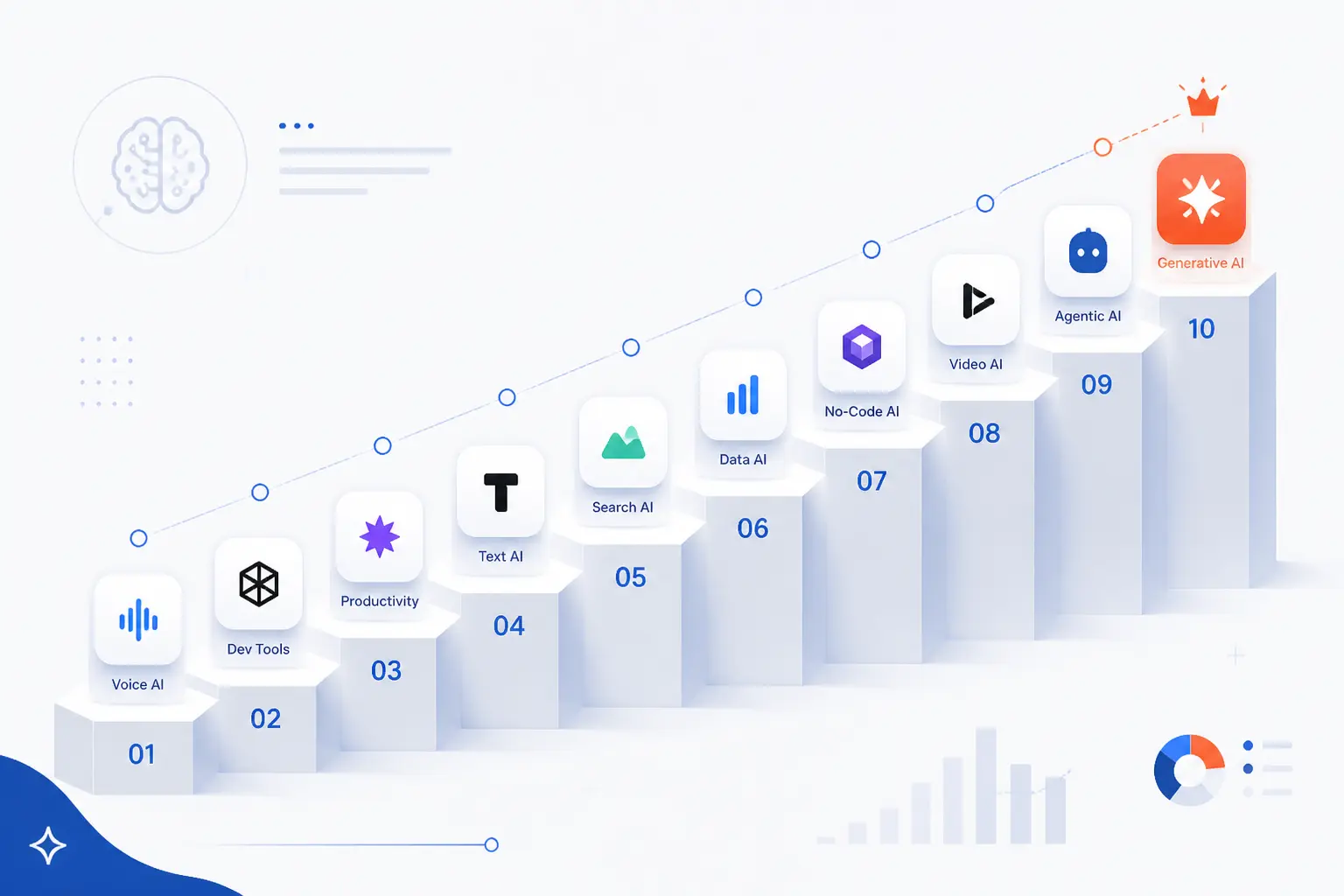
If we had to narrow the hottest AI startups to the most actionable shortlist, these are the ten we would start with. The top of the list is dominated by companies that already have clear products, clear workflows, and enough market signal to help a buyer judge fit without guessing. A few are broad platforms, a few are category specialists, and that mix is exactly what makes the comparison useful.
1. OpenAI
- Category: Foundation models and enterprise AI workspace
- Best for: Teams that want one vendor for chat, coding, and API access
- Ease of buying: Very easy to try, straightforward to expand
- Pricing: Self-serve seats plus token-based API pricing
- Standout feature: The broadest product surface in this list
For sheer market pull, OpenAI still sets the pace. It is the most complete “start here” option for buyers who want consumer familiarity, enterprise admin controls, and a mature developer platform under one roof. That breadth is why it sits at number one in this list, even if some competitors beat it on narrower specialties.
How OpenAI works
The company now spans two clear buying paths. On the workspace side, ChatGPT Business and ChatGPT Enterprise give organizations a managed environment with centralized billing, member roles, admin controls, and access to ChatGPT, ChatGPT Work, and Codex. On the builder side, the API platform lets teams buy model access directly and pay by token, with separate pricing for the models they choose. OpenAI’s help materials also make it clear that Enterprise supports multiple seat types, including a Codex-only seat, which matters for organizations that want to expand AI coding without turning every user into a full workspace seat.
The practical workflow is simple. A smaller team can start in ChatGPT Business, invite members into a workspace, assign seat types, and use the shared environment for writing, analysis, and coding. Larger organizations can move up to Enterprise for stronger privacy and administrative control. Developer teams can stay outside the workspace model entirely and use the API for application features, internal copilots, or production automations.
Who is OpenAI for?
OpenAI fits buyers who want a broad platform rather than a single-purpose tool. It works especially well for companies that need a mix of general chat, research, document drafting, coding help, and API access from one vendor. It is also a safe shortlist entry for organizations that want to standardize on a familiar interface while keeping room for custom development.
Who should look elsewhere? Teams that want open-weight models, highly specialized industry workflows out of the box, or a lower-cost strategy for narrow AI tasks may get better value from Mistral, Harvey, Glean, or Cohere depending on the job.
OpenAI pricing
- ChatGPT Business: $25 per user per month on monthly billing or $20 per user per month billed annually, with a two-seat minimum, centralized billing, admin controls, and access to ChatGPT, ChatGPT Work, and Codex.
- ChatGPT Enterprise: custom pricing, with enterprise-grade privacy and security, centralized workspace administration, advanced ChatGPT capabilities, and flexible Codex seat options.
- API platform: usage-based pricing, with model-specific rates such as token-based charges for generation and separate charges for tools like web search or containers where applicable.
For the current seat and token details, see the current business pricing page.
Pros and cons
Pros
- One vendor covers workspace AI, coding assistance, and API development.
- Business seats have a clear self-serve path instead of forcing every team into sales.
- Enterprise supports multiple seat types, which is more flexible than a one-seat-for-everything model.
- API pricing is public and detailed enough for technical buyers to model usage.
Cons
- Costs can stack quickly once a company is paying for seats and API usage at the same time.
- The product surface is broad, which can make governance decisions more complicated for admins.
- Reviewers on G2 still regularly mention the need to double-check confident but imperfect answers.
OpenAI rating and reviews
- G2: rated 4.6/5 across 3,083 reviews.
OpenAI is the easiest startup on this list to recommend as a default shortlist entry. We would not say it is always the best fit, but it is still the company most buyers need to benchmark the rest against.
2. Anthropic
- Category: Foundation models and enterprise AI assistant
- Best for: Knowledge-heavy teams that care about controlled enterprise rollout
- Ease of buying: Easy for individuals and teams, sales-led for large deployments
- Pricing: Individual, team, enterprise, and API pricing
- Standout feature: Strong plan separation for individual and business use
Anthropic earns the runner-up spot because it feels unusually disciplined for a fast-growing AI company. Claude is pitched less as a gadget and more as a serious work product for analysis, writing, coding, and enterprise collaboration. That focus makes Anthropic one of the most credible alternatives to OpenAI for businesses that want a cleaner, narrower buying story.
How Anthropic works
Anthropic’s product stack is split between Claude plans and developer access. Individuals can buy Pro or Max for more usage and earlier feature access. Teams move to the Team plan, which adds central billing and administration with a five-member minimum. Enterprise sits above that for larger organizations. Anthropic also separates Claude Code from standard workspace usage, and its pricing page notes that Claude Code is pay-as-you-go for Team and Enterprise, which is useful if a company wants coding usage to scale differently from general assistant usage.
The workflow is practical and easy to understand. A user starts with Claude for chat-based work, document analysis, or reasoning tasks. A team then adds centralized billing and administration. Larger companies move into enterprise controls and can pair Claude with developer-side model access where needed. Compared with some AI startups, Anthropic does a solid job of making the upgrade path feel intentional rather than stitched together.
Who is Anthropic for?
Anthropic is a strong fit for legal, research, operations, strategy, and internal productivity teams that spend a lot of time working through documents and structured thinking tasks. It also suits companies that want a cleaner seat-based buying model before they expand into heavier application development.
Who should look elsewhere? Buyers who want the broadest multimodal surface, an answer-engine style product, or deep vertical features out of the box will often find Perplexity, Runway, or Harvey more direct.
Anthropic pricing
- Pro: $20 per month in the U.S., with higher usage than free and the option to save with annual billing.
- Max: from $100 per person per month, with 5x or 20x more usage per session than Pro, higher output limits, early access to advanced features, and priority access during high traffic.
- Team: $25 per person per month billed annually or $30 billed monthly, with a five-member minimum, more usage, central billing, administration, and early collaboration features.
- Enterprise: custom pricing, with everything in Team plus larger-scale business deployment support.
For the current plan breakdown, see the current pricing page.
Pros and cons
Pros
- Very clear separation between individual, team, and enterprise plans.
- Team pricing is published, which helps mid-market buyers budget before a sales call.
- Claude Code being separated from general plan usage gives technical teams more flexibility.
- Reviewers on G2 consistently praise writing quality and analytical output.
Cons
- Enterprise pricing is still quote-based.
- Some features are split across product surfaces, which can be less tidy than an all-in-one workspace.
- Public plan documentation is good, but the product ecosystem still feels narrower than OpenAI’s.
Anthropic rating and reviews
- G2: rated 4.6/5 across 484 reviews.
Anthropic is the easiest “serious work” challenger to OpenAI in this list. If your team values clarity, steadiness, and document-heavy workflows, we would keep it near the top of the shortlist.
3. Perplexity
- Category: AI search and research assistant
- Best for: Buyers who want cited answers, not just chat
- Ease of buying: Extremely easy to start, simple enterprise path
- Pricing: Freemium plus clear per-seat enterprise tiers
- Standout feature: Cited research with model choice
If your priority is cited research instead of general chatbot convenience, Perplexity is one of the clearest winners in the market. It has done a better job than most startups of turning AI-assisted search into a product ordinary teams can understand on first glance. That clarity is why it ranks this high.
How Perplexity works
Perplexity combines conversational search, citations, and access to multiple AI models. On the individual side, the product moves from Free to Pro and Max. On the enterprise side, it offers Enterprise Pro and Enterprise Max with explicit per-seat pricing, search across the web, files, and apps, and security features like SSO, SCIM, audit logs, and guaranteed no training on customer data depending on tier. Its pricing page also shows premium data sources, model selection, and Perplexity Computer access in the higher plans.
The day-to-day workflow is what makes it stand out. A user searches in natural language, checks inline citations, opens original sources, and keeps drilling down without starting over. Teams can then widen that motion by searching across their own files and connected apps. That is a much tighter value story than “AI for everything,” and many buyers will appreciate that honesty.
Who is Perplexity for?
Perplexity fits market researchers, strategy teams, analysts, consultants, students, founders, and operations teams that spend their day turning scattered information into usable answers. It is especially good for people who need a cited starting point fast. We also think it is one of the easiest AI tools to justify for small teams, because the core value is obvious within minutes.
Who should look elsewhere? Buyers who need heavy document drafting governance, custom legal workflows, or large-scale internal enterprise search may be better served by Anthropic, Harvey, or Glean.
Perplexity pricing
- Free: $0 per month, with citations in every answer, access to basic AI models, and limited daily usage.
- Pro: $20 per month, with deep research, 4,000 bonus credits, access to top AI models, model selection, and document or app creation features.
- Enterprise Pro: $34 per seat per month billed annually, with 8,500 bonus credits, search across the web, files, and apps, SSO, premium source citations, and no training on your data.
- Enterprise Max: $271 per seat per month billed annually, with 15,000 monthly Computer credits per seat, advanced reasoning models, multi-model comparison, SCIM, audit logs, and data retention settings.
For the full seat comparison, see the current plan page.
Pros and cons
Pros
- Citations are core to the product rather than an add-on habit.
- Enterprise pricing is public and unusually clear for this market.
- Higher tiers include premium data sources and app or file search, which makes the jump from personal use to business use believable.
- Reviewers on G2 frequently mention speed, source visibility, and ease of research.
Cons
- It still needs human verification for important claims, despite the citation-first design.
- Creative and long-form workflow depth is not as strong as the best all-purpose assistants.
- Enterprise Max pricing climbs sharply, so it is not an automatic fit for every team.
Perplexity rating and reviews
- G2: rated 4.4/5 across 360 reviews.
Perplexity is one of the most commercially legible startups in AI right now. If your short list needs a research-first option, this one belongs on it almost by default.
4. Mistral
- Category: Foundation models and AI workspace
- Best for: Buyers who want model access, flexible deployment, and a European vendor
- Ease of buying: Good self-serve path for individuals and developers
- Pricing: Free, paid seats, team workspace, and API usage
- Standout feature: Strong mix of consumer, team, and API pricing
Mistral stands out for buyers who want frontier-style capabilities without defaulting to the two biggest U.S. labs. The company has become more buyable over time because it now presents a real ladder from free usage to Pro, Team, Enterprise, and API pricing. That makes it easier to evaluate as a practical vendor, not just an admired model company.
How Mistral works
Mistral’s product surface centers on Vibe and its platform tools. The pricing page shows a Free plan for limited access, a Pro plan for heavier work, a Team plan for secure collaboration, and an Enterprise path for larger organizations. The platform overview in the docs describes Studio as the developer console and API surface, and the pricing docs add model-level usage rates for inference. In plain terms, Mistral lets one buyer start with a user-facing assistant while another buyer comes in strictly through API access.
That hybrid matters. A company can use the workspace product for day-to-day tasks while its developers price production workloads at the model level. The docs also point to ongoing convergence in surfaces, which suggests Mistral is trying to reduce product sprawl rather than add more of it.
Who is Mistral for?
Mistral fits technical teams, European enterprises, and cost-aware buyers who want more deployment and model choice flexibility than a pure chat product offers. It is also attractive for organizations that want one vendor for personal assistant usage, team collaboration, and API experimentation.
Who should look elsewhere? Buyers who want the deepest public review footprint, polished enterprise search, or fully formed vertical solutions will usually find stronger signals from OpenAI, Anthropic, Glean, or Harvey.
Mistral pricing
- Free: free access to Vibe with limited chat, web search, coding sessions, image generation, mobile and web use, plus $10 per month in API credits.
- Pro: $14.99 per month before taxes, with more access and usage, more messages and web searches, all-day coding across CLI, IDE, and web, more image generations, and API credits.
- Team: $24.99 per user per month before taxes, with secure collaboration, up to 30 GB of storage per user, domain verification, and data export.
- Enterprise: custom pricing for larger deployments and controls.
- API example: Mistral Large is priced at $2 per million input tokens and $6 per million output tokens, with a 50% batch discount.
For the current seat and inference details, see the current pricing page.
Pros and cons
Pros
- Clear path from free assistant usage to team workspace and API production.
- Public model pricing is more useful than vague sales-only messaging.
- Team plan includes concrete collaboration details such as storage and domain verification.
- Trustpilot shows Mistral has built enough public interest to attract independent consumer feedback, which is not true for every model company here.
Cons
- The product naming and surface area still take a little decoding for non-technical buyers.
- Enterprise pricing is not public.
- The public review footprint is still thinner than OpenAI, Anthropic, or Perplexity.
Mistral rating and reviews
- Trustpilot: rated 2.5/5.
Mistral remains one of the more interesting challenger startups in AI because it is not just talking about openness or sovereignty. It is also giving buyers a usable menu of ways to buy.
5. Harvey
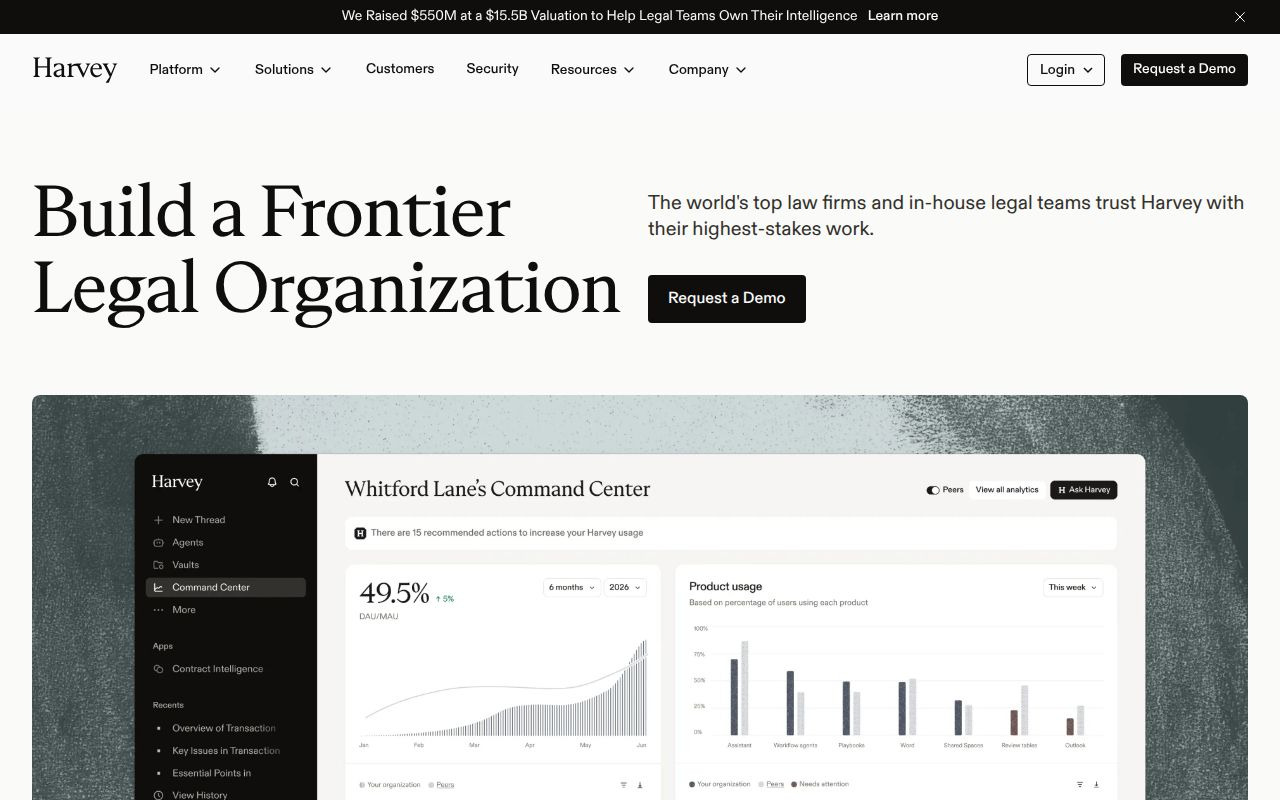
- Category: Vertical AI platform for legal work
- Best for: Law firms, in-house legal teams, and adjacent professional services
- Ease of buying: Enterprise sales only
- Pricing: Custom enterprise contracts
- Standout feature: One of the clearest workflow-specific legal AI stacks
Harvey is the most focused company in this top tier. It is not trying to be everyone’s assistant. It is trying to be a governed legal work platform with named modules, purpose-built workflows, and client collaboration surfaces. That sharper identity is why it outranks several bigger-name generalists for buyers in legal and regulated advisory work.
How Harvey works
Harvey’s official materials frame the platform around Assistant, Vault, Workflows, Knowledge, Spaces, and ecosystem integrations. The support hub describes Vault for secure document storage and organization, Review Tables for comparing documents and extracting information at scale, and Knowledge Sources for grounding queries in jurisdiction-specific legal research content. Spaces adds governed collaboration with clients, outside counsel, and internal teams, including shared Vaults, published workflows, and analytics.
In practice, that means a legal team can centralize documents in Vault, query or analyze them, use workflow agents for repeatable tasks like diligence or NDA review, and collaborate inside a controlled matter-specific environment. We like that Harvey’s product language is concrete. It tells buyers what the pieces are and how they hang together.
Who is Harvey for?
Harvey is for law firms, in-house legal departments, and some tax or finance-adjacent professional teams that need governed, repeatable, document-heavy work. It is especially compelling where institutional knowledge, permissions, and shared matter context matter as much as raw model quality.
Who should look elsewhere? Small businesses, general productivity buyers, and teams that do not need legal-specific workflow structure will almost always be better off with a broader and cheaper product.
Harvey pricing
- Platform contracts: custom pricing, typically centered on access to Assistant, Vault, Workflows, Knowledge, and collaboration features.
- Enterprise controls: custom pricing, with security features such as SAML SSO, audit logs, IP allow-listing, and data lifecycle management included in enterprise deployments.
Harvey sells through tailored enterprise engagements rather than public tiers, so the practical next step is its platform agreement and enterprise contracting framework.
Pros and cons
Pros
- Product modules are clearly aligned to legal workflows instead of generic AI promises.
- Spaces is a strong idea for governed multi-party legal collaboration.
- Security language is concrete, with named controls like SAML SSO and audit logs.
- G2 reviewers highlight document analysis, summarization, and legal research use cases.
Cons
- No public pricing, which makes early budgeting harder.
- Narrow vertical focus means it is not a multipurpose AI standardization platform.
- Public review volume is still modest relative to the amount of market attention Harvey gets.
Harvey rating and reviews
- G2: rated 4.3/5 across 30 reviews.
Harvey is not the right answer for everyone, and that is part of its strength. If you are buying for legal work, it is one of the few startups here that already feels shaped around the job instead of merely adaptable to it.
6. Glean
- Category: Enterprise search and workplace AI
- Best for: Companies that need to find answers across internal systems fast
- Ease of buying: Enterprise sales, but the value story is easy to grasp
- Pricing: Custom contracts
- Standout feature: Real-time, permissions-aware search across business tools
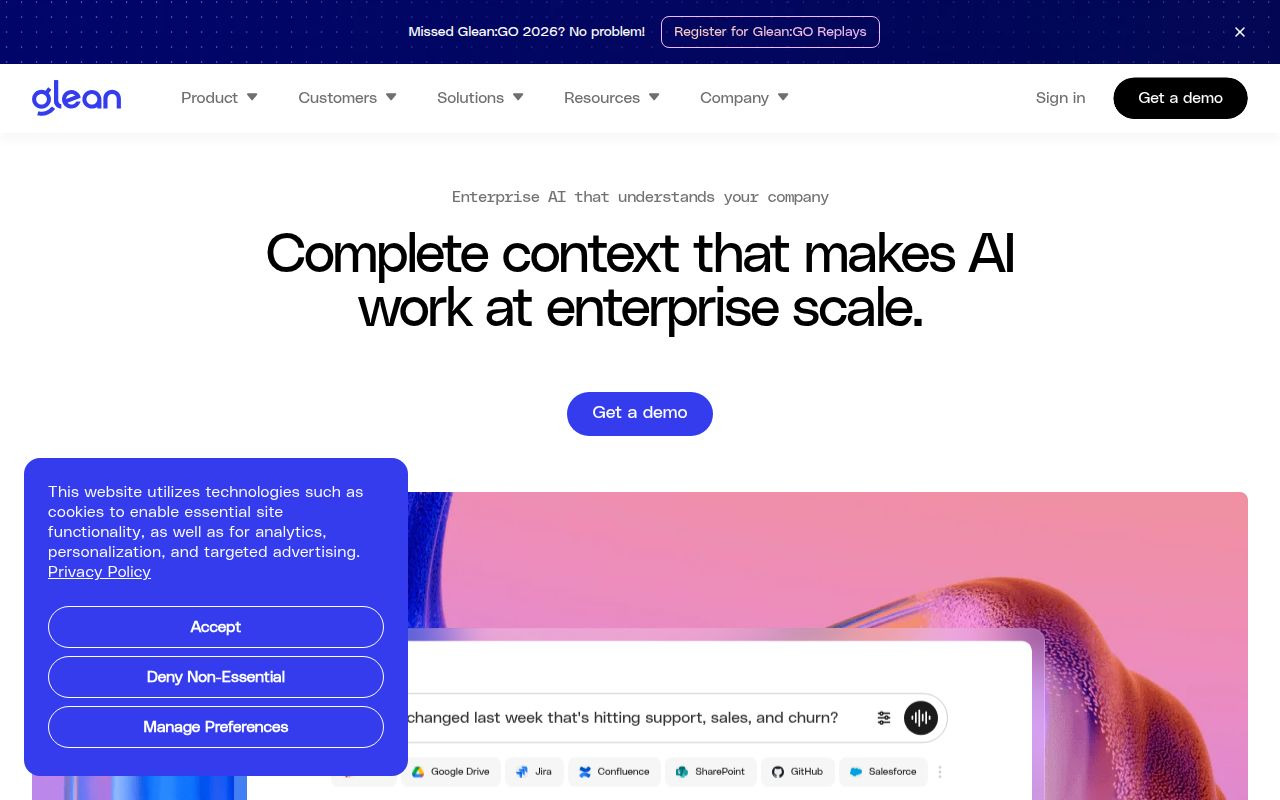
Glean belongs near the top because internal knowledge retrieval is one of the most real AI buying categories in business. The company’s pitch is refreshingly concrete: connect the apps your people already use, respect permissions, and help employees find the right answer or take action faster. There is nothing flashy about that, and that is exactly why it sells.
How Glean works
Glean’s enterprise search pages explain the core model well. Search spans more than 100 tools in one place, results are real-time and permissions-aware, and the system uses company context to improve relevance. The docs on connectors then show how Assistant and Agents build on the same connector-backed index, with native tools able to read or write in external systems when configured. In other words, Glean starts as search, then becomes assistant, then moves toward agentic workflows.
That progression makes sense for enterprise buyers. Search is a low-friction wedge because employees already understand the pain. Once the connectors are in place and the permissions model is trusted, the assistant and agent layers become more believable.
Who is Glean for?
Glean is for midsize and large organizations whose documents, chats, tickets, calendars, and knowledge live in too many systems. It is a strong fit for IT, operations, enablement, support, and general knowledge-worker productivity initiatives. It also makes sense for companies that want a practical first AI rollout rather than a moonshot.
Who should look elsewhere? Small teams with only a handful of tools or buyers who need a full foundation-model vendor more than an enterprise search layer.
Glean pricing
- Glean Search: custom pricing, with unified search, real-time permissions-aware results, and connector-based access to enterprise tools.
- Assistant and Agents: custom pricing, built on the same connector-backed index with configurable tools and workflow actions.
We did not find a public seat rate on the official product pages we reviewed, so budgeting starts with the enterprise search overview.
Pros and cons
Pros
- The value proposition is easy to understand and easy to pitch internally.
- Permissions-aware search is a stronger enterprise story than generic chatbot access to company files.
- The connector architecture gives Glean a believable path from search into agents and actions.
- G2 reviewers repeatedly mention ease of use and broad cross-tool search as strengths.
Cons
- No public pricing.
- The strongest value tends to appear in bigger, more tool-sprawled organizations.
- Some reviewers mention unclear credit charges and occasional misses on search relevance.
Glean rating and reviews
- G2: rated 4.7/5 across 336 reviews.
Glean is one of the most obviously commercial AI companies on this list. If your company’s main AI pain is “we cannot find what we already know,” it deserves a serious look.
7. Cognition
- Category: AI software engineering agent
- Best for: Engineering teams that want autonomous help on coding tasks
- Ease of buying: Good self-serve ladder, enterprise available
- Pricing: Free, paid individual plans, usage-based team pricing, enterprise
- Standout feature: Devin is sold as a teammate, not a code autocomplete widget
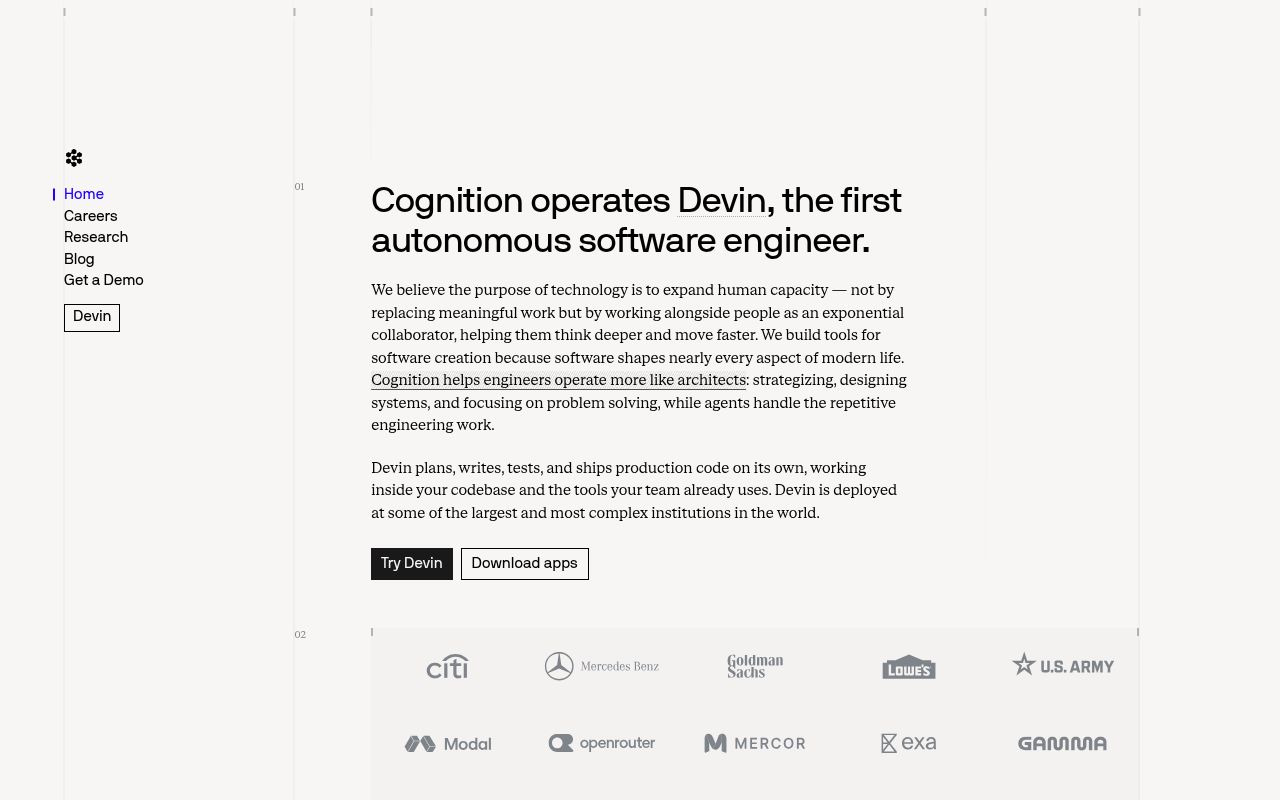
Cognition makes the cut because Devin has become one of the clearest agent-style products in software engineering. The company does not frame Devin as a chat box that knows code. It frames Devin as an autonomous software engineer that plans, writes, tests, reviews, and works inside team workflows. That is ambitious, but the product and pricing pages at least show a coherent shape behind the pitch.
How Cognition works
The official product updates reveal how Devin is intended to operate in practice. Teams can add Knowledge in settings, pin repo-specific Knowledge, share sessions to Slack, monitor Devin’s machine utilization, and configure workspace resources. Cognition’s updates also stress session management, testing, and instruction quality, which tells us this is not a magic one-shot tool. It is a managed agent environment that needs guidance.
The pricing refresh made the product more buyable. Free handles limited access. Pro and Max are individual tiers with included quota. Teams adds collaboration, centralized billing, and admin controls with a monthly minimum spend. Enterprise covers larger organizations with custom requirements. That is a much easier ladder to understand than the company’s earlier pricing.
Who is Cognition for?
Cognition is for engineering teams that want a more autonomous coding product than a standard inline assistant. It suits teams willing to invest in reviewing outputs, managing sessions, and teaching the agent their repo context. It also makes sense for organizations that want to experiment without jumping straight into a giant enterprise contract.
Who should look elsewhere? Non-technical teams and organizations that only need quick code suggestions inside an IDE will likely find simpler tools easier to govern and cheaper to scale.
Cognition pricing
- Free: free, with limited access to Devin and selected features.
- Pro: $20 per month, with included quota for ongoing individual use.
- Max: $200 per month, with a larger included quota for heavier individual use.
- Teams: usage-based pricing with an $80 per month minimum spend, plus collaboration, centralized billing, and admin controls.
- Enterprise: custom pricing for larger organizations with tailored requirements.
For the current self-serve lineup, see the pricing update from the Cognition team.
Pros and cons
Pros
- The self-serve plans make it far easier to try than many enterprise coding agents.
- Knowledge, Slack sharing, and machine controls make the product feel designed for team workflows.
- Devin is sold around actual engineering tasks, not just chat convenience.
- G2 reviewers frequently mention strong usefulness for coding and project work when the task is well framed.
Cons
- Cognition itself warns that long sessions can degrade performance.
- The product clearly expects active review and coaching, so it is not hands-off automation.
- Teams pricing becomes usage-based quickly, which can complicate forecasting.
Cognition rating and reviews
- G2: rated 4.3/5 across 85 reviews.
Cognition is one of the better examples of the agent wave turning into something you can actually buy. We would still pilot it carefully, but it deserves a real place on an engineering-focused shortlist.
8. Runway
- Category: AI video and creative media platform
- Best for: Creators and teams making AI-assisted video fast
- Ease of buying: Very easy to try and scale up
- Pricing: Credit-based subscriptions with a free tier
- Standout feature: Public plan detail that shows actual generation tradeoffs
Runway is here because it has done more than most video AI startups to package creative generation into a clear commercial product. The pricing page is detailed, the plan progression makes sense, and the product is broad enough to serve both curious creators and heavy solo users. That matters when buyers are trying to separate real tools from demo-friendly novelties.
How Runway works
Runway’s plans revolve around credits, model access, storage, and concurrency. The platform lets users generate video, images, audio, and speech assets, with higher plans unlocking more monthly credits, more parallel generations, brand kits, voice clones, and studio-grade outputs. The pricing page is unusually concrete in showing how many seconds or images a credit bundle can buy at specific model settings, which helps buyers understand consumption before they subscribe.
From a workflow perspective, the product is aimed at concepting, short-form generation, editing support, and asset creation rather than full traditional post-production replacement. That is honest and useful. It lets a creator or small team judge whether the tool fits storyboard work, product visuals, social content, or ideation-heavy production.
Who is Runway for?
Runway fits creators, agencies, marketing teams, and in-house content teams that want fast video iteration without building their own media pipeline. It is especially attractive for people who need access to multiple generative models inside one subscription ladder.
Who should look elsewhere? Buyers who need predictable flat-rate output at high volume or long-form generation economics may find the credit model less comfortable.
Runway pricing
- Free: $0 per month, with 125 one-time credits, selected generative models, and 5 GB of asset storage.
- Standard: $12 per month billed annually, with 625 monthly credits, access to all AI video and image models, five parallel generations, no watermarks, 4K upscaling, and 20 GB of storage.
- Pro: $28 per month billed annually, with 2,250 monthly credits, 15 parallel generations, one Brand Kit, one custom voice clone, top-up credits, and 100 GB of storage.
- Max: $76 per month billed annually, with 9,500 monthly credits, one-month rollover, 20 parallel generations, up to three Brand Kits, up to three voice clones, studio-grade generation options, and 500 GB of storage.
For the current model and credit breakdown, see the live plan page.
Pros and cons
Pros
- Excellent pricing clarity for a creative AI product.
- Public credit math helps buyers estimate real output, not just subscription labels.
- Higher plans add meaningful team and brand controls instead of arbitrary upsell fluff.
- G2 reviewers often praise ease of concepting and image-to-video workflows.
Cons
- Credit burn is a recurring complaint in public reviews.
- Short generation lengths still limit some use cases.
- Trustpilot feedback is notably harsher than G2 feedback, which suggests buyers should read beyond the hero copy.
Runway rating and reviews
- G2: rated 4.2/5 across 104 reviews.
- Trustpilot: rated 2.5/5.
Runway is one of the few AI media companies we would call genuinely shortlist-ready. Just go in with open eyes about credit economics before you scale usage.
9. Sierra
- Category: Enterprise AI customer service platform
- Best for: Large brands that want action-taking service agents
- Ease of buying: Enterprise sales only
- Pricing: Outcome-based contracts
- Standout feature: Pay for outcomes, not just seats or messages
Sierra deserves attention because it pushes one of the clearest enterprise theses in AI agents. The company is not merely promising better chatbot replies. It is selling customer service agents that take action across systems and charging in an outcome-based way. That is a bolder commercial model than most rivals are willing to put forward.
How Sierra works
The product page describes Sierra’s agent environment with Explorer for analytics and sample conversation analysis, plus an outcome-based pricing model where customers pay only when software achieves specified valuable outcomes. The company’s public research and G2 listing also describe a lifecycle built around alignment, development, testing, release, and quality assurance. That is a useful sign for enterprise buyers, because it suggests Sierra understands that service agents need versioning, regression checks, and controlled rollout.
This is not a casual chatbot purchase. Sierra is positioned as a multi-channel service layer across chat, email, messaging, and voice, backed by analytics, governance, and enterprise integration work. For large service organizations, that is the right shape.
Who is Sierra for?
Sierra is for brands with enough customer service volume to care about resolution quality, escalation logic, and outcome-based commercial alignment. It is a sensible fit for retail, subscriptions, fintech, travel, and other service-heavy sectors where repetitive support still needs brand control.
Who should look elsewhere? Smaller teams that want self-serve setup, transparent list pricing, or a simpler support bot should start elsewhere.
Sierra pricing
- Outcome-based contracts: custom pricing where you pay when the software achieves specified valuable outcomes rather than paying only for seats or messages.
- Enterprise deployments: custom scope covering agent setup, governance, analytics, and the integration work needed for action-taking workflows.
Sierra does not publish public rate cards, but it is unusually explicit about its commercial model on the product overview page.
Pros and cons
Pros
- Outcome-based pricing is a strong differentiator in a crowded agent market.
- The public materials show a mature view of testing, release management, and QA.
- Explorer adds a useful analytics layer instead of making operations live inside transcripts alone.
- G2 reviewers highlight action-taking workflows and omnichannel service coverage.
Cons
- No public pricing numbers.
- Enterprise complexity means a longer evaluation cycle than most tools in this list.
- Public review volume exists, but it is still early relative to the company’s profile.
Sierra rating and reviews
Sierra has built enough independent review activity to show real buyer interest, but the page versions we could open did not surface a stable headline score in a way we were comfortable quoting directly. In short, there is signal here, but we would still read the latest written reviews rather than lean too hard on a summary number.
Sierra is one of the more interesting agent companies for large-service buyers because its commercial model is tied to work done, not just access granted. That alone makes it worth a demo if customer operations are high on your roadmap.
10. Cohere
- Category: Enterprise AI platform and models
- Best for: Security-conscious enterprises and retrieval-heavy deployments
- Ease of buying: Better for technical and enterprise buyers than casual users
- Pricing: Custom platform pricing plus model infrastructure rates
- Standout feature: North, Compass, and Model Vault together form a coherent enterprise stack
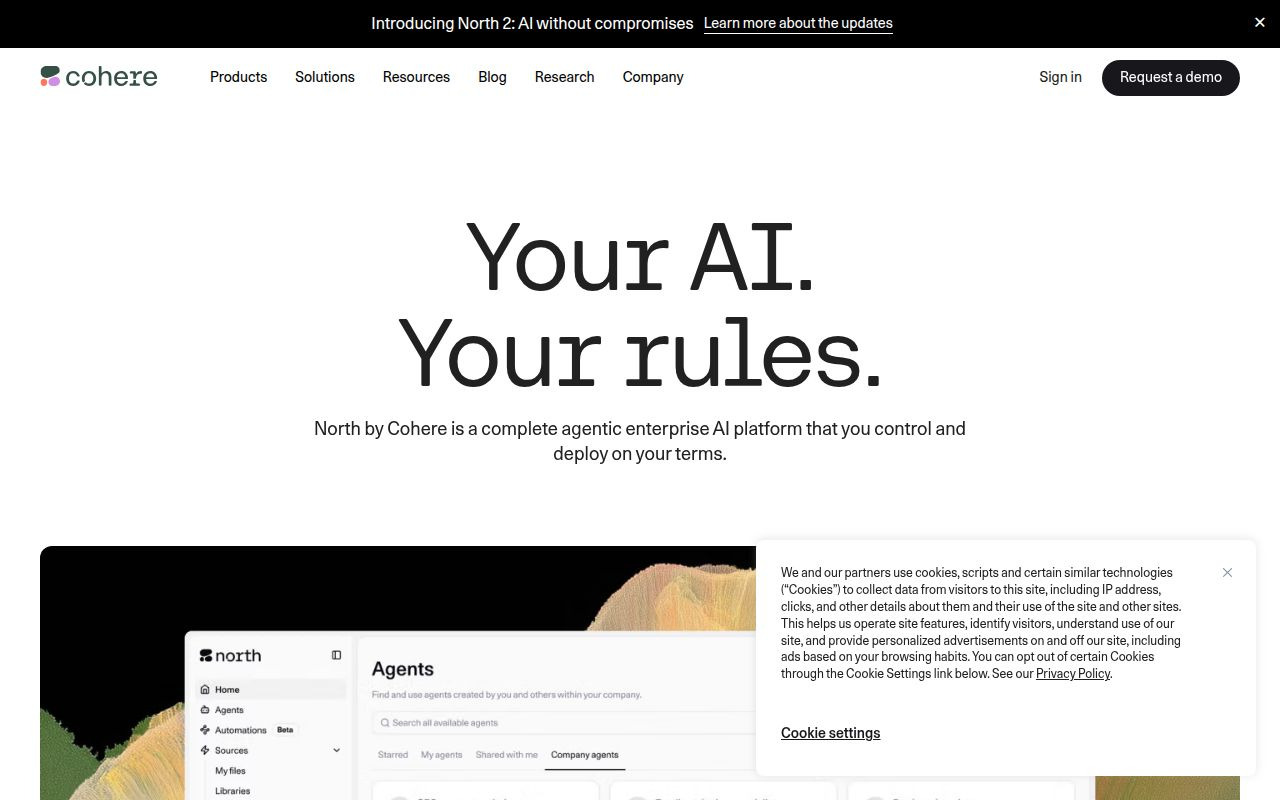
Cohere rounds out the top ten because it has one of the clearest enterprise-first product stories in the market. Rather than chasing consumer mindshare, it has leaned into secure deployment, retrieval, search, and privately run enterprise AI. That will not make it the flashiest startup in the room, but it can make it the most sensible one for the right buyer.
How Cohere works
Cohere’s product pages break the stack into North, Compass, direct platform access, and Model Vault. North is the ready-to-use agentic AI platform. Compass is the intelligent search and discovery layer. Model Vault is the dedicated single-tenant infrastructure option for secure deployment, with an encrypted variant for highly sensitive workloads. The docs are especially helpful here because they explain which route fits which buyer, from direct API use to a ready-made AI workspace.
That makes the workflow easy to reason about. A technical team can start at the API layer. A security-sensitive enterprise can move to Model Vault. A business team that wants out-of-the-box AI over internal data can look at North. We like this kind of explicit packaging because it respects the fact that different AI buyers enter at different layers.
Who is Cohere for?
Cohere is for enterprises that care a lot about where models run, how retrieval works, and how AI gets connected to internal data safely. It also fits teams building search, RAG, reranking, or document-heavy systems where retrieval quality matters as much as generation quality.
Who should look elsewhere? Casual users and non-technical small teams will generally find Cohere more developer- and enterprise-oriented than they need.
Cohere pricing
- North: custom enterprise pricing, with an intuitive interface, purpose-built generative models, intelligent search, and AI agents for routine or complex workflows.
- Compass: custom enterprise pricing, with pre-built data connectors, intelligent search, document parsing, and a managed index.
- Model Vault: dedicated infrastructure pricing that starts at published hourly and monthly instance rates, such as Embed 5 Fast Small at $3 per hour or $2,000 per month.
- Command API example: public model pricing includes Command usage at $1.00 per million input tokens and $2.00 per million output tokens.
For the current platform and infrastructure breakdown, see the pricing page.
Pros and cons
Pros
- Enterprise packaging is unusually coherent across platform, search, and secure deployment.
- Model Vault gives buyers a concrete single-tenant option instead of hand-wavy security talk.
- North and Compass are easier to understand together than many “AI platform” bundles.
- G2 reviews repeatedly mention embeddings and reranking as genuinely useful building blocks.
Cons
- The strongest story is enterprise and developer-led, not broad self-serve adoption.
- Custom pricing dominates the platform side.
- The public review base is still relatively small and mixed around ease of onboarding.
Cohere rating and reviews
Cohere has an active G2 product page with recent reviews, but the version we could access reliably did not expose a clean headline aggregate that we were comfortable reproducing. What the written reviews do show, consistently, is praise for reranking, embeddings, and enterprise use cases alongside complaints about learning curve and model selection complexity.
Cohere is not a mainstream “every employee gets a seat tomorrow” startup. It is a more deliberate enterprise pick, and for some buyers that is exactly the appeal.
5 More AI Startups Worth Watching

The next five do not crack our top tier, but they are still well worth tracking. In some cases the product is more specialized. In others the commercial story is a little earlier or narrower. Either way, each one has a clear reason to stay on the radar.
11. Together AI
- Category: Open model inference and fine-tuning platform
- Best for: Developers who want broad model access without managing infrastructure
- Ease of buying: Strong self-serve motion for technical teams
- Pricing: Usage-based
Together AI is one of the more compelling infrastructure-layer companies in this market. Instead of selling a single hero model, it sells access, deployment, fine-tuning, sandbox tools, and a broad menu of serverless inference options. That makes it more interesting to builders than to general business users, but that is also why it stands out.
The pricing page is unusually dense in a good way. It shows per-million-token rates for a wide catalog of models, code sandbox pricing by vCPU and RAM, storage pricing, and fine-tuning charges broken down by model size and tuning method. For buyers comparing infrastructure economics rather than brand recognition, that level of detail is helpful.
What Together AI does better than many top-ten picks is optionality. If your goal is to choose among open and commercial model endpoints, fine-tune selectively, and move toward dedicated infrastructure later, it gives you a lot of room. That makes it a strong watchlist entry for engineering organizations that do not want to marry one model vendor too early.
Who is Together AI for?
Together AI is best for technical teams building products, internal tools, or model-driven workflows that need pricing transparency and model choice. Non-technical business buyers will usually want a more packaged product.
12. ElevenLabs
- Category: AI voice generation and speech tools
- Best for: Teams that care about voice quality, dubbing, and speech APIs
- Ease of buying: Very easy to trial
- Pricing: Self-serve plans
ElevenLabs stays hot because voice is no longer a side feature. It is becoming its own product category, and ElevenLabs is one of the companies most closely associated with that shift. The official text-to-speech page is built around lifelike voice output, API and SDK integration, and the broader family of speech products.
What it does better than many of the top-ten companies is specialization. If your main question is “Who should we evaluate for synthetic voice, multilingual dubbing, or voice-driven product features?” ElevenLabs is a much cleaner answer than a general AI workspace company. That narrower focus is often a virtue.
We would also note that the public review signal is still fairly small in classic software review channels. That does not disqualify the product, but it does mean buyers should rely more heavily on use-case fit and product documentation than on crowd consensus.
Who is ElevenLabs for?
ElevenLabs fits media teams, app builders, education products, gaming, customer experience design, and any buyer whose AI need is primarily voice. If you need text, search, or enterprise knowledge workflows first, other startups in this list are better aligned.
13. WRITER
- Category: Enterprise agentic AI platform
- Best for: Organizations that want governed AI workflows, not just chat
- Ease of buying: Good starter path, enterprise-led at scale
- Pricing: Starter plus enterprise
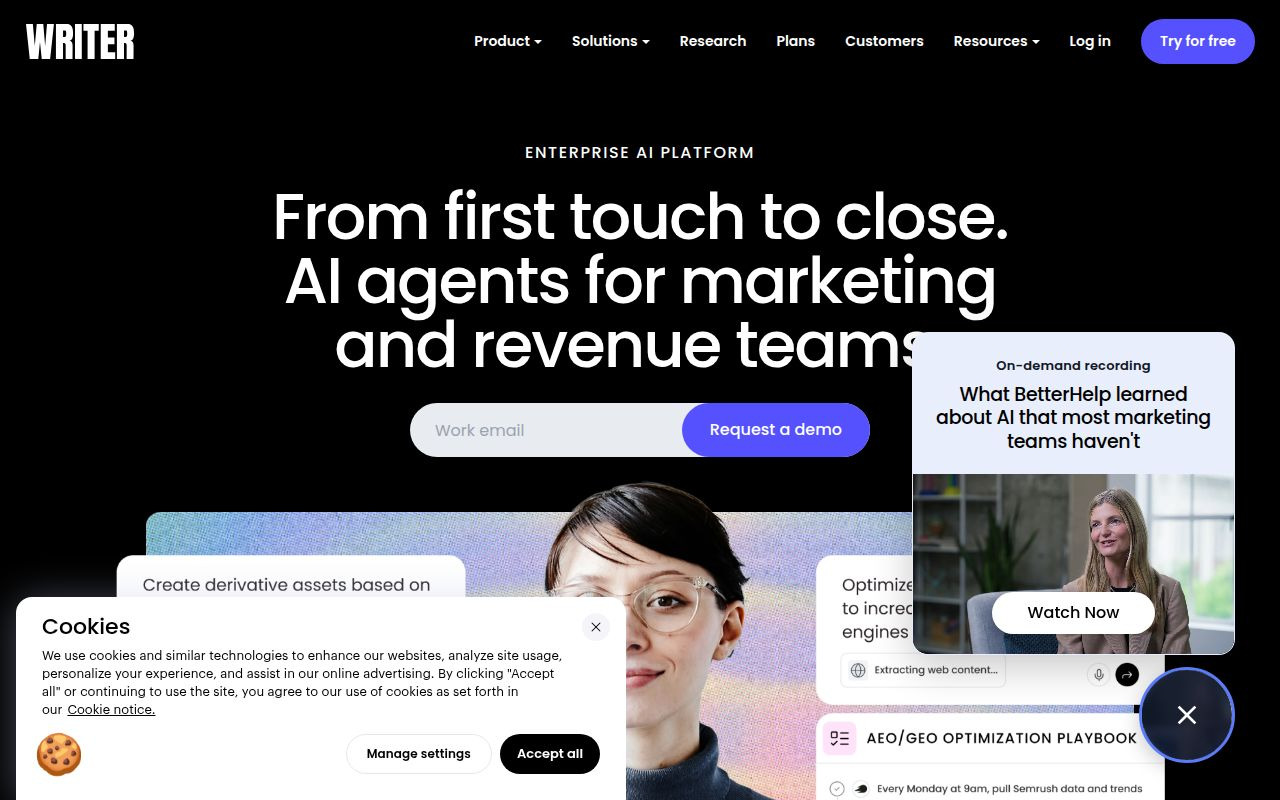
WRITER is easy to underrate if you only think of it as a writing tool. Its current materials push a broader story around WRITER Agent, Playbooks, AI Studio, Knowledge Graph, governance, and cross-team workflows. That makes it one of the more serious “work orchestration” platforms in the market.
The published pricing helps. Starter includes up to five users, WRITER Agent, five Playbooks, one team Personality profile, basic connectors, and limited Knowledge Graph access. Enterprise removes those limits and adds unrestricted workflows, advanced orchestration, admin controls, full Knowledge Graph capabilities, granular governance, observability, and auditability. We like that the product page tells buyers what changes when they move up.
WRITER’s strongest distinction versus some top-ten entries is process control. This is less about finding an answer fast and more about producing consistent, governed outputs at organizational scale. If that is your buying problem, WRITER is easy to keep on the longlist.
Who is WRITER for?
WRITER fits larger organizations that need branded, governed, repeatable AI work across departments. If you only need a flexible everyday assistant, the platform may feel heavier than necessary.
14. Abridge

- Category: Healthcare AI documentation platform
- Best for: Health systems that need clinical conversation capture and EHR-integrated note generation
- Ease of buying: Enterprise sales
- Pricing: Custom health-system contracts
Abridge is one of the clearest examples of vertical AI becoming a serious buying category. The company’s product story is tightly centered on clinical conversations, billable note generation, Linked Evidence, the Contextual Reasoning Engine, and direct workflow placement inside Epic tools like Haiku and Hyperspace. That is a strong, buyer-friendly shape.
What Abridge does better than many broader AI startups is specificity. The product page talks about multiple care settings, multilingual support, actionable outputs like orders for review, enterprise security controls, HIPAA compliance, and health-system deployment management. This is what a mature vertical AI pitch should look like.
There is no public list pricing, which is normal for a health-system product. Still, the company gives buyers more operational detail than many enterprise AI startups manage to provide, and that alone keeps it firmly on our watchlist.
Who is Abridge for?
Abridge is for health systems, hospitals, and clinical organizations evaluating ambient documentation and conversation-grounded note workflows. It is not a general-purpose AI shortlist item unless healthcare is your market.
15. Decagon
- Category: AI customer support agents
- Best for: Enterprises that want service automation tied to measurable outcomes
- Ease of buying: Enterprise sales
- Pricing: Per-conversation or per-resolution
Decagon is worth watching because it treats AI customer support as an operational system, not just a chatbot layer. Its product pages highlight chat workflows, interactive support elements, multi-brand control, analytics, and assisted service for human care teams through Decagon Assist. The platform pages also describe AOP-guided workflows, simulations, guardrails, and versioned workspaces.
The most important distinction is commercial. Decagon openly describes two pricing approaches, per-conversation and per-resolution, and argues that most customers choose per-conversation for predictability. That is a more transparent pricing conversation than many agent vendors offer publicly, even when exact rates are still negotiated.
Compared with Sierra, Decagon appears more explicit about engineering ownership and workflow tooling in its public materials. That does not automatically make it the better choice, but it does give technical support organizations another credible path to evaluate.
Who is Decagon for?
Decagon fits larger support organizations that want AI agents inside serious customer operations, with testing, workflow control, and pricing aligned to contact or resolution volume. Small teams looking for a quick self-serve help bot will likely find it too enterprise-heavy.
What the Hottest AI Startups Reveal About AI Demand
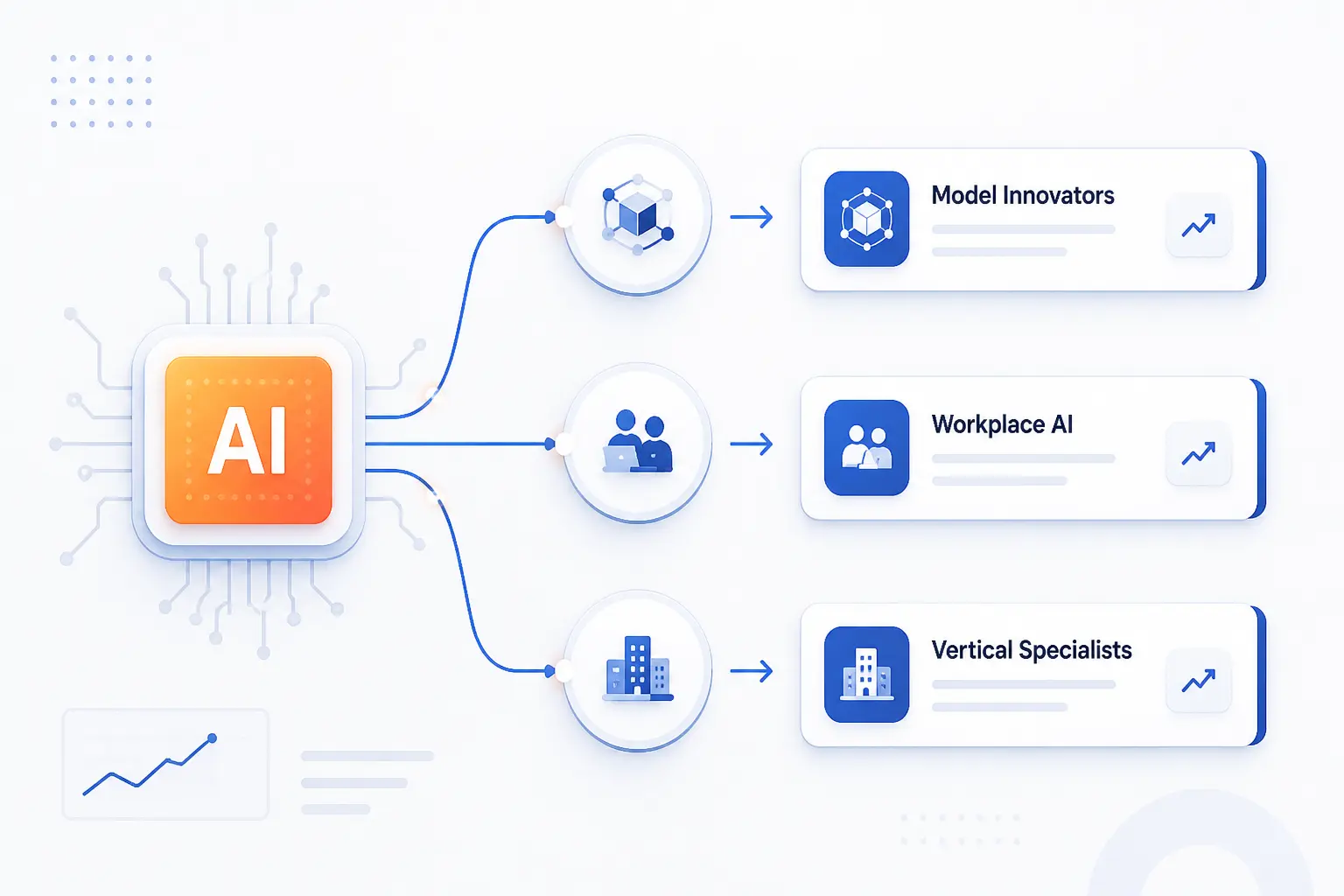
The biggest lesson from this list is simple. Demand is not flowing to one single kind of AI company. It is splitting across model providers, workplace layers, and vertical specialists, which tells us buyers are getting more specific about where they expect AI to pay off.
Foundation Models and General Purpose AI
General-purpose AI is still where most of the money and attention cluster. In 88% of surveyed organizations, AI was already in use by 2025, which helps explain why OpenAI, Anthropic, Mistral, and Cohere all show up high in buyer conversations. When adoption gets that broad, a company with a flexible platform can sell into many departments at once.
We also think breadth still matters because it reduces procurement friction. A startup that can cover chat, coding, reasoning, and API use from the same vendor has an easier story to tell than a point solution that solves only one narrow pain. That is one reason OpenAI and Anthropic stay so hard to dislodge at the top.
The other demand signal is scale. OpenAI says it now serves more than 7 million ChatGPT workplace seats, which tells us general-purpose AI has moved well beyond experimental teams into mainstream business deployment.
Agents and AI Assisted Workflows
The market is steadily moving from “answer my question” toward “help me finish the work.” That is the core thread connecting Cognition, Sierra, Decagon, WRITER, Harvey, and parts of Cohere and Glean. Buyers are no longer impressed by a fluent answer alone. They want routing, approvals, write-back actions, governed automations, and repeatable workflows.
That shift is also why pricing models are changing. Outcome-based contracts from Sierra, per-conversation and per-resolution options from Decagon, and usage-based AI engineering plans from Cognition all point to the same thing. AI is being sold less like a seat-only productivity app and more like labor, throughput, or service capacity.
There is a business case behind that. The 2026 AI Index report notes that generative AI reached 53% population adoption within three years, faster than the PC or the internet. When a technology spreads that quickly, buyers stop asking whether it is interesting and start asking how to wire it into real operating processes.
Vertical Products for Search, Voice, Video, Legal, and Healthcare
Some of the hottest AI startups are not trying to be broad at all. Perplexity owns cited research. Runway focuses on creative generation. Harvey targets legal workflows. Abridge is built around clinical conversations. ElevenLabs goes hard on voice. That tells us specialization is no longer a secondary strategy. In many markets, it is the shortest route to trust.
Specialists also win because they can speak the buyer’s language better. Abridge talks about Haiku, Hyperspace, Linked Evidence, and health-system governance. Harvey talks about Vaults, review tables, and legal knowledge sources. Those are much stronger buying cues than a generic “AI platform” label.
We would not be surprised if this pattern keeps accelerating. Stanford HAI reports that top model performance is converging, with four companies clustered within 25 Elo points. When core model quality gets closer at the top, workflow design and domain fit become even more important differentiators.
How To Separate AI Hype From Real Buyer Value
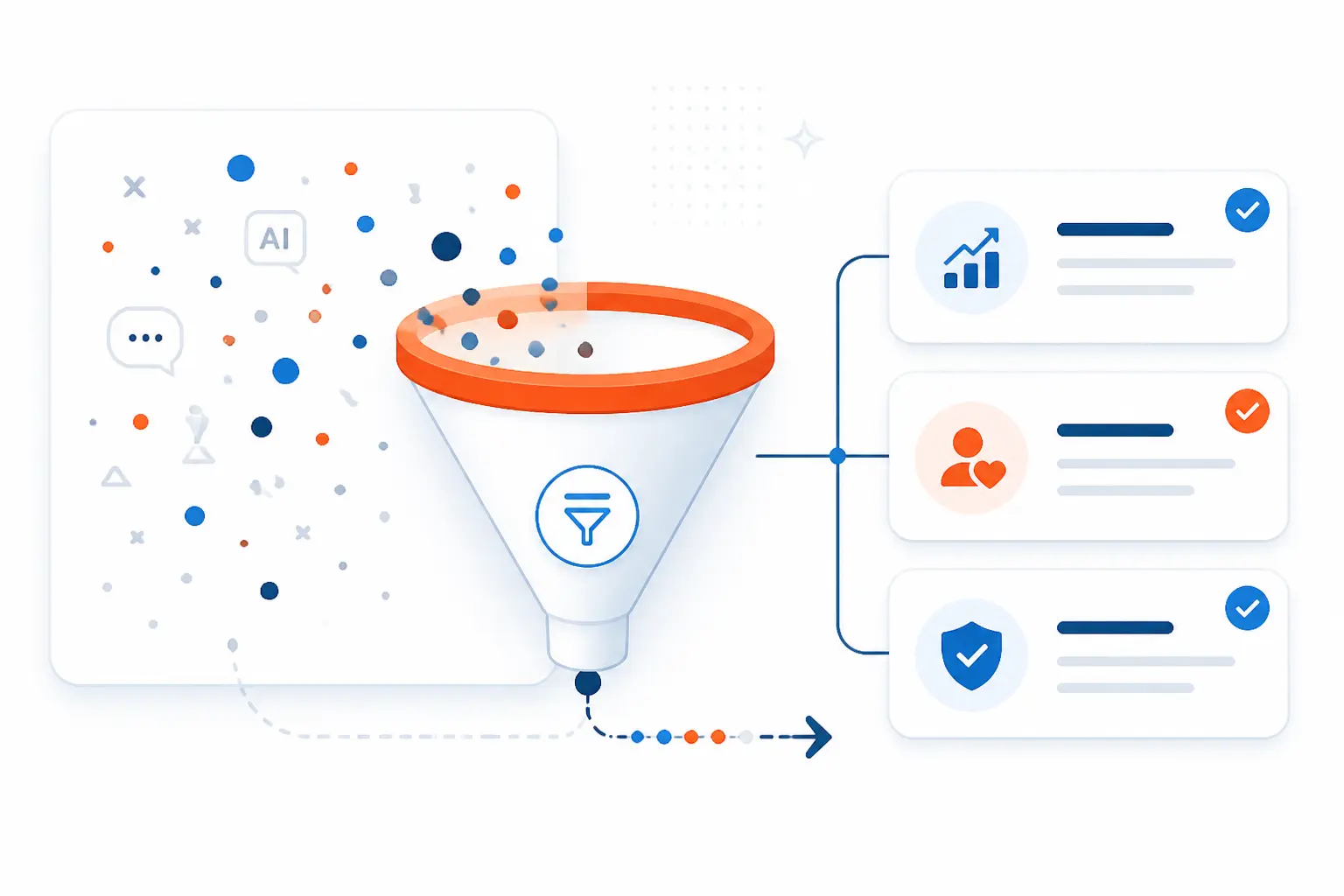
The hardest part of shopping this category is not finding options. It is filtering noise. The smartest buyers now read AI startups like operational vendors, not like science fair projects, which means claims need to map cleanly to work, controls, and measurable outcomes.
Capability Claims Versus Clear Use Cases
The direct answer is this: trust the startup that can show where the product starts, what it touches, and what a human still approves. If a company cannot explain the workflow in plain English, its benchmark slides will not save the deal.
That is why we favored companies with named surfaces like Vault, Spaces, Agent Studio, Compass, Linked Evidence, or connector-backed search. Those details are not just branding. They tell you how the system is supposed to behave inside real operations.
A good way to pressure-test those claims is to compare them against NIST’s trustworthiness characteristics, which include reliability, security, transparency, accountability, privacy, and fairness with harmful bias managed. If the vendor only talks about raw capability, the evaluation is incomplete.
Reliability, Bias, and Human Oversight
Reliability is where many AI evaluations still go sideways. A polished demo can hide the fact that the tool struggles with escalation logic, source quality, permissions, or auditability once it leaves the sandbox. That is why we think buyers should ask who checks outputs, where logs live, and how exceptions are handled before they ask for another benchmark chart.
Frameworks help here. The AI RMF Playbook is useful because it pushes organizations to document and operationalize risk management, not just talk about principles. In practical buying terms, that means asking vendors for evaluation routines, rollback plans, human review rules, and monitoring practices.
Our own shortlist reflects that bias. We scored Glean, Harvey, Abridge, and Sierra well because their product materials say more about controlled behavior than many AI startups with louder brand heat.
Automation Gains Versus Measurable Business Impact
Automation only counts when it changes an important number. That may be handle time, search time, note-writing effort, ticket deflection, drafting consistency, or developer throughput. If the vendor cannot connect the product to one of those outcomes, it is still selling potential rather than value.
The data backs the need for skepticism. Stanford HAI summarizes studies that show gains of 14% to 15% in customer support, 26% in software development, and 50% in marketing output, while also noting that gains are smaller in work needing deeper reasoning. In other words, AI can absolutely move the needle, but not every task benefits equally.
That is why we like startups with a narrow ROI story. Perplexity saves research time. Glean reduces internal search friction. Abridge tackles documentation burden. Decagon and Sierra tie value to support operations. Buyers should prefer that kind of clarity over grand “AI transformation” language every time.
Why Regulation Matters When Comparing AI Startups
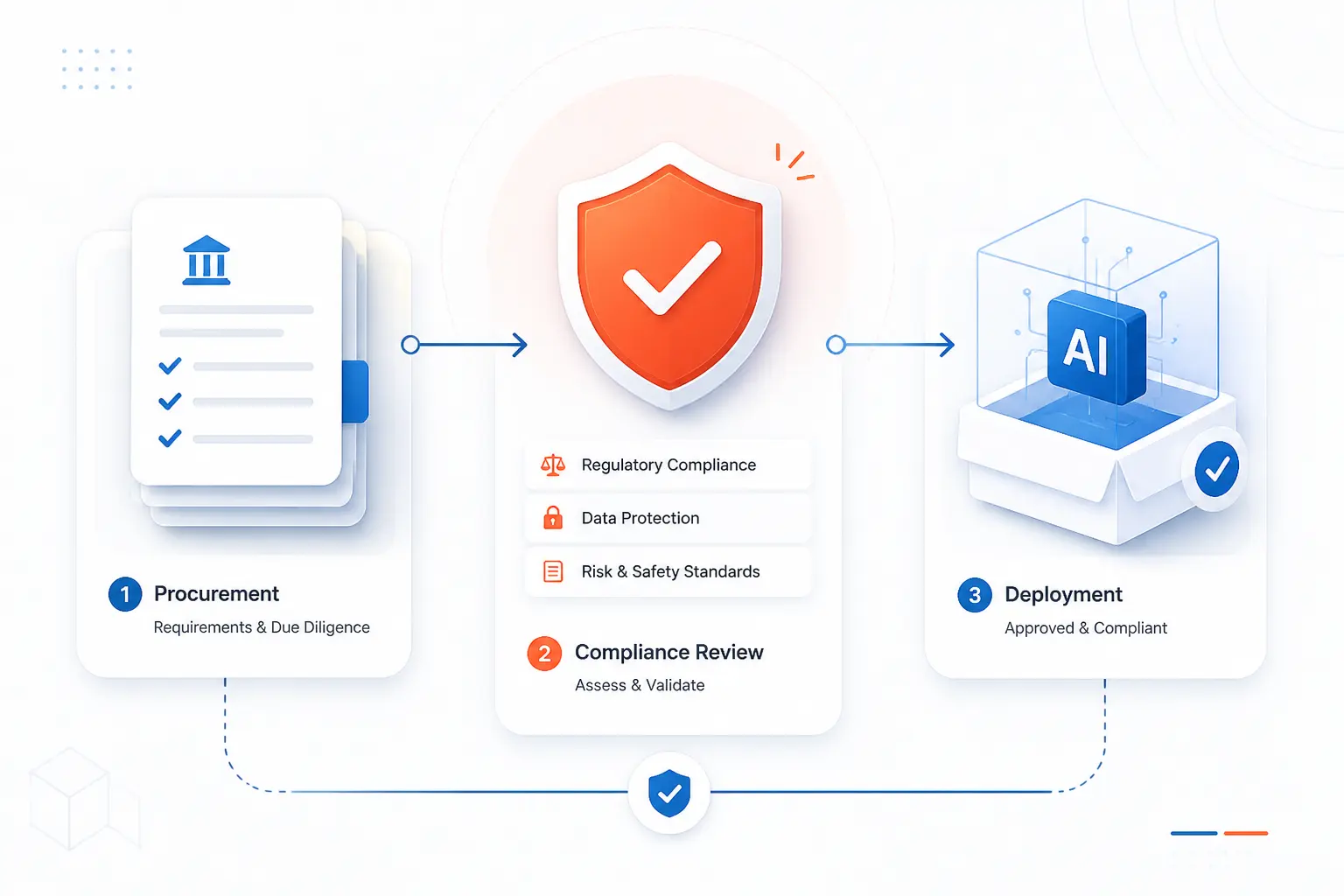
Regulation is no longer a side topic for AI buyers. Even if you are not a model developer, the compliance posture of your vendor can shape procurement, deployment scope, and internal approval timelines. The good news is that the strongest startups now show at least some awareness of this reality in their product and security language.
High Risk and Transparency Rules
The key point for buyers is that transparency duties are becoming more concrete, not less. The European Commission’s summary of general-purpose AI rules says these obligations entered into application on 2 August 2025, and it highlights technical documentation, a copyright policy, and a public summary of training content as baseline duties for GPAI providers.
Even if the startup you buy is not itself the base-model provider, those expectations spill downstream. Procurement teams increasingly want to know what model sits underneath the product, what documentation exists, what safeguards are in place, and how incidents are handled. That pressure favors vendors with clearer platform architecture and clearer governance.
For buyers, the practical lesson is simple. Ask how much of the stack the startup owns, how much it brokers from others, and what documentation it can actually provide today.
What General Purpose AI Obligations Mean for Vendors
For vendors, GPAI rules raise the bar on paperwork and transparency, but they also create a market signal. Buyers can now ask tougher questions without sounding paranoid. “Where is the technical documentation?” or “What is your training-content summary approach?” are no longer fringe questions.
The official guidance also notes that open-source model providers still have to meet the copyright policy obligation and publish a training-data summary in relevant cases. That matters because “open” does not automatically mean “exempt from serious governance.”
We think this will help separate mature startups from immature ones. The companies that can answer governance questions cleanly will move through enterprise buying cycles faster than the companies still treating regulation like an afterthought.
Why Responsible AI Still Belongs in Any Shortlist
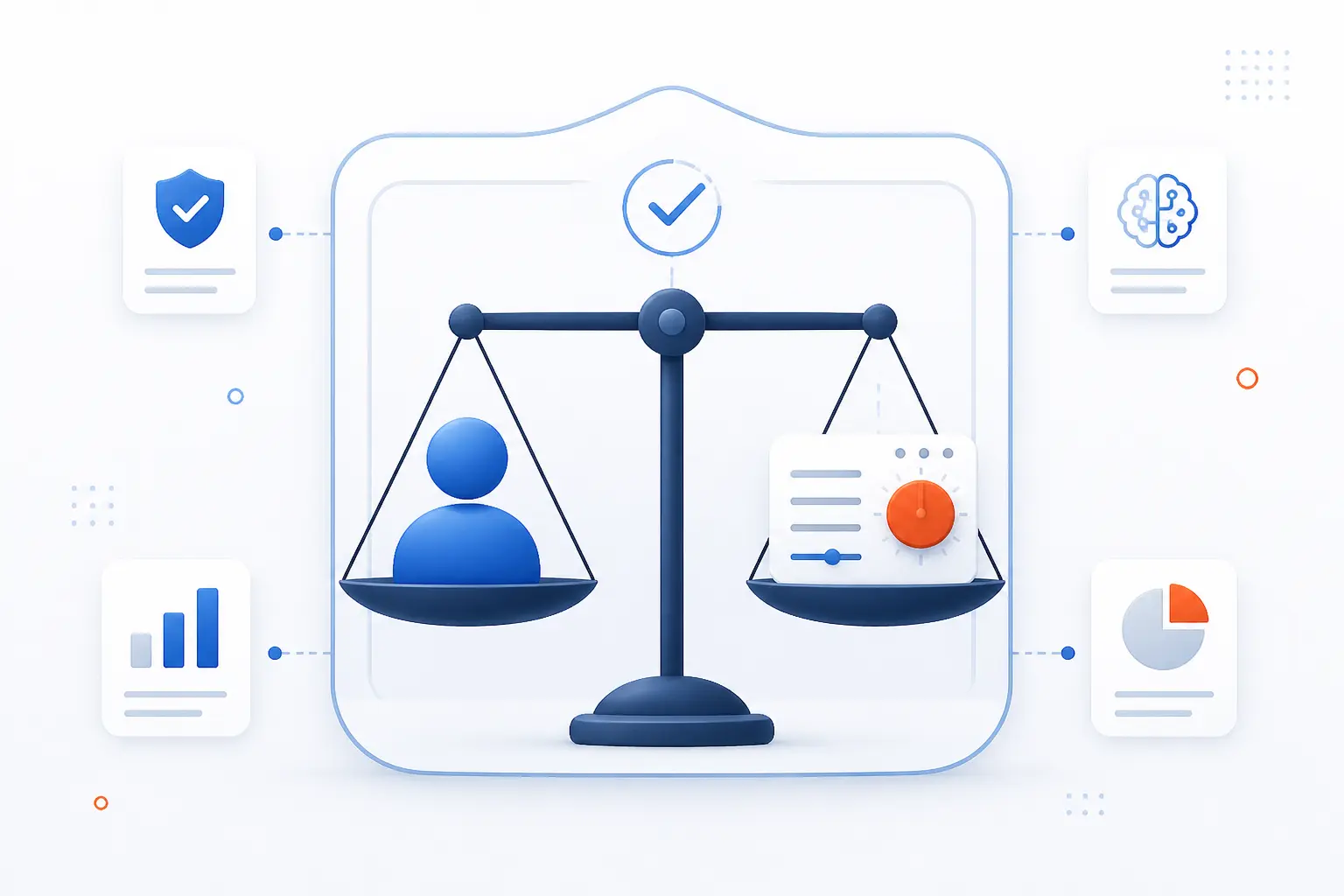
Responsible AI is not a moral appendix to the buying process. It is part of product quality. If a startup cannot explain who is protected, who stays in control, and what happens when the system is wrong, it is not ready for serious use no matter how slick the demo looks.
Jobs, Equity, and Access
AI excitement and AI anxiety are rising together. Stanford HAI reports that 59% of global respondents saw more benefits than drawbacks in AI products while 52% also said those products made them nervous. Buyers should read that as a warning not to confuse adoption with social trust.
For practical shortlist work, this means asking who benefits from the product and who absorbs the risk. Does the tool widen access to expertise, or does it mainly shift review burden onto employees who now have to clean up machine output? Does it reduce friction fairly, or only for well-resourced users who already have data and admin support?
Vertical startups like Abridge and Harvey tend to surface these questions more directly because the human stakes are obvious. General-purpose vendors need to be pushed just as hard.
Security, Infrastructure, and Concentrated Power
The AI market is still highly concentrated at the capability layer, and that shapes buyer power. Stanford HAI notes that reporting on responsible AI benchmarks remains sparse even among leading frontier model developers. That is not the kind of maturity signal enterprise buyers should ignore.
This is one reason we find infrastructure and deployment choices so important. Cohere’s Model Vault, Mistral’s API rate cards, and enterprise controls in products like Glean or Sierra all matter because they reduce blind dependence on a black-box layer you cannot inspect or govern well.
When two vendors look equally smart in a demo, we would usually lean toward the one that makes security, control, and deployment terms easiest to understand. Fancy output gets attention. Operational clarity wins renewals.
FAQ
These are the questions most readers ask once they move from curiosity to actual evaluation. The short answers are below, with the caveat that “hottest” is only useful if it lines up with your market and buying motion.
What Makes an AI Startup One of the Hottest in 2026?
It is a mix of product traction, buyer relevance, and credible execution. We would call a startup “hot” in 2026 when it has clear market pull, a product buyers can actually adopt, and enough evidence that it solves a real workflow instead of just showing a clever model demo. Hype alone is not enough anymore.
Which AI Startup Is the Fastest Growing?
There is no single clean public answer across this whole list. Different companies disclose different metrics, and many of the most important growth numbers are private, selectively shared, or framed around fundraising rather than customer usage. For buyers, the more useful question is which company is growing in your category, because Perplexity, Abridge, Harvey, and Runway are all riding very different demand curves.
Which AI Startups Are the Most Profitable?
Most are not public enough to judge on profitability with confidence. Many leading AI startups still prioritize growth, infrastructure buildout, and market capture, which means outside buyers usually see funding headlines or product launches long before they see durable margin data. If profitability matters to your risk review, ask for customer concentration, contract structure, and deployment economics rather than waiting for vanity metrics.
Are the Hottest AI Startups Mostly Enterprise or Consumer Focused?
Mostly enterprise, at least in this list. Even the startups with consumer visibility, like OpenAI, Anthropic, Perplexity, and Runway, now have clear business packaging or enterprise motions alongside self-serve access. The strongest commercial signal in 2026 is not broad public awareness by itself, it is whether a company can convert that awareness into governed business use.






Conclusion
The hottest AI startups are no longer one big undifferentiated bucket. Some are becoming enterprise operating layers, some are turning into serious vertical software companies, and some are fighting on model access, cost, or deployment control. If we were narrowing this list fast, we would start with OpenAI, Anthropic, Perplexity, Glean, and one vertical specialist that matches the job you actually need done.
The next step is simple. Pick three companies from this list, match each one to one real workflow, and ask what success would look like in 90 days. Which shortlist are you building, broad platform, vertical specialist, or something in between?