

- What Is Domain Privacy
- Why Domain Privacy Matters
- How ICANN, WHOIS, and Domain Privacy Fit Together
- Who Should Use Domain Privacy
- Is Domain Privacy Always Necessary
- Domain Privacy Compared With Domain Protection and Website Security
- When Domain Privacy May Not Apply
- How to Choose the Right Domain Privacy Option
- How to Enable Domain Privacy on a New or Existing Domain
- Common Misunderstandings About Domain Privacy
- Domain Privacy FAQ
- How 1Byte Supports Customers With Cloud Computing and Web Hosting Services
- Final Takeaways on What Is Domain Privacy
At 1Byte, we think domain privacy is one of the least glamorous but most sensible parts of domain registration. The internet reached 378.5 million domain name registrations in Q3 2025, so even a small leak in registration data can be copied, scraped, and reused at huge scale.
Our rule of thumb is simple. If a domain would expose our home address, personal phone, or direct inbox, we turn domain privacy on. It is not magic. It is a small barrier that keeps a public record from becoming an open invitation.
What Is Domain Privacy
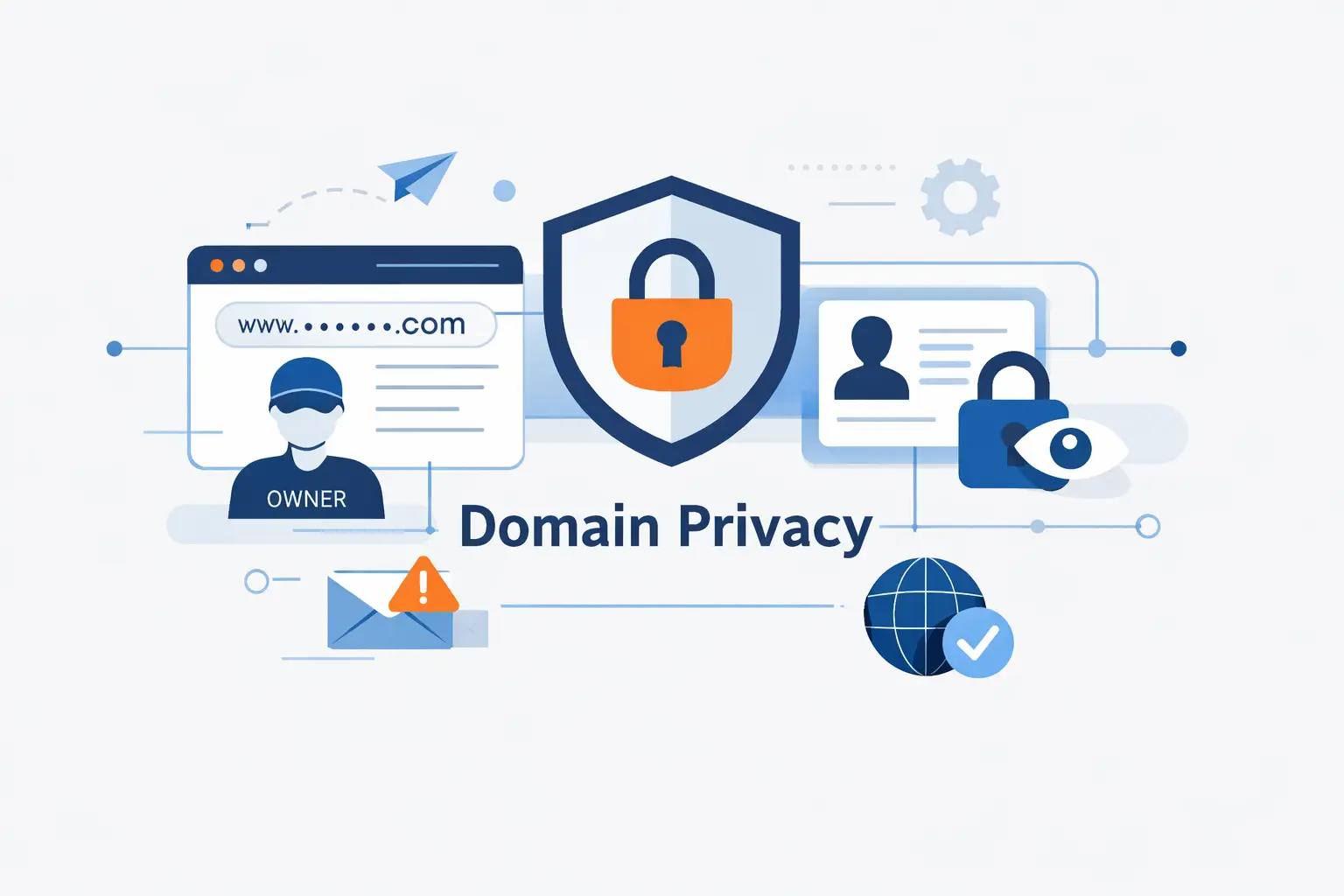
At 1Byte, we explain domain privacy as the layer between our real registration file and the public lookup record. People still say WHOIS out of habit, but the authoritative lookup path for gTLD data has moved to RDAP. The job is the same. Keep the domain properly registered while limiting what strangers can read at a glance.
1. What Domain Privacy Means in Plain English
In plain English, domain privacy swaps out some or all direct contact details in the public record. The registrar still keeps our real data on file. The domain still resolves, renews, transfers, and functions normally. Only the public-facing contact layer changes. We usually describe it as a privacy screen, not a fake identity.
2. What Information Becomes Public Without It
Without privacy, a public record can expose our name, email address, phone number, or street address, depending on the extension and policy. Even with modern redaction, lookup records can still reveal dates, registrar details, nameservers, lock status, and some location data. That leftover detail may sound harmless, but it is often enough for scraping, profiling, and nuisance outreach.
3. How Public Records Change When It Is Turned On
For many familiar extensions, public lookup changed materially when 28 January 2025 marked RDAP as the definitive source for gTLD registration data. In practice, when privacy or redaction is active, direct personal fields are masked, forwarded, or substituted, while operational fields usually remain visible.
Why Domain Privacy Matters
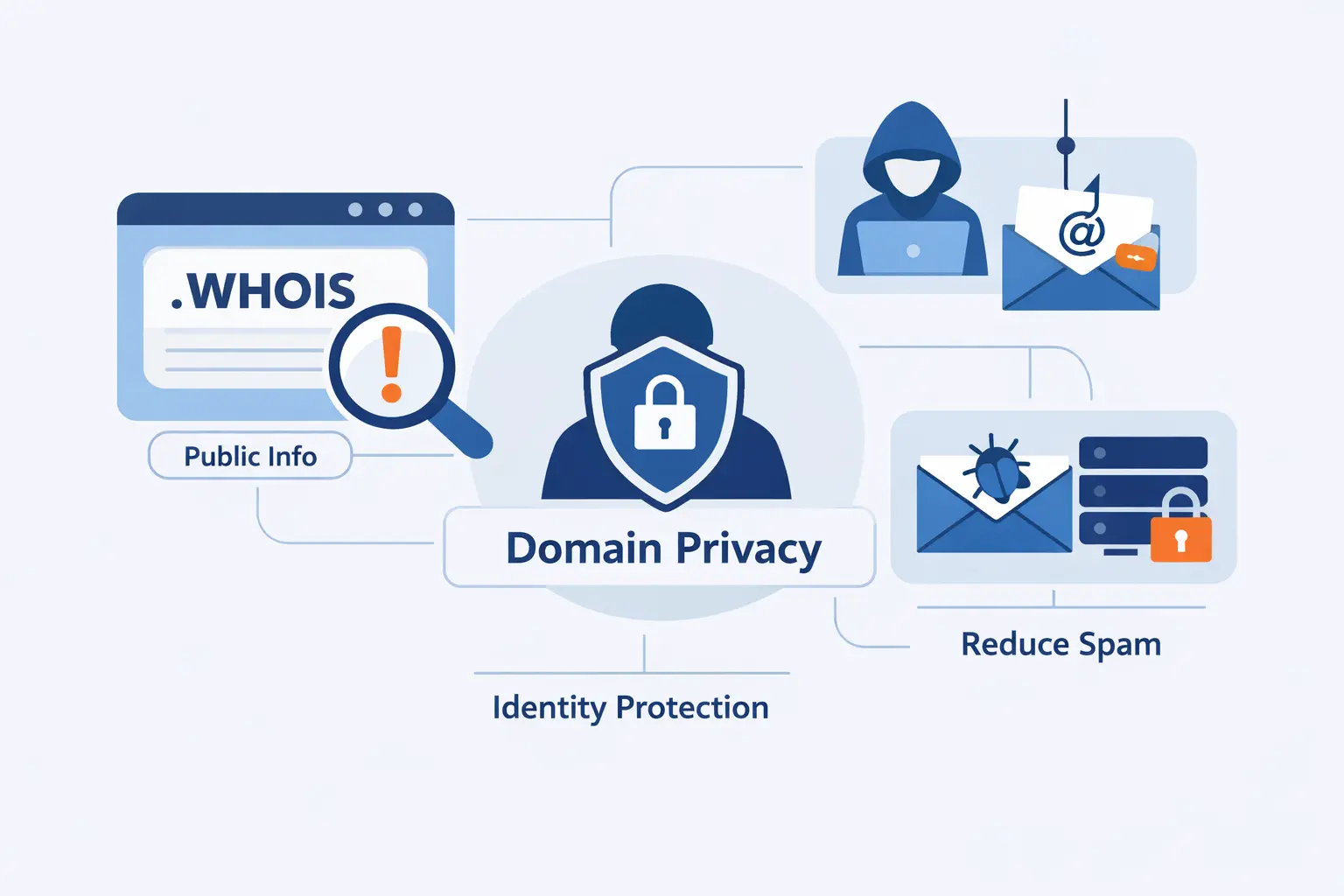
Why does this matter so much? Because strangers do not need our full contact card to cause trouble. A working email address, a city, a phone number, and a domain trail are often enough. At 1Byte, we see domain privacy as a way to cut down easy reconnaissance before it turns into a bigger problem.
1. Spam, Sales Outreach, and Data Harvesting
ICANN’s own study found that WHOIS contributes to spam, and that still matches what many domain owners experience. Once a usable contact point becomes easy to scrape, the inbox fills with cold sales pitches, fake renewals, junk offers, and messages designed to look urgent.
2. Phishing, Identity Theft, and Harassment Risks
Public records also make targeted phishing easier. If attackers can connect a domain to a person, role, address, or line of business, they can write smarter bait. For individuals, that can slide into impersonation, doxxing, identity-related scams, or direct harassment. For small businesses, it often means fake billing notices or bogus registrar emails that look just plausible enough to fool a tired admin.
3. Social Engineering, Domain Hijacking, and Portfolio Exposure
We also care about the security angle. ICANN has long warned that domain hijacking often grows out of weak registration processes and poor administration, and the Perl.com hijack is a useful real-world example of a social engineering attack aimed at registrar records. Privacy will not stop every takeover, but it does give attackers less personal context to work with. For domain investors, that matters even more because one exposed record can make a whole portfolio easier to map.
How ICANN, WHOIS, and Domain Privacy Fit Together
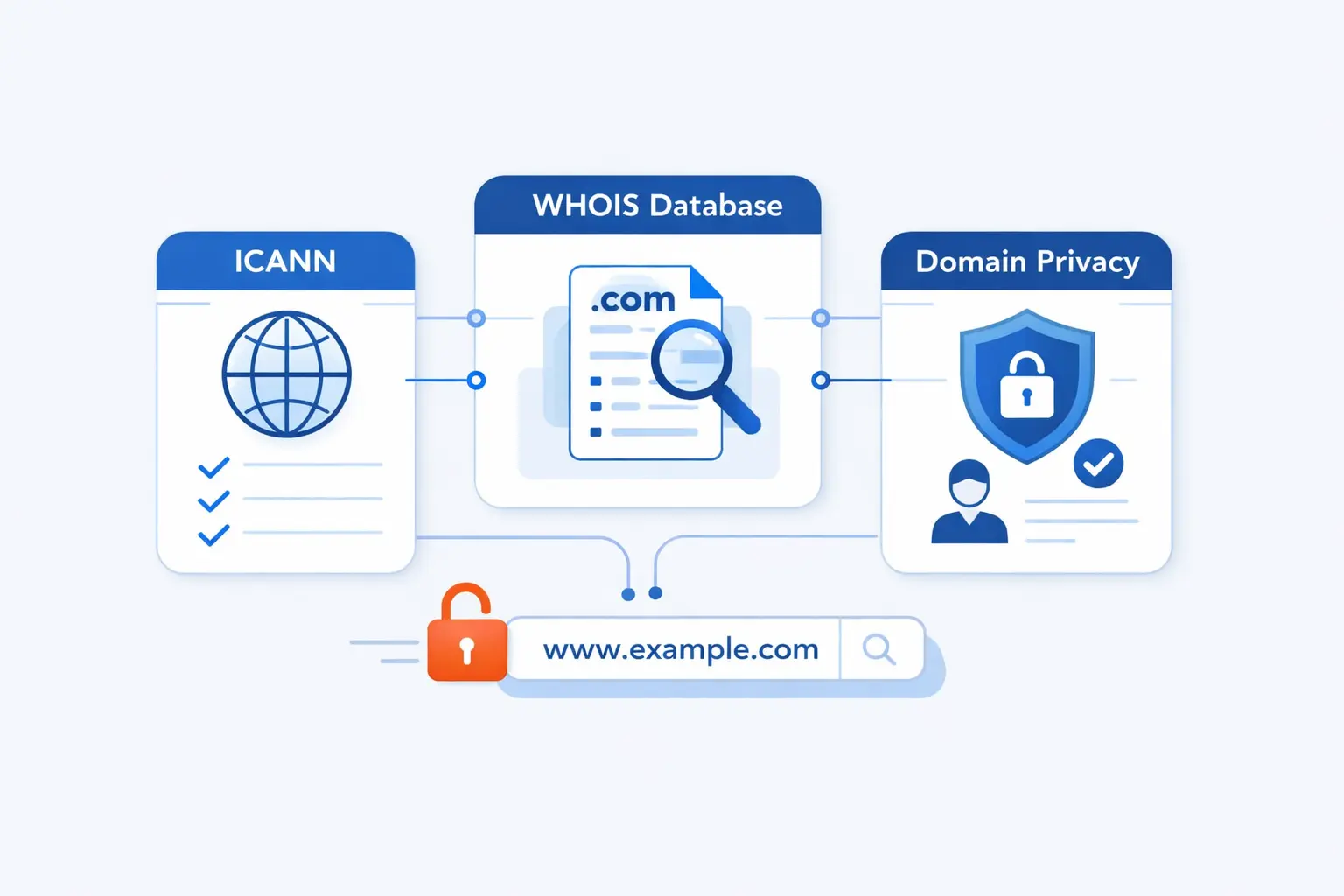
At 1Byte, we like to demystify the moving parts. Domain privacy is not a loophole around ICANN rules. Under the current gTLD baseline, which took effect on 21 August 2025, registrars still collect required data, registries still receive required elements, and public lookup still exists in a more limited form.
1. Why Accurate Registrant Information Is Required
That is why accurate underlying data is non-negotiable. ICANN requires registrants to provide accurate and reliable contact details and keep them current. If the data stays false or the registrant ignores an accuracy inquiry, the registrar can suspend or cancel the name. Privacy changes what the public sees. It does not give us permission to lie to the registrar.
2. How Proxy Details and Forwarding Addresses Work
ICANN also makes a useful distinction that many checkout pages blur together. In a privacy service, the registrant can remain listed while a mail-forwarding service address or other alternate valid contact detail appears in the public record. In a proxy service, the provider becomes the public registered name holder. In ordinary conversation, both are often grouped under the same umbrella.
Good providers still leave a path open for legitimate contact. That can be a forwarding address, a masked email, or a registrar form that routes the message without exposing our direct details. In other words, privacy is meant to filter access, not block every honest attempt to reach the owner.
3. How Public Lookup Records Still Support Accountability
Masked records do not end accountability. Public lookup can still show operational details such as registrar, registration dates, nameservers, and domain status, and parties with a legitimate interest can request access to nonpublic data through registrar procedures or ICANN’s RDRS for participating gTLD registrars. Privacy and proxy providers also have publication duties around terms, contacts, and complaint handling.
4. How Registries and Privacy Providers Handle Your Data
We think this is the most important mental model for beginners. Privacy is a publication control. It is not a deletion tool. Registrars and registries still have obligations around collection, transfer, retention, escrow, and disclosure under policy or law, even when most outsiders cannot see the personal fields in a public record.
Who Should Use Domain Privacy
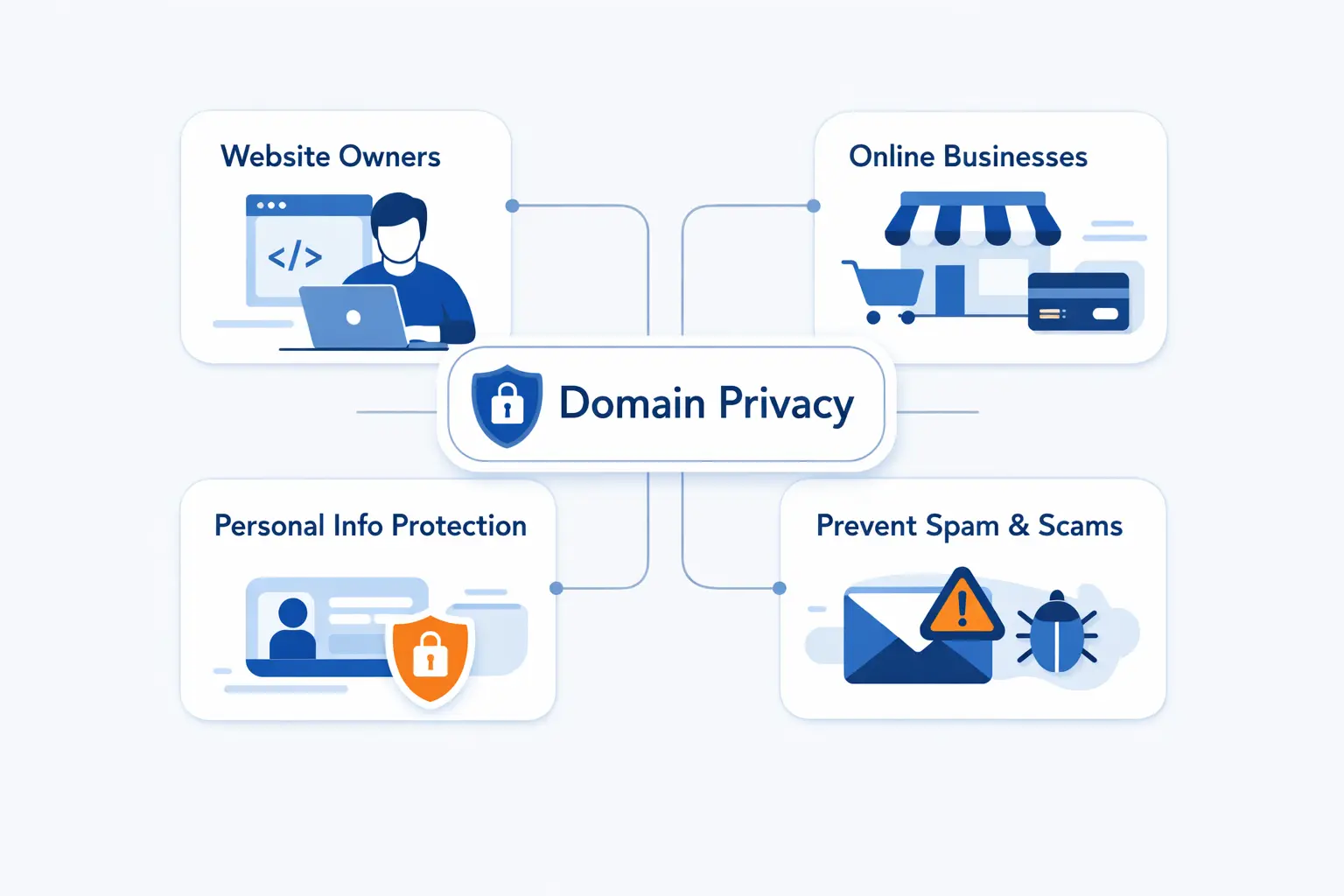
Most people who ask us this question are already the right candidates. If a domain is tied to personal contact details, side-project infrastructure, or a small team without clean public role accounts, the case for privacy is strong. The more our public web identity overlaps with our private life, the more useful domain privacy becomes.
1. Individuals, Bloggers, Creators, and Side Projects
Individuals, bloggers, creators, and hobby projects sit at the top of the list. These sites often start fast, with a personal email address, a cell number, or a home address entered just to get the registration done. That is fine for checkout. It is less fine when the domain becomes searchable and the record starts attracting attention.
2. Freelancers, Startups, and Small Businesses
Freelancers, startups, and small businesses benefit for a different reason. Early teams usually do not have a dedicated office, role-based mailboxes, or someone whose job is to sort legitimate legal notices from scam mail. We usually recommend privacy until the business has a deliberate public contact setup and clear ownership processes.
3. Developers, Domain Investors, and Sensitive Industries
Developers and domain investors should think portfolio-wide. One exposed record can connect multiple names, business ideas, or client projects. Sensitive industries should be even more cautious. If the site touches healthcare, legal matters, political activity, advocacy, investigations, or whistleblowing, we assume partial public data can be misused and plan accordingly.
Is Domain Privacy Always Necessary
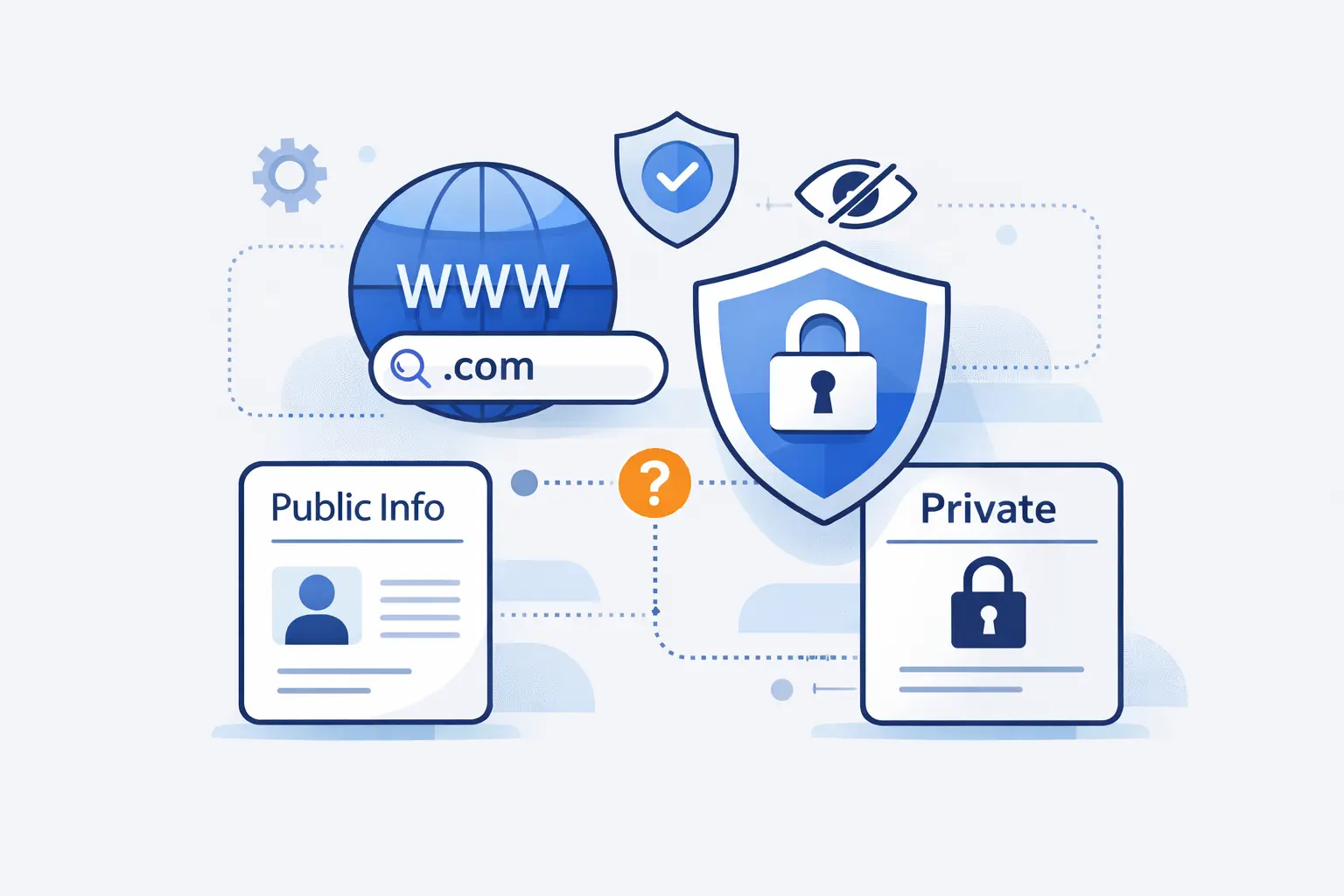
We do not think every domain needs the same answer. Some owners gain a lot from privacy. Some gain a little. What matters is the gap between what must be public and what would become public by accident if privacy is off. That is the decision point we use at 1Byte.
1. When It Is a Best Practice for Most Domain Owners
For most domain owners, privacy is still a best practice. It removes exposure that usually creates more downside than benefit. If the domain is new, personal, or tied to a lean operation, turning privacy on from day one is the cleaner move. We would rather publish public contact details intentionally on the website than leak them passively through a lookup record.
2. When Public Business Information Changes the Benefit
There are cases where the benefit shrinks. If a business already uses a registered office, a staffed phone line, and a generic legal or support inbox, public lookup may reveal little that is truly sensitive. Even then, privacy can still reduce spam and keep named individuals out of easy scraping. In our view, the real question is whether the public contact data is deliberate and low-risk, not whether the company is large or small.
3. What Domain Privacy Does Not Hide or Prevent
Domain privacy does not hide the website itself, the DNS behavior, the hosting environment, or what we publish on the site. It does not stop phishing, malware, spoofing, or account compromise on its own. It does not make the domain anonymous to the registrar, the registry, courts, or lawful disclosure channels. And if older public copies already exist, turning privacy on later may not pull them back.
Domain Privacy Compared With Domain Protection and Website Security
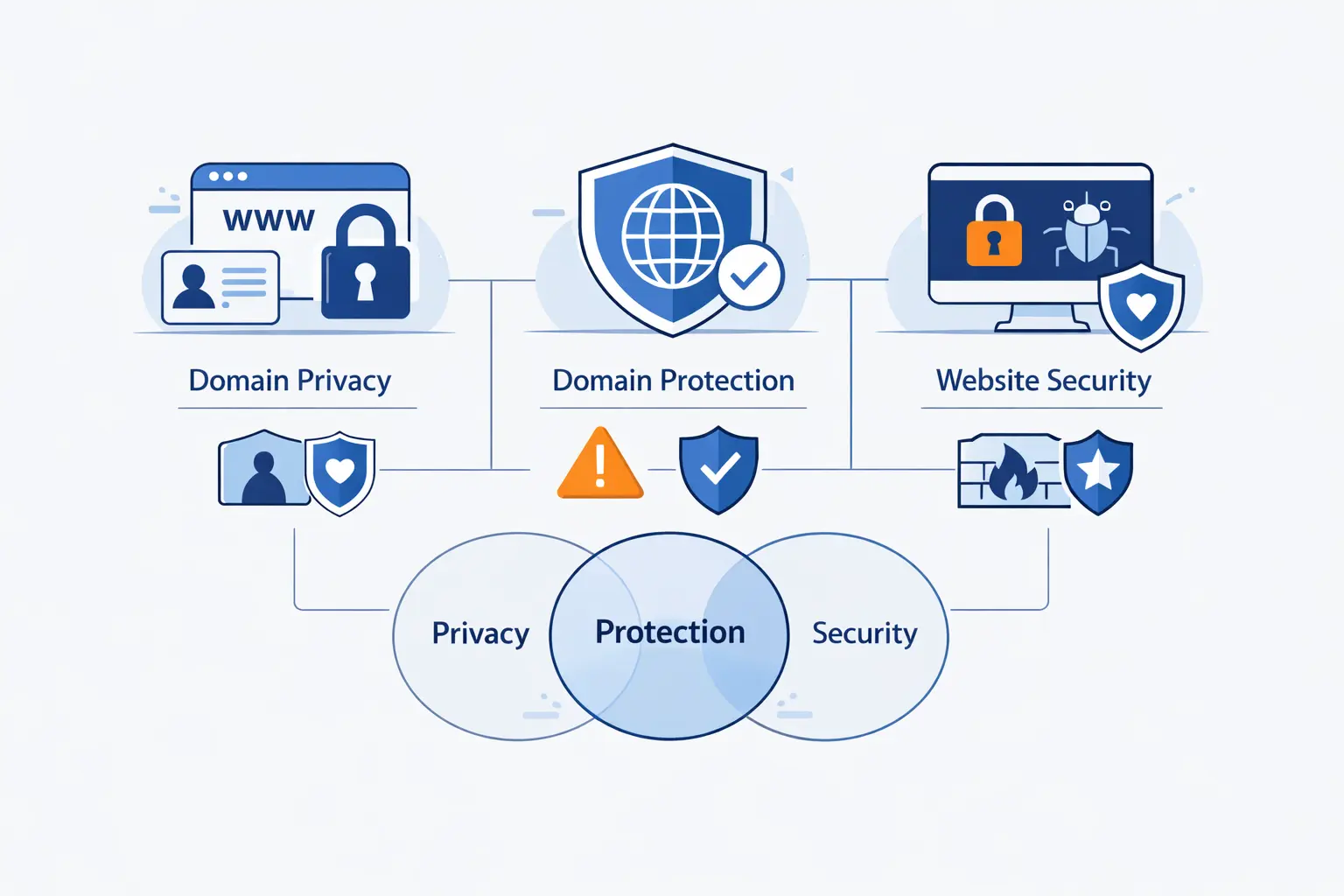
People mix privacy, protection, and security together all the time. We understand why. They all sit near the domain, and providers love to bundle them in one sales flow. But they solve different problems. If we do not separate them, we end up buying the wrong control for the wrong risk.
1. What Domain Privacy Protects in Public Records
Domain privacy protects the public registration record. It hides or substitutes contact details that outsiders would otherwise read in a lookup result. That is helpful, but narrow. It does not harden the registrar account, prevent transfers, or secure the website code running behind the domain.
2. What Domain Protection Adds Beyond WHOIS Privacy
Domain protection adds security controls above and beyond WHOIS masking. At the high end, that can include registry lock and manual verification, which makes changes to ownership or nameservers much harder to push through without extra checks. That is anti-hijacking security, not privacy.
3. Why Privacy and Security Solve Different Problems
We explain it this way. Privacy reduces exposed data. Security reduces unauthorized actions. A domain can have private lookup data and still be lost through weak account security. A domain can have strong locks and still expose a personal address if privacy is off. Both controls matter, and neither replaces the other.
4. How SSL, DNS Security, and Hosting Fit Into the Picture
An SSL certificate gives the site an encrypted connection and helps the browser verify it is talking to the right server. That protects data in transit and helps prevent impersonation at the web layer. It does not mask the domain’s public registration record.
DNSSEC adds cryptographic signatures to DNS records so resolvers can verify the answers were not altered on the way. That helps defend the naming layer from tampering. Again, different problem, different tool.
Hosting completes the picture. Patch discipline, backups, admin access, and application security decide what happens after the domain resolves. At 1Byte, we urge customers to stack these controls. Domain privacy keeps public records quieter. It does not secure the site by itself.
When Domain Privacy May Not Apply
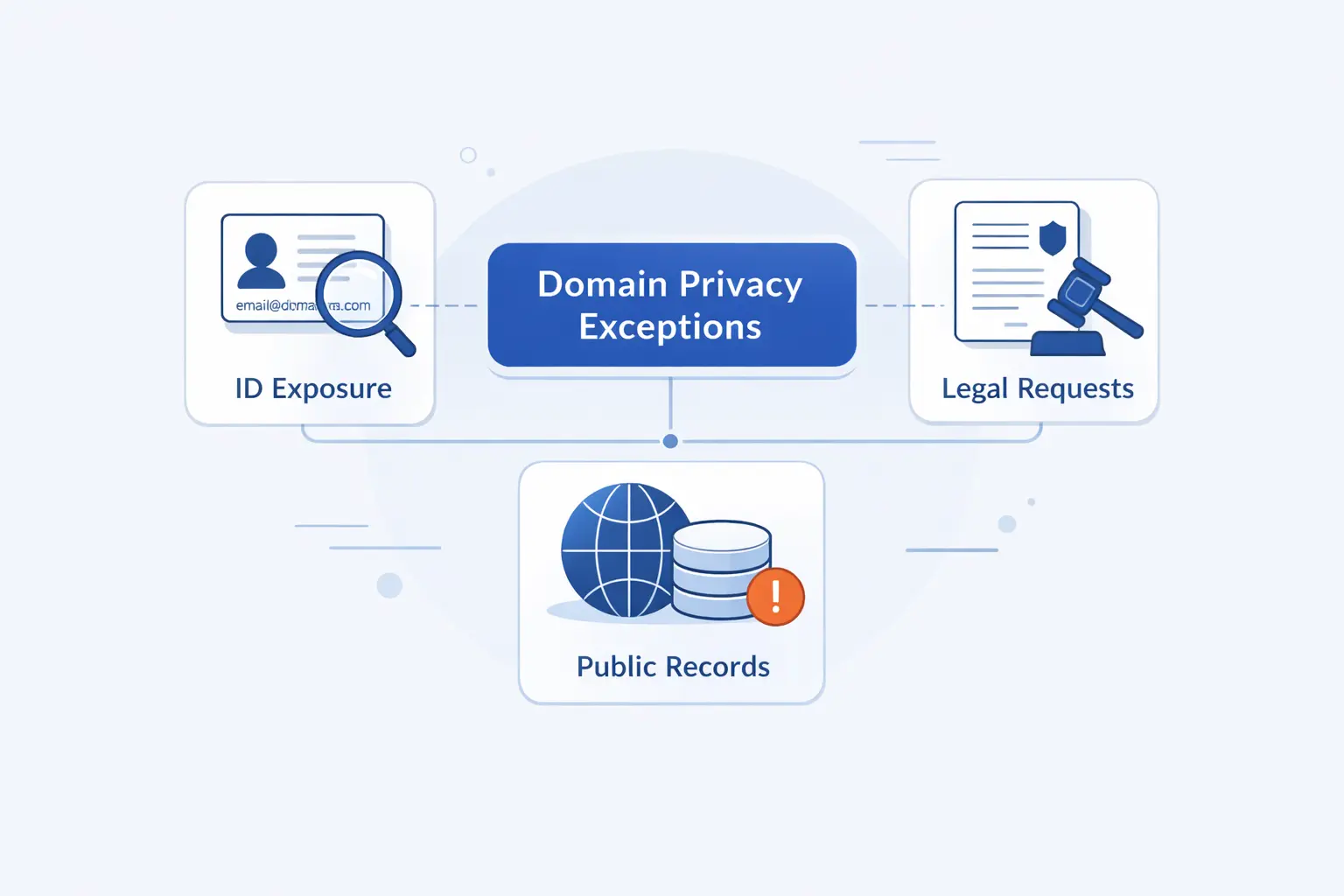
This is where the fine print matters. Domain privacy is not uniform across every extension. Registry rules, country-code policies, and privacy law all change what can be masked, what stays public, and whether a separate privacy add-on applies at all.
1. Registry Rules and Country Code Domain Restrictions
The clearest example is the U.S. country code. The .US does not permit proxy registration, so registrars cannot offer the same privacy layer there that they can for many gTLDs. That catches a lot of first-time buyers by surprise.
Canada shows the opposite pattern. For many individual .CA registrants, CIRA provides free privacy protection in WHOIS, while non-individual registrants default to more visible data. That is why we always tell customers to check the rules for the exact extension, not just the registrar’s sales page.
2. GDPR Redaction Compared With Full Domain Privacy
GDPR-era redaction changed the public gTLD landscape by moving much personal data to layered access. That is not identical to classic domain privacy. Redaction is about what gets published under policy and privacy law. Domain privacy is the registrar-side service that can add substitute or forwarding details when the extension allows it.
3. How Public Website Details Can Still Reveal Ownership
Even with privacy on, the site can still reveal who owns it. A contact page, footer, social profile, checkout email, public business filing, or certificate details can point straight back to the operator. Public lookup is only one window into ownership. If we want a quieter footprint, we have to review the whole public trail.
How to Choose the Right Domain Privacy Option
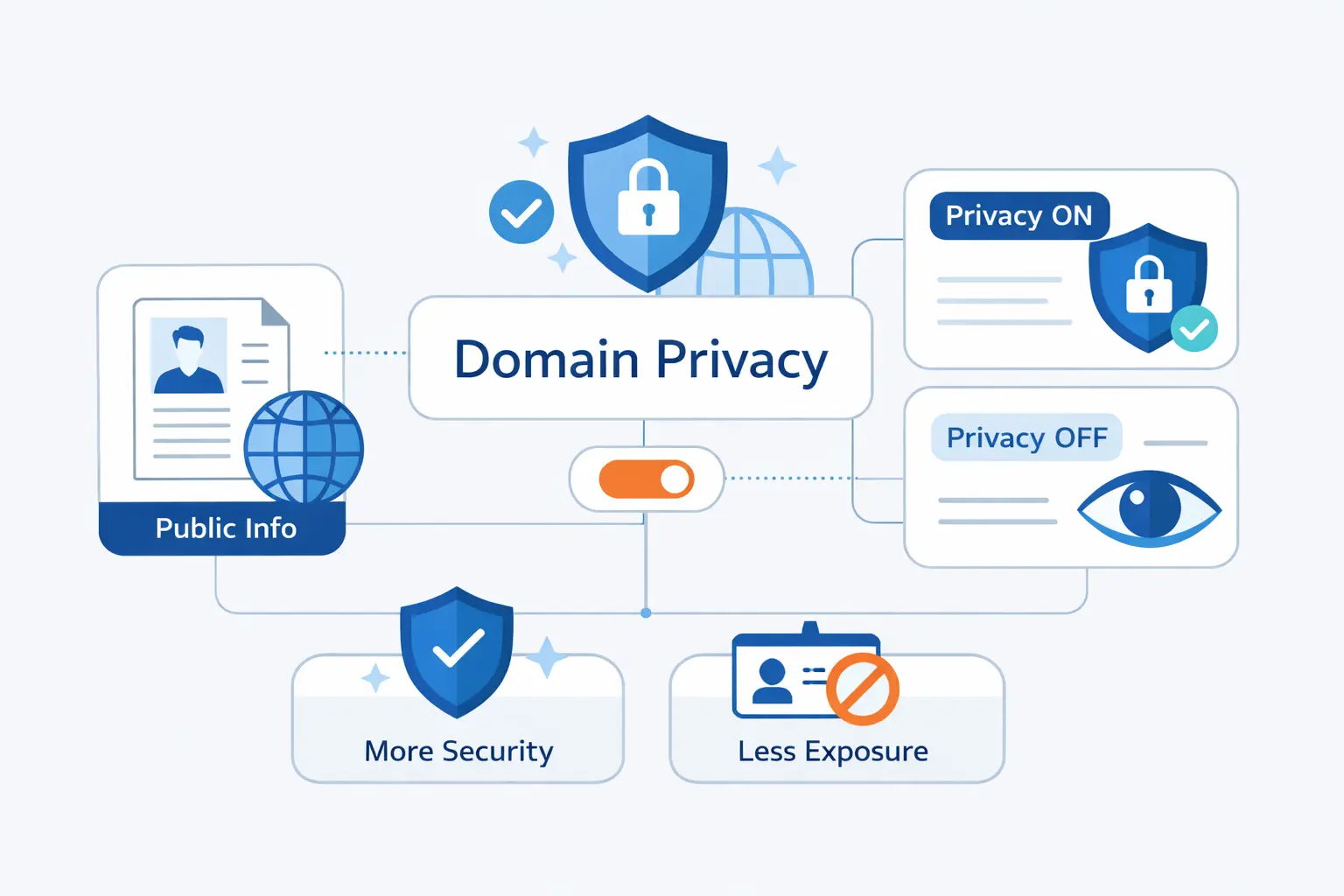
We think the best buying questions are boring questions. Is privacy included or extra? What still stays public? How do legitimate messages reach us? What happens at renewal? How easy is ownership verification if we need to transfer or prove control quickly? A registrar that answers those clearly is already ahead of the pack.
1. Included or Paid Privacy and Renewal Pricing
Pricing models vary more than many buyers expect. Some providers include free WHOIS redaction, while others sell privacy as an add-on or bundle it into a larger protection plan. We prefer clear renewal pricing over a cheap teaser followed by a surprise bill. Domain settings are annoying enough without pricing games.
2. Privacy Levels, Contact Forwarding, and Email Aliases
Feature detail matters too. Look for forwarding options, masked contact paths, and any ability to randomize or alias a privacy email. Some registrars also let us choose between full masking and limited visibility when we want an organization name to appear. Those small details affect real-world usability more than the product label does.
3. Ownership Verification, Transparency, and Support
We also want transparency. A good provider explains what it masks, what it retains, how third parties submit disclosure or abuse requests, and how we can verify ownership without exposing ourselves. A TXT record is a clean example of proving control privately. Under newer ICANN rules, privacy and proxy providers also have publication duties around terms, contacts, and complaint handling. That clarity matters when something goes sideways.
How to Enable Domain Privacy on a New or Existing Domain
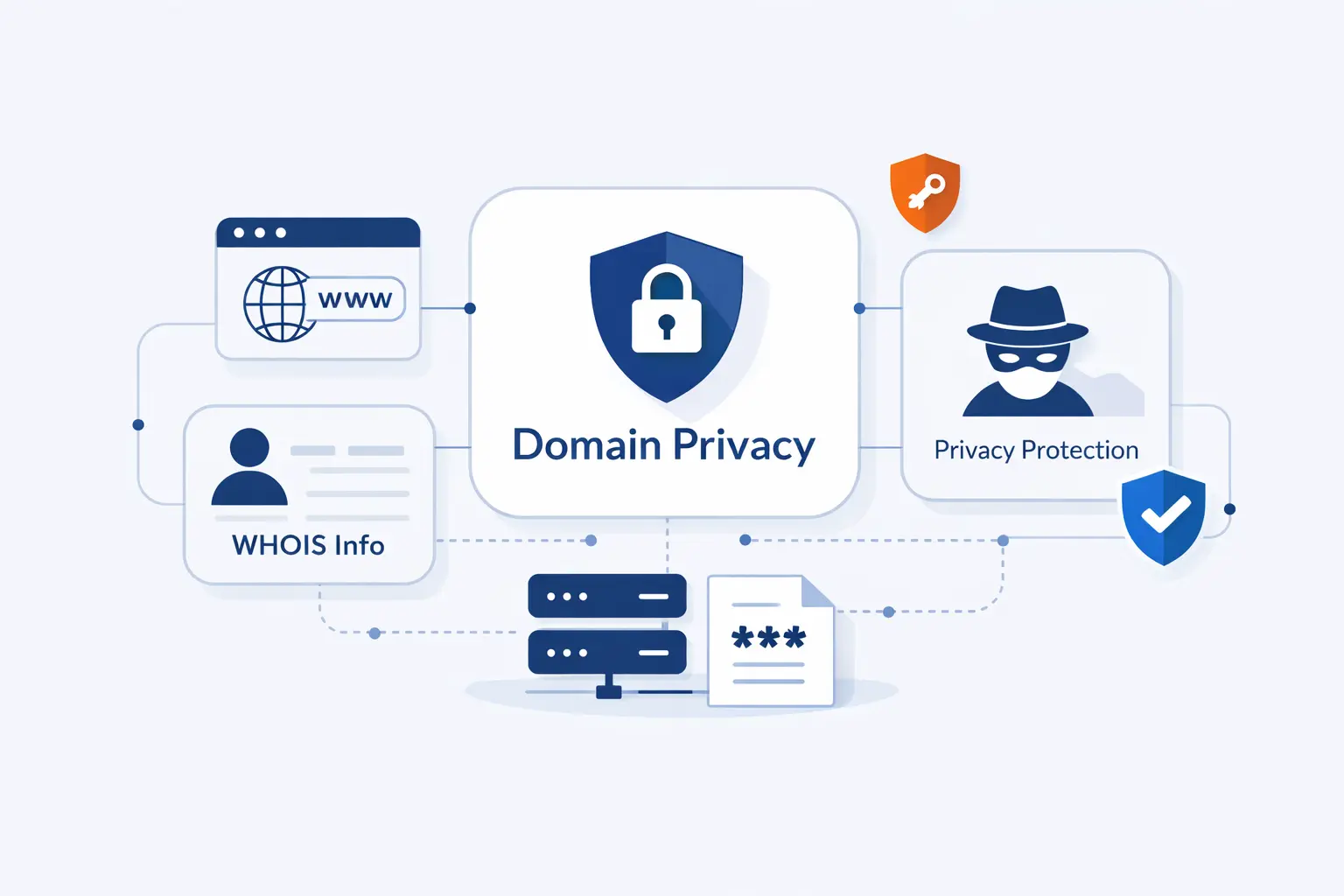
The actual setup is usually easy. The timing is not. Domain privacy works best when it is enabled before the first public record gets copied, scraped, or archived by someone else. That is why we prefer doing it at registration, not as a cleanup step later.
1. Adding Domain Privacy During Registration
If the extension is eligible, turn privacy on during checkout and still enter accurate underlying registrant data. That gives us the cleanest start. At 1Byte, we treat it like locking the front door on move-in day. It is easier to do early than to explain later why private details were ever public in the first place.
2. Turning Domain Privacy On Later in Your Dashboard
If the domain is already registered, most registrars let us switch privacy on from the dashboard. Before we do that, we check whether the extension supports privacy, whether the provider uses multiple privacy levels, and whether a protection product requires extra identity verification before settings can change. Those checks save frustration.
3. Historical WHOIS Records and Why Enabling Privacy Early Matters
This is the uncomfortable truth. Turning privacy on later can mask the current record, but it may not erase older copies that third-party WHOIS history services collected when the data was public. That is why enabling privacy early matters. Prevention is cleaner than trying to scrub the internet after the fact.
4. How to Verify That Domain Privacy Is Active
After the change, run a public RDAP or registrar lookup and inspect the result. We should see redacted values, substitute provider details, or a forwarding contact instead of direct personal fields. We should also expect some operational data to remain visible, because privacy rarely means a blank record. It means a narrower one.
Common Misunderstandings About Domain Privacy
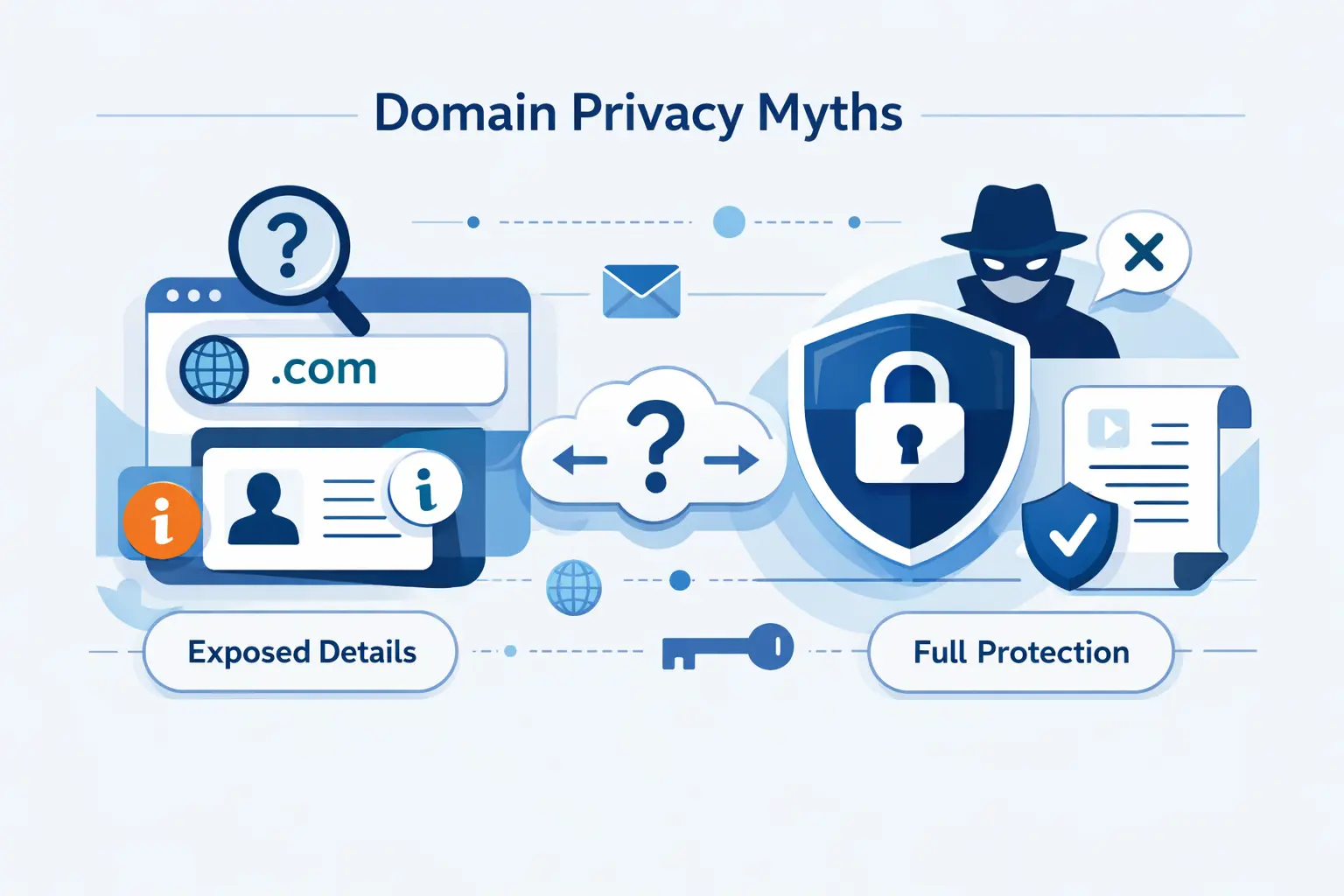
Most confusion around domain privacy comes from treating it as either useless or magical. We think the smarter view is humbler. It is a narrow control with a clear job. Once we accept that, the sales noise falls away and the buying decision gets much easier.
1. Is Domain Privacy Too Expensive?
Usually, no. Some providers include it, some charge a modest fee, and some country-code policies give individuals privacy by default. In practice, the avoided hassle can easily outweigh the cost. One fake renewal scare or one week of registrar spam is often enough to make the fee look small.
2. Does Domain Privacy Look Unprofessional?
We do not think domain privacy looks unprofessional. What looks professional is intentional contact information. A business can still publish a support inbox, contact form, public office, or legal notice page while keeping personal registration data out of easy lookup. That is prudence, not secrecy.
3. Does Domain Privacy Block Legitimate Contact?
Good domain privacy should not block legitimate contact. GoDaddy, CIRA, and similar providers keep routing paths open so messages can still reach the domain holder without exposing direct details. That is the right balance, in our view. Hide the data, not the doorway.
4. Does GDPR Replace Domain Privacy?
GDPR did not replace domain privacy. It changed how much personal data many gTLD records publish by default, but domain privacy and proxy services still matter because they handle substitute data, forwarding, and extension-specific behavior in ways pure redaction does not. If we blur those ideas together, we make bad assumptions at checkout.
Domain Privacy FAQ
These are the questions we hear most from first-time site owners. The answers are short once the system makes sense. Here is how we explain them at 1Byte.
1. What Is Domain Privacy and Do I Need It?
Domain privacy hides or substitutes personal registration details in public lookup while the registrar keeps the real data on file. If our domain would otherwise expose a personal email, phone number, or address, we usually say yes, we need it. If all public data is already deliberate business information, it is still useful, but less critical.
2. What Does Domain Privacy Mean on GoDaddy?
On GoDaddy, GoDaddy’s Domain Privacy replaces eligible public registrant details with substitute information from Domains By Proxy, keeps a contact path available, and lets owners control how much is shown. The domain still belongs to the customer. The public record just stops advertising direct contact data.
3. Is Domain Privacy Free?
Sometimes. Some registrars include privacy or redaction by default. Others charge extra or bundle it with broader protection features. Some country-code policies give individuals privacy automatically. That is why we never assume. We check the exact registrar and the exact extension every time.
4. Does Domain Privacy Affect SEO?
In normal practice, domain privacy does not affect SEO. We have never seen registration masking improve or hurt rankings by itself. Public Google guidance focuses on crawlability, indexability, and HTTPS, not WHOIS privacy, and that is the right way to think about it. Privacy changes the registration record. It does not change page quality.
5. Does Domain Privacy Make a Domain Anonymous?
No. Domain privacy is not full anonymity. The registrar still has the underlying data, the registry may receive required elements, some operational details stay public, and lawful disclosure channels still exist. Privacy lowers public exposure. It does not erase the ownership trail everywhere.
6. Will Domain Privacy Hide Your Website From the Public?
No. Domain privacy does not hide the website from visitors, search engines, or people who can see what the site publishes about itself. It only changes what appears in the public registration record. If the goal is a private site, we need other controls such as access restrictions or noindex decisions, not just domain privacy.
How 1Byte Supports Customers With Cloud Computing and Web Hosting Services
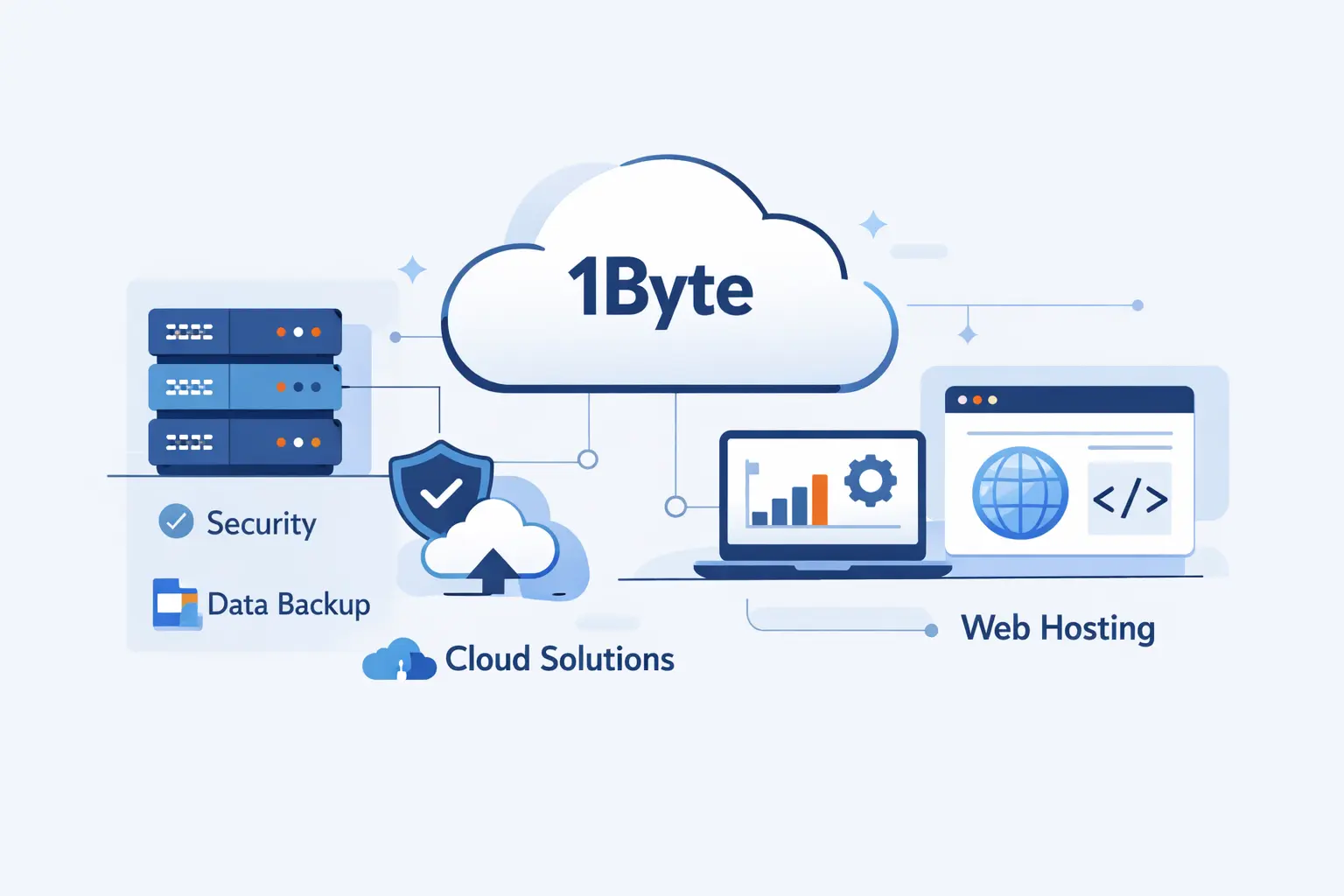
At 1Byte, we try to keep this whole stack understandable. We support customers across domain registration, SSL certificates, WordPress hosting, shared hosting, cloud hosting, cloud servers, and AWS partner work because privacy choices make more sense when domain management and site operations sit in the same conversation.
1. Start With Domain Registration and Strong Domain Management
We start with clean domain management. That means accurate owner data, renewal discipline, transfer controls, and DNS settings that are easy to verify. In our experience, domain trouble rarely begins with a Hollywood attack. It usually starts with a rushed checkout, a stale contact address, or a missed renewal. Good management prevents the boring mistakes that hurt just as much.
2. Protect Sites With SSL Certificates, WordPress Hosting, and Shared Hosting
From there, we help customers pair privacy with SSL certificates and sensible hosting. A personal WordPress site and a small business on shared hosting do not need the same operational rhythm, but both need certificates, updates, backups, and a clear public contact path. Privacy is the front gate. Site security still matters inside the fence.
3. Scale With Cloud Hosting, Cloud Servers, and AWS Partner Expertise
When customers outgrow the basics, we support the move into cloud hosting, cloud servers, and AWS partner guidance. The point is not to make domain privacy glamorous. The point is to keep the whole stack calm, so the domain stays registered, resolvable, secure, and manageable as the business grows.





Final Takeaways on What Is Domain Privacy
Our final take is straightforward. Domain privacy is usually worth it because the downside of public exposure is real and the operational cost is small. It will not secure a weak registrar account or clean an infected site. It will stop a lot of needless leakage, and that is reason enough for most owners.
If we were registering a new domain right now, we would enable privacy early, keep the underlying data accurate, turn on account protection, use HTTPS and DNSSEC where available, and treat the website itself as a separate security job. That is our 1Byte view in one line. Keep the public record quiet, keep the control plane secure, and keep the site healthy.