

- What Business Automation Is and Why It Matters
- Why Teams Invest in Automation
- Business Automation Models From Simple Tasks to Autonomous Work
- Where Automation Creates the Fastest Wins
- What to Automate First
- Business Automation Tools and How to Pick Them
- How to Roll Out Automation Without Creating New Bottlenecks
- FAQ
- How 1Byte Supports Automation-Ready Websites and Infrastructure
- Conclusion
Business automation is the planned use of software, rules, integrations, and AI to make routine work run with less manual effort. We see it as an operating discipline, not a one-time tool purchase. The practical goal is simple: move predictable work out of inboxes, spreadsheets, and memory, then put it into systems that can trigger actions, pass data, and alert people when judgment is needed. For a growing company, business automation can mean faster lead follow-up, cleaner billing, fewer missed tasks, and a website or cloud setup that supports connected operations instead of slowing them down.
Our view at 1Byte is that automation should start small and earn trust. A bad process made automatic is still a bad process, only faster. The smarter path is to pick one painful workflow, document it, automate the stable parts, measure the result, and expand only when the team can see the benefit. This guide gives us a practical framework for planning that work without turning a useful idea into a tangled technical project.
What Business Automation Is and Why It Matters
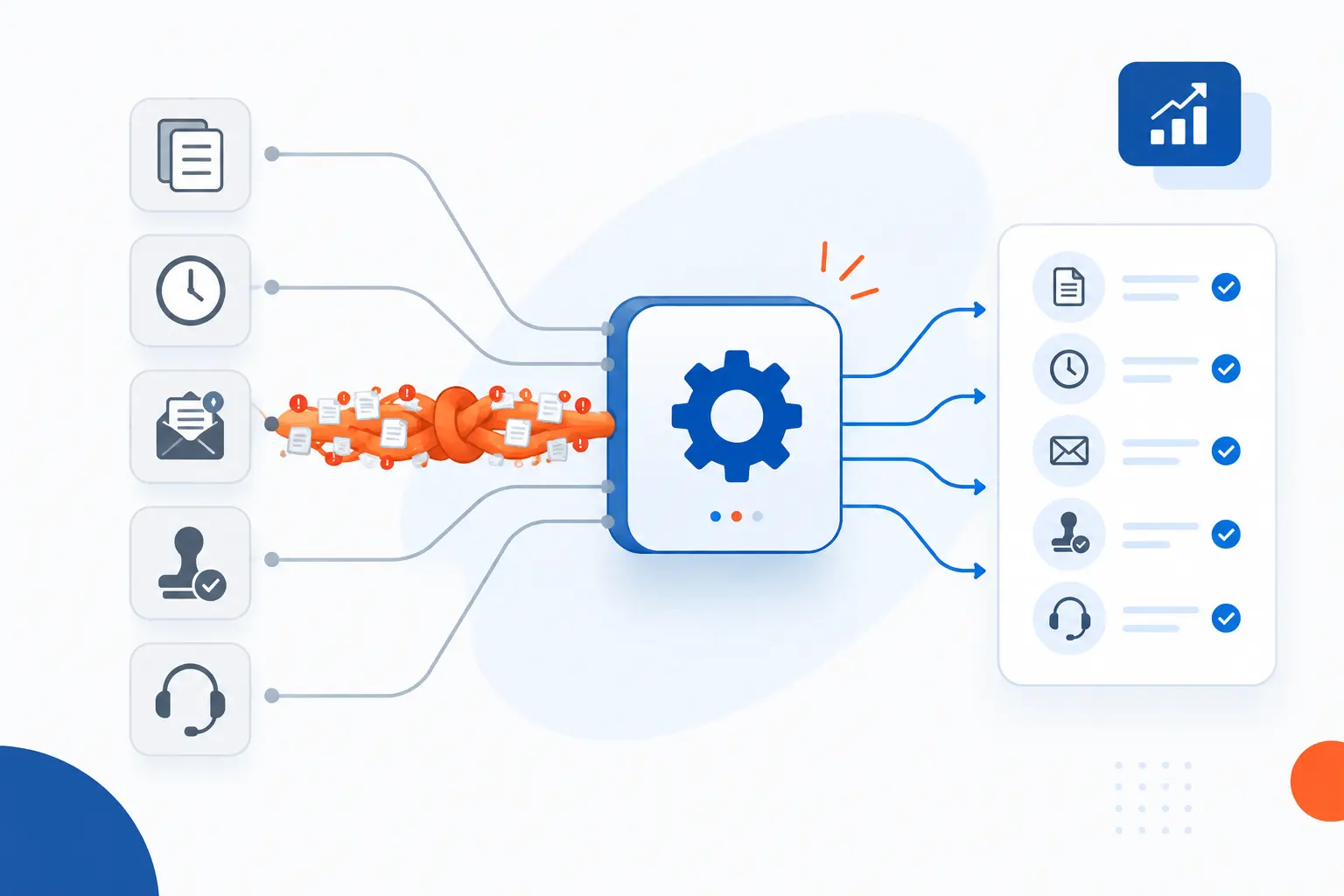
Business automation means using technology to perform repeatable business tasks with limited human intervention. It matters because every company has invisible drag: copied data, delayed approvals, missed follow-ups, duplicate records, manual reporting, and routine support triage. When these small frictions pile up, teams spend their best hours babysitting systems instead of serving customers or improving the business. Good automation removes that drag while keeping people in control of exceptions, decisions, and relationships.
We should not treat business automation as a replacement for good management. It works best when the process is already understood, the rules are clear, and the team agrees on what “done correctly” means. A simple example is an online inquiry form that creates a CRM lead, sends a confirmation email, assigns a salesperson, and reminds that person if no reply happens. That is not magic. It is just a set of clear triggers and actions that prevent a lead from sitting untouched.
The reason this matters now is that most businesses run on a patchwork of tools. A website may capture leads, a CRM may store contacts, accounting software may manage invoices, and support may happen in a help desk. Without automation, people become the glue between those systems. With it, systems pass the right information forward and people step in where context, care, or approval is required.
FURTHER READING: |
| 1. How to Start an Ecommerce Business From Scratch |
| 2. What Is Content Marketing? Strategy, Formats, Benefits |
| 3. What Is Brand Identity Design and Why It Matters |
Why Teams Invest in Automation
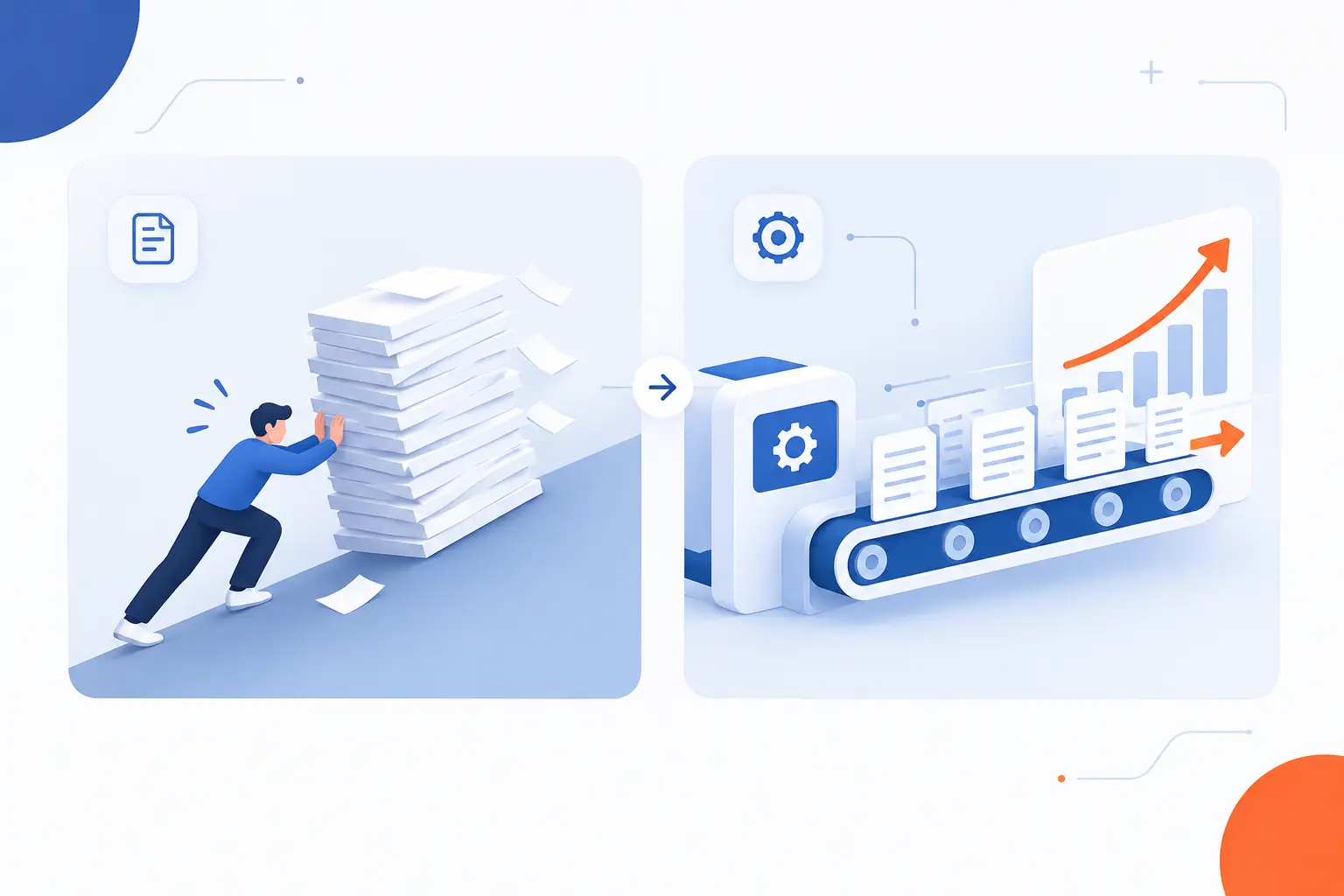
Teams invest in automation to reduce manual work, improve reliability, and respond faster as demand grows. The strongest projects usually connect a clear pain point to a measurable outcome, such as shorter response time, fewer billing mistakes, or faster onboarding. AI has made the conversation louder, but the principle is older and simpler: repetitive work belongs in a system when the rules are stable. Adoption is also broadening, with 78 percent of surveyed organizations using AI in at least one business function, which signals that teams are looking beyond isolated scripts and toward smarter operating models.
Save Time on Repetitive Work
The first benefit of automation is that it removes repetitive tasks from people’s daily schedules. Think of copying form submissions into a CRM, sending the same welcome email, creating calendar reminders, or exporting weekly reports. Each task may take only a few minutes, but repeated across a team, the cost becomes real.
We like to start by asking a blunt question: “What work would disappear tomorrow if two systems could talk to each other?” The answers are often obvious. Sales teams retype lead details. Finance teams chase the same payment reminders. Support teams manually tag tickets. Operations teams create the same status report every Friday.
A practical automation plan should estimate time saved, but it should also look at timing. Saving ten minutes instantly after every lead arrives can matter more than saving two hours at the end of the month. Speed changes customer experience. It also keeps work from stacking up in the quiet corners of the business.
Reduce Errors and Improve Consistency
Automation improves consistency by making the same rule run the same way every time. Humans are good at judgment, but we are not built to copy fields, rename files, calculate due dates, and remember every small step forever. Systems can handle those steps better when the logic is clear.
In finance and HR, the value is easy to see. One payroll case reported that errors fell from 48% to 2% after fragmented processes were replaced with a more connected setup. That kind of example matters because accuracy is not just an internal metric. It affects trust, morale, cash flow, and customer confidence.
Our advice is to automate validation as early as possible. Required fields, approval thresholds, duplicate checks, naming conventions, and status updates should happen before bad data spreads. It is far cheaper to stop one wrong invoice at entry than to untangle five downstream reports later.
Scale Operations Without Matching Headcount Growth
Automation helps teams handle more work without increasing headcount at the same pace. This does not mean people become unnecessary. It means the team can absorb growth without turning every new customer, order, ticket, or invoice into more manual administration.
For example, a small eCommerce business may manage ten orders per day manually. At one hundred orders, manual status emails and tracking updates become painful. At one thousand, they become impossible. Automated order confirmations, inventory alerts, shipping updates, and refund workflows let the business grow without reinventing operations every month.
We tell clients to watch for volume cliffs. A process that feels manageable at low volume can break suddenly when the business grows. The best time to automate is before the process becomes a crisis, not after the team is already buried.
Connect Systems, Data, and Faster Responses
Automation connects systems so teams can act on current information instead of stale updates. A lead form should not wait for someone to check an inbox. A high-priority ticket should not depend on a manager noticing a message. A failed payment should not sit for days before anyone follows up.
Most fast responses come from simple triggers. If a customer submits a support form, create a ticket. If a deal reaches a certain stage, notify finance. If a server alert crosses a threshold, open an incident task. The workflow does not need to be fancy. It needs to be reliable.
Connected data also reduces internal arguments. When systems agree on customer status, payment history, ticket priority, and ownership, teams spend less time asking “who has the latest version?” That alone can remove a surprising amount of friction.
Free Employees for Higher-Value Work
The best automation gives people more room for work that requires judgment, creativity, and care. It should remove the dull parts of a job, not strip away the human parts that customers value. We are wary of projects that begin with “how many people can we remove?” A better question is “what valuable work is not getting done because people are stuck on repetitive tasks?”
For a support team, that may mean spending less time routing tickets and more time solving difficult cases. For sales, it may mean fewer manual CRM updates and more thoughtful follow-up. For finance, it may mean less invoice chasing and more cash-flow planning.
This is where automation becomes cultural. If employees see automation as a threat, they will avoid it. If they see it removing the tasks everyone quietly dislikes, adoption becomes much easier.
Business Automation Models From Simple Tasks to Autonomous Work
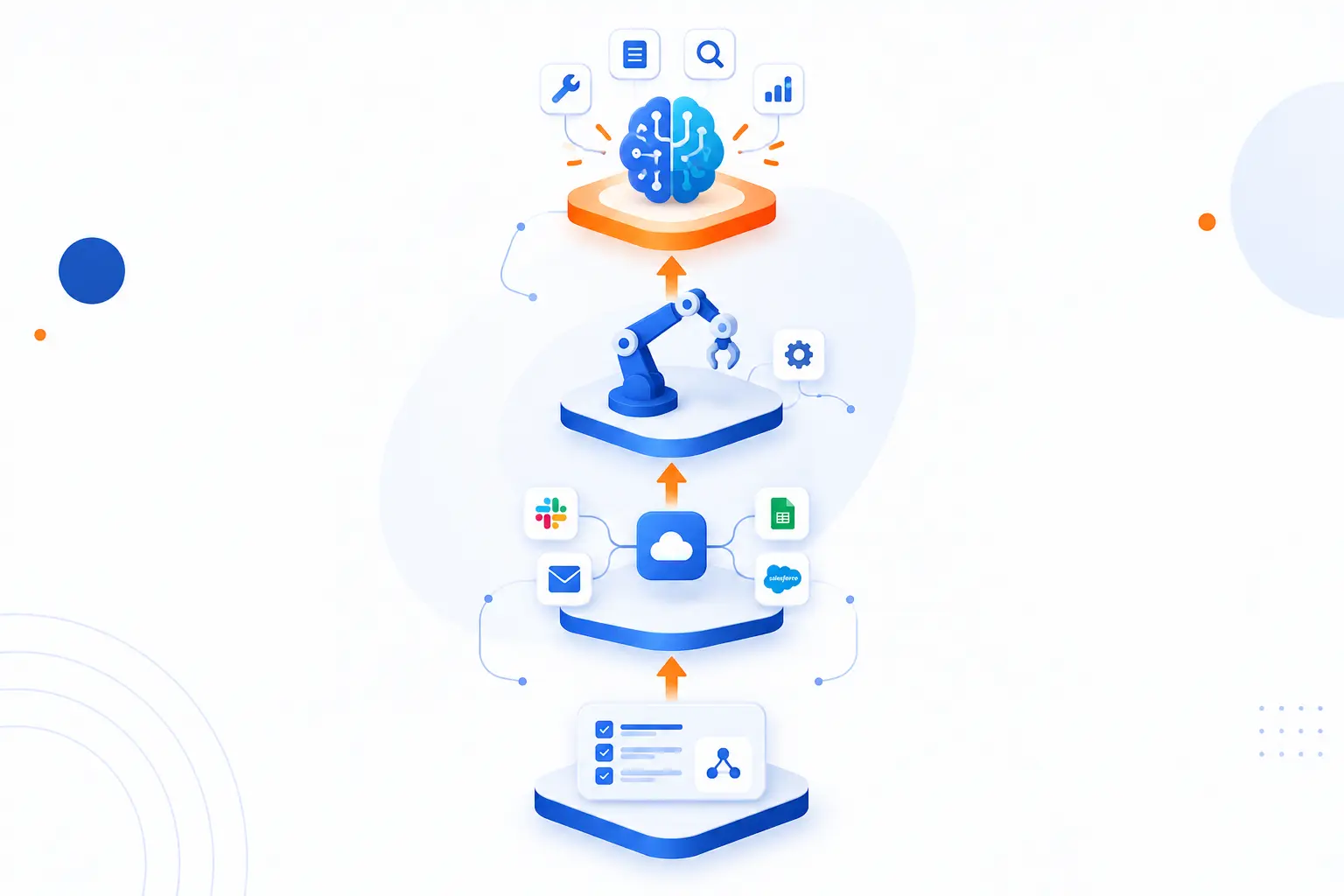
Business automation ranges from simple task triggers to AI systems that can plan, use tools, and complete multi-step work with supervision. The right model depends on process complexity, system access, risk, and how much human judgment is needed. We prefer a laddered approach: start with deterministic rules, add integrations, use RPA only where APIs are unavailable, and introduce AI when the work involves language, documents, or probabilistic decisions. The market around these capabilities is expanding, with one forecast putting enabling software at $1.07 trillion by 2028, but growth should not tempt us into using heavy tools for simple jobs.
| Model | Best Fit | Main Risk | Human Role |
|---|---|---|---|
| Task automation | One clear action | Too narrow to improve the full process | Define the rule |
| Workflow automation | Hand-offs between apps | Broken integrations or bad data mapping | Approve flow design |
| BPA | End-to-end business flows | Automating a flawed process | Own the operating model |
| RPA | Legacy screens without APIs | Fragile user interface changes | Monitor exceptions |
| Intelligent systems | Documents, text, classification | Low-confidence outputs | Review decisions |
| Agentic AI | Goal-driven tasks with tools | Over-permissioned execution | Set boundaries |
Task Automation for Single Repetitive Actions
Task automation handles one repeatable action when a specific condition is met. A good example is sending a thank-you email after a form submission or moving a file into a named folder when it arrives. The trigger is clear, the action is clear, and the business risk is usually low.
This is the best starting point for beginners. It teaches the team how triggers, conditions, and actions work without forcing a full process redesign. We often recommend one low-risk task first because it builds confidence quickly.
Still, task automation has limits. If we automate ten disconnected tasks, we may create ten small conveniences without improving the whole operation. Use it for quick relief, then step back and ask whether those tasks belong inside a larger workflow.
Workflow Automation for Cross-App Hand-Offs
Workflow automation moves data and actions across multiple applications. For example, a website form can create a CRM record, notify a salesperson, add the contact to an email list, and create a follow-up task. This is where business automation starts to feel more strategic because it reduces hand-offs between people.
The main design issue is data mapping. Field names, formats, owner rules, and duplicate logic must be clear. A workflow that sends messy data into three systems will create more cleanup, not less.
Before building the workflow, write the hand-off in one sentence: “When this happens, this system sends this data to that system so this person can do this next step.” If we cannot write that sentence cleanly, the workflow is not ready.
Business Process Automation BPA for End-to-End Flows
Business process automation manages a complete business flow from start to finish. It may include multiple systems, approvals, notifications, data checks, reporting, and exception handling. Common examples include order-to-cash, employee onboarding, procurement, loan processing, and customer complaint handling.
BPA needs stronger ownership than task automation. Someone must define the process, decide who owns each stage, and document what happens when work falls outside the normal path. Without that ownership, end-to-end flows become hard to troubleshoot.
We recommend using BPA when the process is important enough to deserve governance. If a broken workflow can delay revenue, affect compliance, or frustrate customers at scale, treat it as a business process, not a side project.
Robotic Process Automation for Legacy Systems
Robotic process automation is useful when software robots must interact with screens the way a human user would. It is common in older systems that lack modern APIs or easy integrations. The robot may log in, click buttons, copy data, paste values, download reports, or update records.
RPA can be powerful, but it is more fragile than API-based integration. If a button moves, a label changes, or a screen loads differently, the bot may fail. That is why mature RPA work depends on strong selectors, testing, and exception handling, and the selector guidance for screen elements shows how much precision matters.
Our rule is simple: use APIs when available, use RPA when necessary. RPA is a bridge for legacy work, not a reason to avoid modernizing systems forever.
Intelligent Automation for Documents and Decisions
Intelligent automation combines rules with AI to handle unstructured information such as documents, emails, images, or long text. It can classify support messages, extract invoice fields, summarize customer notes, or flag unusual transactions. This is valuable because many business processes begin with messy human language, not tidy database fields.
The key is confidence. A system that reads an invoice should know when it is uncertain and route the item to a person. A support classifier should escalate urgent complaints instead of guessing quietly. The workflow should include review steps for low-confidence outputs.
We would not use AI for every decision. Use it where the volume is high, the input varies, and the cost of manual review is painful. Keep humans in the loop when the decision affects money, access, legal exposure, or customer trust.
Agentic AI for Goal-Driven Execution
Agentic AI uses AI systems that can pursue a goal, call tools, follow instructions, and adapt through several steps. Instead of “if this, then that,” an agent might receive a goal such as “prepare a draft response using the customer’s history and the refund policy.” It can gather context, call approved tools, and produce an output for review.
This model is promising, but it deserves caution. Agents need narrow permissions, clear tools, guardrails, logging, and human review for sensitive actions. The agent runtime guidance shows why tool control, state, approvals, and observability matter when systems can act across steps.
Our opinion is firm here: do not begin with autonomous work. Begin with assisted work. Let the system draft, classify, recommend, or prepare. Once accuracy and controls are proven, then consider allowing it to execute low-risk actions.
Where Automation Creates the Fastest Wins
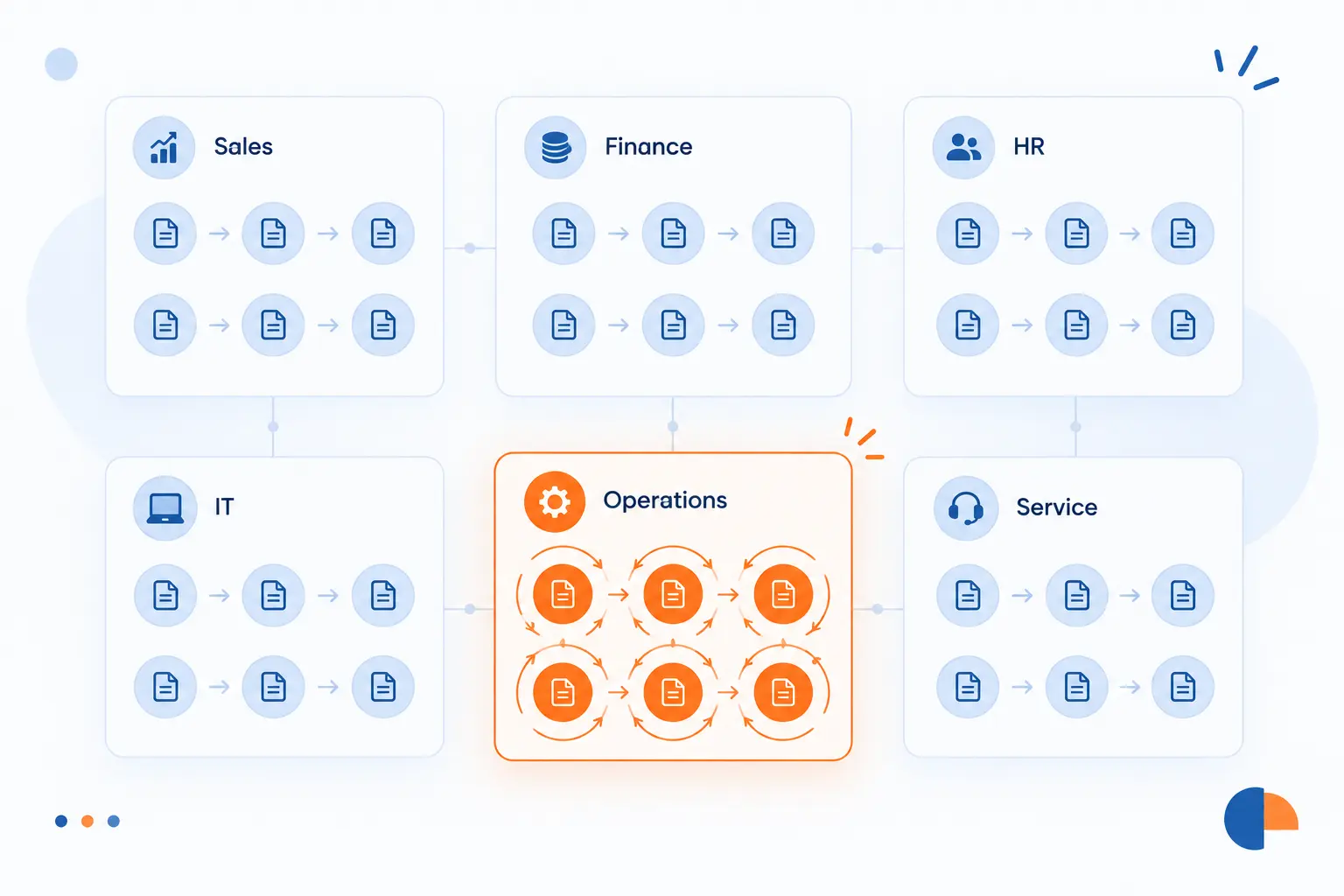
Automation creates the fastest wins in areas with repeated requests, clear rules, and frequent hand-offs. Sales, finance, HR, IT, operations, and customer service usually contain the best early candidates. The trick is to avoid choosing a process because it is flashy. Choose it because it happens often, wastes time, creates errors, or slows customers down.
| Area | Fast Win | What to Measure |
|---|---|---|
| Sales and marketing | Lead capture and follow-up | Response time and conversion rate |
| Finance and admin | Invoices and payment reminders | Error rate and days outstanding |
| HR, IT, and operations | Onboarding and access requests | Completion time and missed steps |
| Customer service | Ticket routing and priority tagging | First response time and backlog |
Sales and Marketing Workflows
Sales and marketing usually benefit first because speed and consistency directly affect revenue. A lead that waits two days for a reply may already be gone. A simple workflow can capture the inquiry, assign an owner, send a useful response, and schedule a follow-up.
We recommend starting with the website. Forms, landing pages, chat tools, newsletter signups, and quote requests should feed a system of record. The workflow should record source, interest, priority, and consent. It should also notify the right person based on territory, product, or company size.
A real-world version might look like this: a visitor requests a cloud hosting consultation, the form creates a CRM contact, the system assigns the lead to the right team, and a reminder fires if no action happens. The result is not just faster sales. It is fewer lost opportunities.
Finance and Administrative Processes
Finance and administrative work is a strong automation candidate because the rules are often clear and the cost of mistakes is visible. Invoices, approvals, expense claims, recurring payments, purchase orders, and reminders all follow patterns. When these patterns stay manual, small errors can become cash-flow problems.
Start with billing events. When an invoice is created, send it to the customer, log the due date, remind before and after the deadline, and alert finance when an account needs attention. If a payment succeeds, update the customer record. If it fails, trigger a clear follow-up path.
We also like automating document collection. Asking a client for tax forms, contracts, or identity documents should not depend on someone remembering every step. Automated checklists and reminders keep the process moving while leaving final review to humans.
Human Resources, IT, and Operations
HR, IT, and operations see fast wins when automation standardizes repeatable internal requests. Employee onboarding is the classic example. Every new hire may need accounts, equipment, documents, policy acknowledgments, payroll setup, and training tasks.
Manual onboarding often fails because ownership is split. HR starts the process, IT creates access, a manager prepares role-specific tasks, and finance may handle payroll details. A workflow can coordinate those steps and show what remains incomplete.
Operations work has similar patterns. Equipment requests, inventory alerts, vendor renewals, and maintenance tickets all benefit from defined triggers. Amazon’s Sequoia system, for instance, shows how connected robotics and process design can reduce order processing time by up to 25% in a fulfillment center setting. Most small businesses will not build warehouse robotics, of course, but the lesson travels well: automate the path of work, not just one isolated task.
Customer Service and Support Routing
Customer service automation works best when it routes, prioritizes, and prepares work rather than hiding people from customers. A support request can be categorized, tagged, assigned, and enriched with customer history before an agent opens it. That helps the team respond faster without forcing customers through a maze.
Start with routing rules. Billing issues go to finance support. Technical issues go to the help desk. Urgent keywords or premium account indicators can raise priority. Low-risk requests, such as password reset guidance or order status, may receive an immediate self-service response.
We advise keeping escape routes obvious. Customers should be able to reach a person when the issue is sensitive, confusing, or emotionally charged. Automation should reduce waiting, not make customers feel trapped.
What to Automate First
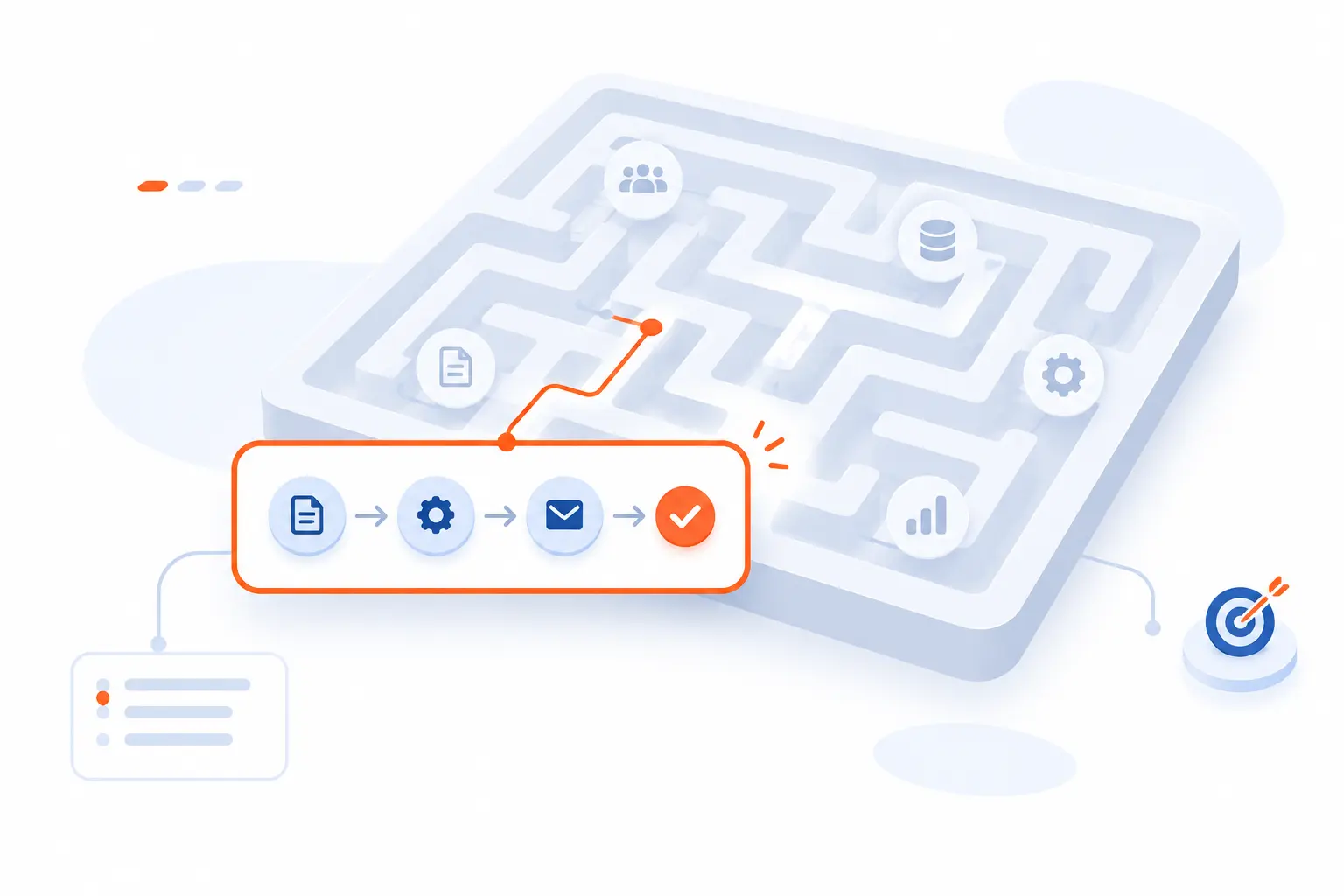
The best first automation target is repetitive, rule-based, frequent, and painful enough that the team will notice improvement. We should avoid starting with the biggest process in the company. Big processes have politics, exceptions, edge cases, and hidden dependencies. A better first win is narrow enough to control but valuable enough to prove the method.
Choose Repetitive, Rule-Based, High-Volume Work
Choose work that happens often, follows stable rules, and does not require deep judgment at every step. This is the safest starting point for business automation. If a task has a clear trigger, predictable data, and a known next action, it is a strong candidate.
Use three filters. First, frequency: does this happen daily or weekly? Second, clarity: can the team explain the rule without debate? Third, impact: does failure cause delay, rework, lost revenue, or customer frustration?
A task that passes all three filters should move to the shortlist. If it fails one filter, pause. Low-volume work may not justify setup. Unclear work needs process design first. Low-impact work may be useful later, but it is rarely the right first project.
Start With Lead Follow-Up, Billing, and Payment Reminders
Lead follow-up, billing, and payment reminders are strong first projects because they affect cash and customer experience. They are also easy to describe. A lead arrives, someone must respond. An invoice is issued, someone must pay. A due date passes, someone must follow up.
For leads, define response ownership and timing. For billing, define invoice creation, delivery, due-date reminders, and failed-payment handling. For payment reminders, write messages carefully so they are firm, polite, and consistent.
We like these workflows because they expose the whole automation cycle. The team learns triggers, data quality, notifications, ownership, exceptions, and measurement. Once those habits are in place, more complex workflows become less intimidating.
Add Employee Onboarding, Ticket Routing, and Routine Reporting
Employee onboarding, ticket routing, and routine reporting are natural second-wave projects. They involve more departments, but the rules are still manageable. They also make automation visible inside the company, not just in customer-facing work.
For onboarding, build a checklist that starts when a hiring status changes. For ticket routing, define categories, priorities, and escalation rules. For reporting, schedule data pulls and deliver the same view to the same people at the same time.
Routine reporting deserves special care. Automating a bad report only spreads confusion faster. Before automating, ask who uses the report, what decision it supports, and which fields must be trusted. If nobody can answer, fix the report first.
Business Automation Tools and How to Pick Them
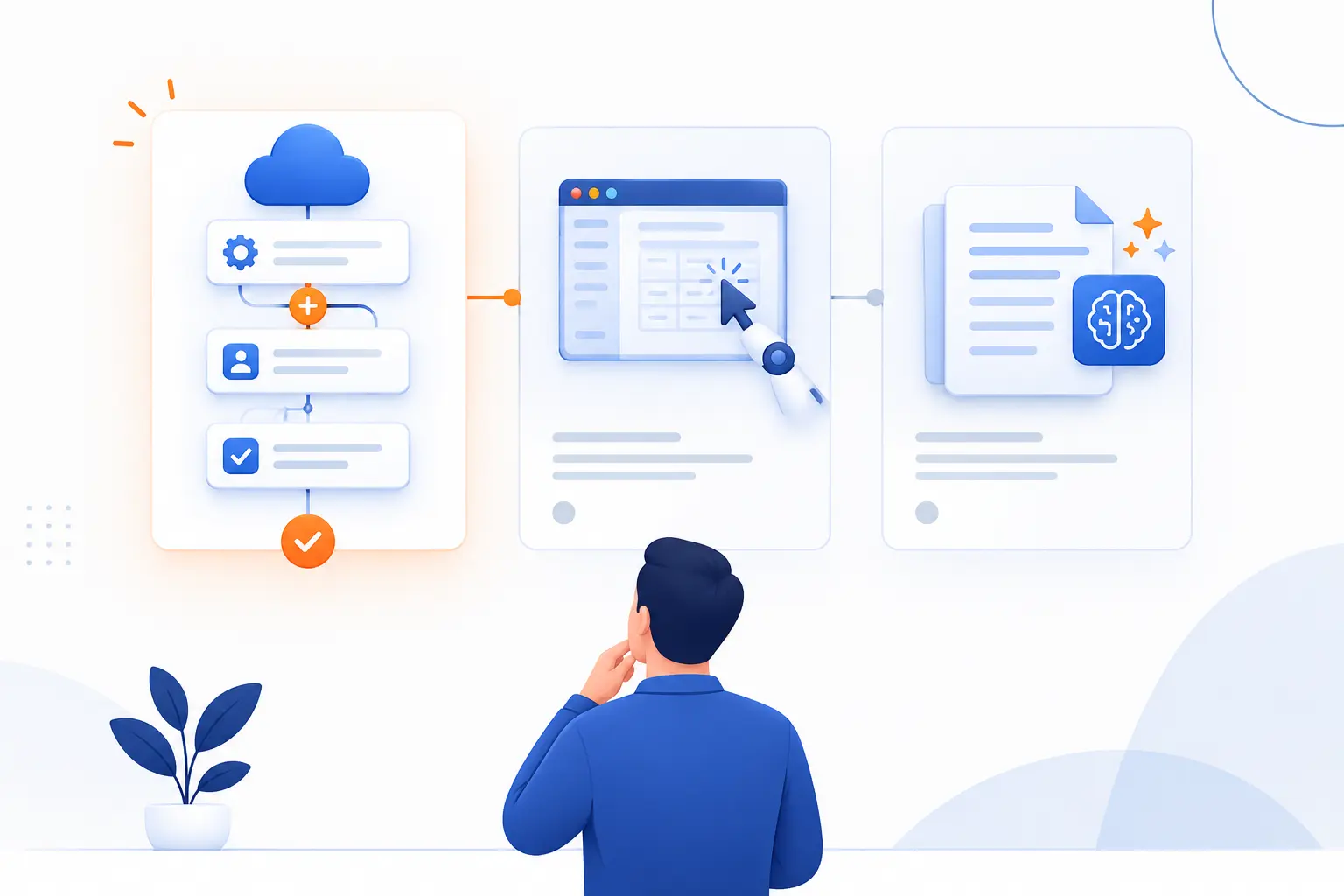
Business automation tools should be chosen by workflow need, system fit, data sensitivity, and team skill. Workflow builders are good for connected cloud apps. RPA platforms are useful for legacy systems. AI-driven tools help with documents, language, classification, and decision support. The right tool is the one your team can operate safely after the vendor demo is over.
| Tool Type | Best For | Selection Question |
|---|---|---|
| Workflow builders | Connecting SaaS tools and triggers | Does it support our core apps? |
| RPA platforms | Screen-based legacy work | Can it handle interface changes? |
| AI-driven tools | Text, documents, and recommendations | How are outputs reviewed? |
| Native platform features | Built-in actions inside one system | Can this avoid another tool? |
Workflow Builders for Connected Apps
Workflow builders connect applications through triggers, actions, and conditional logic. They are a practical choice when the business already uses cloud tools for CRM, forms, email, accounting, support, or project management. Common examples include Zapier, Make, Microsoft Power Automate, and native workflow features inside platforms.
The first selection check is connector coverage. If the tool cannot connect cleanly to the systems that matter, the project will drift into workarounds. A public connector catalog is useful because it lets teams confirm supported apps, actions, and regional availability before committing.
We also care about error handling. A workflow builder should show failed runs, retry options, logs, and notifications. Silent failure is poison. If a lead fails to sync, the right person should know quickly.
RPA Platforms for Screen-Based Work
RPA platforms are best when a task must be performed through a user interface because no better integration path exists. They can work well for legacy finance systems, older ERP tools, government portals, or vendor platforms that do not expose useful APIs.
Pick an RPA platform based on stability, monitoring, credential handling, audit logs, and how it identifies screen elements. Also test the platform against real edge cases. Does the bot behave correctly when a page loads slowly, a popup appears, or a field is missing?
We would not choose RPA just because it looks quick. If an API or built-in integration exists, use that first. Screen-based work is useful, but it should be treated as a controlled workaround with monitoring and maintenance.
AI-Driven Tools for Documents and Decision Support
AI-driven tools are best for work involving text, documents, classification, extraction, summarization, and recommendations. They can read invoices, classify support tickets, summarize calls, draft responses, and flag unusual cases. Their value comes from handling variation that rigid rules struggle with.
The selection question is not “Can the AI do it?” The better question is “How do we know when it is wrong?” Look for confidence scores, review queues, audit trails, permission controls, and clear ways to improve prompts or models.
For sensitive workflows, require human approval before action. A draft email can be reviewed. A refund can be suggested. A contract clause can be flagged. Letting AI execute high-impact decisions without supervision is usually a shortcut to trouble.
What to Look For in Automation Software
The best automation software fits your current systems, exposes errors clearly, and gives non-developers enough control without sacrificing governance. We look for connectors, logs, permissions, version history, testing tools, security controls, and clear pricing. A beautiful interface matters less than reliable operations.
Ask vendors practical questions. What happens when an API call fails? Can we test before publishing? Can we restrict who edits workflows? Are secrets stored safely? Can we export logs for audits? How does the tool handle rate limits?
Also consider ownership. If only one employee understands the workflow, the business has created a new risk. Documentation and shared access matter as much as the software itself.
How to Roll Out Automation Without Creating New Bottlenecks
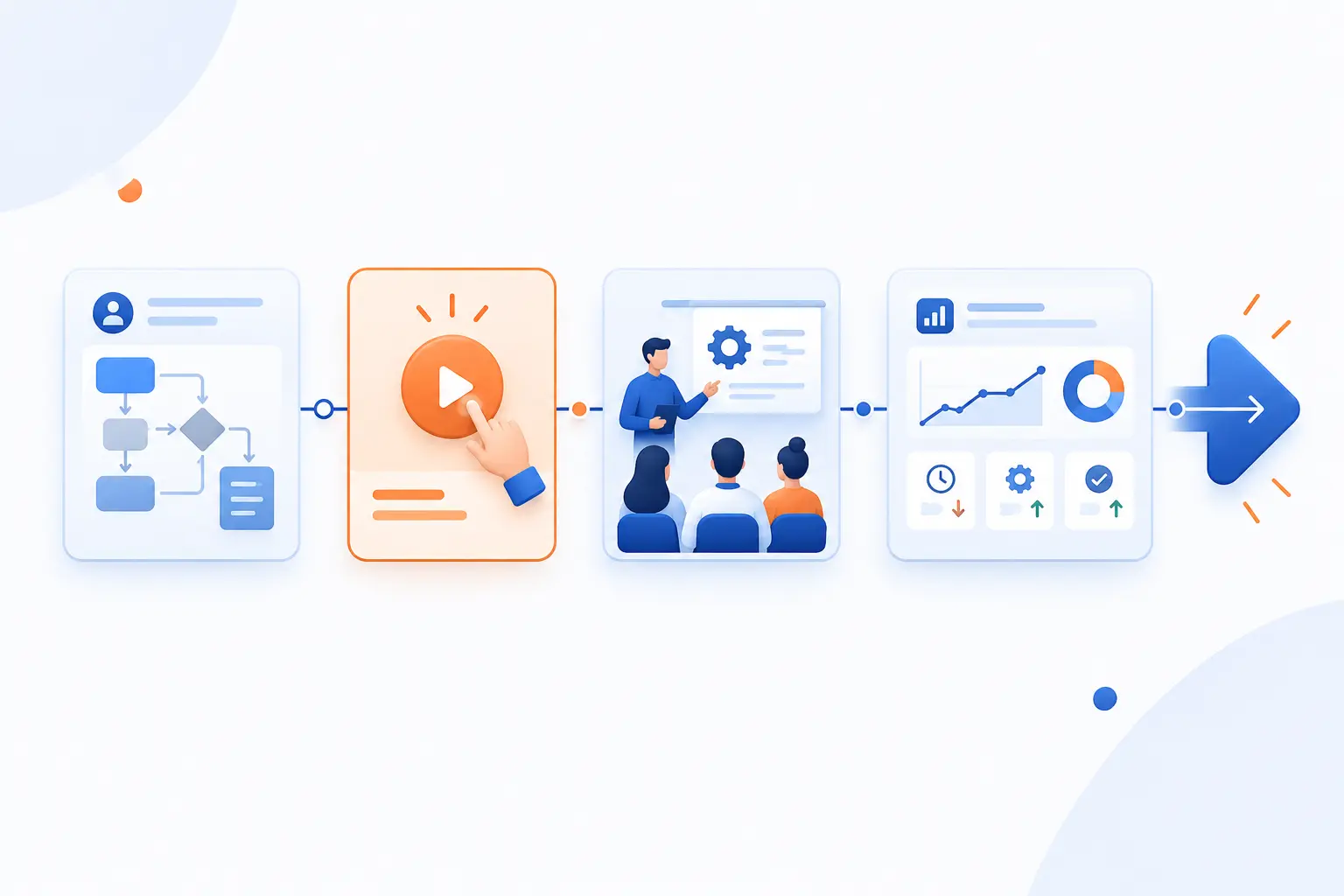
Automation should be rolled out by documenting the current workflow, choosing one high-value process, piloting it, training the team, and measuring results before expanding. The danger is that we remove one bottleneck and create another inside a tool nobody understands. A disciplined rollout keeps the process visible, the risk contained, and the team involved. Deloitte found that organizations piloting intelligent systems reported an average payback period of 22 months, which is a useful reminder that results depend on execution, not enthusiasm.
Document the Current Workflow First
Document the current workflow before changing it. Write down each trigger, task, owner, system, data field, approval, exception, and output. This sounds slow, but it prevents the classic mistake: automating what people think happens instead of what actually happens.
We like simple process maps. Start with the event that begins the work. Then trace each hand-off until the work is complete. Include delays, duplicate entry, approvals, and places where people leave notes in email or chat.
Do not polish the map too much. The goal is not a beautiful diagram. The goal is shared truth. Once everyone sees the same process, improvement becomes much easier.
Identify Bottlenecks and High-Value Opportunities
Identify bottlenecks by looking for waiting, rework, repeated questions, and manual data movement. These are the places where automation usually pays off. A bottleneck may be a person, but often it is a missing rule, unclear ownership, or a system that does not talk to another system.
Prioritize opportunities with a simple score. Rate frequency, business impact, rule clarity, technical difficulty, and risk. High frequency plus clear rules plus moderate risk is a good starting point.
Avoid automating rare exceptions first. They may be annoying, but they usually require too much custom logic. Build around the normal path, then design exception handling after the main flow works.
Choose Tools That Fit Your Existing Stack
Choose tools that fit the systems your team already uses. A tool that requires every department to change behavior at once will face resistance. A tool that connects to current forms, CRM, email, accounting, hosting, and support systems has a better chance of adoption.
For cloud infrastructure, the same principle applies. The environment should support reliable deployment, monitoring, repeatable changes, and recovery. The operational playbook guidance in the AWS Well-Architected Framework is a useful reference because it treats operations as something designed, practiced, and improved.
We also recommend checking whether existing tools already include useful workflow features. Buying a new platform before checking native capabilities often leads to tool sprawl. More tools can mean more integration work, more permissions, and more confusion.
Pilot One Process Before Expanding
Pilot one process before expanding automation across the business. A pilot limits risk and gives the team a real example to judge. Choose a process with clear success metrics and a manageable number of users.
Run the pilot in stages. First, test with sample data. Next, run it with real data under supervision. Then allow it to operate normally while monitoring errors. Keep a manual fallback ready until the workflow has proven itself.
A good pilot should answer practical questions. Did the workflow reduce manual work? Did it create new errors? Did people trust it? Was support easy? If the answer is mixed, improve the pilot before launching more workflows.
Train the Team, Measure Results, and Optimize
Train the team on what changed, how exceptions work, and who owns the workflow. People do not need to know every technical detail, but they must know how to use the new process and what to do when it fails. Training should include screenshots, examples, and escalation paths.
Measure the result against the original pain. If the goal was faster lead response, measure response time. If the goal was fewer invoice errors, measure error rate. If the goal was less reporting work, measure hours spent preparing reports.
Optimization should be ongoing. Review logs, collect user feedback, remove unnecessary steps, and update rules as the business changes. Automation is not a statue. It is closer to a garden, and yes, it needs pruning.
FAQ
Business automation raises practical questions because it touches tools, people, money, and trust. The short answer is that successful automation starts with clear processes and grows through careful measurement. Beginners should avoid chasing every tool at once. The better move is to pick one workflow, prove the benefit, and build from there.
What Does Business Automation Mean?
Business automation means using software to complete repeatable business tasks with less manual effort. It can involve rules, integrations, forms, notifications, RPA, AI, or a mix of these methods. The goal is to make routine work more reliable while keeping people involved in decisions that need judgment.
Can You Give Me an Example of Business Automation?
A common example is automating lead follow-up from a website form. When a visitor submits a request, the system creates a CRM record, sends a confirmation email, assigns a salesperson, and reminds that person if no reply happens. This prevents leads from being lost in inboxes.
What Are the Top Automation Tools for Different Use Cases?
The top tool depends on the use case. Workflow builders fit connected cloud apps, RPA platforms fit legacy screen-based tasks, and AI tools fit documents, messages, and classification. We recommend choosing based on integrations, error handling, permissions, logs, and team skill rather than popularity alone.
How Do I Automate My Business?
Start by documenting one workflow that is repetitive, rule-based, and painful. Then choose the smallest useful improvement, build a pilot, test with real users, measure the result, and expand only after the workflow is stable. This keeps business automation practical instead of overwhelming.
What Business Processes Should You Automate First?
Automate lead follow-up, billing reminders, ticket routing, employee onboarding, and routine reporting first. These processes usually have clear triggers, repeated steps, and visible benefits. Avoid starting with rare exceptions or processes nobody can explain clearly.
How 1Byte Supports Automation-Ready Websites and Infrastructure
1Byte supports automation-ready operations by providing the website and infrastructure foundations that connected workflows depend on. Business automation often starts at the edge of the company: a domain, a secure website, a form, a customer portal, a hosted application, or a cloud server running internal tools. If that foundation is unstable or poorly planned, even good workflows can stumble. As a cloud computing and web hosting provider, and as an AWS Partner, we think infrastructure should make automation easier to connect, monitor, and grow.
Launch Secure Digital Operations With Domain Registration and SSL Certificates
Domain registration and SSL certificates create the basic trust layer for digital operations. A business cannot automate serious customer interactions if users do not know where to go or if the site is not protected with HTTPS. Forms, portals, checkout pages, and login screens all depend on a trusted domain and encrypted connections.
In practical terms, this is where the automation journey often begins. A registered domain gives the business a stable digital address. An SSL certificate helps protect data moving between the visitor and the website. Once those basics are in place, teams can connect forms to CRM tools, route inquiries, and trigger follow-ups with greater confidence.
We see this as boring infrastructure in the best possible sense. It should not distract the business. It should quietly support every automated interaction that starts online.
Run Automated Sites on WordPress Hosting and Shared Hosting
WordPress hosting and shared hosting can support the first wave of website-based automation for small and growing teams. Contact forms, newsletter signups, booking requests, payment notices, and content updates often begin on a website. Hosting gives those workflows a place to run.
For many businesses, WordPress is the front door for digital operations. A form submission can trigger an email, create a lead, notify a team member, or feed another tool. Shared hosting can be a practical fit for simpler sites that need a web presence without complex infrastructure management.
Our advice is to keep website automation clean. Use only necessary plugins, document form destinations, and test every workflow after site changes. A small website can become a powerful operations hub, but only if the team keeps it organized.
Scale Connected Workflows With Cloud Hosting and Cloud Servers
Cloud hosting and cloud servers support heavier connected workflows when a business needs more control over applications, services, and integrations. As automation grows, teams may run dashboards, APIs, internal tools, scheduled jobs, data processing tasks, or customer portals. These workloads need infrastructure that matches their technical needs.
Cloud hosting can support web applications that interact with multiple systems. Cloud servers can give technical teams more control over runtime environments, background jobs, databases, and integration services. As an AWS Partner, 1Byte can connect this infrastructure conversation to broader cloud planning without forcing every business into the same setup.
The practical point is simple: automation-ready infrastructure should fit the workload. A simple website does not need the same setup as a custom application processing orders, tickets, and notifications. Start with the right foundation, then grow as the workflow demands it.







Conclusion
Business automation is not about replacing common sense with software. It is about moving repeatable, rule-based work into reliable systems so people can focus on customers, decisions, and improvement. The best projects begin with a clear process, a painful bottleneck, and a measurable outcome.
We would start small. Pick one workflow that happens often, write down how it works, identify the manual steps, and automate only the parts that are stable. Then measure the result. If the workflow saves time, reduces errors, or improves response speed, use that proof to guide the next project.
At 1Byte, our bias is practical: build the foundation, connect the right systems, keep humans in charge of judgment, and improve the process as the business grows. Which workflow in your business is still waiting on a copy-paste task, a forgotten reminder, or an inbox check?