

- Quick Comparison of SEO Web Solutions
- Top 20 SEO Web Solutions Providers and Tools
- Core Services Included in SEO Web Solutions
- What Sets the Best SEO Web Solutions Apart
- How to Choose SEO Web Solutions for Your Business
- Frequently Asked Questions About SEO Web Solutions
- How 1Byte Supports SEO Web Solutions as a Cloud Computing and Web Hosting Provider
Choosing seo web solutions is harder than it looks. Some providers are really web design agencies with light on-page SEO. Others are link builders with almost no CMS, hosting, or conversion depth. At 1Byte, we think the right pick depends less on awards and more on your actual bottleneck.
If your site is slow, hard to update, or technically messy, rankings usually stall. If the site is healthy but invisible, you may need stronger local SEO, content strategy, or authority building. That is why we reviewed a mix of design studios, local agencies, white-label providers, and performance marketing firms.
Below, we start with a quick comparison table, then break down the trade-offs. We will be direct about who each option fits, where pricing gets fuzzy, and which services matter most once AI search, Google Maps, and hosting performance all enter the picture.
Quick Comparison of SEO Web Solutions
We built this table for fast shortlisting. Prices are public starting points when available. If a provider keeps pricing private, we mark it as custom instead of guessing.
| Service/Tool | Best for | From price | Trial/Free | Key limits |
|---|---|---|---|---|
| SEO Web Design, LLC | Starter website builds | $995 one-time | Free estimate | Hosting extra, no basic-tier e-commerce |
| SEO Solutions | Chicago SMB lead gen | Custom | Free audit | No public package caps |
| Optimize Web Solutions | Fixed-scope small business sites | Custom project | Quote | Website-first, not a full SEO stack |
| SCDIT | Local orgs needing web plus hosting | Custom | Consultation | No public SEO packages |
| Digital Web Solutions | White-label link building | £60 | Discovery call | Off-page heavy, no full redesign |
| Equity Web Solutions | Service brands needing AI visibility | Custom | Free AI scan | Boutique capacity, pricing private |
| Oregon Web Solutions | Local service businesses | $1,249/mo | Free analysis | Package-based hours and deliverables |
| Incrementors Web Solutions | AI SEO for growing SMBs | $3,500/mo | Free 30-min strategy | Entry scope starts small |
| SmartSites | Full-service SMB marketing | Custom | Free consultation | Pricing not public |
| WebFX | Mid-market revenue reporting | $3,000/mo | Free proposal | Setup costs and lower-tier caps |
Top 20 SEO Web Solutions Providers and Tools
Our ranking here is practical, not ceremonial. We gave extra weight to role clarity, website competency, reporting, and whether the offer matches a real buying situation. A contractor, SaaS team, ecommerce brand, and local clinic should not shop the same way.
1. SEO Web Design, LLC
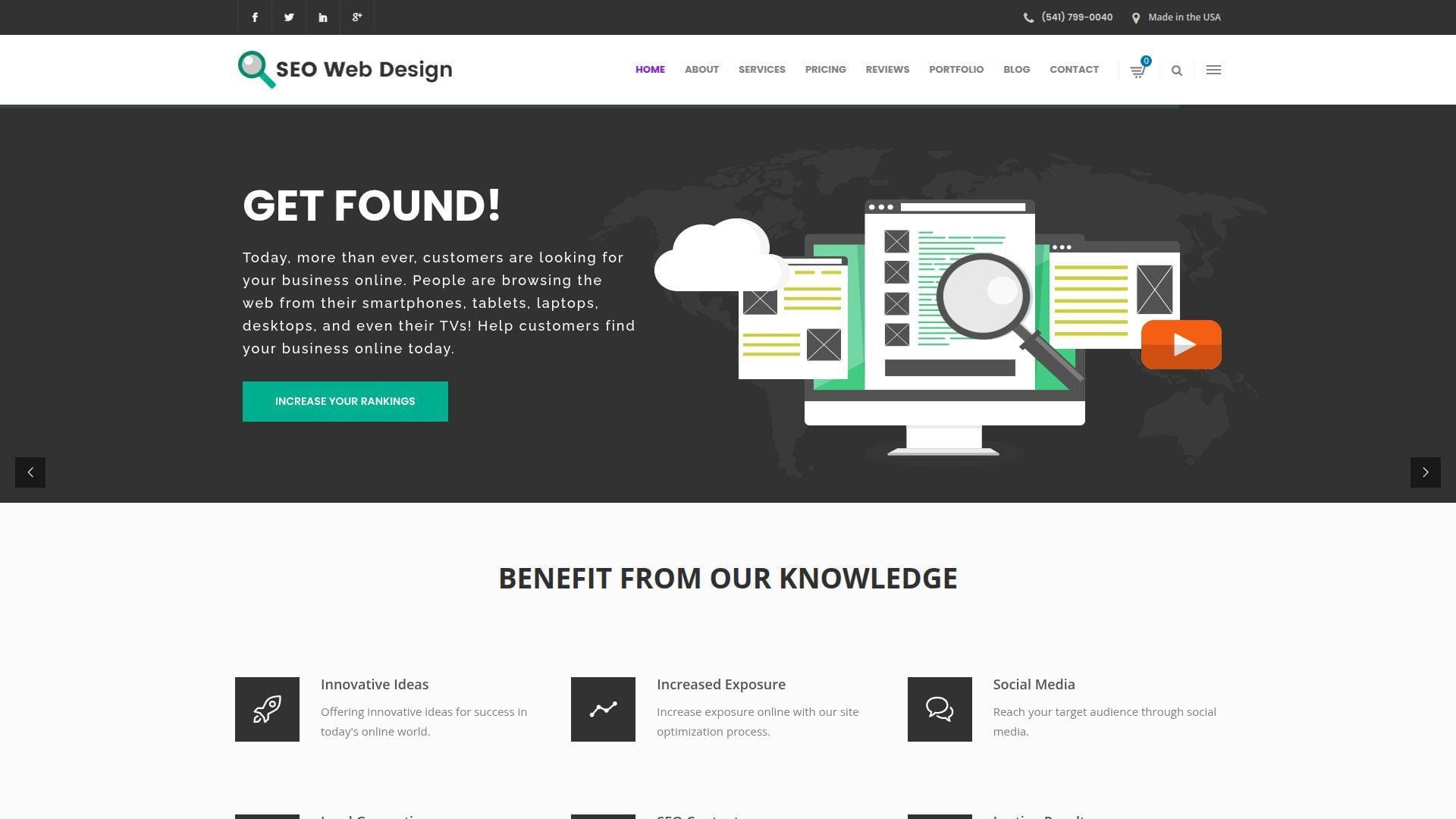
SEO Web Design, LLC presents itself as a U.S.-based website and internet marketing shop focused on professionally optimized builds. We read it as a smaller agency that leads with site creation first and ongoing SEO second. Best for: local service businesses and first-time site owners who need a basic build plus initial optimization.
- SEO-first website packages → you launch with page structure, mobile basics, and content setup already in place.
- Monitoring and maintenance in higher tiers → one vendor handles the first stretch of cleanup, which cuts several follow-up tasks.
- Simple buying path → time-to-first-value is often a few weeks, not months of agency scoping.
Pricing & limits: From $995 for an entry-level optimized website, with larger packages moving into multi-thousand-dollar territory. Lower tiers do not include hosting or URL costs, and basic packages do not include ecommerce. There is no real free trial, but getting an estimate is easy.
Honest drawbacks: The trade-off is depth. If you need advanced analytics, multi-location SEO, or a serious content engine, this offer looks light. It also feels package-led, so strategy-heavy buyers may want more discovery before signing.
Verdict: If you need a clean, search-aware website fast, this can get you live without weeks of confusion. It beats vague freelancers on structure, but trails bigger agencies on reporting and channel breadth.
2. SEO Solutions
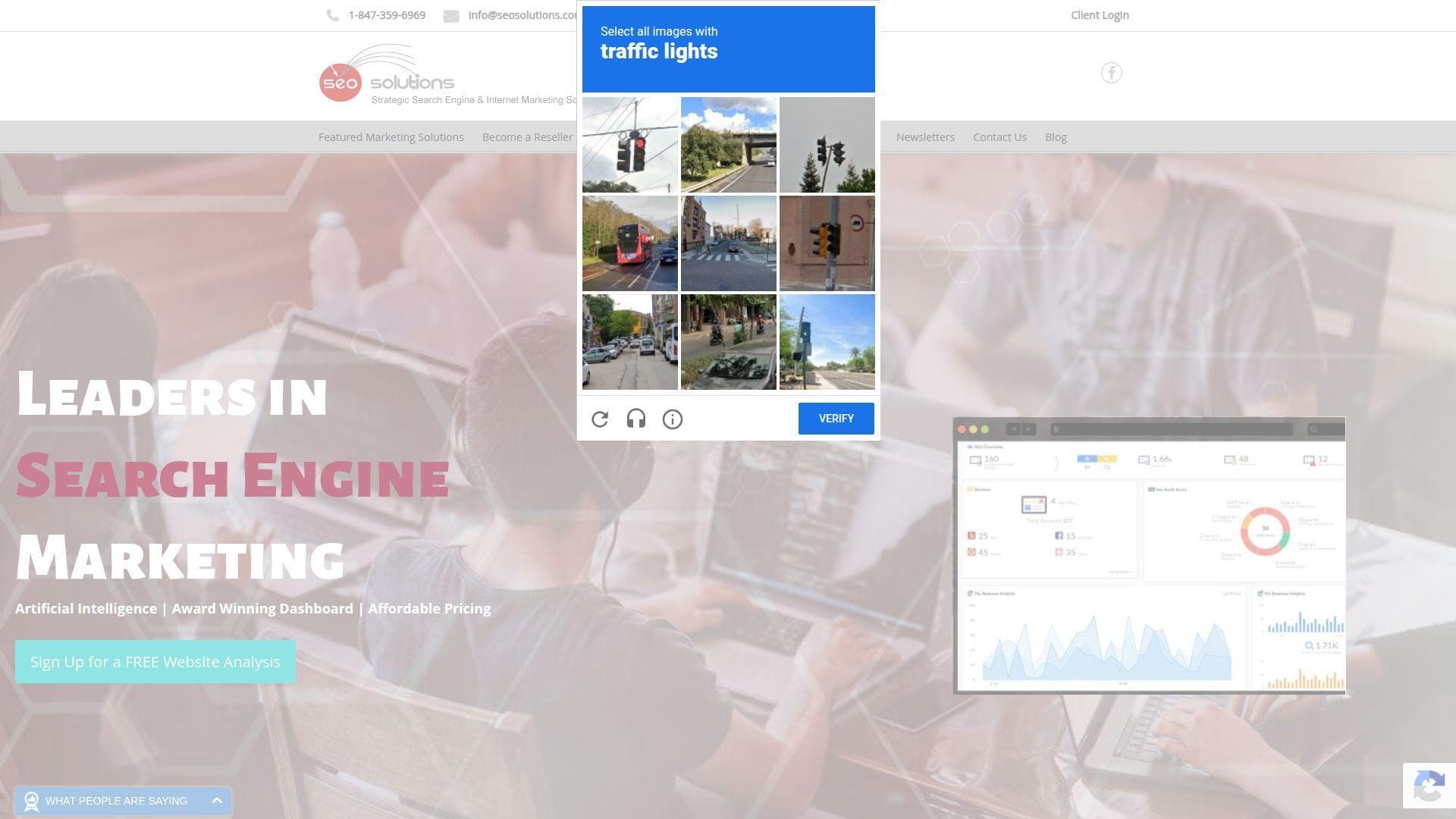
SEO Solutions is a long-running Chicago search marketing firm that positions itself around affordable website marketing, ethical SEO, and a client dashboard. The team appears strongest when local and regional lead generation are the priority. Best for: owner-led SMBs and local service firms that want audit-led SEO with PPC options.
- Free website audit with 60-plus ranking checks → buyers can spot core issues before paying for a full engagement.
- SEO, PPC, social, and web development together → fewer vendor handoffs and faster campaign setup.
- Dashboard-led reporting → teams can usually see early traction in the first month instead of waiting for a quarterly recap.
Pricing & limits: Pricing is custom, which is common for agencies in this tier. The free audit lowers the entry barrier, but there are no public package caps, seat limits, or defined monthly deliverables on the main sales pages.
Honest drawbacks: The public site feels old-school. That is not fatal, but it can make the offer harder to compare. We would also want very specific scope language around content, technical fixes, and local SEO responsibilities before moving ahead.
Verdict: If you want a hands-on local or regional search partner and like starting from an audit, SEO Solutions is a credible fit. It beats generic one-service shops on breadth, but trails WebFX on software depth and pricing clarity.
3. Optimize Web Solutions
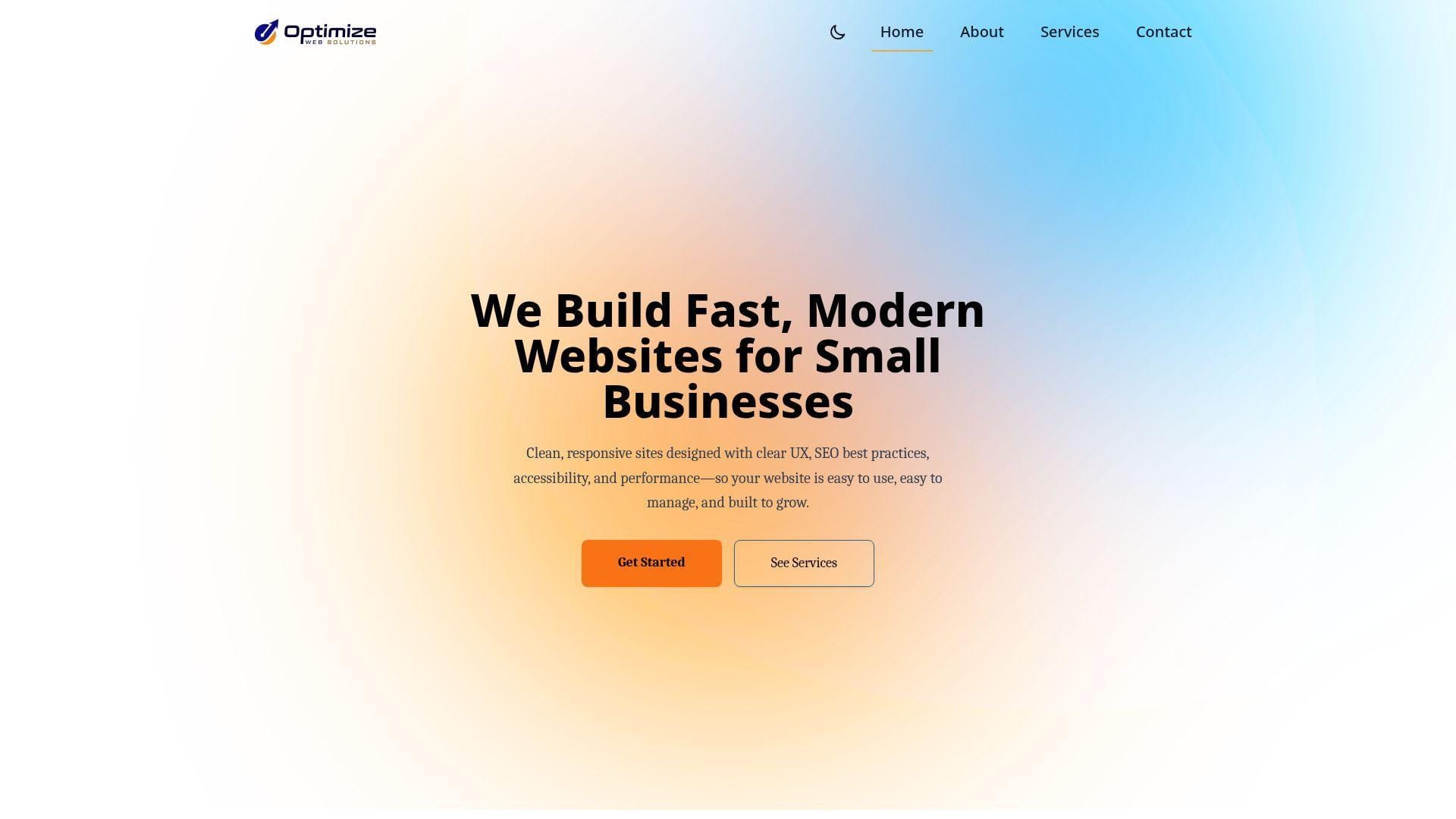
Optimize Web Solutions feels more like a boutique build studio than a classic full-service SEO agency. Its pitch centers on direct collaboration, fixed scopes, and modern websites built with performance, accessibility, and maintainability in mind. Best for: founders and small business owners whose biggest problem is a weak website, not a missing ad budget.
- Performance-focused builds → faster pages and cleaner UX usually reduce friction for both users and search crawlers.
- Fixed project pricing → buyers avoid long retainers and cut several rounds of budget negotiation.
- Direct builder communication → time-to-first-value is often one project cycle, with less agency layering.
Pricing & limits: Pricing is fixed-project and quote-based rather than public monthly retainers. There is no free trial, but the scope is framed as predictable and easier to understand than a sprawling marketing contract. Ongoing SEO operations do not appear to be the core product.
Honest drawbacks: This is not the pick for aggressive link acquisition, large content programs, or multi-channel campaign management. If you need heavy off-page SEO or paid media orchestration, you will likely outgrow the offer fast.
Verdict: If your current site is the thing holding growth back, Optimize Web Solutions is a smart repair-first option. It beats bigger agencies on simplicity, but trails search-led firms on ongoing authority building.
4. SCDIT
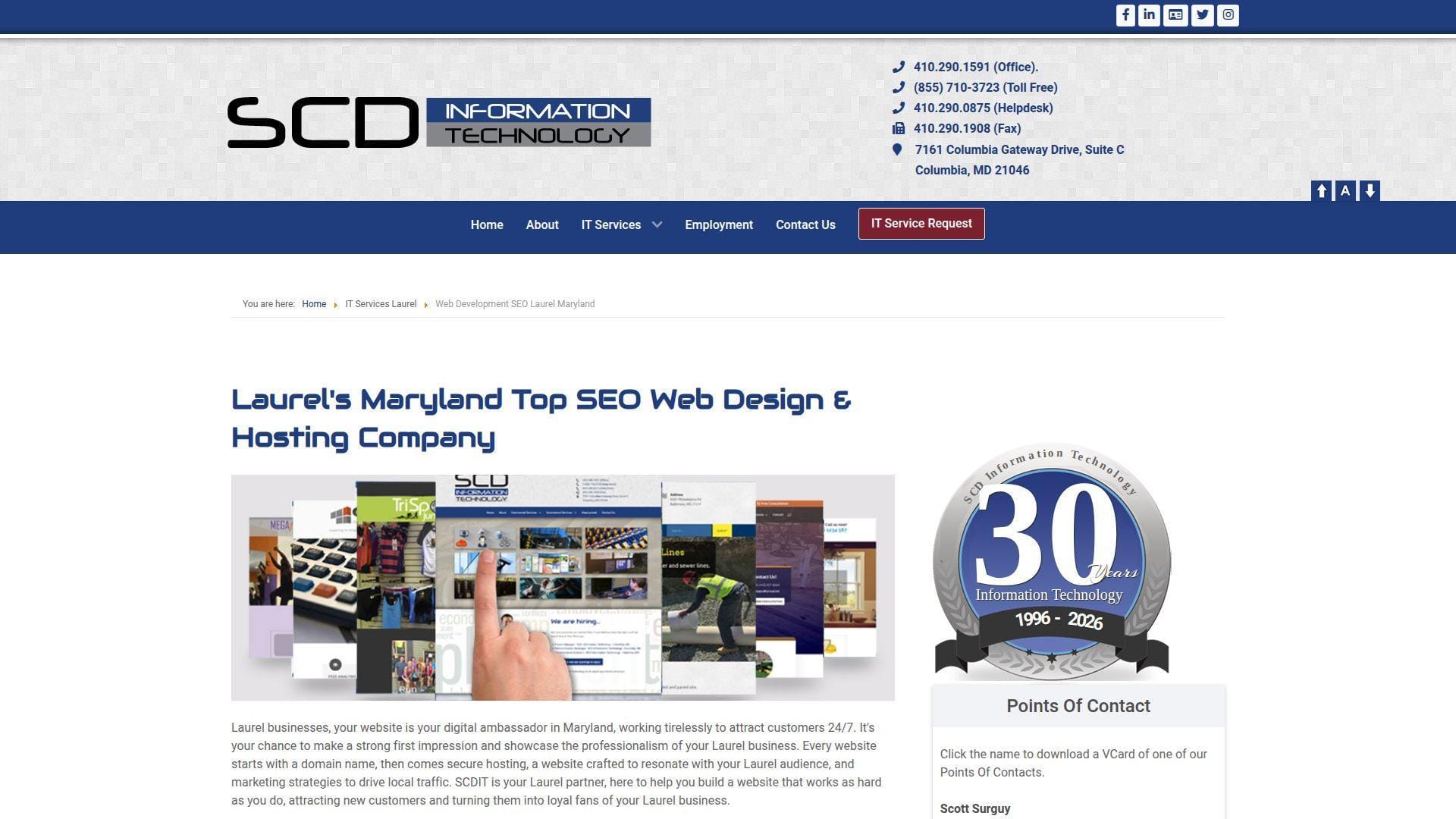
SCDIT is the broadest infrastructure-minded provider in this list. It combines web development, hosting, VPS support, CMS administration, analytics, SSL, security, accessibility work, and SEO under one roof. Best for: local organizations and small businesses that want one vendor for site, hosting, and general web operations.
- Domain, hosting, Sitecare, and SEO together → fewer moving parts and fewer “that is not our job” delays.
- WordPress, Joomla, and Drupal experience → teams can skip multiple vendor searches when the CMS is already chosen.
- Security and compliance support → time-to-first-value is fast for buyers who need launch readiness more than marketing theater.
Pricing & limits: Pricing is custom. There is no published SEO package table, and that matters. Buyers should expect a consultation-led quote. The upside is flexibility. The downside is that output caps, hours, and reporting cadence are not obvious upfront.
Honest drawbacks: SCDIT feels more like an IT-led web services company than a search-first growth agency. That can be a strength if infrastructure is the pain point. It can be a weakness if you need stronger editorial strategy or advanced competitive SEO.
Verdict: If your website, hosting, and maintenance are tangled together, SCDIT can simplify the stack quickly. It beats pure marketers on infrastructure depth, but trails focused SEO shops on content and link strategy.
5. Digital Web Solutions
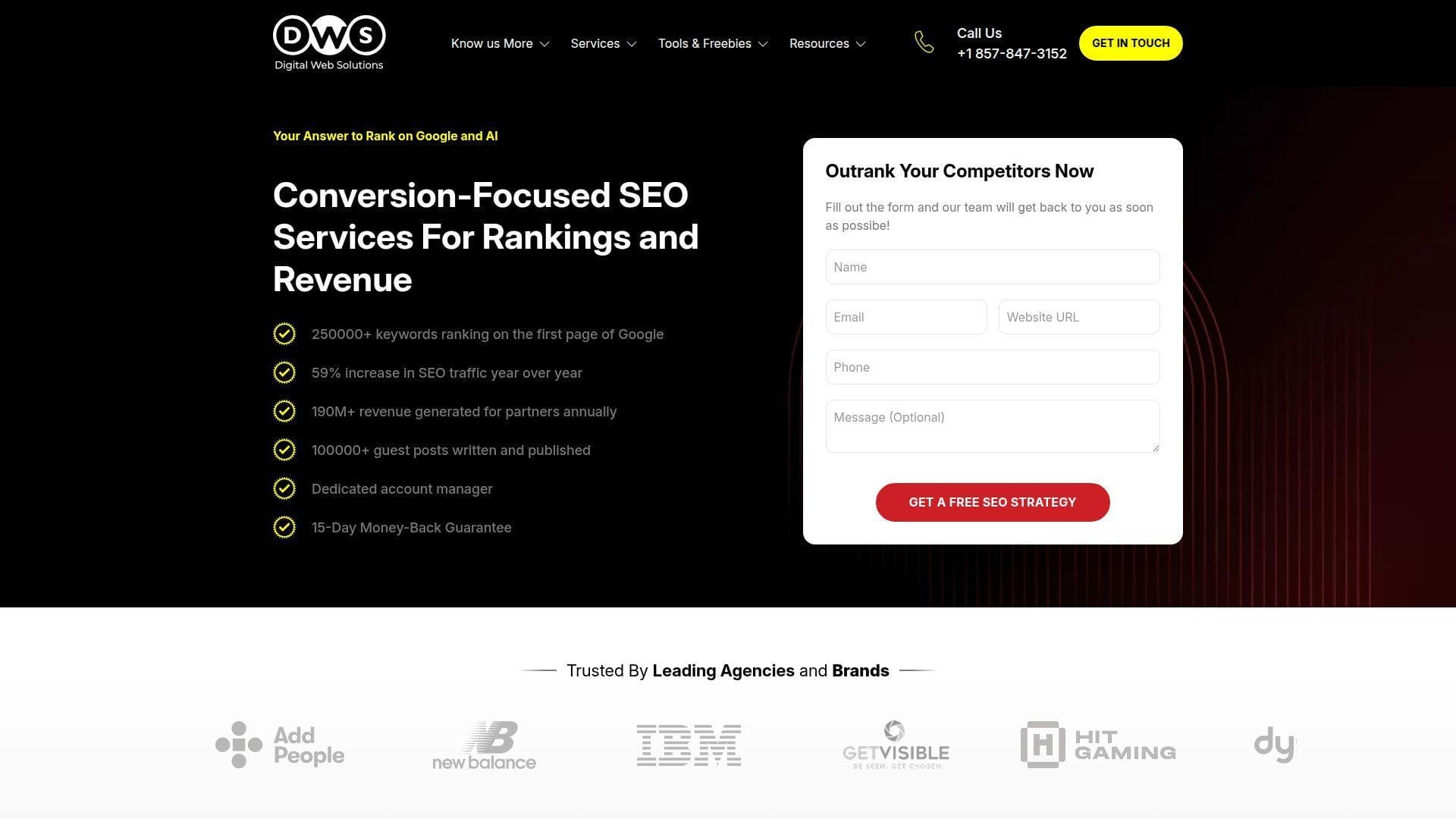
Digital Web Solutions is built for scale. The team is best known for white-label link building, digital PR, and SEO content that agencies and in-house teams can plug into existing workflows. Best for: agencies that need fulfillment help and in-house SEO teams that already know their roadmap.
- White-label links, PR, and content → agencies can expand capacity without hiring a full production bench.
- Productized off-page services → campaigns can start in days instead of building a full custom vendor stack.
- Agency-ready delivery → time-to-first-value is quick when briefs, targets, and approval flows already exist.
Pricing & limits: Entry pricing starts low on some products, with public mentions of natural link work from around £60. That is useful for testing. The real cost depends on volume, vertical, and whether you need strategy or just execution. There is no free trial, but discovery is straightforward.
Honest drawbacks: This is not the best choice if you need a full website rebuild, CRO leadership, or heavy stakeholder education. Digital Web Solutions is strongest when you already have the strategic owner and need scalable execution behind them.
Verdict: If you need throughput more than hand-holding, this is one of the cleaner outsourcing options. It beats freelancers on consistency, but trails integrated agencies on UX, hosting, and conversion ownership.
6. Equity Web Solutions
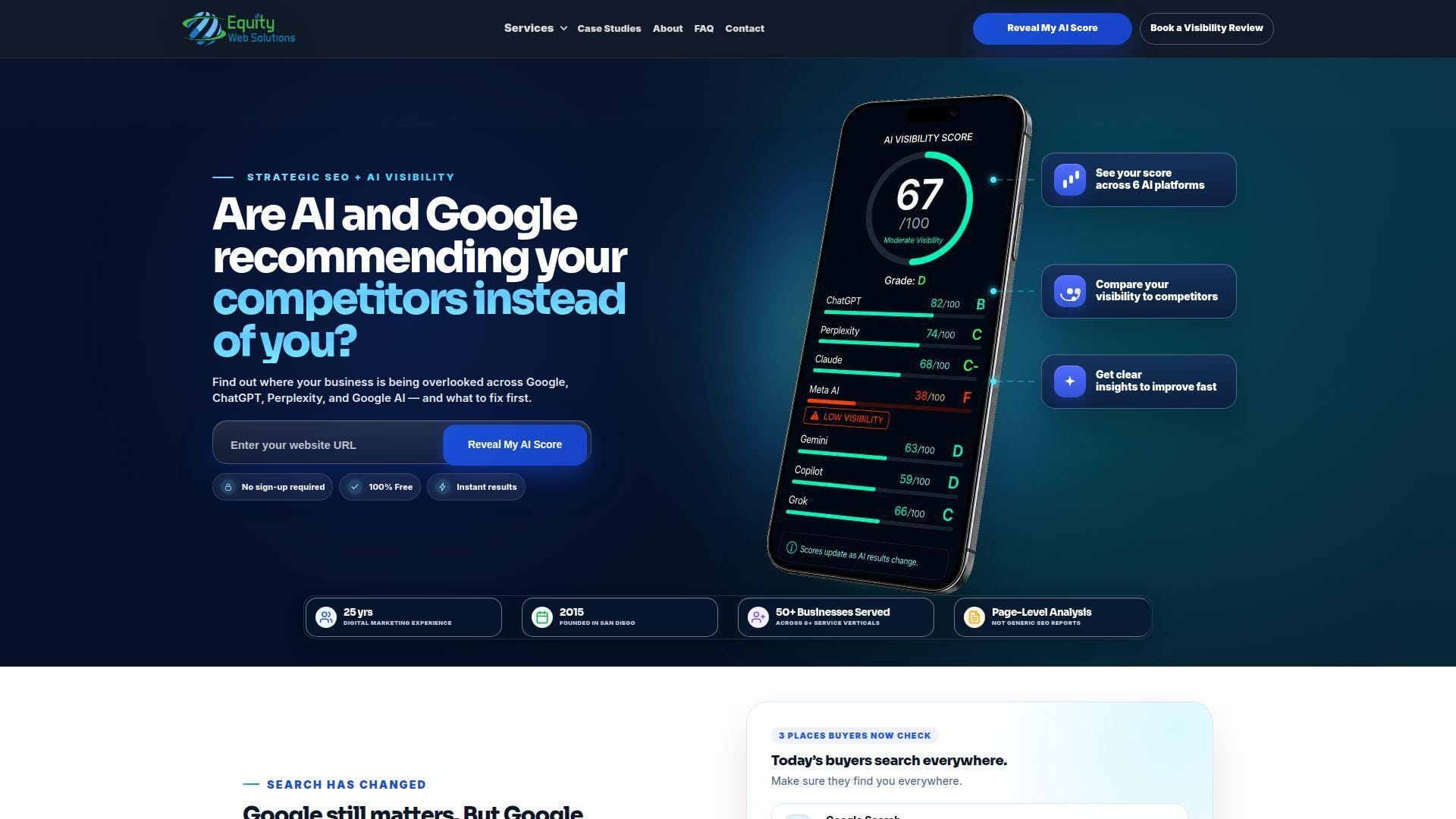
Equity Web Solutions is a founder-led boutique with a sharper point of view than most local agencies. The pitch is simple: stop paying for SEO activity that looks busy and start fixing the pages, trust signals, and visibility gaps that move real demand. Best for: service businesses already spending on marketing and owner-operators who want AI visibility explained clearly.
- AI visibility scan across major platforms → buyers can find blind spots fast instead of waiting through a long discovery phase.
- Page-level diagnosis, schema, and authority signals → fewer random tasks and more direct fixes tied to search intent.
- Founder-led strategic review → time-to-first-value is fast when you need clarity before a full retainer.
Pricing & limits: Pricing is custom. The site frames a one-time foundation phase plus ongoing monthly execution, but public rates are not posted. The free AI scan is helpful. Capacity likely stays boutique, which is worth asking about before a big rollout.
Honest drawbacks: If you want a large paid media bench, video team, or high-volume enterprise production, this may feel too small. The flip side is that the strategic focus is tighter than many bigger agencies offer.
Verdict: If you want to know why competitors get recommended while your site looks “fine,” Equity is one of the sharper fits here. It beats activity-driven local shops on diagnosis, but trails larger agencies on media scale.
7. Oregon Web Solutions
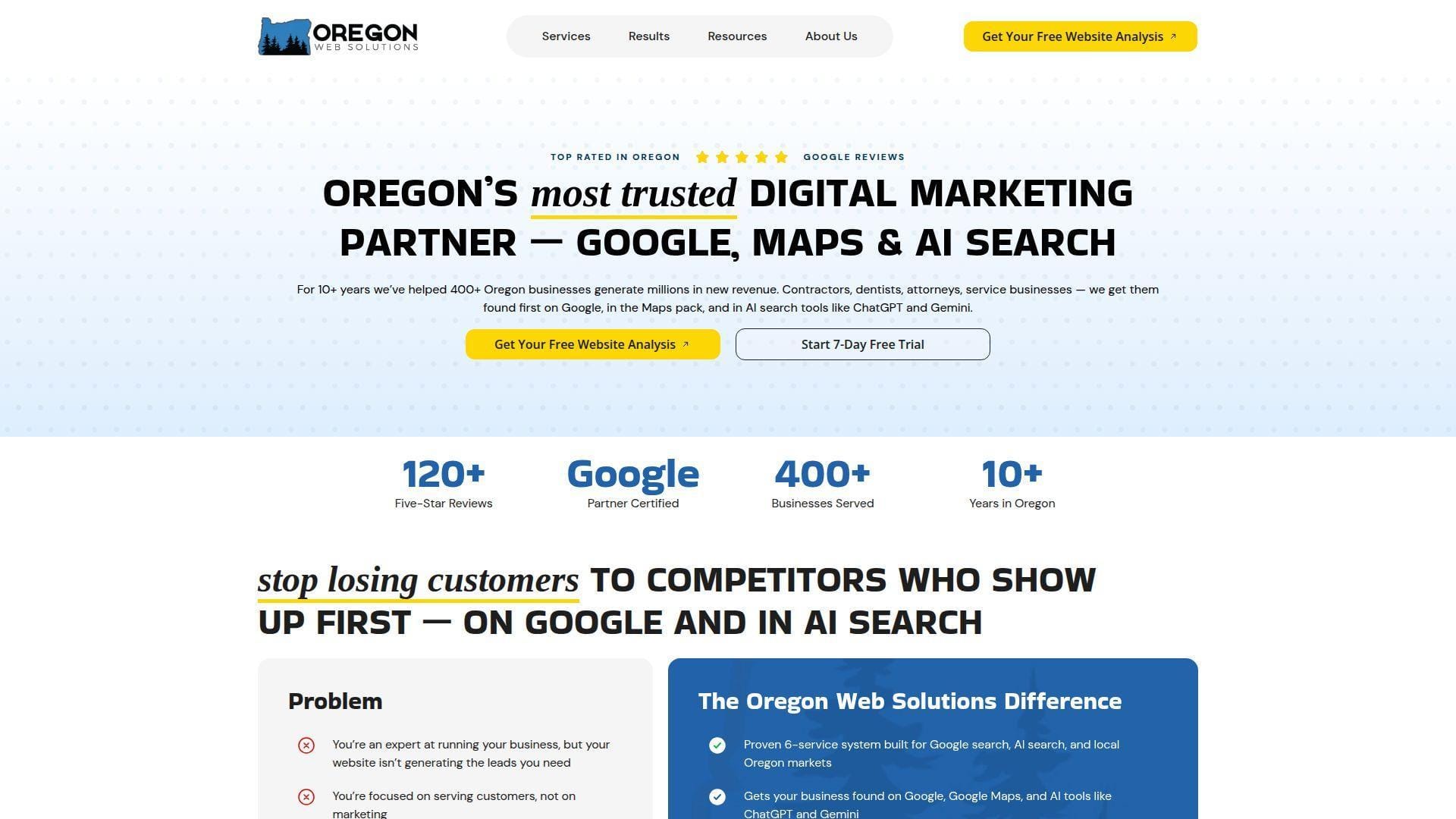
Oregon Web Solutions is a regional growth agency that leans hard into local business results, package transparency, and lead generation for service businesses. The team positioning is practical, not fancy. Best for: contractors, regional service brands, and multi-location local businesses that want defined monthly deliverables.
- Package-based SEO plans → buyers know how many blogs, backlinks, and on-site hours they are actually purchasing.
- SEO, PPC, retargeting, and web design → fewer setup gaps and a shorter path from website to leads.
- Strong local business focus → time-to-first-value is faster when the agency already understands service-area demand.
Pricing & limits: Pricing is clearer than average. Public plans start at $1,249 per month for local campaigns, $2,995 for national, and $5,995 for franchise-level work. The trade-off is that plans are tied to defined work units, not unlimited flexibility. Free analysis is available.
Honest drawbacks: Package structure is helpful, but it can feel templated if you need unusual content architecture or technical edge cases. The branding is also very local-business centered, which may not fit a national SaaS buyer.
Verdict: If you want visibility into monthly deliverables and you run a lead-driven service business, Oregon Web Solutions is easy to shortlist. It beats quote-only agencies on transparency, but trails strategy boutiques on customization.
8. Incrementors Web Solutions

Incrementors is an aggressive full-service digital marketing agency that sells growth with confidence and talks openly about AI SEO, dedicated managers, and structured plans. The team mix spans marketers, developers, and designers. Best for: growth-stage SMBs and ecommerce brands that want one agency to push harder than a quiet local shop usually will.
- AI SEO and entity optimization → brands can improve visibility in newer search surfaces, not only traditional rankings.
- Dedicated managers and structured plans → several coordination steps disappear for small teams without in-house marketing leads.
- Free strategy session → time-to-first-value starts with a practical planning call, not a long procurement loop.
Pricing & limits: Public AI SEO entry pricing starts at $3,500 per month for growing businesses, with the base scope covering ten pages plus quarterly strategy calls. Bigger campaigns move into custom quoting fast. There is no true trial, but the consultation is free.
Honest drawbacks: The sales language is loud, which means buyers should pin down deliverables, ownership, and success metrics early. If you prefer a quieter, more diagnostic tone, this may feel like a lot.
Verdict: If you want an agency that sells momentum and handles several disciplines in one place, Incrementors is a viable contender. It beats smaller shops on breadth, but trails tighter specialist consultancies on nuance.
9. SmartSites
SmartSites sits in the sweet spot between boutique and large-agency scale. Founded by brothers Alex and Michael Melen, it now covers SEO, PPC, web design, email, SMS, and social with a strong reputation for client service. Best for: SMBs, healthcare practices, legal firms, and home service businesses that want broad execution from one partner.
- Full channel mix under one roof → businesses can connect SEO work to paid demand and retention messaging faster.
- Wide vertical experience → the team can usually start from a proven playbook instead of a blank page.
- Strong client service reputation → time-to-first-value is often smoother because onboarding friction is lower.
Pricing & limits: Pricing is custom. That is normal at this scale, but it makes quick comparison harder. There is no public package grid for SEO, though consultations are easy to book. Scope, page counts, and reporting depth need to be confirmed in writing.
Honest drawbacks: With a larger team comes the usual risk of account layers and handoffs. It also does a lot of things well, which can be less attractive if you need an unusually deep technical or editorial specialist.
Verdict: If you want a mainstream, dependable agency with real breadth, SmartSites is easy to recommend. It beats smaller firms on channel coverage, but trails the strongest technical boutiques on deep-site architecture work.
10. WebFX
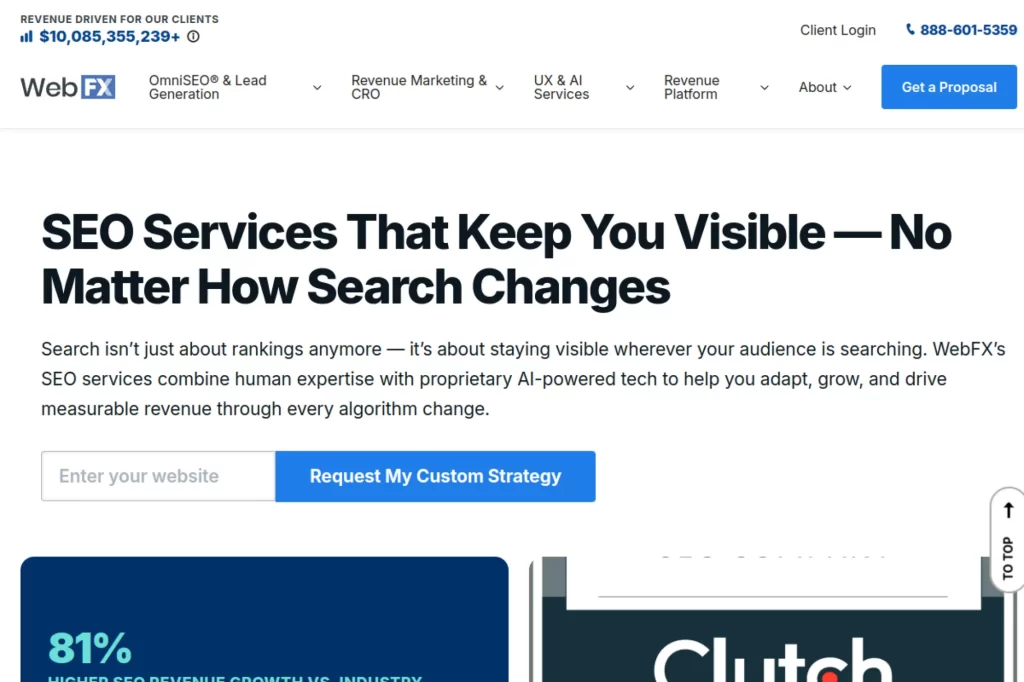
WebFX is the most polished large-scale option in this list. It combines a big specialist team, proprietary reporting, public pricing detail, and a very strong revenue-reporting message. Best for: mid-market brands, multi-location businesses, and teams that need process, reporting, and bench depth.
- RevenueCloudFX reporting stack → buyers can tie SEO work to leads and revenue with fewer manual reporting steps.
- Large specialty teams → design, CRO, content, dev, and SEO can move in parallel instead of waiting on one generalist.
- Published package structure → time-to-first-value improves because budgeting and internal approval are easier.
Pricing & limits: Public SEO pricing starts around $3,000 per month, with lower tiers capping items like keyphrases and pages. Some plans include upfront setup or shorter initial investment phases before the ongoing monthly rate settles in. This is not bargain-tier SEO.
Honest drawbacks: Small budgets can get buried here. The process is more enterprise-style, and some buyers will miss the direct founder access a boutique offers. We would also want to confirm who owns implementation when internal development teams are involved.
Verdict: If you need depth, predictability, and real reporting infrastructure, WebFX is one of the safest picks in this market. It beats most agencies on transparency, but smaller boutiques can feel more personal.
11. OpenMoves
OpenMoves is a performance marketing agency that has been around since 2000 and operates with a virtual team of strategists, marketers, creatives, and channel specialists. It clearly thinks in funnels, not just rankings. Best for: B2B lead generation teams and ecommerce brands that want SEO tied tightly to paid media, CRO, and email.
- SEO plus paid media and email automation → fewer gaps between traffic generation and lead follow-up.
- Senior team experience → several strategy and QA steps get compressed because the bench is already seasoned.
- CRO and creative support → time-to-first-value improves because post-click issues can be fixed without another vendor.
Pricing & limits: Pricing is custom, which is typical for performance agencies. There is no public SEO package table, so buyers need a scoped proposal. The lack of hard caps can be good for custom work, but it also makes apples-to-apples comparison tougher.
Honest drawbacks: If you only want a simple local SEO retainer, OpenMoves may feel broader than necessary. It is also smaller than mega-agencies, which can matter if you need a giant production engine or heavy enterprise procurement support.
Verdict: If your real goal is pipeline, not vanity rankings, OpenMoves is a strong pick. It beats SEO-only agencies on channel coordination, but trails WebFX on platform scale and software branding.
12. SmartBug Media
SmartBug Media has matured into a sizable lifecycle marketing agency with deep HubSpot roots and a large remote-first expert team. It is strongest when SEO is part of a bigger CRM and demand-generation system. Best for: B2B marketing teams and companies already living inside HubSpot or a similar lifecycle stack.
- SEO, UX, automation, and sales enablement together → traffic is easier to turn into nurtured leads and sales conversations.
- Large specialist bench → fewer delays when you need strategy, design, content, and platform expertise at once.
- Lifecycle approach → time-to-first-value comes from better handoffs, not just a rank tracker screenshot.
Pricing & limits: Pricing is custom and likely lands above small-business comfort levels. There is no public SEO package grid. Engagements feel consultation-led and strategic, which is excellent for mature buyers and less ideal for teams shopping on entry price alone.
Honest drawbacks: SmartBug can be overkill for local contractors, solo practices, or simple brochure sites. If you do not need CRM alignment, nurture flows, or a larger strategic bench, you may end up paying for more structure than you need.
Verdict: If your website feeds a real revenue system and you want SEO to work with that system, SmartBug is strong. It beats general agencies on HubSpot depth, but trails smaller firms on affordability and simple site-change speed.
13. Editorial.Link
Editorial.Link is one of the clearest specialist offers in this space. It is not trying to be your web design agency, your hosting company, and your paid media shop all at once. It builds editorial backlinks and frames them for traditional search plus AI-era visibility. Best for: in-house SEO teams and agencies that already have content and technical basics handled.
- Pre-approved editorial placements → buyers waste less budget on weak domains and irrelevant sites.
- AI-search-friendly listicle and editorial focus → fewer manual outreach steps and better odds of useful citations.
- Flexible volume → time-to-first-value can start with one or two links, not a giant retainer.
Pricing & limits: Pricing is unusually clear. Links start at $375 each, five-link packages cost $1,750, and twenty-link packages cost $6,000. Premium placements cost more. There is no free trial. The limit is obvious. You are buying link building, not a full SEO program.
Honest drawbacks: Great links cannot repair poor site structure, thin service pages, or weak conversion flows. If your website is the actual problem, this is too narrow. We would also want internal page priorities set before any order goes live.
Verdict: If your site is already solid and you need authority faster, Editorial.Link is one of the sharper specialist options. It beats marketplaces on curation, but trails full-service firms on everything beyond links.
14. KlientBoost
KlientBoost is a performance marketing agency that thinks in revenue models, testing speed, and channel math. It is more commercial in tone than many traditional SEO firms, which some buyers will love and others will not. Best for: B2B SaaS teams and growth leaders who need SEO to sit inside a broader acquisition system.
- Financially framed planning → buyers get clearer budget priorities and fewer vanity-channel debates.
- SEO, paid media, and CRO in one system → several post-click leaks can be fixed without adding more vendors.
- Strong testing mindset → time-to-first-value often comes from faster experiments, not waiting for a long content ramp.
Pricing & limits: Pricing is custom. Public planning examples on its site suggest serious monthly spend expectations, not low-budget local retainers. There is no free trial, but the free marketing plan gives a useful first look at how the team thinks.
Honest drawbacks: If you just need local SEO cleanup or a small website refresh, KlientBoost is probably too performance-heavy. It also feels more paid-and-CRO oriented than pure editorial depth, so content-first brands may want to compare carefully.
Verdict: If leadership wants pipeline logic, not fuzzy SEO storytelling, KlientBoost is compelling. It beats slower agencies on testing velocity, but trails content-led specialists on deep topical authority building.
15. Linkhouse
Linkhouse is a marketplace, not a classic agency. That difference matters. It gives buyers access to a very large database of websites, filters, placement types, and link-building support tools rather than wrapping everything inside a custom retainer. Best for: agencies and in-house SEOs who want control, speed, and marketplace-style transparency.
- Large marketplace and filter set → shortlist building happens faster than manual outreach from scratch.
- Free platform access → teams can start evaluating options before paying for a full managed service.
- Built-in planning and gap tools → several research steps disappear from the early campaign workflow.
Pricing & limits: Registration is free. Actual publication prices vary by website, offer type, and whether content is included. Public examples show relatively accessible starting points compared with fully managed link agencies. That flexibility is the draw. It is also the limit.
Honest drawbacks: Marketplaces reward buyers who know what good looks like. Junior teams can chase metrics and miss relevance. This is not the right pick if you want a strategist to own your whole SEO roadmap, content plan, or website improvements.
Verdict: If you know how to evaluate link quality and want speed, Linkhouse is powerful. It beats managed agencies on transparency and scale, but trails Editorial.Link when you want tighter curation and less manual selection.
16. The HOTH
The HOTH remains a well-known productized SEO brand with a huge catalog of services across content, links, local SEO, and managed programs. It is designed to make SEO purchasable in smaller pieces, which many agencies and SMBs still like. Best for: agencies, affiliates, and small businesses that want on-demand SEO products or reseller-friendly fulfillment.
- Large product catalog → buyers can mix content, links, and local work without building a custom team first.
- Agency and reseller support → several delivery steps can be outsourced quickly under a repeatable process.
- Low entry points on some content products → time-to-first-value starts with a small test instead of a heavy retainer.
Pricing & limits: Public content pricing starts around $25 per page for web copy and $50 per post for blog content, while managed SEO starts around $1,000 per month. Limits vary a lot by product. Buyers should also verify they are on the correct brand property before checkout, because the plain hoth.com domain is not the clearest brand path.
Honest drawbacks: The catalog is convenient, but quality can vary by tier and by how tightly you manage the brief. Productized SEO is rarely as tailored as a strong boutique strategy engagement.
Verdict: If you want flexible SEO components on demand, The HOTH is still useful. It beats bespoke firms on convenience, but trails high-touch agencies on customization and strategic focus.
17. Let’s Get Optimized
Let’s Get Optimized is a Canadian digital marketing agency with a strong local-business flavor, broad service coverage, and a message built around measurable growth. It combines SEO, web development, and attribution-minded reporting. Best for: Canadian SMBs and local-to-national service businesses that want one partner for site and search work.
- SEO plus web development and attribution → buyers can track what changed and what actually drove leads.
- Case-study-heavy approach → teams can get to vertical fit faster and skip some early trust-building steps.
- Audit-and-adjust workflow → time-to-first-value improves because optimization continues after launch.
Pricing & limits: Pricing is custom. Free audits and discovery calls lower the first step, but there is no public monthly package table for SEO. Deliverables, page ownership, and reporting frequency should be documented clearly before sign-off.
Honest drawbacks: The public marketing voice is confident, sometimes very confident, so we would want careful scope review. The strongest fit also seems to be in Canada, which may matter if you want deep U.S. local-market specialization.
Verdict: If you want a hands-on agency that can support both site work and search growth, Let’s Get Optimized is worth serious consideration. It beats many local shops on breadth, but trails the best technical boutiques on precision diagnostics.
18. Scorpion

Scorpion is built for local business growth at scale. It blends marketing services with a heavier technology and lead-management layer than most classic SEO agencies. That matters if calls, booked appointments, and review flow are your main scorecard. Best for: home services, law firms, and franchise-style operators that need marketing tied to operations.
- Unified stack for websites, SEO, ads, and lead tracking → fewer reporting gaps and fewer missed handoffs.
- Strong Local Services Ads experience → service businesses can capture high-intent leads faster than with SEO alone.
- AI-backed follow-up and automation → time-to-first-value improves because missed opportunities get handled faster.
Pricing & limits: Pricing is custom and likely premium compared with smaller agencies. There is no public SEO package grid. Buyers should expect a platform-led proposal and industry-specific packaging rather than a cheap, lightweight monthly retainer.
Honest drawbacks: Scorpion can feel heavy if you want a lean team, a lower starting budget, or a niche editorial strategy. It is built for operational local growth, not for every content-led or startup-style buying scenario.
Verdict: If your business runs on calls, forms, bookings, and local trust, Scorpion is one of the strongest purpose-built options. It beats generalist agencies on local operations, but trails smaller shops on flexibility and cost control.
19. Equinox Dynamics LDA
Equinox Dynamics LDA brings a more technical flavor than most agencies on this list. The team leans into development, audits, ecommerce structure, AI SEO, and international reach from its Portugal base. Best for: ecommerce brands and scaling companies whose search problems are tied to platform complexity, weak structure, or technical debt.
- Technical SEO plus development skill → code-level fixes happen faster and with fewer outside dependencies.
- AI SEO, local SEO, and platform experience → teams can cover more search surfaces without splitting vendors.
- Smaller expert-led model → time-to-first-value is often quicker because strategy and implementation sit closer together.
Pricing & limits: Pricing is custom. The agency clearly positions itself in ongoing retainer territory, not bargain shopping. Free growth-plan style entry points are available, but page scope, implementation ownership, and roadmap depth should be defined early.
Honest drawbacks: Smaller teams naturally have less bench depth than enterprise firms. If you need a giant paid media engine, social production team, or very heavy procurement process, a larger agency may fit better.
Verdict: If rankings are being held back by slow templates, crawl waste, weak category logic, or messy platform architecture, Equinox is a strong fit. It beats design-first agencies on technical rigor, but trails the largest firms on cross-channel media breadth.
20. SEO Discovery
SEO Discovery is the affordability play in this list. It has been around a long time, offers a very wide service catalog, and clearly wants to meet small businesses at a lower entry budget than premium agencies do. Best for: cost-conscious SMBs and buyers who want many package options before making a larger commitment.
- Low entry pricing → teams can start SEO without a premium-agency budget fight.
- Broad catalog across SEO, PPC, links, and AI SEO → several vendor searches can be avoided at the start.
- Verticalized offer pages → time-to-first-value improves because niche buyers can map services faster.
Pricing & limits: Public entry pricing starts around $250 per month for core SEO, with higher costs based on competition, business size, and scope. Free audits and custom quotes are common. Package limits vary by page counts, content volume, and service type.
Honest drawbacks: When an agency sells many things at many price points, buyers need to define priorities tightly. We would want exact deliverables, content standards, and reporting cadence in writing before moving ahead.
Verdict: If budget is the biggest constraint and you still want an agency rather than a solo freelancer, SEO Discovery is practical. It beats premium firms on accessibility, but trails boutique strategists on intimacy and senior-level specialization.
Core Services Included in SEO Web Solutions
Most buyers use the phrase seo web solutions to mean a blended package. In practice, the best providers mix search growth with site operations. These are the service layers we think matter most, and they are often what separate a smart hire from an expensive mismatch.
Organic SEO, Local SEO, and AI Search Visibility
Good SEO web solutions no longer stop at keywords and title tags. We expect them to manage three layers at once: organic rankings, local pack visibility, and answer-engine visibility. That means service pages, internal links, reviews, entity clarity, citations, and location signals all have to work together.
That shift is not theoretical. Google describes AI Overviews as a core Google Search feature, so pages now need crisp answers, clean structure, and obvious trust signals if they want a shot at being cited.
For a roofer, dentist, med spa, or law office, local SEO still does most of the heavy lifting. That is why Scorpion, Oregon Web Solutions, and SEO Solutions make more sense for map-heavy businesses than a link-only vendor. For a national content brand, the center of gravity moves toward content architecture and authority.
Web Design, Development, and Conversion Optimization
We treat design and development as part of SEO, not as a side order. Redirect maps, heading logic, page templates, schema deployment, form tracking, and page speed all affect rankings and lead quality. A pretty redesign that breaks internal links or deletes content is not a win.
CMS choice matters because the editing experience decides whether your team can actually publish. WordPress still powers 41.9% of all websites, which is why CMS fluency is one of the first things we check when comparing providers.
Optimize Web Solutions, SCDIT, and WebFX stand out when the real bottleneck is site quality or implementation depth. Editorial.Link and Linkhouse do not solve this layer, and that is perfectly fine. They were built for authority acquisition, not full website ownership.
Hosting, Security, Accessibility, and Analytics Support
Hosting is often the silent saboteur. Slow servers, weak caching, broken SSL setups, or missing backups can erase the gains from better content. We prefer providers and infrastructure partners that can talk about uptime, staging, CDN behavior, rollback plans, and analytics integrity without blinking.
The infrastructure side matters more every year. Gartner forecast worldwide public cloud end-user spending at $723.4 billion in 2025, which tells us businesses keep shifting critical web workloads onto modern platforms.
Accessibility belongs in the same conversation. WCAG 2.2 became a W3C Recommendation on 5 October 2023, so keyboard paths, focus states, form labels, and readable interaction patterns should be standard web work, not a late-stage patch.
What Sets the Best SEO Web Solutions Apart
Plenty of agencies can publish pages and send monthly PDFs. Far fewer can connect technical fixes, content planning, authority building, and paid demand into one believable growth plan. These are the differences we watch for when we compare the best providers.
Technical SEO, Content Strategy, and Link Building
The best SEO web solutions know what to do first. If your site has crawl waste, duplicate pages, or weak architecture, more blog posts will not rescue it. Teams like Equinox Dynamics LDA and WebFX feel stronger here because they talk about audits, structure, and implementation, not just traffic dreams.
Content strategy comes next. We want keyword mapping, service-page intent, refresh cycles, and clear page ownership. Then link building should support the pages that matter most. Editorial.Link, Linkhouse, Digital Web Solutions, and The HOTH are useful when you already know which pages deserve authority. If you do not know that yet, start with a strategist, not a link catalog.
Google Ads, Social Media, and Multi-Channel Reach
Strong providers also understand when SEO should share the stage. Search is still where buyers compare vendors, ask for quotes, and make up their minds. IAB and PwC reported U.S. search ad revenues of $114.2 billion in 2025, so paid search still tells us a lot about commercial demand.
For eligible service businesses, the math shifts again because Google says you pay for valid leads in Local Services Ads. That is why Scorpion, SmartSites, and SEO Solutions can be smarter picks than pure content agencies when calls matter more than blog traffic.
Social media still has value, but usually as support. We like agencies that use remarketing, social proof, and review capture to amplify search demand instead of pretending every platform deserves equal budget.
Transparent Reporting, Clear Pricing, and Realistic Timelines
We trust agencies more when they show scope in plain English. WebFX, Oregon Web Solutions, Editorial.Link, and parts of The HOTH do this better than most. Quote-only pricing is not automatically bad, but vague deliverables usually are.
We also want timelines that match reality. A redesigned local site can improve lead quality within weeks. Competitive national SEO usually takes months. If someone promises first-page wins in 30 days, we would treat that as a red flag, not a benefit.
How to Choose SEO Web Solutions for Your Business
Our advice is simple. Match the provider to the bottleneck, not to the loudest sales page. The right fit usually becomes obvious once we ask three questions: where revenue comes from, who owns the website, and how much complexity the business can actually support.
Local, National, and E-Commerce Business Fit
First, decide where your revenue comes from. A local contractor, dental clinic, or law office should prioritize maps, reviews, service pages, and lead follow-up. That points toward Scorpion, Oregon Web Solutions, SEO Solutions, or SmartSites.
A national B2B or content-driven brand needs stronger editorial planning, attribution, and site architecture. WebFX, SmartBug Media, OpenMoves, and KlientBoost make more sense there. For ecommerce, we prefer agencies that understand product taxonomy, faceted navigation, and crawl control, which is where Equinox Dynamics LDA or WebFX can stand out.
CMS Expertise, Hosting Needs, and Website Maintenance
Next, ask who actually touches the site. If the agency depends on your internal developer for every redirect, schema edit, form event, or template change, progress slows fast. That is why we separate strategy from implementation during vendor calls.
This is also where hosting enters the decision. A new brochure site may do fine on shared hosting. A busier content site, store, or multi-location brand often needs stronger WordPress hosting, cloud hosting, or VPS-style control. We would rather solve that upfront than after rankings rise and the site buckles under load.
AI Search Readiness, Trust Signals, and Growth Potential
Finally, test for modern search judgment. Ask how the provider handles AI summaries, entity consistency, author credibility, review flow, and answer-style formatting. If the answer stays stuck on keyword density, the playbook is dated.
We also look for long-term fit. Can the same team support a second location, a content refresh cycle, a migration, or a move from basic hosting to a cloud stack? The best SEO web solutions are not just good at launch. They are good at the next three moves too.
Frequently Asked Questions About SEO Web Solutions
Before we sign any retainer, we want short, honest answers to the basics. Here are ours, based on how we evaluate providers at 1Byte.
What Are SEO Web Solutions?
SEO web solutions are bundled services that improve how a site gets found, loads, converts, and stays maintained. In practice, that can include technical SEO, local SEO, content planning, web design, development, analytics, hosting guidance, and sometimes paid search.
We use the term broadly because most businesses do not have a one-problem website. A great backlink campaign does not help much if the site is broken. A fast new site does not help much if nobody can find it.
Do SEO Web Solutions Include Web Design, Hosting, and SSL?
Sometimes, but never assume it. Agencies like SCDIT or SEO Web Design, LLC lean more heavily into site builds and hosting-adjacent work. Link-first vendors like Editorial.Link and Linkhouse do not. Many agencies will arrange SSL, but the actual certificate and server setup may still live with your host.
We always ask who owns the domain, who renews SSL, who monitors uptime, and who handles staging. Those four questions prevent a lot of avoidable headaches later.
How Long Does It Take to See Results From SEO Web Solutions?
Some improvements show quickly. Better titles, internal links, redirect repairs, or faster hosting can help within weeks. Local visibility gains often show within two to four months. Competitive national SEO can take six to twelve months before the compounding effect feels real.
We judge agencies less by how fast they promise and more by whether their milestones make sense. Early wins should look like better indexing, stronger lead quality, and cleaner reporting, not miracle rankings.
Are SEO Web Solutions Better for Local Businesses or National Brands?
Both can benefit, but the provider type changes. Local businesses need map presence, review management, service pages, and lead handling. National brands need stronger content systems, reporting, and authority building. Franchises usually need both.
If a provider cannot explain how its plan changes between one-city lead generation and nationwide ecommerce, we move on. The tactics should shift with the business model.
How Do AI Search and Google Maps Affect SEO Web Solutions?
They raise the bar for clarity and trust. Google Maps rewards location accuracy, reviews, and service relevance. AI search tends to reward brands that answer questions clearly and look credible across the web.
That means the best SEO web solutions now mix classic SEO with schema, entity consistency, review collection, location pages, and stronger page-level answers. The old playbook of just adding blog posts is not enough anymore.
How 1Byte Supports SEO Web Solutions as a Cloud Computing and Web Hosting Provider
At 1Byte, we sit on the infrastructure side of the equation. We do not replace the right agency, but we do remove many of the hosting, performance, and operational issues that quietly drag campaigns down.
Domain Registration and SSL Certificates for Stronger Website Foundations
We start with the basics because the basics break more SEO than most people realize. Clean domain setup, stable DNS, and properly managed SSL certificates affect trust, uptime, redirects, and migration safety. When those pieces are messy, rankings and conversions usually wobble.
Our role is practical. We help businesses register and manage domains, deploy SSL correctly, and avoid the small technical mistakes that create big SEO problems later. If an agency is improving page structure and internal links, we make sure the underlying site can support that work without mixed-content issues, renewal surprises, or broken subdomains.
WordPress Hosting, Shared Hosting, and Cloud Hosting for Growing Websites
Different sites need different hosting paths. A new brochure site may do fine on shared hosting. A busier content site often needs WordPress hosting with stronger caching, staging, backups, and update discipline. Growth-stage businesses usually outgrow cheap plans faster than they expect.
At 1Byte, we help match the hosting model to the traffic pattern, CMS, and maintenance load. That makes SEO web solutions easier to execute because publishers can test changes, push updates, and roll back safely instead of treating every edit like open-heart surgery.





Cloud Servers and AWS Partner Expertise for Scalable Performance
When websites start carrying real campaign weight, cloud infrastructure matters. Cloud servers give growing businesses more control over performance, scaling, isolation, and deployment than bargain hosting usually can. That control becomes even more important during migrations, traffic spikes, and multi-site expansion.
That is where our cloud computing background helps most. We can support teams that need stronger uptime, cleaner resource allocation, and room to grow into more demanding workloads, including projects that benefit from AWS partner expertise. If you are comparing providers from the list above, our suggestion is simple: shortlist the strategist that fits your market, then make sure your hosting stack is ready to keep up. Which bottleneck is really holding your site back right now, traffic, trust, or infrastructure?