

- The Dead Internet Theory Says Bots and AI Dominate Much of the Web
- How the Idea Started and Spread Online
- What the Theory Actually Claims
- How People Interpret the Theory Today
- Why the Dead Internet Theory Feels Plausible to Many People
- Where Social Platforms Fit Into the Story
- Is It Pure Conspiracy or a Useful Warning About the Modern Web
- FAQ
- How 1Byte Supports a More Trustworthy Web Presence
- Conclusion
The dead internet theory is the idea that much of what people see online is no longer shaped mainly by real human communities. Instead, the theory says bots, algorithms, engagement farms, and AI-generated content now fill and steer large parts of the web. In its mild form, it is a warning about automation, spam, and fake popularity. In its extreme form, it becomes a conspiracy claim that governments and corporations secretly replaced the living internet with a controlled simulation.
At 1Byte, we think the useful part is the warning, not the paranoia. Anyone who runs a website, searches for information, builds a brand, or hosts an online business now has to ask a simple question: can people tell that this is real? The dead internet theory matters because it names a feeling many users already have. The web still has plenty of humans, but it also has more synthetic noise than most beginners realize.
The Dead Internet Theory Says Bots and AI Dominate Much of the Web
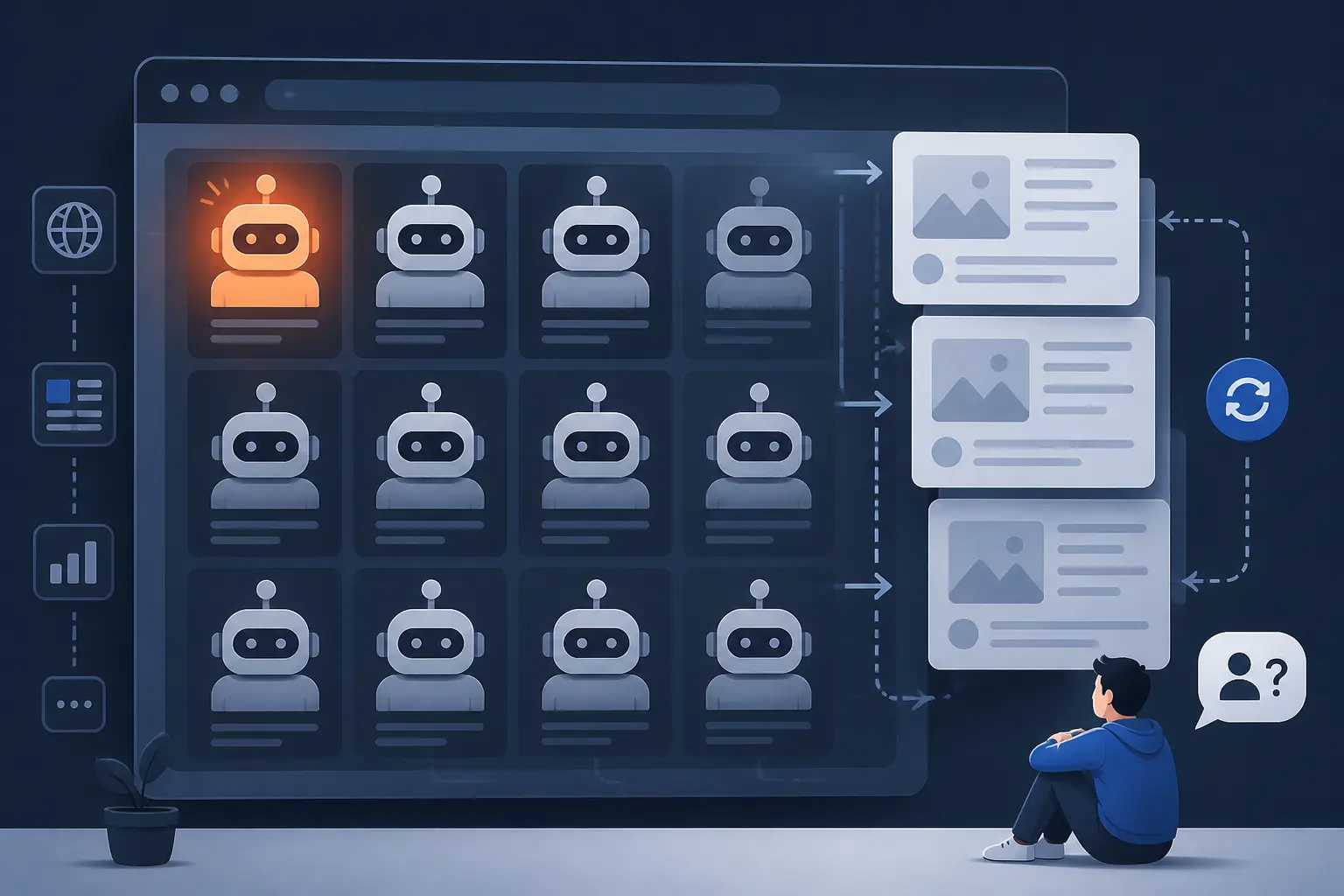
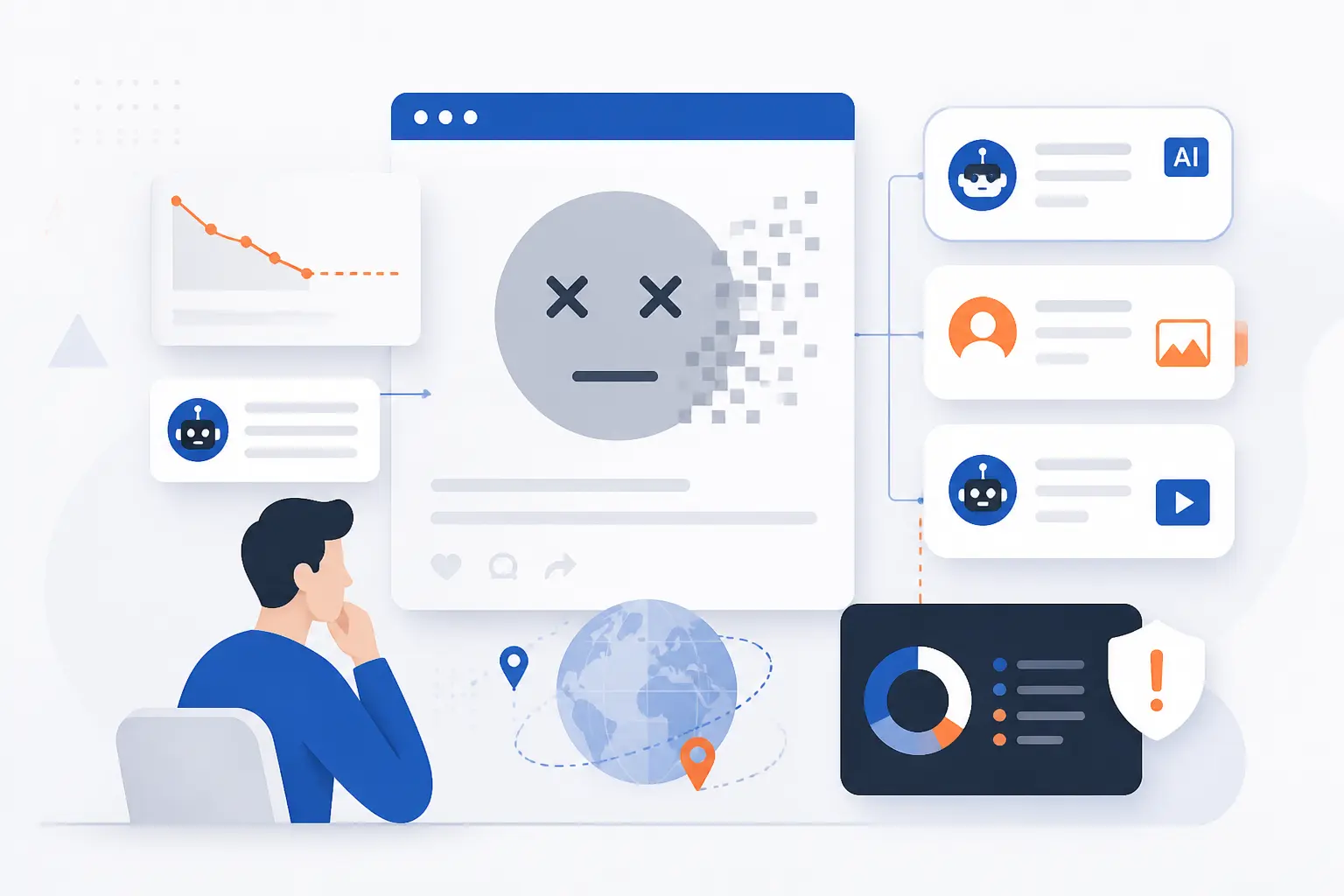
The dead internet theory says the web feels “dead” because automated systems increasingly create, rank, repeat, and reward online content. It does not mean every website is fake or that real people vanished. It means human activity can be buried under bot traffic, recycled posts, AI-written text, synthetic images, spam comments, and algorithmic feeds built to maximize engagement. We see the theory as a messy cultural shortcut for a real technical problem: authenticity is harder to prove online.
The strongest evidence behind this concern is traffic data. One major security report found that automated activity accounted for more than 53% of all web traffic in 2025. That does not prove the whole internet is fake. It does show that “human visitor” and “internet request” are not the same thing. A bot can load pages, scrape prices, test passwords, copy articles, or flood a form without ever behaving like a reader.
This is where beginners often get tripped up. A normal user sees a comment thread and thinks, “people are saying this.” A website owner sees analytics and thinks, “traffic is growing.” A platform sees activity and thinks, “engagement is high.” But some of that activity may be automation. The dead internet theory turns that confusion into a story.
FURTHER READING: |
| 1. What Is Pandas DataFrame in Python for Data Analysis |
| 2. What Are AI Tokens and How Do They Affect AI Use |
| 3. What Is AI IoT? How Smart Devices Learn and Act |
How the Idea Started and Spread Online
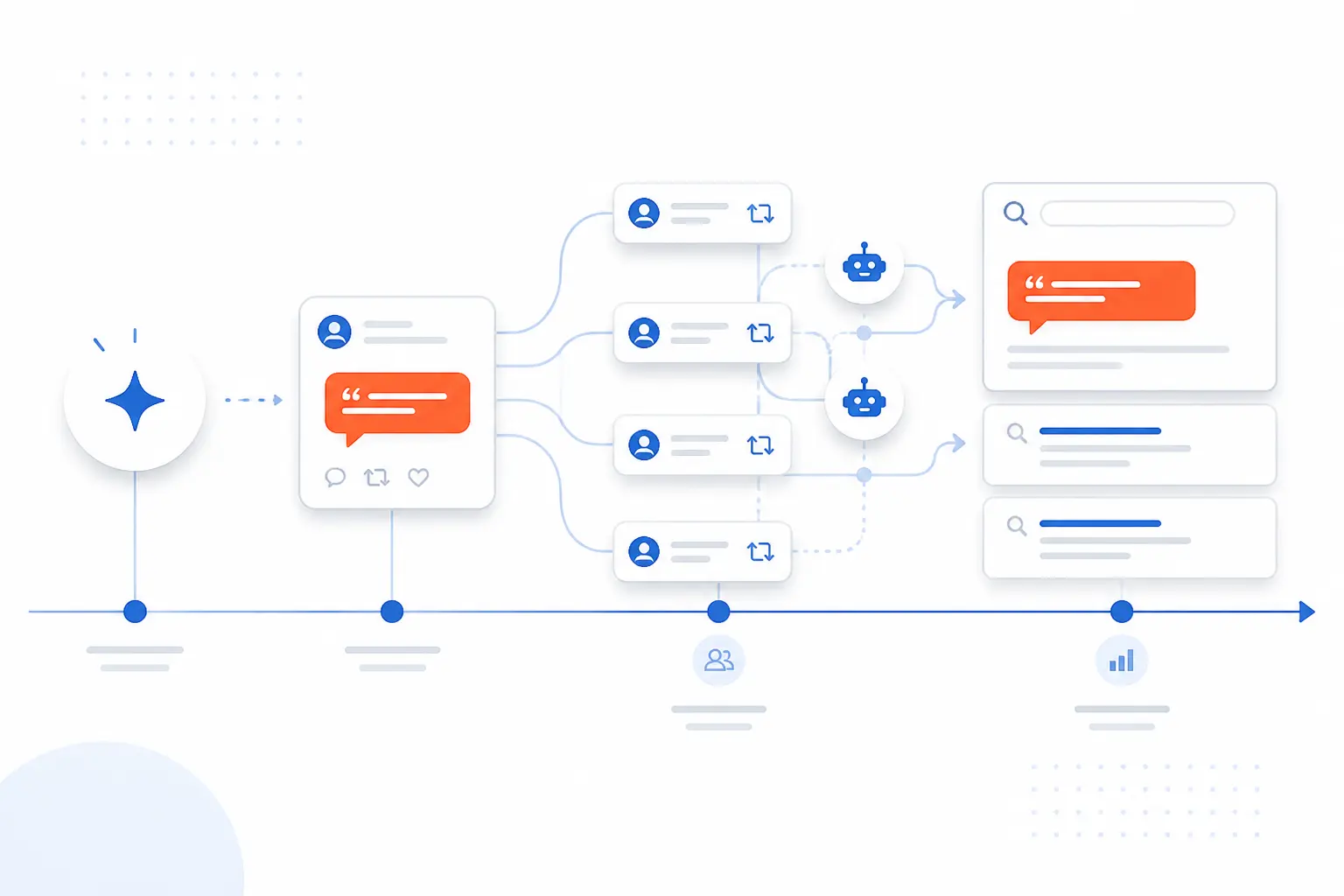
The idea started as a fringe internet theory, then spread because it matched what many users were already feeling. People saw repetitive posts, strange comments, empty engagement, bot followers, and search results that felt less useful. The phrase became easier to repeat than a long explanation about platform incentives and automation. In our view, that is why it traveled so far: it made a vague frustration feel concrete.
Early Imageboard and Forum Origins
The theory grew out of imageboards, forums, and small online communities where users often trade half-jokes, speculation, and social criticism. The core claim was that the internet had changed from a messy human space into a staged environment filled with bots and controlled narratives. Early versions were rough and conspiratorial. They mixed real observations, such as fake accounts and spam, with sweeping claims that were not proven.
That origin matters because the theory carries the tone of those spaces. It is suspicious, dramatic, and allergic to corporate explanations. It does not begin as a careful academic model. It begins as a gut reaction from people who felt the web had become too repetitive, too commercial, and too strangely coordinated.
How Reddit, YouTube, X, and The Atlantic Popularized It
The idea spread when larger platforms turned a niche theory into a shareable cultural reference. Reddit discussions gave it long threads. YouTube gave it explainers and reaction videos. X gave it short viral claims whenever users noticed bot-like replies or strange trends. Then a 2021 Atlantic essay helped push the phrase into broader public discussion.
Once that happened, the theory became less about one forum post and more about a common mood. People used it when comment sections looked fake. They used it when search results felt copied from other search results. They used it when a social feed seemed full of accounts that posted like humans but felt hollow. The phrase became shorthand for “I do not trust what I am seeing here.”
Why Interest Grew Again During the Generative AI Boom
Interest grew again because generative AI made synthetic content cheap, fast, and convincing. Before modern AI tools, spam often looked clumsy. Now a fake review, fake profile bio, fake comment, fake product description, or fake image can look polished enough to pass a quick glance. That changed the emotional weight of the theory.
We do not think AI automatically makes the web fake. We use and study cloud technology every day, and automation can be useful. But cheap generation changes the economics. If one person can create thousands of pages, comments, or images, the web gets noisier unless platforms and site owners apply strong quality controls. The fear is no longer just “bots click things.” The fear is “bots can now sound like us.”
What the Theory Actually Claims
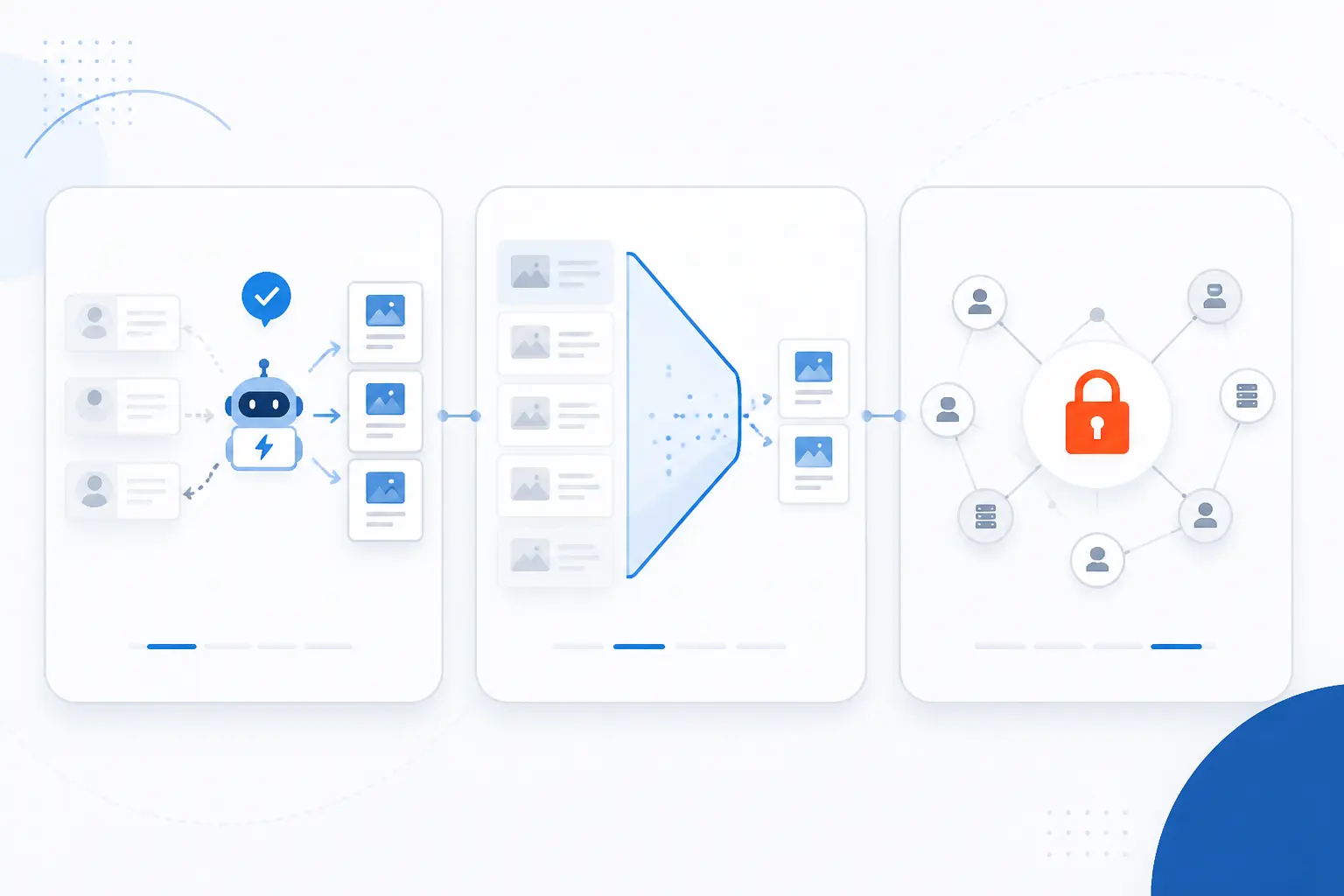
The theory claims three different things, and readers should separate them. First, it claims automated content is replacing visible human activity. Second, it claims algorithms narrow what people see, which makes the web feel smaller and more repetitive. Third, its conspiracy version claims powerful institutions intentionally control this synthetic environment. The first two claims are partly grounded in real trends. The third needs much stronger evidence than its supporters usually provide.
Automated Content Replacing Human Activity
The central claim is that bots and AI-generated material are crowding out real human expression. This can happen through spam pages, fake reviews, bot comments, scraped content, automated social posts, and AI-written articles made mainly to capture traffic. The problem is not that automation exists. The problem is that automation can pretend to be human.
For website owners, this shows up in practical ways. Contact forms receive junk leads. Analytics record visitors that never had intent. Comment sections attract generic praise or suspicious links. Search engines index pages written to rank rather than help. That is why we treat authenticity as an infrastructure issue, not only a content issue.
Algorithmic Curation Narrowing What People See
The second claim is that algorithmic feeds make the internet feel less open by repeatedly showing what performs well. A platform does not need a secret plot to make users feel trapped in a loop. It only needs ranking systems that reward watch time, shares, reactions, controversy, or fast engagement. When that happens, similar content rises again and again.
This is different from bots replacing humans. Here, real people still exist, but their view of the web is filtered. A user may think “everyone is talking about this,” when actually the platform is selecting the loudest slice of activity. In our opinion, this is one of the strongest parts of the theory. The visible web is not the whole web.
The Conspiracy Layer About Governments and Corporations
The conspiracy layer claims the fake web is deliberately controlled by governments, corporations, or both. This version says online discourse is staged to manage public opinion, sell products, suppress dissent, or keep users passive. It is the most dramatic version. It is also the version that needs the most skepticism.
Real influence operations exist. Real advertising incentives exist. Real bot campaigns exist. But those facts do not prove one master system runs the internet. We think the better explanation is usually messier: many actors chase attention, profit, influence, fraud, and data at the same time. The result can feel coordinated even when it is only aligned by incentives.
How People Interpret the Theory Today
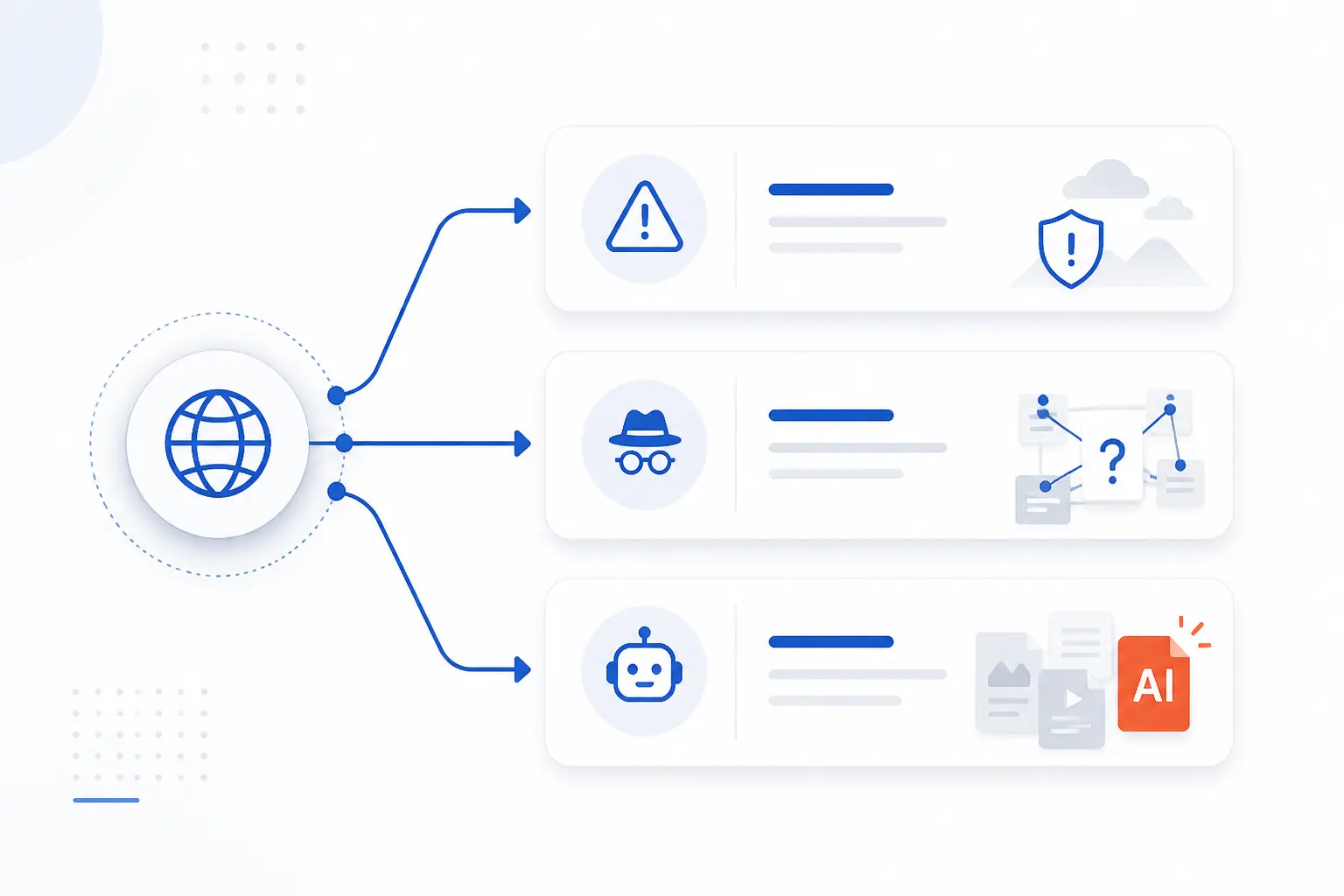
People now interpret the theory in three main ways. The broad view treats it as a warning about bots steering discourse. The stronger conspiracy version treats it as a claim that the web is deliberately controlled. The leaner AI-focused version says the risk is rising because synthetic content is becoming easier to produce. We find the third reading the most useful for businesses, creators, and site owners.
| Interpretation | Main idea | How useful it is |
|---|---|---|
| Broad view | Bots and incentives distort online conversation | Useful as a caution |
| Conspiracy version | Powerful actors secretly control most activity | Weak without hard proof |
| AI-focused reading | Synthetic content is flooding weak parts of the web | Very practical |
A Broad View Focused on Bots Steering Discourse
The broad view says bots can shape what people think is popular, urgent, or widely believed. This reading does not require the internet to be dead. It only requires enough automated activity to distort perception. That is already plausible in many settings.
A social post with fake likes may attract real likes. A fake account can push a hashtag until real users join. A comment campaign can make a product, candidate, or argument look more supported than it is. The danger is not total replacement. The danger is false social proof.
A Stronger Conspiracy Version
The stronger version says the internet has been largely replaced by a controlled artificial environment. It treats bots, search rankings, social feeds, and media narratives as pieces of one hidden system. That claim is much harder to defend. It asks readers to believe too much with too little evidence.
We understand why people drift toward this version. When feeds feel repetitive and comments sound scripted, a big explanation is tempting. Still, a big explanation is not always a good explanation. Fraud, spam, platform design, ad money, and cheap content can create the same eerie feeling without a single command center.
A Leaner Reading Centered on AI-Generated Content
The leaner reading says the web is not dead, but low-quality synthetic content is spreading fast. This is the version we take most seriously. It is specific, testable, and useful. It asks better questions: who made this, why was it made, and can I verify it?
Search engines already recognize this risk. Google’s policies describe scaled content abuse as mass-produced pages made mainly to manipulate rankings rather than help users, including pages generated with AI tools without added value. The official policy language is a good reminder that automation is judged by purpose and quality, not by the tool alone.
Why the Dead Internet Theory Feels Plausible to Many People
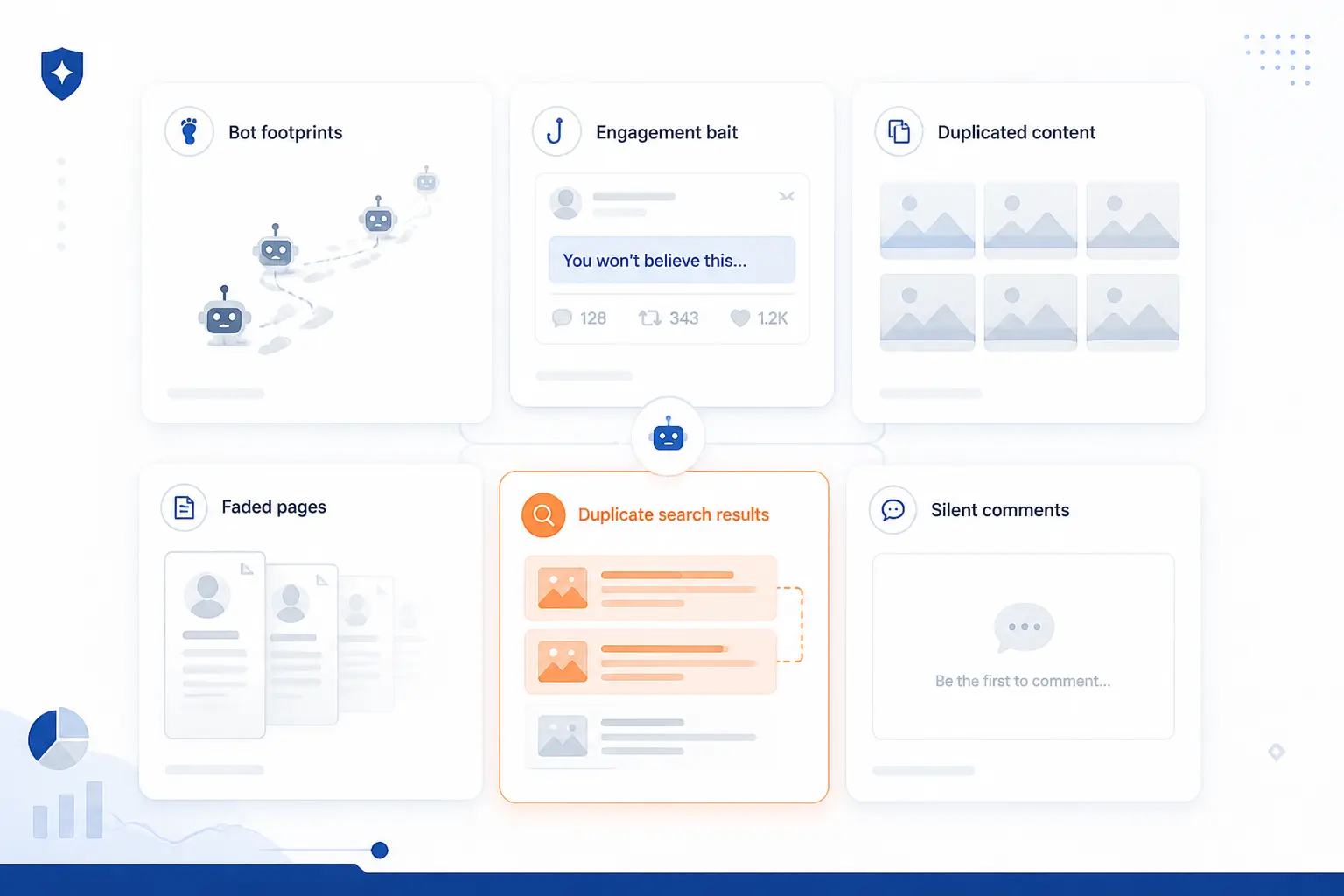
The dead internet theory feels plausible because users encounter real symptoms every day. They see bot traffic, engagement bait, AI images, copied search results, disappearing pages, and comment sections that feel strangely empty. Those experiences do not prove the extreme theory. They do explain why the phrase sticks. A theory can be wrong in its grand conclusion and still point toward real damage.
High Levels of Bot Traffic Across the Web
Bot traffic is one of the strongest reasons the theory feels believable. Web servers do not receive only human visits. They also receive requests from crawlers, scrapers, security scanners, uptime monitors, spam tools, credential-stuffing bots, and AI data collectors. Some bots are useful. Others are abusive.
From a hosting point of view, this distinction matters. A site owner may see traffic rise while sales, comments, or signups stay flat. That gap often means the traffic is not real audience demand. It may be automated scanning, scraping, or spam. We have learned to treat traffic quality as seriously as traffic volume.
Engagement Farming on Social Media
Engagement farming makes the web feel fake because it rewards posts that provoke reactions more than posts that say something true. The goal is simple: get clicks, replies, shares, follows, or ad impressions. The content can be a copied joke, a rage-bait question, a fake personal story, or a recycled image with a new caption.
This is where human and automated behavior blend together. Real people can farm engagement. Bots can amplify them. AI can help generate more variations. The feed then rewards whatever gets attention. That cycle makes online conversation feel less like public discussion and more like a machine asking, “What will make people react?”
AI-Generated Images, Comments, and Spam
AI-generated content makes the theory feel modern because it fills the web with material that looks human at first glance. Images can show events that never happened. Comments can mimic casual speech. Product reviews can sound detailed while saying nothing specific. Spam can now wear a nicer suit.
Major platforms have acknowledged the problem. Meta said it monitored generative AI in covert influence campaigns and found that such networks gained incremental productivity and content-generation gains. We read that carefully. It does not say AI took over everything. It says AI gave bad actors another tool, which is enough to raise the stakes.
Search Results, Link Rot, and a Smaller Visible Web
The web can feel smaller because search results and old links often point to missing, duplicated, or low-value pages. Link rot is part of that feeling. A page that once held useful information disappears, moves, or breaks. Another page copies pieces of it. Then search results become less about discovery and more about sorting through echoes.
A research center analysis found that 38% of webpages that existed in 2013 were no longer accessible when checked years later. That does not mean the web is dying. It means the web is fragile. If useful pages vanish while synthetic pages multiply, users naturally feel that the living web is harder to reach.
Where Social Platforms Fit Into the Story
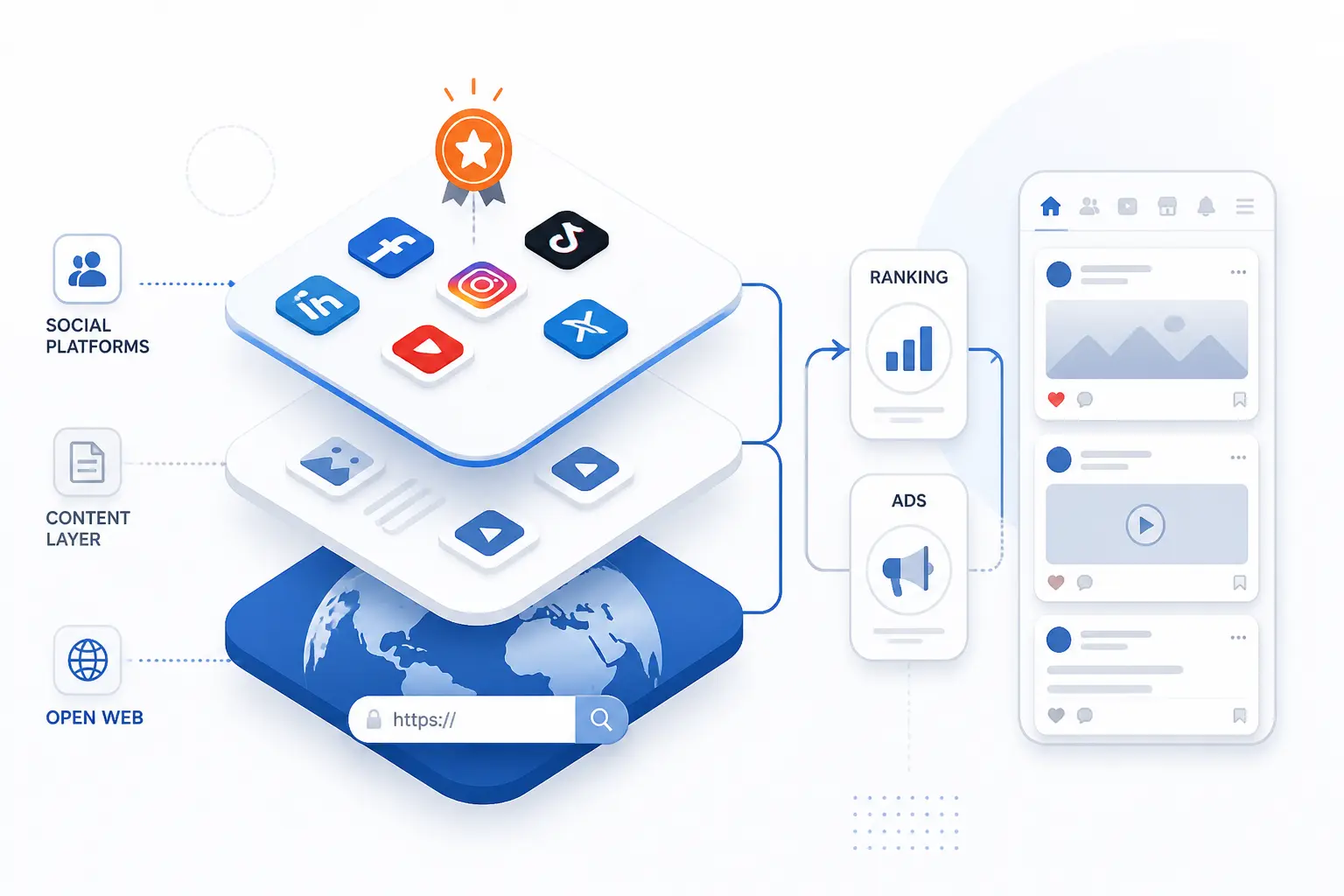
Social platforms fit into the story because they shape what people see before people ever visit the open web. Facebook, Instagram, TikTok, Reddit, YouTube, and X are not just places where content appears. They are ranking systems, advertising markets, identity systems, and influence targets. The dead internet theory feels strongest on platforms where popularity signals can be faked or gamed.
Facebook, Instagram, and TikTok Virality
Facebook, Instagram, and TikTok make the theory feel believable because virality can detach content from context. A strange image, emotional caption, or outrageous clip can travel faster than verification. That does not mean every viral post is fake. It means the system often rewards speed before certainty.
TikTok has publicly described efforts to remove covert influence activity, including a transparency update about disrupted operations and deceptive behavior rules. Meta has made similar public statements around coordinated inauthentic behavior. We see those disclosures as evidence of a real platform problem, not evidence that the strongest conspiracy version is true.
Reddit, Training Data, and AI-on-AI Content
Reddit matters because it is full of conversational data that AI companies consider valuable. Human discussions, niche advice, product experiences, and community arguments can all become training material or search-adjacent answers. When AI systems train on human content, then AI-generated comments return to forums, a loop can form. People worry that future machines may learn from past machines.
OpenAI and Reddit announced an arrangement that gives OpenAI access to Reddit’s Data API and lets Reddit explore AI-powered features through the agreement. The concern is not that Reddit instantly becomes fake. The concern is that human conversation becomes both source material and target market. If communities fill with synthetic replies, the training well gets muddy.
X, Bot Networks, and Political Manipulation
X fits the theory because fast public conversation is easy to manipulate with coordinated accounts. A bot network can reply, repost, follow, quote, and harass at a pace normal users cannot match. Political topics are especially vulnerable because attention itself can change what journalists, campaigns, and voters think matters.
Research has long shown that suspected bots can play a large role in link sharing. One study found that 66% of tweeted links to popular websites in its sample were shared by suspected automated accounts. X also says its platform manipulation and spam defenses are largely proactive or automated in its own report. That pairing says a lot: automation is both the threat and part of the defense.
Is It Pure Conspiracy or a Useful Warning About the Modern Web
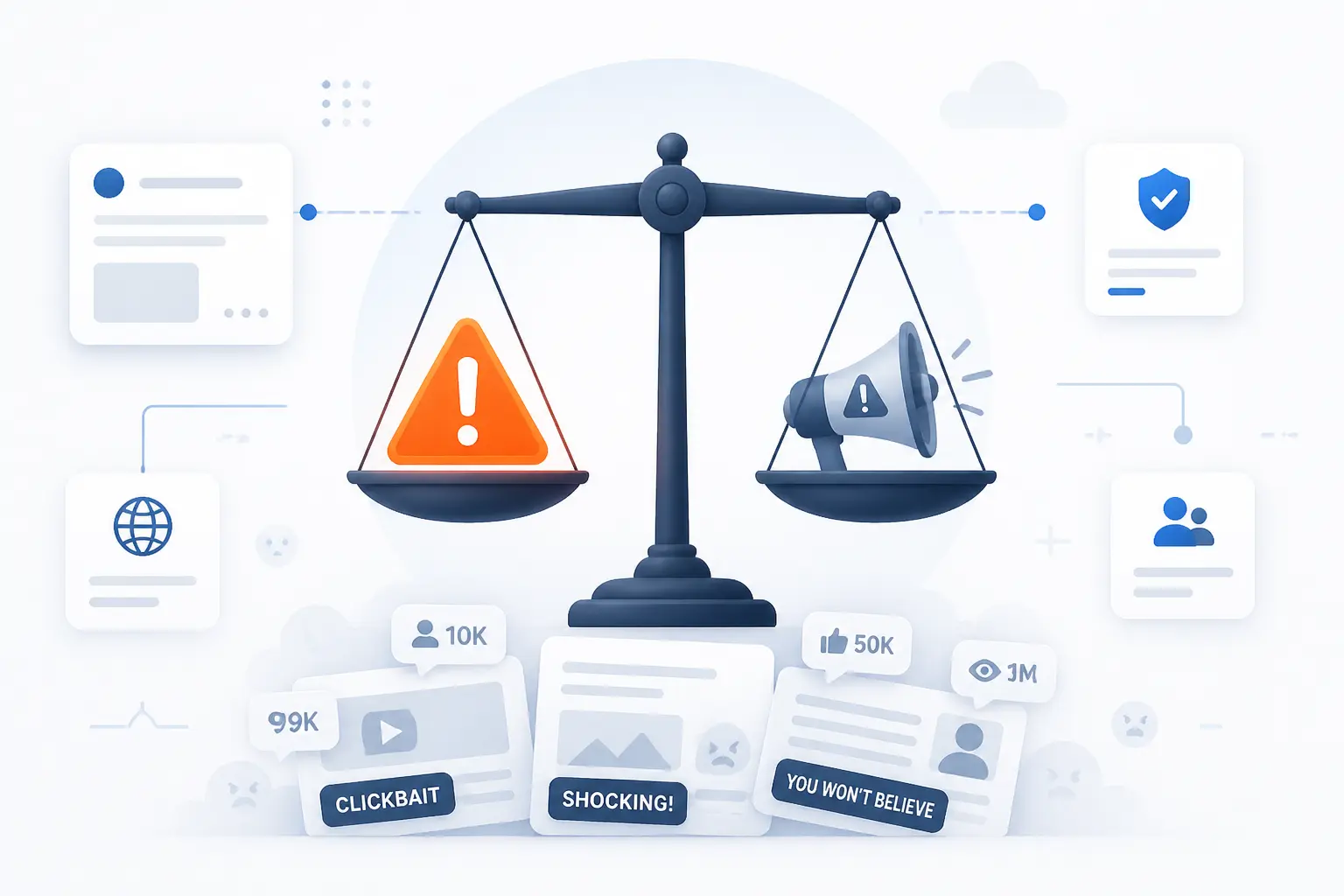
The dead internet theory is not pure truth, but it is not pure nonsense either. Experts reject the sweeping claim that humans have mostly vanished from the internet or that one hidden force controls the web. Still, the theory correctly warns that incentives now reward cheap content, fake engagement, and manipulation at scale. We think the best response is neither panic nor mockery. The best response is better proof of authenticity.
What Experts Reject About the Theory
Experts reject the totalizing claim that the internet is mostly a fake stage with humans pushed out of view. There is no solid public evidence for a single coordinated replacement of human activity. There are billions of real people using messaging apps, forums, websites, marketplaces, code repositories, learning platforms, and private communities. The internet is not dead.
What is true is narrower. Parts of the visible web are polluted. Some platforms are heavily gamed. Some traffic is automated. Some content is synthetic. A careful reader should not jump from “bots are common” to “everything is fake.” That leap is where the theory stops being useful.
What the Idea Gets Right About Incentives and Manipulation
The theory gets the incentives right: online systems often reward volume, speed, and reaction more than trust. If a spammer can publish more pages, they may capture long-tail search traffic. If a botnet can create fake momentum, it may pull real users into a trend. If AI can generate cheap comments, reviews, or images, low-quality actors can flood weak systems.
This is why we care about real ownership, real websites, real domains, secure connections, and content that names its author, purpose, and source. A trustworthy web presence does not solve every platform problem. But it gives users a stable place to verify who you are. In a noisy internet, that matters more than ever.
FAQ
This FAQ gives quick answers to the most common questions about the dead internet theory. The short version is that the theory mixes real concerns with exaggerated claims. Bots, AI content, and platform manipulation are real. The claim that the internet is literally dead is not proven.
Why Do People Say Dead Internet Theory
People say dead internet theory because the phrase captures the feeling that much of the web looks automated, repetitive, or fake. It gives a name to experiences like bot replies, AI images, copied articles, spam search results, and empty engagement. The phrase is dramatic, but the frustration behind it is real.
Is the Internet 51% Bots
No, not as a universal rule for every part of the internet. Some security datasets have measured automated traffic above half of observed web requests, but that does not mean most posts, users, or communities are fake. Web traffic includes many machine requests that ordinary users never see. The better question is where bots are active and what they are doing.
How Close Are We to a Dead Internet
We are not close to a literally dead internet, but we are already living with a noisier one. Human communities still create enormous value, especially in private groups, niche forums, independent sites, open-source projects, and direct customer relationships. The risk is that low-effort synthetic material makes trusted human work harder to find. That is a serious problem, even without the conspiracy frame.
Is the Dead Internet Theory True
The dead internet theory is partly true as a warning and mostly unproven as a conspiracy. Bots, AI-generated content, spam, and algorithmic distortion are real. The claim that the web has been secretly replaced by a controlled artificial system is not supported by strong evidence. We recommend treating the theory as a signal to verify more carefully, not as a final explanation.
How 1Byte Supports a More Trustworthy Web Presence
At 1Byte, we support a more trustworthy web presence by helping people build owned, secure, and maintainable sites outside the churn of social feeds. The practical answer is simple: use a clear domain, protect visitors with SSL certificates, choose hosting that fits the site, and keep the experience stable enough for real users. We provide domain registration, SSL certificates, WordPress hosting, shared hosting, cloud hosting, and cloud servers. 1Byte is also an AWS Partner, which matters when customers need cloud infrastructure guidance without turning their public presence into a guessing game.
| Service | Trust role | Best fit |
|---|---|---|
| Domain registration | Gives users a consistent address | Brands, shops, portfolios, blogs |
| SSL certificates | Protects browser connections | Any public website |
| WordPress hosting | Makes publishing easier to manage | Content sites and business pages |
| Shared hosting | Keeps small sites simple | Starter websites |
| Cloud hosting | Handles changing resource needs | Growing websites |
| Cloud servers | Gives more control over the environment | Custom apps and technical teams |
Domain Registration and SSL Certificates That Help Establish Trust
Domain registration and SSL certificates help users confirm they reached the right site and can connect securely. A domain is your public address. An SSL certificate supports HTTPS, which protects data in transit between the browser and the server. For beginners, that green lock or browser security indicator is not decoration. It is a trust cue.
In the context of the dead internet theory, this matters because users need stable places to verify identity. A social profile can be copied. A viral post can be faked. A domain under your control gives customers, readers, and partners one place to return to. SSL then helps make that visit safer.
WordPress Hosting and Shared Hosting for Fast, Manageable Sites
WordPress hosting and shared hosting help people publish real information without needing a large technical team. WordPress hosting suits sites that need regular updates, pages, articles, menus, plugins, and a familiar content system. Shared hosting suits smaller projects that need a straightforward place to start. Both are practical paths toward owning your presence.
We like owned websites because they slow the churn. A good business site explains who you are, what you offer, how to contact you, and why people should trust you. That sounds basic, but basic is powerful. In a feed full of synthetic noise, a clear website can feel refreshingly human.
Cloud Hosting and Cloud Servers for Scale, Control, and Reliability
Cloud hosting and cloud servers help teams run sites and applications that need more control than basic hosting can provide. Cloud hosting is useful when traffic or resource needs change. Cloud servers are useful when a team needs direct control over the software environment. As an AWS Partner, 1Byte can connect cloud decisions to real hosting needs rather than abstract buzzwords.
This connects directly to trust. A slow, unstable, or frequently broken site makes users doubt the organization behind it. A well-run cloud environment helps a site remain available when real users show up. It also gives technical teams room to apply security controls, monitor behavior, and separate genuine demand from suspicious activity.






Conclusion
The dead internet theory is best understood as a warning label, not a finished map. It points to real problems: bots, AI-generated content, fake engagement, search decay, and platform incentives that reward noise. But its strongest conspiracy claims go beyond the evidence. The internet is not dead. It is crowded, polluted, and harder to verify than it used to be.
Our view at 1Byte is practical. If trust is getting harder online, then serious people and serious businesses should make trust easier to see. Use an owned domain. Secure the connection. Publish clear information. Keep your site stable. Show real authorship, real contact paths, and real value.
The next time a feed feels fake, ask a better question than “is the internet dead?” Ask, “where is the reliable source, and can I verify it?” That habit is how we keep the living web alive.