

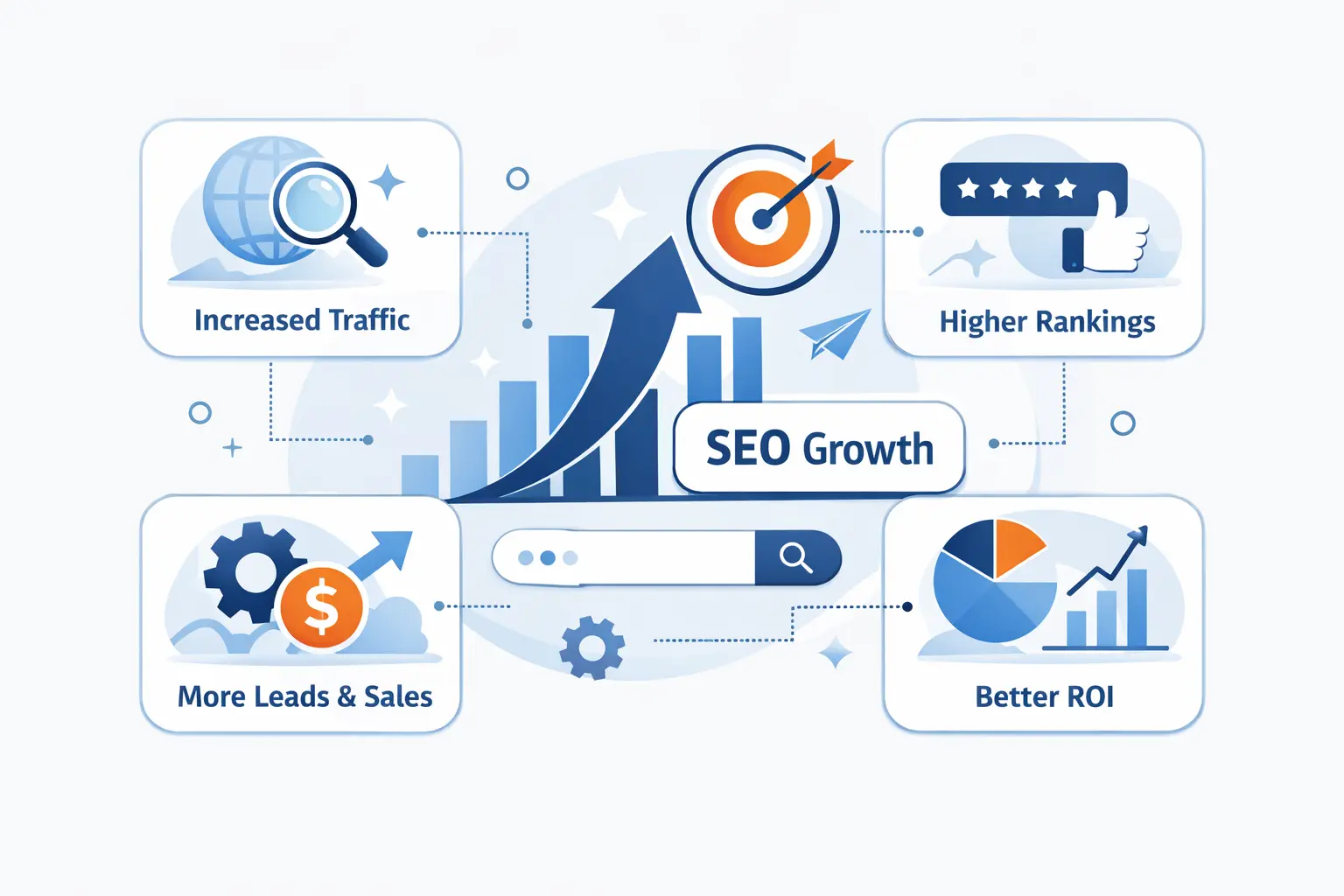
- What SEO Is and Why It Matters
- The Core Parts of an Effective SEO Strategy
- Benefits of SEO for Traffic, Lead Generation, and Sales
- Benefits of SEO for Trust, Authority, and Brand Awareness
- Benefits of SEO for Website Performance and User Experience
- Benefits of SEO for Long-Term ROI
- Benefits of SEO for Local Search Visibility
- Benefits of SEO for Competitive Advantage and Customer Insights
- Benefits of SEO Across Other Marketing Channels
- Benefits of SEO in the Age of AI Search
- How to Measure the Benefits of SEO
- When Professional SEO Support Can Add More Value
- Frequently Asked Questions About the Benefits of SEO
- How 1Byte Supports SEO-Ready Websites With Cloud and Hosting Services
- Why the Benefits of SEO Compound Over Time
At 1Byte, we think the benefits of SEO are easiest to see when we stop treating it like a bag of tricks. Search still captures commercial intent, and U.S. search ad spending reached $137 billion in 2024. That tells us people still use search engines when they want answers, options, and places to spend money.
Our view is simple. SEO works when a site is useful, technically sound, and built around real questions. When those pieces line up, a business can attract steady traffic, earn trust, and turn attention into leads and sales without renting every click.
What SEO Is and Why It Matters
The benefits of SEO begin with clarity. We need to know what it is, what it is not, and why it matters. In our experience, strong search performance comes from relevance, structure, and usefulness working together.
FURTHER READING: |
| 1. WordPress SEO Setup: A Step-by-Step Guide for Beginners |
| 2. What Is an MX Record and How Does It Work for Email Delivery |
| 3. How to Check If a Website Is Legit in 2026 |
1. What Search Engine Optimization Means for Organic Visibility
Search engine optimization means improving a site so it can be discovered in unpaid results when people look for something relevant. We are talking about organic visibility, not ads. A page earns that visibility when search engines can crawl and understand it, and when it answers the query better than weaker alternatives.
2. How SEO Connects Technical Quality, Content, and User Experience
We do not separate technical quality, content, and user experience. Slow pages, broken links, vague copy, and confusing layouts all chip away at visibility. The same fixes that help search engines read a site often help people trust it and finish the task they came to do.
3. How Search Intent Shapes Modern SEO
Search intent is the hinge. Some visitors want to learn, some want to compare, and some are ready to buy or book. When we map pages to those intents, SEO stops being abstract and starts supporting the full journey from first question to final decision.
The Core Parts of an Effective SEO Strategy
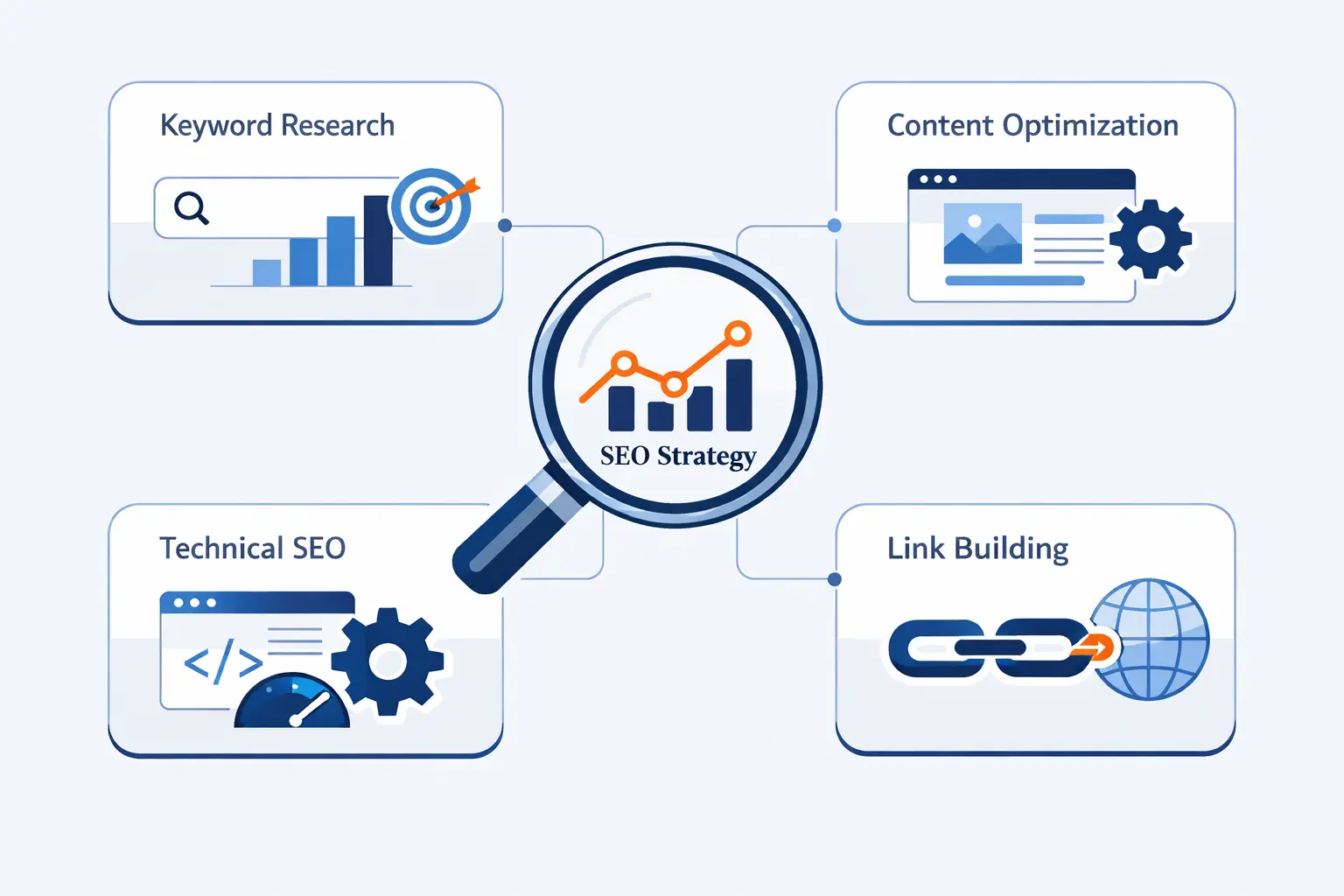
An effective strategy is rarely glamorous. It is a repeating loop of research, publishing, cleanup, and measurement. We have found that steady, boring discipline usually beats flashy tactics.
1. Keyword Research and Long-Tail Opportunities
Keyword research is really customer language research. Long-tail searches often reveal clearer problems, tighter intent, and easier opportunities for smaller sites. We would rather target specific phrases that mirror real needs than chase broad vanity terms that bring the wrong crowd.
2. Content Creation That Answers Real Customer Questions
Content works best when it answers a question completely and quickly. That is why detailed resources such as Stripe’s subscription docs attract high-intent visitors. They solve a real task, use precise language, and give search engines a strong clue about the page’s purpose.
3. Technical SEO, Backlinks, and Ongoing Site Maintenance
Technical SEO keeps the foundation clean. Crawlable links, logical internal navigation, proper canonicals, healthy sitemaps, and routine fixes all matter. Backlinks still help, but we see them as earned reputation. They work best when the site already deserves attention.
Benefits of SEO for Traffic, Lead Generation, and Sales
Traffic alone is not the point. The real benefits of SEO show up when visits turn into pipeline, conversations, and revenue. Empty pageviews do not pay the bills.
1. More Organic Traffic From High-Intent Searches
Organic traffic becomes valuable when it comes from people actively looking for what a business offers. A visitor who searches with a clear problem is closer to action than someone who stumbles onto a random post. That is why intent matters more than raw volume.
2. Higher-Quality Leads With Stronger Conversion Potential
Lead quality improves when page content matches the visitor’s stage. Educational pages can warm up early interest. Comparison pages can filter serious prospects. Service, pricing, demo, and contact pages can catch people who are already leaning forward.
3. Greater Sales Opportunities Across the Buyer Journey
Sales opportunities expand when SEO covers the whole buyer journey. Informational pages build awareness. Mid-funnel pages help evaluation. Bottom-funnel pages support purchase. Even post-sale content can reduce friction and keep customers engaged after checkout.
Benefits of SEO for Trust, Authority, and Brand Awareness
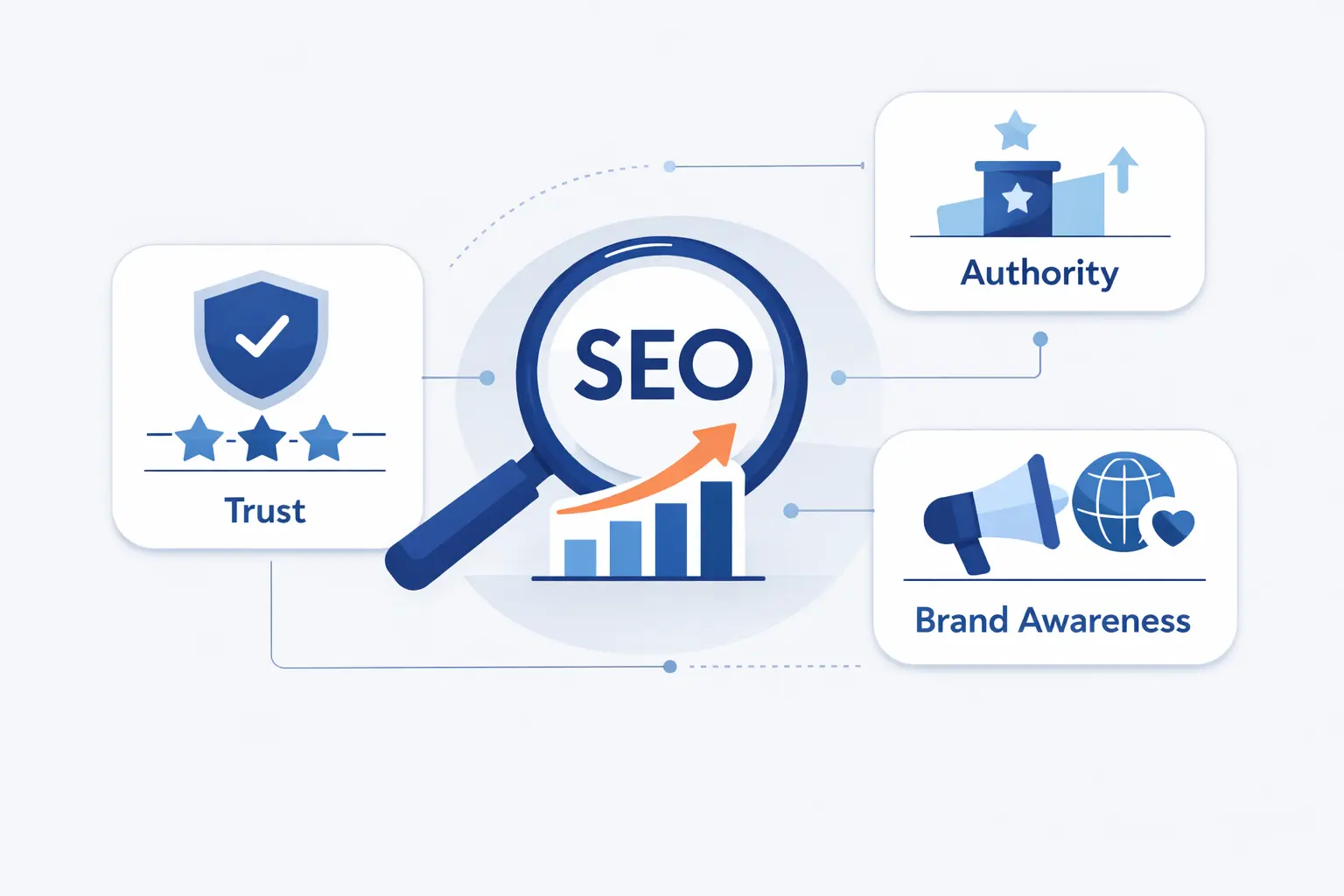
Trust is hard to buy and easy to lose. SEO can help on both fronts because repeated visibility and useful content create familiarity. Over time, familiarity often becomes preference.
1. Higher Rankings That Reinforce Credibility
Higher rankings are not a trophy by themselves, but they do shape perception. Many users assume visible results have earned their place. We do not tell clients to worship rankings, yet we do respect the quiet credibility that comes from showing up consistently.
2. Helpful Content That Strengthens Expertise, Authority, and Trust
Helpful content signals expertise better than slogans do. Clear explanations, grounded examples, and honest limits show readers there is a real brain behind the brand. In our view, this is where expertise, authority, and trust stop being theory and start feeling practical.
3. Brand Awareness That Grows With Repeated Search Visibility
Brand awareness grows through repetition. When people keep seeing the same company across guides, product pages, FAQs, and local results, the name starts to stick. That memory effect is easy to underestimate, but it often shortens future buying decisions.
Benefits of SEO for Website Performance and User Experience
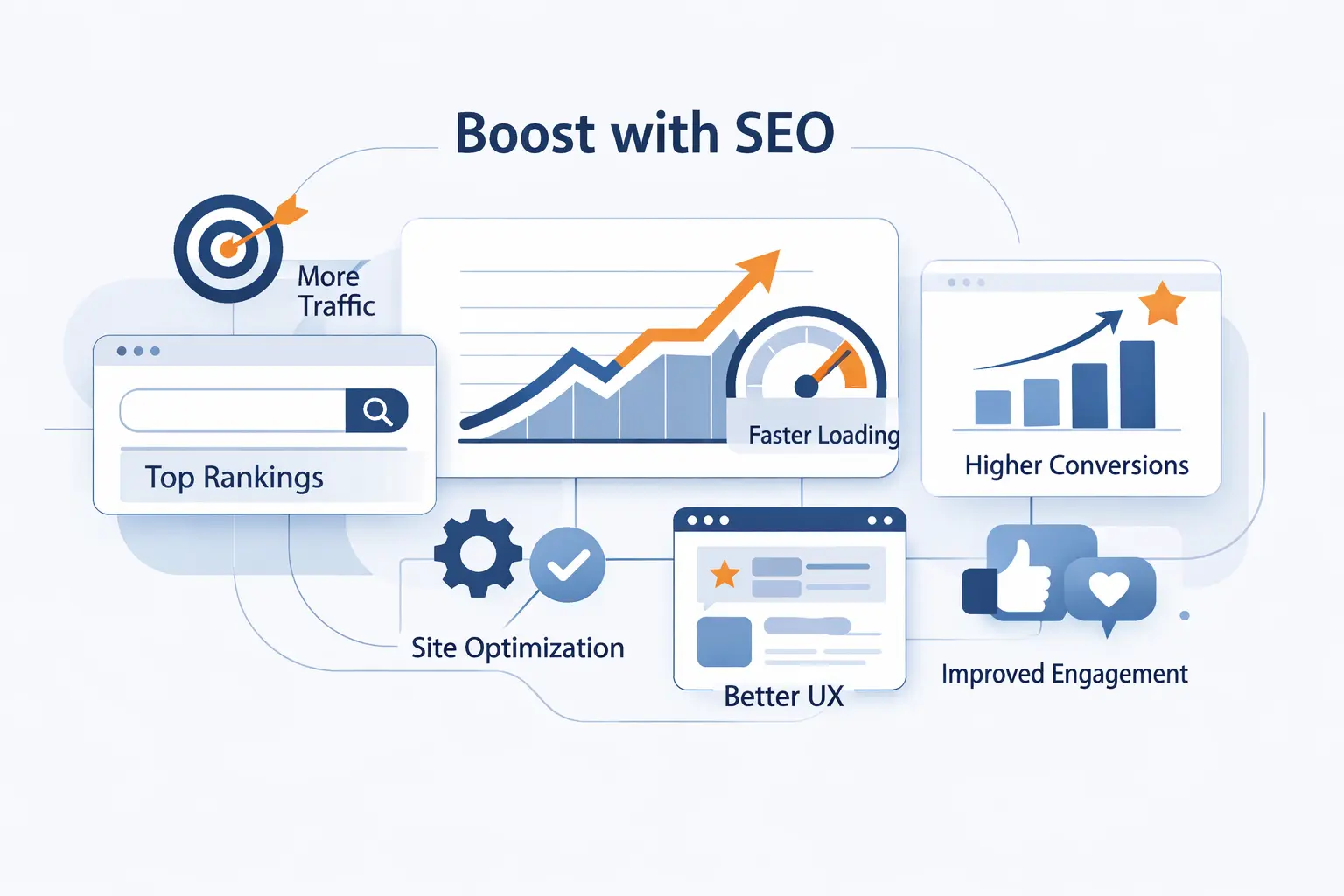
We often tell site owners that SEO is also a website quality program. The work pushes teams to fix speed, structure, and usability problems that would hurt conversions anyway. That is good pressure to have.
1. Faster Pages, Mobile Usability, and Core Web Vitals
Fast pages and usable mobile layouts matter because people do not wait around. Google’s Core Web Vitals focus on loading, responsiveness, and visual stability, which mirrors how real visitors experience a page. If the site feels clumsy, rankings and conversions can both suffer.
2. Clear Navigation, Internal Linking, and Better Site Structure
Clear navigation helps users and search engines at the same time. Good internal linking shows what pages matter, how topics connect, and where the next step lives. We like site structures that make sense without a map. If humans can follow it, crawlers usually can too.
3. Regular Technical Fixes That Improve Site Health Over Time
Regular technical fixes pay off quietly. Redirect chains, duplicate pages, broken images, dead links, script bloat, and indexing mistakes rarely cause a dramatic collapse overnight. More often, they create slow leaks. SEO work helps us find those leaks and close them.
Benefits of SEO for Long-Term ROI
Long-term return is one of the strongest arguments for SEO. The work does take patience, but a good page can keep earning attention after the first push. That is a different economics model from rented clicks.
1. Lower Acquisition Costs Than Many Paid Channels
We do not claim SEO is free, because it is not. It takes strategy, writing, design, engineering, and upkeep. Still, once pages start ranking, the cost profile changes. Each added organic visit may cost less than paying for every click through an ad platform.
2. Compounding Returns That Continue After the Initial Work
Compounding returns are real. A helpful page can rank, attract links, earn mentions, and feed internal traffic for months or years. Add enough pages like that, and the gains stack. One strong asset starts supporting the next.
3. Realistic Timelines for Early Wins and Long-Term Growth
Timelines should be realistic. Technical fixes can surface earlier, especially on sites with clear crawl or indexing issues. Competitive content usually takes longer. We prefer honest expectations here, because SEO rewards steady progress more than fireworks.
Benefits of SEO for Local Search Visibility
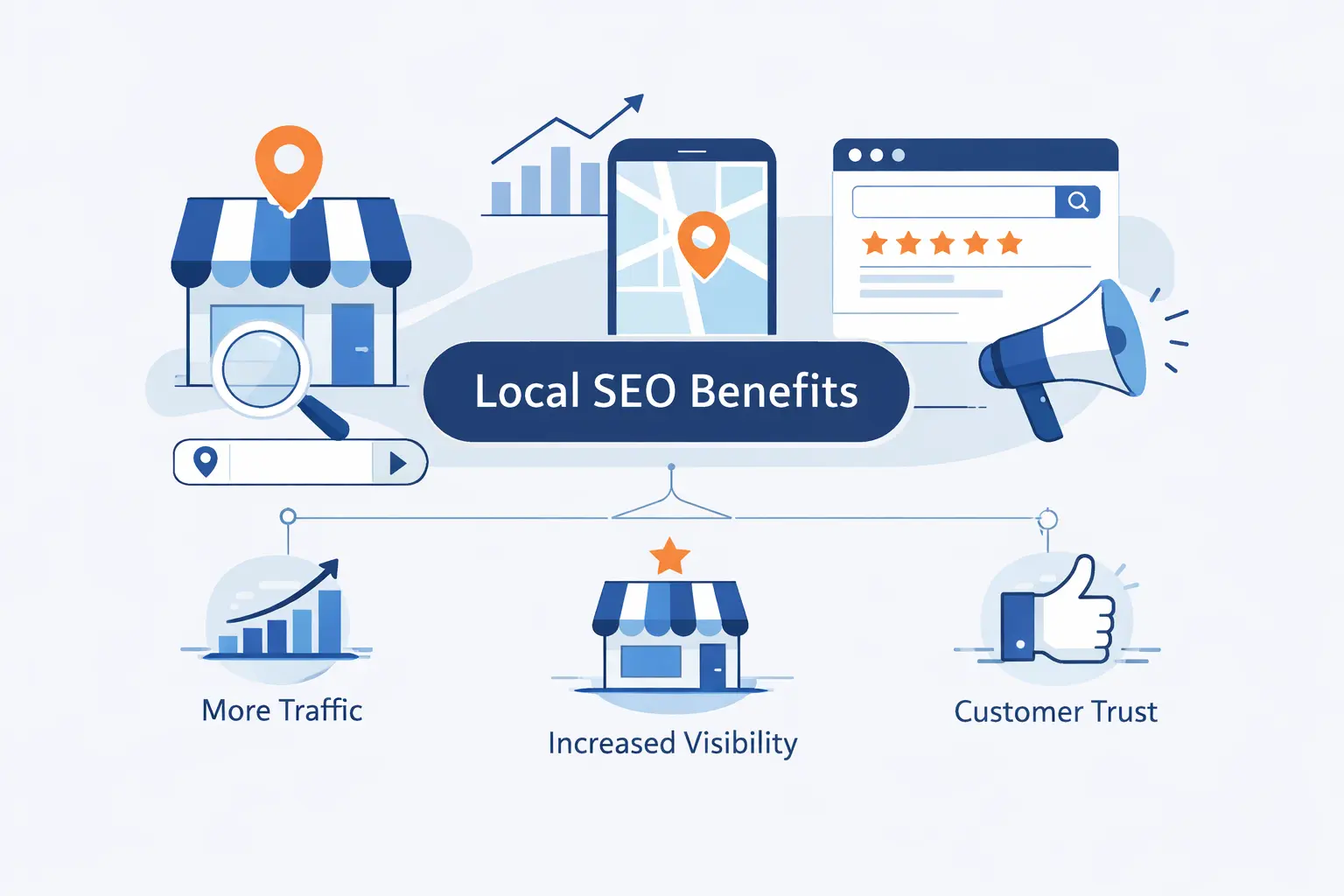
Local visibility turns search demand into nearby action. For service businesses, clinics, restaurants, retailers, and regional companies, this part of SEO can be the shortest path from search to revenue. It is often where small businesses punch above their weight.
1. Google Business Profile, Google Maps, and Local Pack Visibility
The first local step is a verified business profile, because Google only shows verified businesses on Maps and other local surfaces. Accurate hours, categories, contact details, and photos make a practical difference. If the basics are wrong, local visibility usually stays weak.
2. Location-Specific Keywords That Attract Nearby Customers
Location pages work best when they reflect how people actually search. A clean store locator shows the idea well. Businesses that pair city or neighborhood language with useful local details give both users and search engines a clearer destination.
3. More Calls, Directions, Appointments, and Foot Traffic
The payoff is concrete. Better local visibility can drive calls, direction requests, appointment bookings, and walk-ins from people who are already nearby. That is why we see local SEO as operational, not ornamental. It affects the calendar and the front desk.
Benefits of SEO for Competitive Advantage and Customer Insights
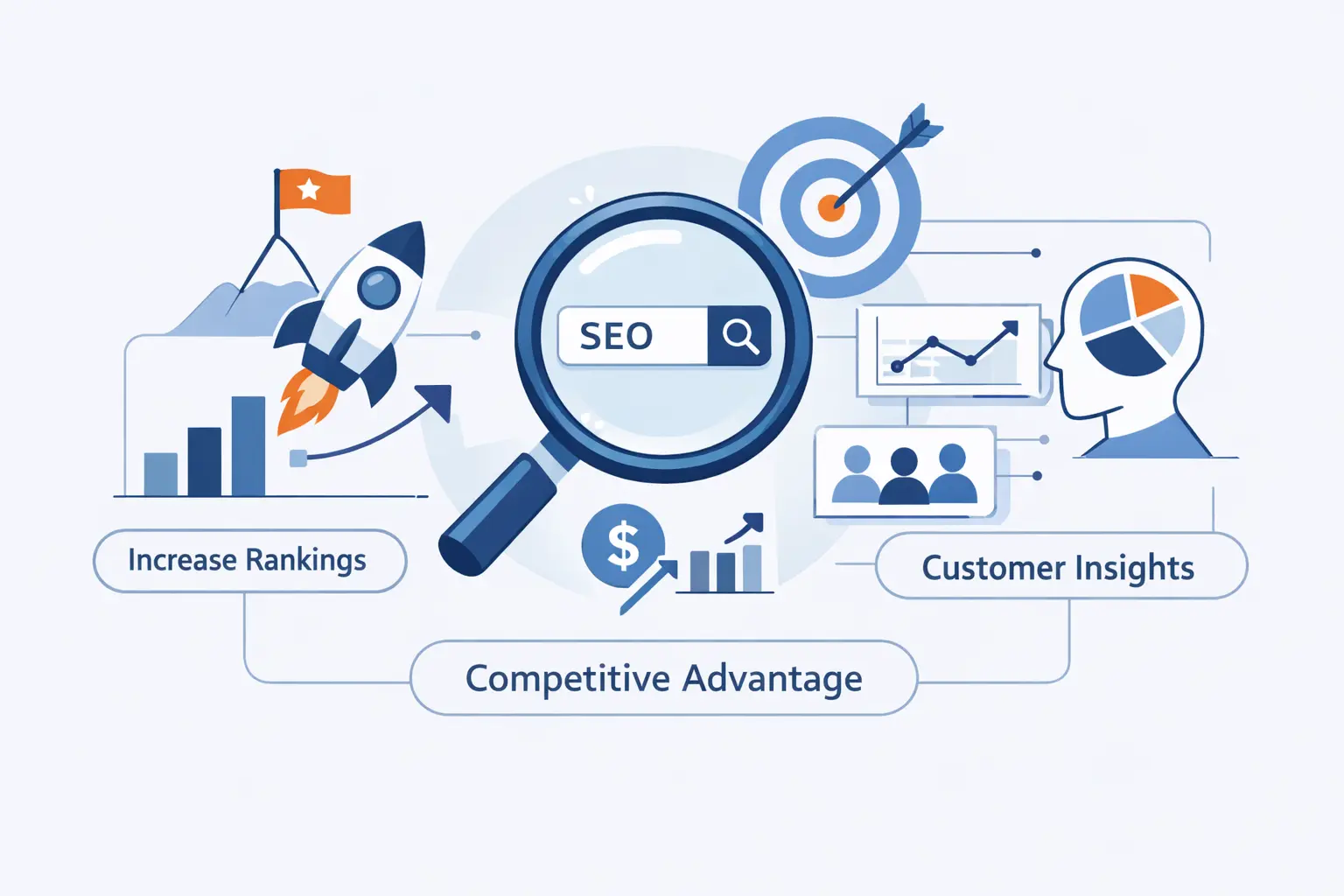
SEO also gives us an unusually honest view of the market. Search data reveals what people want, how they phrase it, and where competitors have left gaps. That is strategic fuel if we use it well.
1. How Competitor Analysis Reveals Content and Keyword Gaps
Competitor analysis helps us spot missed topics, weak pages, and underserved intents. We are not looking to copy another site line by line. We are looking for empty shelf space. Often the best growth comes from covering what competitors skipped or explained poorly.
2. What Search Data Reveals About Customer Needs
Search data shows recurring questions, objections, comparisons, and buying signals. That helps teams shape product pages, FAQs, sales scripts, and even support content. In our experience, a good keyword list is really a customer research document wearing work boots.
3. How SEO Keeps Businesses Current With Search and Digital Trends
SEO keeps businesses current because behavior changes. New features, new devices, local habits, and AI-driven interfaces all shift how people discover information. A business that watches search patterns closely is less likely to build yesterday’s site for tomorrow’s market.
Benefits of SEO Across Other Marketing Channels
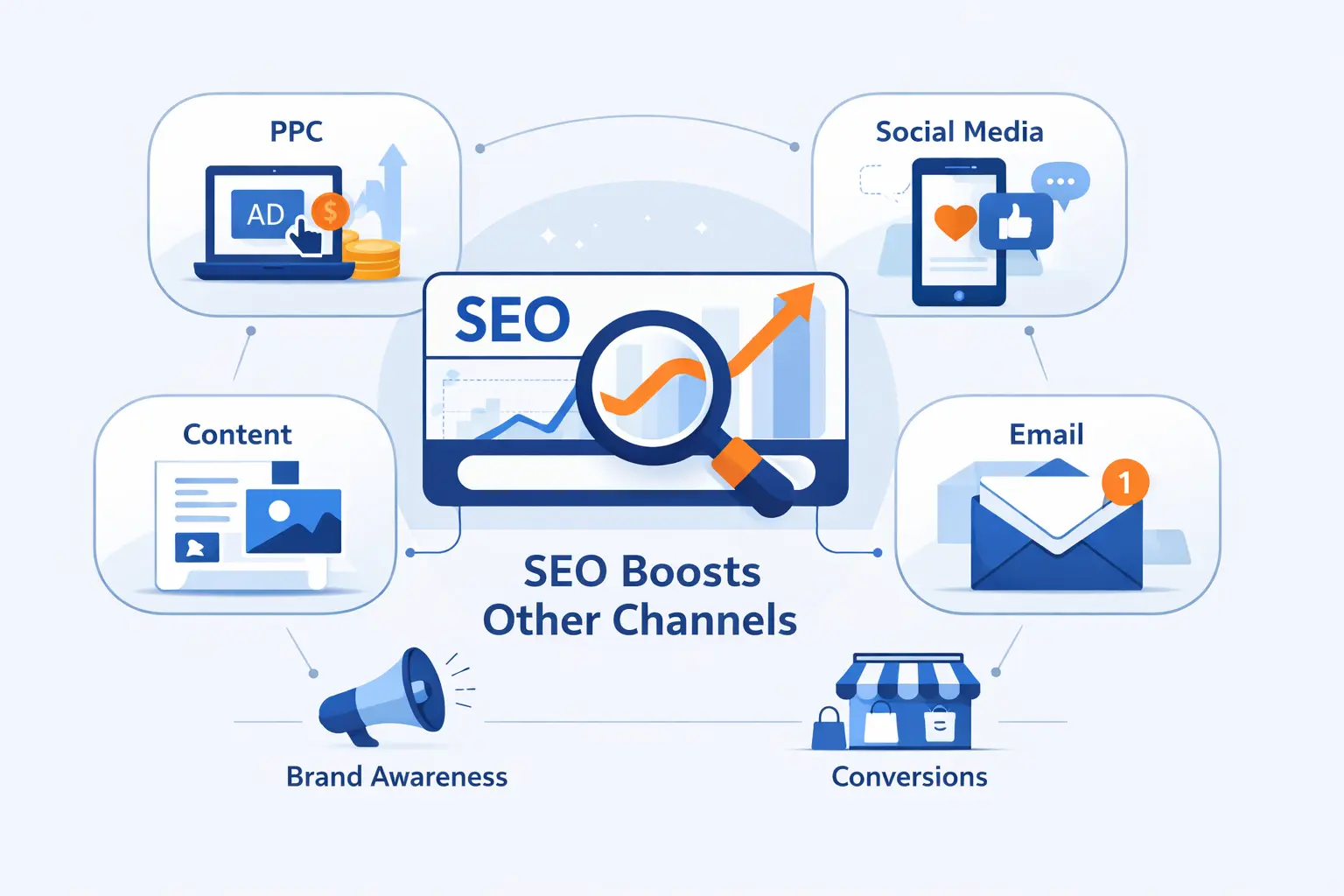
SEO works better when it is not isolated. The best results usually come when it shares inputs and outputs with the rest of marketing. One channel teaches. Another amplifies.
1. Content Marketing, Email, and SEO That Work Together
Content marketing and email benefit when search-driven topics shape the editorial plan. If people keep asking the same question in Google, that topic can become an article, a newsletter section, a webinar, or a lead magnet. One piece of research can serve several channels.
2. Social Media, Digital PR, and Backlink Opportunities
Social media and digital PR can help good pages travel farther. A strong report, tool, or opinion piece can earn attention, mentions, and backlinks. We do not see backlinks as a separate magic trick. They are often the byproduct of publishing something worth citing.
3. Better Results From Paid Campaigns and Broader Brand Visibility
Paid campaigns also improve when SEO insights guide them. Search data can sharpen ad copy, landing page angles, and negative keywords. At the same time, paid campaigns can test messaging quickly, which gives SEO teams faster feedback on what resonates.
Benefits of SEO in the Age of AI Search
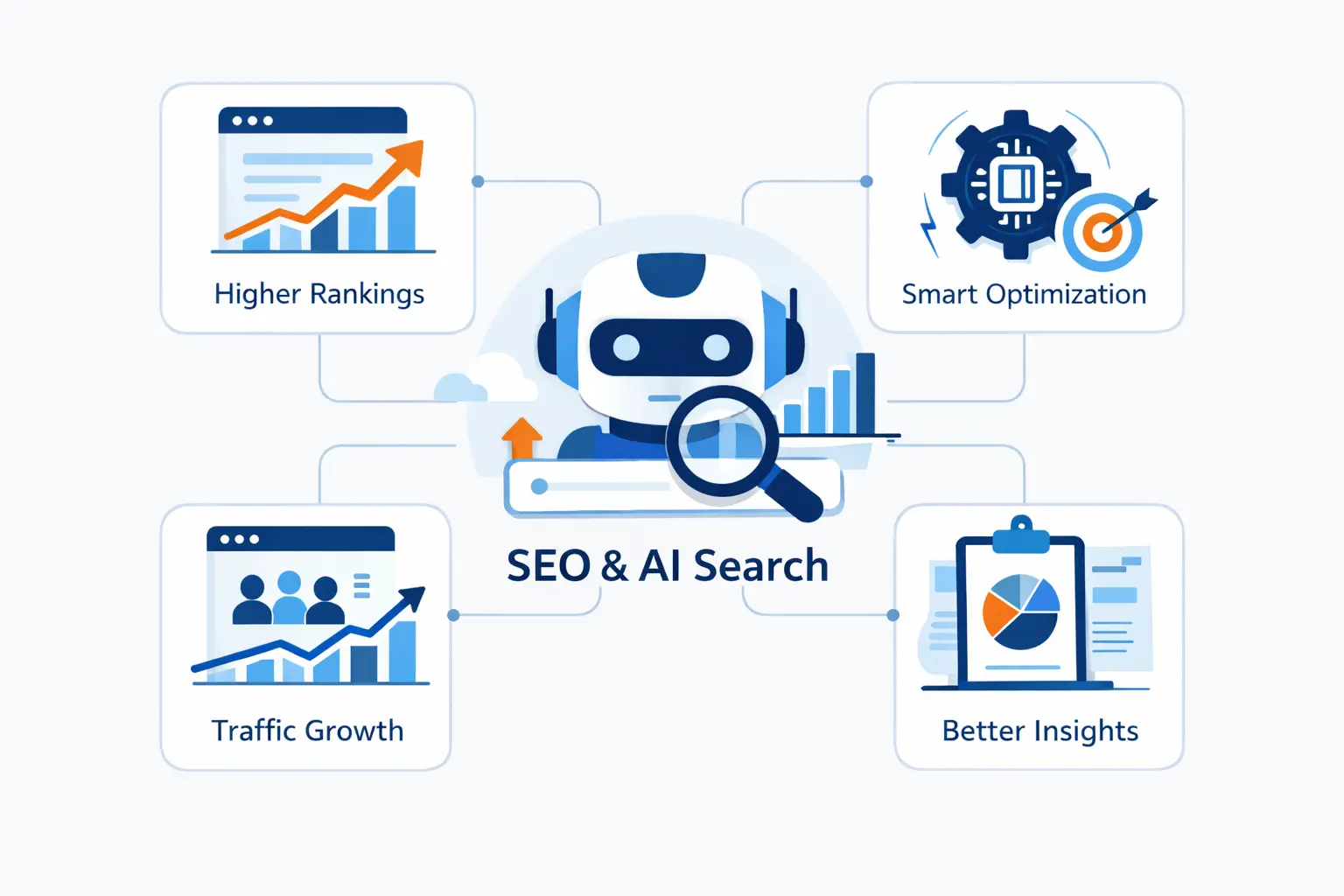
AI has changed the search results page, but it has not erased the need for discoverable websites. If anything, it has raised the bar for clarity, credibility, and structure. We think that is healthy.
1. Why SEO Still Matters for AI Overviews and AI Search Visibility
Google’s current guidance says existing best practices still apply to AI Overviews and AI Mode. It also says no special markup is required just to appear. We take that as a strong signal that SEO still matters. The foundations remain the foundations.
2. How Strong Search Presence Supports Brand Mentions in AI Tools
Strong organic presence also supports brand mentions in AI tools, even if no platform promises them. This is partly an inference, and we want to be plain about that. When a brand publishes useful, crawlable, widely referenced pages, it becomes easier for systems that retrieve web content to find and surface it.
3. How Helpful, Specific Content Can Earn Citations Beyond Page One
Helpful, specific content can win citations beyond the classic blue-link list. We see this with documentation, comparison pages, calculators, local pages, and tightly focused FAQs. Broad fluff has little grip. Specific pages with direct answers have a much better chance.
How to Measure the Benefits of SEO
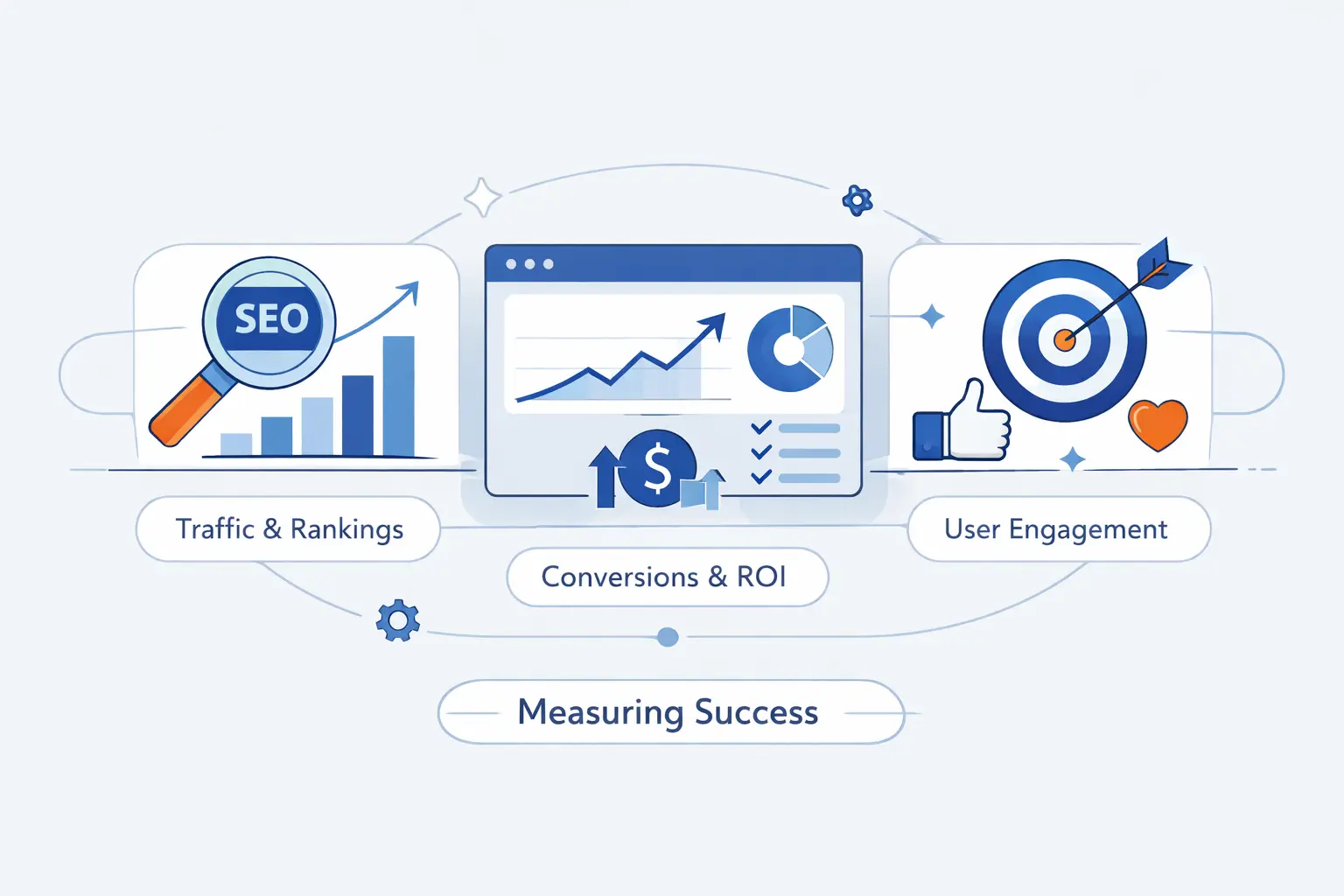
If we cannot measure SEO, we cannot improve it. We have little patience for vanity reporting. The right dashboard should connect visibility to action, not just to applause.
1. Organic Traffic, Rankings, and Click-Through Rate
The essentials live in the performance report, which tracks clicks, impressions, click-through rate, and average position. Those numbers tell us whether visibility is expanding and whether snippets are persuasive enough to win the click.
2. Conversion Rate, Revenue Attribution, and Customer Value
Traffic is only the beginning. We also want conversion rate, qualified leads, influenced revenue, and customer value by landing page or topic cluster. A page that brings fewer visits but better customers can be far more valuable than a page that only inflates the chart.
3. Site Health, Engagement, and Ongoing Improvement
Site health belongs in the same conversation. We watch crawl issues, indexing coverage, Core Web Vitals, engagement in analytics, and internal pathing. When measurement loops back into fixes, SEO becomes a habit of improvement instead of a one-off campaign.
When Professional SEO Support Can Add More Value
There comes a point when outside help saves more than it costs. That is especially true when internal teams are stretched thin or the site has grown messy. Fresh eyes can be worth a lot.
1. Saving Time With Specialized Execution and Reporting
Professional support can save time by turning scattered ideas into a working plan. Research, briefs, technical audits, implementation tickets, reporting, and follow-up all take hours. When specialists handle that workflow, in-house teams can stay focused on product and operations.
2. Accessing Advanced Tools, Analytics, and Industry Expertise
Experienced teams usually bring better tools and cleaner interpretation. Data is plentiful. Judgment is rarer. Advanced crawlers, log analysis, topic mapping, and attribution models only matter if someone can turn the output into sensible next steps.
3. Keeping Pace With Algorithm Updates, Competitors, and Market Trends
External support can also help businesses keep pace. Search features change. Competitors publish. Algorithms shift. Markets move. We find that regular monitoring and calm adaptation beat panic every time.
Frequently Asked Questions About the Benefits of SEO
We hear the same questions again and again, and for good reason. SEO can look murky from the outside. Here is the plain answer to the issues clients ask us about most.
1. Is SEO Dead or Evolving in 2026?
We do not buy the old claim that SEO is dead. In 2026, it is evolving. AI is changing how answers are presented, but search engines still need high-quality pages to crawl, understand, and surface. The format is shifting. The need for useful websites is not.
2. Will AI Replace SEO?
No. AI changes discovery and summarization behavior, but it still needs source material. Someone still has to publish accurate pages, structure them well, keep them accessible, and earn trust over time.
3. How Long Does It Take to See the Benefits of SEO?
It depends on the site, the competition, and the problems being fixed. We sometimes see early movement after technical cleanup. Meaningful content gains usually need more patience. SEO is closer to gardening than to flipping a switch.
4. How Does SEO Compare With PPC for Long-Term Growth?
PPC is faster. SEO is more durable. We like paid campaigns for immediate testing and time-sensitive demand, while SEO builds a library of pages that can keep attracting qualified visitors after the initial work is done.
5. What Is Local SEO and Why Does It Matter for Small Businesses?
Local SEO is the practice of improving visibility for geographically relevant searches, maps results, and nearby intent. It matters for small businesses because local buyers often want action now, not an essay. If you serve a place, your site and profiles should make that obvious.
6. Can Small Businesses Benefit From SEO on a Budget?
Yes, absolutely. A small business can start with a tight scope, a clean profile, a few service pages, useful FAQs, and better site basics. We would rather see focused execution on ten important tasks than shallow work on a hundred.
How 1Byte Supports SEO-Ready Websites With Cloud and Hosting Services
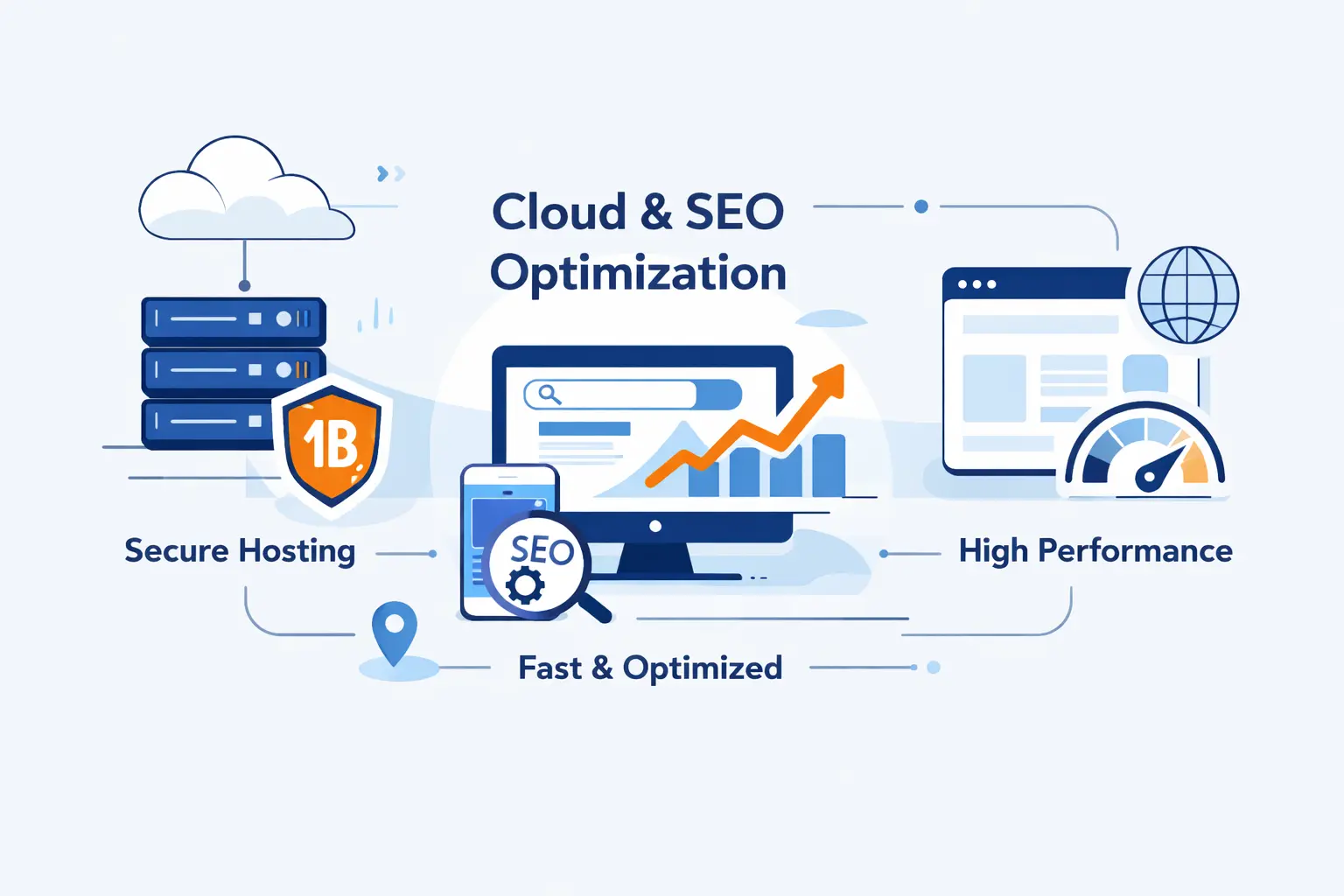
At 1Byte, we think SEO starts before the first article is published. It starts with infrastructure that search engines can crawl and visitors can trust. We have learned the hard way that hosting does not replace SEO, but it can support it or sabotage it.
1. Build a Strong Foundation With Domain Registration and SSL Certificates
We help businesses begin with clear basics such as domain registration and SSL certificates. A stable domain makes brand building possible. HTTPS protects visitors and removes an unnecessary trust barrier. If the foundation is shaky, everything built on top feels shakier.
2. Launch Reliable Sites With WordPress Hosting and Shared Hosting
WordPress hosting and shared hosting can be sensible starting points when the goal is a reliable, manageable site. We care about uptime, sensible configurations, predictable performance, and an environment where teams can publish, update, and maintain pages without constant friction.
3. Scale With Cloud Hosting, Cloud Servers, and AWS Partner Support
As traffic, content, and operational needs grow, cloud hosting, cloud servers, and AWS Partner support give businesses room to handle more complexity. That matters for SEO because growth brings heavier pages, more templates, more integrations, and higher reliability demands.
Why the Benefits of SEO Compound Over Time
1. Why Consistency Beats Short-Term Tactics
Consistency beats short-term tactics because trust accumulates slowly. Helpful pages, technical upkeep, steady publishing, and honest measurement are not glamorous, but they work. We have seen more businesses grow from disciplined repetition than from any secret trick.
2. Which SEO Priorities Deliver the Greatest Long-Term Value
If we had to set priorities, we would start with search intent, technical cleanliness, key money pages, local accuracy where relevant, and content that answers real questions better than the competition. Fancy extras can wait. The basics carry more weight than people think.






3. How Businesses Can Turn SEO Into Sustainable Growth
That is why the benefits of SEO compound over time. Each good page, each fix, and each earned mention makes the next result easier to achieve. At 1Byte, we see SEO as a durable growth engine when it sits on a solid website foundation and stays focused on helping people find the right answer at the right moment.