


- Brand Identity Is the Visual, Verbal, and Experiential Expression of a Brand
- Brand Identity vs Brand Image and the Brand Itself
- Why Brand Identity Matters
- The Core Elements of Brand Identity
- How to Define and Build a Strong Identity
- Brand Identity Examples in Practice
- FAQ
- How 1Byte Supports Brand Identity Online
- Conclusion
When readers ask us what is brand identity, we give a simple answer. It is the set of choices a business makes to look, sound, and feel like itself. That includes visuals, language, and the experience customers have when they interact with the brand. A logo matters, but it is only one piece of the whole system. In our view, brand identity is the deliberate expression of a brand, while brand image is the impression people form from that expression.
Brand Identity Is the Visual, Verbal, and Experiential Expression of a Brand

Brand identity is the visual, verbal, and experiential expression a company creates so people can recognize it and remember it. It includes obvious assets like a logo, colors, typography, and imagery, but it also includes voice, tone, story, packaging, product feel, and customer interactions. We think the most useful way to understand it is as a system, not a file folder of design assets. If a brand identity is strong, customers can sense the same personality across the website, sales deck, app, email, and support message.
That is why we do not reduce identity to “the logo.” A logo is a symbol. Brand identity is the full set of signals that tell people who the brand is, what it values, and what kind of experience they should expect. In practice, it is where strategy becomes visible.
Brand Identity vs Brand Image and the Brand Itself
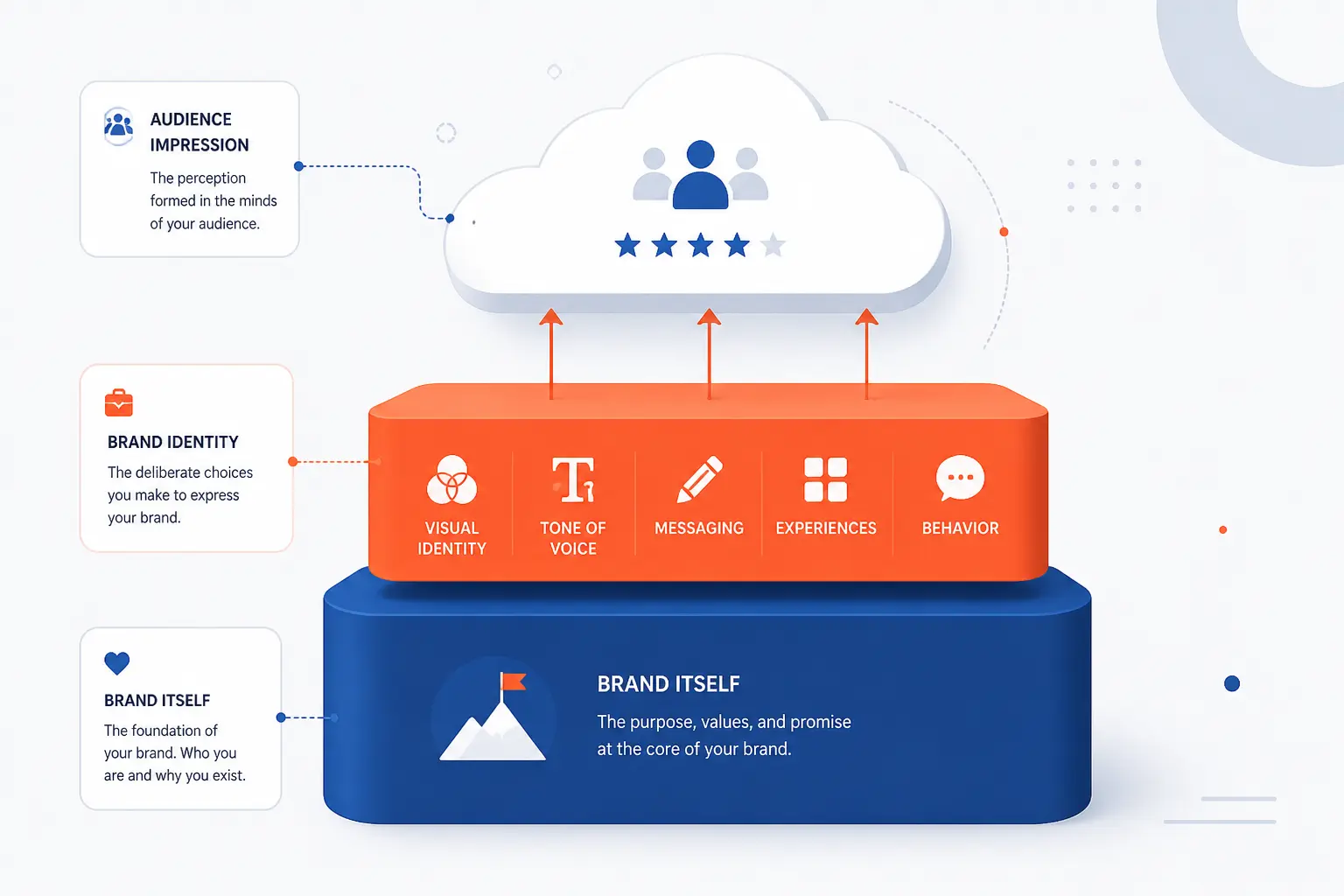
These three ideas are related, but they are not the same. The brand itself is the total meaning attached to a company or offer. Brand identity is what the company creates to express that meaning. Brand image is what the audience actually believes and feels after seeing and using it. We find that once people separate those three layers, most branding confusion disappears.
| Term | Who shapes it most | What it includes |
|---|---|---|
| Brand | Company and market together | Total meaning, reputation, expectations |
| Brand identity | Company | Visuals, voice, story, design, experience choices |
| Brand image | Audience | Perceptions, feelings, memories, judgments |
What a Company Creates vs What the Audience Perceives
Brand identity is what a company builds, while brand image is what the audience takes away. A business can choose its name, logo, tone, packaging, and website layout. It cannot fully control how people interpret those choices. That gap matters. If a company wants to look premium but its copy feels sloppy and its site feels slow, the intended identity and the perceived image start pulling in opposite directions.
We like to put it this way. Identity is the signal sent. Image is the signal received. Good branding reduces the static between them.
How Identity Supports Positioning, Messaging, and Experience
Brand identity gives positioning and messaging a form people can actually notice. Positioning says where a brand sits in the market. Identity makes that position visible through design, language, and user experience. A budget airline, a luxury hotel, and a cybersecurity firm should not sound or look interchangeable, even if all three claim to care about customers.
Just as important, identity helps teams stay aligned. It gives marketers, designers, sales teams, and product teams a shared standard for what feels “on brand.” Without that, messaging drifts, visuals fragment, and the customer experience starts to feel patched together.
Why Brand Identity Matters
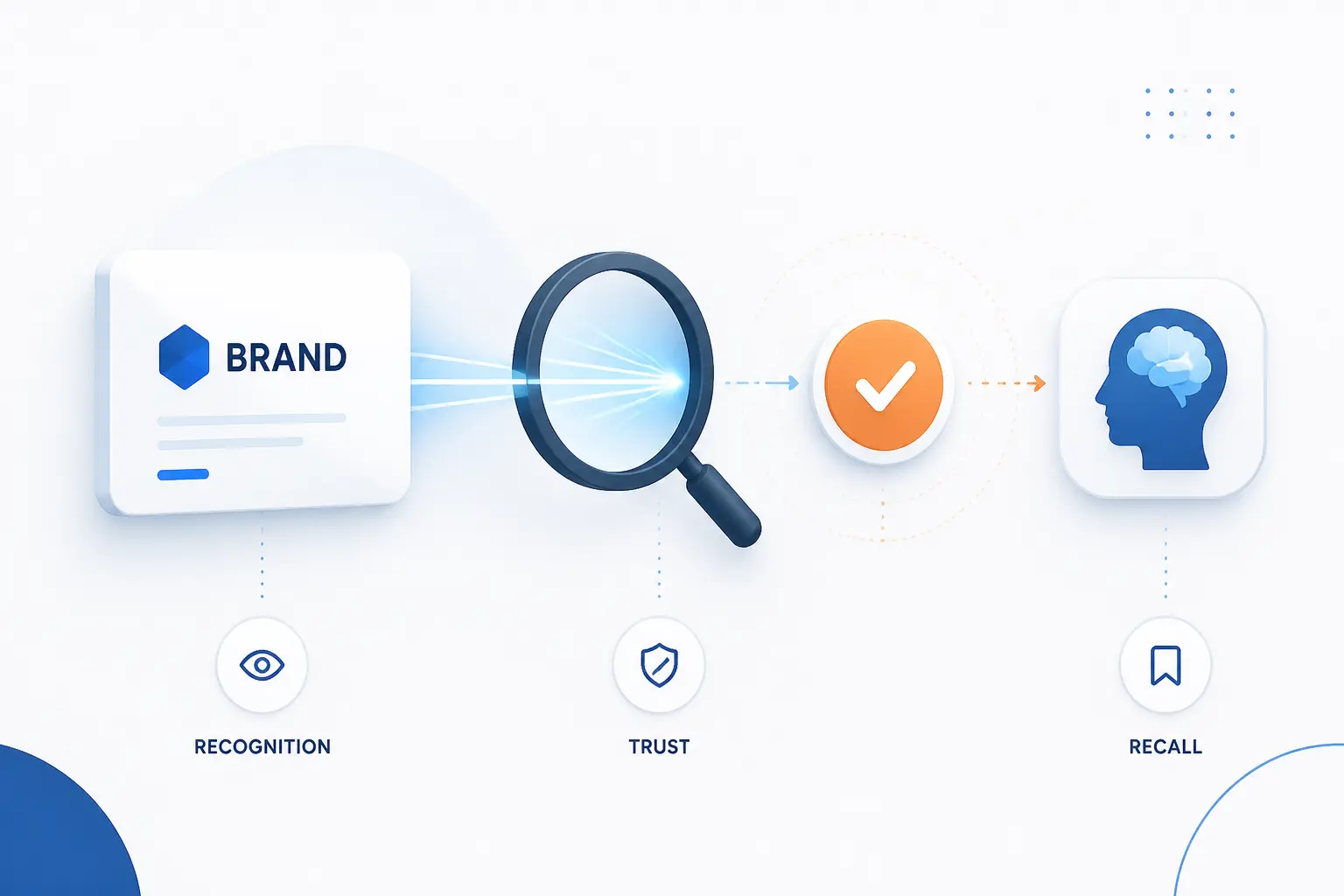
Brand identity matters because it makes a brand recognizable, believable, and consistent. It helps people tell one company from another, decide whether it feels trustworthy, and understand what kind of experience to expect. We would go further and say this is where business strategy meets memory. If people cannot quickly recognize or interpret your brand, the rest of your marketing has to work much harder.
Standing Out in a Crowded Market
A clear identity makes a company easier to recognize and easier to remember. In crowded categories, features often overlap and prices often converge. What sticks is the combination of look, voice, and experience. Think of a grocery shelf, an app store results page, or a LinkedIn feed. People rarely stop to analyze every option in depth. They scan, pattern-match, and decide.
That is why distinctiveness matters. Colors, shapes, typography, tone, and even interface rhythm can help a brand claim mental space. We do not mean being weird for the sake of it. We mean being specific enough that people can tell who is speaking before they see the company name.
Building Trust, Loyalty, and Perceived Value
Strong identity supports trust because it makes a brand feel coherent and intentional. In Edelman’s research, 81% of consumers said they must be able to trust a brand to do what is right when making a purchase decision. That does not mean identity alone creates trust. The product and the behavior still have to match. Still, a scattered identity often signals a scattered company.
Identity also shapes perceived value by changing how an experience feels. In PwC’s customer experience research, consumers said they would pay up to 16% more in some categories for a great experience. We read that as a reminder that polish is not fluff. When design, copy, and service feel thoughtful, customers often assume the underlying offer is better too.
Creating Consistency Across Every Touchpoint
Consistency is where brand identity proves its value day after day. A customer might discover a brand through an ad, visit its website, read an email, talk to support, and later use the product itself. If each touchpoint feels like it came from a different company, confidence drops.
We see consistency as a compounding asset. It makes each interaction reinforce the last one. Over time, that repetition creates familiarity, and familiarity makes recall easier. The opposite is true too. Inconsistent visuals or tone can quietly drain recognition without anyone noticing right away.
The Core Elements of Brand Identity
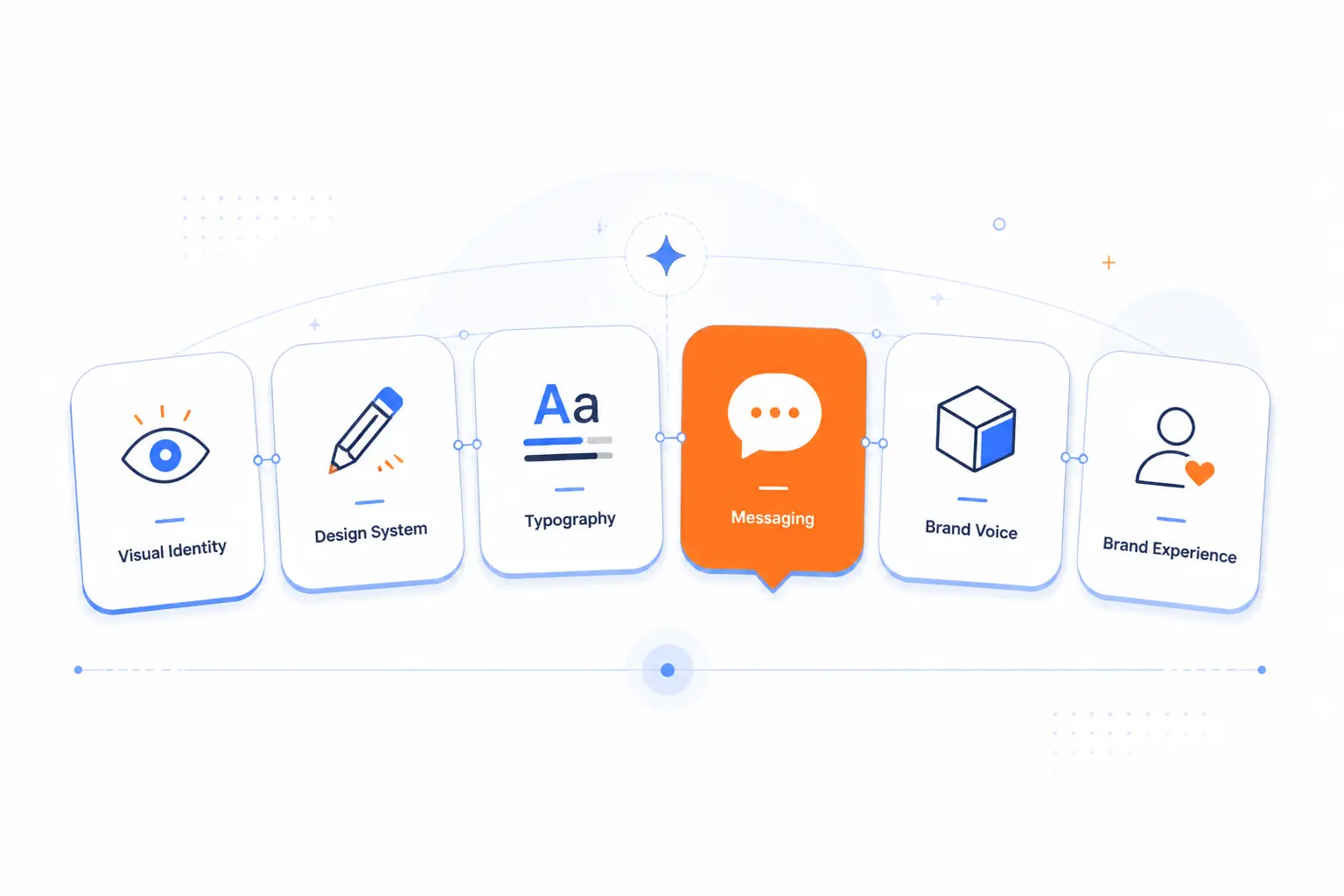
The core elements of brand identity are the parts a company uses to express itself repeatedly and coherently. Some are visual, some are verbal, and some live in the actual customer experience. We think beginners understand this fastest when they stop asking for a single asset and start looking for a connected set of choices. Each element should support the same positioning and personality.
Visual Elements Including Logo, Color Palette, and Typography
Visual elements are the fastest signals people notice. A logo gives the brand a recognizable mark. A color palette creates emotional and mnemonic cues. Typography shapes the voice before a reader processes a single sentence. A law firm, toy company, and fintech startup can all say “we are modern,” but their type choices will reveal very different interpretations of that word.
We advise thinking of visuals as rules for repetition, not one-off decoration. The point is not to make one beautiful homepage. The point is to create a recognizable visual language that works across many formats and still feels like the same brand.
Imagery, Layouts, and Graphic Elements
Imagery and layout often do more branding work than companies realize. Photography style, illustration approach, icon shapes, spacing, and graphic motifs all teach the audience what “this brand looks like.” Even without the logo, many strong brands remain recognizable because these supporting elements are so consistent.
Layout matters for another reason. It affects how calm, premium, playful, or practical a brand feels. Dense pages with weak hierarchy create friction. Clean structure, intentional spacing, and repeatable components create confidence. Small design decisions can change the personality people sense.
Verbal Elements Including Brand Voice, Tone, and Tagline
Verbal identity is the way a brand sounds in words. Voice is the stable personality behind the writing. Tone is how that voice adjusts to context, audience, or emotion. A good tagline then compresses part of that identity into a short, memorable line.
We think many brands underinvest here. They obsess over color codes, then let their headlines, emails, and support replies sound generic. Mailchimp’s public voice and tone guide is a practical example of how companies can define a consistent voice while changing tone for different situations.
Brand Name, Story, and Key Messages
A brand name, story, and message framework help people understand what the brand stands for. The name creates the first verbal cue. The story explains why the brand exists and why it matters. Key messages turn that story into repeatable talking points for sales pages, presentations, and campaigns.
We would not romanticize “storytelling” for its own sake. The useful part is clarity. A strong story gives context to the visuals and keeps the messaging from sounding random. Good key messages also prevent every team from inventing a different explanation of the same business.
Brand Personality, Products, and Customer Experience
Brand personality becomes real only when products and customer experience support it. A brand cannot claim to be simple if its onboarding is confusing. It cannot claim to be warm if its support messages feel cold. This is why we treat experience as part of identity, not a separate topic.
Products themselves communicate identity. Pricing model, packaging, delivery flow, checkout steps, and even microcopy all send signals. When those signals align, the brand feels believable. When they clash, the audience senses the mismatch quickly.
How to Define and Build a Strong Identity
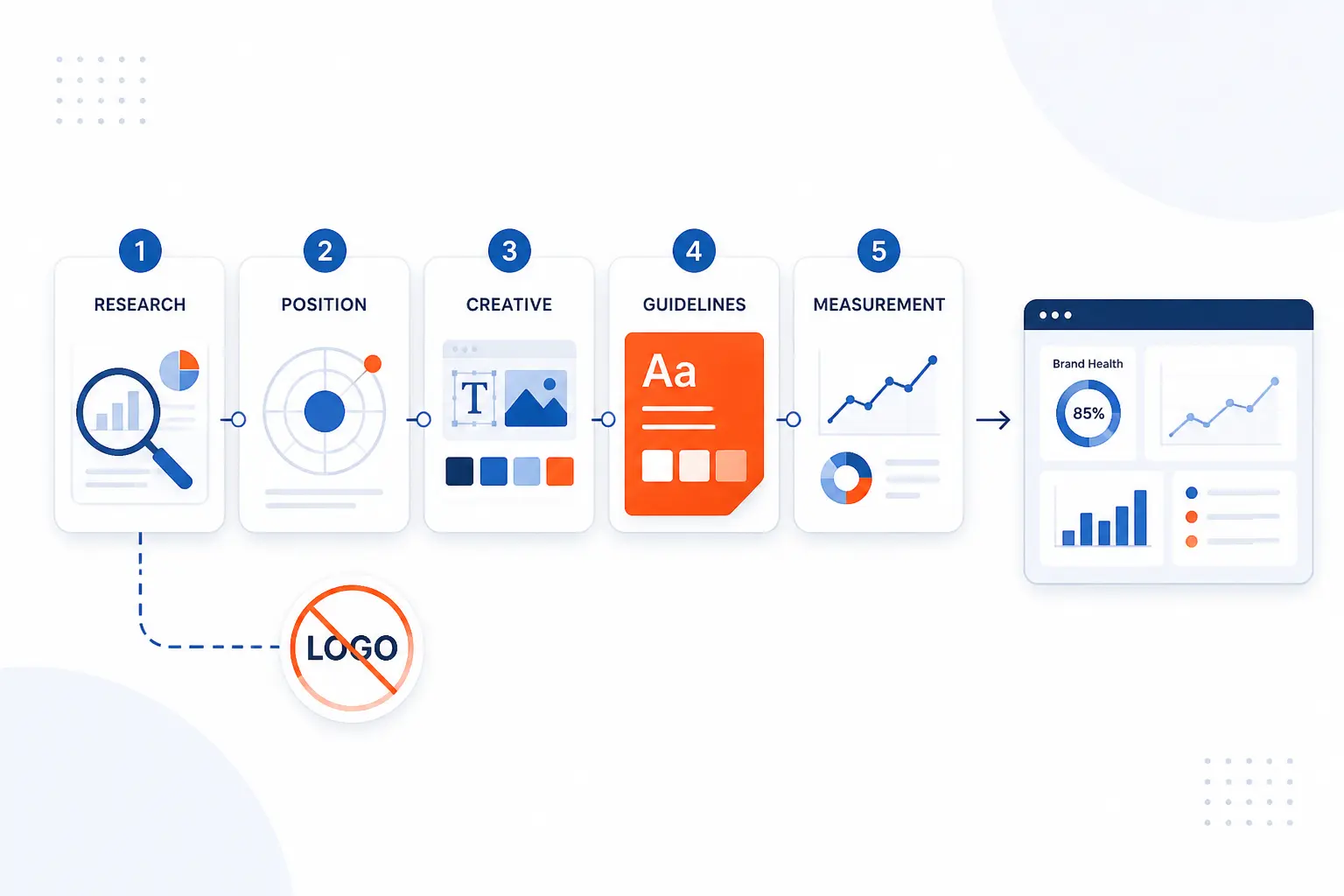
Building a strong identity starts with strategy and ends with disciplined execution. The process usually moves from research, to positioning, to creative choices, to guidelines, to ongoing measurement. We have found that teams get into trouble when they skip the middle and jump straight to logo ideas. Identity works best when the business decision comes before the design decision.
Research the Market, Audience, and Competitors
Start by studying the market, the audience, and the alternatives customers already see. Look at how competitors describe themselves, what visual patterns dominate the category, and where customers seem confused or underserved. Interview real users if you can. Read reviews. Watch how people talk about the problem in their own words.
The goal is not to copy what works. It is to find where sameness is creeping in and where your brand can be clearer or more distinctive. Good research gives identity a real job to do.
Clarify Positioning, Values, and Personality
Next, define what the brand stands for and how it should feel. Positioning answers who the brand is for, what problem it solves, and why it is different. Values explain what principles guide behavior. Personality translates those ideas into human traits such as calm, witty, precise, bold, or reassuring.
We like to pressure-test this step with a simple question. If the logo disappeared, what should still make the brand recognizable? The answers usually point to the right voice, pacing, visual style, and customer experience choices.
Turn Strategy Into Visual and Verbal Choices
Then turn the strategy into visible and usable decisions. Choose colors, typography, logo rules, image direction, writing principles, key messages, and tone examples that match the positioning. The important thing is fit, not fashion. A trendy identity that does not express the business clearly will age badly.
This is also where tradeoffs matter. If the brand wants to feel premium, maybe it needs more restraint and whitespace. If it wants to feel approachable, perhaps the language should be simpler and warmer. Strong identity usually comes from making fewer, sharper choices.
Create Brand Guidelines for Teams and Partners
Document the identity so other people can use it correctly. Brand guidelines should cover logo use, colors, type, imagery, layouts, voice, tone, and message priorities. They should also show examples of what to do and what to avoid.
We prefer guidelines that help people make decisions, not just follow rules. A useful guide explains the reasoning behind the choices. That makes it easier for internal teams, freelancers, and agencies to stay aligned when new situations appear.
Measure Results and Refresh Over Time
Measure whether the identity is improving recognition, recall, consistency, and customer response. You can review message clarity, conversion behavior, repeat engagement, direct traffic, or simple qualitative feedback from customers and staff. Not every change needs a rebrand. Often the smarter move is a controlled refresh.
Identity should evolve when the business evolves. Markets shift, products expand, and audiences mature. We think the best brand systems are stable at the core and flexible at the edges.
Brand Identity Examples in Practice
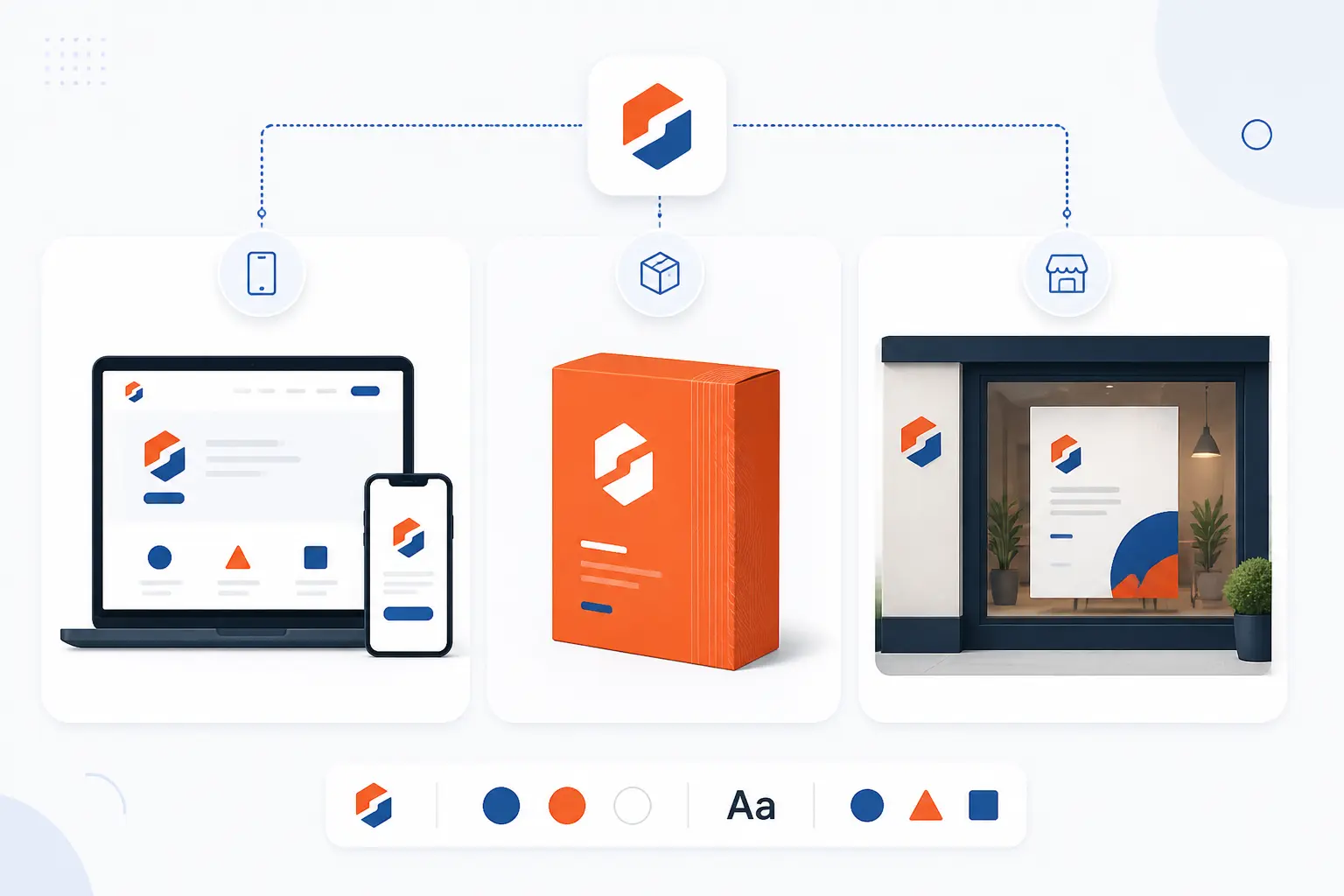
Examples make the concept easier to grasp because they show how different elements work together. A strong brand identity is rarely about one brilliant logo. It is usually the result of repeated choices across design, language, and customer experience. Here are three brands we think illustrate different ways this can work.
Apple
Apple shows how a strong identity can be built through restraint. Its public design principles emphasize ideas like simplicity and focus, and those ideas echo through product interfaces, packaging, retail environments, and marketing language. We think that coherence is the point. Apple’s identity feels controlled because the same philosophy appears in many places, not because one visual asset does all the work.
Coca-Cola
Coca-Cola is a classic example of continuity. The company’s own trademark chronology notes that Frank Mason Robinson wrote the name in Spencerian script, and that script became central to the brand’s long-term recognition. What stands out to us is consistency over time. The identity has evolved, but the core cues remained familiar enough that the brand stayed instantly recognizable across generations.
Duolingo
Duolingo shows that a playful identity can still be highly disciplined. Its public brand guidelines cover logos, writing, illustration, and marketing, which helps explain why the brand feels so recognizable across app screens, social posts, and campaigns. We like this example because it proves that “fun” is not the opposite of structure. The humor works because the system behind it is clear.
FAQ
These are the questions we hear most often when people want a quick answer. The short version is that brand identity is the expression a company creates, and the rest of the terms around it become easier once that idea is clear.
What Is Meant by Brand Identity?
Brand identity means the set of visual, verbal, and experiential choices a company uses to present itself. It includes things like logo, colors, typography, voice, messaging, and the feel of customer interactions. We would describe it as the outward expression of the brand’s strategy and personality.
What Is a Brand Identity Example?
A brand identity example is Coca-Cola’s script wordmark, color system, and consistent emotional tone across packaging and advertising. Those pieces work together to create recognition, not as isolated assets. Duolingo is another good example because its mascot, illustrations, and writing style all feel connected.
How Do You Define Your Brand Identity?
You define your brand identity by clarifying your audience, positioning, values, and personality, then translating those into visual and verbal rules. That usually means research first, creative decisions second, and guidelines third. We suggest testing the result across real touchpoints, not just mockups.
What Is the Difference Between Brand Identity and Brand Image?
Brand identity is what the company creates, and brand image is what the audience perceives. Identity is intentional expression. Image is the impression left in people’s minds after they see, read, and use the brand. If the two do not match, the branding needs work.
How 1Byte Supports Brand Identity Online
Online, brand identity becomes concrete through the assets people type, see, and experience. We see it in the domain name, the browser padlock, the website design, and the performance visitors feel as they move through the site. At 1Byte, we connect that practical side of branding through domain registration, SSL certificates, WordPress hosting, shared hosting, cloud hosting, and cloud servers. We are also an AWS Partner, which matters when a brand needs cloud infrastructure choices that support its next stage of growth.
| Service area | Practical brand role | Best fit |
|---|---|---|
| Domain registration + SSL certificates | Name recognition and trust signals | Launching or protecting a branded web presence |
| WordPress hosting + shared hosting | Consistent website presentation | Content sites, company websites, and smaller projects |
| Cloud hosting + cloud servers | Performance that supports brand expectations | Growing traffic, campaigns, and heavier workloads |
Choose a Memorable Domain Name and Protect It With SSL Certificates
A clear domain name is often the first branded asset a customer meets. It should be easy to remember, easy to type, and close to the brand people are trying to find. Domain registration helps secure that naming layer early, before confusion or inconsistency creeps in.
SSL certificates matter just as much because trust starts before a visitor reads a headline. If people see a secure connection in the browser, the site feels more legitimate. For us, that is not a minor technical detail. It is part of the brand’s credibility.
Build a Consistent Website With WordPress Hosting and Shared Hosting
A website is where brand identity stops being theory and becomes a lived experience. WordPress hosting and shared hosting give businesses a place to present their logo, colors, typography, copy, imagery, and message structure consistently. That matters because many customers will judge the whole brand based on the website alone.
In practice, consistency means more than matching colors. It means pages use the same tone, layouts support the same hierarchy, and content feels like it came from one mind. Even a simple site can reinforce identity well if those elements stay aligned.
Scale Brand Performance With Cloud Hosting and Cloud Servers
Performance shapes identity because a slow or unstable site makes even a polished brand feel careless. Cloud hosting and cloud servers help businesses support heavier traffic, richer content, and more demanding applications without breaking the experience customers expect. That is especially important when campaigns succeed and attention spikes.
We see this as a branding issue as much as an infrastructure issue. If a brand promises professionalism, speed, or reliability, the site has to deliver that feeling under real conditions. Otherwise the message and the experience start to contradict each other.







Conclusion
Brand identity is the planned way a brand looks, sounds, and feels across every touchpoint. It is not just design, and it is not just messaging. It is the system that turns strategy into something people can recognize, trust, and remember.
If you are defining your own brand, start with one hard question. If the logo vanished, what would still make the brand unmistakably yours? Answer that well, and the rest of your identity work gets much clearer.