

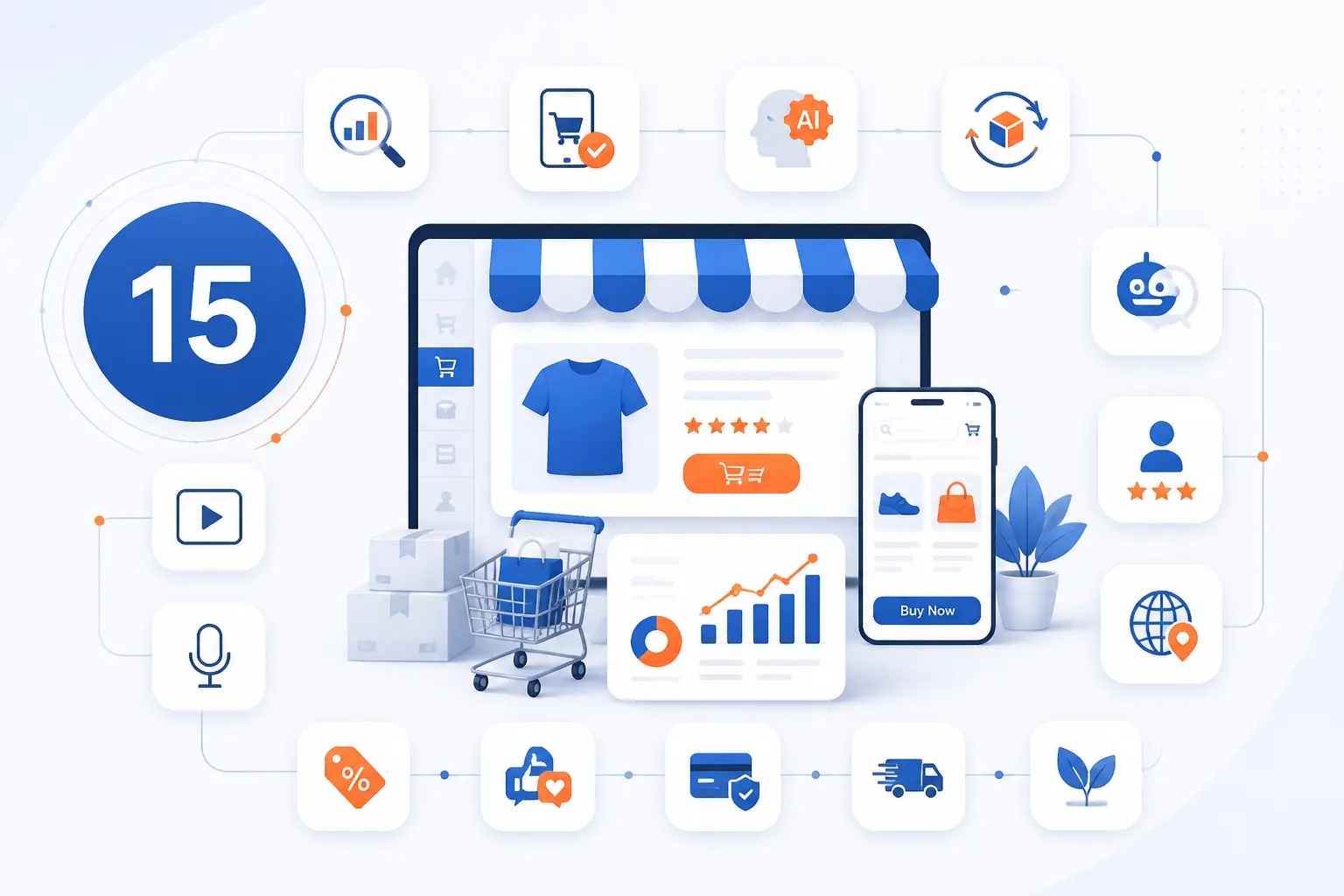
Ecommerce trends are pointing in one clear direction. Stores that remove friction, personalize well, and show up wherever shoppers browse are pulling ahead. We see the biggest wins coming from practical changes, not shiny distractions. If a trend makes buying easier, more trustworthy, or more relevant, it is worth your attention.
In this collection, we sort through 15 shifts that are actually shaping online sales right now. Some help small stores get moving faster. Others matter more for brands selling across borders, managing bigger catalogs, or serving repeat buyers. Our aim is simple: help you scan the field, spot what fits your store, and ignore what does not.
15 Ecommerce Trends Reshaping Online Retail
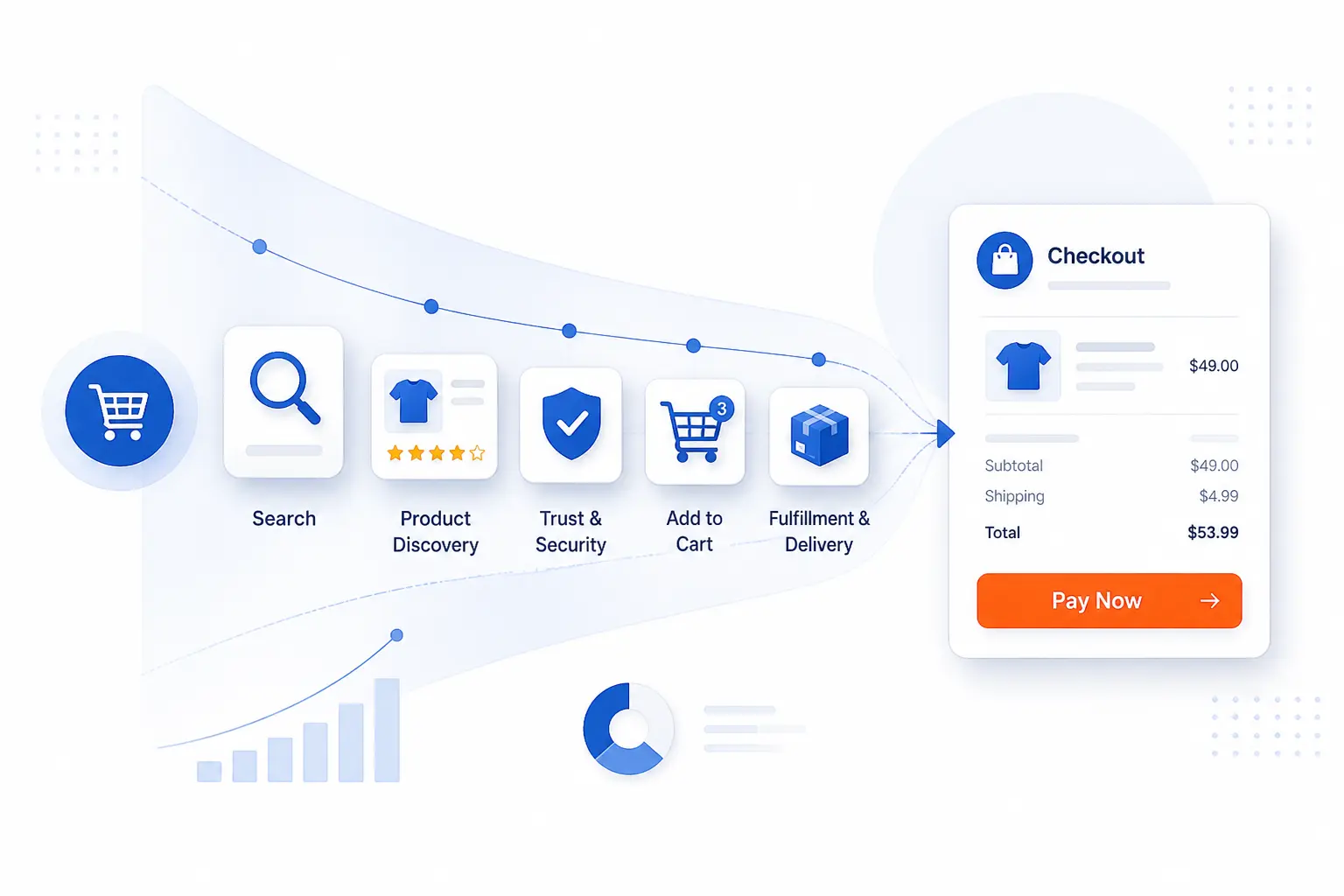
These are the ecommerce trends we believe matter most because they change how people discover products, decide what to trust, and complete a purchase. The smartest way to read them is not as a checklist, but as a menu. Some are conversion plays, some are expansion plays, and some are infrastructure bets. We would start with the ones that solve a real bottleneck in your store today.
| Trend group | Best for | What to improve first |
|---|---|---|
| Discovery and demand | Catalog-heavy or content-led stores | Search, product data, social reach |
| Conversion and retention | DTC brands and repeat-purchase sellers | Mobile checkout, payments, personalization |
| Expansion and operations | Growing multi-market or B2B sellers | Systems, transparency, service model |
1. AI Agents and Automation Across the Shopping Journey
AI agents are becoming a real shopping surface. OpenAI is already expanding a product discovery protocol so shoppers can compare options inside a conversation, which tells us discovery is moving beyond the old search-results page. This is worth doing for stores with broad catalogs, configurable products, or complex comparisons because automated guidance can narrow choices before a human ever steps in.
2. No-Code and AI-Assisted Store Building
Store setup is getting faster because merchants can now generate a working base before they start editing. In Shopify’s Spring ’26 release, sellers can describe a business and spin up a store with AI partners, which is a strong sign that building is shifting from blank-page work to prompt-and-refine work. This suits solo founders and lean teams who need to test offers quickly without waiting on a full development cycle.
3. Cross-Border Transparency for Global Expansion
Cross-border growth now depends on clarity more than courage. A global shopper study from DHL emphasizes local language, local currency, trusted payments, and clear delivery and returns terms as confidence builders for international buyers. This matters most for stores entering new countries because unclear duties, vague shipping windows, or weak returns terms can kill trust before price or product quality even get a chance.
4. Livestream and Social Shopping Converge
Livestream shopping works best when content and checkout stay close together. DHL’s shopping behavior report shows social media already plays a major role in purchase inspiration, which helps explain why live demos, creator drops, and short-form product stories keep moving from awareness tools into direct sales channels. We like this trend for visual products, impulse categories, and brands with founders or creators who can sell with personality.
5. Augmented Reality and Virtual Try-Ons
Virtual try-ons are now a conversion tool, not a novelty. Google’s recent shopping update expanded AI-assisted try-on and beauty preview features, which shows how much demand there is for answering “Will this suit me?” before checkout. This is especially worth pursuing for eyewear, beauty, fashion, and home items because uncertainty about fit, color, or scale often sits at the heart of hesitation.
6. Voice Search and Conversational Product Discovery
Conversational discovery is becoming more useful than keyword search for many buying journeys. Shoppers can now ask for “a quiet blender for a small apartment” or “a gift under $50 for a runner” and expect sensible options back. We think this matters most for broad-catalog stores because natural-language questions reward clear product attributes, plain-English descriptions, and structured data that machines can interpret.
7. Hyper-Personalized Shopping Experiences
Personalization still earns its keep when it is timely and genuinely useful. McKinsey’s personalization research ties better execution to stronger commercial results, which is why behavior-based recommendations, replenishment reminders, and segmented offers still beat generic blasts. We would prioritize this for stores with repeat traffic, enough first-party data, and categories where shoppers compare several options before deciding.
8. Semantic Search That Matches Shopper Intent
Semantic search matters because shoppers rarely search the way merchants label products. A customer might type “soft office chair for back pain” while your catalog says “ergonomic mesh task chair.” This trend is worth pursuing for large or messy catalogs because intent-aware search can connect everyday language, synonyms, and product attributes, which usually means better product discovery and fewer dead-end sessions.
9. Mobile-First Buying and Digital Wallet Use
Mobile-first buying is no longer a design preference. In Worldpay’s payments report, digital wallets lead online transaction value globally, which is a blunt reminder that thumb-friendly checkout and wallet buttons belong near the top of the queue. This matters for almost every store, but especially for traffic coming from social, email, or paid campaigns where a single awkward form field can sink the whole click.
10. Flexible Payment Solutions at Checkout
Flexible payments are becoming a standard expectation at the point of purchase. Buy now, pay later, installment options, and local payment methods can reduce sticker shock for higher-ticket items or multi-item carts. We see the strongest case for this trend in furniture, electronics, beauty bundles, and B2B restocking because the issue is not just affordability, but giving customers a payment path that matches how they already prefer to buy.
11. Composable and Headless Commerce Stacks
Composable commerce is attractive when your business has already outgrown one-size-fits-all software. Brands with multiple storefronts, custom checkout logic, or separate content and commerce teams often need to swap pieces without rebuilding the whole machine. We would treat this as a serious architecture choice, not a fashion statement, because it is worth doing only when flexibility, speed, and channel control clearly outweigh the added operational complexity.
12. Subscription Models That Increase Repeat Revenue
Subscriptions work when the reorder decision should feel automatic. Refill products, pet supplies, coffee, supplements, and curated boxes are obvious fits because the value comes from convenience and habit, not one-time novelty. We like this trend for merchants with predictable replenishment cycles, since a well-run subscription model can smooth revenue, deepen retention, and make lifetime value less dependent on constant reacquisition.
13. Sustainable and Ethical Brand Positioning
Trust around sourcing, packaging, and labor is moving closer to the buy button. Shoppers increasingly want to know what something is made from, where it comes from, and how returns or waste are handled. This is worth doing for brands that can prove the claim in plain language because vague “green” messaging falls flat, while concrete details about materials, repairability, or packaging choices help buyers justify a decision.
14. Post-Purchase Experience as a Loyalty Driver
Post-purchase experience is now part of conversion, not a separate service layer. Order tracking, delivery updates, returns clarity, and follow-up education shape whether a first order becomes a second one. We think this trend deserves more attention because many stores still spend heavily to win the sale, then go quiet right when reassurance, onboarding, or review prompts could strengthen trust and reduce buyer’s remorse.
15. B2B Self-Service Buying Becomes Standard
B2B buyers increasingly want to self-serve. Gartner’s buyer preference survey found a clear tilt toward rep-free research and buying, so manufacturers and wholesalers need fast quote flows, contract pricing visibility, and reorder tools that work without a phone call. This is worth doing for distributors, parts sellers, and account-based catalogs because business buyers often know exactly what they need and just want to get on with it.
Why These Shifts Matter for Business Growth
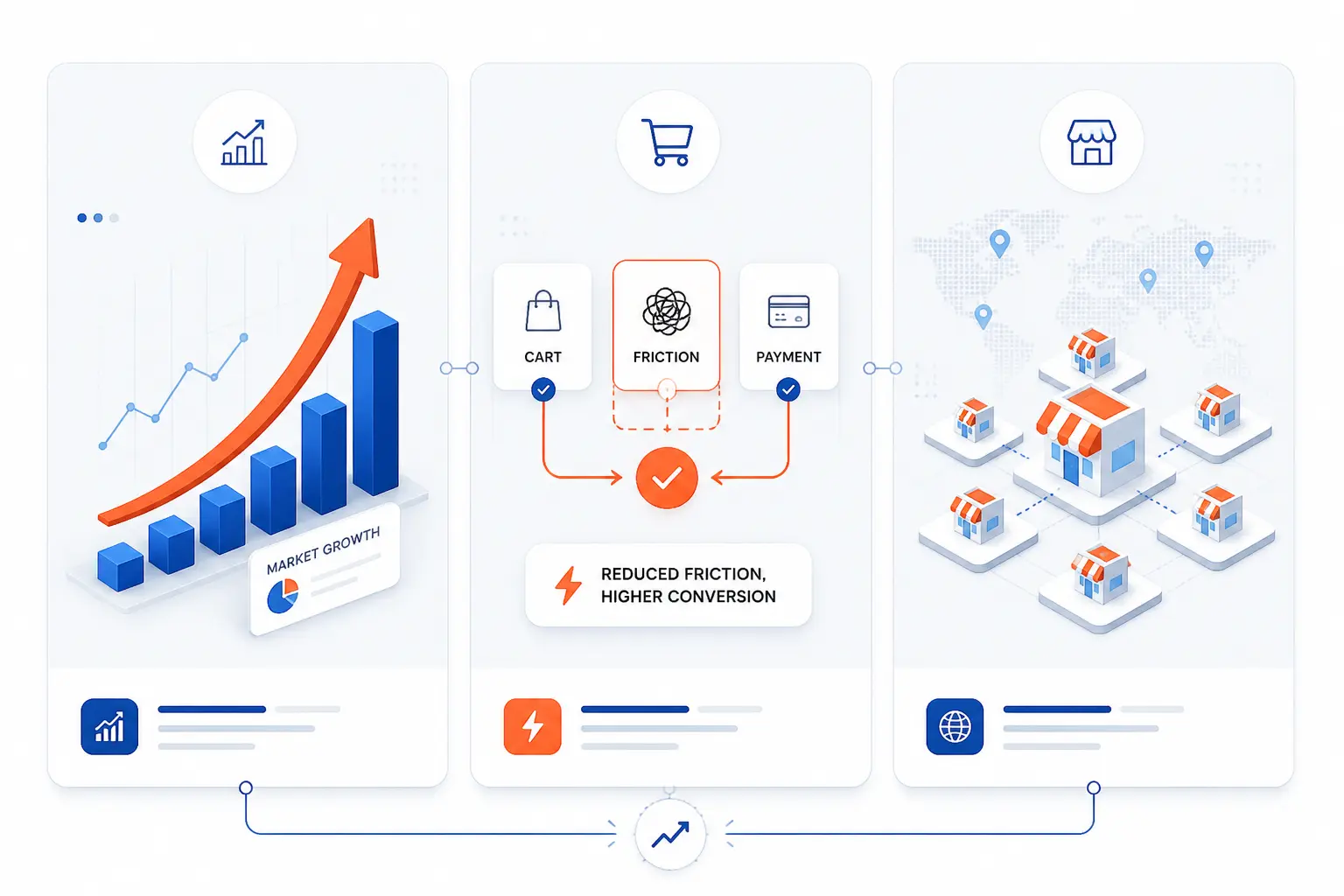
These shifts matter because they affect revenue in three direct ways. They change where demand starts, how much friction sits in the buying path, and how confidently a store can expand beyond its current base. We do not see them as abstract trends. We see them as forces that raise the cost of standing still.
Global Market Growth Raises the Stakes for Retailers
The opportunity is bigger, but so is the competition. In the U.S., e-commerce accounted for 16.9% of total retail sales in Q1 2026, and online sales outpaced overall retail growth in the same release. That means digital execution is no longer the side project of retail. It is where a larger share of the fight for margin, loyalty, and repeat demand is already happening.
International Buying Creates More Room for Expansion
Cross-border demand expands the ceiling for ambitious stores. The same DHL shopper study we mentioned earlier shows that buying from foreign retailers is already normal behavior for a large share of customers, which tells us expansion is not the hard part anymore. The hard part is removing uncertainty around duties, delivery, returns, and local payment expectations before a shopper hesitates.
Abandoned Carts Show Why Convenience Still Wins
Checkout friction still destroys intent at the last minute. Baymard’s checkout benchmark keeps pointing to familiar blockers such as surprise costs, forced account creation, and overly long forms. That is why we stay practical here. A faster checkout, clearer shipping promise, or easier return policy will often beat a far more expensive traffic campaign.
How to Prioritize the Right Moves First
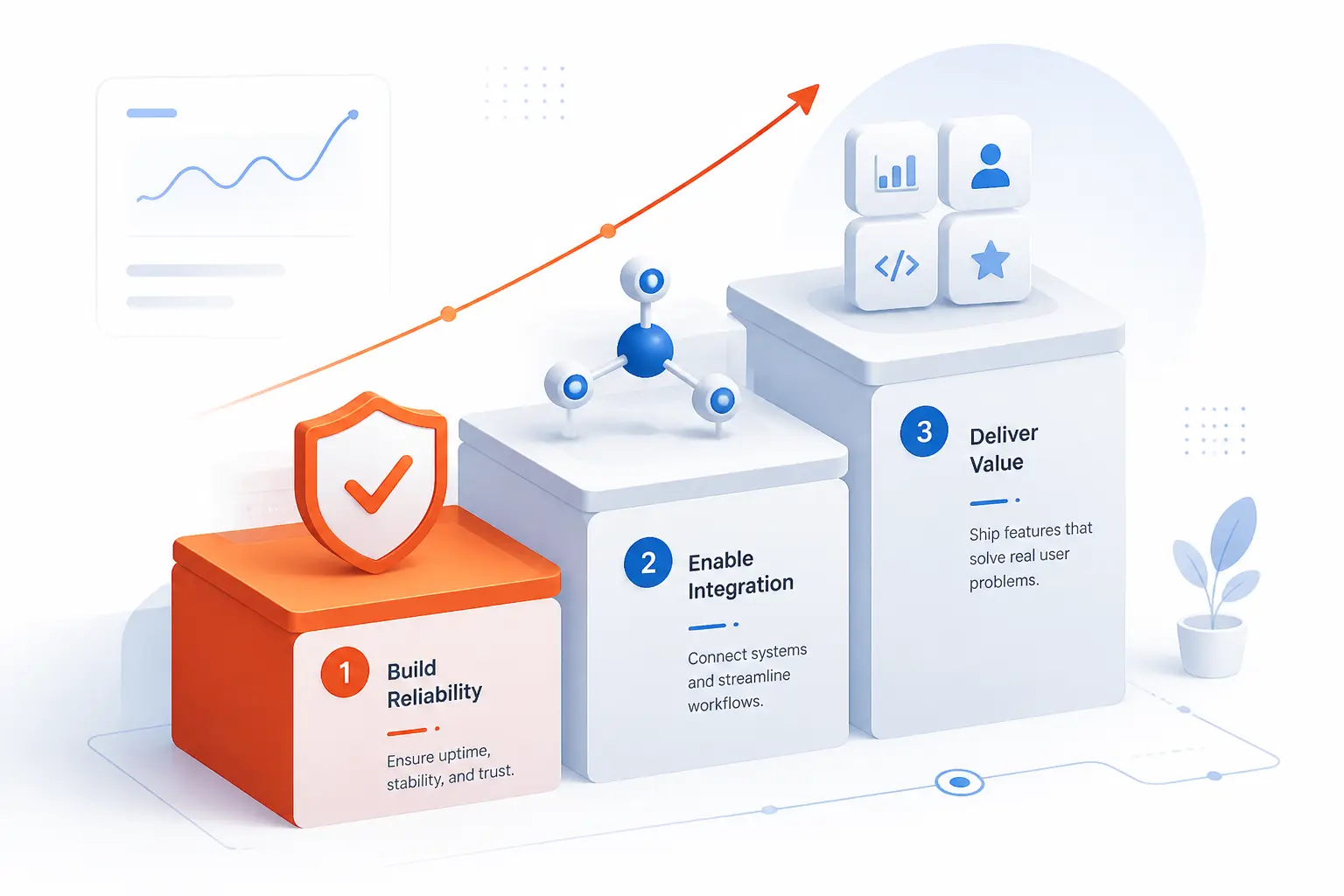
The right order is simple: fix reliability first, connect core systems second, and only then add more complexity. We would not chase every new channel or feature at once. The best ecommerce trends to act on are the ones that remove a real source of friction in your current customer journey. When the base is steady, the newer ideas work much harder.
Audit Operational Reliability Before Expanding Further
Check whether your storefront can already keep its promises before you add more demand. Slow product pages, broken search, stock errors, and vague shipping messages will sabotage any investment in AI discovery, social selling, or paid traffic. We would rather see a store fix these fundamentals first because stable operations turn more sessions into orders without increasing marketing spend.
Connect Storefront, Fulfillment, and Finance Systems
Join the systems that decide what shoppers see, what warehouses ship, and what finance teams reconcile. When catalog data, order status, and payment records live in separate silos, every new trend becomes harder to implement and measure. This step matters because personalization, cross-border selling, subscriptions, and B2B self-service all depend on clean flows between the selling layer and the operating layer.
Protect Margin While Improving the Customer Experience
Pick changes that help customers without quietly wrecking profitability. Free shipping thresholds, flexible payments, richer returns, or AI-assisted support can all work, but each one needs guardrails around cost, category fit, and average order value. Our view is simple: the best move is the one that makes buying easier while preserving enough margin to keep doing it at scale.
FAQ
The latest direction in online retail is straightforward. Stores are moving toward conversational discovery, faster mobile checkout, clearer cross-border buying, and stronger post-purchase service. If you are deciding what to watch, focus on the changes that alter trust, convenience, or repeat purchasing.
What Are the Latest Trends in E-Commerce?
The latest trends in e-commerce center on AI-assisted discovery, mobile-first checkout, flexible payments, social shopping, better personalization, and cleaner post-purchase experiences. We would also add cross-border transparency and B2B self-service to that list because both are changing what buyers now expect as standard. The common thread is simple: less friction, more relevance, and more places to buy.
Is Ecommerce Still Growing?
Yes, ecommerce is still growing. Growth is not happening evenly in every category or country, but online sales continue to take a larger share of retail activity. That is why execution matters more now. The market is mature enough to be competitive, yet still open enough for well-run stores to gain ground.
Which Ecommerce Trends Affect Conversion the Most?
The trends that affect conversion most are usually mobile checkout, digital wallets, semantic search, personalization, flexible payments, and post-purchase trust signals. We would add clear shipping and returns messaging because many losses happen when buyers feel uncertain, not uninterested. If conversion is the goal, start where hesitation appears closest to checkout.
How Can Businesses Decide Which Trends to Invest in First?
Businesses should invest first in the trends that solve a visible bottleneck in their current funnel. If traffic is strong but search is weak, improve discovery. If carts are healthy but checkout stalls, fix payments and mobile UX. We would rank each option by expected impact, technical effort, and how closely it matches the way your customers already shop.
How 1Byte Supports Online Stores
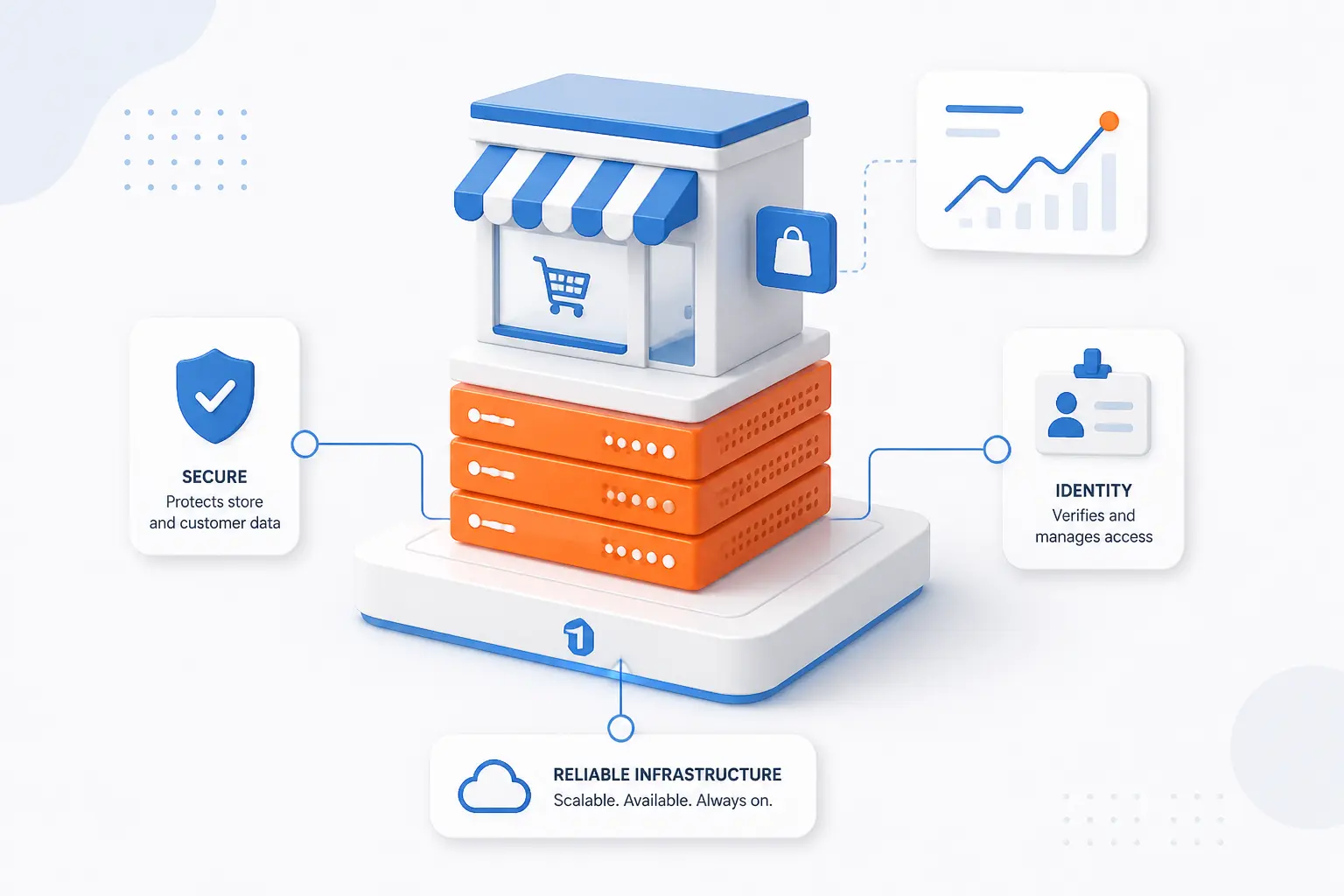
We support online stores by helping merchants build a reliable base before they add more traffic, markets, or complexity. In practice, that means the essentials around identity, security, hosting, and scalable infrastructure. We think that foundation matters because most growth problems in ecommerce eventually become website, checkout, or performance problems.
Domain Registration and SSL Certificates for Secure Store Launches
A secure launch starts with a clear store identity and encrypted traffic. We help merchants line up domain registration and SSL certificates so a store looks legitimate, loads under the right brand name, and protects data moving through product pages, accounts, and checkout. That matters for any online shop, but especially for new brands that need to earn trust quickly.
WordPress Hosting and Shared Hosting for Growing Storefronts
Early-stage stores often need a practical home before they need a complicated stack. We offer WordPress hosting and shared hosting for merchants who want to launch content, catalog pages, and sales flows without overbuilding on day one. This fits stores that are still proving product demand, refining their storefront, or growing into a steadier stream of orders.
Cloud Hosting and Cloud Servers for Scalable Ecommerce Performance
Once traffic, catalog size, or integration needs increase, the hosting choice starts to affect revenue directly. We provide cloud hosting and cloud servers for stores that need room for heavier workloads, custom setups, or more demanding sales periods. As an AWS Partner, we see this part of the stack as especially useful when a business is moving beyond a simple storefront into a more performance-sensitive operation.







Conclusion
The most important ecommerce trends are not the loudest ones. They are the shifts that make shopping easier, clearer, and more trustworthy from first discovery to repeat purchase. We would not chase all 15 at once, but we would absolutely choose a few on purpose.
If we were picking a next step, we would start by asking one blunt question: where does your store still make buying harder than it should be? Answer that honestly, and the right trend usually reveals itself.