

- How To Compare AI Demand Forecasting Tools
- Top AI Demand Forecasting Tools for Most Teams
- More AI Demand Forecasting Tools Worth Considering
- Demand Forecasting Vs Demand Planning
- How AI Demand Forecasting Outperforms Legacy Methods
- Where AI Demand Forecasting Creates the Most Value
- How To Implement AI Demand Forecasting Successfully
- Common Risks and Limitations to Plan For
- FAQ
- Conclusion
We think the best AI demand forecasting tools for most teams fall into two groups. First, there are enterprise planning platforms like SAP, Oracle, Kinaxis, and Anaplan that connect forecasting to S&OP, inventory, and finance. Second, there are more focused options like RELEX, Netstock, Intuendi, and Demand Forecast AI that win on retail fit, explainability, or easier adoption. If you are comparing AI demand forecasting software, the right pick depends less on flashy AI language and more on whether the tool fits your data, your planning process, and your team’s tolerance for complexity.
How To Compare AI Demand Forecasting Tools
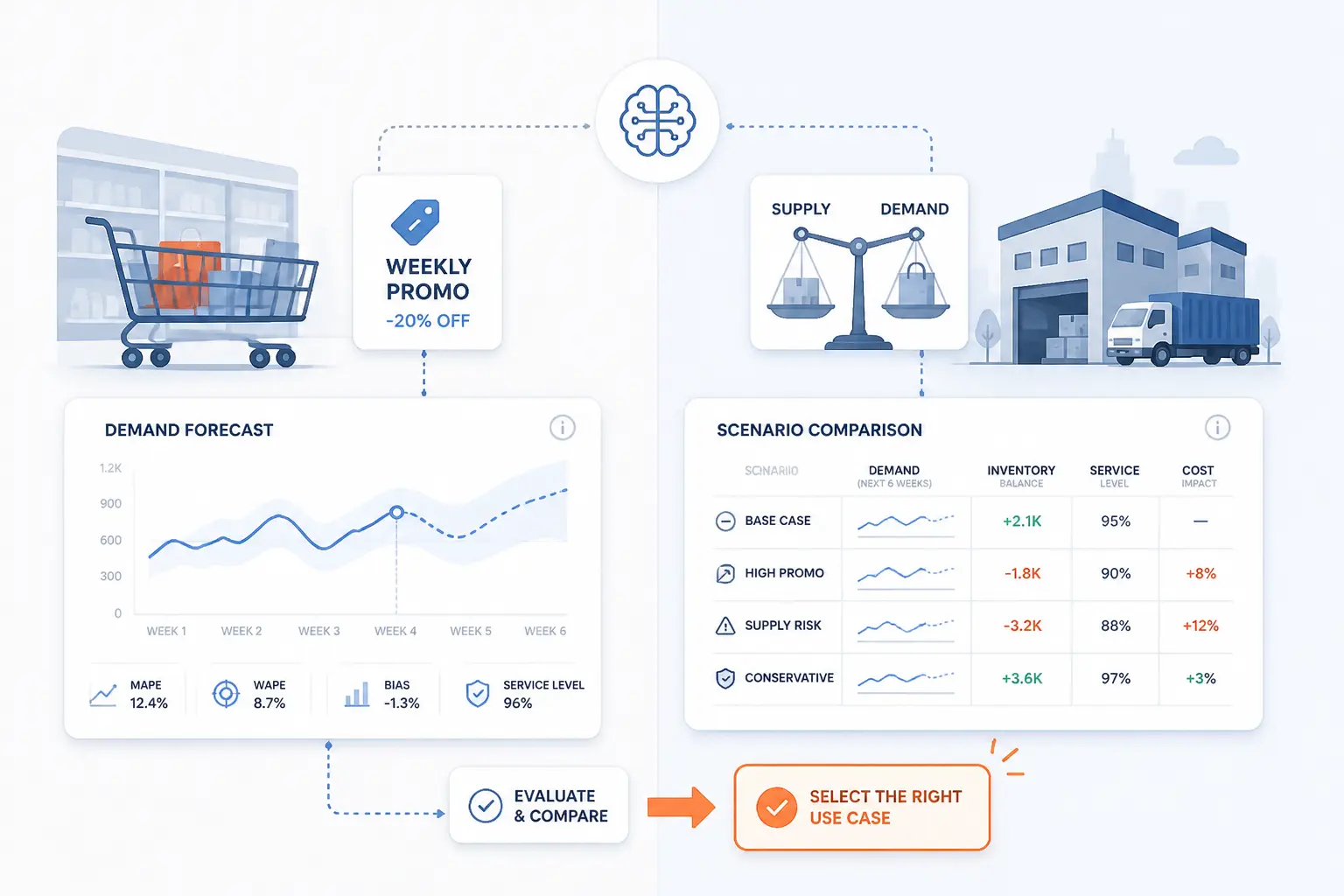
The fastest way to compare these platforms is to decide what job you need the software to do. Some tools mainly improve forecast accuracy, while others go much further into consensus planning, supply balancing, and scenario analysis. We would not shortlist them the same way. A retail team with weekly promotions needs a different product than a manufacturer trying to tie demand, supply, and finance into one planning cycle.
FURTHER READING: |
| 1. 15 Best SMTP Servers for Reliable Email Sending |
| 2. 15 Best Cloud Based Phone Systems for Small Business in 2026 |
| 3. 15 Best Free DMARC Monitoring Tools in 2026 |
Quick Comparison of the Best AI Demand Forecasting Platforms
| Platform | Best For | Ease of Use | Pricing | Score |
|---|---|---|---|---|
| SAP Integrated Business Planning | Global companies already running deep SAP processes | Moderate to hard | Custom quote | 4.8 |
| Oracle Demand Management | Oracle Fusion customers that want native SCM alignment | Moderate | From $1,250 per named user on a public-sector list | 4.7 |
| Kinaxis | Fast-moving supply chain teams that need scenario planning | Moderate | Custom quote | 4.6 |
| Anaplan | Cross-functional planning across supply chain and finance | Moderate | Custom quote | 4.6 |
| Blue Yonder Demand And Supply Planning | Large retail and manufacturing networks | Moderate to hard | Custom quote | 4.5 |
| RELEX Solutions | Retail, grocery, wholesale, and consumer goods | Moderate | Custom quote | 4.5 |
| IBM Planning Analytics | Teams that want enterprise planning with strong Excel support | Moderate | SaaS from $875 | 4.4 |
| C3 AI Demand Planning | Large enterprises prioritizing AI-native modeling | Moderate to hard | Custom quote | 4.2 |
| o9 Demand Planning | Companies replacing legacy planning with a digital twin model | Moderate to hard | Custom quote | 4.4 |
| Logility DemandAI+ | Teams that want more forecast explainability | Moderate | Custom quote | 4.2 |
How We Researched and Evaluated Each Option
We built this list from official product pages, pricing material where vendors publish it, product documentation, and public review pages. Our scores are editorial judgments, not copied review-site ratings.
- Capability fit: we looked for real demand-planning functions, not generic BI or broad planning claims, with attention to forecast generation, demand sensing, scenario planning, and exception handling.
- Workflow depth: we scored higher the platforms that clearly show how forecasts move into collaboration, approval, supply action, or financial alignment.
- Transparency and planner control: we favored tools that expose demand drivers, confidence ranges, anomalies, or forecast value-add instead of treating the model as a black box.
- Commercial clarity: public pricing earned credit, while sales-led pricing was not a deal breaker but counted against buyer friendliness.
- Market proof: we used third-party review coverage as a confidence signal, while staying honest when a product had a thin or missing public review footprint.
That means a lower-ranked tool is not necessarily weaker. It may simply be narrower, harder to buy, or less transparent for the average team doing a commercial shortlist.
Top AI Demand Forecasting Tools for Most Teams
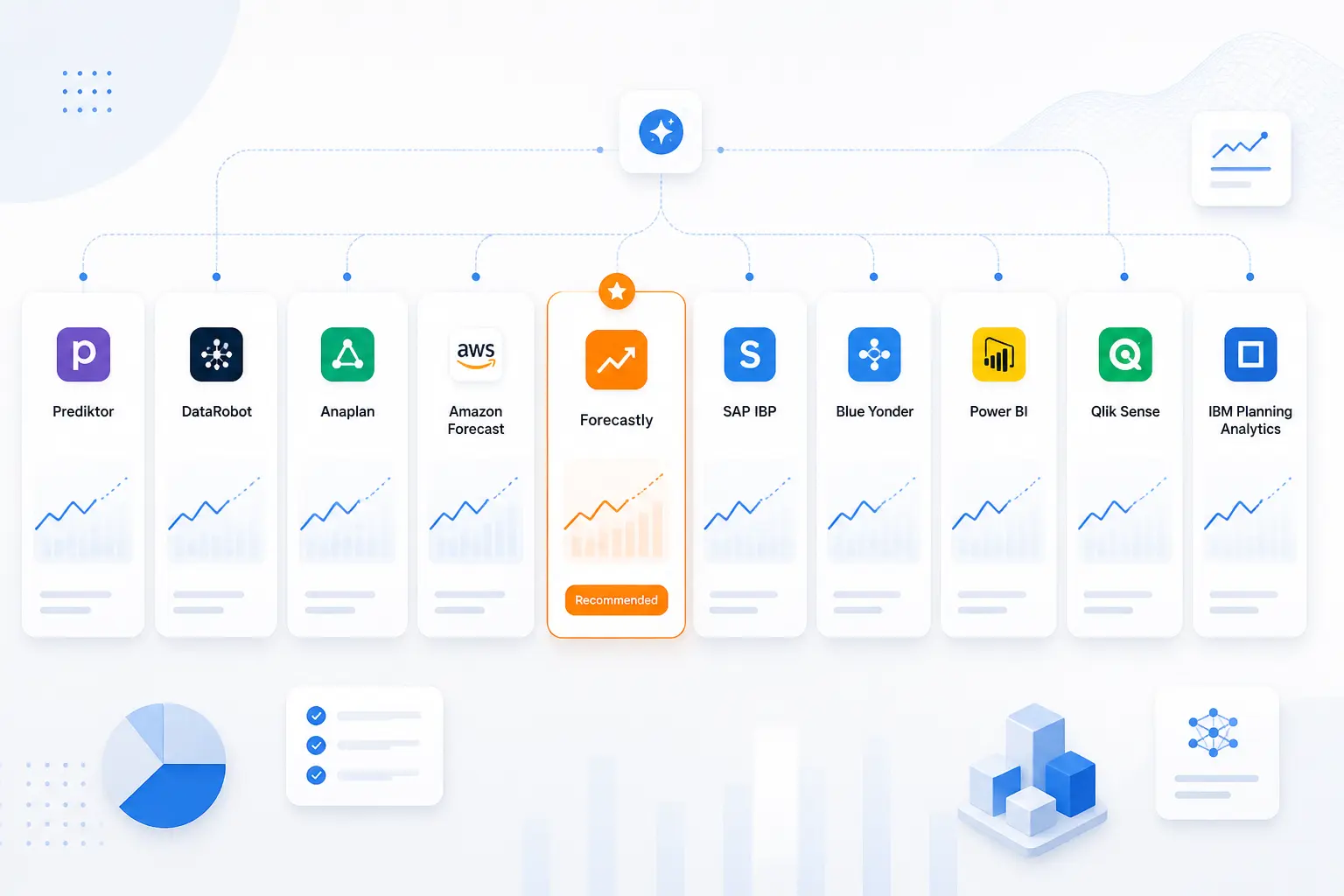
These are the platforms we would start with for a serious shortlist. The first ten cover the broadest set of use cases and have enough product depth to matter in real planning environments. Some are clearly enterprise-first. Others are better at retail, explainability, or faster adoption.
1. SAP Integrated Business Planning
- Category: Enterprise supply chain planning platform
- Best for: SAP-centric global operations
- Ease of use: Moderate to hard
- Pricing: Custom quote
- Standout feature: Demand sensing plus forecast value-add analysis
If your planning stack already leans on SAP, this is the safest enterprise pick in the list. SAP IBP is not just a forecaster. It is a full demand-planning layer that ties AI-assisted forecasting, short-term sensing, collaboration, and downstream supply planning together. We ranked it first because the official product page shows one of the clearest end-to-end workflows, and the review footprint is far stronger than most direct competitors.
What stands out is the balance between automation and planner oversight. SAP does not frame the forecast as magic. It shows demand drivers, explains which algorithms were used, and includes post-planning intelligence through forecast value-add analysis. That is exactly the kind of feature serious teams look for once the first AI hype cycle wears off.
How SAP Integrated Business Planning works
SAP starts with an AI-driven baseline forecast that combines machine learning with traditional time-series methods. From there, planners can analyze internal and external demand drivers, see which factors correlate with the forecast, and review AI-assisted suggestions for improving model accuracy. The page also highlights coordinated feedback across sales, marketing, and demand planning teams, so the forecast is not trapped in one function.
For short-term planning, SAP adds demand sensing. The system adjusts forecasts from real-time order patterns and downstream signals such as point-of-sale data. On the automation side, SAP calls out history classification, outlier detection and correction, and best-fit algorithm selection. It also handles products with no history by generating synthetic history from representative items or lifecycle curves, which is a practical feature for new product launches.
Who is SAP Integrated Business Planning for?
This is for large manufacturers, distributors, and multinational planning teams that need one platform for demand planning, supply alignment, and collaboration. It fits especially well when your master data, ERP, and process design already live in the SAP world.
Smaller companies should probably look elsewhere. So should teams that want fast setup, lighter governance, or public self-serve pricing.
SAP Integrated Business Planning pricing
- Enterprise subscription: quote-based, with demand planning, demand sensing, automated statistical forecasting, and collaboration features bundled as part of the SAP IBP commercial model.
- Environment and implementation scope: quote-based, with costs shaped by tenant setup, integration requirements, and the broader SAP landscape around the demand-planning module.
SAP has a dedicated pricing page, but the public U.S. session we reviewed did not expose usable list prices, so buyers should expect a sales-led quote rather than a quick calculator.
Pros and cons
Pros
- Combines AI forecasting with traditional time-series methods instead of forcing one modeling approach.
- Shows named functions that planners care about, including demand sensing, outlier correction, and synthetic history for new products.
- Includes forecast value-add analysis, which is rarer than vendors make it sound.
- G2 reviewers often praise real-time visibility, cross-functional alignment, and SAP ecosystem integration.
Cons
- G2 reviewers repeatedly mention a steep learning curve and complex implementation.
- Cost is a recurring complaint on the review page, especially for smaller organizations.
- This is a serious platform, which also means more setup, governance, and data discipline.
SAP Integrated Business Planning rating and reviews
- G2: rated 4.3/5 across 289 reviews.
We would shortlist SAP first when enterprise depth matters more than ease. If your team already speaks SAP fluently, very few options here look more complete.
2. Oracle Demand Management
- Category: Cloud demand planning software
- Best for: Oracle Fusion Cloud environments
- Ease of use: Moderate
- Pricing: Public-sector per-user pricing published, broader commercial pricing by quote
- Standout feature: Sense, predict, shape, and automate replenishment workflow
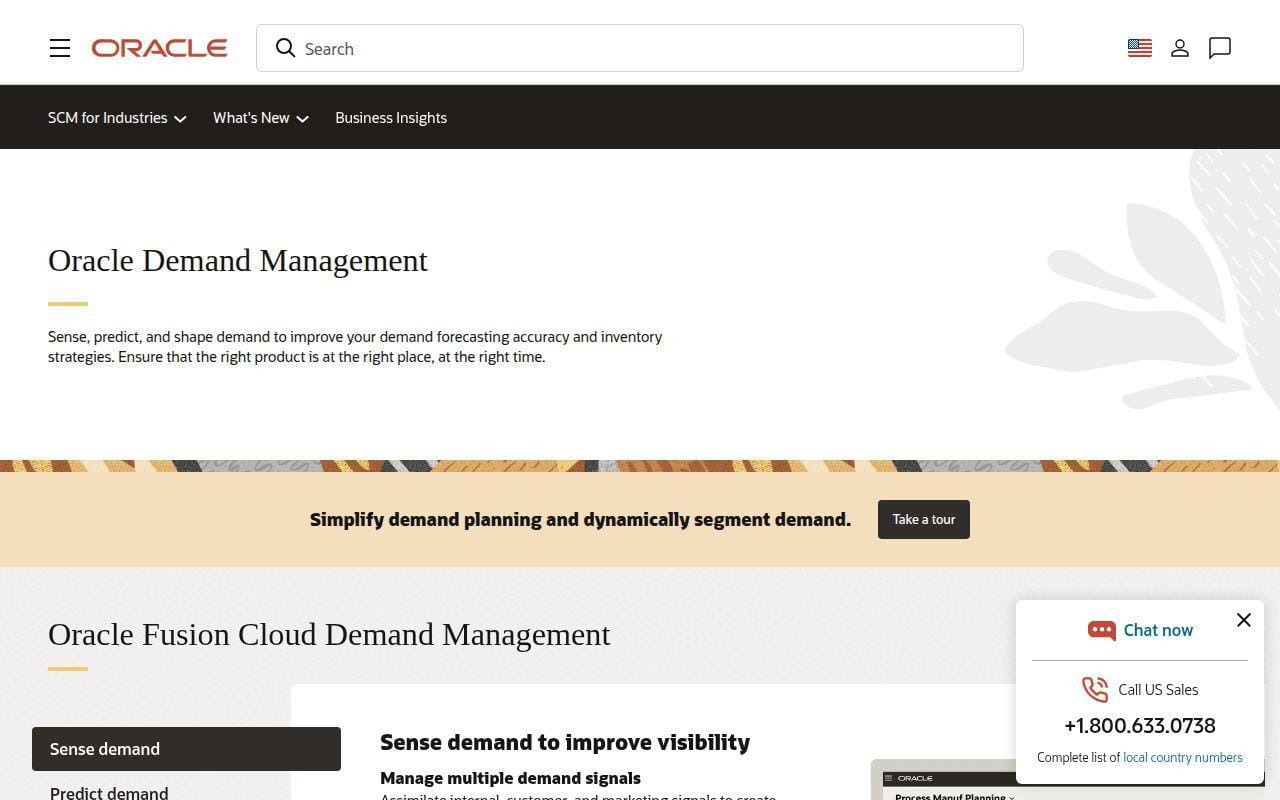
Oracle is the cleanest fit when your business already runs on Fusion applications. The product page lays out a useful four-part flow: sense demand, predict demand, shape demand, and automate replenishment. That matters because it shows Oracle is trying to connect forecasting to operating decisions, not just generate a nicer chart.
We like the workflow discipline here. Oracle calls out multiple demand signals, dynamic segmentation, KPI monitoring, business insights capture, and built-in machine learning that checks intermittency, anomalies, level shifts, price changes, holidays, and events. In short, it looks like a serious planning product, not a light forecasting add-on.
How Oracle Demand Management works
Oracle’s process starts by pulling together internal, customer, and marketing signals into a single demand view. Users can assign items and locations into demand segments with business rules, then analyze KPIs to spot changes in market conditions. The product page also mentions documenting plan discussions, decisions, and assumptions, which is a practical nod to real planning governance.
On the forecasting side, Oracle evaluates baseline, trend, seasonality, and causal components by segment. Its built-in intelligence checks for intermittency, collinearity, anomalies, holidays, price changes, and events. That is a strong signal that Oracle expects teams to work with messy, real demand rather than tidy textbook history.
Who is Oracle Demand Management for?
This fits enterprises that want native integration with inventory, manufacturing, procurement, order management, and other Oracle Fusion modules. It also makes sense for teams that want demand planning wrapped into a wider Oracle cloud transformation.
Teams outside the Oracle ecosystem may not get the same value. If you are looking for the easiest standalone adoption, Oracle would not be our first stop.
Oracle Demand Management pricing
- Oracle Fusion Demand Management Cloud Service – Hosted Named User: $1,250, with demand management licensing in the Oracle Fusion cloud model and alignment to the broader Fusion planning stack.
- Oracle Fusion Sales and Operations Planning Cloud Service – Hosted Named User: $625, with S&OP support for consensus planning, alternative plans, and cross-functional decision support.
- Oracle Fusion Custom AI Agents for SCM Cloud Service – AI Agent Authorized User: $50, with SCM AI agent access sold as an add-on.
These figures come from the public-sector price list, so commercial enterprise deals can differ.
Pros and cons
Pros
- The product page clearly maps forecasting into shaping and replenishment, which is better than most vague AI messaging.
- Built-in checks for holidays, price changes, anomalies, and intermittency are useful for real planning work.
- Public pricing is available in an official Oracle document, which is more transparent than most enterprise rivals.
- G2 reviewers frequently mention strong integration with other Oracle modules.
Cons
- G2 reviewers repeatedly mention cost and implementation complexity.
- The public pricing we found is from Oracle’s public-sector catalog, so it is helpful but not a universal street price.
- Best fit depends heavily on broader Oracle adoption.
Oracle Demand Management rating and reviews
- G2: rated 4.6/5 across 10 reviews.
Oracle deserves a high place because the product structure is clear and the commercial picture is less opaque than usual. We would move it even higher on a shortlist if the rest of your planning stack is already Oracle.
3. Kinaxis
- Category: Supply chain planning platform
- Best for: Teams that need fast scenario planning
- Ease of use: Moderate
- Pricing: Custom quote
- Standout feature: Demand-at-risk visibility with operational scenario planning
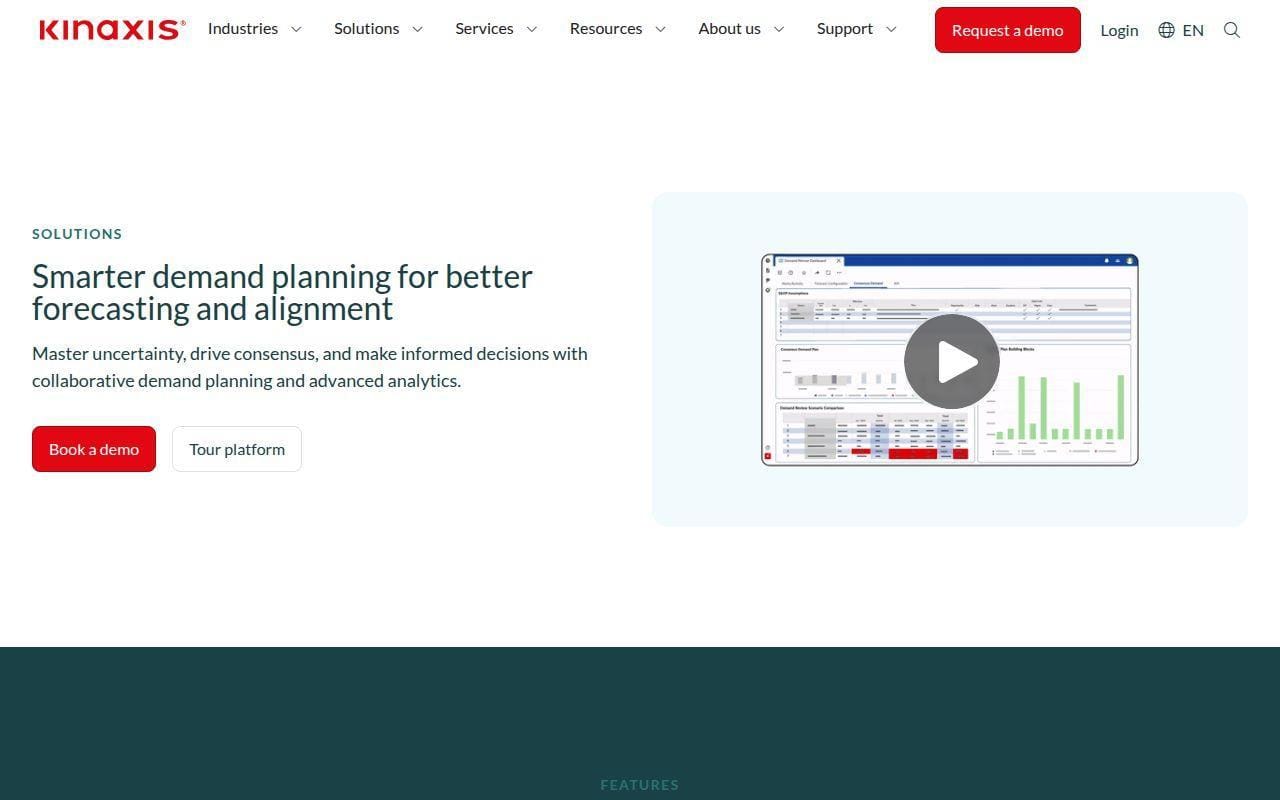
Kinaxis earns its spot because it treats demand planning as a live coordination problem, not a monthly forecasting exercise. The official page puts consensus, scenario planning, external signals, and forecast-driver visibility front and center. That makes it especially appealing for organizations that operate in volatile environments and care about what happens after the model runs.
We also like the tone of the product page. Kinaxis does not oversell hands-free AI. Instead, it emphasizes better forecasting and alignment, then shows how machine learning, stakeholder input, and scenario planning work together.
How Kinaxis works
Kinaxis frames demand planning as a collaborative process. The page says teams can improve forecast accuracy across all time horizons using advanced techniques and machine learning, then bring in dynamic external signals such as weather, social media, and shifts in consumer behavior. That is a strong clue that Kinaxis is built for fast-changing demand rather than stable, low-variance categories.
From there, the platform moves into risk and coordination. Kinaxis says users can pinpoint demand at risk, make order-fulfillment decisions with financial and operational scenario planning, and gather input from key stakeholders into a transparent consensus plan. It also says teams can understand and explain the data drivers behind the forecast, which matters for planner trust.
Who is Kinaxis for?
Kinaxis is best for manufacturers, distributors, and supply chain teams that need to compare options quickly when demand or supply shifts. It looks strongest when scenario speed matters as much as forecast math.
If you mostly want a simpler mid-market forecasting layer, or if your team does not need heavy scenario planning, there are easier and cheaper tools in this roundup.
Kinaxis pricing
- Demand planning platform subscription: quote-based, with collaborative demand planning, machine learning forecasting, external-signal sensing, and consensus workflows.
- Implementation and solution scope: quote-based, with pricing shaped by user count, process complexity, and the broader Maestro platform footprint.
Kinaxis does not publish list prices on the official demand-planning page, so buyers should expect a traditional enterprise sales process.
Pros and cons
Pros
- Strong emphasis on scenario planning and demand-at-risk decisions.
- Official page explicitly mentions weather and social media as external signals, which is more concrete than generic “AI insights.”
- Forecast-driver visibility helps with explainability.
- G2 reviewers often mention strong reporting and supply chain usefulness.
Cons
- Public review volume is thin compared with SAP, Oracle, or Anaplan.
- G2 feedback points to occasional slowness and a learning curve.
- No public pricing.
Kinaxis rating and reviews
- G2: rated 4.0/5 across 13 reviews.
Kinaxis would be near the top of our shortlist for planners who live in what-if mode. If your demand plan changes every time the world twitches, this is a strong candidate.
4. Anaplan
- Category: Connected planning platform
- Best for: Cross-functional planning across supply chain and finance
- Ease of use: Moderate
- Pricing: Custom quote
- Standout feature: Strong connected planning model with real-time scenarios
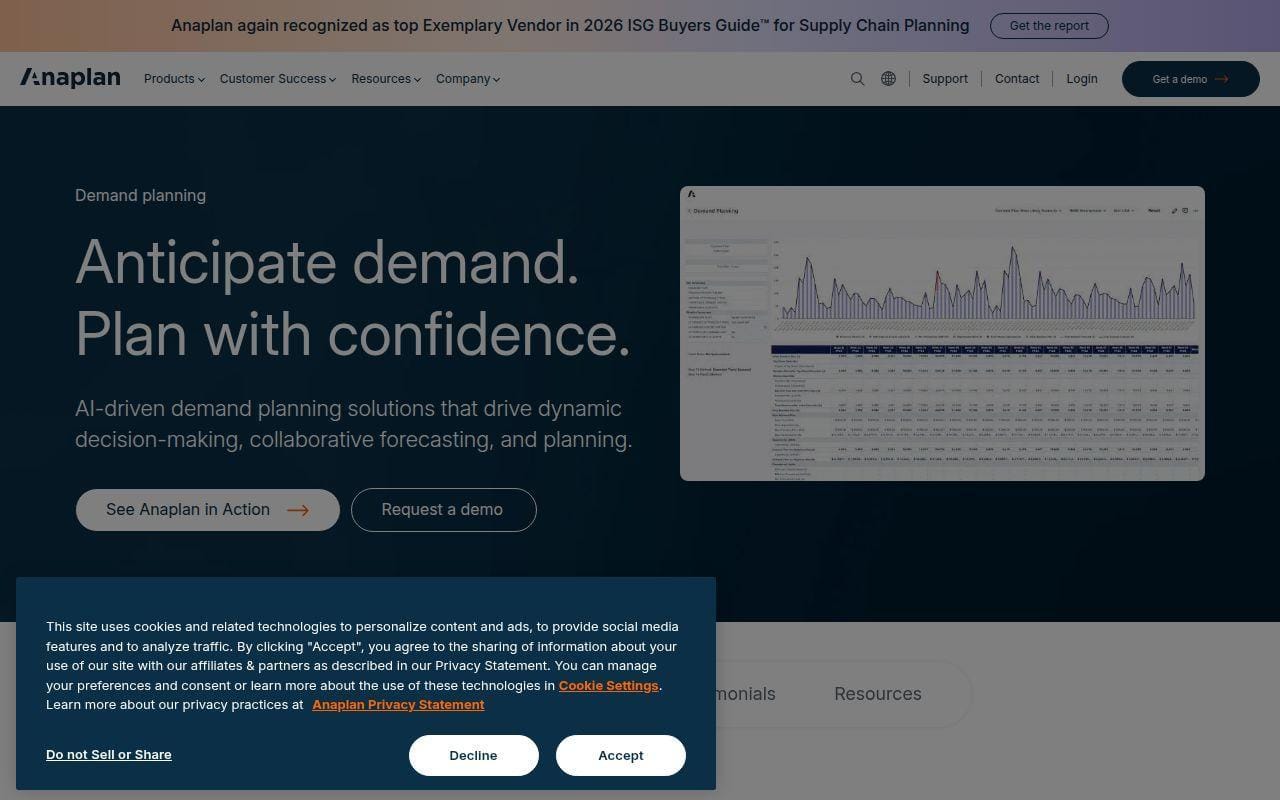
Anaplan is the pick when the real problem is not forecasting alone but planning across functions. The demand-planning page pushes dynamic decision-making, collaborative forecasting, and real-time scenarios. That makes it attractive for companies that want to connect supply chain planning to finance, sales, and promotions without buying separate tools for every step.
We would not call it the most specialized forecasting engine on this list. We would call it one of the best at connected planning around the forecast. For many teams, that is the bigger win.
How Anaplan works
Anaplan positions demand planning around smarter forecasts and integrated decision-making. The page highlights automation and templates to focus teams on forecast exceptions, along with an AI-driven data integrator that brings in multiple data sources to refine forecasts and reduce bias. It also calls out real-time scenarios, which is a practical requirement once commercial teams start challenging the baseline.
Feature areas listed on the page include demand sensing, demand analytics, trade promotion management, ML/AI forecasting, and collaborative demand planning. That means the workflow can stretch from signal monitoring to customer collaboration and promotion adjustment, which is broader than a pure statistical forecaster.
Who is Anaplan for?
Anaplan is a strong fit for companies that want one planning environment shared by supply chain, finance, and commercial teams. It is also a good option when business users need to build scenarios quickly without relying on IT for every change.
Teams looking for a lighter, narrower forecasting product may find it more platform-like than they need.
Anaplan pricing
- Connected planning subscription: quote-based, with demand planning, collaborative workflows, scenario modeling, and AI-driven forecasting capabilities.
- Implementation and model-build scope: quote-based, with pricing shaped by use cases, model complexity, integrations, and user footprint.
Anaplan does not publish list pricing on the official demand-planning page, so commercial terms are handled through its sales process.
Pros and cons
Pros
- Excellent fit when demand planning must connect to finance and sales planning.
- The page names concrete modules, including demand sensing and trade promotion management.
- Real-time scenarios and collaborative planning are core to the product story, not bolted on.
- G2 reviewers consistently praise flexibility, modeling depth, and cross-functional visibility.
Cons
- G2 reviewers also mention cost as a recurring concern.
- Success depends on good model design and governance, which can raise the learning curve.
- It may be more platform than small planning teams want.
Anaplan rating and reviews
- G2: rated 4.6/5 across 457 reviews.
Anaplan is easy to recommend when planning silos are the deeper issue. If your demand forecast must immediately feed wider business decisions, it belongs on the shortlist.
5. Blue Yonder Demand And Supply Planning
- Category: End-to-end supply chain planning software
- Best for: Large retail and manufacturing networks
- Ease of use: Moderate to hard
- Pricing: Custom quote
- Standout feature: One planning layer across demand, supply, and inventory
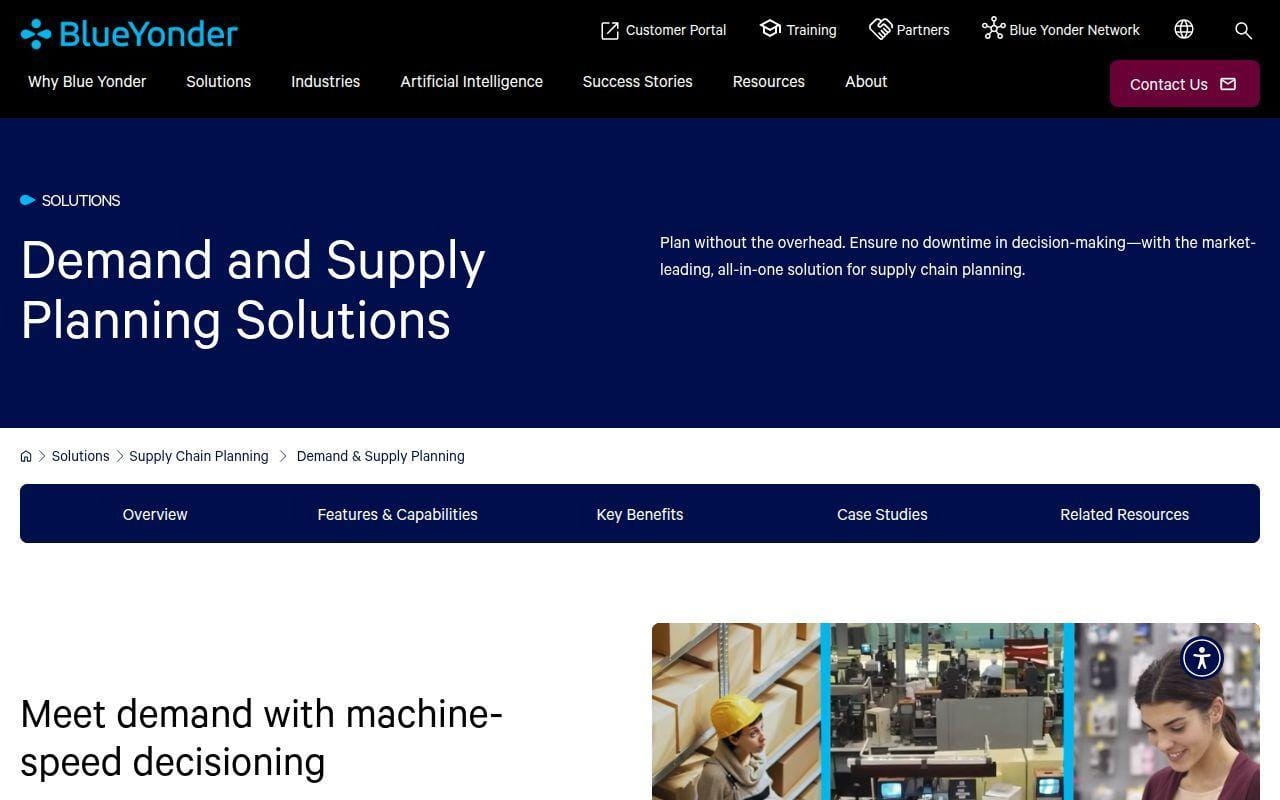
Blue Yonder makes the most sense when you do not want demand planning sitting in a silo. The official page is broad, but the useful part is clear: one cognitive planning solution spanning demand forecasting, supply planning, inventory management, process orchestration, and scenario planning. That is appealing for organizations that need decisions to move quickly across the whole planning chain.
The product message is also more concrete than we expected. Blue Yonder talks about explainability, causal factors, broken bills of materials, sourcing issues, fill-rate risks, and scenario analysis. That sounds like a platform built for planners dealing with operational mess, not just forecast error percentages.
How Blue Yonder Demand And Supply Planning works
The page describes a unified planning workflow. Demand, supply, and inventory planning sit inside one solution, with Inventory Ops Agent scanning for data and plan issues such as broken bills of materials, sourcing problems, unmet demand, and fill-rate risk. Demand forecasting uses a mix of statistical methods, machine learning, and AI, with causal-factor visibility to improve confidence in the output.
Blue Yonder also emphasizes scenario planning, execution-aware planning, and intelligent planner workflows that recommend actions and resolutions. For companies with complex networks, that is the main appeal. The tool is not just telling you what demand may be. It is trying to help you act on that forecast without breaking the rest of the plan.
Who is Blue Yonder Demand And Supply Planning for?
This is best for large retailers, grocery operators, consumer goods brands, and manufacturers that want demand, supply, and inventory decisions aligned in one planning stack. It also fits teams that care about execution-aware planning and exception resolution at scale.
If your need is narrower than that, Blue Yonder can feel heavier than necessary.
Blue Yonder Demand And Supply Planning pricing
- Unified planning subscription: quote-based, with demand forecasting and planning, supply planning, inventory optimization, and scenario-planning capabilities.
- Agent and implementation scope: quote-based, with commercial terms shaped by module footprint, network complexity, and deployment scope.
Blue Yonder does not publish list pricing on the official solution page, so buying this product starts with a sales conversation.
Pros and cons
Pros
- Strong cross-functional scope across demand, supply, and inventory.
- Calls out explainability and causal-factor visibility rather than hiding behind generic AI language.
- Scenario planning and execution-aware planning are clearly positioned as core features.
- G2 reviewers mention ease after implementation and useful support.
Cons
- Public reviews for the named demand-planning product are much thinner than the vendor’s enterprise profile suggests.
- Enterprise breadth can translate into longer implementation work.
- No public pricing.
Blue Yonder Demand And Supply Planning rating and reviews
- G2: rated 4.1/5 across 30 reviews.
Blue Yonder is a serious contender when the real goal is synchronized planning, not just better forecasting. We would look hardest at it in retail-heavy and network-heavy environments.
6. RELEX Solutions
- Category: AI-native retail and supply chain planning platform
- Best for: Retail, grocery, wholesale, and consumer goods teams
- Ease of use: Moderate
- Pricing: Custom quote
- Standout feature: Single model that combines demand, supply, pricing, and promotions
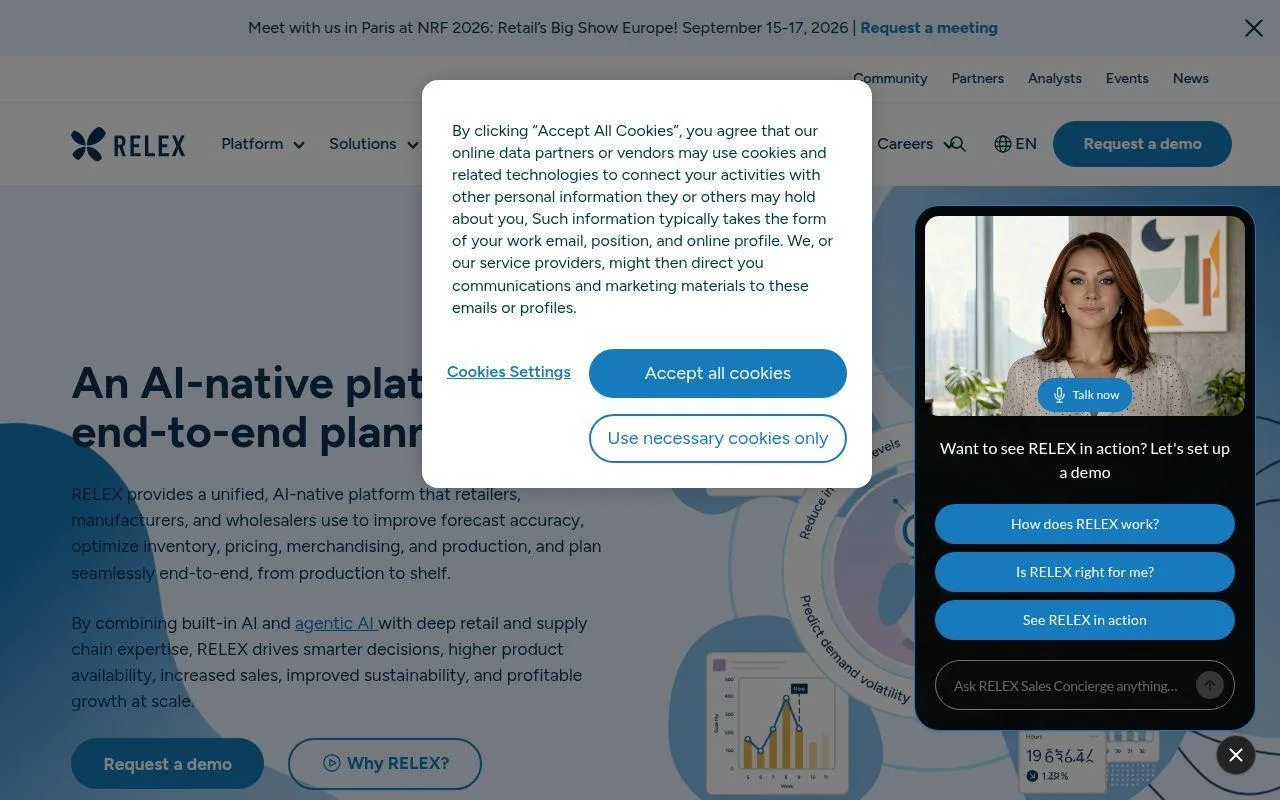
RELEX stands out as the most retail-native option among the enterprise leaders. The official site says every signal, including demand, supply, pricing, and promotions, feeds a single model. That is a big deal in retail, where a forecast gets distorted quickly if promotions, assortment changes, or availability sit in separate systems.
We also like that RELEX talks about automated, self-correcting replenishment and reducing waste. That makes its value proposition feel grounded in day-to-day retail operations, not only top-down planning theory.
How RELEX Solutions works
RELEX describes a unified, AI-native platform used by retailers, manufacturers, and wholesalers to improve forecast accuracy, optimize inventory, pricing, merchandising, and production, and plan from production to shelf. The homepage says forecast accuracy improves because every signal feeds one model, while replenishment decisions are automated and self-correcting.
On its demand-planning materials, RELEX also highlights collaborative and exception-based demand planning workflows, forecast visualizations, and machine learning that predicts the impact of demand drivers such as merchandising decisions, promotions, external events, consumer preferences, and seasonality. For us, that combination is why RELEX ranks this high. It looks purpose-built for retail complexity.
Who is RELEX Solutions for?
RELEX is ideal for grocery, retail, and wholesale organizations that need tight coordination between forecasting, replenishment, assortment, promotions, and inventory. It is also a smart fit for teams where waste, shelf availability, and new-product volatility matter every week.
Companies outside retail or consumer goods may prefer a more general-purpose planning platform.
RELEX Solutions pricing
- Unified platform subscription: quote-based, with demand planning, forecasting, replenishment, inventory optimization, and adjacent retail-planning functions.
- Implementation and solution mix: quote-based, with commercial scope driven by modules, store and SKU complexity, and deployment footprint.
RELEX does not publish list pricing on the official site, so budgeting starts with vendor scoping.
Pros and cons
Pros
- Very strong retail and grocery fit.
- Unified modeling across demand, supply, pricing, and promotions is a practical differentiator.
- Automated replenishment and waste reduction are more operationally specific than many rivals.
- G2 reviewers often mention flexibility and an intuitive interface.
Cons
- Public review volume is still modest for a platform this ambitious.
- No public pricing.
- Less compelling if your organization does not need the wider retail-planning footprint.
RELEX Solutions rating and reviews
- G2: rated 4.6/5 across 21 reviews.
RELEX is one of the most credible options here for retail-first planning. If promotions, shelf availability, and replenishment are part of the same headache, it deserves a serious look.
7. IBM Planning Analytics
- Category: Integrated planning and forecasting software
- Best for: Teams that want enterprise planning with strong Excel support
- Ease of use: Moderate
- Pricing: SaaS plans published
- Standout feature: Excel add-in plus Planning Analytics Agent
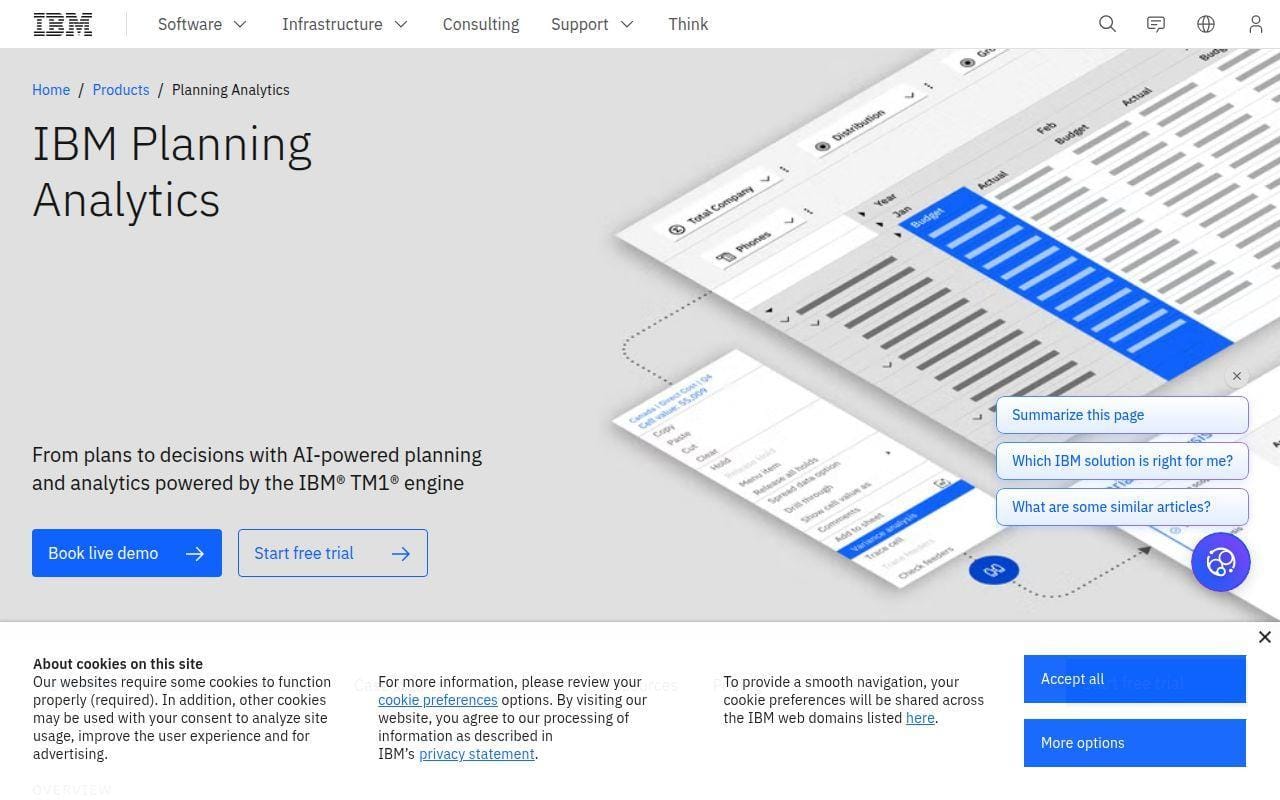
IBM takes a different route from the supply-chain specialists. Planning Analytics is broader than demand forecasting, but it earns a place because IBM now positions AI demand forecasting, real-time analysis, unlimited scenarios, and supply chain planning directly inside the product story. Add the Excel-first experience, and it becomes a real option for teams that want planning discipline without forcing everyone to abandon familiar workflows.
We also give IBM credit for actual pricing transparency. It is one of the few enterprise platforms here with published SaaS plan names and a public starting point.
How IBM Planning Analytics works
IBM splits the product into a few practical components. Planning and Forecasting covers AI demand forecasting. Planning Analytics Workspace handles data collection, consolidation, and real-time analysis. The Excel Add-in keeps users in Excel while adding TM1-powered real-time data and collaboration. Planning Analytics Agent adds AI help by summarizing drivers, trends, and confidence ranges.
For supply chain teams, IBM explicitly says users can plan demand, optimize inventory, and run unlimited scenarios. The official page also points to a SAP Connector for bidirectional exchange with SAP BW, S/4HANA, and HANA Cloud, plus watsonx Orchestrate for natural-language commands that can trigger planning tasks and run forecasts.
Who is IBM Planning Analytics for?
This fits organizations that want enterprise planning depth with strong finance overlap and a real Excel bridge. It is also a smart option when demand planning lives close to FP&A, operations, and executive scenario work.
If you want a retail-specialist product or a pure supply-chain planning suite, IBM may feel more horizontal than focused.
IBM Planning Analytics pricing
- Essentials: starting at $875, with 16 GB, 5 users, 512 GB storage, a pre-built application, connected planning, core model building, self-service data import, and access to either the Excel or web interface.
- Standard: priced through IBM’s estimator, with 32 GB, 10 users, development and production environments, source control management, and AI-based forecasting.
- Premium: priced through IBM’s estimator, with 64 GB, 20 users, high availability, auditing and logging, and large-scale AI-based forecasting.
You can compare the SaaS tiers on the official pricing page.
Pros and cons
Pros
- Public SaaS plan structure is better than the usual enterprise black box.
- Excel Add-in is a real adoption advantage for many planning teams.
- Planning Analytics Agent adds visible AI support around drivers, trends, and confidence ranges.
- G2 reviewers consistently praise flexibility and Excel integration.
Cons
- Not as purpose-built for retail demand planning as RELEX or Blue Yonder.
- G2 reviewers still flag a learning curve for new users.
- The stronger supply chain story depends on broader planning design, not just the forecasting screen.
IBM Planning Analytics rating and reviews
- G2: rated 4.4/5 across 258 reviews.
IBM is easier to recommend than many buyers assume. If your demand plan sits close to finance, scenarios, and spreadsheet-heavy teams, it can be a very practical choice.
8. C3 AI Demand Planning
- Category: AI-native enterprise demand planning application
- Best for: Large enterprises prioritizing AI-heavy forecasting
- Ease of use: Moderate to hard
- Pricing: Custom quote
- Standout feature: Designed for sparse, volatile, and new-product demand
C3 AI is the most explicitly AI-first product in this top ten. The official page focuses on forecasting at every level of granularity, handling new product introductions, sparse demand, and volatile market conditions, and aligning teams around a unified demand plan. If your buying committee wants a purpose-built AI application rather than a general planning platform with AI added on top, C3 AI will get attention quickly.
That said, we rank it below the broad enterprise leaders because the public buying picture is thinner. The feature story is interesting. The independent review footprint for this exact application is not.
How C3 AI Demand Planning works
C3 AI says the application helps planners detect demand shifts, adapt to changing conditions, and generate accurate forecasts at every level of granularity. It also emphasizes what-if scenario planning and a unified supply chain digital twin approach in adjacent materials. The application sits within a broader C3 AI product ecosystem that includes inventory optimization, production schedule optimization, and supply network risk tools.
Most importantly, the positioning is clear about the hard cases. C3 AI is not only talking about routine seasonal forecasting. It is pitching itself for sparse demand, volatile demand, and new-product introductions, which are exactly the areas where many classic forecasting stacks start to wobble.
Who is C3 AI Demand Planning for?
This is best for very large enterprises that want AI-centered demand planning and have enough data engineering muscle to support it. It also suits teams evaluating a wider AI applications strategy across supply chain use cases.
Mid-market companies and buyers who want abundant public proof points should look elsewhere first.
C3 AI Demand Planning pricing
- Enterprise application subscription: quote-based, with demand planning, AI forecasting, scenario planning, and alignment to a broader C3 AI application stack.
- Implementation and data foundation scope: quote-based, with pricing shaped by data integration, deployment breadth, and related applications.
C3 AI does not publish public list pricing for this application on the official product page.
Pros and cons
Pros
- Clear focus on sparse demand, volatility, and new products.
- AI-first positioning is more specific than many rivals.
- Good fit when demand planning is part of a wider AI application rollout.
- Adjacent application catalog suggests room to expand into inventory and production optimization.
Cons
- No product-specific public price.
- Public independent review coverage for this exact demand-planning application is limited.
- Likely overkill for companies without enterprise-scale data and implementation resources.
C3 AI Demand Planning rating and reviews
C3 AI Demand Planning does not yet show a strong product-specific public review footprint on the software review pages we checked, so we would treat it as a higher-research, lower-social-proof option.
C3 AI is worth a look when the buying thesis is “AI application platform first, planning tool second.” For a safer commercial shortlist, we would still put products with clearer review coverage ahead of it.
9. o9 Demand Planning
- Category: Enterprise demand planning and digital twin platform
- Best for: Companies modernizing legacy planning stacks
- Ease of use: Moderate to hard
- Pricing: Custom quote
- Standout feature: Knowledge Graph-based digital twin
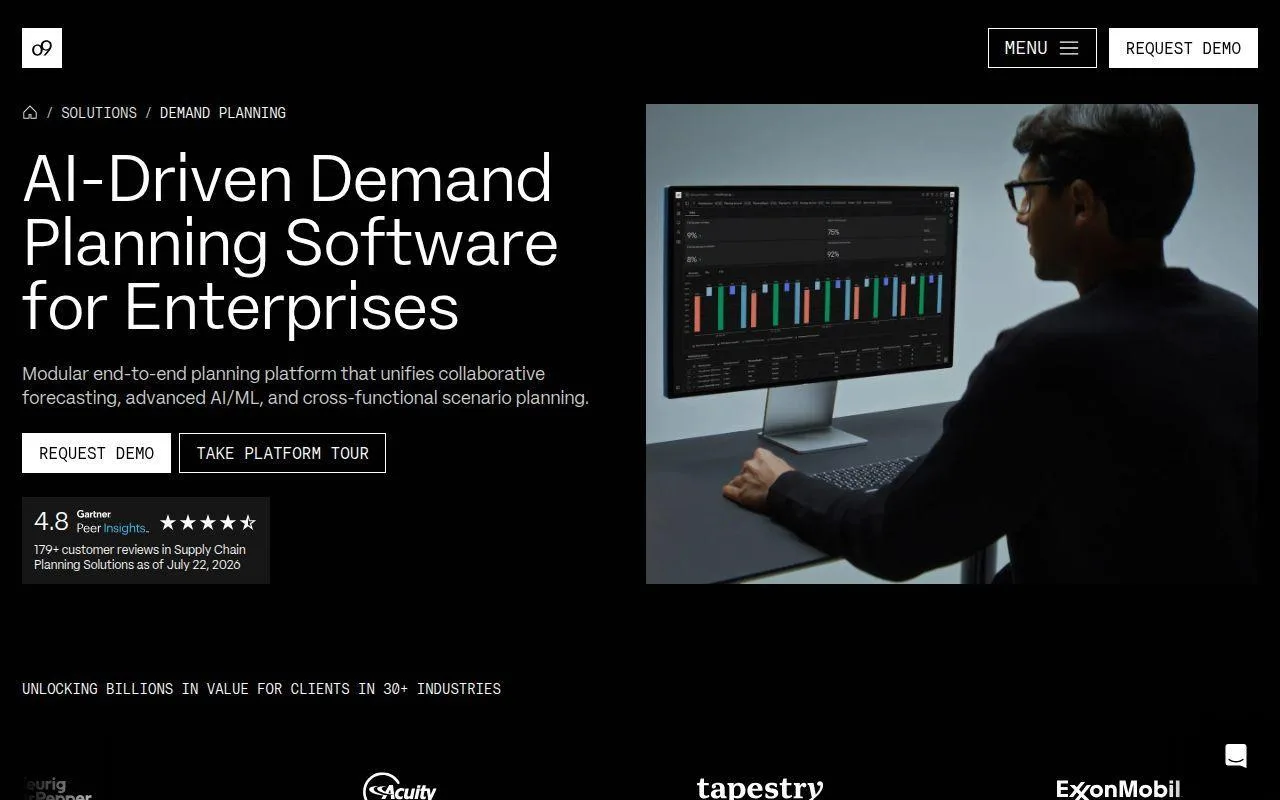
o9 feels built for companies that want to replace old planning layers, not just tune them. The official page highlights AI/ML driver-based forecasting, a digital twin through the Enterprise Knowledge Graph, flexible assumptions, exception-based forecasting, and multi-level, multi-horizon planning. That is a strong package for complex enterprises that want forecasting tied to visibility and decision-making.
We also like that o9 explicitly mentions tracking accuracy, bias, cycle changes, and forecast value add. Plenty of vendors talk about touchless planning. Fewer talk about the metrics planners use to judge whether automation is actually helping.
How o9 Demand Planning works
The demand-planning page starts with AI/ML driver-based forecasting that processes large volumes of internal and external leading indicators. The Enterprise Knowledge Graph then acts as a digital twin of the business, giving unified visibility across the plan. Users can manage assumptions by volume or value across levels, horizons, and units of measure, with workflows that roll into the consensus forecast.
o9 also calls out exception-based forecasting with centralized alerts for accuracy, bias, cycle changes, and FVA. Add in multi-level and multi-horizon forecasting, and the product reads like a strong fit for enterprises that need a lot of control over how plans are built, reviewed, and refined.
Who is o9 Demand Planning for?
o9 is best for large organizations replacing fragmented legacy planning processes, especially when they want unified visibility and heavy scenario capability. It also suits businesses that need collaboration across functions and geographies.
Smaller companies should look elsewhere. So should buyers who want a lower-complexity rollout and a thick public review footprint.
o9 Demand Planning pricing
- Enterprise SaaS deployment: custom quote, with pricing based on industry and business complexity, user counts, functions covered, and the number of solutions deployed.
- Implementation approach: custom quote, with scope varying by o9-led, partner-led, or hybrid delivery.
o9 explains its pricing approach in its official pricing note.
Pros and cons
Pros
- Digital twin framing is concrete, not just branding.
- Explicit tracking of bias and FVA is a plus for mature planning teams.
- Strong fit for multi-level and multi-horizon forecasting.
- Official pricing note is refreshingly clear about what drives commercial scope, even without list prices.
Cons
- G2 review volume is still light for a major enterprise platform.
- Enterprise scope can mean a longer, more complex implementation.
- No public list pricing.
o9 Demand Planning rating and reviews
- G2: rated 4.2/5 across 19 reviews.
o9 is compelling when legacy modernization is part of the brief. We would not call it the easiest buy, but we would call it one of the more thoughtful enterprise options here.
10. Logility DemandAI+
- Category: AI-powered demand planning software
- Best for: Teams that want more explainable forecasts
- Ease of use: Moderate
- Pricing: Custom quote
- Standout feature: Forecast composition and anomaly tagging
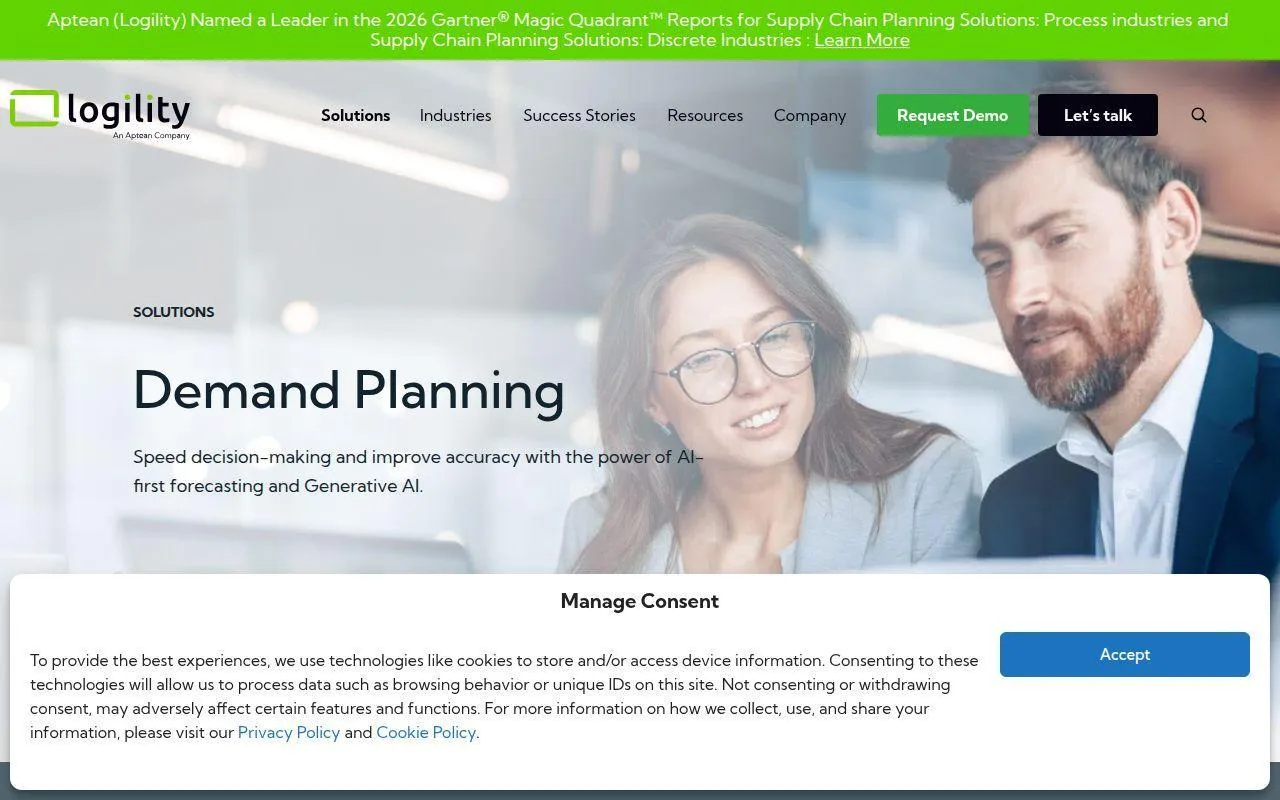
Logility is easier to like than some larger rivals because its product message is simple. DemandAI+ is designed to make forecasting less of a black box. The official page says planners can visualize demand drivers like promotions and events, see how they affect forecasted demand, detect anomalies in historical demand, and tag irregular demand as exceptional events. That is useful, concrete planning language.
We also like the GenAI angle here more than usual. Logility says planners, executives, and non-planners can ask questions and get answers in real time. That will not replace real planning work, but it can make the system more accessible across the business.
How Logility DemandAI+ works
Logility’s workflow starts with GenAI-supported access to planning information. Users can ask questions and get real-time answers, which helps with visibility outside the core planning team. From there, DemandAI+ focuses on explainability. The system shows which events or promotions drive the forecast, helps users understand forecast composition, and automatically surfaces historical anomalies for review.
The platform also lets planners tag irregular demand as exceptional events so the model can learn from it. In related official materials, Logility says DemandAI+ uses a composable architecture, which suggests the product can extend as planning needs evolve without forcing a full platform replacement.
Who is Logility DemandAI+ for?
This is a good fit for teams that want better forecast transparency without jumping straight to the heaviest enterprise stack. It also makes sense for businesses that need supply chain people and non-planners to interpret the same forecast story.
Organizations looking for the deepest retail-specific planning layer or the broadest S&OP platform may still prefer RELEX, SAP, Oracle, or Blue Yonder.
Logility DemandAI+ pricing
- DemandAI+ subscription: quote-based, with explainable forecasting, anomaly detection, demand-driver visibility, and AI-assisted planning workflows.
- Deployment and extension scope: quote-based, with pricing driven by implementation complexity and the broader Logility planning footprint.
Logility does not publish list pricing on the official demand page, so buyers should expect custom scoping.
Pros and cons
Pros
- Strong emphasis on explainability rather than vague AI claims.
- Anomaly detection and event tagging are practical features planners can use.
- GenAI Q&A can widen access to planning insight.
- G2 reviewers often mention forecast accuracy and ease of use as strengths.
Cons
- No public pricing.
- Review coverage reflects the wider Logility suite more than DemandAI+ alone.
- Not as broad in official messaging as SAP, Oracle, or Blue Yonder.
Logility DemandAI+ rating and reviews
- G2: rated 4.1/5 across 122 reviews.
Logility closes the top ten because it solves a real buyer concern: planner trust. If your team keeps asking, “Can we explain this forecast to the business?”, Logility has a strong answer.
More AI Demand Forecasting Tools Worth Considering
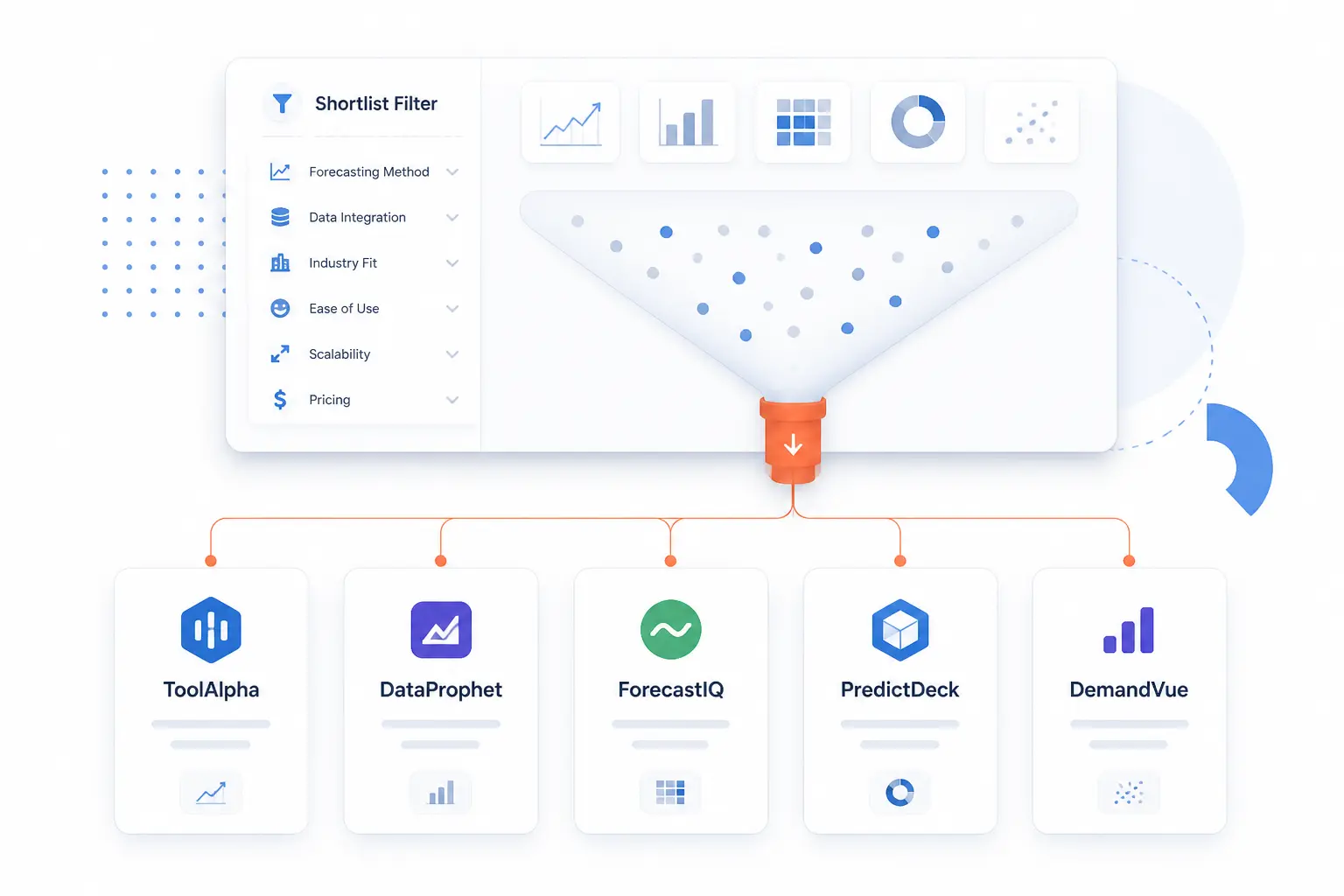
The next five tools are still worth your time, but they are more specialized, more mid-market, or simply less proven in public review coverage. We would use them to sharpen a shortlist, not as default starting points for every buyer.
11. e2open Demand Planning
- Category: Demand planning software
- Best for: Multi-enterprise supply chain collaboration
- Ease of use: Moderate
- Pricing: Custom quote
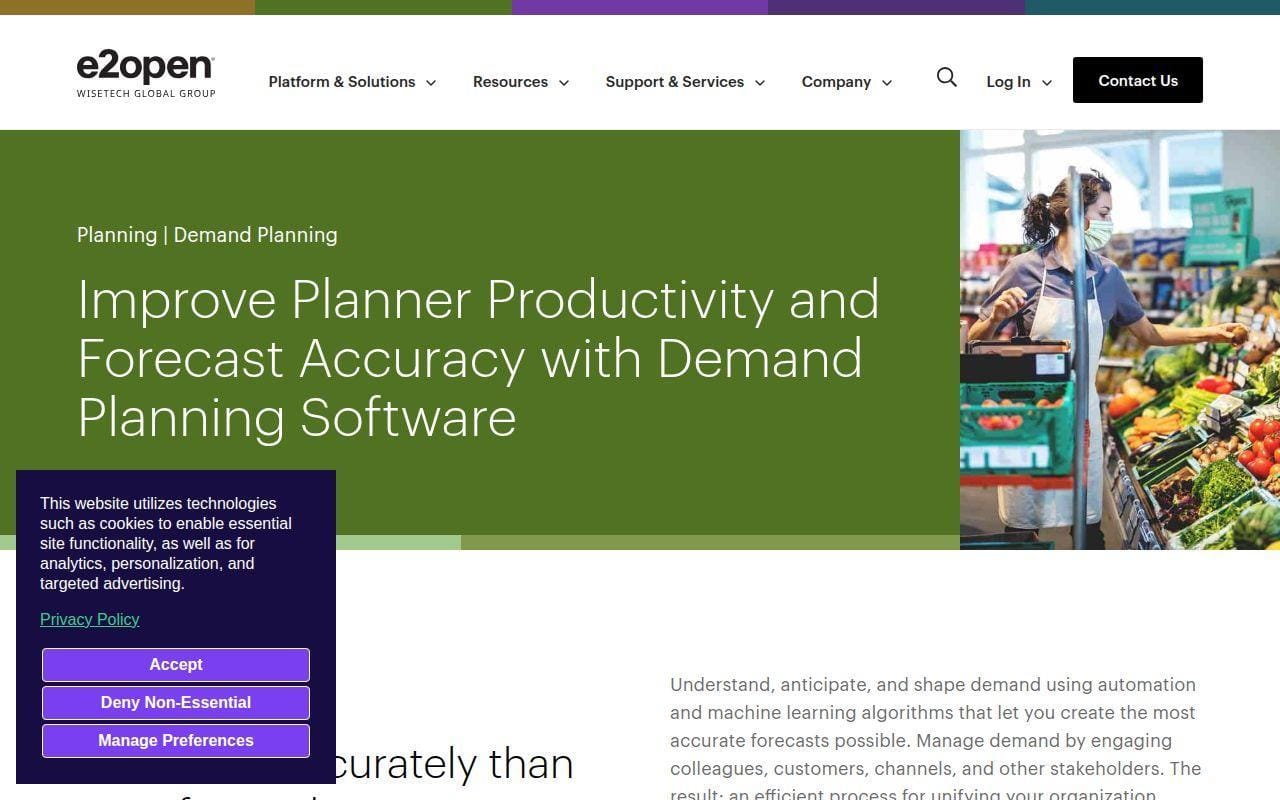
e2open is worth a look if your planning problem stretches beyond your own walls. The official page talks about colleagues, customers, channels, and other stakeholders contributing to one demand plan, which is a useful distinction from tools that stay mostly inside the company boundary.
The product also calls out multiple demand signals, machine learning forecasting, attach rate planning, and automation for account-team collaboration, promotion pacing, and model tuning. That is a broad planning toolkit, especially for companies with complex channel structures or configuration-heavy products.
Where e2open differs from some higher-ranked tools is commercial clarity and public proof. The official page is helpful on capabilities, but it does not publish list pricing. The G2 product page we found is also thin, so we would treat e2open as a “talk to sales and validate deeply” option rather than a quick buy.
That said, if your team needs supply chain planning across external partners and channels, e2open has a distinct angle that some more internally focused platforms do not match.
Who is e2open Demand Planning for?
We would look at e2open for companies with channel complexity, partner-heavy planning, or product-configuration demand that is hard to model in simpler systems.
12. Netstock Demand Planning
- Category: Demand planning software
- Best for: Mid-market teams that need faster adoption
- Ease of use: Easier than most enterprise suites
- Pricing: Get Pricing
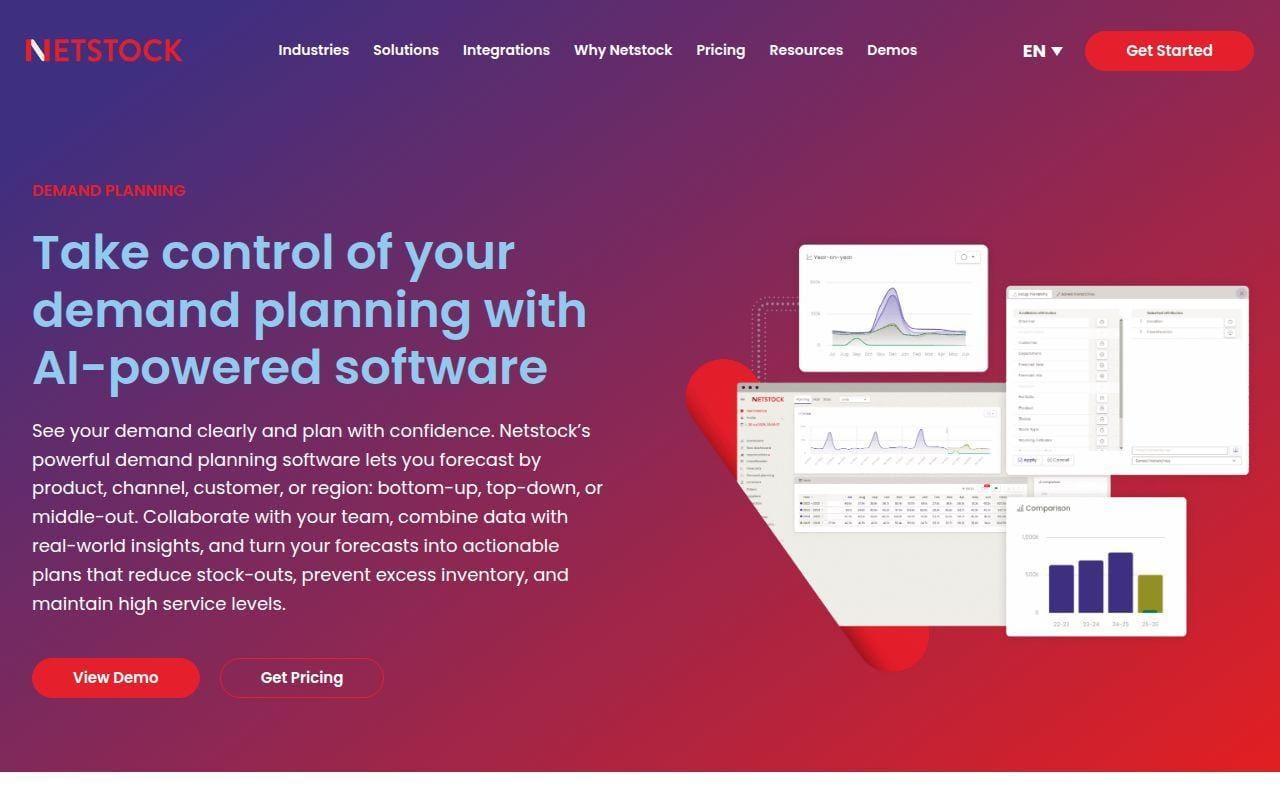
Netstock is the clearest mid-market option in this roundup. The official page says teams can forecast by product, channel, customer, or region using bottom-up, top-down, or middle-out planning. That is a practical set of choices for businesses that have outgrown spreadsheets but do not want a heavy enterprise transformation project.
The page also emphasizes collaborative forecasting across sales, operations, and finance, plus continuous forecast improvement through actual-versus-forecast tracking. We like that it connects demand planning to inventory optimization on the same platform. For smaller teams, that can be a bigger win than buying a broad suite with more modules than they will ever use.
Netstock’s official page does not publish list prices, but it does make the sales path clear with a “Get Pricing” call to action. In other words, it is still quote-led, just less intimidating than the mega-suite vendors. That fits its overall positioning.
If you want a system that feels purpose-built for planners rather than platform architects, Netstock is one of the better “second-wave” shortlist picks.
Who is Netstock Demand Planning for?
We would point Netstock toward SMB and mid-market planning teams, especially those that care about adoption speed and ERP-connected inventory decisions more than enterprise-wide planning breadth.
13. Intuendi
- Category: AI-powered demand planning software
- Best for: Retail and ecommerce operations
- Ease of use: Moderate
- Pricing: Demo-led, no public list price
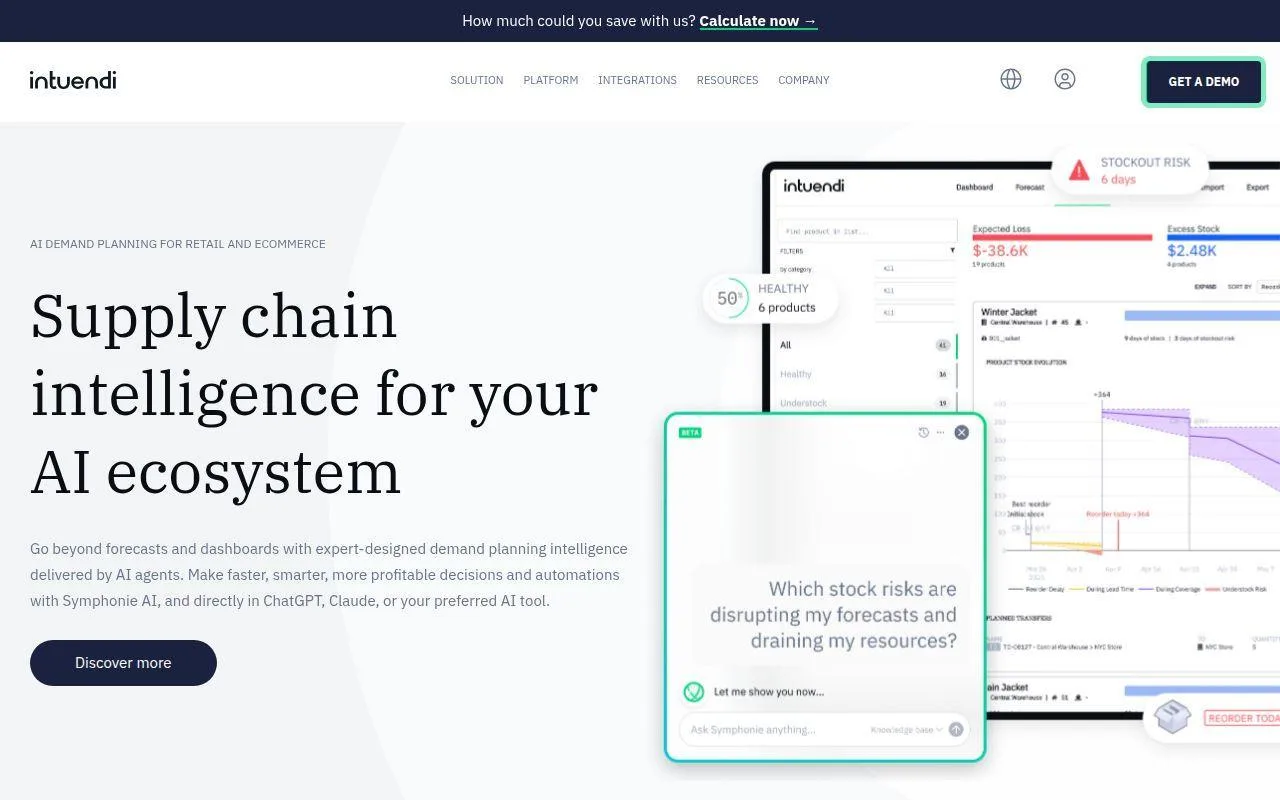
Intuendi is the most ecommerce-leaning tool in the secondary tier. Right from the homepage, it frames itself around retail and ecommerce demand planning, with its Symphonie AI layer, forecasting, inventory, orders, and replenishment all living in the same story.
What makes it different is the operational detail. Intuendi goes beyond forecasting into bill of materials support, multi-echelon rebalancing, and multi-supplier purchasing. That is useful for brands that sell finished goods but also need to think about packaging, components, and warehouse balancing.
The platform also highlights integrations with AI assistants through MCP connections, which is unusual and potentially interesting for teams experimenting with AI interfaces around planning data. We would still treat that as a supporting convenience, not the main reason to buy.
There is no public list price on the official page, so this stays in the “talk to sales” camp. Even so, Intuendi looks more focused than many general-purpose tools when the job is omnichannel demand planning for retail-heavy catalogs.
Who is Intuendi for?
Intuendi fits ecommerce, omnichannel retail, and consumer brands that want replenishment and inventory actions tightly tied to the forecast, without jumping into a huge enterprise suite.
14. Demand Forecast AI
- Category: Forecasting application
- Best for: Teams that care most about model trust
- Ease of use: Moderate
- Pricing: Demo-led, no public list price
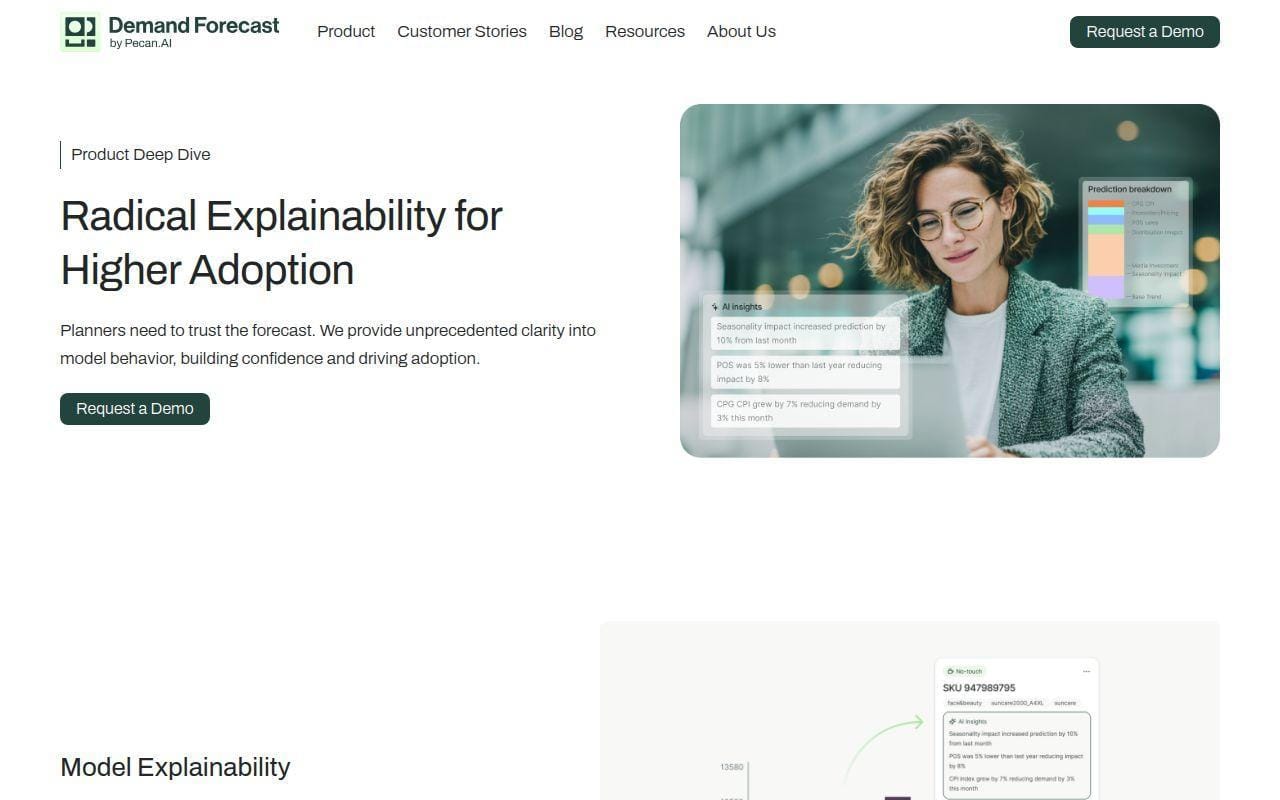
Demand Forecast AI goes after a very specific pain point: adoption. Its product page opens with “radical explainability,” and the rest of the page stays on that message. For some buyers, that is smart. Plenty of planning projects fail because the business does not trust the model enough to use it.
The product breaks explainability into three layers. Model Explainability shows how each data column and engineered feature affects predictions. Business Explainability helps teams understand what data the model saw and when they should act. Change Monitoring tracks changes in predictions and changes in the underlying data so planners can understand what shifted recently.
That is a narrower feature set than the full planning suites above. Still, it does one thing unusually well: it puts forecast reasoning in front of the user instead of hiding it behind a score. If your team already has planning processes in place and mainly needs a more transparent forecast engine, that difference matters.
The official page pushes demos rather than pricing, so we would expect custom commercial scoping.
Who is Demand Forecast AI for?
This fits teams that already know planner trust is the problem, not just model accuracy, and want an explainability-led product conversation from day one.
15. pacemaker.ai
- Category: AI demand forecasting software and service
- Best for: Companies wanting a guided rollout
- Ease of use: Moderate
- Pricing: Custom quote, offered as SaaS
pacemaker.ai is the most consulting-led option in the list, and that is not a criticism. The official page describes a three-step setup process that starts with a Data Thinking workshop, moves through onboarding with first results, and then transitions into regular operation. For buyers who want more guidance and less self-assembly, that can be appealing.
The product itself combines historical sales data with external factors, aims for better forecast accuracy than classic methods, and is offered as software-as-a-service. The page also emphasizes forecast explanations and says integration can be completed within six weeks, which is a concrete promise compared with the usual enterprise fog.
Functionally, pacemaker.ai talks about AI automation, forecast explanations, stock optimization, and cost reduction through better inventory planning. That makes it feel like a practical operational tool rather than a giant planning suite.
We would not put it ahead of the top ten because the public proof base is thinner and the official page is more solution-led than feature-deep. But for a guided rollout, it has a credible story.
Who is pacemaker.ai for?
We would consider pacemaker.ai for teams that want a SaaS product with a structured onboarding path, especially if they value forecast explainability and a shorter implementation window.
Demand Forecasting Vs Demand Planning
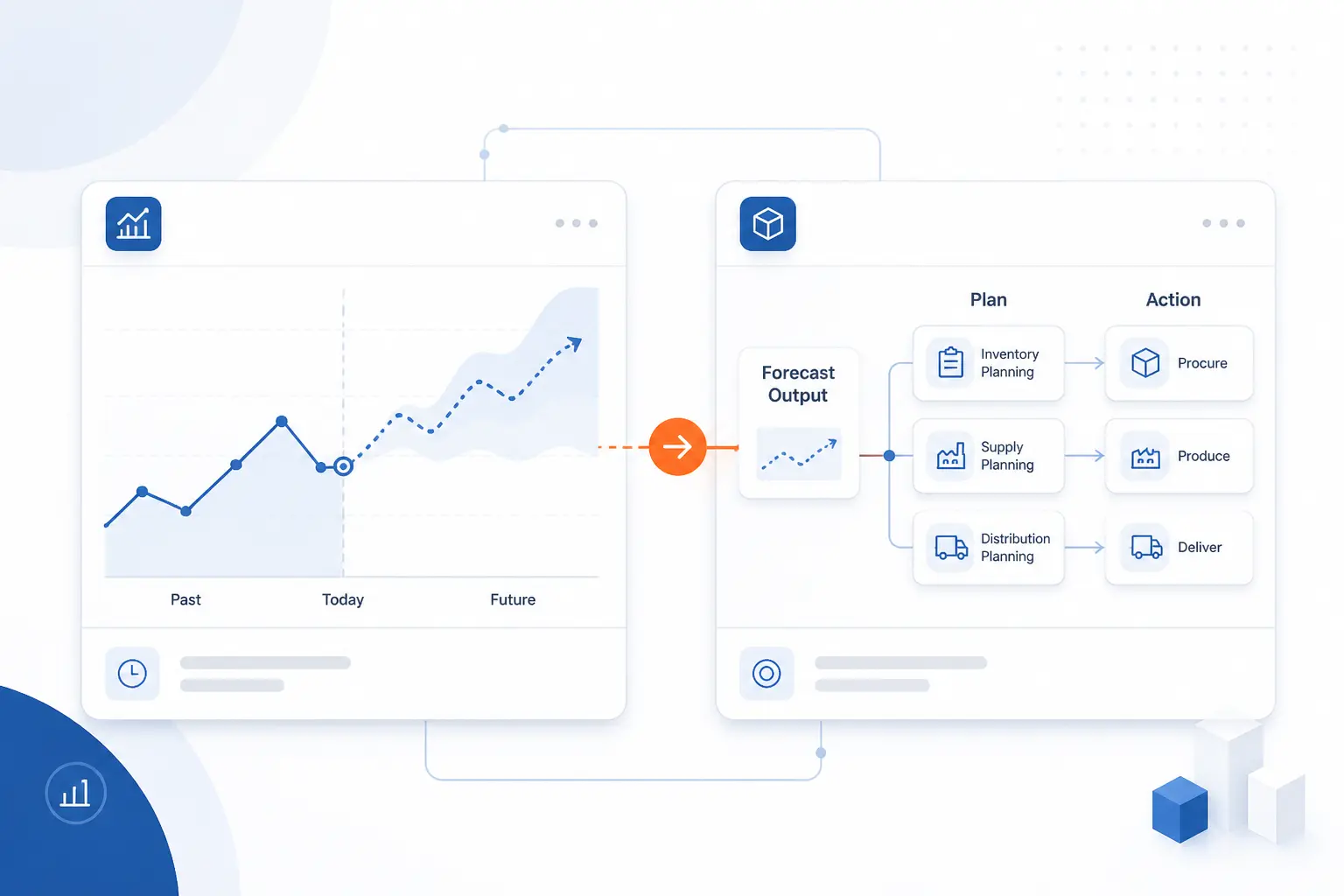
These terms get mixed together all the time, but they are not the same thing. Demand forecasting predicts what customers are likely to buy. Demand planning decides what the business will do with that prediction. If you confuse the two, you will probably buy the wrong category of software.
Where Forecasting Ends and Planning Begins
Forecasting is the estimate. Planning is the business response. Oracle’s S&OP guidance describes a process that aligns demand, supply, and financial planning across 18 to 36 months, which is a useful reminder that the forecast is only one input to a wider operating plan.
| Area | Demand Forecasting | Demand Planning | Why it matters |
|---|---|---|---|
| Core output | Predicted demand | Approved demand plan | A model output is not yet a committed business decision |
| Main inputs | History, seasonality, signals | Forecast plus business assumptions | Sales, marketing, finance, and operations all shape the final plan |
| Typical owner | Analyst or planner | Cross-functional planning team | The harder part is usually alignment, not calculation |
| Success measure | Accuracy and bias | Service, inventory, margin, feasibility | A “better” forecast can still fail operationally |
That is why many of the best tools in this list spend so much time on workflows, assumptions, overrides, and scenarios. A forecast that never becomes an agreed plan is just a smart guess.
Why S&OP and IBP Still Matter
The strongest software still needs a planning process around it. SAP’s own IBP overview says the process overlaps with S&OP, which is another way of saying that better forecasting does not remove the need for executive trade-offs, supply checks, and financial alignment.
We would treat S&OP and IBP as the governance layer above the model. The software should speed up decisions, expose better scenarios, and reduce manual wrangling. It should not replace the cross-functional meeting where the business decides what it is actually going to do.
How AI Demand Forecasting Outperforms Legacy Methods
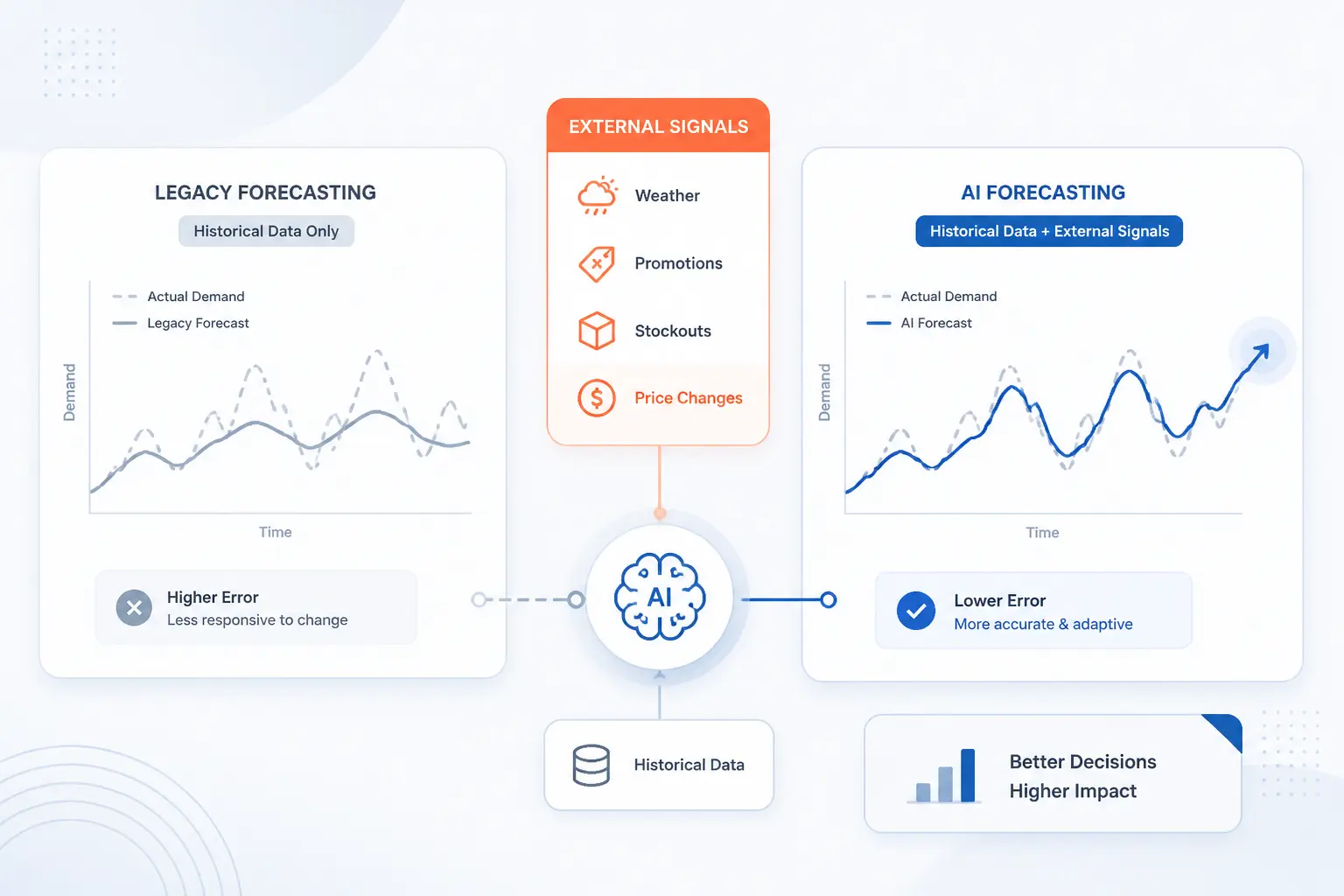
AI earns its keep when demand is messy. Traditional forecasting still works for stable products with clean history. The moment you add promotions, stockouts, new launches, weather shifts, or pricing changes, older methods start to look thin. That is where the better tools in this list separate themselves.
Using External Signals and Real Time Data
The biggest upgrade is signal depth. Instead of relying only on shipment history, modern tools pull in price, promotions, point-of-sale, orders, holidays, and other demand drivers. McKinsey has estimated that AI-based forecasting in supply chains can reduce errors by 20 to 50 percent, which explains why vendors keep investing here.
In the tools above, you can see that pattern clearly. SAP talks about internal and external demand drivers. Oracle calls out holidays and price changes. Kinaxis brings in weather and social signals. Blue Yonder and RELEX both push causal-factor visibility. That is not window dressing. It is the difference between reacting late and seeing the shift while it is still forming.
Applying Machine Learning to New and Volatile Demand
Machine learning helps most when the demand pattern is hard to model by hand. A recent systematic review found that performance depends on data availability, industry context, and computing resources, which is a good reality check for buyers expecting one model to solve every category.
We therefore prefer tools that do more than say “AI-powered.” The better ones segment demand, explain drivers, surface anomalies, and give planners a way to treat new products differently from mature items. Otherwise, you just get a more expensive black box.
Turning Forecasts Into Scenarios and Actions
The real gain comes when the forecast triggers action. That can mean a consensus plan, a replenishment decision, an exception queue, or a what-if scenario for finance and operations. We ranked tools higher when their official pages showed that next step clearly.
This is also where buyers should be strict. If a vendor can predict demand but cannot connect that forecast to inventory, supply, promotions, or executive decision-making, you may end up with a smarter forecast and the same old planning bottleneck.
Where AI Demand Forecasting Creates the Most Value
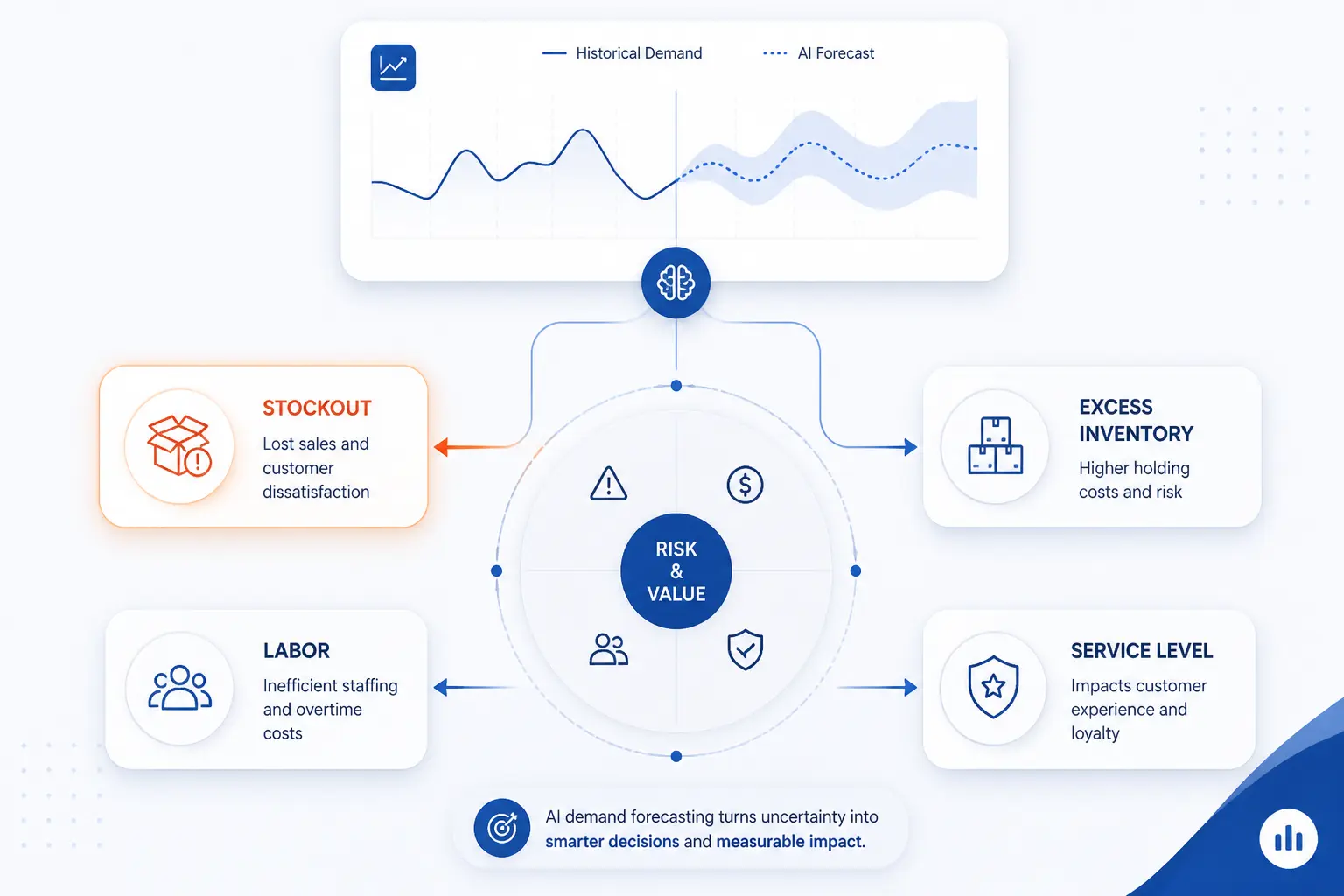
The best use cases share one trait: uncertainty is expensive. If a bad forecast creates stockouts, excess inventory, labor imbalance, or poor service, better demand planning pays for itself quickly. Some industries feel that pain more sharply than others.
Retail and E Commerce
Retail gets value fast because SKU counts are high and promotions never stop. Research on cross-item learning shows why pooled information can help with volatile retail demand, especially when product-level history is noisy or thin.
That is why RELEX, Blue Yonder, Netstock, and Intuendi look especially interesting for merchant-led and omnichannel teams. In retail, the winning platform is usually the one that links demand, inventory, and replenishment cleanly, not the one with the fanciest model name.
Manufacturing and Supply Chain Operations
Manufacturing benefits when forecasts connect to supply constraints and component planning. The hard part is often not the finished-good forecast by itself. It is the downstream impact on bills of materials, supplier lead times, capacity, and inventory positioning.
That is where tools like SAP, Oracle, Kinaxis, o9, and e2open make more sense. They frame demand planning as part of a broader operating system rather than a standalone analytics job.
Healthcare Energy and Service Capacity
AI demand planning also matters when the “product” is capacity. Healthcare teams may forecast patient flow, consumables, or staffing pressure. Energy and utility teams may forecast load or maintenance demand. Service businesses may forecast call volume, field demand, or appointment capacity.
In these cases, scenario planning and explainability matter even more. When the business is allocating people, risk, or public-facing service levels, planners need to understand the drivers behind the number, not just the number itself.
How To Implement AI Demand Forecasting Successfully
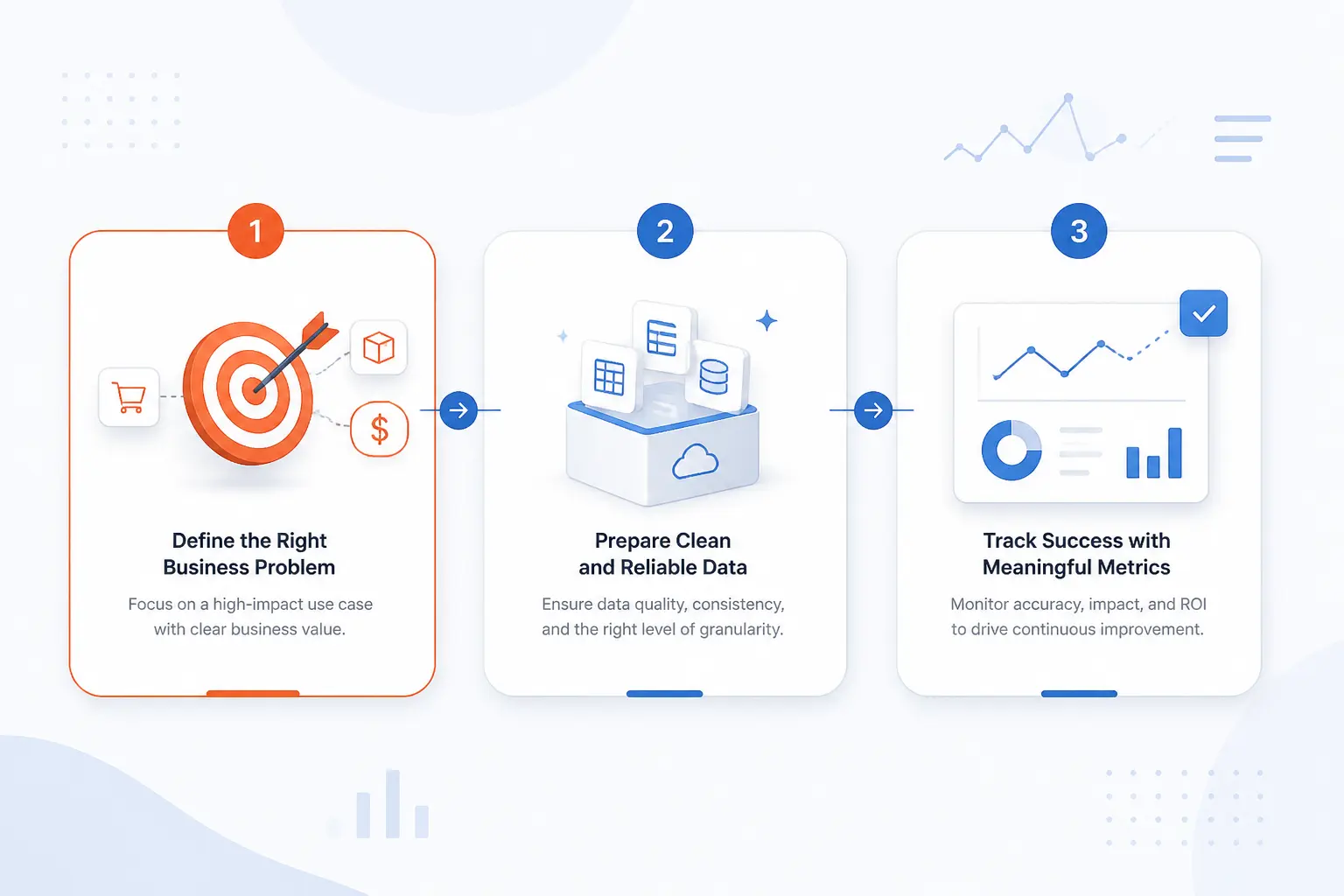
The best rollout starts smaller than most buyers expect. We would begin with one business problem, one clean slice of data, and a short list of success measures. Trying to “AI-enable” every SKU, region, and function at once is how good projects turn into expensive archaeology.
Start With Clear Business Goals and Clean Data
Pick the pain first. That may be stockouts in seasonal items, poor new-product forecasts, or too many manual overrides in one category. Then make sure the data behind that use case is usable, with stable item hierarchies, consistent time buckets, and clear actuals.
Many vendors in this list can ingest lots of data. That does not mean they should ingest bad data. We would rather start with fewer products and a reliable baseline than throw everything into the model and hope the software sorts it out.
Align Sales Marketing Finance and Supply Chain
Demand planning still needs people to agree. SAP’s S&OP overview describes the process as building organizational consensus to balance supply and demand, which is exactly the discipline most AI projects still need.
In practice, that means deciding who owns baseline forecasts, who can override them, how promotion inputs are added, and when finance gets a seat at the table. The software should support that process. It cannot invent it for you.
Track Accuracy Bias and Forecast Value Add Over Time
Do not stop at one accuracy metric. We would track at least forecast accuracy, bias, override behavior, and forecast value add. If planners touch almost every line and accuracy does not improve, that is a signal. If the system gets more stable over time and manual intervention drops only where it should, that is a better sign.
This is also how you keep the vendor honest. A demand-planning tool should improve decision quality, not just produce a technically interesting forecast.
Common Risks and Limitations to Plan For
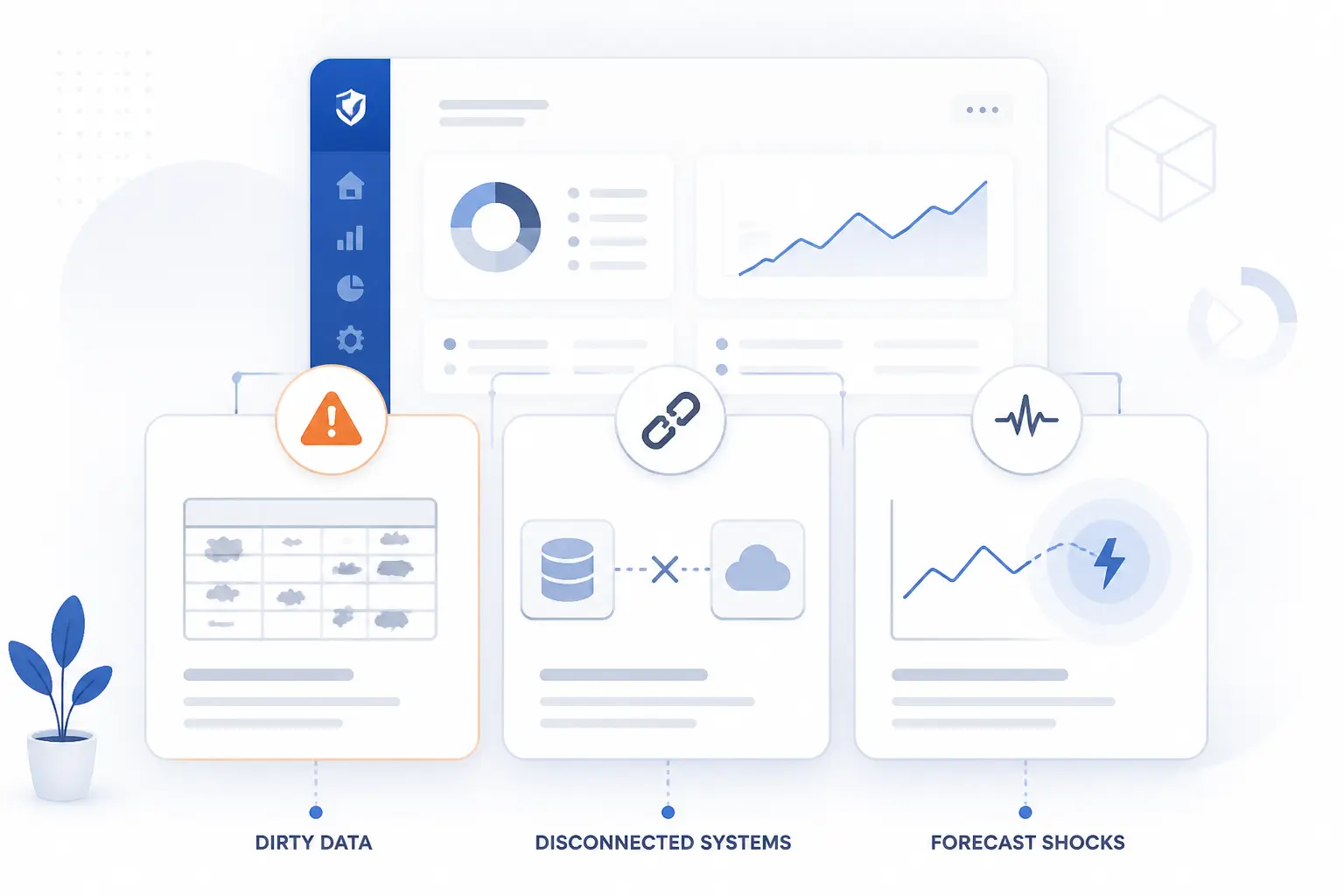
AI demand planning is useful, but it is not magic. Buyers get into trouble when they assume the model can outrun poor data, unclear ownership, or sudden market shocks. We would go in expecting those risks, not acting surprised by them.
Data Quality and Integration Gaps
Most forecast failures still start upstream. Missing promotions, dirty hierarchies, stockout contamination, and lagging actuals can distort even a strong model. Integration work is not glamorous, but it is usually where the long-term ROI is either protected or quietly lost.
That is one reason the enterprise tools in this list keep talking about connected planning, data visibility, and stakeholder workflows. Those are not side issues. They are the plumbing that determines whether the forecast can be trusted at all.
Black Box Models and Low Planner Trust
Planner trust is not a soft issue. NIST’s AI risk guidance notes that transparency increases confidence in AI systems, which lines up with what demand-planning teams usually tell us in practice.
That is why we gave extra credit to tools that show drivers, anomalies, confidence ranges, forecast composition, or FVA. If users cannot explain the number, they will either override it reflexively or ignore it until the next planning cycle.
Market Shocks and Ongoing Model Maintenance
No model stays right forever. New competitors, tariffs, channel shifts, assortment resets, and one-off events can all break what used to work. Teams therefore need a maintenance mindset, not a one-time implementation mindset.
We would look for platforms that make recalibration, scenario testing, and anomaly review easy. The goal is not to build a perfect forecast once. The goal is to keep adapting faster than your spreadsheet process ever could.
FAQ
These are the questions buyers usually ask once the shortlist starts taking shape. The short answers matter because they often decide whether you need an enterprise platform, a focused forecasting tool, or a lighter mid-market option.
How Much Does AI Demand Forecasting Cost
It ranges from mid-market quote-based subscriptions to full enterprise deals with implementation services, integrations, and multiple planning modules. In this list, IBM is one of the few vendors with a public SaaS starting point, while Oracle publishes public-sector named-user pricing for parts of its stack. For most of the enterprise tools, you should expect custom pricing based on user counts, scope, and how much planning workflow you want beyond the forecast itself.
What Is the Best AI Tool for Forecasting
The best tool depends on your planning context. We would start with SAP or Oracle for large enterprise environments, RELEX for retail-heavy operations, and Netstock for mid-market adoption speed. If your biggest concern is explainability, Logility and Demand Forecast AI are especially interesting.
Will AI Take Over Demand Planning
No, AI will not take over demand planning by itself. It will automate more baseline forecasting, anomaly detection, and scenario support, but human teams still decide assumptions, trade-offs, and business actions. In most organizations, AI shifts planners toward exception handling and decision-making rather than replacing them outright.
What Data Does AI Demand Forecasting Need
At minimum, it needs reliable historical demand or sales data and clean product, customer, and time hierarchies. The better systems also use promotions, pricing, inventory, orders, point-of-sale data, holidays, and external signals like weather or events. More data is not always better, though. Relevant, timely, and trustworthy data matters more than volume alone.
Can Small Businesses Use AI Demand Forecasting
Yes, small businesses can use it, but they should choose differently from large enterprises. We would usually steer smaller teams toward tools like Netstock or Intuendi before sending them into the deepest planning suites on this list. The key is choosing software that improves decisions without creating a giant implementation burden.




Conclusion
Our shortlist for most enterprise buyers would start with SAP, Oracle, Kinaxis, Anaplan, RELEX, and Blue Yonder. For teams that need faster adoption or a clearer mid-market path, Netstock and Intuendi deserve more attention than they usually get. If explainability is the sticking point, Logility and Demand Forecast AI are hard to ignore.
The next step is simple. Decide whether you need a better forecast, a better planning process, or both, then cut your shortlist to three vendors and ask each one to show the same demand-planning workflow on your kind of data. Which three are you actually going to put in the demo room?