

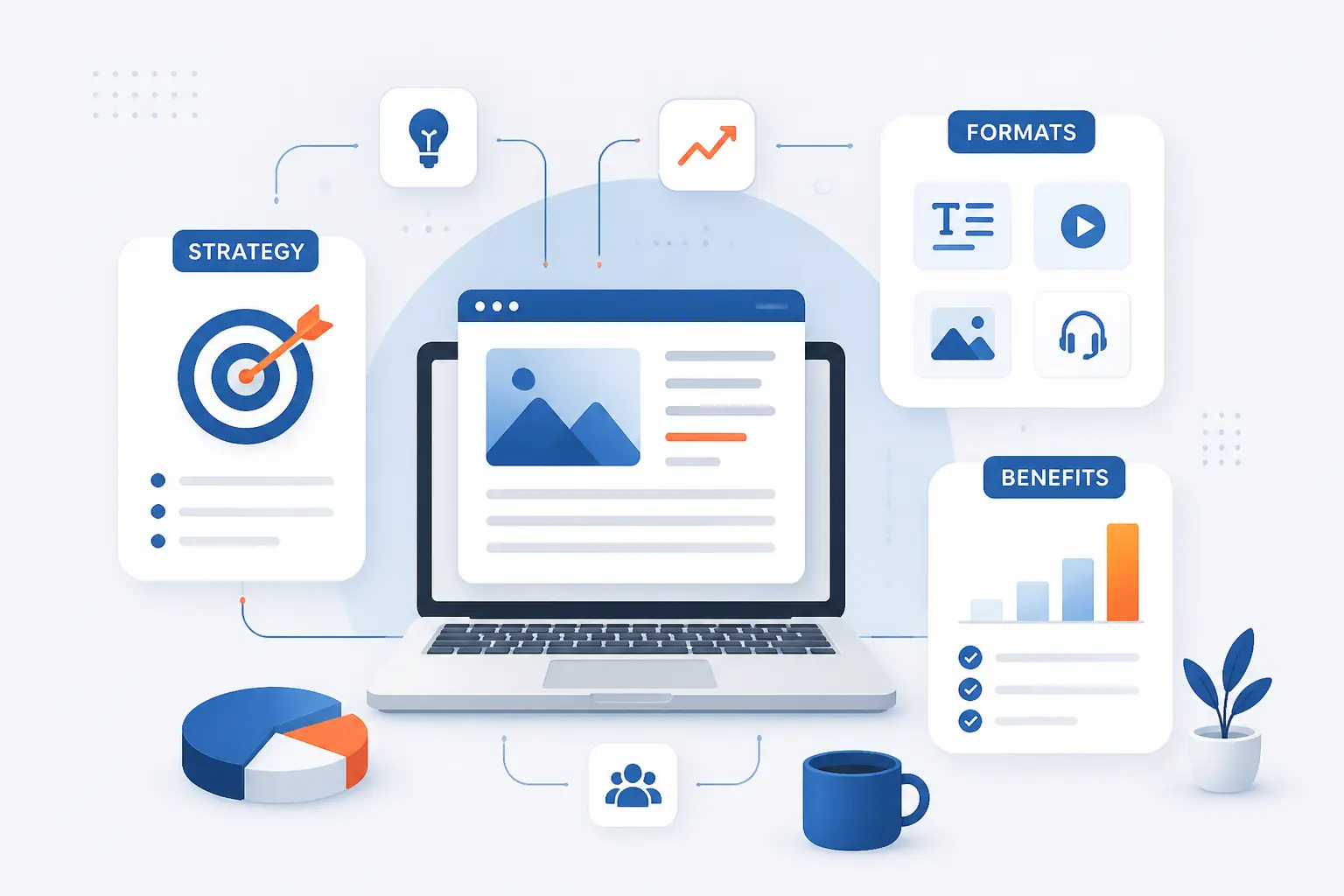
- Content Marketing Is the Strategic Creation and Distribution of Useful Content
- The Core Elements That Make It Work
- Common Content Formats in a Modern Mix
- How It Supports the Customer Journey
- Main Benefits of Content Marketing
- How to Build a Content Marketing Strategy
- FAQ
- How 1Byte Supports Content-Driven Websites
- Conclusion
Content marketing is the planned creation and sharing of useful articles, videos, emails, guides, podcasts, and other material that helps an audience before asking for a sale. It is different from interruptive advertising because it earns attention by answering real questions. A hosting company might publish a migration checklist, a bakery might share wedding cake planning advice, and a software firm might offer comparison guides. We see it as a long game: help people think more clearly, and some of them will trust you when it is time to buy.
At 1Byte, we like content marketing because it rewards clarity. It asks a business to explain what it knows, who it serves, and why its answer is worth hearing. That discipline is healthy. A good piece of content should make the reader feel more capable after reading, watching, or listening to it.
Content Marketing Is the Strategic Creation and Distribution of Useful Content
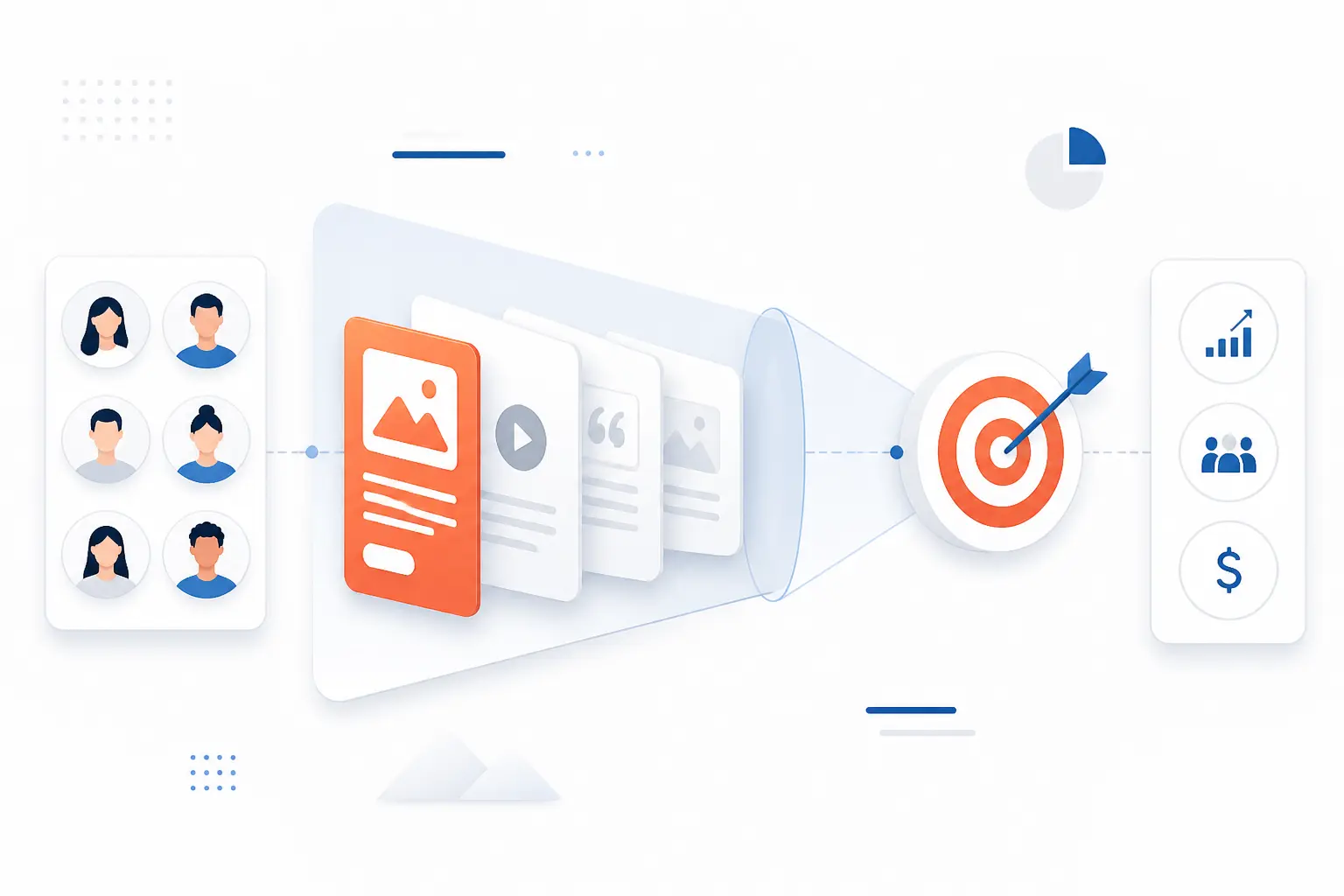
Content marketing is a business strategy that attracts, educates, and retains an audience by publishing material that is genuinely useful to them. The key word is strategic. Random posting is not enough, because the content must serve a clear audience, a clear business goal, and a clear stage in the customer journey. The best work answers questions people already have, then connects those answers to a product or service when the fit is natural.
We can think of it as a library that also functions as a sales assistant. The library part gives readers practical help. The sales assistant part guides qualified readers toward the next sensible step. For example, a cloud provider might publish a guide on choosing server resources, then offer a cloud server option to readers who need dedicated compute.
That is why quality matters more than volume. Google’s own search guidance says systems are designed to reward helpful, reliable material made for people rather than material made only to manipulate rankings, which is why we would rather publish one useful guide than ten thin pages with clever titles and weak substance. A practical rule is simple: if the reader cannot use it, improve it before promoting it through Google’s guidance.
FURTHER READING: |
| 1. What Is Brand Identity Design and Why It Matters |
| 2. Crowdfunding Definition, Types, Process, and Platforms |
| 3. How to Start a Business and Launch With Confidence |
The Core Elements That Make It Work
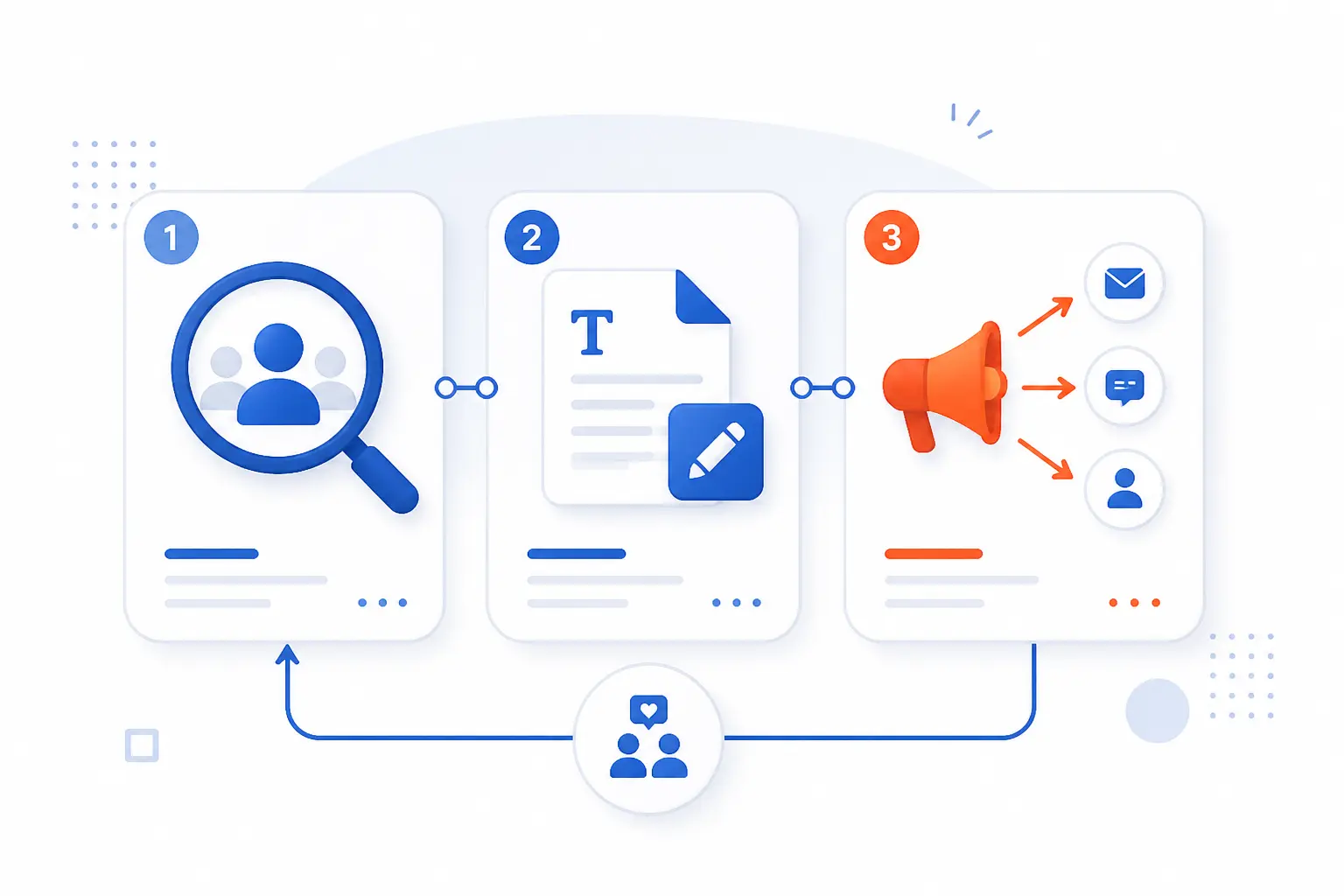
Content marketing works when audience insight, problem-solving, and distribution operate together. If one part is missing, the whole system limps. Research tells us what people need, creation turns that need into a helpful asset, and distribution gets the asset in front of the right people. Ongoing engagement then converts a one-time visit into a relationship.
Audience Research and Buyer Personas
Audience research tells us who we are helping, what they care about, and what blocks them from making a good decision. Without it, content becomes guesswork dressed up as strategy. We start by looking at customer questions, search behavior, sales conversations, support tickets, competitor gaps, and community discussions. The goal is not to create a fictional character for decoration. The goal is to understand real motives.
A useful buyer persona should include practical details. What problem triggered the search? What budget pressure exists? Who must approve the decision? What language does the buyer use? A small business owner researching shared hosting does not think like an engineering manager planning cloud servers. They may both need hosting, but their fears and decision criteria differ.
We prefer personas that are short and testable. If a persona does not help us choose a topic, angle, channel, or call to action, it is too vague. Good research sharpens choices.
Content Creation That Solves Problems
Strong creation begins with one useful answer, not with a format. A blog post, video, checklist, or webinar should exist because it solves a specific problem for a specific reader. That problem might be educational, such as “What is SSL?” It might be practical, such as “How do I prepare a site for a traffic spike?” It might be comparative, such as “Should I choose shared hosting or cloud hosting?”
The best pieces make the reader’s next action obvious. If the reader is new, explain terms without talking down to them. If the reader is comparing options, show trade-offs. If the reader is close to buying, give proof, requirements, setup steps, and risks. We have learned that honest constraints make content more persuasive. Saying “this option is not right for every case” builds more trust than pretending every product fits every problem.
Creation also needs a point of view. Facts matter, but so does judgment. Readers want help deciding, not just help collecting information.
Distribution, Promotion, and Ongoing Engagement
Distribution makes useful work visible to the people who need it. Publishing alone is rarely enough. A new guide can be shared through search, newsletters, social posts, partner mentions, paid promotion, sales follow-ups, webinars, or customer onboarding emails. The right channel depends on where the audience already spends attention.
Promotion should be matched to intent. A technical guide might perform well in search because people actively look for the answer. A short demo might work better on social platforms because it can show the value quickly. An email series may suit existing subscribers who already trust the brand.
Engagement matters after the click. We look for comments, replies, follow-up questions, scroll depth, return visits, and sales conversations influenced by the asset. These signals tell us whether the content is alive or just sitting on the shelf.
Common Content Formats in a Modern Mix
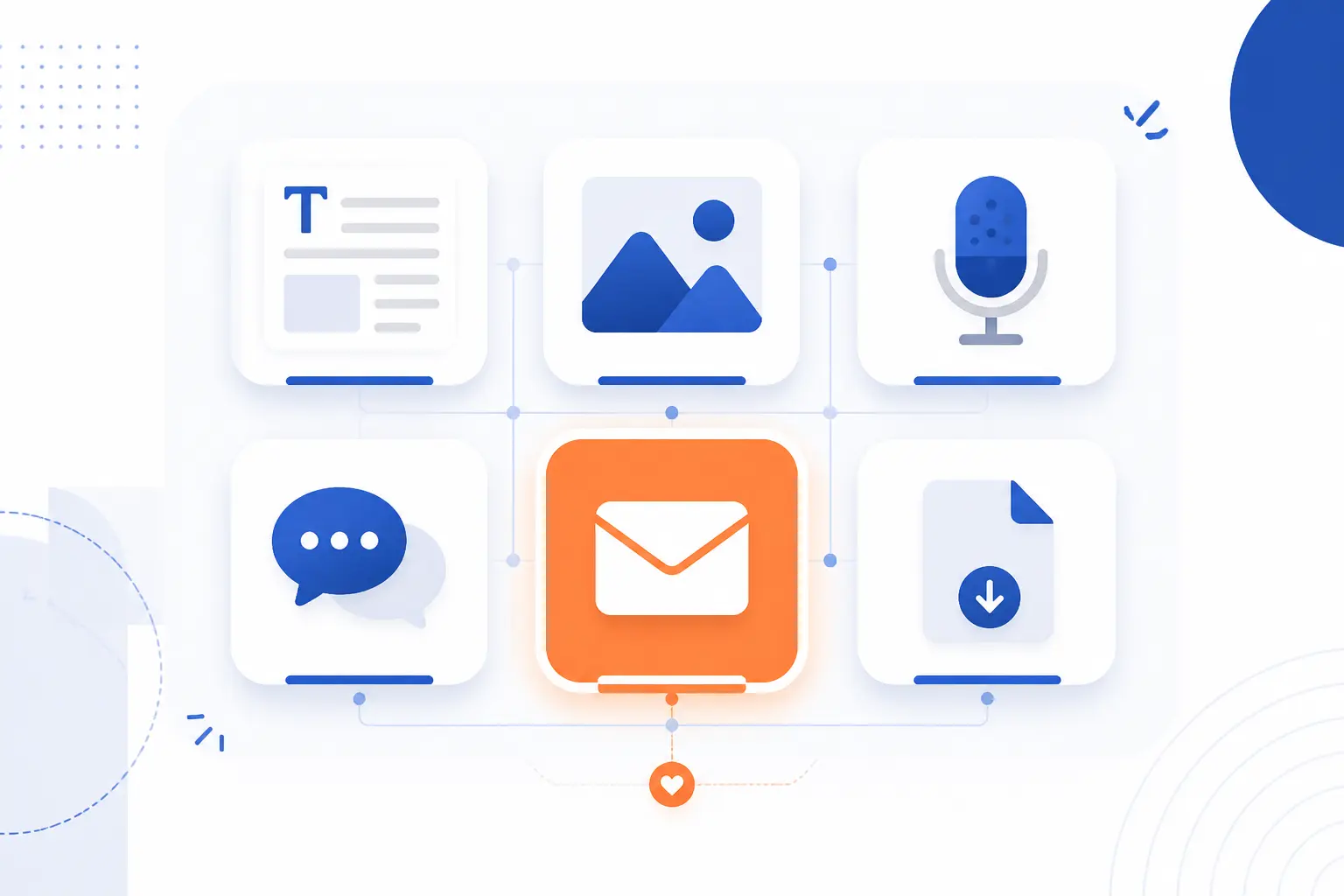
A modern content mix usually includes written, visual, audio, social, email, and downloadable formats. Each format serves a different job. Long-form writing explains, video demonstrates, podcasts build familiarity, and email keeps the relationship warm. The best mix is not the largest mix. It is the one a team can maintain with quality.
| Format | Best Use | Typical Strength |
|---|---|---|
| Blog posts and guides | Answer search-driven questions | Depth and discoverability |
| Videos | Show processes, products, and stories | Fast understanding |
| Podcasts | Reach listeners during routines | Trust and familiarity |
| Social, email, and visuals | Distribute, remind, and summarize | Repeat contact |
Blog Posts and Long-Form Guides
Blog posts and long-form guides are best for explaining topics that people actively research. They work well when the reader needs detail, structure, and examples. A strong guide can answer beginner questions, compare options, and help the reader avoid mistakes. This is why written assets remain central for many websites.
For example, a hosting provider might publish a guide on migrating a WordPress site. The article can explain backups, DNS records, SSL checks, staging, redirects, and post-launch testing. A short ad could never cover that with care. A guide can.
We usually recommend building written pieces around real decision points. If the reader is comparing hosting types, explain the trade-offs. If they are troubleshooting, give steps. If they are learning, define the concept first, then add examples. That keeps the piece useful instead of bloated.
Videos for Demonstration and Storytelling
Videos are strongest when seeing the process is easier than reading about it. They are useful for product walkthroughs, setup demos, customer stories, onboarding, and complex workflows. A two-minute screen recording can explain a control panel faster than a thousand words. That does not make text obsolete, but it does give the audience another path to understanding.
The format has broad business adoption. Wyzowl’s survey reported that 91% of businesses use video as a tool, which matches what we see across software, ecommerce, education, and service companies. When a topic has movement, sequence, or emotion, video often carries it well.
Our practical view is this: use video when it reduces confusion. A polished brand film is fine, but a clear demo often does more work. Show the dashboard. Show the result. Show the before and after.
Podcasts for Audio-First Audiences
Podcasts are useful when an audience wants to learn while doing something else. They suit interviews, expert discussions, founder viewpoints, industry commentary, and recurring education. A podcast does not need to replace written content. It can extend it by adding voice, personality, and context.
Audio has become a mainstream habit. Edison Research estimated 158 million monthly podcast consumers in the United States among people age 12 or older, which shows why many brands now treat audio as more than a niche channel. The opportunity is not just reach. It is intimacy. A listener who spends 30 minutes with a host gets a stronger sense of the people behind the brand.
Still, podcasts require consistency. A dead feed can signal neglect. We would rather see a company publish a focused six-episode series than start a weekly show it cannot sustain.
Social Posts, Email, and Visual Assets
Social posts, email, and visual assets help distribute ideas and keep them memorable. Social platforms are good for short insights, conversation, clips, and timely observations. Email is better for owned audience contact, because subscribers have given permission to hear from the brand. Visual assets such as diagrams, charts, and checklists make complex ideas easier to scan.
Email deserves special respect because it connects directly to people who already raised their hands. Litmus reports an average return of $36 for every dollar spent, though results vary widely by list quality, offer, timing, and measurement discipline. We do not treat that figure as magic. A neglected list with poor segmentation will not perform like a well-kept one.
Visual assets also travel well. A diagram from a technical guide can become a LinkedIn post. A checklist can become a downloadable PDF. A quote from a webinar can become an email opener.
How It Supports the Customer Journey
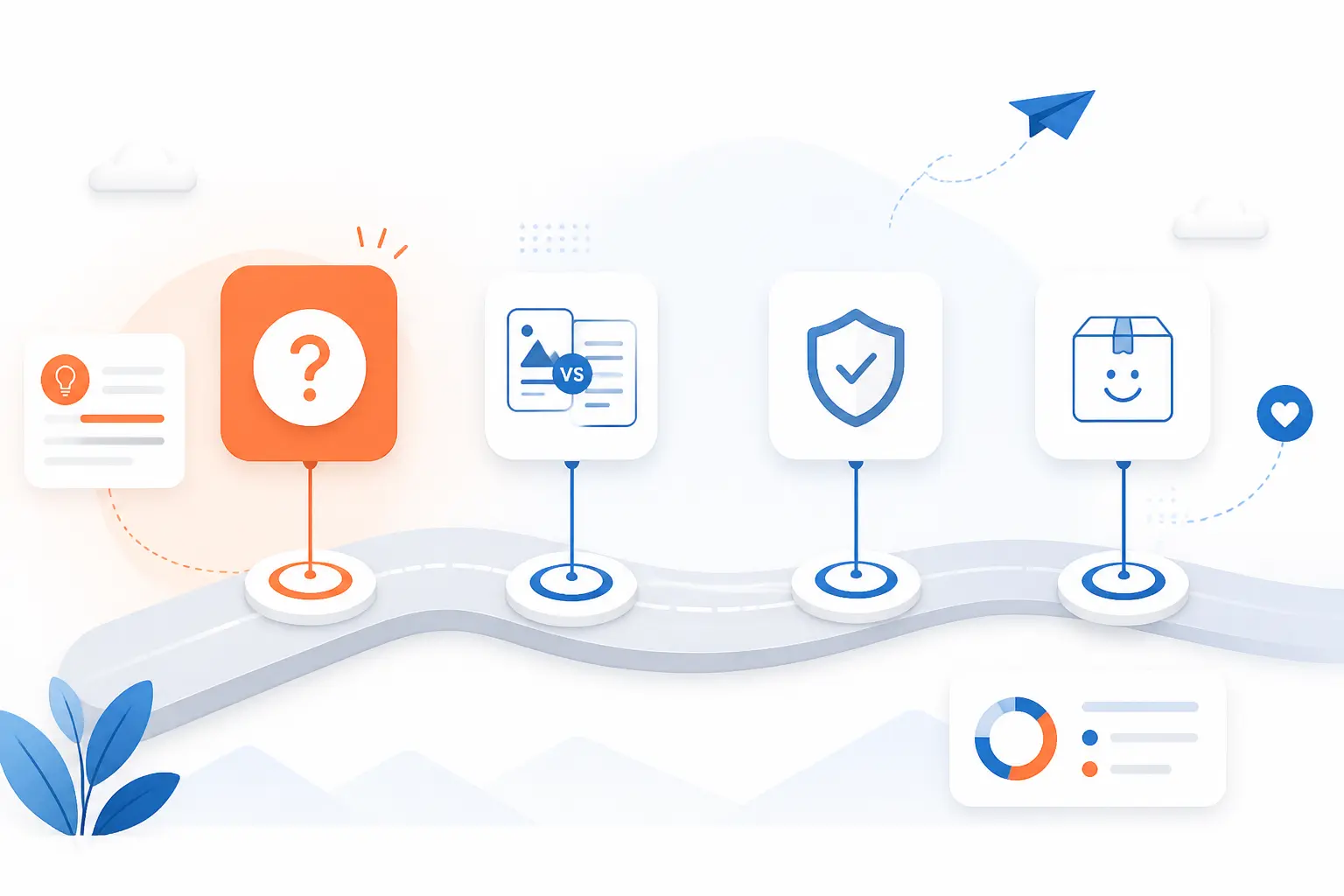
Content marketing supports the customer journey by giving people the right help at the right moment. At the awareness stage, it explains the problem. At the consideration stage, it compares paths. At the decision and post-purchase stages, it reduces risk and helps customers succeed after they buy. This matters because many buyers prefer to research before speaking with a seller.
Awareness Stage
Awareness-stage content helps people name a problem or opportunity. The reader may not know the category yet. They may search for symptoms, such as “website loads slowly” or “how to secure a domain.” At this stage, the job is education, not pressure.
Useful formats include beginner guides, checklists, explainer videos, glossary pages, and diagnostic articles. A cloud hosting company might explain why a campaign landing page slows down under traffic. That reader may not be ready to buy. They are trying to understand what is happening.
We like awareness content when it respects the reader’s uncertainty. Do not rush to the pitch. Help them see the problem clearly, and they will remember who made the fog lift.
Consideration Stage
Consideration-stage content helps people compare solutions and choose a sensible path. The reader now understands the problem, but they are weighing options. They may compare vendors, service models, pricing structures, security needs, performance requirements, or migration effort. This is where specificity wins.
Strong formats include comparison pages, buyer guides, webinars, calculators, case studies, and technical explainers. Gartner found that 61% of B2B buyers prefer a rep-free buying experience, which makes self-service educational assets more valuable. Buyers still need help. They just may want it before they talk to sales.
Our advice is to be candid here. If shared hosting is suitable for a small brochure site, say so. If cloud servers fit a heavier application better, explain why. Clear trade-offs build confidence.
Decision and Post-Purchase Stage
Decision and post-purchase content helps buyers feel safe before purchase and successful after purchase. Before purchase, people need proof, requirements, terms, demos, implementation details, and risk reduction. After purchase, they need setup guides, troubleshooting steps, onboarding emails, and best-practice resources.
This is where many teams underinvest. They spend heavily to attract prospects, then leave customers with thin documentation or confusing next steps. That creates support load and buyer regret. Good post-purchase content reduces both.
For example, after someone buys a hosting plan, they may need help connecting a domain, installing WordPress, activating SSL, or checking DNS propagation. Clear guidance can turn a stressful first day into a manageable one. That experience becomes part of the brand.
Main Benefits of Content Marketing

The main benefits of content marketing are visibility, trust, loyalty, lead generation, and better buying conversations. It gives a business more ways to be found and more reasons to be remembered. It also creates reusable assets that can support sales, support, onboarding, and retention. The payoff is rarely instant, but good assets can keep working long after publication.
Brand Visibility and Organic Discovery
Content improves visibility by giving search engines, social platforms, newsletters, and referral sources something useful to surface. A business cannot be discovered for questions it never answers. Each strong article or video becomes a possible entry point for a future customer.
Organic discovery is especially powerful because it captures existing intent. Someone searching “how to choose a domain name” already has a problem in mind. If a brand answers well, the interaction begins with usefulness rather than interruption. That changes the tone of the relationship.
Paid distribution can still support the work. We do not see organic and paid as enemies. Paid promotion can accelerate reach, while durable educational assets keep attracting visitors later. The better the asset, the less wasteful the promotion feels.
Trust, Authority, and Audience Loyalty
Trust grows when a brand gives clear answers before asking for commitment. Readers notice when a company explains trade-offs honestly. They also notice when a page dodges hard questions. Authority is not declared. It is demonstrated through accuracy, usefulness, and consistency.
Loyalty comes from repeated helpful moments. A person may read a beginner article in January, download a checklist in March, attend a webinar in May, and buy in July. No single asset did all the work. The sequence built confidence.
We believe this is where content marketing feels almost old-fashioned, in the best way. It rewards patience, craft, and generosity. Those are not hacks. They are habits.
Leads, Sales, and Lower Acquisition Costs
Content can generate leads and sales by matching useful information with a relevant next step. A guide can invite readers to compare plans. A webinar can offer a consultation. A checklist can lead to an email sequence. The conversion works best when the next step feels like a continuation of help, not a trapdoor into a hard sell.
It can also lower acquisition costs over time because useful assets can be reused across search, email, sales outreach, onboarding, and social snippets. One strong guide may support dozens of conversations. That does not mean it is free. Research, writing, design, editing, and promotion all cost time or money. The difference is that good assets keep producing value.
We look for compounding effects. Are older articles still bringing qualified visitors? Are sales teams sharing guides? Are customers using tutorials instead of opening tickets? Those are signs the work is paying rent.
How to Build a Content Marketing Strategy
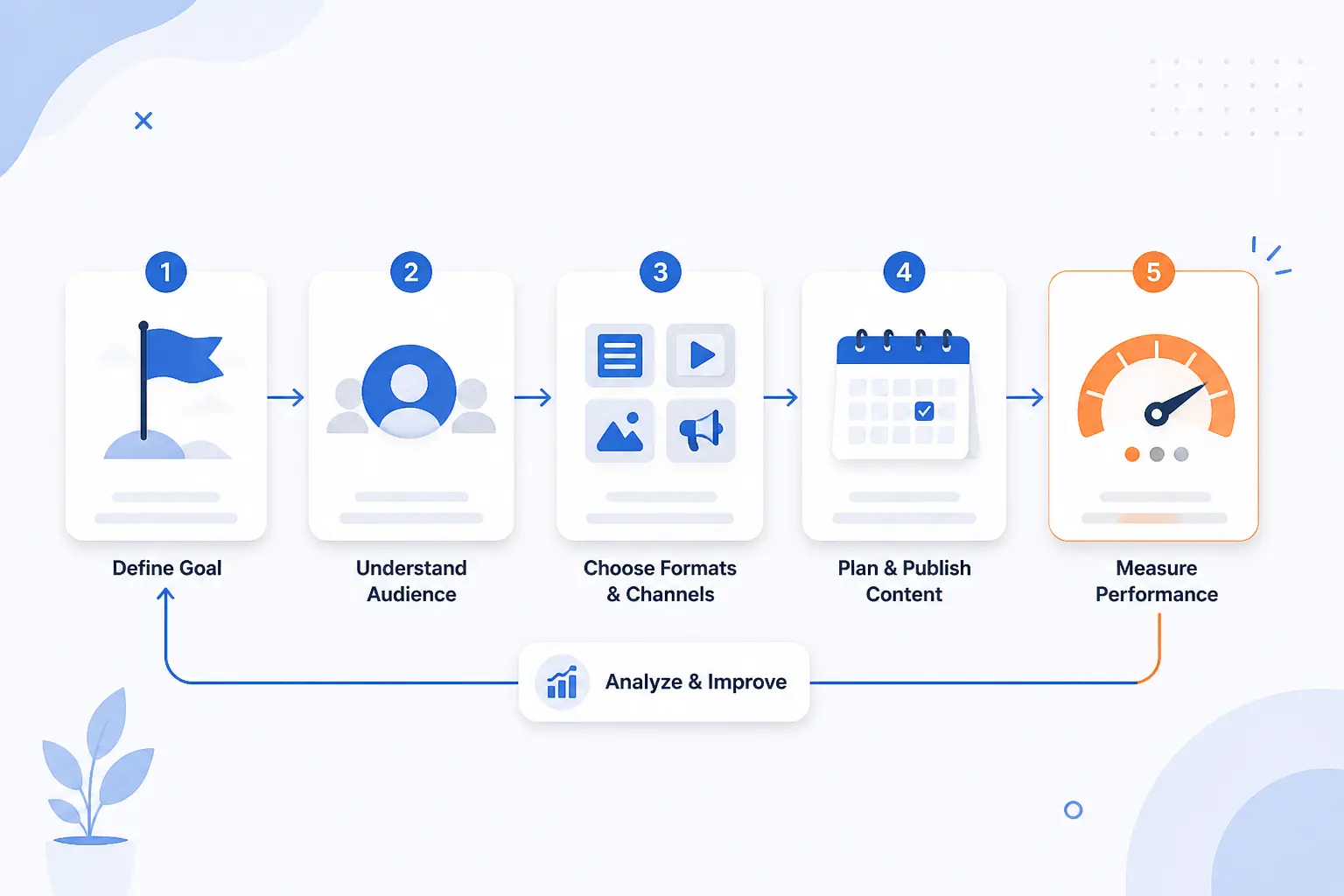
A content marketing strategy is built by setting goals, choosing formats and channels, publishing at a realistic pace, and improving based on evidence. It should connect audience needs to business outcomes. The plan does not need to be fancy. It needs to be usable, measurable, and honest about the team’s capacity.
Set Goals, KPIs, and Funnel Alignment
Start by deciding what the content must accomplish. A goal might be organic discovery, lead generation, product education, customer onboarding, sales enablement, or retention. Each goal needs matching KPIs. Traffic alone is not enough if the goal is qualified leads.
Useful KPIs include organic clicks, rankings for priority topics, email signups, demo requests, assisted conversions, engagement quality, sales usage, and support deflection. The metric should reflect the stage. Awareness content may be judged by qualified reach and engagement. Decision content may be judged by conversion assistance and sales feedback.
Funnel alignment keeps the library balanced. If every piece is beginner-level, buyers may leave when they need comparison help. If every piece is sales-heavy, new readers may bounce. Map the journey before filling the calendar.
Choose Formats, Channels, and a Realistic Publishing Cadence
Choose formats and channels based on audience behavior and team capability. If your buyers search complex questions, start with guides. If your product is visual or procedural, add video. If your experts explain best in conversation, test webinars or podcasts. If you already have subscribers, use email to deepen the relationship.
Cadence must be realistic. Publishing weekly is useful only if quality survives. A small team may do better with two excellent guides per month and a steady newsletter than with daily posts that say very little. We would rather see a durable schedule than a heroic sprint followed by silence.
Channel choice should also account for ownership. Search traffic can fluctuate. Social platforms can change rules. Email lists and websites give a business more control. A healthy mix reduces dependence on any single source.
Repurpose, Measure, and Refine What Works
Repurpose strong ideas so they reach people in more than one way. A long guide can become a webinar outline, a short video, an infographic, a checklist, a newsletter series, and sales talking points. This is not lazy recycling. It is responsible use of a good idea.
Measurement should be regular but not frantic. Give search-focused assets time to mature. Review engagement and conversion data. Ask sales and support teams which pieces actually help. Update pages when product details, screenshots, pricing logic, or best practices change.
Refinement is where the quiet gains happen. Improve weak introductions. Add missing examples. Merge overlapping pages. Remove outdated claims. Expand the sections readers care about most. The work becomes sharper with each pass.
FAQ
The most common questions about content marketing usually come down to roles, differences, and ownership. A beginner wants to know who does the work, how it differs from advertising, and how it relates to broader planning. The short answer is that content marketing is the public-facing execution, while strategy gives that execution direction.
What Does a Content Marketer Do?
A content marketer plans, creates, distributes, and measures useful material that attracts and guides an audience. The role may include research, writing, editing, SEO planning, email coordination, social promotion, analytics, and collaboration with sales or product teams. In smaller companies, one person may wear many of these hats.
How Is Content Marketing Different From Traditional Advertising?
Content marketing earns attention by helping people, while traditional advertising usually pays to place a message in front of them. Advertising often interrupts a moment, such as a video, search result, or TV program. Content works best when the audience chooses to engage because the material answers a need.
How Is Content Marketing Different From Content Strategy?
Content marketing is the practice of using useful material to attract and support an audience, while content strategy is the broader plan that governs what gets created, why, where, and how it is maintained. Strategy includes governance, messaging, workflows, audits, voice, information architecture, and measurement. Put simply, strategy is the map, and marketing is one major route on that map.
How 1Byte Supports Content-Driven Websites
1Byte supports content-driven websites by providing the foundation those sites need to publish, protect, and handle growth. Content marketing depends on trust, performance, and availability because every article, landing page, video embed, and campaign page lives somewhere. Our role is practical: help businesses put their content on reliable web infrastructure. As an AWS Partner, we also understand how cloud environments support heavier campaign and application needs.
Launch a Trusted Site With Domains and SSL Certificates
Domain registration and SSL certificates help a content-driven website look credible from the first visit. A domain gives the site a memorable address. An SSL certificate protects data exchanged between the visitor and the website, and it also prevents browsers from showing alarming security warnings.
For content marketing, that trust signal matters. A reader may discover your guide through search, open it on a phone, and decide in seconds whether the site feels legitimate. If the domain looks odd or the browser flags the page as unsafe, the best article in the world starts with a handicap.
We see domains and SSL as the front door. They do not write the message, but they shape how confidently people enter.
Publish Faster With WordPress Hosting and Shared Hosting
WordPress hosting and shared hosting help teams publish educational pages, blog posts, landing pages, and resource hubs without building infrastructure from scratch. WordPress hosting is a natural fit for teams that want a familiar publishing system. Shared hosting can suit smaller sites, early-stage projects, or businesses with simpler publishing needs.
This is where content marketing becomes operational. Writers, editors, and business owners need a place to draft, publish, update, and organize their work. A practical publishing setup reduces friction. If every update requires a technical rescue mission, the calendar will suffer.
We like simple setups when they match the job. Not every website needs a complex architecture. The right platform is the one that supports the content plan without getting in the way.
Scale Campaigns With Cloud Hosting and Cloud Servers
Cloud hosting and cloud servers support content campaigns that need more control, capacity, or flexibility. A campaign may bring bursts of traffic from email, search, social sharing, product launches, or paid promotion. Heavier sites may also run custom applications, dynamic pages, member areas, or resource libraries that outgrow basic hosting.
Cloud hosting can help when a business needs a stronger environment for content operations. Cloud servers are useful when technical teams want dedicated resources and more configuration control. These options are especially relevant when content marketing moves beyond a blog and becomes part of a larger digital system.
As an AWS Partner, 1Byte can connect content-driven growth with cloud infrastructure planning. We keep that connection practical. Publish the work, protect the site, and prepare the environment for the traffic the work is meant to earn.






Conclusion
Content marketing is the art and discipline of helping people before they buy. It works because useful material creates visibility, reduces confusion, builds trust, and supports decisions across the customer journey. The formats can vary, from guides and videos to podcasts, email, and social posts. The principle stays the same: answer real questions with care.
Our view at 1Byte is simple. If your business knows something valuable, do not hide it behind a sales pitch. Teach it clearly, publish it on a dependable site, and connect it to the next helpful step. Start with one question your customers ask every week, then build the best answer you can.