

- What an LLC Is and How It Works
- Is an LLC Right for Your Business
- Choose the Best State to Form Your LLC
- Choose a Name for Your LLC
- Appoint a Registered Agent
- Decide How Your LLC Will Be Managed
- Prepare and File Your LLC Formation Documents
- Create an Operating Agreement for Your LLC
- Get an EIN and Choose Your LLC Tax Treatment
- Open a Business Bank Account and Separate Your Finances
- Meet Local, State, and Industry Requirements
- Understand Ongoing LLC Compliance and Costs
- How to Start an LLC in California and Texas
- How to Transition from a Sole Proprietorship to an LLC
- Build Your LLC Online Presence after Formation
- FAQ
- How 1Byte Supports New LLCs as a Cloud Computing and Web Hosting Provider
- Final Thoughts on How to Start an LLC
When founders ask us at 1Byte how to start an LLC, we tell them to skip the mythmaking and focus on the filing path that actually protects the business. The United States recorded 496,443 business applications in February 2026, which tells us the push to formalize new businesses is still very real.
The catch is simple. An LLC is not just a form. You need the right state, the right name, the right tax setup, a clean banking trail, and the permits your city or industry expects. We have seen founders obsess over logos and domain names while the legal basics are still loose. That is backwards. The legal shell comes first, then everything public gets built on top of it.
What an LLC Is and How It Works
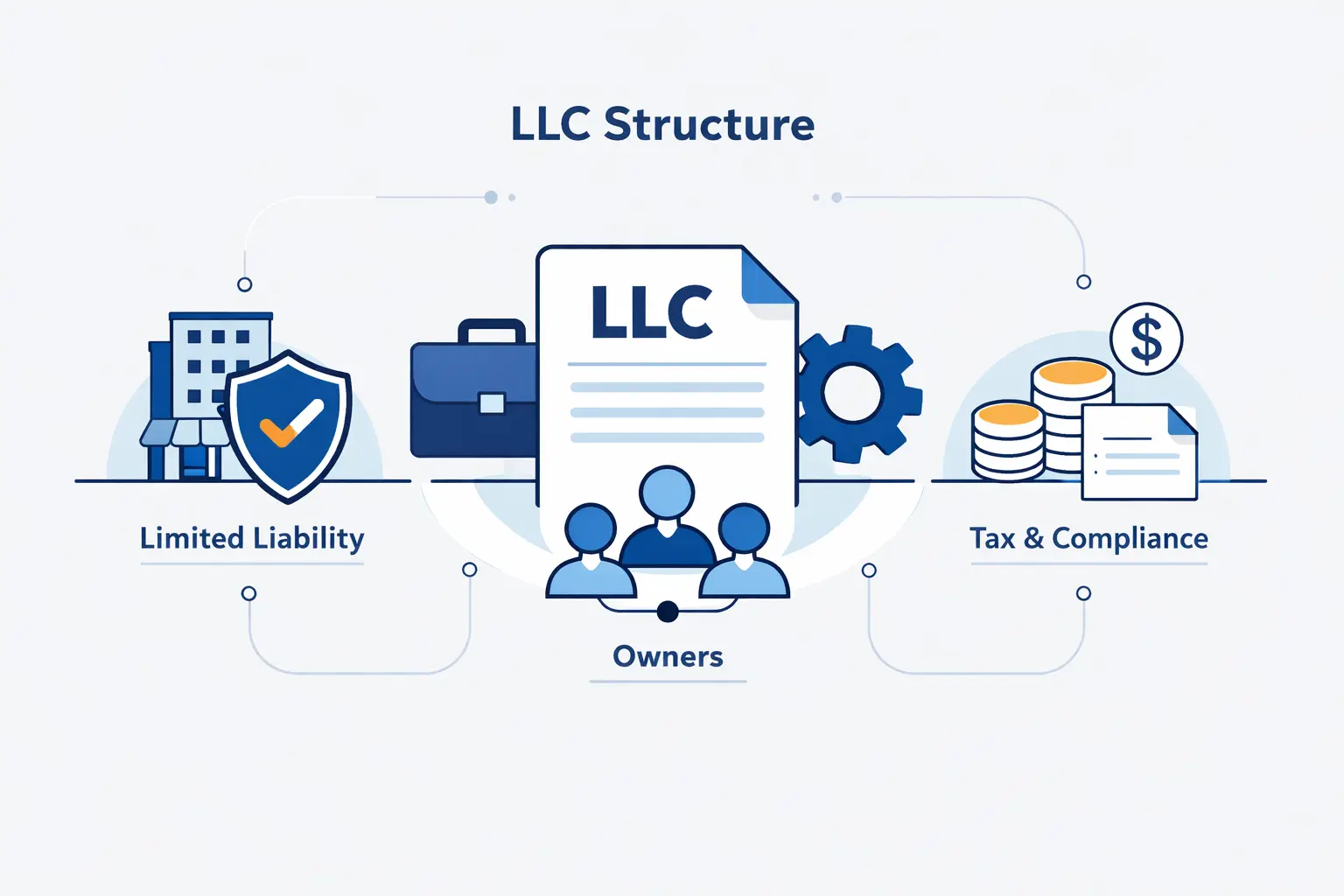
An LLC is a state-created business entity. It can have one owner or several, and the IRS may tax it in different ways depending on how many owners it has and whether an election is filed. We think of it as a practical middle ground for many small businesses, because it gives structure without forcing every founder into full corporate formality on day one.
1. How an LLC Protects Personal Assets
The basic idea is separation. In general, the business owes the debt, not you personally. If the company signs a contract, takes on a lease, or gets sued over business activity, the LLC is meant to stand between the business problem and your personal assets. That protection works best when you treat the company as separate in real life, especially with contracts, records, and bank accounts.
2. Who Can Own an LLC
LLC ownership is flexible. Members can be individuals or other legal entities, and a company can be single-member or multi-member. That flexibility is one reason LLCs work well for solo consultants, married couples, family businesses, and small teams. The catch is that licensed professions may face separate entity rules, so a general filing is not always enough for law, medicine, accounting, or similar regulated work.
3. How the IRS Classifies Single-Member and Multi-Member LLCs
For federal tax purposes, a single-member company is usually treated as disregarded, while a multi-member company is usually treated as a partnership unless it elects corporate treatment. That is why two businesses with the same state entity type can still end up with very different tax filing rules. We tell founders not to confuse legal formation with tax treatment, because the IRS does not use those words the same way most new owners do.
Is an LLC Right for Your Business
Not every business needs an LLC on the first day, but many reach that point quickly. If you are signing contracts, sharing ownership, collecting real revenue, or working in a field with meaningful risk, formality stops being optional and starts being useful. We usually push founders to decide based on risk, ownership, and real operations, not on internet hype.
1. The Main Benefits of Starting an LLC
The main upside is legal separation, paired with flexible ownership and flexible federal tax treatment. An LLC can also make the business feel more real to banks, vendors, and customers. We like the structure for agencies, online stores, local service firms, and many family-run businesses because it gives a clean legal identity without turning the owner into a full-time compliance officer.
2. The Main Drawbacks to Consider
An LLC is not free, and it is not self-maintaining. You may face filing fees, annual reports, state taxes, registered agent costs, and local permit obligations. The recurring work matters just as much as the initial filing. We think this is where many first-time owners get blindsided, especially in states with heavier annual costs.
3. When an LLC Fits Your Long-Term Goals
An LLC usually makes sense when you want a business that can stand on its own feet. That means its own contracts, its own bank account, its own public identity, and clear rules between owners if more than one person is involved. If you already know the business will hire, expand, or bring in partners, it is often cleaner to form early than to backfill structure after money starts moving.
Choose the Best State to Form Your LLC
This is where online advice often gets sloppy. We see founders chase Delaware or Wyoming because a thread told them to, even though the actual business lives somewhere else. For most small businesses, the home state is still the cleanest answer, and usually the cheapest one once you count the full compliance picture.
1. Why Most Owners Form in Their Home State
If your office, customers, workers, and daily operations are in one state, that state is usually where you should form. A bakery in Phoenix, a cleaning company in Tampa, or a design studio in Portland rarely gets much value from forming somewhere else first. We think simplicity wins here. One state is easier than two, and local compliance gets easier when the domestic state is the place where the business actually operates.
2. When Foreign Qualification Comes into Play
Foreign qualification matters when the LLC forms in one state but actively does business in another. The formation state calls the company domestic. Other states call it foreign and may require separate registration, extra filings, another registered agent, and extra fees. This is why the cheap-state strategy can turn into a two-state headache for a small company with a normal local footprint.
3. How State Fees and Rules Affect Your Decision
The smart comparison is not just the filing fee. It is the whole rulebook. We compare annual reports, franchise taxes, publication rules, licensing friction, and whether the state is going to pull you back in as a foreign entity anyway. A low front-end cost can be the wrong move if it creates extra maintenance every year after that.
Choose a Name for Your LLC
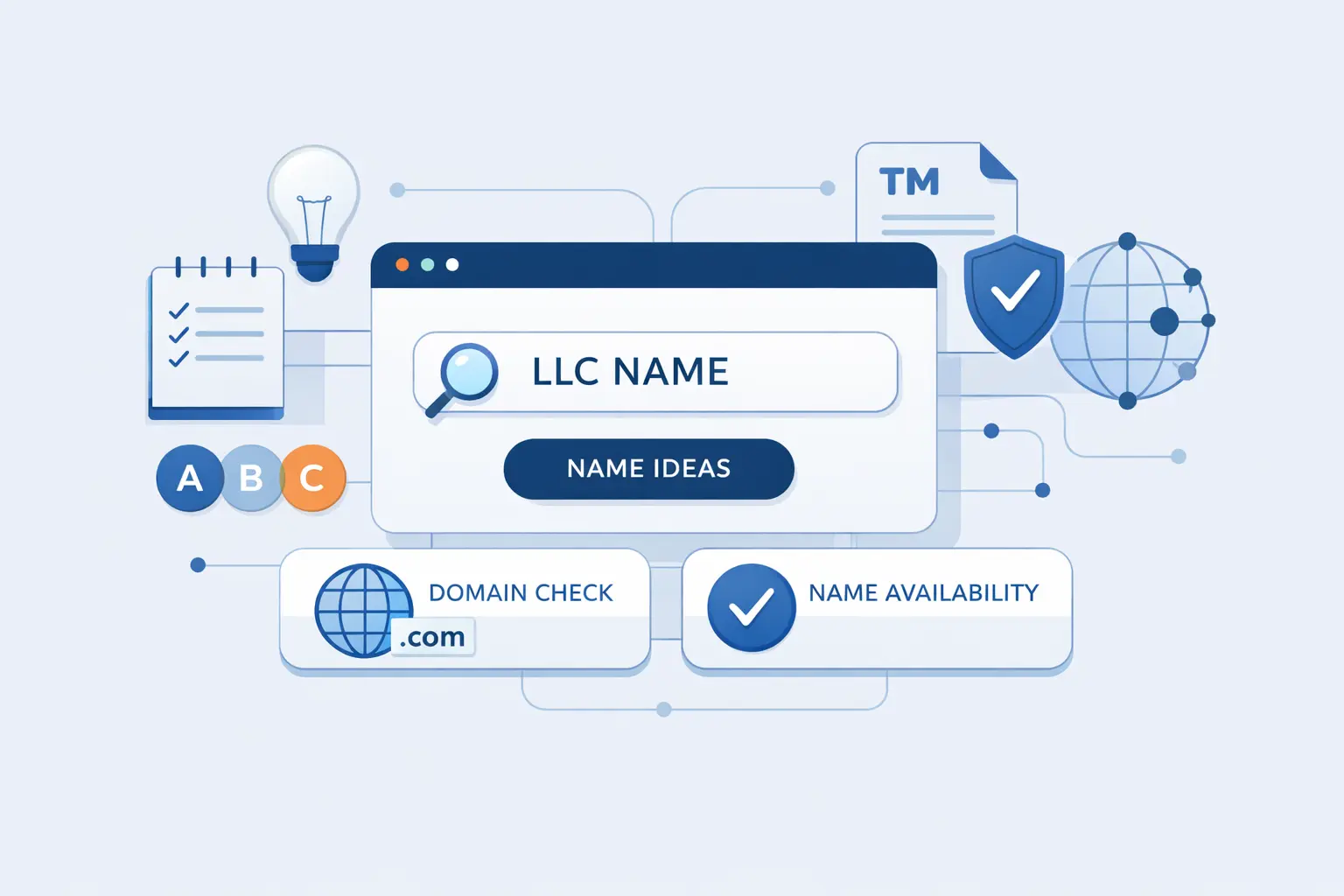
A good business name has to survive three tests. It must clear state naming rules, avoid trademark trouble, and still work as a brand customers can remember. We think founders should test all three before they grow attached to a clever name that collapses under legal review or looks clumsy online.
1. Follow State Naming Rules
States usually require the legal name to be distinguishable from existing entities and to include an entity designation. They also reject names that imply unauthorized business activity or a fake tie to government. The broad lesson is easy to remember. Your name can be creative, but it still has to fit the filing rules.
2. Check State Availability and Federal Trademarks
Before you print cards or buy signs, search your state registry and the official federal trademark database. A name can clear the secretary of state and still create a federal trademark problem if it is too close to an existing brand.
3. Align Your LLC Name with Your Brand and Domain
At 1Byte, we care about this part more than most legal guides do. Your legal name, public brand, and domain do not need to match perfectly, but they should feel like the same business. If the legal filing gives you a name nobody can spell, remember, or type into a browser, the paperwork may be valid while the branding is already limping.
Appoint a Registered Agent
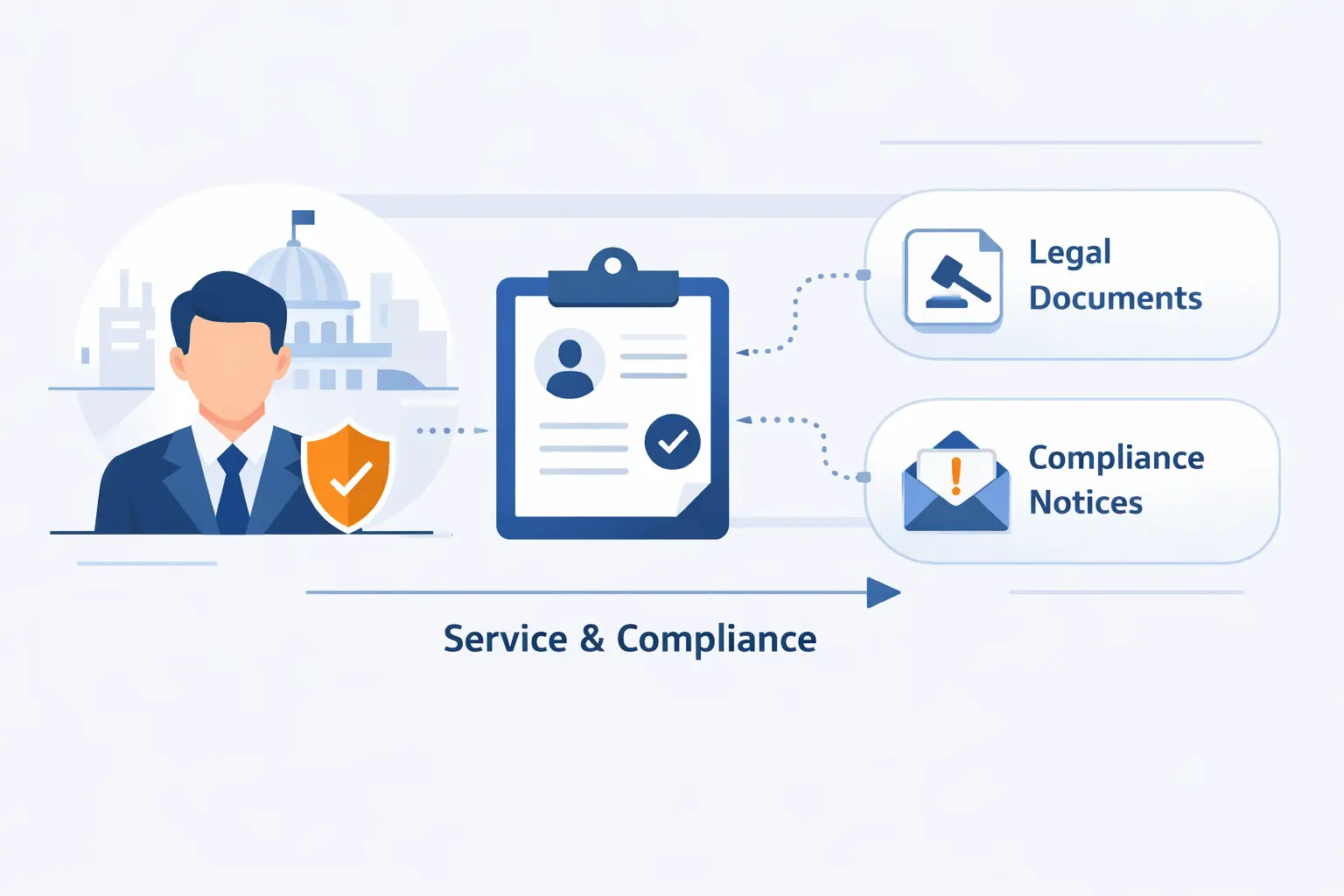
This step sounds boring, but it carries real weight. The registered agent is where official papers, legal notices, and state correspondence go. If that information lands in the wrong place or goes unread, the business can get hurt fast. We tell founders to treat this as an operations decision, not just a form field.
1. What a Registered Agent Does
A registered agent receives official papers and legal documents on behalf of the company in the state where it is registered. The agent must be located in that state. That is why owners who form outside their home state usually hire the role instead of trying to wing it from another address.
2. State Address Rules and Public Record Issues
States want a real street address for service of process, not just a mailbox service. Because that address becomes part of the filing record, many home-based owners decide a commercial service is worth the cost. That last point is an inference from how state formation systems and registered office rules work, and it is one reason privacy-minded owners rarely use a home address if they can avoid it.
3. When a Commercial Registered Agent Makes Sense
We think a commercial registered agent makes sense when you travel, work from home, form in another state, or simply want a cleaner buffer between your life and your legal mail. SBA guidance also notes that many owners prefer a registered agent service rather than taking the role on themselves. In practice, that preference is usually earned the hard way.
Decide How Your LLC Will Be Managed
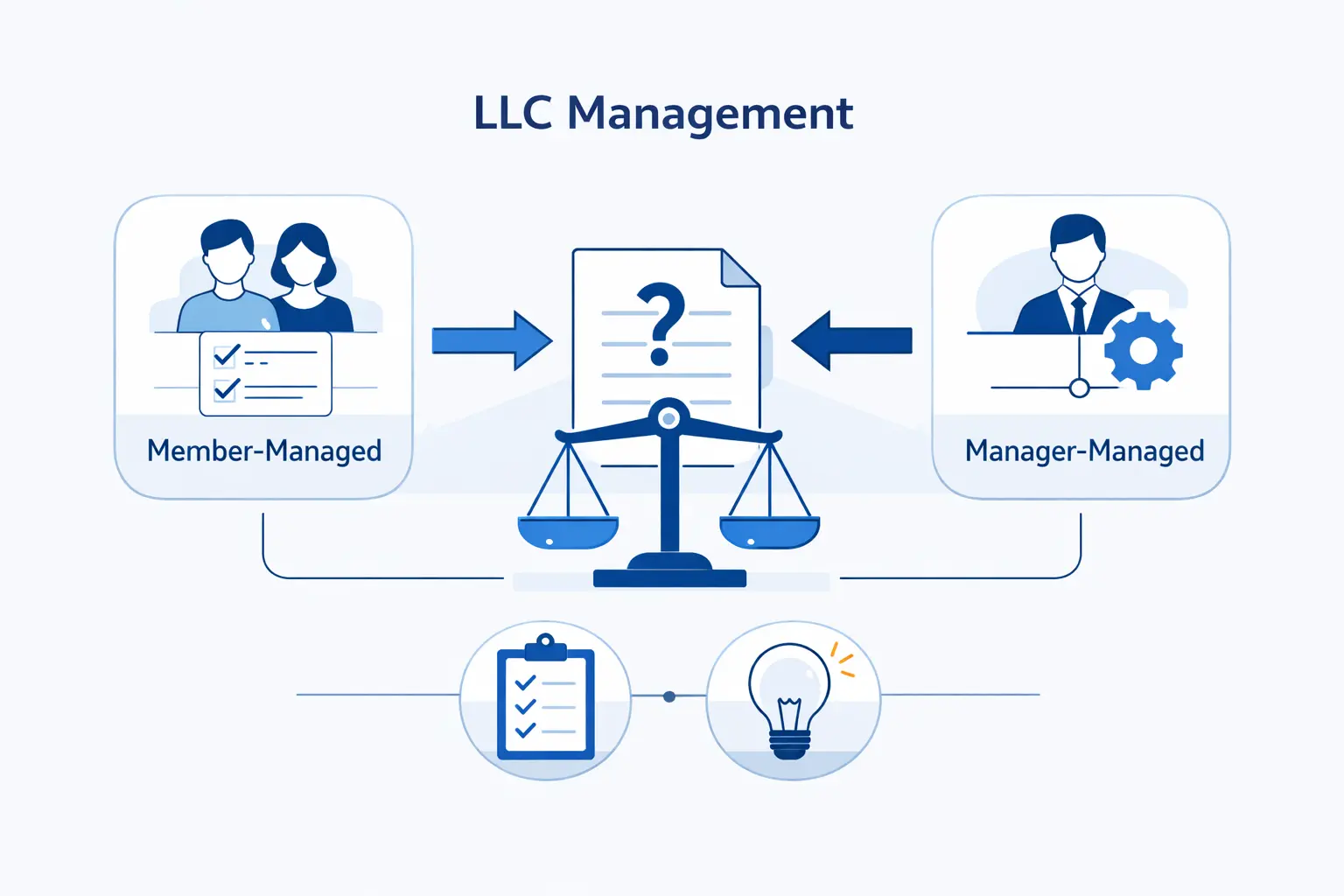
Management structure matters most once other people are involved, but solo founders should still choose it deliberately. The choice affects who runs the business, who signs major documents, and what details go into the formation filing. If you skip this decision, the state and default rules will make it for you.
1. Member-Managed vs. Manager-Managed LLCs
In a member-managed company, the owners run the day-to-day business. In a manager-managed company, the owners appoint one or more managers to do that job. We usually like member-managed for a very small owner-operated business. Manager-managed starts making more sense when some owners are passive or when authority needs to stay concentrated in one place.
2. Who Can Make Decisions and Sign Contracts
Your operating agreement should spell out who can sign contracts, open bank accounts, admit new owners, approve major spending, or borrow money. This is not paperwork theater. It is how you reduce confusion when a deal shows up, a dispute starts, or one owner assumes authority they never actually had.
3. How Management Structure Affects Formation Paperwork
Some states ask about management structure right in the formation document. Texas requires the filing to say whether the LLC has managers and asks for initial governing person information. California later wants manager or member information through its Statement of Information. So yes, the management choice is an internal rule, but it can also shape what the state expects to see on paper.
Prepare and File Your LLC Formation Documents
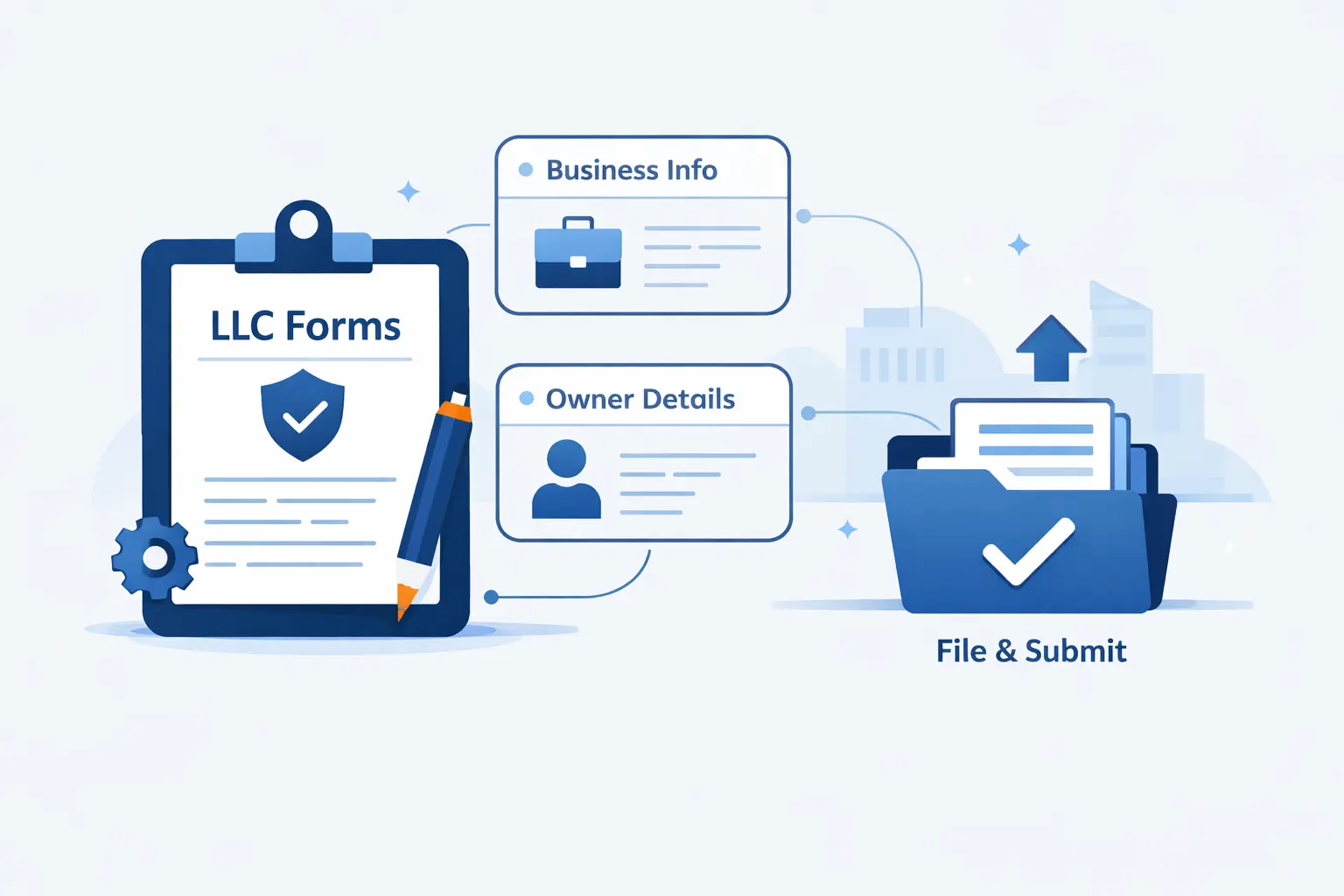
This is the formal birth of the company. The good news is that the filing is usually straightforward. The bad news is that sloppy details here can trigger rejection, correction work, or confusion that follows the business for months. We always prefer slow and accurate over fast and careless.
1. What Goes into Articles of Organization
Articles of Organization usually include the legal name, the business address, the registered agent, and basic management details. Think of the document as the state’s snapshot of the company. It proves the entity exists, but it does not explain every internal rule or business decision. That is the operating agreement’s job.
2. Business Address, Purpose, and Member Details
States vary in how much they want to know. Some ask only for the basics. Others want a mailing address, a general business purpose, or the names and addresses of initial managers or members. If the company is entering a licensed field, a vague purpose clause may not be enough, so read the instructions as if they matter, because they do.
3. Where and How to File with the State
Many states now push filing online, though methods still differ. California’s current LLC page routes formation online, while Texas allows electronic or mailed filing and returns evidence of filing after acceptance. We tell founders to use the official state instructions every time, because filing methods, fees, and accepted forms do change.
Create an Operating Agreement for Your LLC
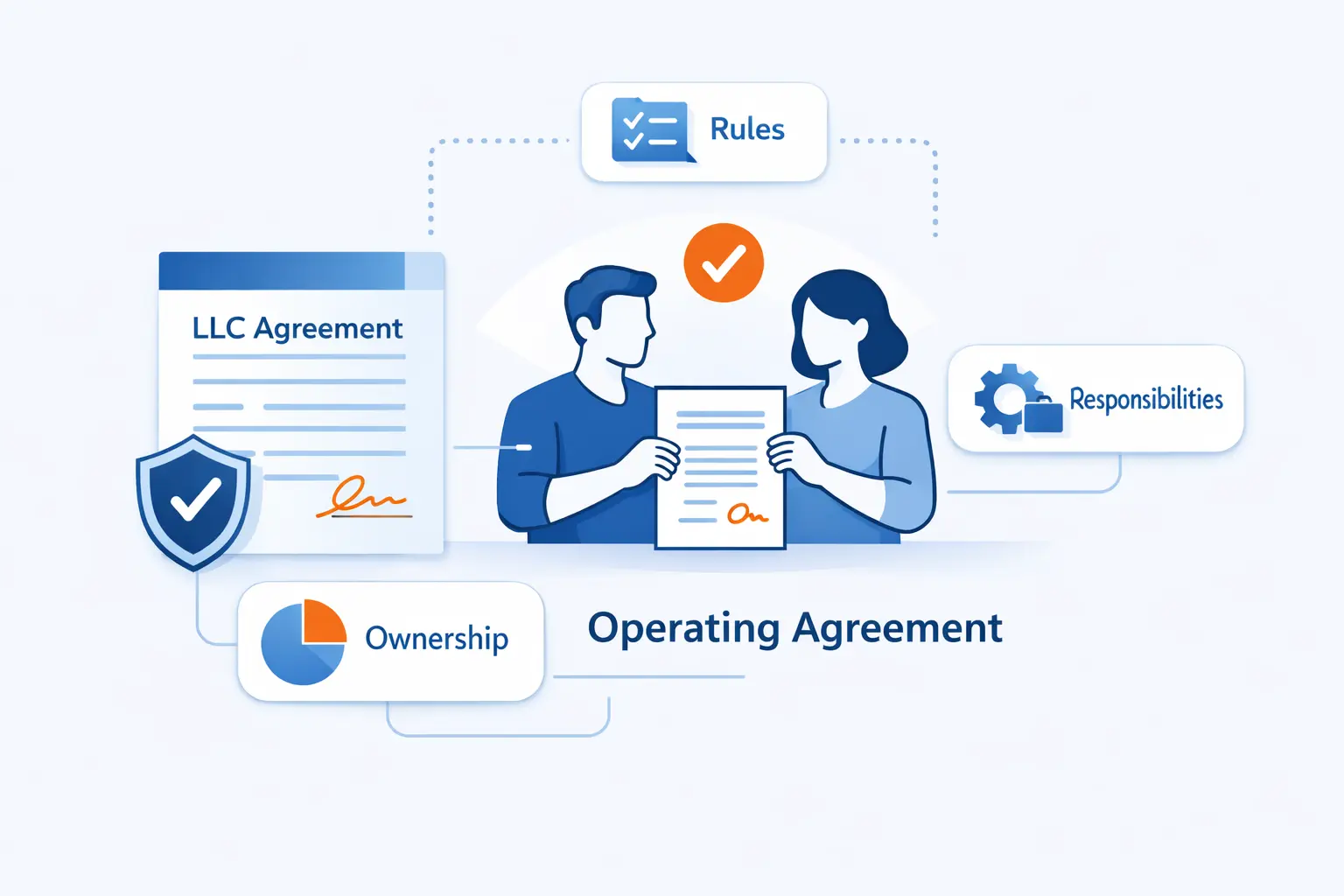
The state filing creates the entity, but the operating agreement creates the rulebook. At 1Byte, we think this is the document that saves owners from future resentment. If money, authority, and exit rights are not clear in writing, conflict usually waits until the business is valuable enough for the fight to matter.
1. What an Operating Agreement Should Cover
A good operating agreement covers ownership percentages, voting rules, profit distributions, manager authority, buyout terms, and what happens if someone leaves or dies. It should also say how disputes get handled and how new owners can be admitted. If the owners have a verbal understanding today, this is where it becomes something you can actually point to later.
2. Why Single-Member LLCs Still Need One
Single-member companies still benefit from an operating agreement because it reinforces that the business is separate from the owner, supports cleaner records, and can help with banking and later growth. We have seen solo founders skip this because no partner is involved. That is shortsighted. The document still helps prove the business is being treated like a business.
3. When State Rules Make It Especially Important
Some states go further than others. New York, for example, treats the operating agreement as a primary internal document for the company even though it is not filed with the Department of State. That tells us something useful. Even when the filing office never asks to see the agreement, the law may still expect the company to have one.
Get an EIN and Choose Your LLC Tax Treatment
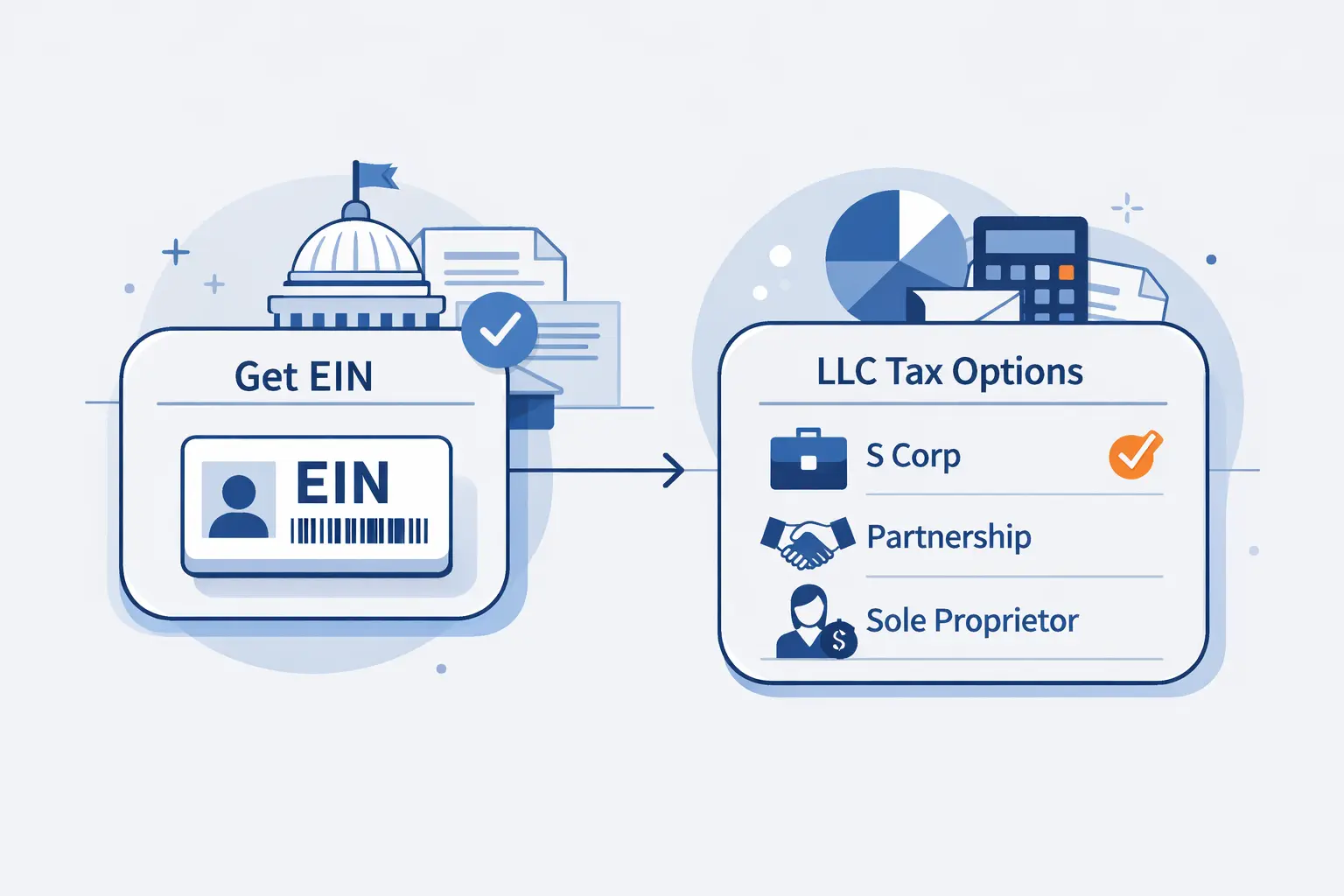
Tax setup is where a simple formation can become a lasting mess if you rush. Our rule is plain. Get the federal ID question right, then match the tax election to the way the company will really earn money. It is easier to choose carefully now than to unwind bad assumptions during tax season.
1. When You Need an EIN
You generally need an EIN if you hire employees, operate with more than one owner for federal tax purposes, pay sales or excise taxes, or change business structure or ownership. Many banks also ask for it when you open the business account, which is one more reason founders often get it early.
2. Default IRS Tax Classification Rules
The IRS applies default federal tax treatment unless you elect something different. That is why one company can be ignored for income tax, another can file like a partnership, and another can choose corporate treatment even though all three are LLCs under state law.
3. When to Consider Corporation or S Corporation Tax Treatment
The IRS allows an eligible company to elect corporation or S corporation treatment. We think that conversation belongs with a CPA once profit is steady and the owner is seriously evaluating payroll, self-employment tax, or reinvestment strategy. If you elect into a more complex tax posture, you are also electing more compliance. There is no free lunch here.
Open a Business Bank Account and Separate Your Finances

If we could force one habit on every new owner, it would be this one. Separate the money early. It is far easier to start clean than to untangle months of mixed charges, transfers, and reimbursements later. A clean account structure protects the business and saves time when taxes, bookkeeping, or financing questions show up.
1. Why Banking Separation Matters for Liability Protection
SBA guidance is direct on this point. Business banking helps keep business funds separate from personal funds and supports the legal separation of the company. We think that matters twice, once for liability discipline and once for plain sanity when you need accurate books.
2. What Banks Usually Ask For
Banks commonly ask for an EIN or tax ID, the formation documents, ownership agreements, and sometimes a business license. Some ask for more, but that is the usual core packet. We tell founders to gather everything first, because the account opening process gets much smoother when the paperwork is ready in one place.
3. How Separate Finances Support Business Credit
Separate business accounts and cards create a paper trail in the company name. That helps vendors, payment processors, and lenders evaluate the business as a business, not just as the owner wearing a business hat. It also makes it easier to see whether the company itself is becoming financially healthy.
Meet Local, State, and Industry Requirements
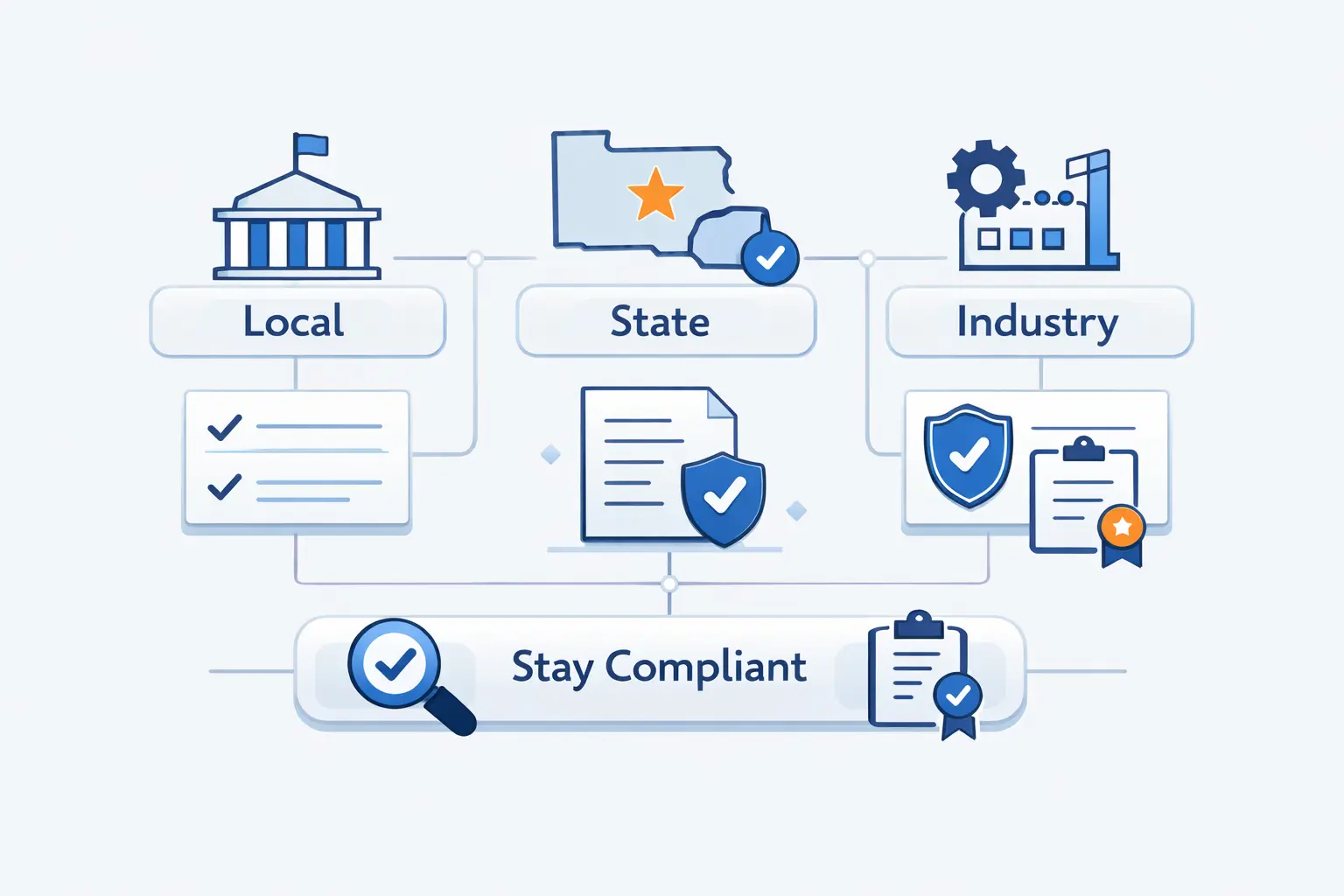
Many beginners assume the LLC filing itself gives them permission to operate. It does not. The entity filing creates the business. Licenses, permits, tax registrations, and local approvals determine whether the business can legally do the work it wants to do in the place it wants to do it.
1. Business Licenses and General Permits
Most small businesses need a combination of state, county, or city licenses and permits. Which ones apply depends on the activity and the location. A freelance copywriter, a home baker, and a mobile mechanic are not playing by the same rulebook, even if all three file the same entity type with the state.
2. Sales Tax, Zoning, and Health Requirements
Retail, food, construction, and location-based businesses often run into sales tax registration, zoning rules, or health approvals. We tell founders to clear those issues before signing a lease or buying specialized equipment. It is much cheaper to confirm the rules early than to discover a zoning wall after money is already spent.
3. Professional Licenses and Regulated Business Types
If the business activity is licensed, the entity choice and filing language may need to match that profession. Texas, for example, notes that the standard LLC form cannot be used for licensed activity when the license cannot be issued to that type of LLC, and directs founders toward a professional form where required.
Understand Ongoing LLC Compliance and Costs
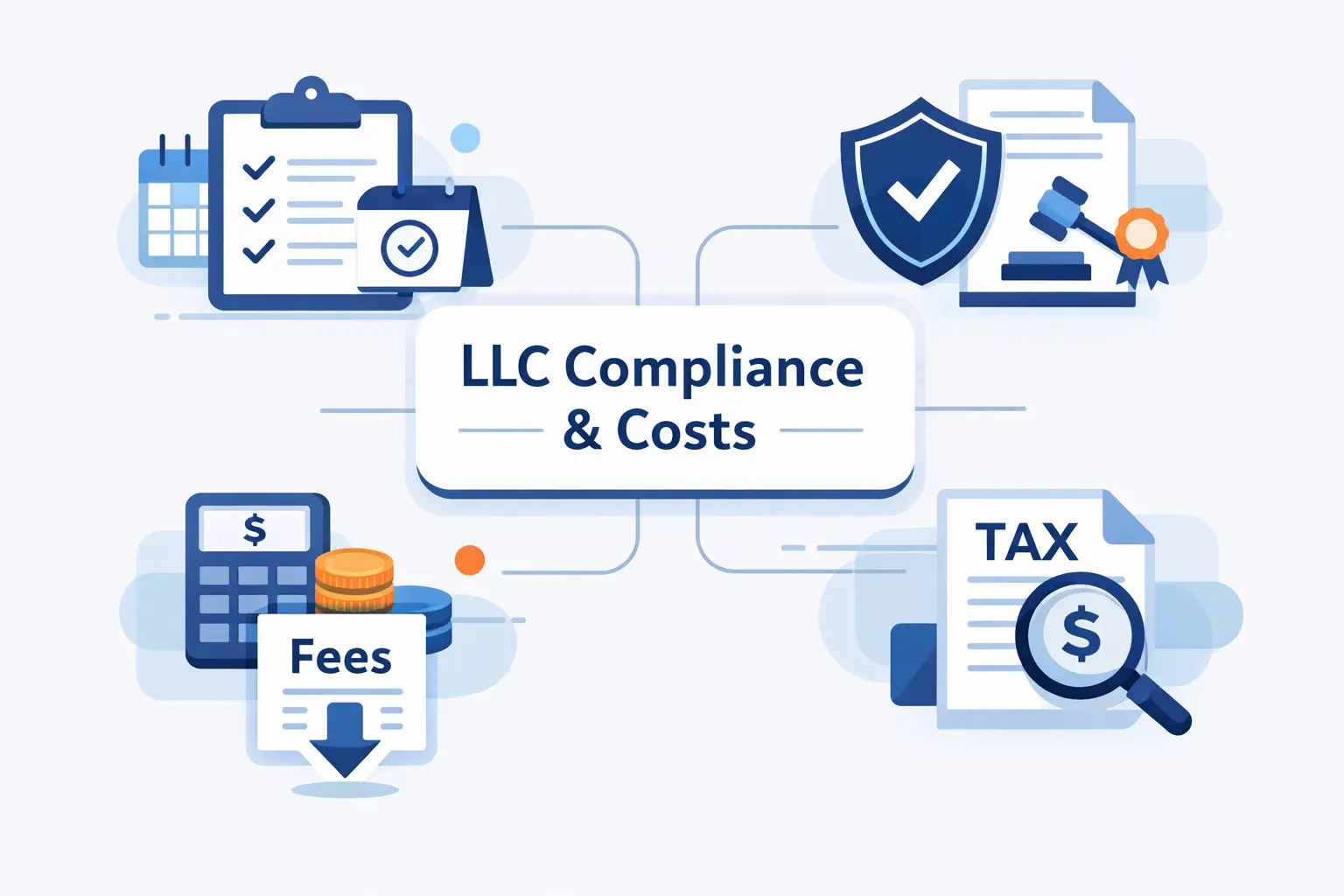
Formation is the starting line, not the finish. Every state has its own maintenance calendar, and missing that calendar can trigger penalties, forfeiture problems, or a company that exists on paper but is not in good standing. We think a compliance checklist should be created the same week the LLC is formed.
1. Initial Reports, Annual Reports, and Renewals
States do not all use the same rhythm. California requires an initial Statement of Information and then periodic updates. Texas handles ongoing maintenance mainly through franchise tax reporting and related information filings with the Comptroller. Other states use annual or biennial reports. The key is not the label. The key is knowing your state’s calendar and treating it like a real deadline system.
2. Formation Fees, Annual Fees, and Franchise Taxes
The upfront filing fee is only the first cost. Ongoing tax, registered agent service, local permits, and report fees can matter more over time. California is the classic example because the annual state tax can change the economics even for a small company that looked cheap enough to form at first glance.
3. How to Keep Your LLC in Good Standing
Keep the registered agent current, file reports on time, pay state taxes when due, and update addresses when they change. Texas warns that failing to maintain a registered agent can result in involuntary termination, and the Comptroller warns that missing required information reports can lead to forfeiture consequences. Those are not empty threats. They affect whether the business can keep operating cleanly.
One current point many founders still miss is BOI reporting. As of June 11, 2026, domestic entities formed in the United States are exempt from FinCEN beneficial ownership reporting under the interim final rule published on March 26, 2025. Foreign entities registered to do business in the United States are different, so cross-border founders should still check the rule directly before assuming they are clear.
How to Start an LLC in California and Texas
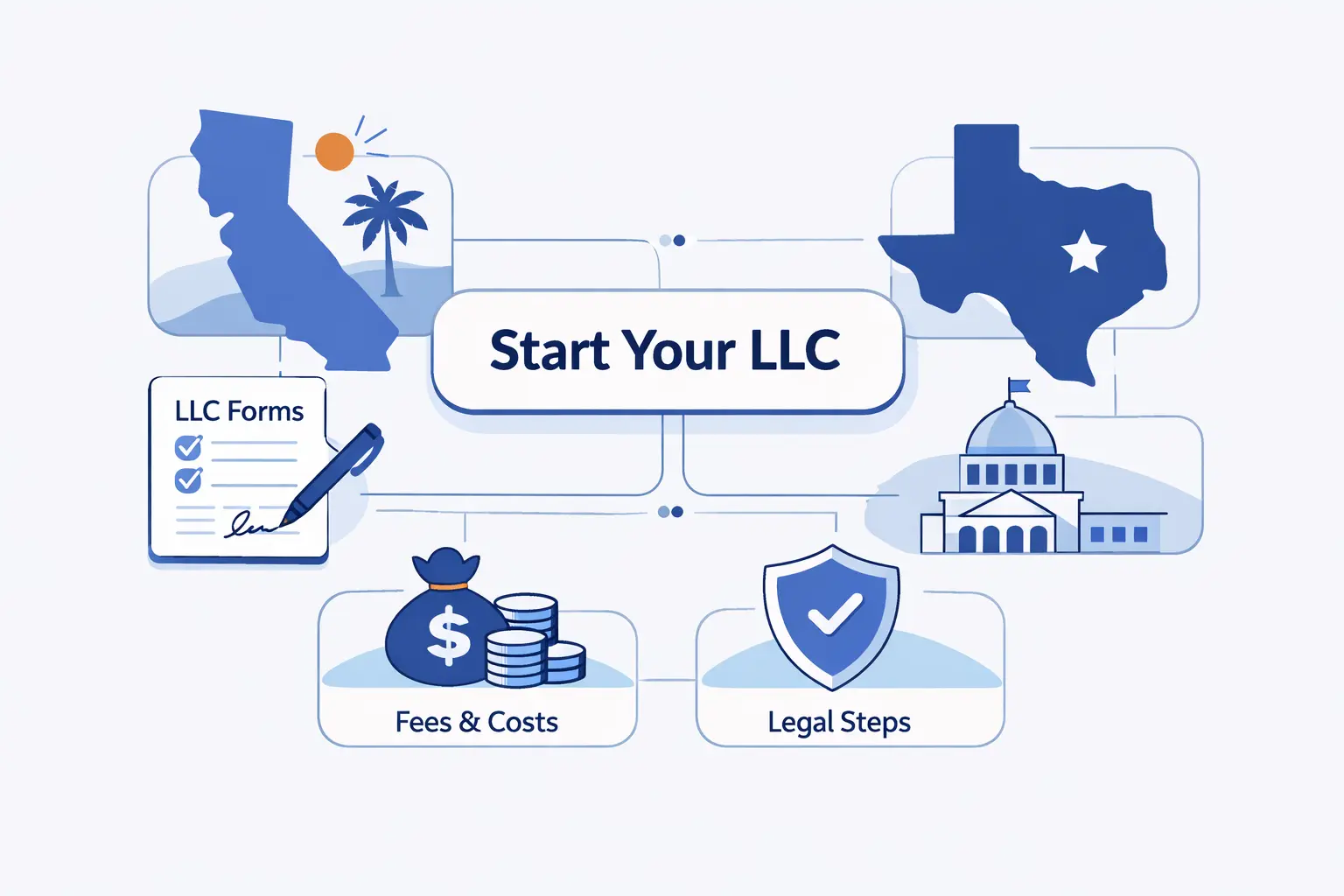
These two states show why no national checklist tells the whole story. The big steps are familiar, but the forms, taxes, and compliance rhythm are different enough to change the real founder experience. We think it helps to see them side by side, because the contrast is sharp.
1. California Articles of Organization, Statement of Information, and Annual Taxes
California currently lists $70 filing fee and $20 follow-up for formation and the initial Statement of Information. After formation, the state expects that information filing on its own schedule, so founders need to treat it as part of setup, not as an optional extra.
The part many owners underestimate is California’s $800 annual tax. We usually tell small founders to price that into cash flow before they file, not after the first tax notice lands.
2. Texas Formation Steps, Operating Agreement Rules, and Filing Costs
Texas forms the company through a Certificate of Formation, and the current state charge is a $300 state filing fee. The filing asks for the governing structure, the registered agent, and the initial governing person details, so founders need those decisions made before they start typing.
In practice, Texas feels simpler on the front end for many small owners. We still tell members to put the operating agreement in writing, even though the public filing focuses on the certificate and the state tax account rather than your private internal rules. That is the difference between forming the entity and actually governing it well.
3. What to Watch for with State-Specific Forms, Deadlines, and Fees
Texas owners also need to watch the Comptroller calendar. Annual franchise tax reports are due May 15, which means the compliance burden continues long after the formation filing is approved.
There is also a related public or ownership information filing to watch in Texas, and it can matter even when no franchise tax is owed. California owners, meanwhile, have to monitor both the Secretary of State and the Franchise Tax Board. The broader lesson is simple. Do not assume the filing office and the tax office are the same, and do not assume one state’s habits carry over to another.
How to Transition from a Sole Proprietorship to an LLC
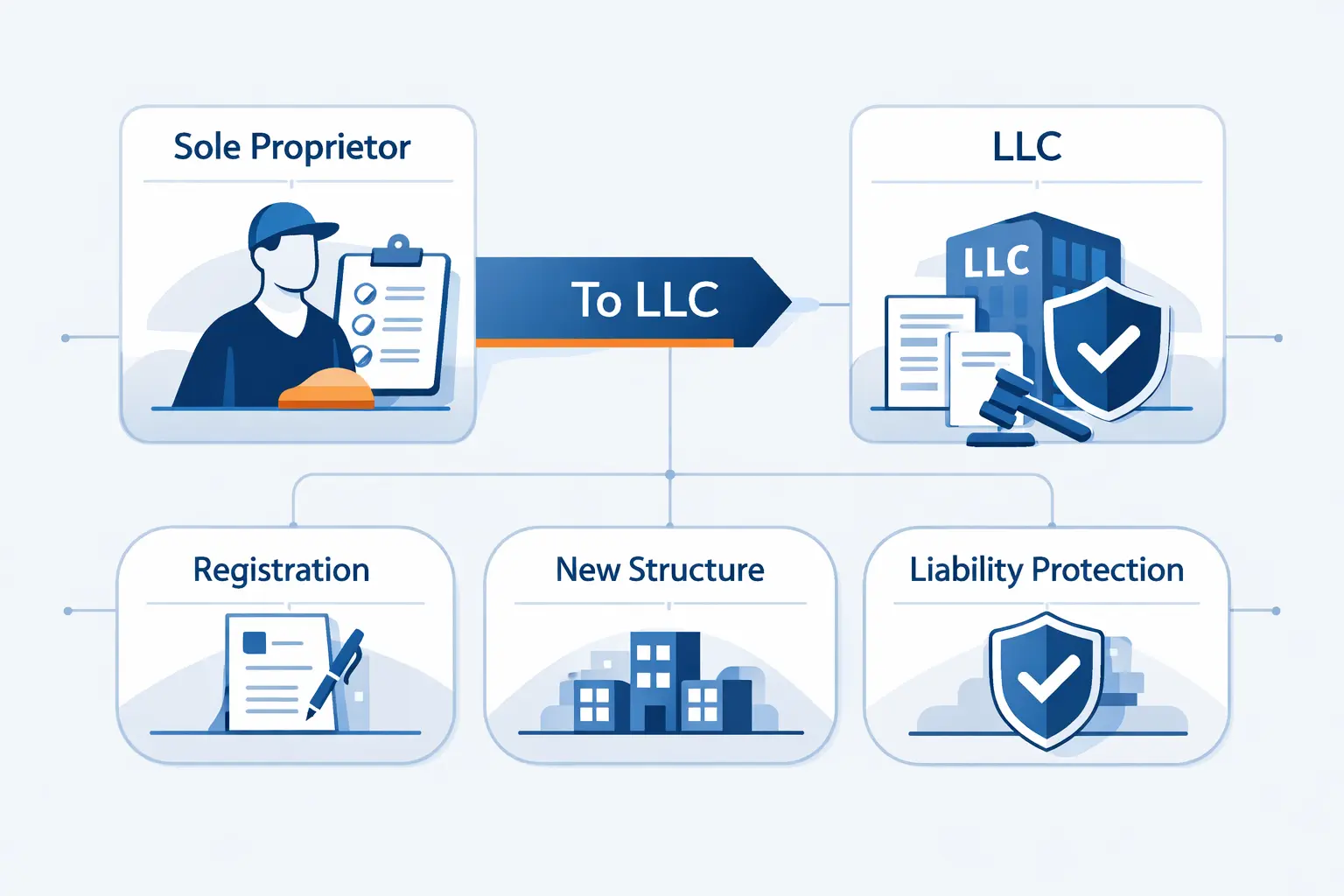
This move is common, and it is usually less dramatic than owners fear. What really changes is the legal wrapper around the work, plus the paperwork attached to the business everywhere it appears. We think the cleanest transition happens when you update everything at once instead of half-migrating over several months.
1. Confirm Your Business Name and File New Formation Documents
First clear the new entity name, then file the formation document with the state. If you plan to keep using a trade name that differs from the legal entity name, check whether an assumed name or DBA filing is also needed. This is where many sole proprietors discover that the name they have used informally is not enough by itself once the business becomes a separate legal entity.
2. Get a New EIN and Open a Business Bank Account
This step needs nuance. Sole proprietors do need a new EIN when they incorporate or form a partnership, but the IRS says a single-member company that stays disregarded and has no employees or excise tax exposure can often keep the owner’s existing EIN. We still see many owners apply for a fresh one because banking and vendor records are cleaner that way.
3. Update Licenses, Permits, and Business Records
After formation, update licenses, permits, invoices, contracts, payment processors, insurance policies, and tax records. If the legal name, address, or entity type changes but the old paperwork stays in circulation, confusion spreads fast. This is the unglamorous part of the transition, but it is where the new entity starts behaving like a real business instead of a renamed sole proprietorship.
Build Your LLC Online Presence after Formation
Once the legal shell exists, the public face should follow quickly. From our seat at 1Byte, that means the business needs a domain, a basic website, professional email, and clear contact points. We have seen founders lose easy trust simply because the LLC was formed but the online presence still looked temporary or personal.
1. Secure a Domain Name That Matches Your Business Name
We like securing the domain as soon as the business name clears. It protects the web address, reduces future rebranding pain, and makes every later setup step easier. If the exact match is gone, get as close as you can without becoming hard to spell, hard to hear, or hard to remember.
2. Launch a Business Website and Professional Email
A simple website is enough to start if it clearly explains what you do, where you operate, and how to contact you. Pair that with domain-based email, because quotes, invoices, and support replies look far more credible when they come from the company instead of a personal inbox. We think this is one of the fastest trust upgrades a new business can make.
3. Keep Business Communication Separate with a Dedicated Phone Line
We also suggest a dedicated business phone number. It gives customers a stable contact point, keeps personal calls separate, and makes future handoffs easier if the business grows beyond one person. This is simple operational hygiene, but simple things are often the first things that get ignored.
FAQ

These are the questions we hear most often from first-time founders. We answer them the same way we would answer a client who wants the shortest path to a clean, workable setup with no unnecessary drama later.
1. How Much Does It Usually Cost to Start an LLC?
Usually you are paying for the state filing, any registered agent service you outsource, local permits, and then the first layer of ongoing compliance. In some states that total is modest. In others, the annual tax or recurring report costs matter more than the initial filing. We tell founders to budget for the whole first year, not just the formation day.
2. How Much Does an LLC Cost in Texas?
In Texas, think in two buckets. There is the front-end formation filing, and then there is the ongoing Comptroller side of the house, including franchise tax reporting and the related public or ownership information filing. Depending on the business, you may also have local permits or assumed name costs layered on top.
3. How Do I Start an LLC by Myself?
Yes, many founders do it themselves. We only recommend the do-it-yourself route when the ownership is simple, the business is not heavily regulated, and you are comfortable reading state instructions closely. Once partners, licensed activity, or unusual tax questions enter the picture, a lawyer or CPA is usually worth the money.
4. Do I Need an EIN for My LLC?
Often yes, especially for banking, payroll, multi-owner tax treatment, or sales and excise tax obligations. The main exception is some single-owner setups that remain disregarded and have no employees or excise tax exposure. That is why we say an EIN is usually needed, but not literally every time.
5. Do I Need an Operating Agreement for My LLC?
We say yes. Even when the state does not force it, the document explains who owns what, who decides what, and what happens when something changes. That is too important to leave unwritten. We have seen very small businesses save themselves major pain later simply because they wrote the rules down before money got emotional.
6. What Is the Best State to Form an LLC?
For most small businesses, it is the state where the business actually operates. Form elsewhere only when you have a specific legal, tax, or operational reason and you fully understand the foreign qualification work that may follow. In our view, simplicity is usually a competitive advantage for a young business.
How 1Byte Supports New LLCs as a Cloud Computing and Web Hosting Provider
From our seat at 1Byte, formation is only half the launch. A new company also needs a domain, security, hosting, email, and a growth path that still makes sense when traffic and workloads increase. That is the gap we built our services around, because the legal entity and the digital foundation should support each other from the start.
1. Domain Registration and SSL Certificates for a Stronger Online Foundation
We provide domain registration and SSL certificates because a new business needs both trust and clarity on day one. When the company name, the website, and the security certificate line up, customers are less likely to hesitate and more likely to treat the business as established. We think that matters even for the smallest founder-led site.
2. WordPress Hosting and Shared Hosting for a Faster Website Launch
For founders who want to move fast, we offer WordPress hosting and shared hosting as straightforward ways to get online without overbuilding the first version. We usually guide new businesses toward the option that matches their budget, technical comfort, and how much control they really need at the beginning.
3. Cloud Hosting, Cloud Servers, and AWS Partner Support for Growth
When a business outgrows a starter setup, we can move up the stack. Our current lineup includes cloud hosting, cloud servers, and AWS partner services, which gives us room to support founders who need more resources, more control, or a clearer path into larger cloud workloads. We like that progression because it lets the infrastructure grow with the business instead of forcing a full restart.







Final Thoughts on How to Start an LLC
How to start an LLC is not mysterious once you strip away the noise. Choose the right state. Clear the name. File the formation document. Write the operating agreement. Handle the tax ID and banking. Then keep the company current. Most mistakes do not come from hard law. They come from skipping the boring parts that keep the entity real.
If we were starting a new business tomorrow, we would keep it simple. We would form where the work actually happens, put the rules in writing before money gets awkward, separate every dollar early, and get the online presence live right after the filing clears. That is not flashy. It is just a solid way to build something that lasts.