

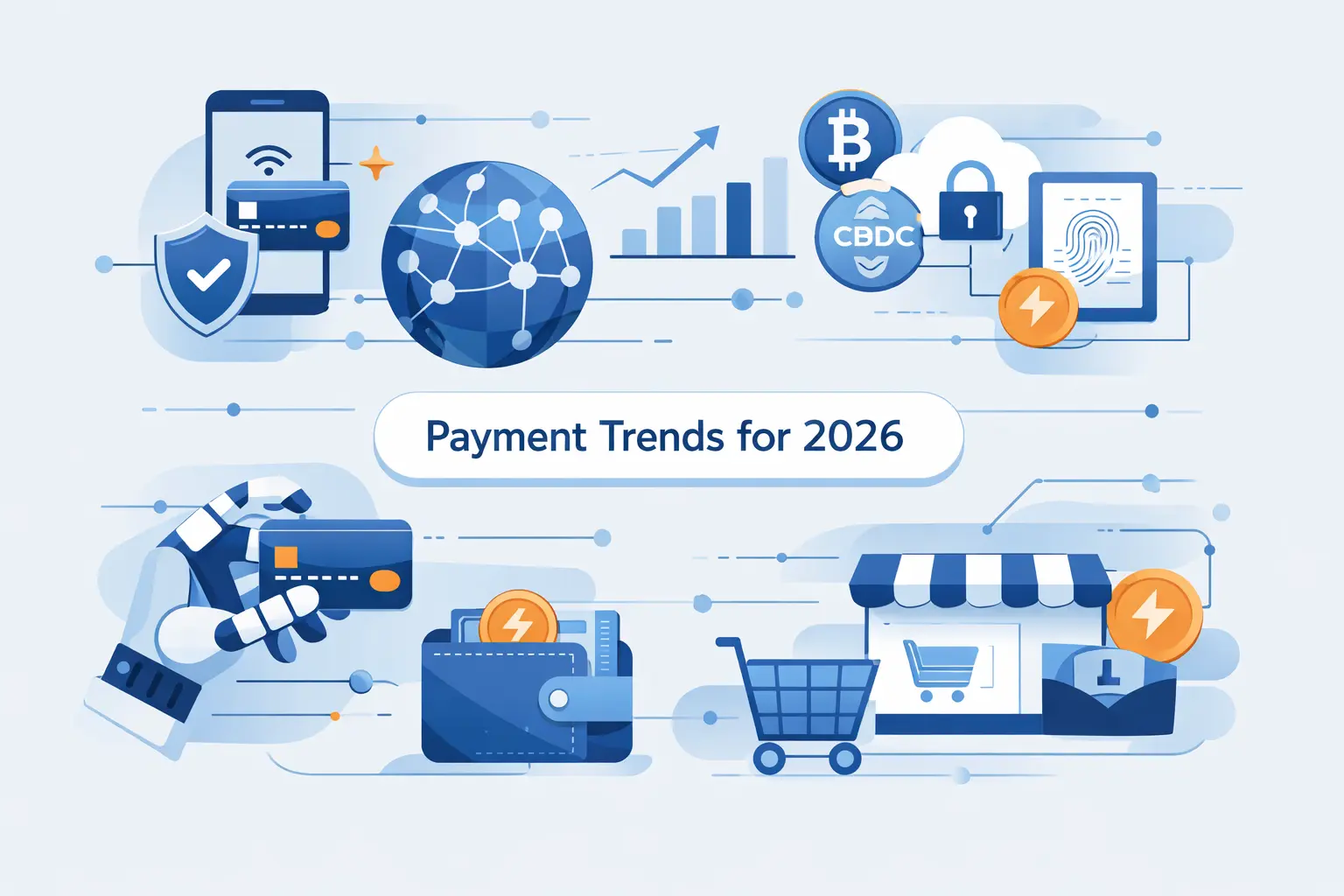
- Quick Comparison of Payment Trends
- Top 20 Payment Trends for Businesses to Watch in 2026
- How to Choose Which Payment Trends Deserve Budget First
- What to Look for in a Payment Provider in 2026
- Payment Trends by Business Model
- Frequently Asked Questions about Payment Trends
- How 1Byte Supports Payment-Ready Websites with Hosting and Cloud Services
Payment trends in 2026 are no longer about adding one more button to checkout. They are about deciding which rails, identity layers, and finance workflows deserve real budget. We think most businesses need fewer trends and better judgment, especially in a market that McKinsey estimates already generates $2.5 trillion in revenue.
The buyer side has changed just as fast. Worldpay says digital payments reached 66% of e-commerce value in 2024, so any provider that still treats wallets, A2A, and one-click checkout as add-ons is behind the curve. The shift is no longer theoretical. Mastercard pushed agentic checkout into live network planning in April 2025, and that matters because AI-led shopping only works when payments, identity, and merchant controls move together.
Pay by bank has also moved past fintech buzz. Open Banking Limited reported 351 million payments in 2025 across the UK ecosystem, which is why we now see A2A as a real cost and cash-flow option for merchants, not a side experiment. At 1Byte, we read these changes through one simple lens. Which payment trends raise checkout conversion, protect gross margin, or cut finance work fast enough to matter? This guide ranks the trends that deserve attention now, explains the trade-offs, and shows which ones can wait.
Quick Comparison of Payment Trends
We built the table below for teams that need a fast first cut. It compares the first ten trends by buyer fit, commercial model, and the main limit that usually slows rollout.
| Service/Tool | Best for | From price | Trial/Free | Key limits |
|---|---|---|---|---|
| Agentic Commerce | Research-heavy ecommerce | Custom | Pilot | Trust, liability, standards |
| AI Fraud Defense | High-volume online sales | Txn-based | Demo | False positives, data depth |
| Pay by Bank / A2A | Margin-sensitive merchants | Lower rail cost | Sandbox | Bank coverage, buyer habit |
| Real-Time Payments | Payout-heavy platforms | Txn-based | Pilot | Reach, irrevocable flows |
| Wallets / One-Click | Mobile checkout | Bundled | No | Device and market mix |
| BNPL | Discretionary retail | Merchant fee | Demo | Returns, margin pressure |
| Personalized Checkout | Repeat buyers | Bundled/custom | Pilot | Needs clean first-party data |
| Passkeys / Verified Wallets | Higher-risk checkout | Bundled/custom | Sandbox | Recovery flows, adoption |
| Identity-Linked Payments | Omnichannel retail | Custom | Pilot | Privacy, data match quality |
| Headless Checkout | Enterprise commerce | Platform + dev | Sandbox | Engineering and QA load |
FURTHER READING: |
| 1. Top 20 Mobile CRM App Solutions for Sales Teams in 2026 |
| 2. Top 20 SaaS CRM Software Tools for 2026 |
| 3. Top 20 Personal CRM Tools for Better Relationship Management in 2026 |
Top 20 Payment Trends for Businesses to Watch in 2026
Below, we explain what each trend really means, who should care first, and where the trade-offs show up. We are prioritizing practical buying advice over hype, because most businesses do not need twenty new initiatives. They need the right three or four.
1. Agentic Commerce and AI-Led Checkout
Card networks, PSPs, wallet providers, and AI platforms are shaping this trend together. Product teams, fraud teams, and legal teams all get pulled in because the hard part is not the bot. The hard part is who can initiate payment, under what rules, and with what proof.
Best for: enterprise ecommerce brands and travel sellers with long consideration cycles.
- Delegated basket approval → lets shoppers move from search to payment with fewer manual steps.
- Tokenized credentials and spend rules → pre-approve merchant, category, or amount limits before the agent acts.
- Merchant-facing agent signals → help risk teams separate a trusted assistant from bad bot traffic faster.
Pricing & limits: there is no standard sticker price yet. Most merchants see pilot access through an existing PSP, network, or enterprise checkout provider. Sandboxes are more common than free trials. The real cap is token coverage, policy design, and which merchants or categories the agent can touch.
Honest drawbacks: trust is still fragile. Many buyers will want to review the basket before payment, which means full automation will stay narrow for a while. Merchants can also lose merchandising control when the agent optimizes for price and speed instead of brand story.
Verdict: If you sell complex products, this can shorten the path from search to purchase once your rules are mature. We would test it in one category first, not across the whole store.
2. AI-Native Fraud Defense and Risk Scoring
Issuers, PSPs, anti-fraud vendors, and merchant data teams are all pushing this trend forward. The difference now is that models can score device behavior, purchase context, customer history, and network signals in real time, instead of waiting for a monthly fraud review.
Best for: high-growth ecommerce teams and marketplaces.
- Behavioral scoring → blocks suspicious orders before fulfillment and cuts avoidable loss.
- Adaptive step-up checks → removes extra friction from low-risk buyers and shrinks manual review queues.
- Chargeback and refund feedback loops → let teams tune rules in days instead of waiting for slow reporting cycles.
Pricing & limits: this is often sold per screened transaction or bundled into an enterprise payment stack. Demos are common. True free tiers are rare once volume rises. The biggest limit is data depth. Thin event history produces thin decisions.
Honest drawbacks: black-box scoring can frustrate operations teams when good orders get blocked. False positives still hurt real revenue. Strong models also need owners who review outcomes and retrain rules. Buying software without staffing the process is a common mistake.
Verdict: For teams fighting friendly fraud, promo abuse, or account takeover, this usually pays back faster than any flashy checkout trend. We would rank it near the top if approval quality is already slipping.
3. Pay by Bank and A2A Payments
Banks, open banking providers, instant-payment schemes, and PSPs are all driving this trend. Checkout and finance teams care because A2A changes cost and settlement, not just the screen a shopper sees.
Best for: margin-sensitive merchants and businesses with repeat buyers.
- Bank-authenticated payment initiation → can lower acceptance cost on eligible orders.
- Push-payment refunds and account funding → send money back through a direct bank path instead of slower manual steps.
- Authenticated bank transfer flows → reduce classic card-style chargeback exposure on supported use cases.
Pricing & limits: pay by bank often lands below card acceptance cost, but pricing still varies by provider, market, and risk stack. Sandboxes are common. The real caps are bank coverage, consumer familiarity, and recurring consent rules.
Honest drawbacks: it beats cards on cost in the right setup. It trails cards on buyer habit, rewards, and broad cross-border familiarity. Some markets still need real shopper education. Dispute handling can also feel unfamiliar to support teams used to card workflows.
Verdict: When card fees hurt and your customers already trust bank login flows, this trend is worth testing in one market and one checkout path first. That is where we usually see the cleanest early win.
4. Real-Time Payments and Instant Payouts
Banks, payroll platforms, insurers, marketplaces, and gig apps all sit inside this trend. Treasury, support, and operations teams feel the gain first because the value is simple. Money arrives when people need it, not when the banking calendar allows it.
Best for: marketplaces, gig platforms, lenders, and insurers.
- Instant seller or worker payouts → reduce “where is my money” support tickets and payout anxiety.
- Request for payment and status messaging → improve invoice collection and cash visibility.
- Always-on settlement windows → let refunds, disbursements, and urgent transfers move outside office hours.
Pricing & limits: this is usually transaction-based through a bank or PSP. Consumer-style free trials are uncommon. The key limits are transaction caps, domestic reach, and the number of participating institutions on a given rail.
Honest drawbacks: instant payments are often irrevocable, so release controls matter more than before. Cross-border coverage still lags local instant rails. It beats ACH and checks on timing. It does not replace cards for every customer payment job.
Verdict: If seller, worker, or customer cash timing matters, instant payouts become a retention feature very quickly. We would move this up the list for any platform with heavy disbursement volume.
5. Digital Wallets, Contactless Payments, and One-Click Checkout
Wallet operators, card networks, browsers, and mobile OS vendors are still driving the most practical checkout gains. Growth teams care because this is where mobile conversion often gets fixed first.
Best for: mobile-first ecommerce brands and retailers with stores.
- Stored tokens and one-tap approval → remove the slowest part of mobile checkout.
- Contactless reuse across web and POS → keep payment behavior familiar in every channel.
- Autofill for billing and shipping → cut form errors before authorization even begins.
Pricing & limits: wallets are usually bundled into card acquiring or checkout products rather than sold as a separate monthly line. The main limit is coverage. Wallet preference changes by device, browser, and country.
Honest drawbacks: wallets can hide useful customer identity behind the payment layer, which is great for speed but weaker for first-party data if your CRM is loose. Wallet buttons also do not fix poor shipping promises, tax surprises, or slow site performance.
Verdict: For mobile-heavy stores, this is often the first budget line we would approve. The payoff is usually faster and clearer than more experimental payment work.
6. Buy Now, Pay Later for Everyday Spending
BNPL providers and PSPs are pushing beyond big-ticket electronics into routine retail, beauty, travel, and home goods. Merchandising, finance, and returns teams all need a voice because the conversion lift is only half the story.
Best for: mid-market retailers with discretionary products and younger buyer groups.
- Installment messaging in product and checkout flows → makes a larger basket feel affordable earlier.
- Soft-decision underwriting → keeps approval fast without a long credit-style form.
- Merchant-funded installment offers → let teams test whether financing beats a discount on conversion.
Pricing & limits: merchant fees can sit well above debit or bank payments, and limits depend on basket size, country, and provider appetite. Most vendors offer demos or phased rollout support instead of a true free trial.
Honest drawbacks: BNPL beats ordinary card messaging when affordability blocks conversion. It trails lower-cost rails when margins are already thin. Returns, split shipments, and refund reconciliation can also get messy if the integration is shallow.
Verdict: If average order value stalls on discretionary goods, BNPL can widen affordability fast. We would still model the margin impact before rolling it across the full catalog.
7. Hyper-Personalized Checkout and Smart Payment Credentials
PSPs, CRM platforms, token services, and growth teams are turning payment data into decisioning data. The point is not to look clever. The point is to present the right method, retry logic, or stored credential at the right moment.
Best for: subscription brands and repeat-purchase ecommerce teams.
- Dynamic payment ordering → surfaces the method most likely to convert for that customer and channel.
- Network tokens and credential updates → rescue recurring revenue that would otherwise fail on expired cards.
- Context-aware retries and fallbacks → reduce support work after soft declines or bank timeouts.
Pricing & limits: this is usually bundled into enterprise checkout stacks or sold as a premium optimization layer. The real cap is data quality. Weak identity and sparse history make the personalization shallow.
Honest drawbacks: bad personalization feels invasive fast. Overfitting can also hide cheaper or more strategic methods just because one option converted once. It beats static checkout on repeat-user performance. It trails it on governance and simplicity.
Verdict: If you already have returning customers, this trend can turn stored payment data into measurable lift within a few billing cycles. It is far less useful for one-time traffic.
8. Digital Identity, Passkeys, and Verified Wallets
Banks, wallets, identity vendors, and device ecosystems are moving checkout and login closer together. Security teams care, but so do conversion teams because password friction and fraud friction often show up in the same place.
Best for: fintechs and higher-risk merchants.
- Passkey sign-in → cuts password resets and lowers account takeover risk before checkout starts.
- Verified device and wallet signals → support stronger checks without forcing long forms.
- Biometric approval on familiar devices → shortens the path from login to purchase on mobile.
Pricing & limits: this usually lives inside an identity stack, wallet flow, or authentication product. There is rarely a simple free trial. The main limits are browser support, device behavior, and recovery design.
Honest drawbacks: passkeys are stronger than passwords, but rollout mistakes still confuse users if recovery is weak. Teams also need fallback paths for shared devices, support-led resets, and edge cases like older browsers.
Verdict: When fraud and login friction rise together, this trend deserves budget before a lot of flashier payment work. We see it as revenue protection, not just security housekeeping.
9. Identity-Linked Transactions and the End of Guest Checkout Blindness
Commerce teams are finally joining payment data, loyalty data, and support history into one customer record. That sounds like a CRM project, but it changes checkout, returns, fraud review, and post-purchase marketing at the same time.
Best for: omnichannel retailers and repeat-purchase ecommerce brands.
- Persistent customer identity across devices → ties payments, refunds, and loyalty activity to the same buyer.
- Consent-based data capture → turns anonymous guest orders into usable first-party signals.
- Connected service history → helps support teams solve payment and refund issues with less back-and-forth.
Pricing & limits: costs usually spread across CRM, CDP, PSP, and implementation work. The biggest cap is not software. It is consent governance and match quality between systems.
Honest drawbacks: poor identity resolution creates duplicate profiles, wrong personalization, and messy fraud calls. Privacy rules also matter more once you stitch systems together. It beats plain guest checkout on insight. It trails it on operational simplicity.
Verdict: If too many orders still look anonymous, identity-linked payments can clean up both reporting and customer experience within a quarter or two. That is often more valuable than one extra payment badge.
10. Decoupled, Headless, and Mobile-First Checkout
Composable commerce vendors, payment APIs, and in-house engineering teams are splitting checkout front ends from back-end payment logic. The appeal is speed of change, not architecture bragging rights.
Best for: enterprise ecommerce teams and mobile apps with heavy customization needs.
- API-first payment components → launch new methods without rebuilding the entire storefront.
- Separate frontend release cycles → let growth teams test checkout UX faster.
- Mobile-first rendering and lighter forms → reduce friction where most traffic now starts.
Pricing & limits: the commercial model is usually platform fees plus engineering time. Sandboxes are common. The real cap is QA capacity because every change touches taxes, wallets, refunds, and fallback paths.
Honest drawbacks: headless beats monolithic checkout when you need control. It trails simpler hosted checkout on speed to launch and maintenance effort. Smaller merchants often buy complexity they never monetize.
Verdict: When checkout change requests keep queueing up behind engineering, this trend earns budget. If your current setup is easy to update, we would spend elsewhere first.
11. Embedded Finance Inside the Purchase Flow
Platforms, SaaS vendors, and large marketplaces are adding financing, insurance, wallet balances, and working-capital products inside purchase paths. Product teams like the take-rate upside. Compliance teams know the operational weight arrives soon after launch.
Best for: software platforms and marketplaces.
- Inline financing or protection offers → add monetization without sending users to a separate provider.
- Built-in onboarding and underwriting data → reduce the extra forms that usually kill attachment rates.
- Shared account and payout context → move users from sale to settlement in one connected flow.
Pricing & limits: deals are usually custom and tied to revenue share, transaction volume, or lending partner structure. The main limits are geography, licensing, disclosure rules, and the partner bank’s appetite.
Honest drawbacks: embedded finance can distract teams from fixing the core payment experience if checkout still leaks revenue. Support, disclosures, and dispute handling also get harder once you sell more than payment acceptance.
Verdict: If you already own the user workflow inside a platform, embedded finance can widen revenue per account in a meaningful way. We would not force it into a simple online store just to sound current.
12. Consumer-Like B2B Payments and Payment Requests
Banks, AP and AR software vendors, and B2B fintechs are trying to make business payments feel less like paperwork. Sales ops and finance ops care because delayed collections are often a process problem, not a buyer problem.
Best for: B2B sellers and SaaS vendors that invoice customers.
- Pay links and digital invoices → let buyers pay from email or portal without chasing wire instructions.
- Saved bank or card details for repeat buyers → remove repeat approval friction on recurring orders.
- Better payment status visibility → give finance teams a clearer collections queue.
Pricing & limits: pricing depends on the rail and the invoicing stack behind it. There is often a demo environment rather than a free trial. Caps show up in ERP connectors, approval rules, and buyer enablement.
Honest drawbacks: procurement rules can still slow everything down even with a cleaner interface. Some buyers want the nicer front end but still force old settlement habits. It beats paper-first workflows easily. It still trails consumer checkout on spontaneity.
Verdict: When customers still ask for bank details over email, this is one of the least glamorous trends and one of the easiest wins. We would push it higher than most teams expect.
13. Unified Payments Platforms and Payment Orchestration
Large merchants are adding an orchestration layer above PSPs, acquirers, fraud tools, and local methods. Payments teams like the control. Engineering teams inherit the integration map and the governance work that comes with it.
Best for: high-volume merchants and multi-country brands.
- Smart routing across providers → improve approvals and give finance teams more cost control.
- One control plane for multiple PSPs → reduce single-provider outage risk.
- Central reporting across methods and regions → make payment performance easier to compare.
Pricing & limits: this is almost always enterprise custom. Some vendors charge per transaction. Others charge per connected provider or feature tier. The real limit is integration depth. A shallow setup gives you a dashboard, not real control.
Honest drawbacks: orchestration beats a single PSP on resilience and negotiation power. It trails a single PSP on simplicity, latency, and speed to launch. Many mid-market merchants buy it too early and end up managing a larger stack than they need.
Verdict: If one PSP is no longer enough because of volume, geography, or uptime risk, orchestration makes sense. Otherwise, we would treat it as a later-stage move.
14. Automated Reconciliation, Dunning, and ERP Sync
ERP vendors, billing platforms, and payment providers are finally fixing work that finance teams have hated for years. Controllers and revops teams often feel the value before product teams do.
Best for: SaaS businesses, subscription sellers, and multi-entity commerce operations.
- Auto-matching payments to invoices → reduce spreadsheet work at close.
- Smart retries and dunning sequences → recover failed renewals before a human has to chase them.
- Direct ERP sync → keep cash, invoice, and payout data aligned across systems.
Pricing & limits: this can be sold as a finance subscription, a PSP add-on, or part of an ERP connector package. The biggest limit is exception handling. If the source data is messy, automation only gets you part of the way.
Honest drawbacks: teams sometimes expect full hands-off reconciliation and get disappointed. Payment data still needs ownership, rule design, and periodic cleanup. It beats manual close work by a wide margin. It trails it only when the underlying data is broken.
Verdict: If finance spends days matching cash to orders and invoices, this trend deserves real budget before most front-end experiments. It solves a daily pain with a direct cost attached.
15. ISO 20022 and Richer Payment Data
Banks, treasury teams, payment hubs, and cross-border operators are moving from cramped message formats to structured data. That sounds dull, but it changes how quickly exceptions get solved and how easily systems talk to each other.
Best for: banks, corporates with heavy wire activity, and international B2B payment teams.
- Structured remittance fields → reduce invoice matching errors and manual investigations.
- Cleaner party and address data → improve screening and audit trails.
- Better interoperability across systems → lower translation work between domestic and cross-border rails.
Pricing & limits: costs usually land inside bank, ERP, and integration budgets rather than a standalone product fee. There is no free trial in the usual software sense. The main limit is migration readiness among counterparties and vendors.
Honest drawbacks: the work can be tedious, and the payoff can feel delayed if trading partners still send poor data. It beats legacy formats on clarity and automation. It trails them only on short-term comfort because older teams know the old workflow better.
Verdict: When you move high-value or cross-border money, richer data pays off in fewer exceptions, cleaner compliance work, and better straight-through processing over time. We see this as foundational, not optional.
16. Cloud ERP, APIs, and Real-Time Finance Operations
Cloud ERP vendors, integration platforms, and finance systems teams are pulling payments closer to operational data. CFOs care because cash visibility gets better. Engineering cares because old file-based handoffs start to disappear.
Best for: fast-growing mid-market companies and multi-entity businesses.
- API-connected ledgers and payment data → give finance teams quicker cash and settlement views.
- Real-time sync between commerce and accounting → reduce manual export and import routines.
- Phased cloud rollouts → let teams modernize one workflow at a time instead of forcing a huge cutover.
Pricing & limits: subscriptions can rise fast once you add entities, integrations, and analytics modules. The hard cap is usually implementation capacity, not license cost.
Honest drawbacks: ERP migrations are rarely simple, and old custom processes often sneak back in. It beats batch-driven finance on speed and visibility. It trails it if the organization is not ready to change how teams work day to day.
Verdict: If finance still runs on delayed files and manual exports, this trend changes how fast the business can react. That matters more than another dashboard.
17. Perpetual KYC and Programmable Compliance
Regtech vendors, banks, and payment platforms are shifting from one-time onboarding to ongoing monitoring. Risk and compliance teams care first. Revenue teams should care too because bad counterparties and blocked payouts show up as lost money.
Best for: marketplaces, fintechs, and businesses onboarding many sellers or partners.
- Continuous screening and monitoring → catch risk changes before funds move.
- Rules-based case handling → keep low-risk accounts out of long manual review queues.
- API checks inside onboarding and payout flows → reduce handoffs between operations tools.
Pricing & limits: most vendors charge per entity, per check, or per monitored account. The main limits are data availability, jurisdiction coverage, and false-positive tuning.
Honest drawbacks: perpetual KYC can create alert fatigue if rules are loose. It can also slow onboarding if teams insist on treating every case the same way. It beats static onboarding on risk control. It trails it on operational simplicity.
Verdict: If you onboard many sellers, contractors, or business accounts, this trend protects revenue and reputation at the same time. We would treat it as an operating requirement, not a side compliance project.
18. Regional Rails, Local Methods, and Cross-Border Interoperability
Global merchants, local acquirers, and regional schemes are fragmenting the old idea of one checkout for the whole world. Expansion teams feel this first, but customer support and finance feel it soon after.
Best for: international ecommerce brands, travel companies, and SaaS sellers expanding by market.
- Local method coverage → raise trust and conversion where cards are not the default choice.
- Regional settlement and payout options → reduce FX surprises and payout delays.
- Interoperability planning across rails → make refunds, reporting, and treasury less fragmented over time.
Pricing & limits: the economics vary by region and provider. Some methods are cheap to accept but harder to refund or reconcile. The real cap is operational complexity across markets and entities.
Honest drawbacks: local methods beat global defaults on market fit. They trail them on consistency and internal reporting. A long tail of methods can also clutter the checkout if the provider does not normalize performance data well.
Verdict: When international expansion matters, local coverage usually beats one global template. We would roll it out market by market, not everywhere at once.
19. Stablecoins, Tokenized Money, and Crypto-to-Fiat Commerce
Crypto infrastructure providers, treasury platforms, payment firms, and a growing number of banks are testing digital dollars and on-chain settlement. Finance teams care most when cross-border timing, weekend settlement, or off-ramp cost is the actual pain point.
Best for: cross-border B2B payouts, digital goods, and selected treasury experiments.
- On-chain settlement outside banking hours → move funds when wires and local rails are closed.
- Crypto-to-fiat conversion layers → let merchants accept digital assets without holding them long.
- Programmable payout rules → support creator payments or supplier disbursements in narrow corridors.
Pricing & limits: costs usually sit in spread, conversion, custody, and compliance tooling. Coverage varies a lot by chain, country, and off-ramp partner. Free trials are rare. Pilot programs are much more common.
Honest drawbacks: stablecoins beat traditional rails on certain timing and corridor problems. They trail cards and bank payments on mainstream consumer acceptance, accounting simplicity, and regulatory certainty. Most ordinary retailers do not need them yet.
Verdict: If you have a real cross-border settlement problem, test this trend narrowly and measure it hard. Otherwise, we would keep watching and spend on easier wins first.
20. Circular Economy Payments, Reuse, and Return Loops
Retailers, resale platforms, warranty providers, and reverse-logistics teams are redesigning what happens after a purchase. Payments matter because returns, credits, trade-ins, and resale all touch money movement.
Best for: apparel, electronics, marketplaces, and brands with high return volume.
- Instant store credit or trade-in value → keep returned spend inside the business.
- Resale and warranty payment flows → let second-life transactions happen in a controlled loop.
- Unified refund and credit tracking → give support teams clearer visibility across return stages.
Pricing & limits: costs depend on the returns platform, resale partner, and payment setup behind it. The biggest cap is category fit. Some products hold resale value. Others do not.
Honest drawbacks: this trend beats plain refund handling when returns are a margin drain. It trails standard payments if your category has low reuse value or high return fraud. Operations must be tight for the economics to work.
Verdict: When returns eat margin, circular payments can recover value instead of just processing more refunds. We think that is a smarter long-term play than squeezing checkout alone.
How to Choose Which Payment Trends Deserve Budget First
Budget planning gets easier when the trend is still abstract. It is not. The RTP network handled 107 million transactions valued at $481 billion in Q2 2025, which is why we think payments teams should rank projects by business pain, not by conference hype.
1. Start with Checkout Friction, Not the Flashiest Trend
We start with the revenue leak we can already see. Look at mobile drop-off, payment failures, cart exits at the billing step, and support tickets tied to refunds or login trouble. If wallets, one-click checkout, passkeys, or smarter retry logic can fix that leak, they should beat an AI commerce pilot every time. Many teams overbuy strategy and underfund form cleanup. That is backwards. A trend deserves budget when it removes a live bottleneck in the next quarter. If the issue is still theoretical, keep it on the roadmap, not in the current sprint.
2. Prioritize Lower-Cost Rails Where Margin Pressure Is Real
Pay by bank, local debit rails, and instant account transfers matter most where margins are tight and buyer trust is already strong. That usually means repeat customers, higher-value baskets, invoice payments, account funding, or specific regional markets. It does not mean every store should rush to replace cards. Cards still win on habit, reach, and buyer comfort. BNPL can lift conversion, but it can also raise acceptance cost. We prefer to compare rails by full economics, not fee headlines. That means including disputes, refund handling, support load, and approval quality.
3. Treat Identity, Fraud, and Compliance as Revenue Protection
Too many teams budget fraud under loss prevention and budget identity under security. We do not. Better identity and smarter fraud control also protect approved revenue. They prevent false declines, reduce account takeover, and shrink the amount of manual review sitting between intent and payment. The same logic applies to KYC and ongoing compliance. A blocked seller payout or frozen merchant account is not just an operations issue. It is a revenue issue. If checkout volume is rising, these tools should move higher on the budget list than most cosmetic payment upgrades.
4. Build for Orchestration Only When Volume, Geography, or Complexity Demands It
Payment orchestration looks strategic because it is. It also creates more moving parts. We only push it early when a business has real provider concentration risk, meaningful cross-border expansion, local method needs, or enough scale to gain negotiating power across processors. If you are still well served by one strong payment platform, orchestration can become a tax on engineering and reporting. Simpler stacks are easier to troubleshoot. They are also easier to govern. In other words, do not buy orchestration as a status symbol. Buy it when your current payment setup has become a real constraint.
What to Look for in a Payment Provider in 2026
Provider selection now overlaps with identity selection. FIDO reports that 5 billion passkeys are now in active use worldwide, so a payment provider that ignores device-native trust signals is already missing part of modern checkout.
1. Coverage of Wallets, Local Methods, A2A, and BNPL
A provider should not just list many payment methods. It should support the ones your buyers actually use in your strongest markets. We look for solid wallet coverage, relevant local methods, good bank-payment support where it matters, and clear BNPL partners when basket economics justify it. Refund support matters as much as acceptance support. So does payout support. Ask whether the provider can handle local acquiring, recurring payments, token updates, and method-specific reporting without forcing custom patches. Method breadth is nice. Useful method depth is what changes results.
2. Fraud, Identity, and Compliance Tools That Do Not Add Friction
The best providers reduce risk without turning checkout into an interrogation. We want configurable rules, adaptive step-up checks, device and wallet signals, token support, and identity tools that fit the buyer journey. The provider should also make compliance easier, not more opaque. That means clear case management, good reporting, and sensible alerts. If every rule is a black box, operations teams lose trust fast. A strong provider can explain why an order was challenged, approved, or blocked. That clarity matters when payment, fraud, and support teams all touch the same customer.
3. API Flexibility, ERP Connectivity, and Orchestration Readiness
We want clean APIs, dependable webhooks, idempotency support, strong docs, and sane versioning. That is the minimum. Beyond that, a provider should fit the rest of the stack. Can it sync with billing tools and ERP systems? Can it normalize data across payment methods? Does it expose token, refund, payout, and dispute data cleanly enough for reporting and automation? If your business is likely to add a second PSP later, the provider should also be capable of fitting into an orchestration model without forcing a rebuild. Good payment software should be extensible before it becomes complex.
4. Cross-Border Coverage, Settlement Speed, and Payout Options
Cross-border capability is not just about taking foreign cards. We look at settlement currencies, local entities, payout timing, reserve behavior, refund paths, and the provider’s strength in the countries that actually matter to the business. Slow settlement can undo a good approval rate. Weak payout options can hurt seller trust. Thin refund support can create support chaos. A provider should tell you clearly how long funds take to settle, where they settle, and how those rules change by method and market. That is practical buying information. It is also where glossy provider comparisons often fall apart.
Payment Trends by Business Model
Different business models should not chase the same roadmap. An ecommerce brand, a marketplace, and a B2B software vendor can all use the same PSP and still need very different payment priorities.
1. Ecommerce Brands: Wallets, BNPL, Pay by Bank, and Decoupled Checkout
For most ecommerce brands, the first wave is still wallets, one-click checkout, smart retries, and better mobile form design. After that, the right choice depends on margin and category. BNPL makes sense where affordability blocks conversion and returns are manageable. Pay by bank makes sense where repeat buyers and cost pressure matter more than rewards or credit. Headless or decoupled checkout belongs higher on the list when experimentation speed is slow or local method rollout keeps getting delayed. If we were sequencing spend for a growing brand, we would usually fix wallet and retry basics first, then decide between BNPL and bank rails by market and product mix.
2. Retailers with Stores: Identity-Linked Payments and Mobile In-Person Checkout
Store-based retailers should care less about trendy rails and more about identity continuity. The real prize is linking in-store tap payments, loyalty, returns, and service history to one customer view. That makes refunds easier, cuts duplicate accounts, and gives teams cleaner promotion control. Mobile in-person checkout also matters, especially for queue-busting, assisted selling, or temporary retail locations. A fast card terminal is good. A connected payment experience is better. In our view, retailers with stores should prioritize identity-linked transactions, wallet readiness, and unified refund logic before experimenting with more exotic payment bets.
3. Platforms and Marketplaces: Instant Payouts, Orchestration, and Multirail Routing
Marketplaces and platforms live or die by seller trust and payout clarity. That pushes instant payouts, payout visibility, and ongoing KYC near the top of the roadmap. Once volume spreads across countries or seller types, orchestration starts to matter too. Not because it sounds advanced, but because routing, redundancy, and local payout options become real business issues. Platforms should also think carefully about multirail flows. The best rail for collecting buyer funds may not be the best rail for paying sellers. We usually rank payout experience above checkout novelty for this model because seller retention often drives more long-term value than a small front-end lift.
4. B2B Sellers and SaaS: Payment Requests, ERP Sync, and Consumer-Like UX
B2B sellers and SaaS companies win when paying feels less like filing paperwork. Payment links, clean customer portals, stored payment details, smart dunning, and better invoice status all matter here. So does ERP sync. A pretty pay page is not enough if finance still has to reconcile everything by hand. Consumer-like UX matters because buyers now expect simple approval flows even inside business purchasing rules. We think these businesses should push payment requests, auto-reconciliation, and recurring payment recovery high on the list. Those are often faster wins than adding another checkout option no one asked for.
5. International Businesses: Local Methods, Regional Rails, and Cross-Border Settlement
International businesses should start with market truth, not platform promises. Which countries drive revenue? Which methods do buyers trust there? Where are refunds slow or settlements expensive? Local methods and regional rails matter most when card behavior is weak, conversion is dropping, or payout friction is hurting partners. Cross-border settlement speed also matters more than many teams expect because it touches cash planning, treasury, and customer service all at once. We usually advise expanding payment coverage in layers. Start with your top markets, add the methods buyers already expect, and only then widen the tail.
Frequently Asked Questions about Payment Trends
Back-office plumbing matters more than it looks. The Federal Reserve completed the Fedwire move to ISO 20022 on July 14, 2025, which is one more sign that cleaner data and better payment messaging now matter far beyond bank operations teams.
1. Which Payment Trends Usually Deliver ROI Fastest?
We usually see the fastest payback from wallets, one-click checkout, smart credential updates, AI-assisted fraud tuning, and reconciliation automation. Those fixes hit known pain points. Instant payouts can also pay back quickly if seller retention or support cost matters. Slower bets include orchestration, embedded finance, and agentic commerce, unless the business already has the scale or use case to justify them.
2. Which Payment Trends Matter Most for Ecommerce Businesses in 2026?
Most ecommerce teams should focus on wallets, contactless-linked stored credentials, AI fraud controls, passkeys, and either BNPL or pay by bank based on category and geography. Headless checkout matters when experimentation speed is a bottleneck. Stablecoins usually do not belong in the first wave for mainstream ecommerce.
3. Is Pay by Bank Better Than Cards for Merchants?
Sometimes. It can lower acceptance cost and reduce classic chargeback exposure. It is not automatically better because cards still win on buyer habit, credit access, rewards, and global familiarity. We like pay by bank most for repeat customers, higher-value carts, account funding, and markets where open banking behavior already feels normal.
4. Are Real-Time Payments Replacing Cards?
No. They solve different jobs. Real-time rails are strong for payouts, bill pay, account transfers, refunds, and selected merchant flows. Cards still lead where broad acceptance, credit, recurring billing, and familiar dispute paths matter. We think coexistence is the more realistic model, at least for the near term.
5. How Should Businesses Choose between a Unified Payment Platform and Multiple PSPs?
Start unified unless one provider is clearly holding you back. Multiple PSPs make sense when you need local methods, stronger redundancy, or better negotiating power across regions. If your volume is still modest, a single strong platform is easier to manage, easier to report on, and easier to support across teams.
6. Do Stablecoins Matter for Most Businesses Yet?
Not for most. They matter now in selected cross-border corridors, treasury workflows, and digital-native payouts. For mainstream retail, the bigger wins usually still come from wallets, bank rails, fraud control, and better recovery from failed payments. That is why we treat stablecoins as targeted infrastructure, not a default payment roadmap item.
7. What Is Agentic Commerce, and Why Does It Matter for Payments?
Agentic commerce means a software agent can search, compare, and even buy under rules set by a customer or business. It matters because payments stop being a final button press and become part of an automated decision chain. That raises new questions about identity, consent, tokenization, fraud, and merchant control. The technology is exciting. The control layer is what will decide who can use it safely.
How 1Byte Supports Payment-Ready Websites with Hosting and Cloud Services
At 1Byte, we do not replace your payment processor or PSP. We provide the hosting, cloud, SSL, and infrastructure around the checkout experience so payment pages, apps, and API endpoints stay fast, secure, and dependable.
1. Start with Domain Registration and SSL Certificates
Payment readiness starts with the basics. Your domain should be under clear business control, and your SSL setup should be current, automatic, and easy to monitor. A checkout page that throws certificate warnings or mixed-content errors can kill trust before a buyer even sees the payment options. We usually advise merchants to keep domain, DNS, and certificate ownership tidy from day one because recovery is harder once multiple teams and vendors are involved. Secure HTTPS also supports safer cookies, cleaner redirects, and a better base for login and checkout flows. None of that is glamorous. All of it matters.
2. Choose WordPress Hosting or Shared Hosting for Simpler Ecommerce Setups
Not every store needs a large cloud architecture on day one. For simpler ecommerce builds, WordPress Hosting or Shared Hosting can be the right fit if the site has modest traffic, a manageable plugin stack, and a straightforward checkout flow. The important part is how the environment is configured. Cart, session, and payment callback pages should not be broken by bad caching rules or weak backups. We think smaller stores do best when the stack stays simple, monitored, and easy to update. Complexity should be earned, not assumed.







3. Scale with Cloud Hosting, Cloud Servers, and AWS Partner Support
As payment flows get more advanced, infrastructure needs change. Headless checkout, custom APIs, mobile apps, regional traffic spikes, ERP sync, and seller payouts all create more load and more integration points. That is where Cloud Hosting, Cloud Servers, and AWS Partner support start to matter. We can help businesses move beyond a basic web stack into a setup that better fits modern commerce traffic and application behavior. In our view, the right hosting decision is not about chasing a bigger server. It is about giving your payment-ready site enough speed, control, and room to grow. If your checkout roadmap is getting more ambitious, is your hosting stack ready for it?