

- Understanding SEO for Voice Search
- The Business Value of Voice Search SEO
- Keyword Research for Voice Search SEO
- SERP Analysis for Voice Search Queries
- Content Structures That Help Win Voice Answers
- Writing That Sounds Natural When Read Aloud
- Technical Foundations for Voice Search SEO
- Local SEO Strategies for Voice Search
- Platform-Specific Considerations for Voice Assistants
- Accessibility and Inclusive Design for Voice Search SEO
- AI Search, Generated Answers, and Voice Search SEO
- Auditing, Testing, and Measuring Voice Search SEO
- Common Voice Search SEO Mistakes to Avoid
- FAQ About SEO for Voice Search
- How 1Byte Supports Voice Search SEO as a Cloud Computing and Web Hosting Provider
- Conclusion: Building a Sustainable SEO for Voice Search Strategy
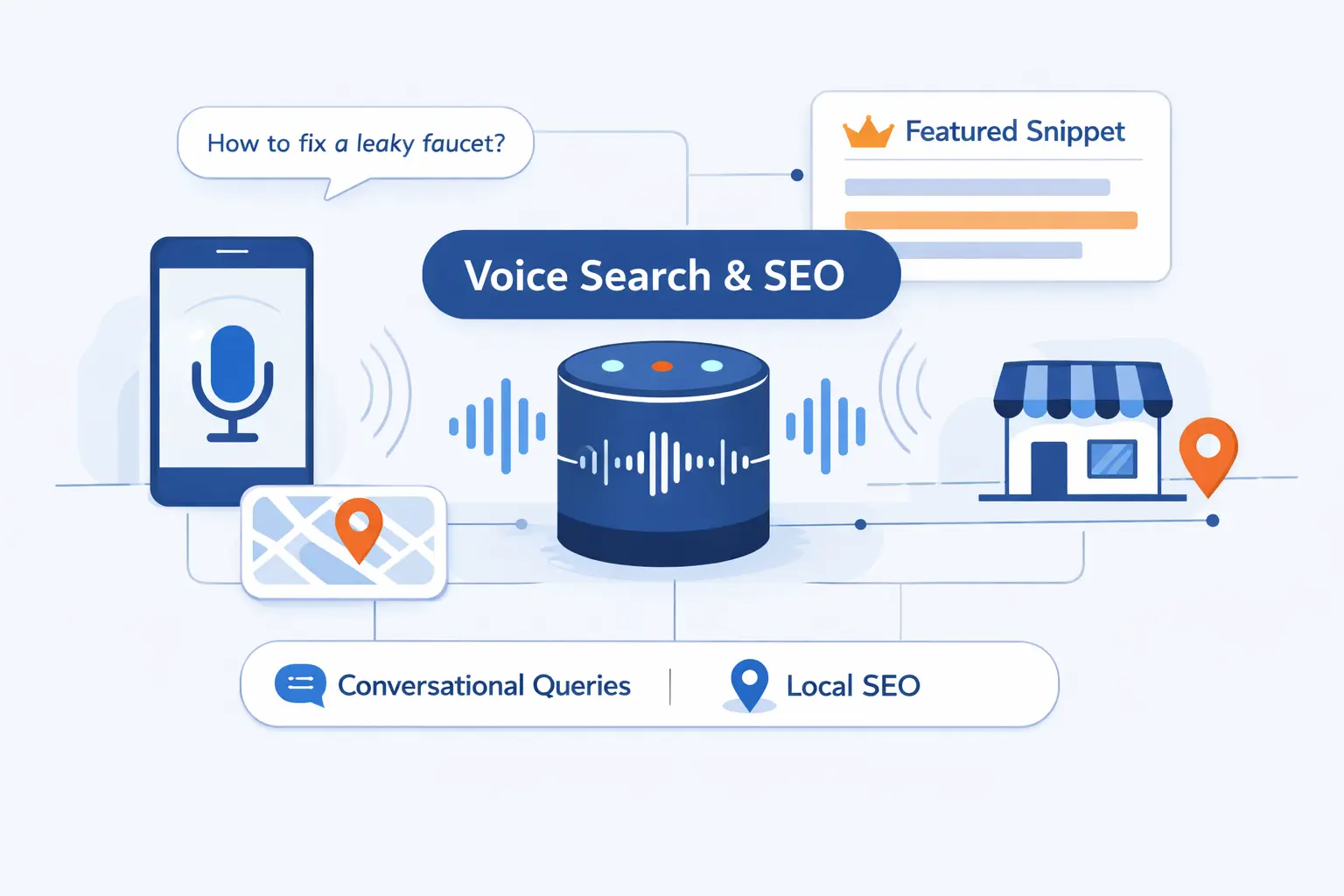
At 1Byte, we see seo for voice search as a practical response to how people already behave. They ask full questions, expect fast answers, and often search while their hands are busy. The audience is already large, with 154.3 million U.S. users in 2025 using voice assistants. That makes this more than a side project for most brands.
We do not treat voice as a separate SEO universe. We treat it as search with more natural language, stronger local intent, and less patience for vague pages. That shift changes research, page structure, writing, and hosting decisions.
Understanding SEO for Voice Search
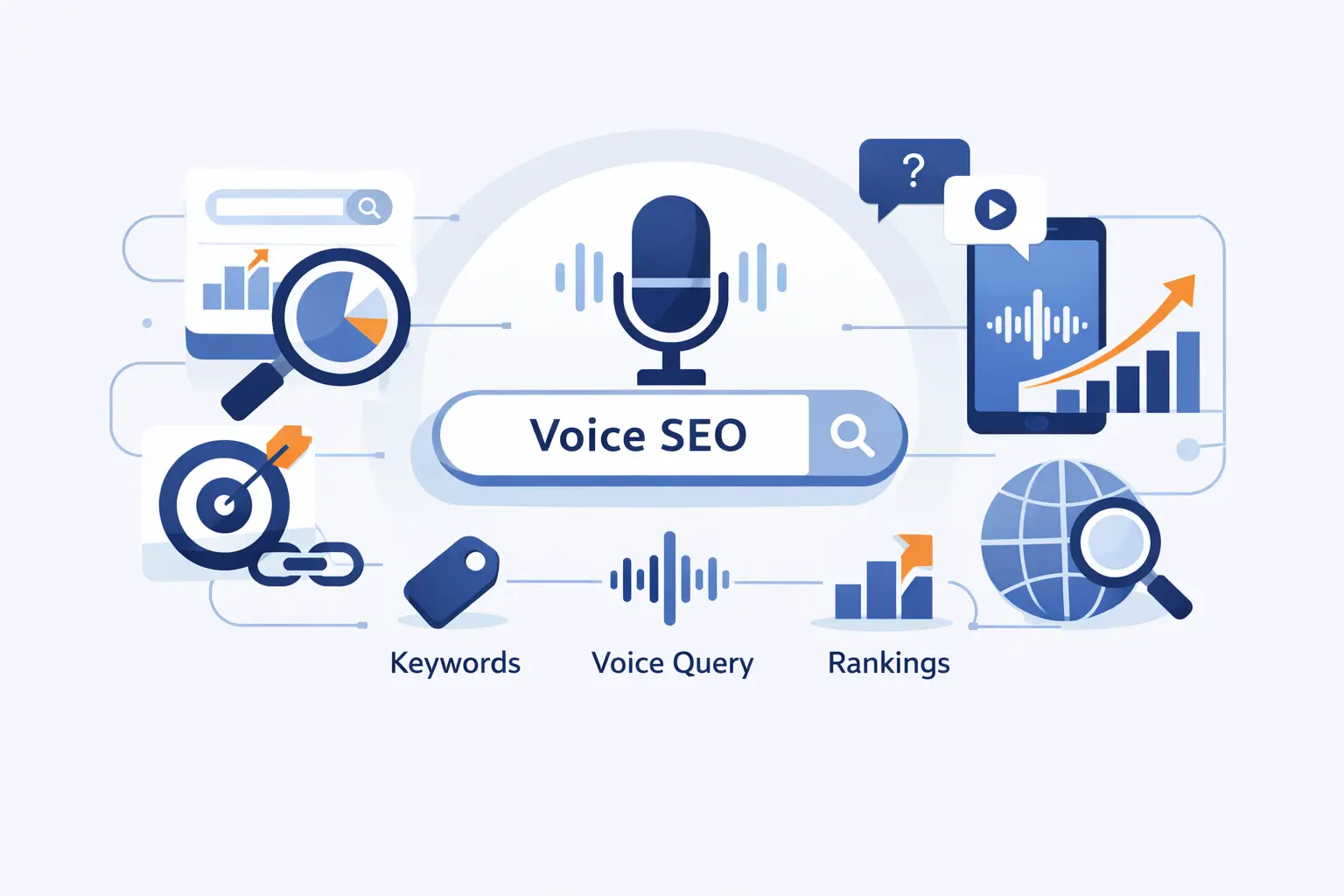
Before we chase tactics, we need the frame right. Voice does not replace search fundamentals. It changes query shape and raises the value of clear, immediate answers.
1. Voice Search vs. Traditional Search
Typed queries are often clipped. Spoken queries sound like real questions. That means we target natural phrasing, context words, and follow-up intent, not just short root terms.
2. The Single-Answer Nature of Voice Results
On a screen, people compare options. On a speaker, they may hear one answer and move on. We write for that reality by placing the clearest answer high on the page and keeping it easy to read aloud.
3. The Role of Traditional SEO
Crawlability, indexation, relevance, links, and trust still do the heavy lifting. A conversational page will not win if the site is slow, thin, or confusing.
The Business Value of Voice Search SEO
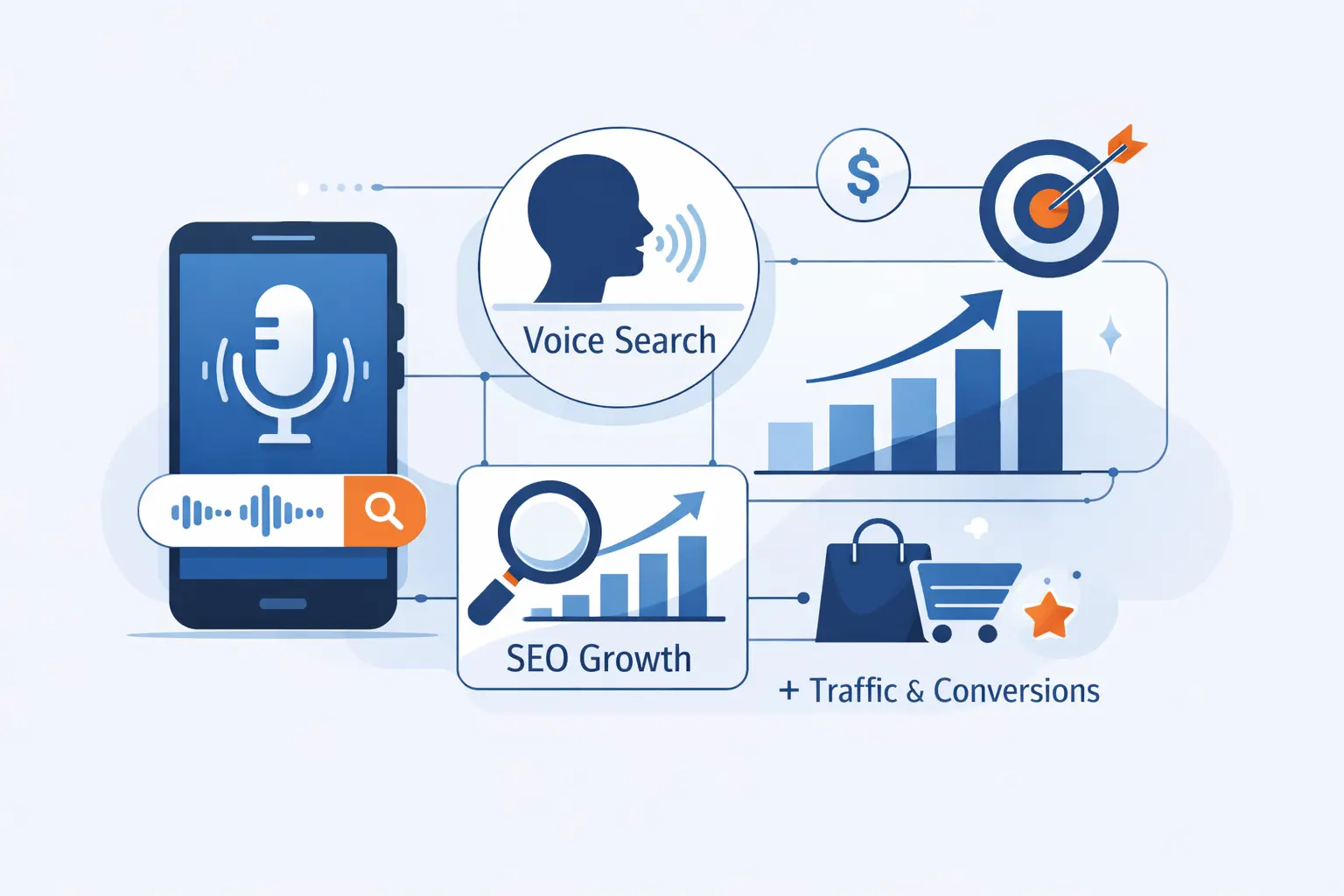
The business case for seo for voice search is simple. Spoken queries often happen close to action, which makes visibility more valuable than raw volume alone.
1. Visibility Across Mobile, Smart Speakers, Cars, and Other Devices
People ask questions on phones, smart speakers, cars, watches, and screen-enabled devices. When we optimize answer pages well, one asset can work across several touchpoints instead of living on a single screen.
2. Featured Snippets and Other High-Visibility SERP Features
High-visibility search features matter because they compress the decision. Snippets, local packs, map results, and knowledge panels make brands easier to hear, see, and trust.
3. Accessibility, Inclusivity, and User Experience
This work also helps people who need hands-free or low-friction access. Clear language and clean structure help someone using assistive tech just as much as someone cooking dinner or driving across town.
Keyword Research for Voice Search SEO
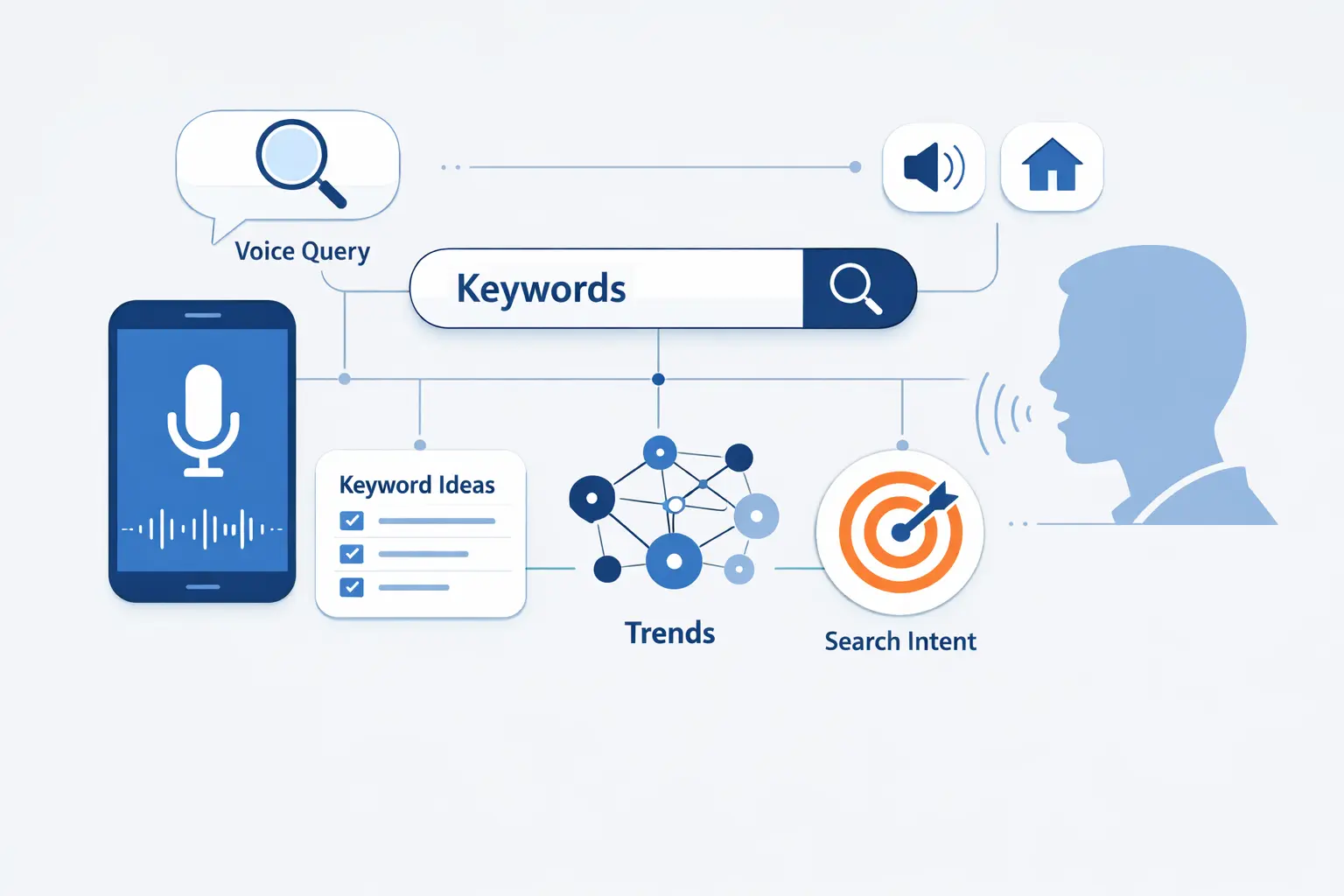
Keyword research for voice starts with real speech. We care less about robotic phrasing and more about the exact way customers ask for help.
1. Who, What, Where, When, Why, and How Questions
We build question lists from sales calls, support tickets, onboarding chats, and live chat logs. Who, what, where, when, why, and how questions reveal both intent and content gaps.
2. Long-Tail, Conversational, and High-Intent Keywords
Longer queries often look small in tools, but they tend to show stronger intent. “How much does it cost” or “which one is better” tells us far more than a two-word phrase ever could.
3. Autocomplete, People Also Ask, Site Search, Reviews, and Customer Conversations
Autocomplete and People Also Ask are useful, but we also mine site search, reviews, and customer conversations. Reviews are gold because they show the words customers use when no marketer is in the room.
SERP Analysis for Voice Search Queries
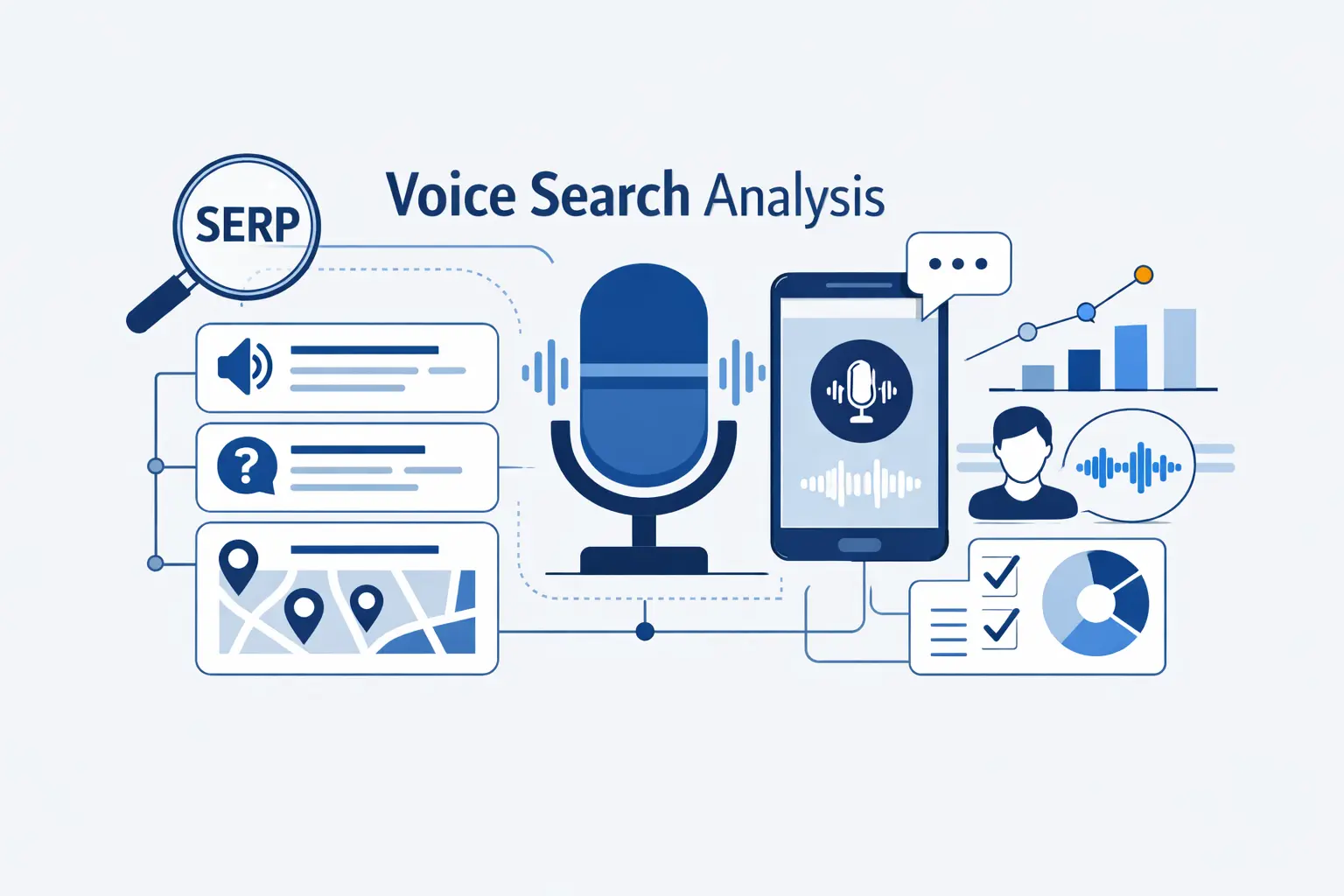
Before we write a page, we inspect the result page. The layout tells us what search engines believe the query deserves.
1. Featured Snippets, People Also Ask, Local Packs, and Rich Results
If a query returns a snippet, a local pack, video, or People Also Ask box, we plan for that format. We do not write a long essay when the page is clearly rewarding a definition, steps, or location details.
2. Google, Bing, and Voice Assistant Sources
We compare Google and Bing, then test on real devices when possible. Different assistants mix web pages, local data, reviews, and entity information in different ways, so assumptions can get expensive.
3. Winning Formats and Search Intent Patterns
Patterns emerge fast. Definitions win with short paragraphs, tutorials win with steps, comparisons win with tables, and local intent wins with precise business details and maps.
Content Structures That Help Win Voice Answers
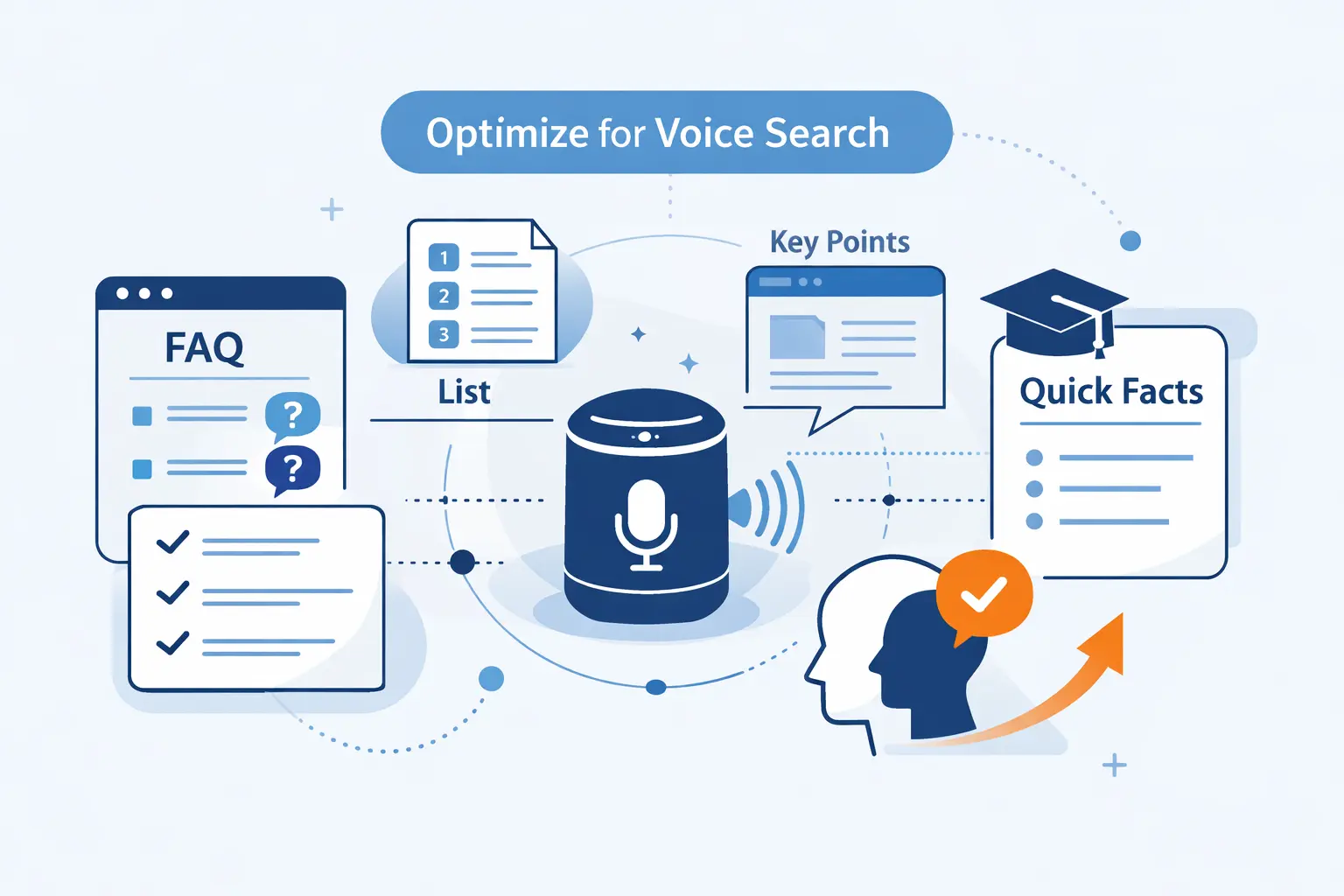
The shape of the page matters. A good voice answer is usually a good human answer too, because it gets to the point and backs itself up.
1. Question-Based Headings and Early Answers
We like question-based headings because they mirror spoken behavior. Then we answer the question in the first paragraph, before we add detail, proof, or alternatives.
2. Lists, Tables, Definitions, and Short Paragraphs
Lists and tables reduce friction. They are easy to scan, easy to read aloud, and easy for systems to extract without guessing what matters most.
3. FAQ Content Built Around Real Search Intent
We still use FAQ sections when they answer real objections, but we no longer use them as decoration. Google stopped showing FAQ rich results on May 7, 2026, so the value now is clarity, coverage, and better internal linking.
4. Video and Audio Content for Screen-Enabled Devices
Voice search is not always audio-only. Many devices show a screen, so transcripts, chapters, captions, and strong spoken intros help video and audio assets earn visibility too.
Writing That Sounds Natural When Read Aloud
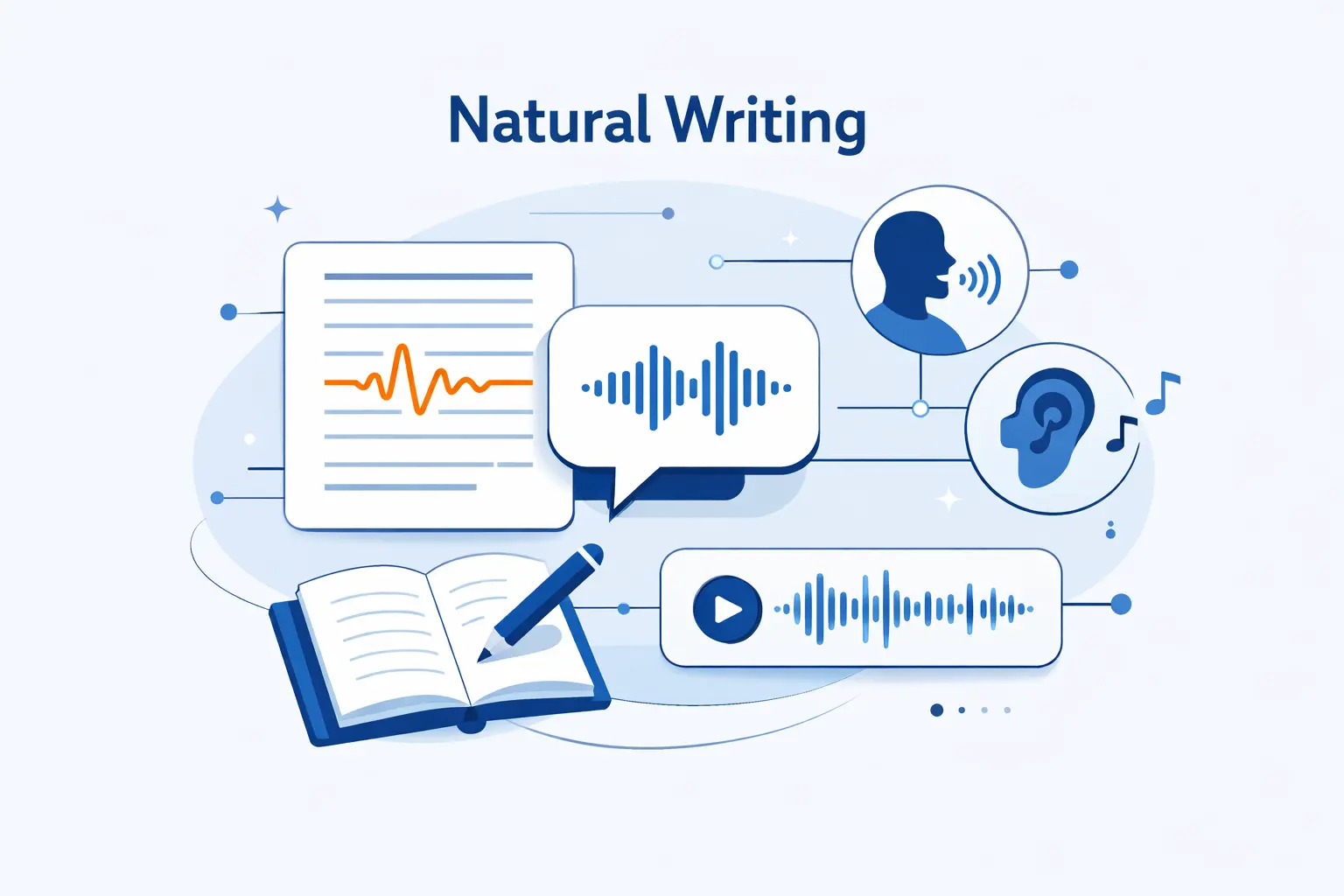
When content is read aloud, every awkward phrase sticks out. We write for ears as much as eyes.
1. Conversational Language Rather Than Robotic Phrases
We choose plain, direct language over keyword-stuffed copy. If a sentence sounds strange when spoken, we rewrite it until it sounds like a helpful human reply.
2. Informational, Navigational, and Transactional Intent
Informational queries need explanation. Navigational queries need direction. Transactional queries need the next step, price context, availability, or contact details.
3. Readability, Clear Headers, and Logical Flow
Short sentences, clear headers, and steady flow matter more than cleverness. A voice-friendly page should sound like a helpful staff member, not a glossary with a sales pitch attached.
Technical Foundations for Voice Search SEO
This is where strategy meets the machine. Slow delivery, bad mobile layouts, and messy data can wreck a good answer before it gets a chance.
1. Page Speed and Fast Answer Delivery
We want lean pages, fast server response, compressed media, smart caching, and fewer heavy third-party scripts. If the answer hides behind delays, users and search systems both lose patience.
2. Mobile-Friendly Design, Responsive Layouts, and HTTPS
Google uses the mobile version of a site’s content for indexing and ranking, so we design answer pages for phones first and keep the secure version clean and consistent.
3. Structured Data for Local Business, Product, Review, and FAQ Information
Structured data helps when it matches visible facts. We mark up business details, product data, and reviews only when the page clearly supports them, then validate the markup and keep it in sync with the visible content.
Local SEO Strategies for Voice Search
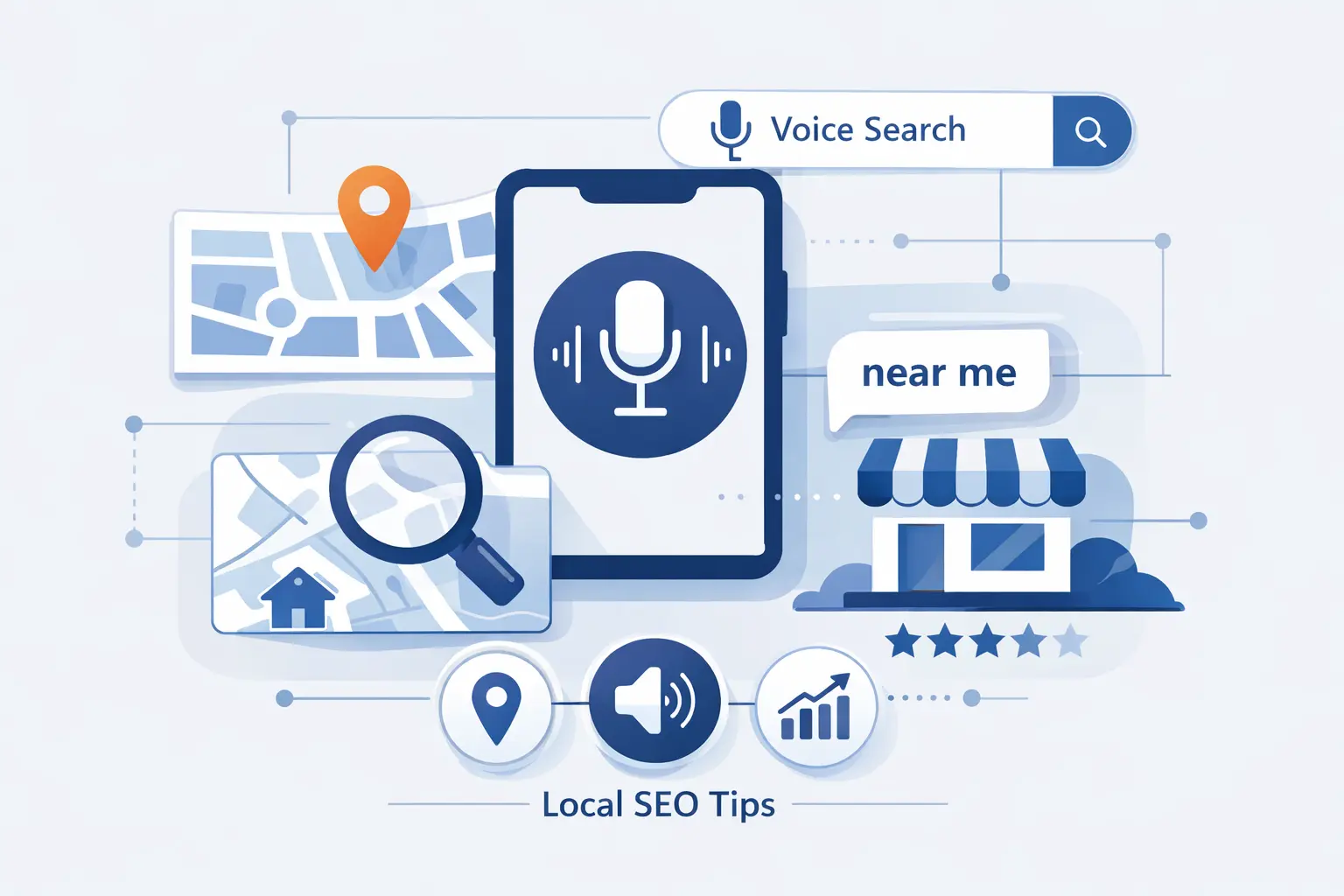
Local intent is where voice often turns into money. Many spoken queries want a nearby answer, open hours, or the next action.
1. Google Business Profile Management
For local businesses, we start with the profile because it carries practical details that people ask for out loud. Google lets owners manage address, hours, contact info, and photos, and a wrong holiday schedule can sink a visit faster than a weak headline.
2. Reviews, Citations, Local PR, and Community Signals
Reviews echo the phrases customers use, and replies show that a business is active. We also care about consistent citations, local press mentions, chamber listings, and community signals because they reinforce place and credibility.
3. Near Me Queries, Location Pages, Neighborhood Terms, and Maps
A “near me” strategy needs more than the phrase itself. We build location pages with neighborhoods, landmarks, service areas, parking notes, and map-ready directions so the page matches real local intent.
Platform-Specific Considerations for Voice Assistants
Each assistant has its own mix of sources and habits. We optimize the same brand facts, but we do not assume every platform behaves the same way.
1. Google Assistant, Knowledge Results, and Google Business Profile
For Google surfaces, we keep business data accurate, entity details consistent, and pages concise. In practice, that means strong local pages, clean profile management, and direct answers that can stand on their own.
2. Alexa, Bing, Yelp, and Brand Skills
Alexa is becoming more task-oriented, which makes ecosystem data more important. Amazon says Alexa+ is building on Yelp’s longstanding integration, so we keep Bing visibility, review signals, and repeat-task brand experiences on the checklist.
3. Siri, Apple Maps, Reviews, and Local Business Signals
Apple deserves its own maintenance loop. Apple says business details updated through Business Connect appear in Maps, Siri, Safari, Calendar, and more, which is why we keep Apple Maps categories, locations, photos, and reviews tidy.
Accessibility and Inclusive Design for Voice Search SEO
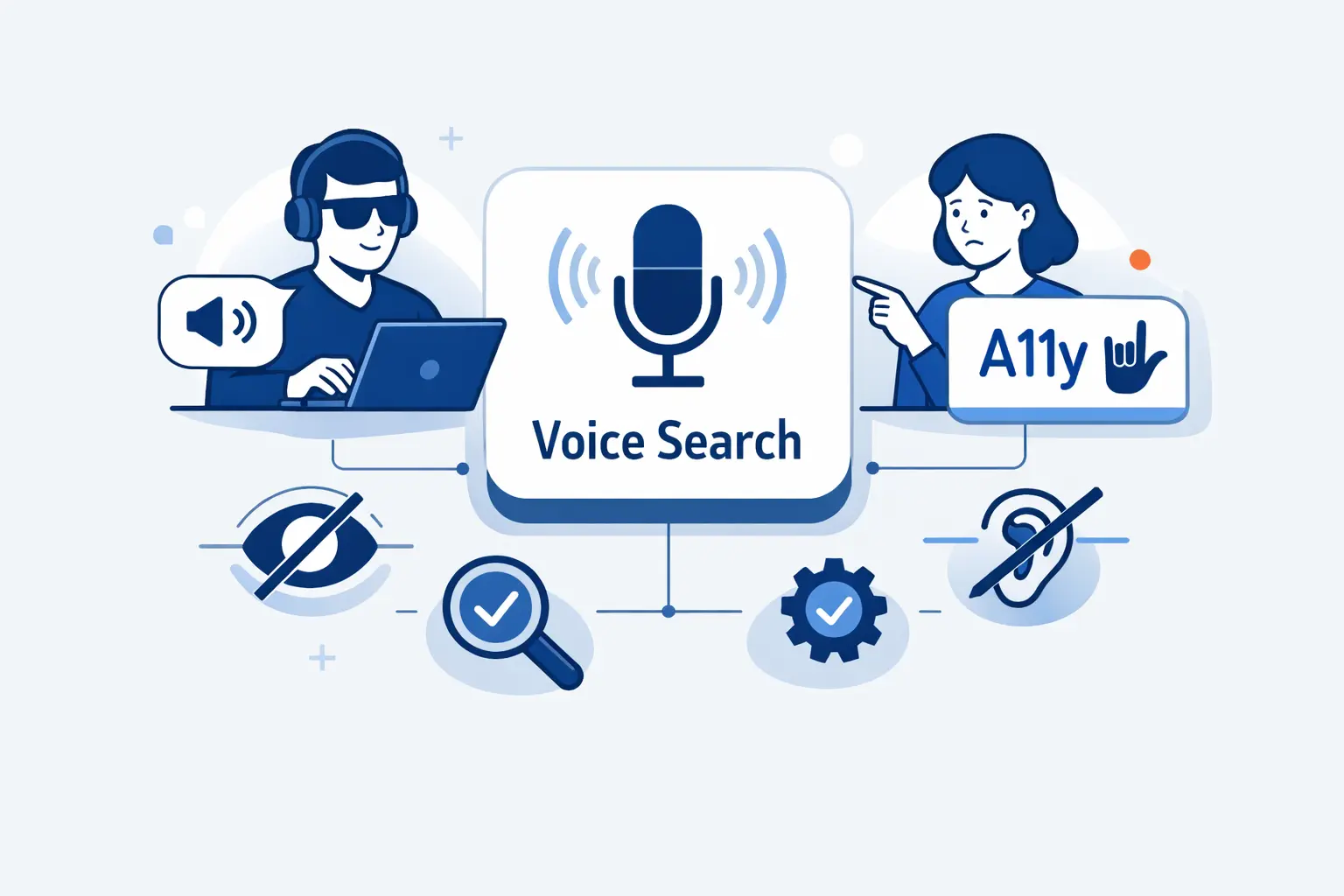
Voice search and accessibility overlap more than most teams expect. When we make content easier to hear, navigate, and understand, everyone gains.
1. Accessible Content Across Voice and Assistive Technologies
Good voice content respects people who rely on screen readers, dictation, and hands-free interaction. Plain language, sensible controls, and predictable page behavior help across the board.
2. Semantic HTML, Alt Text, Captions, and Transcripts
Semantic HTML gives structure. Alt text gives context. Captions and transcripts make audio and video usable when sound is off, hearing is limited, or the assistant needs text to work from.
3. Easy Navigation, Clarity, and Readability
We keep menus simple, buttons descriptive, and forms short. If a user can find the answer without hunting, the page is doing its job.
AI Search, Generated Answers, and Voice Search SEO
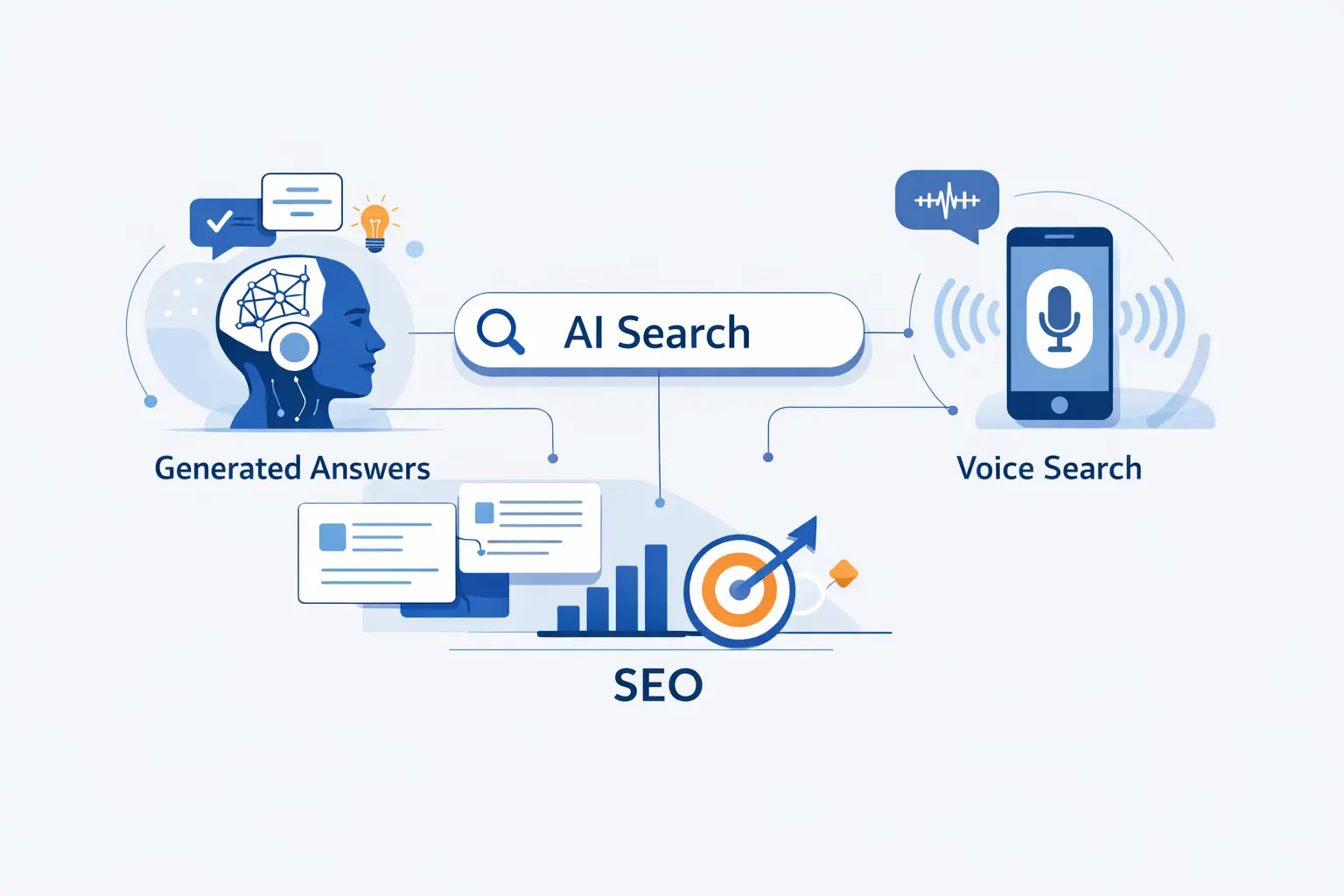
Generated answers are now part of the search landscape. Voice interfaces are picking up the same habits, which raises the bar for clarity, accuracy, and structure.
1. AI Overviews and Rising Content Standards
Google says there are no additional requirements to appear in AI Overviews or AI Mode, which tells us the old fundamentals still matter, only now the margin for sloppy content is smaller.
2. Topical Depth, Factual Clarity, and Helpful Structure
Thin pages struggle in AI-heavy search because they leave too much to infer. We cover the core answer, the next question, the caveat, and the real example in a clean order.
3. Evolving Search Interfaces and Voice Experiences
Search is becoming more conversational and more multimodal. Users ask a question, refine it, compare options, and expect continuity, so our pages need to support that journey.
Auditing, Testing, and Measuring Voice Search SEO
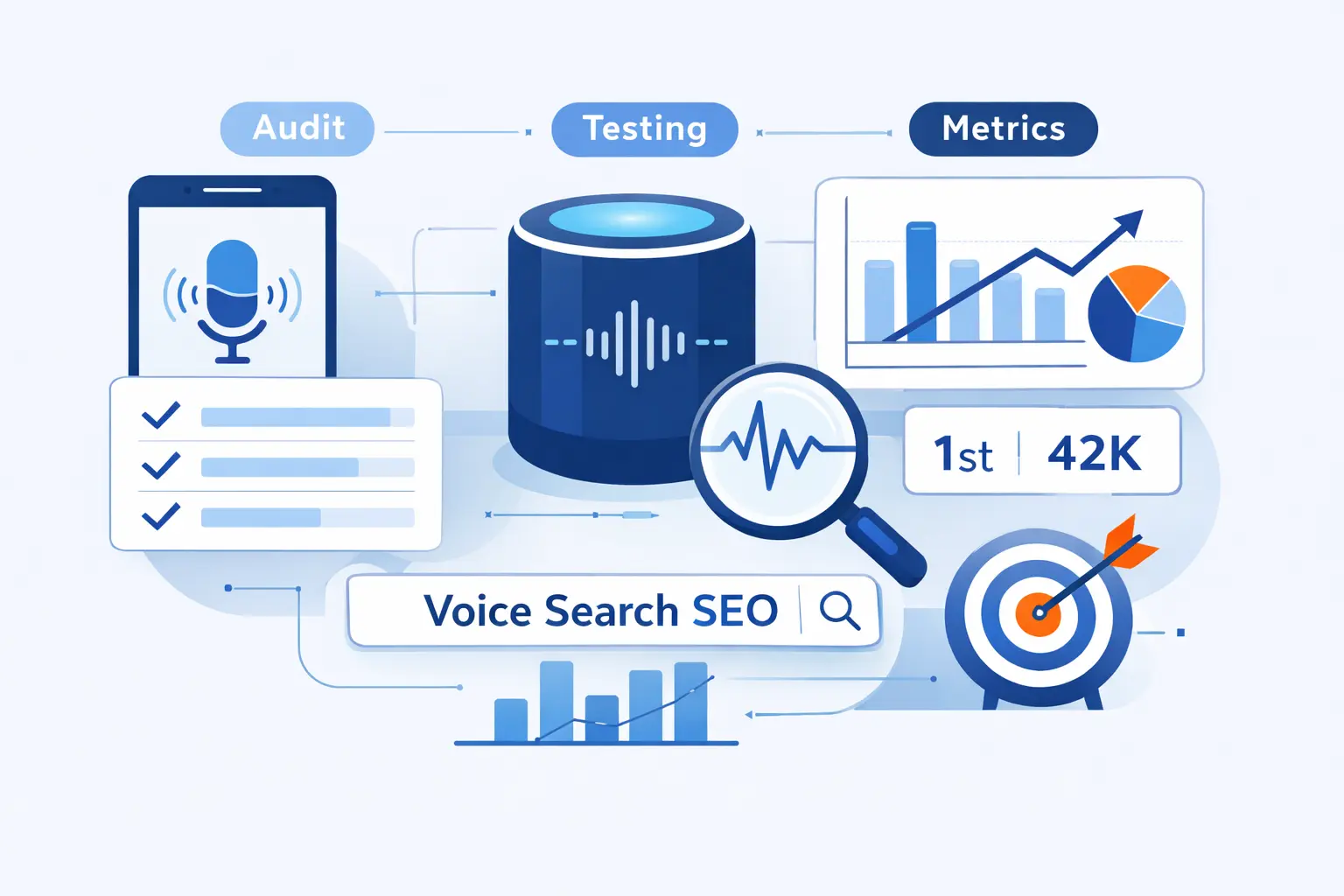
We treat seo for voice search as a test loop, not a one-time checklist. The work is part research, part QA, and part maintenance.
1. Real Device Testing and Competitive Benchmarking
We ask target questions on actual phones, speakers, and car interfaces when we can. Then we log who gets cited, how the answer is phrased, and what the competitor page did better.
2. Featured Snippets, Question Queries, and Long-Tail Keyword Tracking
We track question queries, long-tail pages, snippet ownership, and local result visibility. We also watch which page format wins, because the format often tells us more than the rank alone.
3. Organic Engagement, Local Listings, and Ongoing Updates
Freshness matters, especially for local pages and practical details. We revisit listings, operating hours, product availability, FAQs, and service pages before they drift out of date.
Common Voice Search SEO Mistakes to Avoid
Most mistakes come from treating voice like a gimmick. We get better results when we treat it like applied search behavior.
1. Short Keywords Instead of Spoken Questions
Root keywords still matter, but spoken language carries context. If we ignore the full question, we usually miss the real page type people need.
2. New Pages Before Existing Content Audits
We would rather improve a buried page than publish five thin ones. Many sites already have the right answer, they just hide it in the wrong format or the wrong paragraph.
3. One-Time Optimization Without Ongoing Maintenance
Voice surfaces punish stale facts. Hours change, assistants change, SERPs change, and AI features change, so maintenance is part of the job.
FAQ About SEO for Voice Search
Here is the short version we give clients when they want plain answers.
1. How to Do SEO for Voice Search?
Start with customer questions, map intent, answer early, keep pages fast, tune local data, and test on real devices. Then improve the pages that already rank before you create new ones.
2. How Does Voice Search Affect SEO?
It pushes SEO toward natural language, strong local signals, concise answers, and cleaner page structure. It also makes second-page thinking less useful because many users hear or see only a few top options.
3. Do Featured Snippets Matter for SEO for Voice Search?
Yes, they still matter because concise answer blocks often shape high-visibility results. We cannot force them, but we can make our answers easier to extract and easier to trust.
4. Do You Need Schema Markup for SEO for Voice Search?
No, schema is not a ticket to the front of the line. It is still worth doing because it helps clarify business, product, and review data when the markup matches the page.
5. Is SEO Dead or Evolving in 2026?
It is evolving. The surfaces are changing fast, but the core job stays familiar: publish helpful answers, keep the site healthy, and make the business easy to understand.
How 1Byte Supports Voice Search SEO as a Cloud Computing and Web Hosting Provider
As a cloud computing and web hosting provider, we work on the layer many content teams ignore. Speed, uptime, SSL, DNS, and scaling all shape whether good content can actually compete.
1. Domain Registration and SSL Certificates for a Secure Website
We help businesses start with a clean domain setup and valid SSL certificates. That keeps the secure version of the site consistent and removes a basic trust problem before it spreads into search.
2. WordPress Hosting and Shared Hosting for Strong Site Performance
For many sites, stable WordPress hosting or shared hosting is enough when it is configured well. We care about caching, updated software, sane plugin use, and steady performance, because those basics support faster answer delivery.
3. Cloud Hosting, Cloud Servers, and AWS Partner Support for Scale
When growth or traffic spikes call for more headroom, we help teams move to cloud hosting and cloud servers with room to expand. As an AWS Partner, we can also help align infrastructure choices with the workload instead of guessing.







Conclusion: Building a Sustainable SEO for Voice Search Strategy
A sustainable seo for voice search strategy is rarely flashy. It is clear answers, solid technical work, accurate local data, and regular testing.
At 1Byte, we believe the winning pages are the ones that still make sense when a machine reads them aloud. If we answer the question cleanly, keep the site fast, and keep the facts current, we usually improve search as a whole, not just voice.