

- Quick Comparison of ERP Companies
- Top 20 ERP Companies to Compare in 2026
- What ERP Companies Do for Modern Organizations
- Major Types of ERP Companies and ERP Software
- How to Choose the Best ERP Companies for Your Business
- ERP Companies by Industry and Use Case
- Key Strengths Among Leading ERP Companies
- ERP Trends Shaping Vendor Selection in 2026
- ERP Implementation Readiness Before You Contact ERP Companies
- FAQ About ERP Companies
- How 1Byte Supports ERP Companies and ERP Buyers With Cloud Hosting, Cloud Servers, Domain Registration, SSL Certificates, WordPress Hosting, Shared Hosting, and AWS Partner Expertise
ERP companies now sit at the nerve center of modern business management. At 1Byte, we see them less as software catalogs and more as operating systems for cash, inventory, people, assets, compliance, and customer promises. The market has stopped being sleepy back-office software: Gartner reported the worldwide ERP market reached $66 billion in 2024, which tells us buyers are funding execution capacity, not only ledgers.
That demand sits inside a larger software wave, with Gartner forecasting global software spending at $1.433 trillion in 2026. Real enterprise signals match the research. Workday says it serves more than 11,500 customers globally, including named organizations such as Boston Children’s Hospital and Queensland University of Technology.
NetSuite shows the growth-company side of the same story, saying more than 40,000 companies use NetSuite. Our view is simple. The best ERP company is not always the biggest one. It is the one whose data model, implementation ecosystem, cloud posture, and product roadmap match the business you are actually becoming.
Quick Comparison of ERP Companies
Before buyers fall into demos, they need a fast view of where each ERP company usually fits. This comparison keeps the lens practical: buyer type, entry pricing signal, trial availability, and the limits that tend to matter first.
| Service/Tool | Best for | From price | Trial/Free | Key limits |
|---|---|---|---|---|
| Oracle Fusion Cloud ERP | Global finance, procurement | Custom quote | Demo by request | Complex licensing, partner effort |
| SAP S/4HANA Cloud | Large, regulated operations | Custom quote | Basic trial | Clean-core discipline required |
| Microsoft Dynamics 365 | Microsoft-centric SMBs | $80/user/mo | 30-day trial | App-by-app licensing |
| Workday Financial Management | Finance and HR teams | Custom quote | Demo or planning trial | Manufacturing depth is limited |
| Infor CloudSuite | Industry-heavy operations | Custom quote | Demo by request | Suite selection matters |
| IFS Cloud | Assets, service, projects | Custom quote | Demo by request | Industrial focus, smaller talent pool |
| Sage X3 | Midsize finance, distribution | Custom quote | Product tour | Partner quality varies |
| NetSuite ERP | Scaling multi-entity firms | Custom quote | Demo by request | Add-ons affect cost |
| Epicor Kinetic | Manufacturers, job shops | Custom quote | Demo by request | Best outside services-heavy firms |
| QAD Adaptive ERP | Global manufacturers | Custom quote | Demo by request | Narrower vertical fit |
Top 20 ERP Companies to Compare in 2026
The following ERP companies cover enterprise, midmarket, manufacturing, services, public sector, and open-source needs. We evaluate them like operators, not brochure readers: who they serve, what they make easier, where they get expensive, and what can break during implementation.
1. Oracle Fusion Cloud ERP
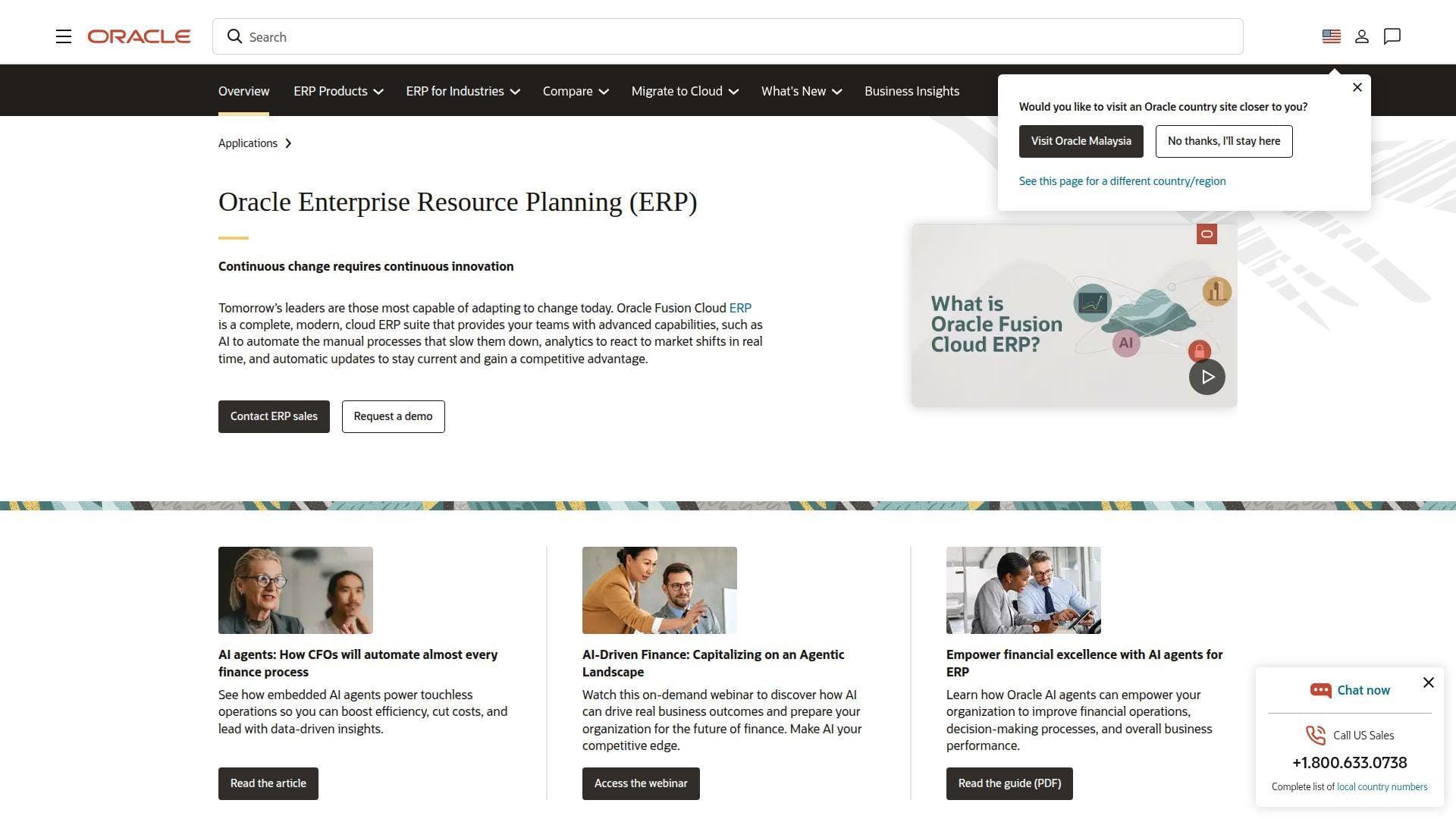
Oracle is a global enterprise software company with deep teams across databases, cloud infrastructure, finance applications, procurement, risk, and analytics. Fusion Cloud ERP is strongest when the buyer wants a single cloud backbone for finance, projects, procurement, reporting, and controls. Best for: global CFOs and enterprise procurement leaders.
- Financial close, procurement, and project accounting flows → consolidate multi-entity reporting and reduce spreadsheet reconciliation.
- Embedded AI, analytics, and Oracle ecosystem integrations → remove about 3 manual handoffs from invoice-to-report cycles.
- Role-based cloud UX and packaged process models → time-to-first-value usually starts with finance prototypes in 8 to 12 weeks.
Pricing & limits: From custom quote/mo; no standard public self-serve trial for full ERP; caps depend on licensed modules, named users, environments, storage, and transaction volumes.
Honest drawbacks: Licensing can feel like chess in three dimensions. Small teams may also find Oracle overpowered if they only need clean accounting and inventory.
Verdict: If you need enterprise-grade financial control, this helps you standardize reporting and approval flows in one transformation cycle. Beats NetSuite at global control; trails Odoo on simplicity.
2. SAP S/4HANA Cloud
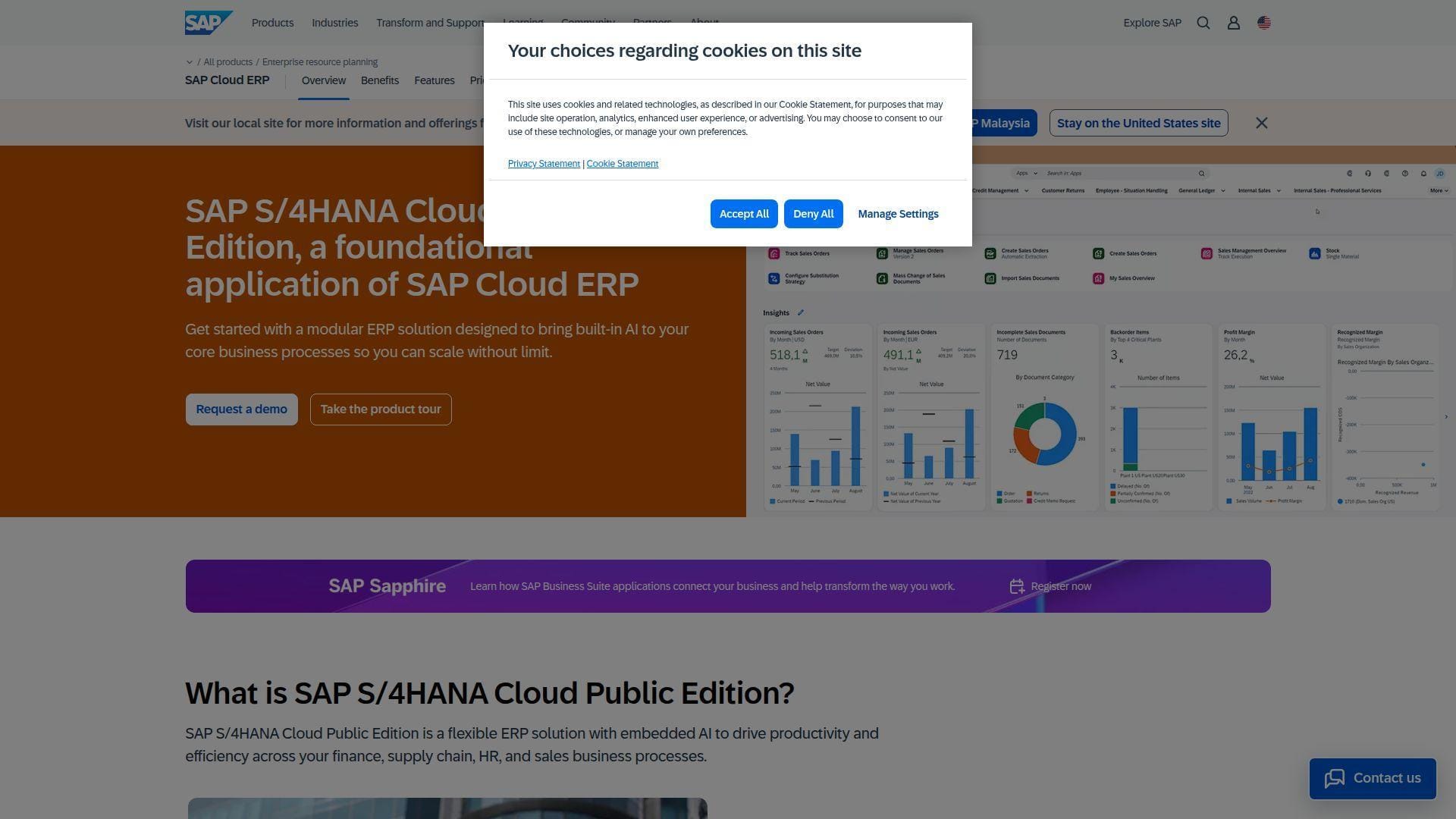
SAP brings one of the deepest ERP benches in the world, with product, partner, industry, and advisory teams built around complex business process design. S/4HANA Cloud is the digital core for organizations that need standardization across plants, regions, entities, and compliance models. Best for: multinational manufacturers and regulated enterprise CIOs.
- Order-to-cash, plan-to-produce, and record-to-report flows → align global operations around one semantic core.
- SAP BTP, Joule, and partner integrations → cut about 4 integration decisions from extension planning when teams keep a clean core.
- Public and private cloud pathways → pilot value can appear in 10 to 16 weeks when scope stays standard.
Pricing & limits: From custom quote/mo; basic trials are available for public-cloud exploration; caps depend on cloud edition, FUE licensing, country localizations, extensions, and service entitlements.
Honest drawbacks: S/4HANA punishes vague governance. Custom ECC-era habits can slow every design meeting and inflate partner work.
Verdict: If you want a disciplined global operating model, this helps you retire process variance over a phased program. Beats most vendors on global process depth; trails Microsoft on everyday office familiarity.
3. Microsoft Dynamics 365
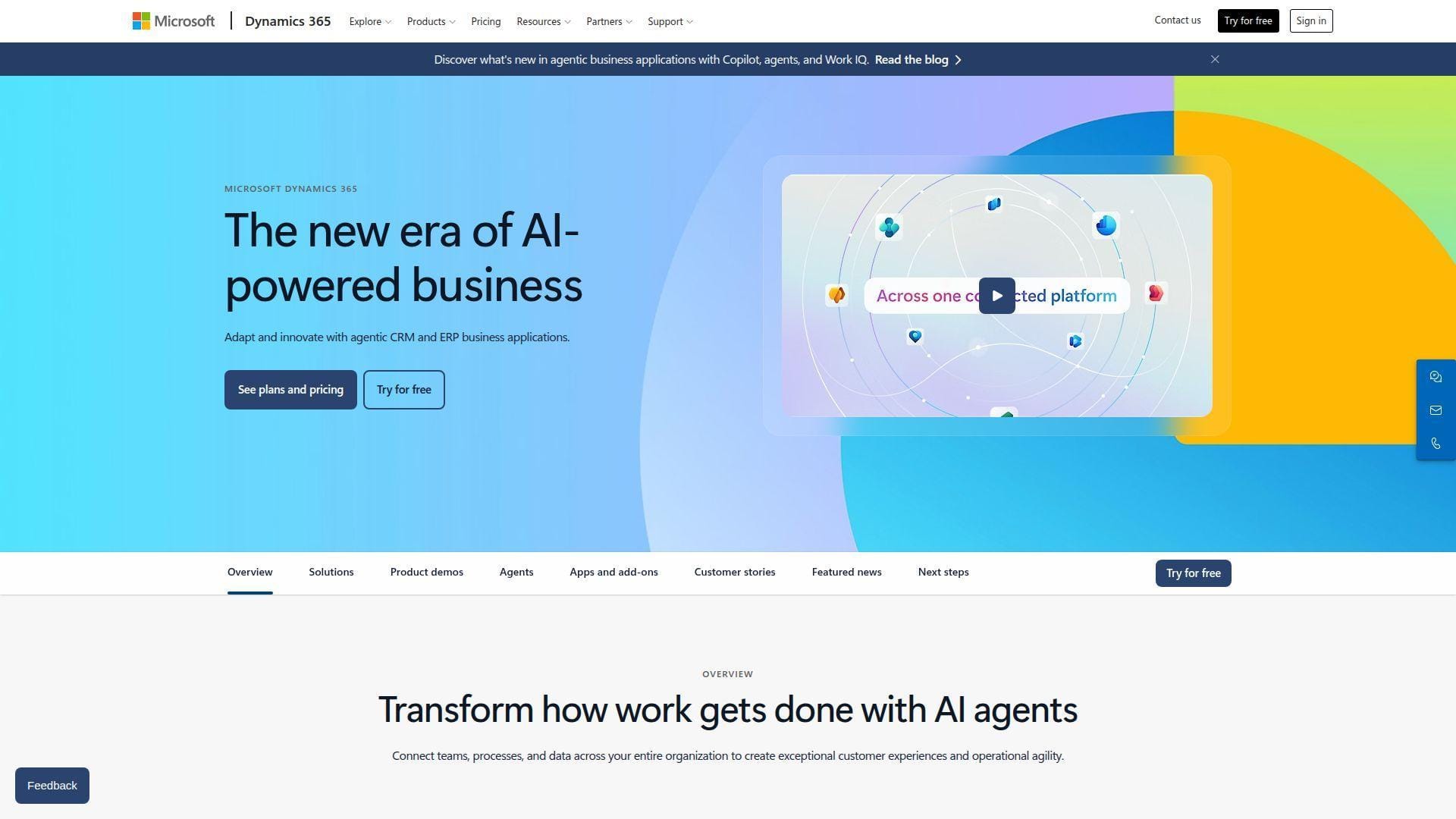
Microsoft fields large product and partner teams across ERP, CRM, analytics, collaboration, low-code, and cloud. Dynamics 365 is not one product; it is a portfolio that ranges from Business Central for SMBs to Finance and Supply Chain Management for larger operations. Best for: Microsoft-centric SMB owners and midmarket finance teams.
- Finance, sales, service, and operations apps → connect quote, order, invoice, and support work inside a familiar Microsoft stack.
- Power Platform, Copilot, Teams, Excel, and Dataverse → save about 2 to 5 steps in approval and reporting workflows.
- Partner-led templates and AppSource extensions → time-to-first-value can start in 4 to 8 weeks for focused Business Central rollouts.
Pricing & limits: From $80/user/mo for Business Central Essentials; a 30-day free trial is commonly available; caps depend on app plan, storage, environments, add-ons, and Copilot Credit usage.
Honest drawbacks: Licensing spreads across apps, attach licenses, Power Platform, and add-ons. Poor architecture can turn a flexible stack into a tangle.
Verdict: If your team lives in Microsoft 365, this helps you move from disconnected spreadsheets to governed operations in a quarter. Beats Sage X3 on ecosystem breadth; trails SAP on global manufacturing depth.
4. Workday Financial Management
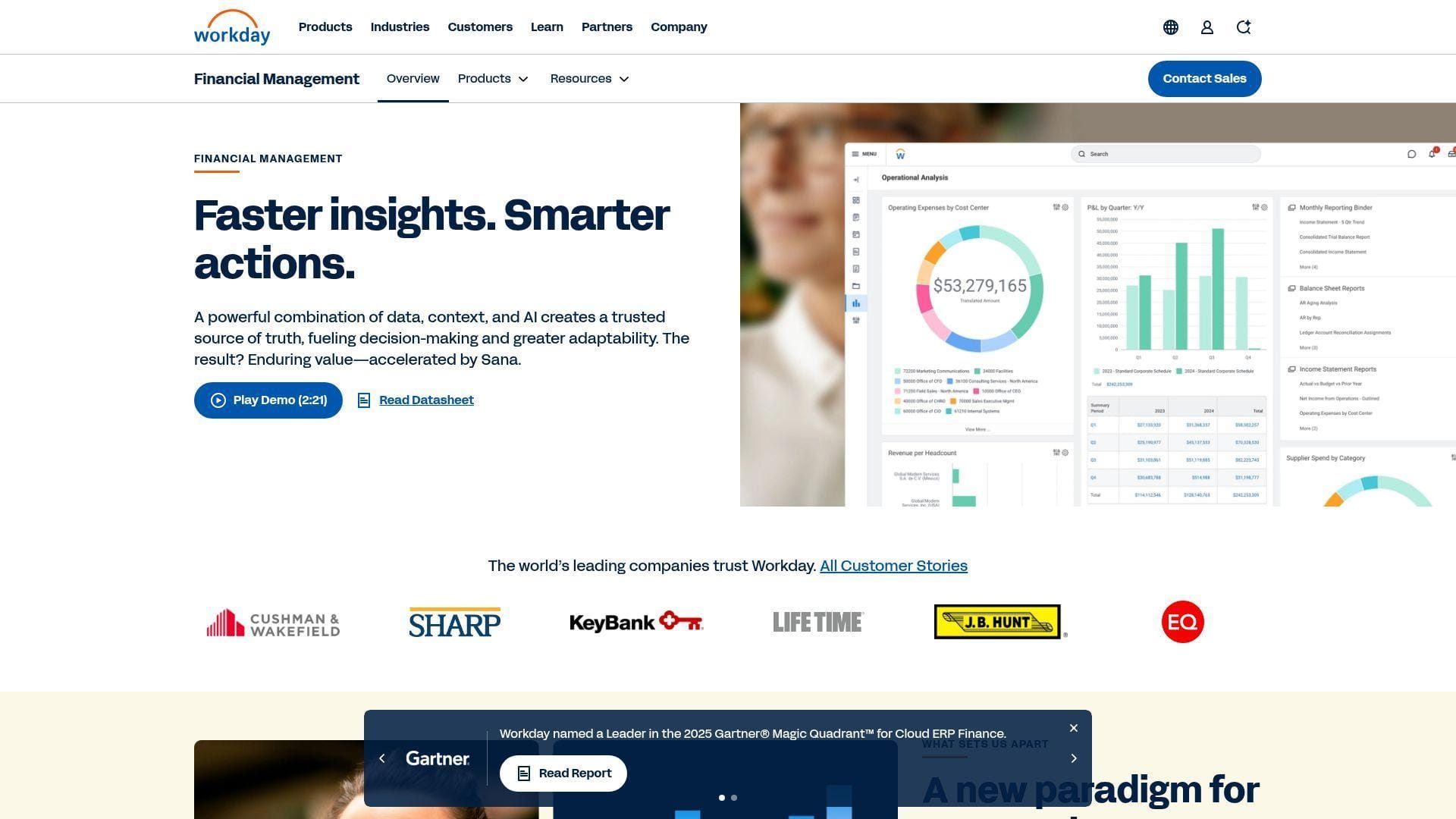
Workday grew from cloud HCM into a finance, planning, spend, and analytics platform with strong product teams around people and money. Its sweet spot is not heavy shop-floor manufacturing. It is finance-led organizations where workforce, planning, projects, and reporting must move together. Best for: services CFOs and HR-finance transformation leaders.
- Finance, HR, planning, expenses, and procurement flows → give leaders one model for workforce cost and financial performance.
- Workday Extend, integration tools, and AI agents → remove about 2 approval loops from audit, planning, and employee-service tasks.
- Configuration-led implementation and clean mobile UX → first dashboards can land in 6 to 10 weeks during discovery waves.
Pricing & limits: From custom quote/mo; full Financial Management trials are not usually self-serve; caps depend on worker population, modules, integrations, environments, and service tiers.
Honest drawbacks: Manufacturing, warehouse, and deep distribution needs require another platform or serious integration. Buyers should also watch premium SKU packaging.
Verdict: If finance and HR are your operating spine, this helps you model talent cost and business performance in one release cycle. Beats Oracle on people-centric UX; trails IFS on asset operations.
5. Infor CloudSuite
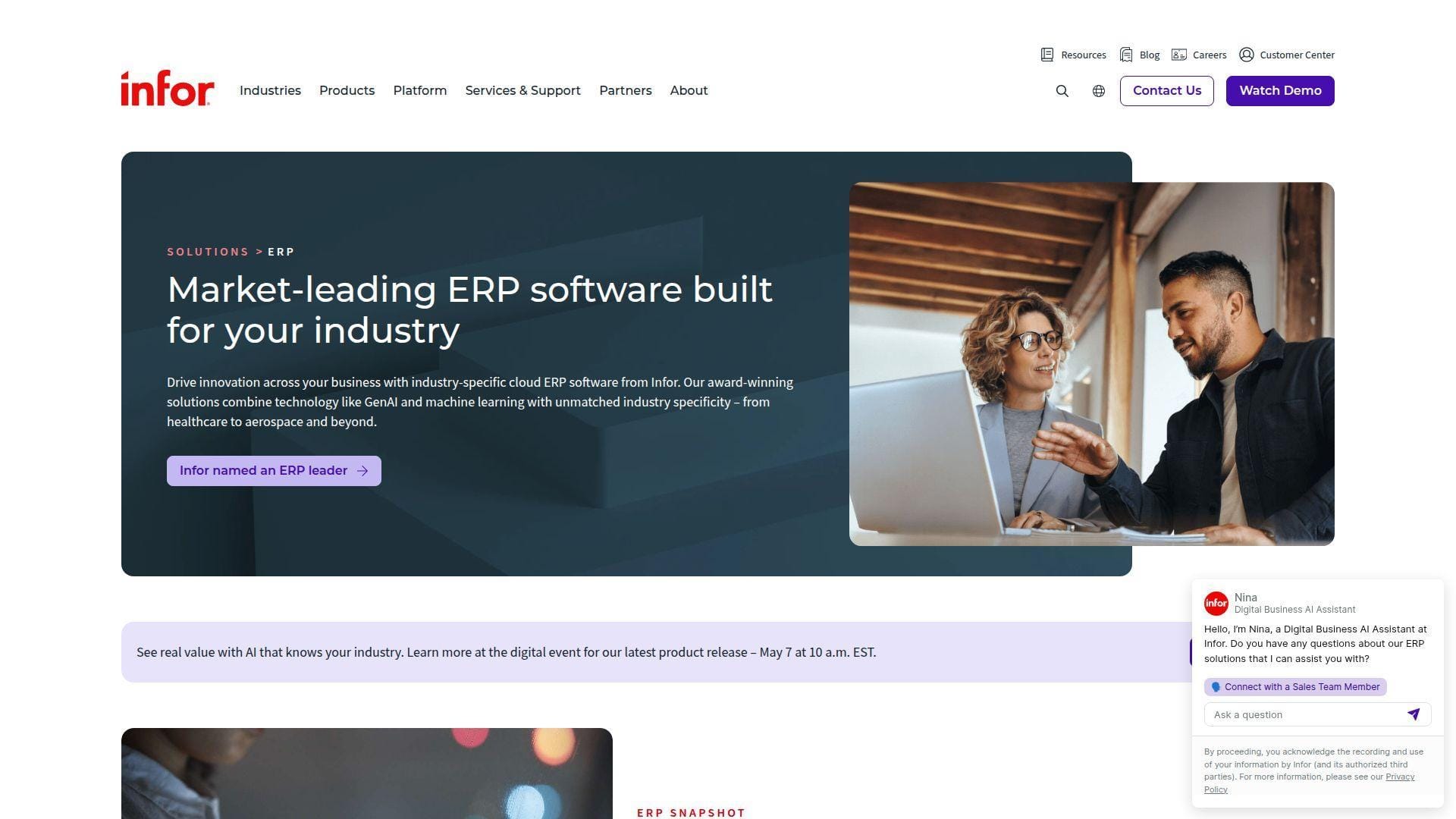
Infor is a seasoned ERP vendor with product teams organized around industry suites rather than a single generic platform. CloudSuite packages inherited strengths from LN, M3, SyteLine, Lawson, and other lines into verticalized cloud applications. Best for: manufacturing operations leaders and industry-specific IT teams.
- Industry CloudSuites for manufacturing, distribution, healthcare, fashion, and food → start closer to the actual workflow.
- Infor OS, analytics, workflow, and AWS-hosted models → save about 3 integration design steps when the suite fits cleanly.
- Preconfigured vertical processes → time-to-first-value often begins in 8 to 14 weeks for a narrow plant or finance pilot.
Pricing & limits: From custom quote/mo; demos are typically request-based; caps depend on suite, user types, modules, transaction scale, environments, and industry add-ons.
Honest drawbacks: Infor is strongest when the selected CloudSuite matches the industry. A poor fit can lead to custom work that erases the vertical advantage.
Verdict: If you operate in a process-heavy industry, this helps you replace generic ERP debates with operational templates in one design phase. Beats Microsoft on vertical depth; trails SAP on global partner density.
6. IFS Cloud
IFS builds for organizations where assets, field service, projects, maintenance, and industrial operations matter as much as finance. Its teams speak the language of uptime, crews, contracts, equipment, and service margins. Best for: asset-intensive CIOs and field-service operations directors.
- ERP, EAM, FSM, projects, and service management on one platform → connect contract margin to asset performance.
- Industrial AI, scheduling, and operational automation → reduce about 3 dispatch-to-resolution handoffs for service teams.
- Configurable cloud modules for asset-centric workflows → first operational value can appear in 8 to 12 weeks with scoped use cases.
Pricing & limits: From custom quote/mo; trials are generally demo-led; caps depend on modules, users, assets, environments, AI entitlements, and industry scope.
Honest drawbacks: IFS is not the obvious choice for a pure accounting-led SMB. Talent availability can also be thinner than SAP or Microsoft in some regions.
Verdict: If downtime, service commitments, and project delivery define revenue, this helps you tie operations to financial outcomes in a single roadmap. Beats Workday on asset depth; trails Oracle on broad finance ecosystem reach.
7. Sage X3
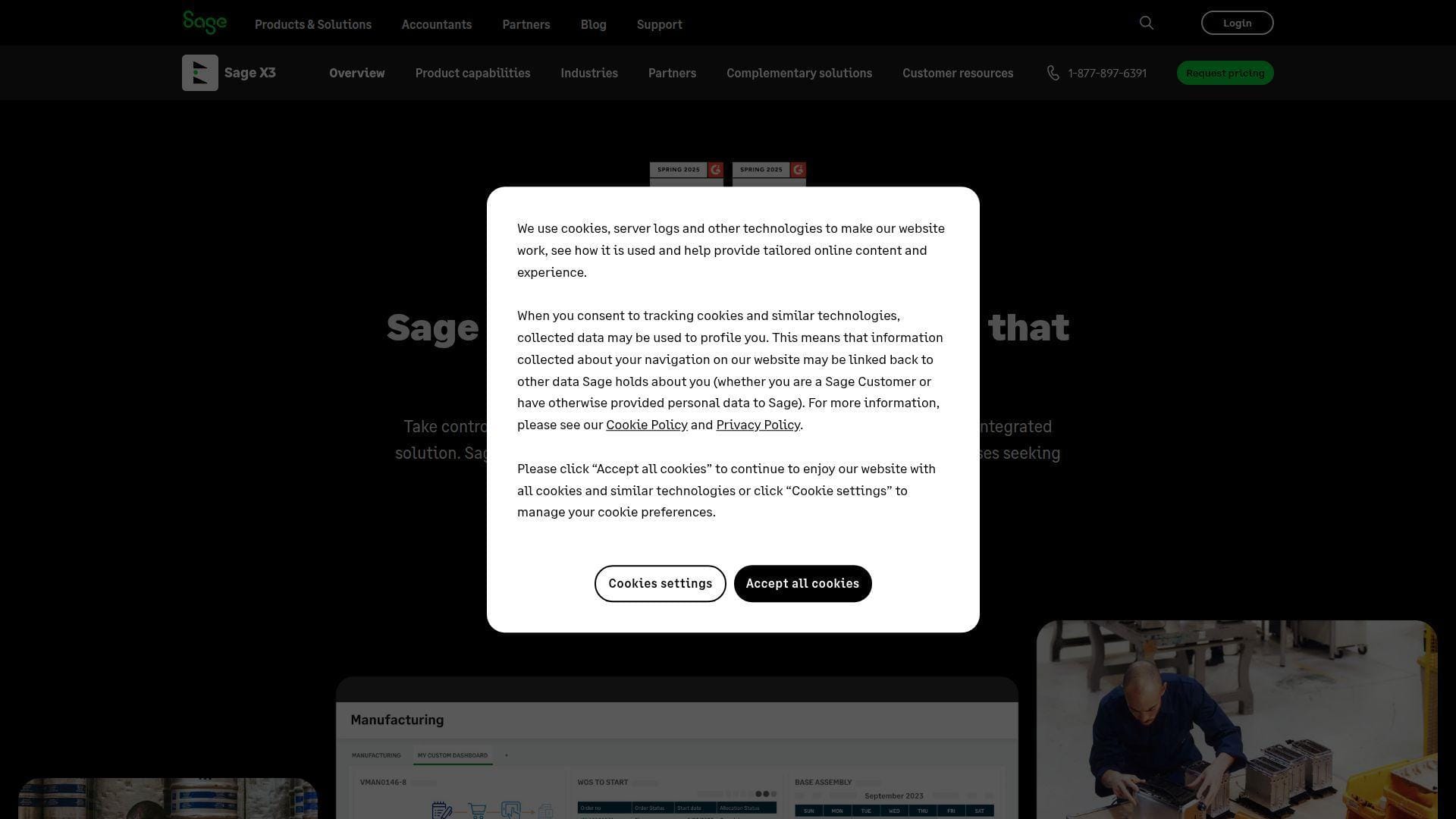
Sage X3 comes from a finance and business management vendor with long experience serving midsize companies. Its product and partner teams focus on finance, distribution, inventory, production, and process manufacturing without pushing every buyer into enterprise-scale complexity. Best for: midsize distributors and process-manufacturing finance leaders.
- Finance, purchasing, inventory, sales, and production flows → tighten control across warehouses, suppliers, and cost centers.
- Reporting, APIs, and partner extensions → save about 2 manual export steps from month-end and inventory analysis.
- Familiar business-user screens and configurable workflows → first operational wins often show in 6 to 10 weeks.
Pricing & limits: From custom quote/mo; product tours and partner demos are common; caps depend on users, modules, deployment model, integrations, and localization needs.
Honest drawbacks: Partner quality matters a great deal. Sage X3 can also feel less modern than cloud-native competitors if implementation teams over-customize it.
Verdict: If you need stronger finance and distribution control without a Tier 1 program, this helps you stabilize operations in one to two quarters. Beats Odoo on governance; trails NetSuite on cloud-native ecosystem polish.
8. NetSuite ERP
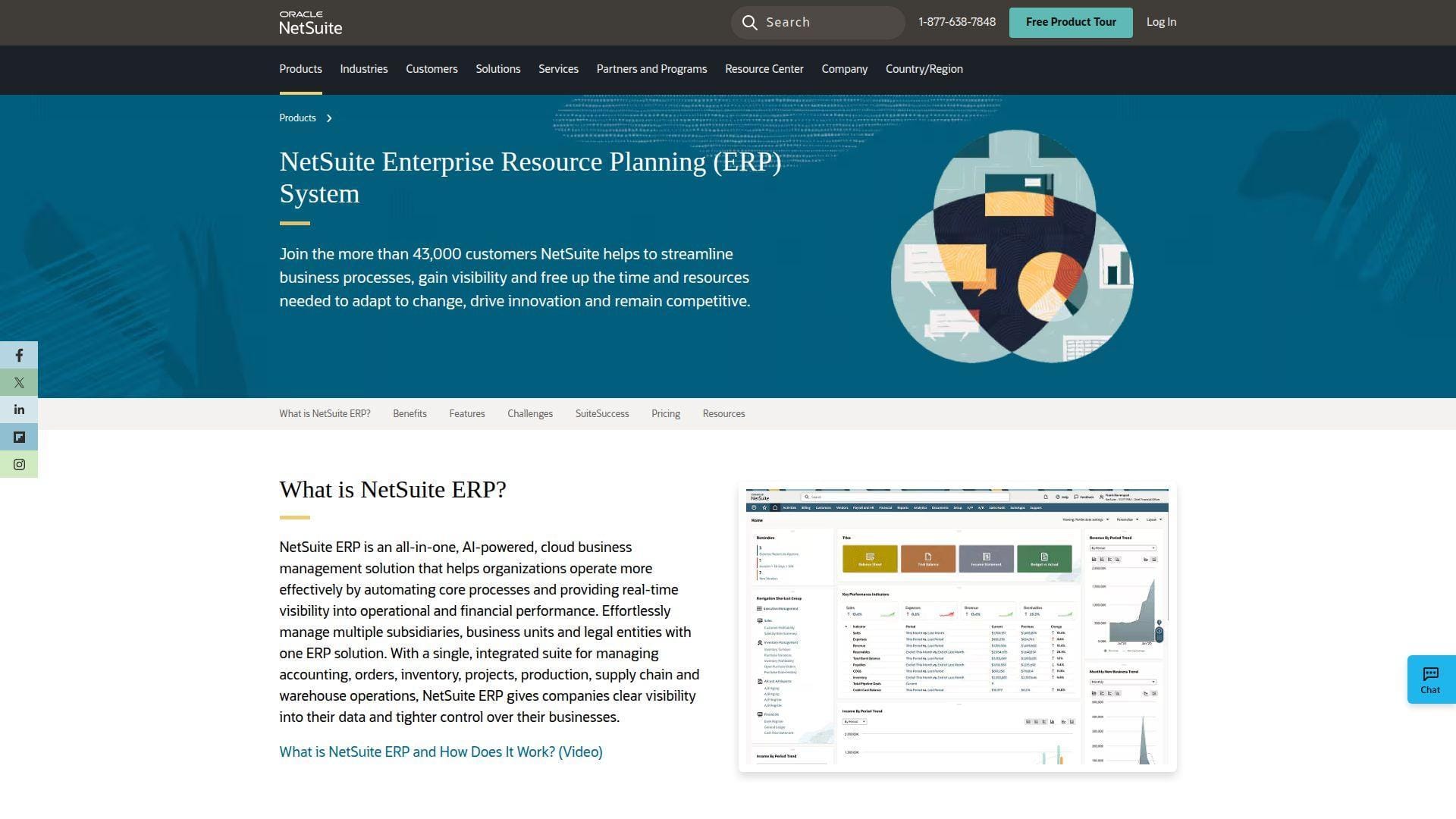
NetSuite is Oracle’s cloud ERP for growing companies, with teams focused on financials, multi-entity management, CRM, inventory, commerce, planning, and SuiteCloud extensibility. It is popular with companies leaving QuickBooks, spreadsheets, and stitched SaaS tools behind. Best for: scaling CFOs and multi-entity commerce operators.
- Financials, inventory, order management, CRM, and OneWorld flows → create one operating record for growth companies.
- SuiteCloud, SuiteAnalytics, and connector ecosystem → cut about 3 spreadsheet-to-system steps from reporting and order workflows.
- SuiteSuccess templates and cloud delivery → time-to-first-value can begin in 6 to 12 weeks when scope stays standard.
Pricing & limits: From custom quote/mo; demos are request-based; caps depend on edition, users, modules, subsidiaries, storage, sandbox needs, and premium support.
Honest drawbacks: Add-on modules, renewal terms, and implementation shortcuts can surprise first-time ERP buyers. Manufacturing depth may require careful validation.
Verdict: If you need to professionalize finance while scaling entities and channels, this helps you replace tool sprawl in one fiscal planning cycle. Beats Acumatica on global SaaS maturity; trails SAP on industrial complexity.
9. Epicor Kinetic
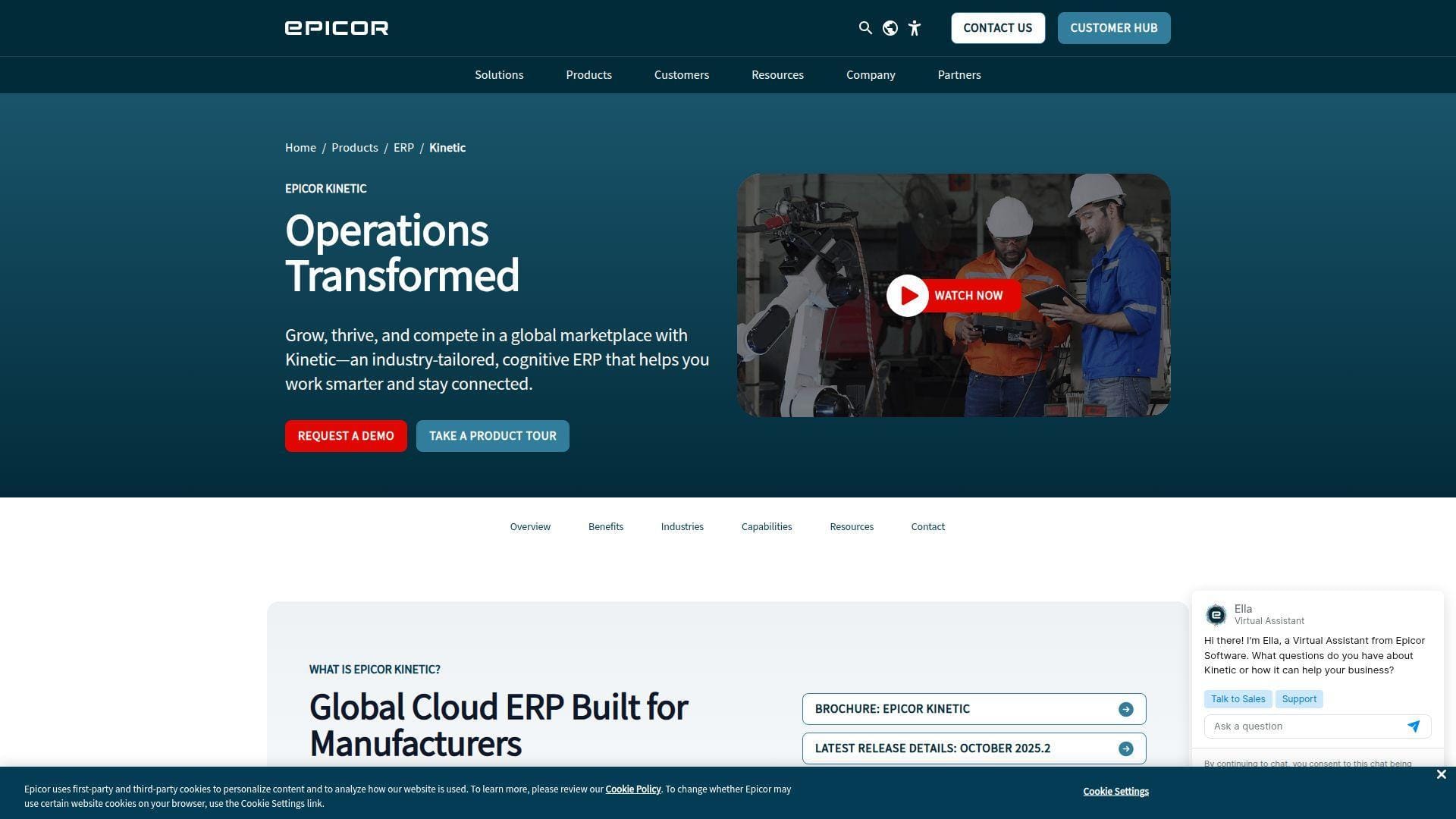
Epicor Kinetic is built by a vendor with deep manufacturing DNA and teams that understand make-to-order, mixed-mode production, quoting, scheduling, and shop-floor realities. It is not trying to be everything to everyone. Best for: discrete manufacturers and job-shop operations leaders.
- Quote-to-cash, MRP, production, quality, and inventory flows → improve schedule confidence and cost visibility.
- Epicor automation, APIs, and manufacturing analytics → remove about 2 rekeying steps between quoting, engineering, and production.
- Browser-based Kinetic UX and manufacturing templates → first plant-level wins can show in 8 to 14 weeks.
Pricing & limits: From custom quote/mo; demos are request-led; caps depend on named users, modules, deployment, database, advanced manufacturing features, and support plan.
Honest drawbacks: Services-led organizations should look elsewhere. Buyers also need to test mobile, warehouse, and reporting needs before signing.
Verdict: If production execution is the bottleneck, this helps you move from tribal scheduling to controlled throughput within a phased rollout. Beats NetSuite on shop-floor language; trails Microsoft on office productivity integration.
10. QAD Adaptive ERP
QAD is a manufacturing-focused ERP company with teams tuned to automotive, life sciences, consumer products, industrial, and food sectors. Adaptive ERP is designed for companies that need global manufacturing consistency while local conditions keep changing. Best for: global manufacturers and supply chain transformation leaders.
- Manufacturing, supply chain, finance, customer, and supplier flows → support repeatable execution across plants and regions.
- Adaptive UX, analytics, and manufacturing automation → save about 3 exception-chasing steps in planning and supplier follow-up.
- Industry templates and cloud delivery → time-to-first-value usually begins in 10 to 16 weeks for a selected business unit.
Pricing & limits: From custom quote/mo; demos are request-based; caps depend on users, plants, modules, cloud services, integrations, quality scope, and compliance requirements.
Honest drawbacks: QAD is powerful where its manufacturing verticals fit. It is less compelling for general professional services or simple accounting.
Verdict: If your supply chain must adapt without losing control, this helps you standardize core manufacturing behavior over staged deployments. Beats Sage X3 on global manufacturing specialization; trails SAP on ecosystem scale.
11. Acumatica Cloud ERP
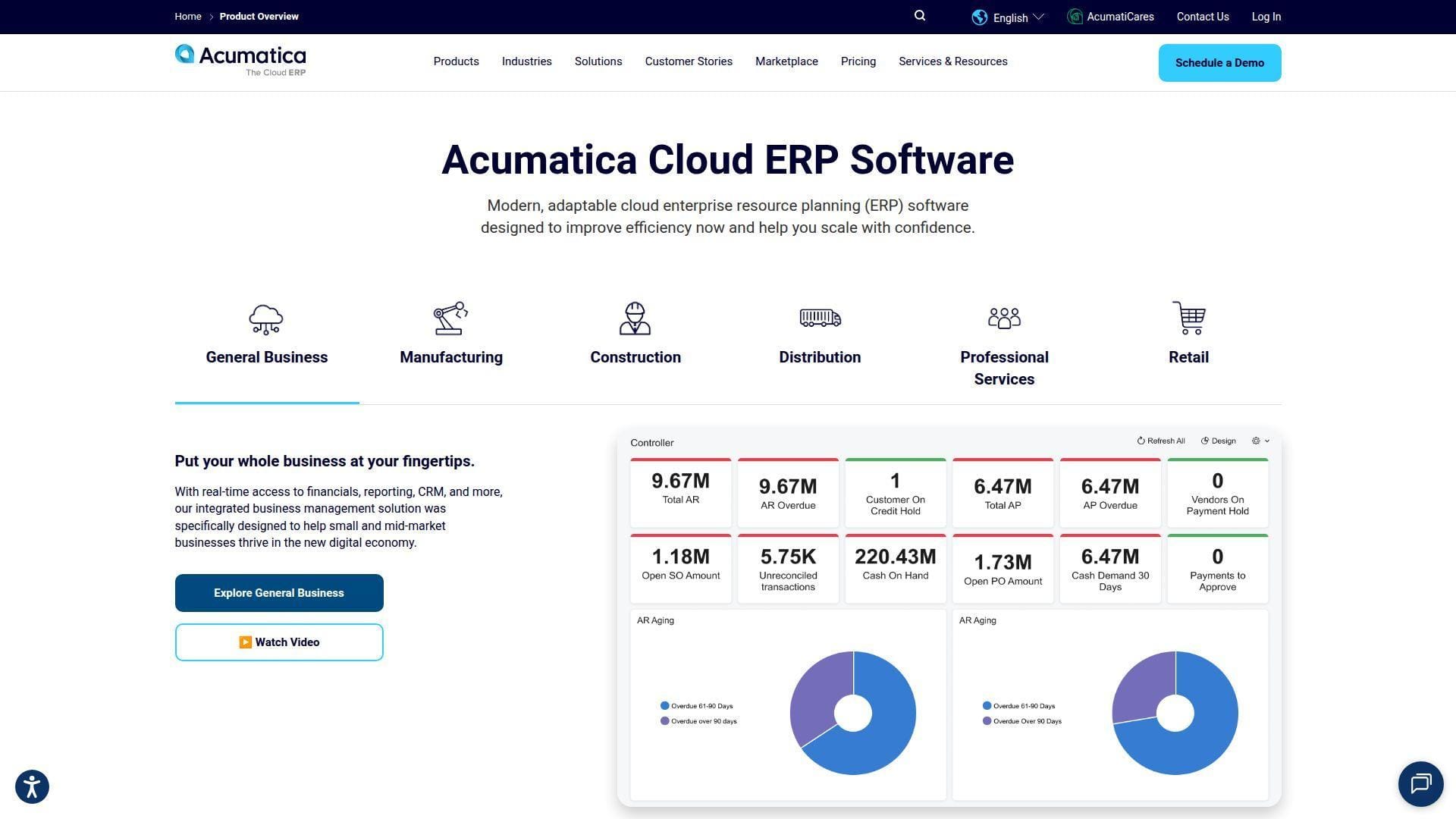
Acumatica is a cloud ERP company with product and partner teams focused on midmarket flexibility. It stands out because its model emphasizes usage and resources rather than punishing every new employee with another full user seat. Best for: growing SMBs and owner-led distributors.
- Financials, distribution, manufacturing, construction, and retail-commerce flows → give departments shared data without seat anxiety.
- Open APIs, marketplace extensions, and workflow automation → remove about 2 connector decisions from common CRM and commerce projects.
- Modern browser UX and partner-led configuration → first dashboards can land in 4 to 8 weeks.
Pricing & limits: From custom quote/mo; pricing reviews and demos are available by request; caps are shaped by applications, projected resources, transaction volume, storage, and deployment option.
Honest drawbacks: Unlimited-user messaging still needs careful resource-tier review. Complex multinational compliance may stretch the platform.
Verdict: If you want cloud ERP access across the whole team, this helps you widen adoption without a seat-by-seat fight in the first phase. Beats NetSuite on user-cost flexibility; trails SAP on global process breadth.
12. Odoo
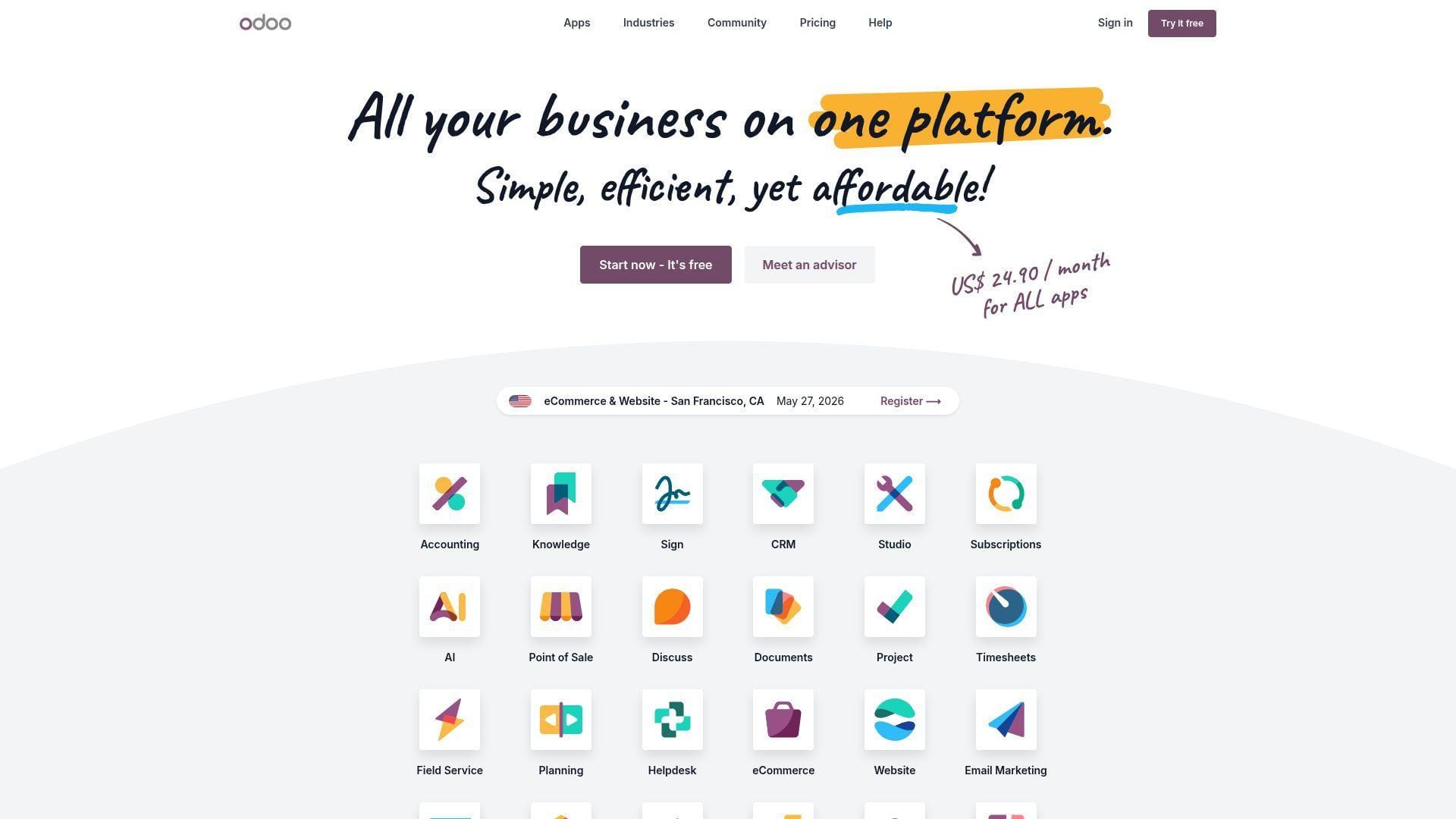
Odoo is a modular business application company with a large open-source community, partner network, and product team shipping apps across CRM, accounting, inventory, manufacturing, e-commerce, HR, and websites. It is unusually broad for its price band. Best for: startups and technical SMB operators.
- App-by-app deployment across sales, inventory, accounting, website, and manufacturing → start narrow and expand without a giant ERP event.
- Studio, API, marketplace, and automation tools → save about 2 to 4 steps when replacing scattered small-business apps.
- Clean web UX and fast app activation → time-to-first-value can happen in days for simple workflows.
Pricing & limits: From $0/mo for One App Free; no time limit on that entry plan; caps include one primary app, hosting path, API availability, customization rules, and paid-user definitions.
Honest drawbacks: Odoo can become messy when buyers treat it like a toy and customize without governance. Larger firms need strong partners and upgrade discipline.
Verdict: If you need affordable breadth and can govern configuration, this helps you replace several small tools in weeks. Beats ERPNext on commercial polish; trails SAP on regulated enterprise controls.
13. Plex Smart Manufacturing Platform
Plex is a smart manufacturing platform with teams focused on ERP, MES, quality, production monitoring, and plant-level traceability. Its strength is that it begins where many ERPs become vague: the factory floor. Best for: plant managers and manufacturing IT leaders.
- ERP, MES, QMS, production, and traceability flows → connect material, machine, operator, and shipment records.
- Machine data, automation, and analytics → reduce about 3 manual checks between production events and quality reporting.
- Cloud manufacturing screens and plant-centric deployment → time-to-first-value can start in 6 to 10 weeks for a line or plant pilot.
Pricing & limits: From custom quote/mo; demos are request-based; caps depend on modules, plants, users, connected machines, transaction volume, and integration requirements.
Honest drawbacks: Plex is not the natural first pick for services or public sector. Multi-plant programs need strong data governance before go-live.
Verdict: If shop-floor truth matters more than polished slideware, this helps you see production reality faster in one pilot cycle. Beats NetSuite on MES depth; trails Oracle on corporate finance breadth.
14. SYSPRO ERP
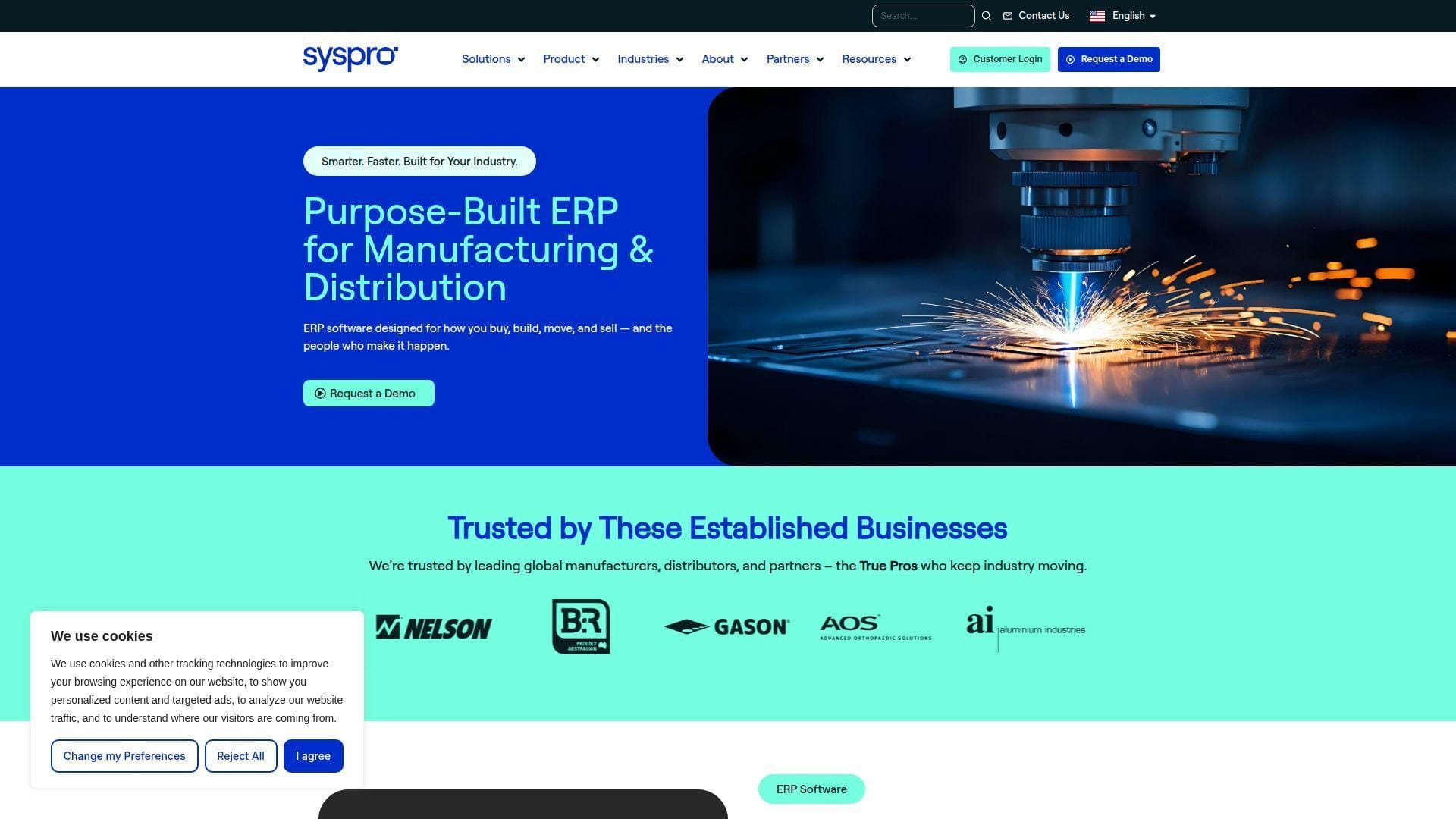
SYSPRO is an ERP company built for manufacturers and distributors, with teams that understand inventory, production, supply chain, and operational finance. It often appeals to firms that want practical depth without a Tier 1 transformation tax. Best for: midmarket manufacturers and wholesale distributors.
- Manufacturing, distribution, inventory, sales, and finance flows → improve visibility from demand to shipment.
- APIs, analytics, workflow, and automation options → save about 2 manual review steps in purchasing and inventory control.
- Focused manufacturing UX and partner implementation → first operating wins can arrive in 6 to 12 weeks.
Pricing & limits: From custom quote/mo; demos are request-led; caps depend on user tiers, modules, cloud or on-premises deployment, warehouse scope, and support model.
Honest drawbacks: Global multi-country complexity can outgrow it. It also lacks the giant app ecosystem that Microsoft enjoys.
Verdict: If inventory accuracy and production control are your pain points, this helps you professionalize operations in a manageable rollout. Beats Odoo on manufacturing governance; trails Infor on vertical breadth.
15. Deltek Costpoint
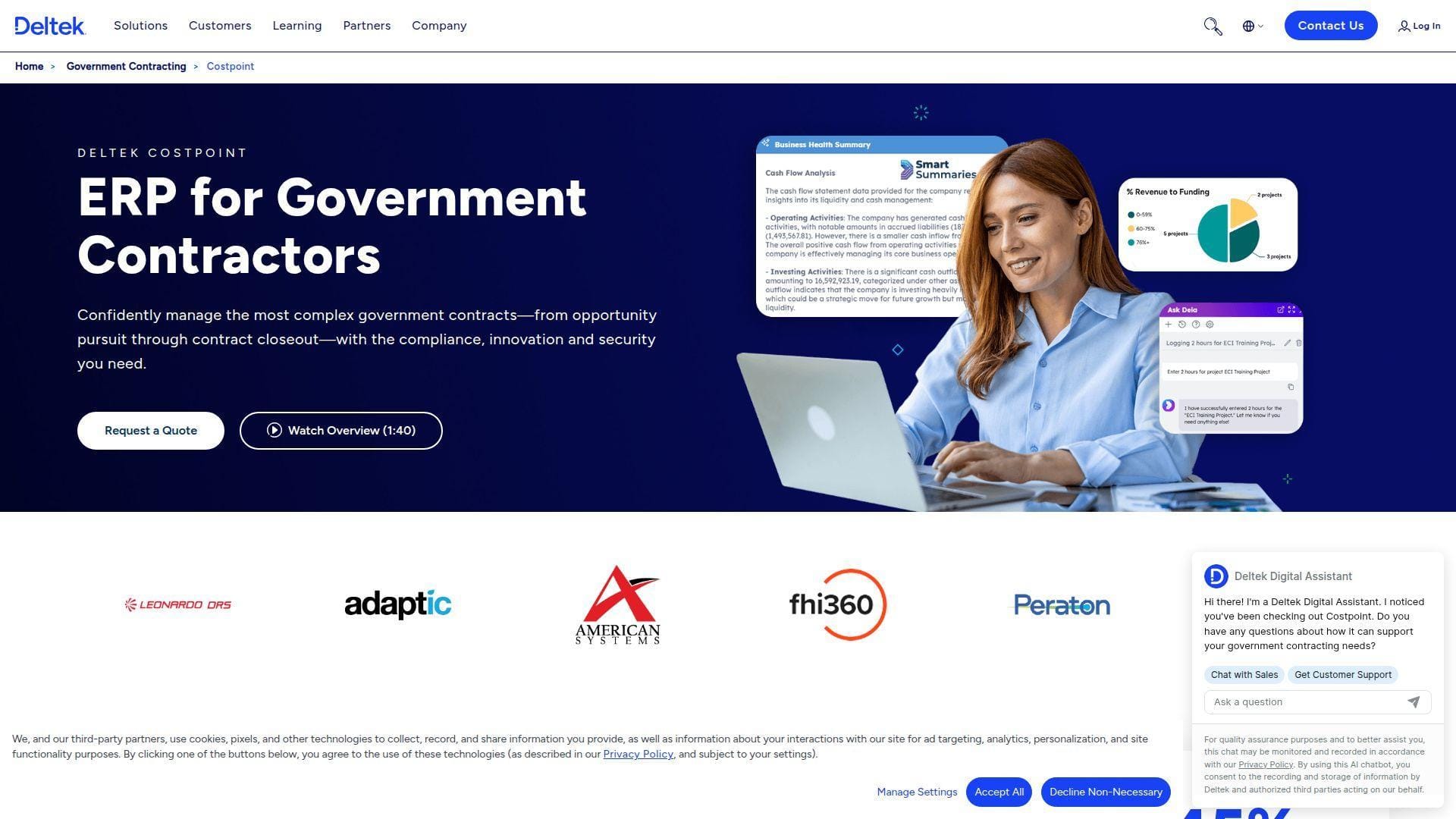
Deltek Costpoint is purpose-built for government contractors, with product and compliance teams focused on project accounting, labor, contracts, procurement, billing, and audit readiness. It is niche by design, and that niche is demanding. Best for: federal contractors and project-based finance teams.
- Project accounting, timekeeping, contract billing, and compliance flows → support cost-plus, fixed-price, and regulated project work.
- Workflow, reporting, and government-contracting controls → remove about 3 audit-prep steps from labor and billing evidence collection.
- Industry-specific configuration and partner expertise → first value often appears in 8 to 12 weeks during compliance design.
Pricing & limits: From custom quote/mo; trials are not typically public; caps depend on employees, project volume, modules, compliance scope, environments, and implementation services.
Honest drawbacks: Costpoint can feel heavy if the business is not a government contractor. Users may also need training to get comfortable with the interface.
Verdict: If contract compliance is existential, this helps you reduce audit anxiety within one finance transformation cycle. Beats general ERPs on govcon depth; trails Workday on user experience.
16. abas ERP
abas ERP has roots in German manufacturing and serves midmarket discrete manufacturers that need flexibility around make-to-order, engineer-to-order, and multi-site production. Its teams are practical, manufacturing-oriented, and partner-dependent. Best for: engineer-to-order manufacturers and DACH-region operators.
- Sales, purchasing, production, inventory, service, and finance flows → control custom production without losing margin visibility.
- Customization framework and integration options → save about 2 upgrade-risk decisions when extensions are designed cleanly.
- Manufacturing-focused workflows and localized partner delivery → time-to-first-value can begin in 8 to 14 weeks.
Pricing & limits: From custom quote/mo; demos are request-based; caps depend on users, modules, sites, language needs, deployment model, and customization scope.
Honest drawbacks: Partner availability varies by geography. Buyers outside its strongest regions should verify implementation capacity early.
Verdict: If your products are engineered around customer requirements, this helps you bring order to quote, build, and service flows in one rollout wave. Beats generic SMB ERP on custom manufacturing; trails Microsoft on partner abundance.
17. DELMIAworks
DELMIAworks, formerly IQMS, sits inside Dassault Systèmes and focuses on manufacturing ERP, MES, quality, and production monitoring. Its teams understand factories where real-time production and quality data matter more than decorative dashboards. Best for: plant-heavy manufacturers and quality managers.
- ERP, MES, quality, scheduling, and shop-floor flows → tie production events directly to financial and quality records.
- Dassault ecosystem, automation, and manufacturing analytics → reduce about 3 delays between shop-floor exceptions and management action.
- Manufacturing-specific screens and plant templates → time-to-first-value can start in 6 to 12 weeks for focused production areas.
Pricing & limits: From custom quote/mo; public free trials are uncommon; caps depend on modules, plants, users, shop-floor devices, integrations, and support agreements.
Honest drawbacks: It is not a broad HR or services ERP. Buyers should also validate modern reporting and integration expectations before committing.
Verdict: If production visibility and quality control are the fight, this helps you connect plant data to business outcomes within a pilot phase. Beats Sage X3 on plant execution; trails Oracle on enterprise finance scale.
18. Unit4 ERPx
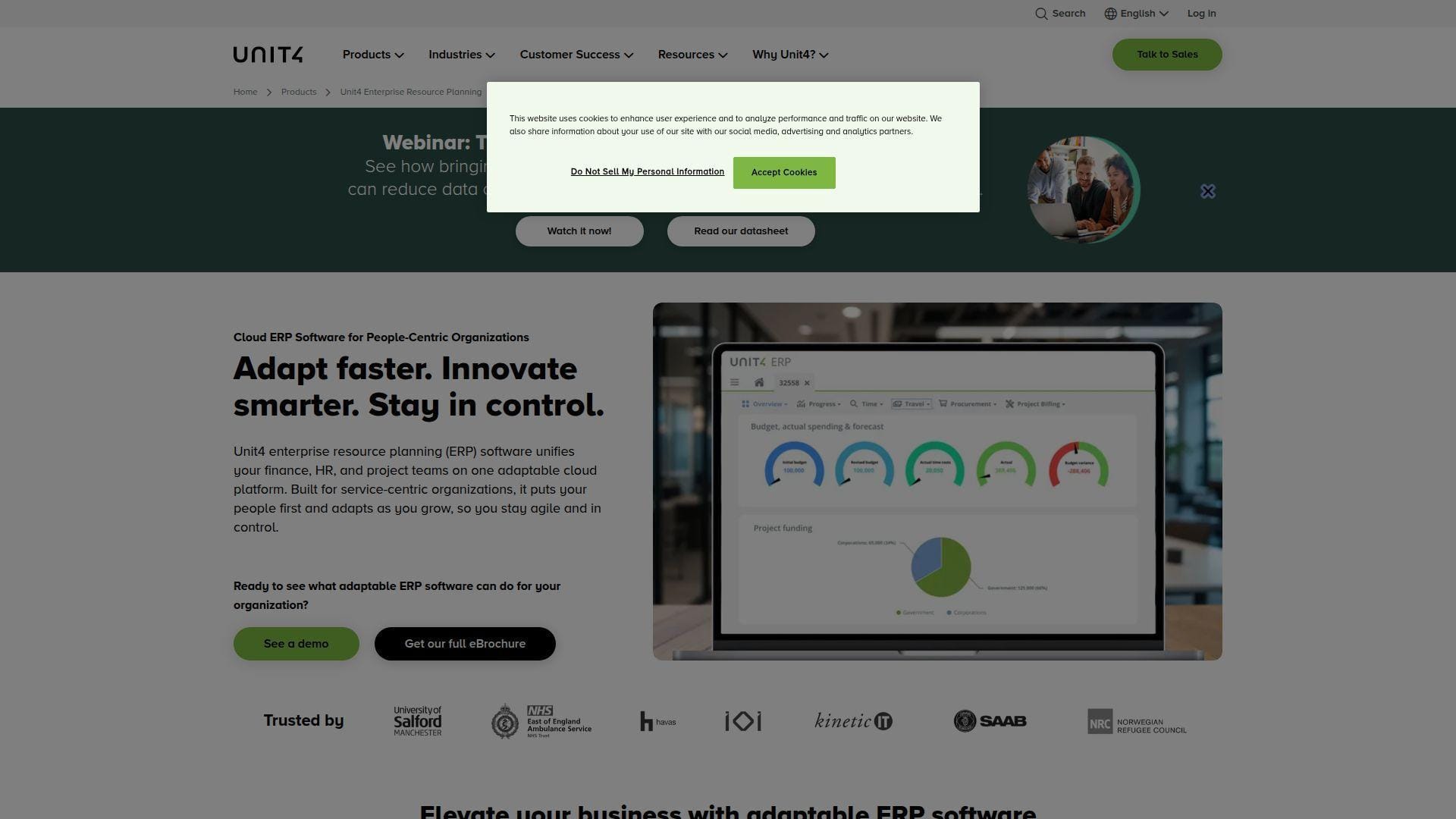
Unit4 ERPx is built by a vendor focused on people-centric organizations such as professional services, nonprofits, higher education, and public sector bodies. Its teams emphasize projects, grants, funds, resources, and financial control rather than inventory-heavy operations. Best for: services CFOs and public-sector finance leaders.
- Finance, projects, procurement, HR, and planning flows → connect people cost, project delivery, and funding accountability.
- Workflow, reporting, and integration services → save about 2 approval steps in expense, grant, and project-billing processes.
- Cloud ERPx UX and modular delivery → first planning and finance value can appear in 8 to 12 weeks.
Pricing & limits: From custom quote/mo; demos are request-led; caps depend on users, modules, entities, projects, integrations, environments, and industry packs.
Honest drawbacks: Product-centric manufacturers should not force-fit it. Buyers also need clarity on partner capacity and data migration responsibilities.
Verdict: If your main asset is people, this helps you align projects, funding, and finance in one operating model. Beats Epicor on services depth; trails Plex on factory execution.
19. Priority ERP
Priority Software serves SMB and midmarket organizations with cloud ERP, mobile capabilities, low-code tools, and industry editions across manufacturing, distribution, retail, construction, and service. Its teams focus on practical configurability. Best for: fast-moving SMB operations teams and regional manufacturers.
- Finance, inventory, production, sales, purchasing, and service flows → run core operations without building a huge IT department.
- Low-code, APIs, mobile apps, and workflow automation → save about 2 to 3 steps in approvals and field updates.
- Modular cloud deployment and approachable UX → time-to-first-value can start in 4 to 8 weeks for a focused process.
Pricing & limits: From custom quote/mo; demos and pricing requests are available; caps depend on users, modules, API usage, deployment, localizations, and industry requirements.
Honest drawbacks: The global talent pool is smaller than Microsoft or SAP. Heavy enterprise governance may require added process discipline.
Verdict: If you want adaptable ERP without enterprise ceremony, this helps you digitize operations in a compact rollout. Beats SYSPRO on low-code flexibility; trails Acumatica on North American partner visibility.
20. ERPNext
ERPNext is developed by Frappe and backed by an open-source community, with modules for accounting, inventory, manufacturing, projects, CRM, HR, assets, and websites. It attracts teams that want transparency, source-code access, and low licensing friction. Best for: technical SMBs and cost-conscious founders.
- Accounting, stock, manufacturing, projects, HR, and CRM flows → cover essential operations without paid module walls.
- Frappe framework, scripting, REST APIs, and community apps → save about 3 vendor-dependency steps for technical teams.
- Simple web UX and quick cloud or self-hosted setup → time-to-first-value can happen in days for a pilot.
Pricing & limits: From $0/mo for self-hosted software; Frappe Cloud commonly offers a short trial; caps depend on hosting resources, sites, backups, support level, custom apps, and internal technical skill.
Honest drawbacks: Open source is not free operations. Without an experienced implementer, data migration, tax rules, payroll, and custom scripts can become expensive in people-hours.
Verdict: If you value control and can manage technical responsibility, this helps you launch a broad ERP foundation quickly. Beats Odoo on source openness; trails NetSuite on enterprise sales maturity.
What ERP Companies Do for Modern Organizations
ERP companies help organizations turn scattered operational activity into governed business data. That sounds dry. It is not. When the ERP is right, customer promises, cash positions, stock levels, payroll obligations, and project costs stop living in separate kingdoms.
1. Finance, Supply Chain, HR, CRM, Manufacturing, and Analytics
A modern ERP company usually starts with finance because every business process eventually creates a cost, liability, asset, or revenue event. The general ledger is the destination, but procurement, inventory, payroll, projects, and customer orders are the roads.
The best ERP companies understand that these domains are not equal in every business. A factory needs production routing and quality. A government contractor needs contract cost pools. A university needs grants and funds. A retailer needs inventory, pricing, and returns.
Analytics now sits across all of this. We prefer ERP analytics that explains operational causes, not only financial symptoms. A margin drop should point to supplier price changes, scrap, overtime, freight, or late customer changes.
2. From Accounting Systems to Cloud ERP and AI-Driven Workflows
Accounting systems record what happened. ERP systems govern how work should happen. That distinction matters when a company outgrows QuickBooks, spreadsheets, inbox approvals, or disconnected warehouse tools.
Cloud ERP then changes the operating model. Updates arrive continuously. Integration is API-led. Security moves from server rooms to identity, access, encryption, audit logs, and vendor controls. For 1Byte, this is where infrastructure discipline becomes business discipline.
AI-driven workflows add another layer. They can summarize exceptions, draft variance commentary, route invoices, recommend reorder points, and spot policy breaks. Yet AI is only useful when the ERP data model is trusted. Bad master data makes a fast mistake look intelligent.
3. ERP Companies as Software Vendors, Implementation Ecosystems, and Industry Platforms
Buyers often compare ERP companies as if the software alone will decide success. We think that is a dangerous shortcut. The implementation ecosystem, partner bench, training model, and upgrade philosophy matter just as much.
Large vendors such as SAP, Oracle, and Microsoft bring huge partner markets. Specialized vendors such as IFS, QAD, Plex, Deltek, and Epicor bring sharper industry language. Open-source options bring transparency but require stronger self-governance.
In our experience, the best ERP decision feels less like buying software and more like choosing a long-term operating platform. The wrong platform turns every change request into a negotiation with your own architecture.
Major Types of ERP Companies and ERP Software
ERP companies fall into broad tiers, but the tier labels can mislead buyers. A Tier 2 system with perfect industry fit can beat a Tier 1 system that forces unnatural processes. Size matters, but fit matters first.
1. Tier 1 ERP Companies for Enterprises With Complex Global Operations
Tier 1 ERP companies usually serve large enterprises with multi-country operations, complex tax rules, intercompany transactions, advanced security, and high integration demands. Oracle, SAP, Microsoft, and Workday often appear here, depending on the functional scope.
These platforms bring governance, scalability, auditability, and partner depth. They also bring complexity. A global design authority, data governance board, and change-control model are not optional luxuries. They are survival tools.
We like Tier 1 platforms when the organization can commit to standardization. Without that commitment, the project becomes a museum of old habits wearing a cloud badge.
2. Tier 2 ERP Companies for Small and Midsized Organizations
Tier 2 ERP companies target companies that need serious business management without a mega-program. NetSuite, Acumatica, Sage X3, Epicor, SYSPRO, Unit4, Priority, and similar systems often fit this space.
The appeal is speed and focus. Midsized businesses can standardize finance, inventory, purchasing, production, or project accounting without building a giant transformation office.
The risk is underestimating maturity. A company can buy a midmarket ERP and still need enterprise-grade decisions around chart of accounts, item masters, role security, and integrations.
3. Tier 3 ERP Vendors and Specialized Point Solutions
Tier 3 vendors and specialized systems serve narrower needs. They may focus on a region, industry, workflow, or company size. Some are excellent. Others are simply old software with a new website.
Specialization can be powerful. A field-service-heavy company may get faster value from an asset-centric platform than from a broad ERP suite. A small manufacturer may prefer a system that speaks BOM, routing, scrap, and shift work natively.
Buyers should test exit risk. Ask how data exports work, whether APIs are modern, how upgrades happen, and whether local partners are available when the original implementer disappears.
4. Open-Source ERP Options Versus Proprietary ERP Suites
Open-source ERP can be liberating. ERPNext and Odoo Community-style approaches give technical teams more control, lower license friction, and a clearer view of how the system works.
Proprietary suites usually bring stronger packaged support, compliance documentation, certified integrations, and commercial accountability. That can matter when payroll, revenue recognition, or regulated reporting is on the line.
Our position is pragmatic. Open source is wonderful when the buyer owns technical capability. Proprietary ERP is safer when accountability, partner capacity, and enterprise support are more important than code access.
How to Choose the Best ERP Companies for Your Business
Choosing between ERP companies should feel like engineering a business operating model. Start with work, data, risk, and scale. Only then should you admire dashboards.
1. Functional Fit by Industry, Workflow, and Regulatory Need
Functional fit begins with uncomfortable specificity. Do not ask whether a system supports manufacturing. Ask whether it supports your manufacturing: engineer-to-order, batch traceability, substitutions, outside processing, rework, or serial control.
Regulatory fit is equally specific. A food company, federal contractor, nonprofit, and multinational retailer may all say “compliance,” but they mean different evidence, approvals, retention rules, and audit trails.
We recommend scoring vendors against real scenarios. Use messy purchase orders, returns, partial receipts, project change orders, failed quality checks, and late supplier invoices. Perfect demos hide imperfect processes.
2. Scalability Across Users, Locations, Entities, and Countries
Scalability is not only server capacity. It is the ability to add users, subsidiaries, warehouses, tax regimes, currencies, languages, and reporting structures without rebuilding the house.
A system that works for one legal entity may buckle under intercompany eliminations. A warehouse flow that works in one country may fail when labeling, tax, or landed-cost rules change.
We ask buyers to model the business they expect to have after the next acquisition, market expansion, or product line launch. ERP selection should serve that future, not only today’s pain.
3. Cloud, Hybrid, Private Cloud, and On-Premises Deployment Models
Cloud ERP is now the default conversation, but deployment still deserves real architecture work. Public SaaS, private cloud, managed hosting, hybrid integration, and on-premises systems create different security and operating responsibilities.
Public cloud accelerates updates and reduces infrastructure burden. Private cloud can preserve control for complex enterprises. Hybrid models help when warehouses, plants, legacy systems, or latency-sensitive workloads cannot move at once.
At 1Byte, we care about the boring layer beneath the demo. Identity, backup strategy, SSL, DNS, latency, monitoring, and disaster recovery determine whether the ERP feels dependable when finance closes the month.
4. Licensing, Implementation, Customization, and Long-Term Support Costs
ERP pricing is rarely just subscription cost. The real bill includes implementation, discovery, configuration, integrations, data migration, training, testing, support, premium sandboxes, and future enhancements.
Customization deserves special caution. Some customization creates advantage. Too much customization recreates yesterday’s process debt in tomorrow’s platform.
We advise buyers to separate “must have,” “industry standard,” “political preference,” and “we have always done it this way.” That one exercise can save months of argument.
5. Partner Network, Talent Availability, and Vendor Roadmap
An ERP company with a thin partner network can still be excellent, but buyers must plan accordingly. Talent availability affects cost, timeline, support quality, and negotiation leverage.
Roadmap matters too. Ask vendors how they handle AI, APIs, security, localization, industry depth, and upgrade compatibility. A product that looks fine today can become a dead end if its roadmap is weak.
References should include customers that resemble your industry, size, geography, and complexity. A glowing testimonial from a different business model is pleasant, but not decisive.
ERP Companies by Industry and Use Case
ERP companies often look similar until the industry use case gets specific. Then the differences become sharp. A system built for consulting projects will not magically run a packaging plant.
1. Manufacturing, Distribution, and Supply Chain ERP
Manufacturing and distribution buyers should compare SAP, Oracle, Infor, Epicor, QAD, Plex, SYSPRO, DELMIAworks, Sage X3, Acumatica, and abas. The shortlist depends on production type and supply chain complexity.
Discrete manufacturers need BOMs, routing, work orders, MRP, capacity, quality, and engineering change control. Process manufacturers need recipes, batches, potency, lot traceability, yields, and compliance.
Distribution companies should stress-test warehouse workflows, pricing, rebates, returns, vendor performance, landed cost, and e-commerce integration. Inventory accuracy is not a feature. It is cash with a barcode.
2. Finance, HR, and Service-Centric ERP
Service-centric organizations often care less about inventory and more about people, projects, billing, utilization, grants, or funds. Workday, Unit4, Oracle, Microsoft, Sage, NetSuite, and Deltek often appear here.
The hard questions involve project profitability, time capture, revenue recognition, resource planning, approvals, and executive dashboards. HR and finance alignment is especially important when labor cost drives margin.
We prefer systems that let service leaders see commitments before they become financial surprises. A late timesheet should not wait until month-end to become visible.
3. Public Sector, Higher Education, and Government ERP
Public sector and higher education ERP must handle accountability, funds, grants, procurement rules, workforce complexity, and citizen or student expectations. Unit4, Workday, Oracle, SAP, Microsoft, and Deltek can fit depending on the institution.
Government contractors should examine Deltek Costpoint closely because compliance is not a side feature there. It is the product’s center of gravity.
For public bodies, implementation governance is often harder than software. Stakeholders are numerous, procurement cycles are long, and legacy data can be politically sensitive.
4. Retail, E-Commerce, Building Supply, and Automotive ERP
Retail and e-commerce firms need inventory, pricing, customer data, omnichannel orders, returns, tax, and fulfillment integrations. NetSuite, Microsoft Dynamics 365, Acumatica, Odoo, Oracle, and SAP are common contenders.
Building supply and automotive operations add counter sales, complex inventory, branch transfers, serialized parts, warranties, and supplier programs. Industry-specific vendors can beat broad suites when these workflows dominate.
The test is simple. Can the ERP explain availability, margin, fulfillment status, and customer promise without three systems arguing? If not, the architecture is still immature.
5. Project-Based, Field Service, and Asset-Intensive ERP
Project-based and asset-intensive businesses should study IFS, Deltek, Unit4, Oracle, SAP, Microsoft, and Workday. The right choice depends on whether the main challenge is contracts, assets, crews, billing, or workforce planning.
Field service buyers need scheduling, dispatch, mobile work orders, parts, warranties, contracts, and asset history. Asset-intensive buyers need maintenance, uptime, spare parts, and lifecycle cost visibility.
Here, ERP becomes operational truth. If the service team cannot trust the asset record, finance cannot trust the margin report.
Key Strengths Among Leading ERP Companies
No ERP company wins every category. The better question is where each vendor’s center of gravity sits. That center usually predicts product depth, partner skill, and roadmap investment.
1. Oracle, SAP, and Microsoft for Enterprise Scale and Broad Portfolios
Oracle, SAP, and Microsoft bring broad portfolios that reach beyond ERP. They connect finance, supply chain, analytics, AI, integration, security, and platform services in different ways.
Oracle is compelling for finance-led global control and cloud infrastructure alignment. SAP shines when standardized global processes and complex operations matter. Microsoft wins hearts when business users already live in Excel, Teams, Power BI, and Microsoft 365.
Our advice is to compare the full operating ecosystem, not only ERP modules. The platform around ERP often determines long-term agility.
2. Workday and Sage for Finance, HR, and Accounting-Led ERP
Workday excels when finance, HR, planning, and workforce data need one modern model. It suits organizations where people are the largest cost and the most important asset.
Sage plays well for midsize organizations that want mature finance and operational control without enterprise-scale ceremony. Sage X3 is especially relevant when distribution, inventory, or process manufacturing joins the finance conversation.
Both remind us that ERP is not always about factories. Sometimes the real factory is the finance team producing timely, trusted decisions.
3. Infor, IFS, QAD, and Epicor for Industry-Specific Operations
Infor, IFS, QAD, and Epicor prove that industry depth still matters. Generic ERP language can hide the hard parts of production, service, maintenance, quality, and supply chain planning.
Infor brings vertical suites. IFS brings assets and service. QAD brings adaptive manufacturing. Epicor brings practical manufacturing execution for midmarket firms.
These vendors are especially useful when the buyer can name the operational bottleneck. Vague requirements produce vague ERP outcomes.
4. Acumatica, Odoo, NetSuite, and Plex for Cloud and Midmarket Growth
Acumatica, Odoo, NetSuite, and Plex serve different versions of growth. Acumatica appeals to collaborative midmarket teams. Odoo appeals to cost-conscious and modular buyers. NetSuite appeals to scaling finance leaders. Plex appeals to manufacturers who want plant-floor truth.
The key difference is governance. A fast cloud ERP can either create momentum or multiply chaos. Buyers must decide who owns data definitions, roles, workflows, integrations, and change requests.
In our view, midmarket ERP success often comes from choosing the smallest serious platform that can handle the next stage of growth.
ERP Trends Shaping Vendor Selection in 2026
ERP selection in 2026 is shaped by AI, cloud architecture, integration, industry depth, and realism. The hype is loud. The winners will be the vendors that make daily work measurably better.
1. AI Copilots, Agentic Workflows, and Embedded Recommendations
ERP companies are moving from dashboards to assistants, then from assistants to agents. Gartner predicts 40% of enterprise applications will include task-specific AI agents by the end of 2026.
For ERP, this means agents may draft variance analysis, flag supplier risk, prepare audit evidence, route exceptions, and suggest inventory actions. The promise is not “chat with your ERP.” The promise is fewer stalled decisions.
Still, we are cautious. An AI agent touching payables, payroll, or revenue must be governed like a business actor, not treated like a clever search box.
2. Cloud ERP, AWS-Hosted Suites, and Hyperscaler Partnerships
Cloud ERP is no longer just about avoiding servers. It is about faster updates, stronger platform services, integrated AI, elastic infrastructure, and modern security patterns.
Hyperscaler partnerships matter because ERP rarely lives alone. It must connect with data lakes, BI tools, e-commerce systems, payroll, CRM, warehouse systems, and identity providers.
At 1Byte, we pay attention to hosting posture, latency, regional availability, backup design, and disaster recovery. A beautiful ERP that performs poorly under peak load will lose user trust quickly.
3. Low-Code Integration, Data Platforms, and Business Intelligence
ERP buyers increasingly expect low-code workflow, API management, event-driven integration, and self-service analytics. That is reasonable, but it needs guardrails.
Low-code can empower finance and operations teams. It can also create shadow architecture if every department builds its own automation without naming standards, testing, or ownership.
The strongest ERP companies are turning integration into a governed platform capability. They make it easier to connect systems without letting the business become a bowl of spaghetti.
4. Industry-Specific Suites, Micro-Verticals, and Composable Applications
Industry-specific ERP keeps gaining ground because buyers are tired of paying consultants to translate generic software into obvious industry workflows. A food manufacturer should not have to explain lot traceability from scratch.
Micro-vertical depth is the next layer. Automotive suppliers, building supply distributors, aerospace manufacturers, nonprofits, and government contractors all have workflows that broad categories miss.
Composable applications will not kill ERP. They will surround it. The ERP remains the system of record, while specialized apps handle edge workflows where they outperform the suite.
5. Practical AI Adoption Over Feature Hype
McKinsey estimated that generative AI could create $2.6 trillion to $4.4 trillion annually in economic value across analyzed use cases.
That opportunity is real, but ERP buyers should ask boring questions. Which workflow changes? Which user approves the recommendation? Which audit log captures the action? Which data fields does the model trust?
Deloitte warns that only one in five companies has a mature governance model for autonomous AI agents.
Our practical view is blunt. Do not buy ERP AI because it sounds futuristic. Buy it when it shortens cycle time, reduces exceptions, improves forecast quality, or strengthens control.
ERP Implementation Readiness Before You Contact ERP Companies
Before contacting ERP companies, buyers should get their house in order. Vendors can help, but they cannot magically define your chart of accounts, product hierarchy, approval rules, or ownership model.
1. Business Process Mapping and Requirements Prioritization
Start by mapping how work happens today. Then mark what should stay, what should change, and what should disappear. This is where many ERP projects either mature or begin to drift.
Requirements should be ranked by business impact. “Must have” should mean the company cannot operate, comply, bill, ship, or close without it. Everything else needs negotiation.
We like process maps that include exceptions. Real businesses are not built from happy paths. Returns, shortages, late approvals, bad data, and urgent customer changes reveal whether an ERP truly fits.
2. Data Migration, Cleansing, Security, and Governance
ERP data migration is not a copy-paste task. It is a business judgment exercise. Which customers remain active? Which suppliers are duplicates? Which items need new units of measure? Which accounts should close?
Security should be designed before go-live pressure arrives. Role-based access, segregation of duties, privileged accounts, audit logs, encryption, and identity integration deserve early attention.
Governance must name owners. Someone must own customers, items, vendors, accounts, locations, projects, and employee records. Without ownership, master data decays fast.
3. Integration Planning for CRM, E-Commerce, Payroll, and Warehouse Systems
ERP integration planning should begin during selection, not after contract signature. CRM, e-commerce, payroll, WMS, tax, banking, BI, and shipping systems may all need reliable data exchange.
Each integration needs a system of record, sync frequency, failure-handling plan, reconciliation method, and owner. Otherwise, teams discover errors after customers or auditors do.
At 1Byte, we also care about network paths, API limits, certificates, DNS, staging environments, and monitoring. Integration is not just a business diagram. It is living infrastructure.
4. Change Management, Training, and Executive Sponsorship
ERP changes work, status, and habits. That makes change management more than communication. It is the discipline of helping people trust a new operating model.
Training should be role-based and scenario-based. Accounts payable, warehouse receiving, project managers, executives, and customer service teams do not need the same lesson.
Executive sponsorship must be visible. When leaders disappear after kickoff, departments revert to local preferences. ERP projects need decision-making muscle until the new habits stick.
5. Demo Scripts, Reference Checks, and Contract Negotiation
Demo scripts should use your data patterns and your awkward scenarios. Ask vendors to show credit holds, partial shipments, failed quality checks, project overruns, approval escalations, and month-end close.
Reference checks should be direct and specific. Ask what went wrong, what cost more than expected, which partner resources were strong, and what they would renegotiate.
Contracts should define modules, users, environments, support, SLAs, renewal caps, data export, implementation responsibilities, and exit rights. Optimism is not a contract term.
FAQ About ERP Companies
ERP buying raises repeated questions because the category is broad, expensive, and operationally sensitive. Here are the questions we hear most often from business owners, finance teams, and IT leaders.
1. What Are ERP Companies and What Do They Provide?
ERP companies provide software platforms that manage core business processes. These usually include finance, procurement, inventory, manufacturing, projects, HR, CRM, analytics, and compliance workflows.
The stronger definition is this: ERP companies provide a shared operating record. They help teams stop arguing about which spreadsheet, department, or system has the truth.
2. Which ERP Companies Are Considered the Biggest?
SAP, Oracle, and Microsoft are usually considered among the largest ERP companies because of their enterprise footprint, product breadth, global partners, and platform ecosystems.
Workday is especially strong in HR and finance. Infor, Epicor, IFS, QAD, and others are major players in specific industries. Size is useful, but fit still decides value.
3. Which ERP Systems Are Most Commonly Shortlisted?
Common shortlists include SAP S/4HANA Cloud, Oracle Fusion Cloud ERP, Microsoft Dynamics 365, Workday Financial Management, NetSuite ERP, Infor CloudSuite, Sage X3, Acumatica, Epicor Kinetic, and IFS Cloud.
The right shortlist depends on industry. A federal contractor may shortlist Deltek quickly. A plant-heavy manufacturer may compare Plex, Epicor, QAD, Infor, or DELMIAworks before broader suites.
4. What Is the Most Recognized ERP Brand?
SAP is often the most recognized ERP brand in large-enterprise conversations. Oracle and Microsoft are also deeply recognized, especially when ERP is discussed alongside databases, cloud, analytics, or productivity tools.
Recognition should not be confused with suitability. A famous ERP can still be wrong for a small distributor, nonprofit, startup, or niche manufacturer.
5. How Do ERP Companies Differ From ERP Implementation Partners?
ERP companies build and sell the software. Implementation partners configure it, migrate data, integrate systems, train users, manage testing, and guide change.
Some vendors provide direct services, but partners often determine the buyer’s lived experience. A good partner translates business pain into clean configuration. A poor partner turns every decision into billable fog.
6. Which ERP Companies Are Best for Small and Midsized Businesses?
Small and midsized businesses often compare Microsoft Dynamics 365 Business Central, NetSuite, Acumatica, Sage X3, Odoo, ERPNext, Priority ERP, SYSPRO, and Epicor. The best fit depends on industry and internal maturity.
For simple accounting-led growth, Business Central can be attractive. For multi-entity scale, NetSuite often enters. For broad access and flexible cloud licensing, Acumatica deserves attention. For technical cost control, ERPNext and Odoo are worth testing.
7. How Should Businesses Compare ERP Companies Before Buying?
Businesses should compare ERP companies using real workflows, not generic checklists. The evaluation should include functional fit, integration needs, deployment model, data migration, support, security, partner quality, roadmap, and total cost.
We suggest building a weighted scorecard and running scripted demos. Then speak with references that resemble your business. A beautiful demo is useful, but a candid customer call is often more valuable.
How 1Byte Supports ERP Companies and ERP Buyers With Cloud Hosting, Cloud Servers, Domain Registration, SSL Certificates, WordPress Hosting, Shared Hosting, and AWS Partner Expertise
ERP success depends on more than the ERP application. Buyers need dependable infrastructure around demos, integrations, project sites, identity, domains, SSL, testing, documentation, monitoring, and cloud migration. That is where we, as 1Byte, bring cloud discipline to business software decisions.
1. Cloud Hosting and Cloud Servers for ERP Demos, Integrations, and Business Applications
ERP projects often need temporary and permanent environments around the core system. Teams may require integration middleware, reporting databases, API services, staging websites, document portals, or test applications.
Our cloud hosting and cloud servers support those surrounding workloads. We focus on reliability, right-sized compute, secure access, backup planning, and performance that does not collapse during a demo, test cycle, or executive review.
This matters because ERP confidence is fragile. If an integration server fails during user acceptance testing, the business blames the whole project. Good infrastructure protects momentum.
2. Domain Registration, SSL Certificates, WordPress Hosting, and Shared Hosting for ERP Project Websites
ERP programs need communication hubs. A project website can host training calendars, release notes, user guides, FAQs, support routes, steering committee updates, and go-live readiness material.
With domain registration, SSL certificates, WordPress hosting, and shared hosting, we help teams create secure project spaces without distracting the ERP team from configuration and testing.
That sounds simple, but simple is powerful. When users can find trusted information quickly, support tickets fall, rumors fade, and adoption improves.




3. AWS Partner Support for Scalable Infrastructure and Cloud Migration Planning
Many ERP buyers are also modernizing their broader cloud architecture. They need migration planning, secure connectivity, backup strategies, cost visibility, monitoring, and scalable infrastructure for systems that surround ERP.
As an AWS Partner, 1Byte can help teams think through cloud patterns for integration services, analytics workloads, web applications, disaster recovery, and hybrid systems. We do not treat infrastructure as an afterthought.
Our next-step suggestion is practical: shortlist ERP companies, then map the infrastructure each shortlist option will require around it. Which integrations need hosting? Which domains and certificates are required? Which workloads belong on cloud servers? Which analytics services need AWS planning? Answer those questions early, and your ERP project starts with a steadier foundation.