

- What Cloud API Security Means in Modern Environments
- Major Risks and Business Impact
- Best Practices Across the API Life Cycle
- Core Controls for Access, Data, and Traffic
- Visibility, Discovery, and Monitoring
- Gateways, WAFs, and Edge Services
- Securing REST, SOAP, GraphQL, gRPC, and WebSockets
- Governance, Compliance, and Standards
- How to Choose a Cloud API Security Solution
- Cloud API Security FAQ
- How 1Byte Helps Customers Strengthen Cloud API Security
- Conclusion: Building Cloud API Security from Design to Runtime
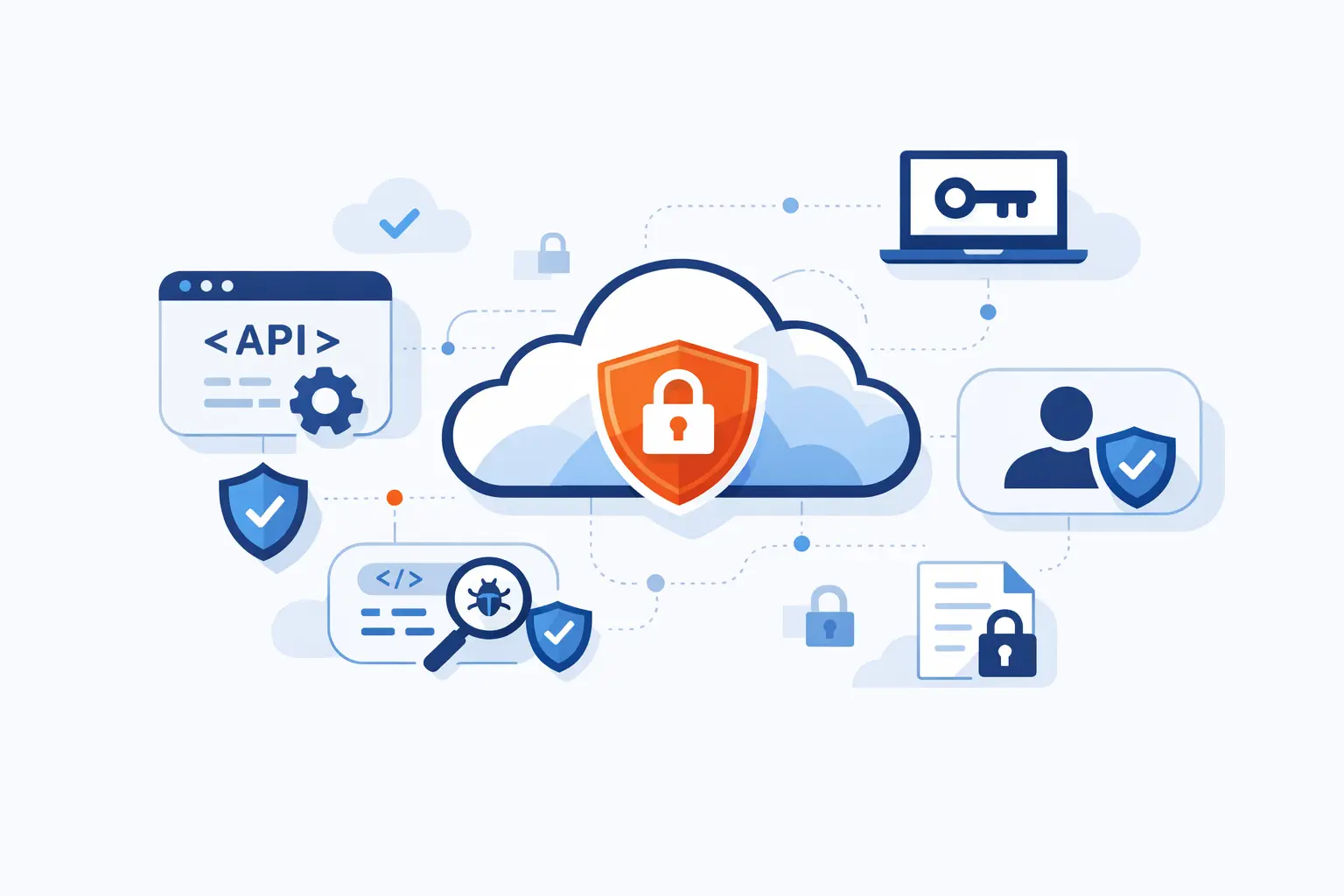
At 1Byte, we see cloud API security as the discipline that keeps modern cloud applications honest. APIs now carry logins, orders, payment events, content, admin commands, machine-to-machine calls, and AI prompts across nearly every business workflow. Gartner projected worldwide end-user spending on public cloud services to reach $723.4 billion in 2025, and that growth matters because every new cloud workload usually adds more endpoints, more identities, and more trust boundaries.
From our perspective, the hardest part is not naming the danger; it is managing it across code, gateways, containers, serverless functions, service-to-service traffic, SaaS integrations, partner connections, and customer-facing apps. A polished frontend can still be undermined by a forgotten admin endpoint, a weak token policy, or a third-party API that changes behavior without warning. Modern cloud API security is therefore less like building one big wall and more like running a busy airport, where every identity, route, and package needs context.
In this guide, we walk from design to runtime and from fundamentals to buying criteria. Our goal is simple: help beginners understand what matters, while still giving technical teams enough depth to make sharper architectural, operational, and business decisions.
What Cloud API Security Means in Modern Environments
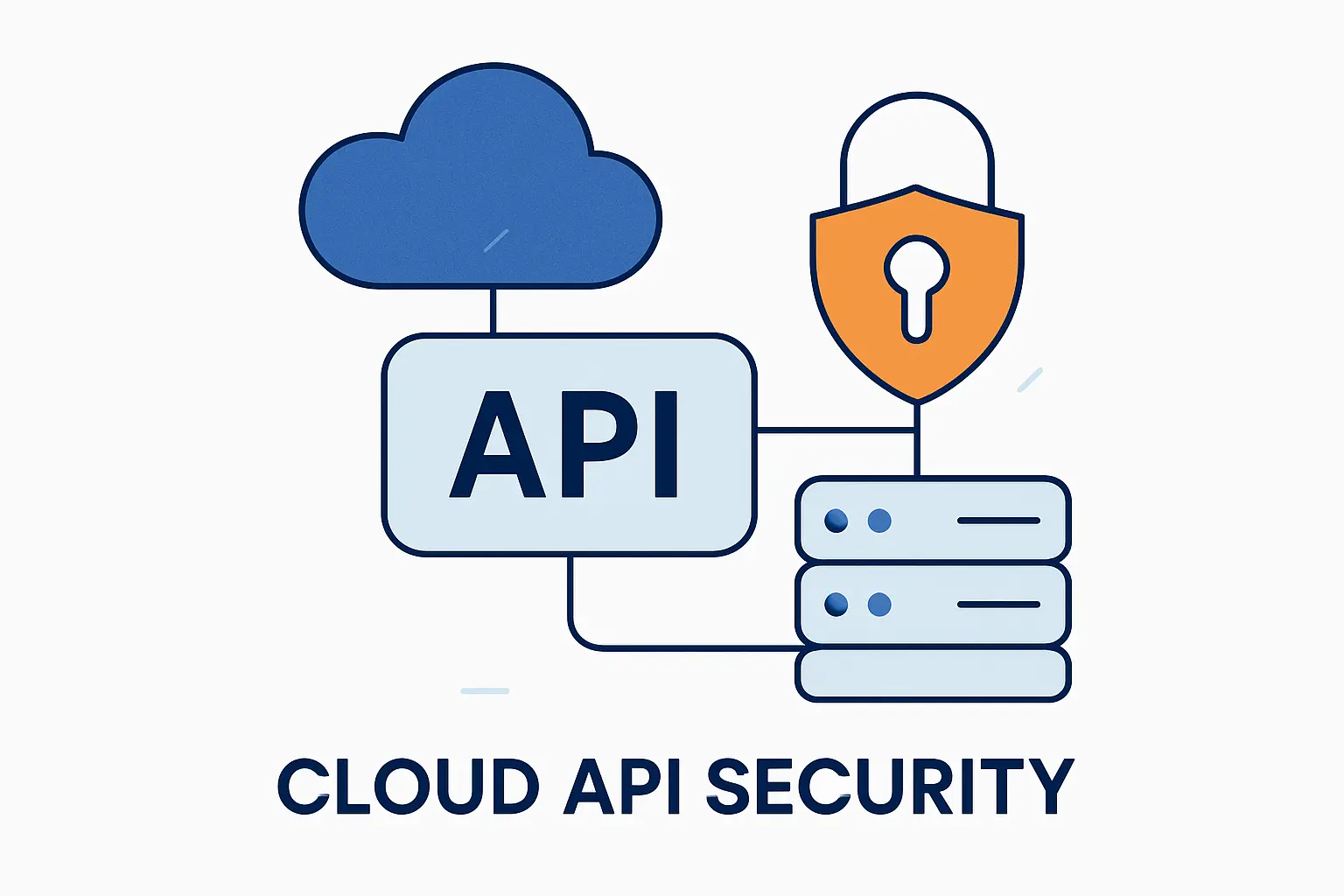
Before we talk controls, we need a practical definition. Cloud API security covers the policies, technical safeguards, and operating habits that protect APIs across public cloud, private cloud, hybrid infrastructure, and multi-cloud environments. It spans identity, encryption, schema enforcement, traffic control, observability, dependency risk, and incident response.
1. How cloud API security protects data, services, and availability
In the cloud, an API is rarely just a data doorway. It is also a control surface for accounts, billing, inventory, content, background jobs, and back-office automation. Good cloud API security protects confidentiality by restricting reads, preserves integrity by controlling writes and privileged actions, and supports availability by limiting abusive demand. When any of those checks fail, the problem quickly stops being “just technical” and turns into lost revenue, customer frustration, and regulator attention.
2. How cloud-native architectures, microservices, and third-party integrations expand risk
Modern applications rarely speak with one voice. A single user request may hop from an edge API to authentication, profile, payment, fraud, shipping, analytics, and AI services before it returns a response. Because cloud-native designs favor microservices, containers, queues, and webhooks, the number of trust relationships grows fast. Third-party integrations widen the blast radius even further, since a flaw in one upstream or downstream dependency can echo through several internal services before anyone notices.
3. Why perimeter-only defenses are not enough for modern APIs
Perimeter firewalls still matter, but they no longer tell the whole story. Remote work, mobile apps, partner integrations, east-west service traffic, and stolen tokens all undermine the old assumption that internal automatically means safe. That is why we favor a zero-trust model grounded in NIST SP 800-207, which shifts security away from blind trust in network location and toward continuous verification of users, devices, and resources.
Major Risks and Business Impact
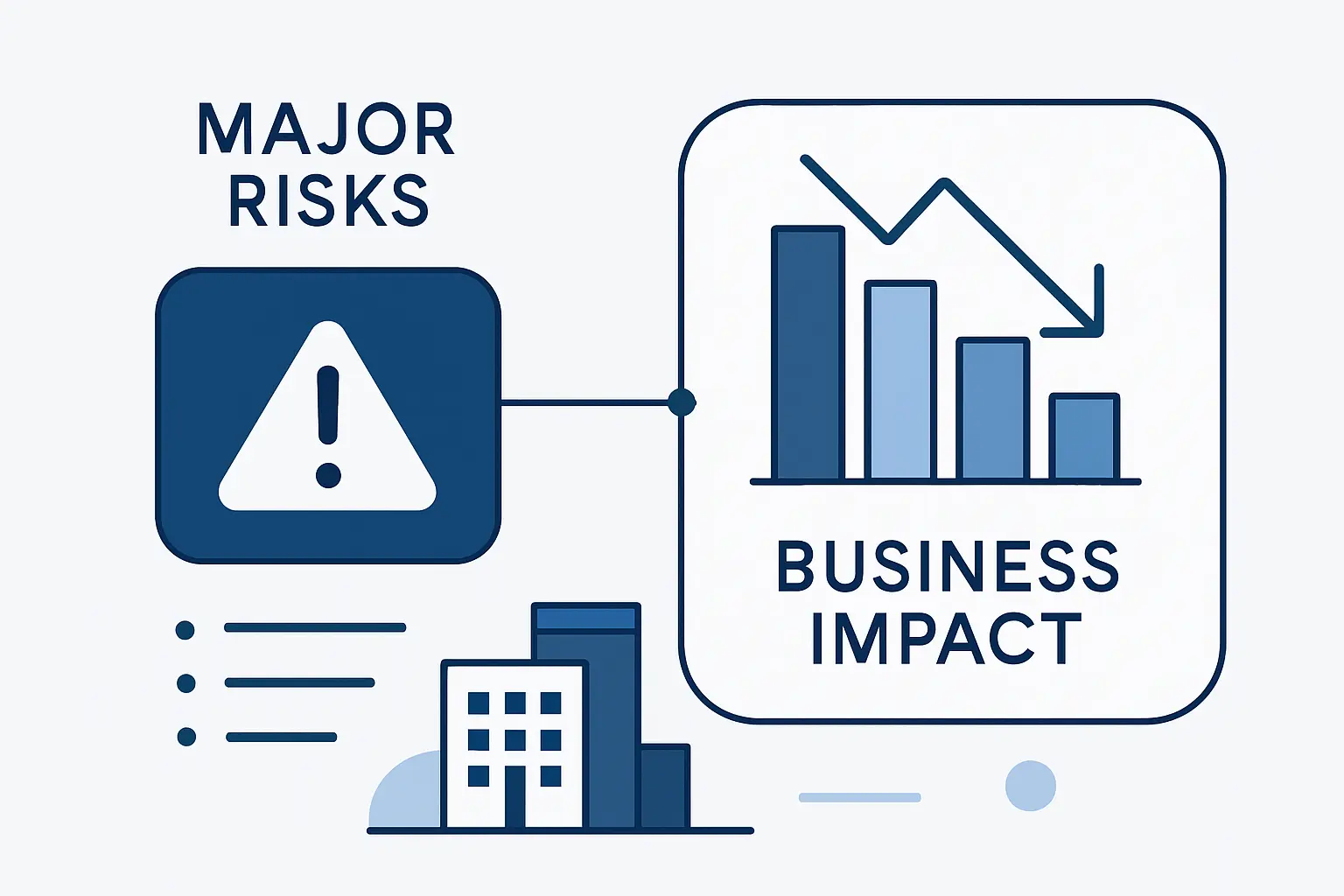
The risk picture is not theoretical anymore. Akamai documented 150 billion API attacks from January 2023 through December 2024, and we read that as a clear sign that attackers already treat APIs as prime business targets rather than side doors.
1. Broken authorization, broken authentication, and sensitive data exposure
Broken authorization is the classic API failure because APIs expose objects by design. If object ownership, function-level permission, or field-level access is checked loosely, a caller can read another tenant’s invoice, call an admin action, or collect sensitive attributes that never should have been returned. Broken authentication makes the damage worse when keys are hard-coded, tokens live too long, session rotation is weak, or login flows ignore device and risk context. IDs in URLs and JSON bodies are not permission checks, and far too many systems still behave as if they were.
2. Security misconfiguration, SSRF, unsafe consumption, and poor API inventory management
Misconfiguration often looks boring until it becomes public. We routinely see cross-origin settings that are too broad, debug endpoints left enabled, default credentials in test services, verbose error messages, and inconsistent security headers between staging and production. Server-side request forgery, or SSRF, becomes especially dangerous in cloud deployments when an API can be tricked into fetching internal URLs, cloud metadata services, or private admin panels. Unsafe consumption adds another wrinkle: when teams trust third-party APIs without validating schemas, timeouts, authentication context, and response integrity, they invite failure from someone else’s weak link. Poor inventory management ties the knot, because you cannot secure the endpoint you forgot to list, own, or retire.
3. Unrestricted resource consumption, business flow abuse, and real-world business impact
Unrestricted resource consumption hurts twice. First, it drives real infrastructure cost by allowing oversized queries, expensive searches, large exports, or runaway AI inference requests. Second, it drains availability for legitimate users. Business flow abuse is even trickier because the traffic can look normal on the surface; think OTP spamming, coupon farming, fake account creation, inventory hoarding, or card-testing through a checkout API.
T-Mobile disclosed that a bad actor obtained data through a single API without authorization affecting approximately 37 million current postpaid and prepaid customer accounts, which is a sharp reminder that one weak endpoint can become a multiplier for notification costs, legal exposure, and brand damage.
Optus offers another cautionary case. In civil penalty action, Australia’s privacy regulator alleged failures affecting approximately 9.5 million Australians, showing how quickly an API-related failure can move from a technical issue to a nationwide trust problem with long-tail business consequences.
Best Practices Across the API Life Cycle
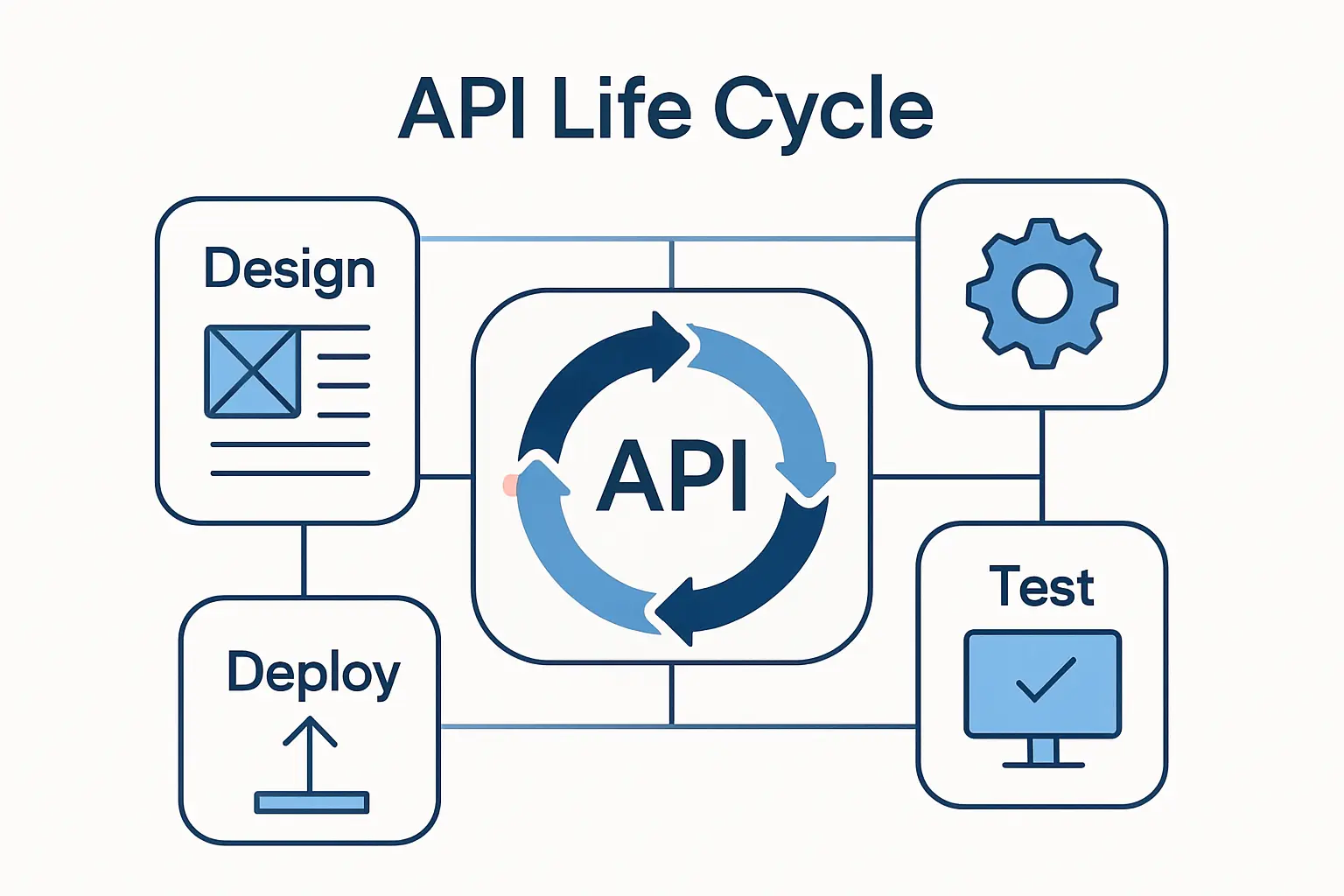
We get better results when cloud API security follows the same life cycle as the application itself. Security bolted on at the gateway may catch obvious abuse, but it will not fix a broken object model, a sloppy data contract, or an undocumented version drifting in production.
1. Identify risk across design, development, deployment, and runtime
Design is where many expensive mistakes are still cheapest to fix. We recommend threat-modeling each API around four questions: who can call it, what data it touches, which actions it permits, and which downstream systems it can reach. During development, those decisions should become explicit contracts, ownership records, data classifications, and abuse cases. By deployment time, teams should know the API’s version, exposure level, runtime environment, and rollback path. At runtime, the same API needs continuous validation because behavior changes faster than most documentation.
2. Shift left with secure coding, automated testing, and CI/CD controls
Shifting left does not mean tossing security over the wall to developers and hoping for the best. In practice, it means secure coding standards, code review checklists, unit tests for denial paths, contract testing for schemas, secret scanning, static analysis, dependency checks, and dynamic testing before release. CI/CD controls matter just as much. Build and release pipelines should use least-privileged credentials, signed artifacts, infrastructure policy checks, and approval gates for risky changes such as public exposure, authentication logic, or data-handling rules.
3. Maintain secure versions, dependencies, documentation, and patches
Versions and dependencies deserve real attention because neglected APIs age badly. A deprecated endpoint that never gets retired can linger as a zombie service, while a quietly updated SDK may change authentication behavior or serialization in ways no one expects. Documentation is part of the control plane here. When specs, sample code, change logs, and retirement plans stay accurate, clients use the API more safely and defenders can enforce cleaner rules. Patching also needs discipline across frameworks, gateways, agents, container images, plugins, and third-party connectors, not just the operating system.
Core Controls for Access, Data, and Traffic
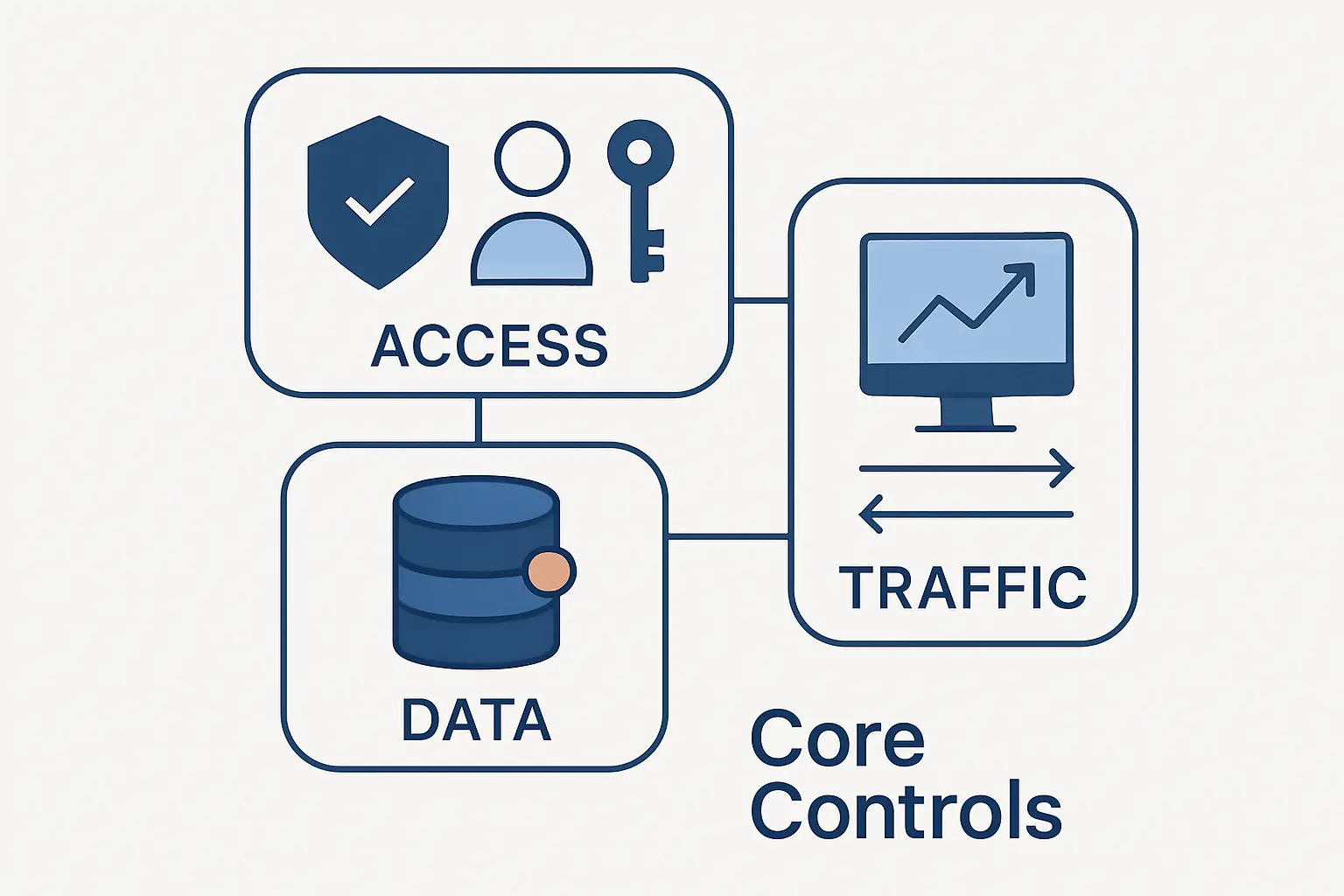
Once the life-cycle basics are in place, core controls have to become consistent and boring. That may sound unglamorous, yet repetition is exactly what keeps cloud API security strong under pressure.
1. Zero-trust access with MFA, OAuth, security tokens, and role-based controls
Zero-trust access begins with a hard distinction between authentication and authorization. Teams need to prove who or what the caller is, and then separately determine what that identity may do at the endpoint, object, field, and business-action levels. Human admins should use MFA and just-in-time access for sensitive consoles. Application flows often benefit from OAuth and OpenID Connect, while service-to-service traffic needs short-lived tokens, scoped identities, or mutual TLS where the boundary justifies it. Role-based control helps, but many real environments also need attributes such as tenant, device posture, geography, transaction risk, and data sensitivity.
2. TLS, HTTPS, encryption at rest, and sensitive data protection
Transport protection is table stakes, but table stakes still matter. Every public API should default to HTTPS, modern TLS, clean certificate management, and secure redirects, while internal APIs deserve the same rigor whenever lateral movement is a concern. Encryption at rest protects stored payloads, backups, queues, and snapshots, but field-level protection may still be necessary for secrets, identifiers, and regulated data. We also urge teams to minimize what they collect, keep sensitive values out of URLs and logs, redact responses where possible, and tokenize or mask data that clients do not truly need.
3. Rate limiting, throttling, quotas, and DDoS mitigation
Rate limiting is more than a blunt anti-bot setting. Strong programs apply limits by IP, token, tenant, endpoint, method, and business flow so that one noisy actor cannot starve everyone else. Throttling, quotas, payload-size caps, pagination controls, concurrency guards, and timeouts work together to make APIs predictable under stress. On the edge, DDoS mitigation, bot management, and CDN shielding absorb floods before they hit origin services. Deeper inside, circuit breakers and backpressure keep expensive downstream systems from collapsing in a chain reaction.
Visibility, Discovery, and Monitoring
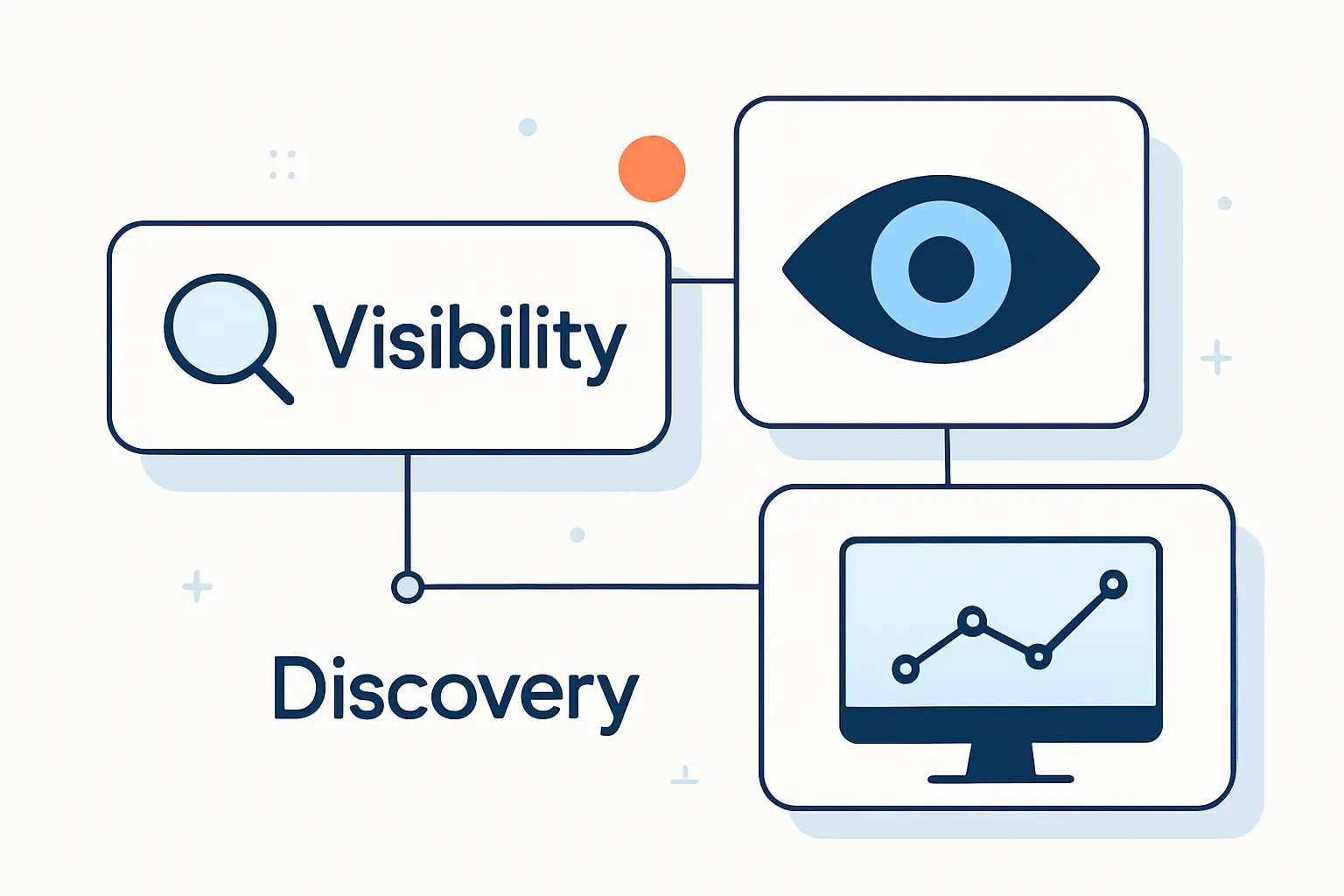
Visibility is the hinge point between policy and reality. If the documented API surface and the observed API surface do not match, every other control starts from bad assumptions.
1. Build a live inventory of exposed, shadow, zombie, deprecated, and AI-related APIs
A live inventory should be assembled from more than one source. We like to combine gateway configs, load balancers, ingress rules, service telemetry, DNS records, code repositories, deployment manifests, OpenAPI files, GraphQL schemas, and runtime traffic to build a working map. That map should distinguish exposed APIs, shadow APIs created outside normal process, zombie APIs that still run without clear ownership, deprecated versions that remain reachable, and AI-related APIs such as model gateways, agent tools, vector-store connectors, and webhook callbacks. Without that live view, the left hand often does not know what the right hand deployed.
2. Monitor traffic, API specs, spec drift, anomalies, and sensitive data exposure
Monitoring works best when it compares what should happen against what actually happens. That means reading live traffic alongside API specs, then flagging spec drift, undocumented endpoints, strange methods, unknown parameters, odd response sizes, or unusual error patterns. Anomaly detection is useful, but it should be grounded in context rather than mystery scoring alone. We want to know which tenant spiked, which token crossed its normal pattern, which GraphQL operation suddenly became more expensive, and whether sensitive data is showing up in requests, responses, or logs where it does not belong.
3. Cover east-west and north-south traffic across hybrid and multi-cloud environments
North-south traffic covers requests entering or leaving the environment, and most teams already watch it through gateways, web application firewalls, and edge logs. East-west traffic is the quieter problem because it flows service to service inside clusters, virtual networks, and hybrid links where trust is often assumed. In multi-cloud and hybrid setups, that hidden traffic can cross Kubernetes namespaces, private links, VPNs, on-prem connectors, and managed services. For us, effective monitoring means seeing both directions clearly enough to trace an external request all the way through the internal call chain.
Gateways, WAFs, and Edge Services
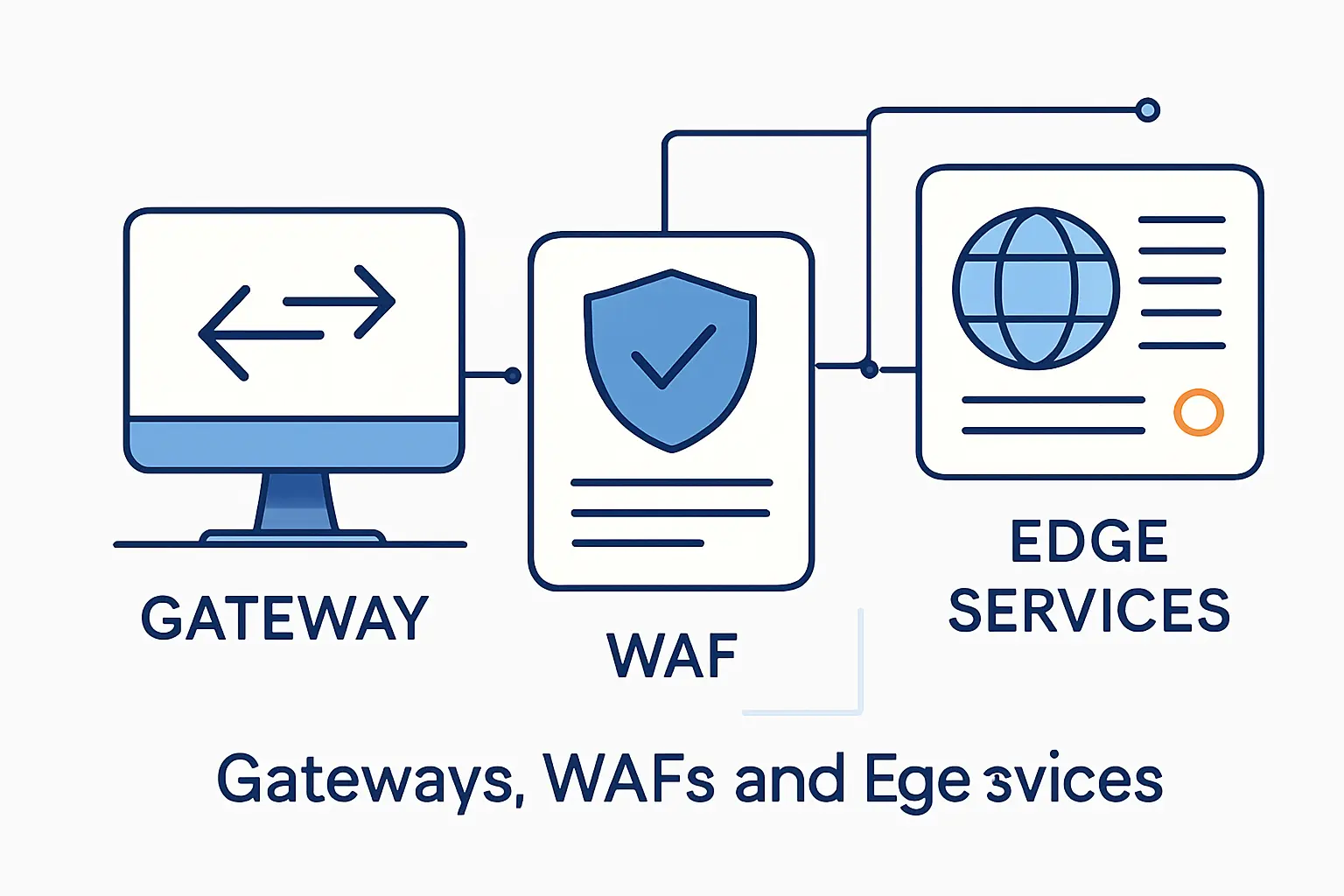
At the edge, we prefer layered enforcement rather than faith in one box. API gateways, reverse proxies, WAFs, CDNs, and load balancers each catch different classes of failure, and their overlap is a strength when it is designed well.
1. Use API gateways, facade layers, and reverse proxy enforcement
API gateways earn their keep when they become consistent policy choke points. They can centralize authentication checks, header normalization, token validation, routing, quotas, request transformation, and version handling. Facade layers are equally useful when a business needs to modernize without rewriting everything at once. A facade can hide legacy SOAP or monolithic internals behind a simpler and better-governed interface. Reverse proxies then reinforce the pattern by terminating TLS, masking origin details, and enforcing predictable ingress behavior.
2. Block malicious requests with schema validation, positive security models, and WAF rules
Signature-based blocking catches some bad traffic, but positive security models age better. When an API is tied to a clean contract, the edge can allow only known methods, expected content types, valid parameter shapes, and reasonable sizes. That default-deny posture cuts off a surprising amount of low-effort abuse. WAF rules still matter for injection, protocol oddities, and known attack payloads, yet we see the best outcomes when teams use them as one layer in a broader contract-aware defense rather than as the whole strategy.
3. Improve resilience with load balancing, caching, and CDN protection
Resilience controls belong in a security conversation because attackers love expensive code paths. Load balancing spreads demand across healthy instances, while health checks and graceful failover reduce the chance that one failing node becomes a full outage. Caching safe and appropriate responses at the right layer can cut needless origin work and blunt spikes from bots or flash crowds, though personalized or sensitive responses should be handled carefully. A CDN adds distance between the public internet and the application core, giving teams more room to absorb floods, challenge suspicious clients, and protect origin bandwidth.
Securing REST, SOAP, GraphQL, gRPC, and WebSockets
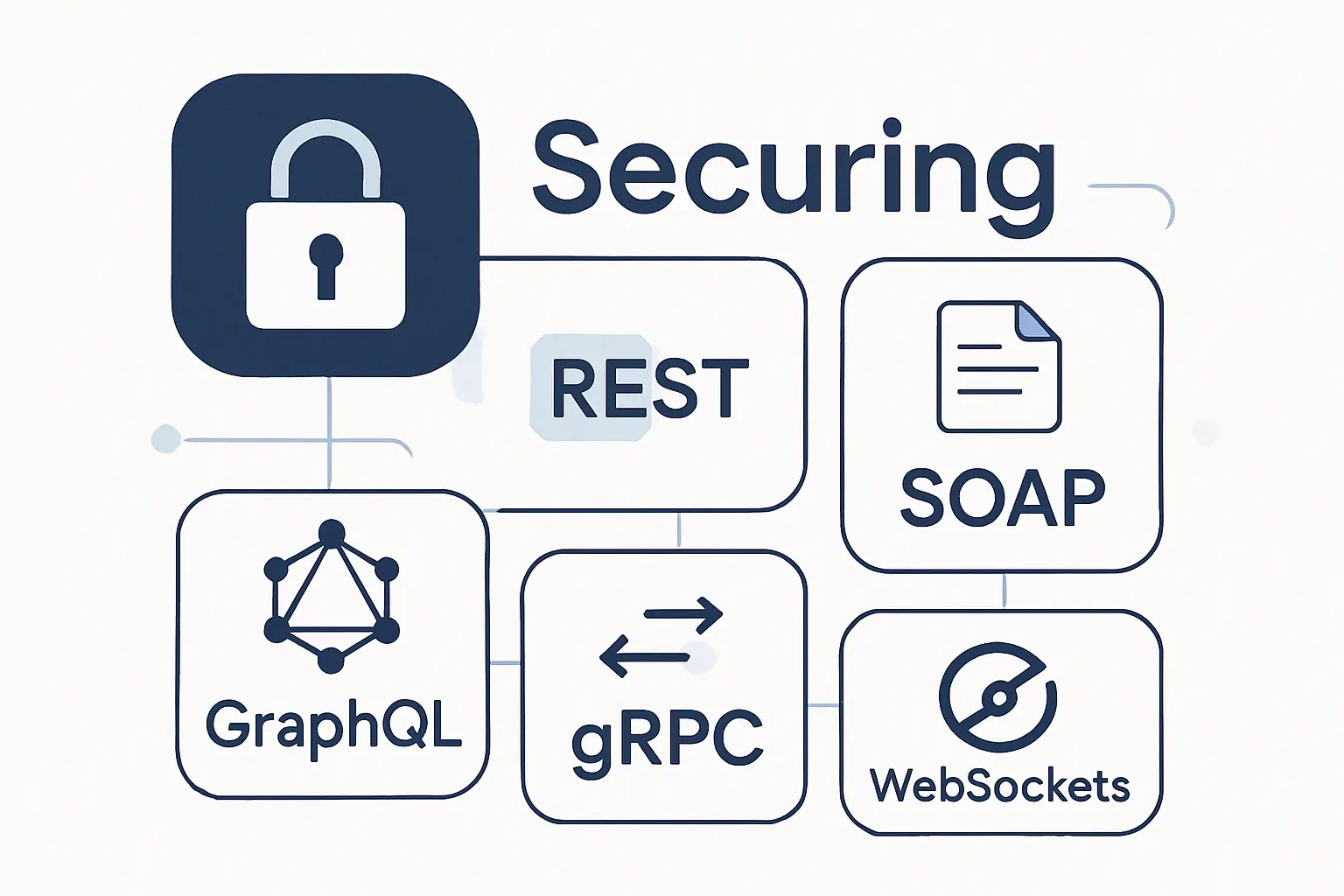
Not all APIs behave alike, so neither do their failure modes. Teams that treat REST, SOAP, GraphQL, gRPC, and WebSockets as interchangeable usually end up protecting none of them particularly well.
1. Compare REST and SOAP security models
REST usually leans on HTTP semantics, transport security, and application-level authentication, which keeps the model familiar and flexible. SOAP, by contrast, can carry richer message-level security through WS-Security, XML signatures, and XML encryption, which is useful in some regulated or intermediary-heavy environments. The trade-off is complexity. XML parsing, canonicalization, and policy sprawl raise the odds of configuration errors. Our practical view is simple: REST is easier to scale and govern for most new cloud applications, while SOAP should be tightly contained, well documented, and carefully fronted when it still supports critical business systems.
2. Control GraphQL query depth, throttling, and timeouts
GraphQL is elegant and dangerous in the same breath. A single endpoint can simplify client development, yet it can also hide heavy resolver chains, overly broad field access, and query patterns that are hard to spot with older tooling. We recommend depth limits, complexity scoring, persisted queries for sensitive use cases, resolver-level authorization, strict timeouts, and rate limits based on operation cost rather than request count alone. Introspection should be controlled thoughtfully in production, not left wide open by habit. Just as important, teams need to watch for data overexposure at the field level because GraphQL makes it easy to ask for “just one more property.”
3. Test gRPC, WebSockets, and business logic abuse in modern services
gRPC and WebSockets bypass many old security assumptions. gRPC traffic is compact and fast, but testers need visibility into service definitions, reflection settings, metadata-based authentication, deadlines, and protocol translations at proxies. WebSockets are long-lived, stateful channels, so authenticating once during the handshake is not enough for sensitive systems. Message-level authorization, origin checks, idle timeouts, replay protection, and abuse testing all matter. On top of that, both technologies need business-logic testing, because attackers often win by chaining allowed operations in harmful sequences rather than by sending obviously malicious payloads.
Governance, Compliance, and Standards
Governance can sound bureaucratic, yet it is what keeps hard-won controls from dissolving during the next sprint. We see the best results when standards are used as prioritization tools rather than as box-checking theater.
1. Use the OWASP API Security Top 10 2023 to prioritize remediation
We still use the OWASP API Security Top 10 2023 as a practical remediation lens because it reflects the failures teams actually trip over: broken authorization, resource abuse, SSRF, misconfiguration, poor inventory, and unsafe consumption. Instead of treating it like a poster for the wall, we map each risk to concrete controls, test cases, owners, and due dates. That turns a list of categories into an operating plan.
2. Apply NIST and CSA guidance with an incremental risk-based approach
For broader cloud governance, we like CSA’s Security Guidance v5 because it ties identity, monitoring, workload security, data security, Zero Trust, DevSecOps, and shared responsibility into one cloud-native frame. NIST guidance then helps teams sequence the work in a risk-based way. Our advice is to start with internet-facing APIs and high-sensitivity data flows, fix identity and inventory first, and then deepen segmentation, runtime detection, and automation as the program matures.
3. Strengthen audit trails and prepare for GDPR, HIPAA, and PCI DSS
Audit trails are where security claims meet evidence. Useful records should capture who called what, from where, using which token or client, against which object, and with what result. Correlation IDs, immutable logs, admin activity trails, policy decisions, and sensitive data access events make investigations faster and compliance reviews less painful. GDPR, HIPAA, and PCI DSS all raise the bar in different ways, but the shared lesson is the same: if you cannot reconstruct a sensitive API action, you do not really control it.
How to Choose a Cloud API Security Solution
Buying a cloud API security solution is where many teams accidentally trade one blind spot for another. Flashy dashboards help nobody if the platform cannot discover unknown APIs, validate real traffic, or push useful context back into day-to-day operations.
1. Combine discovery, testing, runtime detection, and response
We look first for breadth across discovery, testing, runtime detection, and response. Discovery without testing becomes inventory wallpaper. Testing without runtime context misses what production clients actually do. Runtime detection without response hooks turns into alert clutter. The right platform should correlate specs, traffic, identities, and business context well enough to tell teams not just that something odd happened, but which API, which tenant, which token, and which downstream dependency matter most.
2. Evaluate coverage for hybrid, multi-cloud, SaaS, and on-prem environments
Coverage questions should be uncomfortable and specific. Can the platform see internet-facing and internal APIs? Does it handle containers, Kubernetes ingress, serverless endpoints, SaaS connectors, on-prem services, and partner integrations without forcing half the environment into a blind zone? Hybrid and multi-cloud estates are messy by nature. A useful tool has to accept that mess, not pretend everything passes through one pristine gateway.
3. Connect cloud API security with WAAP, SIEM, SOAR, ITSM, and developer workflows
A strong platform also has to fit the rest of the operating model. We want cloud API security to connect with web application and API protection layers, SIEM for correlation, SOAR for response playbooks, ITSM for ownership and change control, and developer workflows such as pull requests, backlog tickets, and release pipelines. When those links exist, findings become action. Without them, even accurate detections can sit in limbo while the risk keeps running.
Cloud API Security FAQ
For readers who want the short version, here are the answers we return to most often.
1. What is API security?
API security is the practice of protecting APIs from unauthorized access, abuse, data leakage, and service disruption. In our view, that means securing identities, data, contracts, and business logic instead of looking only for obvious attack strings.
2. What is a cloud API?
A cloud API is an application programming interface delivered through or used within cloud environments. It may be public, private, partner-only, or internal, and it often connects apps, services, functions, databases, or SaaS tools.
3. What is cloud API security?
Cloud API security is API security applied to distributed cloud realities such as elastic workloads, shared responsibility, hybrid networks, third-party services, and machine-to-machine traffic. The cloud changes speed and exposure more than it changes the core principles.
4. What are the main API architectures teams need to secure?
The main architectures today are REST, SOAP, GraphQL, gRPC, and WebSockets. Most teams also need to think about webhooks and event-driven interfaces because they extend trust and data flow even when they do not look like classic request-response APIs.
5. Why are authentication and authorization important for cloud API security?
Authentication proves identity, while authorization decides allowed actions. If the first is weak, attackers can impersonate users or services; if the second is weak, valid identities can still access the wrong objects or functions.
6. How do rate limiting and DDoS mitigation protect cloud APIs?
Rate limiting and DDoS mitigation protect cloud APIs by controlling how much work any client can force the system to do. Together, they reduce abuse, preserve fairness, and give origin services a better chance to stay responsive under spikes or attack.
7. How does an API gateway improve cloud API security?
An API gateway improves security by centralizing common controls such as token validation, routing, quotas, schema enforcement, logging, and version management. It will not fix broken business logic by itself, but it does create a cleaner place to enforce policy consistently.
8. What is the OWASP API Security Top 10?
The OWASP API Security Top 10 is a community-maintained list of the most important API risk categories. We use it as a practical shortlist for remediation planning, test design, and conversations between developers, security teams, and leadership.
How 1Byte Helps Customers Strengthen Cloud API Security
At 1Byte, we do not treat hosting as a magic shield. What we do offer is a stronger foundation for cloud API security, especially for businesses that need their domains, certificates, hosting layers, and cloud infrastructure to behave predictably under real production load.
1. Build a trusted foundation with domain registration and SSL certificates
A trusted API starts with a trusted edge. Domain registration, DNS hygiene, and SSL certificate management shape how users and systems reach your applications in the first place. We help customers build that base so HTTPS is consistent, certificates are renewed on time, and the brand-facing surface looks professional instead of improvised. That foundation does not solve authorization or business logic on its own, but it removes a surprising number of avoidable weaknesses.
2. Support WordPress hosting, shared hosting, and cloud hosting for API-connected workloads
Many businesses run API-connected workloads on WordPress hosting, shared hosting, or cloud hosting even when they do not think of themselves as “API companies.” Checkout plugins call payment providers, marketing tools send events, CRMs pull lead data, and mobile apps consume site content through JSON endpoints. Our role is to support those environments with practical hardening, dependable uptime, patch discipline, and performance headroom so the application layer has a safer place to operate.
3. Scale cloud servers with AWS Partner support
When workloads outgrow simple hosting, cloud servers and AWS Partner support become important. We help customers think through IAM boundaries, private networking, TLS termination points, load balancers, scaling rules, logging, backups, and recovery plans so API-connected services remain resilient as traffic and complexity rise. From our seat, that blend of infrastructure discipline and security thinking is what turns growth into stability instead of technical debt.







Conclusion: Building Cloud API Security from Design to Runtime
Cloud API security works best when it is built like the applications it protects: as a continuous system of design decisions, identity checks, traffic controls, telemetry, and operational ownership. Edge defenses matter, but the real win comes when teams connect design-time intent with runtime behavior and keep that loop alive as services, vendors, and AI features evolve.
If you are deciding where to begin, we suggest starting with an honest API inventory, a ruthless review of authorization, and a short list of business-critical flows to test under abuse conditions. Once those basics are visible, every other control gets sharper. So what would we find if we traced every API call that touches customer data in our environment this month?