

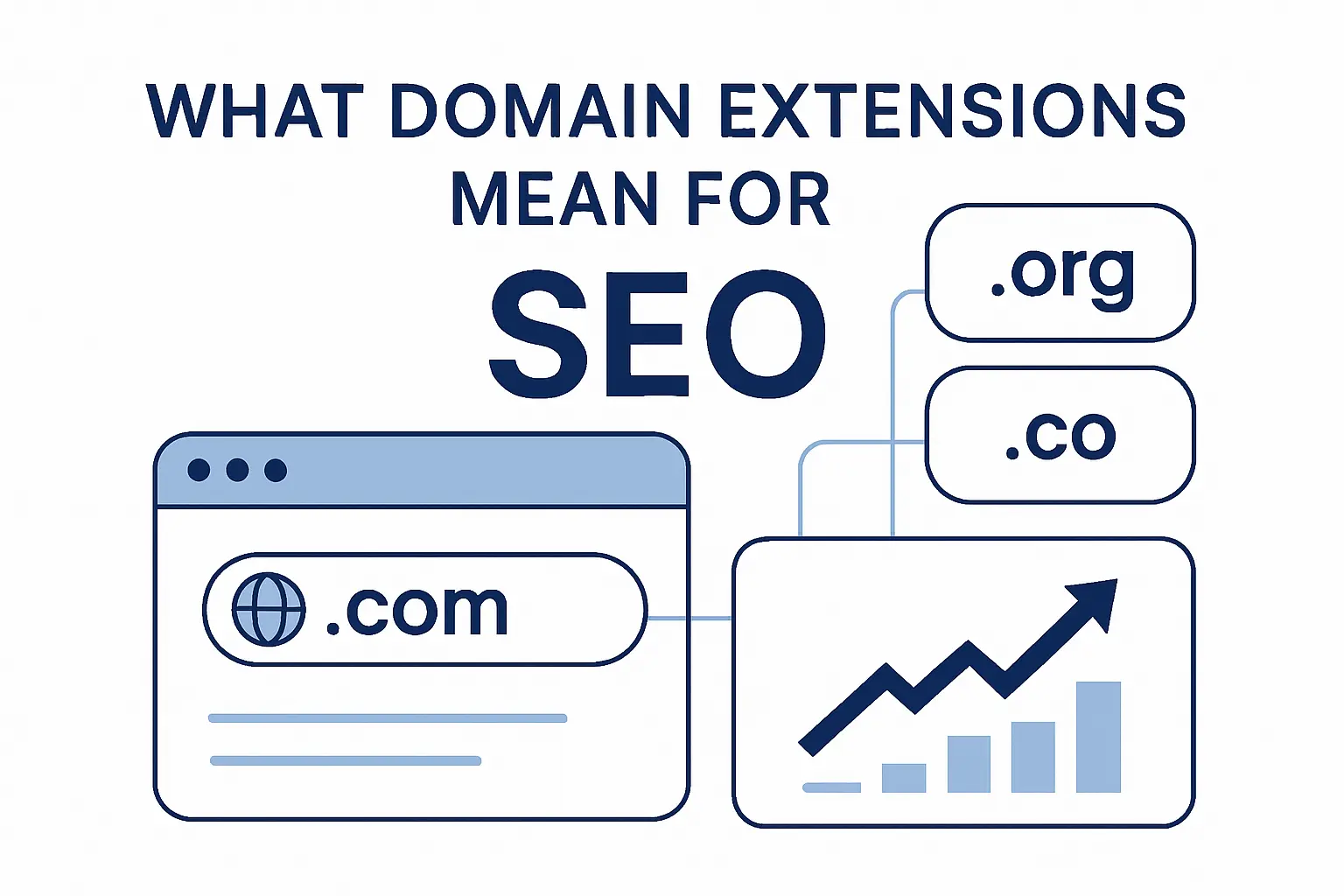
- What Domain Extensions Mean for SEO
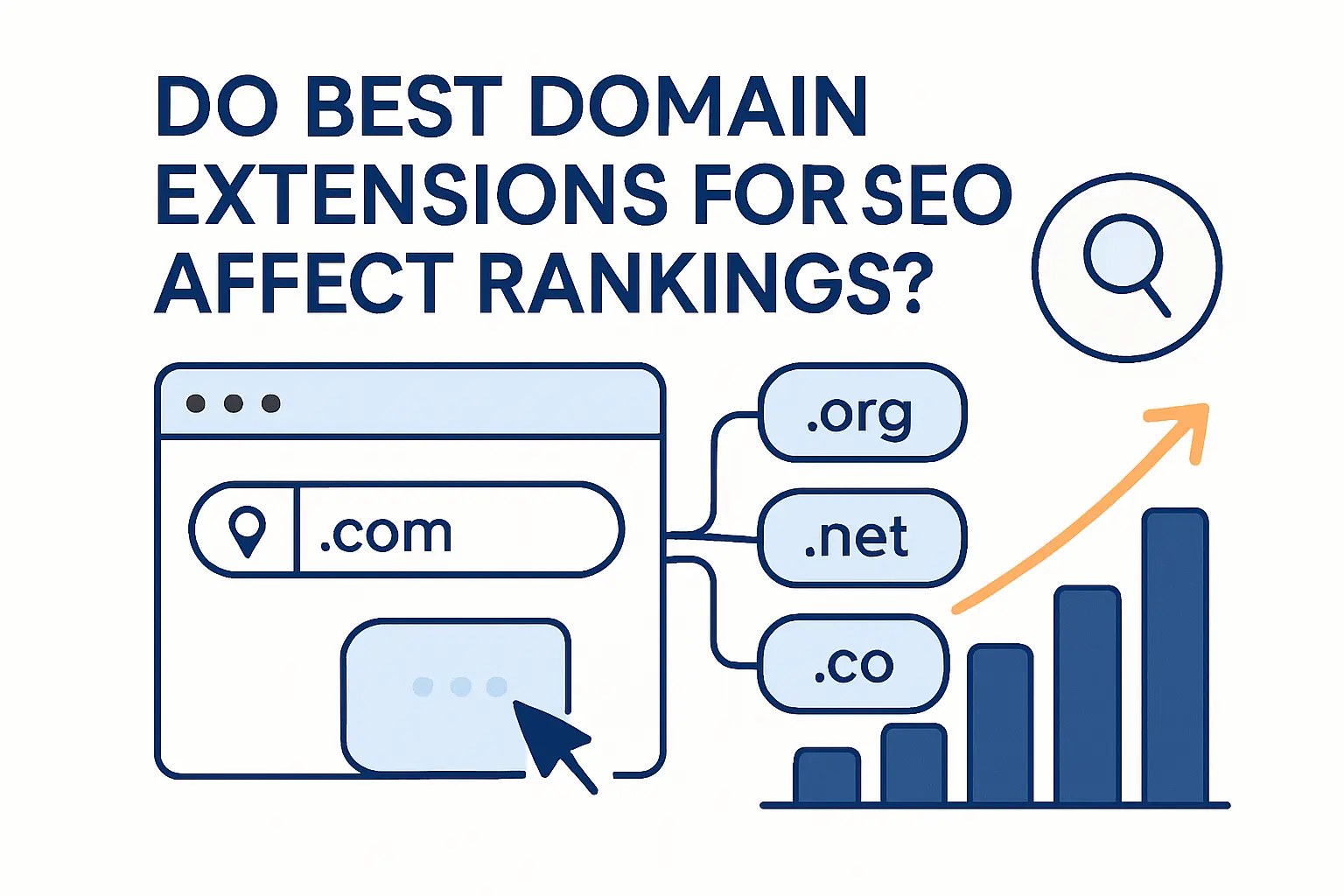
- Do Best Domain Extensions for SEO Affect Rankings?
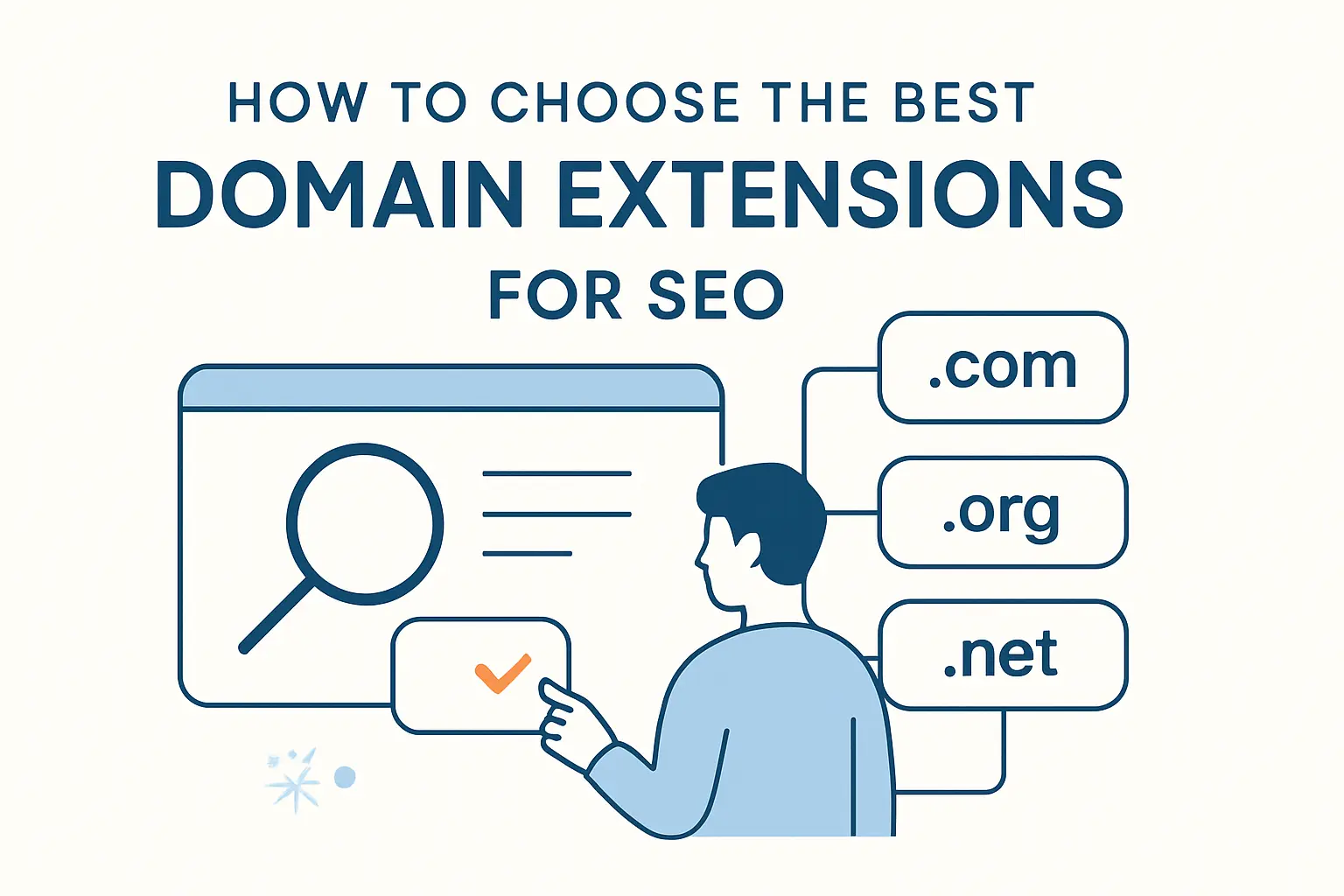
- How to Choose the Best Domain Extensions for SEO
- Best Domain Extensions for SEO by Website Type
- When Newer Domain Extensions Make Sense
- .com vs .net and Other Common Comparisons
- Domain Name Factors That Matter Beyond the Extension
- Important Checks Before You Register a Domain
- Common Mistakes to Avoid With Domain SEO
- FAQ About the Best Domain Extensions for SEO
- How 1Byte, a Cloud Computing and Web Hosting Provider, Supports Customers With Domains and Hosting
- Conclusion: The Best Domain Extensions for SEO Depend on Trust, Relevance, and Reach
The domain extension is a small detail with outsized consequences. Statista estimates that nearly 44 percent of all websites worldwide ran on .com, yet examples like Twitch.tv and Perplexity.ai remind us that broad recognition is not the whole story. At 1Byte, we see the extension as a trust cue, not a cheat code: it can make the first click easier or harder, but it cannot rescue weak content, poor UX, or a shaky brand.
What Domain Extensions Mean for SEO
Before we compare .com, .org, .ai, or .us, we need to separate internet plumbing from marketing psychology. The root zone itself distinguishes generic and country-code top-level domains, and that technical split shapes how registries, browsers, and search systems interpret the end of a name. From our side of the hosting stack, that means a suffix is both a DNS decision and a positioning decision.
1. Generic TLDs, Country Code TLDs, and Niche TLDs
Generic TLDs such as .com or .org are broad by design, while ccTLDs point to countries and newer niche endings try to signal a use case or identity. Google notes that it treats some country-code endings like .ai, .co, .io, and .tv as generic, which is why a startup can use them without automatically looking local to Anguilla, Colombia, the British Indian Ocean Territory, or Tuvalu. In plain English, the label tells part of the story, but the search context tells the rest.
2. Branding, Trust, and Click Behavior
Users do not read URLs like machines; they read them like tiny brand promises. Deloitte found that nearly three-quarters of those familiar or experimenting with gen AI say the technology makes it harder to trust what they see online, and that wider skepticism spills into search results too. When a name looks familiar, clean, and aligned with the offer, people are more willing to click; when it looks odd or mismatched, doubt shows up fast.
3. Website Purpose, Audience, and Search Intent
A domain should answer a simple question before the page even loads: what is this site for, and who is it for? Google says its systems prioritize helpful, reliable information created to benefit people, so the smartest extension is the one that supports the expectation behind the query. For us, that usually means choosing a suffix that makes your intent obvious instead of clever only to insiders.
Do Best Domain Extensions for SEO Affect Rankings?
Here is the short answer we give customers all the time: a TLD is usually not a direct ranking booster on its own. Google has said that new gTLDs are treated like other gTLDs and do not gain an automatic advantage or disadvantage in search, so the folklore around a “magic SEO extension” is mostly smoke. Still, indirect effects are real, and that is where strategy lives.
1. Direct Ranking Signals Versus Indirect SEO Effects
For Google, pages do the heavy lifting. The company’s own guide explains that core ranking systems work primarily at the page level while also considering some site-wide signals, which means your content, internal architecture, links, and experience matter far more than the letters after the dot. We think of the extension as packaging: important for perception, but not a substitute for substance.
2. Click-Through Rate, Credibility, and Brand Perception
Clicks are not just about position; they are about whether the result feels safe enough to try. Baymard sums it up well when it says people do not trust a website so much as they trust the people or brand behind it, and the domain is often the first brand signal they see. A familiar .com can raise comfort for a general audience, while a well-matched .org or .ai can do the same for the right niche.
3. Local SEO and Country Code Domains
Local SEO is the major exception people should remember. Google has long explained that using a ccTLD is generally a strong signal that a site targets users in a specific country, so a bakery serving Berlin or a law firm serving Toronto may benefit from a local ending when that local identity matters. Our view is simple: go local only when you truly want to look local.
How to Choose the Best Domain Extensions for SEO
Choosing well is less about chasing an algorithm and more about reducing friction between brand, audience, and future plans. McKinsey reports that nearly half of consumers frequently consider another brand when data-use practices are unclear, and the same broader lesson applies to domains: ambiguity costs confidence. At 1Byte, we prefer names that explain themselves quickly and age well.
1. Global Reach Versus Local Relevance
Some businesses want a flag planted in one market, while others need room to sell everywhere from day one. Google’s international search guidance says locale-specific URLs are one of the main ways to help Google understand country or language targeting, so the extension question should follow your distribution plan, not the other way around. If your customers are global, a generic ending usually keeps the runway clear.
2. Audience Fit and Market Targeting
Audience fit goes beyond geography because language and behavior shape how a domain is interpreted. Google notes that about half of people searching with Google are multilingual, which means your URL, copy, and regional cues should work together instead of sending mixed messages. From our experience, the best choice is the one your buyers can recognize and repeat without explanation.
3. Long-Term Branding and Growth Plans
A domain is hard to separate from everything that grows around it: backlinks, mentions, email addresses, citations, and printed material. Google advises site owners during migrations that changing one major thing at a time is the safest way to move a site, which is a polite way of saying rebrands are expensive in SEO and operations. We usually tell clients to choose the name they want to live with, not just the one they can tolerate this quarter.
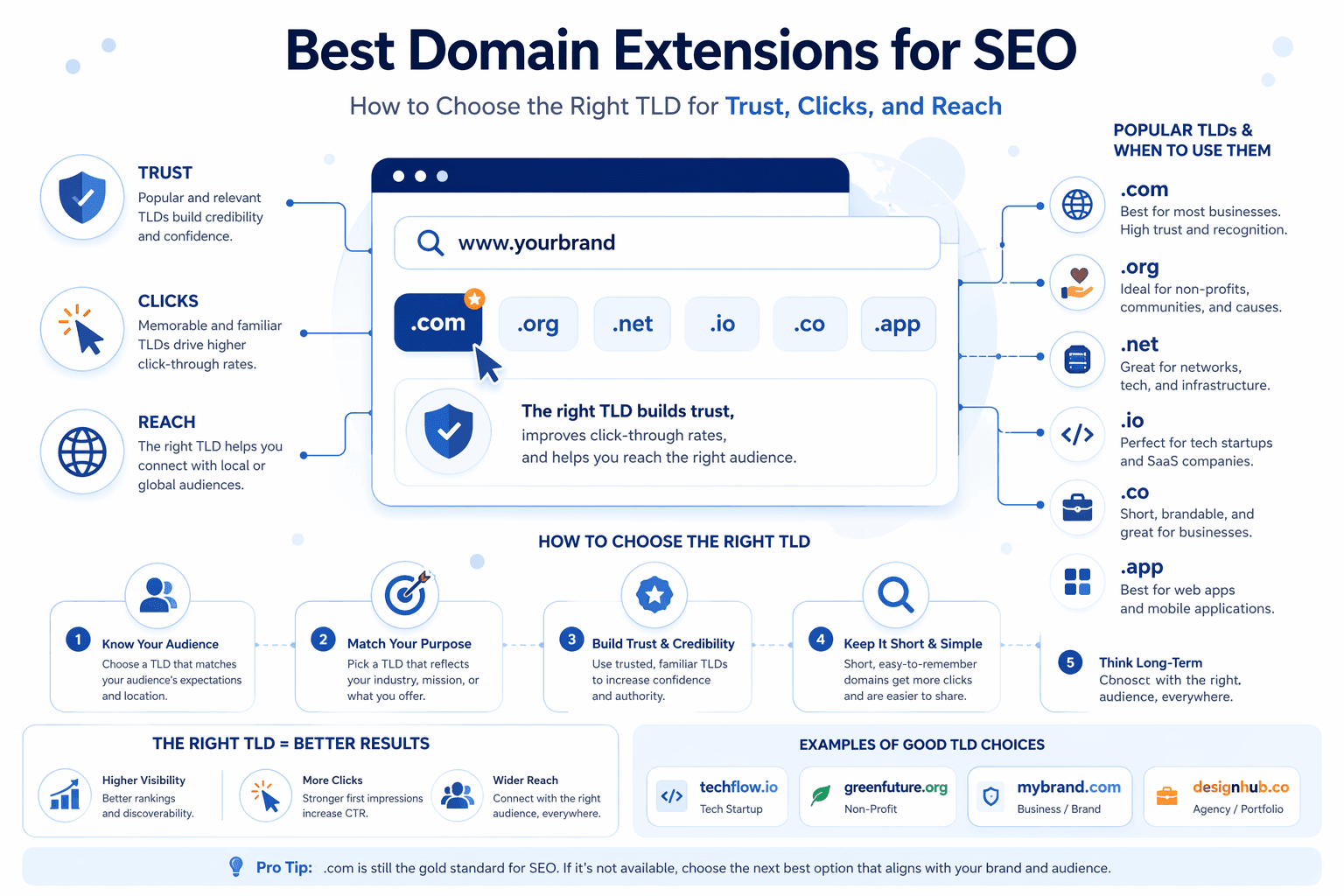
Best Domain Extensions for SEO by Website Type
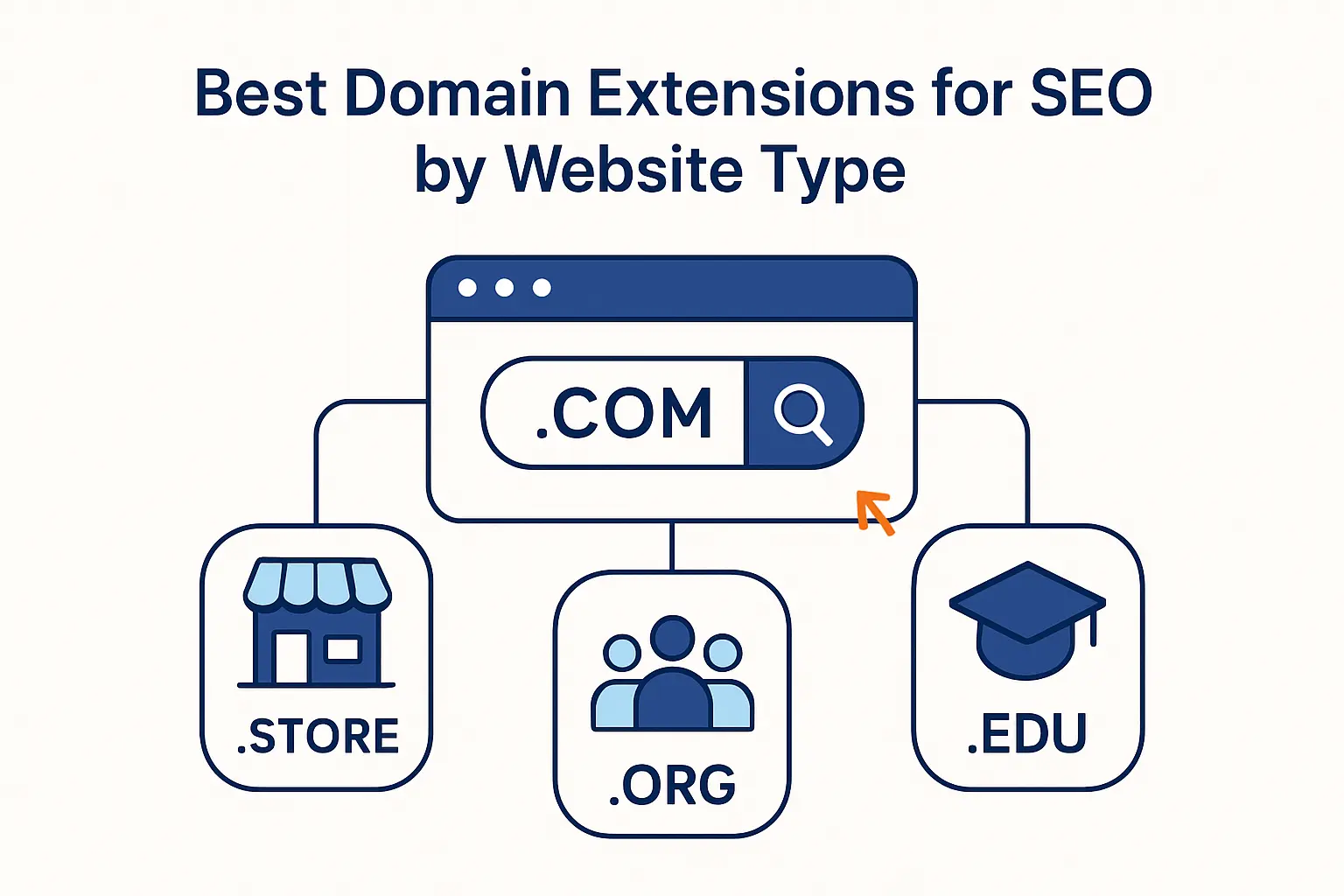
Different extensions work best for different kinds of organizations, and pretending otherwise wastes time. Verisign notes that it operates the authoritative registry for .com and .net, while other registries steward their own communities and rules, so each ending arrives with a different history and set of expectations. That history shapes how people read your brand before they read your headline.
1. .com for Broad Recognition and General Use
For broad recognition, .com is still the safe harbor. Verisign describes domains like .com and .net as some of the world’s most trusted and well-known top-level domains, and that everyday familiarity matters when your audience is wide, nontechnical, or first-time. We recommend .com first for general businesses because it is easy to remember, easy to say aloud, and rarely needs explanation.
2. .org and .net for Nonprofits, Communities, and Technical Brands
Mission-led brands often benefit when the suffix reinforces the mission. The Internet Society explains that it created the Public Interest Registry as a not-for-profit corporation to manage .org, and that heritage still gives .org a community-first feel. Meanwhile, .net can still suit infrastructure, networking, and developer-facing brands, but it usually works best when the technical identity is genuine rather than decorative.
3. Country Code TLDs for Local Businesses and Country Targeting
Country-code domains shine when the business is deeply rooted in a local market and wants that identity to show instantly. CIRA says that registering a .CA requires a connection to Canada through its presence rules, which is part of why the extension carries local meaning to Canadian buyers. We like ccTLDs for local trades, regional media, and country-specific ecommerce, provided the business is not quietly planning global expansion next year.
When Newer Domain Extensions Make Sense
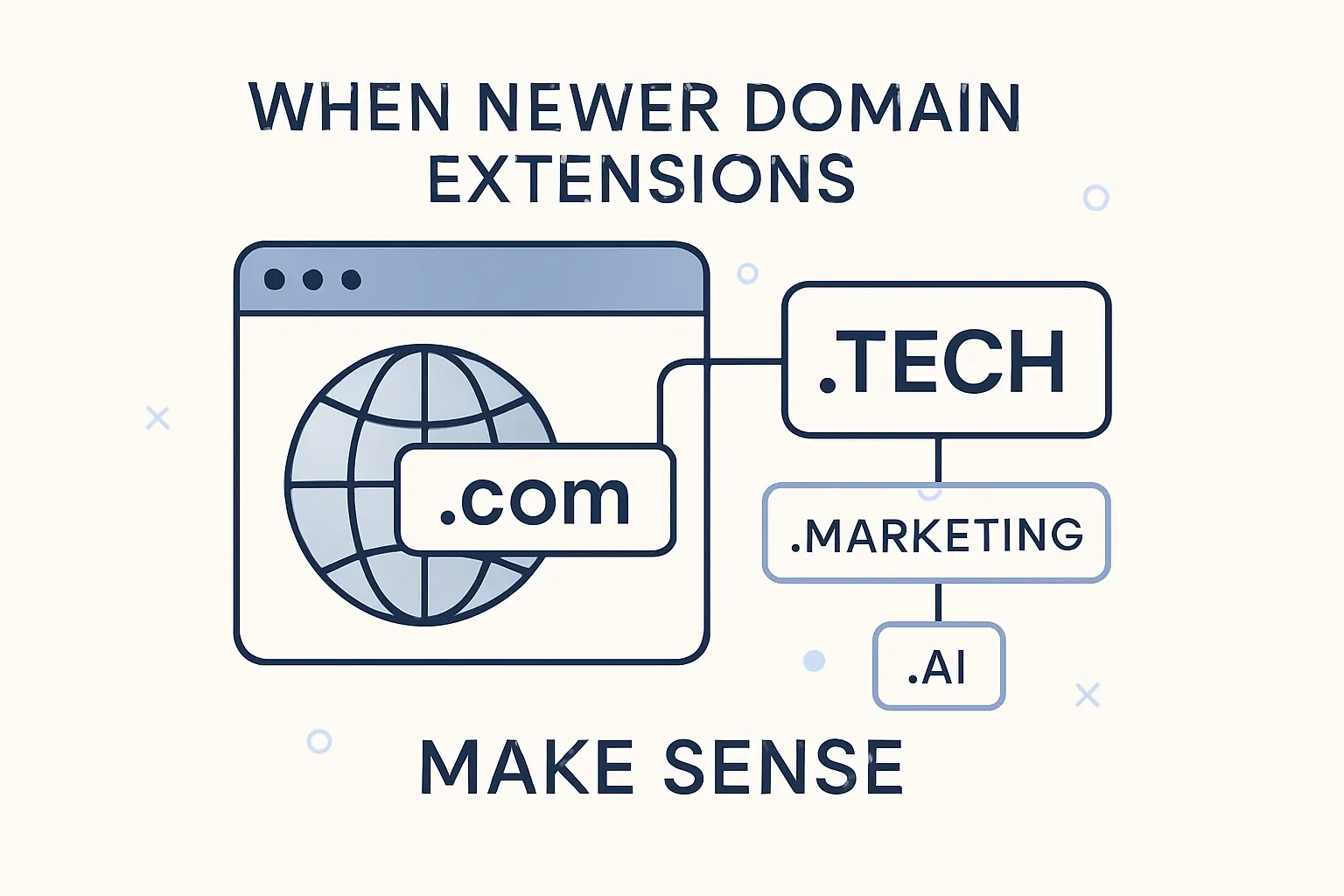
Newer extensions are not toys anymore; they are simply more specialized instruments. ICANN described the expansion of new gTLDs as a move intended to create more innovation, choice, and change in the Internet’s addressing system, and that broader menu has clearly changed naming strategy. Our rule is to use the new options when they sharpen meaning, not when they only chase novelty.
1. .co, .ai, and .io for Startups, Apps, and Tech Companies
In startup and software circles, endings like .ai and .io no longer look exotic, and that cultural shift is visible in real brands such as Perplexity.ai. Technical audiences are often comfortable with these suffixes because they signal product category, founder culture, or modernity at a glance. We still caution clients that mainstream buyers may be less forgiving, especially when the brand itself is new.
2. .shop, .store, .online, and .pro for Ecommerce and Service Brands
Semantic retail endings can help a younger brand explain itself faster, particularly when the name alone is abstract. Statista estimates that retail e-commerce sales in 2025 are expected to exceed 4.3 trillion U.S. dollars worldwide, so every small trust cue on the path to purchase deserves scrutiny. In our view, .shop, .store, .online, or .pro can work when the offer is obvious and the rest of the site looks polished.
3. .info, .app, .inc, and .llc for Specialized Positioning
Some newer endings solve a very specific positioning problem. Google Registry requires that .app names use HTTPS so that browsers can load them, which makes .app especially sensible for mobile products and software tools. By contrast, .info, .inc, and .llc are mostly semantic signals, so they help only when the brand, compliance posture, and buyer expectations all line up.
.com vs .net and Other Common Comparisons
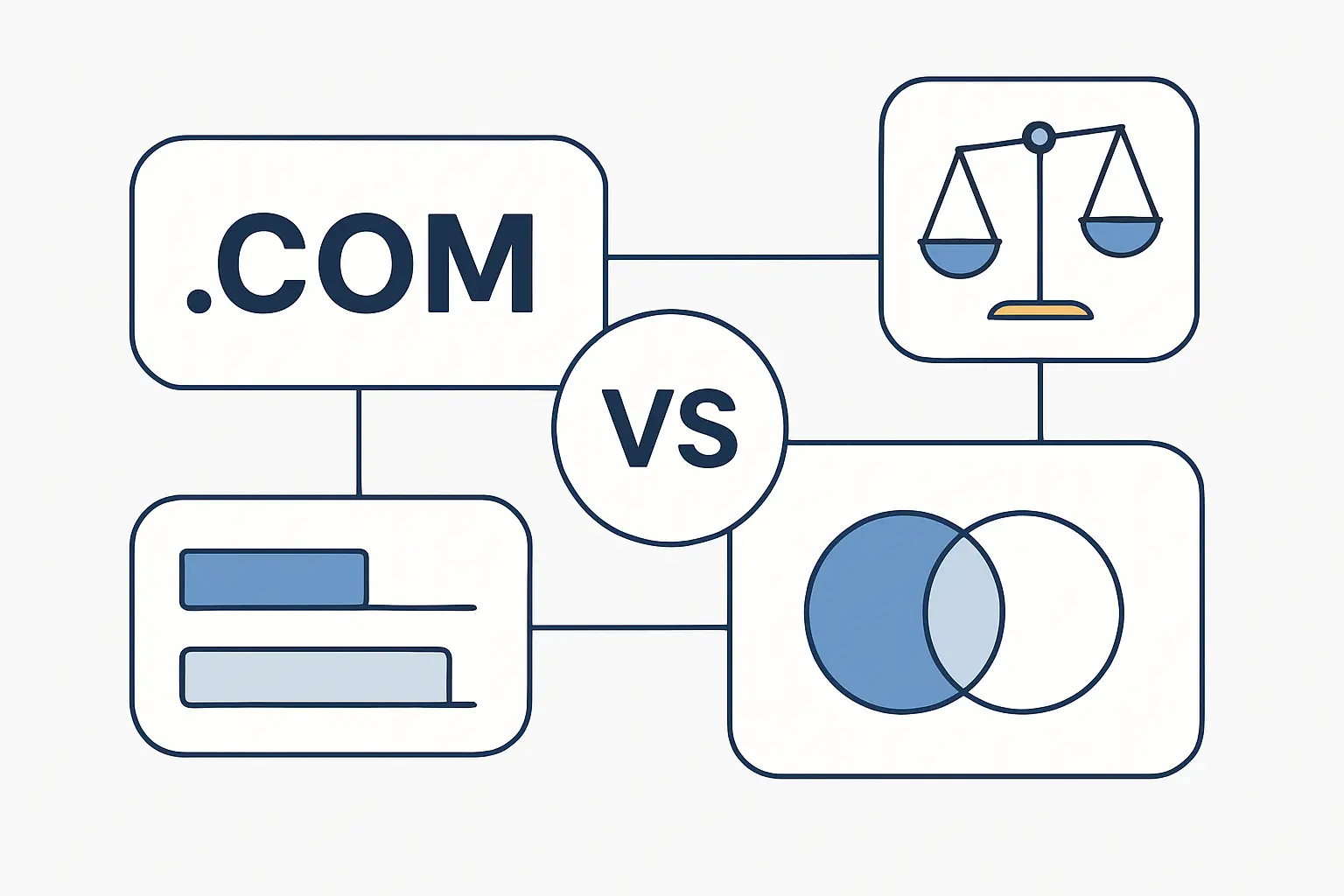
Most comparison questions sound technical, but they are really questions about trust and recall. Google’s Search Console now offers a way to segment branded and non-branded queries in performance reporting, and we think that is a useful reminder that brand strength often matters more than suffix debates. In other words, the domain argument usually gets settled by the audience, not by the registrar checkout page.
1. Is .com or .net Better for SEO?
From a pure SEO standpoint, .com and .net sit on nearly level ground. Verisign explains that it operates the authoritative domain name registry for both .com and .net, so search performance differences usually come from brand perception, links, and content rather than the ending itself. We still lean .com for broad recognition, while .net is our fallback only when it genuinely fits the brand.
2. When Does .org Make More Sense?
An organization should choose .org when its mission, community role, or public-interest stance is central to how it wins trust. PIR says that .ORG has become the digital home for nonprofits, foundations, educational institutions, open-source projects, and social movements, and that framing matches what many users already assume. If your site exists to rally, educate, or coordinate people around a cause, .org can say that faster than a paragraph of copy.
3. When Should a Local Business Choose a Country Code Domain?
A local business should choose a country-code domain when it has real local operations, local customers, and local proof to back that up. The usTLD policy warns that failing the Nexus requirement can place a .us name on a 30-day hold, which is a good reminder that ccTLDs are not costume jewelry. We recommend them when the local identity is true, durable, and commercially useful.
Domain Name Factors That Matter Beyond the Extension
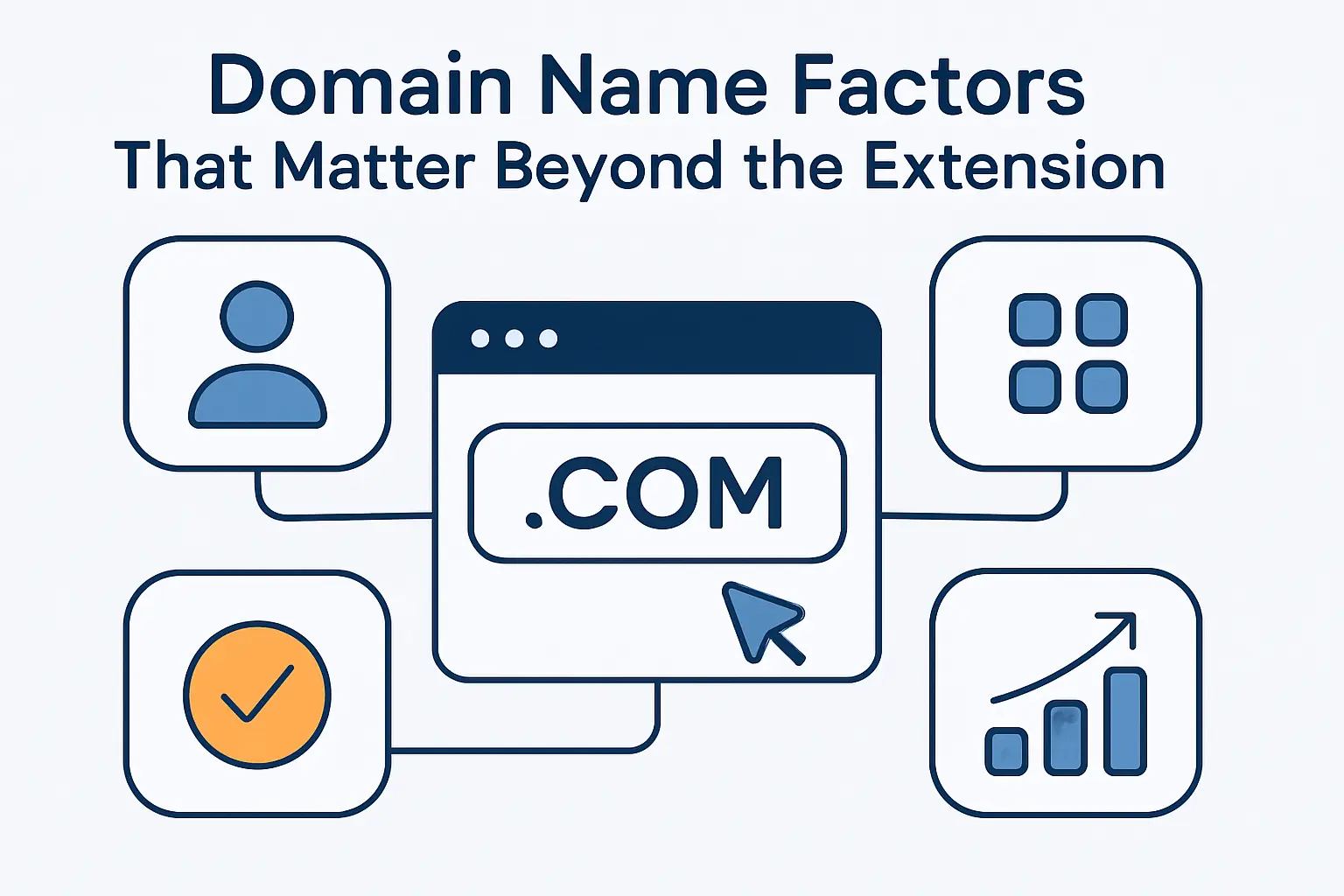
Now for the part many founders underestimate: the words before the dot often matter more than the dot itself. Google says it may show sitelinks when a site has a logical structure that is easy for users to navigate, and that user-first logic starts with naming. A clear, memorable domain reduces confusion long before a crawler parses the page.
1. Length, Clarity, and Memorability
Shorter is not always better, but guessable is almost always better. Nielsen Norman Group puts it bluntly: people must be able to guess a company’s domain name quickly, which is why clipped jargon and clever misspellings often backfire outside startup circles. At 1Byte, we like names people can hear once, type once, and share without spelling lessons.
2. Hyphens, Numbers, and Keyword Stuffing
Hyphens are not evil, yet too many of them can make a domain look forced or spammy. Google’s URL guidance says using hyphens helps users and search engines identify concepts in a URL, so one clean separator is fine, while strings of hyphens, numbers, and exact-match keyword chains usually hurt more than they help. Our advice is simple: choose readability, then stop optimizing the life out of the name.
3. Keywords, Branding, and Search Intent
Keywords still have a place, but only when they support how real people search and remember brands. Baymard notes that a general web search often turns up third-party reviews, social profiles, and media mentions when users investigate an unfamiliar brand, which means your domain works inside a wider reputation system. We favor domains that blend brand and intent naturally instead of sounding like a frozen SEO experiment from another decade.
Important Checks Before You Register a Domain
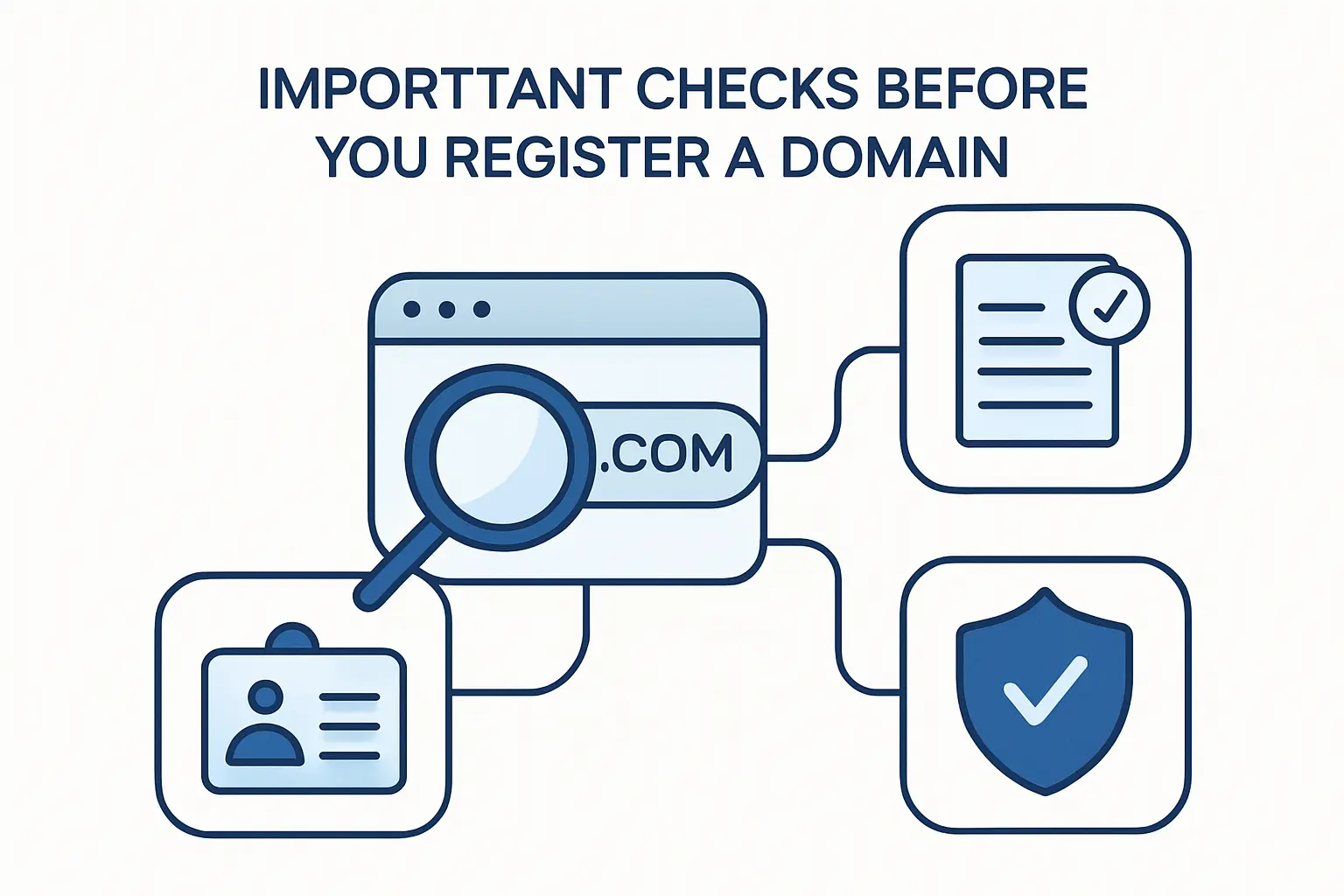
Before registration, due diligence saves headaches that hosting cannot magically erase later. ICANN announced that as of January 28, 2025, RDAP is the definitive source for gTLD registration data, and that makes pre-purchase checks easier and more standardized. We see this step as cheap insurance.
1. Domain History, Previous Use, and Potential Penalties
Old baggage can cling to a domain even after ownership changes. Google’s crawl and index FAQ notes that content previously hosted on a domain can in rare cases cause issues, which is why we tell buyers to inspect archive snapshots, Search Console status, and past use before they build on an expired name. A beautiful brand name is not worth much if it comes with a hidden cleanup bill.
2. Trademark Conflicts and Related Domain Variations
Trademark clearance should happen before launch, not after your logo is printed. The USPTO advises that a proper clearance search checks federal records, state databases, and the broader internet, because conflicts can come from more than one place. We also suggest looking at close spelling variants so you know whether you should buy them, redirect them, or avoid the name altogether.
3. HTTPS, SSL Certificates, and Security Basics
Security is part of domain strategy because trust breaks quickly when browsers warn users away. Let’s Encrypt describes itself as a free, automated, and open Certificate Authority, which is one reason HTTPS is now table stakes even for small sites. From our perspective, a domain is not really launch-ready until DNS, SSL, redirects, and renewal monitoring are set up together.
Common Mistakes to Avoid With Domain SEO
The biggest domain mistakes usually come from mixing up branding convenience with search strategy. Google’s March 2024 spam update introduced a policy against expired domain abuse used to manipulate rankings, so buying the wrong domain for the wrong reason can create trouble before content even exists. That is why we keep returning to relevance and honesty.
1. Country-Specific Domains for Global Strategies
A country-specific ending can become a ceiling when the business wants a worldwide audience. Google has said that it generally does not make sense to geotarget the same pages at more than a single country, and the same principle applies to domain choice. If your roadmap says “global,” we would rather use a generic TLD plus regional folders or subdirectories than paint the whole brand into one national corner.
2. Low-Trust or Mismatched Extensions
Low-trust or mismatched extensions do not always sink a site, but they can raise the cost of persuasion. Gartner found that 53% of consumers distrust AI-powered search results, and in that skeptical climate every unfamiliar cue gets judged harder. We tell clients to avoid suffixes that feel gimmicky, irrelevant, or at odds with the buyer’s expectations.
3. Pricing, Availability, and Brand Protection Oversights
Founders also forget the defensive side of naming. Nielsen Norman Group recommends that organizations register country suffixes and common misspellings of their domain where it makes sense, because copycats, jokes, and avoidable confusion can derail a launch. The right time to think about brand protection is before your campaign starts, not after someone else registers the obvious variation.
FAQ About the Best Domain Extensions for SEO
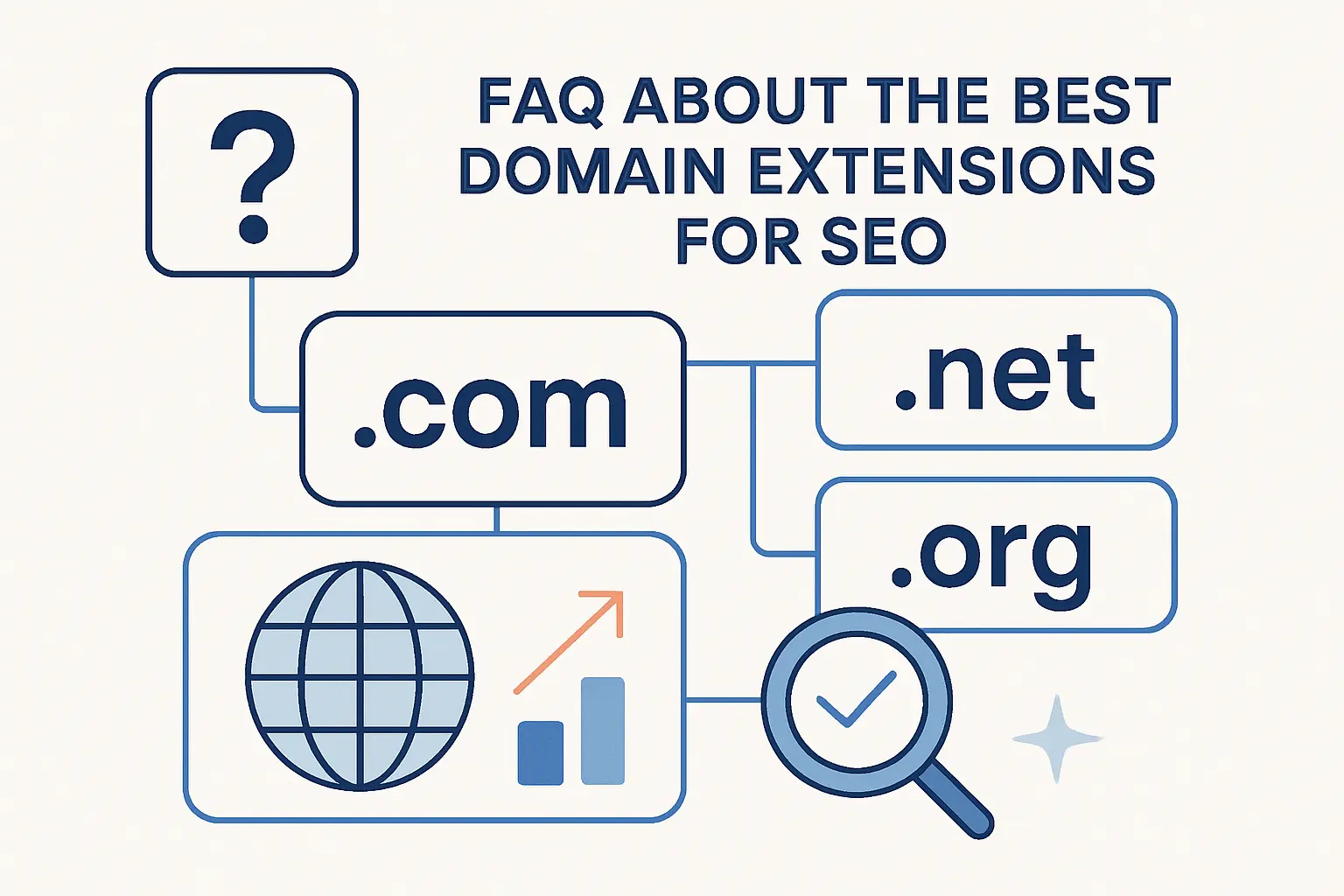
A lot of domain advice online is half memory, half myth. Google says it created a public guide so site owners can better understand how its ranking systems work, and we appreciate that spirit because plain answers beat folklore every time. Here are the short versions we use most often.
1. What Is the Best Domain Extension for SEO?
For most general-purpose businesses, .com is still the best default, but not because it gets a hidden ranking bonus. ICANN’s glossary reminds us that generic TLDs include familiar options like .com, .net, .edu, and .org, and that flexibility is exactly why the answer depends on audience and brand context. We start with .com when trust and broad recognition matter most, then move to other endings only when strategy clearly improves.
2. Which Domain Is Best for SEO?
The best domain is the one that is closest to your brand, easy to remember, and aligned with the audience you actually want. On our own side, we have long advised customers that a strong domain should be as close to the company or website name as feasible while staying brief and memorable, because that reduces confusion in search, email, referrals, and offline marketing. That means the full name matters more than the extension alone.
3. Is Domain Flipping Illegal?
No, not by default, but there is a sharp line between normal resale and bad-faith brand targeting. WIPO explains that misusing a brand in a domain can trigger a domain-name dispute through the UDRP system, which is the zone where “flipping” turns into cybersquatting risk. In practice, buying generic names is one thing; buying another company’s identity and hoping they pay you back for it is another.
4. Is .com or .net Better for SEO?
In our judgment, .com is usually better for mainstream trust, while .net is perfectly workable when the brand is established or the .com is unavailable. Strong .net examples such as Speedtest.net show that the extension can perform well when the product is clear and the brand is real. Most businesses, however, still find that .com demands less explanation and earns faster recognition with a broad audience.
How 1Byte, a Cloud Computing and Web Hosting Provider, Supports Customers With Domains and Hosting
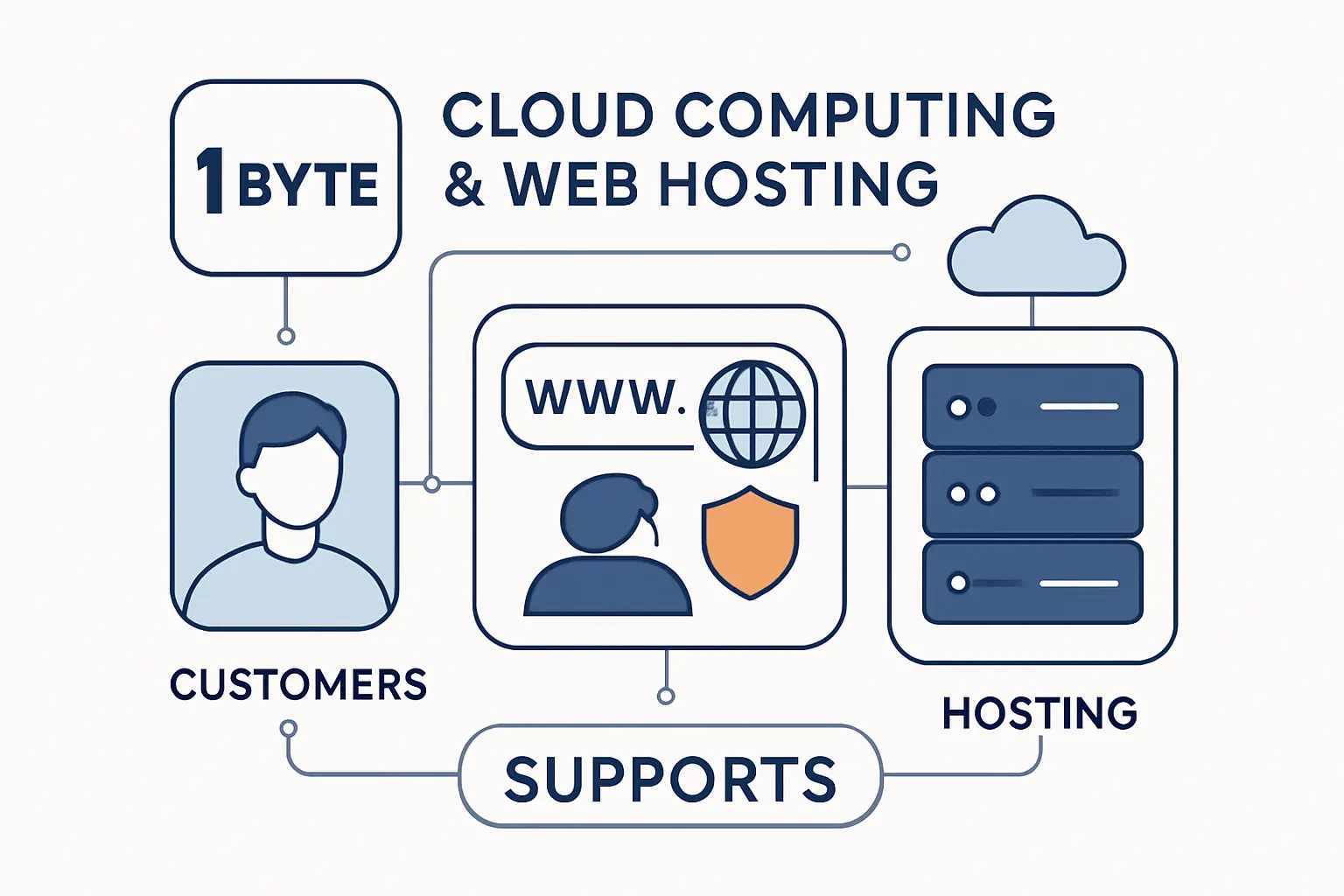
At 1Byte, we do not treat domains as isolated purchases. Our platform brings domain registration, hosting, and security products into one workflow, which matters because a strong launch depends on how these layers fit together. In practice, that means fewer handoff errors, cleaner DNS setup, and a faster path from idea to live site.
1. Domain Registration and SSL Certificates for Secure Website Launches
For secure launches, we pair domain setup with certificate readiness instead of leaving security for later. Our SSL guidance explains that 1Byte offers trusted SSL certificates to protect websites and secure customer data transmission, and we treat that as part of launch hygiene, not an optional afterthought. That combination helps customers point the domain, validate ownership, and move to HTTPS without the usual scramble.
2. WordPress Hosting, Shared Hosting, and Cloud Hosting for Reliable Websites
Because one size never fits every workload, our lineup covers Shared Hosting, Cloud Hosting, and WordPress Hosting. Smaller brochure sites often do well on shared plans, content-led brands tend to like managed WordPress, and growing applications usually need the extra flexibility and headroom that cloud hosting provides. We help customers choose the model that fits the site they are building now and the traffic they expect later.
3. Cloud Servers Backed by AWS Partner Expertise for Scalable Growth
Finally, our infrastructure work extends beyond basic hosting when a business needs custom scale or a more deliberate cloud architecture. As our official partner page states, 1Byte is an AWS Consulting Partner, and that matters for teams that need stronger deployment patterns, better operational discipline, and room to grow without redesigning everything from scratch. That is the sort of backend support that keeps a good domain choice from being wasted by poor execution.






Conclusion: The Best Domain Extensions for SEO Depend on Trust, Relevance, and Reach
In the end, the best domain extension for SEO is the one that matches your audience, supports your geographic strategy, and makes the brand feel credible before the first page view. Google recommends permanent server-side redirects when a URL changes, which is one more reason we prefer getting the domain decision right early instead of paying for a messy migration later. Our next suggestion is simple: shortlist a few candidates, test them against trust, local fit, and growth plans, and then ask yourself one blunt question—which name will still feel right when customers see it in search results a year from now?