

- What “Cloud Server Rental Cost” Really Includes
- The 2026 Forces That Will Push Your Cloud Costs Up or Down
- What Recent Reports Reveal About Cloud Spend (And Why It Matters for 2026)
- Price Anchors You Can Use to Sanity-Check Your 2026 Budget
- Discounts That Actually Change Your Cloud Server Rental Cost
- Specific, Real-World Scenarios That Change What You “Should” Pay
- A Practical 2026 Checklist: How to Tell If You’re Overpaying
- How Much You Should Really Be Paying in 2026 (The Honest Answer)
- Cloud Server Providers to Consider
- Conclusion
Cloud server rental cost sounds simple. You rent a server. You pay a monthly bill. Yet real cloud pricing rarely behaves like a clean “rent” model.
Costs move because teams scale fast, ship features, and add managed services. Then invoices grow quietly through data transfer, storage performance, and “nice-to-have” security controls. So the goal for 2026 is not chasing the cheapest VM. The goal is paying the right amount for outcomes you can measure.
This guide breaks cloud server rental cost into clear parts. Then it shows the pricing forces that will shape 2026 budgets. Finally, it gives a practical way to sanity-check what you pay, without guessing and without relying on vendor marketing.
What “Cloud Server Rental Cost” Really Includes
1. The “Server” Is a Bundle of Meters, Not a Single Product
Traditional hosting feels like renting one thing: a box with fixed capacity. Cloud compute feels similar at first. However, hyperscalers and most modern platforms bill through separate meters that stack together.
When you say “server rental,” you usually mean the compute instance. Yet your bill also includes the parts that make that instance useful in production.
- Compute: the VM or container runtime that runs your code.
- Storage: block volumes for the OS and app data, plus snapshots and backups.
- Network: public IP, load balancer, gateways, and internet egress.
- Operations: logs, metrics, traces, alerts, and sometimes security scanning.
So your cloud server rental cost is the total of these meters for a workload. If you only watch the VM line item, you will miss the real drivers.
2. “Per Hour” Pricing Still Produces Surprise Monthly Bills
On-demand pricing looks predictable. You see a rate and multiply by runtime. Still, the monthly bill can drift because usage patterns shift.
First, teams over-provision to avoid performance risk. Then they forget to rightsize. Next, environments multiply. Dev, staging, preview, and test stacks start to look like production. After that, logging and analytics expand because they feel cheap during setup.
These changes happen gradually. Therefore, cost control needs a system, not a one-time optimization sprint.
3. A Simple Cost Model You Can Use for Any Provider
Use a layered model instead of a single “server price.” This keeps your thinking clear when comparing vendors.
- Baseline: always-on compute plus minimum storage.
- Variable load: autoscaled instances, burst CPU, or per-request/serverless compute.
- Data gravity: how much data you store, move, replicate, and back up.
- Operational overhead: observability, security, and managed services.
Next, assign each layer an owner. Engineering can own baseline and variable load. Data teams can own data gravity. Platform or security can own operational overhead. This division prevents “everyone owns it,” which often means “nobody owns it.”
The 2026 Forces That Will Push Your Cloud Costs Up or Down
1. AI Workloads Will Distort What “Normal” Compute Costs Look Like
AI changes how people perceive infrastructure costs. A single GPU-heavy workload can cost more than dozens of general-purpose application servers.
For example, AWS shows an effective hourly rate of $31.464 USD in an EC2 Capacity Blocks pricing example. This kind of spend can make ordinary app servers look “cheap,” even when the app side still wastes money.
So in 2026, budgets will often split into two tracks: AI infrastructure and everything else. That split helps teams avoid letting AI urgency excuse sloppy baseline spending.
2. Efficiency Gains Will Matter More Than List Prices
Providers keep improving price-performance. They also offer more CPU families, more storage options, and more deployment shapes. That sounds great. Yet choice adds complexity.
As a result, the winning strategy is not constantly switching clouds. Instead, it is standardizing a few “golden” instance types and storage tiers per workload class. Then you tune architecture for utilization.
High utilization beats “cheap” instances that sit idle. Also, stable deployment patterns make commitments and automation safer.
3. Network Architecture Will Keep Creating Silent Cost Spikes
Teams often treat networking as plumbing. Yet networking creates some of the most expensive surprises, especially for SaaS products, media delivery, and data platforms.
In practice, you pay more when you move data across boundaries: out to the internet, across regions, or through managed gateways. If you do not design for data locality, your cloud server rental cost becomes a bandwidth bill wearing a compute disguise.
What Recent Reports Reveal About Cloud Spend (And Why It Matters for 2026)
1. Cloud Demand Keeps Rising, So Optimization Becomes a Finance Problem
Cloud is not slowing down. Gartner forecasts worldwide public cloud end-user spending to total $723.4 billion in 2025, which signals that many organizations will keep scaling usage into 2026.
That scale changes expectations. Finance leaders stop asking, “Why is cloud expensive?” and start asking, “Why is our unit cost worse than last quarter?”
2. Waste Persists, Even in Mature Organizations
Waste is not just an early-stage problem. It shows up whenever ownership stays unclear or engineering incentives reward speed without accountability.
HashiCorp reports that 91% of respondents report wasted cloud spending. That aligns with what many teams see internally: unused capacity, idle environments, and oversized databases.
Flexera also highlights avoidable spend. In its 2024 State of the Cloud press coverage, it reports unnecessary IaaS and PaaS spend at 27%. This is the money you can usually reclaim without hurting reliability, if you apply consistent controls.
3. Cost Management Stays the Top Cloud Pain Point
Cloud tooling improves every year. Still, governance and behavior lag behind.
Flexera’s 2025 State of the Cloud press release says 84% of organizations struggle to manage cloud spend. That single signal matters for 2026 planning: you should assume your competitors also fight the same problem, and you can build an advantage if you operationalize cost discipline.
Price Anchors You Can Use to Sanity-Check Your 2026 Budget
1. Compute Anchor: Start With a Known General-Purpose VM Rate
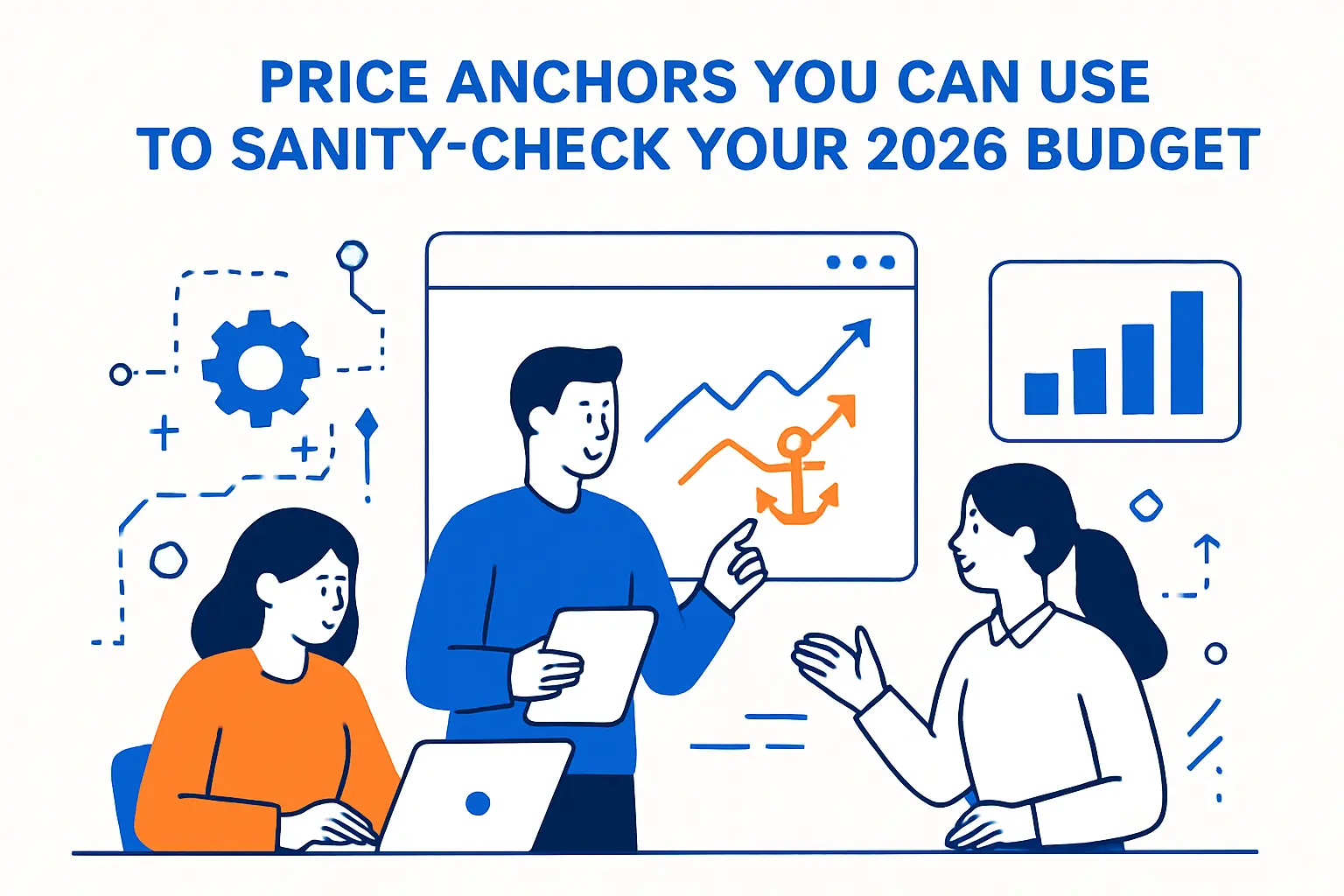
You need a baseline price anchor so you can spot outliers fast. Then you can compare your own unit costs across teams and environments.
Google Cloud’s Compute Engine pricing page lists an e2-standard-2 default price of $0.06701142 / 1 hour for a common general-purpose VM shape in a selected region view. You can use this style of published on-demand rate as your reference point, even if you run on another provider.
Next, map your “standard app server” to an equivalent class. Then compare what you actually pay after discounts, support, and add-ons. If your real cost drifts far above your anchor without a clear reason, you likely have utilization or architecture issues.
2. Storage Anchor: Treat Block Storage as a First-Class Cost Driver
Many teams price compute carefully, then ignore storage until bills spike. That approach fails because storage grows continuously, while compute often scales with demand.
AWS’s EBS pricing examples reference regions that charge $0.08 per GB-month for gp3 storage. Use that as a simple mental anchor for SSD block storage economics.
Then ask a direct question: “Which data truly needs low-latency block storage?” If data can tolerate object storage or colder tiers, you can reduce cost without changing compute at all.
3. Network Anchor: Assume Egress Will Hurt Unless You Design Around It
Internet egress is one of the most common “why did the bill jump?” line items. It also gets worse as you scale customers, APIs, analytics exports, and integrations.
On AWS, the Amazon VPC pricing page includes an example with the Data Transfer Out to Internet rate set at $0.09 per GB. Even if your effective rate differs by service and tier, this gives you a realistic order of magnitude for budgeting.
Now use that anchor proactively. Keep data close to where it gets processed. Cache aggressively. Prefer private connectivity and same-region traffic when it fits the product. Also, watch cross-region replication patterns, because they often become permanent once teams rely on them.
Discounts That Actually Change Your Cloud Server Rental Cost
1. Commitments: Use Them After You Standardize, Not Before
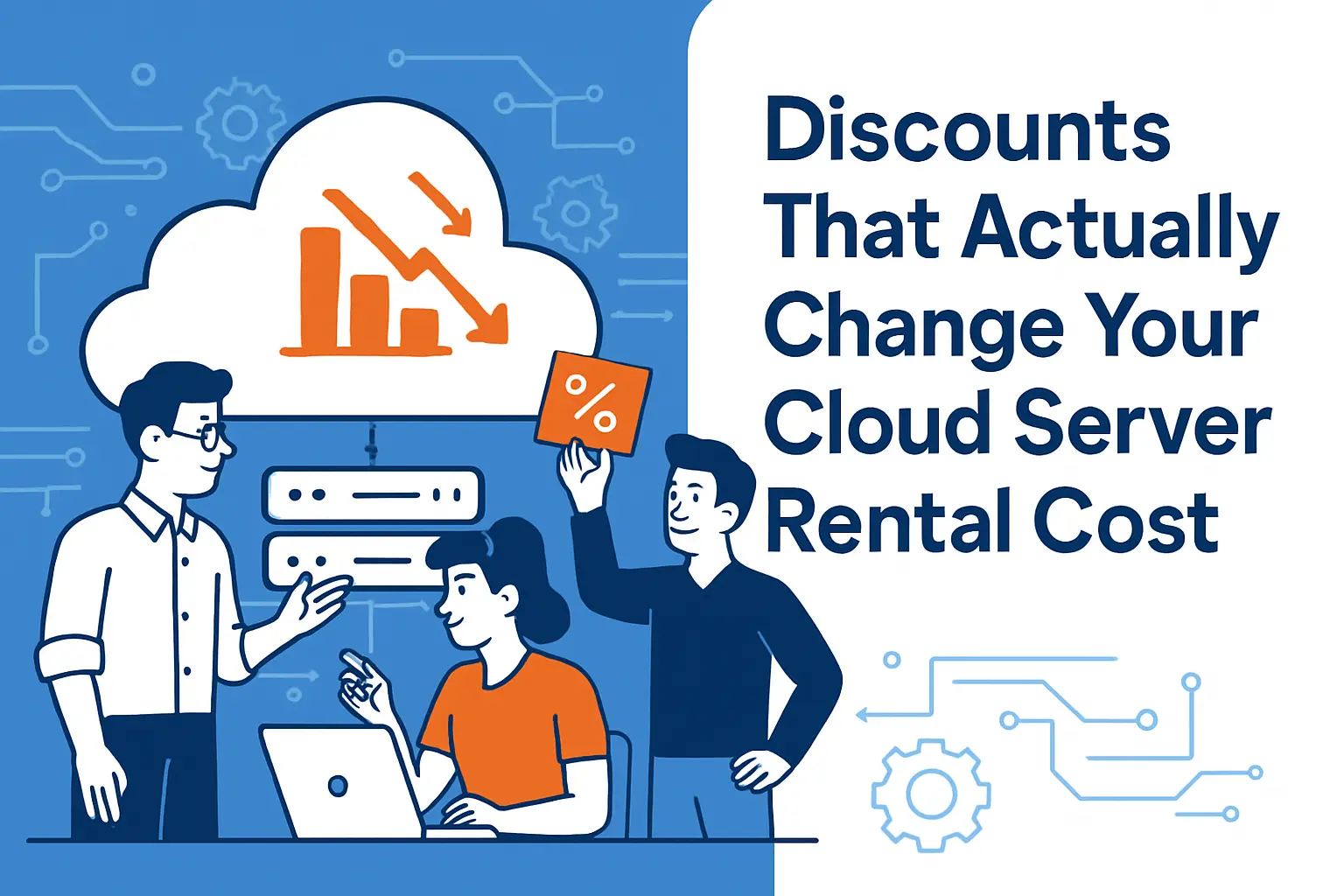
Commitments can reduce cost a lot. However, they punish chaos. So first you standardize instance families, stabilize environments, and establish ownership.
Then commitments become safe. AWS notes that Savings Plans can offer savings up to 72%, depending on the plan type and commitment structure. That is meaningful, but only if your usage pattern stays stable enough to consume the commitment.
A good 2026 rule: commit to what you can already predict. Then keep the rest flexible and optimize it with automation.
2. Spot and Preemptible Capacity: Great When the Workload Fits
Spot capacity works best for fault-tolerant workloads. Batch processing, stateless workers, CI jobs, and certain data transforms usually fit well.
Still, you need engineering work to get the value. You must handle interruptions, design idempotent jobs, and plan capacity fallbacks. So spot is not “free savings.” It is a trade: engineering effort for lower run cost.
When teams do it right, they lower costs and improve system resilience at the same time.
3. Licensing, Support, and Managed Services: The “Shadow Rent”
Cloud server rental cost often rises because teams “rent convenience.” Managed databases, hosted queues, and enterprise support tiers can be the right call. Yet they also hide the true cost of the workload.
So treat these as architectural decisions, not procurement defaults.
- If a managed database saves engineering hours and reduces outages, it can be cheaper overall.
- If you pay for premium support but never use escalation paths, you might be overpaying for reassurance.
- If you run licensed software, plan licensing early so you do not lock into the most expensive path by accident.
In 2026, cost leaders will model these trade-offs explicitly. They will not let them slip into budgets as “miscellaneous cloud.”
Specific, Real-World Scenarios That Change What You “Should” Pay

1. A Small Web App That Suddenly Gets Popular
Teams often start with one always-on server and one database. That works until traffic spikes. Then costs jump because the architecture forces vertical scaling.
Instead, build for horizontal scaling early. Use a load balancer, stateless app servers, and a caching layer. After that, you can add autoscaling that matches demand. This approach reduces waste because you stop paying for peak capacity during quiet hours.
Also, separate environments with intent. Keep production robust. Keep development lightweight. Clean up preview environments automatically. Otherwise, “temporary” servers become permanent rent.
2. An API Product With Heavy Outbound Traffic
APIs look compute-heavy at first. Yet many API businesses become network-heavy as usage grows. Responses contain media, documents, or large JSON payloads. Then egress becomes the bill.
So focus on response size and caching policy. Use compression where it helps. Put static or semi-static assets behind a CDN. Push large downloads to object storage with signed URLs. That shifts load away from your compute tier and reduces repeated outbound transfers from your app servers.
As a result, your cloud server rental cost becomes easier to predict because compute scales mainly with requests, not with payload delivery.
3. A Data Platform That “Accidentally” Becomes a Real-Time System
Data teams often start with batch pipelines. Then product teams request near-real-time dashboards. Next, streaming and frequent queries arrive. After that, storage and compute costs both rise because systems stay hot all day.
Here, cost control comes from tiering and lifecycle rules. Keep hot data hot for the shortest useful window. Then move it to cheaper storage. Also, separate compute from storage when possible, so you do not pay for idle query clusters.
Finally, enforce guardrails on experimentation. Data exploration is valuable, but it must not run unchecked in production-grade warehouses.
A Practical 2026 Checklist: How to Tell If You’re Overpaying
1. Utilization: Make Idle Time Visible and Embarrassing
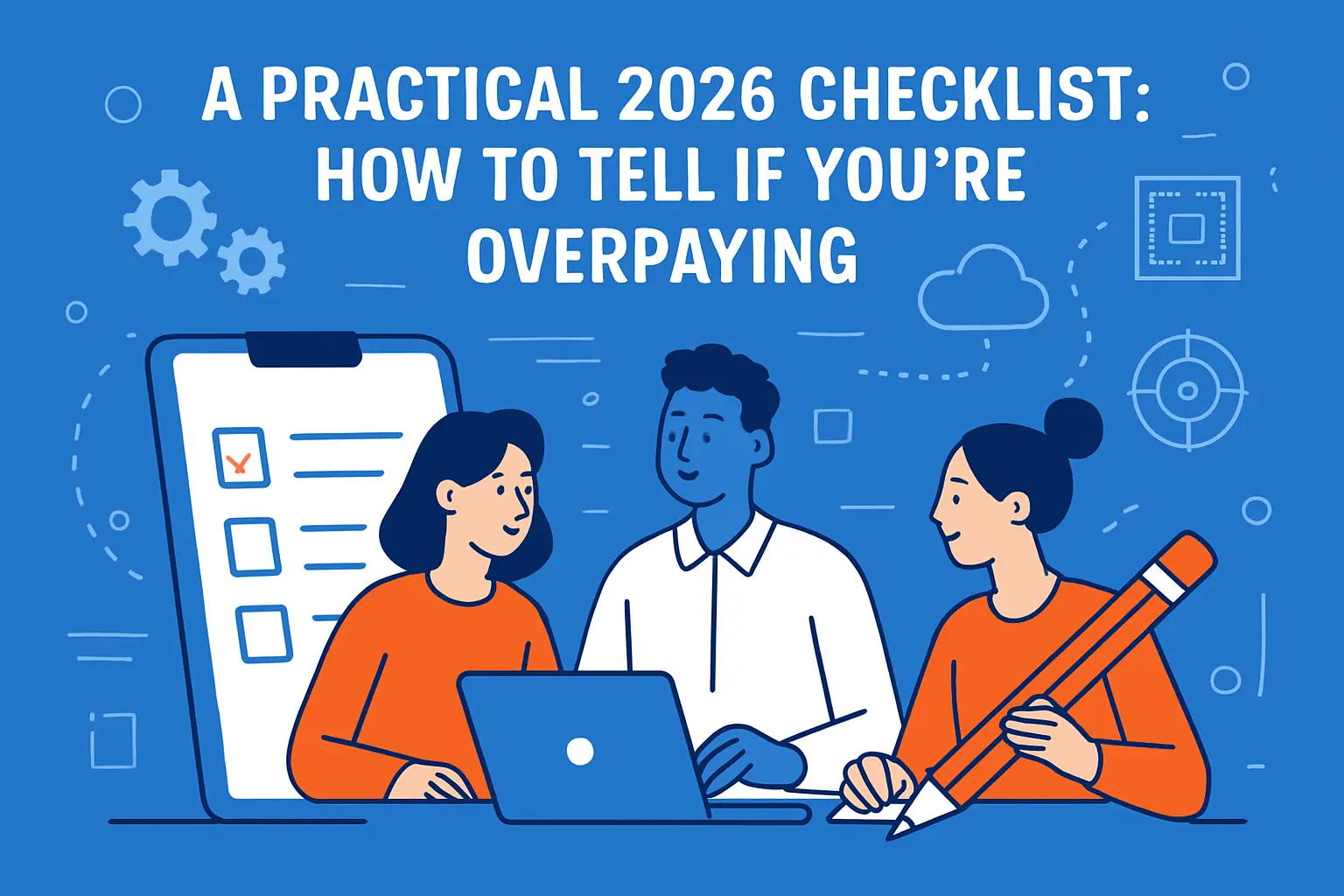
Most waste starts with silence. Nobody feels the pain of an oversized server when it “just works.” So expose utilization clearly.
- Track CPU and memory headroom over time, not in snapshots.
- Identify always-on resources with low usage.
- Review non-production environments weekly, not quarterly.
Then act quickly. Rightsizing small fleets monthly beats big cost-cutting projects once a year.
2. Storage Hygiene: Stop Paying for Copies You Don’t Need
Storage grows because teams keep everything “just in case.” That behavior makes sense emotionally. Yet it becomes expensive at scale.
So set retention policies. Expire old snapshots. Archive logs that nobody reads. Delete orphaned volumes and unattached IPs. Also, tag everything with an owner so cleanups do not stall.
Once you build this hygiene, you reduce risk too. Fewer assets means fewer attack surfaces and fewer accidental exposures.
3. Network Discipline: Design for Locality and Predictability
Network costs often spike because architectures sprawl across regions, accounts, and services without a plan.
To prevent that, standardize where data lives. Keep compute close to storage. Avoid cross-region chatter unless you truly need it for resilience or latency. When you do need it, document the cost trade-off so teams do not repeat the pattern casually.
Also, measure outbound data by product feature. Then you can connect cost to value. That is the fastest way to make cost decisions feel fair.
How Much You Should Really Be Paying in 2026 (The Honest Answer)

1. You Should Pay for Measured Outcomes, Not “Servers”
The right cloud server rental cost depends on the value your workload produces and the constraints it must meet. A compliance-heavy system will cost more. A low-latency global product will cost more. A GPU-driven pipeline will cost far more.
So define your unit economics. Decide what a “unit” is: a customer, an API call, a processed file, or a streamed minute. Then track cost per unit monthly.
2. You Should Pay Less Than You Did Last Quarter for the Same Work
If your product stays stable, your efficiency should improve. Automation should reduce waste. Better sizing should cut idle capacity. Better caching should cut repeated transfers.
When cost per unit rises, treat it like a production incident. Investigate. Fix. Document. Otherwise, cost creep becomes your default operating model.
3. You Should Budget for Governance as a Feature
Cost management is not a side task. It is part of platform quality.
In 2026, teams that win on cloud spend will do three things well: assign ownership, standardize architecture, and automate enforcement. They will still use cloud flexibility. Yet they will not pay “chaos tax” for it.
Cloud Server Providers to Consider
1. How Different Providers Shape Your Cloud Server Rental Cost
When people compare cloud server rental cost, they often focus on the base “compute” price and miss the bigger picture: bandwidth/egress rules, storage tiers, snapshots/backups, load balancers, managed add-ons, and how easy it is to control sprawl. In practice, providers fall into a few buckets:
- Hyperscalers (AWS, Azure, Google Cloud): massive service ecosystems and flexibility, but costs can become complex if you don’t actively manage usage.
- Developer-friendly cloud/VPS platforms (DigitalOcean, Linode/Akamai, Vultr): simpler experiences and often more predictable billing for common workloads.
- Value-focused infrastructure providers (Hetzner, OVHcloud): strong price-performance for many use cases, with tradeoffs depending on regions and managed features.
- Managed-first partners (like us at 1Byte): a practical option when you want predictable monthly spend, right-sizing help, and real people handling operations and optimization.
2. Provider Comparison Table
| Provider | Pricing Style | Best Fit | What To Watch For In Cloud Server Rental Cost |
|---|---|---|---|
| 1Byte (Us) | Practical, workload-based plans with guidance to keep costs predictable | Teams that want a reliable server setup plus help with sizing, ops, and cost control | We focus on avoiding “bill shock” by matching resources to real usage and keeping environments clean as you scale |
| AWS | Highly granular, pay-as-you-go with many pricing levers | Complex architectures, deep managed services, global-scale products | Costs can jump from data transfer, managed services, and “small” extras spread across many services |
| Microsoft Azure | Granular, enterprise-oriented cloud pricing | Microsoft-centric stacks, enterprise governance, hybrid needs | Watch network and platform service costs, plus how environments multiply across subscriptions and regions |
| Google Cloud | Granular pricing with strengths in data/AI services | Data platforms, analytics-heavy workloads, cloud-native stacks | Data movement and platform services can become the main bill driver if usage grows fast |
| DigitalOcean | Simpler plans for common workloads | Startups, MVPs, straightforward web apps and APIs | Predictability is often better, but you’ll want to validate scaling needs and advanced service requirements |
| Linode (Akamai) | Simplified cloud/VPS pricing with a developer focus | Apps that value simpler billing and standard infrastructure building blocks | Check bandwidth policies and any add-ons you’ll need for production (backups, monitoring, managed help) |
| Vultr | Simple instances with broad location options | Global deployments for smaller services, edge-ish distribution, dev/test | Confirm what’s included vs add-on costs (snapshots, backups, managed services) to keep monthly spend stable |
| Hetzner | Value-focused infrastructure pricing | Cost-sensitive workloads that still need strong performance | Make sure regions, support expectations, and managed feature needs align with your production requirements |
| OVHcloud | Value-focused infrastructure with broad product choices | Businesses looking for infrastructure options beyond hyperscalers | Clarify networking, backup policies, and operational needs so “low base cost” doesn’t hide extra overhead |
3. Our Take at 1Byte: The Fastest Way to Choose Without Overpaying
If your priority is keeping cloud server rental cost predictable, the “best provider” is the one that matches your workload and your operating model:
- If you’re building a complex product with many managed services and global components, hyperscalers can be worth it—just plan for active cost management.
- If you’re running a straightforward app and want simpler billing, developer-friendly platforms often reduce surprises.
- If you want the outcome (stable performance + stable monthly spend) more than you want to manage the details, we’re a strong fit. We help you right-size, design for cost efficiency, and maintain the environment so costs don’t creep up over time.
When you’re ready, we can review your workload goals, propose a practical setup, and explain exactly what will drive your monthly cost—before you commit.





Conclusion
Cloud server rental cost is never just the sticker price of a VM. The real number comes from how your workload behaves over time—CPU and RAM sizing, storage type and IOPS, bandwidth and egress, uptime requirements, and the operational choices you make around backups, security, and monitoring. Once you map those drivers to your actual usage patterns, it becomes much easier to predict monthly spend, avoid surprise spikes, and choose the right balance between flexibility and commitment.
The smartest approach is to start with a clear baseline, track usage early, and optimize continuously: right-size resources, keep environments clean, set budgets and alerts, and design architecture to reduce unnecessary data transfer and overprovisioning. If you want a plan that fits your workload (not generic assumptions), 1Byte can help you size properly, clarify what’s included, and build a setup that stays stable and cost-efficient as you scale.