Customer data platforms help teams stop guessing about customers. They bring scattered customer signals into a usable profile. They also make that profile available to the tools that drive revenue, retention, and service outcomes.
Most growth teams feel the same pain. Data sits in too many places. Consent rules vary by region and channel. Marketing wants faster launches, while security and privacy teams want tighter control. A strong CDP gives you a single customer view you can trust, plus the governance and activation paths to use it responsibly.
This guide shares a practical way to evaluate customer data platforms, then lists options you can shortlist. Use it to match your goals, your data reality, and your team’s operating model.
Why Customer Data Platforms Matter Right Now
CDPs have moved from “nice to have” to “core system.” The market reflects that shift. Industry research projects the customer data platform market to reach USD 37.11 billion by 2030, which signals sustained investment in unifying and activating first-party data across channels.
The vendor landscape also keeps expanding. The CDP Institute has tracked a total of 208 vendors, so you can’t rely on brand awareness or feature checklists alone. You need to decide how you want to run customer data in your organization, then pick a platform that fits that operating style.
At the same time, privacy and security risk has not slowed down. The latest IBM research reports The global average cost of a data breach is 4.4M in USD, which raises the stakes for governance, access controls, and data minimization. A CDP can reduce risk, but only if you configure it with clear rules and strong operational discipline.
Most platforms promise “unification.” The real difference shows up when you implement. You want a CDP that fits your data sources, your team structure, and your activation channels.
Focus on these capability areas as you evaluate tools:
Data ingestion that matches your reality. Make sure it supports the sources you actually use, including web events, mobile events, CRM objects, commerce orders, support tickets, and offline feeds.
Identity resolution you can explain. You need transparent match rules, merge logic, and survivorship policies. You also need a path from anonymous behavior to known profiles without breaking consent rules.
Governance that runs in daily workflows. Look for consent and preference handling, role-based access, audit trails, and controls for sensitive attributes.
Activation that fits your go-to-market motions. A CDP only matters if it can power email, ads, on-site personalization, sales outreach, and customer service actions.
Data quality and observability. You need a way to detect schema drift, broken event payloads, and upstream feed changes before they wreck campaigns.
Usability for the teams who will own it. Some CDPs serve data teams first. Others serve marketers first. Pick the model you can support long term.
A Practical Selection Framework: Unify, Stay Compliant, Then Activate
CDP projects fail when teams buy a platform before they agree on how they will use it. A better approach starts with outcomes, then works backward into data and governance.
Use this workflow to choose and implement customer data platforms with less risk:
Start with a narrow, high-value use case. Pick a lifecycle trigger, a suppression rule, or a service workflow that you can measure.
Map the minimum viable data set. Identify the sources and fields you need for that first outcome, then expand after you prove value.
Decide who owns what. Clarify which team owns event tracking, identity rules, consent logic, and audience definitions.
Design privacy into the data model. Tag sensitive attributes, define allowed purposes, and set retention rules before broad activation.
Pick your activation pattern. Decide whether you want the CDP to push audiences into tools, read from a warehouse, or act as a hybrid layer.
Plan for iteration. Treat profile quality and segmentation as living systems. Build feedback loops from campaign performance and support outcomes.
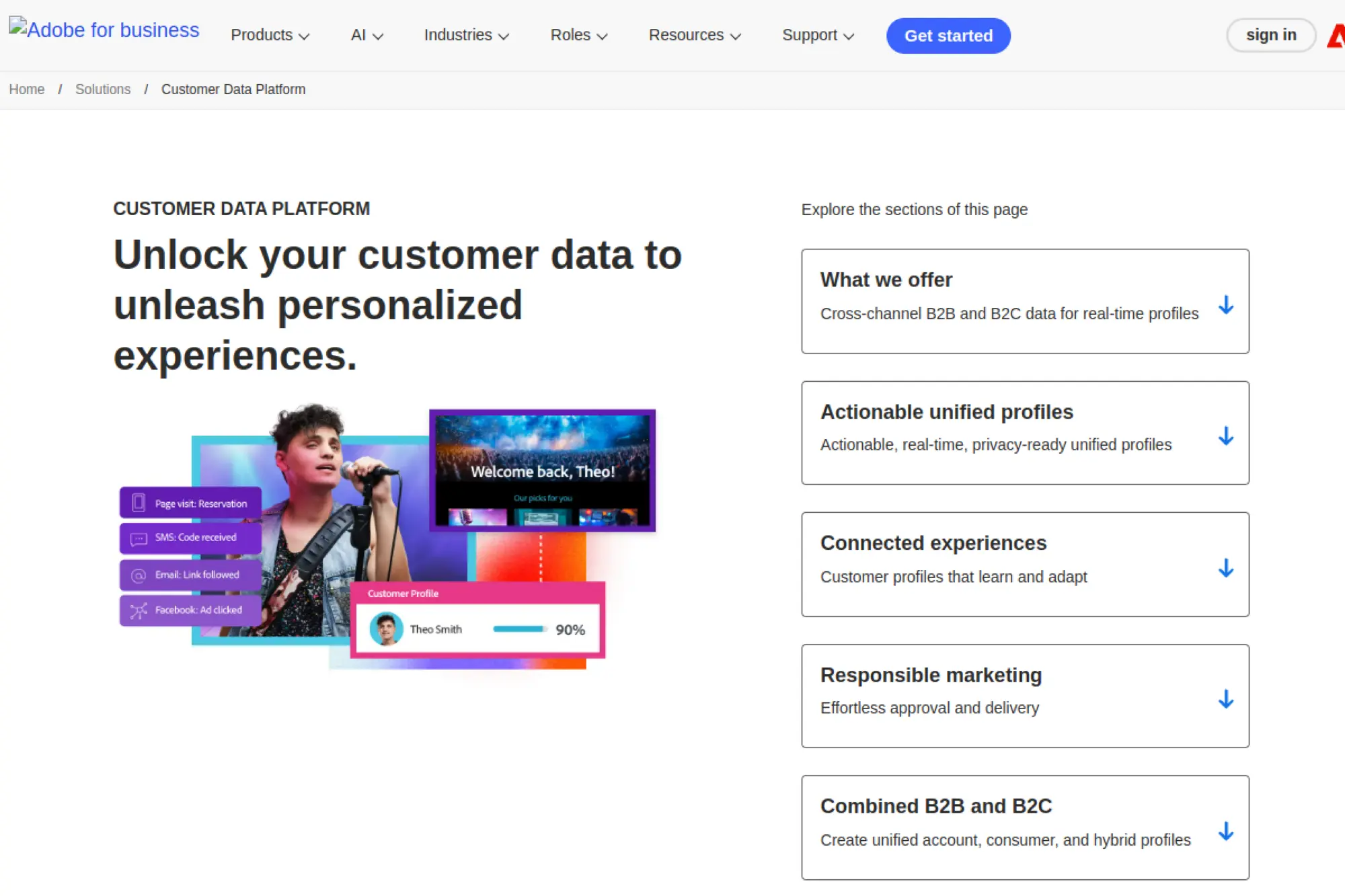
Adobe Real-Time CDP suits teams that want enterprise-grade profiles with strong activation across marketing and experience workflows. It focuses on real-time, privacy-ready profiles that you can use for segmentation, personalization, and audience sharing. It also fits organizations that already rely on Adobe tooling for digital experience delivery.
Best for
Large brands that need real-time profile updates, cross-channel activation, and privacy controls that business teams can manage without constant engineering support.
Key workflows to configure
Event and batch ingestion from web, app, CRM, and commerce systems
Identity stitching rules and profile merge policies
Consent-aware segmentation and audience governance
Activation to personalization and paid media destinations
Ongoing profile quality monitoring and lifecycle signals
Sales growth lever
Use unified behavioral and transaction signals to build intent-driven audiences, then trigger timely offers and suppress low-propensity outreach. This improves conversion efficiency and reduces wasted spend.
Watch outs
Adobe ecosystems reward standardization. If your stack spans many non-Adobe tools, plan extra time for integration and governance alignment. Also set clear ownership for identity rules to prevent profile chaos.
Salesforce Data Cloud works well when you want customer profiles and activation inside the Salesforce operating layer. It focuses on ingesting and harmonizing data, resolving identities, and enforcing policy-based governance. It also supports cross-team use because sales, service, and marketing teams can act on the same unified profile.
Best for
Organizations that run core customer workflows in Salesforce and want unified data to drive sales outreach, service context, and marketing personalization in one environment.
Key workflows to configure
Data ingestion from Salesforce clouds and external systems
Data harmonization into a shared customer model
Identity resolution and profile link management
Policy-based governance and consent enforcement
Audience activation into journeys, service flows, and sales actions
Sales growth lever
Turn behavioral and transaction signals into actionable sales and service prompts. For example, you can route high-intent accounts to sales, or surface churn risk signals to service teams before renewals.
Watch outs
Data modeling decisions matter. If teams create competing customer definitions, activation becomes inconsistent. Align on a single profile strategy and enforce it through governance and shared naming rules.
Quick start checklist
Audit the customer identifiers you already store
Connect one key non-Salesforce source
Define match rules for identity resolution
Set consent and policy rules by audience type
Activate one audience into a Salesforce-driven workflow
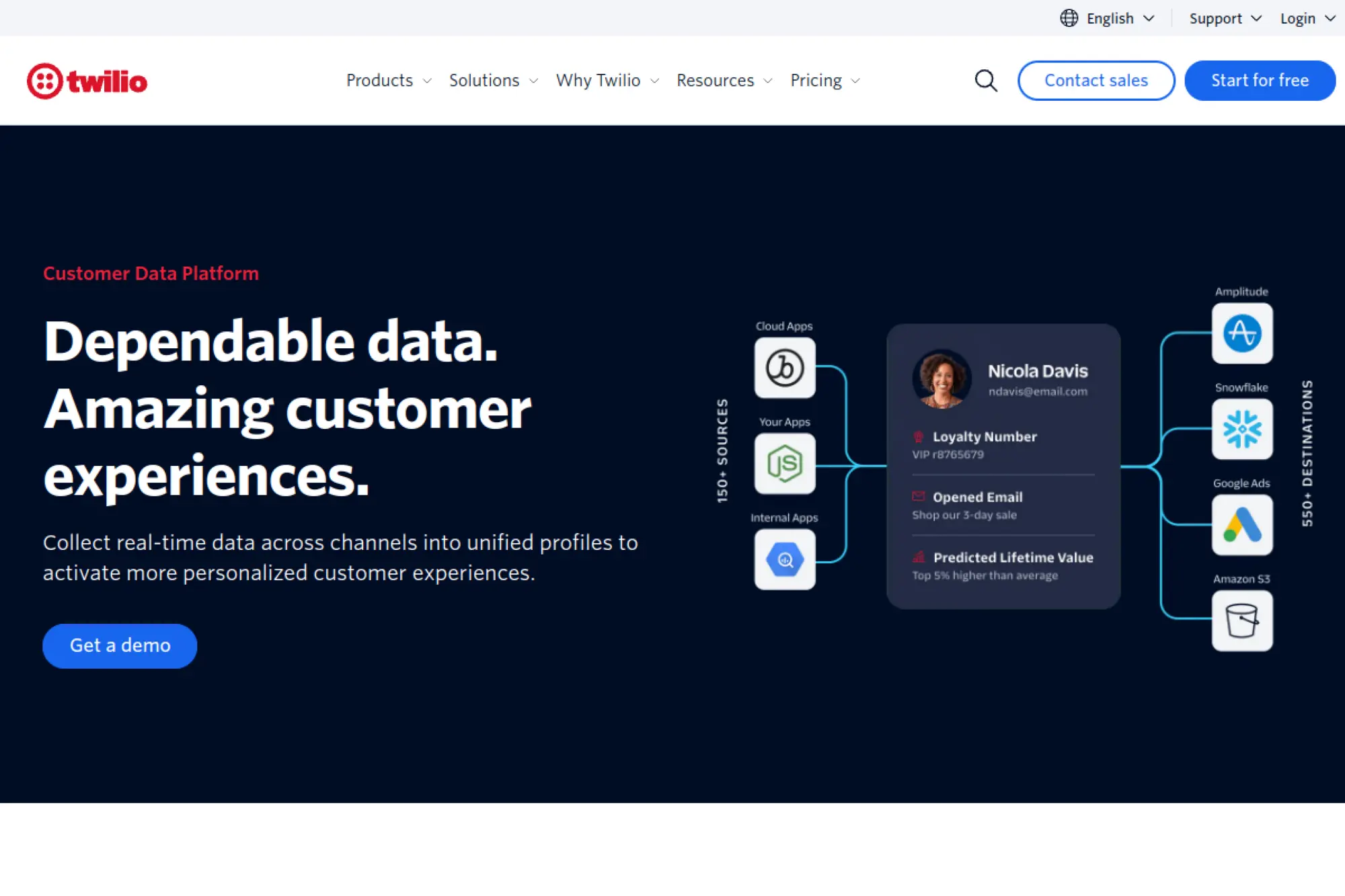
Twilio Segment’s CDP fits teams that value flexibility, strong data pipelines, and broad integrations. It helps you collect customer events and traits, unify identities, and activate audiences across downstream tools. It also supports a composable approach where your warehouse can remain the source of truth.
Best for
Product-led and data-driven organizations that want a scalable customer data layer with strong governance, developer-friendly tooling, and wide activation options.
Key workflows to configure
Tracking plan and event schema standards
Identity resolution strategy across channels and devices
Warehouse connections and enrichment workflows
Audience creation and lifecycle segmentation rules
Destination routing with consent-aware controls
Sales growth lever
Reduce time from insight to action. When product and marketing teams trust the same event stream, they can launch onboarding, upsell, and winback campaigns faster and with cleaner targeting.
Watch outs
If you skip event governance, your data quality will degrade quickly. Treat tracking changes like product releases. Also plan clear ownership for identifiers so profiles stay consistent across tools.
Quick start checklist
Define a tracking plan for key customer actions
Implement collection on your primary digital touchpoints
Connect your warehouse as an enrichment source
Set identity merge rules and test edge cases
Activate a single lifecycle segment into one channel
Tealium AudienceStream focuses on real-time customer profiles and immediate activation. It supports stitching known and unknown visitors, enriching profiles, and pushing audiences into a wide range of marketing systems. Teams often choose it when they want strong privacy controls paired with real-time decisioning.
Best for
Organizations that need real-time audience triggers, privacy-forward controls, and flexible activation across a broad marketing technology stack.
Key workflows to configure
Real-time data collection and normalization
Identity stitching across devices and channels
Profile attribute enrichment and rule-based scoring
Real-time audience creation and connector actions
Consent-aware suppression and preference handling
Sales growth lever
Trigger relevant actions in the moment. For example, you can suppress ads after a purchase, push high-intent segments to an email tool, and personalize site content based on live behavior.
Watch outs
Audience rule design can get complex fast. Keep early use cases simple, then scale with shared standards. Also confirm how you will document and approve changes that affect consent and targeting.
Quick start checklist
Map key touchpoints and data sources
Deploy data collection and validation rules
Define identity keys and merge behavior
Create one high-value audience with clear criteria
Activate the audience to one downstream destination
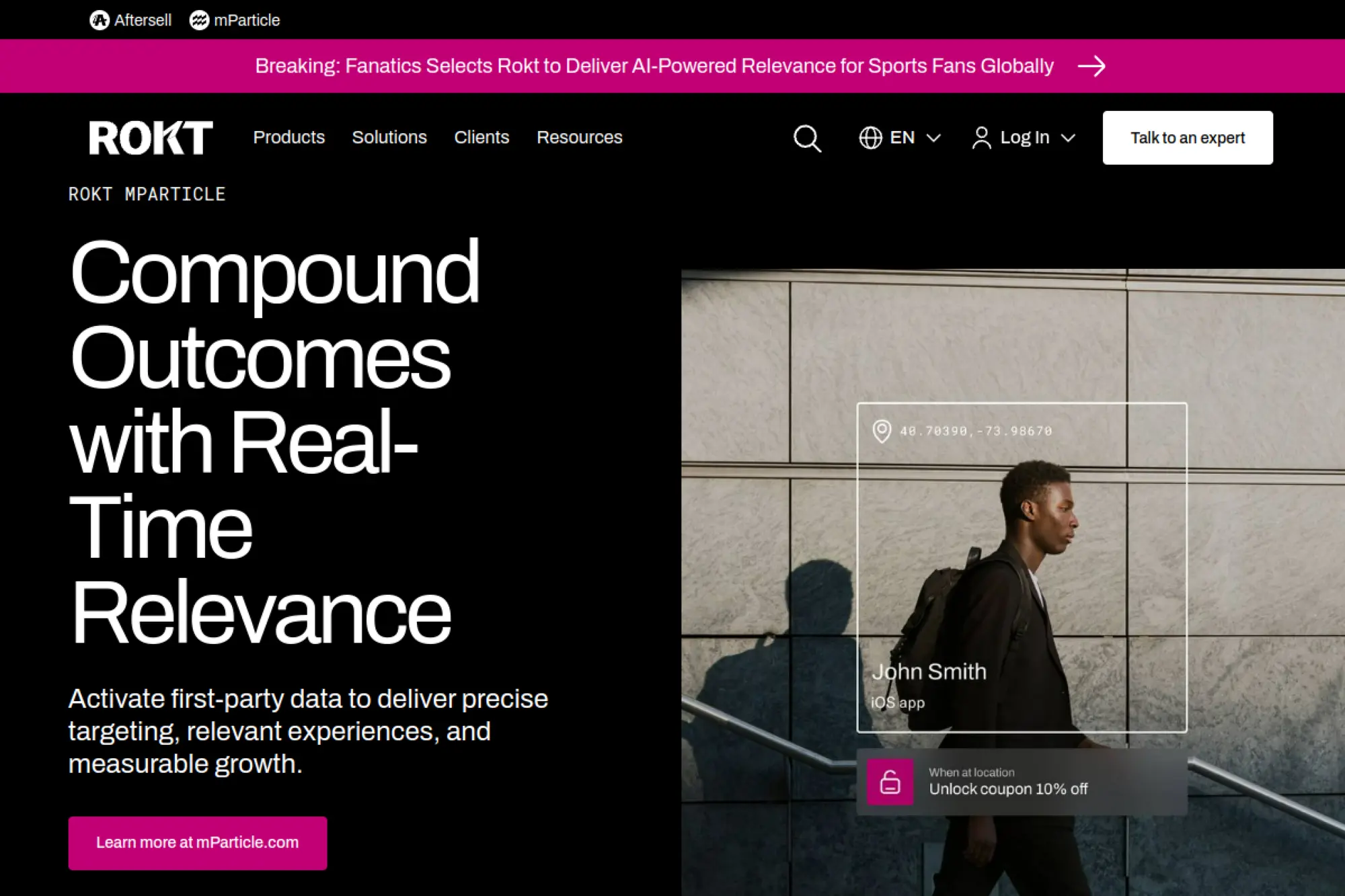
Rokt mParticle is a customer data platform built for real-time collection and activation, with strong roots in mobile and product event streams. It helps teams route data, maintain quality, and build unified profiles that power downstream tools. It also supports a hybrid approach when you want to pair real-time signals with governed warehouse data.
Best for
Digital product teams and lifecycle marketers who need clean event data, fast routing, and identity resolution across app and web journeys.
Key workflows to configure
SDK instrumentation and event taxonomy design
Data quality checks and schema enforcement
Identity resolution across login states and devices
Audience building from behavioral signals
Routing and activation to analytics and engagement tools
Sales growth lever
Use high-intent product behaviors to personalize onboarding and drive activation. When you trigger messages from real usage signals, you increase relevance and improve conversion into paid or retained users.
Watch outs
Instrumentation requires coordination across product and marketing teams. If you treat tracking as an afterthought, profiles will miss key signals. Also confirm how you will manage consent for mobile tracking across regions.
Quick start checklist
Define the events that predict purchase or retention
Implement SDKs on priority platforms
Set schema and validation rules early
Configure identity rules for anonymous-to-known transitions
Treasure Data positions itself as an enterprise CDP designed for complex organizations. It emphasizes unifying data into a persistent customer record, then using that record for segmentation, personalization, and decisioning. Teams often adopt it when they need scale, strong governance, and cross-brand profile management.
Best for
Enterprises with many data sources, multiple brands or regions, and a need for a centralized profile foundation that marketing and analytics can share.
Key workflows to configure
Batch and streaming ingestion from enterprise systems
Unified profile design and identity resolution logic
Profile enrichment and attribute management
Audience segmentation and cross-channel activation
Governance rules for access, consent, and auditing
Sales growth lever
Improve targeting and timing across the lifecycle. A unified record helps you identify high-value customers, recommend next actions, and reduce overlap across channels so you do not spam the same person from different teams.
Watch outs
Enterprise CDPs demand process maturity. If teams can’t agree on a profile definition or ownership model, implementation slows. Set governance early and align on the activation channels that matter most.
Quick start checklist
Pick one lifecycle outcome to prove value
Connect a core transactional source and a behavioral source
Amperity focuses on creating trusted customer profiles that marketing and analytics teams can use without heavy custom work. It emphasizes identity resolution across messy, fragmented data and supports a lakehouse-friendly approach. Many retail and consumer brands use it to make loyalty, commerce, and engagement data usable in the same profile.
Best for
Consumer brands with duplicated identities, inconsistent customer records, and a strong need for accurate profiles that power loyalty and personalization.
Key workflows to configure
Ingestion from commerce, loyalty, POS, and CRM systems
Identity resolution rules and profile trust scoring
Profile enrichment and attribute standardization
Audience creation for lifecycle and retention programs
Activation into email, ads, and service tooling
Sales growth lever
When you fix identity, you unlock better targeting. That improves cross-sell logic, loyalty engagement, and suppression of irrelevant offers. You also reduce wasted incentives because you can see true customer value more clearly.
Watch outs
Identity resolution decisions can become political. Agree on what “truth” means for your business, then document it. Also define who can override merges and how you audit those changes.
Quick start checklist
Connect a high-quality customer source and a messy source
Define match logic and profile survivorship rules
Validate profile accuracy with business stakeholders
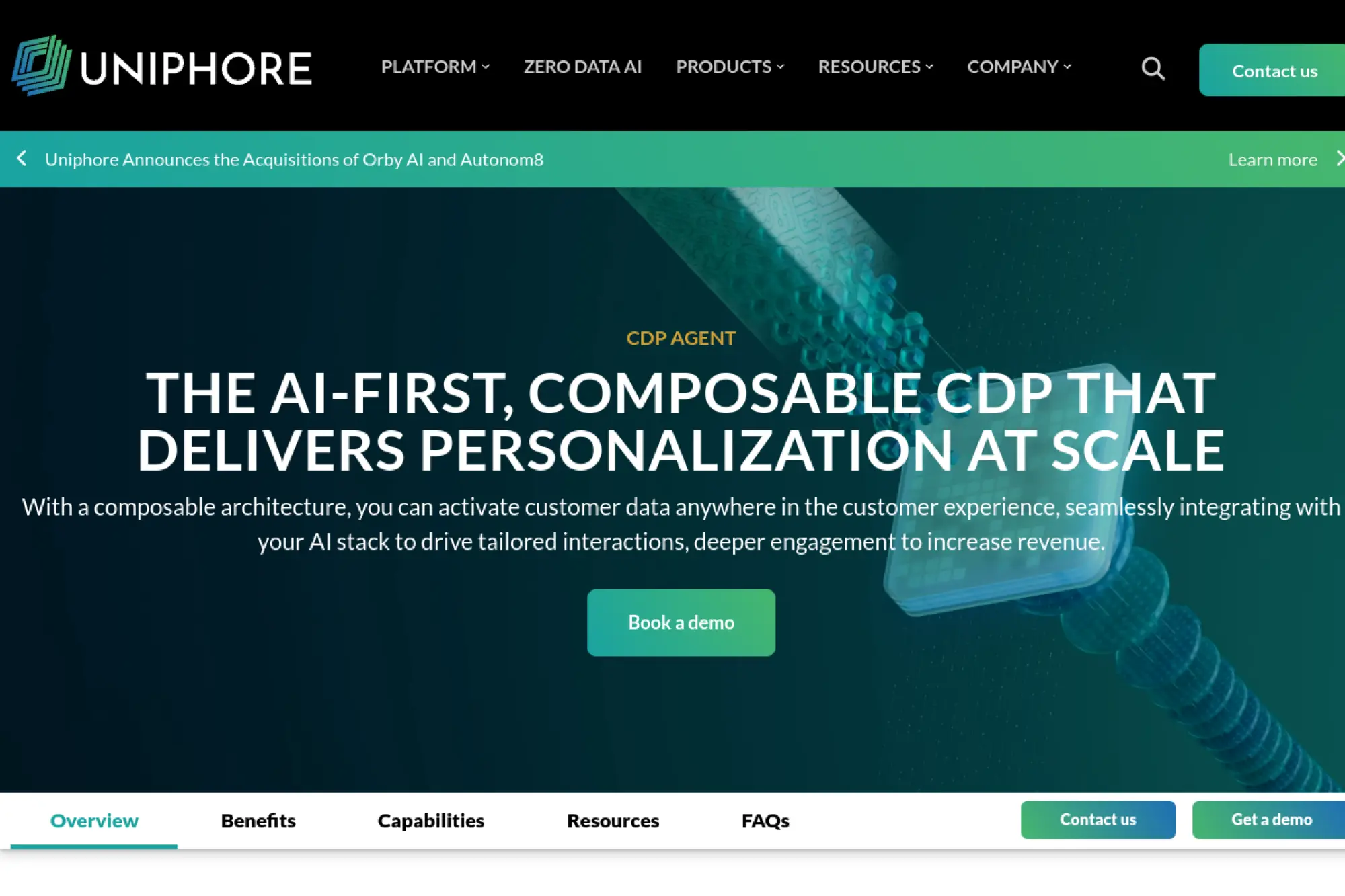
Uniphore’s CDP Agent, built from the ActionIQ CDP, leans into a composable, activation-layer approach. It aims to connect to existing data systems without forcing heavy data movement. That model works well when you already trust your warehouse or lakehouse and want a marketer-friendly way to build audiences and orchestrate journeys.
Best for
Enterprises that want a composable CDP approach with strong activation and orchestration, while keeping customer data governed in existing platforms.
Key workflows to configure
Connection to your warehouse or lakehouse as a primary source
Audience and trait definitions tied to governed datasets
Journey orchestration and next-best-action logic
Role-based access and approval workflows for segments
Activation into paid, owned, and service channels
Sales growth lever
Accelerate audience creation while keeping governance intact. That helps teams act on intent signals faster, reduce wasted spend with suppression logic, and improve retention with better timing and personalization.
Watch outs
Composable success depends on data readiness. If warehouse tables lack clear definitions, marketers will build conflicting audiences. Invest in shared metrics, naming standards, and a review process for high-impact segments.
Quick start checklist
Choose a governed customer table as your profile base
BlueConic focuses on first-party data collection and real-time activation. It combines profile unification with tools that help marketers capture more declared data through interactive experiences. That makes it attractive for teams that want to grow and monetize audiences while staying privacy-first.
Best for
Media, subscription, and retail teams that want to collect richer first-party data, unify profiles quickly, and activate audiences across the marketing stack.
Key workflows to configure
Profile schema design and core identity keys
First-party data capture experiences and preference flows
Real-time segmentation and audience refresh rules
Consent and preference controls tied to activation
Outbound sync to email, ads, and personalization tools
Sales growth lever
Use declared data to improve relevance. When you ask customers what they want and store it in the profile, you can personalize offers and content without relying on fragile third-party signals.
Watch outs
Interactive capture needs thoughtful UX. If forms feel intrusive, you will hurt trust. Also align on who owns the profile schema so teams do not create competing attributes that mean the same thing.
Quick start checklist
Pick a high-value data capture moment in your journey
Define consent language and preference storage
Create a small set of profile attributes that matter
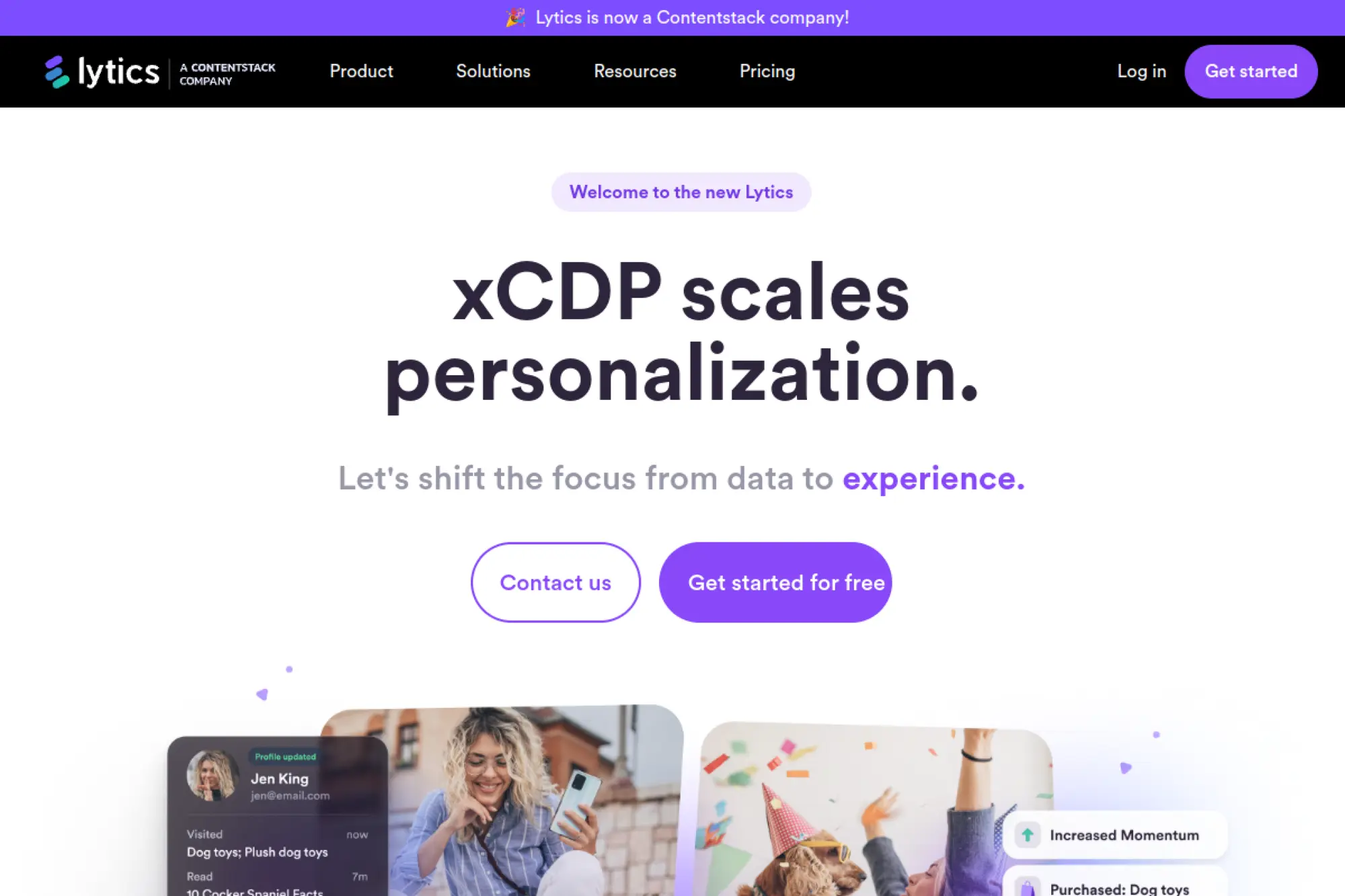
Lytics positions itself as an experience-focused CDP, with strong emphasis on real-time personalization and bringing audience insights into content workflows. It often appeals to teams that want to reduce friction between data and on-site experience delivery. If your website and content drive revenue, that workflow fit matters.
Best for
Content-heavy brands that want real-time profiles and personalization tied closely to CMS and content operations.
Key workflows to configure
Web and product behavior ingestion
Identity resolution and profile enrichment
Audience and affinity modeling tied to content
On-site personalization and journey triggers
Outbound activation to email and ad platforms
Sales growth lever
Increase conversion by making content more relevant. When profiles update in real time, you can change recommendations, offers, and messaging while intent stays high.
Watch outs
If your organization expects heavy data science workflows, validate how you will integrate models and measurement. Also confirm how you will govern profile attributes across teams to prevent inconsistent targeting.
Quick start checklist
Connect your site behavior stream
Define the profile attributes you need for personalization
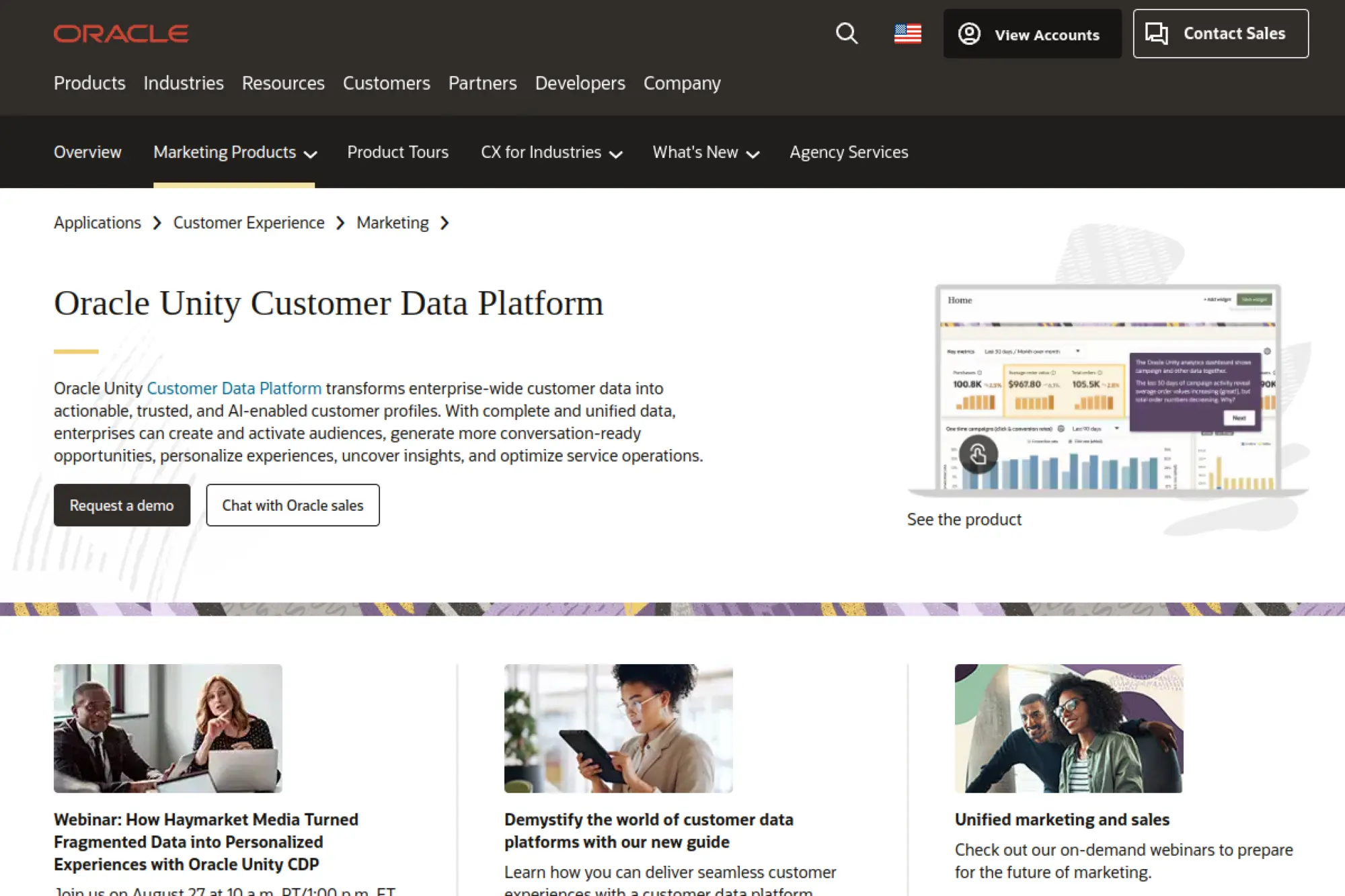
Oracle Unity CDP targets enterprises that want to unify customer data across the business and connect it to customer experience execution. It supports identity resolution across channels, plus privacy controls to manage how teams use customer data. It often fits organizations already invested in Oracle CX applications.
Best for
Enterprises that want CDP capabilities aligned with Oracle’s customer experience ecosystem and need structured governance for cross-team usage.
Key workflows to configure
Ingestion from Oracle applications and external sources
Identity resolution and profile consolidation rules
Profile enrichment and attribute management
Segmentation for marketing and service use cases
Activation into engagement and analytics tooling
Sales growth lever
Bring more enterprise context into personalization. When you unify commerce, service, and marketing signals, you can target upsell offers more accurately and reduce friction across channels.
Watch outs
Enterprise deployments require strong data mapping decisions. If teams disagree on what the profile should represent, the platform will not fix that. Plan governance and a shared customer model early.
Quick start checklist
Inventory the customer identifiers across Oracle systems
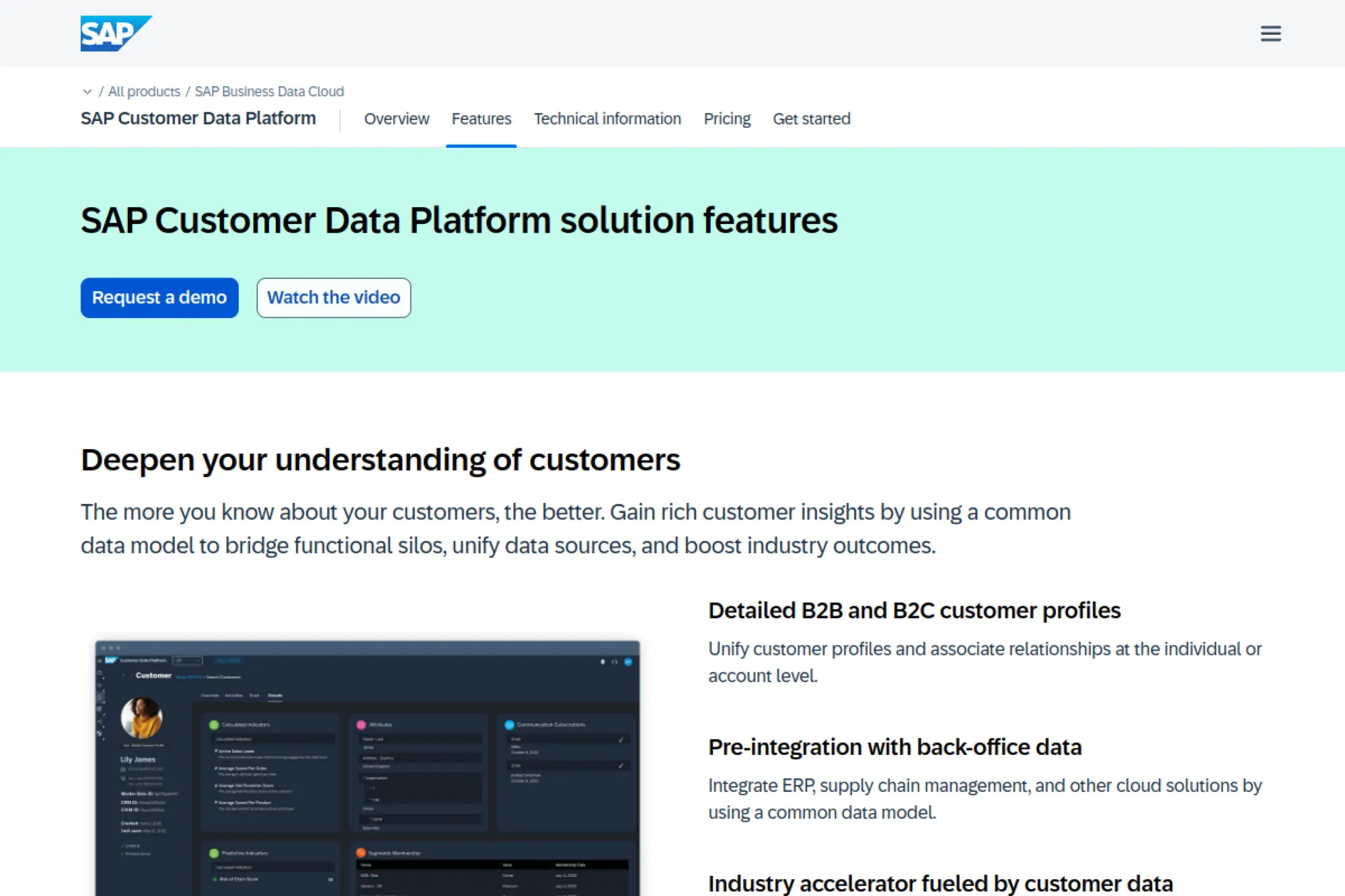
SAP Customer Data Platform aims to connect customer profiles with back-office reality. That matters when your offers depend on supply chain data, account structures, or service history. It also emphasizes privacy and consent foundations, which helps when you operate in regulated or complex environments.
Best for
SAP-centric organizations that want to bridge CX and back-office data into unified profiles with purpose-based governance.
Key workflows to configure
Integration across SAP ERP and CX sources
Unified profile modeling for people and accounts
Consent and purpose mapping into profile attributes
Audience segmentation for lifecycle use cases
Activation into engagement tools with policy controls
Sales growth lever
Connect customer context with operational signals. That lets you personalize offers based on availability, service status, and account relationships. It also reduces broken experiences that cause churn.
Watch outs
SAP implementations can involve many stakeholders. If you do not set scope early, projects can sprawl. Keep the first rollout focused and make governance a core requirement, not an afterthought.
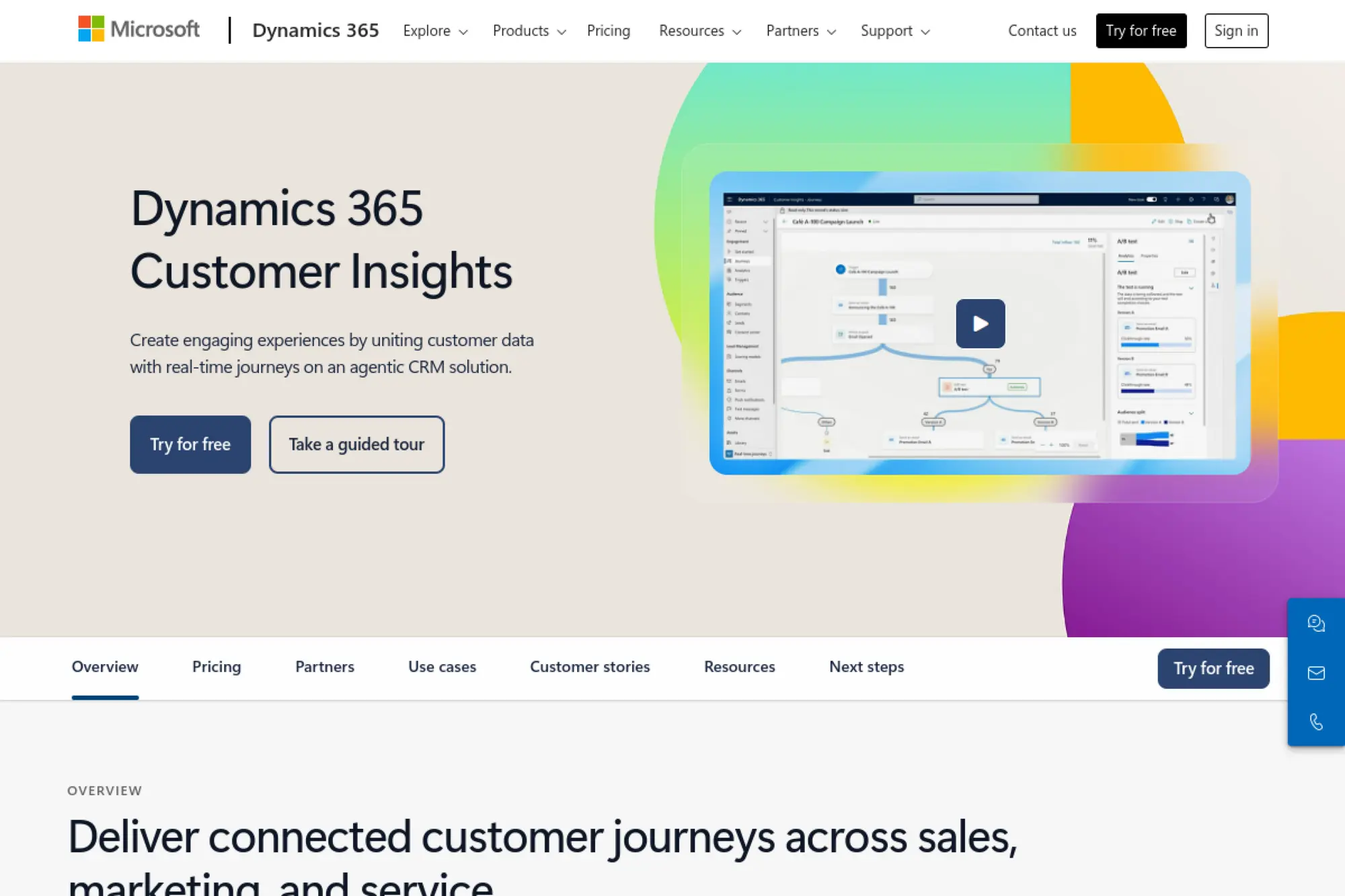
Customer Insights unites customer data with journey execution for teams that want a single environment for segmentation and orchestration. It connects transactional and behavioral data into a unified view, then supports real-time journeys and activation across customer-facing teams. It fits well in Microsoft-heavy stacks.
Best for
Organizations that use Microsoft tools for CRM, analytics, or collaboration and want a CDP that supports both customer understanding and journey execution.
Key workflows to configure
Data connections across CRM and external sources
Profile unification and identity management
Consent capture and privacy enforcement in the model
Segment creation and refresh rules
Journey triggers that use unified customer context
Sales growth lever
Increase relevance in outreach by sharing the same customer context across marketing, sales, and service. That helps sellers follow up on high-intent signals and helps marketers avoid messaging conflicts.
Watch outs
Microsoft’s product naming and packaging can evolve. Confirm what modules you need for your outcomes, and avoid building duplicate segmentation logic across multiple Microsoft tools.
Quick start checklist
Connect your core customer and transaction sources
Sitecore’s Customer Data Platform supports unified profiles, real-time activation, and audience intelligence as part of a broader experience stack. It helps teams connect customer behavior with content and personalization workflows. That matters when your DXP drives conversion and customer engagement.
Best for
Teams invested in Sitecore who want to connect content, personalization, and customer profiles with a consistent governance model.
Key workflows to configure
Behavioral tracking and profile enrichment
Identity capture from anonymous to known states
Segmentation rules for experience personalization
Audience export to external activation platforms
Consent and privacy controls across touchpoints
Sales growth lever
Use unified profiles to personalize site journeys and reduce friction to conversion. When you adapt content and offers based on intent, you can improve engagement and increase purchase likelihood.
Watch outs
Make sure you plan for data outside Sitecore. A CDP should not become a silo. Confirm how you will integrate CRM, commerce, and support data for a full customer context.
Quick start checklist
Implement tracking on priority pages and actions
Define identity signals and profile attributes
Build a small set of segments for personalization
Activate into one experience or channel
Review governance and consent rules before scaling
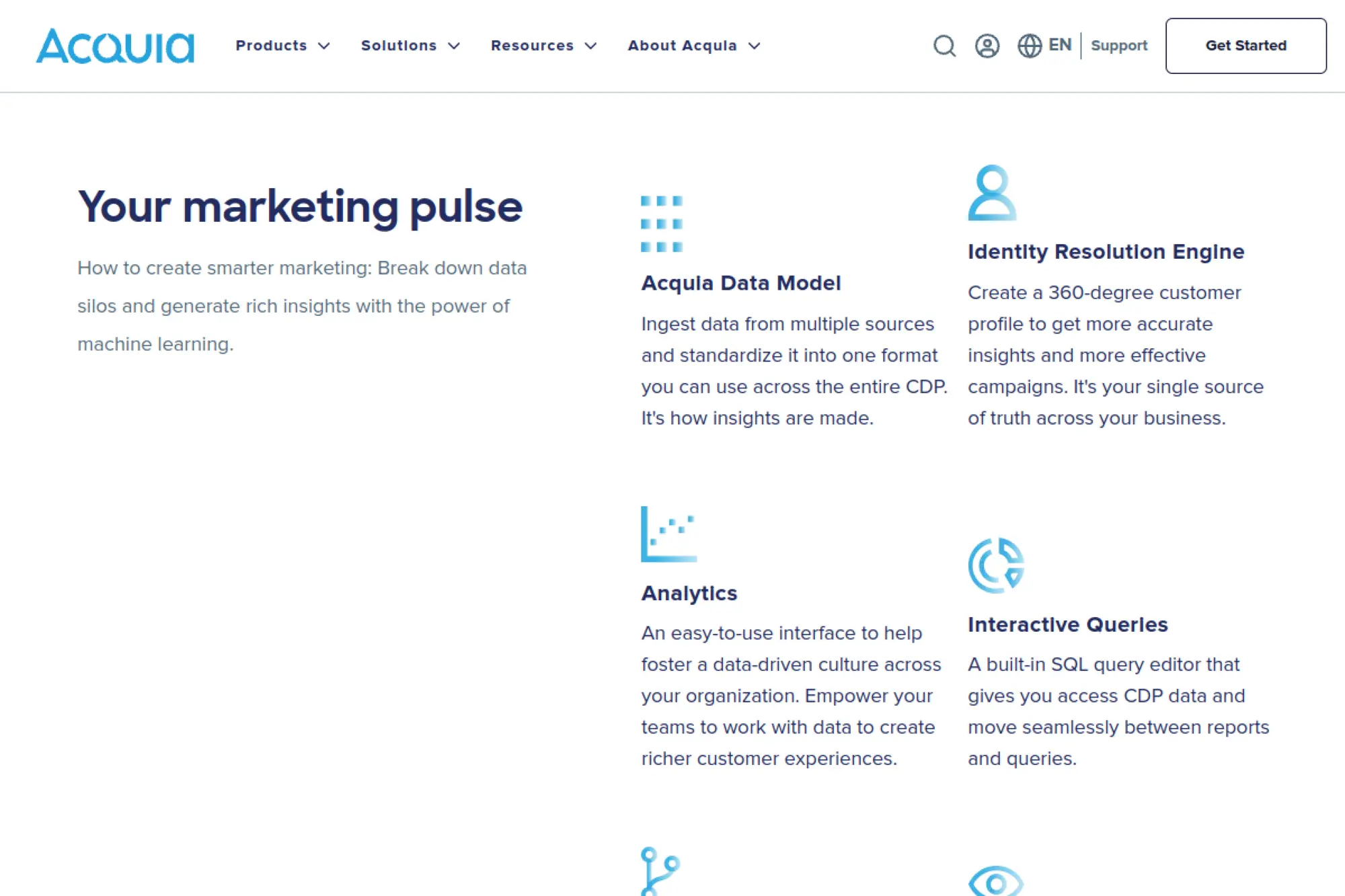
Acquia CDP focuses on unifying data through a structured data model, then making it usable via analytics, segmentation, and machine learning-driven insights. It often appeals to organizations that want marketer-friendly reporting and activation built on unified customer records. It also fits well when teams need a predictable data model for analysis.
Best for
Marketing teams that want unified data, built-in analytics, and segmentation capabilities that do not require heavy custom dashboards to start learning.
Key workflows to configure
Data mapping into the platform’s model
Identity resolution and profile unification
Audience segmentation for lifecycle programs
Predictive insights for churn and propensity signals
Real-time connectors for outbound activation
Sales growth lever
Improve campaign precision by using unified analytics and consistent profile attributes. That helps teams build segments that reflect real behavior and purchase history, not assumptions from a single channel.
Watch outs
Any model-driven CDP requires careful mapping. If you rush ingestion, you will create confusing attributes that damage trust. Document each mapped field and validate it with marketing and analytics stakeholders.
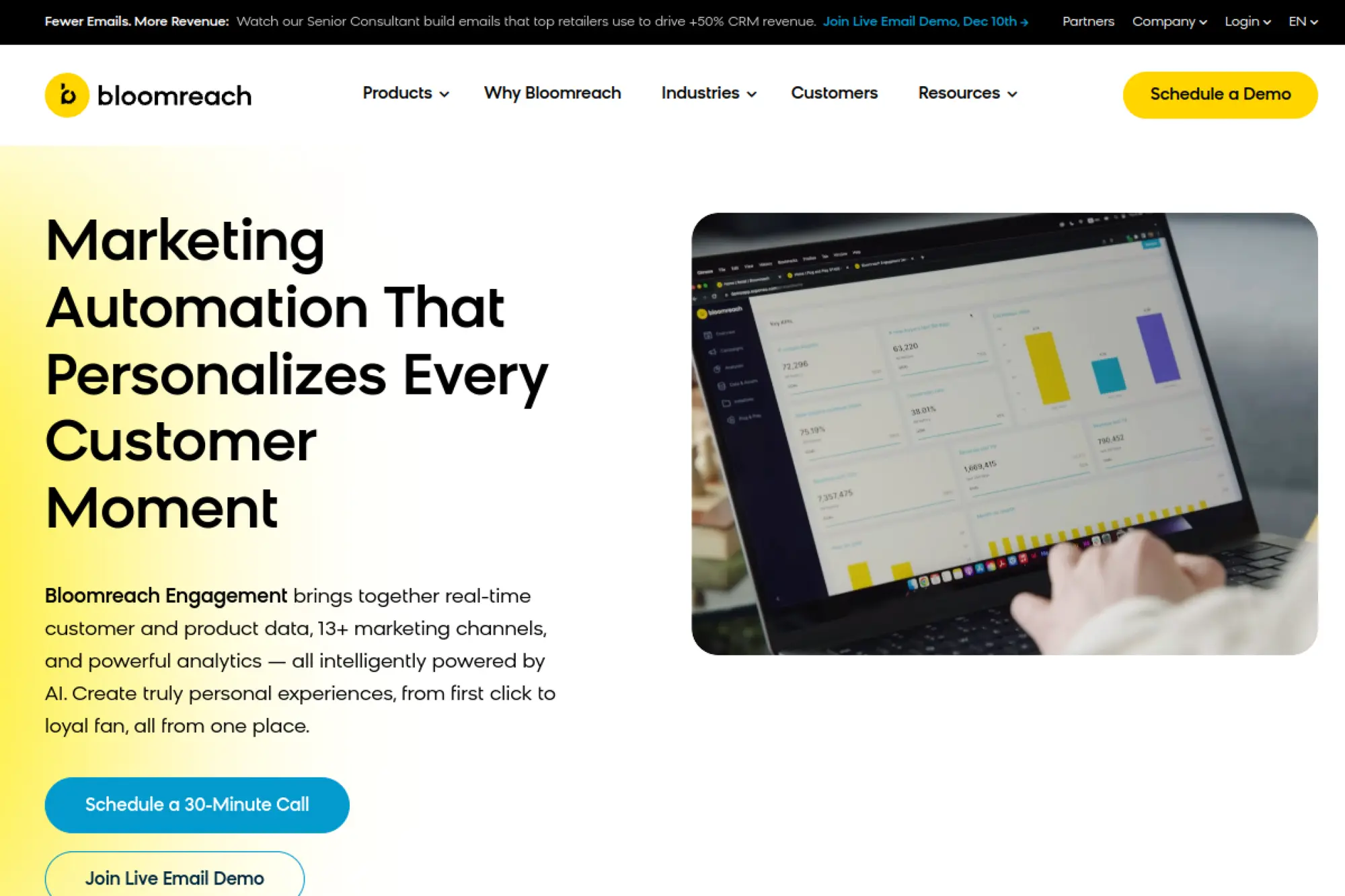
Bloomreach Engagement combines CDP capabilities with marketing automation and personalization features geared toward commerce. It unifies customer and product data, then lets marketers trigger campaigns across channels from within one platform. This can reduce friction when teams want fewer tools and tighter execution loops.
Best for
Ecommerce and retail teams that want unified customer and product data tightly connected to omnichannel campaigns and personalization.
Key workflows to configure
Ingestion of customer, order, and product catalog data
Profile unification and attribute enrichment
Segmentation for lifecycle and merchandising use cases
Triggered campaign orchestration across channels
On-site personalization and recommendation logic
Sales growth lever
Drive repeat purchases by combining product context with customer intent. When you personalize recommendations and timing, you can raise conversion and improve retention without extra manual work.
Watch outs
Integrated platforms can overlap with your existing ESP or marketing automation tools. Plan the migration path and decide which system owns messaging. Also confirm how you export data for analytics and governance needs.
Quick start checklist
Connect your commerce platform and product catalog
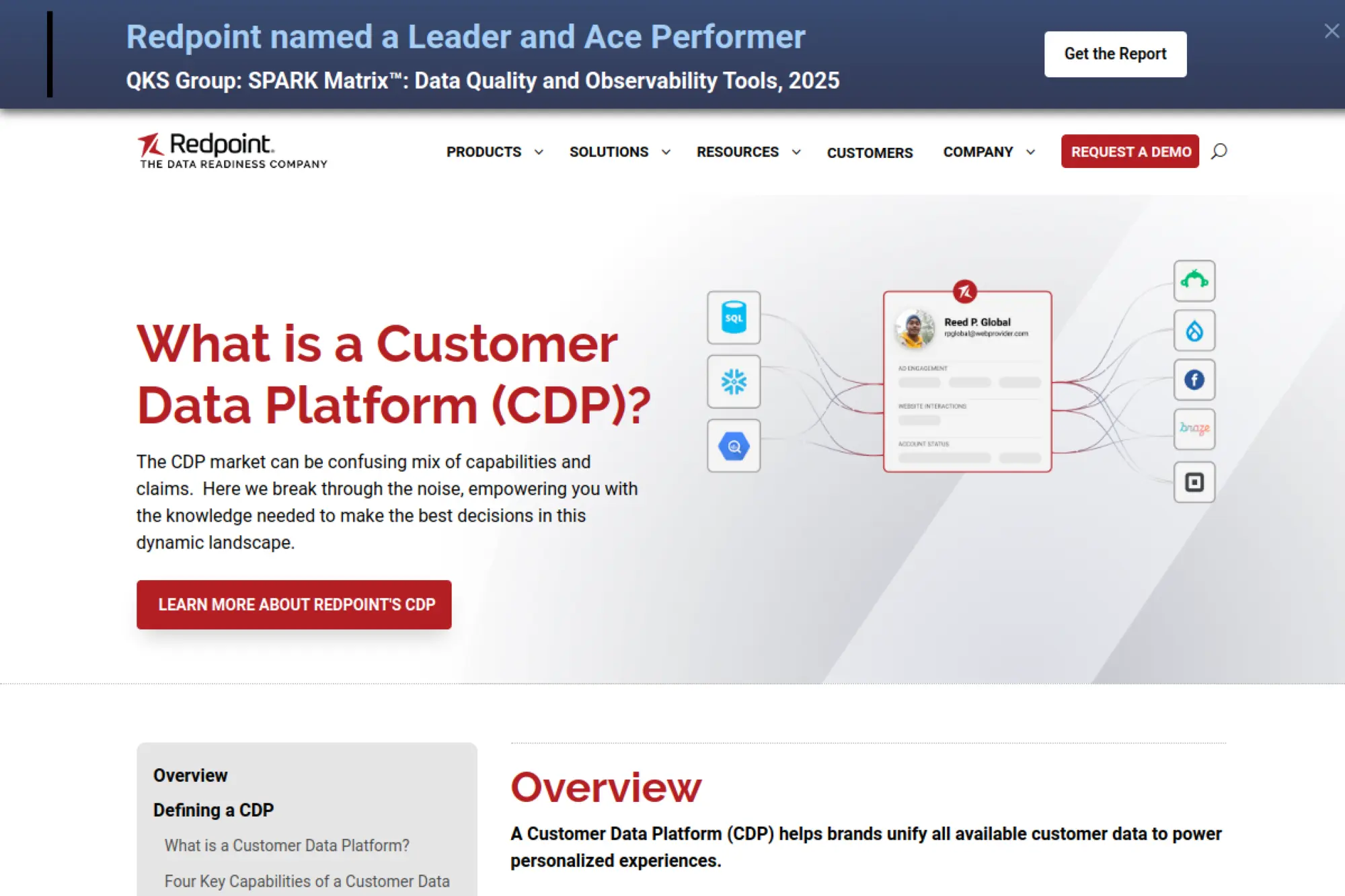
Redpoint Global emphasizes data readiness and profile accuracy. It aims to cleanse and unify customer data so teams can trust the segments they activate. This matters when poor data quality leads to wasted spend, broken personalization, or compliance risk. Redpoint often fits organizations that need a strong foundation before they scale activation.
Best for
Enterprises that struggle with data quality and identity fragmentation, and want a CDP that prioritizes clean, ready-to-activate customer profiles.
Key workflows to configure
Ingestion and cleansing of messy customer data
Identity resolution across known and unknown profiles
No-code segmentation aligned to business definitions
Activation to marketing, service, and analytics tools
Governance routines for data quality and auditing
Sales growth lever
Better data quality improves every downstream outcome. When you target the right person with the right message, you improve conversion and reduce wasted frequency. You also reduce customer frustration caused by irrelevant outreach.
Watch outs
Data readiness takes time. Do not treat it as a back-office task. Bring marketing, sales, and service into the definition of “correct” data, then enforce those definitions through repeatable processes.
Zeotap CDP emphasizes identity, privacy, and activation. It often appeals to organizations that need better addressability and audience building while keeping compliance in view. It can support retail media and marketing use cases where identity resolution and orchestration play a central role.
Best for
Marketing teams that want strong identity and audience activation capabilities, especially when paid media and cross-channel reach drive growth goals.
Key workflows to configure
Ingestion of consented first-party data sources
Identity resolution and profile unification logic
Audience segmentation for acquisition and retention
Activation workflows into advertising and messaging tools
Privacy controls for consent, access, and auditing
Sales growth lever
Improve targeting efficiency by building stronger audiences from unified identity and behavior signals. When audiences match better, you can reduce wasted spend and drive more relevant offers across channels.
Watch outs
Identity-based activation requires strict compliance discipline. Make sure you can explain your consent posture and your data flows. Also confirm which team approves enrichment and activation strategies.
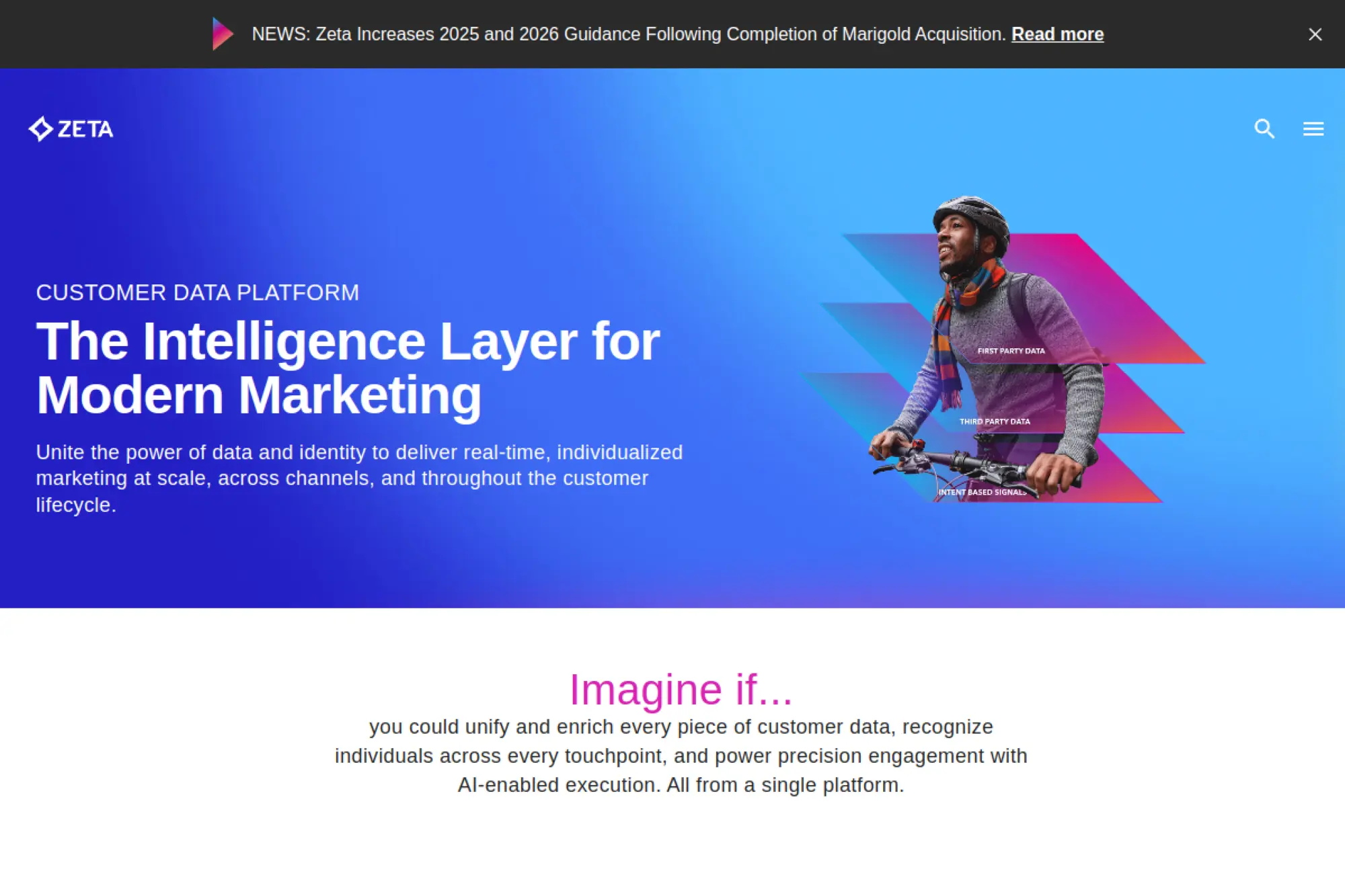
Zeta’s CDP acts as an intelligence layer for marketing, combining unified profiles with activation capabilities. It aims to help marketers unify fragmented data, recognize individuals across touchpoints, and execute individualized engagement at scale. This approach fits teams that want a strong blend of data, identity, and activation workflows.
Best for
Marketing organizations that want a CDP tied closely to activation and orchestration, with strong identity resolution for personalized engagement.
Key workflows to configure
Ingestion and cleansing of customer data sources
Identity resolution across channels and devices
Audience segmentation tied to lifecycle stages
Cross-channel activation and suppression logic
Measurement signals that feed optimization loops
Sales growth lever
Drive incremental revenue by improving timing and relevance across messaging and advertising. When segmentation updates continuously, campaigns stay aligned to real customer behavior instead of stale lists.
Watch outs
Clarify data portability and ownership. Also decide how you will keep definitions consistent across teams so audiences remain trustworthy. Without governance, speed becomes noise instead of leverage.
Klaviyo’s Data Platform positions itself as a marketer-friendly CDP embedded in its broader customer relationship tooling. It unifies customer interactions and enables real-time segmentation and activation, especially for commerce-led businesses. Teams often choose it when they want fast time to value without stitching together many separate systems.
Best for
Direct-to-consumer and ecommerce teams that want unified profiles tightly connected to email and messaging execution, with simple setup and fast activation.
Key workflows to configure
Store and catalog integrations for purchase data
On-site tracking for browse and intent signals
Identity resolution and profile hygiene routines
Segmentation for lifecycle and retention programs
Activation into flows, campaigns, and paid audiences
Sales growth lever
Trigger messages from real-time behavior. That helps you recover abandoned carts, recommend replenishment, and drive repeat purchase with fewer manual exports and fewer stale segments.
Watch outs
This approach works best when Klaviyo plays a central role in messaging. If you already run a complex enterprise marketing stack, confirm integration depth and how you will share data with analytics systems.
Simon Data is built for customer marketing teams that want to unify data and activate it with less friction. It often works alongside a cloud data warehouse and focuses on audience building, identity resolution, and orchestration. It also blends software with services, which can help when teams need support to operationalize customer intelligence.
Best for
Data-rich marketing organizations that want warehouse-connected audiences, fast activation, and support for lifecycle strategy and execution.
Key workflows to configure
Warehouse connection and customer entity mapping
Identity resolution for people and related entities
Audience building aligned to marketing objectives
Real-time or near-real-time channel sync
Campaign measurement and feedback into segmentation
Sales growth lever
Move faster from insight to campaign. When marketers can build precise audiences without waiting on ticket queues, they can run more experiments and improve retention and reactivation performance.
Watch outs
Warehouse-connected CDPs depend on your data model quality. If your tables lack clear definitions, you will get conflicting segments. Establish shared metrics and a review process for audience logic.
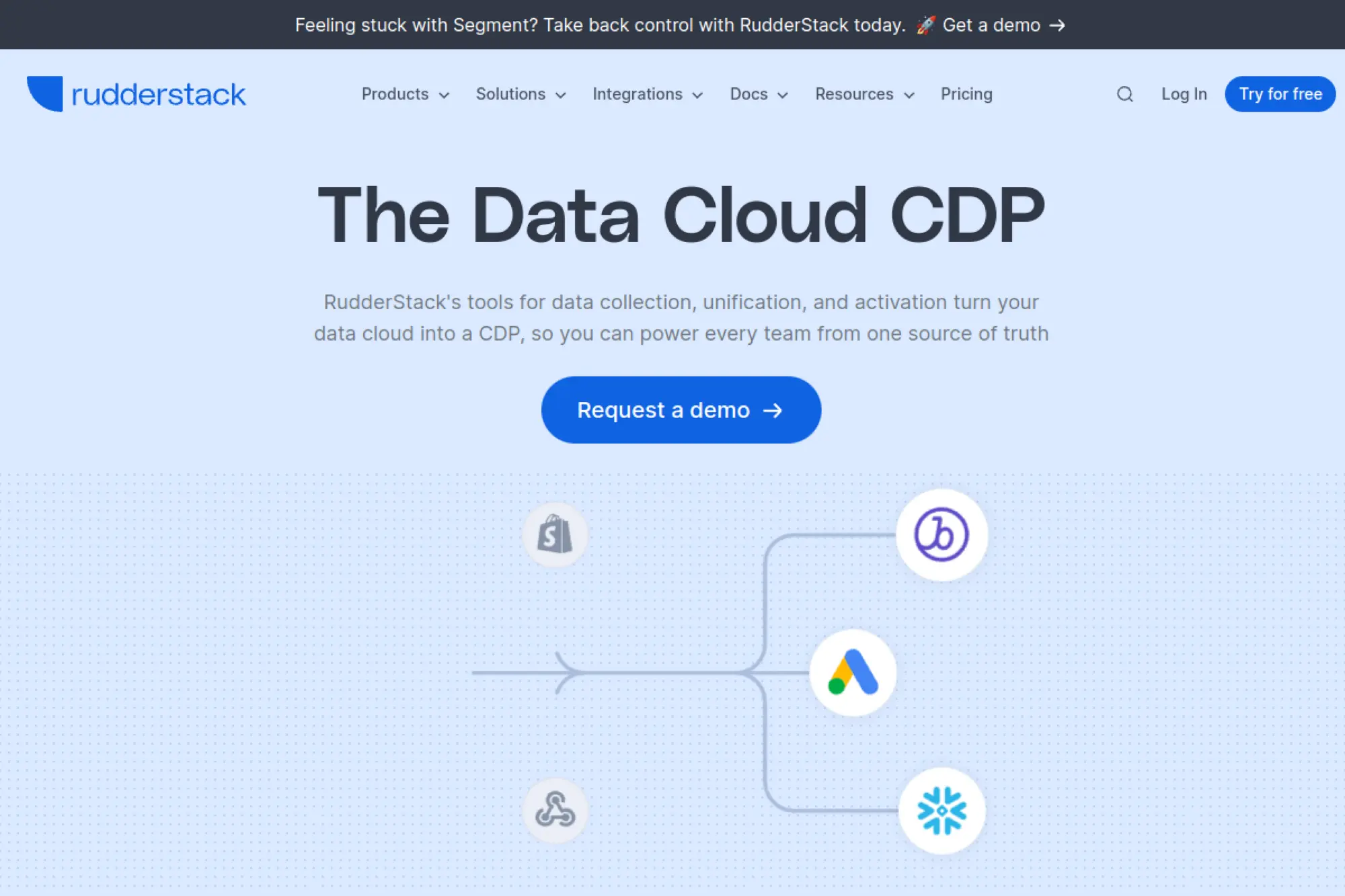
RudderStack emphasizes a warehouse-native approach built for data teams. It focuses on collecting event data, unifying it in your data cloud, and enabling activation through downstream syncs. This fits organizations that want control over data storage, transparency in pipelines, and flexibility to build a composable stack.
Best for
Engineering-led organizations that want a warehouse-native CDP approach with strong control over data flows, modeling, and activation.
Key workflows to configure
Event collection pipelines from web, app, and server
Identity resolution and profile modeling in the warehouse
Data transformation and enrichment routines
Reverse ETL activation into customer-facing tools
Observability checks for schema and pipeline health
Sales growth lever
Improve consistency across tools. When the warehouse holds the trusted profile, email, ads, and support systems can act on the same definitions. That reduces conflicting outreach and improves lifecycle targeting.
Watch outs
This model requires data team capacity. If you do not have strong warehouse practices, you may struggle to keep audiences reliable. Establish governance on who can define traits and how changes get reviewed.
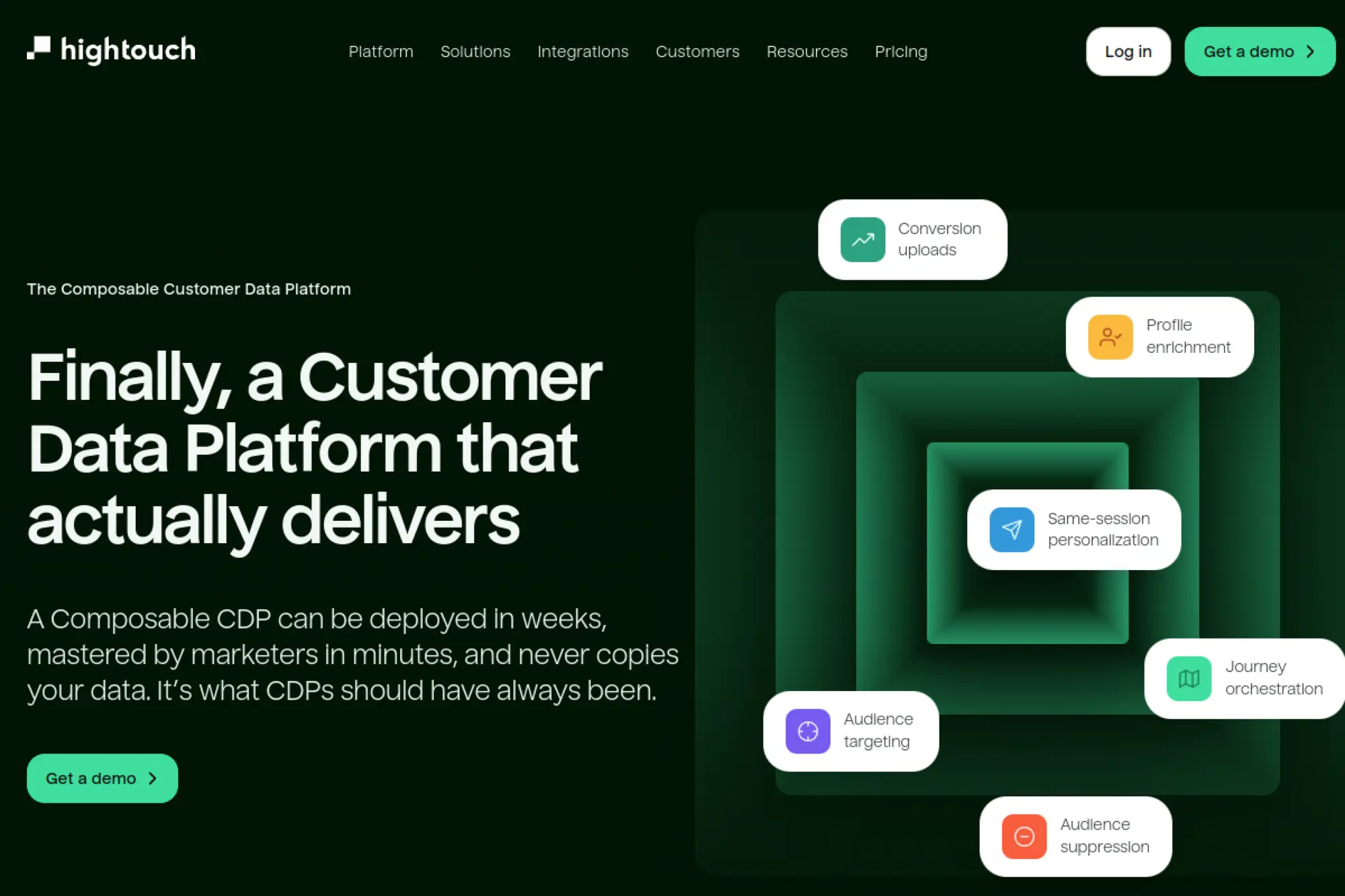
Hightouch popularized a composable CDP approach that reads from your warehouse instead of copying data into a separate system. It helps teams define audiences and traits using warehouse data, then sync those traits into downstream tools. This fits organizations that already invest in modern data infrastructure and want faster activation without building custom pipelines.
Best for
Teams with a mature data warehouse who want marketer-friendly activation, strong sync controls, and a composable architecture that keeps data centralized.
Key workflows to configure
Warehouse connection and identity mapping
Trait and audience definitions tied to governed tables
Sync schedules and data freshness controls
Journey orchestration and audience suppression logic
Measurement loops that write back outcomes
Sales growth lever
Close the loop between analytics and activation. When your audiences update from the warehouse, campaigns stay aligned with the freshest data. That improves targeting and reduces wasted impressions and irrelevant messaging.
Watch outs
Composable CDPs depend on warehouse discipline. If teams create inconsistent definitions, you will lose trust. Establish an audience naming convention and a review process for high-impact segments.
Quick start checklist
Identify the profile table that will drive segmentation
Census is best known for reverse ETL and data activation. It helps teams sync warehouse data into customer-facing tools like CRMs and marketing automation platforms. Many teams use it as part of a composable CDP strategy, where the warehouse holds the golden record and Census pushes trusted traits and audiences outward.
Best for
Organizations that want to operationalize warehouse data across go-to-market systems and treat the warehouse as the primary customer source of truth.
Key workflows to configure
Warehouse connection and dataset selection
Audience building and trait definitions on trusted tables
Syncs into CRM, marketing, and ad platforms
Write-back workflows to keep systems aligned
Monitoring and observability for sync health
Sales growth lever
Keep sales and marketing systems aligned with trusted customer attributes. That improves lead routing, reduces stale account data, and helps lifecycle campaigns respond to real behavior instead of outdated lists.
Watch outs
Census does not replace the need for identity modeling. You still need clear customer identifiers and reliable warehouse tables. Also avoid letting every team create traits without shared governance.
Quick start checklist
Pick a single destination system to start
Choose a small set of trusted customer attributes
Map identifiers and validate match rates
Schedule syncs and set alerts for failures
Train users on how to interpret traits consistently
Snowplow focuses on customer data infrastructure. It helps you collect, validate, and enrich event-level behavioral data, then deliver it into your warehouse or stream. Many organizations use Snowplow as the foundation of a composable CDP strategy because it provides governed, high-fidelity behavioral signals that other systems can activate.
Best for
Data and product teams that want deeper behavioral data, strong governance, and transparency in how customer events get collected and used.
Key workflows to configure
Event taxonomy and schema design
Validation rules to prevent bad data ingestion
Enrichment pipelines for context and identity signals
Delivery into the warehouse or streaming systems
Downstream activation through signals and partners
Sales growth lever
Better behavioral data improves personalization and attribution. When you capture the right events with clean structure, you can segment more accurately, trigger better lifecycle messages, and measure journey performance with more confidence.
Watch outs
Snowplow requires engineering ownership. It will not hand marketers a turnkey audience UI by itself. Plan your activation layer and analytics models before you scale event collection.
Quick start checklist
Define critical customer actions and event names
Implement trackers on priority platforms
Set validation and versioning for schemas
Deliver events into a governed warehouse model
Connect an activation layer for audience use cases
Piwik PRO offers a privacy-first customer data platform approach connected to analytics and tag management. It supports building unified profiles and audiences, then activating them across tools while keeping privacy controls central. This can work well for teams that need a CDP but want to prioritize consent and data residency considerations.
Best for
Privacy-sensitive organizations that want analytics, consent management, and CDP-style audience activation in a tighter, governance-forward package.
Key workflows to configure
Data ingestion from CRM, commerce, and product tools
Profile unification and custom attribute mapping
Audience segmentation based on behavior and traits
Activation workflows via webhooks and integrations
Consent-aware governance and audit routines
Sales growth lever
Make consented first-party data more actionable. When you unify profiles with clear privacy controls, you can personalize experiences and campaigns without relying on risky tracking patterns.
Watch outs
Confirm integration coverage for your stack. Some teams will still need additional tooling for advanced orchestration or decisioning. Also define how you manage identity resolution when users interact across devices.
Quick start checklist
Implement analytics and tagging foundations first
Connect a core customer system and a behavioral source
Define profile attributes tied to activation goals
Create a segment that drives a clear revenue action
Activate to one destination and validate compliance
Spotler Activate positions its customer data platform for ecommerce performance. It focuses on unifying shopper data from your ecommerce tools, then using that data to personalize experiences and campaigns. This often fits mid-market teams that want a CDP that feels closer to day-to-day marketing execution.
Best for
Ecommerce teams that want fast segmentation and activation, plus personalization workflows that do not require heavy technical resources.
Key workflows to configure
Ecommerce and marketing tool integrations
Unified shopper profile attributes and consent handling
Segments for browsing, cart, and repeat purchase behaviors
Activation into email and advertising workflows
Performance reporting tied to segments and journeys
Sales growth lever
Turn browsing and purchase signals into timely messaging. When you act quickly on intent, you increase conversion and improve repeat purchase without blasting broad campaigns.
Watch outs
Validate whether it matches your long-term data strategy. If you plan a warehouse-first architecture later, confirm export and integration paths. Also document how teams create segments so definitions stay consistent.
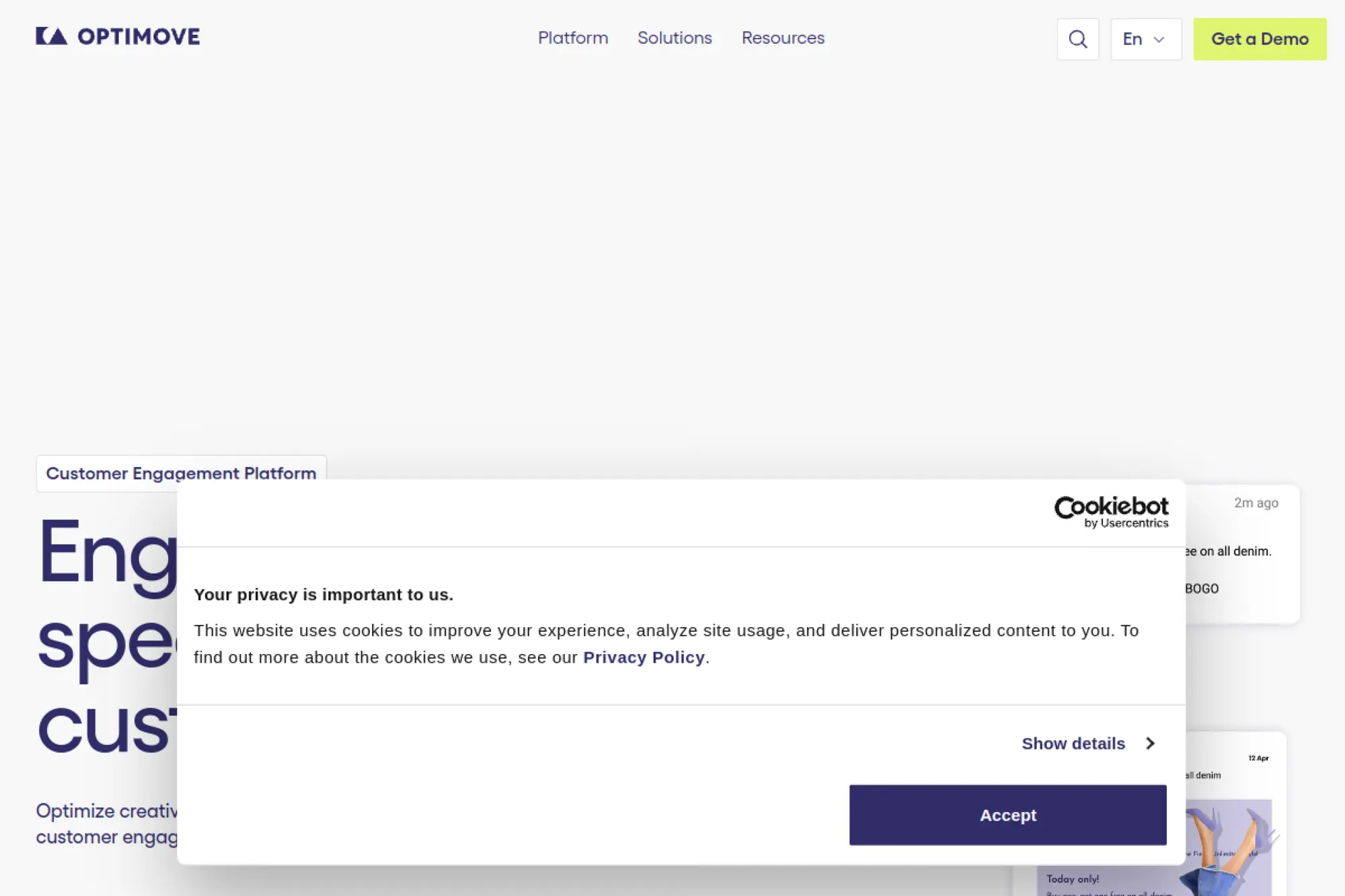
Optimove Engage combines an engagement platform with embedded CDP functionality. It focuses on orchestrating lifecycle campaigns, using unified customer data and decisioning to optimize outreach. Teams often use it when retention and relationship marketing are primary growth levers and they want a system that links segmentation to execution tightly.
Best for
Lifecycle and retention teams that want a platform where customer data, segmentation, and orchestration live together and support continuous optimization.
Key workflows to configure
Customer and event data ingestion into unified profiles
Lifecycle segmentation aligned to engagement stages
Campaign orchestration across messaging channels
Decisioning rules that manage frequency and priority
Measurement and feedback loops tied to uplift testing
Sales growth lever
Increase customer lifetime value by delivering more relevant retention and winback campaigns. When decisioning picks the right message and timing, you reduce churn and improve repeat purchase behavior.
Watch outs
Orchestration tools require disciplined governance. If teams launch campaigns without shared rules, customers get overwhelmed. Set clear frequency policies and align on who owns cross-channel priority decisions.
Quick start checklist
Define a retention use case with clear success metrics
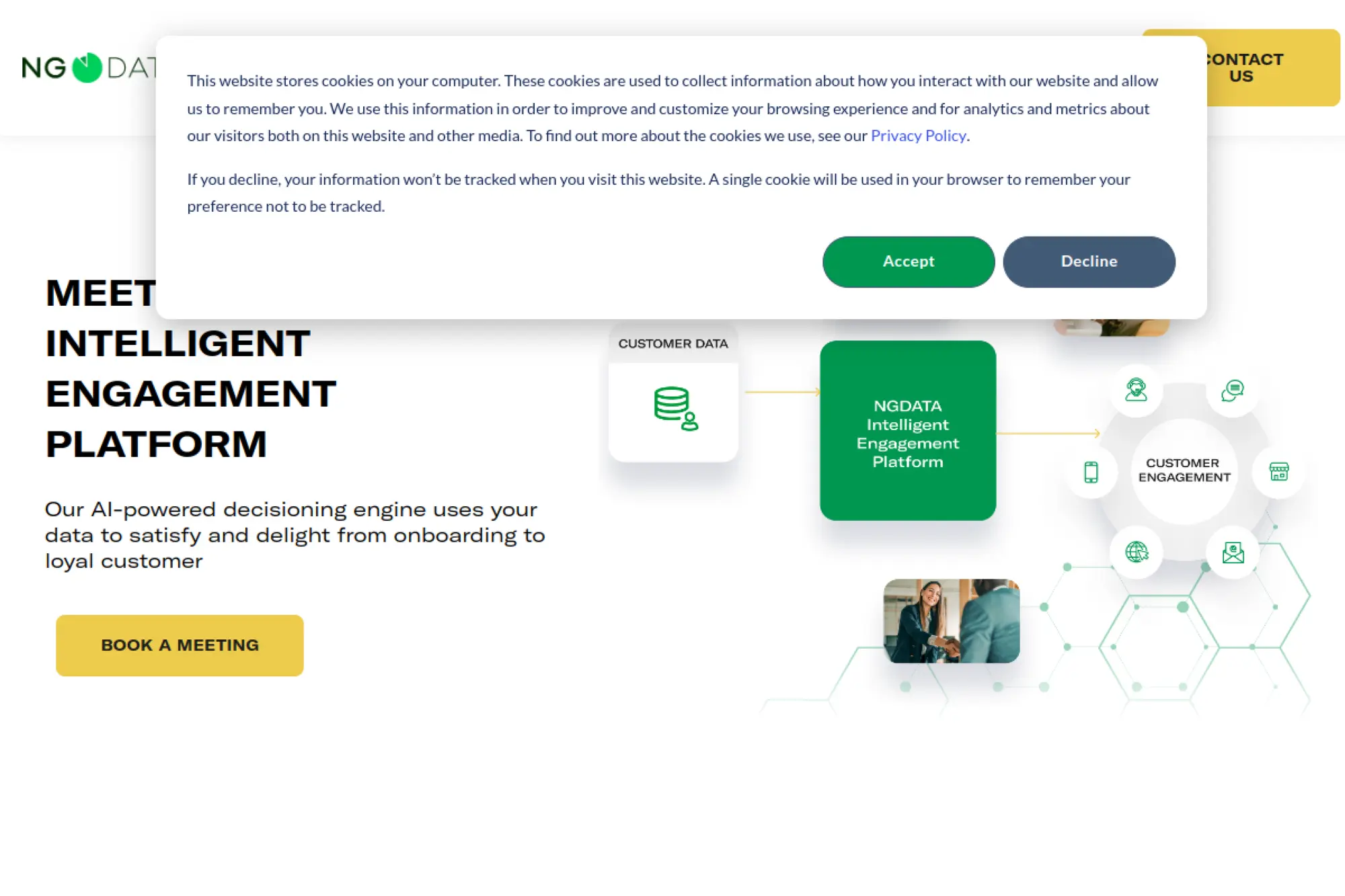
NGDATA positions its Intelligent Engagement Platform as a CDP-plus solution. It unifies customer data, builds AI-driven segments, and supports next-best journey decisioning. It often appeals to industries that need strong real-time decisioning and integration with existing marketing automation tools.
Best for
Industries like finance, telecom, and insurance that need unified data, real-time decisioning, and a structured path to orchestrate intelligent customer journeys.
Key workflows to configure
Integration across customer data sources into profiles
Real-time signals that trigger journey decisions
Audience segmentation tied to next-best-action logic
Orchestration feeds into existing engagement tools
Analytics loops that refine decisioning over time
Sales growth lever
Use decisioning to personalize cross-sell and retention moments. When the system reacts to behavior quickly, you can deliver offers that fit a customer’s context instead of generic promotions.
Watch outs
Decisioning only works when your data inputs stay clean and timely. Confirm how you will monitor feeds and validate signals. Also define governance for which teams can adjust journey logic and targeting rules.
Quick start checklist
Choose a single journey to optimize first
Connect the data sources required for that journey
Define segments and triggers with clear guardrails
Celebrus focuses on capturing complete digital journey data with very low latency, then building identity profiles that can feed analytics and activation. It positions itself as a modern data platform with CDP-style outcomes, especially for organizations that want stronger first-party capture and strict compliance controls. Teams often use it alongside other activation tools rather than treating it as the only CDP layer.
Best for
Organizations that need high-fidelity digital behavior capture, strong compliance posture, and a data foundation that can support both marketing optimization and risk workflows.
Key workflows to configure
Digital journey capture and identity signal mapping
Profile unification across channels and sessions
Data delivery into warehouses and activation systems
Consent and compliance controls for sensitive data
Real-time signals that support personalization and fraud logic
Sales growth lever
Act on immediate behavioral signals. When you recognize intent early in a session, you can personalize offers, reduce abandonment, and improve conversion without waiting for batch updates.
Watch outs
Clarify whether you want Celebrus to be a data capture layer, a CDP replacement, or both. Your activation strategy still needs downstream tools for messaging, ads, and journey orchestration.
Quick start checklist
Define key digital behaviors tied to conversion
Implement capture on priority channels
Map identity signals and consent requirements
Deliver data into your analytics and activation stack
Run a pilot personalization workflow and evaluate
Discover Our Services
Leverage 1Byte’s strong cloud computing expertise to boost your business in a big way
Domains
1Byte provides complete domain registration services that include dedicated support staff, educated customer care, reasonable costs, as well as a domain price search tool.
No matter the cloud server package you pick, you can rely on 1Byte for dependability, privacy, security, and a stress-free experience that is essential for successful businesses.
Choosing us as your shared hosting provider allows you to get excellent value for your money while enjoying the same level of quality and functionality as more expensive options.
Through highly flexible programs, 1Byte's cutting-edge cloud hosting gives great solutions to small and medium-sized businesses faster, more securely, and at reduced costs.
Stay ahead of the competition with 1Byte's innovative WordPress hosting services. Our feature-rich plans and unmatched reliability ensure your website stands out and delivers an unforgettable user experience.
As an official AWS Partner, one of our primary responsibilities is to assist businesses in modernizing their operations and make the most of their journeys to the cloud with AWS.
How to Pilot a Customer Data Platform and Prove Value
A CDP pilot should feel like a business experiment, not a massive replatforming. You can prove value fast if you narrow scope and enforce clean ownership.
Start by choosing a single workflow that has clear before-and-after measurement. Good examples include cart recovery targeting, churn prevention in a subscription product, or suppressing ads after conversion. Pick something that connects directly to revenue or cost savings, so stakeholders can agree on success.
Next, define the minimum data set that powers the workflow. Do not ingest everything “just in case.” Bring in the sources that drive the decision, then add enrichment later. This keeps identity resolution simpler and reduces compliance risk because you store less sensitive data at first.
Then, treat governance as part of the pilot scope. Decide who can change identity rules, who can create production audiences, and who approves segments tied to sensitive attributes. Build a lightweight review cadence. That prevents the common failure mode where “quick wins” create long-term chaos.
Finally, activate into a single channel before you expand. If the first activation path breaks, fix it before you add more destinations. Once you prove that a segment reaches the right tool, updates on time, and respects consent, you can scale to more channels with confidence.
A strong pilot gives you more than a win. It gives you a repeatable operating model. That model is what turns customer intelligence into a durable growth system.
Customer data platforms reward clarity. Pick the platform that matches your operating style, then commit to clean identity rules, clear governance, and measurable activation. When you do that, unified customer intelligence becomes an engine your whole business can trust and use.