

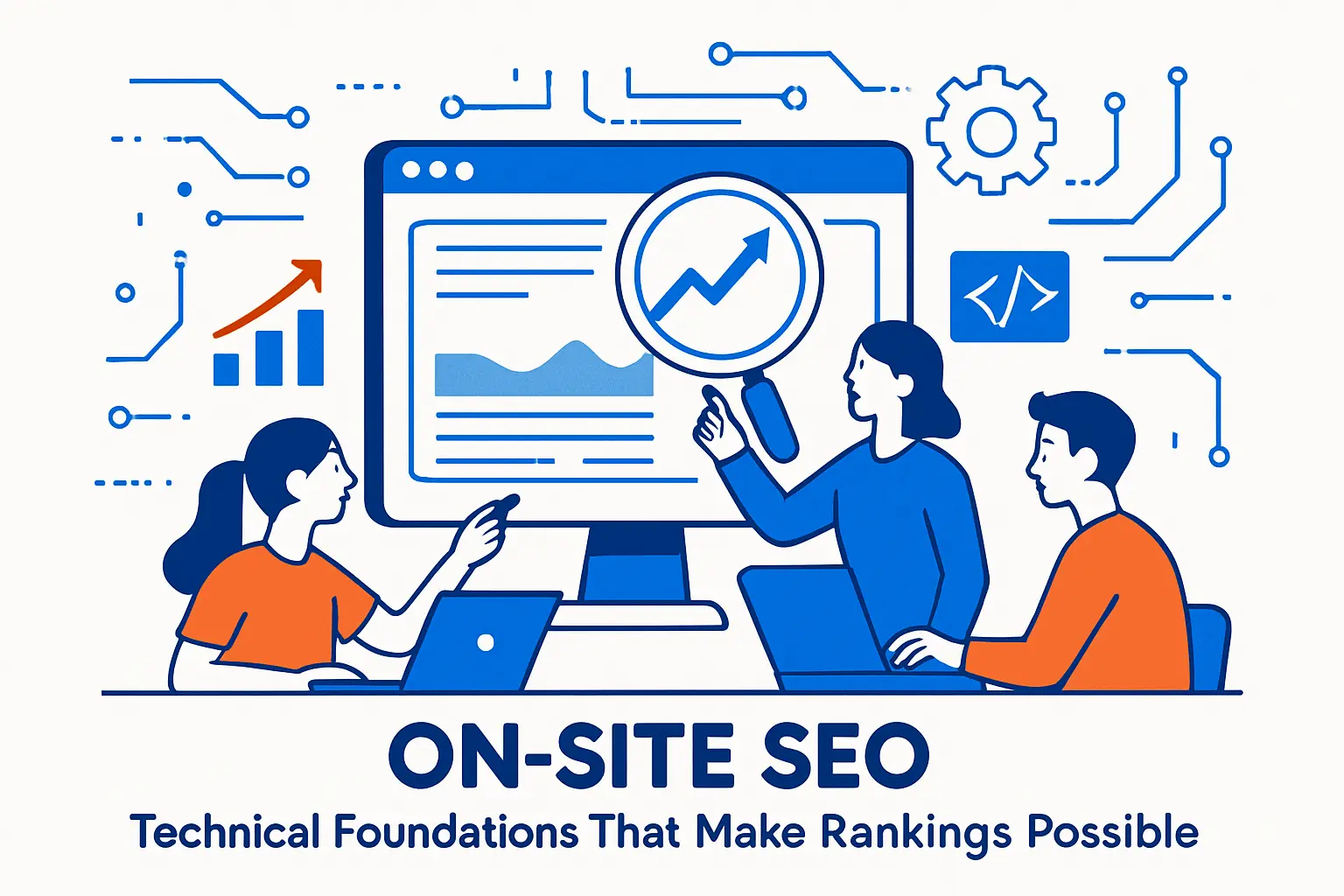
- On-Site SEO: Technical Foundations That Make Rankings Possible
- On-Site SEO: Content That Matches Intent And Earns Long-Term Demand
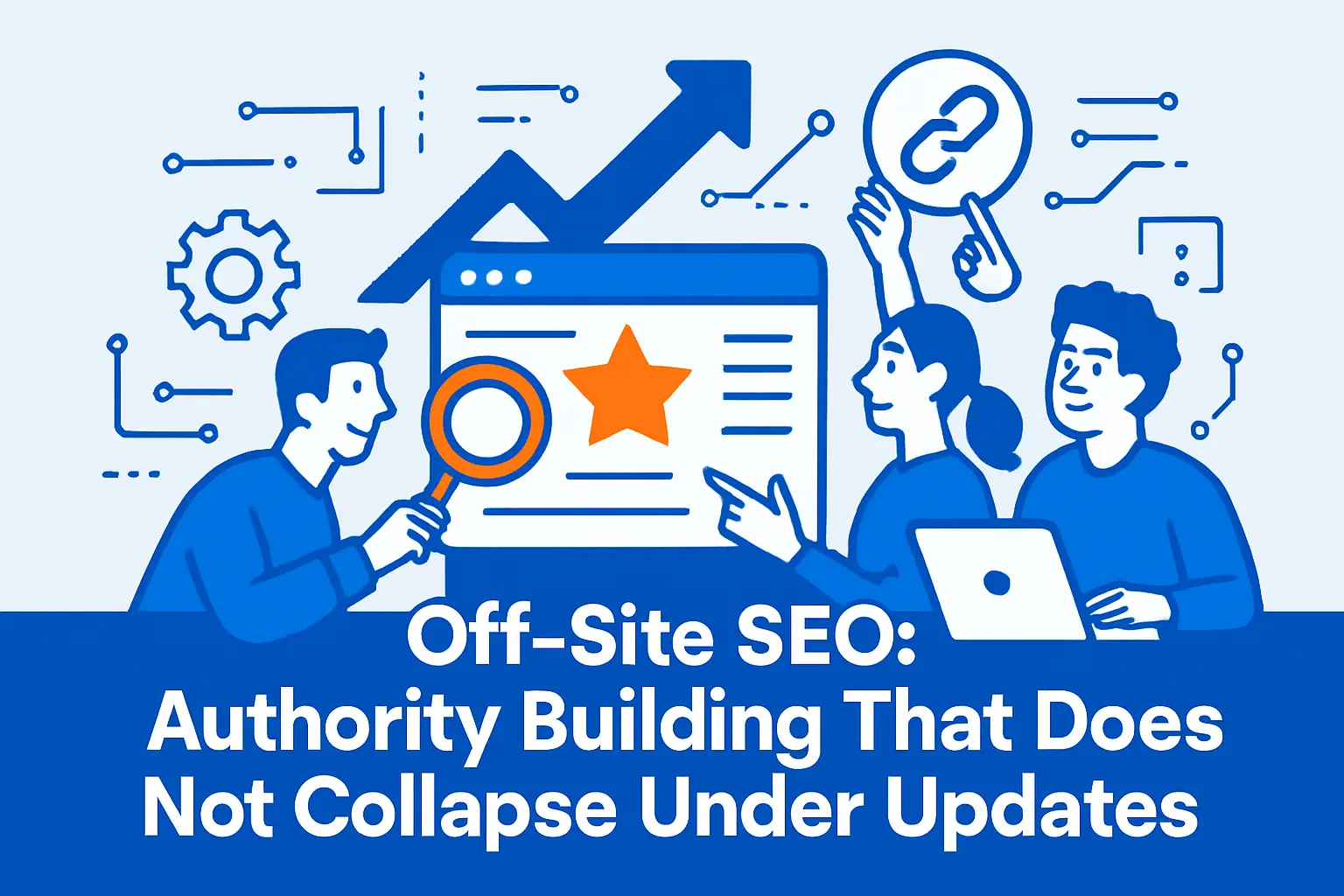
- Off-Site SEO: Authority Building That Does Not Collapse Under Updates
- Balanced Strategy: How To Decide What To Do Next (On-Site vs Off-Site)
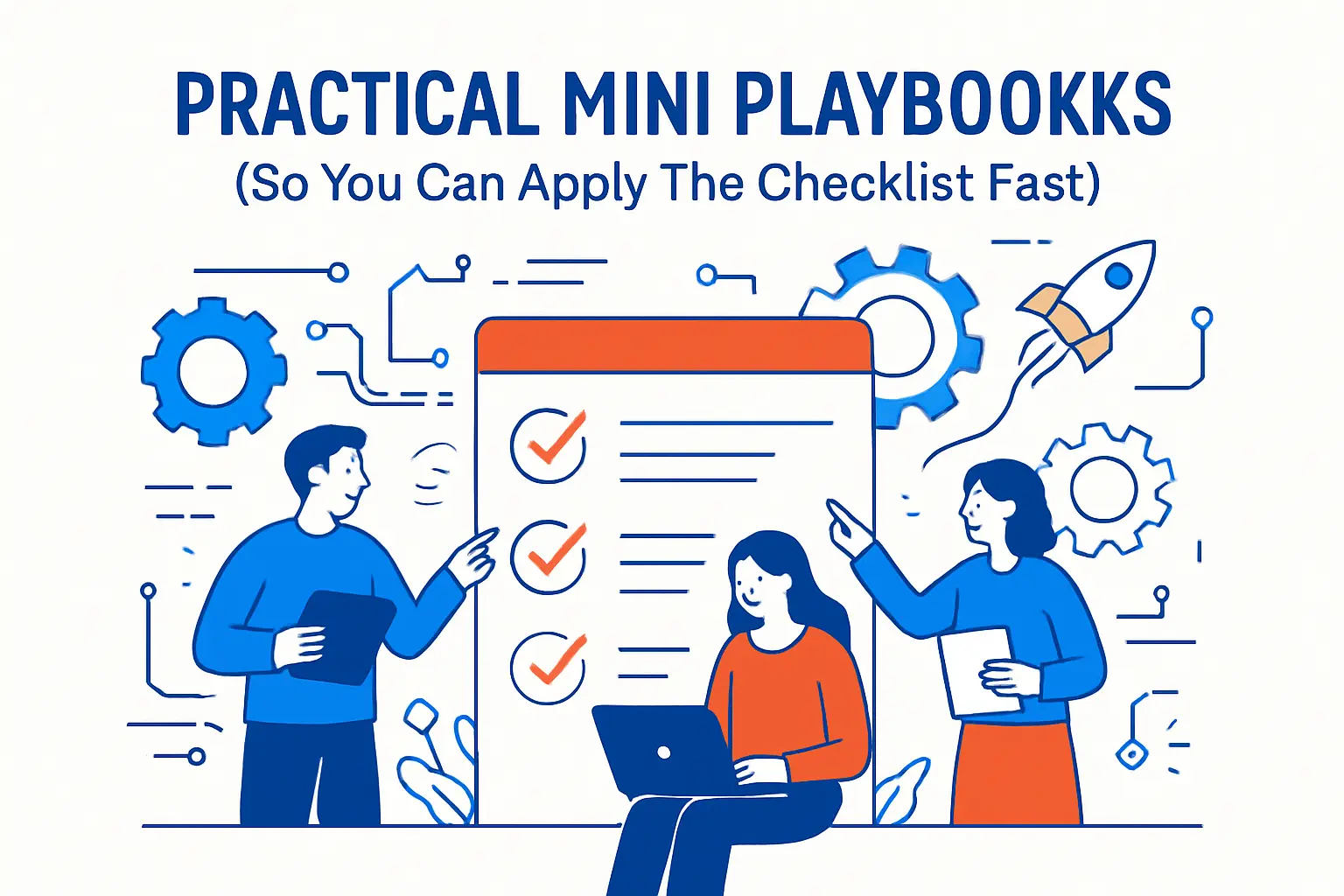
- Practical Mini Playbooks (So You Can Apply The Checklist Fast)
- Quick SEO On-Site And Off-Site Checklist (Copy Into Your Workflow)
- Conclusion
Search visibility does not come from one tactic. It comes from a system. You need clean technical foundations, helpful content, and real-world authority signals that prove you deserve to rank.
This article gives you a practical, SEO-first checklist you can run every week. It also shows how to balance on-site work with off-site work so you do not over-invest in one area and stall growth in the other. Think of this as your seo on site off site playbook.
Also, search results now keep more users on the results page. A recent clickstream study found that 58.5% of American Google searches resulted in zero clicks, so you must optimize for both rankings and SERP presentation.
On-Site SEO: Technical Foundations That Make Rankings Possible
Start with the pages that matter most. Check your homepage, top category pages, and top converting landing pages first. Then confirm Google can fetch them without friction. Look for blocked resources, redirect loops, and pages that load differently for bots than for humans. After that, make sure your sitemap and internal links point to the same preferred URLs you want indexed.
- Check whether important pages return clean status codes and load fully without blocked scripts.
- Confirm robots directives match your goals and do not block assets needed to render the page.
- Standardize URL versions so you do not split signals across duplicates.
- Use canonicals to reinforce the preferred version instead of relying on guesswork.
FURTHER READING: |
| 1. Panda Penalty Signs to Watch for and the Fixes That Help Most |
| 2. What Is an Index Page and Why It’s Crucial for Your Website’s SEO |
| 3. Top 5 Best SEO Plugins for WordPress in 2026 |
1. Crawlability And Indexation Checklist (Make It Easy To Discover Pages)
Start by making sure search engines can reach your important pages. If Google cannot crawl a page consistently, content and backlinks will not save it.
- Confirm you can load key pages without login walls, broken scripts, or blocked resources.
- Review robots directives and make sure they match your business goals.
- Use one preferred version of each page. Then redirect every duplicate to that version.
- Check that your canonical tags point to the page you actually want indexed.
- Remove “thin utility” pages from the index if they do not serve a searcher’s need.
Specific example: If your ecommerce site creates filtered URLs for every color, size, and sort order, you can end up with thousands of near-duplicates. Keep only the filter combinations that people search for. Then block or canonicalize the rest so crawling stays focused.
2. Site Architecture And Internal Linking Checklist (Control Where Authority Flows)
Structure turns content into a system. A good structure helps users move naturally, and it helps search engines understand what matters most.
Treat internal links like routing. Decide which pages should receive the most attention, then build paths that send users there naturally. Use a small set of hub pages for your core topics. Then use supporting pages to answer specific questions and link back up to the hub. This keeps your site easy to navigate and makes relevance easier to understand.
- Link from high-traffic pages to priority pages when it makes sense for the reader.
- Add a “related pages” block only when it supports the next step, not as filler.
- Run an orphan check by searching for important URLs that have no meaningful internal links.
- Update older posts with new internal links when you publish a stronger page in the same cluster.
Additionally, there are also more things you can do to improve the structure:
- Group content into clear topic clusters with one primary “hub” page.
- Link from hubs to supporting pages, and link back up to the hub.
- Add contextual links inside paragraphs, not just in navigation menus.
- Use descriptive anchor text that reflects the target topic.
- Fix orphan pages. Every important page should have internal links pointing to it.
Specific example: A home services company can build a “Roof Repair” hub page. Then it can support that hub with pages like “Emergency Roof Tarping,” “Flashing Repair,” and “Hail Damage Signs.” Internal links make the relationship clear and improve crawl paths.
3. Core Web Vitals And Page Experience Checklist (Reduce Friction For Real Users)
Performance work helps SEO because it improves user experience. It also helps conversions, which protects your budget and keeps SEO funded.
Many sites still struggle here. Chrome UX Report release notes show that 47.3% of origins have good Core Web Vitals, which means you can still stand out by treating performance as a product requirement.
- Reduce layout shifts by reserving space for images, embeds, and ad slots.
- Remove or defer heavy scripts that delay user interaction.
- Audit your templates, not just a few pages. Template fixes scale.
- Use real-user monitoring when possible, since lab tests do not match every device.
When performance work feels overwhelming, triage it. Fix the template issues that affect every page before you chase one slow URL. Start by removing the scripts that block interaction. Then stabilize layout so pages do not jump. After that, optimize the largest visual elements so content appears quickly. Finally, re-test and watch real-user signals to confirm the change helped on typical devices.
- Fix global templates first so improvements scale across the site.
- Remove or delay scripts that block interaction and trigger layout shifts.
- Optimize hero images and above-the-fold elements so the page feels fast, not just “scores fast.”
- Re-test after each change so you know what actually moved the needle.
Use these practical targets as guardrails:
- Largest Contentful Paint of 2.5 seconds or less so the main content appears quickly.
- An INP below or at 200 milliseconds so pages feel responsive during real interactions.
- A CLS of 0.1 or less so the page does not jump while someone reads or taps.
Specific example: If your category pages use large hero sliders, replace them with a single static image and a compressed format. Then preload the hero image. That change often improves perceived speed and reduces interaction delays.
4. Structured Data And SERP Appearance Checklist (Win Attention, Not Just Rank)
Rankings do not guarantee clicks. SERP features can push organic listings down, and AI summaries can satisfy a query before a click happens. Because of that, you should optimize how your result looks.
Use structured data to clarify, not to exaggerate. Pick markup that matches the page type and what a user sees on the screen. Then treat schema like code. Validate it after template changes. Re-check it when you update sections, remove modules, or change layouts. If markup claims something the page does not show clearly, it can stop helping and start creating risk.
- Choose schema based on page intent, not on what looks flashy in search.
- Only mark up elements that users can verify on the page.
- Document where markup lives in templates so updates do not break it silently.
- Review titles and descriptions for clarity, not for keyword repetition.
- Add structured data only when it matches on-page content and user expectations.
- Validate markup after every template change.
- Use clear headings that answer common follow-up questions.
- Write meta descriptions that promise a specific benefit and match the page.
Specific example: For a recipe site, structured data can improve visibility with rich results. However, it only works long-term if the content stays consistent with what the markup claims.
5. Security And Trust Checklist (Remove “Easy No” Signals)
Trust signals keep users calm. They also reduce technical risk. Security issues often create indexing problems, tracking problems, and conversion problems at the same time.
Security supports SEO because it supports trust. Treat it as both a technical layer and a credibility layer. Lock down access, reduce risky changes, and keep your site stable. Then add visible proof that real people stand behind the site, such as clear contact paths and transparent policies. When users feel safe, they stay longer and convert more often.
- Limit who can publish and who can edit templates or tracking scripts.
- Reduce plugin and script sprawl so you lower the risk of silent breakage.
- Keep checkout, lead forms, and login flows clean and reliable.
- Show clear business identity signals on key pages so trust does not rely on guesswork.
Security adoption is now the norm. W3Techs reports that Default protocol https 87.2%, so an insecure setup looks outdated and can erode trust fast.
- Force one secure version of every URL with clean redirects.
- Fix mixed content warnings so browsers do not block assets.
- Keep plugins and themes updated if you use a CMS.
- Document who can publish, who can edit templates, and who can add scripts.
On-Site SEO: Content That Matches Intent And Earns Long-Term Demand

1. Keyword And Intent Mapping Checklist (Stop Guessing What People Want)
Intent drives rankings. If your page format does not match what searchers expect, you can struggle even with strong authority.
Intent mapping starts with observing what wins. Before you draft, scan the results and note the page format that dominates. Look at the common headings, the type of examples used, and how quickly the top pages answer the question. Then match the format with your own point of view and stronger clarity.
- If the results show product pages, build a product-led page, not a generic blog post.
- If the results show comparisons, lead with a decision framework and clear tradeoffs.
- If the results show guides, answer early, then expand with steps, examples, and proof.
Below are a few ways you can improve your intent mapping strategy:
- Classify target queries by intent: learn, compare, buy, or navigate.
- Match the page type to intent: guide, category, comparison, tool, or landing page.
- Write down the primary “job to be done” for the page in one sentence.
- List the objections a buyer might have, then answer them directly.
Specific example: If the query shows product pages and category pages, do not publish a blog post and expect it to win. Instead, create a category page that compares options, includes filters, and answers key questions near the top.
2. Topical Authority Checklist (Build A Library, Not A Pile Of Posts)
One good page helps. A connected set of pages helps more because it signals depth.
Build topical authority by designing a small library. Start with a hub page that defines the topic and helps readers choose the next step. Then publish supporting pages that answer one question each. Link them together with intent. As the library grows, you will rank for more entry points and guide users toward your most valuable pages.
- Create one hub page per core topic and keep it updated.
- Publish supporting pages that answer specific questions people ask before buying.
- Add internal links that reflect the real learning path, not random cross-links.
- Use content updates to strengthen the hub as new supporting pages go live.
Competition is intense. Ahrefs found that 96.55% of all pages in their index get zero traffic from Google, so you need a clear topical angle and a publishing plan that compounds.
- Choose a narrow topic area where you can publish consistently.
- Cover core terms, supporting questions, and real-world use cases.
- Build “definition” pages for key concepts your audience struggles with.
- Publish comparison pages when buyers evaluate alternatives.
Specific example: A B2B analytics tool can build a cluster around “retention analysis” with pages for cohort analysis, churn rate, segmentation, dashboards, and common mistakes. Each page supports sales while also ranking for its own intent.
3. E-E-A-T Checklist (Show Your Work And Reduce Skepticism)
People trust content that feels accountable. Google also encourages a people-first approach and explains how it evaluates helpfulness signals through E‑E‑A‑T concepts in its guidance on creating helpful, reliable, people-first content.
- Add an author bio with relevant experience and a clear way to contact the team.
- Add a short methodology note that explains how you evaluate on-site and off-site work.
- Include concrete examples that come from real projects and real constraints.
- Maintain a visible update habit so advice stays aligned with current search behavior.
Specific example: If you publish a “pricing” guide, include what you learned from actual deals, what typical stakeholders ask, and how implementation affects total cost. That type of detail makes the page hard to copy and easier to trust.
4. On-Page Optimization Checklist (Make The Page Easy To Understand Fast)
On-page SEO is not about stuffing keywords. It is about clarity. Clear pages help users, and they help search engines interpret the page correctly.
- Write a title that states the benefit and matches the main intent.
- Use one clear main heading, then break sections into scannable subheadings.
- Put the “best answer” early, then expand with details and proof.
- Add internal links where a reader would naturally want the next step.
- Keep paragraphs short so mobile readers do not bounce.
Specific example: For a “how to choose” page, place a short decision framework near the top. Then add deeper explanations, examples, and a simple comparison table below.
5. Content Refresh Checklist (Protect Wins And Prevent Decay)
Many sites publish and forget. That approach wastes time because rankings shift and competitors update their pages.
Refresh content when signals change, not when you feel guilty. Watch for falling impressions, slipping rankings, or shrinking click-through. Then diagnose the cause. If intent shifted, rewrite the opening and restructure the page. If competitors added better examples, upgrade your proof and clarity. If your own pages overlap, merge them so you stop competing with yourself.
- Rewrite intros when the intent has shifted or the SERP format changed.
- Update screenshots, steps, and examples when tools and interfaces evolve.
- Merge overlapping posts that target the same job-to-be-done.
- Redirect weaker URLs into the strongest version so signals consolidate.
Additionally:
- Update pages that rank but do not convert. Add clearer next steps.
- Refresh pages that lost impressions. Re-check intent and rewrite the intro.
- Merge overlapping posts that compete with each other.
- Remove outdated sections that no longer help the reader.
Specific example: If you have several similar “best tools” posts, merge them into one authoritative guide. Then redirect the weaker URLs into the stronger one so you consolidate signals.
Off-Site SEO: Authority Building That Does Not Collapse Under Updates
1. Backlink Profile Audit Checklist (Know What You Have Before You Build)
Off-site SEO starts with visibility. You need to know which pages attract links, which anchors people use, and where your gaps sit versus competitors.
- List your most-linked pages and check if they support revenue.
- Find links pointing at pages that now redirect or return errors.
- Look for patterns: industry blogs, local media, partners, directories, or tools.
- Compare your referring domains to key competitors to find realistic targets.
Specific example: If your most-linked page is an old research post, add internal links from that post to your money pages. That way the authority helps business goals, not just vanity traffic.
2. Digital PR Checklist (Earn Editorial Links Instead Of Chasing Random Ones)
Digital PR scales when you create assets people want to cite. That usually means original data, a useful tool, or a strong point of view supported by evidence.
- Create one “linkable asset” per core topic area.
- Pitch a tight story with a clear headline and a clear takeaway.
- Target writers who already cover your category, not generic lists.
- Offer supporting visuals and a short quote they can copy safely.
Specific example: A payroll platform can publish a “hiring timeline” calculator by state or job role. Then it can pitch labor and small business reporters with a simple trend story.
3. Brand Mentions And Reputation Checklist (Build Trust Signals People Recognize)
Off-site SEO is not only links. It also includes brand sentiment, reviews, and consistency across the web.
For local and multi-location brands, reviews influence perception directly. BrightLocal found that 91% of consumers say local branch reviews impact their overall perceptions of big brands in some way, so reputation work supports both rankings and conversion.
- Standardize your business name, address, and phone details across listings.
- Ask for reviews with a simple, short process.
- Respond to reviews quickly and professionally, especially negative ones.
- Build location pages that match what customers ask on the phone.
Specific example: A dental chain can publish one location page per clinic, then add dentist bios, insurance details, and aftercare FAQs. That content supports local intent and reduces front-desk workload.
4. Partnership And Community Checklist (Get Links That Also Create Customers)
The best off-site tactics do more than boost authority. They also create demand and relationships.
- Co-market with complementary brands through webinars or guides.
- Sponsor niche communities where your customers already gather.
- Contribute expert quotes to journalists and industry newsletters.
- Publish case studies with partners and link to each other naturally.
Specific example: A Shopify agency can partner with an email marketing tool to publish a teardown series. That series can attract links, leads, and demo requests at the same time.
5. Risk Management Checklist (Avoid Shortcuts That Turn Into Penalties)
Bad links can waste months. Low-quality tactics often look good in a spreadsheet, but they create long-term fragility.
- Avoid paid link networks and templated guest post farms.
- Focus on earned links from real editorial choices.
- Monitor sudden spikes in low-quality referring domains.
- Document outreach so you can explain growth patterns if needed.
Specific example: If an SEO vendor promises a fixed number of links per month, ask for sample sites before you sign. If the sites exist only to publish guest posts, walk away.
Balanced Strategy: How To Decide What To Do Next (On-Site vs Off-Site)

1. Use Click Potential To Set Priorities
Ranking improvements often pay back fast when you already sit near the top. That is why you should prioritize pages that rank close to high-visibility positions and already match intent.
Backlinko’s CTR study found that The #1 result in Google’s organic search results has an average CTR of 27.6%, so moving from “near the top” to “at the top” can change outcomes dramatically.
- First, optimize pages that already rank well but underperform in clicks or conversions.
- Next, build internal links into pages that sit close to the top of results.
- Then, support them with targeted link earning if competitors beat you on authority.
2. Account For AI-Driven SERPs Without Panicking
AI features change how people consume answers. However, you can still win visibility by making your content easier to cite and easier to trust.
Write so your answers are easy to reuse. Use crisp definitions near the top of sections. Keep key points in short lists. Use consistent terms across your cluster so context stays stable. Then support claims with simple explanations and visible proof. This helps both humans and AI-driven results understand what you mean.
Ahrefs reports that AI Overviews appear on 21% of all keywords, so you should treat “being cited” as a real distribution channel.
- Answer the question early and support it with concise subpoints.
- Add definitions and short explanations that a model can quote cleanly.
- Use consistent terminology across your cluster so context stays stable.
- Build brand signals off-site so your name looks credible when cited.
3. Do Not Ignore Desktop Behavior
Mobile matters, but desktop still drives a large share of browsing and buying, especially for B2B and high-consideration purchases.
Run a desktop sweep on your most valuable templates. Check your navigation, forms, and interactive modules. Make sure comparisons remain readable and tables do not break layouts. Confirm popups do not block content and that key CTAs stay visible without feeling aggressive.
- Test pricing and comparison layouts on common laptop widths.
- Ensure form fields are easy to complete with a keyboard and trackpad.
- Verify sticky elements do not cover content or create accidental clicks.
- Check that on-page anchors and jump links work cleanly.
StatCounter shows that Desktop 54.46% in the United States for the latest available monthly snapshot shown on that page, so you should test your templates, forms, and navigation across both major device types.
- Check table layouts and comparison sections on smaller laptop screens.
- Make forms easy to complete with a keyboard and trackpad.
- Ensure popups do not block content or frustrate users.
4. Use A Simple Decision Rule For Your Next Sprint
Balance gets easier when you follow a rule. Run this quick filter before you plan the next sprint.
- If pages do not index reliably, fix technical issues first.
- If pages index but do not rank, improve intent match and content depth.
- If pages rank but do not win, strengthen internal links and earn external links.
- If pages win but do not convert, improve copy, trust, and user flow.
After you choose the focus, define the outcome you will measure. Track whether pages index more reliably, earn more clicks, hold rankings better, or convert more users. This keeps your sprint tied to business impact and prevents busywork.
Practical Mini Playbooks (So You Can Apply The Checklist Fast)
1. Playbook For A New Ecommerce Site
New ecommerce sites usually lose because they publish too many weak pages and earn too few real links.
Ecommerce sites often lose to crawl waste and thin pages. Control filters so you do not generate endless near-duplicates. Put real buying guidance on categories so they are not empty shells. Then build a few content assets that naturally link into your best categories and top products.
- Start with a clean category structure based on how people shop.
- Write category copy that answers selection questions and reduces returns.
- Build internal links from guides into categories and top products.
- Create one standout asset that earns links, such as a sizing tool or study.
Example: A running shoe store can publish a “shoe finder” guide, then link it to categories like trail, stability, and marathon. Next, it can pitch local running clubs and coaches for mentions and links.
2. Playbook For B2B SaaS
B2B SaaS wins when content aligns with the buying journey and when comparison pages remove friction.
B2B buyers look for risk reduction. Build pages that answer security, compliance, migration, and implementation questions clearly. Publish comparisons that stay fair and specific. Add case studies that show outcomes and constraints. Then connect the content so readers can move from learning to evaluation to action without dead ends.
- Build a cluster around the main use case, not just features.
- Publish integration pages that answer setup questions clearly.
- Create competitor comparison pages that stay fair and specific.
- Support launches with PR so you earn editorial links, not directory links.
Example: A ticketing platform can publish “help desk vs customer support platform” content, then link to a pricing explainer, security page, and migration checklist. That path matches how buyers evaluate risk.
3. Playbook For A Local Service Business
Local SEO compounds when you standardize proof. Add photos, team details, service boundaries, and clear FAQs on every core service page. Then build a repeatable review request process and respond with care. Finally, earn local mentions through real community involvement, not generic directories.
- Create one strong page per core service, plus one page per location if relevant.
- Add proof: photos, team bios, licenses, and clear service boundaries.
- Systemize review requests and respond consistently.
- Earn local links through sponsorships, chambers, and community involvement.
Example: A plumbing company can publish a “what to do before the plumber arrives” checklist. That page can attract local links and also reduce wasted appointments.
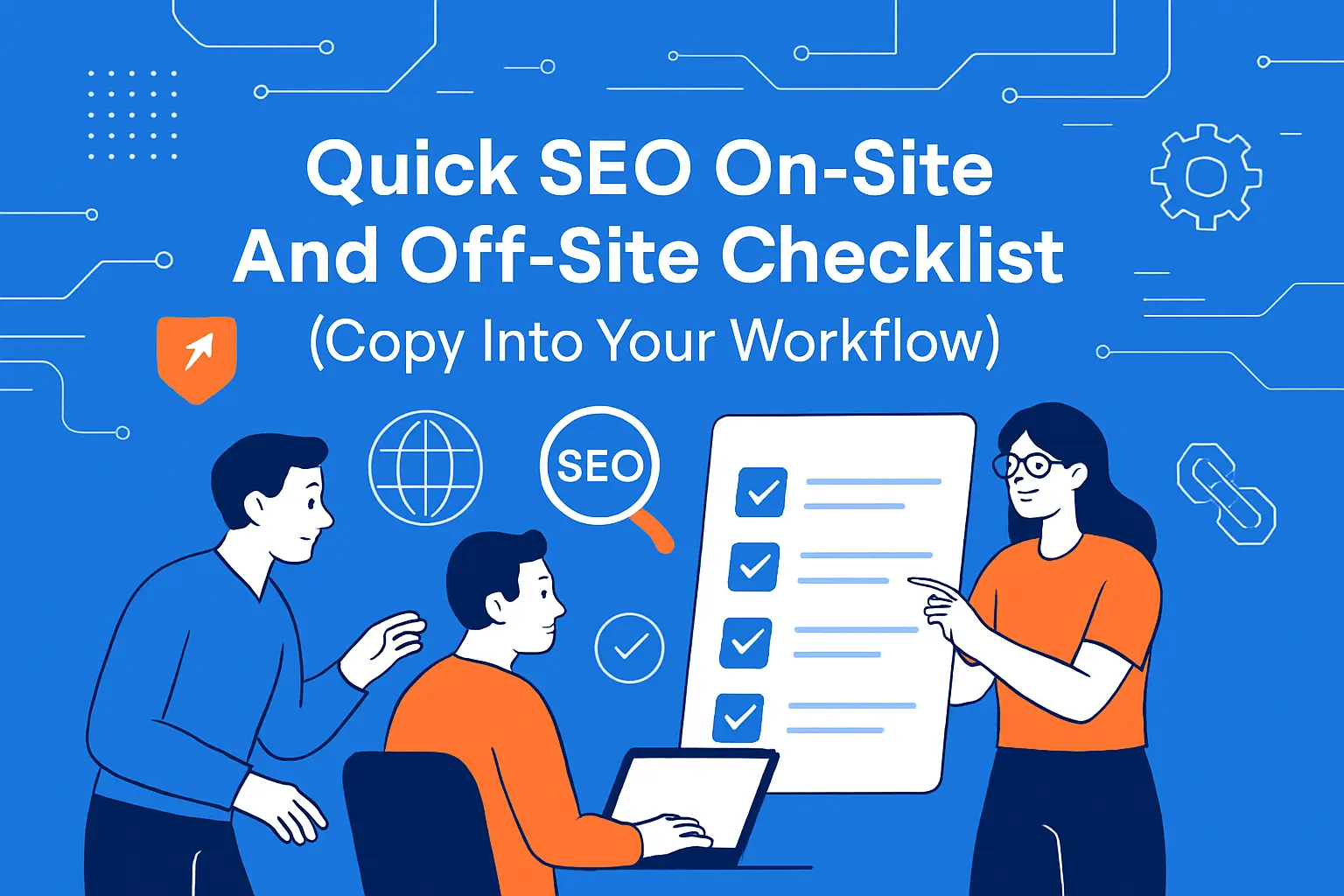
Quick SEO On-Site And Off-Site Checklist (Copy Into Your Workflow)
1. On-Site Checklist (Weekly)
- Fix broken pages and redirect chains that waste crawl paths.
- Review internal linking to priority pages and key clusters.
- Improve titles and intros for pages that rank but do not get clicks.
- Check template changes for performance regressions and layout shifts.
Add a quick visibility pulse check to your weekly routine. Review which pages gained clicks and which pages slipped. If a page dropped, scan the SERP and confirm intent still matches your format. Then update the intro and headings before you do heavy rewrites.
2. Off-Site Checklist (Weekly)
- Track new referring domains and evaluate link quality quickly.
- Run one outreach push tied to a real story or a useful asset.
- Strengthen partner pages, case studies, and community mentions.
- Monitor brand sentiment and address review issues promptly.
Keep off-site work simple and consistent. Track new mentions and new links, then evaluate whether they come from real audiences. Follow up with partners, communities, and journalists when you have something genuinely useful to share. If you see a pattern of low-quality links, document it and stop the source early.
3. Strategy Checklist (Monthly)
- Decide your next focus: technical fixes, content upgrades, or authority building.
- Refresh pages that lost visibility and re-check intent alignment.
- Plan one new cluster addition that supports an existing hub page.
- Set one measurable outcome tied to revenue, not just rankings.
Pick one priority theme for the month and protect it. Choose either technical stability, content depth, or authority building. Then align your tasks to that theme so results compound instead of scattering.






Conclusion
SEO works best when you treat it like a balanced system. On-site improvements make it easier to crawl, understand, and trust your pages. Off-site work proves your pages deserve attention in a competitive web. When you combine both, you build a strategy that survives updates and keeps compounding over time.