

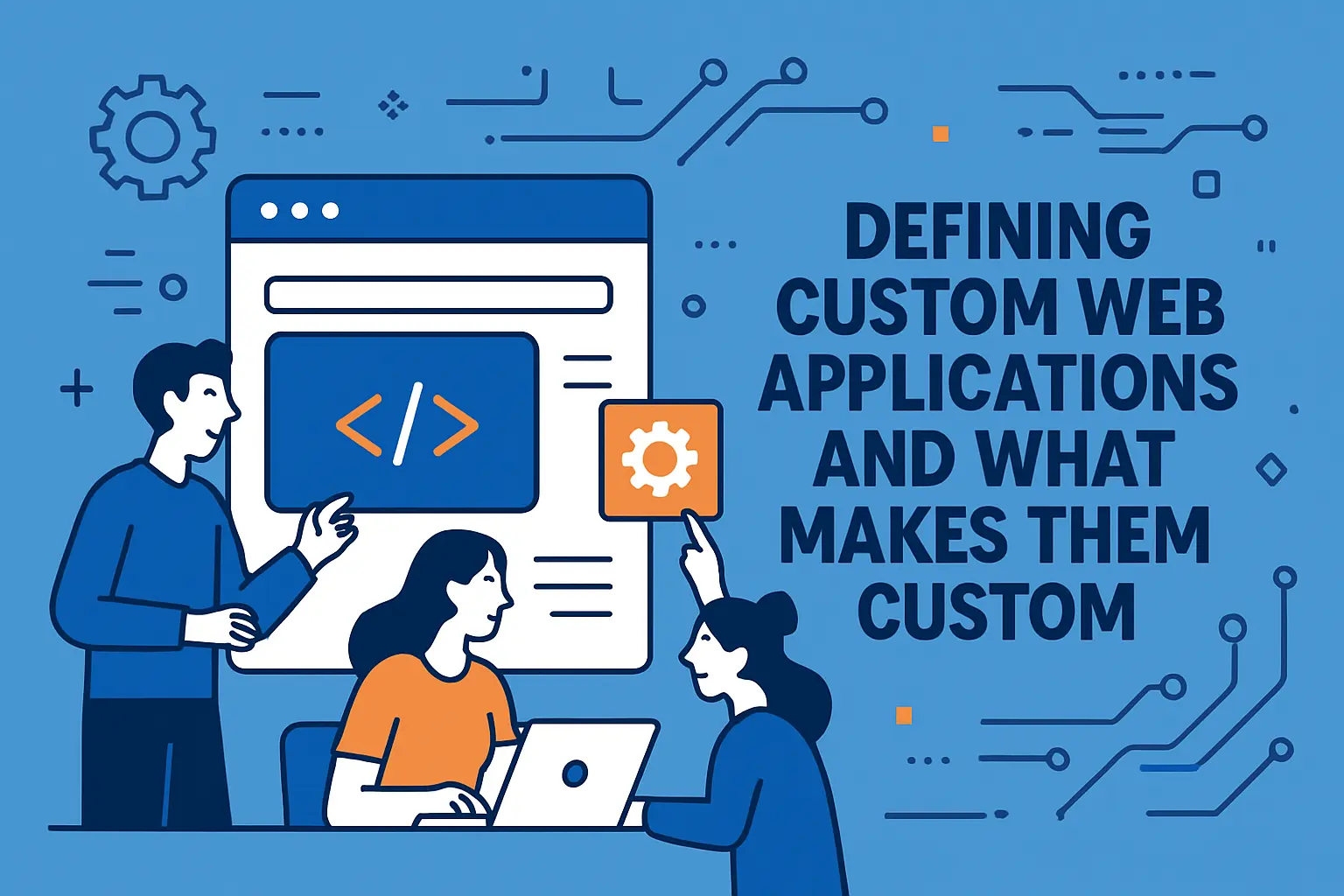
- Defining custom web applications and what makes them custom
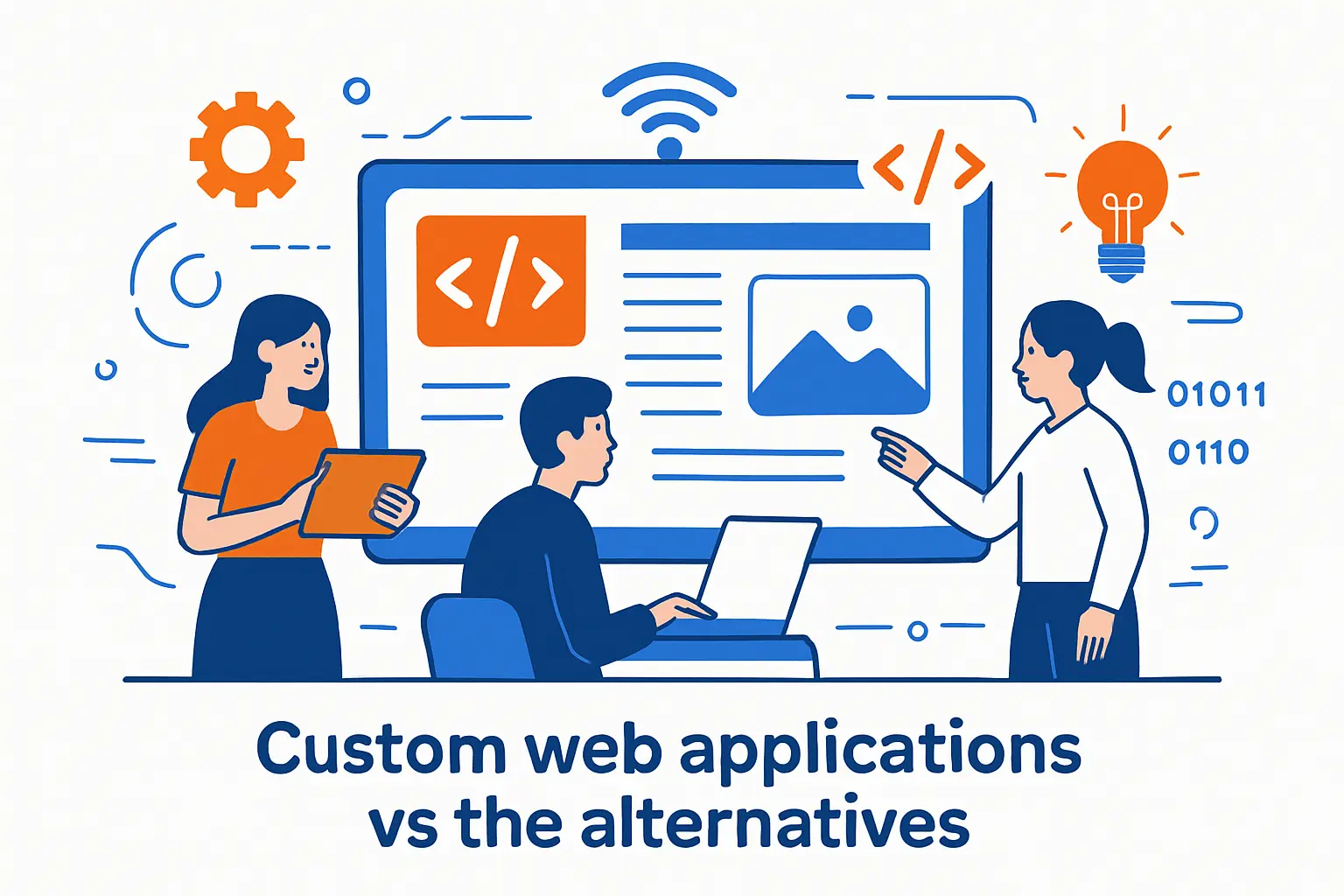
- Custom web applications vs the alternatives
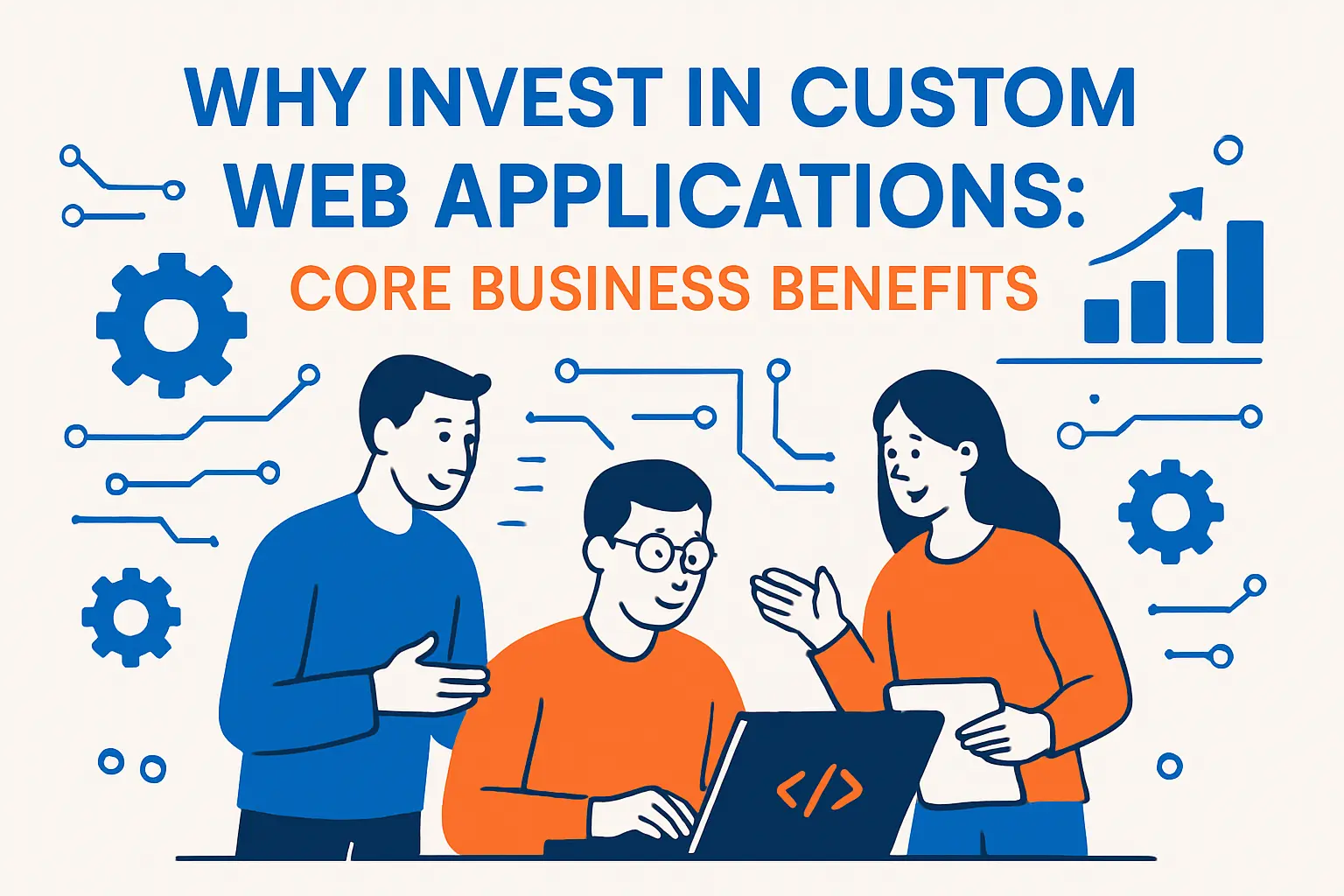
- Why invest in custom web applications: core business benefits
- Real-world examples of custom web applications
- The custom web application development lifecycle
- Choosing tools and platforms to build custom web applications
- Project planning, budgeting, and choosing who will build your app
- How 1Byte supports custom web applications with cloud and hosting services
- Conclusion: the right tool and approach for the right job
At 1Byte, we live in the space where product ideas collide with infrastructure reality: latency budgets, security boundaries, deployment pipelines, and the stubborn fact that businesses don’t run on “best practices” so much as on their practices. Custom web applications are where those realities become visible. They’re not just “a website with a login,” and they’re not automatically “enterprise software” either. They’re the operational nervous system for how teams sell, serve, schedule, approve, reconcile, and decide.
Market context matters because custom web apps rarely exist in isolation; they ride on cloud services, managed databases, CDN edges, queues, and identity providers. Gartner forecasted worldwide public cloud end-user spending at $675.4 billion in 2024, and we feel that scale in the day-to-day expectations customers bring to every application they touch: “fast,” “always on,” “secure,” and “integrated.”
Yet ambition alone doesn’t guarantee outcomes. McKinsey has pointed out that 70 percent of transformations fail, and that’s the cautionary tale we keep in mind when a team wants to rebuild everything at once. Our take is pragmatic: start with the workflow that hurts most, build the smallest version that can prove value, then scale the architecture when the business signal is real.
In the real world, “custom web app” can mean a patient portal that routes messages to the right care team, a B2B quoting tool that reflects negotiated pricing, or an internal dashboard that shows finance and operations the same truth at the same time. It can look like the admin experiences behind Shopify stores or the operational console behind a logistics company—because the web is simply the most universal delivery mechanism we have. The question isn’t whether the web can do it; the question is whether we design the app to fit the work.
Defining custom web applications and what makes them custom
1. Web applications are browser-based tools users can access without installing software
In plain terms, a web application is software delivered through the browser: users open a URL, authenticate, and interact with data and logic that live on servers. Bubble’s own documentation summarizes a key advantage well: instantly accessible—share a link, and users can open it right away, which is exactly why web apps dominate internal tooling and customer portals.
From our hosting perspective at 1Byte, that “open it right away” promise has teeth. Browser delivery means centralized updates, which can be a blessing for operations and a curse if deployments are sloppy. Done well, it enables quick iteration, controlled rollouts, and consistent security posture without asking every user to update an installer.
2. Custom web applications are designed for specific users, tasks, and workflows
A custom web application is “custom” because it is shaped around a particular organization’s workflows, constraints, and definitions—what counts as “approved,” which fields are mandatory, what gets logged, and who can see what. In practice, that means we map roles (customer, agent, manager, auditor), actions (submit, review, refund, reconcile), and outcomes (a quote, a booking, a case resolution) before we ever pick a framework.
More importantly, custom doesn’t only describe features; it describes intent. Off-the-shelf tools tend to optimize for the median customer. Custom apps optimize for your edge cases, and it’s the edge cases that usually burn time and money in the business today.
3. Custom builds emphasize control over features, design, and ongoing changes
Control is the quiet reason many teams choose custom. A custom app lets the business decide what ships, what gets deprecated, and what must never change (think billing logic or compliance workflows). It also means design control: the UI can reflect the company’s terminology, brand, and decision-making rhythm, rather than forcing employees to translate “vendor” into “supplier” in their heads all day.
From 1Byte’s seat, ongoing change is where the hosting and cloud story becomes inseparable from the product story. If the app must evolve weekly, the architecture needs predictable deployments, safe database migrations, and observability that catches regressions before customers do.
Custom web applications vs the alternatives
1. Website vs web application: informational pages compared with functional interactive tools
A website primarily publishes information—marketing pages, documentation, blog posts—while a web application enables users to perform tasks: submit forms that trigger workflows, manipulate records, generate reports, and collaborate in shared states. Fiverr’s marketplace description draws a simple boundary: web applications contain interactive tools while a website is mainly static information, and that distinction is a helpful starting point even if modern sites blur the line.
In our experience, the difference becomes obvious the moment you ask, “What happens after the user clicks submit?” If the answer is “someone receives an email,” you may still be in website land. If the answer is “a case is created, routed, tracked, and audited,” you are describing an application.
2. Custom vs off the shelf SaaS: fit to processes, pricing model, flexibility, and ownership
Off-the-shelf SaaS is often the quickest path to a baseline capability, but it comes with hidden coupling: your process adapts to the vendor’s product roadmap, data model, and permission system. Custom apps invert that: the software adapts to the business. That said, we don’t romanticize custom—if the workflow is standard, SaaS can be the wiser move.
Ownership is the strategic hinge. With SaaS, you rent a capability; with custom, you build an asset. The trade-off is responsibility: upgrades, security patches, and operational excellence become part of your long-term plan, which is why infrastructure partners matter more than most teams expect at kickoff.
3. Web app vs native mobile app and where progressive web apps fit
Native mobile apps excel when deep device integration is non-negotiable—background processing, tight sensor access, or platform-specific UX patterns. Web apps win when distribution, iteration speed, and cross-device access matter most. Bubble captures a practical difference: web app: updated centrally, which reduces user friction and support overhead.
Progressive Web Apps (PWAs) occupy the middle ground. MDN describes a defining trait clearly: it can be installed on the device, so teams can approach an “app-like” experience without committing to app-store distribution for every iteration. In our view, PWAs are especially compelling when the same workflow must work for desktop staff and mobile field teams.
Why invest in custom web applications: core business benefits
1. Unmatched efficiency through workflow optimization and process automation
Efficiency is not a buzzword when it shows up as reduced cycle time for approvals, fewer handoffs, and less rekeying of data. Custom apps can encode the exact steps your team already performs—then remove the steps that exist only because tools don’t talk to each other. We’ve watched teams eliminate entire spreadsheets by replacing “copy/paste + email” with a single form that writes to a database and triggers the right notifications.
Crucially, automation becomes safer when it’s explicit. Instead of tribal knowledge (“ask Jamie if this is allowed”), the rules live in code, versioned, tested, and reviewable—meaning the organization can scale beyond the handful of people who currently “know how it works.”
2. Solving unique and complex problems that generic tools cannot address
Generic tools struggle with messy reality: unusual pricing models, multi-party approvals, regulated data boundaries, exception handling, and domain-specific logic. A custom web application thrives here because it can model your domain as it actually exists. The trick is to design around the business concepts—orders, cases, claims, shipments—rather than around screens.
At 1Byte, we tend to ask a pointed question early: “Where does the business lose money because software can’t represent reality?” That’s usually where custom delivers outsized ROI, not by adding features, but by reducing misunderstandings and rework.
3. Scalability and future-proofing without being limited by subscription tiers
Subscription tiers are a subtle governor on growth. SaaS vendors often reserve advanced permissions, analytics, automations, or API limits for higher plans, which can distort decision-making: you end up designing your process around pricing rather than outcomes. Custom applications avoid that trap by letting you scale on your own terms—through better architecture, caching, query optimization, and infrastructure scaling.
Future-proofing is also about data. When your app owns its data model, you can evolve it with migrations and backward compatibility rather than hoping a vendor’s schema changes won’t break your reporting or compliance trail.
4. Seamless integrations across CRM, ERP, marketing, and other systems
Integrations are where custom apps often pay for themselves. Instead of forcing humans to bridge systems, the app can orchestrate them: create a deal in CRM, provision an account, sync billing status, and trigger onboarding messaging. When integrations are treated as first-class features—not afterthoughts—you get a system that behaves like a single product rather than a patchwork of logins.
We’ve learned to be disciplined here: integration scope must be explicit, with clear ownership of source-of-truth fields. Without that clarity, “sync” becomes a polite word for “data conflict.”
5. Enhanced security and compliance requirements for regulated industries
Security is not only about encryption; it’s about access control, auditability, least privilege, and predictable change management. For healthcare workloads, for example, the U.S. Department of Health & Human Services explains that the HIPAA Security Rule requires appropriate administrative, physical and technical safeguards, and custom apps frequently become the place where those safeguards are operationalized.
Threat modeling also benefits from specificity. A custom app can minimize data exposure by design—showing the right subset of data to the right role—rather than handing every user the same broad UI and hoping training fills the gaps.
Security hygiene we insist on in production
On the hosting side, we treat patch cadence, secret management, and logging as product features. OWASP frames the motivation succinctly by positioning its guidance as a standard awareness document for developers and web application security, and we’ve seen that teams who operationalize those lessons early avoid painful rewrites later.
6. Superior branded UX that improves trust, loyalty, and conversion rates
UX is not just aesthetics; it’s the shape of the conversation between your business and your user. A branded experience can encode trust: clear error states, consistent language, predictable flows, and fast performance that signals competence. In e-commerce, the difference between a generic checkout and a tailored one is often the difference between “this feels risky” and “this feels inevitable.”
From our infrastructure vantage point, UX is also performance engineering. A clean UI backed by slow APIs is still a slow product. When we pair custom UX with caching strategies, CDN delivery, and sane backend boundaries, conversion improves for the unglamorous reason that users stop waiting.
7. New revenue streams when the app becomes a product or unlocks new markets
Some custom web apps start as internal tools and quietly become sellable products: a quoting engine becomes a partner portal; a scheduling workflow becomes a paid subscription; an internal analytics dashboard becomes a customer-facing reporting add-on. What changes is not just packaging, but reliability expectations, onboarding design, and support readiness.
We like this path because it’s grounded in real usage. If an internal tool survives daily operations, it has already passed a harsh test. The work then becomes productization: permissions, multi-tenant architecture, billing integration, and the kind of uptime discipline that turns “useful” into “bankable.”
Real-world examples of custom web applications
1. Healthcare portals for secure logins, appointment booking, and sensitive form submissions
Healthcare portals are classic custom web applications because they combine sensitive workflows with non-negotiable privacy expectations. A good portal doesn’t merely “show appointments”; it coordinates identity verification, messaging, document upload, and routing to the right team. In practice, these systems often integrate with EHR/EMR backends, payment processors, and notification services while preserving strict role-based visibility.
At 1Byte, we see healthcare teams succeed when they narrow the initial scope to a single patient journey (say, “request an appointment and complete intake”) and then harden it: audit logs, session management, and clear retention policies. The UI can be simple; the operational discipline cannot.
2. Education and training platforms that combine video with interactive learning features
Training platforms look deceptively straightforward until you build one: video delivery, progress tracking, quizzes, certificates, cohorts, and admin reporting all pull in different directions. The custom value usually appears in the learning workflow itself—how lessons unlock, how feedback loops work, and how organizations measure competency rather than mere completion.
We often advise teams to separate “content” from “learning state.” Content can live in a CMS, while learning state belongs in application data: attempts, scores, timestamps, and instructor notes. That separation makes scaling easier, especially when the audience grows from a small internal program to customer training.
3. Custom ecommerce experiences for personalization and tailored checkout flows
Ecommerce customization is rarely about fancy animations; it’s about fitting the business model. Subscription add-ons, bundling, negotiated B2B pricing, regional tax logic, and specialized fulfillment constraints are where generic templates break. When checkout reflects the real-world purchase decision, customer support tickets drop because the buyer understands what they’re getting.
On the infrastructure side, ecommerce is where we obsess over performance and resilience: image optimization, edge caching, careful rate limiting, and dependable payment callbacks. A custom checkout that fails under load is worse than a generic one, so we treat operational design as part of the product, not an afterthought.
4. Internal dashboards, portals, ERP, and CRM systems for operational visibility and collaboration
Internal web apps are where businesses become legible to themselves. Dashboards that unify finance, operations, and customer support are not “nice to have”; they’re how organizations stop arguing about numbers and start acting on them. Custom internal portals also excel at enforcing accountability: who approved, who changed, who escalated, and what happened next.
We’re fans of designing these tools with “decision moments” in mind. A dashboard should not merely display; it should enable an action: approve, reject, assign, contact, export, reconcile. When internal apps reduce context switching, teams reclaim focus—and focus is the rarest resource in modern operations.
5. Personal project apps like travel planners, recipe generators, journals, habit trackers, and task tools
Personal projects are underrated laboratories for custom web applications. A travel planner forces you to model dates, locations, and constraints; a recipe generator pushes you toward structured data and search; a journal tests privacy and encryption assumptions; a habit tracker teaches you about notifications and retention. Even a simple task tool becomes complex once you add tags, filters, and collaboration.
From 1Byte’s perspective, these projects are also how developers learn deployment reality: domains, HTTPS, databases, backups, and performance. The fastest way to respect production is to ship something that you personally rely on, because you stop tolerating “it usually works.”
The custom web application development lifecycle
1. Step 1 Discovery and strategy to define the problem, users, goals, and MVP
Discovery is where we prevent expensive misunderstandings. The goal is to define the problem precisely, identify users and their incentives, and agree on what “success” means in observable terms. We like to capture workflows as narratives: “A customer requests X, the system validates Y, an agent reviews Z, and finance reconciles later.”
Strategy also includes the MVP boundary. In our experience, a strong MVP is not “small”; it’s “coherent.” It delivers a complete loop of value—even if the loop is narrow—so the team can measure real adoption rather than debating hypothetical features.
2. Step 2 Planning and requirements to document functional needs, sitemaps, and user stories
Planning turns intent into a buildable map. Requirements should include functional behavior (what users can do) and non-functional expectations (performance, security, uptime, data retention, accessibility). User stories help, but we prefer user stories that include acceptance criteria—what must be true for the story to be “done.”
From a hosting and cloud perspective, we also plan environments early: development, staging, and production, each with clearly separated secrets and data. That separation is not bureaucracy; it’s how you avoid testing payment callbacks against your live customer records.
3. Step 3 Prototyping and UX UI design using wireframes, mockups, and clickable prototypes
Prototyping is where teams learn what they actually meant. Wireframes clarify information architecture, while clickable prototypes reveal flow problems: missing states, unclear error handling, and confusing terminology. We’re believers in designing the “unhappy paths” early, because the real world is full of half-complete forms, duplicate records, and users who forget passwords.
Good UX/UI work also creates technical leverage. When components are consistent—tables, forms, modals, navigation—the frontend becomes easier to build and maintain, and the brand experience feels intentional rather than patched together.
A note on design systems
We push for a lightweight design system: a shared component library, typography rules, spacing scale, and states. That’s not a luxury; it’s how teams ship faster without the UI drifting into an inconsistent mess after the first few iterations.
4. Step 4 Development and coding across frontend, backend, and data architecture
Development is where choices compound. Frontend work includes state management, routing, form handling, accessibility, and performance. Backend work includes APIs, authorization, business logic, background jobs, and integrations. Data architecture includes schema design, indexing strategy, and migrations that can evolve safely.
At 1Byte, we like “boring” architectures when possible: a modular monolith with clear boundaries can outperform premature microservices in both velocity and reliability. When scale or organizational structure demands decomposition, we prefer to split by business domains rather than by technical layers.
5. Step 5 Testing and quality assurance for functionality, performance, usability, and security
QA is not a phase; it’s a discipline, but a dedicated testing step still matters. Functional testing verifies workflows end-to-end. Performance testing identifies slow queries, chatty APIs, and front-end rendering bottlenecks. Usability testing catches the “technically correct but practically confusing” problems that otherwise become support tickets.
Security testing deserves its own mindset. We treat authorization as a primary test surface: can a user access data they shouldn’t by changing an identifier, manipulating a request, or reusing a stale session? That’s not paranoia; it’s how real breaches happen.
6. Step 6 Deployment from development to live hosting using staging to production releases
Deployment is where teams either gain confidence or accumulate fear. A healthy release process uses staging as a rehearsal for production, with repeatable steps, clear rollback paths, and automated checks. In practice, we encourage teams to treat infrastructure as code—so environments are reproducible and changes are reviewable.
On the hosting side, HTTPS is non-negotiable for any serious app. Cloudflare’s explainer puts it plainly: HTTPS is a secure way to send data between a web server and a web browser, and we view that as the baseline before we even talk about advanced protections like WAF rules.
7. Step 7 Maintenance and iteration for patches, updates, server changes, and ongoing improvements
Maintenance is where the “custom” decision proves itself. The work includes dependency updates, security patches, database tuning, infrastructure upgrades, and product iteration based on usage data. Teams that budget for maintenance avoid the trap of treating the app like a one-time purchase; software is a living system.
We also recommend an explicit iteration loop: collect feedback, prioritize changes, ship improvements, and measure impact. When maintenance is planned, uptime improves, developer velocity stays steady, and users trust the product because it evolves without breaking.
Choosing tools and platforms to build custom web applications
1. Full custom development for proprietary logic, high-velocity data, and strict compliance needs
Full custom development is the right choice when the application’s logic is proprietary, the data volume or concurrency is demanding, or compliance requirements require deep control over architecture and auditability. This path typically means selecting a backend framework, a frontend framework, a database, and an operational stack for CI/CD, monitoring, and incident response.
At 1Byte, we’re candid about the cost: custom code buys flexibility, but it also demands engineering maturity. When the business can support that maturity—through an internal team or a trusted partner—full custom becomes a durable competitive advantage.
2. The high-functionality website approach using WordPress and Elementor for app-like experiences
Sometimes you don’t need a full custom app; you need a highly dynamic experience: gated content, member dashboards, forms, workflows, and integrations that feel “app-like.” WordPress remains compelling here because WordPress is open source software and can be extended through plugins and custom development while keeping content workflows friendly for non-engineers.
Elementor’s developer documentation captures what makes it powerful for “app-like” experiences: users can design their own layouts using simple drag-and-drop functionality without any code, which can accelerate iteration for marketing-heavy products while developers focus on custom plugins, integrations, and performance hardening.
3. Low-code and no-code development when requirements are simpler and speed matters
No-code and low-code platforms shine when the workflow is well-defined, the domain rules are moderate, and speed matters more than deep customization. The key is honesty about constraints: data modeling limits, performance ceilings, and integration boundaries. In our view, these tools are best when they reduce time-to-learning, not when they’re used to avoid thinking through product strategy.
Operationally, we still treat no-code apps like real software. They need domains, HTTPS, backups (where possible), access control discipline, and a plan for what happens if the platform’s pricing or capabilities change later.
4. Bubble platform approach using AI plus no-code to build full-stack web and mobile applications
Bubble is a strong example of a no-code approach that can still feel “full stack.” Bubble’s manual describes the core idea succinctly: Bubble uses a combination of AI and visual tools so builders can define UI, workflows, and data without writing traditional code. That can be a practical path for MVPs, internal tools, and early-stage products validating demand.
Our caution is architectural: as the product grows, teams should watch for complexity creep—workflows that become hard to reason about, permission logic scattered across screens, and performance bottlenecks that are difficult to profile.
5. WeWeb platform approach using AI generation, visual editing, and exportable Vue.js code
WeWeb is compelling when you want visual speed without locking yourself into a permanent black box. Their developer documentation states a key technical fact: we build a JavaScript (Vue.js) application when you publish, which helps explain why the output can feel closer to a conventional frontend architecture than many builders.
Exportability is where this approach becomes strategically interesting. WeWeb’s documentation emphasizes that you can download a zip file containing all your project’s files ready to host anywhere you want, which aligns with our belief that serious businesses should keep an exit path—even if they never use it.
Project planning, budgeting, and choosing who will build your app
1. Requirements documentation with goals, essential features, and clear scope definition
Requirements documentation is the least glamorous artifact and one of the most profitable. It should define goals, essential features, user roles, key workflows, and out-of-scope items. We recommend writing requirements in language that a non-technical stakeholder can validate, then attaching technical notes for engineering.
Scope clarity also protects the timeline. When the team can say, “That’s a phase-two idea,” the project stays shippable. Without that discipline, custom app projects turn into permanent construction sites—busy, expensive, and never open to the public.
2. Project brief and RFP inputs that help teams estimate cost, timeline, and integrations
A strong project brief reads like a map: what you’re building, who it’s for, what systems it must integrate with, and what constraints exist around security, compliance, and data retention. RFP inputs should also include current pain points and what “done” means: reduced manual work, faster onboarding, fewer support tickets, cleaner reporting.
At 1Byte, we like when briefs include infrastructure preferences early—cloud provider choices, deployment needs, and uptime expectations—because architectural decisions depend on them. Even the best engineering team can’t estimate accurately if the operational target is undefined.
3. In-house team vs agency development partner considerations for speed, cost, and expertise
In-house teams bring domain knowledge, long-term ownership, and tighter feedback loops. Agencies bring accelerated delivery, cross-industry patterns, and staffing flexibility. The best choice often depends on whether the application is core to the business identity or a supporting system that still needs to be reliable.
We’ve seen hybrid models work well: product ownership and architecture leadership in-house, with an agency augmenting delivery for defined scopes. The real failure mode isn’t “agency vs in-house”; it’s unclear ownership of decisions, which leads to slow approvals and fragile accountability.
4. Finding freelance web application development services on Fiverr
Fiverr can be a practical marketplace when you need targeted help: a UI build, a bug fix, a small integration, or a prototype. Their category page makes it explicit that you can hire for Build your custom web application from scratch, which is a useful on-ramp for well-scoped tasks.
Our advice is to treat Fiverr like any vendor relationship: define acceptance criteria, require code handoff expectations, and plan for maintainability. A freelancer can accelerate you; a freelancer cannot rescue a fuzzy scope. If you can’t describe success in writing, you can’t reliably buy it from a marketplace.
5. Budget and timeline expectations for basic vs fully featured custom web application builds
Budgets and timelines vary wildly, so we avoid pretending there’s a universal price tag. Instead, we anchor on complexity drivers: number of workflows, integrations, permission rules, reporting needs, data migration, and compliance demands. A basic build tends to ship quickly when the data model is simple and integrations are minimal; a fully featured platform slows down as the edge cases become the main story.
One principle has held steady in our work: the fastest path to predictable delivery is to ship in slices. When teams build, deploy, and learn in increments, the timeline becomes a series of controlled bets rather than a single cliff-edge launch.
How 1Byte supports custom web applications with cloud and hosting services
1. Domain registration to secure your brand and launch your application on a trusted domain
A custom web application needs a stable home on the internet, and that begins with domain strategy: brand protection, sensible subdomain conventions, and clean separation between marketing and app surfaces. At 1Byte, we encourage teams to choose domains that scale with product lines, not just today’s MVP name, because renames are expensive once links, integrations, and customer habits harden.
Operationally, domains are also part of security. Clear ownership, locked registrar access, and documented DNS changes reduce the risk of accidental outages. When domain governance is sloppy, even the best application architecture can be taken down by a misclick.
2. SSL certificates to enable HTTPS and protect data in transit
HTTPS is table stakes for modern web applications, not a “security upgrade.” Cloudflare’s Learning Center explains that traffic is encrypted under HTTPS, which is essential when your app handles logins, form submissions, or any sensitive data. We treat SSL certificate management as a continuous responsibility: renewals, correct chain configuration, and monitoring for certificate errors.
Beyond encryption, HTTPS supports user trust. People notice browser warnings, and warnings destroy conversion. From our perspective, SSL is both a security control and a business control because it prevents customers from questioning whether your application is legitimate.
3. WordPress hosting, shared hosting, cloud hosting, and cloud servers from an AWS Partner
Different apps need different foundations. Some teams thrive on well-managed WordPress hosting for content-heavy experiences; others need cloud servers for custom runtimes, containerized services, and higher control. Our job at 1Byte is to match the hosting model to the application’s risk profile and growth path, then keep the operational layer calm: updates, monitoring, backups, and scaling plans.
When workloads demand deeper cloud capability, we also align with the broader ecosystem as an AWS Partner Network participant so teams can design infrastructure that scales cleanly as usage grows. The practical takeaway is simple: build the app you need now, but host it in a way that won’t punish you later.
Conclusion: the right tool and approach for the right job
1. Use a middle ground solution when you primarily need a custom user experience and dynamic content
Middle-ground solutions—high-functionality websites, extended CMS builds, and well-chosen no-code platforms—are often the smartest move when the core need is a tailored experience rather than a deeply novel backend. The win comes from speed: faster launches, faster learning, and lower upfront operational burden.
At 1Byte, we like these approaches when the organization’s competitive advantage isn’t hidden in complex algorithms but in clarity, responsiveness, and customer experience. If the tool can express the workflow cleanly, there’s no virtue in reinventing it.
2. Choose a full custom build when the application is the business or requires advanced security and complexity
Full custom builds are justified when the application is the product, when proprietary logic creates defensibility, or when security and compliance needs require deep control. The upside is ownership: you can evolve the system to match strategy rather than negotiating with a vendor roadmap.
In our view, the strongest custom apps are built with operational maturity baked in: disciplined deployments, sane observability, careful data governance, and performance budgets that are treated as requirements. That’s where custom stops being a cost center and becomes a compounding asset.





3. Start with strategy, launch iteratively, and keep improving based on real user feedback
Strategy keeps you honest, iteration keeps you fast, and user feedback keeps you relevant. Those three together are how custom web applications avoid becoming expensive monuments to outdated assumptions. When we help teams host and scale these apps at 1Byte, we’re not just thinking about servers—we’re thinking about the pace of learning the business can sustain without breaking trust.
If you’re considering a custom web application, the next step we’d recommend is simple: write the workflow you want to improve as a story, then ask which parts must be custom and which parts can be borrowed—what story are we actually trying to make true?