

- What An IoT Solution Really Means
- The Core Building Blocks Inside Most IoT Solutions
- How An IoT Solution Works From End To End
- Market Signals: Why IoT Solutions Keep Expanding
- Security And Compliance: The Non-Negotiable Side Of IoT Solutions
- How IoT Solutions Change Key Industries (With Concrete Examples)
- How To Choose Or Build The Right IoT Solution (A Practical Checklist)
- Implementation Roadmap: From Pilot To Production Without Losing Momentum
- KPIs That Show Whether Your IoT Solution Works
- What IoT Solutions Will Look Like Next
- Conclusion
Teams keep searching for answers to what is iot solution because “IoT” sounds simple, but real deployments get complex fast. A sensor alone doesn’t solve a business problem. A true IoT solution connects devices, connectivity, software, security, and day-to-day operations so data reliably turns into action.
TL;DR: An IoT solution is an end-to-end system that captures real-world signals, moves them securely, turns them into usable information, and triggers decisions or automation inside real workflows.
- It fails when ownership, reliability, and lifecycle support are treated as “later” work
- It includes devices, connectivity, a data/platform layer, applications, and ongoing operations
- It succeeds when alerts, dashboards, and automations are trusted and actually used by teams
What An IoT Solution Really Means
1. A Clear Definition That Goes Beyond “Connected Devices”
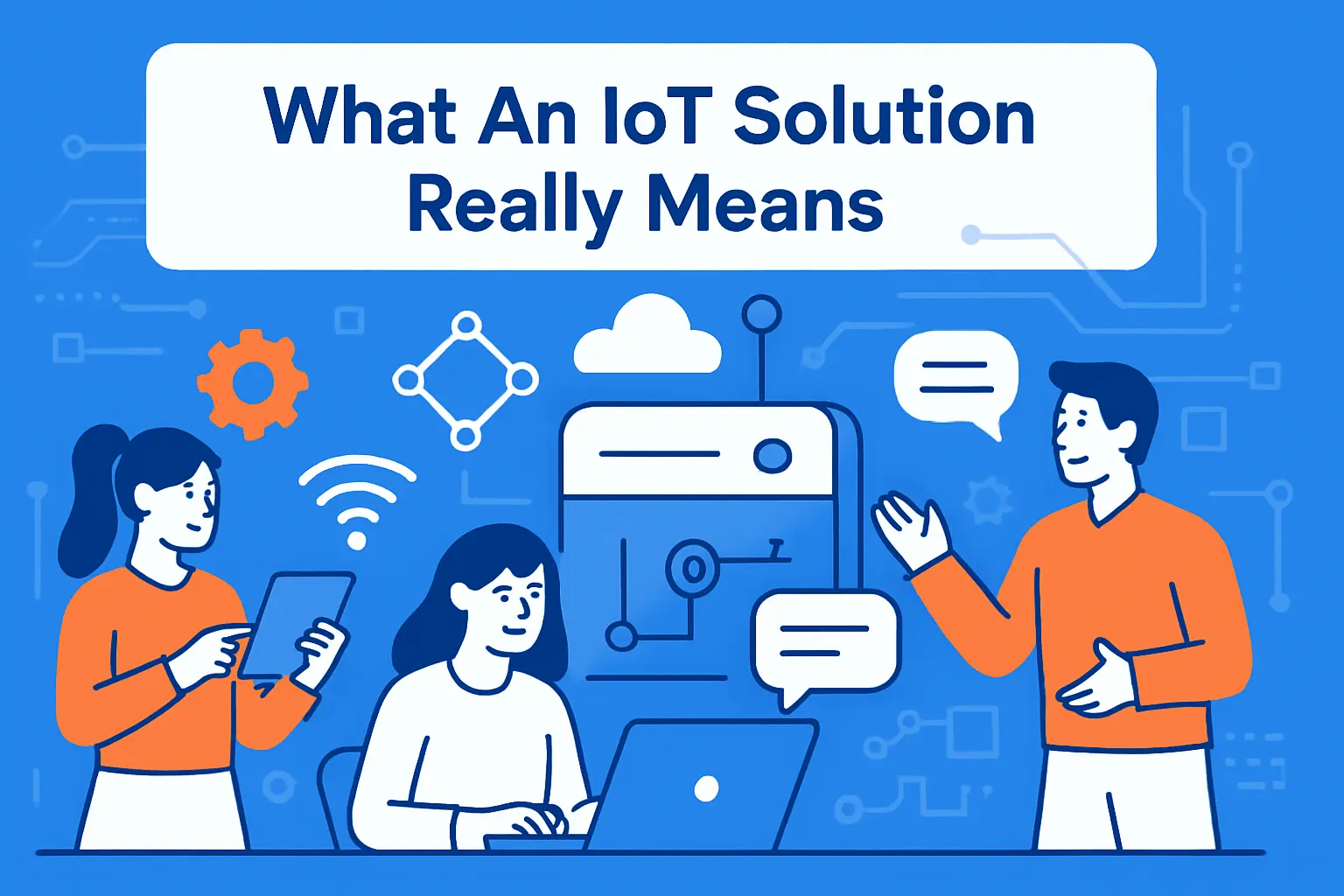
Definition: An IoT solution is a complete system that connects physical assets to software so organizations can monitor conditions, detect events, and take action consistently—at scale and over time.
The phrase “IoT solution” matters because it implies outcomes, not gadgets. The goal is not “collect data.” The goal is to reduce downtime, prevent spoilage, improve safety, optimize energy use, or prove compliance—while keeping the system dependable.
What an IoT Solution Usually Includes
- Operations for onboarding, monitoring, updates, incident response, and decommissioning
- Devices and sensors that measure or control real-world signals
- Connectivity that reliably moves data from the field to software (even when networks are unstable)
- A platform layer for ingestion, device identity, data storage, rules, and access control
- Applications like dashboards, alerts, workflows, and integrations into business tools
2. Why “IoT Solution” Is Different From An IoT Product
Many teams confuse an IoT product with an IoT solution. A product might be a tracker, a smart meter, or a gateway. A solution proves value repeatedly across people, sites, and seasons—while handling messy realities like device failures, signal noise, and shifting requirements.
Quick Comparison: IoT Product vs IoT Solution
| Aspect | IoT Product | IoT Solution |
|---|---|---|
| Primary purpose | Provide a device feature | Deliver an operational outcome |
| Scope | Device-level capability | Devices + software + workflow + operations |
| Success measure | Works in isolation | Trusted and used in real processes |
| Lifecycle | Shipped and supported | Provisioned, monitored, updated, governed, retired |
3. Why “IoT Solution” Also Implies Lifecycle Ownership
IoT systems live for years. Devices break, batteries drain, networks shift, and threats evolve. That means a real solution must include lifecycle planning for onboarding, monitoring, updates, replacements, and retirement.
It also requires governance: someone owns device identity, data definitions, and incident response. Without clear ownership, pilots may look impressive, but production deployments become fragile and hard to scale.
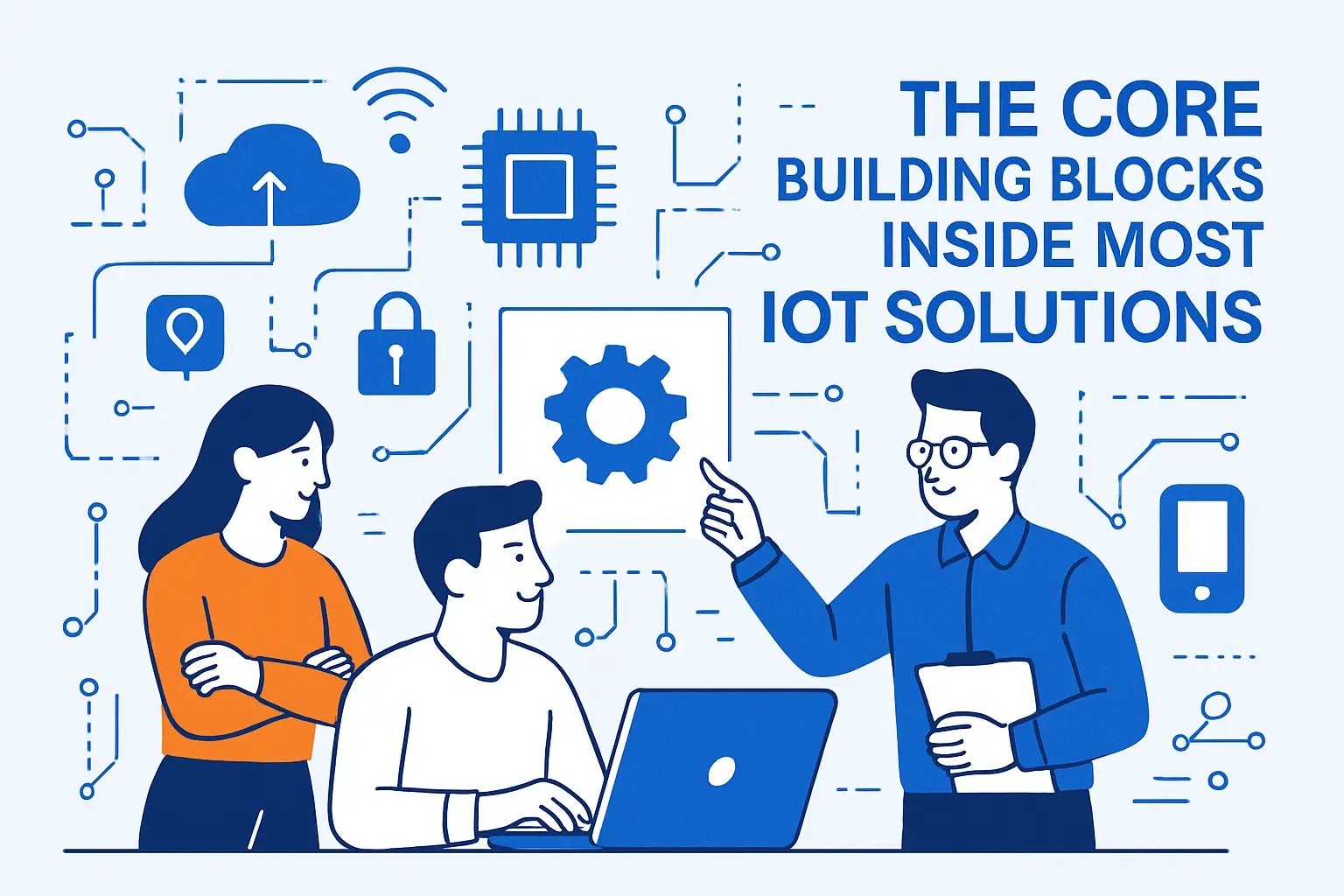
The Core Building Blocks Inside Most IoT Solutions
1. Devices, Sensors, And Edge Hardware
Most IoT solutions start with sensors or machines that produce signals. Those signals can represent temperature, vibration, location, pressure, energy use, fill level, or equipment status. Actuators can also appear, such as valves, relays, locks, or motors.
Edge hardware often sits between devices and the internet. A gateway can translate protocols, buffer data during outages, and run local rules. As a result, you can keep systems running even when cloud connectivity drops.
2. Connectivity That Fits The Physical Environment
Connectivity is not a feature—it’s a risk surface. The best choice depends on coverage, power constraints, data volume, mobility, and how expensive downtime is.
- Short-range networks work well in buildings and campuses where infrastructure is controlled
- Wide-area options fit remote sites, moving assets, and multi-location rollouts
- Gateways help when devices are constrained, protocols vary, or you need local buffering and control
Connectivity choices should be validated in real conditions early. Lab performance rarely predicts how the system behaves with interference, obstacles, or power fluctuations.
3. The IoT Platform Layer (Device Management + Data Pipelines)
The platform layer handles device onboarding, authentication, configuration, and updates. It also ingests data, normalizes formats, and routes events to storage or applications.
Many teams underestimate this layer and try to “just stream data.” That approach usually collapses during scaling because fleets need consistent policies, version control, and remote operations.
4. Applications, Analytics, And Integrations
The application layer turns raw telemetry into decisions. It can include dashboards, alerts, anomaly detection, predictive maintenance models, or optimization engines.
Integrations make the solution real. For example, an alert should create a work order in a maintenance system. A location event should update inventory counts. When integrations work, people stop treating IoT as “another dashboard” and start using it as part of operations.
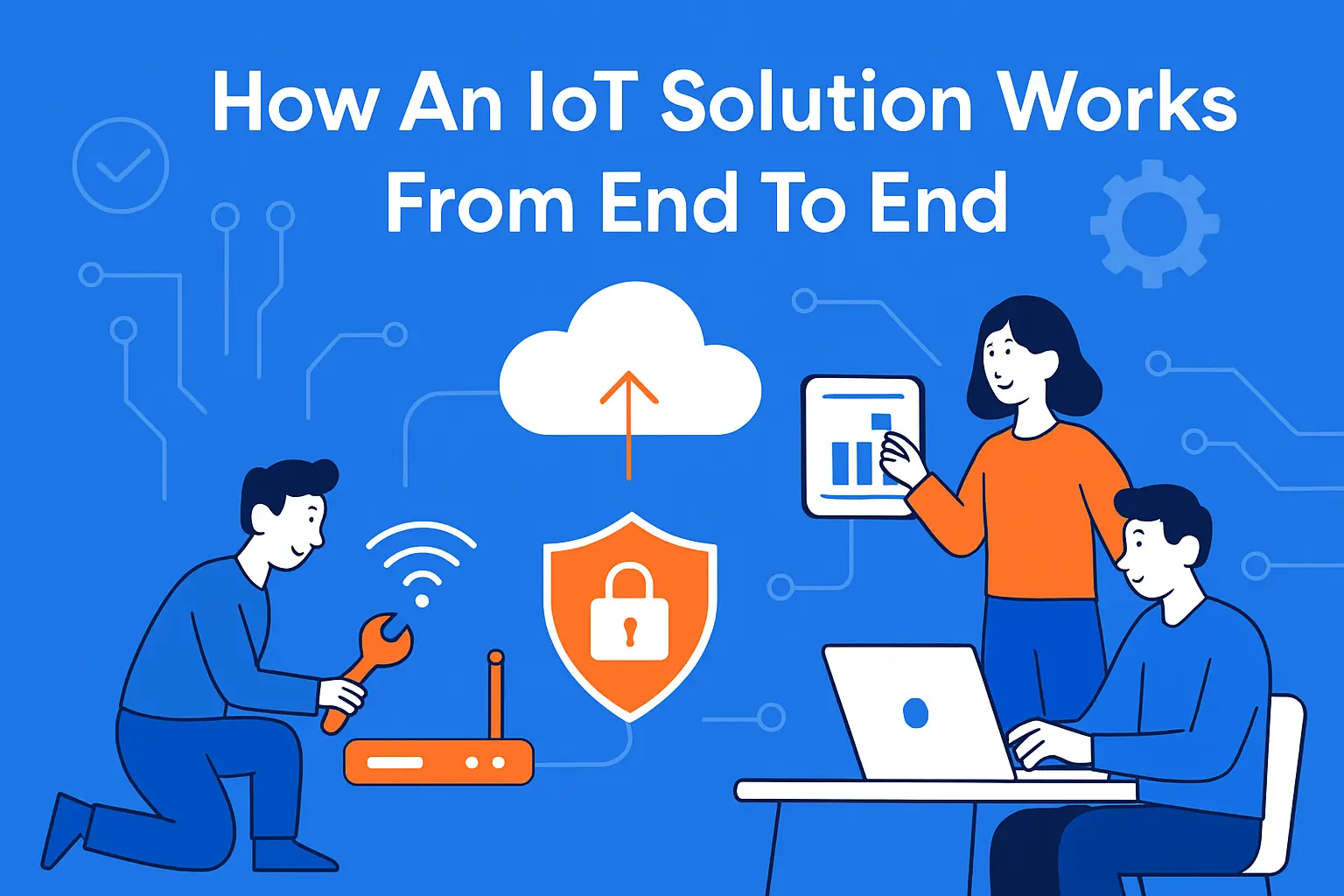
How An IoT Solution Works From End To End
1. Data Collection, Cleaning, And Context
IoT data arrives fast, messy, and inconsistent. Sensors drift. Machines report in different units. Devices reboot. Because of that, solutions need cleaning steps such as filtering spikes, filling gaps, and aligning timestamps.
Context then adds meaning. A temperature reading matters more when you also know which warehouse zone, which shipment, and which product class it belongs to.
2. Event Processing And Automation
Most businesses do not need every raw reading on a screen. They need events. Events can represent threshold breaches, unusual patterns, or state changes like “door opened” or “motor overheating.”
After the system detects an event, it should drive action. It might notify a technician, adjust a setpoint, or pause a process. Automation delivers speed, and it also reduces the burden on teams.
3. Digital Twins And Asset Histories
Many modern solutions keep a digital record for each physical asset. That record can include configuration, sensor history, maintenance history, and expected operating ranges.
This approach helps teams troubleshoot faster. It also supports predictive models because models learn from behavior over time, not from a single moment.
4. Fleet Operations At Scale
Small pilots often rely on manual steps. Production fleets cannot. At scale, you need consistent provisioning, automated certificate rotation, safe firmware updates, and monitoring that flags unusual device behavior.
That is why IoT success often looks less like a “hardware project” and more like running a long-term software service.
Market Signals: Why IoT Solutions Keep Expanding
1. Device Growth Keeps Raising The Stakes
More connected assets create more operational leverage, but they also create more surface area to manage. IoT Analytics expects connected IoT devices to reach 21.1 billion by the end of 2025, which keeps pressure on platforms, security teams, and network planning.
This growth also changes buyer expectations. Businesses now expect remote visibility by default, especially for distributed operations.
2. Long-Range Forecasts Still Point Upward
Even though forecasts differ by methodology, the overall direction stays consistent. Transforma Insights projects 40.6 billion active IoT devices in 2034, which signals continued adoption across consumer, enterprise, and public infrastructure use cases.
That outlook matters for planning. When device counts rise, governance, interoperability, and security discipline become competitive advantages.
3. Spending And Revenue Show Strong Commercial Pull
On the investment side, IDC forecasts worldwide IoT spending at $805.7 billion in 2023, which reflects how many industries now fund IoT as part of core operations.
On the market side, Statista estimates the global IoT market at around 419.8 billion U.S. dollars in 2025, which highlights a large ecosystem of platforms, services, and solutions.
4. Cloud Growth Also Supports IoT Platform Expansion
IoT solutions often rely on cloud for device management, analytics, and integration. Gartner forecasts worldwide public cloud end-user spending at $723.4 billion in 2025, which shows why cloud-native IoT platforms keep maturing.
At the same time, edge computing keeps growing because many IoT environments need low latency and local resilience.
Security And Compliance: The Non-Negotiable Side Of IoT Solutions
1. Why IoT Security Feels Harder Than Traditional IT
IoT adds physical constraints. Devices may run on small chips, limited memory, and intermittent power. They can sit in public spaces or remote sites. That reality reduces control and increases risk.
So, IoT security must start at design time. You need device identity, secure boot, signed updates, and strong authentication. You also need monitoring that treats devices as part of your threat model.
2. Cyber Risk Has A Real Price Tag
When attackers compromise systems, the business impact can escalate quickly. IBM’s Cost of a Data Breach Report 2025 lists the global average breach cost as 4.4M, which makes security work easier to justify during budgeting.
Baseline Controls to Treat as Mandatory
- Secure decommissioning so retired devices and credentials don’t become backdoors
- Unique device identities with strong credential handling and rotation processes
- Signed updates with safe rollout/rollback and clear ownership for patch timelines
- Encrypted data in transit plus access controls that follow least privilege
- Network segmentation so device fleets cannot freely reach critical systems
- Monitoring and logging that can detect unusual device behavior and silent failures
3. Consumer IoT Labeling Pushes The Market Toward Better Defaults
Governments have started to standardize expectations for connected device security. NIST outlines guidance for cybersecurity labeling for consumers: Internet of Things (IoT) devices and software, which helps align vendors and buyers around baseline practices.
This momentum helps enterprise buyers too. Vendors often reuse the same secure development practices across product lines.
4. The Cyber Trust Mark Adds A Practical Signal For Buyers
Security requirements can feel abstract, so labels help. Reuters reported the U.S. introduced the Cyber Trust Mark on January 7, 2025, which gives consumers and procurement teams a faster way to compare device security claims.
Even if your solution targets industrial settings, the same pressure for secure-by-default behavior now reaches suppliers across the IoT market.
How IoT Solutions Change Key Industries (With Concrete Examples)
1. Manufacturing: From Reactive Maintenance To Predictive Operations
Manufacturing teams often start with uptime. A practical IoT solution can monitor vibration, temperature, current draw, and cycle counts. It then flags early signs of bearing wear or misalignment. Next, it creates a work order before the line fails.
A clear example involves packaging equipment. Sensors can track motor load and heat. If load rises over time, the solution can alert maintenance to inspect belts and lubrication. This approach reduces surprise stoppages, and it helps planners schedule repairs during planned downtime.
2. Healthcare: Asset Tracking And Safer Care Environments
Hospitals lose time when teams hunt for pumps, monitors, or wheelchairs. An IoT solution can attach location tags to high-value assets and show near-real-time positions on a floor map. It can also alert staff when equipment leaves approved zones.
Another strong use case involves cold storage. Connected temperature sensors can watch medication refrigerators and send alerts before temperatures drift out of safe ranges. That protects inventory, and it reduces manual logging.
3. Logistics And Cold Chain: Continuous Condition Monitoring
Logistics adds complexity because assets move and networks change. A strong solution usually pairs low-power sensors with gateways or cellular trackers. It then ties telemetry to shipment IDs and delivery milestones.
For instance, a food distributor can track temperature and door-open events during transport. When a door opens too long at a stop, the system can flag a risk and notify dispatch. That closes the loop between “data collected” and “quality protected.”
4. Retail: Loss Prevention, Operations, And Better Store Execution
Retail environments change daily. So, IoT solutions focus on simple operational wins. Smart shelves can detect stockouts. Refrigeration monitoring can prevent spoilage. Occupancy analytics can help schedule staff more effectively.
A practical example involves walk-in coolers. Temperature and compressor health signals can trigger maintenance before a full failure. That protects perishable goods, and it also reduces emergency repair costs.
5. Energy And Utilities: Grid Visibility And Smarter Field Work
Utilities manage large, distributed infrastructure. IoT solutions support remote monitoring of transformers, substations, and distributed energy resources. They can also help field crews by sending equipment status before a visit.
For example, connected sensors can track transformer temperature and load patterns. If the system detects overheating risk, it can prioritize inspections and reduce outage risk during peak demand periods.
6. Buildings And Facilities: Comfort, Efficiency, And Predictable Maintenance
Smart building solutions combine sensors, HVAC controls, and analytics. They help facility teams spot problems early, like failing air handlers or unusual energy use after hours.
One useful example is leak detection. Sensors near bathrooms, mechanical rooms, and kitchens can detect water presence and trigger alerts. This quick signal can prevent broader damage and downtime.
7. Agriculture: Field Monitoring And Targeted Inputs
Agriculture IoT solutions often center on soil moisture, weather, and irrigation control. When teams combine sensor data with scheduling rules, they can water when plants need it instead of watering on fixed calendars.
As a result, farms can reduce waste and protect yields during variable conditions. The solution also creates a historical record that helps agronomists refine strategies season after season.
How To Choose Or Build The Right IoT Solution (A Practical Checklist)
1. Start With A Business Outcome And A Single Owner
Start with a problem statement that a frontline team agrees with. Then assign one accountable owner. This owner should control priorities and accept tradeoffs.
Good starting outcomes include fewer unplanned outages, faster inventory turns, or better compliance logging. These outcomes translate into clear requirements for sensors, sampling frequency, and alert behavior.
2. Define Your “System Boundaries” Early
IoT projects fail when scope creeps. So, define boundaries early. Decide what you will measure, which assets you will include, and which systems you will integrate first.
For example, you might track only critical motors in a single plant area during the first phase. You can expand later, but you should not mix unrelated use cases before the platform stabilizes.
3. Choose Architecture Based On Latency, Connectivity, And Safety
Architecture choices should match the environment. If you need sub-second decisions or safety interlocks, edge processing can help. If you need heavy analytics and cross-site reporting, cloud can help.
Many teams land on a hybrid approach. They run critical rules locally and send summarized data to the cloud for trends, benchmarking, and model training.
4. Validate Device Operations Like A Product Team Would
Treat devices like products you will support. Test onboarding steps, battery life behavior, firmware updates, and failure modes. Also test the “boring” parts, like what happens when a device clocks drifts or a gateway loses power.
This discipline prevents painful surprises after rollout. It also builds trust with operators, which matters as much as the technology.
Implementation Roadmap: From Pilot To Production Without Losing Momentum
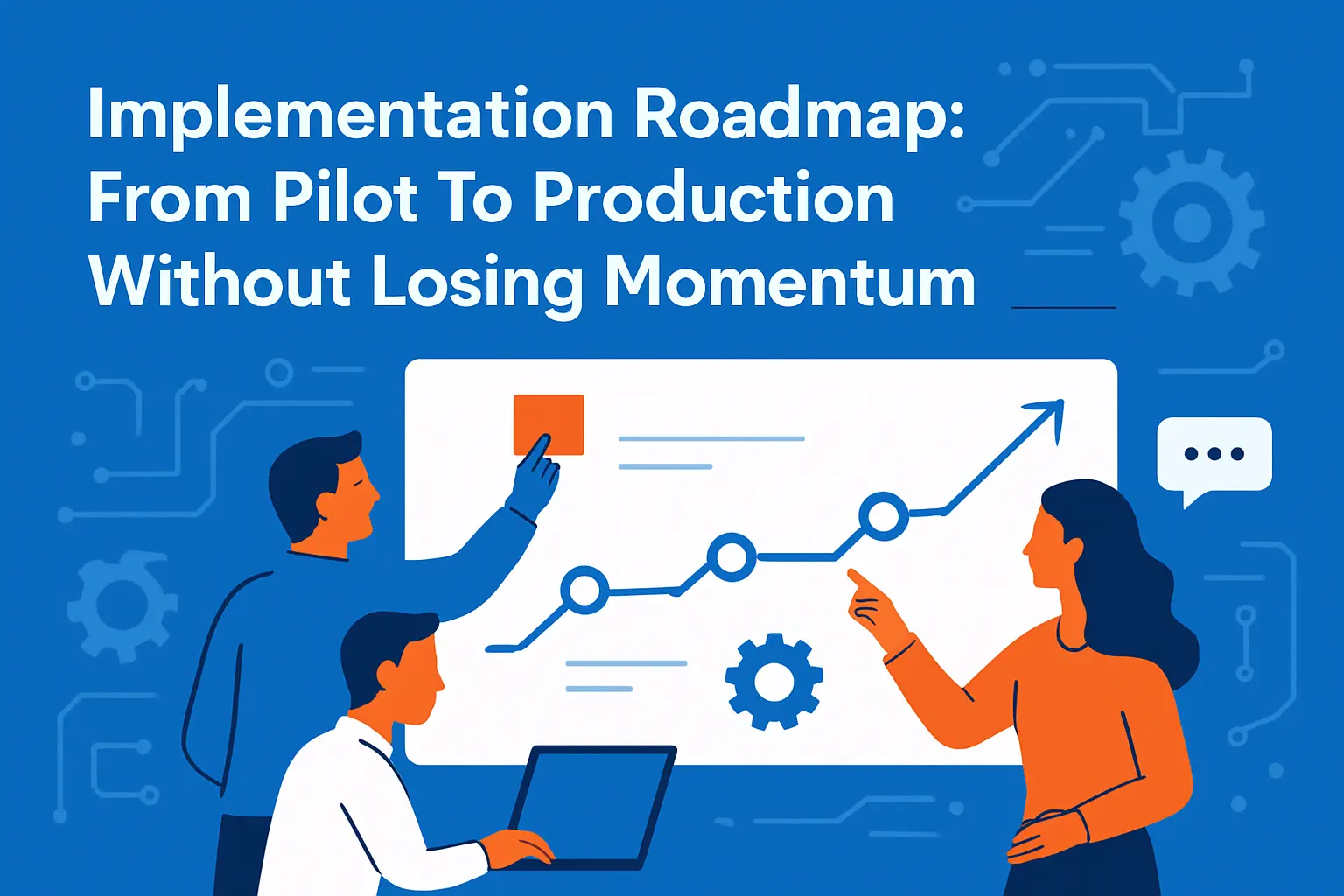
1. Run A Pilot That Proves Workflow Impact, Not Just Data Capture
A pilot should test the full loop. It should capture data, detect events, and trigger action. It should also verify how teams respond.
For example, do technicians actually receive alerts where they work? Do they trust them? Do they close the work order in the maintenance system? These answers decide whether IoT becomes operational or stays experimental.
2. Plan For Scale: Provisioning, Monitoring, And Support
Scaling changes everything. You need templates for device configs, automated provisioning, and fleet monitoring. You also need a support model for replacements, spares, and escalations.
When you design these processes early, expansion feels like repetition. When you skip them, expansion feels like chaos.
3. Build Data Governance So Analytics Stays Reliable
Analytics only works when data stays consistent. So, define naming conventions, units, retention, and ownership. Decide who approves schema changes and how you document sensor calibration.
This work may feel slow, yet it speeds up every future dashboard, model, and integration because people stop debating what the data means.
4. Create A Security Runbook Before Incidents Happen
IoT fleets need clear incident steps. Define how you rotate credentials, quarantine devices, and roll back firmware if needed. Also define how you validate third-party components and libraries.
When incidents happen, teams move faster with a runbook. They also avoid panic changes that break operations.
KPIs That Show Whether Your IoT Solution Works
1. Operational KPIs That Frontline Teams Care About
Pick KPIs that operators feel daily. Examples include fewer false alarms, faster response times, and higher equipment availability. Track alert-to-action time and the share of alerts that lead to verified issues.
When frontline KPIs improve, adoption follows. People keep using systems that help them win their day.
2. Financial KPIs That Leadership Trusts
Leadership wants financial clarity. So tie IoT outcomes to reduced downtime, reduced spoilage, lower overtime, or fewer truck rolls. You can also track avoided losses, such as prevented temperature excursions or avoided safety incidents.
Use conservative assumptions. Then document them clearly so finance teams can validate the story.
3. Technical KPIs That Protect Reliability
Track device uptime, data completeness, firmware version coverage, and connectivity stability. Also track how often devices fail to report and how quickly you detect that failure.
These technical KPIs act like early warning signals. They help you fix the platform before users lose trust.
What IoT Solutions Will Look Like Next
1. More Edge Intelligence And On-Device AI
Many teams now push intelligence closer to devices. This shift reduces latency and lowers bandwidth needs. It also improves resilience in remote environments.
As chips improve, more devices will classify events locally and send only high-value insights upstream. This design also supports privacy because you can limit raw data movement.
2. Stronger Interoperability Pressure Across Vendors
IoT buyers increasingly demand systems that work together. They want fewer proprietary islands and easier integrations. This pressure pushes vendors to support common protocols, stronger APIs, and clearer data models.
Interoperability also protects long-term value. It helps you swap components without rebuilding the entire system.
3. Security Labels And Procurement Standards Will Keep Rising
Security expectations will keep moving from “optional” to “required.” Labeling programs and procurement rules push vendors to maintain update support, secure development practices, and clearer documentation.
That shift benefits buyers who want safer defaults. It also raises the baseline for the whole ecosystem.





Conclusion
Now that you understand what is iot solution, the key takeaway is that success comes from treating IoT as an end-to-end operating system—not a collection of connected devices. The real value shows up when data reliably becomes action: alerts that technicians trust, dashboards that leaders use, and automations that reduce risk, waste, and downtime without adding operational chaos.
Before you invest, align on one business outcome, validate connectivity and device reliability in real conditions, and design the “last mile” so insights land directly inside existing workflows. If you build with lifecycle ownership and security from day one, your IoT program is far more likely to scale beyond the pilot and keep delivering measurable impact year after year.