

- What “Networking Solutions” Really Include
- LAN Networking Solutions: The Modern Local Network
- WAN Networking Solutions: Connecting Sites, Clouds, and Users
- SD‑WAN Explained: The Policy Layer for the WAN
- Security-First Networking: From Zero Trust to SASE
- Network Management and Observability: Make the Network Operable
- How to Choose Networking Solutions: A Clear Buying and Implementation Plan
- Common Mistakes to Avoid When Modernizing LAN, WAN, and SD‑WAN
- FAQs About Networking Solutions
- Conclusion
Networking solutions decide whether your apps feel fast or frustrating. They also decide how safely users, devices, and data move across offices, clouds, and remote locations. Yet the terms can blur together, especially when vendors bundle switching, Wi‑Fi, security, and WAN into one “platform.”
This guide breaks networking solutions into clear layers, from local networks to modern SD‑WAN and SASE. You will also see practical examples, what to buy, what to standardize, and what to avoid as your environment grows.
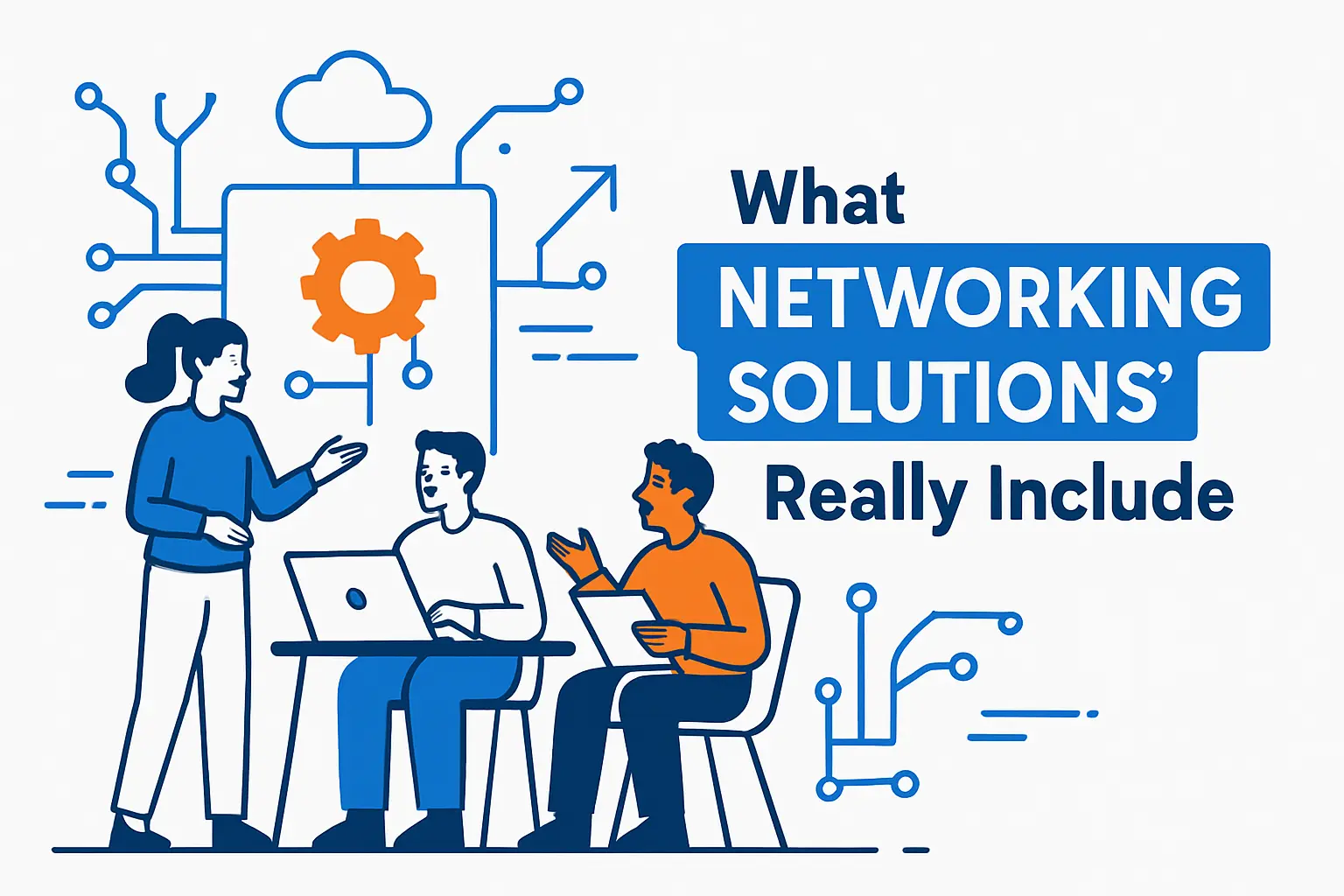
What “Networking Solutions” Really Include
1. The Outcome: Reliable Access to Apps and Data
Most teams do not buy networking for the sake of networking. They buy it to keep critical workflows responsive. That means predictable performance, simple operations, and security that does not slow teams down.
In practice, networking solutions combine wired and wireless access, routing between networks, WAN connectivity between sites, and the policy layer that controls who can reach what. When these pieces align, users stop noticing the network, which is the goal.
2. The Building Blocks: Access, Distribution, and Edge
A typical design starts at the access layer, where laptops, phones, cameras, and IoT devices connect. Next, traffic aggregates into a distribution layer that enforces segmentation and stabilizes performance. Then an edge layer connects the site to the internet, private circuits, or cloud on‑ramps.
You can implement this with separate products. You can also implement it as an integrated stack. Either way, the functions still exist, so it helps to evaluate them as capabilities instead of boxes.
3. The Shift: Networks Now Blend with Security and Cloud
Cloud adoption and hybrid work changed the direction of traffic. Users no longer “go to HQ” first. Instead, they often go straight to SaaS and public cloud. That shift pushes security closer to users and pushes routing decisions closer to applications.
That is why buyers now compare SD‑WAN, secure web gateways, zero trust access, and cloud firewalls in the same shortlist. Analysts also forecast rapid growth in this convergence, with SASE reaching $28.5 billion by 2028.
LAN Networking Solutions: The Modern Local Network
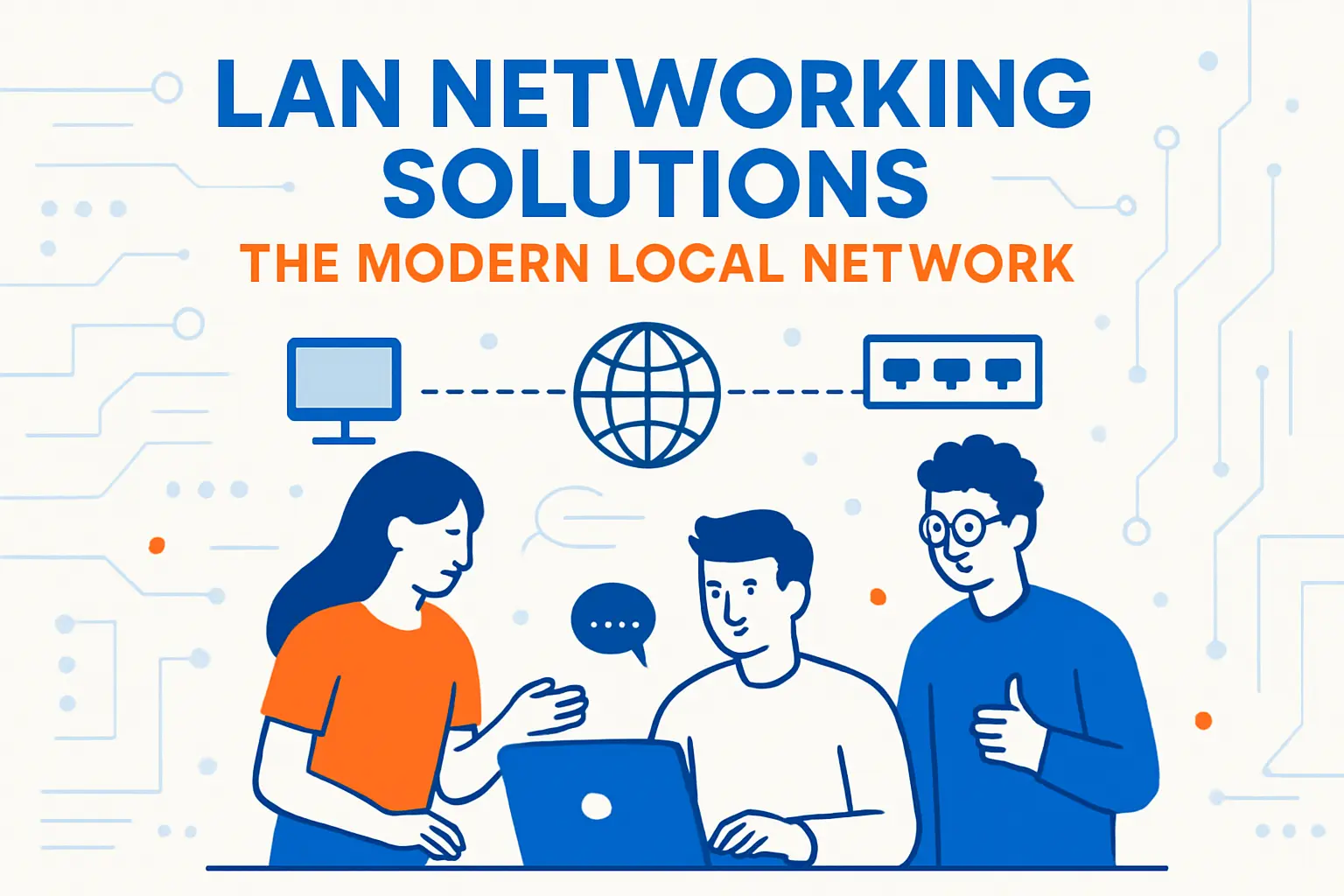
LAN networking solutions focus on connecting devices within a single location such as an office, branch, or campus. They typically include Ethernet switches, wireless access points, and logical segmentation to separate traffic types.
Modern LAN designs emphasize segmentation and identity awareness, ensuring that users and devices only access the resources they are authorized to use. This approach improves both performance and security, especially in environments with IoT devices, guest users, or mixed workloads.
1. Switching and Segmentation: Keep Traffic Organized
LAN switching connects devices inside a site. It also creates guardrails. Without segmentation, you end up with “flat” networks where devices can reach far more than they should.
Use segmentation to separate employee endpoints, guest devices, building systems, and sensitive workloads. Then add identity‑based access controls, so a device cannot “earn” access just by plugging in.
Many teams also refresh switching because of changing demand patterns. For example, IDC reported the worldwide Ethernet switch market decreased 14.1% year over year, which reflects how enterprises time upgrades in waves rather than steadily.
2. Wi‑Fi as a Primary Access Network, Not a Backup
Wi‑Fi now carries voice, video, collaboration, scanners, and operational devices. Because of that, design Wi‑Fi like production infrastructure. Start with a clean RF plan. Then align authentication, roaming behavior, and quality of service to your real applications.
Newer Wi‑Fi generations also widen the ecosystem quickly. The Wi‑Fi Alliance expects more than 233 million devices to enter the market for the latest Wi‑Fi certification generation, so mixed‑device environments will remain normal for a long time.
3. Power, Cabling, and Physical Design Still Matter
It is tempting to treat cabling and closets as “solved.” However, weak cabling, messy patching, and overcrowded racks create outages that look like software bugs.
Start with a simple standard: consistent labeling, consistent switch uplinks, and documented power. Then add environmental monitoring in closets that matter. Small operational improvements reduce mean time to repair more than most teams expect.
WAN Networking Solutions: Connecting Sites, Clouds, and Users
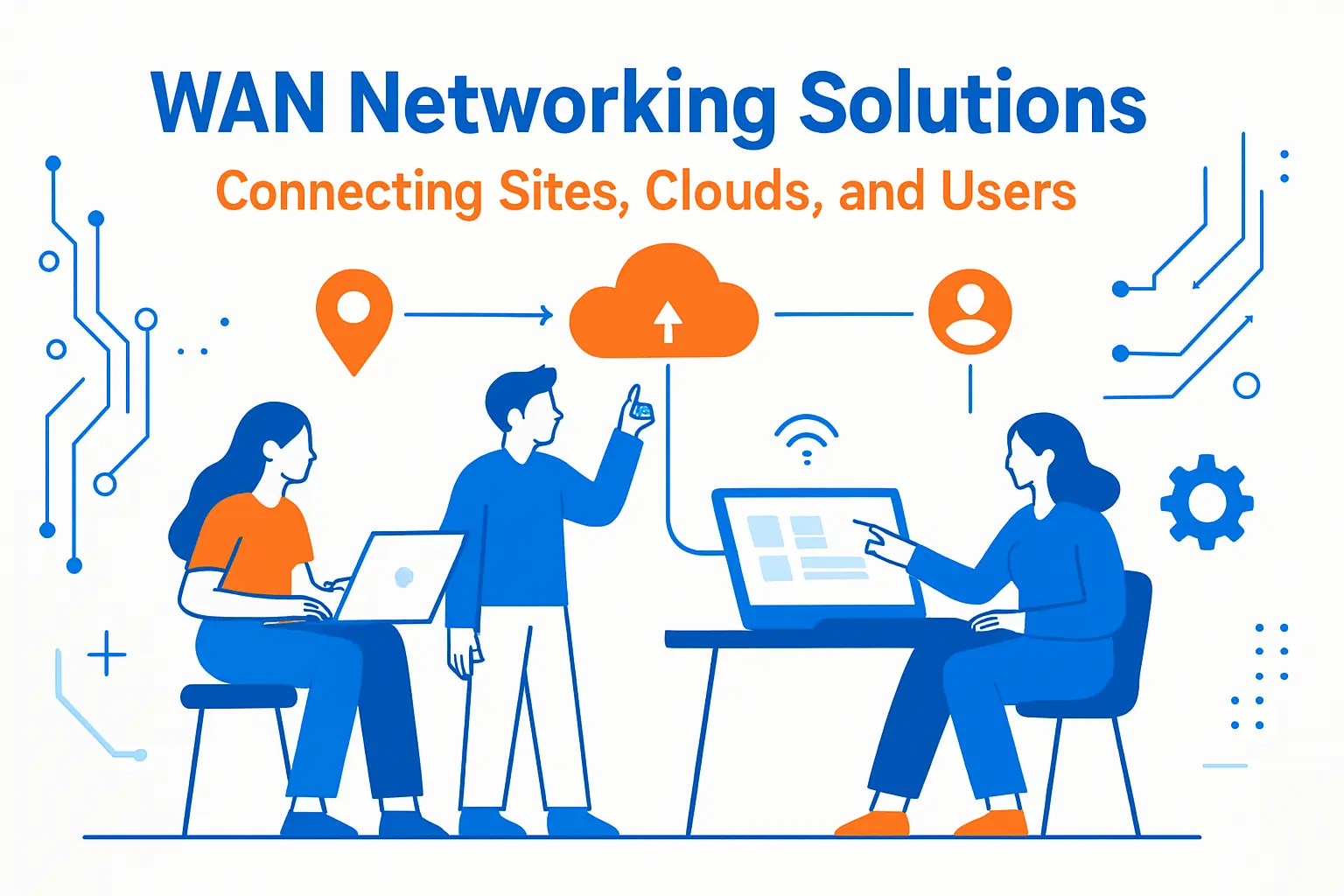
WAN networking solutions connect multiple locations, data centers, and cloud environments. Traditional WANs relied on private circuits, but today most organizations use a mix of broadband internet, private links, and wireless connections.
The key challenge in WAN design is resilience. Effective networking solutions plan for link failure, congestion, and variable performance, ensuring applications remain usable even when conditions degrade.
1. Common WAN Options and What They Optimize
Most WAN designs combine multiple transport types. Internet access brings flexibility and low cost. Private circuits bring predictable routing and service guarantees. Cellular options bring fast turn‑up and failover.
The best choice depends on the application mix. For example, real‑time collaboration needs stable latency. Bulk backups need throughput. Retail point‑of‑sale needs resilience and rapid recovery.
2. VPN Still Has a Place, but It Cannot Carry Everything
Site‑to‑site VPN works well when you need encrypted tunnels and you manage a modest number of sites. It also works when your traffic patterns remain steady.
However, VPN configurations grow complex as you add branches, cloud networks, and partner access. That complexity pushes many teams toward centralized policy and automation, which sets the stage for SD‑WAN.
3. Design for Failover That Users Do Not Notice
Failover should protect sessions, not just links. That means you test real flows like payments, voice calls, and remote desktop, not only pings.
Also plan around third‑party dependency. Even if you run your own equipment, upstream outages can still hit you. Uptime Institute found IT and networking issues totaled 23% of impactful outages, so resilience work belongs in every networking roadmap.
SD‑WAN Explained: The Policy Layer for the WAN
SD-WAN solutions add centralized intelligence on top of WAN connectivity. Instead of routing traffic purely based on IP paths, SD-WAN platforms apply policies that consider application type, link quality, and business priorities.
This allows organizations to improve application performance, simplify multi-site management, and encrypt traffic by default—without relying solely on expensive private circuits.
1. What SD‑WAN Changes Compared to Traditional WAN
SD‑WAN separates intent from implementation. You define policies such as “send voice over the cleanest path” or “route SaaS traffic directly to the internet.” Then the system applies those policies consistently across sites.
This reduces manual configuration drift. It also speeds up turn‑ups for new branches. Most importantly, it ties WAN behavior to application experience instead of static routing rules.
2. Key Features to Look For (Without Vendor Noise)
Strong SD‑WAN products share a few traits. They classify applications accurately. They steer traffic based on measured path quality. They encrypt by default. They centralize policy. They integrate with identity and security services.
You also want clear operational telemetry. If you cannot answer “is the problem the ISP, the cloud service, or our own policy,” you will spend too much time in war rooms.
3. Proof That the Category Keeps Evolving
SD‑WAN matured from an edge router replacement into a broader branch platform. Market signals reflect that shift. Dell’Oro reported SD‑WAN revenue rebounded to 17 percent growth, which aligns with enterprises modernizing branches while they consolidate vendors.
At the same time, many forecasts still expect long‑term expansion. One industry forecast projects the SD‑WAN market could reach USD 21.67 billion by 2030, which signals sustained demand even as features merge with security.
Security-First Networking: From Zero Trust to SASE
Security-first networking solutions integrate protection directly into the network path. Rather than trusting users or devices based on location, access decisions are made dynamically using identity, device posture, and context.
This model is particularly important for cloud-first and remote-work environments, where users access applications from many locations and devices.
1. Why Networking and Security Now Evaluate Together
Attackers target edge devices, remote access paths, and third‑party connections because they often sit outside strong controls. Meanwhile, business leaders care about impact, not tool categories.
IBM’s research puts the global average breach cost at 4.4M, which is enough to justify building security into everyday network decisions instead of treating it as an add‑on.
2. Zero Trust as a Practical Network Design Mindset
Zero trust does not mean “trust nothing and block everything.” It means you verify explicitly, enforce least privilege, and assume breach. That approach fits modern environments because users, devices, and apps constantly shift.
In networking terms, it pushes you to authenticate access, limit lateral movement, and monitor continuously. As a result, segmentation becomes simpler to justify, and identity becomes a core part of your network architecture.
3. SASE and SSE: What to Expect in Real Deployments
SASE blends WAN policy with cloud-delivered security controls. In real life, deployments vary. Some organizations start with secure web access for roaming users. Others start with SD‑WAN at branches and then add cloud security.
Either way, threat activity keeps pressure on the edge. Verizon’s breach research reports ransomware is present in 44% of breaches, so reducing exposed perimeter paths and tightening access policies directly supports risk reduction.
Network Management and Observability: Make the Network Operable

Effective networking solutions are designed as layered systems. The LAN handles local connectivity, the WAN connects locations and clouds, SD-WAN manages traffic behavior, and security services enforce access and inspection. Observability tools sit across all layers to provide visibility and control.
1. Standardization Beats Heroics
Networks fail in predictable ways. Configuration drift, unclear ownership, and undocumented changes cause repeat incidents. So, choose a small set of standards you can maintain: naming, addressing, segmentation rules, and change process.
Then enforce them with templates and automation. This shifts work from late-night troubleshooting to planned improvements.
2. Telemetry You Actually Need (and Will Use)
Collect the signals that shorten diagnosis. That includes path quality for WAN links, client health for Wi‑Fi, and application response time from user locations.
Also keep logs searchable and time-synced. When clocks drift across systems, root cause analysis turns into guesswork. Strong observability feels boring day to day, yet it becomes priceless during incidents.
3. Tie KPIs to Experience, Not Device Uptime
Device uptime alone can hide user pain. A switch can stay “up” while a bad policy breaks voice quality. A WAN link can stay “up” while SaaS performance collapses.
So track experience metrics such as successful authentication, application reachability, and stable voice sessions. That approach also helps you justify upgrades based on business outcomes instead of hardware age.
How to Choose Networking Solutions: A Clear Buying and Implementation Plan

1. Start with Use Cases, Then Map Capabilities
Write down the workflows your network must protect. For example: contact center calls, payment processing, warehouse scanning, clinic imaging, or construction site connectivity.
Next, map each workflow to capabilities such as segmentation, quality of service, WAN steering, and secure access. This keeps the project grounded when vendor demos get flashy.
2. A Practical Shortlist Checklist (What to Validate)
Validate fit with a hands-on pilot. Focus on what breaks in real life. For example, test authentication when certificates expire. Test SD‑WAN behavior when one ISP gets lossy. Test Wi‑Fi roaming during calls. Test policy changes during business hours.
Also validate integration points. Your networking solutions should connect cleanly to identity, endpoint management, logging, and incident response workflows. If integrations feel bolted on, operational costs will rise later.
3. Concrete Examples of “Good” Designs by Scenario
Retail chain: Use segmented LANs for point‑of‑sale, guest Wi‑Fi, and cameras. Then use SD‑WAN to steer payment traffic on the most stable path and send guest traffic straight to the internet with security controls.
Healthcare clinic: Prioritize identity-based access and strict segmentation for medical devices. Then use resilient WAN connectivity to keep clinical apps available even during provider instability.
Manufacturing site: Separate operational technology from office traffic. Add visibility for industrial protocols. Then design wireless coverage for mobility and interference, not just average signal.
These patterns work because they align technical controls with the way each business operates. They also scale because they rely on repeatable templates.
Common Mistakes to Avoid When Modernizing LAN, WAN, and SD‑WAN

1. Treating SD‑WAN as Only a Cheaper Circuit Strategy
Cost savings help, yet SD‑WAN’s real advantage is policy and experience control. If you deploy SD‑WAN but keep old routing habits, you miss most of the value.
Instead, define application groups, performance thresholds, and security intent up front. Then operationalize them with monitoring and change control.
2. Ignoring Identity and Device Posture at the Access Layer
Many teams invest heavily in WAN and cloud security while leaving access controls loose inside sites. That gap invites lateral movement and insider risk.
Bring identity, device posture, and segmentation into the LAN and Wi‑Fi design. When you do that, you reduce blast radius without forcing users into complicated workflows.
3. Skipping Operational Readiness
Modern networking platforms move fast. That is a benefit, but it also increases change velocity. If you do not train the team, document standards, and define escalation paths, you will feel overwhelmed.
Plan operations as part of the project. Decide who owns policy, who owns troubleshooting, and how you roll back safely. That discipline turns modernization into stability.
FAQs About Networking Solutions
1. What are networking solutions used for?
They are used to connect users, devices, applications, and cloud resources securely while ensuring reliable performance.
2. Do networking solutions include security?
Modern networking solutions increasingly embed security features such as identity-based access and traffic inspection.
3. Is SD-WAN required for all businesses?
Not always, but it is highly beneficial for organizations with multiple sites, cloud applications, or variable network conditions.






Conclusion
Networking solutions have evolved from basic connectivity into comprehensive platforms that combine performance, security, and operational insight. By understanding the core components, common architectures, and real-world use cases, organizations can design networks that support growth, protect data, and deliver consistent user experiences. The most effective networking solutions are those planned holistically—aligned with business needs, built with security in mind, and operated with clear visibility.